
EcoFlow power stations
22 stations on sale today. We line them up by what they run and compare them against every rival, and photograph the ones we use.
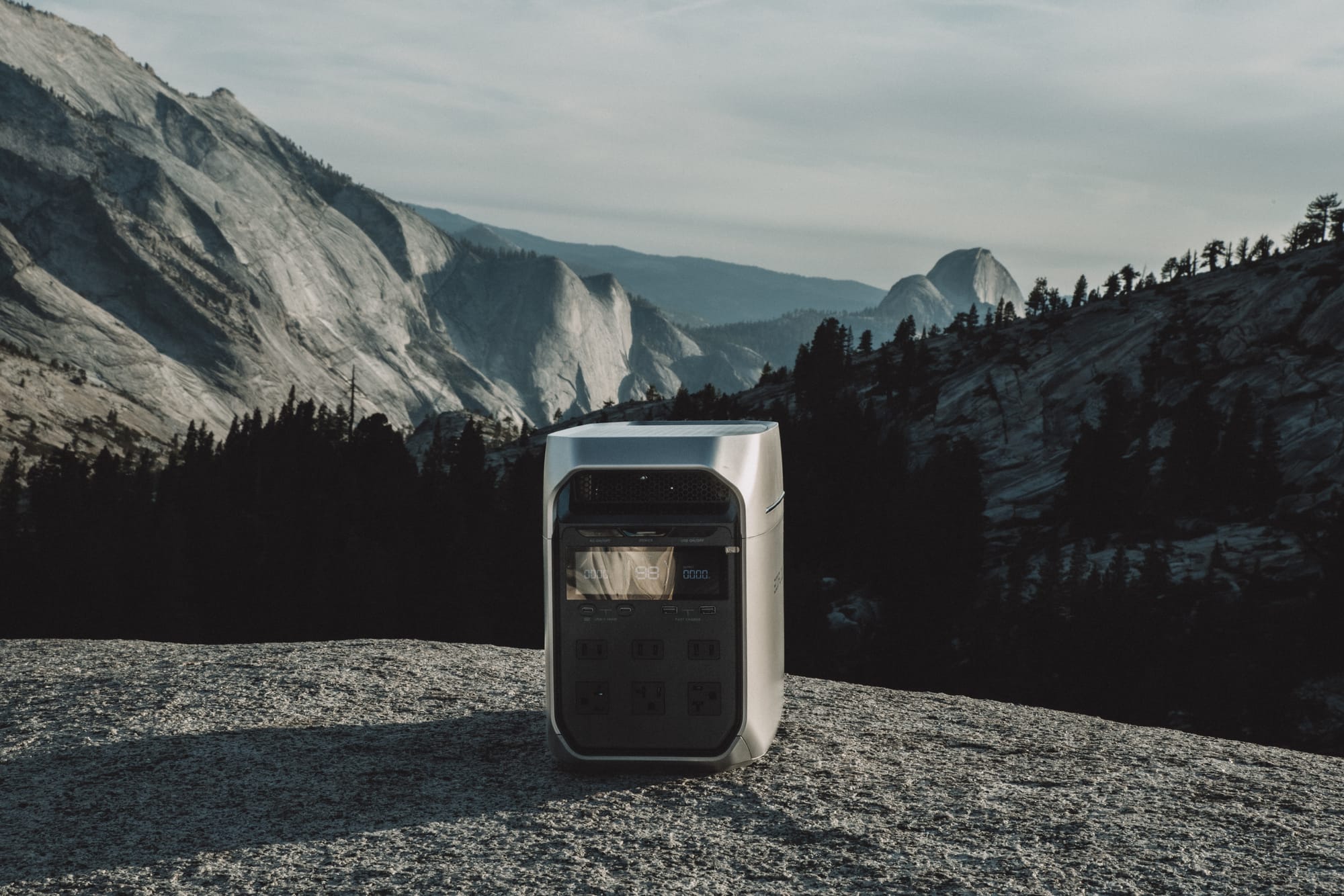
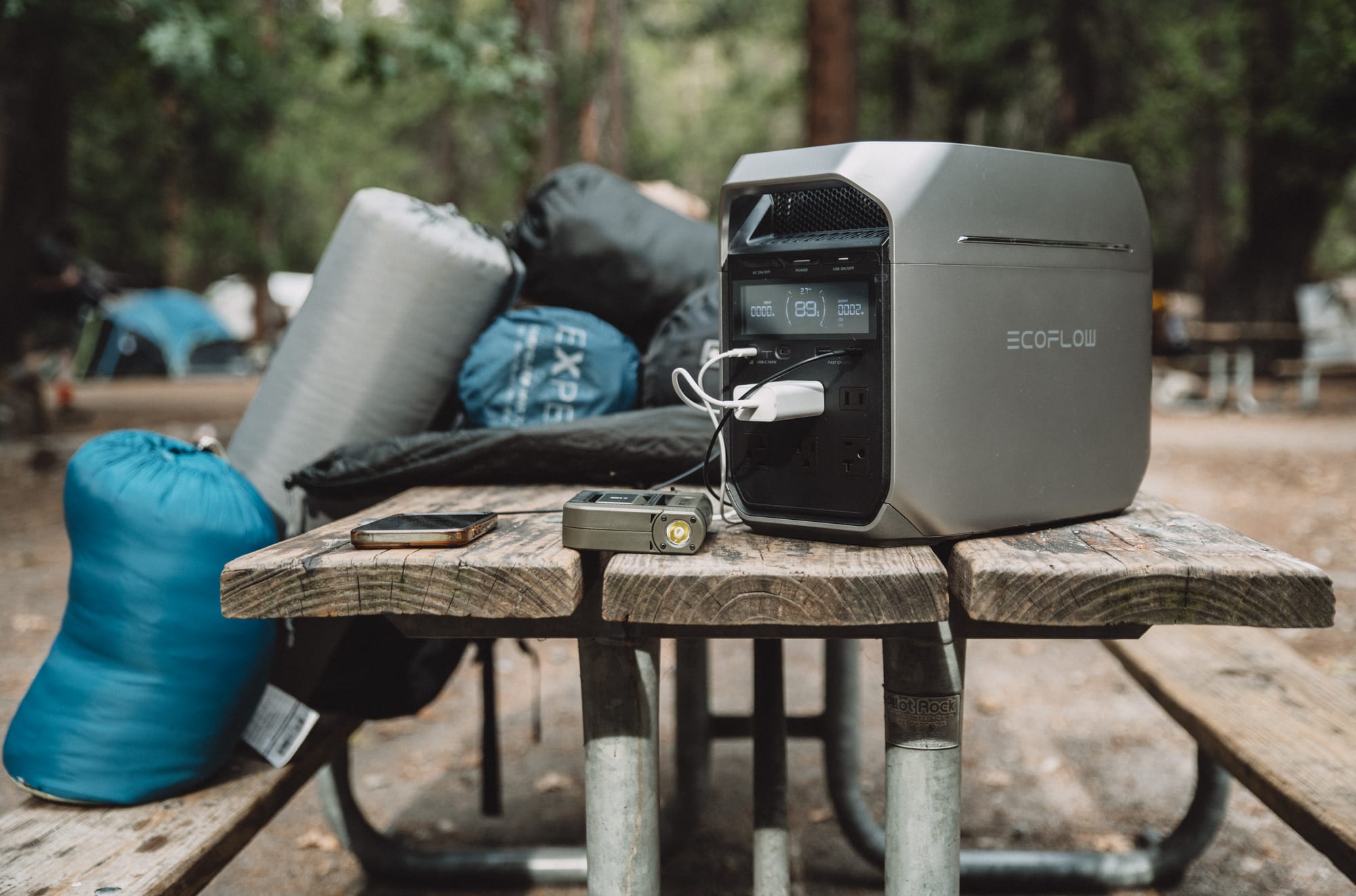
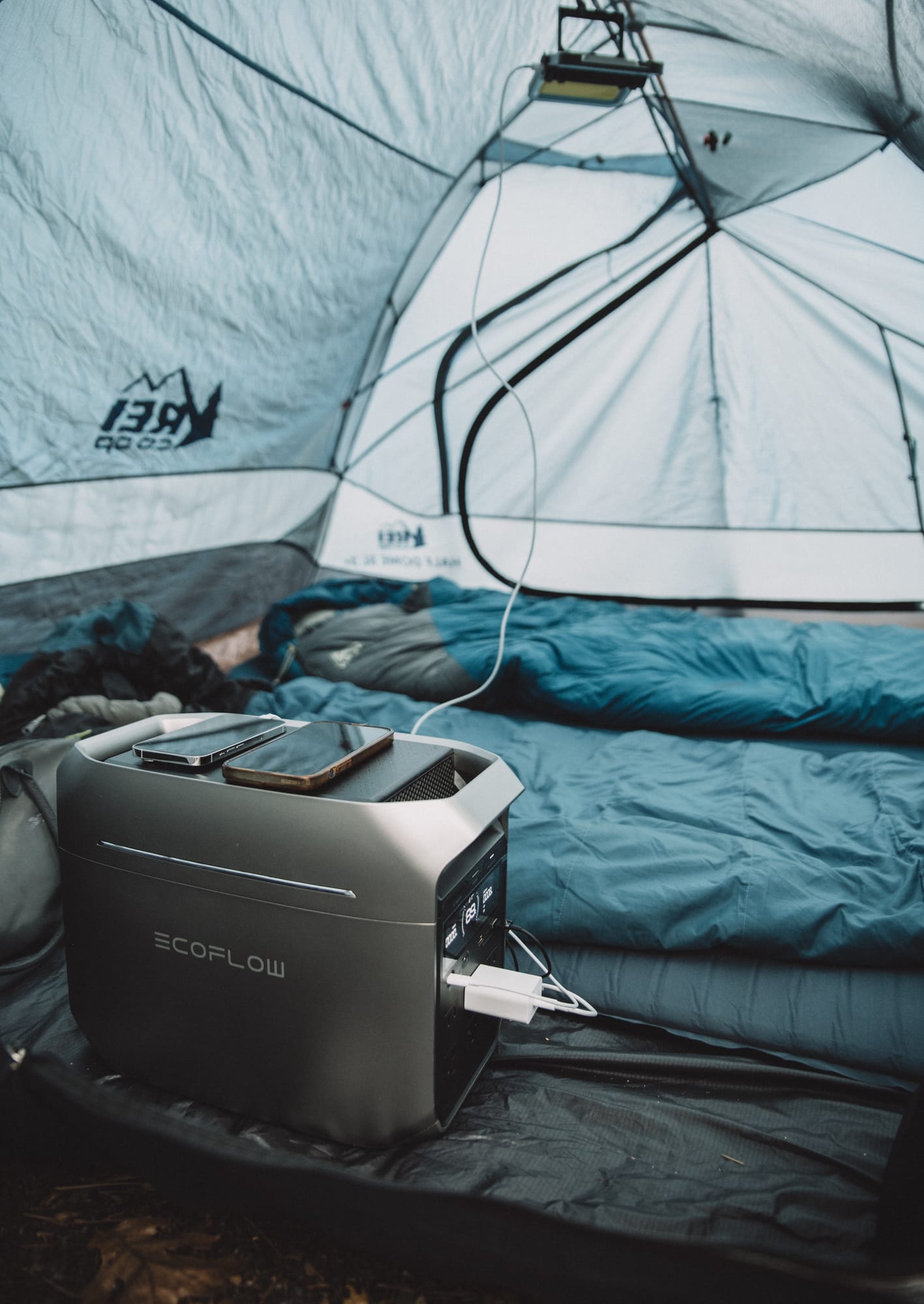 Photographed by Brennan: the DELTA 3 Plus at Yosemite · see all the photos
About EcoFlow
Battery engineers who sell on speed
EcoFlow’s pitch is fast charging, an app on everything, and a range built to expand: start with one station and add batteries, panels and a home panel later.
2017
Founded by a group of former DJI battery engineers, bringing drone-battery know-how to portable power.
X-Stream
Its signature: the charger is built into the unit, and EcoFlow rates many models at 0–80% in under an hour from a wall outlet.
2024–25
Moved the range to LiFePO4 cells, rated for thousands of cycles rather than hundreds.
Today
From carry-along RIVERs to the DELTA Pro Ultra and Smart Home Panel 2, a system meant to grow into whole-home backup.
Oct 2026
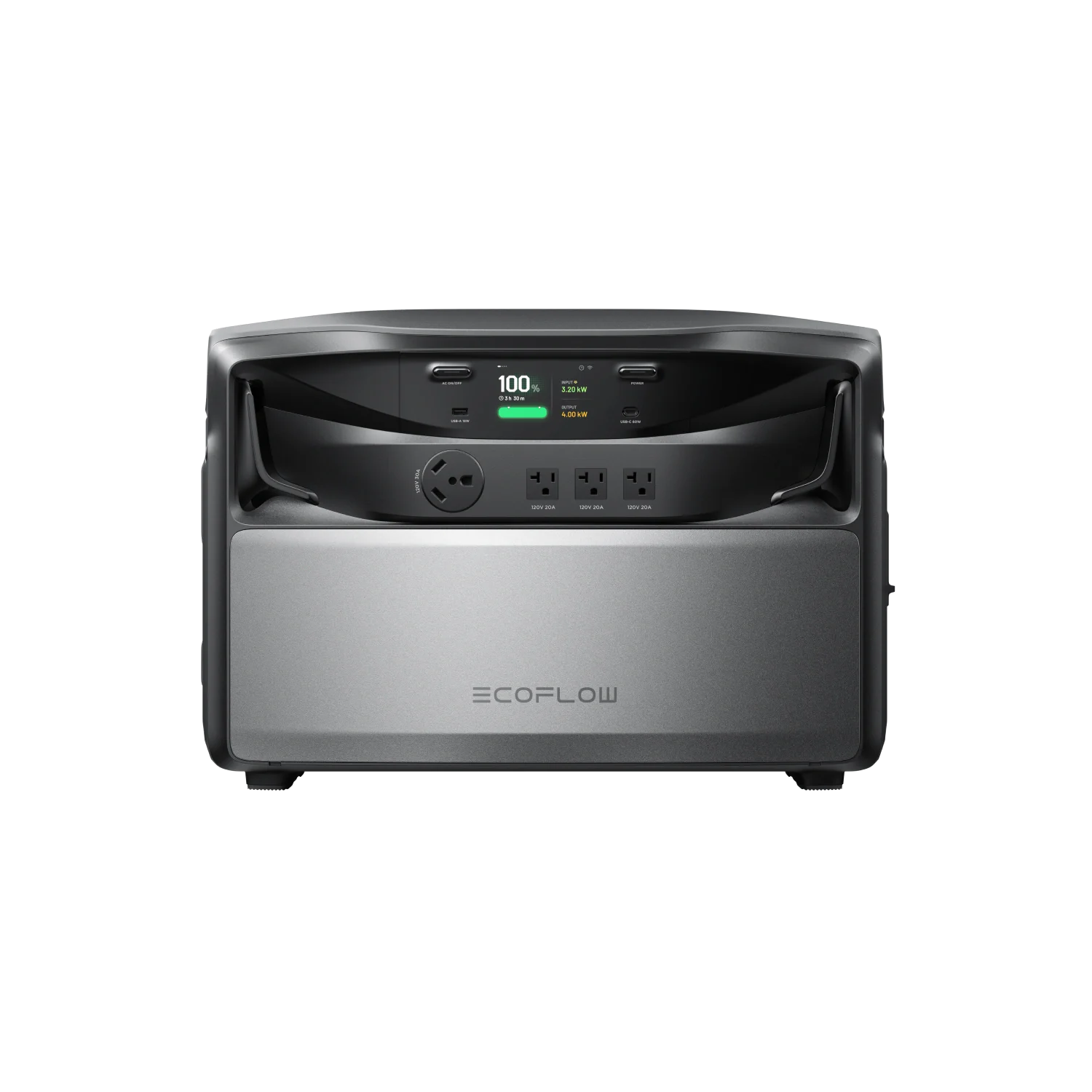
The TITAN 5000 line: one 5 kWh battery sold three ways, 4,000 to 7,200 W, 120 V or 240 V, growing to 30 kWh. Whole-home backup from $2,499, as EcoFlow lists it.
Looking ahead
Announced, not yet on sale: DELTA 4 (DELTA 3000 Gen4 and DELTA 3800 Gen4) Portable Power Stations · PowerRock 4000 · RIVER 260 and RIVER 520. What we know so far is on our new releases page.
How EcoFlow compares
The typical EcoFlow station on sale today against the 5 other brands we cover: medians across each brand’s current range, from our catalogue.
Price per watt-hour
2nd of 6 brands$0.56vs $0.59 typical
$100 buys about 179 Wh of EcoFlow battery
Typical elsewhere: 171 Wh
Outage switchover
Best of 6 brands10 msvs 15 ms typical
Grid power10 ms gapEcoFlow battery
The gap your devices see when the power drops. A blink takes about 100 ms.
Takes extra batteries
2nd of 6 brands67% of modelsvs 58% of models typical
16 of EcoFlow’s 24 stations on sale can add a battery later (the lighter block), instead of being replaced.
Rated cycle life
6th of 6 brands3,500 cyclesvs 4,000 cycles typical
About 9.6 years of charging every day before the battery fades to ~80%, on the maker’s rating. The grey mark is the typical 11.0 years elsewhere.
Battery per pound
2nd of 6 brands40 Wh/lbvs 33 Wh/lb typical
What a 25 lb EcoFlow station typically holds: about 17 hours of a full-size fridge.
Our picks
The best EcoFlow for…
Best overall is our editor’s pick. The other cards are the top of a shortlist built by one simple rule.

2,048 Wh · 2,400 W · $879
2 kWh and 2,400 W in one unit, a 10 ms switchover when the power drops, and room to add a battery later. The EcoFlow most people should start with.

$0.42/Wh · 3,072 Wh
3 kWh and 3,600 W at one of the lowest prices per watt-hour in EcoFlow’s range. The trade: it can’t take an extra battery.
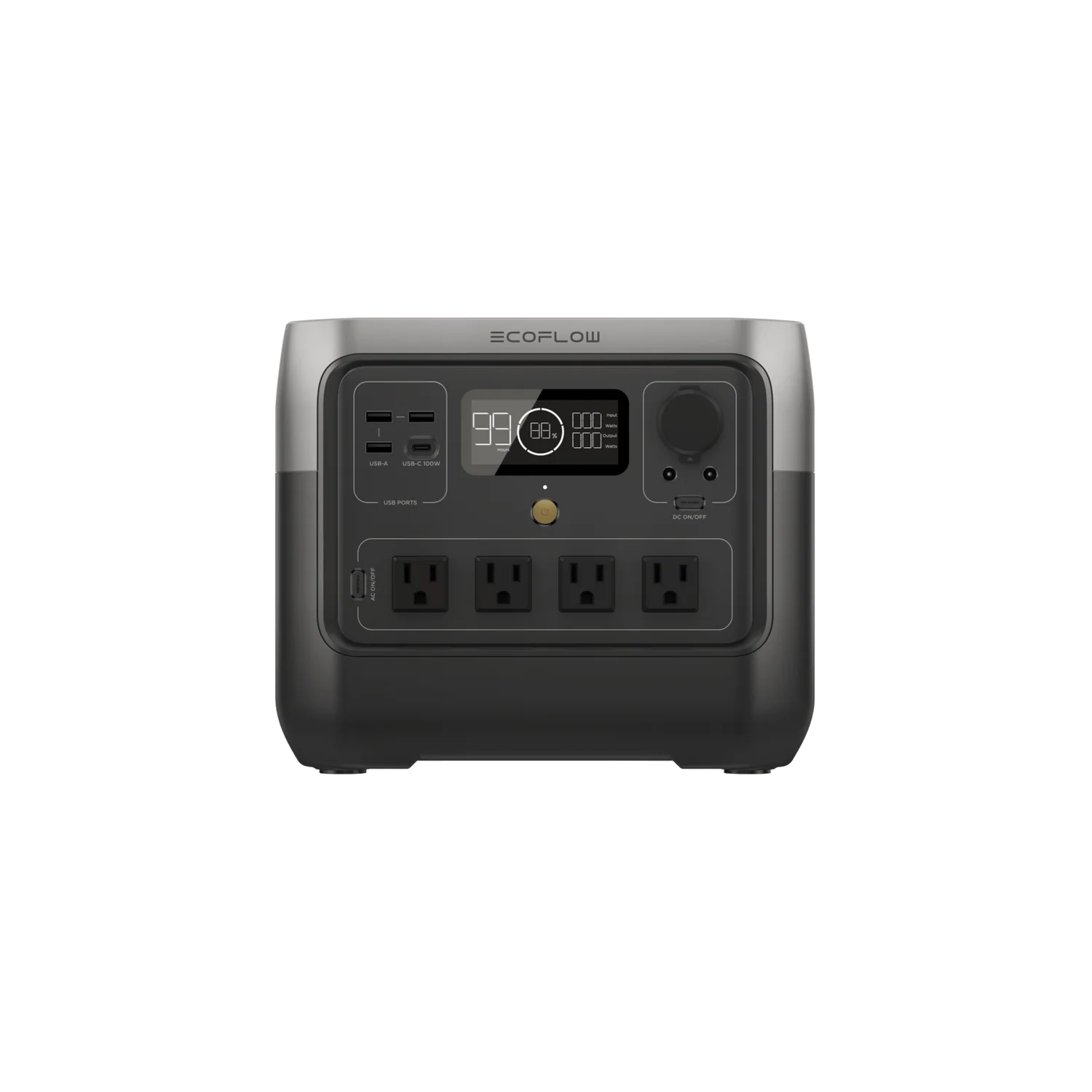
The EcoFlow range, smallest to largest
Which EcoFlow is your size?
22 stations on sale, from 243 Wh to 12,288 Wh. The bar is battery size on one scale; the line under each name is what that size runs.
Carry it
Under 1 kWh · light enough to carry
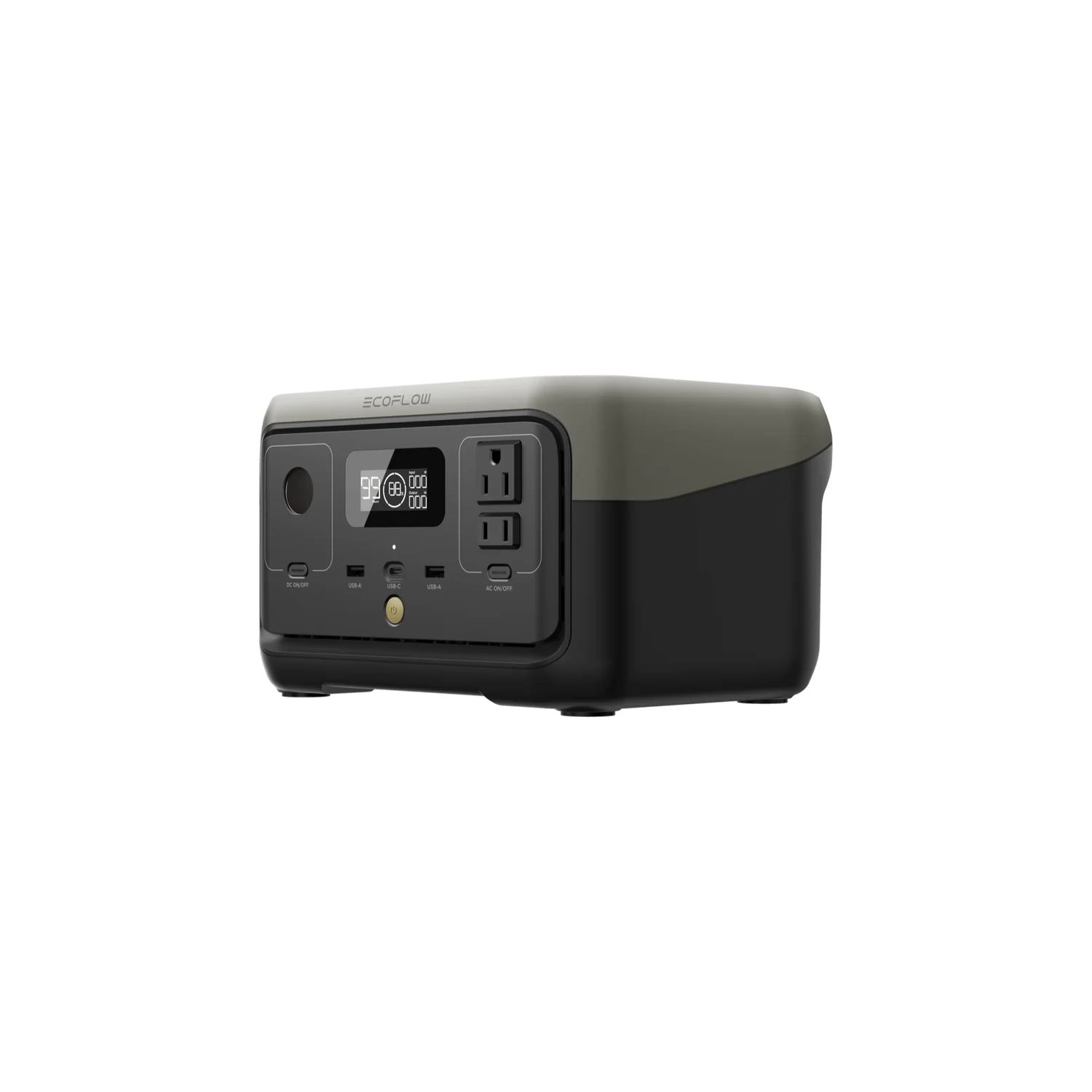 RIVER 2 240Wi-Fi router and modem for about 10 hours300 W output · 7.7 lb243 Wh$199Check if it’s on saleat EcoFlow
 RIVER 3 PLUSWi-Fi router and modem for about 12 hours600 W output · 10.4 lb286 Wh$299Check if it’s on saleat EcoFlow
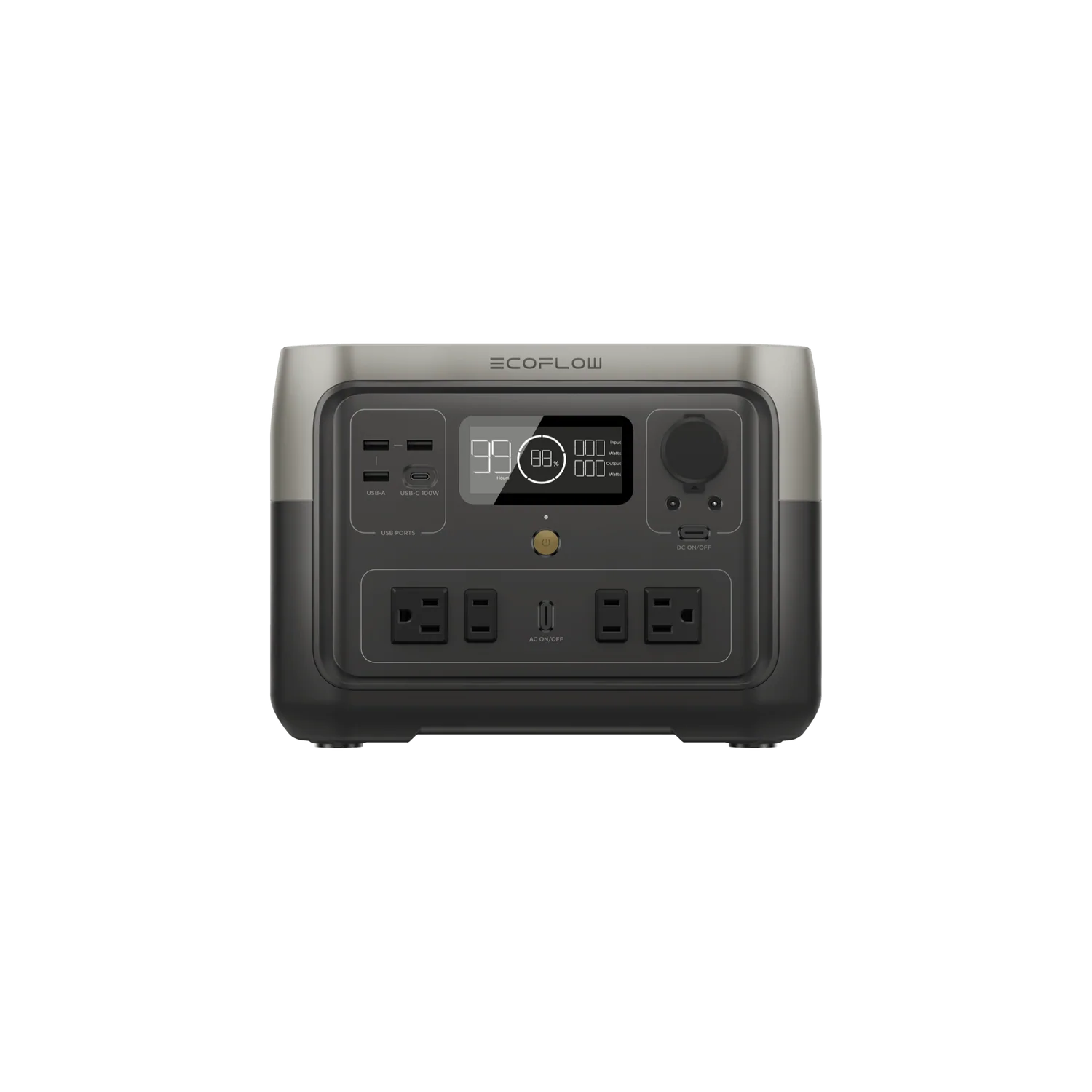 RIVER 2 Max 500Wi-Fi router and modem for about 21 hours500 W output · 13.2 lb499 Wh$309Check if it’s on saleat EcoFlow
 RIVER 3 MAXA full-size fridge for about 10 hours600 W output · 18.1 lb572 Wh$319Check if it’s on saleat EcoFlow
- RIVER 2 ProA full-size fridge for about 13 hours800 W output · 17.2 lb768 Wh$369Check if it’s on saleat EcoFlow
Ride out an outage
1–3 kWh · sized for outages and weekends away
 DELTA 3 ClassicA full-size fridge for about 18 hours1,800 W output · 26.7 lb1,024 Wh$479Check if it’s on saleat EcoFlow
 DELTA 3 PlusA full-size fridge for about 18 hours1,800 W output · 27 lb1,024 Wh$719Check if it’s on saleat EcoFlow
 DELTA 3A full-size fridge for about 18 hours1,800 W output · 27 lb1,024 Wh$579Check if it’s on saleat EcoFlow
- DELTA 3 MaxA full-size fridge for about 35 hours2,400 W output · 44.8 lb2,048 Wh$879Check if it’s on saleat EcoFlow
 DELTA 3 Max PlusA full-size fridge for about 35 hours3,000 W output · 50.7 lb2,048 Wh$1,149Check if it’s on saleat EcoFlow
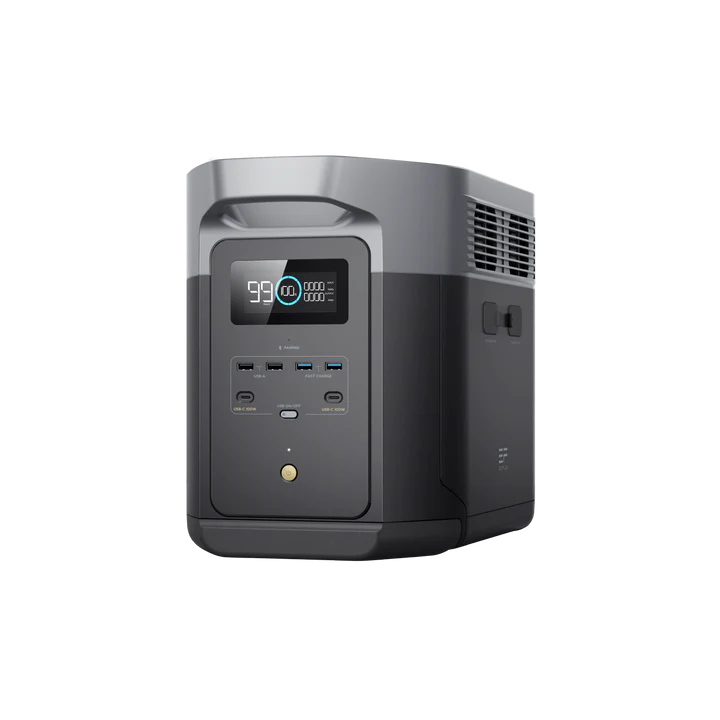 DELTA 2 MaxA full-size fridge for about 35 hours2,400 W output · 50.7 lb2,048 Wh$1,029Check if it’s on saleat EcoFlow
Back up the house
3 kWh and up · built to stay put and expand
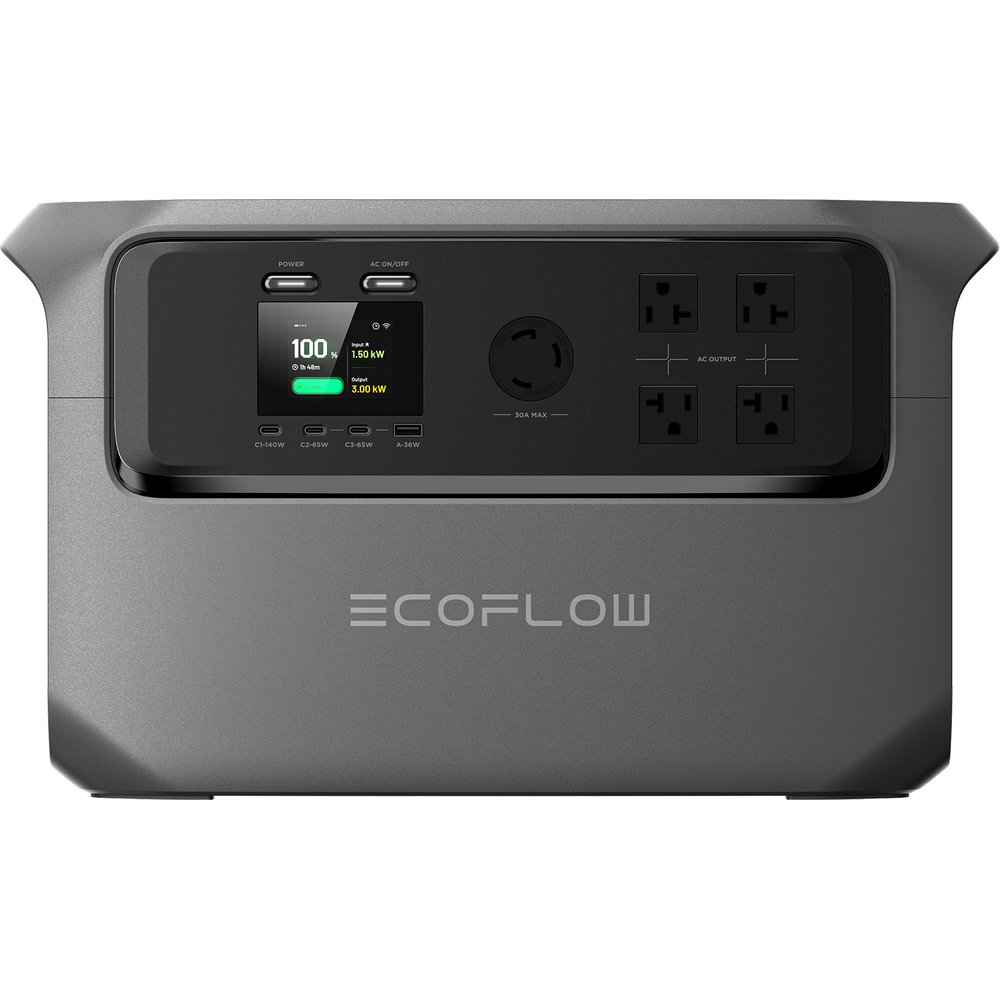 DELTA 3000 Gen4A full-size fridge for about 2 days3,600 W output · 57.3 lb3,072 Wh$1,699Check if it’s on saleat EcoFlow
- DELTA 3 Ultra PlusA full-size fridge for about 2 days3,600 W output · 74.3 lb3,072 Wh$1,599Check if it’s on saleat EcoFlow
- DELTA 3 UltraA full-size fridge for about 2 days3,600 W output · 72.1 lb3,072 Wh$1,299Check if it’s on saleat EcoFlow
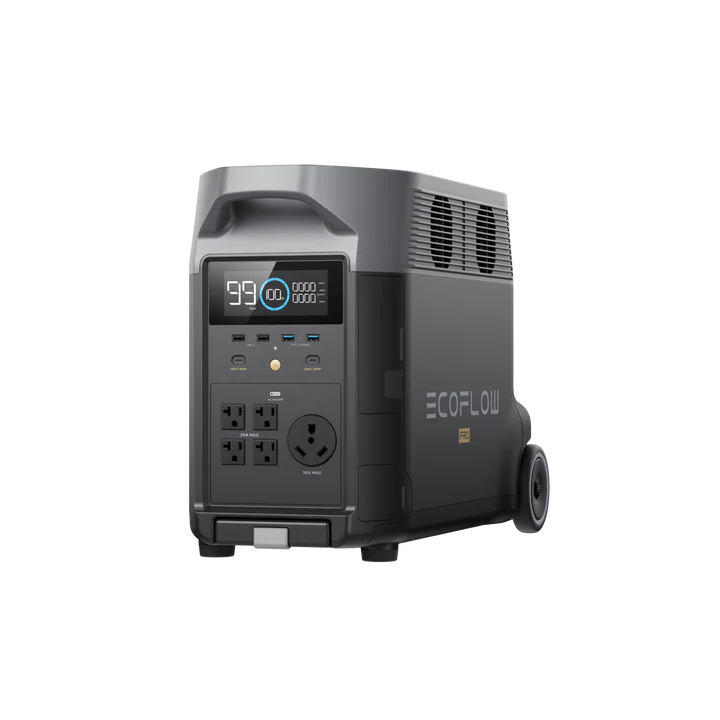 DELTA ProA full-size fridge for about 3 days3,600 W output · 99 lb3,600 Wh$1,799Check if it’s on saleat EcoFlow
 DELTA 3800 Gen4A full-size fridge for about 3 days3,600 W output · 67.5 lb3,763 Wh$2,199Check if it’s on saleat EcoFlow
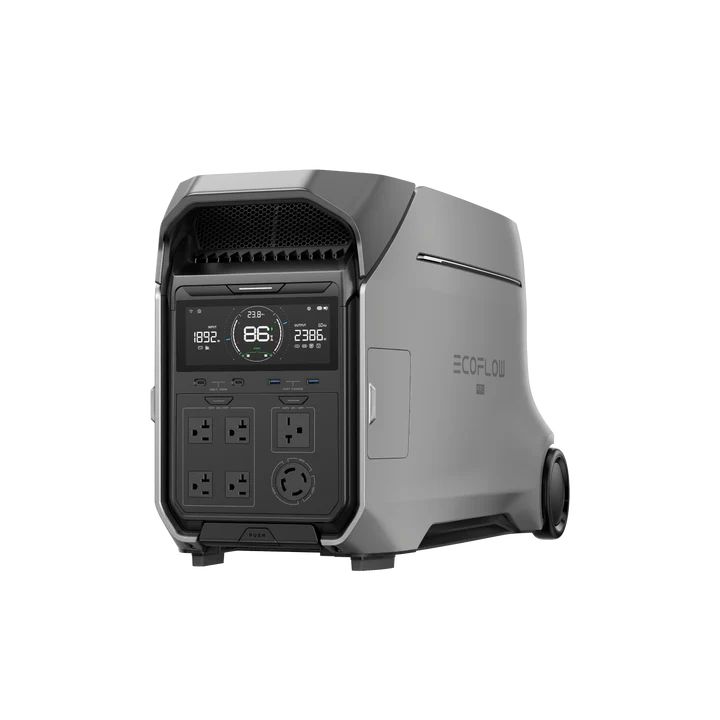 DELTA Pro 3A full-size fridge for about 3 days4,000 W output · 113.5 lb4,096 Wh$2,799Check if it’s on saleat EcoFlow
- TITAN 5000 ClassicA full-size fridge for about 4 days4,000 W output · 102.5 lb5,017.6 Wh$2,499Check if it’s on saleat EcoFlow
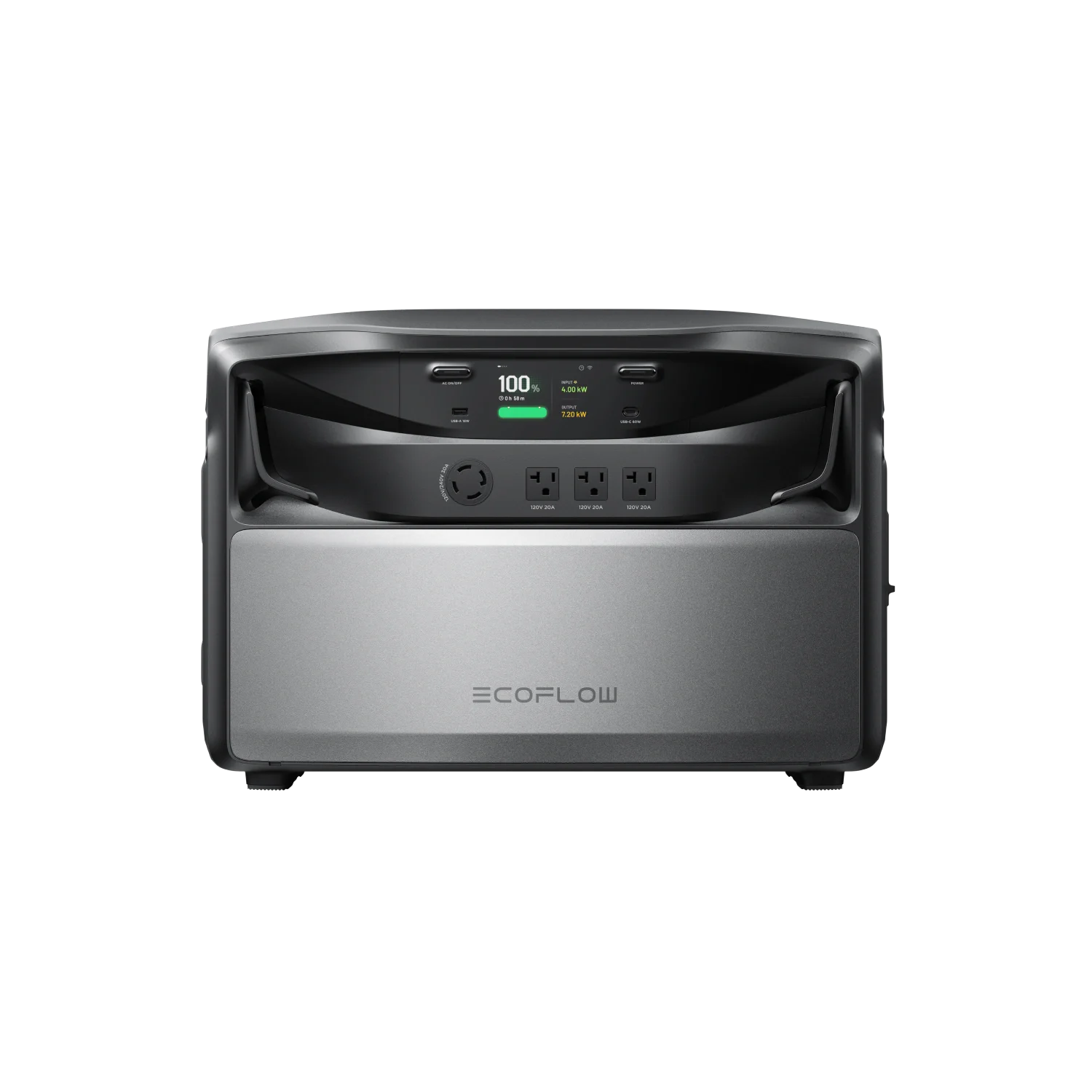 TITAN 5000A full-size fridge for about 4 days7,200 W output · 119 lb5,017.6 Wh$3,199Check if it’s on saleat EcoFlow
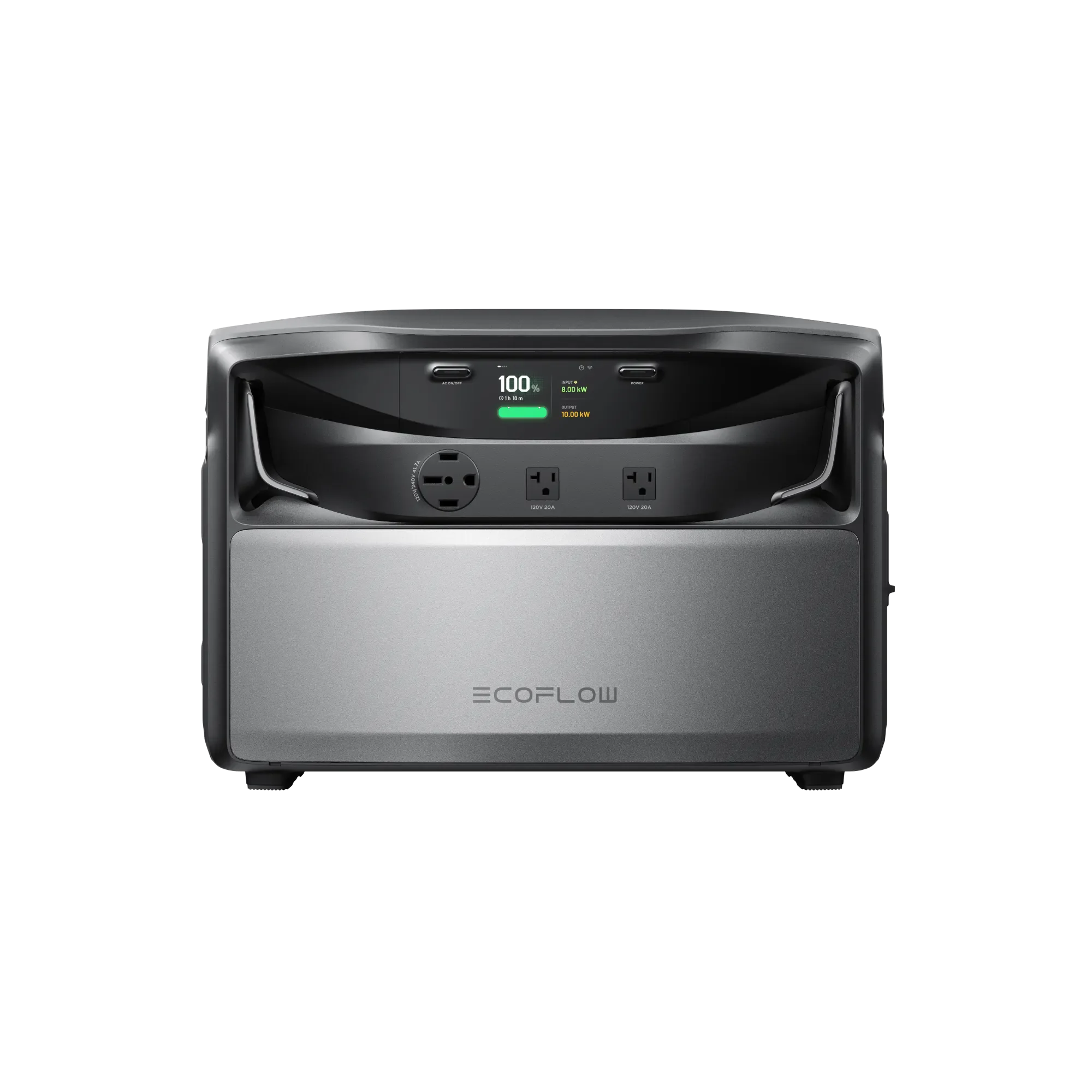 TITAN 5000 PlusA full-size fridge for about 4 days7,200 W output · 121.3 lb5,017.6 Wh$3,699Check if it’s on saleat EcoFlow
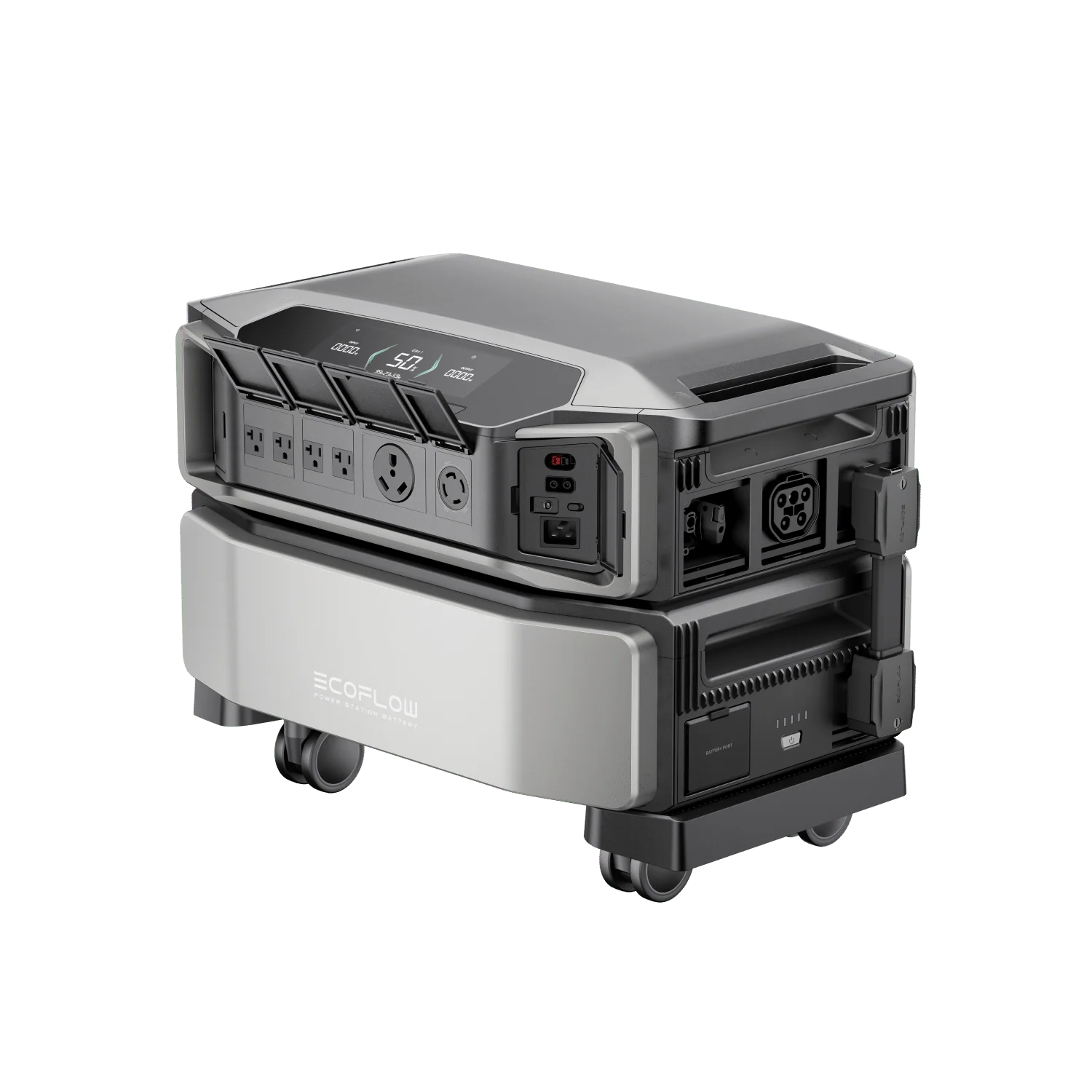 DELTA Pro Ultra+2 configurationsA full-size fridge for about 4 days7,200 W output · 181.8 lb6,144 Wh$4,199Check if it’s on saleat EcoFlow
 DELTA Pro Ultra XA full-size fridge for about 9 days12,000 W output · 298.7 lb12,288 Wh$7,899Check if it’s on saleat EcoFlow
Run times are planning estimates: a current full-size fridge at 150 W running a third of the time, a CPAP with its humidifier at 62 W for 8 hours, 85% of the battery reaching the outlet. A fridge is only counted when the station can start its compressor.
Full spec tableEvery model side by side, with retired units and EcoFlow’s solar panelsShowHide
2,000 Wh and up · smallest first
- 2,048 Wh$8792,400 W500 W
- 2,048 Wh$1,0292,400 W1,000 W
- 2,048 Wh$1,1493,000 W1,000 W
- 3,072 Wh$1,2993,600 W800 W
- 3,072 Wh$1,5993,600 W1,600 W
- 3,072 Wh$1,6993,600 W1,000 W
- 3,600 Wh$1,7993,600 W1,600 W
- 3,763 Wh$2,1993,600 W2,000 W
- 4,096 Wh$2,7994,000 W2,600 W
- 5,017.6 Wh$2,4994,000 W3,200 W
- 5,017.6 Wh$3,1997,200 W4,000 W
- 5,017.6 Wh$3,6997,200 W8,000 W
- 6,144 Wh$4,1997,200 W5,600 W
- 12,288 Wh$6,1997,200 W5,600 W
- 12,288 Wh$7,89912,000 W10,000 W
- 18,432 Wh$8,1997,200 W5,600 W
| Model | Capacity | Output | Solar in | Price | Where to buy | Compare |
|---|---|---|---|---|---|---|
| DELTA 3 Max44.8 lb · LFP · 4,000 cycles | 2,048 Wh | 2,400 W | 500 W | $879$0.43/Wh | Check if it’s on saleat EcoFlow | |
| DELTA 2 Max50.7 lb · LFP · 3,000 cycles | 2,048 Wh | 2,400 W | 1,000 W | $1,029$0.50/Wh | Check if it’s on saleat EcoFlow | |
| DELTA 3 Max Plus50.7 lb · LFP · 4,000 cycles | 2,048 Wh | 3,000 W | 1,000 W | $1,149$0.56/Wh | Check if it’s on saleat EcoFlow | |
| DELTA 3 Ultra72.1 lb · LFP · 4,000 cycles | 3,072 Wh | 3,600 W | 800 W | $1,299$0.42/Wh | Check if it’s on saleat EcoFlow | |
| DELTA 3 Ultra Plus74.3 lb · LFP · 4,000 cycles | 3,072 Wh | 3,600 W | 1,600 W | $1,599$0.52/Wh | Check if it’s on saleat EcoFlow | |
| DELTA 3000 Gen457.3 lb · LFP · 6,000 cycles | 3,072 Wh | 3,600 W | 1,000 W | $1,699$0.55/Wh | Check if it’s on saleat EcoFlow | |
| DELTA Pro99 lb · LFP · 3,500 cycles | 3,600 Wh | 3,600 W | 1,600 W | $1,799$0.50/Wh | Check if it’s on saleat EcoFlow | |
| DELTA 3800 Gen467.5 lb · LFP · 6,000 cycles | 3,763 Wh | 3,600 W | 2,000 W | $2,199$0.58/Wh | Check if it’s on saleat EcoFlow | |
| DELTA Pro 3113.5 lb · LFP · 4,000 cycles | 4,096 Wh | 4,000 W | 2,600 W | $2,799$0.68/Wh | Check if it’s on saleat EcoFlow | |
| TITAN 5000 Classic102.5 lb · LFP | 5,017.6 Wh | 4,000 W | 3,200 W | $2,499$0.50/Wh | Check if it’s on saleat EcoFlow | |
| TITAN 5000119 lb · LFP | 5,017.6 Wh | 7,200 W | 4,000 W | $3,199$0.64/Wh | Check if it’s on saleat EcoFlow | |
| TITAN 5000 Plus121.3 lb · LFP | 5,017.6 Wh | 7,200 W | 8,000 W | $3,699$0.74/Wh | Check if it’s on saleat EcoFlow | |
| DELTA Pro Ultra181.8 lb · LFP · 3,500 cycles | 6,144 Wh | 7,200 W | 5,600 W | $4,199$0.68/Wh | Check if it’s on saleat EcoFlow | |
 DELTA Pro Ultra + 1 Battery293.6 lb · LFP · 4,000 cycles | 12,288 Wh | 7,200 W | 5,600 W | $6,199$0.50/Wh | Check if it’s on saleat EcoFlow | |
| DELTA Pro Ultra X298.7 lb · LFP · 3,500 cycles | 12,288 Wh | 12,000 W | 10,000 W | $7,899$0.64/Wh | Check if it’s on saleat EcoFlow | |
 DELTA Pro Ultra + 2 Batteries405.4 lb · LFP · 3,500 cycles | 18,432 Wh | 7,200 W | 5,600 W | $8,199$0.44/Wh | Check if it’s on saleat EcoFlow |
Transparency Matters
Power Station Arena is reader-supported. When you buy through links on our site, we may earn a commission. This supports our independent real world testing/reviews of usability and reliability at no cost to you.
Not sure which EcoFlow series you want?
Picking the right series narrows the list far faster than comparing models one by one — it decides portability, expandability and how long the thing lasts before you ever look at a spec sheet.
RIVER 3286–572 WhvsRIVER 2243–768 WhRIVER 3 switches to battery about three times faster than RIVER 2. It is also the first RIVER generation where some models take an extra battery.11 models·generationsCompare series DELTA 31–3.1 kWhvsDELTA 22 kWhDELTA 3 halves the switchover and adds years of cycle life — but DELTA 2 is the generation where every unit expanded.11 models·generationsCompare series DELTA1–3.1 kWhvsRIVER243–768 WhRIVER is a battery you carry. DELTA is the first piece of a system you build.22 modelsCompare series DELTA1–3.1 kWhvs Jackery HomePower1–3.6 kWhTwo closely matched backup lines that differ on almost nothing except how long they last and how far they grow.16 modelsCompare series
Browse all series comparisons — every series-vs-series matchup we've written.
Competitive Landscape: The Big Four
| Brand | Relative Strength (The "Pro") | Consideration (The "Con") |
|---|---|---|
| Relative strengthSpeed & Tech: Fastest charging (X-Stream) and best-in-class app ecosystem. | ConsiderationComplexity: The modular ecosystem can be overwhelming for casual users. |
 | Relative strengthSimplicity & Durability: Their "Explorer" series is famous for plug-and-play ease and rugged build quality. | ConsiderationCharging Speed: Generally slower AC recharge times compared to EcoFlow's X-Stream. |
 | Relative strengthValue & Stability: Often leads the market in "Price per Watt-Hour" and offers highly stable LFP builds. | ConsiderationThe App: While functional, the Bluetti app is often cited as less intuitive than EcoFlow’s. |
 | Relative strengthBuild Quality & Efficiency: Incredible industrial design and highly efficient inverters for long-term home backup. | ConsiderationFan Noise: Cooling fans are noticeable during fast charging or heavy loads, and top-tier units like the F3800 run heavier than modular rivals. |
Honest Considerations Before You Buy
No power station is perfect. Here are the trade-offs worth knowing about — each with the context that keeps it in perspective.
Fan Noise During Fast Charging
Charging at full X-Stream speed pulls up to 1,800W from the wall, and the cooling fans that make this possible are clearly audible — several owners and reviewers describe them as too loud to sit near during a fast charge or heavy-load session.
Good to know
It's the trade-off for some of the fastest recharge times in the category. The fans are temperature-adaptive and stay quiet at idle or light loads, and the EcoFlow app lets you toggle 'Slow Charge' or dial back the AC input if near-silent charging matters more than speed.
A Closed Expansion Ecosystem
EcoFlow's Extra Battery packs use a proprietary connector that's specific to each product line — a DELTA 2 battery won't expand a DELTA Pro, and you can't drop in a cheaper third-party battery to grow your capacity.
Good to know
The lock-in exists because the host unit's battery management system actively balances charge across every connected pack, which a generic battery couldn't do safely. Newer flagships have also started preserving backward compatibility — the DELTA Pro 3, for instance, can still use the original DELTA Pro's smart batteries.
A Shorter Standard Warranty Than Some Rivals
EcoFlow's out-of-the-box warranty on most portable power stations runs shorter than the 5-year coverage some rivals lead with — commonly 1 to 3 years depending on the model.
Good to know
Registering your unit in the EcoFlow app extends coverage on many current models to up to 5 years total at no extra cost — it closes most of the gap, it's just an opt-in step rather than automatic.
A Fast-Moving, Sprawling Lineup
EcoFlow ships new variants at a rapid pace — the DELTA 3 line alone now spans several tiers released in quick succession — which can make it genuinely confusing to know which model is the current best pick.
Good to know
Most new entries are tier variants — different capacity or output within the same generation — rather than full redesigns that orphan what you already own. Our comparison table below is kept current so you can see exactly where each model lands.
Brennan’s DELTA 3 Plus running camp in Yosemite
See the photos →Hear From EcoFlow Owners
Spec sheets only go so far. EcoFlow runs its own owner communities, where people post their real setups, outage stories and fixes. They're the best place for setup help and firmware news.
- Redditr/Ecoflow_communityOwner setups, questions and troubleshooting threads.
- FacebookEcoFlow Official ClubEcoFlow’s main owners’ group, with outage stories, setups and launch news.
- ForumEcoFlow Community ForumEcoFlow’s own forum for product questions and discussion.
Regional groups and more owner stories are on EcoFlow's community page. These spaces are run by EcoFlow; our comparisons and verdicts stay independent.
Frequently Asked Questions
EcoFlow TITAN 5000: one 5 kWh battery, three ways to buy it
The Classic is a 120 V machine with 4,000 W. The base TITAN 5000 adds 120/240 V split-phase at 7,200 W. The Plus takes the 240 V port to 41.7 A and doubles the solar input to 8,000 W. All three expand to 30 kWh, and all three have been on sale on EcoFlow’s US store since November 3.
The line
- TITAN 5000 launch tracker: every spec, graded
- TITAN 5000 Classic · 4,000 W · 120 V
- TITAN 5000 · 7,200 W · 120/240 V
- TITAN 5000 Plus · 7,200 W · 8,000 W solar
- Launch-day story
- Which TITAN for your home: the Smart Home Panel 10’s ten slots, and its AFCI/GFCI rule
Compare EcoFlow Against Rivals
Explore more brands and comparisons on our Home Page.