
Generation comparison
EcoFlowDELTA 2vsDELTA 3Series
DELTA 3 halves the switchover and adds years of cycle life — but DELTA 2 is the generation where every unit expanded.
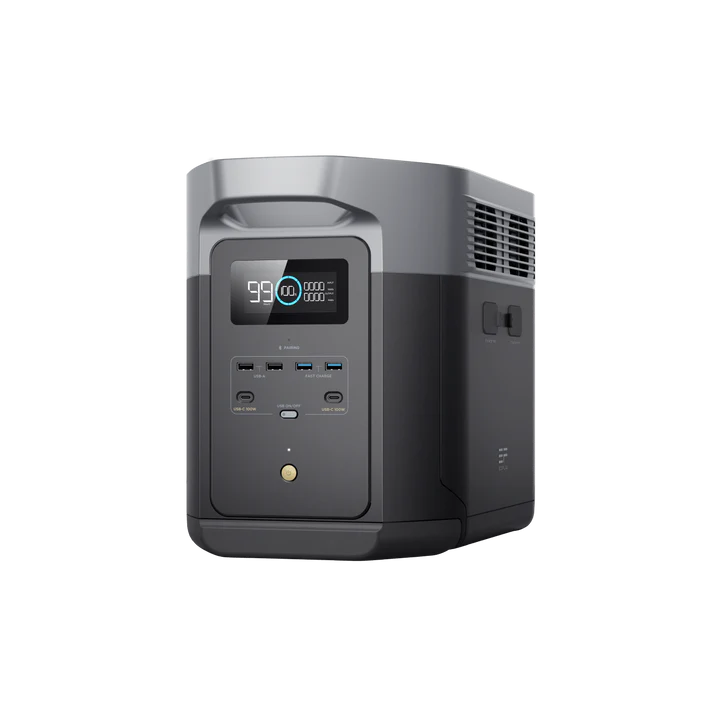
DELTA 2 Series
The previous generation — two models, both expandable.
2 models/1,024–2,048 Wh/100% expandable

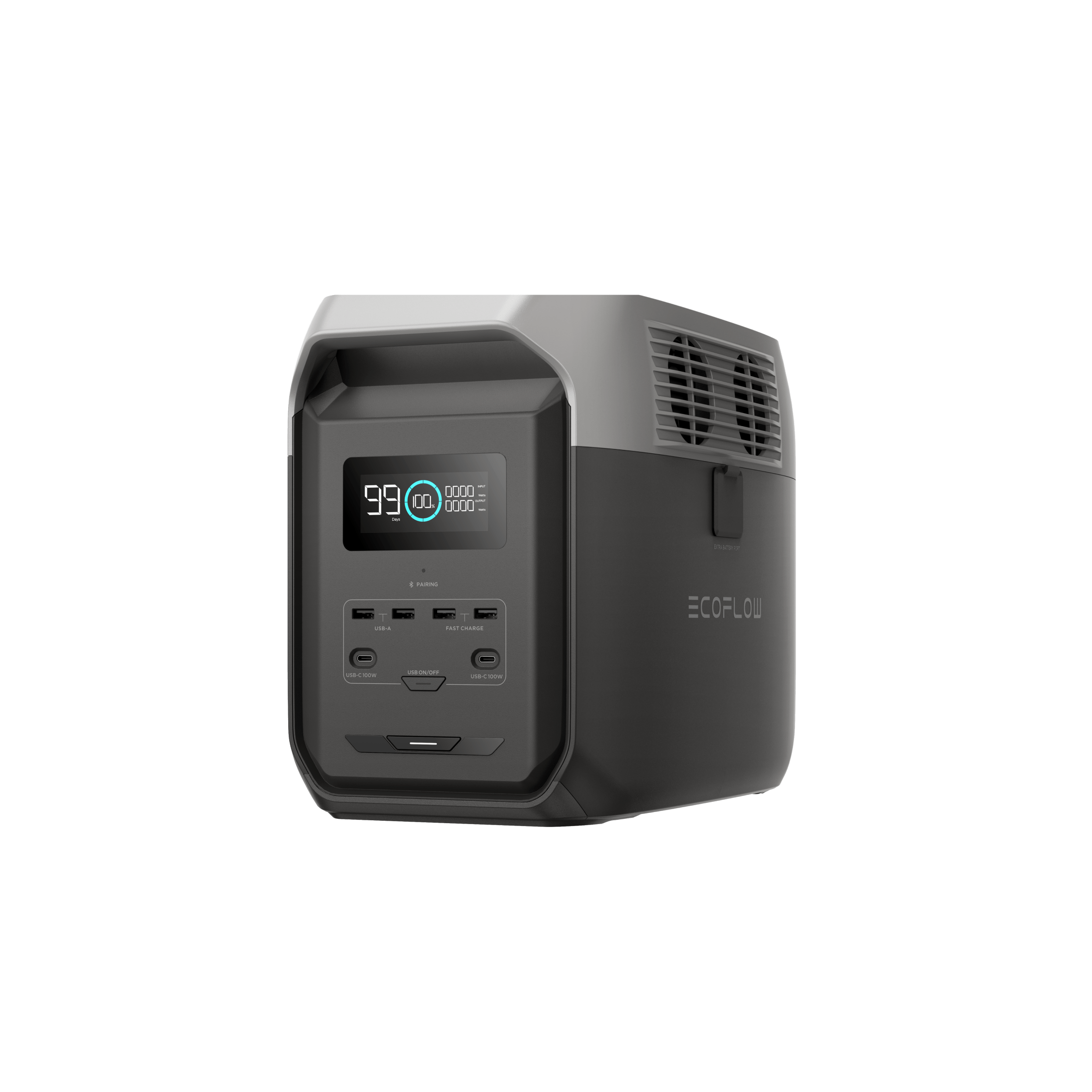
DELTA 3 Series
The current generation — faster cutover, longer-lived at the top.
9 models/960–3,072 Wh/67% expandable
- Models compared
- 112 + 9
- Capacity spanned
- 960–3,072Wh
- Ranges overlap
- 60%of the band
- Genuine rivals
- 3model pairs
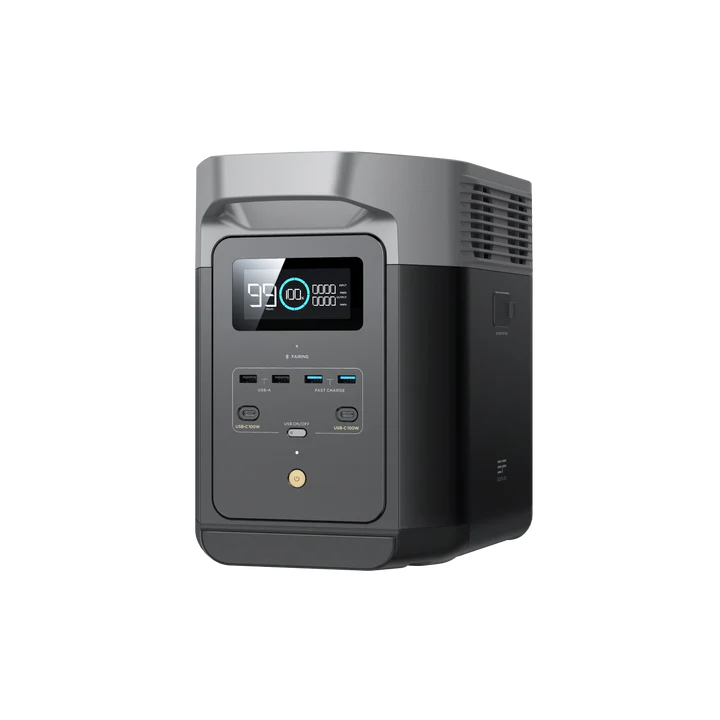 DELTA 2 Max2,048 WhDELTA 3 1000 Air960 Wh
 DELTA 31,024 Wh
 DELTA 3 15001,536 Wh
 DELTA 3 Max2,048 Wh
 DELTA 3 Ultra Plus3,072 Wh
DELTA 21,024–2,048 Wh
DELTA 3960–3,072 Wh
This compares two entire product lines, not two units. Get the line right and the model almost picks itself. Get it wrong and no amount of comparing model numbers will rescue the decision. Already know the two units you're torn between? Compare two products head-to-head
Two lines, two different jobs
EcoFlow DELTA 2
Power-forwardDELTA 2 was a short, uncomplicated generation: two units, both expandable, both aimed squarely at placed backup duty. There were no trims to decipher and no dead ends — whichever you bought, you could add a battery to it later.
EcoFlow DELTA 3
Runtime-forwardDELTA 3 is the current generation and it’s far broader, spanning nine models from a lean lightweight unit up to considerably more capacity than DELTA 2 offered. It switches over to battery twice as fast, and its larger models are rated for meaningfully more cycles. The cost of that breadth is that the line now needs reading carefully.
Are these two lines even competing?
Before asking which is better, it's worth asking whether they overlap at all.
Two generations of the same line, so these units map onto each other closely — DELTA 2 against DELTA 3 Classic, DELTA 2 Max against DELTA 3 Max, at near-identical capacity and output.
Because the mapping is that direct, this isn’t a question of which suits your job. It’s a question of whether the newer generation's specific gains — faster handover, more cycles at the top of the range, a much wider choice of sizes — are worth more to you than the older generation's one advantage, which is that it had no non-expandable models in it at all.
The short version
These two share 60% of their capacity range, and 3 of the 11 models between them land on a genuine head-to-head. This is one of the closer calls on the site — you could be happy with either, so what decides it is going to be something other than size.
What actually separates them
Five specifications that decide which line fits — and one that doesn't.
Switchover speed
When utility power drops, a unit with UPS passthrough takes over — but not instantly. Under about 10ms almost nothing notices. Around 20ms most equipment rides through, but sensitive gear can blink: a desktop may reboot, some CPAP units will alarm.
DELTA 2
20ms
DELTA 3
10ms
DELTA 3 halves the handover. DELTA 2 was already usable for most equipment, so this is a narrowing of risk rather than a transformation — but if you’re protecting a desktop or a medical device specifically, it moves the line from "usually fine" to "safe as a class".
Lifespan
A cycle is one full discharge and recharge, and the rating is roughly how many you get before capacity settles to about 80% of new. At daily use the gap between these two generations is a few years of service; at occasional use it never arrives.
DELTA 2
3,000
DELTA 3
4,000
The larger DELTA 3 models carry a materially higher rating than anything in DELTA 2. If the unit will cycle daily this is the most valuable change in the generation. If it sits waiting for outages, it’s close to irrelevant — and worth saying so, because it’s the number upgrade pitches lead with.
Room to grow
Expandability is whether a unit accepts a second battery later. It separates a finished appliance from the first component of a larger system.
DELTA 2
100%
DELTA 3
67%
The one axis where the older generation leads. Every DELTA 2 expanded; DELTA 3 introduced models that don’t. It’s a small shortfall in percentage terms and easy to avoid — but it means "any DELTA 3" is no longer a safe instruction if expansion matters, where "any DELTA 2" was.
Power character
Output divided by capacity describes what kind of tool a unit is. A high ratio means a large inverter on a modest pack — it starts demanding appliances but doesn’t run them long. A low ratio is the opposite.
DELTA 2
1.76 W/Wh
DELTA 3
1.17 W/Wh
DELTA 2 reads as the punchier generation, but that’s breadth rather than a downgrade: DELTA 3 spans everything from a very lean endurance unit to models matching DELTA 2's character exactly. Compare like sizes rather than the generations as wholes here.
Starting headroomNo difference
Surge is the brief spike a motor demands at the instant it starts — a fridge compressor or a pump can pull several times its running draw for a fraction of a second. Surge headroom is how far above rated output a unit can go to absorb that.
DELTA 2
2.0× rated
DELTA 3
2.0× rated
Unchanged between the generations. Both handle compressors and pumps the same way, so anything with a motor isn’t a reason to prefer one generation over the other.
What each line is good at, and what it isn't
EcoFlow DELTA 2
Strengths
- Every unit in the generation accepts an expansion battery — no dead ends
- Only two models, so choosing is trivial
- Same surge headroom as DELTA 3 for compressors and pumps
- Still fully capable placed backup, with no capability removed by age
Limits
- Switchover is twice DELTA 3's, which is fine for most gear but not all
- Lower cycle rating than the larger DELTA 3 models
- Only two sizes, both in the middle of the range
- Being the outgoing generation, availability is increasingly patchy
EcoFlow DELTA 3
Strengths
- Half the switchover time, moving the line to safe-as-a-class for sensitive gear
- Materially higher cycle rating on the larger models
- Nine models spanning both lower and considerably higher capacity
- Includes a lightweight option DELTA 2 had no equivalent to
Limits
- Not every model expands — the older generation had no such gaps
- Nine overlapping trim names make the generation genuinely hard to navigate
- The cycle-life gain is concentrated in the larger models, not the whole line
- No change in surge headroom over DELTA 2
How to read this
A limit isn't a fault — it's a constraint on what a line is built to do. Every line here has them, including whichever one suits you. The useful question is which set of limits you'll never notice.
Where the lines actually collide
Models within 15% of each other on capacity — and whether they're truly interchangeable.

So which one should you buy?
Nobody actually buys a spec sheet. Find the row that sounds most like your life — that's the line we'd point you at, and why.
Daily cycling — solar-first or off-grid
The larger DELTA 3 models carry a materially higher cycle rating, and daily use is where that converts into years.
Protecting a desktop or CPAP
Half the switchover time moves it from usually-fine to safe as a class.
You want expansion and don’t want to check
Every DELTA 2 expands. With DELTA 3 you have to read the model.
Occasional outage cover
At that duty cycle the lifespan gain never arrives and the switchover difference rarely shows.
The most capacity, or the lightest option
DELTA 3 reaches further in both directions than DELTA 2 did.
Or start from the job instead
If you already know what you need it to do, these rank models for that job across every brand we track — not just these two lines.
Every model, if you want to see the whole range
DELTA 2 · 2 models
| Model | Wh | W | lb | Exp. |
|---|---|---|---|---|
| DELTA 2 | 1,024 | 1,800 | 27.0 | Yes |
| DELTA 2 Max | 2,048 | 2,400 | 50.7 | Yes |
DELTA 3 · 9 models
| Model | Wh | W | lb | Exp. |
|---|---|---|---|---|
| DELTA 3 1000 Air | 960 | 500 | 22.0 | — |
| DELTA 3 | 1,024 | 1,800 | 27.0 | Yes |
| DELTA 3 Classic | 1,024 | 1,800 | 26.7 | — |
| DELTA 3 Plus | 1,024 | 1,800 | 27.0 | Yes |
| DELTA 3 1500 | 1,536 | 1,800 | 36.0 | Yes |
| DELTA 3 Max | 2,048 | 2,400 | 50.7 | Yes |
| DELTA 3 Max Plus | 2,048 | 3,000 | 50.7 | Yes |
| DELTA 3 Ultra Plus | 3,072 | 3,600 | 74.3 | Yes |
| DELTA 3 Ultra | 3,072 | 3,600 | 72.1 | — |
EcoFlow DELTA 2 vs DELTA 3 series FAQs
What is the difference between EcoFlow DELTA 2 and DELTA 3?
DELTA 3 halves the switchover time to battery, carries a materially higher cycle rating on its larger models, and spans nine models reaching both lower and considerably higher capacity than DELTA 2. DELTA 2 leads on one point: every unit in it accepts an expansion battery, where DELTA 3 introduced models that don’t. Surge headroom is unchanged between the generations.
Is DELTA 3 worth it over DELTA 2?
It depends how hard the unit works. Cycled daily, the higher cycle rating on the larger DELTA 3 models is worth years of service. Used for occasional outages, that gain never arrives and the switchover difference rarely shows — in which case DELTA 2 remains fully capable, and has the advantage that every model in it expands.
Which DELTA 3 replaces the DELTA 2?
DELTA 3 Classic sits at the same capacity and output as the DELTA 2, and DELTA 3 Max matches the DELTA 2 Max. The overlap section on this page links the head-to-head for each of those pairs.
Can every DELTA 3 take an expansion battery?
No — and this is the one place the older generation is ahead. Most DELTA 3 models expand, but not all of them do, so if expansion matters you have to check the specific model. Every DELTA 2 accepted one.
Do DELTA 2 and DELTA 3 handle a fridge the same way?
Yes. Both generations carry the same surge headroom above rated output, which is what absorbs a compressor spike at startup. Anything with a motor isn’t a reason to prefer one generation over the other.
Related line comparisons
Figures are generated from our catalog of 146 power stations and refresh with it — line-level values are medians across every model in the line. See how we test and score.