PSA
StationArena
Ahead of launch

EcoFlow · TITAN series · Power Station Arena coverage · regulatory filings for the TITAN 5000 line

EcoFlow TITAN 5000 series

A preview of EcoFlow’s next flagship: 5 kWh, up to 7,200 W and 240 V split-phase, in three versions from $2,599.

EcoFlow has a new flagship line waiting in the wings. The TITAN 5000 arrives as three machines built on one 5,017.6 Wh pack: a Classic at $2,599 with 4,000 W, the TITAN 5000 at $3,199 with 7,200 W and 120/240 V split-phase, and a Plus at $3,699 that reaches 10 kW with grid pass-through. All three expand to 30 kWh, all three were certified on July 20, 2026, and EcoFlow’s own store is already taking $50 reservations that promise two free solar panels and 5 per cent off at launch. The figures here come from EcoFlow’s rating labels and its own price lists, and where we reason further, the thesis is on the page.

Reporting and analysis by Wenny ZhengFirst surfaced Jul 20, 2026Updated Sep 20, 2026

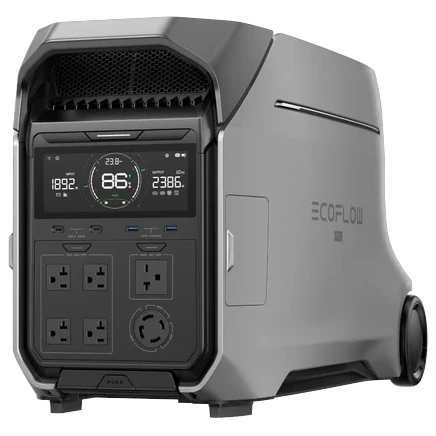
Overhanging top lipDisplay · AC on/off · powerMoulded side handle recess3 × 120 V 20 A + one L14-30Brushed lower panelBASE UNIT · NOT TO SCALE

Our rendering · base TITAN 5000

The short answer

One 5 kWh pack, three ways to buy it: the $2,599 Classic for 120 V homes, the $3,199 TITAN 5000 for 240 V, and the $3,699 Plus for the biggest circuits.

Our read on the product is below, and so are the units you can buy today.

Get one email when the price or ship date lands

And one when our test results are in. Nothing else.

By subscribing, you agree to our Privacy Policy. Unsubscribe anytime.

01 · What surfaced

What EcoFlow has already put in writing

First surfaced July 20, 2026 in regulatory filings for the TITAN 5000 line. The framing below is ours; every figure in it is graded in the ledger that follows.

The TITAN name is new, and the shape of the range says what it is for. EcoFlow’s store calls all three “Whole-Home Backup Power”, sells them bundled with a Smart Home Panel, and expands them to six packs and 30 kWh. This is the DELTA Pro Ultra’s job, installed backup for a house, brought down to a price where the entry unit costs $2,599.

The three-way split is the clever part, and it breaks from the usual good-better-best. All three carry exactly the same 5,017.6 Wh pack. What $1,100 buys between the Classic and the Plus is voltage and current: the Classic is a 120 V machine, the base unit adds 240 V at 30 A, and the Plus takes that to 41.7 A with a larger pass-through. Capacity is constant; the panel is the ladder.

The timing adds an edge. Anker has a 5 kWh S5000 certified for the same season, so two of the biggest names in the category are converging on the same capacity within weeks of each other. EcoFlow’s answer is already priced, bundled and taking reservations.

02 · Specs

TITAN 5000 specifications

Everything known so far, line by line, so you can tell which numbers are firm enough to plan around. Each figure is marked EcoFlow-published or published by Power Station Arena; where we reason beyond the published figures, the reasoning is shown.

Overhanging top lipDisplay · AC on/off · powerMoulded side handle recess3 × 120 V 20 A + one L14-30Brushed lower panelBASE UNIT · NOT TO SCALE

The spec sheet at a glance

Our own rendering of the base unit: three 120 V 20 A sockets, one L14-30 twist-lock for 240 V, a colour display and moulded handles at each end. The Plus trades one socket for a 41.7 A four-pin outlet.

Which one, if either

The TITAN units share an architecture and differ on the handful of figures below. This is the choice in full; the spec sheet after it is the detail.

 TITAN 5000 ClassicTITAN 5000TITAN 5000 Plus
Capacity5.02 kWh5.02 kWh5.02 kWh
Continuous output4,000 W7,200 W7,200 W
Price$2,599$3,199$3,699
TITAN 5000 Classic
The price that turns heads: the same 5,017.6 Wh pack as the $3,699 unit for $1,100 less. The trade is voltage. The Classic is a 120 V machine throughout, with 4,000 W of output and a 250 V solar window, and EcoFlow’s own bundle pairs it with the 120 V Smart Home Panel. For a house on gas heat and gas cooking, it is the bargain of the line.
TITAN 5000
The one we expect most people to want: the same pack, 7,200 W, and 120/240 V split-phase at 30 A, which is what makes a well pump or a range possible. $600 over the Classic buys the second voltage, 3,200 W more output and a solar window that runs to 450 V.
TITAN 5000 Plus
Read the label closely: the battery delivers 7,200 W, exactly as the base unit does, and the 10 kW figure is a total that includes grid pass-through. What the extra $500 buys is a 41.7 A split-phase port in place of a 30 A one and an 8 kW charging path. It is the choice for a large 240 V circuit and a fast turnaround.
Price
TITAN 5000 Classic
$2,599
TITAN 5000
$3,199
TITAN 5000 Plus
$3,699

EcoFlow’s own list prices. Bundles with solar, a Smart Home Panel or the extra battery run from $3,419 to $6,799.

EcoFlow-published
Availability
Reservations are open: a $50 TITAN Series Coupon is on sale now on EcoFlow’s US store, with the units themselves queued behind it
EcoFlow-published
Early-access terms
EcoFlow’s reservation offer promises two free 220 W solar panels and 5 per cent off at launch, and teases the launch price as “USD $3,XXX”

Shown with the Plus, which lists at $3,699; five per cent off that is about $3,514 by our arithmetic.

EcoFlow-published
Store status
Live on EcoFlow’s US store and waiting to be linked from its menus

How we knowEstablished by Power Station Arena’s own checks of EcoFlow’s US store on September 20, 2026.

Published by Power Station Arena
Our read on timing
Weeks away at most. The certifications date from July 20, the store pages were built on August 11 and went live on September 16 and 17, and deposits are already being taken. Everything but the announcement is finished.
Power Station Arena analysis
Capacity
5,017.6 Wh · 204.8 V · 24.5 Ah, identical across all three
EcoFlow-published
Total output
TITAN 5000 Classic
4,000 W
TITAN 5000
7,200 W
TITAN 5000 Plus
10 kW, of which 7,200 W comes from the battery

The Plus figure is a total that includes grid pass-through. On battery alone it matches the base unit.

EcoFlow-published
120/240 V split-phase
TITAN 5000 Classic
120 V throughout
TITAN 5000
120/240 V, 30 A
TITAN 5000 Plus
120/240 V, 41.7 A

EcoFlow’s own bundles agree: the Classic is sold with a 120 V Smart Home Panel 10, the other two with the 240 V version.

EcoFlow-published
AC outlets
TITAN 5000 Classic
Three 120 V 20 A sockets and one 120 V 30 A port
TITAN 5000
Three 120 V 20 A sockets and one L14-30 twist-lock marked 120V/240V 30A
TITAN 5000 Plus
Two 120 V 20 A sockets and one four-pin 14-50-pattern outlet marked 120V/240V 41.7A

The markings on the units match the rating labels exactly.

EcoFlow-published
Front panel
A colour display reading charge, input and output, an AC on/off key and a power key, a USB-A 18 W and a USB-C 60 W port, and moulded handle recesses at each end

EcoFlow shows the base unit reading 4.00 kW in and 7.20 kW out, and the Plus reading 8.00 kW in and 10.00 kW out.

EcoFlow-published
Side panel
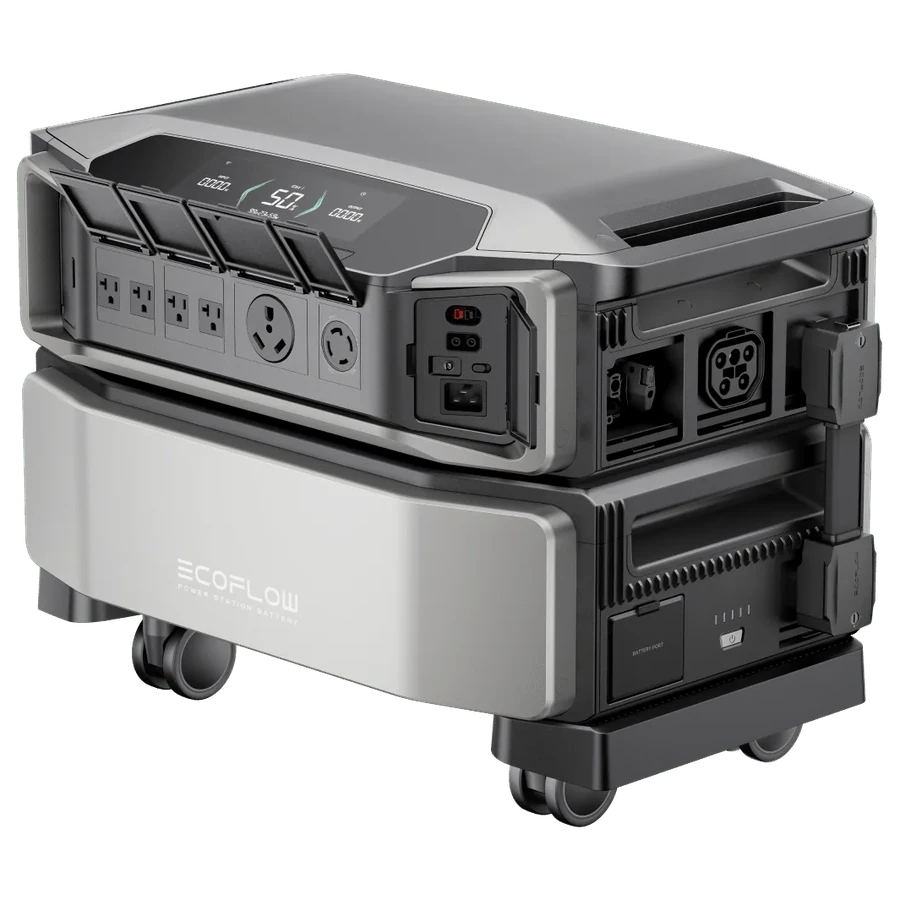
A mesh intake and a bank of cooling fins above a multi-pin extra-battery connector, two smaller covered connectors, and two flip-covered ports EcoFlow marks AC POWER IN/OUT PORT and AC POWER IN PORT
EcoFlow-published
Solar (MPPT)
TITAN 5000 Classic
30–250 V, 16 A, 3,200 W max
TITAN 5000
40–450 V, 16 A, 4,000 W max
TITAN 5000 Plus
40–450 V, 16 A, 4,000 W max

PV short-circuit current 20 A max on all three; PV DC AFCI Type 1.

EcoFlow-published
Expandable to
30,105.6 Wh, exactly six packs, using EcoFlow’s EF-TT-E5-G1 extra battery

The bundles imply a price for the extra battery between $1,830 and $2,200.

EcoFlow-published
AC input
100–120 V, 15 A max, limited to under three hours when the draw is above 12 A
EcoFlow-published
USB
USB-C 60 W and USB-A fast charge 18 W
EcoFlow-published
Where it lives
Indoors, in a utility space: EcoFlow’s label places it outside bedrooms and other living areas, the standard rule for a unit holding more than 1 kWh
EcoFlow-published
Operating temperature
Discharge −10 °C to 45 °C (14 °F to 113 °F); charge 0 °C to 45 °C (32 °F to 113 °F)
EcoFlow-published
Our read on the cells
LFP, 64 cells in series. The pack’s 204.8 V is exactly 64 × 3.2 V, and the extra-battery port’s 172.8–230.4 V window is exactly 64 × 2.7 V to 64 × 3.6 V: the working range of a lithium iron phosphate cell. The long-life chemistry, written in arithmetic.
Power Station Arena analysis
Our read on weight
135 to 150 lb. EcoFlow’s DELTA Pro 3 carries 4,096 Wh at 112 lb and the DELTA Pro Ultra 6,144 Wh at 182 lb, both between 27 and 30 lb per kilowatt-hour. A 5,017.6 Wh pack at that density lands in that band, which fits the deep moulded handles at each end.
Power Station Arena analysis
Our read on recharge
EcoFlow shows the Plus taking 8.00 kW and the base unit 4.00 kW. At those rates a 5,017.6 Wh pack fills in roughly 40 minutes and 75 minutes. From a standard 120 V wall outlet, the label’s limit works out to about three hours.
Power Station Arena analysis
Maker-published
The maker put it in writing — press release, stand materials, manual or store page.
Published by Power Station Arena
Power Station Arena established it — read from the unit, the stand material or documents obtained and checked, and published here first. Each line shows the evidence.

03 · Our arithmetic

What the published numbers imply

Runtimes worked out from EcoFlow’s own figures. These are estimates, and they are labelled Power Station Arena analysis everywhere they appear.

LoadTITAN 5000 ClassicTITAN 5000TITAN 5000 Plus
500 WLighting, chargers and a radio8.5 h8.5 h8.5 h
1,500 WOne 15 A corded tool at full draw2.8 h2.8 h2.8 h
3,000 WTwo tools running plus lighting1.4 h1.4 h1.4 h
7,200 WThe full continuous ratingwon’t run36 min36 min

Assumes 85% of rated capacity reaches the load — the same planning constant our comparison engine uses for every station. Real runtime at 7.2 kW will also depend on how the pack derates in heat, which nobody has measured yet.

Power Station Arena analysis Expansion arithmetic

Growing from 5.02 to 30 kWh means adding about 25 kWh of extra batteries: five EF-TT-E5-G1 packs beside the base unit, each matching its 5,017.6 Wh. The bundles put each pack between $1,830 and $2,200, so a full 30 kWh system lands in five figures.

Good to knowEvery estimate above updates automatically if EcoFlow revises a published figure; nothing here is typed in by hand.

04 · Our take

What the TITAN 5000 is really for, and who it is aimed at

Analysis by the Test Desk — not a summary of EcoFlow’s release or anyone else’s coverage. Every comparison figure below comes from the named maker’s own page.

Start with the Classic, because its price will turn heads. $2,599 buys the same 5,017.6 Wh pack as the $3,699 unit, the cheapest route to a 5 kWh EcoFlow yet. The trade is voltage: the Classic is a 120 V machine throughout, and EcoFlow’s own bundle confirms it by pairing the Classic with a 120 V Smart Home Panel while the other two get the 240 V version. For a house on gas heat and gas cooking that is a bargain. For a well pump, a range or central air, the base TITAN is the one to look at.

The Plus rewards a careful reading of its label: “Total Output: 10 kW Max”, followed in parentheses by “7200W for discharge only”. The battery delivers exactly what the $3,199 base unit delivers, and the additional 2.8 kW is grid pass-through. What the extra $500 buys is a 41.7 A split-phase port in place of a 30 A one and an 8 kW charging path, both of which matter for a large 240 V circuit and a fast turnaround.

The pricing is the real news, and it is aggressive. EcoFlow’s own DELTA Pro 3 is 4,096 Wh and 4,000 W; the TITAN base is 5,017.6 Wh and 7,200 W with split-phase, listed at $3,199. Anker’s F3800 is 3,840 Wh and 6,000 W. If these prices hold to launch, EcoFlow has put more pack and more inverter into the $3,000 bracket than anything currently in it, with six-pack expansion to 30 kWh. That is a whole-home system assembled out of a portable-sized box, priced against portables.

The labels also settle a question EcoFlow has yet to answer out loud: what is inside. The pack is rated 204.8 V, which is exactly 64 cells at 3.2 V, and the extra-battery port works between 172.8 V and 230.4 V, exactly 64 cells swinging between 2.7 V and 3.6 V. That is the signature of lithium iron phosphate, the long-life chemistry, written in arithmetic rather than marketing.

The way EcoFlow is staging this tells you how close it is. The store pages were built on August 11 and went live on September 16 and 17, quietly, ahead of any announcement. The reservation offer is already running: a $50 coupon that promises two free 220 W solar panels and 5 per cent off at launch, with the launch price teased as “USD $3,XXX”. Money is changing hands for a product that has yet to be introduced, which is the clearest sign that the introduction is days or weeks away.

Our advice on the $50: the electrical story is strong enough to justify a refundable place in line. The figures still to arrive, confirmed weight, switchover time, cycle rating and warranty, are the ones that separate a good home-backup unit from a great one, and they come with the announcement.
05 · Buy today

The 7 kW-class units you can actually order

Same capacity band, shipping now, with published outlet lists and prices we read twice a day. Bars share one scale with the announced unit at the top; each card links to a head-to-head we have adjudicated.

Reference · not on sale

EcoFlow TITAN 5000 series

Ahead of launch
Capacity
5,018 Wh
Output
7,200 W
Surge

Weight not published · TITAN 5000 Classic: $2,599 · TITAN 5000: $3,199 · TITAN 5000 Plus: $3,699

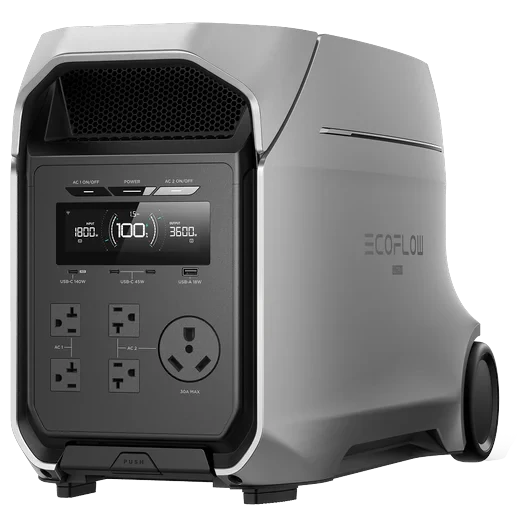
EcoFlow DELTA Pro 3

EcoFlow

DELTA Pro 3

$2,799 listed · 112 lb

Capacity
4,096 Wh
Output
4,000 W
Surge
6,000 W

The EcoFlow to buy if you need it now: 4,096 Wh and 4,000 W with split-phase output, shipping today. Against the TITAN base you trade about 900 Wh, 3,200 W and the six-pack ceiling.

EcoFlow DELTA Pro Ultra

EcoFlow

DELTA Pro Ultra

$4,199 listed · 182 lb

Capacity
6,144 Wh
Output
7,200 W
Surge
10,800 W

More of everything the TITAN promises, from the same maker, already on sale: 6,144 Wh behind the same 7,200 W, expandable, and the unit whose job the TITAN line appears built to do for less.

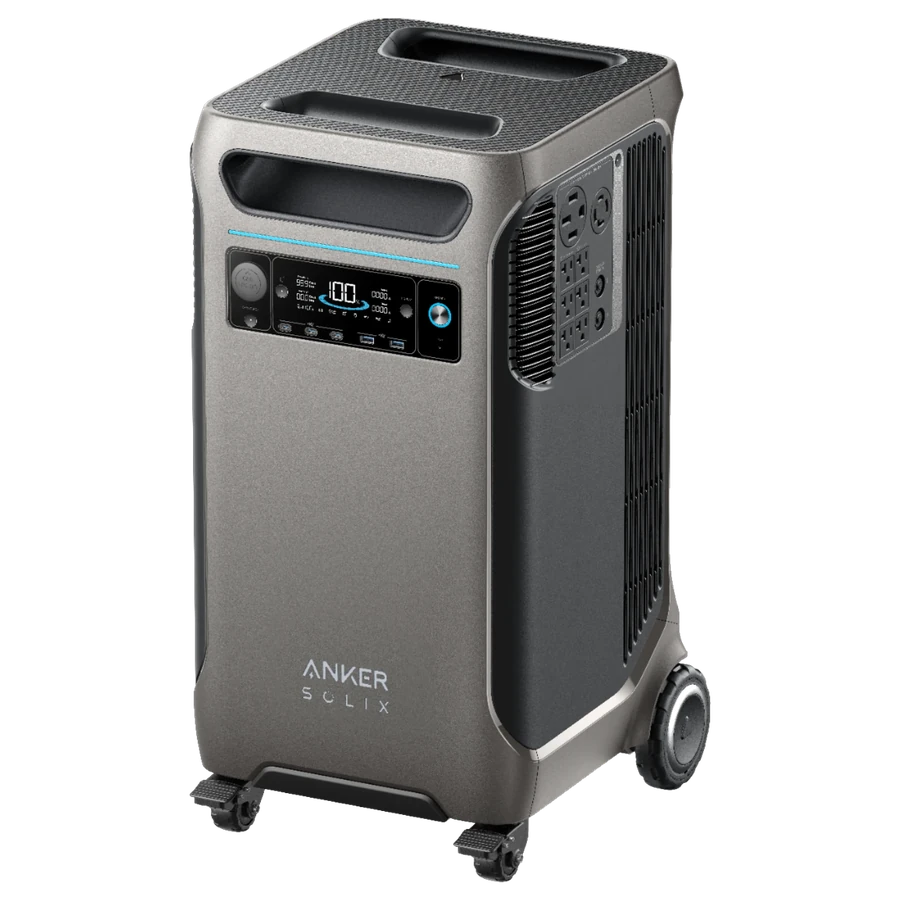
Anker SOLIX F3800

Anker

SOLIX F3800

$2,200 listed · 132 lb

Capacity
3,840 Wh
Output
6,000 W
Surge
9,000 W

The cross-brand answer at this size: 3,840 Wh and 6,000 W with 120/240 V split-phase and a long expansion path, shipping now with a published weight.

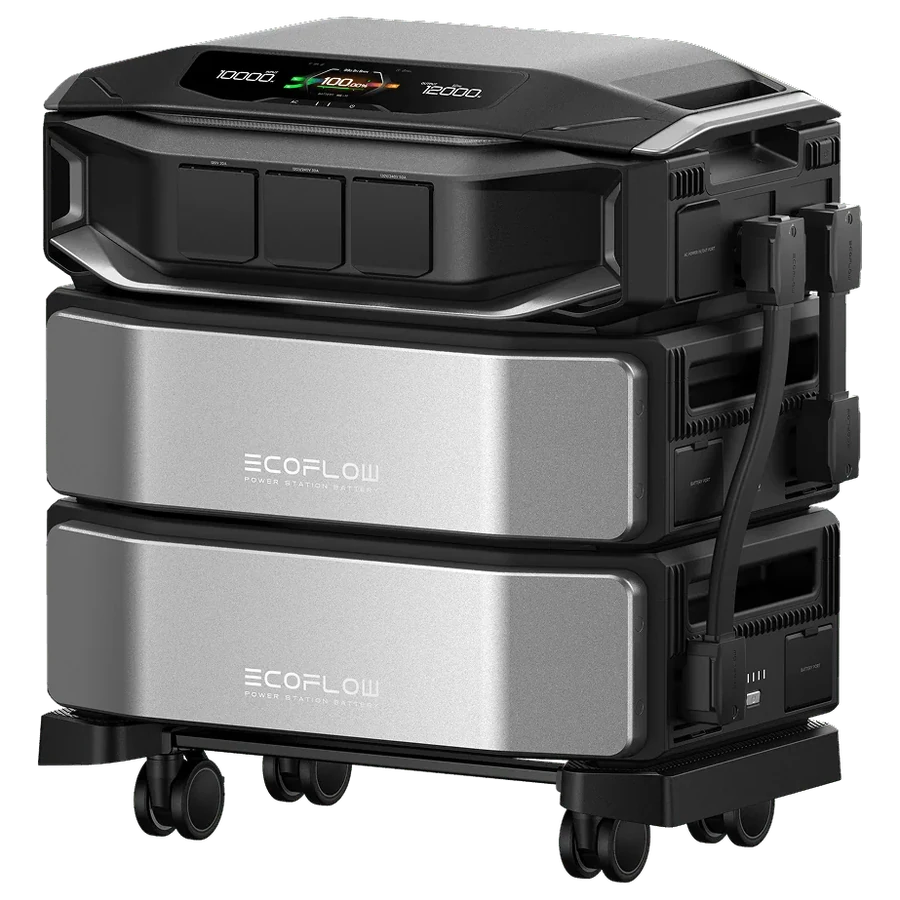
EcoFlow DELTA Pro Ultra X

EcoFlow

DELTA Pro Ultra X

$7,999 listed · 299 lb

Capacity
12,288 Wh
Output
12,000 W
Surge
45,000 W

If the Plus’s 10 kW is what caught your eye, this unit delivers five figures of output from the battery itself: 12,288 Wh and 12,000 W.

EcoFlow DELTA 3 Ultra Plus

EcoFlow

DELTA 3 Ultra Plus

$1,579 listed · 74 lb

Capacity
3,072 Wh
Output
3,600 W
Surge
7,200 W

The lighter, cheaper step for anyone whose real need is a long evening rather than a whole house: 3,072 Wh and 3,600 W, expandable, and ready to plug in.

06 · The line

Where it sits in EcoFlow’s TITAN range

Where a 5,017.6 Wh TITAN sits among the EcoFlow units you can buy today. The line lands between the DELTA Pro 3 and the DELTA Pro Ultra on pack size, while undercutting both on price.

  • EcoFlow DELTA Pro 3

    DELTA Pro 3

    4,096 Wh · 4,000 W

    4,096 Wh and 4,000 W: EcoFlow’s current answer in the bracket the TITAN base is priced into.

    $2,799 listedCompare →

  • EcoFlow DELTA Pro Ultra

    DELTA Pro Ultra

    6,144 Wh · 7,200 W

    6,144 Wh behind 7,200 W: the same output as the TITAN, with a bigger pack and an installed-system price.

    $4,199 listedCompare →

  • EcoFlow DELTA Pro Ultra X

    DELTA Pro Ultra X

    12,288 Wh · 12,000 W

    12,288 Wh and 12,000 W: the top of EcoFlow’s home range, and where a six-pack TITAN would be heading.

    $7,999 listedCompare →

  • EcoFlow DELTA 3 Ultra Plus

    DELTA 3 Ultra Plus

    3,072 Wh · 3,600 W

    3,072 Wh and 3,600 W, expandable: the portable end of the range the TITAN sits above.

    $1,579 listedCompare →

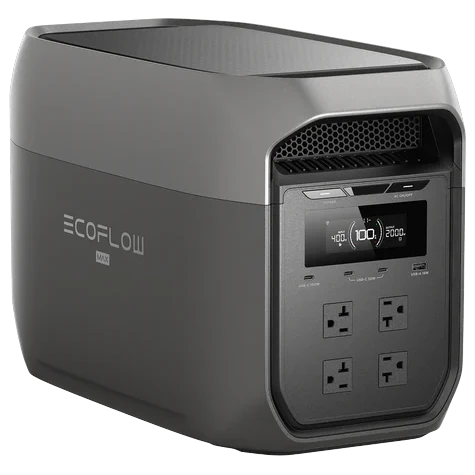
  • EcoFlow DELTA 3 Max

    DELTA 3 Max

    2,048 Wh · 2,400 W

    2,048 Wh and 2,400 W: what $1,000-odd of EcoFlow buys today, for scale against a $2,599 5 kWh unit.

    $879 listedCompare →

For the whole EcoFlow range as it stands today, see our EcoFlow guide; for the two current units closest to this one in role, the DELTA Pro 3 and DELTA Pro Ultra side by side.

07 · Fit

Who should wait for it, and who should not

Read from what EcoFlow has already committed to paper.

Worth waiting for if you are

  • Anyone shopping whole-home backup in the $3,000 bracket who can give it a few weeks. On the published figures this undercuts what EcoFlow and Anker sell today.
  • Houses that need 240 V for a well pump, range or central air: the base TITAN at $3,199 is the cheapest split-phase 5 kWh unit we have seen listed.
  • People who want to start small and grow. Six packs and 30 kWh is a genuine whole-home ceiling, reached one battery at a time.
  • Homes on gas heat and gas cooking, where the Classic’s 120 V design costs nothing and $2,599 buys the same 5 kWh pack.

Buy something that ships if you are

  • In need of backup power this month. The DELTA Pro 3 ships today with 4,096 Wh, 4,000 W and split-phase output.
  • Planning an install around exact weight and dimensions. Those figures arrive with the announcement; our estimate is 135 to 150 lb.
  • Set on a 240 V circuit at the $2,599 price. That price is the Classic, a 120 V machine; the 240 V TITAN starts at $3,199.

08 · Questions

Frequently asked

Short answers, each with its own link.

All new & upcoming releases Comparison tool