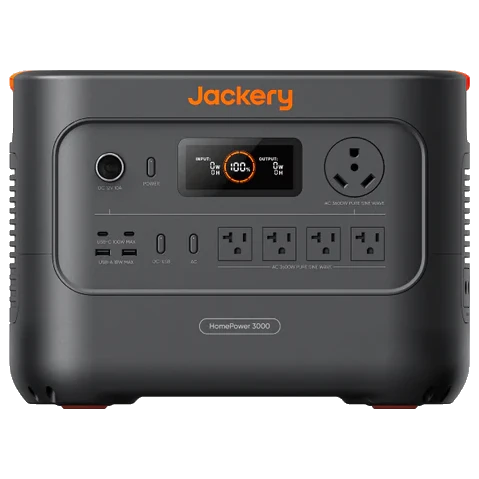
Jackery
HomePower 3000
$1,499 listed · 60 lb
Capacity
3,072 Wh
Output
3,600 W
Surge
7,200 W
The same 3,072 Wh as the DELTA 4 (3000) and only 2.2 lb heavier at 59.52 lb, with 3,600 W of output. It doesn’t expand, and it ships now.
EcoFlow · DELTA series · Power Station Arena coverage · EcoFlow Japan’s press release
EcoFlow DELTA 4 (DELTA 3000 Gen4 and DELTA 3800 Gen4) Portable Power Stations
Yes, if you can wait. It landed on EcoFlow’s US store today, and it isn’t the unit Japan got. The US DELTA 4 runs 3,600 W at 120 V, charges at 1,800 W and is rated for 6,000 cycles. The DELTA 4 (3800) still puts 3,763 Wh in 67.5 lb. Here’s every US spec, what it costs, and who should order one.
Reporting and analysis by Gunner GustafsonAnnounced Oct 21, 2026Updated Nov 4, 2026
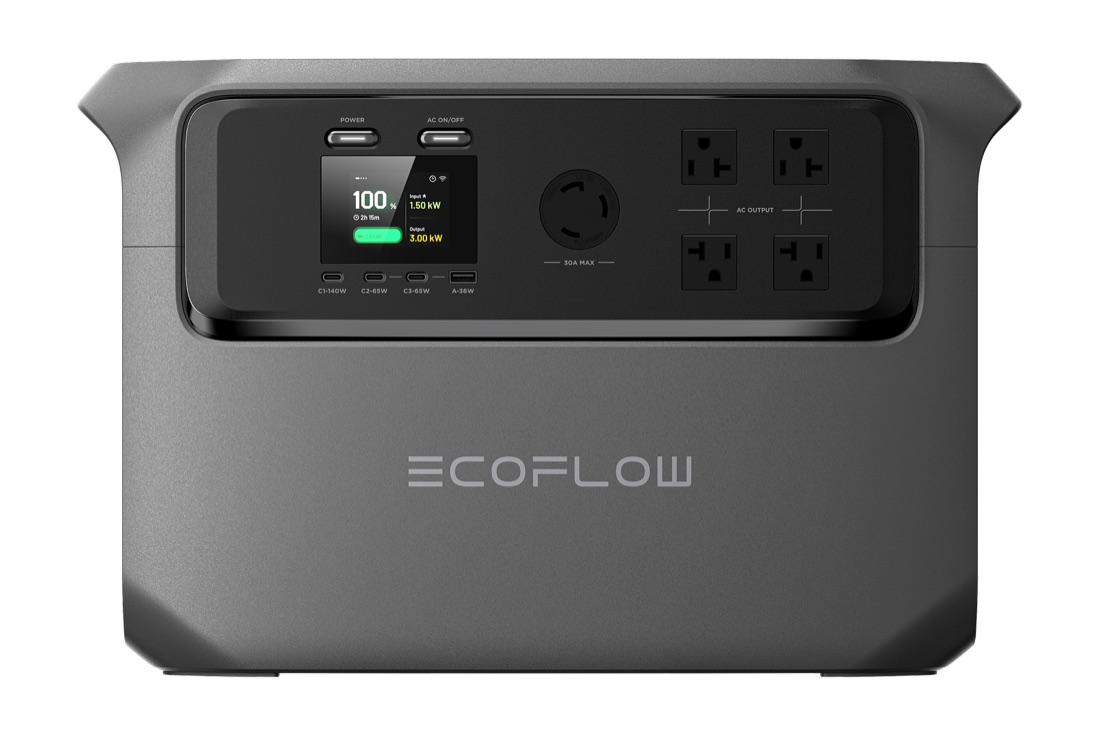
Photo: EcoFlow · Product image, EcoFlow Japan store · numbered labels are ours
The short answer
Order the DELTA 4 (3800) if 3.8 kWh at 67.5 lb is what you’ve been waiting for and you can live without it until late November. If the box will never need more battery, the (3000) is $500 less and ships in early December. If you need backup this week, the units below ship now.
Our read on the product is below, and so are the units you can buy today.
Get one email when the price or ship date lands
And one when our test results are in. Nothing else.
By subscribing, you agree to our Privacy Policy. Unsubscribe anytime.
Head to head
01 · What was announced
Announced October 21, 2026 in EcoFlow Japan’s press release. The framing below is ours; every figure in it is graded in the ledger that follows.
The DELTA 4 (3800) puts 3.8 kWh in 67.5 lb, and we had to read that twice. The lightest unit near that size in our catalog is Jackery’s HomePower 3600 Pro Max, which carries 3,584 Wh at 73.85 lb. EcoFlow’s own DELTA Pro carries 3,600 Wh at 99 lb.
The DELTA 4 (3000) is the DELTA 3 Ultra in a smaller box. Same 3,072 Wh, same 3,600 W in the US, 14.8 lb lighter. The DELTA 3 Ultra is still on EcoFlow’s US store beside it.
The weigh-in
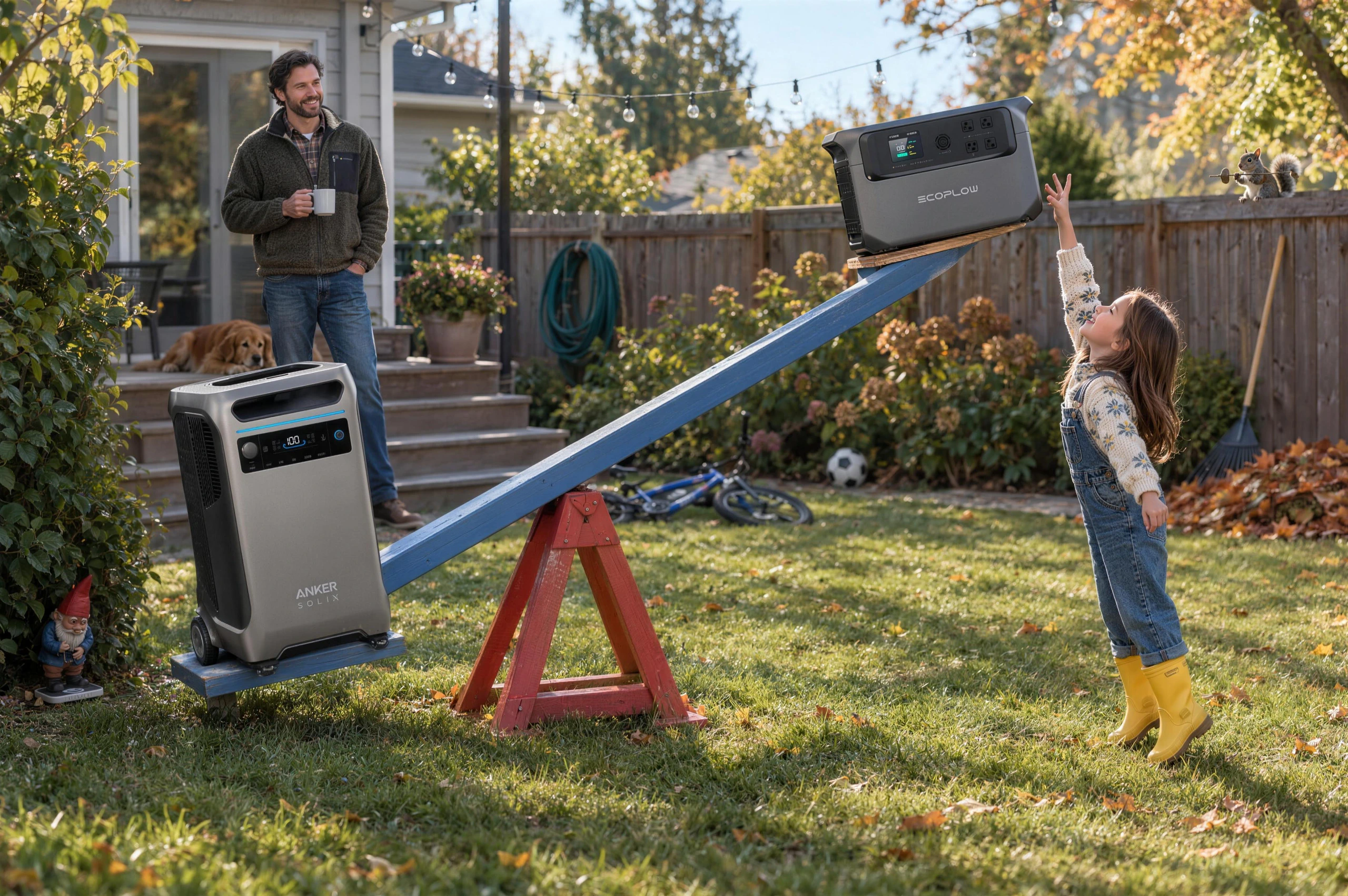
Anker’s SOLIX F3800 carries 3,840 Wh at 132.3 lb. The DELTA 4 (3800) carries 3,763 Wh at 67.5 lb. Playground physics did the rest, and someone under the hedge is having a similar morning.
Illustration: Power Station Arena
In EcoFlow’s pictures
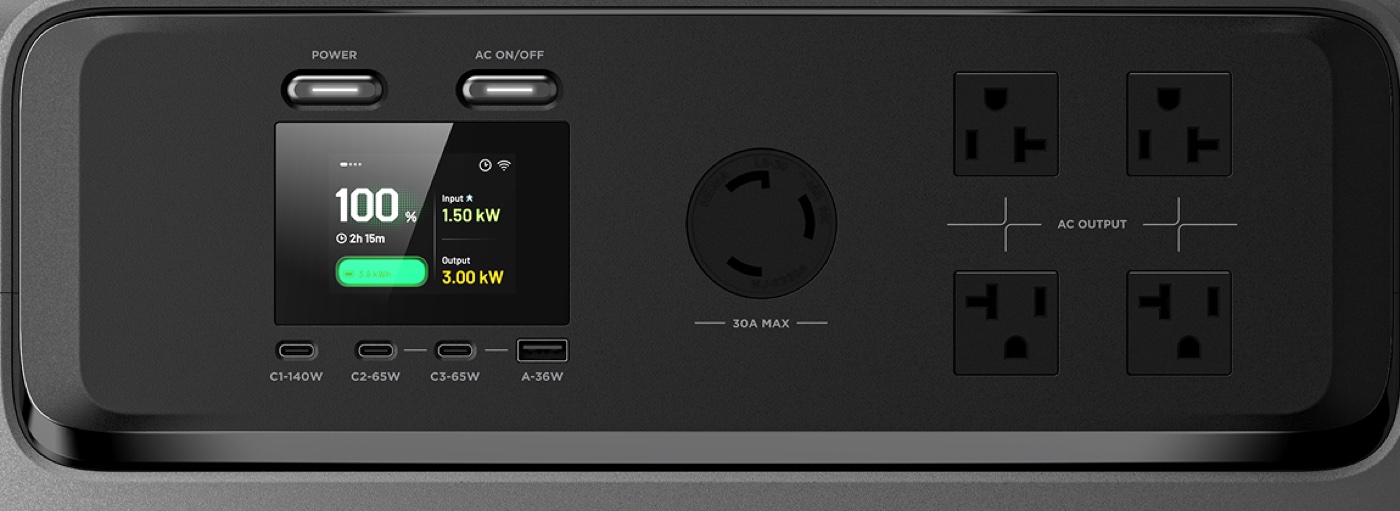
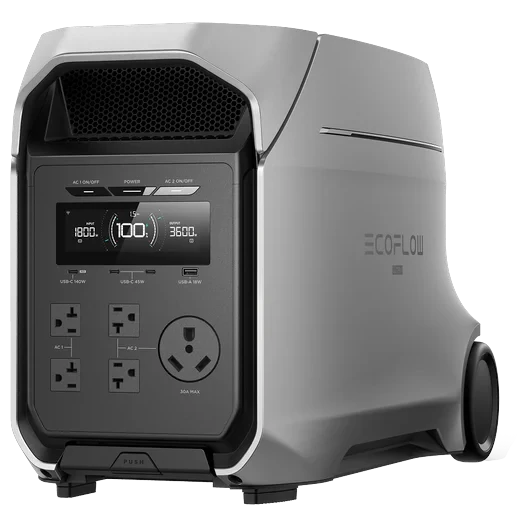
EcoFlow’s own panel shot. Four T-slot 20 A outlets, a twist-lock marked 30A MAX, and USB-C at 140, 65 and 65 W. The US unit carries the same panel.
Photo: EcoFlow · Product image, EcoFlow Japan store
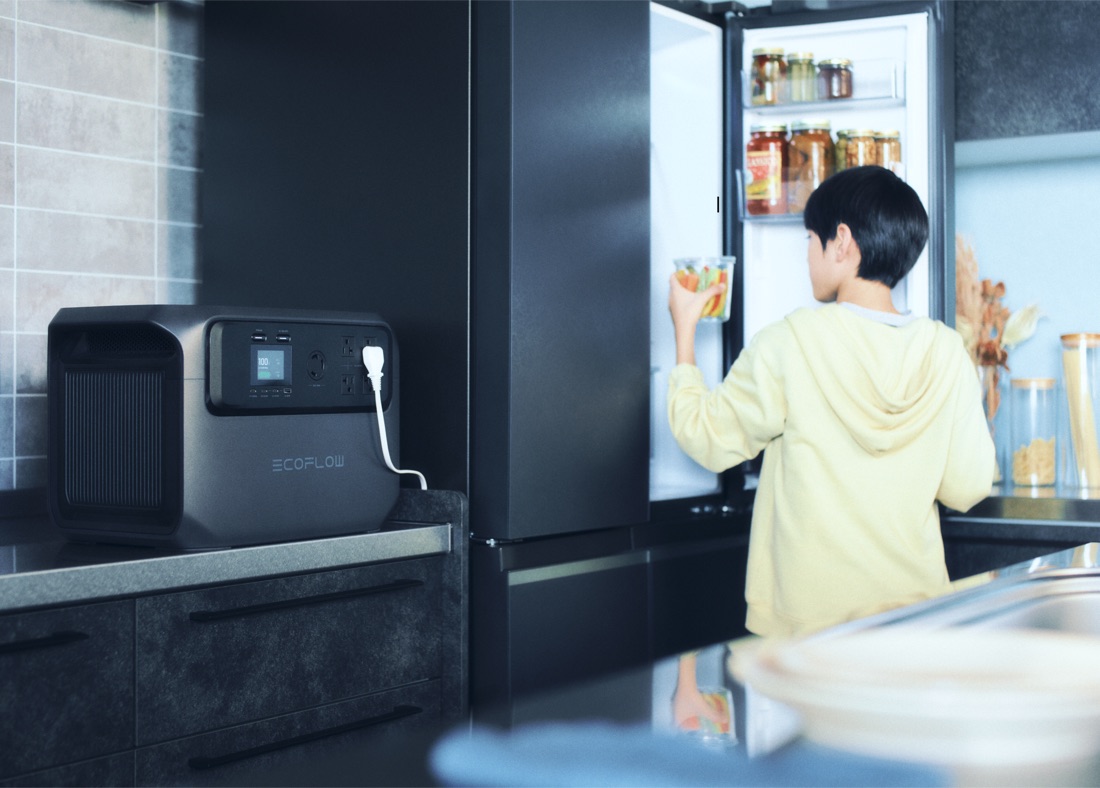
EcoFlow’s fridge scene. The 70-hour figure is EcoFlow’s own test; a stocked fridge that gets opened at dinner will draw more.
Photo: EcoFlow · Launch image, EcoFlow Japan store
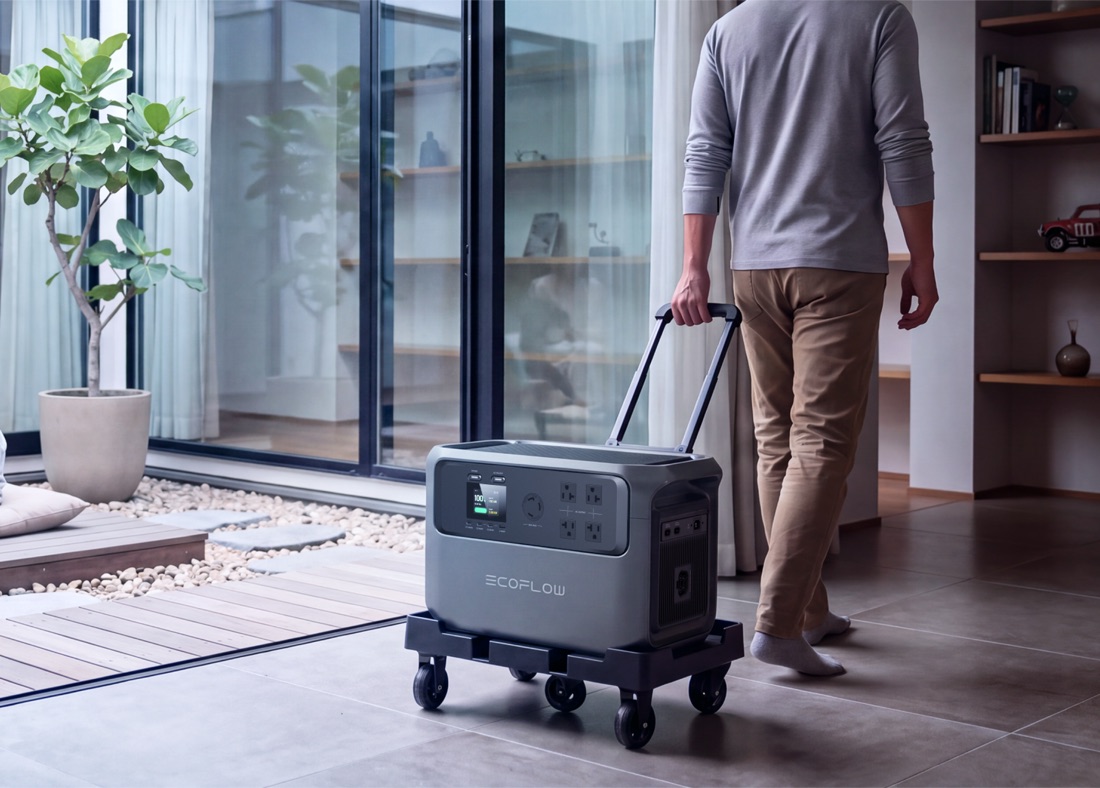
The folding cart is sold separately. At 67.5 lb, we’d budget for it.
Photo: EcoFlow · Launch image, EcoFlow Japan store
02 · Specs
Everything known so far, line by line, so you can tell which numbers are firm enough to plan around. Each figure is marked EcoFlow-published; where we reason beyond the published figures, the reasoning is shown.
The DELTA units share an architecture and differ on the handful of figures below. This is the choice in full; the spec sheet after it is the detail.
| DELTA 4 (3000) | DELTA 4 (3800) | |
|---|---|---|
| Capacity | 3.07 kWh | 3.76 kWh |
| Continuous output | 3,600 W | 3,600 W |
| Surge / boost | 7,200 W | 7,200 W |
| Weight | 26 kg (57 lb) | 30.6 kg (67 lb) |
| AC input | 1,800 W | 1,800 W |
| Price | $1,699 | $2,199 |
EcoFlow’s listed prices on November 4, 2026. Its store also shows an early-bird offer and a subscription price; the live price on this site follows the listing.
Orders open on EcoFlow’s US store from November 4, 2026.
X-Boost is supported but not while the unit charges from the wall or runs in bypass.
The two 65 W ports share circuitry with the USB-A: 16 W total when used together. No 12 V car socket.
XT60i, with XT60i-to-LP60 cables in the box.
EcoFlow says “15+ years of reliable power”.
EcoFlow’s FAQ says it doesn’t support HID communication with a computer.
EcoFlow’s own claims, with its Fridge Runtime Boost mode.
A handle at each end. EcoFlow’s folding cart is sold separately.
Same capacity, weight, solar and outlet layout as the US unit.
03 · Our arithmetic
EcoFlow has published no runtimes and no charging-circuit requirement. These are estimates from EcoFlow’s figures, and they are labelled Power Station Arena analysis everywhere they appear.
| Load | DELTA 4 (3000) | DELTA 4 (3800) |
|---|---|---|
| 150 W — Laptop, router and lights | 17 h | 21 h |
| 800 W — A domestic fridge cycling | 3.3 h | 4.0 h |
| 1,500 W — One 15 A corded tool at full draw | 1.7 h | 2.1 h |
| 3,600 W — The full continuous rating | 44 min | 53 min |
Assumes 85% of rated capacity reaches the load — the same planning constant our comparison engine uses for every station. Real runtime at 3.6 kW will also depend on how the pack derates in heat, which nobody has measured yet.
Power Station Arena analysisWhat the charging claims imply
EcoFlow hasn’t published a US charge time yet. At the full 1,800 W the (3800) would refill in a little over two hours on paper; Japan’s 1,500 W unit is rated at about 2.8 hours.
Power Station Arena analysis Surge headroom
7,200 W peak is 2.0× the continuous rating.
Power Station Arena analysis Expansion arithmetic
Growing from 3.76 to 12 kWh means adding about 8 kWh with two extra batteries on EcoFlow’s expansion adapter. EcoFlow quotes 4–12 kWh; the DELTA 4 (3000) does not expand.
Good to knowEvery estimate above updates automatically if EcoFlow revises a published figure; nothing here is typed in by hand.
04 · Our take
Analysis by the Test Desk — not a summary of EcoFlow’s release or anyone else’s coverage. Every comparison figure below comes from the named maker’s own page.
The US got the better DELTA 4. Japan’s version runs 3,000 W at 100 V. Ours runs 3,600 W at 120 V with a 7,200 W surge, charges at 1,800 W instead of 1,500 W, and EcoFlow now publishes a 6,000-cycle rating and a noise figure. Same box, same battery, same weight. The extra 600 W is what lets it start the things a house actually runs.
It costs more than we guessed. Before launch we estimated about $1,300 and $1,800 from EcoFlow’s Japan-versus-US pricing. EcoFlow listed $1,699 and $2,199. Some of that buys the bigger inverter Japan didn’t get. Some of it is launch pricing on a unit that won’t ship for weeks, and EcoFlow’s own store already shows an early-bird offer below the list price.
The weight is still the headline. The DELTA 4 (3800) stores about 56 Wh for every pound it weighs. The DELTA Pro 3 manages 36 and Anker’s SOLIX F3800 29. One adult can lift 67.5 lb onto a shelf, briefly, with a good back. We’d still buy the folding cart.
We’d order the (3800) unless you’re sure 3,072 Wh is enough forever. The (3000) has one 1,000 W solar input and no battery port. What you buy is what you keep. The (3800) adds a second 1,000 W input and takes EcoFlow’s DELTA 3 Max Plus or DELTA Pro 3 batteries, up to 12 kWh. The step up is $500 for 691 Wh plus all of that headroom.
Wall charging uses the whole circuit. 1,800 W at 120 V is 15 A, the full rating of an ordinary household circuit. On a kitchen or garage circuit shared with a toaster or a compressor, we’d set the charge rate lower in the app and wait a little longer.
The fridge figures are EcoFlow’s, not ours. Up to 70 hours on the (3800) and 58 on the (3000), with its Fridge Runtime Boost mode. A stocked fridge that gets opened at dinner will draw more, so we’d test it with groceries inside before planning a long weekend around those numbers.
05 · Buy today
Same capacity band, shipping now, with published outlet lists and prices we read twice a day. Bars share one scale with the announced unit at the top; each card links to a head-to-head we have adjudicated.
Reference · not on sale
DELTA 4 (3000): 57.3 lb (26 kg) · DELTA 4 (3800): 67.5 lb (30.6 kg) (EcoFlow-published) · DELTA 4 (3000): $1,699 · DELTA 4 (3800): $2,199
Jackery
$1,499 listed · 60 lb
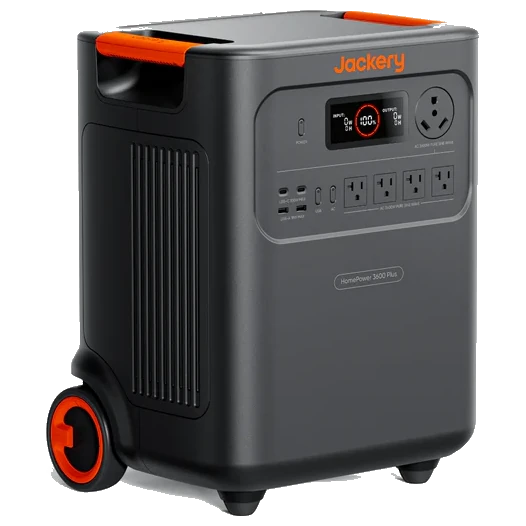
The same 3,072 Wh as the DELTA 4 (3000) and only 2.2 lb heavier at 59.52 lb, with 3,600 W of output. It doesn’t expand, and it ships now.
EcoFlow
$1,299 listed · 72 lb
The same 3,072 Wh and 3,600 W as the DELTA 4 (3000), at 72.1 lb, on sale now.
Jackery
$1,899 listed · 77 lb
The expandable answer closest to the DELTA 4 (3800): 3,584 Wh, 3,600 W and 1,000 W of solar, at 77.2 lb.
EcoFlow
$2,799 listed · 114 lb
EcoFlow expansion today: 4,096 Wh and 4,000 W with 240 V, at 113.5 lb. Its battery is one of the two the DELTA 4 (3800) accepts.
06 · The line
The DELTA units already on EcoFlow’s US store that sit closest to the DELTA 4.
3,072 Wh · 3,600 W
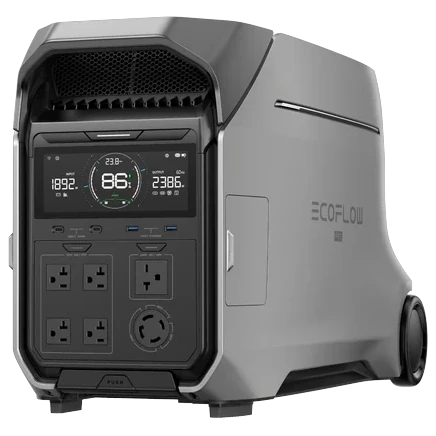
The 3,072 Wh DELTA 3 Ultra: 3,600 W at 72.1 lb.
$1,299 listedCompare →
3,072 Wh · 3,600 W
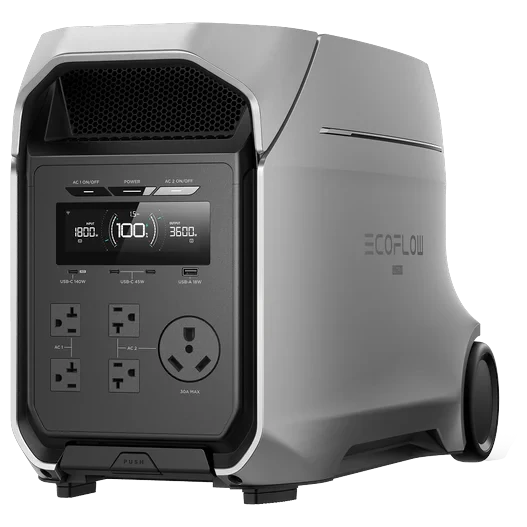
The expandable DELTA 3 Ultra Plus, with 1,600 W of solar, at 74.3 lb.
$1,599 listedCompare →
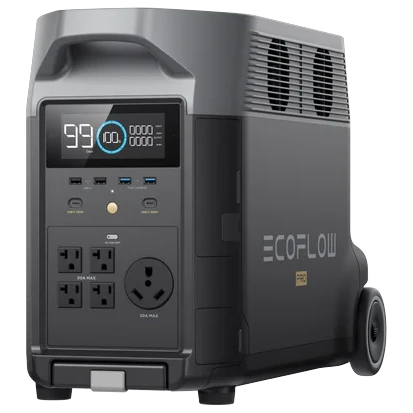
3,600 Wh · 3,600 W
The original 3,600 Wh DELTA Pro, at 99 lb.
$1,799 listedCompare →
4,096 Wh · 4,000 W
EcoFlow’s 4,096 Wh flagship with 240 V, at 113.5 lb.
$2,799 listedCompare →
For the whole EcoFlow range as it stands today, see our EcoFlow guide; for the two current units closest to this one in role, the DELTA 4 (3000) and DELTA 4 (3800) side by side.
EcoFlow DELTA 3800 Gen4 · EcoFlow DELTA 3 Ultra · EcoFlow DELTA 3 Ultra Plus · EcoFlow DELTA Pro · EcoFlow DELTA Pro 3 · Jackery HomePower 3000
07 · Fit
Read from what EcoFlow chose to announce and what it chose to leave out.
08 · Questions
Short answers, each with its own link.
Yes. EcoFlow listed both sizes on its US store on November 4, 2026. EcoFlow says the DELTA 3800 Gen4 ships in late November and the DELTA 3000 Gen4 in early December.
The DELTA 3000 Gen4 lists at $1,699 and the DELTA 3800 Gen4 at $2,199 on EcoFlow’s US store. EcoFlow also sells kits with solar panels or a DELTA 3 Max Plus extra battery.
Close. EcoFlow sells them as the DELTA 3000 Gen4 and DELTA 3800 Gen4 and calls the series DELTA Gen 4. We call them the DELTA 4 (3000) and DELTA 4 (3800), as most buyers do.
The 3800 holds 3,763 Wh against 3,072 Wh and weighs 67.5 lb against 57.3 lb. It has two 1,000 W solar inputs to the 3000’s one and takes up to two extra batteries for 4–12 kWh; the 3000 does not expand. Both have 3,600 W of output, a 7,200 W surge, 1,800 W wall charging and a 6,000-cycle rating.
No. Japan’s version is rated 3,000 W with a 6,000 W surge at 100 V and charges at up to 1,500 W. The US version is rated 3,600 W with a 7,200 W surge at 120 V and charges at up to 1,800 W. Capacity, weight, solar input and the outlets are the same.
From EcoFlow’s US spec tables: LFP cells, 3,072 Wh (3000) or 3,763 Wh (3800), 3,600 W continuous, 7,200 W surge, five AC outlets (four at 20 A, one at 30 A), USB-C at 140 W and two at 65 W, one 36 W USB-A, up to 1,800 W wall charging, 1,000 W of solar on the 3000 and 2,000 W on the 3800, a switchover of 10 ms or less, 6,000 cycles, and 57.3 lb or 67.5 lb. The 3800 expands to 4–12 kWh.