PSA
StationArena
Announced

EcoFlow · RIVER series · Power Station Arena coverage · IFA Berlin 2026

EcoFlow RIVER 260 Gen4 and RIVER 520 Gen4

Two small LFP power stations, 256 Wh and 512 Wh, whose whole pitch is how fast they fill and how little room they take — for the laptop, router and bedside-UPS buyer, because the capacity and output are the RIVER 2 pair’s exactly.

EcoFlow announced the RIVER Gen4 pair at IFA Berlin on September 4, 2026: the RIVER 260 Gen4 (256 Wh, 300 W, 600 W with X-Boost, about 3.0 kg) and the RIVER 520 Gen4 (512 Wh, 500 W, 1,000 W with X-Boost, about 4.6 kg). Both are LFP; both claim 80% from the wall in 42 and 50 minutes on X-Stream 4.0; both carry a 140 W bidirectional USB-C port, a sub-10 ms UPS switchover, a below-30 dB figure at a 200 W load and an idle draw EcoFlow puts about 30% under the industry average. The capacity and output are the RIVER 2 and RIVER 2 Max’s to the watt-hour. Nothing else has been published: no price in any currency, no date or region in EcoFlow’s own words, no spec sheet, manual, dimensions, cycle rating or warranty — the only maker page that mentions the series is a four-sentence IFA landing page, and the European dates in circulation are one outlet’s reporting. This page carries what EcoFlow has said, what we read off its stand placards in show photography, and our read on both.

Reporting and analysis by Wenny ZhengAnnounced Sep 4, 2026Updated Sep 8, 2026

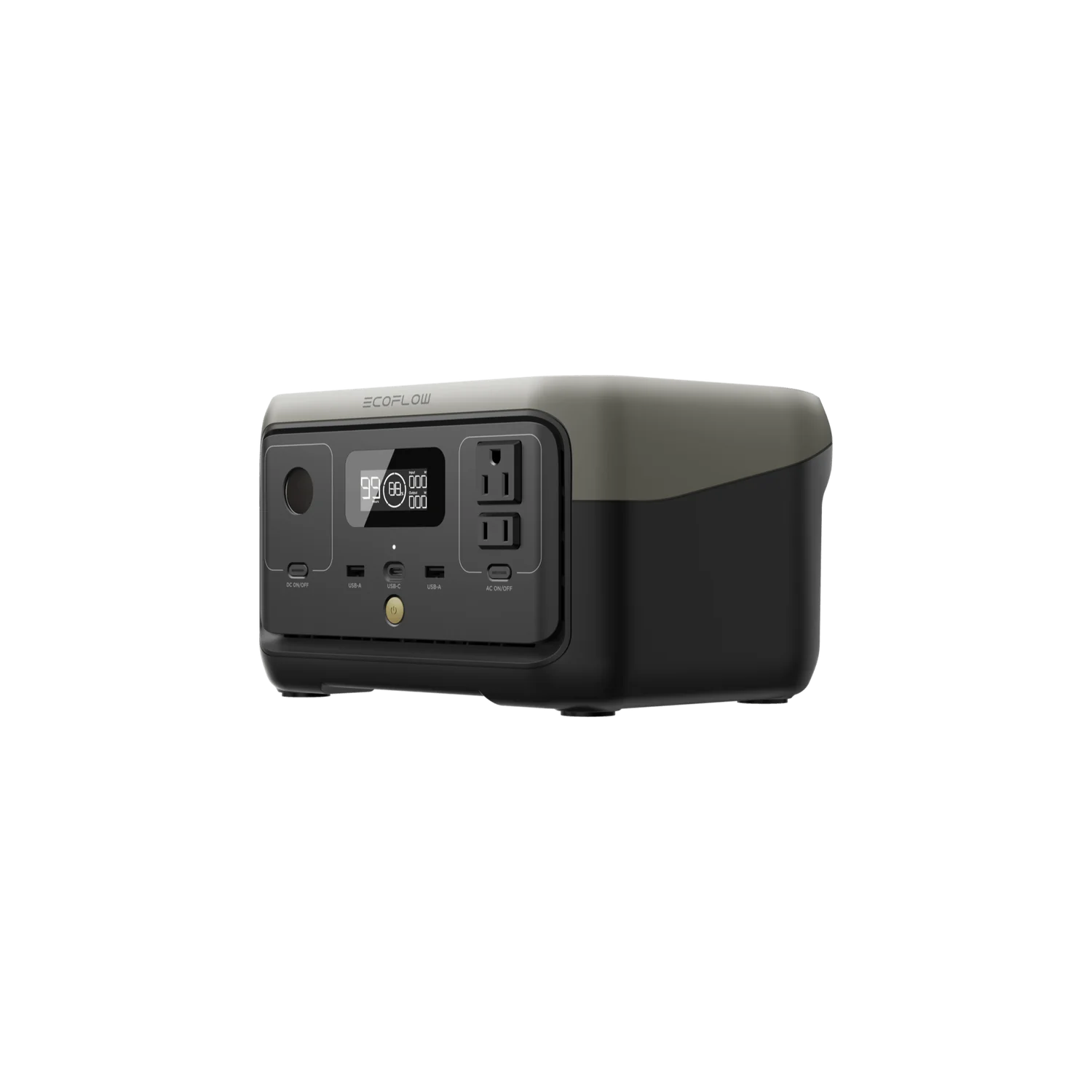
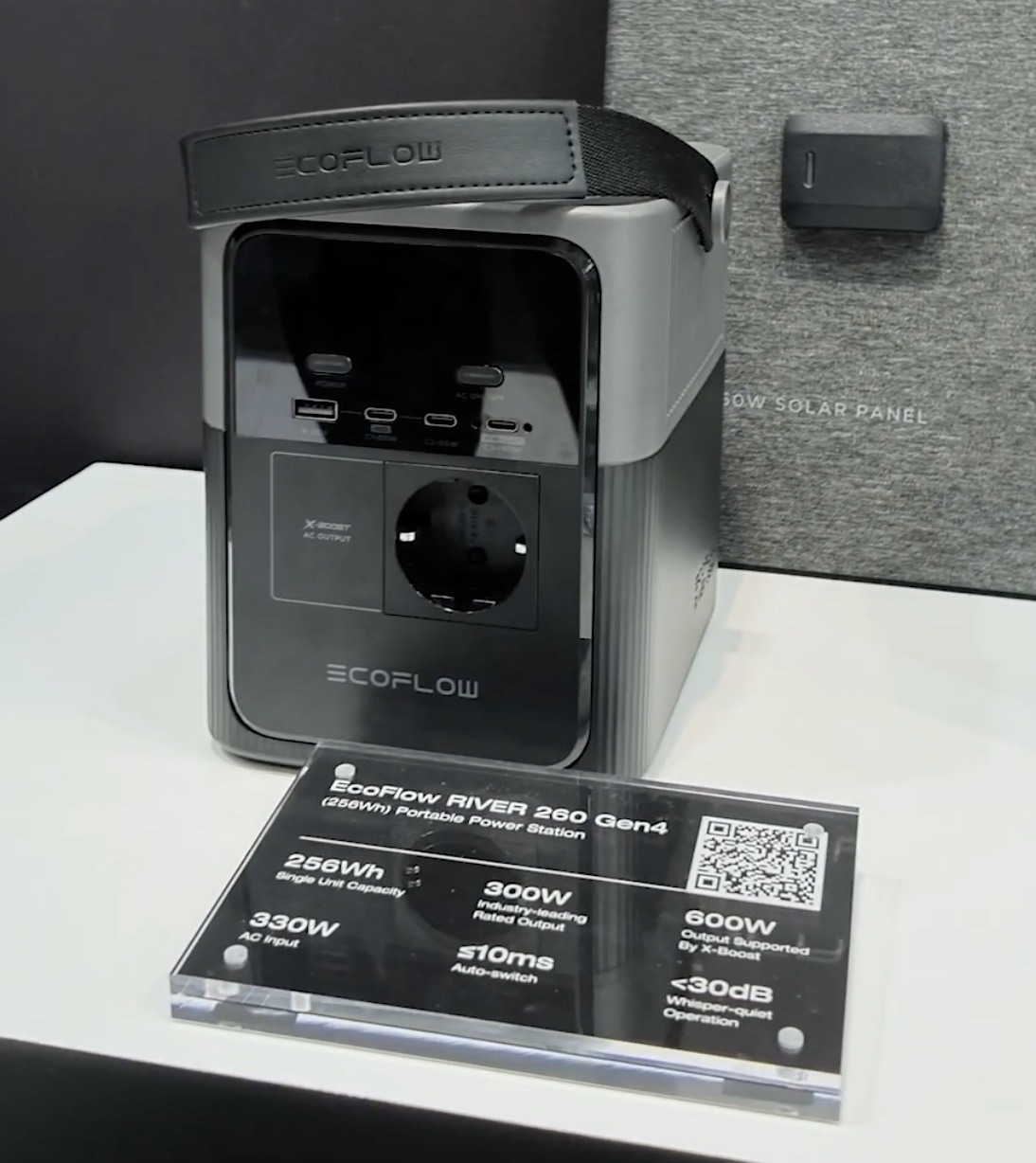
EcoFlow RIVER 260 Gen4: a compact grey power station with a webbing carry strap, a recessed black control panel carrying two buttons and a four-port USB row, and a single Schuko outlet in a bordered zone marked X-BOOST AC OUTPUT, photographed beside a placard listing its figures

Photo: EcoFlow · from its own post on X, IFA Berlin 2026 · numbered labels are ours

  1. 1“330W AC input” — EcoFlow has published this nowhere else, and it is the figure that makes the 42-minute charge claim check out on a 256 Wh pack
  2. 2“<30dB whisper-quiet operation” — also placard-only; no EcoFlow page states a noise figure for the series
  3. 3256 Wh — the same capacity as the RIVER 2 EcoFlow still sells
  4. 4300 W rated output — again identical to the RIVER 2, so the generation is the box, not the battery
  5. 5600 W supported by X-Boost
  6. 6≤10 ms auto-switch — the switchover claim, matching EcoFlow’s release
  7. 7A single Schuko outlet, fitted in the right half of a bordered zone whose left half carries only the X-BOOST legend. This is a 230 V European unit; no US outlet set has been shown or described
  8. 8The USB row: one USB-A and three USB-C, one of which is the 140 W bidirectional port EcoFlow describes
  9. 9Power and AC ON/OFF buttons

The short answer

Announced, not yet on sale. No price, no ship date, no outlet list — yet.

7 of the 28 specs below are still blank — price and expandable capacity among them. Our read on the product is below, and so are the units you can buy today.

Get one email when the price or ship date lands

And one when our test results are in. Nothing else.

By subscribing, you agree to our Privacy Policy. Unsubscribe anytime.

01 · What was announced

What EcoFlow said, and what it means

Announced September 4, 2026 at IFA Berlin 2026. The framing below is ours; every figure in it is graded in the ledger that follows.

The 256-to-512 Wh class is the smallest tier of power station that still has an AC outlet: a laptop, a router, a CPAP, a camera bag, a bedside UPS. It is bought on weight and on how it charges rather than on watts, and it is where EcoFlow’s RIVER name has always lived. The RIVER 260 Gen4 and RIVER 520 Gen4 are the fourth generation of that line and, on the two numbers a spec sheet leads with, they change nothing: 256 Wh and 300 W are the RIVER 2’s figures, 512 Wh and 500 W are the RIVER 2 Max’s.

EcoFlow’s pitch is everything in the other columns. X-Stream 4.0 with active thermal management takes the 260 to 80% in 42 minutes and the 520 in 50, on EcoFlow’s own claim and from an unstated starting charge. By EcoFlow’s own measurements the 520 is about 59.1% smaller and 23.5% lighter than the RIVER 2 Max, and the 260 about 29.7% smaller and 16.9% lighter than the RIVER 3. One 140 W bidirectional USB-C port takes wall, solar and car input through adapters; the AC outlets carry a sub-10 ms UPS switchover; the unit runs below 30 dB at a 200 W load; active idle draw is put about 30% under an industry average EcoFlow chose; and an Emergency Power Mode extends discharge past the display’s 0%. The cells are LFP.

What EcoFlow has not published is the longer list. There is no price in any currency, no launch date or region in EcoFlow’s own words, no spec sheet, no manual, no dimensions, no cycle rating, no warranty term, no port list, no app or connectivity detail, and no US configuration of any kind — every unit shown, including EcoFlow’s own press photograph, has European Schuko sockets. The Q4 2026 and Q1 2027 European dates, and every published dimension, come from one outlet and are marked rumored below. What we read off the stand placards in show photography is marked as ours; the arithmetic is ours and labelled.

02 · Specs

RIVER Gen4 specifications

Everything known so far, line by line, so you can tell which numbers are firm enough to plan around. Each figure is marked EcoFlow-published, published by us or rumored, and blanks are blank on purpose: if you came for the price, you should see that we looked rather than find a guess.

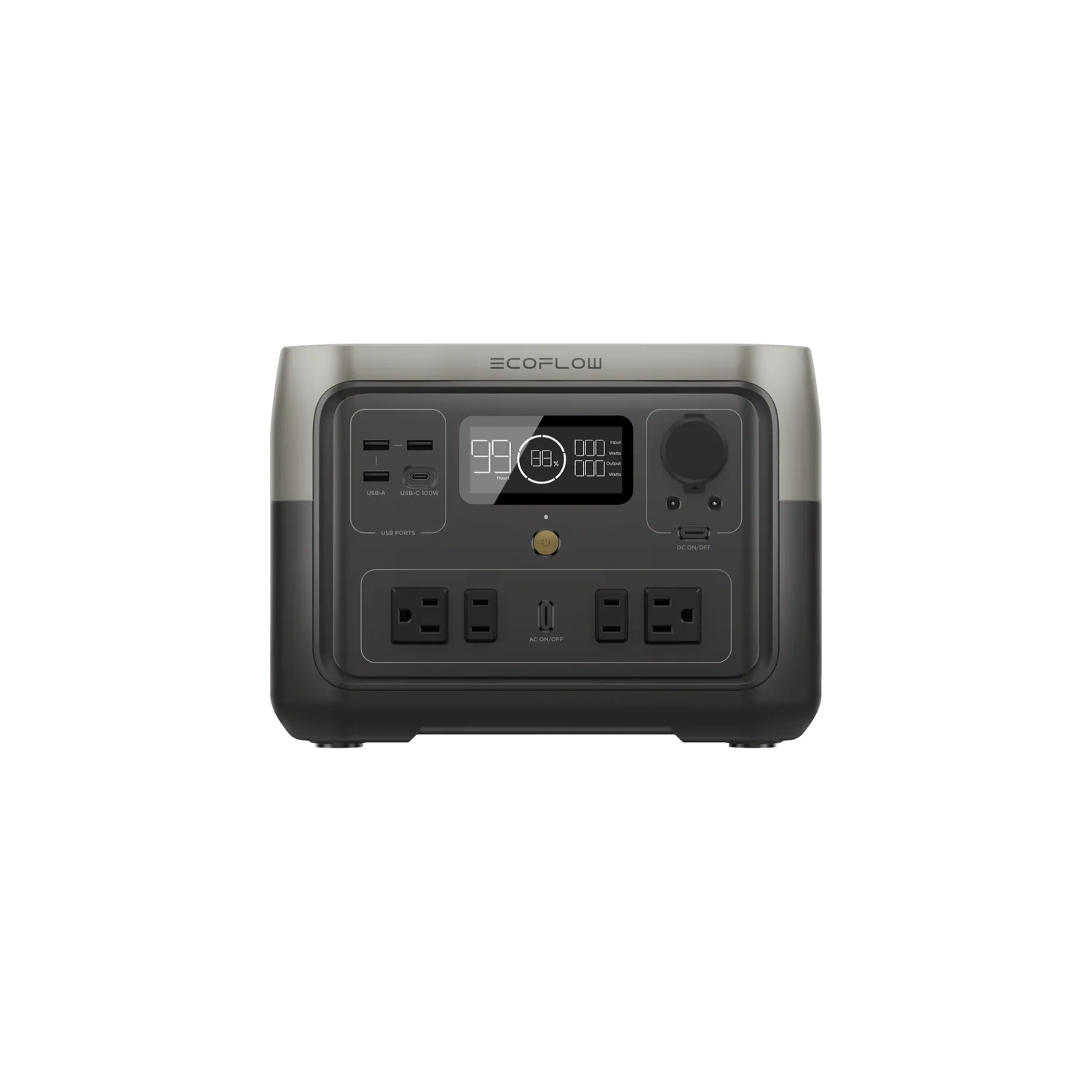
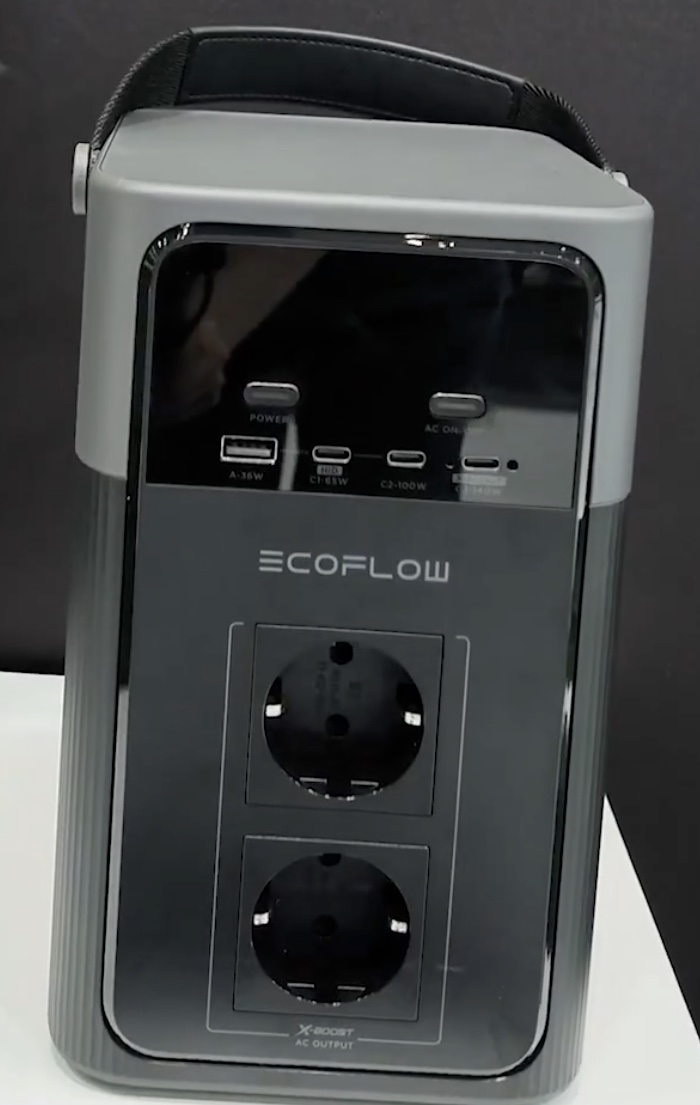
EcoFlow RIVER 520 Gen4: an upright grey power station with a webbing carry strap, a black control panel carrying two buttons and a four-port USB row, and two Schuko outlets stacked in a zone marked X-BOOST AC OUTPUT

Photo: EcoFlow · from its own post on X, IFA Berlin 2026 · numbered labels are ours

  1. 1The fourth USB-C reads C3-140W — the 140 W bidirectional port EcoFlow describes — after A-36W, C1-65W and C2-100W
  2. 2Two Schuko outlets where the 260 has one. This is a 230 V European build; no US outlet set has been shown or described
  3. 3The second outlet, stacked below the first rather than beside it
  4. 4The zone is marked X-BOOST AC OUTPUT — X-Boost is for selected devices and is not a surge rating
  5. 5Power and AC ON/OFF buttons
  6. 6Webbing carry strap, branded on the top face

The other model

The RIVER 520 Gen4, the larger of the two. Its panel is where the port row is legible: one USB-A and three USB-C, the last of them the 140 W port, above two Schuko outlets where the 260 has one.

Which one, if either

The RIVER units share an architecture and differ on the handful of figures below. This is the choice in full; the spec sheet after it is the detail.

 RIVER 260 Gen4RIVER 520 Gen4
Capacity0.26 kWh0.51 kWh
Continuous output300 W500 W
Surge / boost600 W1,000 W
Weight3 kg (7 lb)4.6 kg (10 lb)
AC input330 W
PriceNot announcedNot announced
RIVER 260 Gen4
The bag unit: the same 256 Wh and 300 W as the RIVER 2, and we’d only choose it for the smaller box and the 42-minute charge claim — a laptop and a phone carried on your back rather than in a car. If it rides in a car, we’d buy the RIVER 2 at a price you already know.
RIVER 520 Gen4
The one we’d weigh against a RIVER 2 Max: the identical 512 Wh and 500 W with two AC outlets, in a box EcoFlow measures at 59.1% smaller and 23.5% lighter. But 500 W is still 500 W, and if that is your constraint we’d buy the DJI Power 500, which doubles it today.
Price
Not announced — no price for either model, in any currency, in any region

Checked September 8, 2026: EcoFlow’s stores at us., uk., de., fr., it., es. and eu.ecoflow.com show no Gen4; www.ecoflow.com’s 12,475-URL sitemap has no RIVER Gen4 page; the support download centre lists no Gen4 manual or spec sheet. The only maker page that mentions the series is the IFA 2026 landing page, with no price and no buy link.

Not yet published
Availability
RIVER 260 Gen4
Europe from Q4 2026 — reported by one website; EcoFlow has given no date
RIVER 520 Gen4
Europe in Q1 2027 — reported by one website; EcoFlow has given no date

Where it comes fromThe Verge (Thomas Ricker, September 7, 2026) reports Europe from Q4 2026 for the 260 and Q1 2027 for the 520. EcoFlow’s own release states no date, market or region for RIVER Gen4 — while dating the PowerRock 4000, in the same release, to a September 4 launch across Europe.

Nothing has been announced for the United States: no date, no market, no US model. UK and Australian coverage report no pricing or dates for their markets either.

Rumored
Our read on timing
We would treat Q4 2026 and Q1 2027 as one site’s estimate rather than a schedule. EcoFlow has published no date of its own, no price and no spec sheet, which is not what a launch three months out usually looks like. We would buy a RIVER 2 today rather than hold a slot for these.
Our analysis
AC output (rated)
RIVER 260 Gen4
300 W
RIVER 520 Gen4
500 W

Repeated on the stand placards.

EcoFlow-published
X-Boost output
RIVER 260 Gen4
600 W
RIVER 520 Gen4
1,000 W

X-Boost, which EcoFlow qualifies as being for selected devices; it is not a surge rating, and no true peak wattage has been published for either model. The 520’s two AC outlets sit in a zone the unit marks X-BOOST AC OUTPUT.

EcoFlow-published
Capacity
RIVER 260 Gen4
256 Wh, LFP
RIVER 520 Gen4
512 Wh, LFP

LFP is explicit in the release for both models; no NMC variant has been announced in this generation.

EcoFlow-published
Expandable capacity
Not announced — no extra battery or expansion option has been mentioned by EcoFlow

Earlier RIVER generations offered extra batteries. Nothing has been said either way for Gen4, and we do not infer it.

Not yet published
Weight
RIVER 260 Gen4
about 3.0 kg (6.6 lb), per the release — see note
RIVER 520 Gen4
about 4.6 kg (10.1 lb)

Contested by EcoFlow itself for the small unit: the release says approximately 3.0 kg, EcoFlow’s own IFA page says 3.3 kg for what it calls RIVER 4, and a third-party figure of 2.95 kg is in circulation. No spec sheet exists to settle it. The 520’s 4.6 kg is not disputed.

EcoFlow-published
Dimensions and volume
RIVER 260 Gen4
13.9 × 17.7 × 17.5 cm; 4.30 L; 59.5 Wh/L
RIVER 520 Gen4
13.9 × 17.7 × 22.9 cm; 5.63 L; 90.9 Wh/L

Where it comes fromPublished by The Verge in its own comparison table; EcoFlow has published no dimensions. EcoFlow’s IFA page gives a 4.2 L footprint for the small unit, which does not quite match the 4.30 L these dimensions give.

EcoFlow’s own size claims are relative and rest on its own measurements: the 260 is about 29.7% smaller and 16.9% lighter than the RIVER 3, the 520 about 59.1% smaller and 23.5% lighter than the RIVER 2 Max.

Rumored
AC outlets (EU units shown)
RIVER 260 Gen4
One, Schuko / EU Type F
RIVER 520 Gen4
Two, Schuko / EU Type F, in a zone marked X-BOOST AC OUTPUT

How we knowThe 260’s single socket is visible in EcoFlow’s own press photograph on its IFA page; the 520’s two sockets are read from show photography of the unit on EcoFlow’s IFA stand. EcoFlow has published no outlet list or spec sheet for the series, so this is the only evidence about outlets that exists — the two agreeing is worth exactly that much.

Published by us
Outlets (US)
Not yet published — no 120 V / NEMA 5-15 configuration shown or described, and no UL listing mentioned; every unit photographed, EcoFlow’s own press image included, is European
Not yet published
Outputs and ports
RIVER 260 Gen4
Five outputs: four USB (one USB-A and three USB-C in the photograph) plus one AC. Per-port ratings not published.
RIVER 520 Gen4
Six outputs: four USB plus two AC. The port row is printed A-36W, C1-65W, C2-100W and a fourth USB-C reading C3-140W, with a small pinhole or indicator beside it. Glare washes the fourth label, but the reading matches the single 140 W bidirectional USB-C port EcoFlow describes in its release, so the port exists on EcoFlow’s word and our reading places it in the row.

How we knowEcoFlow gives the counts: the release says five outputs and six, with fast charging on every USB-C port. The 260’s USB split is read from EcoFlow’s own press photograph; the 520’s port labels are read from show photography of the unit on EcoFlow’s IFA stand. EcoFlow has published no port list, so nothing else confirms the labels. No 12 V car socket or barrel DC output is visible on either unit; with no maker port list, that is an observation, not a specification.

Published by us
AC charging
RIVER 260 Gen4
80% in 42 minutes
RIVER 520 Gen4
80% in 50 minutes

Quoted as EcoFlow states it. The release gives no starting state of charge and no test conditions, and this sentence carries none of the footnotes the size and idle claims do — so it is not a 0-to-80% claim until EcoFlow says so. The headline figure is left without a starting percentage for that reason.

EcoFlow-published
AC charging, full
RIVER 260 Gen4
57 minutes
RIVER 520 Gen4
66 minutes

Where it comes fromReported by Trusted Reviews alone. These read like press-kit figures, but they appear in no public EcoFlow document we could find.

Rumored
AC input
RIVER 260 Gen4
330 W
RIVER 520 Gen4
Not yet published

How we knowRead from show photography of the 260’s placard at EcoFlow’s IFA stand. EcoFlow has published no spec sheet, so the figure appears nowhere else. What backs it up is arithmetic: 80% of 256 Wh in 42 minutes needs about 290 W on average, which fits a 330 W ceiling. The 520 would need about 490 W, so this figure is the 260’s alone (our arithmetic).

Published by us
Solar charging
Through the 140 W USB-C port with a compatible adapter; EcoFlow pairs the series with its 60 W Lightweight Portable Solar Panel. No solar input wattage, voltage window or current limit has been published.

The 60 W panel is the pairing EcoFlow markets, not a stated maximum. Whether either unit has an XT60 or barrel solar input besides USB-C is unpublished.

EcoFlow-published
USB-C, 140 W bidirectional
One 140 W bidirectional USB-C port on both models — the stated input path for DC wall, solar and car charging through adapters

Bidirectional is EcoFlow’s word, but the release describes only the input side. Whether 140 W is available as output, and whether input and output can run at once, is unpublished. The 520’s three legible port labels top out at 100 W, so the 140 W port is presumably its fourth, unread port — an inference, not a reading.

EcoFlow-published
USB-C protocol
USB-C PD 3.1

Where it comes fromThe Verge alone specifies the protocol; EcoFlow has not published a PD revision.

Rumored
UPS switchover
Under 10 ms, both models

The 260’s placard reads ≤10 ms auto-switch, a hair looser than the release’s “under 10 ms”. No pass-through wattage limit for UPS mode has been published for either model.

EcoFlow-published
Noise
Below 30 dB at a 200 W load

The 200 W load condition is the release’s. The 260’s placard prints only <30 dB with no load stated, read from show photography of EcoFlow’s stand. Measurement distance is not stated anywhere, and no figure exists for noise while charging.

EcoFlow-published
Idle power draw
Active idle draw about 30% below the industry average, by EcoFlow’s own measurement; smart auto-shutdown when connected devices stop drawing

Relative claim only — no absolute idle wattage has been published for either model. EcoFlow’s footnote says the comparison rests on its own measurements against selected products.

EcoFlow-published
Reserve below 0%
A mode that extends usable discharge after the display reaches 0%

Named Emergency Power Mode in the release and Guardian Mode on EcoFlow’s own IFA page. How much energy it releases, and for how long, is unpublished. The “industry-first” claim is EcoFlow’s own assessment of comparable products.

EcoFlow-published
Charge retention in storage
Retains about 99% state of charge after a year, under controlled storage conditions

EcoFlow’s IFA page states the same behaviour as self-discharge under 5% after a full year; the two are compatible, and the release’s is the tighter figure.

EcoFlow-published
Operating and storage temperature
Not yet published
Not yet published
Battery management and ingress
A BMS with what EcoFlow calls “more than 40+” protection features covering charging, discharging and everyday use; no IP rating published
EcoFlow-published
Rated cycle life
Not yet published — no cycle count and no end-of-life capacity retention for either model

Earlier LFP RIVER models carried a cycle rating; we do not carry it across to a generation that has not published one.

Not yet published
App, Wi-Fi and Bluetooth
Not yet published — neither the release nor EcoFlow’s IFA page mentions the EcoFlow app, Wi-Fi or Bluetooth

The release names two software behaviours — Refrigerator Runtime Mode and a smart auto-shutdown — without saying how they are configured.

Not yet published
Warranty
Not announced

The same release gives the PowerRock 4000 a three-year warranty and gives RIVER Gen4 none; we do not carry it across.

Not yet published
Maker-published
The maker put it in writing — press release, stand materials, manual or store page.
Published by us
We established it — read from the unit, the stand material or documents we obtained and checked, and published here first. Each line says exactly how we know.
Rumored
Reported elsewhere, not published by the maker and not seen by us. Unconfirmed until one of us confirms it.
Not yet published
Nobody has published it yet. We leave the blank rather than guess, and fill it when it lands.

03 · Our arithmetic

What the published numbers imply

EcoFlow has published no runtimes and no charging-circuit requirement. These are our estimates from EcoFlow’s figures, and they are labelled as our analysis everywhere they appear.

LoadRIVER 260 Gen4RIVER 520 Gen4
60 WA laptop3.6 h7.3 h
150 WLaptop, router and lights1.5 h2.9 h
300 WA 12 V fridge and a fan44 min1.5 h
500 WThe full continuous ratingwon’t run52 min

Assumes 85% of rated capacity reaches the load — the same planning constant our comparison engine uses for every station. Real runtime at 500 W will also depend on how the pack derates in heat, which nobody has measured yet.

Our analysisWhat the charging claims imply

The 80% claims are quoted as EcoFlow states them, with no starting state of charge. Solar and car charging run through the 140 W USB-C port with adapters; no input wattage of any kind has been published for the 520.

Our analysis Surge headroom

1,000 W peak is 2.0× the continuous rating. Consumer stations run 1.5–2×, which is why a 3,600 W unit can stall on a compressor start. What decides real-world starts is how long the peak is held — the one surge number EcoFlow has not published.

Good to knowEvery estimate above updates automatically if EcoFlow revises a published figure; nothing here is typed in by hand.

04 · Our take

What the RIVER Gen4 is really for, and who it is aimed at

Analysis by the Test Desk — not a summary of EcoFlow’s release or anyone else’s coverage. Every comparison figure below comes from the named maker’s own page.

Read the two headline rows against the catalogue and the generation tells on itself: 256 Wh and 300 W are the RIVER 2’s numbers to the watt-hour, 512 Wh and 500 W are the RIVER 2 Max’s. This is not a bigger battery or a stronger inverter. It is the same energy in a smaller, faster-filling box with a better USB-C port — a real advance for a unit that lives in a bag, and no advance at all for anyone whose question is what it can run.

The charge claim is the one figure to hold EcoFlow to, and it is quoted without a starting state of charge. Our arithmetic: 80% of 256 Wh is 205 Wh, and 205 Wh in 42 minutes is an average of about 290 W — consistent with a 0% start against the 330 W AC input on the 260’s placard, which is the only thing backing that placard figure up. The 520 has to take 410 Wh in 50 minutes, an average near 490 W, so its charger is a different, faster part and the 260’s 330 W must not be read across; EcoFlow has published no input figure for it. Two things to keep in mind: X-Stream at that rate on a pack this size means the fan, and the below-30 dB figure is stated for a 200 W discharge, not for charging.

Wait or buy comes down to what the improvements are worth against a price you already know. As we publish, the RIVER 2 is $189 and the RIVER 2 Max is $289, and each is the same capacity and output as its Gen4 successor. If the unit charges overnight and rides in a car, the current generation is the same battery at a known price and the Gen4 offers nothing you will notice. If it charges between stops and travels in a backpack, the 42- and 50-minute claims and the smaller box are the whole product — worth waiting for only with a European address, because EcoFlow has announced nothing for the United States, and only if the price, when it comes, lands near the RIVER 2 pair’s. If output is the constraint, stop waiting: the DJI Power 500 gives 512 Wh at 1,000 W for $299 today, double the 520 Gen4’s rating at the same capacity.

EcoFlow has not settled its own copy. Its release puts the small unit at about 3.0 kg; its own IFA page prints 3.3 kg and a 4.2 L footprint under the name “RIVER 4”, and a third-party 2.95 kg is in circulation. The release calls the below-zero reserve Emergency Power Mode; the IFA page calls it Guardian Mode; nobody says how much energy it releases. As of September 8 there is no RIVER Gen4 page on any of EcoFlow’s seven regional stores, no entry in its 12,475-URL sitemap and nothing in its support download centre, so the only dimensions anywhere are one outlet’s — and so are the dates. Plan around the European Q4 2026 and Q1 2027 timing as reporting, not as a commitment EcoFlow has made.

Four unpublished figures decide the verdict. Price first: near the RIVER 2 pair’s, the faster charging is free and the recommendation flips to Gen4 for anyone in a launch region; at a premium, the buyer is paying for minutes on the wall. Cycle life second: earlier LFP RIVERs carried a rating and this one carries none yet, and we will not inherit it. Then the 140 W port — EcoFlow calls it bidirectional but has only described the input side, and whether 140 W comes back out, alone or while charging, is the difference between a station that runs a 140 W laptop over one cable and one that does not. And the US configuration: every unit shown has Schuko sockets, and until a 120 V model exists there is nothing for an American buyer to wait for.
05 · Buy today

The 1 kW-class units you can actually order

Same capacity band, shipping now, with published outlet lists and prices we read twice a day. Bars share one scale with the announced unit at the top; each card links to a head-to-head we have adjudicated.

Reference · not on sale

EcoFlow RIVER 260 Gen4 and RIVER 520 Gen4

Announced
Capacity
512 Wh
Output
500 W
Surge
1,000 W

RIVER 260 Gen4: about 3.0 kg (6.6 lb), per the release — see note · RIVER 520 Gen4: about 4.6 kg (10.1 lb) (EcoFlow-published) · Not announced

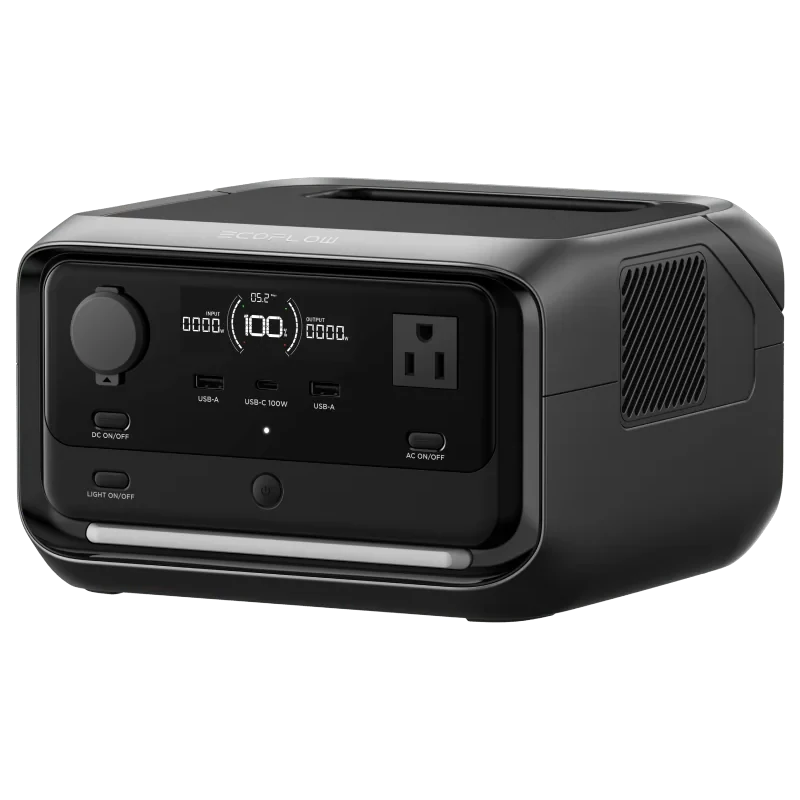
EcoFlow RIVER 2

EcoFlow

RIVER 2

$209 listed · 8 lb

Capacity
256 Wh
Output
300 W
Surge
600 W

Our pick if the unit charges overnight and rides in a car: the 260 Gen4’s numbers exactly — 256 Wh and 300 W — on sale now, and what you forgo is the 42-minute charge claim, the smaller box and the 140 W USB-C port, none of which EcoFlow has priced or dated.

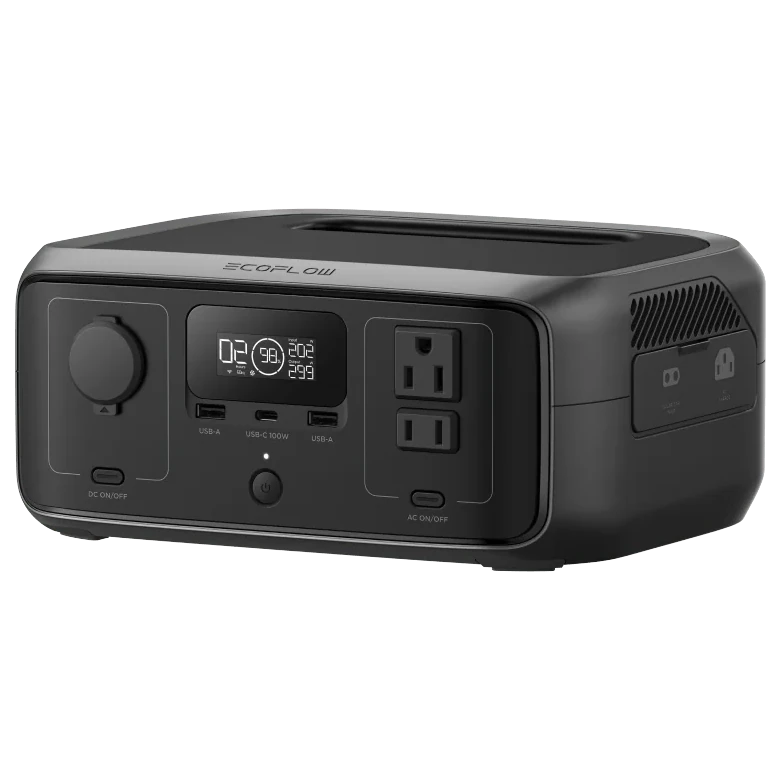
EcoFlow RIVER 2 Max

EcoFlow

RIVER 2 Max

$289 listed · 13 lb

Capacity
512 Wh
Output
500 W
Surge
1,000 W

The 520 Gen4’s numbers exactly — 512 Wh and 500 W, two AC outlets — on sale now, and we’d buy it unless the box is what matters to you: EcoFlow’s own measure says the Gen4 is 59.1% smaller and 23.5% lighter, and that plus the 50-minute charge claim is all you forgo.

EcoFlow RIVER 3 PLUS

EcoFlow

RIVER 3 PLUS

$279 listed · 10 lb

Capacity
286 Wh
Output
600 W
Surge
1,200 W

More capacity and double the output of the 260 Gen4 — 286 Wh and 600 W — at the small size, and we’d take a bigger inverter now over Gen4 charge-speed and size claims that have no price or date.

DJI Power 500

DJI

Power 500

$299 listed · 16 lb

Capacity
512 Wh
Output
1,000 W
Surge
1,000 W

Double the 520 Gen4’s output at the same 512 Wh — 1,000 W, on sale now — and if what you run matters more than how fast it refills, this is where we’d end the wait.

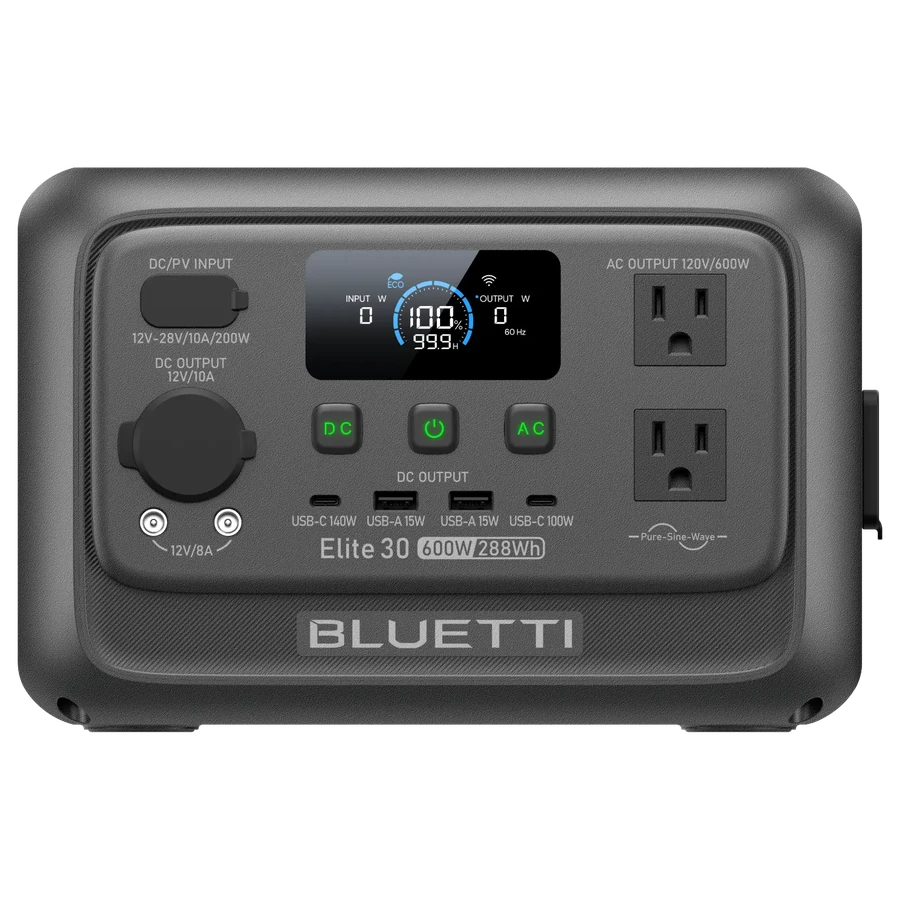
BLUETTI Elite 30 V2

BLUETTI

Elite 30 V2

$280 listed · 10 lb

Capacity
288 Wh
Output
600 W
Surge
1,500 W

BLUETTI’s 288 Wh / 600 W unit, our small-class pick over the 260 Gen4 if output ever matters: a little more energy and double the inverter, on sale now.

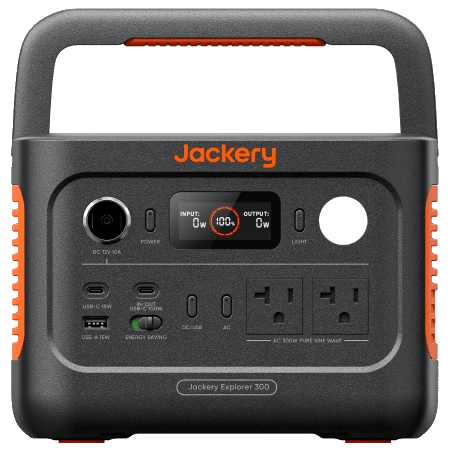
Jackery Explorer 300 v2

Jackery

Explorer 300 v2

$269 listed · 8 lb

Capacity
288 Wh
Output
300 W
Surge
600 W

Jackery’s 288 Wh / 300 W unit, the 260 Gen4’s output with a touch more capacity, on sale now — the one we’d suggest if you want a different brand rather than a different spec.

06 · The line

Where it sits in EcoFlow’s RIVER range

RIVER is EcoFlow’s small-unit family, and the Gen4 pair repeats the RIVER 2 and RIVER 2 Max’s capacity and output exactly — the change is the box, not the battery.

  • EcoFlow RIVER 2

    RIVER 2

    256 Wh · 300 W

    The 260 Gen4’s capacity and output, on sale now.

    $209 listedCompare →

  • EcoFlow RIVER 2 Max

    RIVER 2 Max

    512 Wh · 500 W

    The 520 Gen4’s capacity and output, on sale now.

    $289 listedCompare →

  • EcoFlow RIVER 3

    RIVER 3

    245 Wh · 300 W

    Still on sale; no Gen4 model announced at this size.

    $239 listedCompare →

  • EcoFlow RIVER 3 230

    RIVER 3 230

    230 Wh · 300 W

    Still on sale; no Gen4 model announced at this size.

    $189 listedCompare →

  • EcoFlow RIVER 3 PLUS

    RIVER 3 PLUS

    286 Wh · 600 W

    The small unit with a 600 W inverter — double the 260 Gen4’s output.

    $279 listedCompare →

  • EcoFlow RIVER 3 MAX

    RIVER 3 MAX

    572 Wh · 600 W

    Still on sale; no Gen4 model announced at this size.

    $499 listedCompare →

For the whole EcoFlow range as it stands today, see our EcoFlow guide; for the two current units closest to this one in role, the RIVER 2 Max and DJI Power 500 side by side.

07 · Fit

Who should wait for it, and who should not

Read from what EcoFlow chose to announce and what it chose to leave out.

Worth waiting for if you are

  • Someone who refills between stops — a café outlet, a campsite hookup, an hour in a car park — and needs the pack back to 80% in under an hour on EcoFlow’s claim; that is the only buyer we’d tell to wait, and only with a European address.
  • A desk or bedside UPS for a router, a CPAP or a monitor, where we’d rank a sub-10 ms switchover and a low idle draw above another watt-hour.
  • A laptop-first traveller who wants a 140 W USB-C port and two AC outlets in a pack under 5 kg — though we’d want EcoFlow to confirm the 140 W comes back out before counting on it.

Buy something that ships if you are

  • Anyone in the United States — nothing has been announced for the US, no date, no market, no 120 V configuration, and every unit shown has European sockets, so we’d say there is nothing to wait for until a 120 V unit exists.
  • Anyone who needs it this year — EcoFlow has stated no price and no date, and we treat the European Q4 2026 and Q1 2027 timing as one website’s reporting, not a commitment EcoFlow has made.
  • Anyone who needs more than 500 W — we’d buy the DJI Power 500, which does 1,000 W at the same 512 Wh today, or the RIVER 3 Plus at 600 W at the small size.
  • Anyone who needs a 12 V car socket or a barrel DC output — none is visible in any photograph, EcoFlow has published no port list, and we would not assume one is there.

08 · Questions

Frequently asked

Short answers, each with its own link.

All new & upcoming releases Comparison tool