
Generation comparison
EcoFlowRIVER 2vsRIVER 3Series
RIVER 3 isn’t just a bigger RIVER 2 — it switches over three times faster and, for the first time in the line, some of it expands.
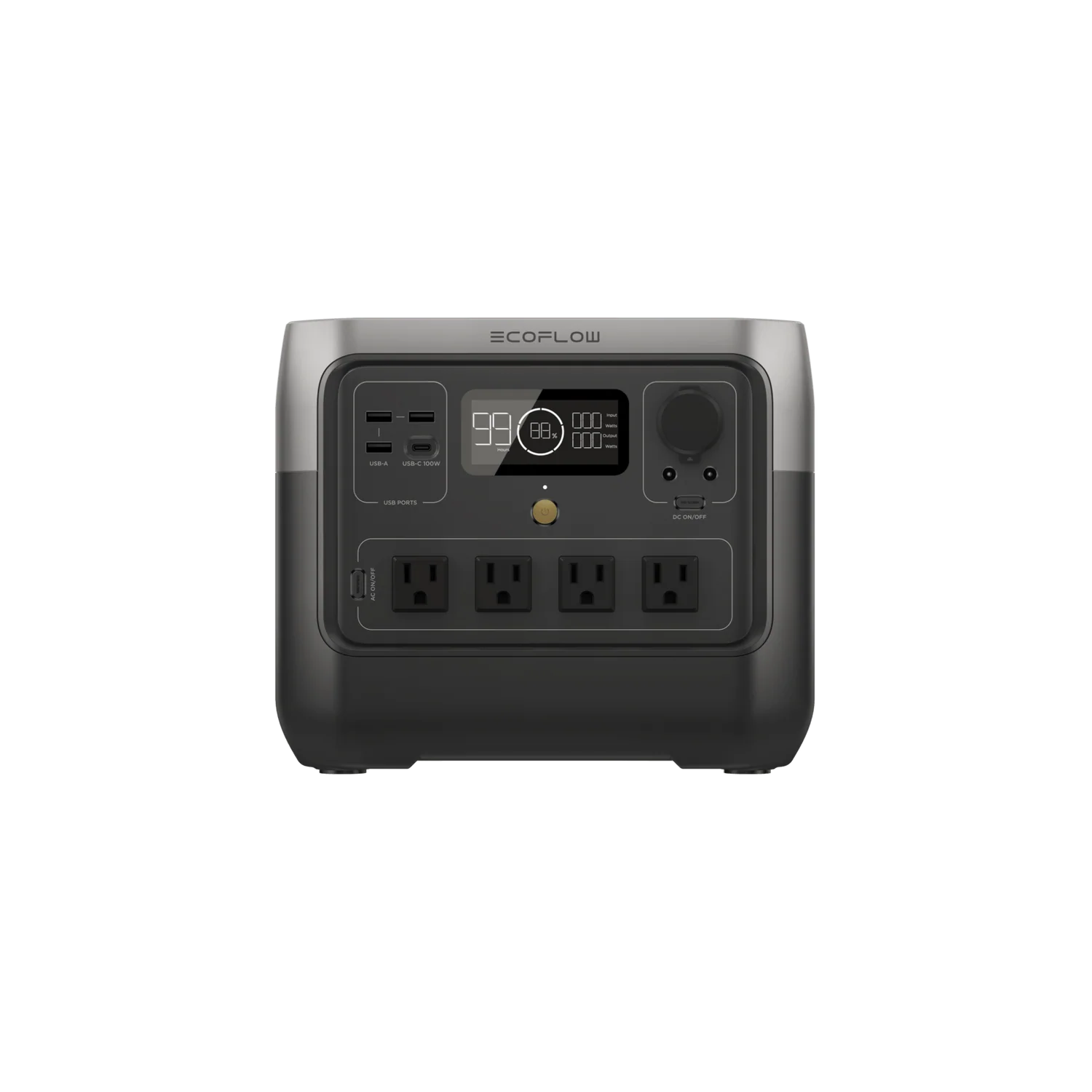
RIVER 2 Series
The previous generation — sealed, slower to switch.
5 models/243–768 Wh/0% expandable

RIVER 3 Series
The current generation — faster cutover, and some of it expands.
6 models/230–1,196 Wh/67% expandable
- Models compared
- 115 + 6
- Capacity spanned
- 230–1,196Wh
- Ranges overlap
- 70%of the band
- Genuine rivals
- 6model pairs
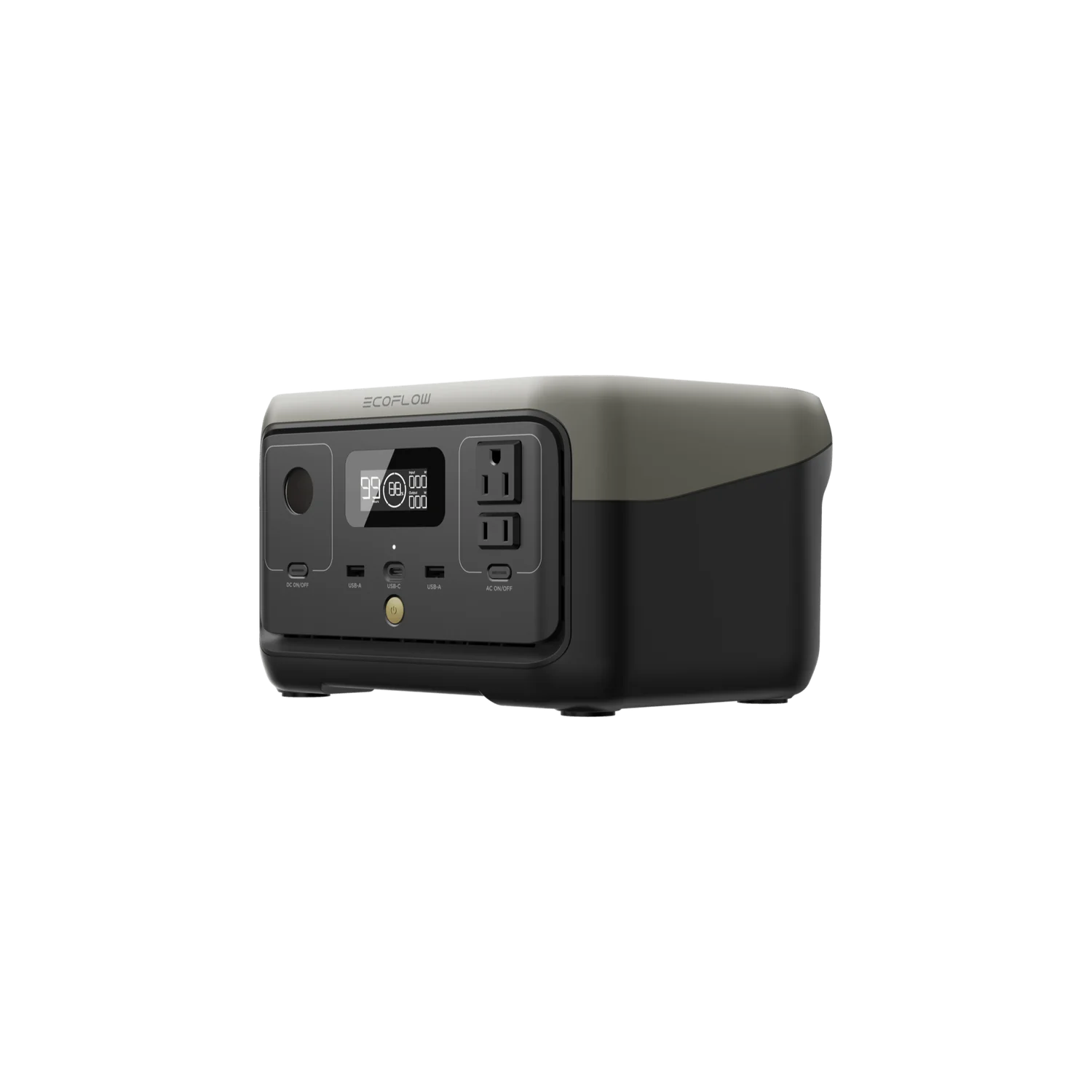 RIVER 2256 WhRIVER 2 Max 500499 Wh
 RIVER 2 Max512 WhRIVER 2 Pro768 WhRIVER 3 230230 Wh
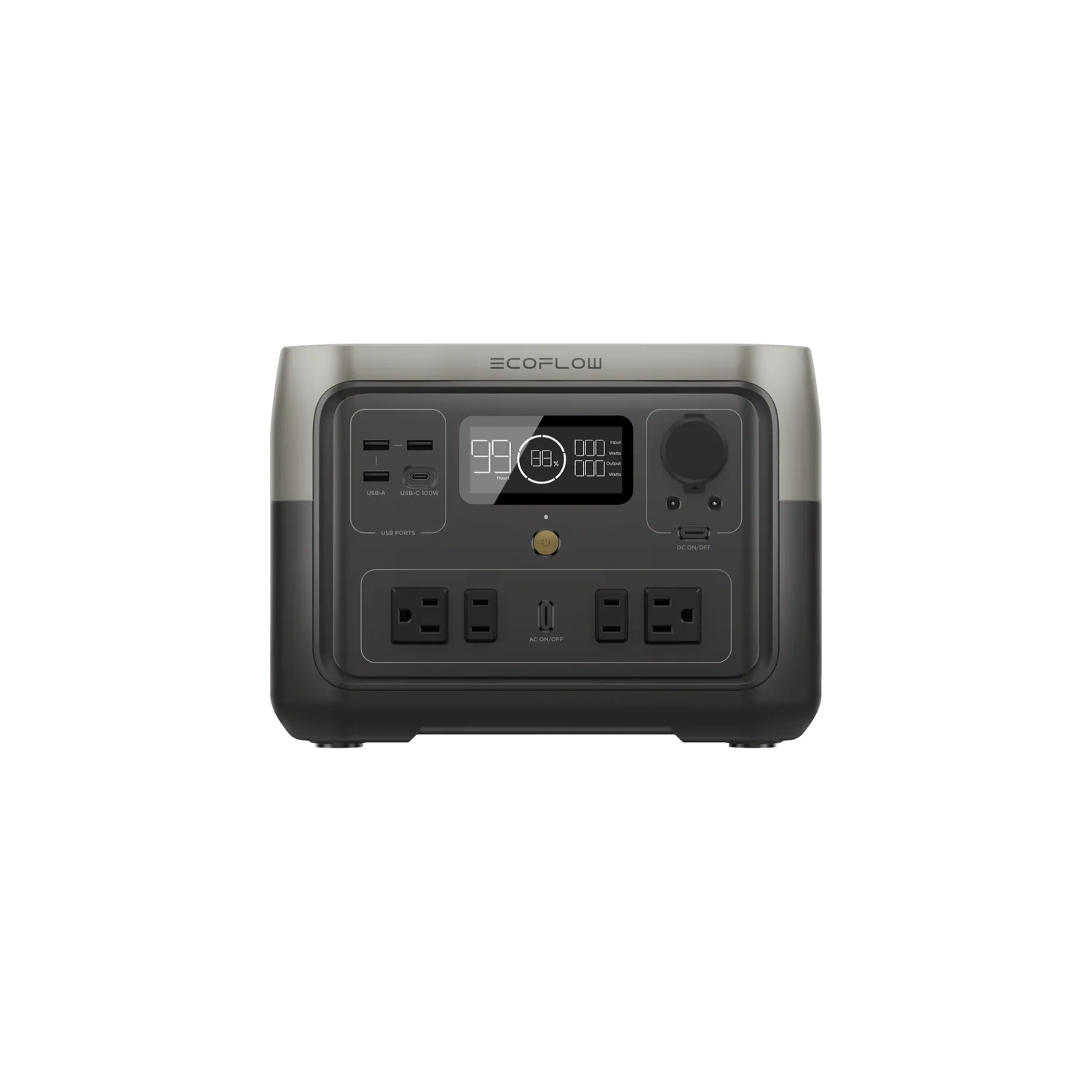
 RIVER 3245 Wh
 RIVER 3 PLUS286 WhRIVER 3 MAX572 Wh
.webp) RIVER 3 MAX PLUS858 Wh
RIVER 3 MAX PLUS858 Wh RIVER 3 MAX PLUS WIRELESS1,196 Wh
RIVER 2243–768 Wh
RIVER 3230–1,196 Wh
This compares two entire product lines, not two units. Get the line right and the model almost picks itself. Get it wrong and no amount of comparing model numbers will rescue the decision. Already know the two units you're torn between? Compare two products head-to-head
Two lines, two different jobs
EcoFlow RIVER 2
Runtime-forwardRIVER 2 was EcoFlow's compact line for several years, and it did one thing consistently: small, sealed, easy to carry. Every unit is complete as bought, with no expansion path and a leisurely handover to battery when mains power drops. If you own one it’s still a perfectly good camp and travel battery — this isn’t a line that stopped working.
EcoFlow RIVER 3
Power-forwardRIVER 3 is the current generation and it reworks the parts that were holding the line back. Switchover is dramatically faster, most of the range now takes an expansion battery, and the line reaches both a little smaller and considerably larger than RIVER 2 ever did. It’s the same idea, executed with the constraints removed.
Are these two lines even competing?
Before asking which is better, it's worth asking whether they overlap at all.
These are two generations of one line, so they occupy the same rung by definition — and unlike a tier comparison, most models here have a near-direct counterpart. RIVER 2, 2 Max and 2 Pro each map onto a RIVER 3 unit at close to the same size and output.
That makes this an unusually clean generational read. The question isn’t which line suits your job — both were built for the same job — but whether the specific things the new generation fixed are things you care about. If they aren't, a RIVER 2 remains a capable unit; if they’re, the gap is wider than the model numbers suggest.
The short version
These two share 70% of their capacity range, and 6 of the 11 models between them land on a genuine head-to-head. This is one of the closer calls on the site — you could be happy with either, so what decides it is going to be something other than size.
What actually separates them
Five specifications that decide which line fits — and one that doesn't.
Switchover speed
When utility power drops, a unit with UPS passthrough takes over — but not instantly. Under about 10ms almost nothing notices. Around 20ms most equipment rides through. At 30ms you’re outside what many desktops and some medical devices will tolerate without blinking.
RIVER 2
30ms
RIVER 3
10ms
The single biggest change between the generations, and it’s roughly threefold. RIVER 2 sits at the far edge of what sensitive equipment tolerates; RIVER 3 sits comfortably inside it. If you want a small unit that can hold up a desktop or a CPAP through a cut, this is the whole reason to buy the newer generation.
Room to grow
Expandability is whether a unit accepts a second battery later. It separates a finished appliance from the first component of a larger system.
RIVER 2
0%
RIVER 3
67%
RIVER 2 had no expansion anywhere in the line — what you bought was permanently what you had. Two thirds of RIVER 3 accepts more battery. For a compact line this is a genuine change in what the product is, not a spec bump.
Power character
Output divided by capacity describes what kind of tool a unit is. A high ratio means a large inverter on a modest pack — it starts demanding appliances but doesn’t run them long. A low ratio is the opposite.
RIVER 2
1.04 W/Wh
RIVER 3
1.22 W/Wh
RIVER 3 carries more inverter for its size, so it starts a wider range of things. The spread inside the new generation is also much wider — it now includes both a very lean endurance unit and a notably punchy small one, where RIVER 2 was uniform.
Carry weight
Watt-hours per pound is how much energy you get for what you have to lift. For a line defined by portability it’s close to the point of the product.
RIVER 2
37.8 Wh/lb
RIVER 3
41.3 Wh/lb
A modest improvement rather than a dramatic one. RIVER 3 packs a little more energy into each pound, but anyone upgrading purely for weight will find the difference smaller than the switchover and expansion changes.
LifespanNo difference
A cycle is one full discharge and recharge. The rating is roughly how many you get before capacity settles to about 80% of new. At daily use, 3,000 cycles is on the order of eight years.
RIVER 2
3,000
RIVER 3
3,000
Unchanged between the generations — same chemistry, same rating. A RIVER 2 won’t wear out sooner than a RIVER 3, and any upgrade case built on longevity is inventing a difference that’s not there.
What each line is good at, and what it isn't
EcoFlow RIVER 2
Strengths
- Same cells and cycle rating as the current generation — no longevity penalty for buying older
- Same surge headroom above rated output as RIVER 3
- A simple, uniform line — three sizes with no trim confusion
- Still a fully capable camp, travel and photography battery
Limits
- Switchover is roughly three times slower — outside what some sensitive equipment tolerates
- No unit in the generation accepts a second battery
- Tops out well below where RIVER 3 reaches
- Being the outgoing generation, availability is increasingly patchy
EcoFlow RIVER 3
Strengths
- Roughly three times faster switchover, which brings desktops and CPAPs into scope
- Two thirds of the line accepts an expansion battery, where RIVER 2 accepted none
- Reaches meaningfully higher capacity than RIVER 2 ever did
- Slightly denser, and carries more inverter relative to pack size
Limits
- A much wider spread of trims, which makes choosing harder than it was
- A third of the line still has no expansion path — check the model, not the generation
- No improvement in cycle life over RIVER 2
- The smallest units gain least from the generational changes
How to read this
A limit isn't a fault — it's a constraint on what a line is built to do. Every line here has them, including whichever one suits you. The useful question is which set of limits you'll never notice.
Where the lines actually collide
Models within 15% of each other on capacity — and whether they're truly interchangeable.
So which one should you buy?
Nobody actually buys a spec sheet. Find the row that sounds most like your life — that's the line we'd point you at, and why.
Holding up a desktop or CPAP through a cut
The switchover change is threefold, and it’s the difference between marginal and safe.
A camp and travel battery, nothing critical
Same cells, same cycle life, same surge headroom. The new generation fixes things this job never needed.
You expect to add capacity later
RIVER 2 offered no expansion anywhere. Most of RIVER 3 does.
The most capacity available in a compact unit
RIVER 3 reaches considerably higher than RIVER 2 ever did.
Best value on a proven unit
Nothing about RIVER 2 degrades faster, and it remains capable at what it was built for.
Or start from the job instead
If you already know what you need it to do, these rank models for that job across every brand we track — not just these two lines.
Every model, if you want to see the whole range
RIVER 2 · 5 models
| Model | Wh | W | lb | Exp. |
|---|---|---|---|---|
| RIVER 2 240 | 243 | 300 | 7.7 | — |
| RIVER 2 | 256 | 300 | 7.8 | — |
| RIVER 2 Max 500 | 499 | 500 | 13.2 | — |
| RIVER 2 Max | 512 | 500 | 13.4 | — |
| RIVER 2 Pro | 768 | 800 | 17.2 | — |
RIVER 3 · 6 models
| Model | Wh | W | lb | Exp. |
|---|---|---|---|---|
| RIVER 3 230 | 230 | 300 | 7.8 | — |
| RIVER 3 | 245 | 300 | 7.8 | — |
| RIVER 3 PLUS | 286 | 600 | 10.4 | Yes |
| RIVER 3 MAX | 572 | 600 | 10.4 | Yes |
| RIVER 3 MAX PLUS | 858 | 600 | 20.8 | Yes |
| RIVER 3 MAX PLUS WIRELESS | 1,196 | 600 | 20.8 | Yes |
EcoFlow RIVER 2 vs RIVER 3 series FAQs
What is the difference between EcoFlow RIVER 2 and RIVER 3?
Two changes matter. RIVER 3 switches over to battery roughly three times faster, which brings desktops and CPAP machines into scope where RIVER 2 was marginal. And two thirds of RIVER 3 accepts an expansion battery, where no RIVER 2 did. RIVER 3 also reaches higher capacity and is slightly denser. Cycle life and surge headroom are unchanged between the generations.
Is it worth upgrading from RIVER 2 to RIVER 3?
Only if you need what changed. If you want to protect sensitive electronics through outages, or you want the option to add capacity later, the newer generation is a real improvement. If you use it for camping, travel or photography, RIVER 2 has the same cells, the same cycle rating and the same surge headroom — there’s no longevity or capability penalty for keeping it.
Can a RIVER 2 run a CPAP through a power cut?
It will run a CPAP, but the handover when mains power drops is roughly three times slower than RIVER 3's and sits at the edge of what some machines tolerate without alarming. For deliberate battery-only use it’s fine; for seamless outage cover, RIVER 3 is the safer generation.
Do RIVER 2 and RIVER 3 use the same battery?
They use the same chemistry with the same cycle rating, so expected lifespan is effectively identical. The generational changes are around the cells — switchover speed, expansion support, inverter size relative to the pack, and how far the range reaches.
Which RIVER 3 replaces my RIVER 2?
The mapping is close to direct: RIVER 2 maps onto RIVER 3, RIVER 2 Max onto RIVER 3 MAX, and RIVER 2 Pro onto RIVER 3 MAX PLUS, each at a similar size and output. The overlap section on this page links the head-to-head for each pair.
Related line comparisons
Figures are generated from our catalog of 146 power stations and refresh with it — line-level values are medians across every model in the line. See how we test and score.