
BLUETTI power stations
24 stations on sale today. We line them up by what they run and compare them against every rival.
About BLUETTI
An early bet on LiFePO4, built to scale
BLUETTI moved to LiFePO4 cells early, while most rivals still used standard lithium-ion, and built its range around modular systems that grow into home backup.
LFP pioneer
Switched to LiFePO4 ahead of most of the market, putting safety and cycle life first.
Modular
Built systems like the AC500 to take extra batteries and grow with your needs.
Home backup
Its larger units, like the EP series, are designed to tie into a home’s own power system.
Today
From the small Elite and AC units up to multi-battery EP stacks for the whole house.
Looking ahead
Announced, not yet on sale: Apex 200 Expandable Power Station · Pioneer 5000 E-Generator · Elite mini: Elite 30 mini and Elite 200 mini. What we know so far is on our new releases page.
How BLUETTI compares
The typical BLUETTI station on sale today against the 5 other brands we cover: medians across each brand’s current range, from our catalogue.
Price per watt-hour
4th of 6 brands$0.62vs $0.59 typical
$100 buys about 162 Wh of BLUETTI battery
Typical elsewhere: 171 Wh
Outage switchover
4th of 6 brands20 msvs 15 ms typical
Grid power20 ms gapBLUETTI battery
The gap your devices see when the power drops. A blink takes about 100 ms.
Takes extra batteries
3rd of 6 brands59% of modelsvs 58% of models typical
26 of BLUETTI’s 44 stations on sale can add a battery later (the lighter block), instead of being replaced.
Rated cycle life
Best of 6 brands4,000 cyclesvs 4,000 cycles typical
About 11.0 years of charging every day before the battery fades to ~80%, on the maker’s rating. The grey mark is the typical 11.0 years elsewhere.
Battery per pound
5th of 6 brands33 Wh/lbvs 38 Wh/lb typical
What a 25 lb BLUETTI station typically holds: about 14 hours of a full-size fridge.
Our picks
The best BLUETTI for…
Best overall is our editor’s pick. The other cards are the top of a shortlist built by one simple rule.

1,024 Wh · 1,800 W · $499
1 kWh and 1,800 W in a 25 lb body, with a switchover under 10 ms. The easiest BLUETTI to live with day to day.

$0.36/Wh · 3,840 Wh
3.8 kWh and 2,600 W at the lowest price per watt-hour in BLUETTI’s own store, with a 15 ms switchover. At 85 lb, it stays where you put it.

34 Wh/lb · 22.5 lb
768 Wh and 1,000 W at 22.5 lb: enough for a weekend of devices and small appliances, still light enough to carry.
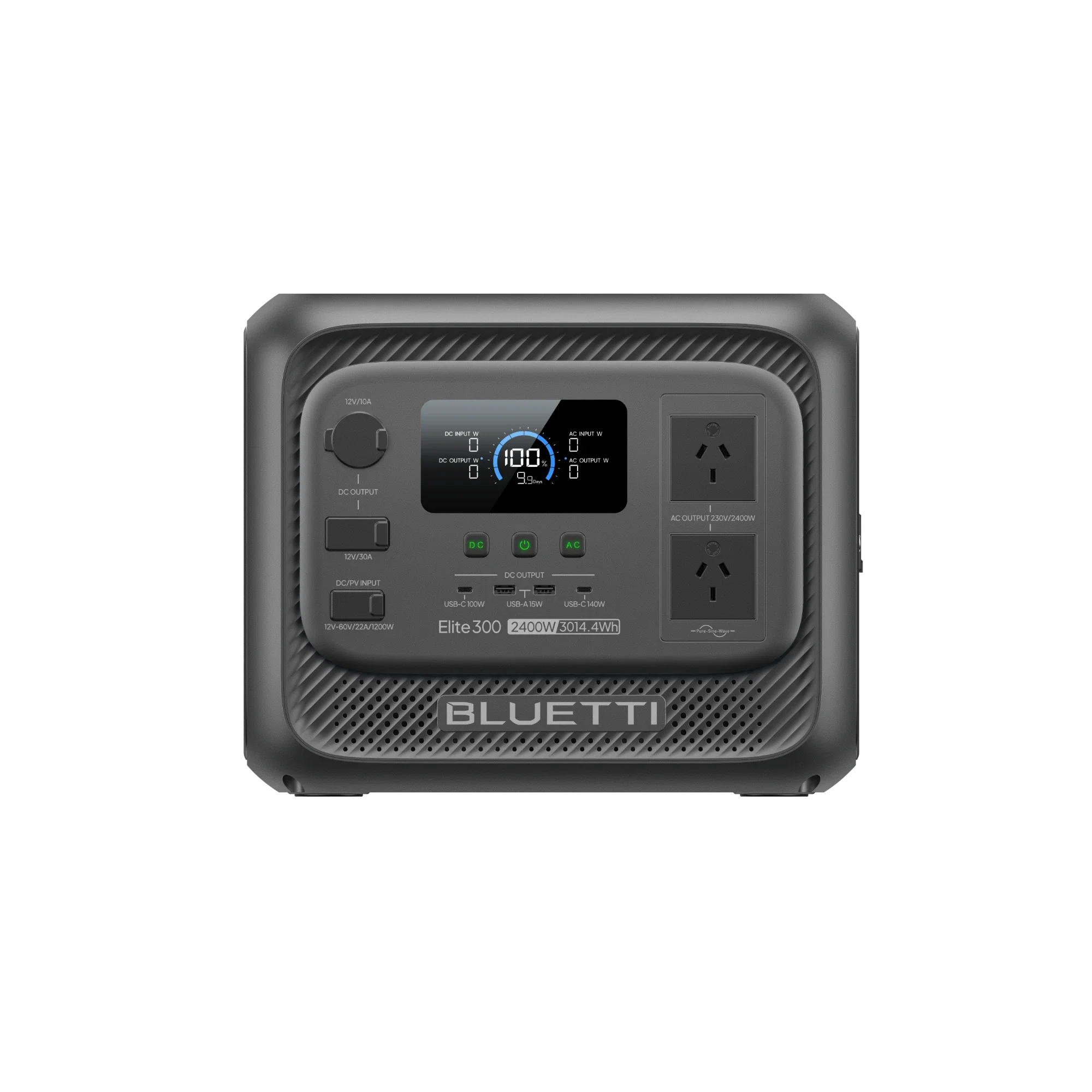
3,014 Wh · $0.40/Wh
3 kWh and 2,400 W in a 58 lb body, light for a station this size, and priced close to BLUETTI’s best per watt-hour.
The BLUETTI range, smallest to largest
Which BLUETTI is your size?
24 stations on sale, from 128 Wh to 9,920 Wh. The bar is battery size on one scale; the line under each name is what that size runs.
Carry it
Under 1 kWh · light enough to carry
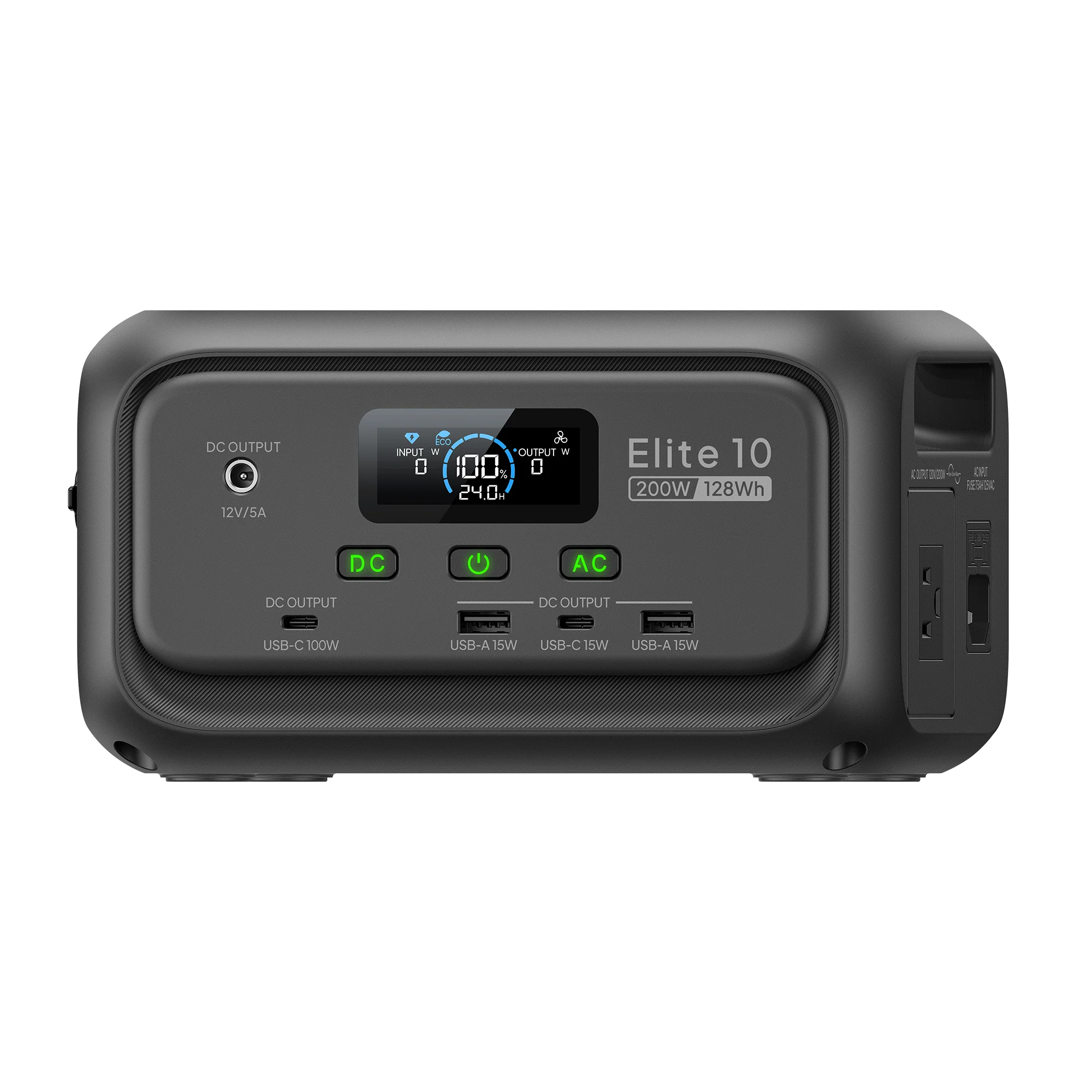 Elite 10 MiniWi-Fi router and modem for about 5 hours200 W output · 3.97 lb128 Wh$119Check if it’s on saleat BLUETTI
 Elite 30 V2Wi-Fi router and modem for about 12 hours600 W output · 10.3 lb288 Wh$290Check if it’s on saleat BLUETTI
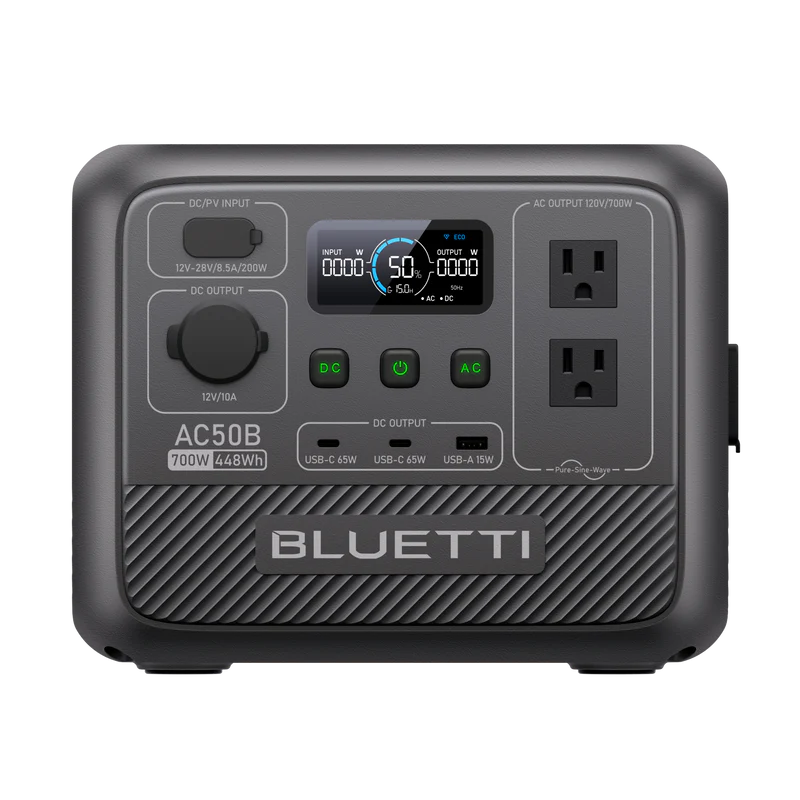 AC50BWi-Fi router and modem for about 19 hours700 W output · 14.8 lb448 Wh$399Check if it’s on saleat BLUETTI
- AC70A full-size fridge for about 13 hours1,000 W output · 22.5 lb768 Wh$359Check if it’s on saleat BLUETTI
 AC70PA full-size fridge for about 15 hours1,000 W output · 22.5 lb864 Wh$499Check if it’s on saleat Wild Oak Trail
 Pioneer NaA full-size fridge for about 15 hours1,500 W output · 37 lb900 Wh$799Check if it’s on saleat BLUETTI
Ride out an outage
1–3 kWh · sized for outages and weekends away
 Elite 100 miniAbout 1 night of a CPAP with its humidifier700 W output · 23.6 lb1,004.8 Wh$429Check if it’s on saleat BLUETTI
- Elite 100 V2A full-size fridge for about 18 hours1,800 W output · 25 lb1,024 Wh$499Check if it’s on saleat BLUETTI
 AC180A full-size fridge for about 20 hours1,800 W output · 35.3 lb1,152 Wh$499Check if it’s on saleat BLUETTI
 AC180PA full-size fridge for about 25 hours1,800 W output · 35.3 lb1,440 Wh$649Check if it’s on saleat BLUETTI
 FridgePowerA full-size fridge for about 35 hours1,800 W output · 43.43 lb2,016 Wh$1,699Check if it’s on saleat BLUETTI
 AC200LA full-size fridge for about 35 hours2,400 W output · 62.4 lb2,048 Wh$899Check if it’s on saleat BLUETTI
 Elite 200 V2A full-size fridge for about 36 hours2,600 W output · 53.4 lb2,073.6 Wh$899Check if it’s on saleat BLUETTI
 Premium 200 V2A full-size fridge for about 36 hours2,700 W output · 53.4 lb2,073.6 Wh$1,549Check if it’s on saleat BLUETTI
 AC200P LA full-size fridge for about 40 hours2,400 W output · 63.5 lb2,304 Wh$1,199Check if it’s on saleat BLUETTI
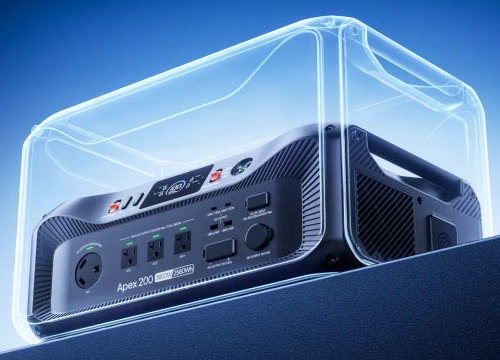 Apex 200A full-size fridge for about 44 hours3,200 W output · 59.5 lb2,560 WhCheck if it’s on saleat BLUETTI
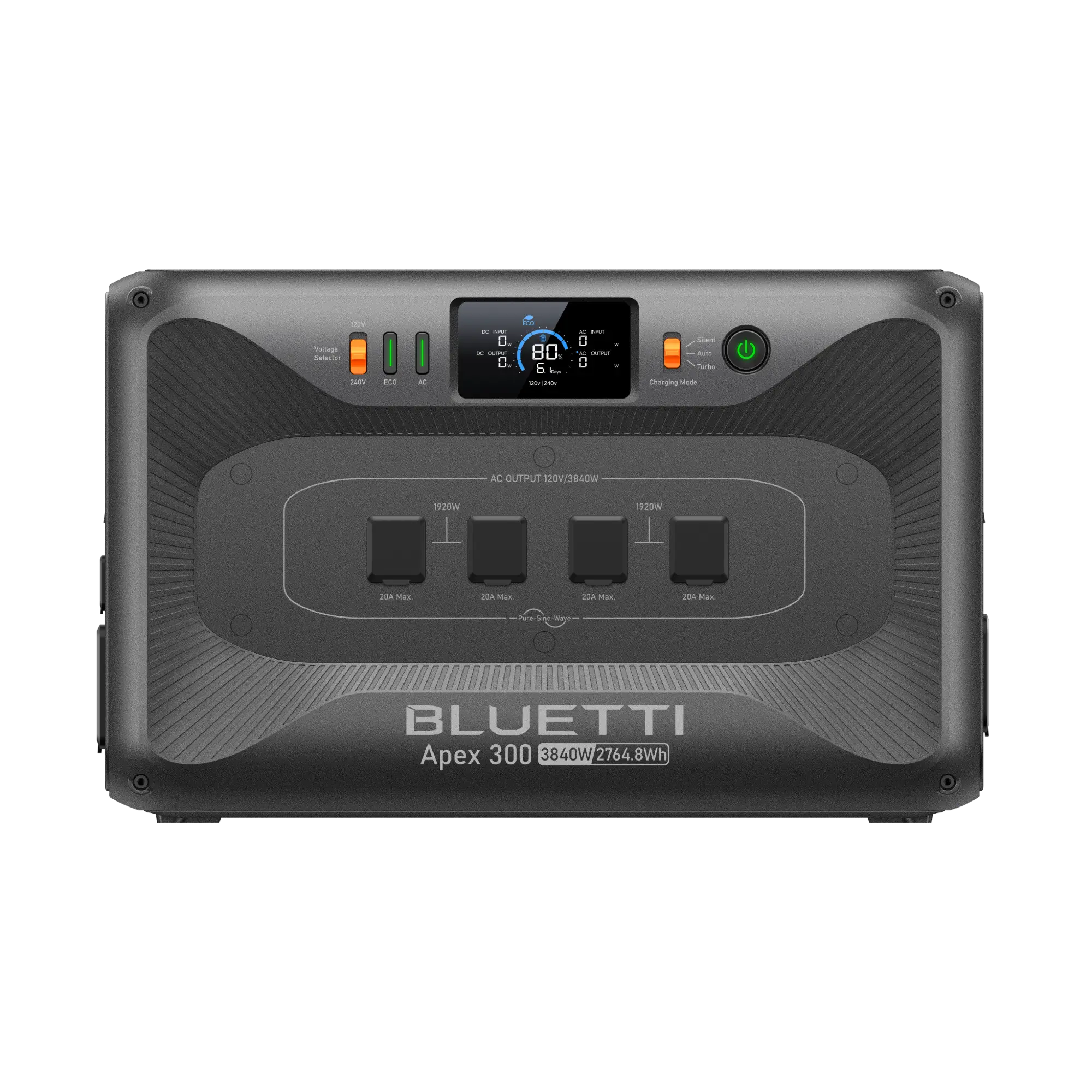 Apex 300+4 configurationsA full-size fridge for about 47 hours3,840 W output · 83.78 lb2,764.8 Wh$1,499Check if it’s on saleat BLUETTI
Back up the house
3 kWh and up · built to stay put and expand
- Elite 300A full-size fridge for about 2 days2,400 W output · 58 lb3,014.4 Wh$1,199Check if it’s on saleat BLUETTI
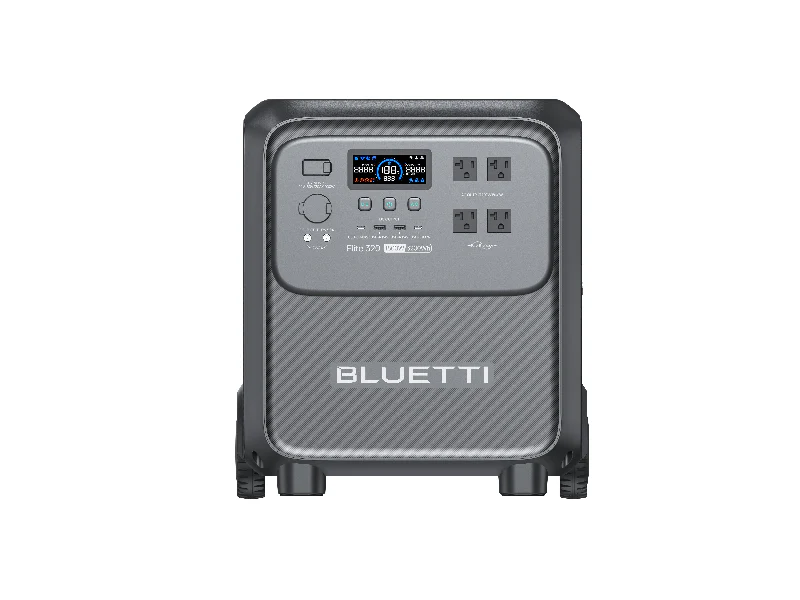 Elite 320A full-size fridge for about 2 days1,800 W output · 74.96 lb3,200 Wh$936Check if it’s on saleat US Solar Supplier
- Elite 400A full-size fridge for about 3 days2,600 W output · 85 lb3,840 Wh$1,399Check if it’s on saleat BLUETTI
 EnergyPro 6K + AT1+4 configurationsA full-size fridge for about 5 days5,760 W output · 276.9 lb7,680 Wh$5,274Check if it’s on saleat BLUETTI
 EnergyPro 13K + 2*EnergyPack 500+2 configurationsA full-size fridge for about 7 days7,600 W output · 361.42 lb9,600 Wh$7,919Check if it’s on saleat BLUETTI
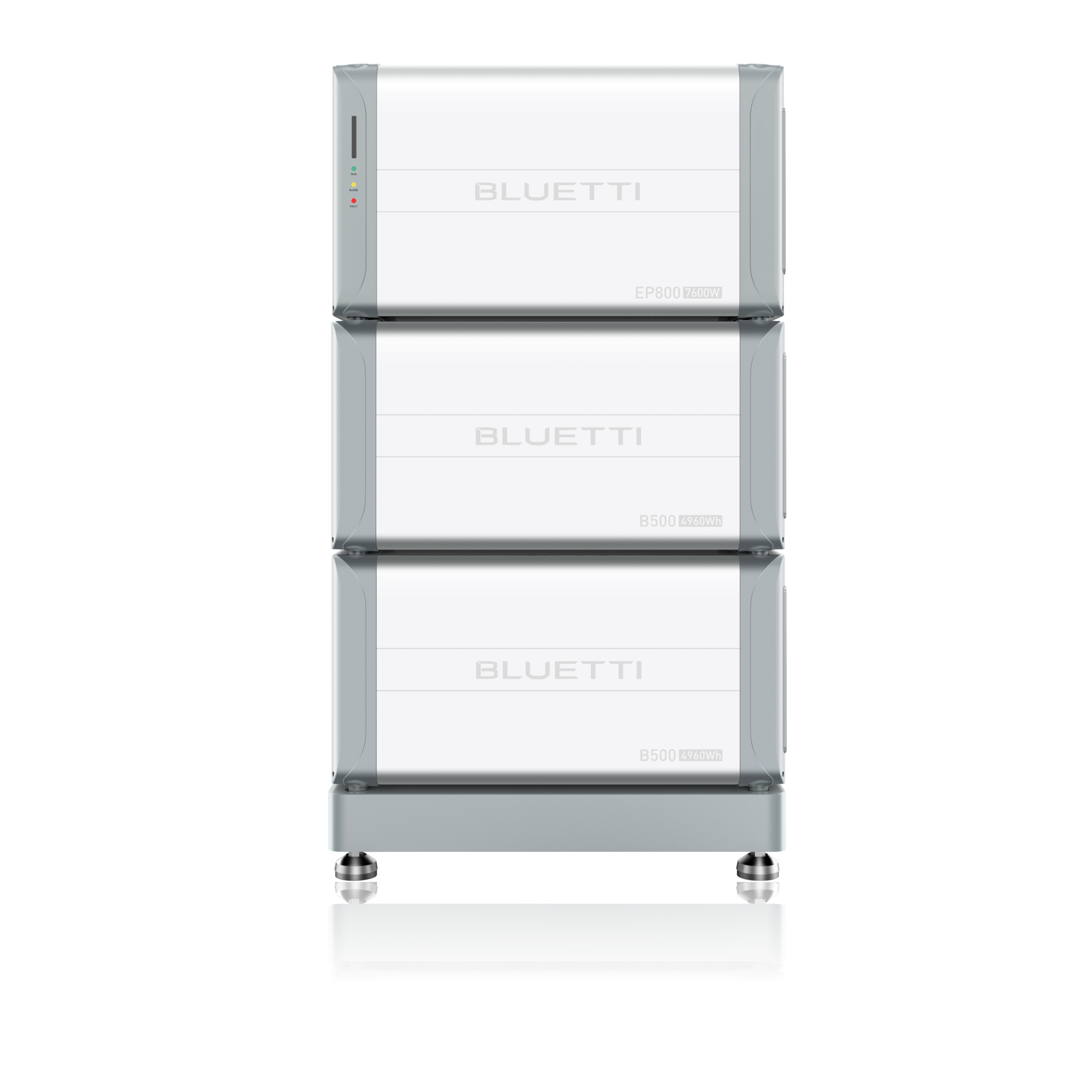 EP800 + 2*B500+5 configurationsA full-size fridge for about 7 days7,600 W output · 360.6 lb9,920 Wh$6,999Check if it’s on saleat BLUETTI
 EP900 + 2*B500+5 configurationsA full-size fridge for about 7 days7,600 W output · 343 lb9,920 Wh$10,298Check if it’s on saleat BLUETTI
Run times are planning estimates: a current full-size fridge at 150 W running a third of the time, a CPAP with its humidifier at 62 W for 8 hours, 85% of the battery reaching the outlet. A fridge is only counted when the station can start its compressor.
Full spec tableEvery model side by side, with retired units and BLUETTI’s solar panelsShowHide
2,000 Wh and up · smallest first
- 2,016 Wh$1,6991,800 W1,000 W
- 2,048 Wh$8992,400 W1,200 W
- 2,073.6 Wh$8992,600 W1,000 W
- 2,073.6 Wh$1,5492,700 W1,000 W
- 2,304 Wh$1,1992,400 W1,200 W
- 2,560 Wh—3,200 W3,000 W
- 2,764.8 Wh$1,4993,840 W2,400 W
- 3,014.4 Wh$1,1992,400 W1,200 W
- 3,200 Wh$9361,800 W1,000 W
- 3,840 Wh$1,3992,600 W1,000 W
- 5,529.6 Wh$2,5993,840 W2,400 W
- 7,680 Wh$5,2745,760 W—
- 7,884.8 Wh$3,2993,840 W2,400 W
- 8,294.4 Wh$3,6893,840 W2,400 W
- 9,600 Wh$7,9197,600 W22,000 W
- 9,920 Wh$6,9997,600 W9,000 W
- 9,920 Wh$10,2987,600 W9,000 W
- 13,004.8 Wh$5,3993,840 W2,400 W
- 14,400 Wh$9,89911,500 W22,000 W
- 14,880 Wh$6,2997,600 W9,000 W
- 14,880 Wh$13,7989,000 W9,000 W
- 15,360 Wh$10,99011,520 W—
- 19,200 Wh$11,87913,200 W22,000 W
- 19,840 Wh$7,9997,600 W9,000 W
- 19,840 Wh$17,2989,000 W9,000 W
- 19,840 Wh$17,99915,200 W18,000 W
- 19,840 Wh$21,19615,200 W18,000 W
- 23,040 Wh$15,43017,280 W—
- 29,760 Wh$23,99815,200 W18,000 W
- 29,760 Wh$28,19618,000 W18,000 W
- 30,720 Wh$17,69423,040 W—
- 38,400 Wh$21,42028,800 W—
- 39,680 Wh$29,99815,200 W18,000 W
- 39,680 Wh$35,19618,000 W18,000 W
No longer sold
2,048 Wh—2,200 W900 W- 5,120 Wh—2,000 W1,200 W
- 5,120 Wh—3,000 W2,400 W
- 5,530 Wh—5,000 W3,000 W
- 12,288 Wh—3,000 W2,400 W
| Model | Capacity | Output | Solar in | Price | Where to buy | Compare |
|---|---|---|---|---|---|---|
| FridgePower43.4 lb · LFP · 4,000 cycles | 2,016 Wh | 1,800 W | 1,000 W | $1,699$0.84/Wh | Check if it’s on saleat BLUETTI | |
| AC200L62.4 lb · LFP · 3,000 cycles | 2,048 Wh | 2,400 W | 1,200 W | $899$0.44/Wh | Check if it’s on saleat BLUETTI | |
| Elite 200 V253.4 lb · LFP · 6,000 cycles | 2,073.6 Wh | 2,600 W | 1,000 W | $899$0.43/Wh | Check if it’s on saleat BLUETTI | |
| Premium 200 V253.4 lb · LFP · 6,000 cycles | 2,073.6 Wh | 2,700 W | 1,000 W | $1,549$0.75/Wh | Check if it’s on saleat BLUETTI | |
| AC200P L63.5 lb · LFP · 3,000 cycles | 2,304 Wh | 2,400 W | 1,200 W | $1,199$0.52/Wh | Check if it’s on saleat BLUETTI | |
| Apex 20059.5 lb · LFP · 6,000 cycles | 2,560 Wh | 3,200 W | 3,000 W | — | Check if it’s on saleat BLUETTI | |
| Apex 30083.8 lb · LFP · 6,000 cycles | 2,764.8 Wh | 3,840 W | 2,400 W | $1,499$0.54/Wh | Check if it’s on saleat BLUETTI | |
| Elite 30058 lb · LFP · 6,000 cycles | 3,014.4 Wh | 2,400 W | 1,200 W | $1,199$0.40/Wh | Check if it’s on saleat BLUETTI | |
| Elite 32075 lb · LFP · 3,000 cycles | 3,200 Wh | 1,800 W | 1,000 W | $936$0.29/Wh | Check if it’s on saleat US Solar Supplier | |
| Elite 40085 lb · LFP · 3,000 cycles | 3,840 Wh | 2,600 W | 1,000 W | $1,399$0.36/Wh | Check if it’s on saleat BLUETTI | |
 Apex 300 + B300K148.8 lb · LFP · 6,000 cycles | 5,529.6 Wh | 3,840 W | 2,400 W | $2,599$0.47/Wh | Check if it’s on saleat BLUETTI | |
| EnergyPro 6K + AT1276.9 lb · LFP | 7,680 Wh | 5,760 W | — | $5,274$0.69/Wh | Check if it’s on saleat BLUETTI | |
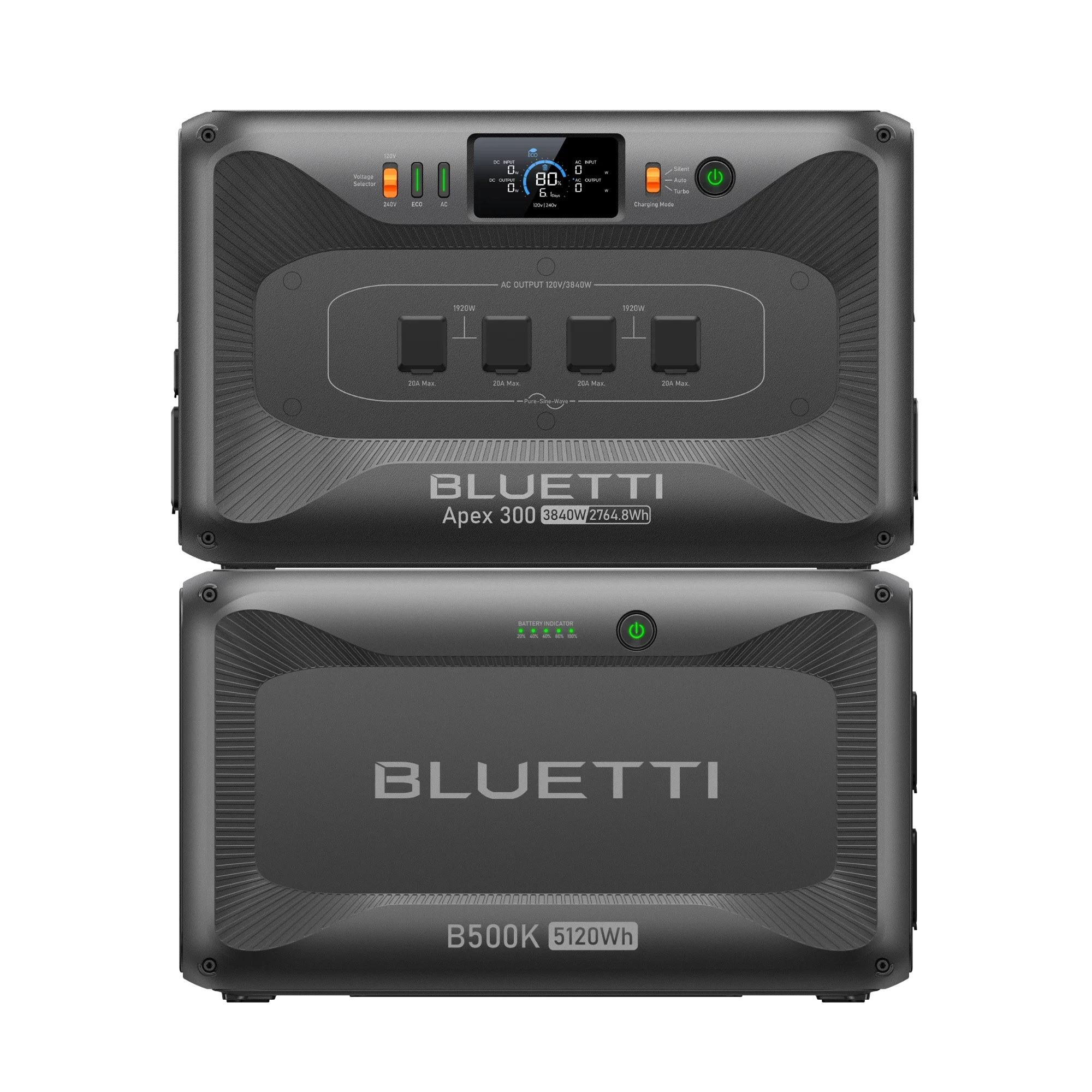 Apex 300 + B500K183 lb · LFP · 6,000 cycles | 7,884.8 Wh | 3,840 W | 2,400 W | $3,299$0.42/Wh | Check if it’s on saleat BLUETTI | |
 Apex 300 + 2*B300K213.9 lb · LFP · 6,000 cycles | 8,294.4 Wh | 3,840 W | 2,400 W | $3,689$0.44/Wh | Check if it’s on saleat BLUETTI | |
| EnergyPro 13K + 2*EnergyPack 500361.4 lb · LFP | 9,600 Wh | 7,600 W | 22,000 W | $7,919$0.82/Wh | Check if it’s on saleat BLUETTI | |
| EP800 + 2*B500360.6 lb · LFP · 3,500 cycles | 9,920 Wh | 7,600 W | 9,000 W | $6,999$0.71/Wh | Check if it’s on saleat BLUETTI | |
| EP900 + 2*B500343 lb · LFP · 6,000 cycles | 9,920 Wh | 7,600 W | 9,000 W | $10,298$1.04/Wh | Check if it’s on saleat BLUETTI | |
 Apex 300 + 2*B500K282.2 lb · LFP · 6,000 cycles | 13,004.8 Wh | 3,840 W | 2,400 W | $5,399$0.42/Wh | Check if it’s on saleat BLUETTI | |
 EnergyPro 13K + 3*EnergyPack 500489.2 lb · LFP | 14,400 Wh | 11,500 W | 22,000 W | $9,899$0.69/Wh | Check if it’s on saleat BLUETTI | |
| EP800 + 3*B500483.6 lb · LFP · 3,500 cycles | 14,880 Wh | 7,600 W | 9,000 W | $6,299$0.42/Wh | Check if it’s on saleat BLUETTI | |
 EP900 + 3*B500466 lb · LFP · 6,000 cycles | 14,880 Wh | 9,000 W | 9,000 W | $13,798$0.93/Wh | Check if it’s on saleat BLUETTI | |
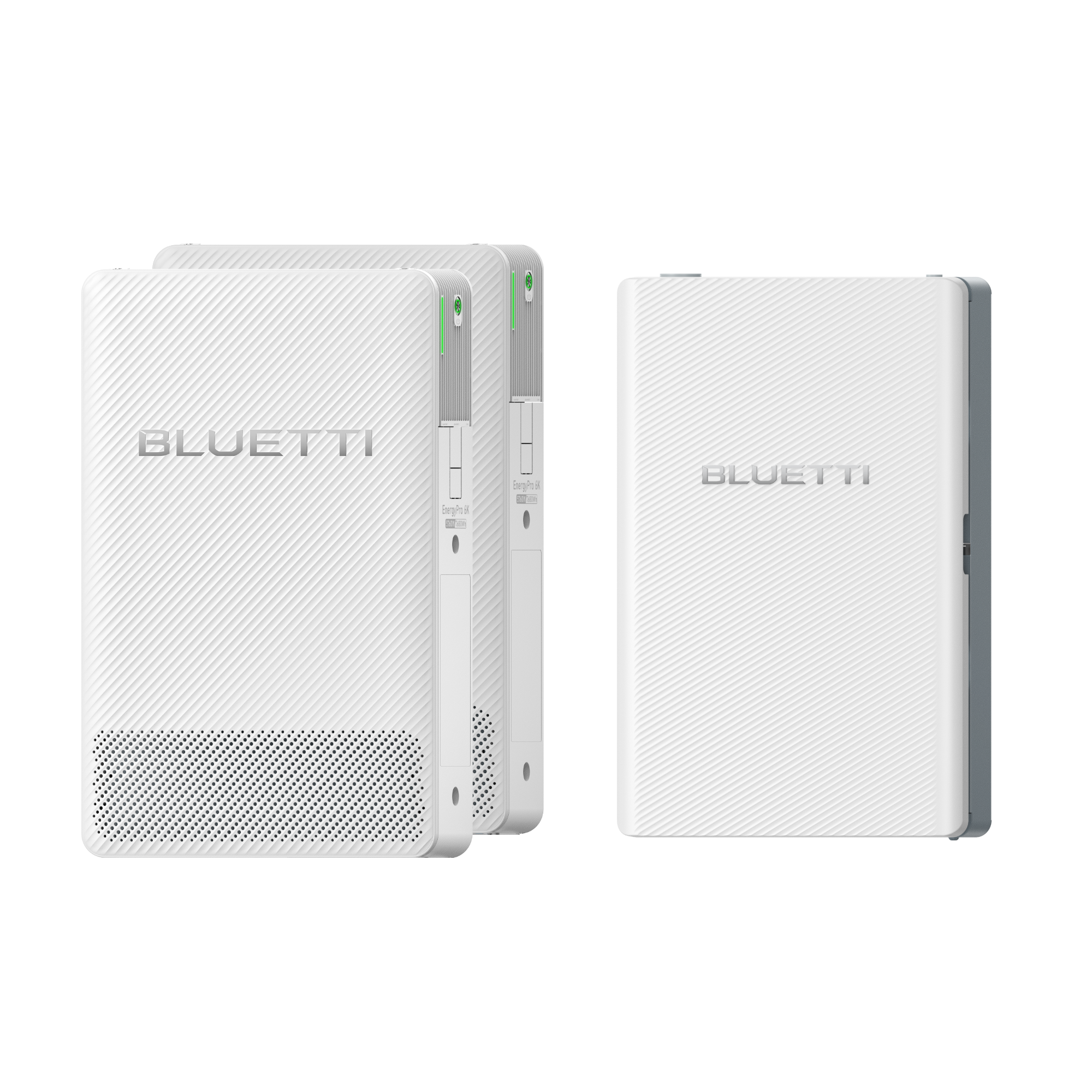 2*EnergyPro 6K + AT1497.4 lb · LFP | 15,360 Wh | 11,520 W | — | $10,990$0.72/Wh | Check if it’s on saleat BLUETTI | |
 EnergyPro 13K + 4*EnergyPack 500617 lb · LFP | 19,200 Wh | 13,200 W | 22,000 W | $11,879$0.62/Wh | Check if it’s on saleat BLUETTI | |
| EP800 + 4*B500606.6 lb · LFP · 3,500 cycles | 19,840 Wh | 7,600 W | 9,000 W | $7,999$0.40/Wh | Check if it’s on saleat BLUETTI | |
 EP900 + 4*B500589 lb · LFP · 6,000 cycles | 19,840 Wh | 9,000 W | 9,000 W | $17,298$0.87/Wh | Check if it’s on saleat BLUETTI | |
 2*EP800 + 4*B500721.2 lb · LFP · 3,500 cycles | 19,840 Wh | 15,200 W | 18,000 W | $17,999$0.91/Wh | Check if it’s on saleat BLUETTI | |
 2*EP900 + 4*B500686 lb · LFP · 6,000 cycles | 19,840 Wh | 15,200 W | 18,000 W | $21,196$1.07/Wh | Check if it’s on saleat BLUETTI | |
 3*EnergyPro 6K + AT1717.8 lb · LFP | 23,040 Wh | 17,280 W | — | $15,430$0.67/Wh | Check if it’s on saleat BLUETTI | |
| 2*EP800 + 6*B500976.8 lb · LFP · 3,500 cycles | 29,760 Wh | 15,200 W | 18,000 W | $23,998$0.81/Wh | Check if it’s on saleat BLUETTI | |
 2*EP900 + 6*B500932 lb · LFP · 6,000 cycles | 29,760 Wh | 18,000 W | 18,000 W | $28,196$0.95/Wh | Check if it’s on saleat BLUETTI | |
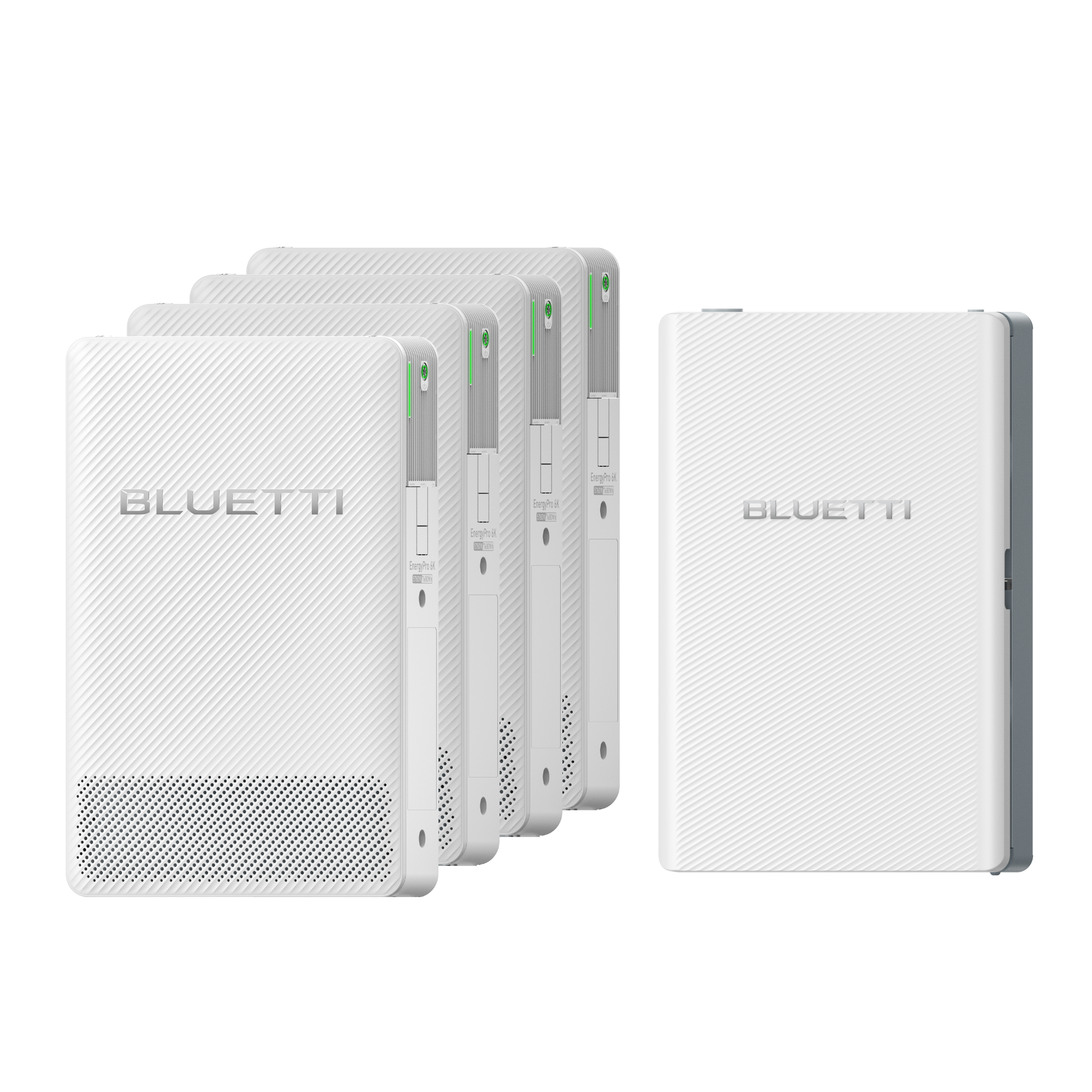 4*EnergyPro 6K + AT1938.3 lb · LFP | 30,720 Wh | 23,040 W | — | $17,694$0.58/Wh | Check if it’s on saleat BLUETTI | |
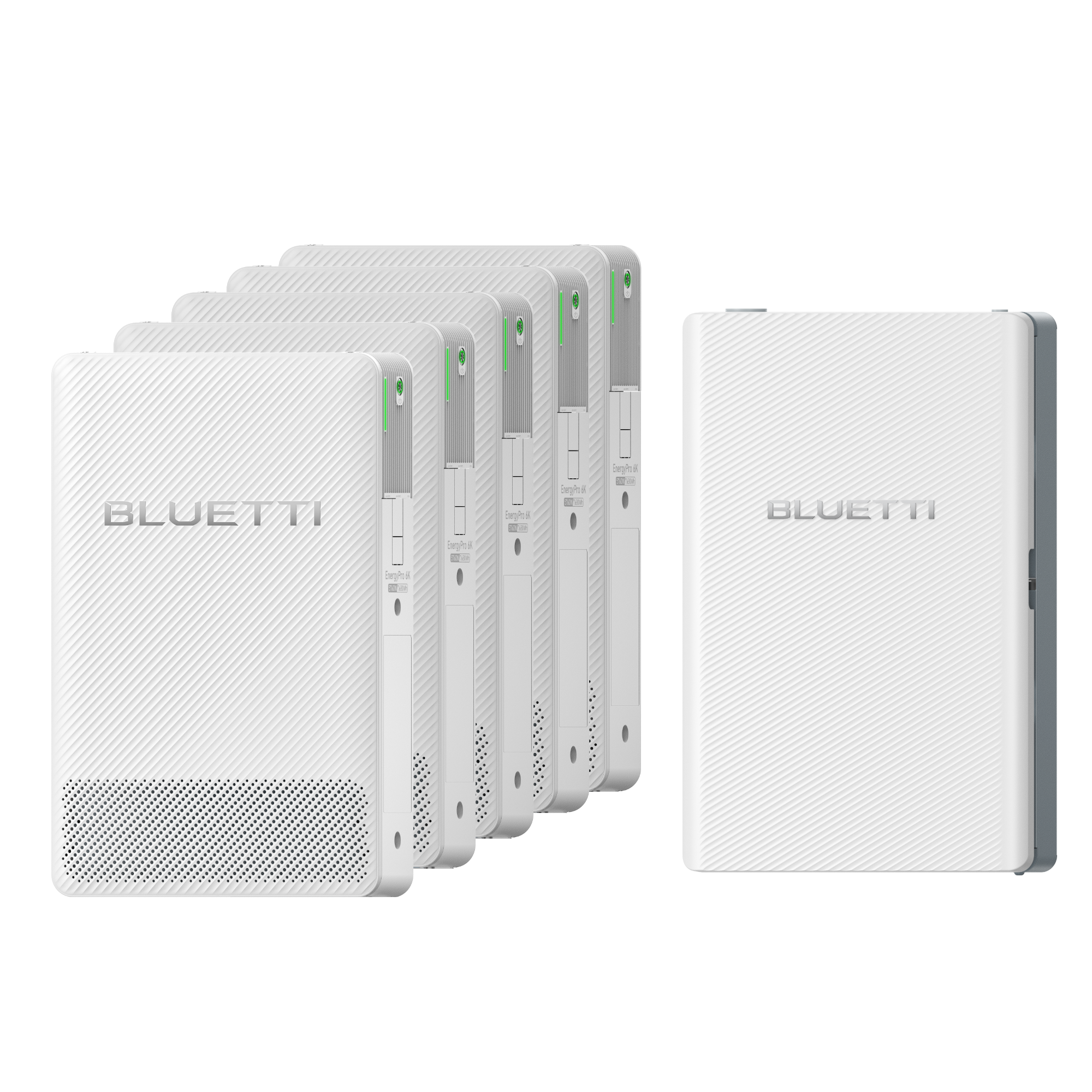 5*EnergyPro 6K + AT11158.7 lb · LFP | 38,400 Wh | 28,800 W | — | $21,420$0.56/Wh | Check if it’s on saleat BLUETTI | |
| 2*EP800 + 8*B5001213.2 lb · LFP · 3,500 cycles | 39,680 Wh | 15,200 W | 18,000 W | $29,998$0.76/Wh | Check if it’s on saleat BLUETTI | |
 2*EP900 + 8*B5001178 lb · LFP · 6,000 cycles | 39,680 Wh | 18,000 W | 18,000 W | $35,196$0.89/Wh | Check if it’s on saleat BLUETTI | |
| No longer sold | ||||||
 AC200MAX61.9 lb · LFP · 3,500 cycles | 2,048 Wh | 2,200 W | 900 W | — | ||
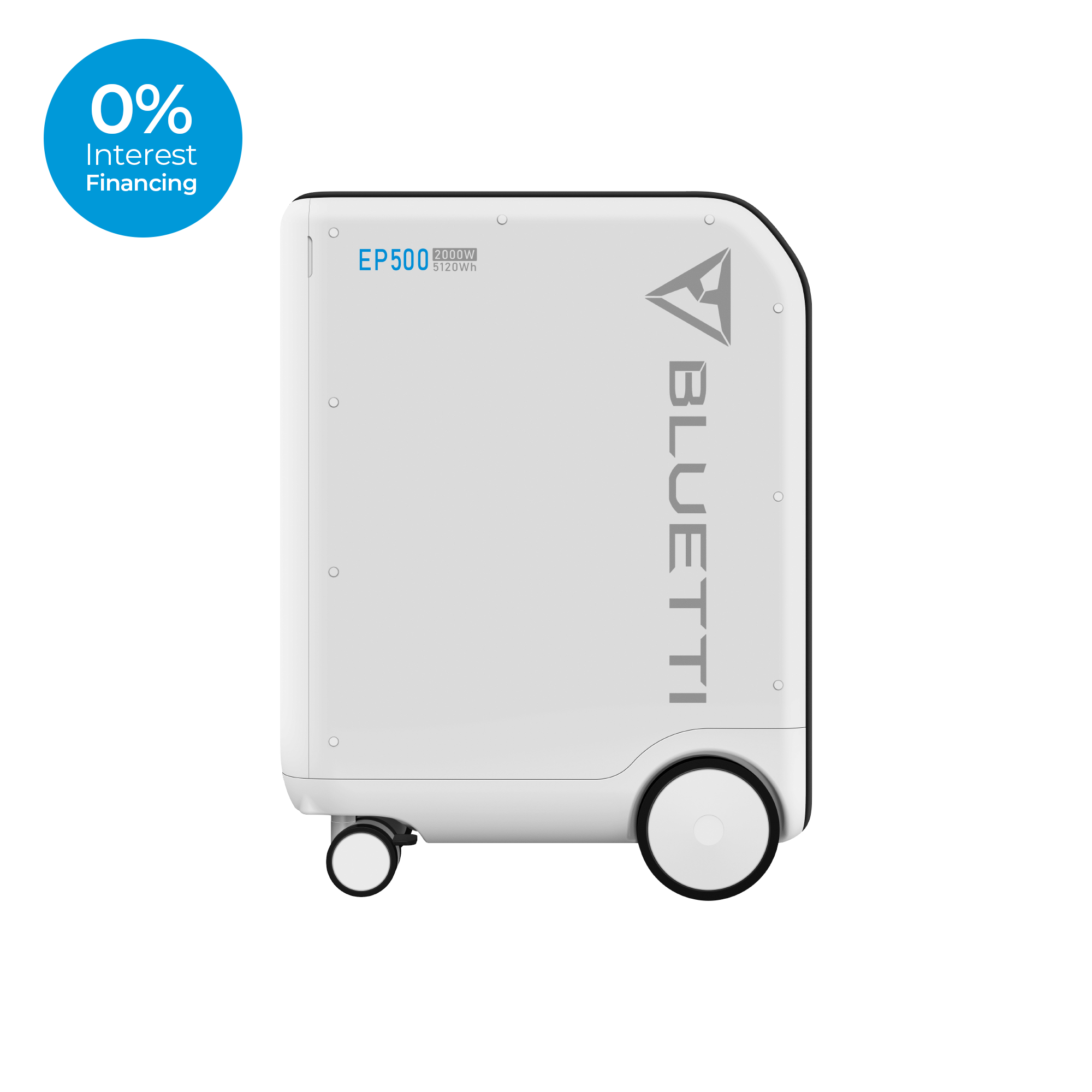 EP500167 lb · LFP · 3,500 cycles | 5,120 Wh | 2,000 W | 1,200 W | — | ||
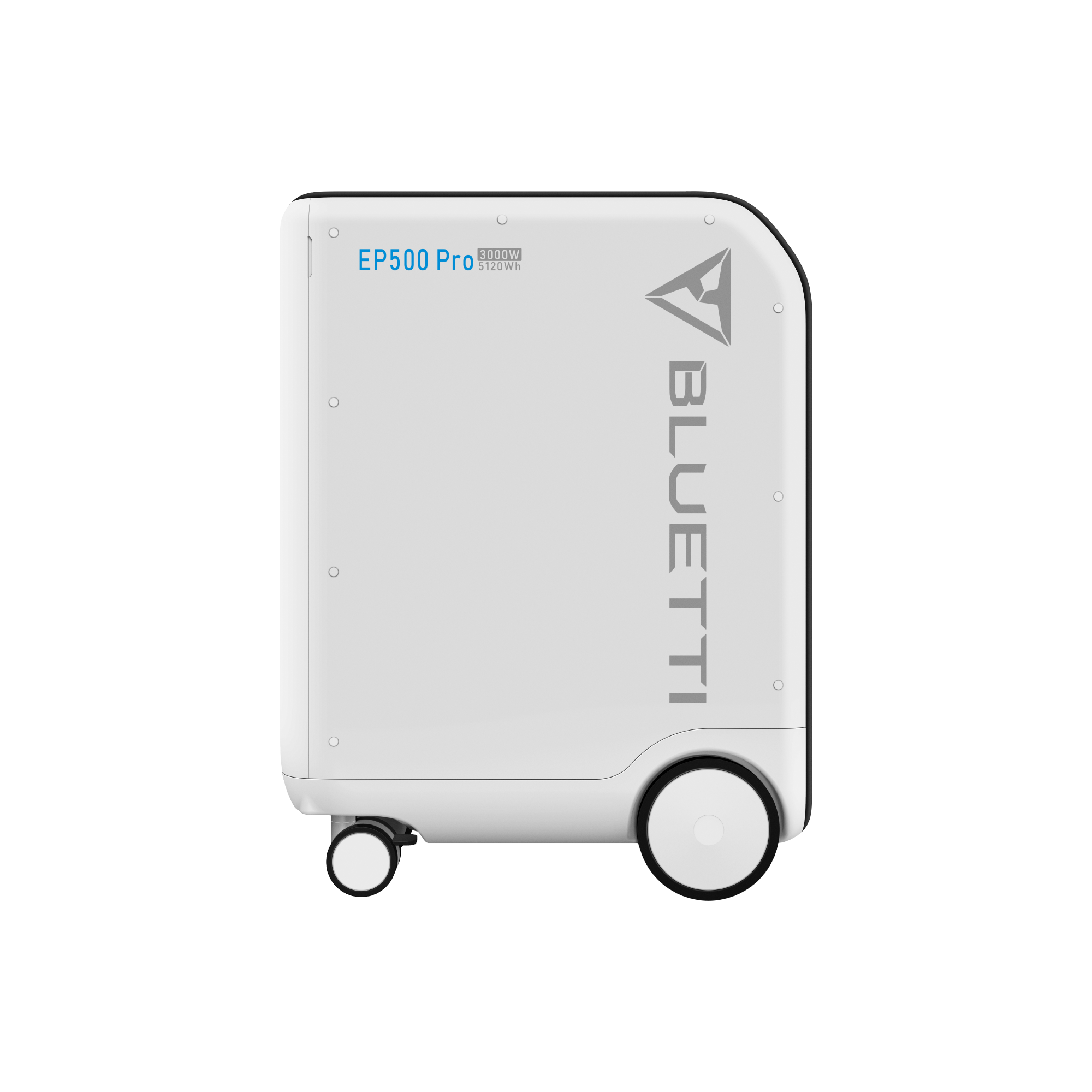 EP500Pro187 lb · LFP · 3,500 cycles | 5,120 Wh | 3,000 W | 2,400 W | — | ||
 AC500 + 2*B300K196.1 lb · LFP · 3,500 cycles | 5,530 Wh | 5,000 W | 3,000 W | — | ||
 AC300 + 4*B300367.2 lb · LFP · 3,500 cycles | 12,288 Wh | 3,000 W | 2,400 W | — | ||
Transparency Matters
Power Station Arena is reader-supported. When you buy through links on our site, we may earn a commission. This supports our independent real world testing/reviews of usability and reliability at no cost to you.
Not sure which BLUETTI series you want?
Picking the right series narrows the list far faster than comparing models one by one — it decides portability, expandability and how long the thing lasts before you ever look at a spec sheet.
AC448 Wh – 2.3 kWhvsElite128 Wh – 3.8 kWhAC is the older line that grows. Elite is the newer line that doesn't.19 modelsCompare series Apex2.8–13 kWhvsElite128 Wh – 3.8 kWhElite is a big inverter on a fixed pack. Apex is a modest inverter on a pack that keeps growing.12 modelsCompare series AC448 Wh – 2.3 kWhvs Jackery Explorer288 Wh – 10.1 kWhTwo sprawling portable ranges that meet almost everywhere — one built to grow, the other built to be picked up.27 modelsCompare series
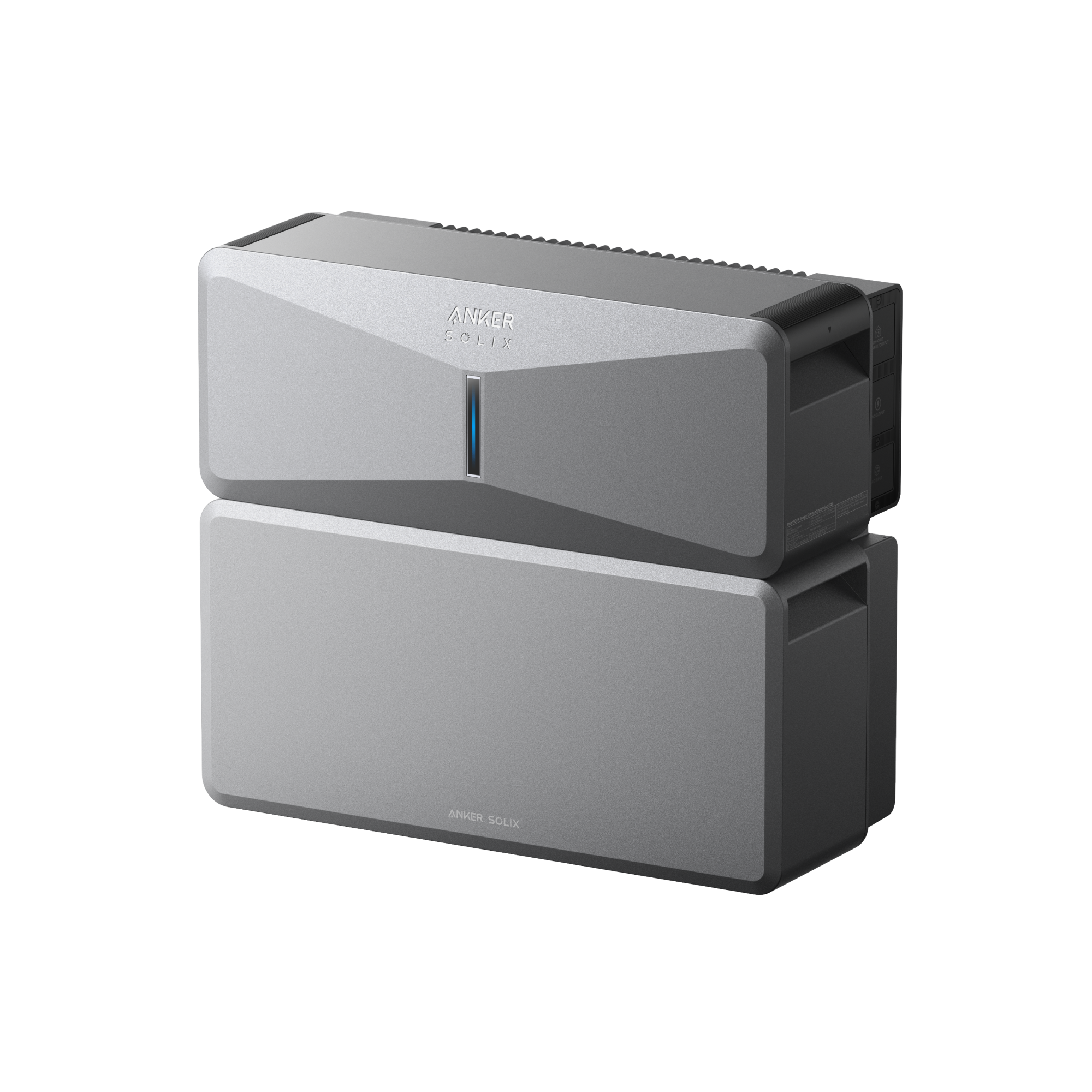 Anker SOLIX E106.1–61.4 kWhvsEP9.9–39.7 kWhAnker sells one system that scales further and carries its energy lighter. BLUETTI sells two under one name — and the better one really is better, if you know to ask for it.23 modelsCompare series
Browse all series comparisons — every series-vs-series matchup we've written.
Competitive Landscape: The Big Four
| Brand | Relative Strength (The "Pro") | Consideration (The "Con") |
|---|---|---|
 | Relative strengthSpeed & Tech: Fastest charging (X-Stream) and best-in-class app ecosystem. | ConsiderationComplexity: The modular ecosystem can be overwhelming for casual users. |
 | Relative strengthSimplicity & Durability: Their "Explorer" series is famous for plug-and-play ease and rugged build quality. | ConsiderationCharging Speed: Generally slower AC recharge times compared to EcoFlow's X-Stream. |
| Relative strengthValue & Stability: Often leads the market in "Price per Watt-Hour" and offers highly stable LFP builds. | ConsiderationThe App: While functional, the Bluetti app is often cited as less intuitive than EcoFlow’s. |
 | Relative strengthBuild Quality & Efficiency: Incredible industrial design and highly efficient inverters for long-term home backup. | ConsiderationFan Noise: Cooling fans are noticeable during fast charging or heavy loads, and top-tier units like the F3800 run heavier than modular rivals. |
Honest Considerations Before You Buy
No power station is perfect. Here are the trade-offs worth knowing about — each with the context that keeps it in perspective.
App and Wi-Fi Can Be Finicky
The Bluetti app handles monitoring and firmware updates, but owners on Bluetti's own community forum and independent app testing report that Bluetooth and Wi-Fi pairing can drop or need a couple of tries to reconnect, particularly on Android.
Good to know
Bluetti regularly ships firmware fixes for specific bugs — the AC180's known Bluetooth desync issue, for example, was resolved in a v2.3+ update — and the unit's built-in screen and buttons give you full control without ever opening the app.
Support Response Times Can Vary
As a fast-growing brand, Bluetti's customer support has drawn some complaints about slow email replies and a multi-step RMA process, especially during high-demand sales periods.
Good to know
Standard warranties run 2 to 6 years depending on the model — on par with or longer than most rivals — and registering your unit plus keeping your proof of purchase on hand tends to speed up any claim considerably.
The Bigger Units Are Genuinely Heavy
Bluetti's higher-capacity stations aren't lightweight — models like the AC200P and Elite 300 land around 60 lbs, and each AC500 expansion battery adds roughly 80+ lbs on its own.
Good to know
These are built for stationary home backup, van builds, or vehicle-assisted trips rather than solo backpack carries — and because the batteries are separate modules, you can move the load in smaller pieces instead of hauling one oversized box.
The Lineup Takes Some Homework
Between the AC series, the older EB series, and the newer Elite series — plus suffixes like P, L, S, and MAX — it isn't always obvious which model replaces which or how two similarly sized units differ.
Good to know
Bluetti's official comparison charts spell out the differences, and our own model comparison tool below narrows the lineup down by the specs that actually matter for your use case.
Frequently Asked Questions
Compare Bluetti Against Rivals
Explore more brands and comparisons on our Home Page.