
Jackery Power Stations: Expert Reviews & Comparison 2026
The Original Solar Generator
Jackery makes portable power accessible, durable, and ready for adventure. Known for their iconic design, they prioritize extreme portability and user-friendly simplicity.
Explorer Series Portability
Built around ergonomic top handles and compact, lightweight enclosures, the Explorer line is designed for campers and outdoor enthusiasts who need to grab a unit and go.
SolarSaga Solar Panels
Jackery's proprietary SolarSaga panels use an ETFE-laminated, IP67/IP68-rated shell and magnetic kickstands, letting you set up solar charging in the field in under a minute.
ChargeShield Protection
Jackery's ChargeShield system pairs its battery management system with up to 62 monitored safety mechanisms, guarding against overcharge, short circuits, and temperature extremes.
Latest Jackery Gear
Future-Ready Energy. Discover the latest innovations.

HomePower 1000 Plus v2
Expert Take
"The classic camping companion. 1024Wh gives you plenty of juice without weighing you down."

HomePower 3600 Plus
Expert Take
"The explorer's choice for extended trips. With 3584Wh, this unit offers substantial power reserves. Boasting a strong 3600W output."
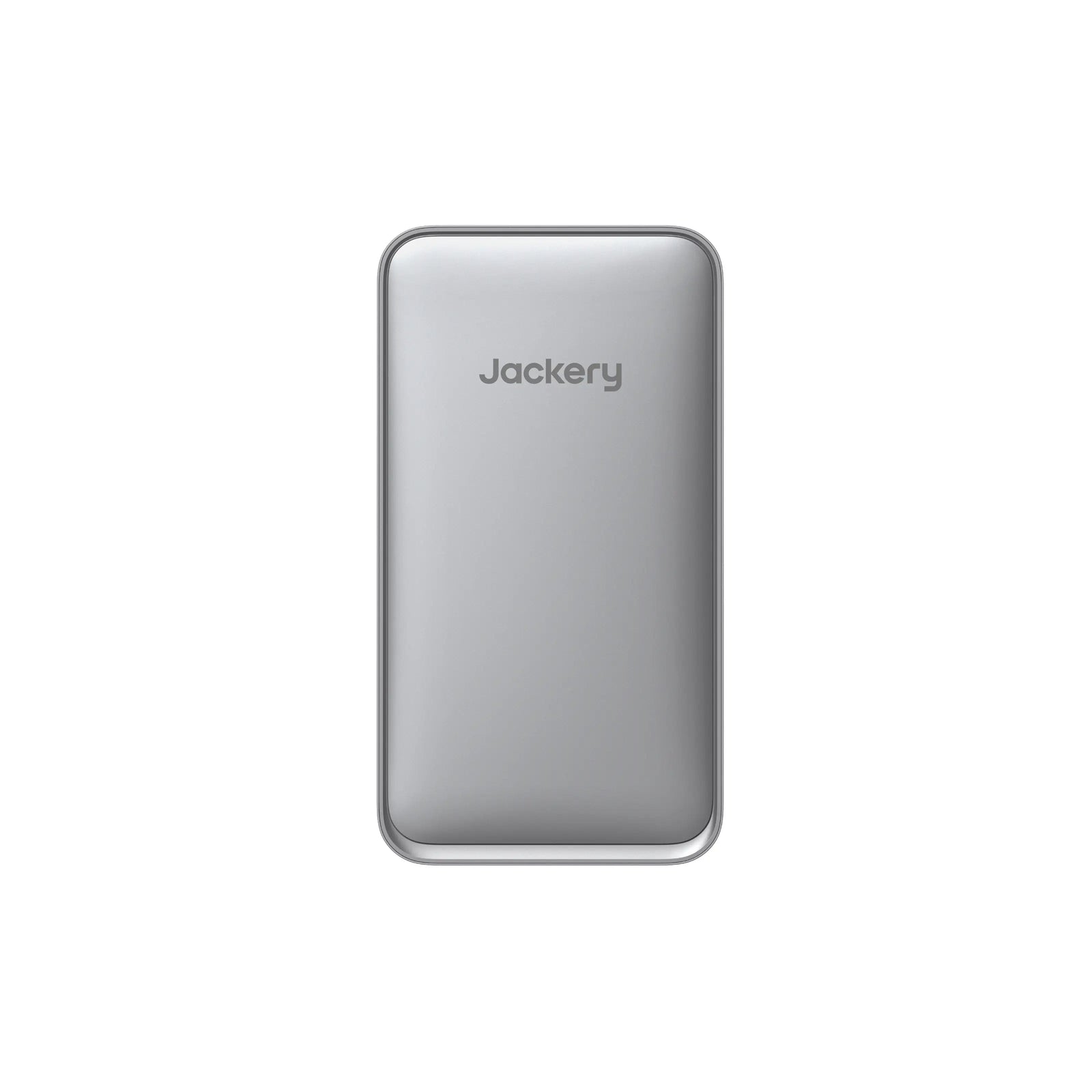
FridgeGuard
Expert Take
"The classic camping companion. 1024Wh gives you plenty of juice without weighing you down."

HomePower 3600 Pro Max
Expert Take
"The explorer's choice for extended trips. With 3584Wh, this unit offers substantial power reserves. Boasting a strong 4000W output."

Explorer 1500 Ultra
Expert Take
"The classic camping companion. 1536Wh gives you plenty of juice without weighing you down."

Explorer 3000 v2
Expert Take
"The explorer's choice for extended trips. With 3072Wh, this unit offers substantial power reserves. Boasting a strong 3600W output."

Explorer 300 v2
Expert Take
"Grab-and-go power. At 288Wh, it's perfect for keeping phones and cameras charged on the trail."

HomePower 2000 Plus v2
Expert Take
"The explorer's choice for extended trips. With 2048Wh, this unit offers substantial power reserves. Boasting a strong 2400W output."

HomePower 1000 v2
Expert Take
"The classic camping companion. 1024Wh gives you plenty of juice without weighing you down."
Transparency Matters
Power Station Arena is reader-supported. When you buy through links on our site, we may earn a commission. This supports our independent real world testing/reviews of usability and reliability at no cost to you.
The Arena: Jackery Model Comparison
- HomePower 3600 Plus6000 (LFP)3584 Wh$.533600W1000W
- Explorer 5000 Plus Double Kit4000 (LFP)10080 Wh$.6214400W8000W
- HomePower 3600 Pro Max6000 (LFP)3584 Wh$.594000W1200W
- Explorer 5000 Plus4000 (LFP)5040 Wh$.697200W4000W
- Explorer 2000 Plus4000 (LFP)2042.8 Wh$.443000W1200W
- HomePower 30004000 (LFP)3072 Wh$.493600W1400W
- Explorer 2000 v24000 (LFP)2042 Wh$.492200W400W
- Explorer 3000 v24000 (LFP)3072 Wh$.813600W1000W
- HomePower 2000 Plus v26000 (LFP)2048 Wh$.592400W800W
| Compare | Model | Capacity (Wh) | $/Wh | Output (W) | Cycle Life | Solar Input |
|---|---|---|---|---|---|---|
| HomePower 3600 Plus | 3584 Wh | $.53 | 3600W | 6000 (LFP) | 1000W | |
| Explorer 5000 Plus Double Kit | 10080 Wh | $.62 | 14400W | 4000 (LFP) | 8000W | |
| HomePower 3600 Pro Max | 3584 Wh | $.59 | 4000W | 6000 (LFP) | 1200W | |
| Explorer 5000 Plus | 5040 Wh | $.69 | 7200W | 4000 (LFP) | 4000W | |
| Explorer 2000 Plus | 2042.8 Wh | $.44 | 3000W | 4000 (LFP) | 1200W | |
| HomePower 3000 | 3072 Wh | $.49 | 3600W | 4000 (LFP) | 1400W | |
| Explorer 2000 v2 | 2042 Wh | $.49 | 2200W | 4000 (LFP) | 400W | |
| Explorer 3000 v2 | 3072 Wh | $.81 | 3600W | 4000 (LFP) | 1000W | |
| HomePower 2000 Plus v2 | 2048 Wh | $.59 | 2400W | 6000 (LFP) | 800W |
Not sure which Jackery line you want?
Picking the right line narrows the list far faster than comparing models one by one — it decides portability, expandability and how long the thing lasts before you ever look at a spec sheet.
Jackery line by line
Jackery against other brands
EcoFlow DELTAvsHomePower
Two closely matched backup lines that differ on almost nothing except how long they last and how far they grow.
16 modelsCompare lines
BLUETTI ACvsExplorer
Two sprawling portable ranges that meet almost everywhere — one built to grow, the other built to be picked up.
27 modelsCompare lines
Anker SOLIX FvsHomePower
Two home-backup lines aimed at the same job — one built around solar and expansion, the other around lasting.
10 modelsCompare lines
Browse all series comparisons — every line-vs-line matchup we've written.
Competitive Landscape: The Big Four
| Brand | Relative Strength (The "Pro") | Consideration (The "Con") |
|---|---|---|
 | Relative strengthSpeed & Tech: Fastest charging (X-Stream) and best-in-class app ecosystem. | ConsiderationComplexity: The modular ecosystem can be overwhelming for casual users. |
| Relative strengthSimplicity & Durability: Their "Explorer" series is famous for plug-and-play ease and rugged build quality. | ConsiderationCharging Speed: Generally slower AC recharge times compared to EcoFlow's X-Stream. |
 | Relative strengthValue & Stability: Often leads the market in "Price per Watt-Hour" and offers highly stable LFP builds. | ConsiderationThe App: While functional, the Bluetti app is often cited as less intuitive than EcoFlow’s. |
 | Relative strengthBuild Quality & Efficiency: Incredible industrial design and highly efficient inverters for long-term home backup. | ConsiderationFan Noise: Cooling fans are noticeable during fast charging or heavy loads, and top-tier units like the F3800 run heavier than modular rivals. |
Honest Considerations Before You Buy
No power station is perfect. Here are the trade-offs worth knowing about — each with the context that keeps it in perspective.
Slower AC Recharging on Older Explorer Units
The original Explorer 1000 charges from a wall outlet at a flat ~164W, taking around 7 hours for a full charge — versus roughly 1.7-2 hours on the newer Explorer 1000 v2 and Plus models.
Good to know
This is a legacy-generation limitation, not a current one. Every Explorer v2, Plus, and Pro model sold today ships with a much faster AC charging circuit. It only matters if you're eyeing an older, discounted first-generation unit.
App Control Isn't Available on Every Model
Smaller and older Explorer units (like the original Explorer 1000) don't include Bluetooth or Wi-Fi hardware, so there's no app for remote monitoring or port control on those models.
Good to know
It's a deliberate design choice rather than an oversight — Jackery has historically favored simple, physical-button operation to keep standby power draw and cost down. App connectivity is now standard on the newer v2, Plus, and Pro models.
Expandable Capacity Is a Plus-Series Feature
Outside of the Plus-series (like the 1000 Plus and 2000 Plus) and a few Pro models, most Explorer units are fixed-capacity — there's no bolt-on battery pack the way EcoFlow's or Bluetti's expandable lineups allow.
Good to know
For a single trip or a fixed emergency kit, a non-expandable unit is simpler and lighter to store. If you think you'll want more capacity down the road, start with a Plus-series model so you have that runway.
A Premium Over Value-Focused Brands
Jackery typically prices its units 10-20% above comparable-capacity models from value-focused brands like Bluetti — the Explorer 1000 v2, for instance, runs a few hundred dollars more than Bluetti's similarly-sized AC180.
Good to know
That premium tends to buy a more polished outdoor-focused design, the SolarSaga panel ecosystem, and one of the longer track records in the category — a fair trade if brand support and resale familiarity matter more to you than price-per-watt-hour.
Frequently Asked Questions
How long do Jackery Explorer batteries last?
It depends on the model series. The newer "Plus" and "Pro" series (like the Explorer 2000 Plus) use LiFePO4 batteries rated for 4,000+ cycles, meaning they can last over 10 years with daily use. Older "standard" Explorer models (like the Explorer 1000 v1) use NCM lithium batteries, rated for roughly 500-800 cycles to 80% capacity. These are lighter but have a shorter lifespan. We always recommend checking the specific battery chemistry before buying.
Can I leave my Jackery plugged in all the time?
Yes, Jackery's Battery Management System (BMS) prevents overcharging. However, for long-term storage health, it is generally recommended to discharge and recharge the unit every 3 months if it's not in active use. Leaving it plugged in 24/7 as a UPS is supported on newer models, but check your specific manual for pass-through charging limitations.
Are Jackery solar panels waterproof?
Most SolarSaga panels are IP67 or IP68 rated, meaning they are water-resistant and can withstand rain or splashes. However, the connection ports themselves are not waterproof. You should never submerge the panels or leave the connectors exposed to heavy rain without protection. The power stations themselves are generally NOT waterproof and should be kept dry.
What does the 'Plus' mean in Jackery models?
The "Plus" designation typically indicates the use of LiFePO4 (LFP) battery chemistry, which is safer and longer-lasting than the older NCM chemistry. Plus models also usually support expandable battery packs, faster charging speeds, and app connectivity, representing Jackery's next-generation technology tier.
Can a Jackery power a refrigerator?
Yes. An Explorer 1000 or larger can easily run a standard residential fridge during a power outage. For example, a typical fridge draws about 100-200W on average (ignoring startup surge). A 1000Wh Jackery would run it for roughly 7-9 hours. The Explorer 3000 Pro could keep it running for over a day. Always check the surge wattage of your appliance against the Jackery's peak output.
What is the difference between SolarSaga 100W and 200W?
Mainly speed and size. The SolarSaga 200W captures energy twice as fast in ideal conditions, significantly reducing recharge times for larger power stations. The 200W panels are larger and heavier but fold down for transport. If you have a high-capacity unit (1500Wh+), we strongly recommend the 200W panels to make solar charging practical.
Compare Jackery Against Rivals
Explore more brands and comparisons on our Home Page.