
Anker Solix Power Stations: Expert Reviews & Comparison 2026
Choosing the right Anker Solix power station shouldn't be a guessing game. We’ve analyzed every model, from the ultra-portable 5-series to the massive F3800, evaluating battery cycle life, inverter efficiency, and port versatility to ensure you get the most reliable power for every watt-hour spent.
InfiniPower™ Technology
Anker's InfiniPower™ construction pairs LiFePO4 cells with reinforced, industrial-grade components and active temperature control — the foundation for its 10-year lifespan rating and 5-year warranty.
Rapid Recharge
Anker's HyperFlash™ delivers some of the fastest AC recharge times in the category — many models reach roughly 80% in under an hour when you need power in a hurry.
Smart App Control
Monitor charge levels, toggle ports, and set charge speeds from the Anker app over Bluetooth or Wi-Fi.
Latest Anker Gear
Future-Ready Energy. Discover the latest innovations.
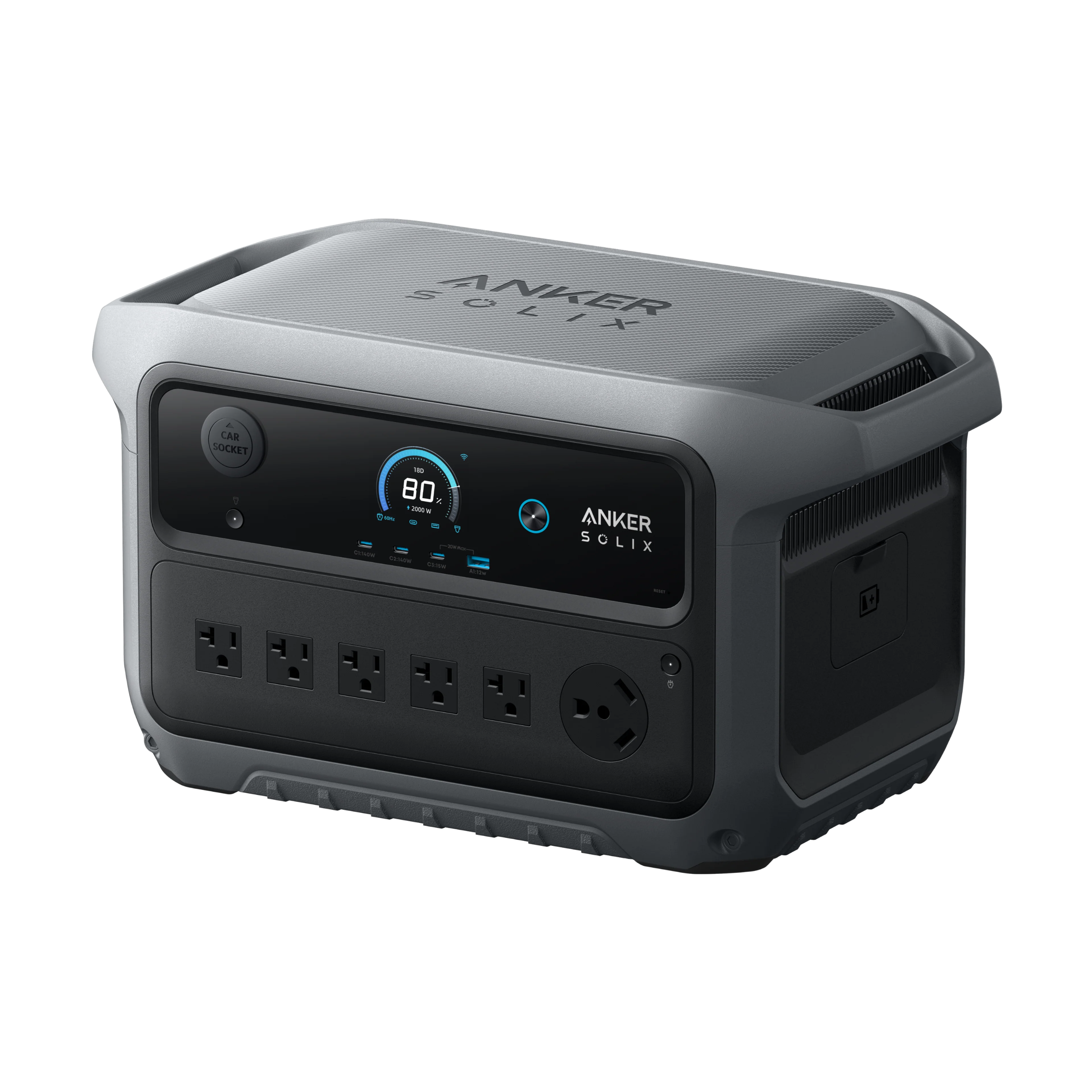
SOLIX C2000 Gen 2
Expert Take
"A serious contender for home backup. With 2048Wh, this unit offers substantial power reserves. Boasting a strong 2400W output."

SOLIX C800X
Expert Take
"Ultimate portability. At 768Wh, it's perfect for keeping phones and cameras charged."
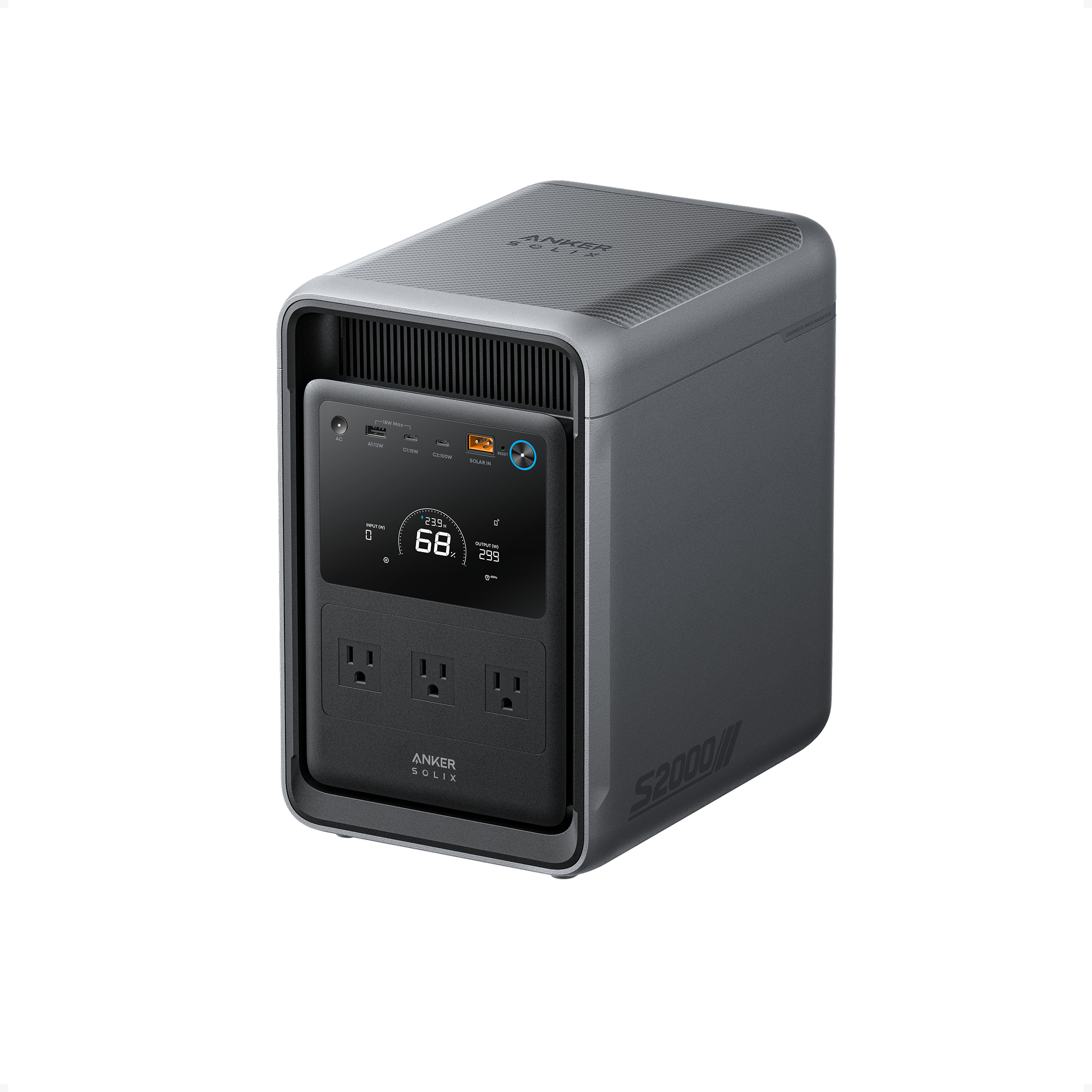
SOLIX S2000
Expert Take
"A serious contender for home backup. With 2009.6Wh, this unit offers substantial power reserves."
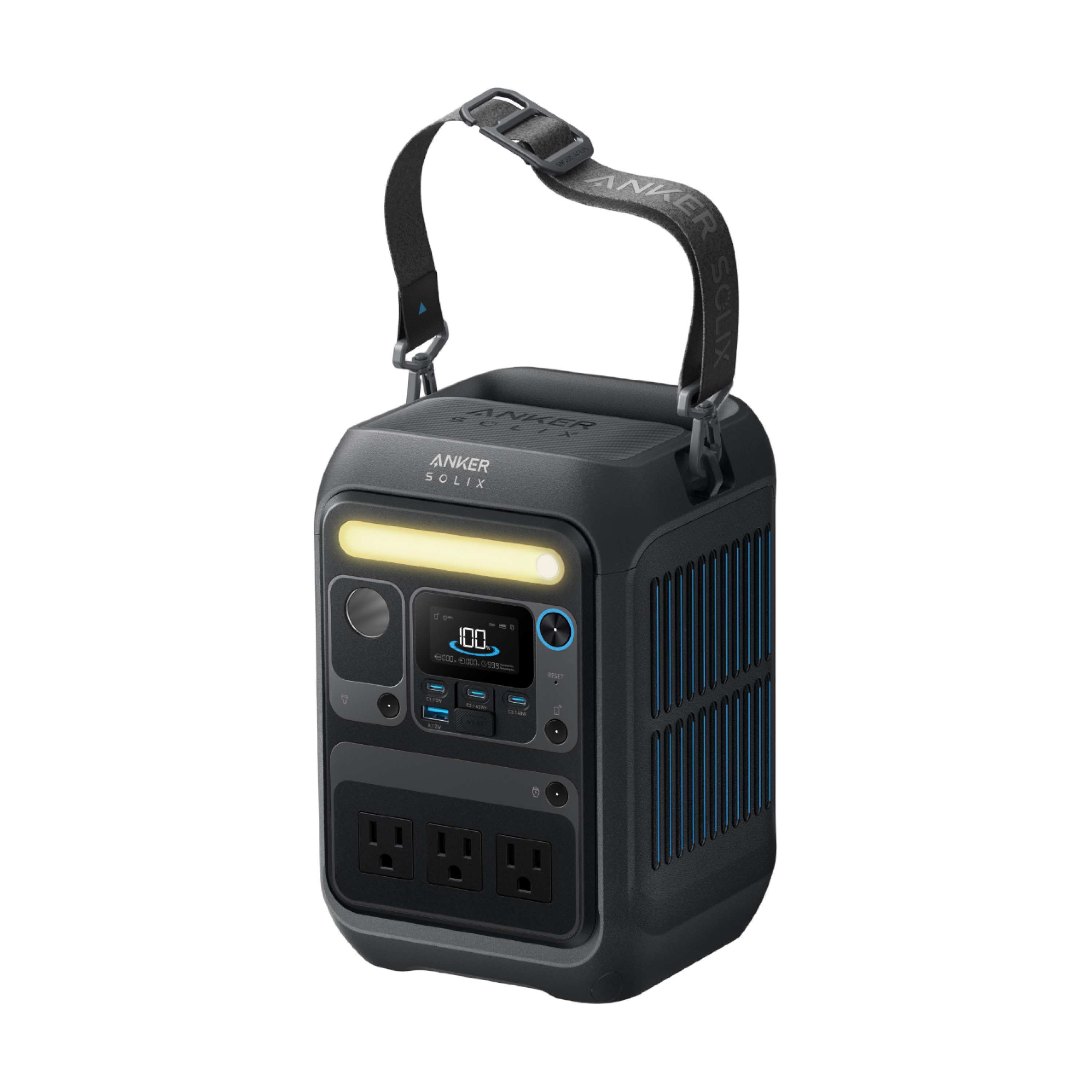
SOLIX C300X
Expert Take
"Ultimate portability. At 288Wh, it's perfect for keeping phones and cameras charged."
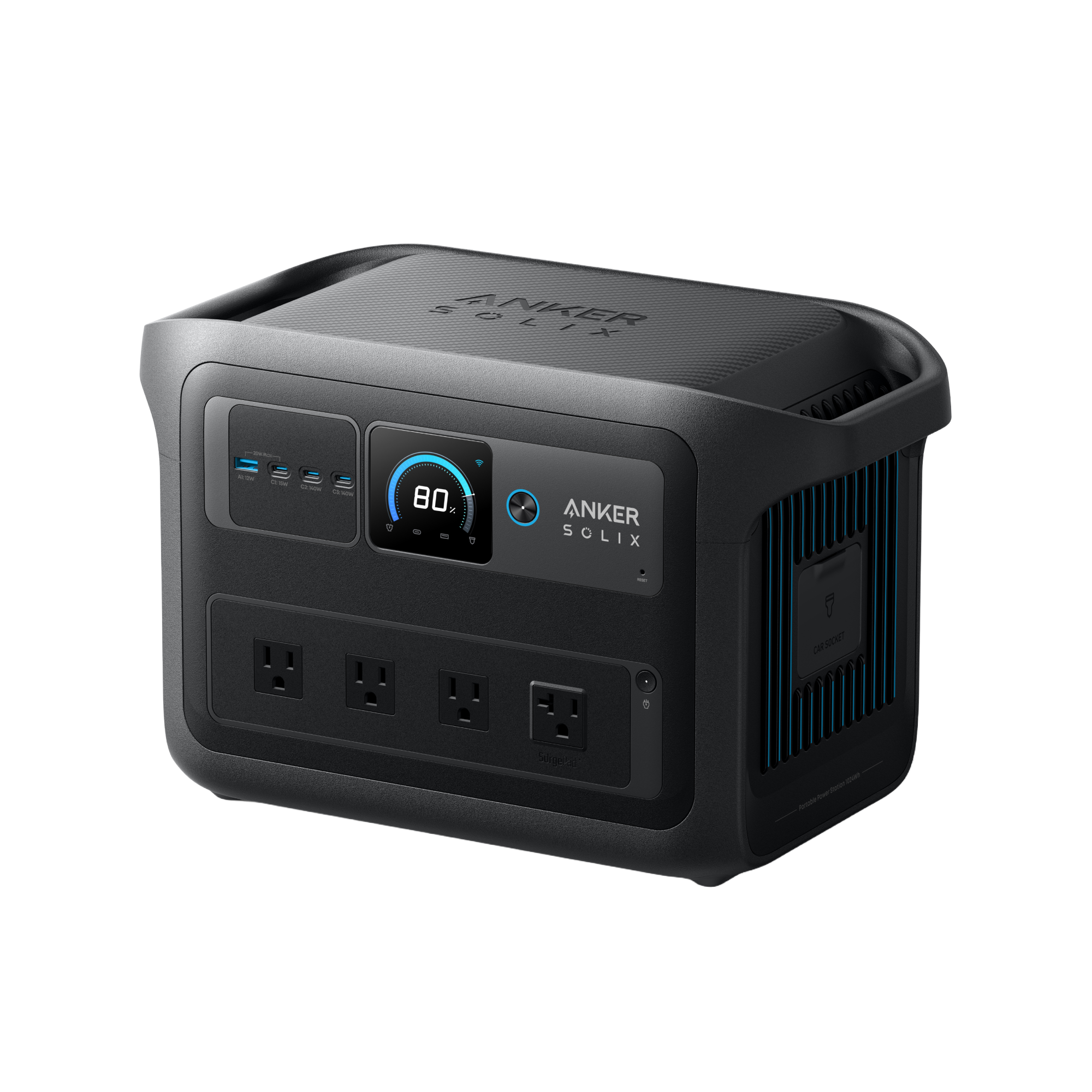
SOLIX C1000X Gen 2
Expert Take
"The sweet spot for camping. 1024Wh gives you plenty of juice without weighing you down."
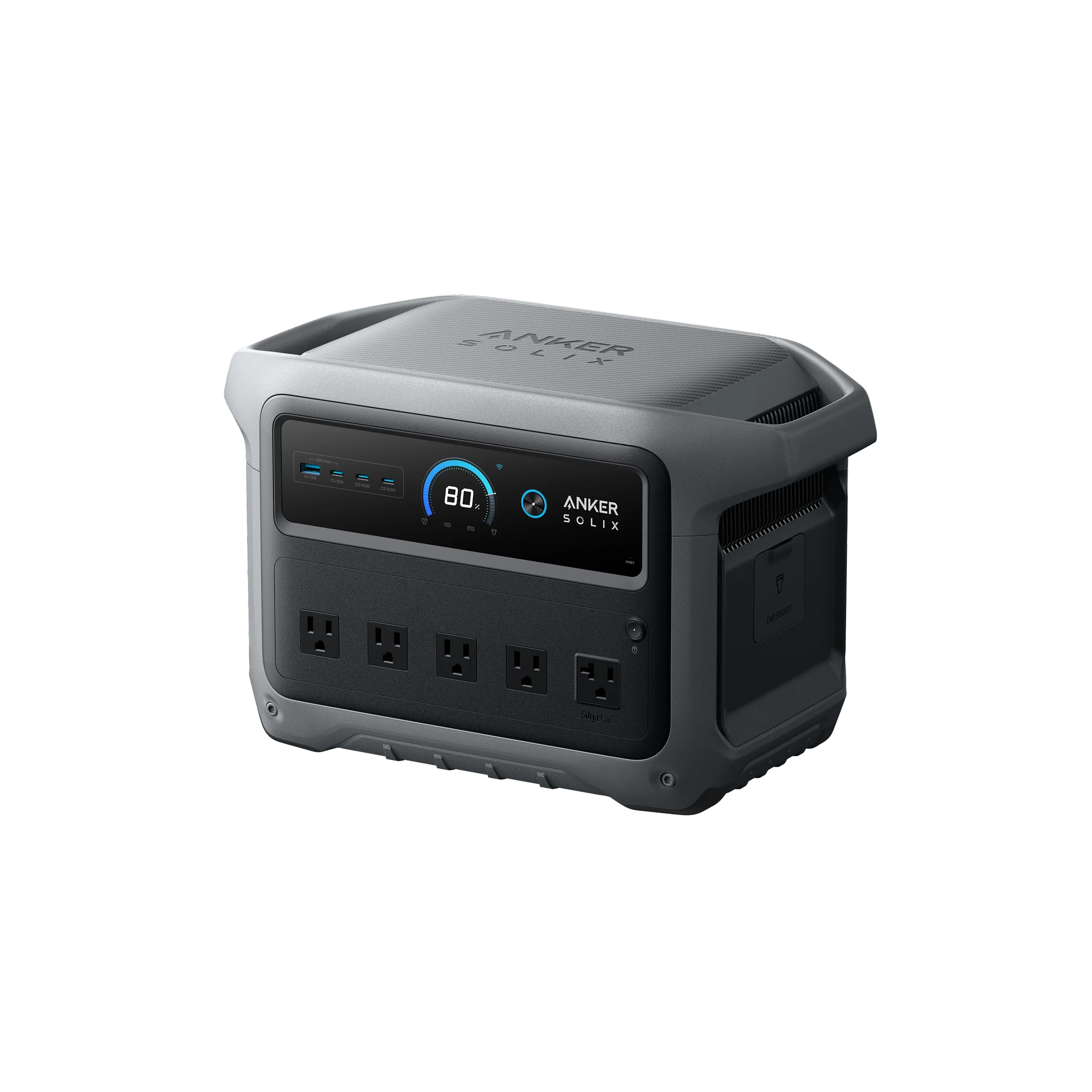
SOLIX C1000 Gen 2
Expert Take
"The sweet spot for camping. 1024Wh gives you plenty of juice without weighing you down."
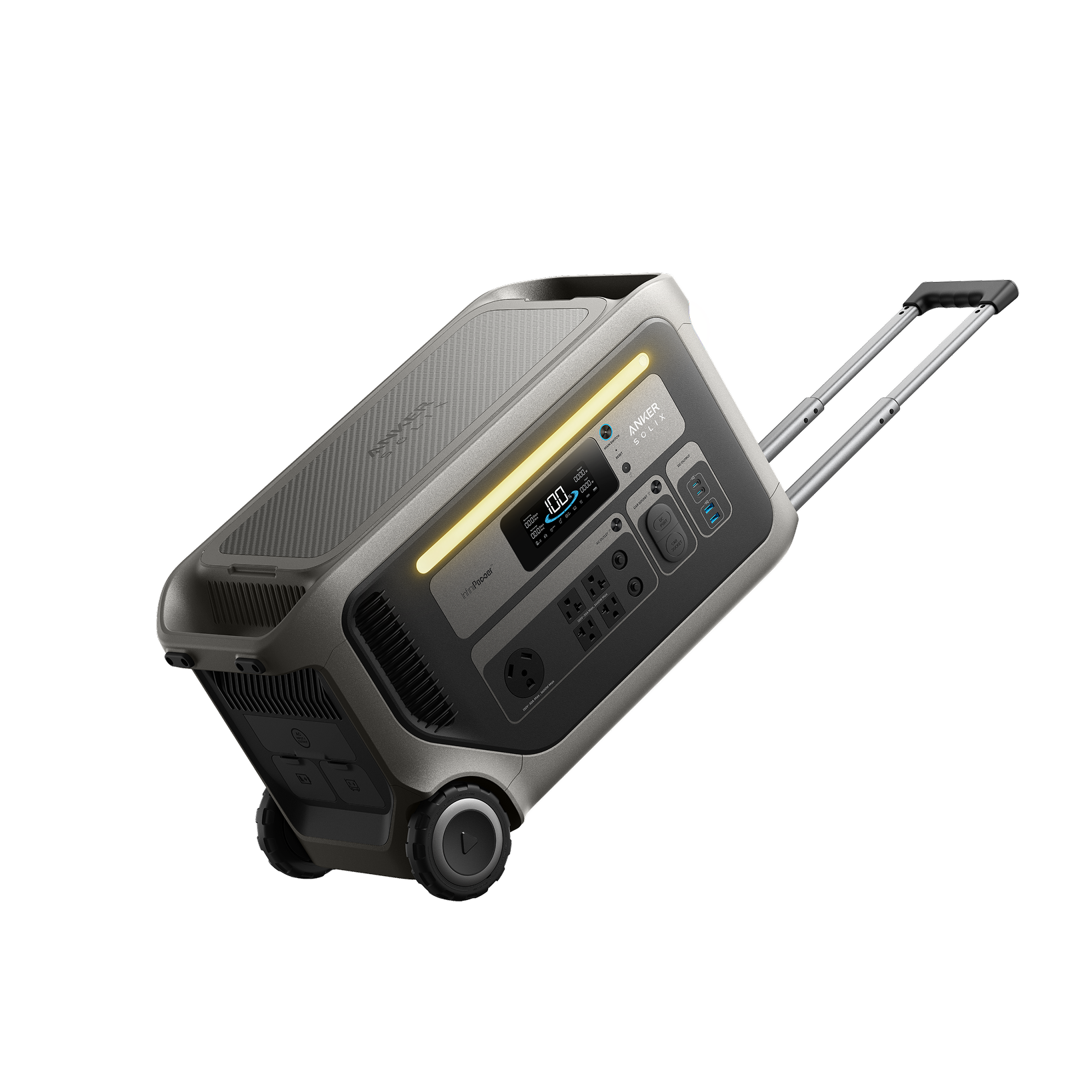
SOLIX F3000
Expert Take
"A serious contender for home backup. With 3072Wh, this unit offers substantial power reserves. Boasting a strong 3600W output."
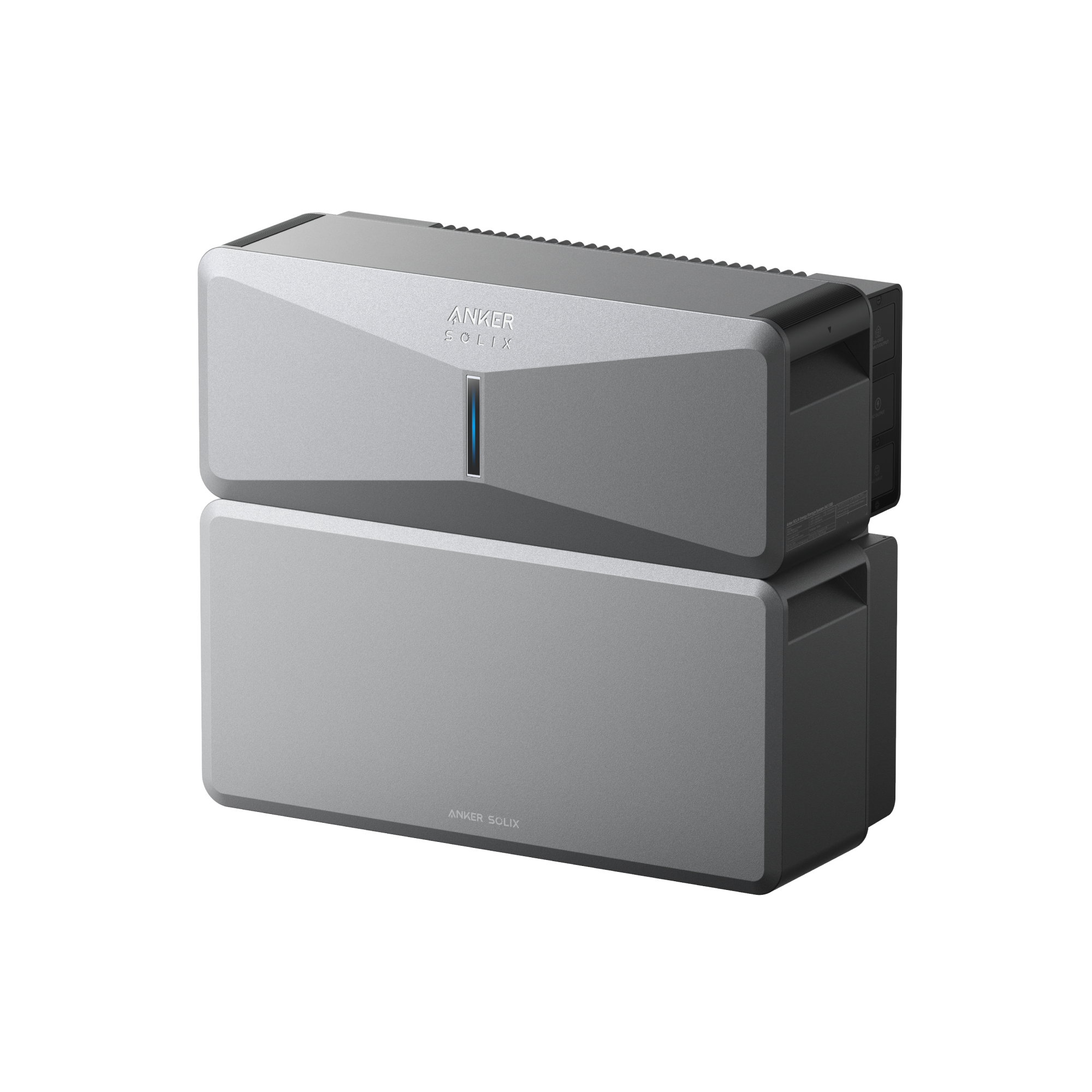
SOLIX E10
Expert Take
"A serious contender for home backup. With 6144Wh, this unit offers substantial power reserves. Boasting a strong 7680W output."
SOLIX E10 + 2*B6000
Expert Take
"A serious contender for home backup. With 12288Wh, this unit offers substantial power reserves. Boasting a strong 7680W output."
SOLIX E10 + 3*B6000
Expert Take
"A serious contender for home backup. With 18432Wh, this unit offers substantial power reserves. Boasting a strong 7680W output."
SOLIX E10 + 4*B6000
Expert Take
"A serious contender for home backup. With 24576Wh, this unit offers substantial power reserves. Boasting a strong 7680W output."
SOLIX E10 + 5*B6000
Expert Take
"A serious contender for home backup. With 30720Wh, this unit offers substantial power reserves. Boasting a strong 7680W output."
2*SOLIX E10 + 4*B6000 + Power Dock
Expert Take
"A serious contender for home backup. With 24576Wh, this unit offers substantial power reserves. Boasting a strong 15200W output."
2*SOLIX E10 + 6*B6000 + Power Dock
Expert Take
"A serious contender for home backup. With 36864Wh, this unit offers substantial power reserves. Boasting a strong 15200W output."
2*SOLIX E10 + 8*B6000 + Power Dock
Expert Take
"A serious contender for home backup. With 49152Wh, this unit offers substantial power reserves. Boasting a strong 15200W output."
2*SOLIX E10 + 10*B6000 + Power Dock
Expert Take
"A serious contender for home backup. With 61440Wh, this unit offers substantial power reserves. Boasting a strong 15200W output."
Transparency Matters
Power Station Arena is reader-supported. When you buy through links on our site, we may earn a commission. This supports our independent real world testing/reviews of usability and reliability at no cost to you.
The Arena: Anker Model Comparison
- SOLIX F26003000 (LFP)2560 Wh$.592400W1000W
- SOLIX F20003000 (LFP)2048 Wh$.442400W1000W
- SOLIX F38003000 (LFP)3840 Wh$.576000W2400W
- SOLIX F3800 PLUS3000 (LFP)3840 Wh$.686000W3200W
- SOLIX C2000 Gen 24000 (LFP)2048 Wh$.492400W800W
- SOLIX S200010000 (LFP)2009.6 Wh$.501500W400W
- SOLIX F30004000 (LFP)3072 Wh$.493600W2400W
- SOLIX E104000 (LFP)6144 Wh$.707680W9000W
- SOLIX E10 + 2*B60004000 (LFP)12288 Wh$.517680W9000W
- SOLIX E10 + 3*B60004000 (LFP)18432 Wh$.457680W9000W
- SOLIX E10 + 4*B60004000 (LFP)24576 Wh$.427680W9000W
- SOLIX E10 + 5*B60004000 (LFP)30720 Wh$.407680W9000W
- 2*SOLIX E10 + 4*B6000 + Power Dock4000 (LFP)24576 Wh$.5715200W18000W
- 2*SOLIX E10 + 6*B6000 + Power Dock4000 (LFP)36864 Wh$.4915200W18000W
- 2*SOLIX E10 + 8*B6000 + Power Dock4000 (LFP)49152 Wh$.4515200W18000W
- 2*SOLIX E10 + 10*B6000 + Power Dock4000 (LFP)61440 Wh$.4215200W18000W
| Compare | Model | Capacity (Wh) | $/Wh | Output (W) | Cycle Life | Solar Input |
|---|---|---|---|---|---|---|
| SOLIX F2600 | 2560 Wh | $.59 | 2400W | 3000 (LFP) | 1000W | |
| SOLIX F2000 | 2048 Wh | $.44 | 2400W | 3000 (LFP) | 1000W | |
| SOLIX F3800 | 3840 Wh | $.57 | 6000W | 3000 (LFP) | 2400W | |
| SOLIX F3800 PLUS | 3840 Wh | $.68 | 6000W | 3000 (LFP) | 3200W | |
| SOLIX C2000 Gen 2 | 2048 Wh | $.49 | 2400W | 4000 (LFP) | 800W | |
| SOLIX S2000 | 2009.6 Wh | $.50 | 1500W | 10000 (LFP) | 400W | |
| SOLIX F3000 | 3072 Wh | $.49 | 3600W | 4000 (LFP) | 2400W | |
| SOLIX E10 | 6144 Wh | $.70 | 7680W | 4000 (LFP) | 9000W | |
| SOLIX E10 + 2*B6000 | 12288 Wh | $.51 | 7680W | 4000 (LFP) | 9000W | |
| SOLIX E10 + 3*B6000 | 18432 Wh | $.45 | 7680W | 4000 (LFP) | 9000W | |
| SOLIX E10 + 4*B6000 | 24576 Wh | $.42 | 7680W | 4000 (LFP) | 9000W | |
| SOLIX E10 + 5*B6000 | 30720 Wh | $.40 | 7680W | 4000 (LFP) | 9000W | |
| 2*SOLIX E10 + 4*B6000 + Power Dock | 24576 Wh | $.57 | 15200W | 4000 (LFP) | 18000W | |
| 2*SOLIX E10 + 6*B6000 + Power Dock | 36864 Wh | $.49 | 15200W | 4000 (LFP) | 18000W | |
| 2*SOLIX E10 + 8*B6000 + Power Dock | 49152 Wh | $.45 | 15200W | 4000 (LFP) | 18000W | |
| 2*SOLIX E10 + 10*B6000 + Power Dock | 61440 Wh | $.42 | 15200W | 4000 (LFP) | 18000W |
Not sure which Anker line you want?
Picking the right line narrows the list far faster than comparing models one by one — it decides portability, expandability and how long the thing lasts before you ever look at a spec sheet.
Anker line by line
Anker against other brands
SOLIX E10vsBLUETTI EP
Anker sells one system that scales further and carries its energy lighter. BLUETTI sells two under one name — and the better one really is better, if you know to ask for it.
23 modelsCompare lines
SOLIX FvsJackery HomePower
Two home-backup lines aimed at the same job — one built around solar and expansion, the other around lasting.
10 modelsCompare lines
Browse all series comparisons — every line-vs-line matchup we've written.
Competitive Landscape: The Big Four
| Brand | Relative Strength (The "Pro") | Consideration (The "Con") |
|---|---|---|
 | Relative strengthSpeed & Tech: Fastest charging (X-Stream) and best-in-class app ecosystem. | ConsiderationComplexity: The modular ecosystem can be overwhelming for casual users. |
 | Relative strengthSimplicity & Durability: Their "Explorer" series is famous for plug-and-play ease and rugged build quality. | ConsiderationCharging Speed: Generally slower AC recharge times compared to EcoFlow's X-Stream. |
 | Relative strengthValue & Stability: Often leads the market in "Price per Watt-Hour" and offers highly stable LFP builds. | ConsiderationThe App: While functional, the Bluetti app is often cited as less intuitive than EcoFlow’s. |
 | Relative strengthBuild Quality & Efficiency: Incredible industrial design and highly efficient inverters for long-term home backup. | ConsiderationFan Noise: Cooling fans are noticeable during fast charging or heavy loads, and top-tier units like the F3800 run heavier than modular rivals. |
Honest Considerations Before You Buy
No power station is perfect. Here are the trade-offs worth knowing about — each with the context that keeps it in perspective.
Fan Noise Under Load
The cooling fans on units like the C1000 and F3800 are noticeable during HyperFlash fast-charging or when you're running heavy loads.
Good to know
It's the trade-off for rapid recharge speeds and high sustained output — at idle or light loads the units stay quiet. Charge at standard speed overnight if near-silent operation matters to you.
A Maturing App Experience
The Anker app is genuinely useful for monitoring and port control, though some owners report occasional Bluetooth or Wi-Fi reconnection quirks.
Good to know
Anker ships frequent firmware updates that have steadily improved stability — keeping your unit up to date resolves most connectivity reports.
A Fast-Moving Lineup
Anker iterates quickly. Many models now have "Gen 2" or "Plus" successors, so a given SKU may be refreshed within a year or two.
Good to know
For long-term setups, start with an expansion-ready model (F2000, F2600, or F3800) so you can add capacity later without replacing the base unit.
Priced at a Premium
Anker rarely wins on pure price-per-watt-hour — value-focused brands often carry a lower sticker price.
Good to know
You're paying for the category-leading 5-year full-device warranty, build quality, and a large support network — a fair premium if long-term reliability is your priority.
Frequently Asked Questions
How long do Anker Solix batteries actually last?
While Anker Solix power stations are rated for 3,000+ cycles (roughly 10 years of daily use), our hands-on testing shows that the LiFePO4 (Lithium Iron Phosphate) chemistry remains incredibly stable even after heavy discharge. It is important to note that "3,000 cycles" doesn't mean the unit dies; it means the battery will still hold approximately 80% of its original capacity. Compared to standard Lithium-ion units (which often degrade after 500 cycles), the Solix series offers significantly better long-term ROI.
Can I charge my Anker power station and run appliances simultaneously?
Yes. Anker Solix units support pass-through charging. However, based on our technical analysis, we recommend using this feature for low-to-medium draw devices. While the internal circuitry handles the bypass efficiently, running high-wattage appliances (like a space heater) while charging at max AC input can generate excess heat, which may trigger the cooling fans and slightly reduce overall efficiency.
Is HyperFlash technology safe for the battery's health?
HyperFlash is one of the fastest AC recharge methods we've tested, capable of reaching an 80% charge in under an hour. While rapid charging in older battery types often led to overheating, Anker’s InfiniPower™ system utilizes bi-directional inverters and smart temperature monitoring to mitigate cell degradation. It is a game-changer for emergency prep, though for maximum battery longevity, we suggest using standard charging speeds when you aren't in a rush.
How does Anker’s 5-year warranty compare to other brands?
Anker’s 5-year full-device warranty is currently the gold standard in the portable power industry. Most competitors offer 2 or 3 years. In our experience dealing with their customer support, the "full-device" coverage is key—it covers the electronics and BMS (Battery Management System), not just the battery cells, providing a much higher level of consumer protection.
What can an Anker Solix power station actually run during an outage?
Choosing the right model depends on your "Must-Haves." A full-sized refrigerator is rated around 360W, but its compressor only runs in cycles — averaging roughly 100–120W over a full day — so an Anker Solix F2000 (767) at 2048Wh realistically keeps one running for about 15–20 hours. For devices that draw power continuously, use this formula: Capacity (Wh) × 0.85 / Continuous Wattage = Total Hours. (The 0.85 accounts for natural energy loss during DC-to-AC conversion.) For example, a steady 100W load runs for roughly 2048 × 0.85 / 100 ≈ 17 hours. Even a compact unit like the 521 (256Wh) can run a CPAP for 1–2 nights with the heated humidifier switched off.
Can I expand the capacity of my Anker Solix later?
Expansion depends on the model. The Solix F2000 and F3800 are designed for scalability, allowing you to plug in expansion batteries to double or even triple your watt-hours. However, smaller "7-series" and "5-series" units are standalone. If you anticipate your power needs growing, we highly recommend starting with an expansion-ready model to avoid having to buy an entirely new unit later.
How does Anker Solix perform in extreme weather conditions?
Anker’s LiFePO4 batteries are safer and more stable than NCM batteries, but they are still sensitive to temperature. In our field tests, we’ve found that the unit's discharge efficiency remains high down to -4°F (-20°C), but charging will typically be throttled or disabled if the battery temperature is below freezing to prevent cell damage. If using for winter camping, keep the unit inside your insulated tent or vehicle.
Compare Anker Against Rivals
Explore more brands and comparisons on our Home Page.