

Product line comparison
SOLIX E10vsEPSeries
Anker sells one system that scales further and carries its energy lighter. BLUETTI sells two under one name — and the better one really is better, if you know to ask for it.
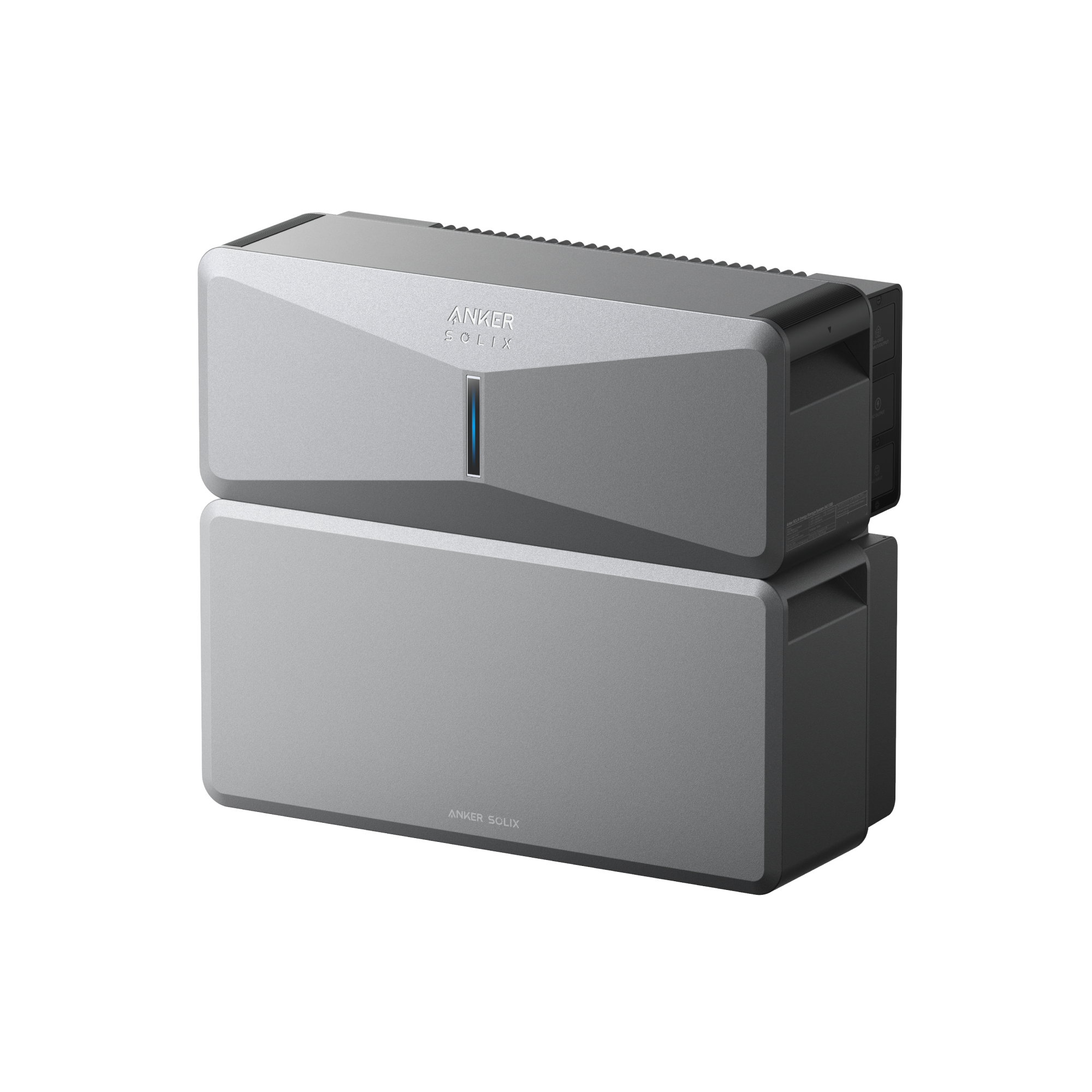
SOLIX E10 Series
Hardwired whole-home backup — the line you don’t carry.
9 models/6,144–61,440 Wh/78% expandable

EP Series
Wall-mounted whole-home systems.
14 models/5,120–39,680 Wh/64% expandable
- Models compared
- 239 + 14
- Capacity spanned
- 5,120–61,440Wh
- Ranges overlap
- 75%of the band
- Genuine rivals
- 4model pairs
SOLIX E10 + 2*B600012,288 WhSOLIX E10 + 3*B600018,432 WhSOLIX E10 + 4*B600024,576 WhSOLIX E10 + 5*B600030,720 Wh2*SOLIX E10 + 6*B6000 + Power Dock36,864 Wh2*SOLIX E10 + 8*B6000 + Power Dock49,152 Wh2*SOLIX E10 + 10*B6000 + Power Dock61,440 WhEP5005,120 Wh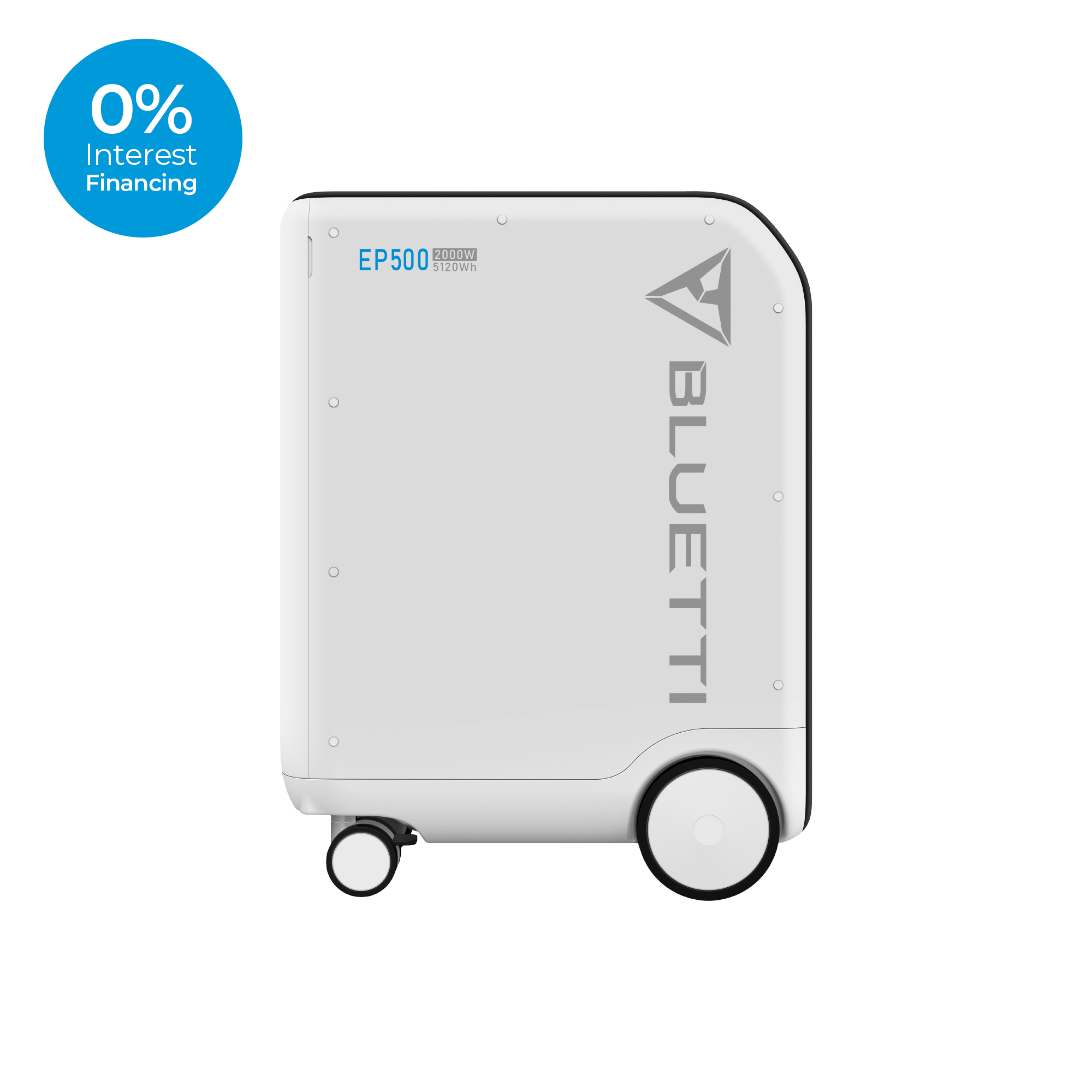 EP800 + 2*B5009,920 Wh
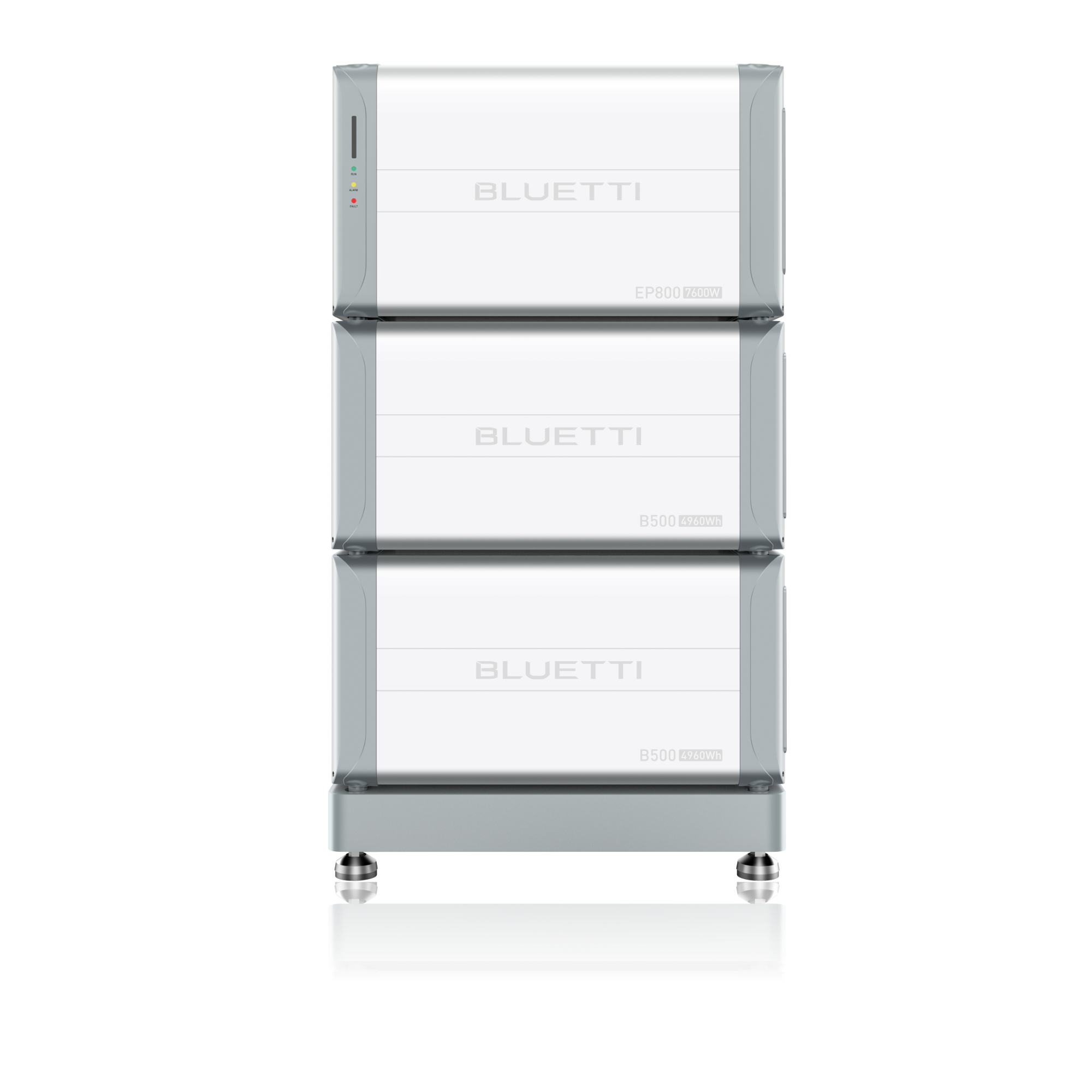 EP800 + 3*B50014,880 WhEP900 + 4*B50019,840 Wh
 2*EP800 + 6*B50029,760 Wh
 2*EP900 + 8*B50039,680 Wh
SOLIX E106,144–61,440 Wh
EP5,120–39,680 Wh
This compares two entire product lines, not two units. Get the line right and the model almost picks itself. Get it wrong and no amount of comparing model numbers will rescue the decision. Already know the two units you're torn between? Compare two products head-to-head
Two lines, two different jobs
Anker SOLIX E10
Runtime-forwardSOLIX E10 is one design taken as far as it goes. A power module, a stack of identical batteries, and a dock that hands the house over when the grid drops. Need more? You add another power module, not a different product. It’s built to live outside — sealed, rated well below freezing, and smart enough to pick which circuits matter once the battery is the one deciding. There’s one thing to learn here, and it grows with you.
BLUETTI EP
Power-forwardEP is BLUETTI’s home-backup family, and it’s been around long enough to have a history. That history is the point: the line spans a value tier and a premium tier that share a name, a battery module, and very little else. Both hardwire to the panel. Both stack. Both do the job. But the choice inside EP is a real one — and you make it before you start comparing BLUETTI to anybody.
Are these two lines even competing?
Before asking which is better, it's worth asking whether they overlap at all.
These two overlap more than almost any pair on the site. Three quarters of their capacity ranges sit on top of each other, and at several rungs you’re buying the same stored energy either way. This isn’t two different tools sharing a shelf. It’s a genuine head-to-head — and the models that collide are the ones most people actually buy.
The complication is that "BLUETTI EP" isn’t one thing. The EP900 half switches over about twice as fast, lasts far more cycles, and comes with a stated warranty. The EP800 half is the value entry, and it gives up all three. Anker has no such split: same switchover, same cycle rating, same warranty, smallest configuration to largest. So the honest question isn’t "Anker or BLUETTI" — it’s "Anker versus whichever BLUETTI you were about to buy." Quote one EP number without saying which half it came from and you haven’t said enough to decide on.
Where they really diverge is character, not capability. Anker holds more energy per pound and keeps stacking after BLUETTI runs out of room. BLUETTI puts more inverter and more solar behind every watt-hour it stores. Neither is better in the abstract. They answer different questions about what your house does when the grid goes away.
The short version
These two share 75% of their capacity range, and 4 of the 23 models between them land on a genuine head-to-head. This is one of the closer calls on the site — you could be happy with either, so what decides it is going to be something other than size.
What actually separates them
Five specifications that decide which line fits — and one that doesn't.
Energy per pound
Watt-hours per pound is how much energy you get for the mass you have to mount and shelter. Nobody carries a wall-mounted system, but the number still decides how much wall a given stack eats — and whether it needs reinforcing.
SOLIX E10
40.9 Wh/lb
EP
30.8 Wh/lb
This is Anker’s clearest win, and it isn’t a small one. Its battery modules hold noticeably more energy for their mass, so the same kilowatt-hours take up less of your garage and put less load on whatever they’re bolted to. If what’s tight is space or structure rather than budget, this axis settles it.
Power character
Output divided by capacity tells you what a system is shaped to do. A high ratio is a big inverter on a modest pack: runs heavy things hard, not for long. A low ratio is a big reservoir behind a moderate inverter — fewer things at once, for a lot longer.
SOLIX E10
0.41 W/Wh
EP
0.59 W/Wh
BLUETTI puts more inverter behind each watt-hour, and that’s the whole difference in philosophy. An EP carries a demanding house through an evening. A SOLIX E10 carries a moderate one through a long outage. Ask how many days you’re planning for, not how many appliances.
Solar throughput
Solar input per watt-hour of storage is how fast a system refills itself from the roof. It sets how long an outage can run before the battery stops being the answer. A big pack that recharges slowly is a fixed budget, not a renewable one.
SOLIX E10
0.49 W per Wh
EP
0.60 W per Wh
BLUETTI takes more solar per unit stored, and this one holds across both halves of the line — so it’s one of the few EP numbers you can trust without asking which tier you’re looking at. Planning for off-grid or a multi-day outage? Refill rate beats the last few kilowatt-hours of capacity.
Room to grow
Expandability here isn’t whether you can add a battery — both lines stack by design. It’s what share of the configurations sold still have headroom, which is really a measure of how often the version you buy is the version you’re stuck with.
SOLIX E10
78%
EP
64%
More of Anker’s configurations still have somewhere to go, and its ceiling sits higher — it keeps taking modules after EP has topped out. If you expect to grow into a heat pump, an EV charger or an extension, don’t buy the one that’s already out of room.
Lifespan
A cycle is one full discharge and recharge, and the rating is roughly how many you get before capacity falls to about 80% of new. On a home system cycled daily it converts almost directly into years, which is why a rating that looks like a modest percentage difference on paper can be most of a second decade in practice.
SOLIX E10
4,000
EP
3,500
Read this one carefully, because the line figure sells BLUETTI short. It’s a median across a range whose halves disagree: EP800 sits near the number shown, EP900 is rated for far more cycles than anything Anker sells. So Anker’s lead here is real against one half of EP and reversed against the other. Nothing on this page makes the case better for settling "which EP" first.
What each line is good at, and what it isn't
Anker SOLIX E10
Strengths
- Stores meaningfully more energy per pound, so a given stack takes less wall and less structure
- Keeps expanding after the EP range has reached its ceiling
- One specification across every configuration — switchover, cycle life and warranty do not change as you scale
- Sealed, outdoor-rated enclosure with a wide operating temperature range
- Circuit-level load management, so the system decides what stays on rather than the whole panel dropping
Limits
- Fewer watts of inverter per watt-hour stored — a long runtime rather than a heavy hitter
- Takes less solar per unit stored, so refilling a large stack takes longer
- Shorter stated warranty than BLUETTI’s premium tier
- A newer line, with a correspondingly shorter field record and fewer installers who have handled one
BLUETTI EP
Strengths
- More inverter behind every watt-hour — comfortably the heavier hitter at equal storage
- Accepts more solar per unit stored, which is what shortens a multi-day outage
- Its EP900 tier switches over faster than anything in the Anker line and is rated for far more cycles
- A long market history, which means installers who have seen one before
- Two price tiers, so the entry point into whole-home backup is lower
Limits
- The line is two products under one name, and the specifications you will be quoted depend on which
- Its value tier gives up switchover speed, cycle life and warranty — none of which is obvious from the name
- Less energy per pound, so an equivalent stack is bulkier and heavier to mount
- Tops out below where the Anker line keeps going
How to read this
A limit isn't a fault — it's a constraint on what a line is built to do. Every line here has them, including whichever one suits you. The useful question is which set of limits you'll never notice.
What we would actually do
If you’re buying today and you’d rather not think about it again, buy the Anker. Not because it wins on the numbers — it doesn’t, and the section above says so — but because it’s one product. Same switchover, same cycle rating, same warranty, smallest configuration to largest. You can’t get it wrong by accident.
The BLUETTI is the more interesting machine, and in its premium tier the better one. More inverter and more solar behind every watt-hour, a faster switchover than anything Anker sells, rated to last considerably longer. If you know you’re buying that tier, it’s the stronger system and we won’t argue.
What gives us pause is the buyer who doesn’t know. The two EP tiers share a name, a battery module and a silhouette. Nothing on the outside tells you which one you’re looking at — and the gap between them is wider than the gap between either one and the Anker. That’s a real chance of paying for a reputation your unit doesn’t have, and BLUETTI has chosen not to close it.
One more thing, because neither company will say it: at this money, installation isn’t a footnote. Both hardwire to your panel. Both want a licensed electrician. BLUETTI has been at this long enough that finding someone who’s handled one is genuinely easier. On a five-figure system, an installer who’s seen it before is worth more than a spec-sheet advantage.
Buy the Anker if you want one decision. Buy the BLUETTI if you’re willing to make two — and the second one matters more than the first.
The opinion is ours; the figures above it are measured. See how we test and score.
Where the lines actually collide
Models within 15% of each other on capacity — and whether they're truly interchangeable.
SOLIX E102*SOLIX E10 + 6*B6000 + Power DockEP2*EP900 + 8*B500SOLIX E102*SOLIX E10 + 6*B6000 + Power DockEP2*EP800 + 8*B500SOLIX E10SOLIX E10 + 3*B6000EPEP900 + 4*B500SOLIX E10SOLIX E10 + 3*B6000EPEP800 + 4*B500SOLIX E10SOLIX E10 + 5*B6000EP2*EP800 + 6*B500SOLIX E10SOLIX E10 + 5*B6000 EP2*EP900 + 6*B500
So which one should you buy?
Nobody actually buys a spec sheet. Find the row that sounds most like your life — that's the line we'd point you at, and why.
Whole-home backup you expect to grow into
It keeps accepting modules after the EP range has topped out, and the specification does not change as you scale.
Riding out multi-day outages on solar
Refill rate decides how long you can go, and BLUETTI takes more solar per watt-hour stored — on both halves of its line.
A house with heavy simultaneous loads
More inverter behind each watt-hour is exactly what starting several demanding appliances at once requires.
Mounting in a garage or utility space that is already tight
Higher energy density means the same stored energy in less wall, and less load on the structure holding it.
Protecting sensitive equipment through the switchover
The EP900 tier is the fastest switchover in this comparison — but buy that tier deliberately, because the other one is not.
The cheapest credible way into whole-home backup
The EP800 tier is the lower entry point. Go in knowing what it gives up on cycles and warranty.
Or start from the job instead
If you already know what you need it to do, these rank models for that job across every brand we track — not just these two lines.
Every model, if you want to see the whole range
SOLIX E10 · 9 models
| Model | Wh | W | lb | Exp. |
|---|---|---|---|---|
| SOLIX E10 | 6,144 | 7,680 | 190.6 | Yes |
| SOLIX E10 + 2*B6000 | 12,288 | 7,680 | 320.6 | Yes |
| SOLIX E10 + 3*B6000 | 18,432 | 7,680 | 450.6 | Yes |
| SOLIX E10 + 4*B6000 | 24,576 | 7,680 | 580.6 | Yes |
| 2*SOLIX E10 + 4*B6000 + Power Dock | 24,576 | 15,200 | 641.2 | Yes |
| SOLIX E10 + 5*B6000 | 30,720 | 7,680 | 710.6 | — |
| 2*SOLIX E10 + 6*B6000 + Power Dock | 36,864 | 15,200 | 901.2 | Yes |
| 2*SOLIX E10 + 8*B6000 + Power Dock | 49,152 | 15,200 | 1,161.2 | Yes |
| 2*SOLIX E10 + 10*B6000 + Power Dock | 61,440 | 15,200 | 1,421.2 | — |
EP · 14 models
| Model | Wh | W | lb | Exp. |
|---|---|---|---|---|
| EP500 | 5,120 | 2,000 | 167.0 | — |
| EP500Pro | 5,120 | 3,000 | 187.0 | — |
| EP800 + 2*B500 | 9,920 | 7,600 | 360.6 | Yes |
| EP900 + 2*B500 | 9,920 | 7,600 | 343.0 | Yes |
| EP800 + 3*B500 | 14,880 | 7,600 | 483.6 | Yes |
| EP900 + 3*B500 | 14,880 | 9,000 | 466.0 | Yes |
| EP900 + 4*B500 | 19,840 | 9,000 | 589.0 | Yes |
| 2*EP900 + 4*B500 | 19,840 | 15,200 | 686.0 | Yes |
| EP800 + 4*B500 | 19,840 | 7,600 | 606.6 | — |
| 2*EP800 + 4*B500 | 19,840 | 15,200 | 721.2 | Yes |
| 2*EP800 + 6*B500 | 29,760 | 15,200 | 976.8 | Yes |
| 2*EP900 + 6*B500 | 29,760 | 18,000 | 932.0 | Yes |
| 2*EP900 + 8*B500 | 39,680 | 18,000 | 1,178.0 | — |
| 2*EP800 + 8*B500 | 39,680 | 15,200 | 1,213.2 | — |
Anker SOLIX E10 vs BLUETTI EP series FAQs
What is the difference between the Anker SOLIX E10 and BLUETTI EP series?
Anker SOLIX E10 is a single system design — one power module, identical stacking batteries, and a second module when one is not enough — with the same switchover speed, cycle rating and warranty at every size. BLUETTI EP is a family spanning two tiers that share a name: a value tier and a premium tier that differ sharply on switchover speed, rated cycles and warranty. Anker stores more energy per pound and scales higher; BLUETTI puts more inverter and more solar behind each watt-hour it holds.
Which is better, Anker SOLIX E10 or BLUETTI EP?
Neither wins outright, and the honest answer depends on which BLUETTI you mean. Anker leads on energy density and on how far the system scales, and it is consistent across every configuration. BLUETTI leads on inverter capacity and solar intake per watt-hour, and its premium tier beats Anker on switchover speed and rated cycle life. Decide whether your priority is running longer or running heavier — then, if the answer points at BLUETTI, settle which tier before comparing anything.
Are all BLUETTI EP systems the same?
No, and this is the most important thing to know about the line. The EP range covers two tiers under one name. The premium tier switches over roughly twice as fast, is rated for substantially more charge cycles, and carries a stated warranty. The value tier gives up all three in exchange for a lower entry price. Both hardwire to the panel and both stack, so the difference is not visible in the shape of the system — only in the specification sheet.
Which system scales to a larger battery bank?
Anker. Its configurations keep accepting battery modules past the point where the EP range reaches its published ceiling, and a larger share of its configurations still have expansion headroom left. If you are sizing for a house you expect to add load to — a heat pump, an EV charger, an extension — that headroom is the axis to buy on.
Do these systems need professional installation?
Yes. Both hardwire into the electrical panel rather than plugging into an outlet, which is what makes whole-home backup possible and what puts both firmly in licensed-electrician territory. Budget for installation as part of the system rather than an extra, and confirm what your installer has actually worked with — BLUETTI has been in this market considerably longer, so field familiarity is more common.
Which one recharges faster from solar?
BLUETTI, per watt-hour of storage, and it is one of the few EP figures that holds across both tiers of the line. That matters most in a long outage: a larger battery that refills slowly is a fixed budget, while a smaller one with more solar behind it can keep going as long as the weather cooperates.
Figures are generated from our catalog of 146 power stations and refresh with it — line-level values are medians across every model in the line. See how we test and score.