

Product line comparison
ACvsExplorerSeries
Two sprawling portable ranges that meet almost everywhere — one built to grow, the other built to be picked up.

AC Series
The long-running expandable line.
12 models/448–12,288 Wh/58% expandable

Explorer Series
The broad portable range, from daypack to trailer.
15 models/288–10,080 Wh/27% expandable
- Models compared
- 2712 + 15
- Capacity spanned
- 288–12,288Wh
- Ranges overlap
- 83%of the band
- Genuine rivals
- 10model pairs
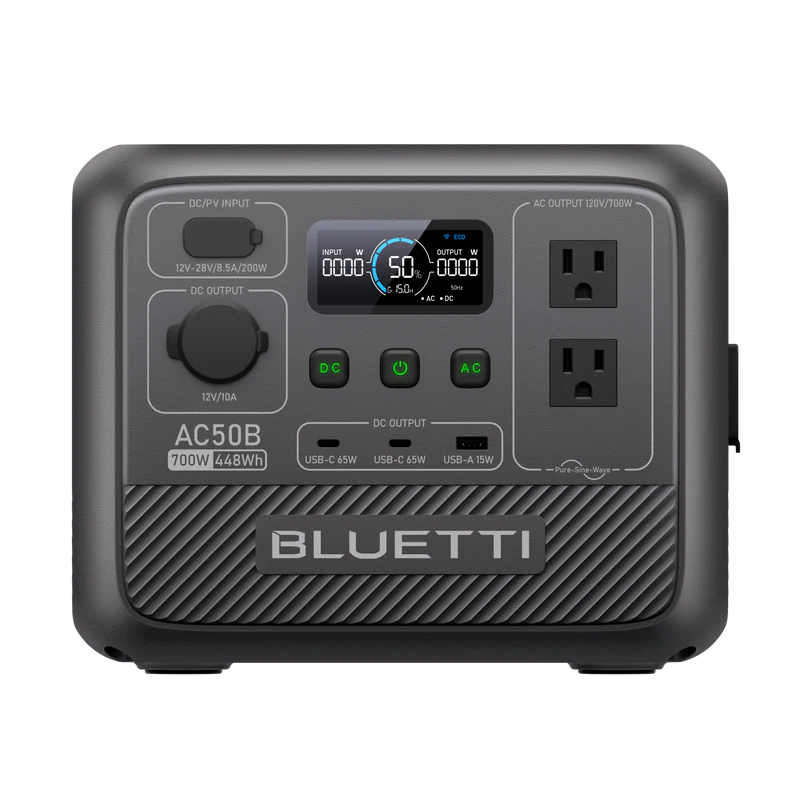 AC60P504 Wh
 AC70768 Wh
.webp) AC70P864 Wh
AC70P864 Wh AC1801,152 Wh
 AC180P1,440 Wh
 AC240P1,843 Wh
 AC200L2,048 Wh
 AC200P L2,304 Wh
 AC500 + 2*B300K5,530 Wh
 AC300 + 4*B30012,288 WhExplorer 300D288 Wh
 Explorer 300293 Wh
 Explorer 500518 Wh
 Explorer 600 Plus632 Wh
 Explorer 600 v2640 Wh
 Explorer 1000 v21,070 Wh
 Explorer 1000 Plus1,264 Wh
 Explorer 1500 Ultra1,536 Wh
 Explorer 2000 v22,042 Wh
 Explorer 2000 Plus2,043 Wh
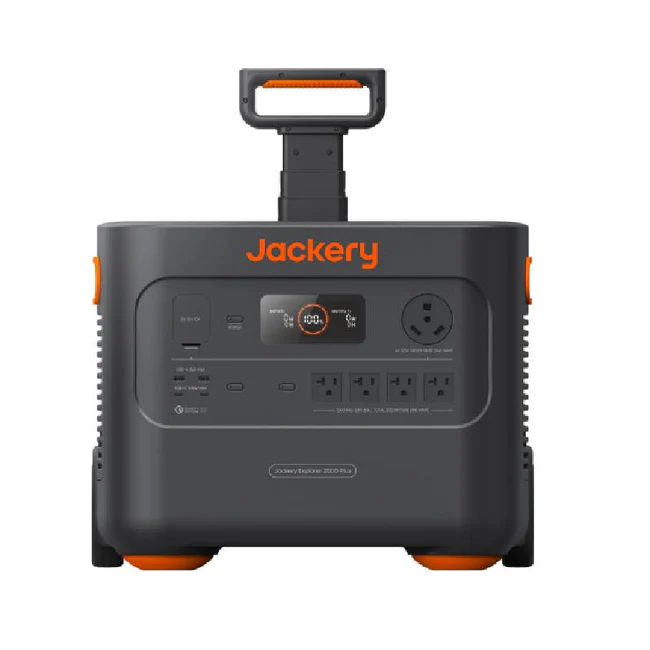 Explorer 3000 v23,072 Wh
 Explorer 5000 Plus5,040 Wh
 Explorer 5000 Plus Double Kit10,080 Wh
AC448–12,288 Wh
Explorer288–10,080 Wh
This compares two entire product lines, not two units. Get the line right and the model almost picks itself. Get it wrong and no amount of comparing model numbers will rescue the decision. Already know the two units you're torn between? Compare two products head-to-head
Two lines, two different jobs
BLUETTI AC
Power-forwardBLUETTI's AC line is the older of the two and the more system-minded. Most of it accepts expansion batteries, it takes more solar relative to its size, and at the top it reaches into modular stacks far beyond anything Jackery offers in a portable range. An AC unit is frequently the beginning of a setup.
Jackery Explorer
Runtime-forwardJackery's Explorer line is the broader and lighter of the two, running from genuinely daypack-sized units up to very large ones. It’s built around being carried and used, rather than installed and grown — most units are complete as bought, and the line's strength is that there’s an Explorer at nearly every size.
Are these two lines even competing?
Before asking which is better, it's worth asking whether they overlap at all.
This is the most contested pairing in the set. The two lines overlap across most of their range and repeatedly place models against each other at matching capacity and output — around the two-kilowatt-hour mark in particular, several units from each brand are direct substitutes.
Because they compete so widely, capacity is a poor way to choose between them. The differences that matter are structural: one line expands and takes more solar, the other is lighter and reaches smaller. Both switch over to battery at the same speed and carry the same surge headroom, so a good deal of what shoppers compare on is identical here.
The short version
These two share 83% of their capacity range, and 10 of the 27 models between them land on a genuine head-to-head. This is one of the closer calls on the site — you could be happy with either, so what decides it is going to be something other than size.
What actually separates them
Five specifications that decide which line fits — and one that doesn't.
Room to grow
Expandability is whether a unit accepts a second battery later. It separates a finished appliance from the first component of a larger system.
AC
58%
Explorer
27%
The widest gap between these two lines. Two thirds of the AC range accepts more battery, against roughly a quarter of Explorer. If there’s any chance the setup grows, this is the axis that should decide it — and it points firmly at BLUETTI.
Solar recharge rate
Solar input divided by capacity tells you roughly how many hours of good sun it takes to refill a unit. A higher figure means it refills faster relative to its size, which matters most when the unit lives away from mains power.
AC
0.52 W per Wh
Explorer
0.35 W per Wh
AC accepts about half again as much solar per watt-hour stored. For anything spending real time off-grid — an overland build, a cabin, a long stay without hookups — that’s the difference between a unit that refills between uses and one that slowly falls behind.
Carry weight
Watt-hours per pound is how much energy you get for what you have to lift. It says nothing about total capacity — a dense unit can still be too heavy to move if it’s simply large.
AC
33.1 Wh/lb
Explorer
39.8 Wh/lb
Explorer is the denser line, and this is where Jackery's portable focus shows. For anything genuinely carried, you lift less for the same energy. It’s also the line that makes small units at all — AC has no equivalent to Explorer's smallest sizes.
Lifespan
A cycle is one full discharge and recharge, and the rating is roughly how many you get before capacity settles to about 80% of new. At a few weekends a year, neither line will reach its rating in any realistic ownership period.
AC
3,500
Explorer
4,000
Explorer holds a modest lead. It’s real but small — a matter of months rather than years at typical duty cycles — and it should not outweigh the structural differences above unless you genuinely intend to cycle the unit daily.
Switchover speedNo difference
When utility power drops, a unit with UPS passthrough takes over — but not instantly. Under about 10ms almost nothing notices. Around 20ms most equipment rides through, but sensitive gear can blink.
AC
20ms
Explorer
20ms
Identical, and both sit at the more marginal end. Neither line is the automatic choice for protecting a desktop or a CPAP as a class — if that’s the requirement, check the specific model rather than the line, in either brand.
What each line is good at, and what it isn't
BLUETTI AC
Strengths
- Two thirds of the line accepts an expansion battery
- Roughly half again as much solar input relative to capacity — refills off-grid far better
- Reaches into modular whole-home capacities no portable Explorer approaches
- Same surge headroom and switchover speed as Explorer, so nothing is given up there
Limits
- The less dense line by weight — more to carry for the same energy
- A sprawling range with overlapping names that’s hard to navigate
- Several models in the line are currently unavailable
- No genuinely small option at the bottom of the range
Jackery Explorer
Strengths
- The denser of the two lines — you lift less for the same energy
- Genuinely small units that the AC line has no equivalent to
- A modest but real lead on cycle rating
- The wider range overall, with an option at nearly every size
Limits
- Only about a quarter of the line accepts a second battery
- Noticeably lower solar input relative to capacity — weaker off-grid
- A couple of legacy models still use the older battery chemistry
- Several models in the line are currently unavailable
How to read this
A limit isn't a fault — it's a constraint on what a line is built to do. Every line here has them, including whichever one suits you. The useful question is which set of limits you'll never notice.
Where the lines actually collide
Models within 15% of each other on capacity — and whether they're truly interchangeable.

So which one should you buy?
Nobody actually buys a spec sheet. Find the row that sounds most like your life — that's the line we'd point you at, and why.
Off-grid for days with solar as the only input
AC takes about half again as much solar per watt-hour stored.
A setup you expect to grow
Two thirds of the AC line expands, against roughly a quarter of Explorer.
Carrying it to a campsite or a shoot
Explorer is denser and makes genuinely small units. AC doesn’t.
Whole-home backup from a portable range
Only AC's modular stacks reach that far.
A first power station and you’re unsure of size
Explorer has the broadest ladder of sizes to choose from.
Or start from the job instead
If you already know what you need it to do, these rank models for that job across every brand we track — not just these two lines.
Every model, if you want to see the whole range
AC · 12 models
| Model | Wh | W | lb | Exp. |
|---|---|---|---|---|
| AC50B | 448 | 700 | 14.8 | — |
| AC60P | 504 | 600 | 21.2 | Yes |
| AC70 | 768 | 1,000 | 22.5 | — |
| AC70P | 864 | 1,000 | 22.5 | — |
| AC180 | 1,152 | 1,800 | 35.3 | — |
| AC180P | 1,440 | 1,800 | 35.3 | — |
| AC240P | 1,843 | 2,400 | 72.0 | Yes |
| AC200L | 2,048 | 2,400 | 62.4 | Yes |
| AC200MAX | 2,048 | 2,200 | 61.9 | Yes |
| AC200P L | 2,304 | 2,400 | 63.5 | Yes |
| AC500 + 2*B300K | 5,530 | 5,000 | 196.1 | Yes |
| AC300 + 4*B300 | 12,288 | 3,000 | 367.2 | Yes |
Explorer · 15 models
| Model | Wh | W | lb | Exp. |
|---|---|---|---|---|
| Explorer 300D | 288 | 300 | 5.5 | — |
| Explorer 300 v2 | 288 | 300 | 8.1 | — |
| Explorer 300 | 293 | 300 | 7.1 | — |
| Explorer 500 | 518 | 500 | 13.3 | — |
| Explorer 600 Plus | 632 | 800 | 16.1 | — |
| Explorer 600 v2 | 640 | 500 | 14.1 | — |
| Explorer 1000 v2 | 1,070 | 1,500 | 23.8 | — |
| Explorer 1000 Plus | 1,264 | 2,000 | 32.0 | Yes |
| Explorer 1500 Ultra | 1,536 | 1,800 | 38.6 | — |
| Explorer 1500 v2 | 1,536 | 2,000 | 32.0 | — |
| Explorer 2000 v2 | 2,042 | 2,200 | 39.5 | — |
| Explorer 2000 Plus | 2,043 | 3,000 | 61.5 | Yes |
| Explorer 3000 v2 | 3,072 | 3,600 | 59.5 | — |
| Explorer 5000 Plus | 5,040 | 7,200 | 134.5 | Yes |
| Explorer 5000 Plus Double Kit | 10,080 | 14,400 | 269.0 | Yes |
BLUETTI AC vs Jackery Explorer series FAQs
Is BLUETTI AC or Jackery Explorer better?
They compete across most of their range, so it depends on the job. BLUETTI AC expands far more readily and accepts substantially more solar relative to its size, making it the stronger off-grid and grow-later choice. Jackery Explorer is denser, makes genuinely small units, and holds a modest cycle-life lead. Both switch over to battery at the same speed and carry the same surge headroom.
Which is better for off-grid solar?
BLUETTI AC. It accepts roughly half again as much solar input relative to the energy it stores, which is what decides whether a unit refills between uses or slowly falls behind. It also expands, so you can add capacity as your array grows.
Which line is lighter to carry?
Jackery Explorer, per watt-hour stored — and it’s also the only one of the two that makes genuinely small, one-hand units. If the power station will be carried rather than placed, that’s the more relevant difference of the two.
Do either of these protect a desktop during an outage?
Both switch over at the same speed, and it sits at the more marginal end of the range — most equipment rides through, but sensitive gear can blink. Neither line is a safe blanket choice for that job, so check the specific model rather than assuming the line will do it.
Which has more capacity options?
Explorer has the broader ladder of sizes overall and reaches smaller. BLUETTI AC reaches much higher through modular stacks, so it covers capacities no portable Explorer approaches.
Related line comparisons
Figures are generated from our catalog of 146 power stations and refresh with it — line-level values are medians across every model in the line. See how we test and score.