BLUETTI
Apex 300
$1,499 listed · 84 lb
The Apex 200’s bigger sibling, and the one to buy now if you need 240 V: 3,840 W, the same B300K and B500K batteries, on sale today. It is about 24 lb heavier to carry.
BLUETTI · Apex series · Power Station Arena coverage · BLUETTI’s Apex 200 coming-soon page on bluettipower.com
BLUETTI Apex 200 Expandable Power Station
Worth it for most homes. The Apex 200 keeps 93% of the Apex 300’s battery, sheds 24 lb, and keeps the RV outlet we’d miss most. What it gives up is 240 V, and we’d only mourn that if you own a well pump. On sale November 4; no price yet, and that is the number we are waiting on.
Reporting and analysis by Gunner GustafsonLive by Oct 19, 2026Updated Oct 19, 2026

Photo: BLUETTI · Apex 200 launch page
The short answer
We’d wait for it, happily, if you have ever winced lifting an Apex 300. We’d skip it without a second thought if your house needs 240 V: the Apex 300 does that today.
3 of the 19 specs below are still blank — price and peak surge among them. Our read on the product is below, and so are the units you can buy today.
Get one email when the price or ship date lands
And one when our test results are in. Nothing else.
By subscribing, you agree to our Privacy Policy. Unsubscribe anytime.
01 · What surfaced
Live by October 19, 2026 on BLUETTI’s Apex 200 coming-soon page on bluettipower.com. The framing below is ours; every figure in it is graded in the ledger that follows.
We have wanted this unit for a year. The Apex 300 is a fine home battery and a miserable carry. BLUETTI’s answer is to keep the system and lose a quarter of the weight.
The pitch is a fridge through an outage and an RV at the campsite, from the same box. What makes us believe it: a weight one person can manage, a 30 A RV outlet and a 12 V Anderson port built in, and the same B300K and B500K batteries as the Apex 300, so nothing you buy later is wasted.
BLUETTI says it plainly: Apex 200 for a movable 120 V system, Apex 300 for 120/240 V home backup. We agree, and we would add that most homes are the first kind.
In BLUETTI’s pictures

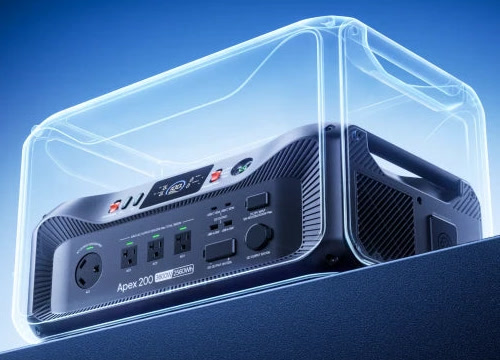
The front panel. The badge on the unit reads 3600W | 2560Wh, which settles the capacity: 2,560 Wh.
Photo: BLUETTI · Apex 200 launch page · numbered labels are ours

Home backup as BLUETTI pictures it: the unit on the counter, appliances plugged straight into its outlets.
Photo: BLUETTI · Apex 200 launch page

The RV pitch: one unit, carried to the trailer, feeding it through the TT-30R outlet.
Photo: BLUETTI · Apex 200 launch page

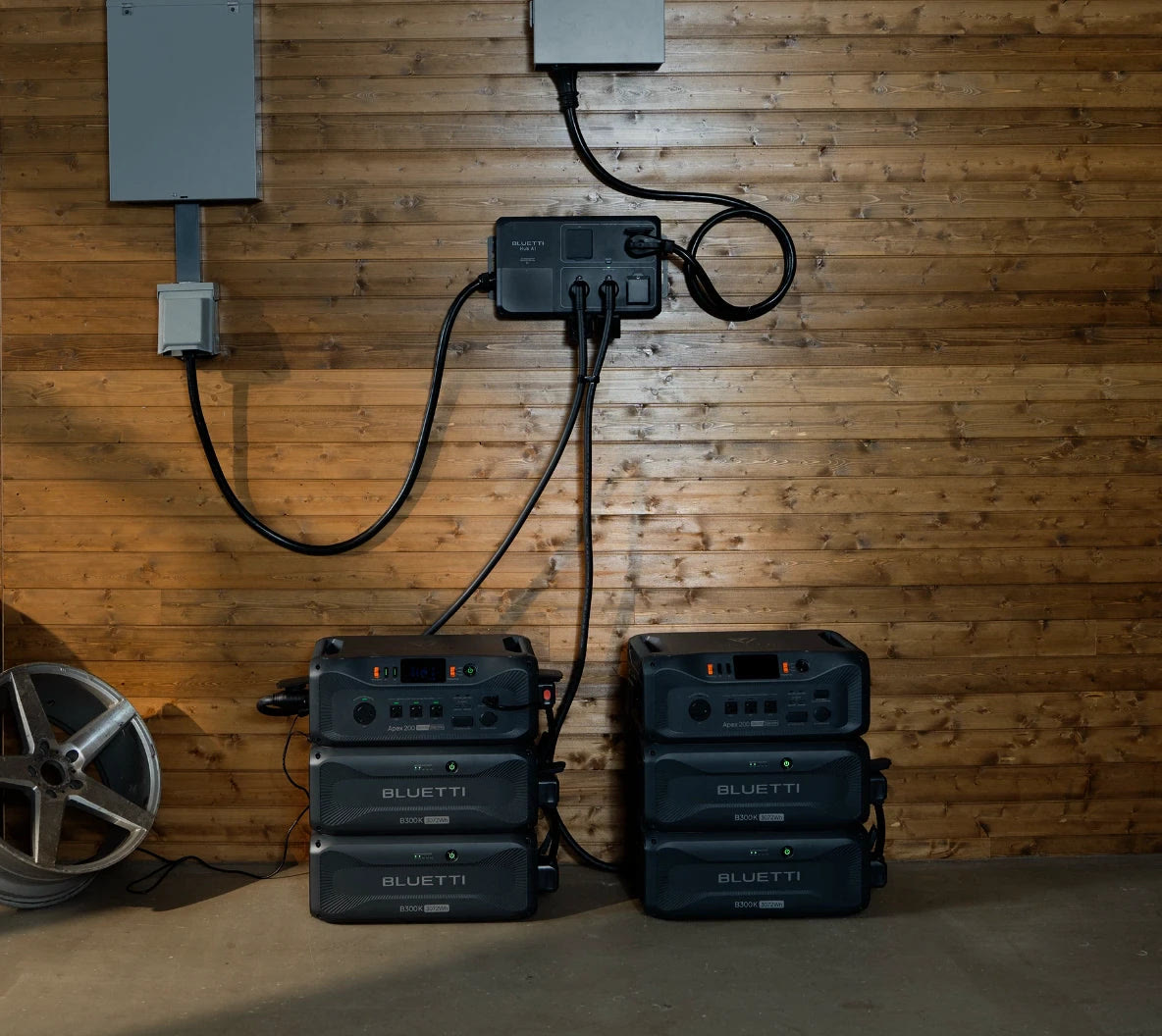
Two Apex 200s, each on two B300K batteries, linked through the wall-mounted Hub A1: BLUETTI’s 6,000 W, 16.17 kWh setup.
Photo: BLUETTI · Apex 200 launch page
02 · Specs
Everything known so far, line by line, so you can tell which numbers are firm enough to plan around. Each figure is marked BLUETTI-published, and blanks are blank on purpose: if you came for the price, you should see that we looked rather than find a guess.
The spec table on the same page reads 2,764.8 Wh (51.2 V, 54 Ah), which is the Apex 300’s figure; the badge on the unit, the page text and every expansion total say 2,560 Wh.
Supported outlets can be switched and scheduled in the BLUETTI app.
Two or three Apex 200 systems link through BLUETTI’s Hub A1, for up to 6,000 W and 99.84 kWh.
Three wall-charging modes: Silent, Standard and Turbo. The starting charge for the 45 minutes is not stated.
About 50 minutes to 80% with both inputs at full output. BLUETTI says the voltage window can vary by regional version.
Switchover time not published.
03 · Our arithmetic
Runtimes worked out from BLUETTI’s own figures. These are estimates, and they are labelled Power Station Arena analysis everywhere they appear.
| Load | Base pack · 2.56 kWh | Expanded · 33.28 kWh |
|---|---|---|
| 150 W — Laptop, router and lights | 15 h | 189 h |
| 800 W — A domestic fridge cycling | 2.7 h | 35 h |
| 1,500 W — One 15 A corded tool at full draw | 1.5 h | 19 h |
| 3,200 W — The full continuous rating | 41 min | 8.8 h |
Assumes 85% of rated capacity reaches the load — the same planning constant our comparison engine uses for every station. Real runtime at 3.2 kW will also depend on how the pack derates in heat, which nobody has measured yet.
Power Station Arena analysisWhat the charging claims imply
BLUETTI quotes 45 minutes to 80% on its Turbo wall-charging mode and about 50 minutes to 80% on the full 3,000 W of solar, without saying where either charge starts.
Power Station Arena analysis Expansion arithmetic
Growing from 2.56 to 33 kWh means adding about 31 kWh of B300K or B500K batteries: six B500Ks at 5.12 kWh each, by BLUETTI’s own figures. Three Apex 200 systems linked through a Hub A1 reach 99.84 kWh and 6,000 W.
Good to knowEvery estimate above updates automatically if BLUETTI revises a published figure; nothing here is typed in by hand.
04 · Our take
Analysis by the Test Desk — not a summary of BLUETTI’s release or anyone else’s coverage. Every comparison figure below comes from the named maker’s own page.
The name made us worry. The battery didn’t. 2,560 Wh against the Apex 300’s 2,764.8 Wh is a 7% cut, less than we feared. What you actually lose is 640 W, the 240 V outlet and 24 lb. To anyone who has hauled an Apex 300 up basement stairs, that reads like a win. If a well pump or a dryer is on your list, it reads like a loss, and you should buy the Apex 300 and stop reading here.
The number we like most is the second one. 3,200 W alone, 3,600 W with a battery attached, and 3,600 W is precisely what a 30 A RV outlet can pass (120 V × 30 A). Our guess is that the 2.56 kWh pack is holding the inverter back on a single unit, not a smaller inverter; BLUETTI has not said. For an RV owner the honest version is: alone, it stops 400 W short of a full outlet, which you will only notice when the air conditioner and the microwave run together.
The charging claim we do not trust yet. 80% of 2,560 Wh is 2,048 Wh. In 45 minutes from empty, that averages about 2,700 W, nearly twice what a 15 A wall outlet supplies (1,440 W), and faster than BLUETTI’s own 1.6 hours through a 30 A campground cable. We have seen this before: a headline minute count with no starting point. Until BLUETTI says where the 45 minutes starts, plan on the 1.6 hours and treat the 45 as a good day. The solar figure we do believe: 2,048 Wh in 50 minutes is about 2,460 W, inside the 3,000 W the two inputs take.
One figure on BLUETTI’s page is wrong, and it bothers us. The spec table, published as an image, lists 2,764.8 Wh at 51.2 V and 54 Ah. That is the Apex 300’s battery, pasted in. The badge on the unit in BLUETTI’s own render, the page text and every system total say 2,560 Wh (7.68 kWh with one B500K is 2.56 plus 5.12). We use 2,560 everywhere, and we would love BLUETTI to fix the table before November 4 so nobody buys on the wrong number.
What you are really buying is the inverter. Six B500Ks add 30.72 kWh to a 2.56 kWh base, so in a full system 92% of the energy sits in batteries you would have bought anyway; the Apex 200 is the outlets, the charger and the brain. One more slip on the page: the card for the 99.84 kWh system says “18 × B300K”, while the fine print and the arithmetic say B500K (eighteen B300Ks reach about 57 kWh). Before you dream that big, size the load first. Most households need less than they think.

05 · Buy today
Same capacity band, shipping now, with published outlet lists and prices we read twice a day. Bars share one scale with the announced unit at the top; each card links to a head-to-head we have adjudicated.
Reference · not on sale
59.5 lb (27 kg), a two-handed carry (BLUETTI-published) · Not announced

BLUETTI
$1,499 listed · 84 lb
The Apex 200’s bigger sibling, and the one to buy now if you need 240 V: 3,840 W, the same B300K and B500K batteries, on sale today. It is about 24 lb heavier to carry.

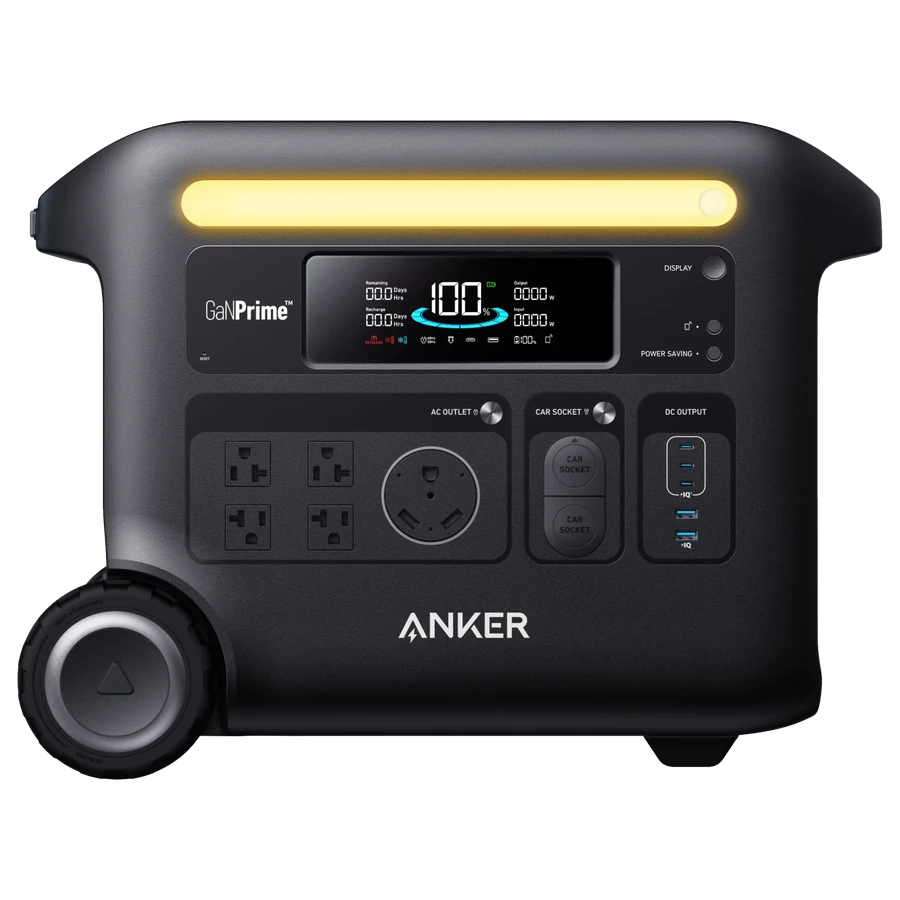
Anker
$2,000 listed · 71 lb
The same 2,560 Wh you can buy today, with a 30 A RV outlet and expansion batteries, behind a smaller 2,400 W inverter.

DJI
$1,299 listed · 49 lb
If 3,000 W and an RV outlet at under 50 lb is the point, this one ships now, at 2,048 Wh with expansion.

BLUETTI
$899 listed · 62 lb
BLUETTI’s current 120 V unit with a 30 A RV outlet and expansion batteries: 2,048 Wh and 2,400 W, on sale now.
06 · The line
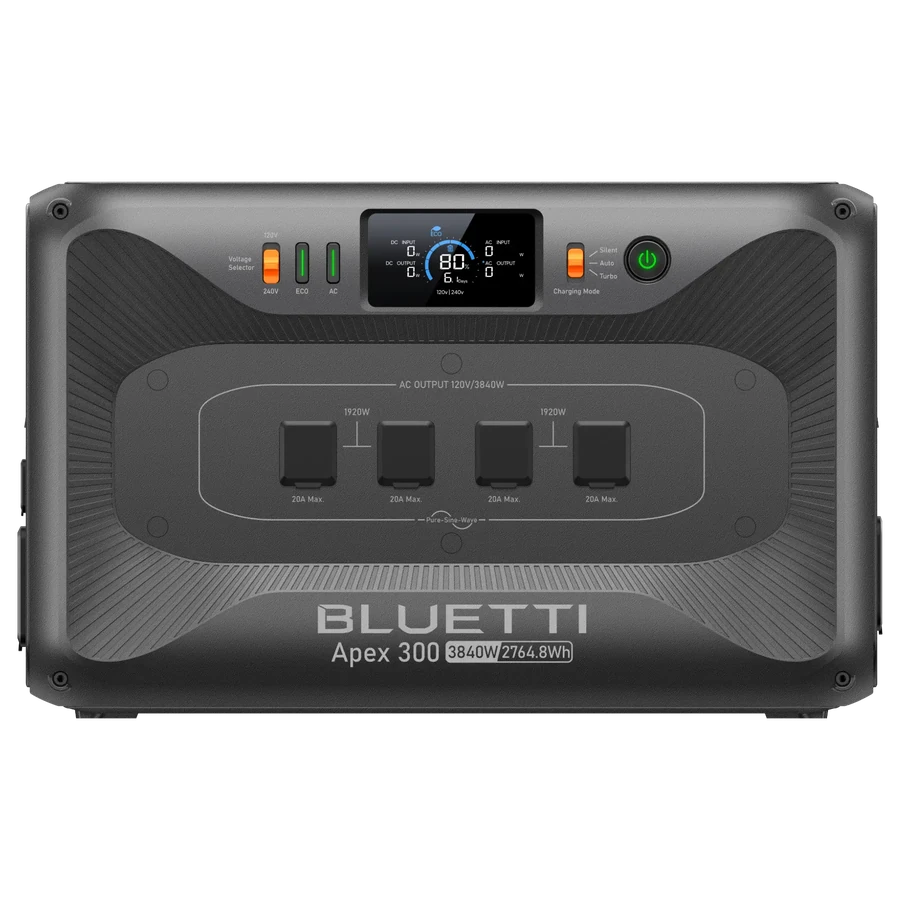
Until now the Apex line has been one unit, the Apex 300, sold with B300K and B500K batteries. The Apex 200 is the second base unit for the same batteries.

2,765 Wh · 3,840 W
The 3,840 W, 120/240 V Apex that the 200 sits beneath.
$1,499 listedCompare →
For the whole BLUETTI range as it stands today, see our BLUETTI guide; for the two current units closest to this one in role, the Apex 300 and SOLIX F2600 side by side.
07 · Fit
Read from what BLUETTI has already committed to paper.
08 · Questions
Short answers, each with its own link.
BLUETTI’s page says it is planned to go on sale November 4, 2026. Its sign-up for launch and pre-order announcements is open now. We update this page and email the alert list when the price and listing appear.
BLUETTI has not published a price. We will add it the day BLUETTI does, along with any launch bundles with B300K or B500K batteries.
From BLUETTI: 2,560 Wh of LFP cells rated 6,000+ cycles to 70%, 3,200 W on its own and 3,600 W with an expansion battery, 120 V, three 5-20R outlets and a TT-30R RV outlet, two USB-C (100 W and 140 W), two USB-A, a 12 V car outlet and a 12 V/30 A Anderson port, up to 3,000 W of solar, 45 minutes to 80% on Turbo wall charging, UPS mode, 59.5 lb and 530 × 326 × 211 mm.
Up to six B300K or B500K batteries per unit, which BLUETTI puts at 33.28 kWh with six B500Ks. With a Hub A1, two or three Apex 200 systems link together, for up to 6,000 W and 99.84 kWh.
Ours: the Apex 200, unless something in your house runs on 240 V. BLUETTI’s own answer is the same, in politer words: the Apex 200 for a lighter 120 V system you can move between home and RV, the BLUETTI Apex 300 for 120/240 V home backup. On BLUETTI’s figures the Apex 200 gives up 640 W of output and about 205 Wh of capacity to weigh 59.5 lb, and we think that is the better deal for most people.
Yes, by BLUETTI’s design: it has a built-in TT-30R outlet and a 12 V/30 A Anderson output. It charges from campground power through a TT-30 or NEMA 14-50 cable, from solar, or while driving through BLUETTI’s Charger 2. On its own it is rated 3,200 W, 400 W short of a full 30 A outlet; with an expansion battery attached it reaches 3,600 W.