Jackery
Explorer 5000 Plus
$3,149 listed · 135 lb
Closest match on paper: the same 5 kWh pack size with a 7,200 W inverter, two 240 V outlets and a documented expansion path. Heavier on the lift, lighter on ruggedisation.
BLUETTI · Pioneer series · Power Station Arena coverage · IFA Berlin 2026
A 5 kW, 18 kW-surge battery generator on all-terrain wheels, aimed squarely at the jobsite fuel generator.
BLUETTI used IFA 2026 to open a new category it calls the E-Generator: a ruggedised battery-inverter unit meant to do a fuel generator’s job on a construction, rental or remote site. The Pioneer 5000 is the first one — 5,000 W continuous, 18,000 W peak surge, a 5.12 kWh LiFePO₄ pack expandable to 35 kWh, IP65 and IK10 protection, and a dry-contact interface that starts a fuel generator automatically when the battery runs low. No price, no ship date, and no outlet list have been published yet; this page carries what BLUETTI has said, what we established at the show, and our read on both.
Reporting and analysis by Gunner GustafsonAnnounced Sep 4, 2026Updated Sep 7, 2026

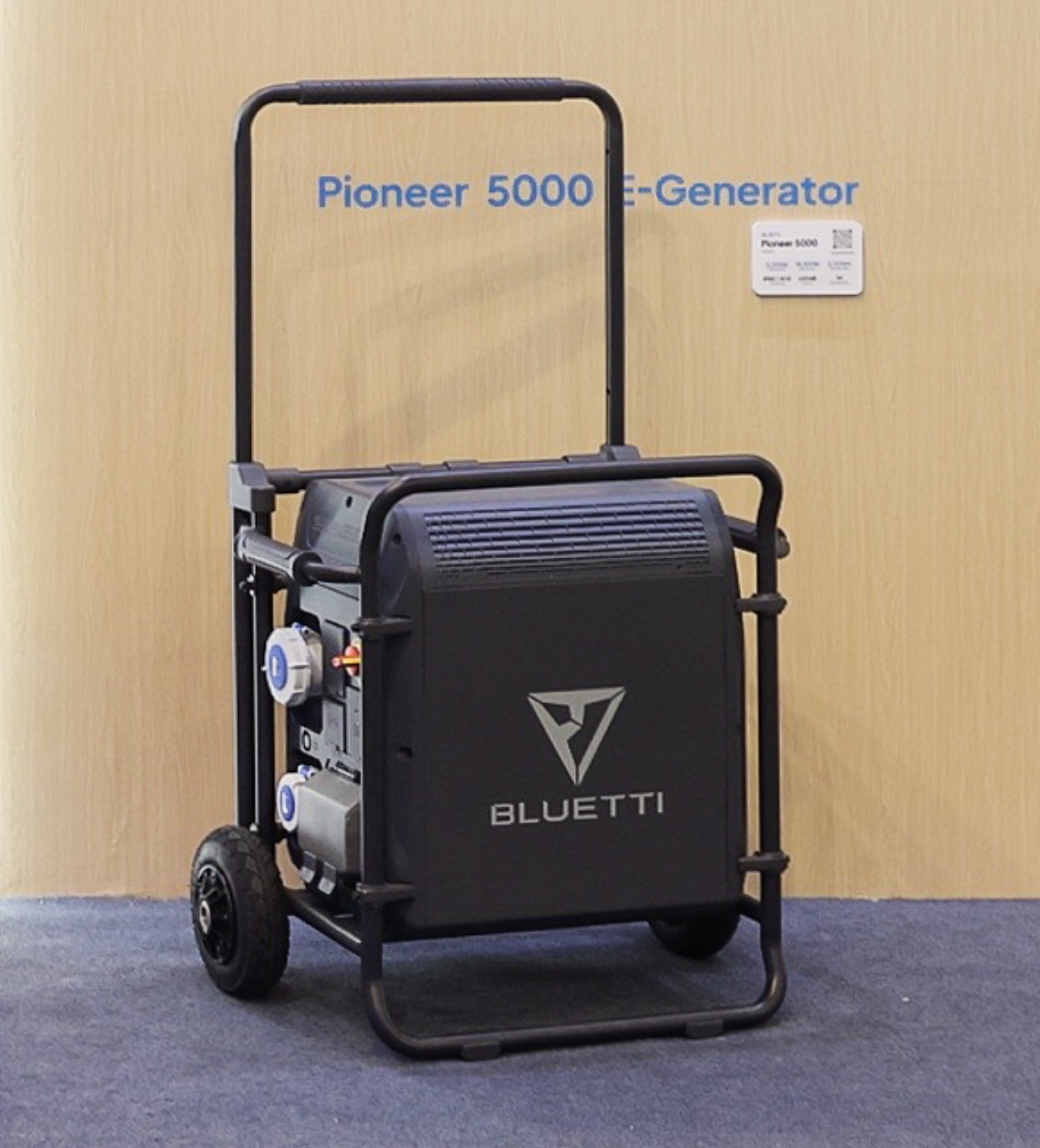
Photo: BLUETTI · display unit at IFA Berlin 2026, Hall 2.2 Stand 176 · numbered details are our reading of the unit
The short answer
Announced, not yet on sale. No price, no ship date, no outlet list — yet.
Of the 24 spec lines below, 11 are BLUETTI-published, 3 were published by us from IFA Berlin 2026, 4 are rumored, and 6 are not yet published — price and ship date among them. Our read on the product is below; if you need 5 kW this season, so are the shipping alternatives.
Get one email when the price or ship date lands
And one when our test results are in. Nothing else.
By subscribing, you agree to our Privacy Policy. Unsubscribe anytime.
01 · What was announced
Announced September 4, 2026 at IFA Berlin 2026, Hall 2.2 Stand 176. The framing below is ours; every figure in it is graded in the ledger that follows.
The pitch is the category, not the number. BLUETTI’s stand copy reads “E-Generator. Beyond Fuel. Earn More.” and “Keep crews working”, and every line in the release is aimed at the trades: saws, compressors and pumps starting without a trip, indoor and overnight operation, no refuelling runs and no engine service. In Europe the timing is deliberate — construction sites answer to Stage V emissions rules and London has run a low-emission zone for non-road machinery since 2015, so a rental fleet has a compliance reason to try a battery generator before it has a cost reason.
Mechanically this is a large portable power station in a jobsite enclosure: a 5.12 kWh LiFePO₄ pack behind a 5 kW inverter, IP65 against dust and hose-down, IK10 against a dropped tool, and wheels sized for gravel. The two features that make it a generator replacement rather than a bigger AC500 are the 18 kW peak surge — 3.6× the continuous rating, where consumer units run 1.5–2× — and the DO dry-contact interface, which lets a fuel generator sit idle and start itself only when the battery runs low. That is the hybrid pattern rental yards already use with diesel gensets and a battery buffer, now sold in one box.
What BLUETTI has not said matters as much. There is no price, no ship date, no outlet list and no expansion-module spec, and the US store’s Pioneer collection does not list it. Every spec below is marked by who published it: BLUETTI for the headline numbers, us for what we read off the stand and the display unit, and rumored for the third-party figures — the weight and dimensions — until BLUETTI or we confirm them. The arithmetic is ours and is labelled.
02 · Specs
Everything known so far, line by line. Each figure is marked by who published it — BLUETTI, us, or nobody yet — and third-party numbers stay marked rumored until BLUETTI or we confirm them. Blanks are blank on purpose: if you came for the price, you should see that we looked.
The spec sheet at a glance
Drawn from the lines below, not from a photograph: BLUETTI’s published figures typeset on the unit, the two CEE sockets we read off the IFA display unit, and the US outlet panel left as the question mark it still is.
Duration not published. BLUETTI’s consumer manuals tier surge into 0.5 s / 2 s / 2 min windows; expect the same structure here.
Expansion module name and size not published. 5.12 → 35 kWh implies roughly six ~5 kWh packs — our arithmetic, not BLUETTI’s.
Where it comes fromReported by Notebookcheck from the show floor; not in BLUETTI’s release, and we have not weighed one.
Where it comes fromReported by Notebookcheck; not in BLUETTI’s release.
How we knowRead from the display unit on the IFA stand. Blue in the IEC 60309 scheme means 200–250 V single-phase; the current ratings are not legible in the photography, and a European show unit does not tell us the US panel.
Where it comes fromReported by Trusted Reviews; consistent with the 60-minute charge claim (see our arithmetic below) but not in BLUETTI’s release.
Distance and load for the rating not stated.
How we knowRead from the display unit. An open grille on an IP65-rated unit implies sealed electronics behind a water-tolerant air channel — our reading, not BLUETTI’s description.
How we knowRead from the display unit on the IFA stand. BLUETTI’s release says only “rugged frame” and “all-terrain wheels”; the cage, skids and handle geometry are our observation.
Where it comes fromReported by Trusted Reviews; not in BLUETTI’s release.
Sep 7, 2026
Coverage published from BLUETTI’s IFA 2026 release and our reading of the stand and display unit: roll-cage frame, U-handle, knobby wheels, front grille, and two blue CEE-type industrial sockets on the European show unit. Weight, dimensions and AC-input figures credited to Notebookcheck and Trusted Reviews; runtime, charging and price arithmetic marked as our analysis.
03 · Our arithmetic
BLUETTI has published no runtimes and no charging-circuit requirement. These are our estimates from BLUETTI’s figures, and they are labelled as our analysis everywhere they appear.
| Load | Base pack · 5.12 kWh | Expanded · 35 kWh |
|---|---|---|
| 500 W — Lighting, chargers and a radio | 8.7 h | 60 h |
| 1,500 W — One 15 A corded tool at full draw | 2.9 h | 20 h |
| 3,000 W — Two tools running plus lighting | 1.5 h | 9.9 h |
| 5,000 W — The full continuous rating | 52 min | 6.0 h |
Assumes 85% of rated capacity reaches the load — the same planning constant our comparison engine uses for every station. Real runtime at 5 kW will also depend on how the pack derates in heat, which nobody has measured yet.
Our analysisWhat the 60-minute claim implies
5→80% of a 5.12 kWh pack is 3,840 Wh in an hour: an average of about 3.8 kW of AC input, which is a 240 V circuit, not a wall outlet.
From an ordinary 120 V / 15 A outlet — the plug most sites actually have — the same top-up takes roughly 2.6 h. Solar and a fuel generator on the DO interface are how BLUETTI expects the pack to be kept full in the field.
Our analysis Surge headroom
18,000 W peak is 3.6× the continuous rating. Consumer stations run 1.5–2×, which is why a 3,600 W unit can stall on a compressor start. What decides real-world starts is how long the peak is held — the one surge number BLUETTI has not published.
Our analysis Expansion arithmetic
Growing from 5.12 to 35 kWh means adding about 30 kWh of external packs — roughly six modules if they match the base pack. Module size, price and whether they wheel are unpublished; the cost per kWh of those packs will decide whether a multi-day site runs on batteries or on the generator.
Good to knowEvery estimate above updates automatically if BLUETTI revises a published figure; nothing here is typed in by hand.
04 · Our take
Analysis by the Test Desk — not a summary of BLUETTI’s release or anyone else’s coverage. Every comparison figure below comes from the named maker’s own page.
Start with the one figure that is not like the others. Every consumer power station quotes a surge of 1.5 to 2 times its continuous rating; the Pioneer 5000 quotes 3.6 times, and the number it quotes — 18 kW — is exactly the peak Instagrid prints on the ONE max, the carry-on battery that defined the European jobsite category. That is a spec sheet written to be laid next to Instagrid’s on a rental-yard desk. BLUETTI’s answer to the ONE max’s 20 kg is not to match it but to change the question: 2.4× the capacity, 1.4× the continuous output, expansion to 35 kWh, and wheels instead of a handle.
For American trades the reference point is Milwaukee’s MX FUEL CARRY-ON: 1.8 kW running, 3.6 kW starting, about 50 lb, a single 120 V duplex. The Pioneer 5000 is a class above it on every line, which makes the US outlet panel the most important unpublished fact on this page. The unit on the IFA stand answers the question for Europe — two blue industrial CEE sockets on its side panel, the connectors a site electrician plugs a distribution board into, and no domestic outlets on that face — and that is exactly why it tells us nothing about America. A 240 V / 30 A or 50 A receptacle turns this into a generator replacement for a site’s temporary power; 120 V outlets alone make it a very large power station. We would not buy either story until the US panel is published.
The dry-contact generator interface is the tell that BLUETTI has been listening to sites rather than campers. Hybrid battery-plus-diesel is how large jobsite storage is actually deployed: the battery carries the long idle hours and the small loads, the generator runs for the peaks and the recharge and is silent the rest of the time. Building the start/stop logic into a 5 kWh box brings that pattern down to the size a plumber or a film unit can rent for a week. It also makes the 60-minute AC recharge more useful than it first looks: on a site with a generator, the pack can be refilled during the loud hours.
The reported 74.5 kg is the price of the sealing. IP65 and IK10 are equipment ratings, not appliance ratings, and they explain what we saw on the stand: a full roll-cage with skid rails, a hand-truck handle and knobby wheels — this is meant to roll off a liftgate and be dragged across aggregate, not carried. The grille across the front says the sealing is done the way serious IP65 gear does it, with the electronics sealed behind an air path that can take water, rather than a fanless brick; that is also how a 5 kW inverter stays cool at 55 °C. It all explains why the E-Generator name is more than marketing — a wheeled, weather-sealed, generator-integrated unit is a different purchase, made by different people with different budgets, from a power station.
Two things decide whether the category lands in the US. The first is listing: a jobsite expects equipment with a recognised safety mark in a way a living room does not, and BLUETTI has said nothing about certification. The second is the expansion module: 35 kWh is only a real number if the packs are priced and wheeled like the base unit. We would also like to see the surge duration written down — 18 kW for half a second starts a compressor; 18 kW for twenty milliseconds is a marketing figure.
For BLUETTI the move is coherent. The Pioneer line already sold the rugged story to consumers with the AC240 and the sodium-ion Pioneer Na; the EP series sold whole-home; the Apex 300 sold the prosumer. A professional tier was the empty seat, and the rental angle on the stand — “Earn more” — says BLUETTI wants dealers and yards, not just checkout carts. That is a longer, slower sale than a Prime Day, which is one more reason not to expect a price on the US store next week.
The field it is entering
The consumer alternatives further down are what a shopper can buy this week. The units below are the category BLUETTI is actually walking into — the ones a rental yard already stocks. Figures from each maker’s own product page; the Pioneer 5000’s from the ledger above.
| Unit | Continuous | Peak | Pack | Weight | Sealing |
|---|---|---|---|---|---|
BLUETTI Pioneer 5000 Announced · not on sale — Weight rumored · Notebookcheck. | 5,000 W | 18,000 W | 5.12 kWh | 74.5 kg | IP65 · IK10 |
Instagrid ONE max The European jobsite carry-on — Same 18 kW peak; a fifth of the capacity at about a quarter of the weight. · maker page | 3,600 W | 18,000 W | 2.1 kWh | 20 kg | IP54 |
Milwaukee MX FUEL CARRY-ON The US trades incumbent — Push-button start, swappable MX FUEL packs, 120 V 15 A duplex only. · maker page | 1,800 W | 3,600 W | — | 22.5 kg | — |
05 · Buy today
Same capacity band, shipping now, with published outlet lists and prices we read twice a day. Bars share one scale with the announced unit at the top; each card links to a head-to-head we have adjudicated.
Reference · not on sale
74.5 kg (164 lb) (rumored · Notebookcheck) · price not announced

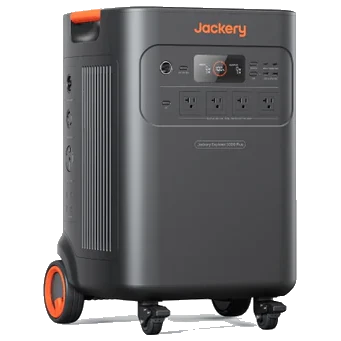
Jackery
$3,149 listed · 135 lb
Closest match on paper: the same 5 kWh pack size with a 7,200 W inverter, two 240 V outlets and a documented expansion path. Heavier on the lift, lighter on ruggedisation.

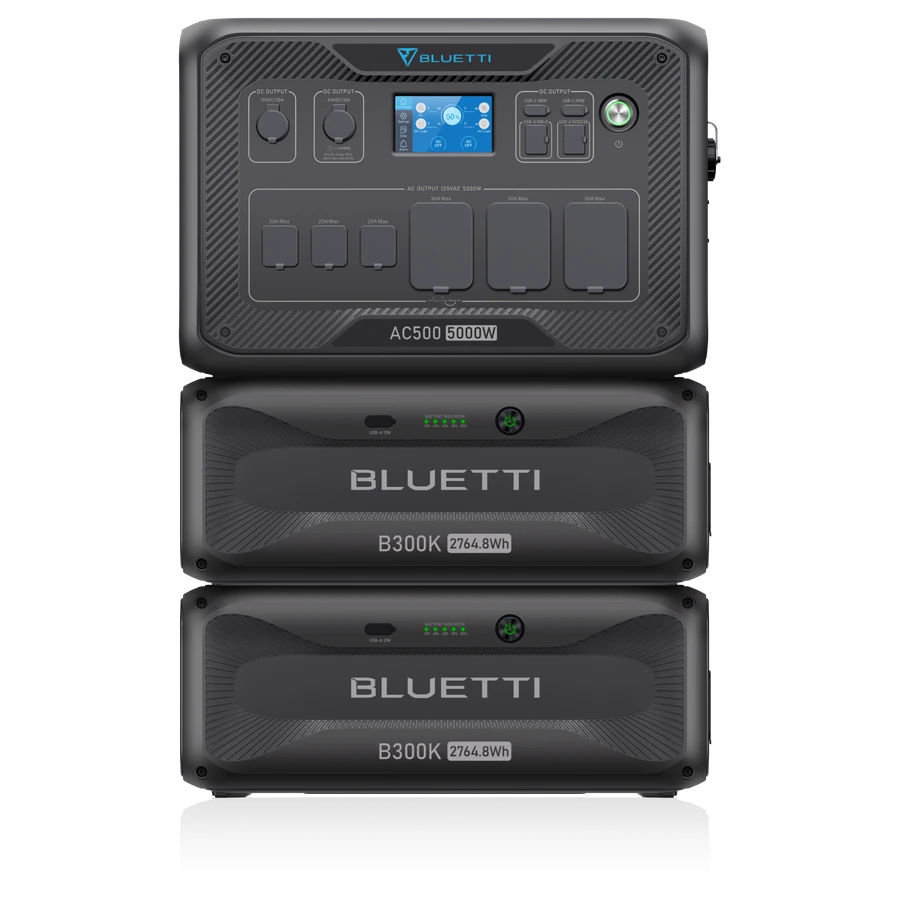
BLUETTI
$3,299 listed · 196 lb
BLUETTI’s own 5 kW system today: the same continuous rating in a two-piece stack that is not weather-sealed and not built to be wheeled across gravel.

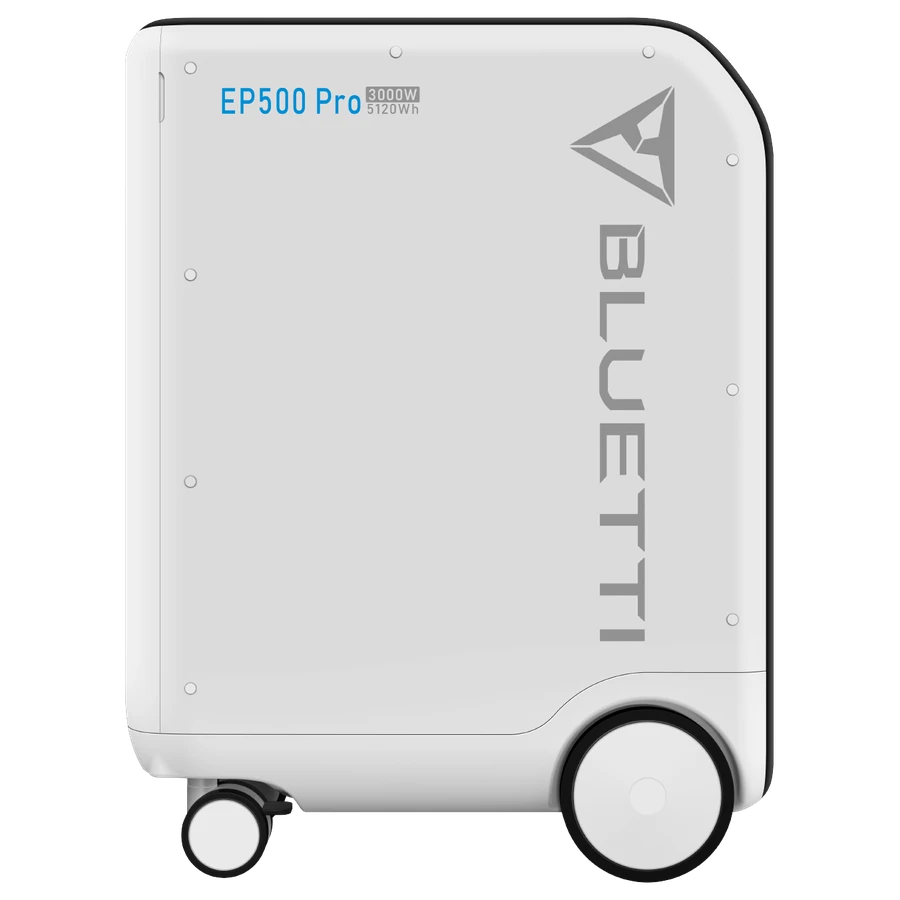
BLUETTI
$3,499 listed · 187 lb
BLUETTI’s existing 5.1 kWh unit on wheels, with a 3 kW inverter — the capacity match without the surge.

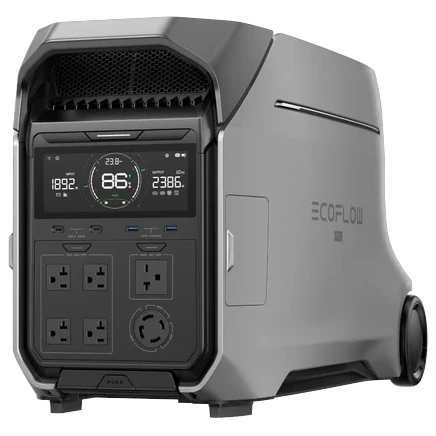
EcoFlow
$2,799 listed · 112 lb
The whole-home benchmark: 4 kW continuous, 240 V split-phase built in, expansion batteries on sale now.

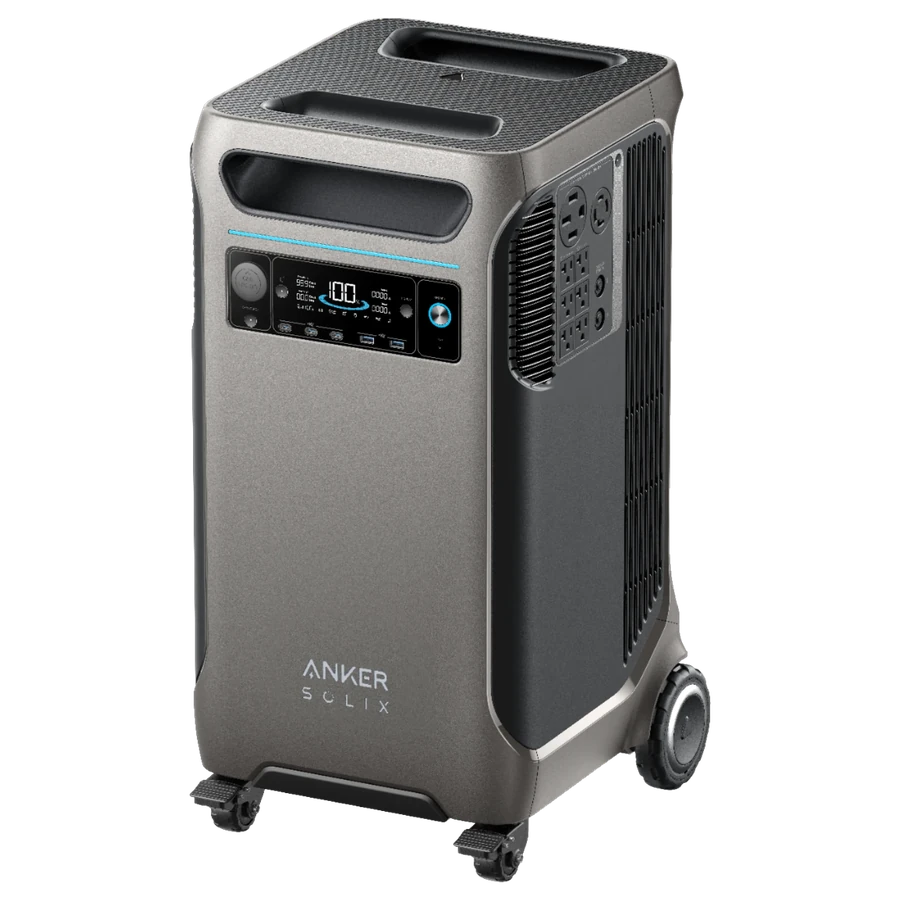
Anker
$2,200 listed · 132 lb
The highest continuous output you can buy at this size (6 kW), with 240 V, at a consumer price.

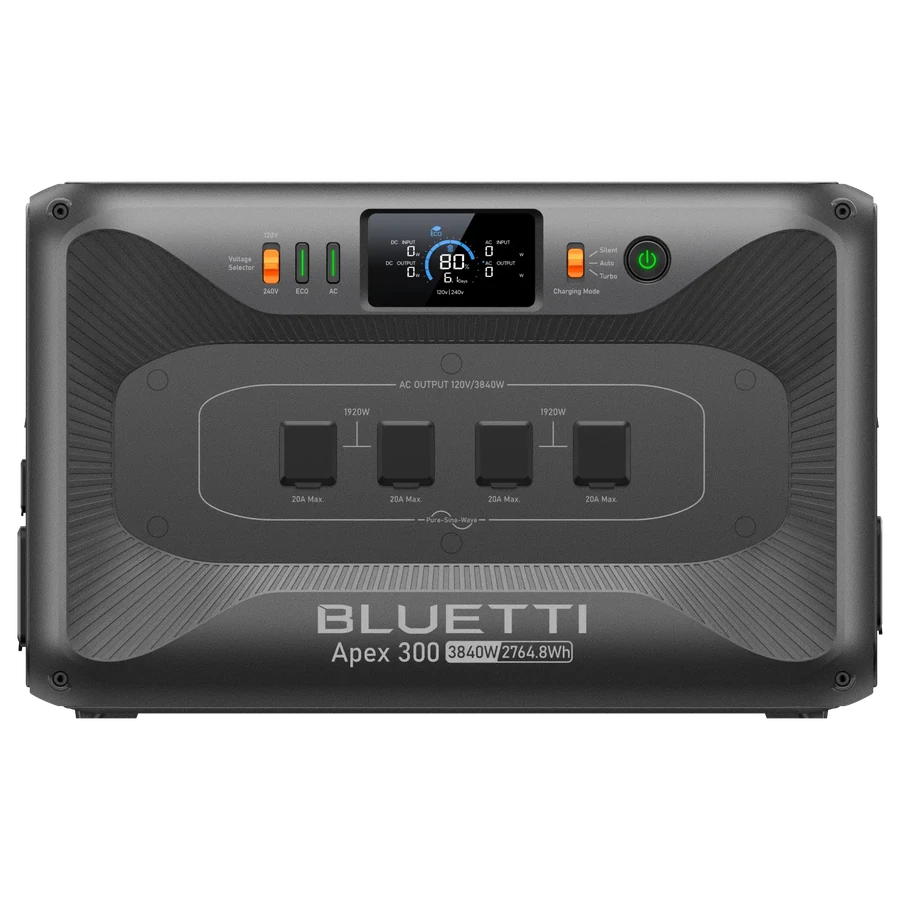
BLUETTI
$1,499 listed · 84 lb
BLUETTI’s current flagship for pros who can live without IP65 — 3,840 W, 7,680 W surge, 240 V, expandable, half the weight.
06 · The line
The Pioneer name has so far meant rugged, mid-sized units for work and travel. The Pioneer 5000 is the first one aimed at replacing a generator rather than a wall outlet.

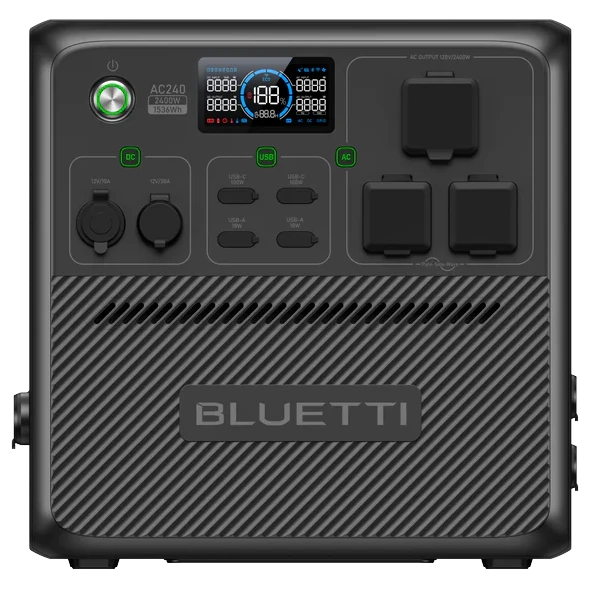
1,536 Wh · 2,400 W
The rugged 1.5 kWh unit the Pioneer name was built on.
$999 listedCompare →

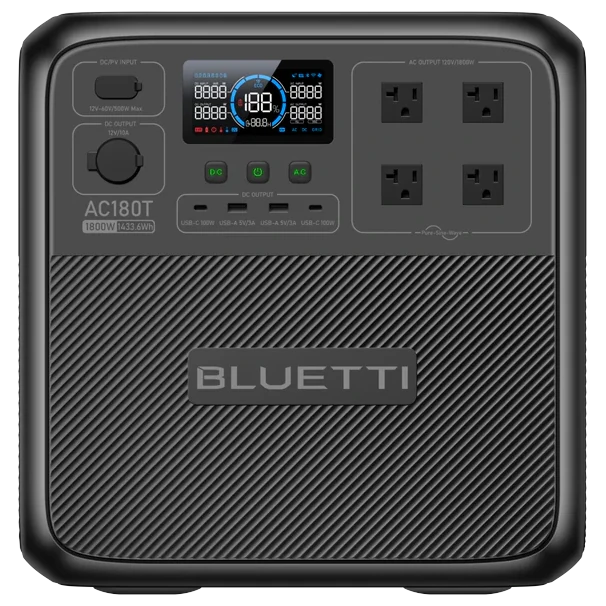
1,433 Wh · 1,800 W
Swappable-pack jobsite unit.
$799 listedCompare →

900 Wh · 1,500 W
Sodium-ion; the cold-weather Pioneer.
$899 listedCompare →

403 Wh · 600 W
Discontinued entry unit.
$599 listedCompare →
For the whole BLUETTI range as it stands today, see our BLUETTI guide; for the two current units closest to this one in role, the Apex 300 and AC500 side by side.
07 · Fit
Read from what BLUETTI chose to announce and what it chose to leave out.
08 · Questions
Short answers, each with its own link.
No. BLUETTI announced it on September 4, 2026 at IFA Berlin with no price, ship date or launch regions, and it is not on BLUETTI’s US store as of September 7. We update this page and email the alert list the day that changes.
Not announced. Our read: at or above BLUETTI’s own 5 kW system, the BLUETTI AC500 + 2×B300K at $3,299 — sealed jobsite equipment with telematics rarely undercuts the maker’s consumer gear. Analysis, not a leak.
BLUETTI’s name for a battery-inverter unit built to replace a jobsite fuel generator: 5 kW continuous, an 18 kW surge, a sealed IP65/IK10 enclosure, wheels, and a dry-contact interface that starts a fuel generator when the battery runs low. Functionally, a large power station in a generator’s clothes.
Our estimates at 85% usable capacity: about 50 minutes at the full 5 kW, 2 hours at 2 kW, and 8–9 hours at 500 W — multiply by 6.8 for the 35 kWh system. The 18 kW peak is ample for tool inrush on paper, but BLUETTI has not said how long it is held, which is what decides a compressor start.
It is aimed at trades, and the US outlet set is unpublished, so nobody can yet say whether it offers the 240 V split-phase output a transfer switch wants. For home backup today the EcoFlow DELTA Pro 3, Anker SOLIX F3800 and BLUETTI Apex 300 publish theirs and ship now.
The BLUETTI Apex 300 is a 3,840 W prosumer unit at about 84 lb; the BLUETTI AC500 + 2×B300K matches the 5 kW rating as a 196 lb two-piece stack with a 10 kW surge. The Pioneer 5000 puts 5 kW, an 18 kW surge and a 5.1 kWh pack in one sealed, wheeled box with generator auto-start.