Anker · SOLIX C series
Anker SOLIX C200 DC
The C200 DC is the first rung of Anker’s C line: 192 watt-hours, four pounds, no inverter, and no wall charger in the box, a bold way to sell a battery. It finishes an afternoon off-grid and loses 14 of 17 head-to-heads. No owner has written in; reviewers keep finding it under a Starlink Mini on a boat.
192 Wh · 200 W · 4.2 lb · 3,000 cycles · 17 head-to-heads
1,484
Power Score · Device Hub
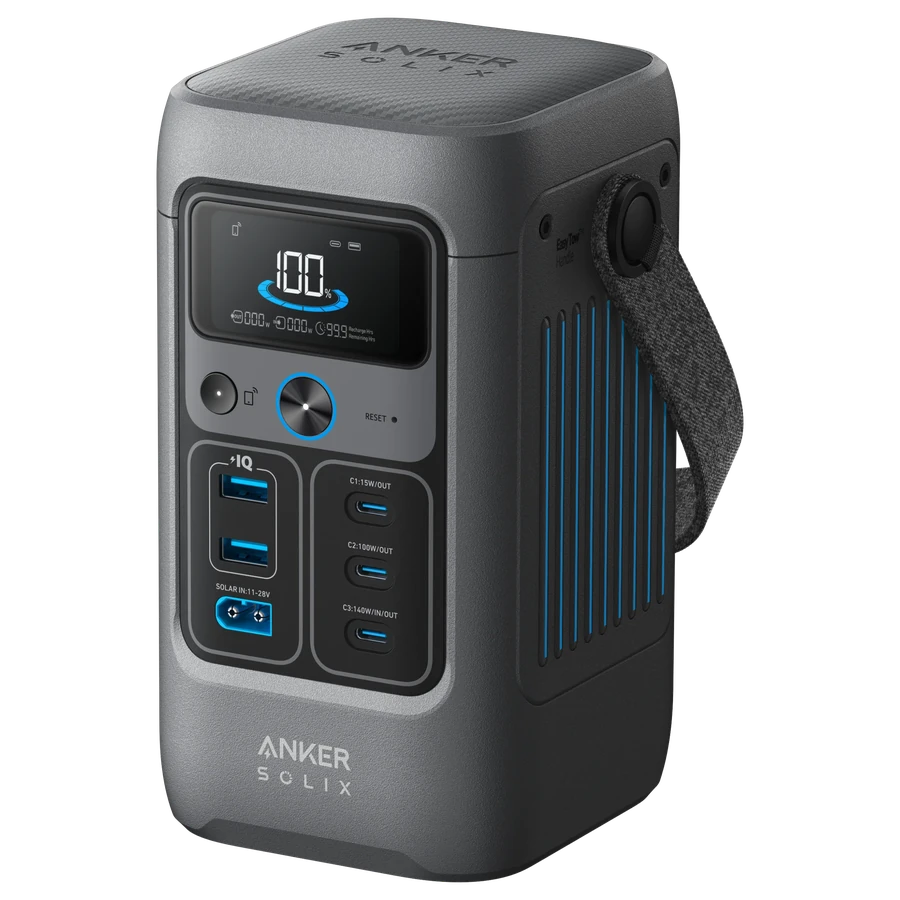
- 192 Wh
- capacity
- 200 W
- output
- 4.2 lb
- weight
- 3,000
- rated cycles
Should you buy it right now?
SOLIX C200 DC: 192Wh, clears 1 of 7 real-world jobs, wins 3 of 17 matchups.
Real-world jobs
1 of 7
Falls short on Weekend Camping, 8-Hour Blackout, CPAP Overnight, Remote Workday, Tailgate Party and Van Life Daily
Head-to-head record
3–9–5
17 adjudicated matchups

Verdicts by Wenny Zheng and the Test Desk·Figures computed 2026-10-04
01 · Six real-world jobs
What the SOLIX C200 DC actually runs
The load profiles every comparison on the site is scored on, computed for this unit alone: energy needed against the usable tank after inverter losses, and whether the inverter holds and starts the biggest single load.
Weekend Camping
Falls short2 nights · Two nights off-grid with essential comfort
2,100Wh needed · 1287% of the tank · 1,937Wh short
Peak 75W: cannot start
8-Hour Blackout
Falls short8 hours · Keep the essentials running through a night without power
1,645Wh needed · 1008% of the tank · 1,482Wh short
Peak 150W: cannot start
CPAP Overnight
Falls short8 hours · Sleep therapy without interruption — the #1 medical use case
320Wh needed · 196% of the tank · 157Wh short
Peak 40W: starts and holds
Remote Workday
Falls short8 hours · Full work day off-grid without power anxiety
910Wh needed · 558% of the tank · 747Wh short
Peak 60W: cannot start
Tailgate Party
Falls short4 hours · Game day power for the crew
670Wh needed · 411% of the tank · 507Wh short
Peak 400W: cannot start
Van Life Daily
Falls short24 hours · A full day of mobile living — the ultimate endurance test
4,685Wh needed · 2871% of the tank · 4,522Wh short
Peak 150W: cannot start
Afternoon Off-Grid
Clears itan afternoon · Phones and a speaker at the park, beach, or campsite — the small-unit job description
100Wh needed · 61% of the tank · 63Wh spare
Peak 30W: starts and holds
02 · Head-to-head record
3 wins in 17 written matchups
Every matchup is a full verdict scored on the six jobs above plus price, longevity and portability. This is the set shoppers search for, not a random sample.
Win share
3–9–5
- vs BLUETTI1–6–5
- vs Anker0–2
- vs Goal Zero2–0
- vs Jackery0–1
 loses
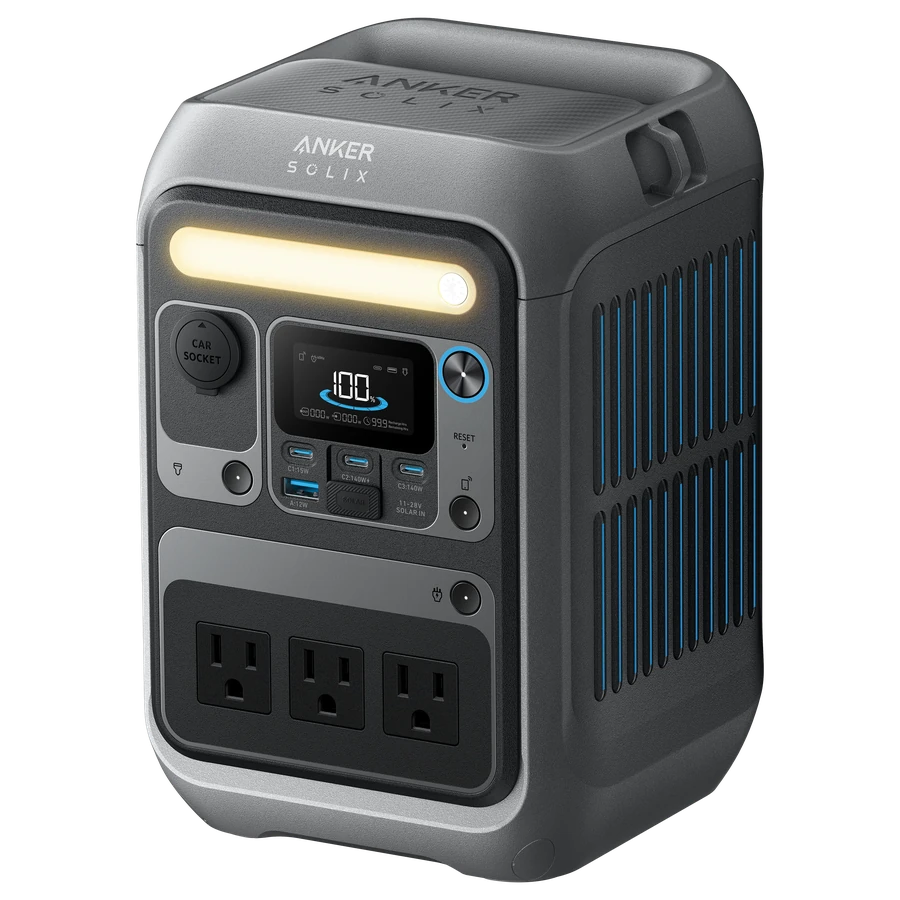
losesSOLIX C200 DC vs Anker SOLIX C300
1,884 searches reached this matchup
 loses
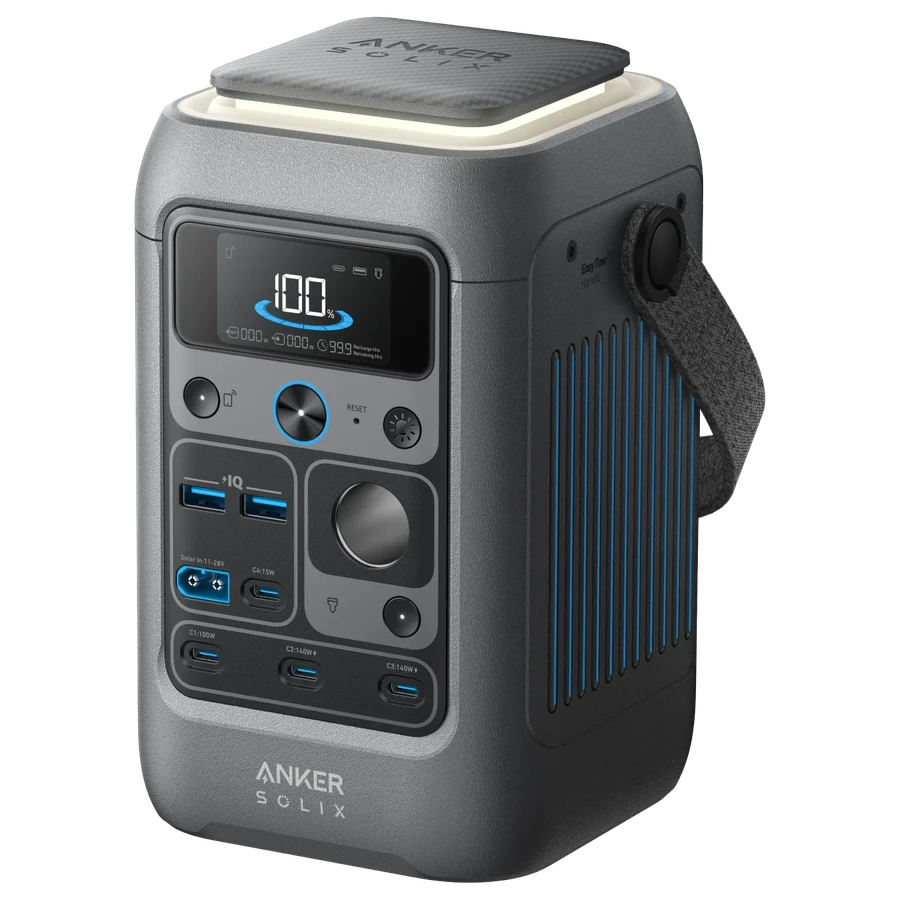
losesSOLIX C200 DC vs Anker SOLIX C300 DC
744 searches reached this matchup
 loses
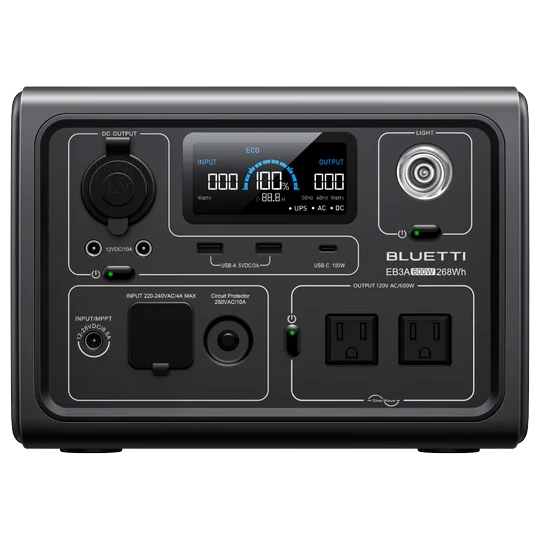
losesSOLIX C200 DC vs BLUETTI EB3A
154 searches reached this matchup
 loses
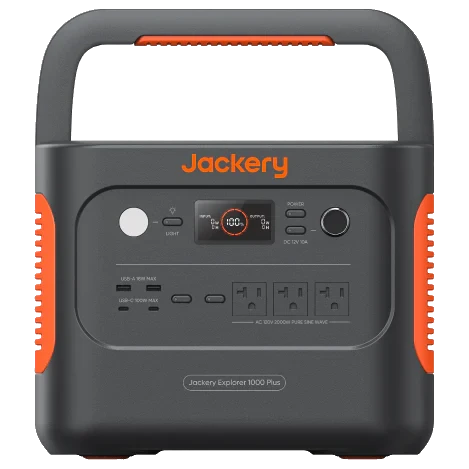
losesSOLIX C200 DC vs Jackery Explorer 1000 Plus
85 searches reached this matchup
 loses
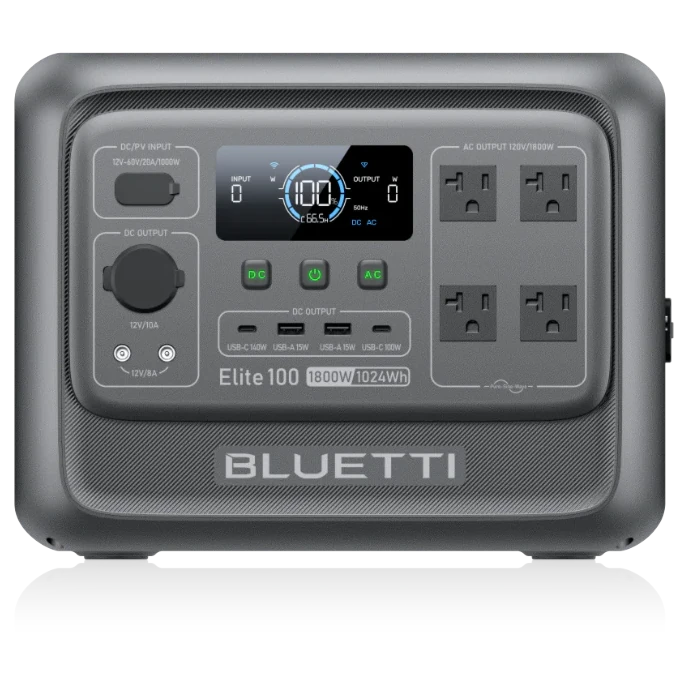
losesSOLIX C200 DC vs BLUETTI Elite 100 V2
67 searches reached this matchup
 loses
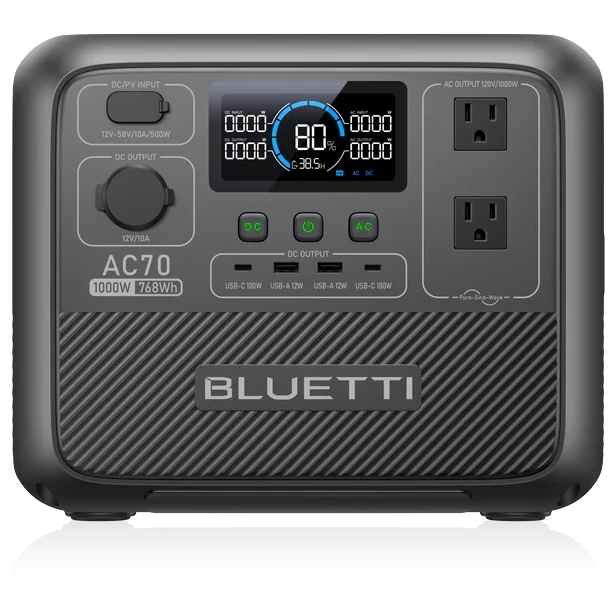
losesSOLIX C200 DC vs BLUETTI AC70
56 searches reached this matchup
03 · From the verdicts
Who it is for, and when a rival won instead
Each line is lifted from a written matchup where it decided the verdict, and links to the page it came from. Repeated across many matchups means it is the unit’s signature, not one author’s opinion.
Buy the SOLIX C200 DC if…
You want the longest-lived grab bag on the shelf, 4.2 pounds and 3,000 cycles, and you plan to still be using it in a decade.
Decided 5 matchups · read one →
You run a Starlink Mini or other USB and 12V gear off-grid; owners do exactly that for six-plus hours and rate it highly [A4][A5].
Decided 4 matchups · read one →
You want a no-drama top-up box and already own a high-wattage USB-C charger, which you'll need, because it doesn't ship with the wall brick [A7].
Decided 2 matchups · read one →
The off-grid Starlink Mini user, on a boat or a remote site, who wants hours of runtime with no inverter and no noise [A4][A5].
Decided 2 matchups · read one →
A rival won when…
The buyer who wants one system that scales toward whole-home backup and accepts that it's a 282.2-pound fixture, placed once and left.
Decided 4 matchups · read one →
You want the lower price at the register and treat the AC outlet as a bonus, knowing you are trading away a chunk of usable capacity to get it.
Decided 3 matchups · read one →
Anyone who needs to plug in a device with a standard wall plug, at any price — the Elite is the only one of these two with an inverter.
Decided 2 matchups · read one →
Anyone who wants UPS-style backup — a 10ms switchover fast enough that a router or desktop won't reboot through a blip.
Decided 2 matchups · read one →
04 · Price history
What the SOLIX C200 DC actually sells for
Anker’s own-store price, read twice a day, one point per day. The buy button goes to Anker’s storefront on Amazon, which sets its own price.
Read from us.ankersolix.com twice a day since July 17 · 80 days
Best seen $140 on August 23
Built from the Oct 4, 7 PM UTC read.
$140
Usual price
48% of days tracked
$140
Best we've seen
August 23
$150
Today
7% over usual
$150
Highest seen
42 days above usual
How to read this
- Usual is the price the unit carried most of the time, tested for how long it held rather than how often we looked. A weekend promotion cannot move it.
- Best is the lowest price we have read on the store itself. Typed coupon codes, member-only prices and marketplace listings are not counted; anything applied automatically at checkout is.
- A gap in the line is a day we could not read a price. We never draw across one, and we never show the store’s own “was” price.
Method on the methodology page.
Share the numbers
Anker SOLIX C200 DC: usually $140, best $140 (Aug 23), today $150 on us.ankersolix.com. Tracked twice a day since Jul 17. https://stationarena.com/products/anker-solix-c200-dc#price-history
Alerts for the SOLIX C200 DC
One email when it drops below $140, comes back in stock, or a newer model in this line appears. Nothing else.
By subscribing, you agree to our Privacy Policy.
05 · Voices
What owners and reviewers say
Owner reports are paraphrased from public YouTube comments and each links to its source; reviewer consensus is counted from cited excerpts, never quoted; our own verdicts are quoted. Specs on this page never come from any of them.
Reviewer consensus
11/15 positive excerpts, 1 sources
No wall charger is included, and getting decent charge speed means sourcing a high-wattage (18W+, ideally 140W PD3.1) USB-C charger yourself — a recurring source of either mild annoyance or, for one reviewer who lacked a compatible charger on hand, a full return-to-sender experience.
diysolarforum.com · researched 2026-08-01
From the test desk
“Default to the SOLIX C300.”
“Buy the SOLIX C300 DC if the extra $60 is easy money: it actually runs four cents cheaper per watt-hour than the C200 DC ($0.69 vs $0.73) and a cent cheaper per lifetime kilowatt-hour ($0.23 vs $0.24), so the 50% bigger…”
“Default to the BLUETTI EB3A.”
06 · Where each number comes from
Spec sheet, in four cards
Every field carries its source: green is the manufacturer’s own document, blue was adjudicated after sources disagreed, grey is the catalogue as imported. Then compare it line by line with the units people actually weigh it against.
Battery
192
Capacity (Wh)
- ChemistryLiFePO4
- Charging Cycles3000
- Battery Expansion FeasibilityNo
Power out
200
Output (W)
- AC Outlets0
- USB-C Ports2
- USB-A Ports2
- USB-C Charging Outputs140W, 45W
Charging
100
Solar Input (W)
- Solar Input TypeXT-60
Living with it
4.2
Weight (lbs)
- UPSNo
- App ControlYes
- Warranty (Years)3
Compare it with
SOLIX C200 DC vs
leads on 2 · trails on 5
| Spec | SOLIX C200 DC | SOLIX C300 | Gap |
|---|---|---|---|
| Usual price | $140 ● | $330 | $-190 |
| Capacity (Wh) | 192 | 288 ● | -96 |
| Output (W) | 200 | 300 ● | -100 |
| Surge (W) | N/A | 600W | |
| Rated cycles | 3000 | 3000 | 0 |
| Solar input (W) | 100 | 100 | 0 |
| Weight (lb) | 4.2 ● | 9.1 | -4.9 |
| Noise (dB) | N/A | 25 | |
| AC outlets | 0 | 3 ● | -3 |
| USB-C ports | 2 | 3 ● | -1 |
| Warranty (yr) | 3 | 5 ● | -2 |
| Chemistry | LiFePO4 | LiFePO4 | |
| UPS | No | Yes (<10ms) |
● marks the better figure where direction is clear. Price is each unit’s usual price.
Read the full verdict →Solar
Charge the SOLIX C200 DC from the sun
Every panel we track, checked against its solar input: which ones fit, the adapter each needs, and what it really delivers.
- Solar input
- 100 W
- Plug
- XT60
- Panels that work
- 12 of 39
- Refill at full sun
- ~1.9 h
Our pick for the SOLIX C200 DC
Renogy 200W Portable Solar Panel Blanket (RPP200SB-SE)One panel delivers 100 W, the most the input takes.
07 · Anker SOLIX C line
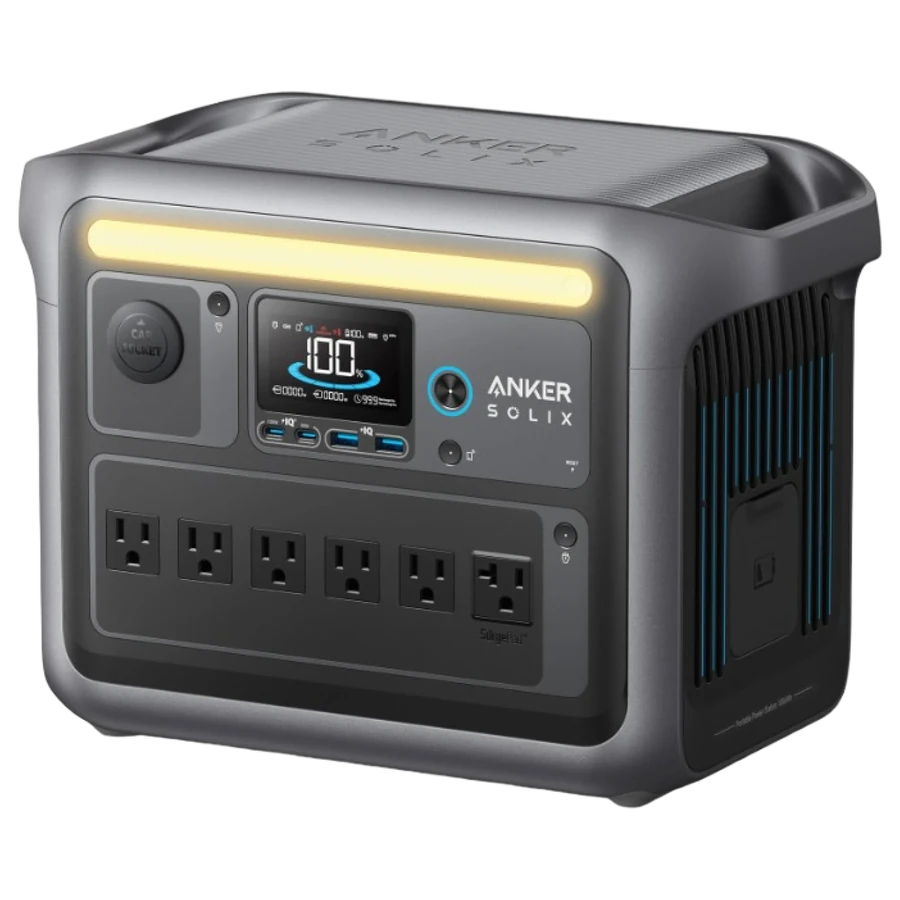
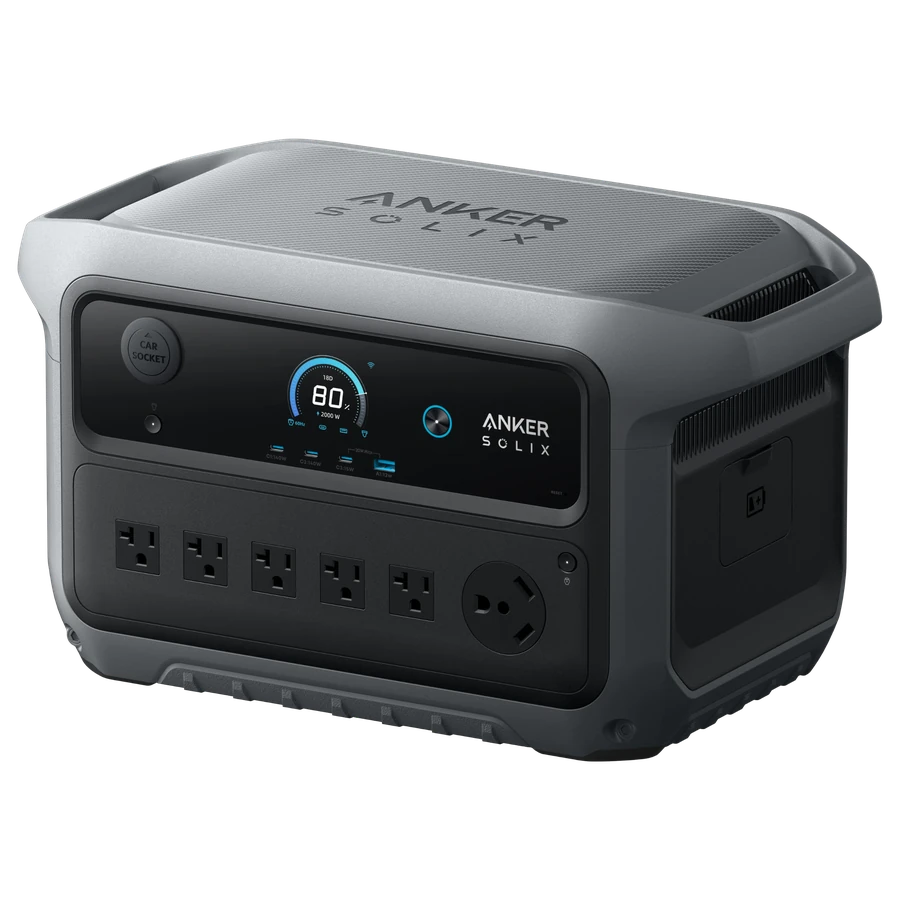
Where it sits in the line
Capacity bars are to scale across the line; prices are each unit’s usual price, not today’s.
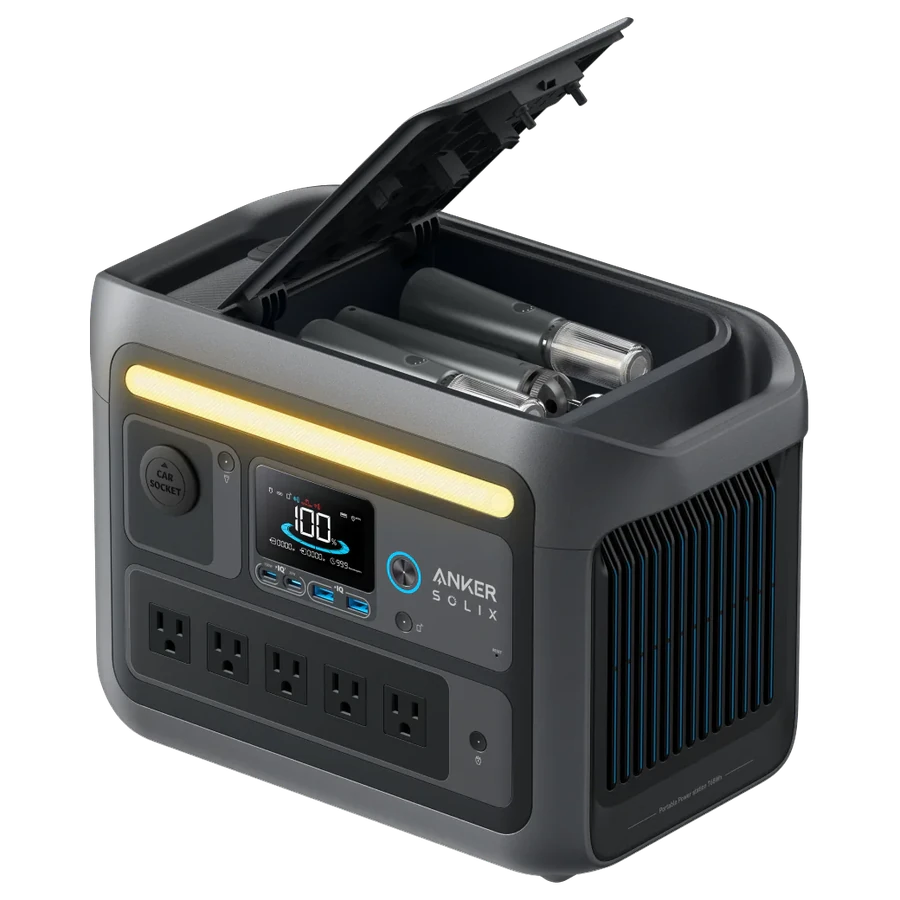
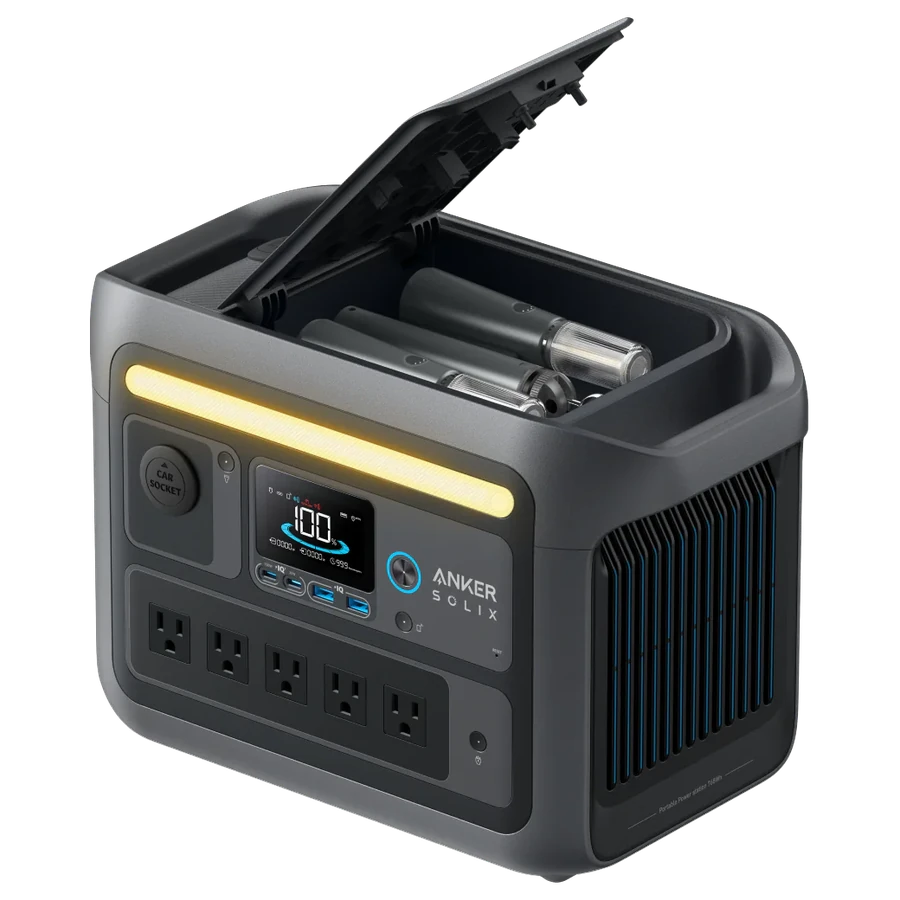
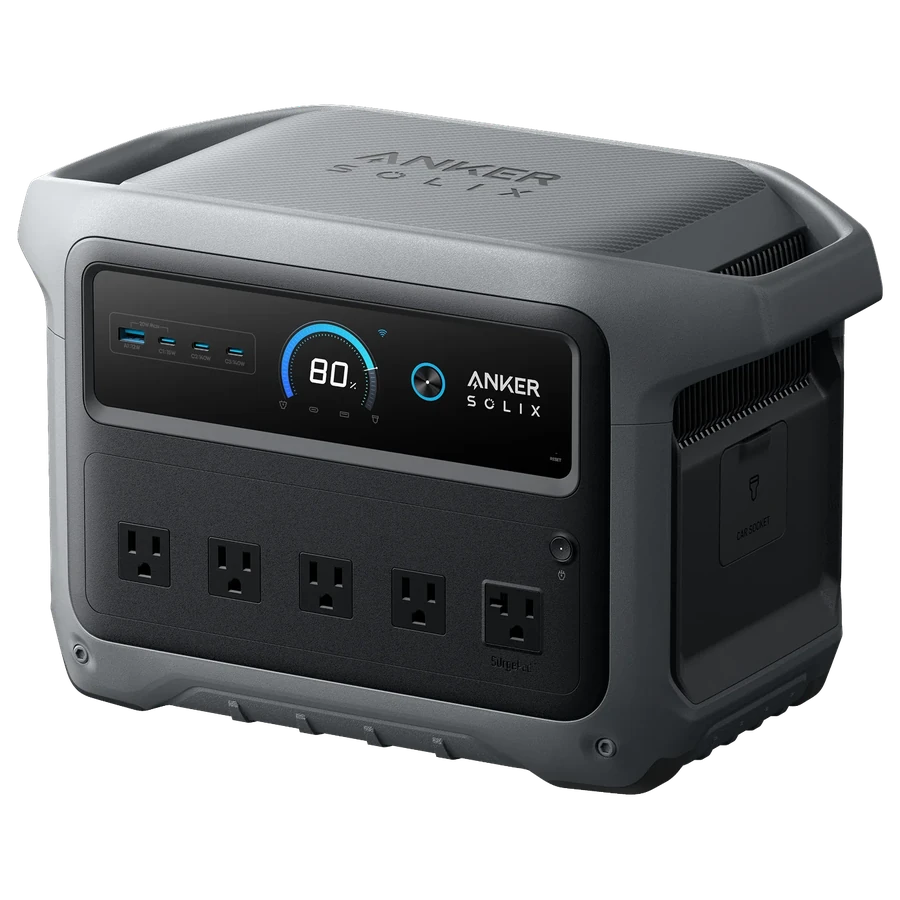
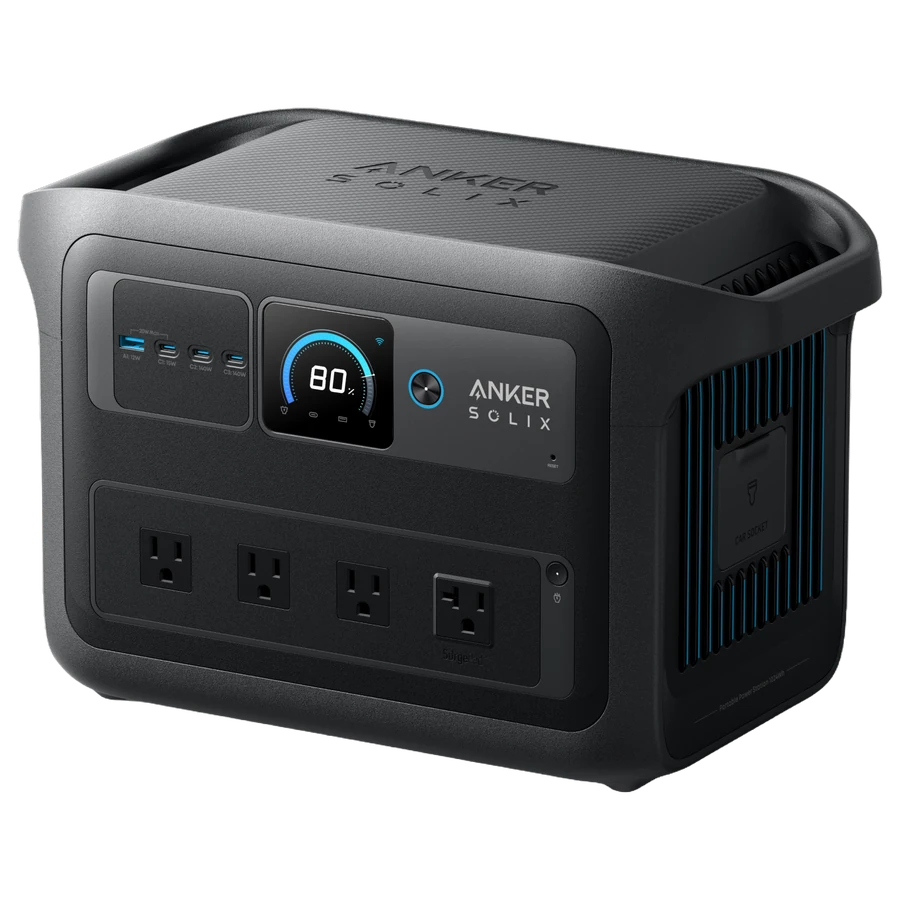
08 · At its usual price
Cost of ownership
Cycle life is the manufacturer’s rating to 80% capacity; the lifetime figure is that rating times the nameplate capacity.
$0.73
per Wh
at $140
$0.24
per lifetime kWh
576 kWh over 3,000 cycles
8.2 yr
if cycled daily
29 yr at weekends only
3 yr
warranty
$47 per covered year
09 · From the matchups
Questions people ask
What solar panels work with the SOLIX C200 DC?
Any panel between 11 V and 28 V, through its XT60 input, up to 100 W. 12 of the 39 panels we track work with it. Our pick: the Renogy 200W Portable Solar Panel Blanket. One panel delivers 100 W, the most the input takes.
Does the Anker SOLIX C200 DC have an AC outlet?
No. It has zero AC outlets, everything runs over USB-C or USB-A, up to a combined 200W. If you need to plug in anything with a standard wall plug, look at the SOLIX C300 instead, which has three AC outlets and 300W of continuous output.
Can the SOLIX C200 DC or C300 run a CPAP overnight?
Not comfortably, on either. A CPAP running all night draws around 320Wh. The C300's 288Wh rated capacity already falls short before real-world losses even factor in, and the C200 DC's 192Wh trails further behind, plus it has no AC outlet to plug a standard CPAP power brick into in the first place. For overnight medical backup, look at a unit with meaningfully more capacity than either of these.
Do the Anker SOLIX C200 DC and C300 DC have an AC outlet?
No. Both are USB-C, USB-A, and DC-only chargers with no AC inverter and no wall outlet. If you need to power anything that plugs into a standard household socket, neither of these works — look at an AC-equipped power station instead.
Can the Anker SOLIX C200 DC or C300 DC run a CPAP machine overnight?
No. A CPAP night draws around 320Wh, which is already more than the C300 DC's entire 288Wh rated capacity — the smaller C200 DC, at 192Wh, falls even further short. Both units are sized for phones, tablets, and small DC gear, not a full night of CPAP use.
How long do the SOLIX C200 DC and C300 DC batteries last?
Both share an identical 3,000-cycle rating and 3-year warranty, so under the same usage pattern they last exactly as long: about 8.2 years if you cycle one daily, or 28.8 years on weekends only. The C300 DC doesn't outlast the C200 DC — it just carries 288Wh through each of those cycles instead of 192Wh.
Some links are affiliate links; they never change the price you pay or which price we show. Owner reports are paraphrased from public comments and link to their source.