Anker · SOLIX E10 series · new release
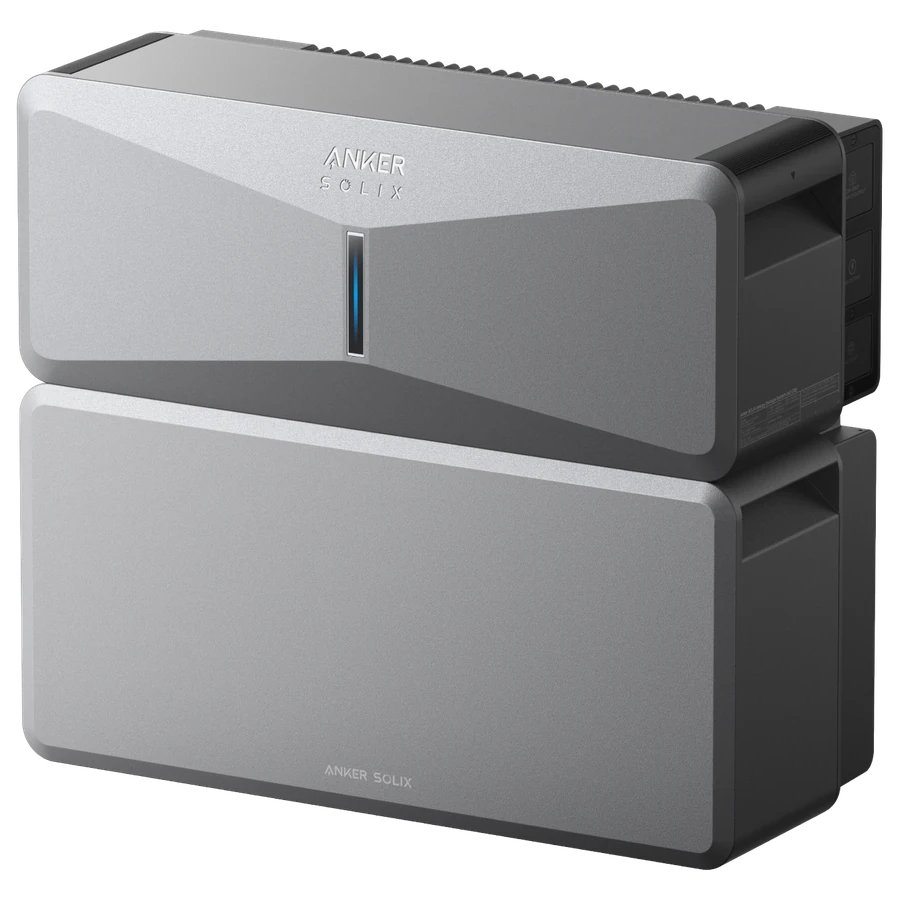
Anker SOLIX E10
Owners of the SOLIX E10 run above the norm and think in roofs, one with twenty panels; reviewers call the handover invisible through storms, and the app trails the Powerwall’s. It is what a power station grows up to be: six kilowatt-hours on a wall, nine kilowatts of solar, and not one socket, feeding the house through the panel.
6.1 kWh · 7,680 W · 190.6 lb · 4,000 cycles · 11 head-to-heads
7,842
Power Score · The AC & Fridge Zone
- 6.1 kWh
- capacity
- 7,680 W
- output
- 190.6 lb
- weight
- 4,000
- rated cycles
Should you buy it right now?
Fair price today: $4,299 is what it normally sells for. It clears 6 of 6 real-world jobs and wins 4 of 11 matchups.

Verdicts by Gunner Gustafson and the Test Desk·Figures computed 2026-10-04
01 · Six real-world jobs
What the SOLIX E10 actually runs
The load profiles every comparison on the site is scored on, computed for this unit alone: energy needed against the usable tank after inverter losses, and whether the inverter holds and starts the biggest single load.
Weekend Camping
Clears it2 nights · Two nights off-grid with essential comfort
2,100Wh needed · 40% of the tank · 3,122Wh spare
Peak 75W: starts and holds
8-Hour Blackout
Clears it8 hours · Keep the essentials running through a night without power
1,645Wh needed · 31% of the tank · 3,577Wh spare
Peak 150W: starts and holds
CPAP Overnight
Clears it8 hours · Sleep therapy without interruption — the #1 medical use case
320Wh needed · 6% of the tank · 4,902Wh spare
Peak 40W: starts and holds
Remote Workday
Clears it8 hours · Full work day off-grid without power anxiety
910Wh needed · 17% of the tank · 4,312Wh spare
Peak 60W: starts and holds
Tailgate Party
Clears it4 hours · Game day power for the crew
670Wh needed · 13% of the tank · 4,552Wh spare
Peak 400W: starts and holds
Van Life Daily
Clears it24 hours · A full day of mobile living — the ultimate endurance test
4,685Wh needed · 90% of the tank · 537Wh spare
Peak 150W: starts and holds
02 · Head-to-head record
4 wins in 11 written matchups
Every matchup is a full verdict scored on the six jobs above plus price, longevity and portability. This is the set shoppers search for, not a random sample.
Win share
4–6–1
- vs EcoFlow1–4
- vs Anker1–1–1
- vs BLUETTI1–1
- vs Jackery1–0
 wins
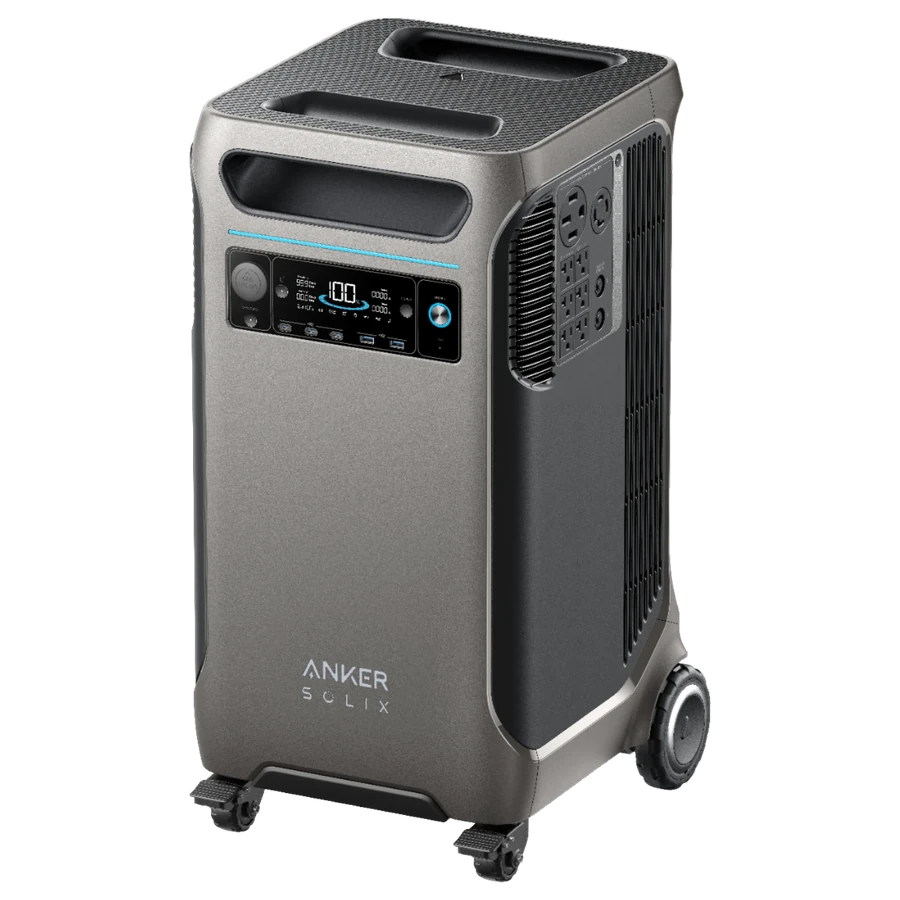
winsSOLIX E10 vs Anker SOLIX F3800 PLUS
331 searches reached this matchup
 loses
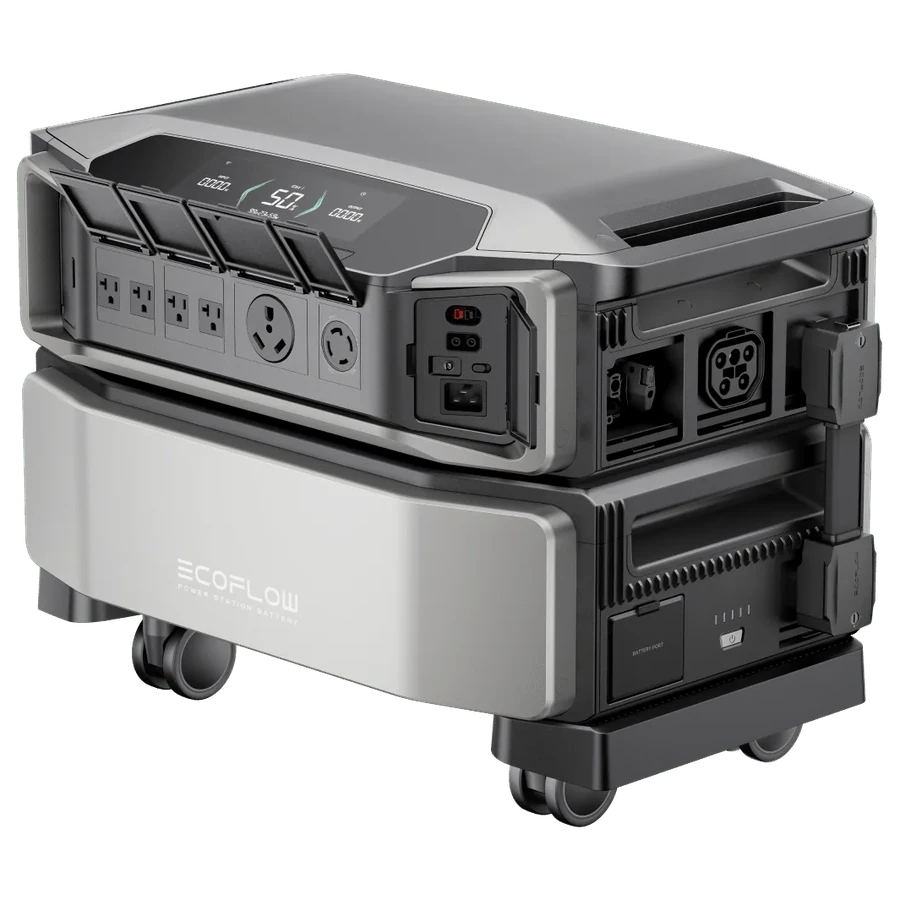
losesSOLIX E10 vs EcoFlow DELTA Pro Ultra
223 searches reached this matchup
 tie
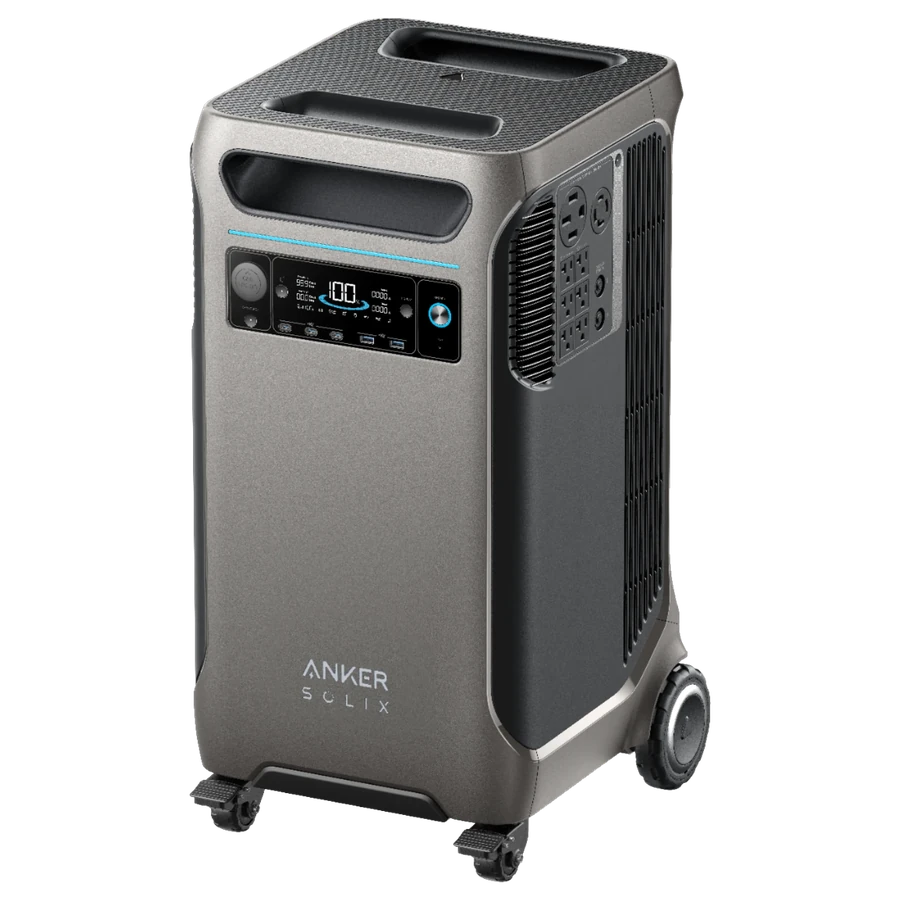
tieSOLIX E10 vs Anker SOLIX F3800
166 searches reached this matchup
 loses
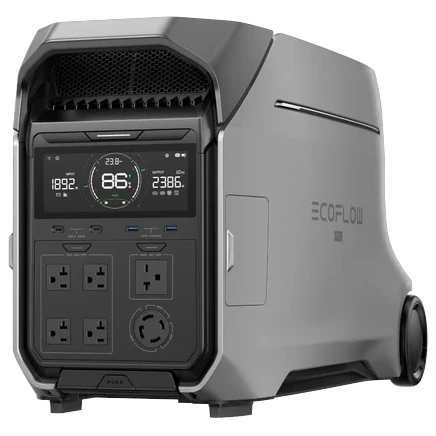
losesSOLIX E10 vs EcoFlow DELTA Pro 3
124 searches reached this matchup
 wins
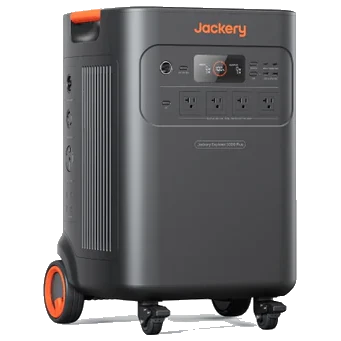
winsSOLIX E10 vs Jackery Explorer 5000 Plus
74 searches reached this matchup
 loses
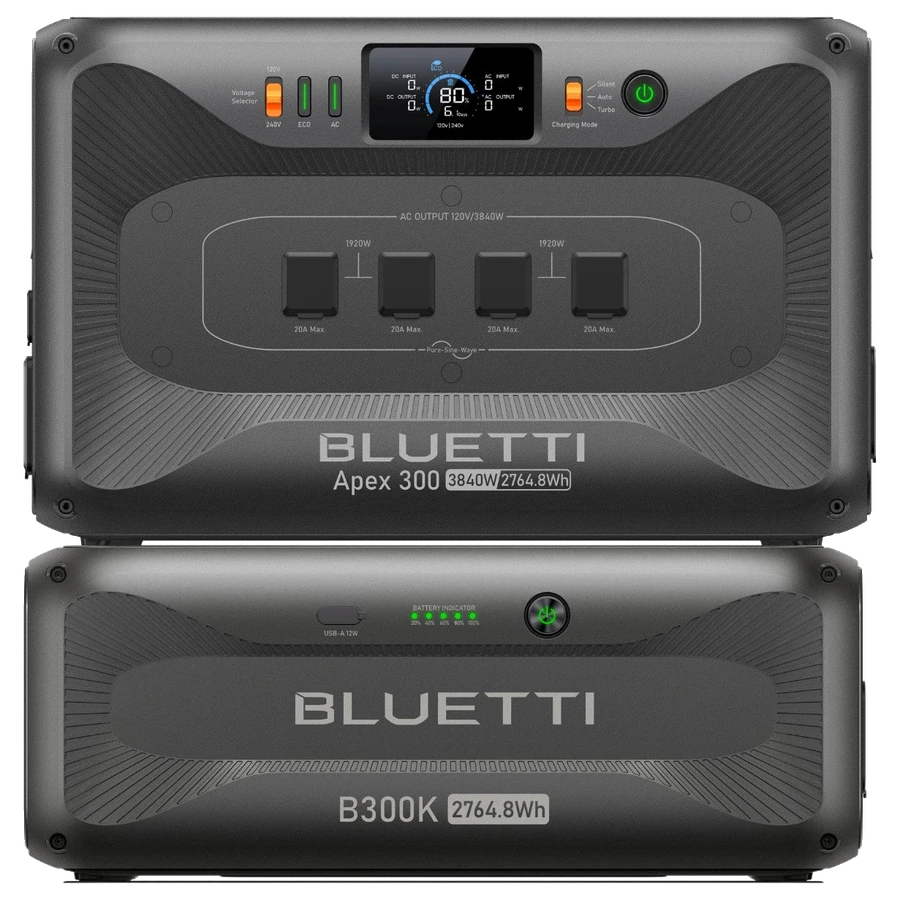
losesSOLIX E10 vs BLUETTI Apex 300 + B300K
51 searches reached this matchup
03 · From the verdicts
Who it is for, and when a rival won instead
Each line is lifted from a written matchup where it decided the verdict, and links to the page it came from. Repeated across many matchups means it is the unit’s signature, not one author’s opinion.
Buy the SOLIX E10 if…
You want the bigger, longer-lived bank: 6,144Wh, 4,000 cycles, and a 9,000W solar ceiling to feed a growing array.
Decided 5 matchups · read one →
You're backing up a whole house at the panel and want it automatic — the E10 wires in, holds up through real storms [A4][A5], and runs silent on passive cooling [A9].
Decided 2 matchups · read one →
A home with rooftop solar beyond 8,000 W, where the E10's 9,000 W input earns its keep.
Decided 2 matchups · read one →
You're ready to hardwire permanent whole-home backup to your panel and want it invisible: silent, no outlets to trip over, and switchover you'll never feel [A4][A9].
A rival won when…
You want to spend about half as much for a 3,840Wh unit that two people can still move.
Decided 3 matchups · read one →
You want serious outage backup and don't mind plugging the fridge, freezer and router into it, or having an electrician wire up the L14-30R side.
Decided 2 matchups · read one →
You want the $1,700 back for panels. At a 2,400W input ceiling, the Apex's ceiling is one you can actually afford to reach.
Decided 2 matchups · read one →
You'd rather keep the $1,699 than pay for capacity and cycle life you won't deep-cycle as occasional backup.
04 · Price history
What the SOLIX E10 actually sells for
The number on the buy button, read twice a day, one point per day. Never the sticker, never a “was” price.
Read from us.ankersolix.com twice a day since July 18 · 79 days
Carried on 100% of days tracked · dips reach $4,299
Built from the Oct 4, 7 PM UTC read.
$4,299
Usual price
100% of days tracked
$4,299
Best we've seen
October 4
$4,299
Today
at usual
$4,299
Highest seen
0 days above usual
How to read this
- Usual is the price the unit carried most of the time, tested for how long it held rather than how often we looked. A weekend promotion cannot move it.
- Best is the lowest price we have read on the store itself. Typed coupon codes, member-only prices and marketplace listings are not counted; anything applied automatically at checkout is.
- A gap in the line is a day we could not read a price. We never draw across one, and we never show the store’s own “was” price.
Method on the methodology page.
Share the numbers
Anker SOLIX E10: usually $4,299, best $4,299 (Oct 4), today $4,299 on us.ankersolix.com. Tracked twice a day since Jul 18. https://stationarena.com/products/anker-solix-e10#price-history
Alerts for the SOLIX E10
One email when it drops below $4,299, comes back in stock, or a newer model in this line appears. Nothing else.
By subscribing, you agree to our Privacy Policy.
Black Friday · 38 days out
Will the Anker SOLIX E10 go on sale for Black Friday?
Price to beat $4,299Nobody knows until Anker SOLIX moves, but in 79 days we have tracked it, it has never been discounted, so any real cut would be a first. We read the store twice a day, and the moment it drops it shows on our Black Friday deals page.
05 · Voices
What 37 owner reports say about the SOLIX E10
Owner reports are paraphrased from public YouTube comments and each links to its source; reviewer consensus is counted from cited excerpts, never quoted; our own verdicts are quoted. Specs on this page never come from any of them.
- 63%
- positive
- 16
- self-declared owners
- 4
- measured reports
- 16
- videos
- 56%
- Anker norm
- 2026–2026
- reporting period
22 for, 13 against
tenure rarely stated
numbers, not impressions
5 channels
across 687 reports
2026-01-17 to 2026-08-11
Weighted read
68% positive weighted · corpus 51% · above the norm
Raw counts reward whoever writes most, and people write when something breaks. Here each report is weighted by what the complaint costs a buyer (a failure outranks an app gripe) and by its evidence (a measured owner report outranks a shopper’s opinion), then compared with every report in the corpus.
- Failures, returns, support2 against · 2 for
- How it performs4 against · 9 for
- How it feels to use7 against · 11 for
By topic, against the Anker norm
Bars count this unit’s reports; the tick is the share of positive reports for the same topic across every Anker unit in the corpus.
- Price & value2 measured64% positive · brand 67%47
- Build quality60% positive · brand 67%23
- Support & warranty1 measured50% positive · brand 63%22
- General75% positive · brand 61%13
- App & firmware33% positive · brand 52%21
- Expandability100% positive · brand 53%2
- Solar input1 measured50% positive · brand 37%11
- Capacity & runtime100% positive · brand 84%2
- Charging speed100% positive · brand 48%1
- Idle drain0% positive · brand 31%1
left: negative · right: positive
When the reports were made
What owners compare it against
What owners praise
Price & valuemeasuredowner
Came in $2,050.68 below the equivalent EcoFlow package for two inverters and five batteries.
Minute Man Solar· 13 likessource
Solar inputmeasuredowner
Supports his 20-panel roof array, unlike the DPU's 5kW solar limit.
City Prepping· 5 likessource
Capacity & runtimeowner · 1 mo
Has run their house for the last month and it is amazing despite lower specs than the Ultra.
Minute Man Solar· 23 likessource
What owners complain about
Support & warrantymeasuredowner
Support took over 2 days to reply; he solved the setup bug himself first.
The Solar Lab· 43 likessource
App & firmwareowner
Firmware update failed on the combined E10 + Power Dock setup; had to separate units to update.
The Solar Lab· 43 likessource
Idle drainowner
Inverter slowly discharged on standby load while setup was stuck.
The Solar Lab· 43 likessource
Reviewer consensus
3/12 positive excerpts, 4 sources
Reviewers across multiple independent outlets and a live install thread consistently flag the Solix app as the E10's weakest link — serviceable for basic setups but short on the depth, clarity, and configurability of rivals like Tesla Powerwall.
appleinsider.com · gizmodo.com · thesolarlab.com · diysolarforum.com · researched 2026-07-17
Anker, brand-wide
56% positive across 687 reports. The brand-wide complaint is durability & failures (65% negative); the brand-wide praise is capacity & runtime (84% positive).
From the test desk
“Buy the E10 if you're wiring permanent whole-home backup to your panel and will cycle it daily.”
“Take the DELTA Pro Ultra unless you're building a big off-grid solar array.”
“This is a class split, not a spec race.”
06 · Where each number comes from
Spec sheet, in four cards
Every field carries its source: green is the manufacturer’s own document, blue was adjudicated after sources disagreed, grey is the catalogue as imported. Then compare it line by line with the units people actually weigh it against.
Battery
6144
Capacity (Wh)
- ChemistryLiFePO4
- Charging Cycles4000
- Battery Expansion FeasibilityYes
Power out
7680
Output (W)
- Surge Peak10000W (90 min)
- AC OutletsHardwired (120/240V)
- 240V OutletsHardwired
- 30A RV Outlets0
- 12V Car Outlets0
- USB-C Ports0
- USB-A Ports0
- USB-C Charging Outputs0
Charging
9000
Solar Input (W)
- Solar Input TypeDual MPPT (30-450V)
Living with it
190.6
Weight (lbs)
- Noise Level (db)Not Specified
- UPSYes (<20ms)
- App ControlYes
- Warranty (Years)5
Compare it with
SOLIX E10 vs
leads on 6 · trails on 3
| Spec | SOLIX E10 | SOLIX F3800 PLUS | Gap |
|---|---|---|---|
| Usual price | $4,299 | $2,600 ● | +$1,699 |
| Capacity (Wh) | 6144 ● | 3840 | +2304 |
| Output (W) | 7680 ● | 6000 | +1680 |
| Surge (W) | 10000W (90 min) ● | 9000W | +991090 |
| Rated cycles | 4000 ● | 3000 | +1000 |
| Solar input (W) | 9000 ● | 3200 | +5800 |
| Weight (lb) | 190.6 | 132.3 ● | +58.3 |
| Noise (dB) | Not Specified | N/A | |
| AC outlets | Hardwired (120/240V) ● | 6 | +120234 |
| USB-C ports | 0 | 3 ● | -3 |
| Warranty (yr) | 5 | 5 | 0 |
| Chemistry | LiFePO4 | LiFePO4 | |
| UPS | Yes (<20ms) | Yes (<20ms) |
● marks the better figure where direction is clear. Price is each unit’s usual price.
Read the full verdict →Solar
Charge the SOLIX E10 from the sun
Every panel we track, checked against its solar input: which ones fit, the adapter each needs, and what it really delivers.
- Solar input
- 9000 W
- Plug
- Other:PV Connector Ports
- Panels that work
- 30 of 39
- Refill at full sun
- ~0.7 h
07 · Anker SOLIX E10 line
Where it sits in the line
Capacity bars are to scale across the line; prices are each unit’s usual price, not today’s.
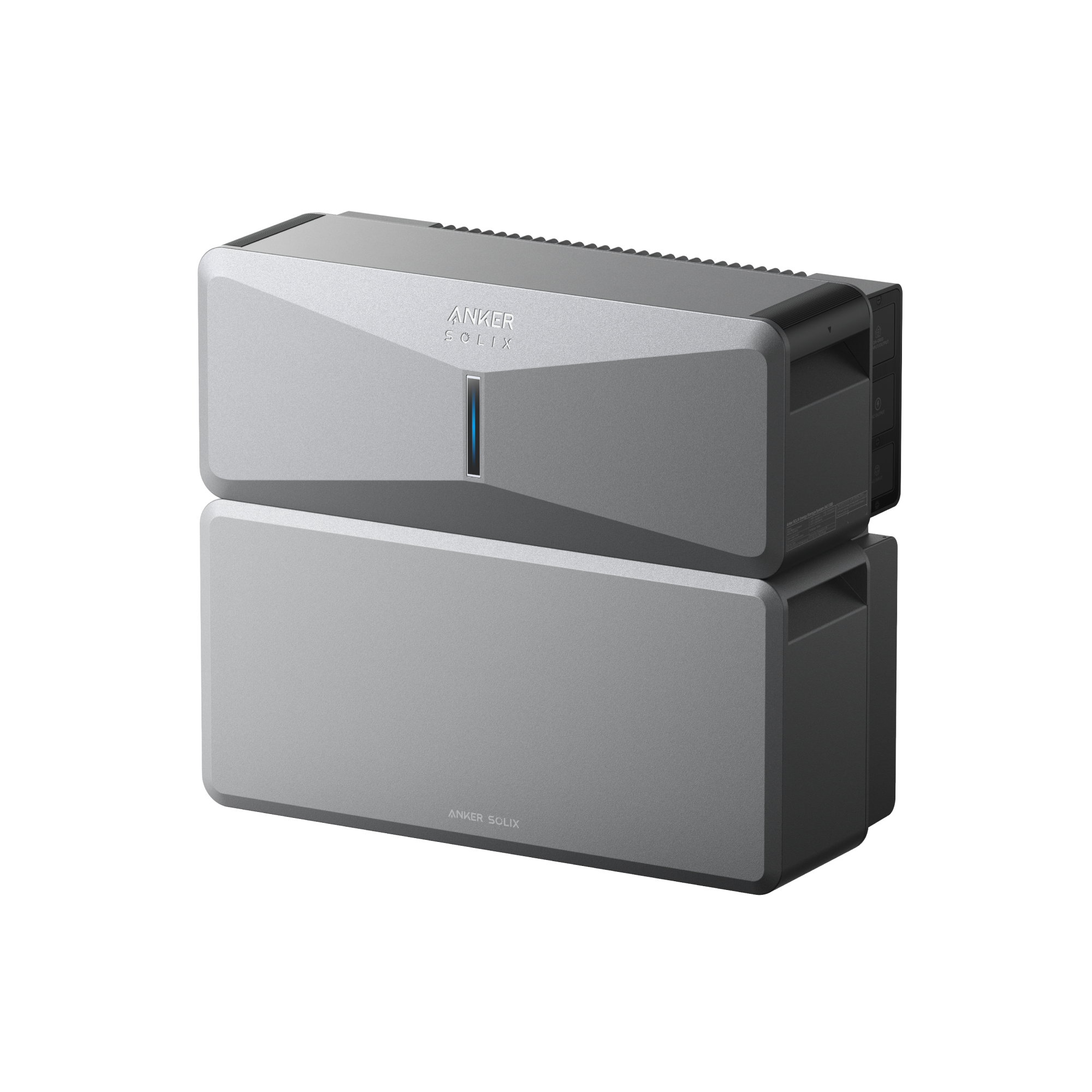
SOLIX E10
6.1 kWh · $4,299
SOLIX E10 + 2×B6000
12.3 kWh · $6,299
SOLIX E10 + 3×B6000
18.4 kWh · $8,299
SOLIX E10 + 4×B6000
24.6 kWh · $10,299
2×SOLIX E10 + 4×B6000 + Power Dock
24.6 kWh · $14,098
SOLIX E10 + 5×B6000
30.7 kWh · $12,299
2×SOLIX E10 + 6×B6000 + Power Dock
36.9 kWh · $18,098
2×SOLIX E10 + 8×B6000 + Power Dock
49.2 kWh · $22,098
2×SOLIX E10 + 10×B6000 + Power Dock
61.4 kWh · $26,098
Not yet on sale: Anker’s second S-series power station: 5,024 Wh, 4,500 W and 240 V split-phase in a 97 lb wheeled cabinet, expandable to 30 kWh, for a $2,499.99 launch price. Anker SOLIX S5000: $2,499.99 Launch Price, Specs, Weight, Oct 27
08 · At its usual price
Cost of ownership
Cycle life is the manufacturer’s rating to 80% capacity; the lifetime figure is that rating times the nameplate capacity.
$0.70
per Wh
at $4,299
$0.17
per lifetime kWh
24,576 kWh over 4,000 cycles
11.0 yr
if cycled daily
38 yr at weekends only
5 yr
warranty
$860 per covered year
09 · From the matchups
Questions people ask
What solar panels work with the SOLIX E10?
Any panel between 30 V and 450 V, through its Other:PV Connector Ports inputs (2), up to 9000 W. 30 of the 39 panels we track work with it. Our pick: the Anker SOLIX 440W Rigid Solar Panel. 20 panels deliver 6336 W.
Is the Anker SOLIX E10 or F3800 Plus better for whole-home backup?
The E10 is purpose-built for it. It wires into your breaker panel, backs up the building, and switches over so fast that reviewers didn't notice outages had happened [A4]. The F3800 Plus can do whole-home too, but only when connected to a whole-home setup [B3]; on its own it's a standalone box with outlets. If a permanent wired install is the goal, the E10 is the cleaner answer.
Is the Anker SOLIX E10 or the EcoFlow DELTA Pro Ultra cheaper to run over its lifetime?
The Anker, narrowly — about $0.17 per lifetime kWh against $0.19 for the EcoFlow, because it's rated for 4,000 charge cycles to EcoFlow's 3,500. Over a full life it banks more total energy, 24,576 kWh to 21,504. The catch is coverage: Anker warranties only five years to EcoFlow's ten, so some of that cheaper late-life energy falls outside its guarantee.
Why doesn't Anker list a noise level for the SOLIX E10?
Because there's no fan to rate. The E10 is a high-voltage, passively cooled system — heat fins instead of fans — so it runs silent and there's no fan curve to disclose [B9]. The EcoFlow is silent at low draw and then spins up fans toward its 30 dBa rating [A3]. The blank spec looks like an omission but is closer to the opposite.
Is it risky to buy the SOLIX E10 this early?
A little. It's a new SKU, and pre-release reviewers already hit a firmware bug that fails mid-install with no recovery path [B11] and snapped a plastic battery handle during normal handling [B7]. Day-to-day operation reads as solid, but a five-year warranty on a brand-new whole-home system carries more unknowns than EcoFlow's ten years on a proven one. Buying from a retailer with a strong return window is cheap insurance.
Is the Anker SOLIX E10 portable?
No. It's a hardwired whole-home system that installs at your electrical panel, and at 190.6 lbs with no outlets on the box, it isn't something you move or plug devices directly into. If you want a unit you can carry or set on a bench, the F3800 or a smaller portable is the class to shop.
Some links are affiliate links; they never change the price you pay or which price we show. Owner reports are paraphrased from public comments and link to their source.