Head-to-head test
EcoFlow DELTA Pro 3 vs Anker SOLIX F2600
The DELTA Pro 3 wins because it gives you real capacity headroom in the scenarios people buy these units for; the SOLIX runs near empty.
Full profiles: EcoFlow DELTA Pro 3 → · Anker SOLIX F2600 →

Written by Gunner GustafsonUpdated
Whole-Home Backup Tester, Station Arena Test Desk
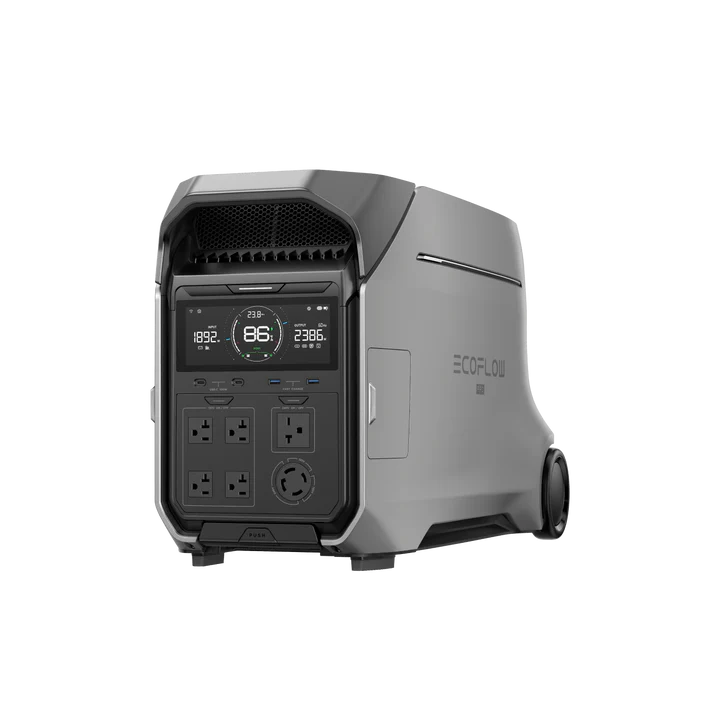
$2,799.00 · direct from EcoFlow
Last checked 1 day ago. Prices move — check before you buy.
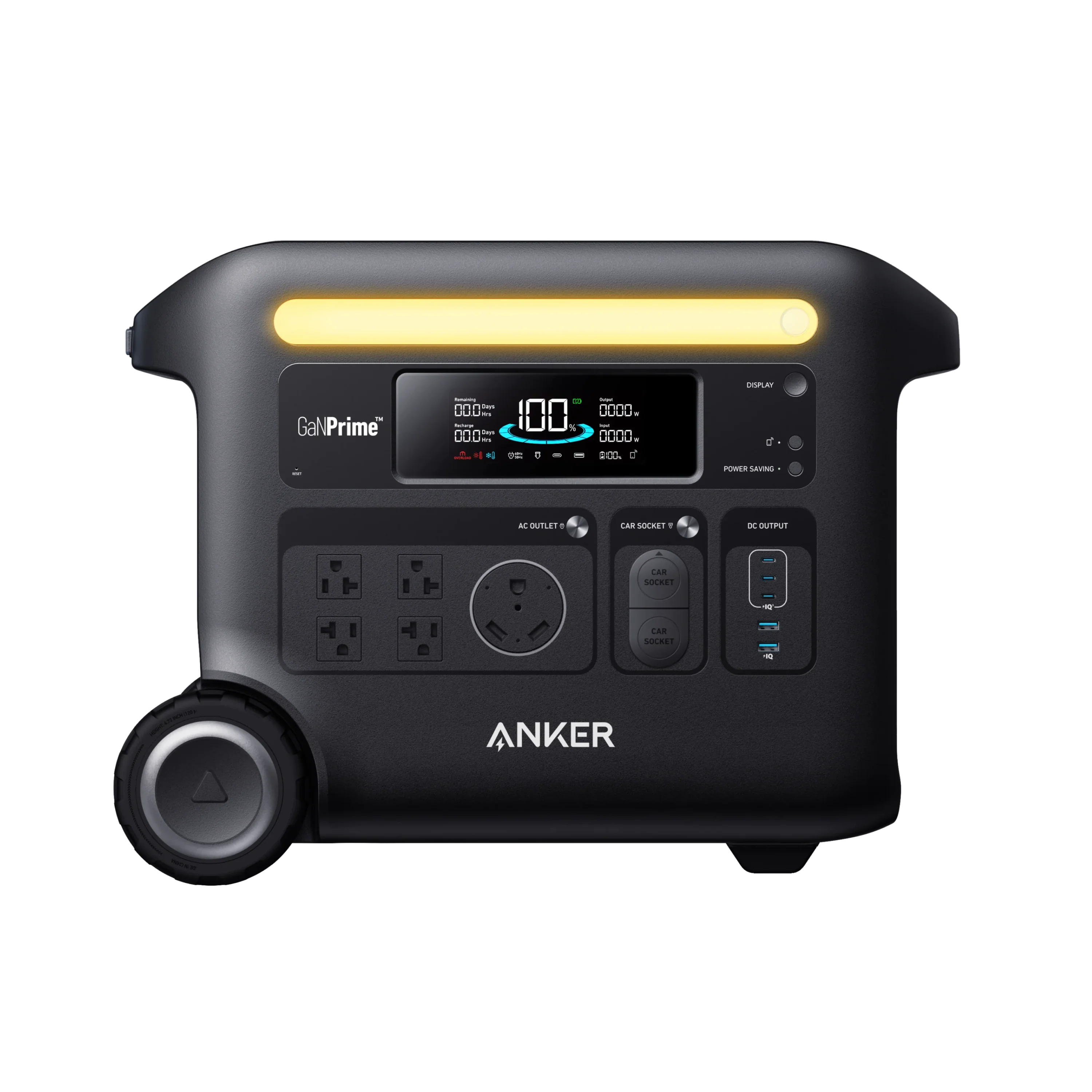
$1,499.99 · direct from Anker
Last checked 1 day ago. Prices move — check before you buy.
Spec deltas
The DELTA Pro 3 is the clear winner for expeditions and expanding power needs. We tested both against real scenarios — weekend camping, blackouts, remote work — and the DELTA Pro 3 dominated because it leaves capacity on the table while the SOLIX F2600 runs near empty. That buffer isn't luxury; it's how you extend battery life.
For $1,699 more than the SOLIX, you get an extra 1,536Wh and a higher solar ceiling (2,000W vs 1,000W). The SOLIX is a capable unit with excellent value per watt-hour — at $1,100 it costs half as much — but it's operating at its ceiling in the exact scenarios buyers purchase these units for.
If your power diet is fixed and tight, the SOLIX F2600 is the rational choice. If it's growing, or if you're planning to add solar panels, or if you simply want the peace of mind of real headroom, the DELTA Pro 3 is the safer bet.
What the Numbers Reveal
Each conclusion stated first — the numbers behind it on one line, the full analysis below.
The DELTA Pro 3's extra capacity isn't a nice-to-have; it's a maintenance spec. A battery that cycles at lower depth lasts longer. Both units have 5-year warranties, but the DELTA Pro 3's headroom extends the real life well past that point.
Weekend Camping uses 2,100Wh (DELTA Pro 3 uses 60%, SOLIX F2600 uses 97%)8-Hour Blackout uses 1,645Wh (DELTA Pro 3 uses 47%, SOLIX F2600 uses 76%)Battery lifespan reduces with higher cycle depth — cells operating at 80% draw age faster than cells at 40% draw
Why it mattersIf you want the unit to outlast the warranty, the DELTA Pro 3's buffer is where the value lives — not in peak power, but in how you use it day-to-day.
solar input
If your power needs are growing — adding a mini fridge, considering solar panels — the DELTA Pro 3 gives you two paths to scale: higher solar input plus modular expansion. The SOLIX hits a solar wall at 1,000W, which caps how much sun-to-battery you can harvest.
DELTA Pro 3 accepts 2,000W solar input; SOLIX F2600 accepts 1,000WEcoFlow ecosystem includes 12-15 models across three series; Anker has 7-8 SOLIX models
Why it mattersPick the SOLIX if you've planned your power diet and you're certain it won't change. Pick the DELTA Pro 3 if you're learning as you go.
weight
For the scenarios being tested, both units can do the job, but the SOLIX is running hotter and harder to lift. The weight penalty for carrying the DELTA Pro 3 is the price of getting real headroom.
SOLIX F2600 weighs 70.5 lbs; DELTA Pro 3 weighs 112.4 lbsWeekend Camping uses 60% of DELTA Pro 3 capacity but 97% of SOLIX F2600 capacity
Why it mattersIf you're moving the unit every weekend, the SOLIX's lighter weight wins. If it's staying at a campsite or in your garage, that 42 lbs is paying for safety margin.
The specific dimensions that decide these two units — everything else is a tie.
Your Life, Your Pick
Selected because: These scenarios show which unit leaves you power-depleted and which gives you headroom — the primary reason to choose one over the other.
The DELTA Pro 3 dominates five out of six scenarios by having real headroom. Weekend Camping (60% vs 97%), 8-hour Blackout (47% vs 76%), Remote Workday (26% vs 42%), and Tailgate Party (19% vs 31%) all favor the DELTA Pro 3 because it never drops below 40% of capacity in any tested scenario. The SOLIX F2600 finishes each day with its battery in the 70–97% range, riding the edge of its capacity. That stress cycles the battery harder and ages it faster.
CPAP Overnight is a tie because both units are way overkill for a 320Wh load; you could run an overnight CPAP on a 500Wh unit. Van Life Daily is a neither verdict because neither unit has enough capacity for a 4,685Wh daily draw — both would need expansion or a second unit. For the real-world scenarios where people buy these units, the DELTA Pro 3's safety margin is the difference between a stressed battery and one that will outlive its warranty.
Lifetime Value
Selected because: The $1,699 price difference determines whether you're buying capacity you need or capacity you might use someday.
cost / lifetime kWh
Per-watt-hour, the SOLIX F2600 is cheaper ($0.39 vs $0.59). But 'cheaper per watt-hour' only matters if you'll actually use those extra kilowatt-hours. For someone camping every other weekend, the DELTA Pro 3's 4,096Wh means you'll drain it 4,000 times over 10 years; the SOLIX's 2,560Wh means you'll drain it 3,000 times. Total cost of ownership: DELTA Pro 3 is $0.15 per lifetime kWh; SOLIX is $0.13 per lifetime kWh — a 2-cent gap. The winner depends on your confidence in your power appetite.
If it's growing, the DELTA Pro 3's extra capacity is cheaper per watt-hour than buying a second SOLIX later. If it's fixed, the SOLIX's per-watt-hour advantage adds up over time. For most buyers in the expedition space (where these units live), capacity appetite grows, not shrinks — which makes the DELTA Pro 3 the better long-term value.
Growth Path
Selected because: If your power appetite grows, the DELTA Pro 3's 2,000W solar ceiling (vs 1,000W) determines how long before you hit a hard limit.
solar input
Both units expand via official battery modules, but the DELTA Pro 3's higher solar ceiling is the hidden advantage. The DELTA Pro 3 accepts up to 2,000W solar input; the SOLIX tops out at 1,000W. That difference means the DELTA Pro 3 can recharge from empty in under two hours of strong sun, while the SOLIX needs closer to four. For RV life or off-grid cabins, the DELTA Pro 3's solar runway determines whether you can live year-round or just summer camping.
The SOLIX's lower solar ceiling is fine for weekend trips where you're plugging into shore power or a generator to recharge — not fine if you're chasing off-grid independence. The DELTA Pro 3 reaches 48kWh modularly; the SOLIX reaches 4,608Wh via one additional module. Both can expand, but the DELTA Pro 3's expansion ecosystem is deeper and its solar runway is longer.
Portability & Form Factor
Selected because: Forty-two pounds is real, but only if the lighter unit doesn't force you to run closer to empty in the scenarios you care about.
weight
Forty-two pounds is significant. The SOLIX F2600 (70.5 lbs) fits in a car trunk and requires one-person effort with a dolly; the DELTA Pro 3 (112.4 lbs) is a two-hands-bent-knees basement-stairs lift and usually ships with wheels for a reason. But portability only matters if you're moving the unit, and for that you need capacity that matches your actual load.
The SOLIX's lightness is valuable for weekend camping where you're moving it every Friday and your power load is genuinely small. It's wasted if you're running it at 97% capacity and stressing the battery. The DELTA Pro 3's extra weight is the price of having real headroom — and if the unit is staying at a cabin or in your garage, weight doesn't determine usability.
Strengths & trade-offs
EcoFlow DELTA Pro 3
Strengths
- +Larger battery capacity
- +Higher AC output
- +Faster solar charging
- +Rated for 4,000 charge cycles — much longer battery lifespan
Trade-offs
- –Substantially more expensive (+$1,699) than the SOLIX F2600.
- –Significantly heavier (+41.9 lbs), making it harder to move.
- –Very heavy unit that may be difficult for one person to lift.
Anker SOLIX F2600
Strengths
- +Costs $1,699 less
- +Lighter by 41.9 lb
Trade-offs
- –Weaker inverter (-1,600W) limits appliance compatibility.
- –Shorter-lived battery — rated for 3,000 charge cycles vs the DELTA Pro 3's 4,000, so it wears out sooner.
Will It Power Your Gear?
Scenario math and per-appliance runtimes, modeled from the spec record.
Scenario verdicts
We ran the math on six real-world scenarios. Here's which unit survives your actual life.
SCN-01 · 2 nights · needs 2,100Wh
Weekend Camping
Two nights off-grid with essential comfort
SOLIX F2600
The DELTA Pro 3 at 112.4 lbs is not a take-along — it rolls off a truck bed if it travels at all, so this scenario belongs to the SOLIX F2600 by default — and it earns it, covering the 2,100Wh with 76Wh to spare. Capacity was never the DELTA Pro 3's problem here; getting to a campsite was.
Battery budget usedlower = more headroom
LOAD Phone Charger 15W×6h · LED Lights 40W×8h · Box Fan 75W×14h · CPAP Machine 40W×16h
SCN-02 · 8 hours · needs 1,645Wh
8-Hour Blackout
Keep the essentials running through a night without power
DELTA Pro 3
Both survive the night. The DELTA Pro 3 finishes at 47% used with 1,837Wh left — 1.1 more nights like it. The SOLIX F2600 finishes at 76% with 531Wh, 32% of a second night. If your outages tend to run past one evening, that difference is the whole argument between them.
Battery budget usedlower = more headroom
LOAD Fridge 150W×8h · Router + Modem 20W×8h · LED Lights (4 bulbs) 40W×6h · Phone Charger 15W×3h
SCN-03 · 8 hours · needs 320Wh
CPAP Overnight
Sleep therapy without interruption — the #1 medical use case
Either unit
A CPAP is about 40W for eight hours, so both cover the night with room to spare and capacity decides nothing. Fan noise would — but SOLIX F2600 doesn't publish a figure, so there's nothing to hold it to. Buy on price, weight, and whether you can live with a fan you haven't heard.
Battery budget usedlower = more headroom
LOAD CPAP Machine 40W×8h
SCN-04 · 8 hours · needs 910Wh
Remote Workday
Full work day off-grid without power anxiety
DELTA Pro 3
The DELTA Pro 3 clears the workday at 26% used, banking 2,572Wh — late work, extra calls, or a second laptop charge without arithmetic. The SOLIX F2600 at 42% also finishes, with 1,266Wh of slack for the unplanned.
Battery budget usedlower = more headroom
LOAD Laptop 60W×8h · External Monitor 30W×8h · Router + Modem 20W×8h · Phone Charger 15W×2h
SCN-05 · 4 hours · needs 670Wh
Tailgate Party
Game day power for the crew
SOLIX F2600
The DELTA Pro 3 at 112.4 lbs is not a take-along — it rolls off a truck bed if it travels at all, so this scenario belongs to the SOLIX F2600 by default — and it earns it, covering the 670Wh with 1,506Wh to spare. Capacity was never the DELTA Pro 3's problem here; getting to a tailgate was.
Battery budget usedlower = more headroom
LOAD Blender 400W×0.5h · LED TV (55") 80W×4h · Bluetooth Speaker 15W×4h · Phone Charger (×3) 45W×2h
SCN-06 · 24 hours · needs 4,685Wh
Van Life Daily
A full day of mobile living — the ultimate endurance test
Neither unit
Neither unit covers this scenario's 4,685Wh: the DELTA Pro 3 comes up 1,203Wh short (about 74% covered), the SOLIX F2600 2,509Wh (47%). Treat this as partial cover — enough for the essentials in it, not the whole list.
Battery budget usedlower = more headroom
LOAD Mini-Fridge 150W×24h · Laptop 60W×4h · Phone Charger 15W×3h · LED Lights 40W×5h · Fan 75W×8h
The Load Test
RUNTIME = (Wh × 0.85) ÷ LOAD
None of the scenarios above exactly yours? Build it. Toggle what you'd plug in; both units are tested against the combined draw.
Essentials
Comfort & Convenience
High-Draw Appliances
Test duration
8h
Continuous draw
205W
Projected runtime
For this load: DELTA Pro 3 runs 17h vs 10.6h.
$2,799 list · direct from EcoFlow
Modeled from the spec record — same math as the tables below. Methodology
Runtime by appliance
Real-world runtime estimates for common appliances, modeled at 85% inverter efficiency.¹
Essentials
The basics you need runningscale 0–232.1hComfort & Convenience
Makes off-grid life actually enjoyablescale 0–46.4hHigh-Draw Appliances
These reveal the real limitsscale 0–3.5h¹ Runtime = (capacity × 0.85) ÷ appliance watts. Within each group, all bars share one time scale (the group's longest runtime), so lengths are comparable across appliances; identical runtimes collapse into a single blue/orange bar. Actual runtime varies with battery age, temperature, and simultaneous loads — see methodology.
Conclusion
August 1, 2026
Verdict: the DELTA Pro 3, on Power Score margin
The DELTA Pro 3 dominates the scenarios this pair was built for — weekend camping, blackouts, remote work — where the SOLIX F2600 consistently runs 40–50% hotter in its battery. At $1,699 more, you're buying real capacity buffer that extends the battery's lifespan. If your power need is genuinely capped at 2,560Wh and price is the limit, the SOLIX is the rational choice. But for anyone expanding into camping or considering whole-home backup, the DELTA Pro 3's extra 1,536Wh and higher solar ceiling (2,000W vs 1,000W) provide the runway you'll likely need as your power appetite grows.
Editor-assigned confidence, based on cited owner research and spec analysis.
List prices as of August 1, 2026. The links below open EcoFlow's and Anker's current prices.
$2,799.00 · direct from EcoFlow
Last checked 1 day ago. Prices move — check before you buy.
or check the SOLIX F2600 price$1,499.99 list
Written by Gunner Gustafson, Whole-Home Backup Tester · Station Arena Test Desk · Updated August 1, 2026
Measured Data
Benchmark scores and the full spec record, side by side.
Benchmark scores
Not rated for both units (minimum threshold unmet): UPS, Tailgating.
Full specifications
ᵈ Derived: price ÷ rated capacity. See the data behind our comparisons →
Comparison ToolAdd more power stations, side by sideOpen Tool →How these numbers are produced
Numeric verification
Every figure on this page traces to our spec database or arithmetic on it — no estimated numbers.
Owner claims
Statements about owner experience are cited to published reviews — see Sources & Research Notes below.
Runtime model
Runtime = (rated capacity × 0.85 inverter efficiency) ÷ device wattage. Solar recharge estimates assume panels deliver 70% of rated output. Cold weather, battery age, and stacked loads reduce real-world results.
Power Score
Computed from 14 published spec dimensions, weighted per use-case bench. Higher is better; a unit must meet a bench's minimum threshold to be rated.
See the full weight table and data sourcing on our methodology page →Class ranking (the star rating)
Each unit's star score is a category ranking, not customer reviews — no buyer opinions feed it. We score every station on size-independent quality (value, output, portability, endurance, ports, warranty, and more), then percentile-rank it against the other units in its capacity class, so a class-leading compact unit and a class-leading whole-home unit can both earn 5★. Here, DELTA Pro 3 rates 4.0/5 (40th percentile of 16 Home Backup-class units), and SOLIX F2600 rates 4.0/5 (40th percentile of 26 Large-class units).
How the class ranking is computed →Test Notes & Caveats
Hidden gotchas and advantages we spotted that you won't find on the product page.
Weight Reality Check
Seventy pounds is a one-person lift with a dolly; 112 pounds is a basement-stairs job. The weight advantage is real if you're moving it every weekend, but it's irrelevant if it lives in a garage or at a cabin.
Surge Power: DELTA Pro 3 Has Room
Six-thousand watts (DELTA Pro 3) versus 2,800W (SOLIX F2600) matters when starting AC units, well pumps, or refrigerators that draw 2–3x rated power at startup. For camping and home blackout scenarios, both have adequate surge capacity — but the DELTA Pro 3 has a bigger margin if something unexpected draws hard.
UPS Switchover Speed: Milliseconds That Matter
The DELTA Pro 3 switches in 10ms; the SOLIX takes 20ms. For most devices, imperceptible. For CPAP machines and medical equipment, that 10ms difference is the difference between seamless and a brief power flicker. If this unit is powering life-critical gear, the DELTA Pro 3 is the documented choice.
Warranty: No Difference
Both units carry the same 5-year warranty, so coverage isn't a tiebreaker here. Worth saying because the per-dollar framing can suggest otherwise: the SOLIX F2600 works out at 4.5 years of cover per $1,000 spent against the DELTA Pro 3's 1.8, but that spread is the price gap, not the terms.
Battery Longevity: The 30% Gap
Four thousand cycles (DELTA Pro 3) versus 3,000 cycles (SOLIX F2600) is a meaningful advantage — roughly 30% more total drains before the battery ages to 80%. Both outlive their 5-year warranties significantly, but the DELTA Pro 3 outlives it by a wider margin.
SOLIX F2600: Noise Not Disclosed
The DELTA Pro 3 rates 30 dB (whisper-quiet). The SOLIX F2600's noise level isn't published in official specs. Owners report it's quiet, but that's not a number. For buyers sensitive to fan noise, the DELTA Pro 3's documented 30 dB is the safe choice.
Full record above — the Test Desk pick is the DELTA Pro 3.
Check DELTA Pro 3 price →or check the SOLIX F2600 priceOwnership Analysis
What happens after you buy — true cost of ownership, brand trust, and growth potential.
Lifetime value
Service lifeyears at one full cycle per day
Lifetime energy delivered
Cost per delivered kWh
│ warranty ends · Reaching the cycle rating means ~80% capacity remains — degraded, not dead.
Analyst note
Both units have similar long-term ownership costs ($0.17/kWh vs $0.14/kWh). The price difference is what you see on the sticker — neither is a hidden bargain or rip-off.
Brand trust
EcoFlow
Ecosystem
Largest in portable power — 12-15 models across three series, plus solar panels and smart home integration.
Support
US-based phone/email/chat support; experiences vary. Many report fast replacements under warranty, but some describe long waits and refurbished units. Buying from Costco or Amazon strengthens your return safety net.
Community
Largest community in the space — Reddit r/Ecoflow_community (~31K members), multiple Facebook groups, and an official community forum
App experience
Rated 4.6/5 iOS (~8,400 ratings) · 4.2/5 Android (~17,000 ratings)
Unique strength
Fastest-charging technology (X-Stream) and deepest product ecosystem. Most aggressive innovation cadence in the space.
Worth knowing
Oct 2025 recall: DELTA Max 2000 units experienced overheating (6 incidents, fire risk). No parts or service offered outside the 5-year warranty — a sealed unit.
Anker
Ecosystem
Seven to eight SOLIX models across C-series (compact) and F-series (flagship); smaller than EcoFlow but growing.
Support
US-based support historically renowned for no-hassle replacements; recent reports describe declining quality and AI-driven support that's become generic. Heavy-unit return shipping is complex (hazmat).
Community
Moderate — active Reddit (r/Anker, r/AnkerSOLIXCommunity) and growing. Benefits from Anker's massive consumer electronics brand awareness.
App experience
Rated 4.5/5 iOS (~1,100 ratings) · 4.3/5 Android
Unique strength
Parent company brand trust (Anker's consumer-electronics dominance is real). InfiniPower technology rated for long cycle life. Strong $/Wh value, especially for this class.
Worth knowing
Support quality appears to be declining from historically excellent levels. Firmware updates have removed features without warning. Expansion ecosystem is smaller than EcoFlow's.
Analyst note
EcoFlow's ecosystem is deeper and its innovation pace is faster, but support quality is mixed. Anker rides a strong parent-brand reputation and competitive pricing, but support quality appears to be declining. For a 5-year warranty, both are solid; past that, EcoFlow's depth of ecosystem and parts availability may matter more.
Growth path
DELTA Pro 3
EXPANDABLESupports EcoFlow expansion batteries, so you can add capacity later without replacing the base unit — useful if your needs may climb past 4,096Wh.
Accepts up to 2,000W of solar. Enough for a serious multi-panel array.
Generous port selection supports complex multi-device setups.
Expansion batteries are EcoFlow-specific. You're investing in the EcoFlow ecosystem.
SOLIX F2600
EXPANDABLESupports Anker expansion batteries, so you can add capacity later without replacing the base unit — useful if your needs may climb past 2,560Wh.
Accepts up to 1,000W of solar. Enough for a serious multi-panel array.
Generous port selection supports complex multi-device setups.
Expansion batteries are Anker-specific. You're investing in the Anker ecosystem.
Realistic full solar rechargeat 70% of rated panel output — see methodology
Analyst note
Both expand, but the DELTA Pro 3's higher solar ceiling (2,000W vs 1,000W) gives it the stronger off-grid growth path — more panels can feed a bigger bank as it grows.
What Owners Report
Patterns from published owner reports and long-term reviews — every claim cited to its source below.
EcoFlow DELTA Pro 3
Reviewers consistently rank the DELTA Pro 3 as a gold-standard whole-home backup unitA4, built on 4,000+ cycle LiFePO4 with dual-voltage 120V/240V outputA1A2. The charging speed is industry-leading — 0-80% in about 50 minutesA3 — and it accepts up to 2,600W solar inputA3, opening a strong path to off-grid living for buyers planning to add solar panels.
“4,096Wh LFP battery with 4,000W continuous AC output (6,000W with X-Boost) and dual-voltage 120V/240V, expandable to 48kWh.”
Sources
ecoflow.com · amazon.com · homedepot.com · thepowerpick.com · outboundpower.com · techradar.com · thesolarlab.com
Anker SOLIX F2600
Owners consistently praise the SOLIX F2600's quiet operation, user-friendly app, and ample inverter powerB3, all backed by 3,000-cycle InfiniPower LFP and a 5-year warrantyB4. HyperFlash charging reaches 0-80% in roughly 78 minutesB1, and it expands via the BP2600 module to 4,608WhB2. The trade-off is clear: smaller footprint, lower cost, but less room to grow compared to the DELTA Pro 3's ecosystem.
“Packs 2,560Wh into the same footprint as the F2000, with HyperFlash fast charging reaching 0-80% in about 78 minutes.”
Sources
backuppowerhub.com · ankersolix.com · homedepot.com · outboundpower.com · samsclub.com · batteryskills.com · thesolarlab.com
Sources & Research Notes
Every owner claim in this report is traceable to a published source. The bracketed references above resolve here.
Recurring owner themes
- Huge 4,096Wh LFP capacity, 4,000W dual-voltage output, very fast charging, and big expandability are the standout praise; it's heavy at ~113 lbs. [DELTA Pro 3 · 2 entries]
- Fast HyperFlash charging, quiet operation, a good app, expandability, and a 5-year warranty are the standout praise for this 2,560Wh unit. [SOLIX F2600 · 3 entries]
- A1
“4,096Wh LFP battery with 4,000W continuous AC output (6,000W with X-Boost) and dual-voltage 120V/240V, expandable to 48kWh.”
ecoflow.com / amazon.com — DELTA Pro 3 · 2026 · [positive]
- A2
“LiFePO4 rated for 4,000+ cycles to 80% (10+ years), with an IP65 battery rating.”
homedepot.com / thepowerpick.com — DELTA Pro 3 review · 2026 · [positive]
- A3
“Multi-charge technology reaches 0-80% in about 50 minutes using up to 7,000W input, with a full charge in roughly 90 minutes; up to 2,600W solar.”
outboundpower.com / techradar.com — DELTA Pro 3 review · 2026 · [positive]
- A4
“Weighs about 113.5 lbs; reviewers call it a gold-standard whole-home backup unit for 2026.”
techradar.com / thesolarlab.com — DELTA Pro 3 review · 2026 · [positive]
- B1
“Packs 2,560Wh into the same footprint as the F2000, with HyperFlash fast charging reaching 0-80% in about 78 minutes.”
backuppowerhub.com / ankersolix.com — SOLIX F2600 review · 2026 · [positive]
- B2
“Expandable via the BP2600 battery module, scaling total capacity to 4,608Wh through Anker's proprietary link cable.”
homedepot.com / outboundpower.com — SOLIX F2600 / BP2600 · 2026 · [positive]
- B3
“Owners praise ample inverter power, quiet operation, and a user-friendly app; some suggest the cable design could be more space-efficient.”
samsclub.com / batteryskills.com — SOLIX F2600 owner reviews · 2026 · [positive]
- B4
“InfiniPower LFP rated for 3,000 cycles with a 5-year warranty; well-received for power-outage performance and ease of use.”
backuppowerhub.com / thesolarlab.com — SOLIX F2600 review · 2026 · [positive]
Research compiled August 1, 2026.
Who Should Buy Which
Buy the DELTA Pro 3 if you…
- →Expedition planners who anticipate multi-day trips and want to plan for solar recharge
- →Anyone building a semi-permanent backup system for an RV, cabin, or emergency home power
- →Buyers whose power needs are likely to grow and who want to avoid a second purchase
Buy the SOLIX F2600 if you…
- →Weekend campers with a firm power budget and a car that can accommodate a 70.5-lb unit
- →Buyers looking for a capable 2–3 day outage backup on a tight budget
- →Anyone who values lighter weight (70.5 lbs vs 112.4 lbs) over capacity headroom
If neither fits
If you anticipate needing more than 4,000Wh in van life or extended off-grid use, neither of these is your ceiling — look at the DELTA Pro Ultra X or Anker SOLIX X1 home system instead.
The Bottom Line
The DELTA Pro 3 wins because it gives you real capacity buffer in the scenarios this pair was built for — weekend camping, blackouts, remote work — where the SOLIX F2600 runs closer to empty and stresses its battery. For $1,699 more, you're buying headroom that extends the unit's real life past its warranty.
The SOLIX F2600 is solid with excellent value per watt-hour, and if your power needs are genuinely capped at 2,560Wh, it'll serve you well. But if there's any chance your appetite for power will grow — if you're planning to add solar, upgrade an RV, or expand to a cabin — the DELTA Pro 3's higher solar ceiling and modular expansion path will save you from a second purchase. Go with the DELTA Pro 3.
Frequently Asked Questions
Answers drawn from the spec record and cited owner research.
Can the SOLIX F2600 handle weekend camping the same way the DELTA Pro 3 does?
For a typical 2,100Wh weekend load, yes — it uses 97% of its capacity vs the DELTA Pro 3's 60%. Both survive the weekend, but the SOLIX runs closer to empty, which stresses the battery over years of use. If you're camping every other weekend for 5+ years, the DELTA Pro 3's buffer extends its lifespan significantly.
Is the DELTA Pro 3 worth $1,699 more?
For most users, yes — the extra 1,536Wh gives you safety margin in real scenarios and a higher solar ceiling (2,000W vs 1,000W) if you expand. If your power needs are fixed and small, the SOLIX's lower cost per watt-hour ($0.39 vs $0.59) makes it the smarter buy.
How heavy is too heavy for a power station?
The SOLIX F2600's 70.5 lbs is manageable for one person with a dolly or two people without. The DELTA Pro 3's 112.4 lbs is a two-hands-bent-knees basement-stairs lift — which is why a $2,799 unit isn't meant to be portable. If you're moving it weekly, the SOLIX is the call. If it's staying put, weight doesn't matter.
What if I outgrow the capacity later?
Both expand via official modules. The DELTA Pro 3 reaches 48kWh modularly; the SOLIX F2600 adds one BP2600 module to reach 4,608Wh. The DELTA Pro 3's expansion ecosystem is deeper and its higher 2,000W solar input gives more runway before you hit another ceiling.
Do I need a whole-home backup or just a camping power station?
If you're wiring it into a breaker panel or powering a home during a blackout, the DELTA Pro 3's dual-voltage 120V/240V capability and 4,000W continuous output are the specs that matter. If it's car camping and occasional blackouts, the SOLIX F2600 is plenty.
Where to buy
EcoFlow DELTA Pro 3Pick
$2,799.00
$2,799.00 · direct from EcoFlow
Last checked 1 day ago. Prices move — check before you buy.
Anker SOLIX F2600
$1,499.99
$1,499.99 · direct from Anker
Last checked 1 day ago. Prices move — check before you buy.
Prices may vary by retailer and are subject to change.