Head-to-head test
Anker SOLIX F2000 vs Anker SOLIX F2600
Same 3,000-cycle chemistry, same 2,400W inverter, same five-year warranty — so the F2600's extra $200 buys a bigger tank (512 more watt-hours), not a longer-lived one. It only pays off for loads big enough to run the F2000 empty.
Full profiles: Anker SOLIX F2000 → · Anker SOLIX F2600 →

Written by Gunner GustafsonUpdated
Whole-Home Backup Tester, Station Arena Test Desk
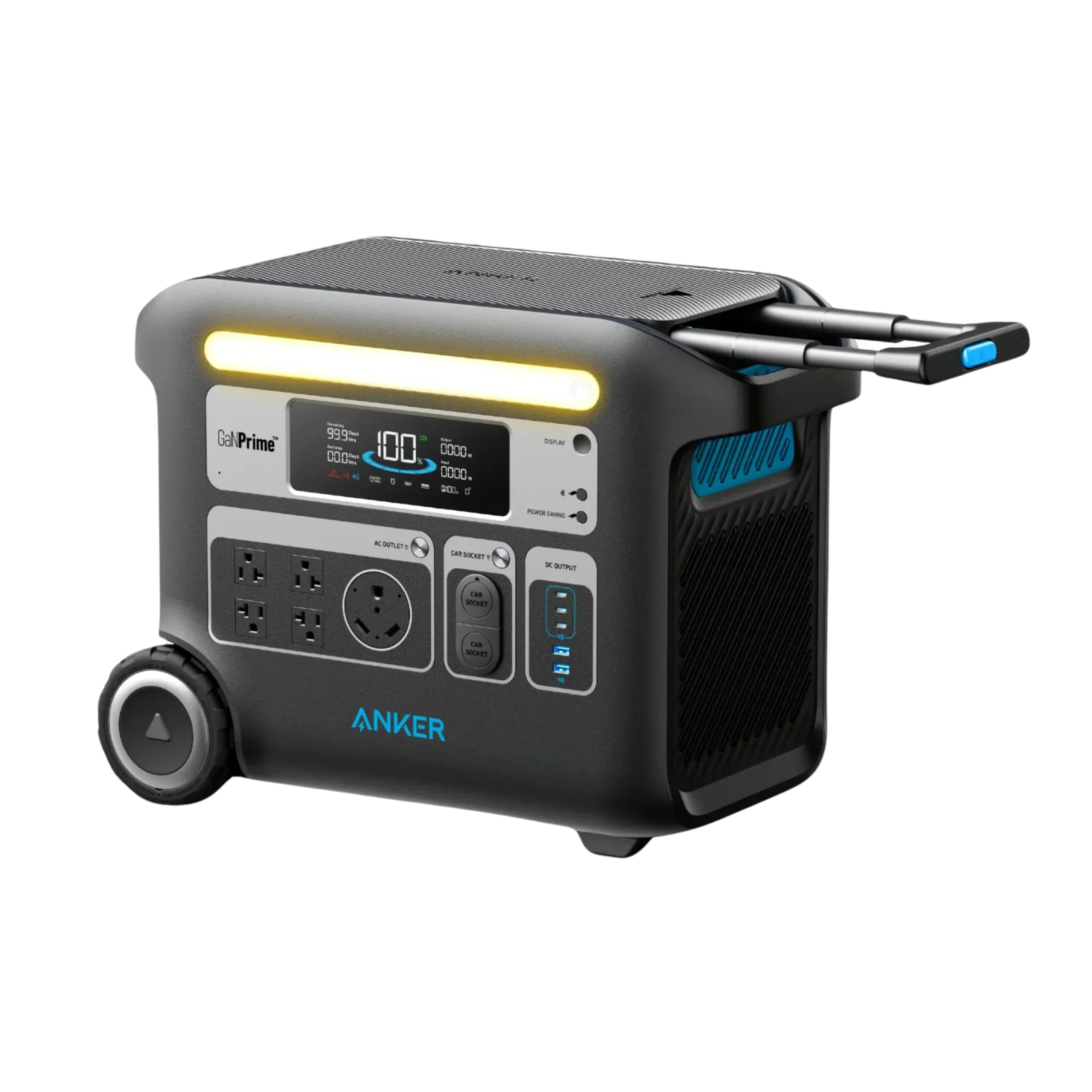
No longer sold
Anker no longer sells the SOLIX F2000 (PowerHouse 767). Its natural replacement is the SOLIX C2000 Gen 2 — the same 2,048Wh capacity and 2,400W output in a newer design.
SOLIX C2000 Gen 2 · $999.99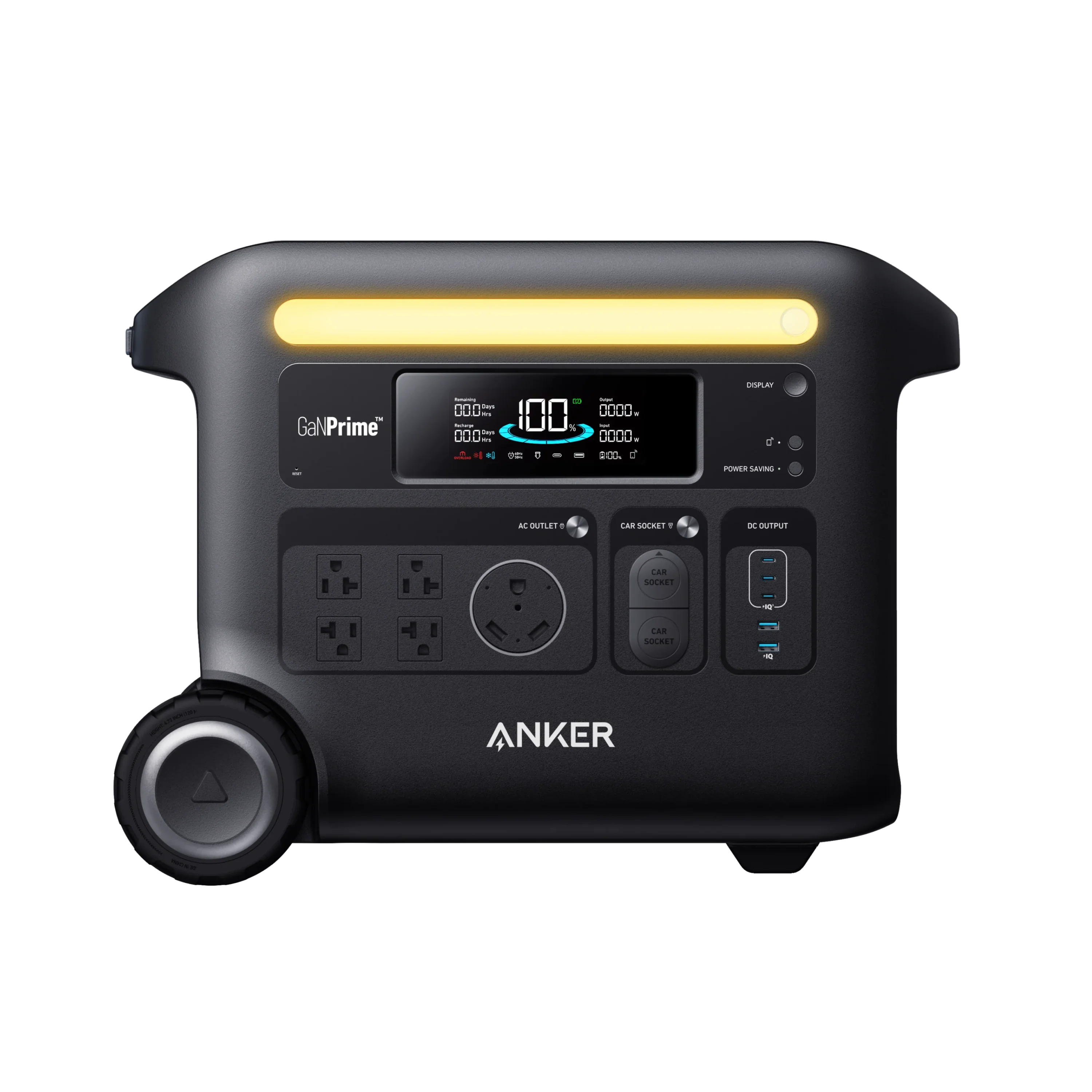
$1,499.99 · direct from Anker
Last checked 1 day ago. Prices move — check before you buy.
Spec deltas
The Anker SOLIX F2000 costs $900. The F2600 costs $1,100, holds 512 watt-hours more, and matches it on nearly everything else that appears on a spec sheet: the same 2,400W inverter, the same 2,800W surge, the same 3,000-cycle rating, the same five-year warranty, the same 1,000W solar input, the same 100W USB-C. This is one battery offered in two sizes, priced half again apart.
What the extra $200 does not buy is a longer life. Both units are rated for the same 3,000 charge cycles and carry the same warranty, so the F2600 doesn't outlast the F2000. It out-holds it, 2,560Wh to 2,048 on a single charge. Spread across two identical lifetimes, that makes the F2600 the more expensive energy, priced higher for every kilowatt-hour it will ever deliver.
So the question isn't which lasts longer, because neither does. It's whether your loads need that extra headroom. Five of the six scenarios we model fit inside the F2000 with margin to spare. The sixth, an unplugged two-night camping weekend near 2,100Wh, is the one that tips the F2000 over and lands inside the F2600. If that trip is why you're buying, pay the $200. If it isn't, the F2600 is a bigger tank you'll spend the summer driving half empty.
What the Numbers Reveal
Each conclusion stated first — the numbers behind it on one line, the full analysis below.
Capacity
Because the two are rated for the same 3,000 cycles, the $200 premium is priced entirely against capacity, not durability. Run the division and the F2600 costs $0.20 per lifetime kilowatt-hour to the F2000's $0.16. You're paying a higher rate per unit of energy for the privilege of holding more of it at once.
F2000: $900, 2,048Wh, rated 3,000 cyclesF2600: $1,100, 2,560Wh, rated 3,000 cyclesboth carry the same five-year warranty
Why it mattersIf you were hoping the pricier unit lasts longer, it doesn't, and only buyers who need more energy per charge should pay the premium.
Every lighter scenario sits comfortably inside both, the 1,645Wh blackout, the 910Wh workday, the 320Wh CPAP night, so the extra 512Wh changes nothing you would feel. The F2600's capacity earns its $200 only in that thin band where a load clears 2,048Wh but stays under 2,560, which in daily life means a multi-night trip with no way to recharge.
a two-night unplugged camping load runs about 2,100Whagainst that load the F2000 lands at 121% of usable capacity and can't finishthe F2600 lands at 97% and just clears it
Why it mattersIf you can reach a wall outlet or unfold a panel each day, you never enter that band, and the F2000 is the buy.
In a multi-day outage you recharge the unit while it's still carrying the load, and the faster it tops up between grid flickers or generator runs, the less time you spend near empty. A charge that reaches 80% in about 78 minutesB1 is the kind of spec that only matters when the outage outlasts the battery, which is exactly the emergency people buy a 2kWh unit to survive.
the F2600 documents HyperFlash charging to 80% in about 78 minutesB1both units accept the same 1,000W of solaran outage that outlasts one battery has to be refilled while the unit is still running the fridge
Why it mattersAnyone prepping for long, recharge-as-you-go outages has a second reason beyond capacity to look at the F2600; weekend and single-night-blackout buyers won't notice.
The specific dimensions that decide these two units — everything else is a tie.
Lifetime Value
Selected because: Core story: same cycles and warranty, so the F2000 is cheaper up front and cheaper per lifetime kWh; the whole value case lives here.
cost / lifetime kWh
The F2000 is the cheaper unit twice over: cheaper to buy, at $900 against $1,100, and cheaper per unit of energy it will ever deliver. Because the cycle rating is identical, the F2600's larger pack does raise total lifetime energy, 7,680 kWh to 6,144, but every one of those kilowatt-hours costs more than the F2000's. Same chemistry, bigger tank, higher price per gallon.
The warranty row is the only line that even hints at favoring the F2600, and it doesn't. Both carry five years of coverage, but you pay $200 for each covered year on the F2000 and $300 on the F2600. Slice the value table any direction you like and the smaller unit is the cheaper energy.
Your Life, Your Pick
Selected because: Five of six loads tie or fit both; the camping weekend near 2,100Wh is the single scenario the extra 512Wh actually settles.
Five of the six scenarios return the same practical verdict: both units handle it, so buy on price. The eight-hour blackout takes 94% of the F2000's usable capacity and 76% of the F2600's, so both clear the night, but the F2000 with almost nothing in reserve. The CPAP night, the workday, and the tailgate all sit under half of either tank.
The one scenario that actually separates them is the two-night camping weekend near 2,100Wh, where the F2000 lands at 121% and can't finish while the F2600 lands at 97% and just does. That single band, a big load with no daily recharge, is the entire case for the bigger battery. If your nights look like the other five rows, the F2600 is capacity you're renting and never occupying.
What the Specs Don't Tell You
Selected because: Weight and warranty fire: F2600 is heavier by 3.3 lbs, and warranty-per-year restates the value gap ($200 vs $300).
The F2600 is the heavier box by 3.3 pounds, 70.5 to 67.2, and neither is a one-hand carry. Both are bend-the-knees lifts. That gap is real but small, the kind of thing you feel loading a truck once, not something that shapes your day, so it shouldn't decide the purchase on its own.
The warranty card flags a tie that quietly favors the F2000: the same five years of coverage, but $200 a year for it against $300. It's the lifetime-value story wearing a different hat. The promise isn't longer on the F2600, only the bill is.
Growth Path
Selected because: Both expand from Anker's line; F2600 documents a 4,608Wh ceiling. Neutralize expansion as a differentiator.
Neither unit is a dead end. Both take Anker expansion batteries, so you can add capacity later without replacing the base, and the F2600's documented ceiling runs to 4,608Wh through the BP2600 moduleB2. If you already know you'll want far more than 2kWh, the honest move is to plan that expansion path deliberately rather than pay $200 today just to start 512Wh higher. Expandability is a wash between these two; it isn't a reason to pick one.
PowerScore Breakdown
Selected because: F2600 scores 105 points higher; show the ~3% edge is just the capacity restated, not a separate reason to spend up.
overall power score
The F2600's power score lands at 3,942 to the F2000's 3,837, a gap of 105 points, or about 3%. That edge is real, but it is mostly the capacity you're already paying for, expressed as a single number, not a separate feature. On inverter, surge, ports, switchover, and charging chemistry the two units are line for line the same, so the score moves only because one tank is bigger.
Strengths & trade-offs
Anker SOLIX F2000
Strengths
- +Costs $200 less
- +Lighter by 3.3 lb
Trade-offs
- –No major technical downsides compared to rival.
Anker SOLIX F2600
Strengths
- +Larger battery capacity
Trade-offs
- –No major technical downsides compared to rival.
Will It Power Your Gear?
Scenario math and per-appliance runtimes, modeled from the spec record.
Scenario verdicts
We ran the math on six real-world scenarios. Here's which unit survives your actual life.
SCN-01 · 2 nights · needs 2,100Wh
Weekend Camping
Two nights off-grid with essential comfort
SOLIX F2600
Two unplugged nights near 2,100Wh is the one load that splits these units. The F2000 comes up short, delivering only about four-fifths of that before the inverter cuts off, so you'd wake to a dead box on night two. The F2600 clears the same weekend with a sliver to spare. If off-grid camping with no panel in the plan is the job, this is the scenario you're buying the bigger battery for.
Battery budget usedlower = more headroom
LOAD Phone Charger 15W×6h · LED Lights 40W×8h · Box Fan 75W×14h · CPAP Machine 40W×16h
SCN-02 · 8 hours · needs 1,645Wh
8-Hour Blackout
Keep the essentials running through a night without power
SOLIX F2600
Both units carry a fridge, lights, and a router through an eight-hour night, so this isn't pass-fail. The gap is margin. The F2000 finishes with almost nothing left in reserve, while the F2600 ends the night around a quarter full. For one overnight outage either is fine; if the lights might stay off longer, the F2600's leftover cushion is the difference between comfortable and anxious.
Battery budget usedlower = more headroom
LOAD Fridge 150W×8h · Router + Modem 20W×8h · LED Lights (4 bulbs) 40W×6h · Phone Charger 15W×3h
SCN-03 · 8 hours · needs 320Wh
CPAP Overnight
Sleep therapy without interruption — the #1 medical use case
Either unit
A CPAP draws so little that both units end the night still more than four-fifths full, so capacity is beside the point. This is a dead heat, and the tiebreak is what sits inches from your head at 3 a.m. Neither unit publishes a noise figure, so on paper they're even; if silence is the priority, judge them side by side in a quiet room before you commit.
Battery budget usedlower = more headroom
LOAD CPAP Machine 40W×8h
SCN-04 · 8 hours · needs 910Wh
Remote Workday
Full work day off-grid without power anxiety
SOLIX F2600
The SOLIX F2600 clears the workday at 42% used, banking 1,266Wh — late work, extra calls, or a second laptop charge without arithmetic. The SOLIX F2000 at 52% also finishes, with 831Wh of slack for the unplanned.
Battery budget usedlower = more headroom
LOAD Laptop 60W×8h · External Monitor 30W×8h · Router + Modem 20W×8h · Phone Charger 15W×2h
SCN-05 · 4 hours · needs 670Wh
Tailgate Party
Game day power for the crew
Either unit
Both handle game day easily. Since capacity isn't the deciding factor, weight is: at 67.2 lbs the SOLIX F2000 is the one you'll be glad you brought. Fan noise under load is worth a listen too — it's audible in the lulls between songs.
Battery budget usedlower = more headroom
LOAD Blender 400W×0.5h · LED TV (55") 80W×4h · Bluetooth Speaker 15W×4h · Phone Charger (×3) 45W×2h
SCN-06 · 24 hours · needs 4,685Wh
Van Life Daily
A full day of mobile living — the ultimate endurance test
Neither unit
A full van-life day asks for roughly 4,700Wh, more than double what either box usably holds, so neither does this alone. Both expand with Anker batteries, so either can grow toward it, but if this is your daily normal, buy a bigger base unit or budget for the expansion battery on day one. Stacking add-ons onto a 2kWh station to reach a 5kWh day is the expensive way there.
Battery budget usedlower = more headroom
LOAD Mini-Fridge 150W×24h · Laptop 60W×4h · Phone Charger 15W×3h · LED Lights 40W×5h · Fan 75W×8h
The Load Test
RUNTIME = (Wh × 0.85) ÷ LOAD
None of the scenarios above exactly yours? Build it. Toggle what you'd plug in; both units are tested against the combined draw.
Essentials
Comfort & Convenience
High-Draw Appliances
Test duration
8h
Continuous draw
205W
Projected runtime
For this load: SOLIX F2600 runs 10.6h vs 8.5h.
$1,099.99 list · direct from Anker
Modeled from the spec record — same math as the tables below. Methodology
Runtime by appliance
Real-world runtime estimates for common appliances, modeled at 85% inverter efficiency.¹
Essentials
The basics you need runningscale 0–145.1hComfort & Convenience
Makes off-grid life actually enjoyablescale 0–29hHigh-Draw Appliances
These reveal the real limitsscale 0–2.2h¹ Runtime = (capacity × 0.85) ÷ appliance watts. Within each group, all bars share one time scale (the group's longest runtime), so lengths are comparable across appliances; identical runtimes collapse into a single blue/orange bar. Actual runtime varies with battery age, temperature, and simultaneous loads — see methodology.
Conclusion
July 16, 2026
Verdict: the SOLIX F2000
Take the F2000. It holds 2,048Wh to the F2600's 2,560, but the two share the same 3,000-cycle LFP cells, the same 2,400W inverter, the same five-year warranty, and the same 1,000W solar ceiling, so the extra $200 buys capacity, not a longer-lived unit. Per kilowatt-hour it will ever deliver, the F2000 is the cheaper box, and it covers five of the six loads we model with room to spare. The F2600 earns its premium in one place: loads that crowd 2,048Wh, like a two-night trip you can't recharge, where the F2000 tips over and the F2600 clears it, and it refills quickly on Anker's HyperFlash chargingB1 if a multi-day outage has you topping up daily. If that is your night, flip this verdict. For the buyer whose loads stay under two kilowatt-hours, the F2600 is headroom you will pay for and rarely touch.
Editor-assigned confidence, based on cited owner research and spec analysis.
List prices as of July 16, 2026. The links below open Anker's current price.
$899.99 · direct from Anker
Last checked 50 days ago. Prices move — check before you buy.
or check the SOLIX F2600 price$1,499.99 list
Written by Gunner Gustafson, Whole-Home Backup Tester · Station Arena Test Desk · Updated July 16, 2026
Measured Data
Benchmark scores and the full spec record, side by side.
Benchmark scores
Not rated for both units (minimum threshold unmet): Apartment Balcony.
Full specifications
ᵈ Derived: price ÷ rated capacity. See the data behind our comparisons →
Comparison ToolAdd more power stations, side by sideOpen Tool →How these numbers are produced
Numeric verification
Every figure on this page traces to our spec database or arithmetic on it — no estimated numbers.
Owner claims
Statements about owner experience are cited to published reviews — see Sources & Research Notes below.
Runtime model
Runtime = (rated capacity × 0.85 inverter efficiency) ÷ device wattage. Solar recharge estimates assume panels deliver 70% of rated output. Cold weather, battery age, and stacked loads reduce real-world results.
Power Score
Computed from 14 published spec dimensions, weighted per use-case bench. Higher is better; a unit must meet a bench's minimum threshold to be rated.
See the full weight table and data sourcing on our methodology page →Class ranking (the star rating)
Each unit's star score is a category ranking, not customer reviews — no buyer opinions feed it. We score every station on size-independent quality (value, output, portability, endurance, ports, warranty, and more), then percentile-rank it against the other units in its capacity class, so a class-leading compact unit and a class-leading whole-home unit can both earn 5★. Here, SOLIX F2000 rates 3.7/5 (24th percentile of 26 Large-class units), and SOLIX F2600 rates 4.0/5 (40th percentile of 26 Large-class units).
How the class ranking is computed →Test Notes & Caveats
Hidden gotchas and advantages we spotted that you won't find on the product page.
Heavier, and Neither Is Light
The F2600 is the heavier unit by 3.3 pounds, 70.5 to the F2000's 67.2, and both land in two-hands, mind-your-back territory. On a hard floor the difference all but vanishes; over a tailgate or up basement stairs, you feel every pound of either one. It's a real gap but a small one, not a reason to pick a battery, just a thing to know before you lift.
Warranty: No Difference
Both units carry the same 5-year warranty, so coverage isn't a tiebreaker here.
Full record above — the Test Desk pick is the SOLIX F2000.
Check SOLIX F2000 price →or check the SOLIX F2600 priceOwnership Analysis
What happens after you buy — true cost of ownership, brand trust, and growth potential.
Lifetime value
Service lifeyears at one full cycle per day
Lifetime energy delivered
Cost per delivered kWh
│ warranty ends · Reaching the cycle rating means ~80% capacity remains — degraded, not dead.
Analyst note
The SOLIX F2000 is cheaper to buy, but the SOLIX F2600 is cheaper to own. At $0.14/kWh over its lifetime vs $0.15/kWh, the SOLIX F2600's higher cycle life and capacity make each dollar go further over the years. One thing to know reading the table: both carry the same 3,000-cycle rating, so the lifetime rows are sticker price and capacity in disguise — the wear horizon is identical and decides nothing here.
Growth path
SOLIX F2000
EXPANDABLESupports Anker expansion batteries, so you can add capacity later without replacing the base unit — useful if your needs may climb past 2,048Wh.
Accepts up to 1,000W of solar. Enough for a serious multi-panel array.
Generous port selection supports complex multi-device setups.
Expansion batteries are Anker-specific. You're investing in the Anker ecosystem.
SOLIX F2600
EXPANDABLESupports Anker expansion batteries, so you can add capacity later without replacing the base unit — useful if your needs may climb past 2,560Wh.
Accepts up to 1,000W of solar. Enough for a serious multi-panel array.
Generous port selection supports complex multi-device setups.
Expansion batteries are Anker-specific. You're investing in the Anker ecosystem.
Realistic full solar rechargeat 70% of rated panel output — see methodology
Analyst note
Both expand, so neither locks you out of growth — decide on capacity, price, and the rest, not the expansion checkbox.
What Owners Report
Patterns from published owner reports and long-term reviews — every claim cited to its source below.
Anker SOLIX F2000
The F2000's most-cited feature in owner reports is its mobility: the oversized wheels and retractable EasyTow handle are the top reason buyers picked it over similar-spec rivals, turning a case full of dead weight into something you roll like luggageA1. The Anker app draws steady praise for monitoring and charge control, and a meaningful share of owners describe Anker stepping in with firmware fixes or replacementsA2.
In the RV and blackout loads people actually run, fridge, CPAP, lights, fans, and internet, reviewers call it quiet, capable, and quick to deployA3, on LFP cells Anker rates past 3,000 cyclesA4. One caveat on the record: this coverage leans on review sites more than large owner forums, so treat the marketing-adjacent notes loosely, though the wheels praise is consistent across independent reviewsA1.
“It's big and full of heavy batteries, but the durable 4.72-inch wheels and retractable EasyTow handle make it surprisingly easy to lug around — most positive reviews cite the wheels and telescoping handle as a top reason owners chose it over similar-spec competitors.”
Sources
rvoutfitting.com · trustedreviews.com · ankersolix.com · storagereview.com · generatorpeak.com
Anker SOLIX F2600
Field reports on the F2600 cluster on speed and quiet: reviewers highlight HyperFlash charging that reaches 80% in about 78 minutes and operation quiet enough to share a room with, alongside a user-friendly appB1B3. It packs its 2,560Wh into the same footprint as the F2000B1 and expands to 4,608Wh through the BP2600 module on Anker's proprietary link cableB2.
Owners praise its inverter power and its performance riding out outages, on InfiniPower LFP cells rated for 3,000 cycles behind a five-year warrantyB3B4. The one recurring nitpick: some owners wish the expansion cable design were more space-efficientB3. Solid coverage overall, with no red flags in the record.
“Packs 2,560Wh into the same footprint as the F2000, with HyperFlash fast charging reaching 0-80% in about 78 minutes.”
Sources
backuppowerhub.com · ankersolix.com · homedepot.com · outboundpower.com · samsclub.com · batteryskills.com · thesolarlab.com
Sources & Research Notes
Every owner claim in this report is traceable to a published source. The bracketed references above resolve here.
Recurring owner themes
- The wheels + retractable handle are the standout, repeatedly-cited reason owners pick the F2000; app monitoring and responsive Anker support are also praised. [SOLIX F2000 · 2 entries]
- Fast HyperFlash charging, quiet operation, a good app, expandability, and a 5-year warranty are the standout praise for this 2,560Wh unit. [SOLIX F2600 · 3 entries]
- A1
“It's big and full of heavy batteries, but the durable 4.72-inch wheels and retractable EasyTow handle make it surprisingly easy to lug around — most positive reviews cite the wheels and telescoping handle as a top reason owners chose it over similar-spec competitors.”
rvoutfitting.com / trustedreviews.com — Anker SOLIX F2000 (PowerHouse 767) review · 2025-2026 · [positive]
- A2
“WiFi and Bluetooth app lets you monitor battery, charging, and customize power usage; a meaningful number of owners reported Anker proactively solving issues with firmware updates or replacements.”
ankersolix.com / storagereview.com — F2000 review · 2025-2026 · [positive]
- A3
“For the loads RVers run most — fridge, CPAP, lights, fans, internet, TV, small kitchen appliances — the F2000 is usually quiet, capable, and easy to deploy fast.”
rvoutfitting.com — Anker SOLIX F2000 review · 2026 · [positive]
- A4
“Uses the same long-lasting LFP battery reliability as Anker's other models, rated over 3,000 cycles for years of off-grid or backup use.”
trustedreviews.com / generatorpeak.com — F2000 review · 2025-2026 · [positive]
- B1
“Packs 2,560Wh into the same footprint as the F2000, with HyperFlash fast charging reaching 0-80% in about 78 minutes.”
backuppowerhub.com / ankersolix.com — SOLIX F2600 review · 2026 · [positive]
- B2
“Expandable via the BP2600 battery module, scaling total capacity to 4,608Wh through Anker's proprietary link cable.”
homedepot.com / outboundpower.com — SOLIX F2600 / BP2600 · 2026 · [positive]
- B3
“Owners praise ample inverter power, quiet operation, and a user-friendly app; some suggest the cable design could be more space-efficient.”
samsclub.com / batteryskills.com — SOLIX F2600 owner reviews · 2026 · [positive]
- B4
“InfiniPower LFP rated for 3,000 cycles with a 5-year warranty; well-received for power-outage performance and ease of use.”
backuppowerhub.com / thesolarlab.com — SOLIX F2600 review · 2026 · [positive]
Research compiled July 16, 2026.
Who Should Buy Which
Buy the SOLIX F2000 if you…
- →Your loads live under two kilowatt-hours: a blackout fridge, a CPAP, a work-from-home desk, a tailgate cooler. All of them fit the F2000 with margin, and you pocket the $200 the F2600 would have charged for headroom you'd never reach.
- →You want the cheaper energy. Same 3,000-cycle chemistry and same five-year warranty as the F2600, at a lower price per kilowatt-hour however you use it. The F2000 is the better deal per unit of power, full stop.
- →You're the one carrying it. At 67.2 lbs the F2000 is the lighter of the two by 3.3 pounds, and its wheels and EasyTow handle are the owner-favorite feature that makes that weight roll away on any hard surfaceA1.
This is you — check the SOLIX F2000 price
Buy the SOLIX F2600 if you…
- →You camp or travel without a daily recharge. The extra 512Wh is the difference between a two-night trip near 2,100Wh that dies on the F2000 and one that finishes on the F2600, the one scenario where the bigger tank pays for itself.
- →You're prepping for long outages and top up as you go. HyperFlash charging to 80% in about 78 minutesB1 means less time near empty when the grid is flickering or you're rationing generator runs, and recharge speed is a survival spec, not a luxury.
- →You already know you'll grow. If your capacity needs are climbing, starting at 2,560Wh and expanding to 4,608 through the BP2600B2 gives you more room before you ever bolt on a second battery.
If neither fits
If your daily draw looks like van life, roughly 4,700Wh a day, neither of these 2kWh boxes does it alone; shop a 3-to-4kWh-class unit or plan an expansion battery from the start. And if your real load is a phone, a laptop, and a lamp, both of these are far more battery than you'll ever drain, and a 1kWh station saves you hundreds.
The Bottom Line
The F2000 and F2600 are the same battery in two sizes, and they age on the same clock: same 3,000 cycles, same five-year warranty. So the F2600's $200 isn't buying a longer-lived unit. It's buying 512 watt-hours of headroom, which earns its keep in exactly one place, loads that crowd the F2000's tank, like an unplugged multi-night trip. Everywhere else, the smaller unit is the cheaper energy and does the identical job.
Take the F2000 and keep the difference, unless you already know your nights run past two kilowatt-hours or your outages run past a single charge. Then the F2600's bigger tank and faster fill are worth the $200, and you'll know it the first time the smaller one would have tapped out. Buy for the load you actually have, not the one you're afraid of.
Frequently Asked Questions
Answers drawn from the spec record and cited owner research.
Is the Anker SOLIX F2600 worth $200 more than the F2000?
Only if your loads regularly top about 2,048Wh or you need to recharge fast mid-outage. The two share inverter, surge, cycle rating, warranty, solar input, and ports; the F2600 adds 512Wh of capacity and HyperFlash wall charging. For loads that fit under two kilowatt-hours, which covers most blackout and weekend duty, the F2000 does the identical job for less.
Do the F2000 and F2600 last the same number of years?
Yes. Both are rated for 3,000 charge cycles and carry the same five-year warranty, so neither outlives the other. The F2600 holds more energy per charge, but it doesn't hold more charges, which is exactly why it costs more per lifetime kilowatt-hour despite storing more overall.
Can the F2000 run a full weekend of camping without recharging?
Not a heavy two-night one. A load near 2,100Wh overruns the F2000's usable capacity, which lands it at 121% and taps it out, while the F2600 just clears the same weekend at 97%. Both accept 1,000W of solar, so a sunny afternoon or a shorter appliance list closes the gap for either unit.
Which charges faster, the F2000 or the F2600?
The F2600 has the documented edge, with HyperFlash charging rated to 80% in about 78 minutes. Both take the same 1,000W of solar, so panels refill them at the same rate; the difference shows up on the wall plug. In a multi-day outage where you recharge as you go, that speed is worth more than the spec sheet makes it look.
Is the F2600's higher power score a reason to buy it?
Not really. It scores 3,942 to the F2000's 3,837, a gap of about 3%, and almost all of that is the extra capacity you're already paying for, restated as one number. On inverter, surge, ports, and charging chemistry the two units are identical, so the score gap tells you nothing the price and capacity rows didn't.
Check SOLIX F2000 price →
Where to buy
Anker SOLIX F2000Pick
$899.99
$899.99 · direct from Anker
Last checked 50 days ago. Prices move — check before you buy.
Anker SOLIX F2600
$1,499.99
$1,499.99 · direct from Anker
Last checked 1 day ago. Prices move — check before you buy.
Prices may vary by retailer and are subject to change.