Head-to-head test
Anker SOLIX F2600 vs Anker SOLIX F3800 PLUS
One of these you can still carry to a campsite; the other is a 132-pound box that goes in the basement and stays there, so this isn't which is better, it's whether the unit ever has to move.
Full profiles: Anker SOLIX F2600 → · Anker SOLIX F3800 PLUS →

Written by Gunner GustafsonUpdated
Whole-Home Backup Tester, Station Arena Test Desk
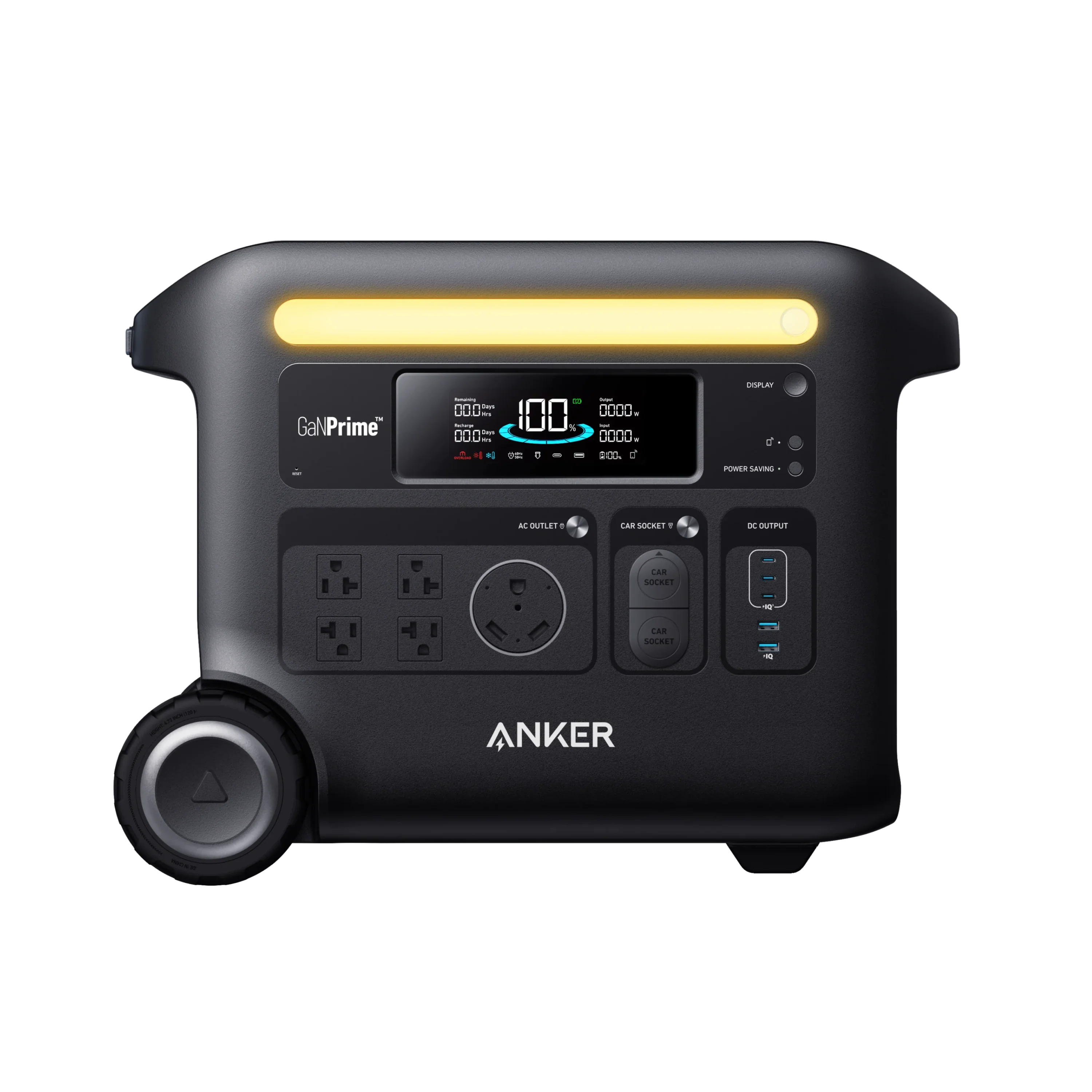
$1,499.99 · direct from Anker
Last checked 1 day ago. Prices move — check before you buy.
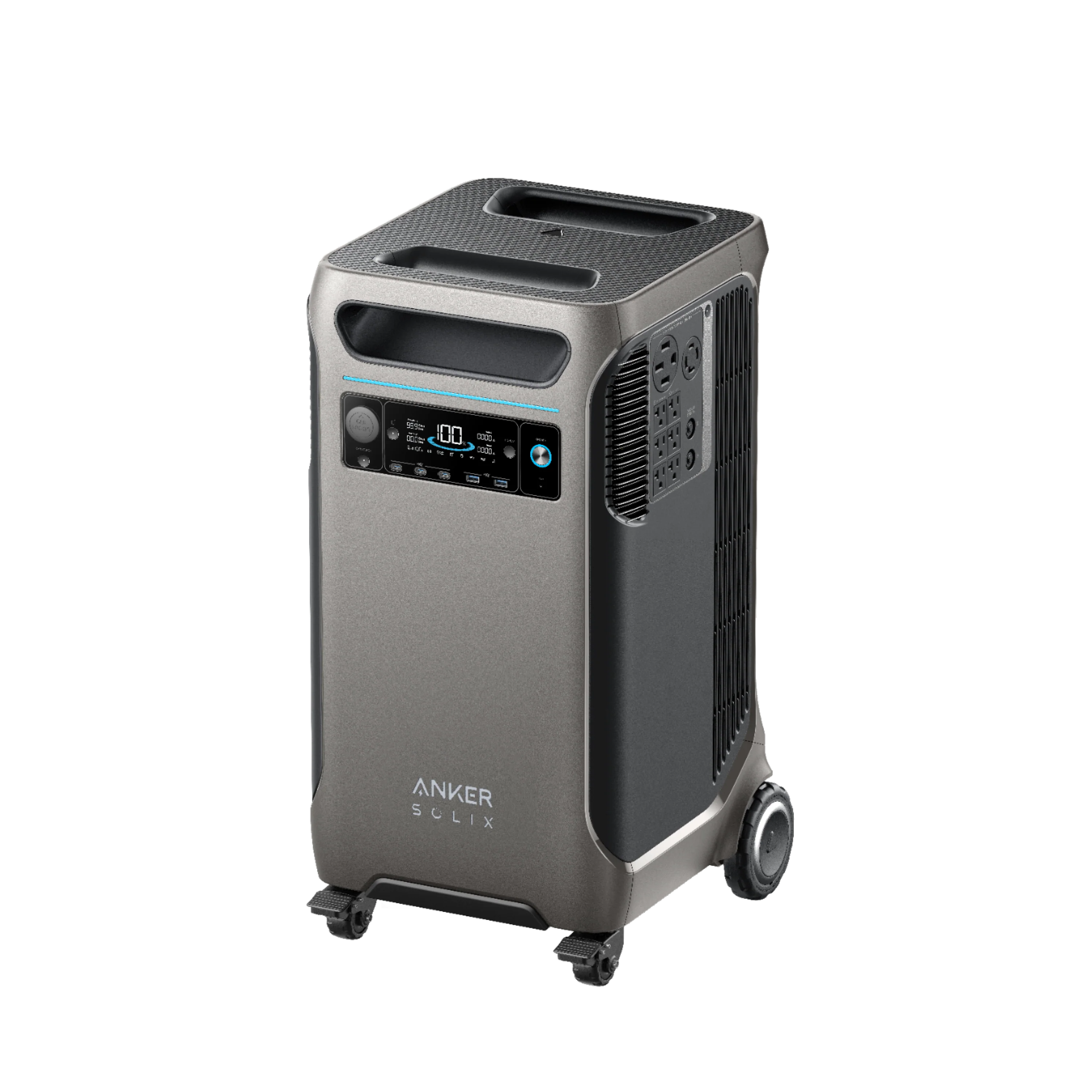
$2,599.99 · direct from Anker
Last checked 1 day ago. Prices move — check before you buy.
Spec deltas
The F2600 and F3800 PLUS wear the same Anker SOLIX badge, but they are not two sizes of one product. One is $1,100 and 70.5 lbs; the other is $2,600 and 132.3 lbs. The right call lives in that gap, not in the model numbers.
For most buyers the F2600 is the answer, and on value it isn't close. It's cheaper to own per unit of energy, movable by one person, and comfortably past every everyday load: a weekend of camping, a work-from-home day, an eight-hour blackout. The F3800 PLUS's 3,840Wh and 6,000W output are real, but they are headroom, and headroom you never touch is just weight and money.
The F3800 PLUS earns its price in exactly one place: when you need more than the F2600 physically has. Whole-home backup, loads past 2,400W, a multi-day outage, or 3,200W of solar feeding the bank. There the F2600 runs out of room and the F3800 PLUS keeps going. Work out which of those two buyers you are, because the wrong pick here costs you either $1,500 or a unit that can't do the job.
What the Numbers Reveal
Each conclusion stated first — the numbers behind it on one line, the full analysis below.
cost / lifetime kWh
What the premium actually buys is output ceiling: 6,000W of continuous draw and a 9,000W surge the F2600's 2,400W and 2,800W can't approach. If your loads never cross 2,400W, none of that ever engages, and you have paid $1,500 for reserve you can't spend.
F2600: $1,100 for 2,560Wh; F3800 PLUS: $2,600 for 3,840WhCost per lifetime kWh: F2600 $0.14, F3800 PLUS $0.23, both packs rated for 3,000 cyclesF3800 PLUS delivers 6,000W continuous and 9,000W surge; the F2600 delivers 2,400W and 2,800W
Why it mattersAnyone whose real-world draw stays under 2,400W should buy the F2600 and keep the difference.
weight
So the mobile scenarios are decided before capacity is even weighed. The F3800 PLUS isn't a contender at the campsite or the tailgate, and the F2600 covers both of those loads with room to spare, which is the only reason it 'wins' them.
F3800 PLUS weighs 132.3 lbs; F2600 weighs 70.5 lbs, a 62 lb gapReviewers note the F3800 PLUS's wheels handle grass but small bumps can stop it deadB8Weekend Camping needs 2,100Wh and Tailgate needs 670Wh, both of which the F2600 covers
Why it mattersIf the unit ever has to leave the driveway, the F2600 is the only real answer and the capacity comparison is moot.
solar input
Pair the bigger bank with that solar ceiling and the usual penalty inverts: 3,840Wh over a 3,200W input tops up in fewer sun-hours than the F2600's 2,560Wh over 1,000W, so in a multi-day outage the F3800 PLUS both lasts longer between charges and refills faster during them.
8-hour blackout needs about 1,645Wh; the F3800 PLUS finishes at 50% used with 1,619Wh left, the F2600 at 76% with 531WhUsable energy is about 3,264Wh for the F3800 PLUS versus 2,176Wh for the F2600 after the standard 85% derateThe F3800 PLUS accepts 3,200W of solar input against the F2600's 1,000W
Why it mattersThe buyer planning for outages that run past one night, or for whole-home backup, is the one the F3800 PLUS's price and weight finally make sense for.
The specific dimensions that decide these two units — everything else is a tie.
Portability & Form Factor
Selected because: Selected because: at 70.5 lbs against 132.3 lbs, whether the unit can move is the axis that settles half these scenarios before capacity even comes up.
weight
Weight sorts these two into different jobs before anything else does. The F2600 is a unit you can still pick up and load into a vehicle; the F3800 PLUS, at 132.3 lbs, is one you install. Even its wheels are a driveway aid, not a trail one, and reviewers found small bumps enough to stop it dead on grassB8, so in practice it lives wherever you first set it down.
That decides the mobile scenarios outright. A campsite or a tailgate isn't a capacity contest between these two; the F3800 PLUS simply isn't coming, and the F2600 wins by being the one that fits in the car. If the unit will ever leave the house, the rest of the spec sheet is academic.
Your Life, Your Pick
Selected because: Selected because: the two divide the use-case menu cleanly, the F2600 taking the mobile loads and the F3800 PLUS the capacity-hungry ones.
Every everyday load lands well inside the F2600. A work-from-home day uses 42% of it; a full weekend's camping fills it to 97% with a 76Wh cushion. Nothing here strains it, and where the F3800 PLUS 'wins' a mobile scenario it's really the F2600 winning by default, because the bigger unit can't make the trip.
The F3800 PLUS's edge shows only when the number climbs. An eight-hour blackout leaves the F2600 three-quarters used while the F3800 PLUS sits at half with a second night still banked; push into multi-day territory and that reserve becomes the entire argument for it. Neither covers a van-life daily draw of 4,685Wh, though: the F2600 reaches about 47%, the F3800 PLUS 69%, so the heaviest user is shopping a size up from both.
Lifetime Value
Selected because: Selected because: despite holding less energy, the F2600 is the cheaper unit to own at 14 cents per lifetime kWh against 23.
cost / lifetime kWh
The F2600 isn't just the cheaper sticker, it's the cheaper energy. Both packs are rated for 3,000 cycles, so the F2600's $1,100 works out to about 14 cents per lifetime kilowatt-hour and the F3800 PLUS's $2,600 to 23. You read that once and the rest follows: the bigger unit costs more per unit of power delivered, not less.
So the premium isn't buying value, it's buying ceiling. That's a fair trade if you'll use the ceiling and a bad one if you won't. The buyer whose loads stay under 2,400W is paying $1,500 and hauling the heavier of the two boxes for capacity that sits in reserve every single day of its life.
What the Specs Don't Tell You
Selected because: Selected because: weight, inverter surge headroom, and an identical 5-year warranty are where the real differences and non-differences sit.
Two of the three gotchas point the same way the rest of the page does, and one of them cuts against the F2600. Its inverter peaks at 2,800W, only about 1.2 times its 2,400W continuous rating, against the F3800 PLUS's 9,000W and 1.5 times. For a laptop and a fridge that's nothing; for a well pump or a shop tool that surges to two or three times its rating on startup, the F2600 is the one more likely to balk.
Warranty, by contrast, is a wash and worth saying so out loud. Both carry five years, so the per-dollar framing, 4.5 years of coverage per $1,000 on the F2600 against 1.9 on the F3800 PLUS, is just the price gap wearing a costume, not a difference in the terms.
Strengths & trade-offs
Anker SOLIX F2600
Strengths
- +Costs $1,500 less
- +Lighter by 61.8 lb
Trade-offs
- –Weaker inverter (-3,600W) limits appliance compatibility.
Anker SOLIX F3800 PLUS
Strengths
- +Larger battery capacity
- +Higher AC output
- +Faster solar charging
Trade-offs
- –Substantially more expensive (+$1,500) than the SOLIX F2600.
- –Significantly heavier (+61.8 lbs), making it harder to move.
- –Very heavy unit that may be difficult for one person to lift.
Will It Power Your Gear?
Scenario math and per-appliance runtimes, modeled from the spec record.
Scenario verdicts
We ran the math on six real-world scenarios. Here's which unit survives your actual life.
SCN-01 · 2 nights · needs 2,100Wh
Weekend Camping
Two nights off-grid with essential comfort
SOLIX F2600
The SOLIX F3800 PLUS at 132.3 lbs is not a take-along — it rolls off a truck bed if it travels at all, so this scenario belongs to the SOLIX F2600 by default — and it earns it, covering the 2,100Wh with 76Wh to spare. Capacity was never the SOLIX F3800 PLUS's problem here; getting to a campsite was.
Battery budget usedlower = more headroom
LOAD Phone Charger 15W×6h · LED Lights 40W×8h · Box Fan 75W×14h · CPAP Machine 40W×16h
SCN-02 · 8 hours · needs 1,645Wh
8-Hour Blackout
Keep the essentials running through a night without power
SOLIX F3800 PLUS
Both survive the night. The SOLIX F3800 PLUS finishes at 50% used with 1,619Wh left — 98% of a second night. The SOLIX F2600 finishes at 76% with 531Wh, 32% of a second night. If your outages tend to run past one evening, that difference is the whole argument between them.
Battery budget usedlower = more headroom
LOAD Fridge 150W×8h · Router + Modem 20W×8h · LED Lights (4 bulbs) 40W×6h · Phone Charger 15W×3h
SCN-03 · 8 hours · needs 320Wh
CPAP Overnight
Sleep therapy without interruption — the #1 medical use case
Either unit
A CPAP pulls around 40W, so a night runs it about 320Wh, which is 15% of the F2600 and 10% of the F3800 PLUS. Capacity is a non-event; both wake you with most of the battery untouched. Neither Anker publishes a noise figure, so fan behavior at 2 a.m. is an unknown on both sides, which means you decide this one on price and on which unit you'd rather have sitting by the bed, and the 70.5-lb F2600 is the easier houseguest.
Battery budget usedlower = more headroom
LOAD CPAP Machine 40W×8h
SCN-04 · 8 hours · needs 910Wh
Remote Workday
Full work day off-grid without power anxiety
SOLIX F3800 PLUS
The SOLIX F3800 PLUS clears the workday at 28% used, banking 2,354Wh — late work, extra calls, or a second laptop charge without arithmetic. The SOLIX F2600 at 42% also finishes, with 1,266Wh of slack for the unplanned.
Battery budget usedlower = more headroom
LOAD Laptop 60W×8h · External Monitor 30W×8h · Router + Modem 20W×8h · Phone Charger 15W×2h
SCN-05 · 4 hours · needs 670Wh
Tailgate Party
Game day power for the crew
SOLIX F2600
The SOLIX F3800 PLUS at 132.3 lbs is not a take-along — it rolls off a truck bed if it travels at all, so this scenario belongs to the SOLIX F2600 by default — and it earns it, covering the 670Wh with 1,506Wh to spare. Capacity was never the SOLIX F3800 PLUS's problem here; getting to a tailgate was.
Battery budget usedlower = more headroom
LOAD Blender 400W×0.5h · LED TV (55") 80W×4h · Bluetooth Speaker 15W×4h · Phone Charger (×3) 45W×2h
SCN-06 · 24 hours · needs 4,685Wh
Van Life Daily
A full day of mobile living — the ultimate endurance test
Neither unit
Neither unit is a van's daily driver. A 4,685Wh day overruns both, with the F2600 covering about 47% of it and the F3800 PLUS about 69%, so on the base units alone you're rationing by mid-afternoon. The honest fix isn't choosing between these two; it's that both accept expansion batteries, and a full-time build should budget for one from the start rather than expecting either base unit to carry the whole day.
Battery budget usedlower = more headroom
LOAD Mini-Fridge 150W×24h · Laptop 60W×4h · Phone Charger 15W×3h · LED Lights 40W×5h · Fan 75W×8h
The Load Test
RUNTIME = (Wh × 0.85) ÷ LOAD
None of the scenarios above exactly yours? Build it. Toggle what you'd plug in; both units are tested against the combined draw.
Essentials
Comfort & Convenience
High-Draw Appliances
Test duration
8h
Continuous draw
205W
Projected runtime
For this load: SOLIX F3800 PLUS runs 15.9h vs 10.6h.
$2,599.99 list · direct from Anker
Modeled from the spec record — same math as the tables below. Methodology
Runtime by appliance
Real-world runtime estimates for common appliances, modeled at 85% inverter efficiency.¹
Essentials
The basics you need runningscale 0–217.6hComfort & Convenience
Makes off-grid life actually enjoyablescale 0–43.5hHigh-Draw Appliances
These reveal the real limitsscale 0–3.3h¹ Runtime = (capacity × 0.85) ÷ appliance watts. Within each group, all bars share one time scale (the group's longest runtime), so lengths are comparable across appliances; identical runtimes collapse into a single blue/orange bar. Actual runtime varies with battery age, temperature, and simultaneous loads — see methodology.
Conclusion
August 30, 2026
Verdict: the Anker SOLIX F2600
For most people cross-shopping these, the F2600 is the pick: at $1,100 it's cheaper up front, cheaper per lifetime kilowatt-hour, light enough for one person to move, and it clears every normal household and camping load with margin. The F3800 PLUS costs $1,500 more and weighs 62 lbs more to deliver output and reserve most buyers never reach. Buy the F3800 PLUS only if you specifically need its 6,000W ceiling, whole-home panel backupB3, its 3,200W solar input, or a second night of reserve in a long outage. If you need any of those, nothing the F2600 offers substitutes for it, which is why this is a lean and not a rout.
Editor-assigned confidence, based on cited owner research and spec analysis.
List prices as of August 30, 2026. The links below open Anker's current price.
$1,499.99 · direct from Anker
Last checked 1 day ago. Prices move — check before you buy.
or check the SOLIX F3800 PLUS price$2,599.99 list
Written by Gunner Gustafson, Whole-Home Backup Tester · Station Arena Test Desk · Updated August 30, 2026
Measured Data
Benchmark scores and the full spec record, side by side.
Benchmark scores
Not rated for both units (minimum threshold unmet): UPS, Tailgating.
Full specifications
ᵈ Derived: price ÷ rated capacity. See the data behind our comparisons →
Comparison ToolAdd more power stations, side by sideOpen Tool →How these numbers are produced
Numeric verification
Every figure on this page traces to our spec database or arithmetic on it — no estimated numbers.
Owner claims
Statements about owner experience are cited to published reviews — see Sources & Research Notes below.
Runtime model
Runtime = (rated capacity × 0.85 inverter efficiency) ÷ device wattage. Solar recharge estimates assume panels deliver 70% of rated output. Cold weather, battery age, and stacked loads reduce real-world results.
Power Score
Computed from 14 published spec dimensions, weighted per use-case bench. Higher is better; a unit must meet a bench's minimum threshold to be rated.
See the full weight table and data sourcing on our methodology page →Class ranking (the star rating)
Each unit's star score is a category ranking, not customer reviews — no buyer opinions feed it. We score every station on size-independent quality (value, output, portability, endurance, ports, warranty, and more), then percentile-rank it against the other units in its capacity class, so a class-leading compact unit and a class-leading whole-home unit can both earn 5★. Here, SOLIX F2600 rates 4.0/5 (40th percentile of 26 Large-class units), and SOLIX F3800 PLUS rates 4.5/5 (73rd percentile of 16 Home Backup-class units).
How the class ranking is computed →Test Notes & Caveats
Hidden gotchas and advantages we spotted that you won't find on the product page.
The 62-Pound Fork
132.3 lbs is a two-person, bend-at-the-knees lift you do once and then never again; the F2600's 70.5 lbs is a one-person heave, heavier than a full checked suitcase but still movable by yourself. The F3800 PLUS ships on wheels because Anker knew, and even those are a driveway tool rather than a trail one. Assume it stays wherever you first set it down.
Where the F2600 Gives Ground
Here's the F2600's one real hardware limit, stated plainly: its inverter peaks at 2,800W, only about 1.2 times its 2,400W continuous rating, against the F3800 PLUS's 9,000W and 1.5 times. A laptop, a TV, a normal fridge is no problem for either. But a well pump or a shop tool that slams to two or three times its rated draw on startup is exactly the load the F2600 can trip on and the F3800 PLUS shrugs off. If your backup list includes big motors, that gap is the F3800 PLUS's best argument.
Warranty: No Difference
Both units carry the same 5-year warranty, so coverage isn't a tiebreaker here. Worth saying because the per-dollar framing can suggest otherwise: the SOLIX F2600 works out at 4.5 years of cover per $1,000 spent against the SOLIX F3800 PLUS's 1.9, but that spread is the price gap, not the terms.
Full record above — the Test Desk pick is the SOLIX F2600.
Check SOLIX F2600 price →or check the SOLIX F3800 PLUS priceOwnership Analysis
What happens after you buy — true cost of ownership, brand trust, and growth potential.
Lifetime value
Service lifeyears at one full cycle per day
Lifetime energy delivered
Cost per delivered kWh
│ warranty ends · Reaching the cycle rating means ~80% capacity remains — degraded, not dead.
Analyst note
The SOLIX F2600 wins on both sticker price and long-term value. At $0.14/kWh over its lifetime, it's meaningfully cheaper to own. Clear value winner. One thing to know reading the table: both carry the same 3,000-cycle rating, so the lifetime rows are sticker price and capacity in disguise — the wear horizon is identical and decides nothing here.
Growth path
SOLIX F2600
EXPANDABLESupports Anker expansion batteries, so you can add capacity later without replacing the base unit — useful if your needs may climb past 2,560Wh.
Accepts up to 1,000W of solar. Enough for a serious multi-panel array.
Generous port selection supports complex multi-device setups.
Expansion batteries are Anker-specific. You're investing in the Anker ecosystem.
SOLIX F3800 PLUS
EXPANDABLESupports Anker expansion batteries, so you can add capacity later without replacing the base unit — useful if your needs may climb past 3,840Wh.
Accepts up to 3,200W of solar. Enough for a serious multi-panel array.
Generous port selection supports complex multi-device setups.
Expansion batteries are Anker-specific. You're investing in the Anker ecosystem.
Realistic full solar rechargeat 70% of rated panel output — see methodology
Analyst note
Both expand, but the SOLIX F3800 PLUS's higher solar ceiling (3,200W vs 1,000W) gives it the stronger off-grid growth path — more panels can feed a bigger bank as it grows.
What Owners Report
Patterns from published owner reports and long-term reviews — every claim cited to its source below.
Anker SOLIX F2600
Field notes on the F2600 are consistent, if not deep. Owners praise its inverter power, quiet running, and the app, with the main gripe being that the cabling could pack away more neatlyA3. Reviewers clock HyperFlash taking the pack from empty to about 80% in roughly 78 minutesA1, and the InfiniPower LFP's 3,000-cycle, five-year-warranty rating earns steady marks for outage dutyA4.
“Packs 2,560Wh into the same footprint as the F2000, with HyperFlash fast charging reaching 0-80% in about 78 minutes.”
Sources
backuppowerhub.com · ankersolix.com · homedepot.com · outboundpower.com · samsclub.com · batteryskills.com · thesolarlab.com
Anker SOLIX F3800 PLUS
The F3800 PLUS has broad review-site coverage but a thin grassroots owner record. A dedicated Reddit search turned up nothing, so most of what exists comes from writers who ran it for weeks rather than multi-year ownersB0. They put light-load runtime, a fridge with a router and a laptop, near 17 hours, falling to about 7 with a fridge and freezer running togetherB4B5. The fans stay in the background under normal household draw and only get loud past 4,000W or at max chargeB10B12.
Support stories diverge sharply. One owner described being ghosted over a battery-pack noise fault after five-plus emailsB1; another Solix owner reported fast, responsive advanced-replacement service, though that account may describe a sibling model, so take it as tone rather than proofB2. On the early knock against the unit, standby drain, Anker later shipped a firmware update it says cuts idle use by about halfB9.
“I've called them and submitted tickets via their portal, always very responsive. They've even done advanced replacement for me.”
Sources
campingsolar.us · cleanenergybusinesscouncil.com
Sources & Research Notes
Every owner claim in this report is traceable to a published source. The bracketed references above resolve here.
Recurring owner themes
- Fast HyperFlash charging, quiet operation, a good app, expandability, and a 5-year warranty are the standout praise for this 2,560Wh unit. [SOLIX F2600 · 3 entries]
- Owner support experiences with Anker/Solix diverge sharply — some report being ghosted after repeated contact attempts over a hardware fault, while others describe fast, responsive advanced-replacement service. [SOLIX F3800 PLUS · 2 entries]
- Real-world runtime drops off steeply with load: light loads (lights, router, occasional laptop/e-bike charging) stretch toward the ~17-hour mark, but running a fridge and freezer together drains the base unit in around 7 hours. [SOLIX F3800 PLUS · 2 entries]
- Fan noise is reported as low/background during normal household loads and only becomes noticeably audible under heavy loads (4,000W+) or max-speed charging. [SOLIX F3800 PLUS · 2 entries]
- The unit's near-137 lb weight is a recurring friction point: reviewers note the wheels/handles work for moderate use but struggle over rough terrain, and aggregated user feedback flags portability and packaging as concerns despite praise for raw performance. [SOLIX F3800 PLUS · 2 entries]
- A1
“Packs 2,560Wh into the same footprint as the F2000, with HyperFlash fast charging reaching 0-80% in about 78 minutes.”
backuppowerhub.com / ankersolix.com — SOLIX F2600 review · 2026 · [positive]
- A3
“Owners praise ample inverter power, quiet operation, and a user-friendly app; some suggest the cable design could be more space-efficient.”
samsclub.com / batteryskills.com — SOLIX F2600 owner reviews · 2026 · [positive]
- A4
“InfiniPower LFP rated for 3,000 cycles with a 5-year warranty; well-received for power-outage performance and ease of use.”
backuppowerhub.com / thesolarlab.com — SOLIX F2600 review · 2026 · [positive]
- B1
“I think it may be a fire hazard with this crazy noise it's making. I have emailed Anker support over 5 times... Anker support is ghosting me after I spent over 20k on their solix line and solar panels within a month.”
DIY Solar Forum — "Big issue with Anker Solix F3800 plus battery pack (Large Anker Solix setup)" · 2025-08 · [negative]
- B2
“I've called them and submitted tickets via their portal, always very responsive. They've even done advanced replacement for me.”
DIY Solar Forum — "Big issue with Anker Solix F3800 plus battery pack (Large Anker Solix setup)" (reply from another Solix owner) · 2025-08 · [positive]
- B3
“In UPS mode, the F3800 Plus can switch in about 20ms. There's more cabling and components when connected to the whole home setup, but the lights still barely flicker.”
Android Authority — "Anker SOLIX F3800 Plus with Home Power Panel review: Total power backup" · 2025-05 · [positive]
- B4
“You would be able to keep a fridge or freezer running, charge a few laptops or phones, maybe charge up an e-Bike and the F3800 Plus base unit would last about 17 hours before needing a recharge.”
Digital Trends — "Anker Solix F3800 Plus review: this power station wins for versatility and value" · 2025-05 · [positive]
- B5
“With both the freezer and my fridge plugged in at the same time, I was about to get 7.34 hours before the unit was completely drained.”
Digital Trends — "Anker Solix F3800 Plus review: this power station wins for versatility and value" · 2025-05 · [mixed]
- B8
“The big wheels in the back are enough to go over grassy terrain, but avoid anything too challenging. Small bumps can be enough to slam everything to a halt.”
AppleInsider — "Anker Solix F3800 Plus portable power station review: investment in reliable home power" · 2025-08 · [mixed]
- B9
“Early reviews focused heavily on the standby drain of the Anker SOLIX F3800 Plus. Anker later released a firmware update that said it can cut idle use by about 50%.”
VoltNest — "Anker SOLIX F3800 Plus Review: My Honest Test Results" · 2026-04 · [mixed]
- B10
“Under normal loads (lights, fridge, TV), the fans are barely audible. It only gets loud when you're pulling over 4,000W or charging at max speed.”
CampingSolar.us — "Anker SOLIX F3800 Plus Review: The Ultimate 240V Home & RV Power" · 2026-02 · [positive]
- B12
“It doesn't match the whisper-quiet performance of the EcoFlow Delta Pro Ultra, which remains one of the quietest power stations we've ever tested, but the F3800 Plus is still surprisingly quiet, even when you're really pushing it.”
TheSolarLab — "Anker SOLIX F3800 Plus Review: Big Power, Big Price?" · unknown · [positive]
Research compiled August 30, 2026.
Who Should Buy Which
Buy the SOLIX F2600 if you…
- →The camper, tailgater, or jobsite user who actually has to carry the thing. 70.5 lbs is movable by one person; 132.3 lbs isn't.
- →The household buying outage insurance for the essentials, a fridge, the wifi, phones, a CPAP, rather than for the whole electrical panel.
- →Anyone whose real-world loads stay under 2,400W and would rather keep the $1,500 than pay for output they'll never draw.
Buy the SOLIX F3800 PLUS if you…
- →The whole-home backup buyer, especially with an Anker Home Power Panel in the planB3, who needs to ride out long outages.
- →Anyone running loads past the F2600's 2,400W ceiling: a well pump, big power tools, or several heavy appliances at once.
- →The off-grid or multi-day-outage user who wants a second night in reserve and a 3,200W solar input to refill fast.
If neither fits
If your daily draw looks like full-time van life, around 4,685Wh a day, both come up short. The F2600 covers roughly 47% of it and the F3800 PLUS 69%, so the answer is a larger system or an expansion battery budgeted from day one, not either base unit. And if you only need a few hundred watt-hours for phones and a laptop, both are far more unit than you should pay for, so look a tier down.
The Bottom Line
The F2600 is the default here and the value pick: cheaper up front, cheaper per lifetime kilowatt-hour, light enough to move alone, and comfortably past every everyday load. The F3800 PLUS costs $1,500 more and weighs 62 lbs more to deliver output and reserve most buyers won't reach, and per kilowatt-hour delivered it is the more expensive box, not the thriftier one.
So the decision comes down to one question: does the unit ever have to move, and will your loads ever outrun 2,400W? Answer 'it stays put and yes,' and the F3800 PLUS is the right tool, with whole-home reserve and a second night in the tank. Everyone else: take the F2600, carry it home with one set of hands, and put the $1,500 somewhere it'll actually get used.
Frequently Asked Questions
Answers drawn from the spec record and cited owner research.
Is the Anker SOLIX F3800 Plus worth double the price of the F2600?
Only if you'll use what the extra money buys: 6,000W of continuous output against the F2600's 2,400W, a 3,200W solar ceiling against 1,000W, and whole-home panel backup. For loads under 2,400W that headroom never engages, and the F2600 is actually cheaper to own, about $0.14 per lifetime kWh against $0.23. Most cross-shoppers should take the F2600.
Can the Anker SOLIX F2600 back up a whole house?
Not the way the F3800 PLUS can. The F2600 caps at 2,400W and is built to back up individual circuits and appliances, a fridge, the wifi, some lights, rather than the entire panel. For true whole-home backup you want the F3800 PLUS and its 6,000W output.
Which is better for camping or tailgating, the F2600 or the F3800 Plus?
The F2600, and it isn't close. At 70.5 lbs it's a heavy but genuine one-person lift; the F3800 PLUS is 132.3 lbs and effectively stationary, with wheels meant for a driveway rather than a trail. The F2600 also covers a full weekend's 2,100Wh with room to spare.
Do the F2600 and F3800 Plus last the same number of years?
Effectively yes. Both use LFP packs rated for 3,000 cycles and carry the same five-year warranty, so longevity isn't the deciding factor. What separates them is capacity, output, and weight, not lifespan.
How long will the F3800 Plus run a fridge during an outage?
Reviewers got about 17 hours running a fridge alongside a router and a laptop, dropping to roughly 7 hours with a fridge and freezer going together. In a standard eight-hour blackout it finishes at just 50% used, leaving most of a second night in reserve.
Where to buy
Anker SOLIX F2600Pick
$1,499.99
$1,499.99 · direct from Anker
Last checked 1 day ago. Prices move — check before you buy.
Anker SOLIX F3800 PLUS
$2,599.99
$2,599.99 · direct from Anker
Last checked 1 day ago. Prices move — check before you buy.
Prices may vary by retailer and are subject to change.