Head-to-head test
EcoFlow DELTA 3 vs Anker SOLIX C1000X Gen 2
The Anker lives a third longer and still costs more to own — because you pay $281 up front for 1,000 extra cycles you may never reach, while the DELTA 3 undercuts it, adds an expansion battery, and is the only one of the two that will even tell you how loud it gets.
Full profiles: EcoFlow DELTA 3 → · Anker SOLIX C1000X Gen 2 →

Written by Ian SchneiderUpdated
Solar & Off-Grid Tester, Station Arena Test Desk
Spec deltas
The DELTA 3 costs $281 less than the Anker C1000X Gen 2 — $519 against $800 — and hands you an expansion battery the sealed Anker doesn't offer. Same 1,024Wh on day one, same 10ms UPS handoff, same five-year warranty, and the cheaper box is the one that grows.
The Anker's rebuttal is not longevity, because there isn't one: both are 1,024Wh packs rated for 4,000 cycles, so both bank the same 4,096 kilowatt-hours and both run about 77 years cycled once a week. What it does offer is a faster recharge and a slightly beefier 2,000W inverter. The problem is the arithmetic won't reward it — on identical cycle life the Anker costs $0.20 per lifetime kilowatt-hour against the DELTA 3's $0.13, because the whole $281 buys no extra distance.
Take the DELTA 3. It's cheaper to buy, cheaper to own, quieter on the one spec sheet that lists an actual number, and it plugs into the largest expansion ecosystem in the category. The Anker is the better-built, longer-lived box, and if you'll genuinely cycle it hard for a decade-plus the extra 1,000 cycles start to matter — but at this price gap, that's a narrow buyer. Most people should keep the $281.
What the Numbers Reveal
Each conclusion stated first — the numbers behind it on one line, the full analysis below.
Cycled once a week, either box runs about 77 years on paper — both are buy-it-once units and neither owner reaches the finish line. What the extra $281 buys is not more distance, because the distance is identical; it lands the Anker at $0.20 per lifetime kilowatt-hour against the DELTA 3's $0.13.
DELTA 3 4,000 cycles vs Anker 4,000 cycles — a dead tieBoth bank the same 4,096 kWh over their rated lives, on identical 1,024Wh packsAnker $800 vs DELTA 3 $519, which is $0.20 per lifetime kWh vs $0.13
Why it mattersThere is no longevity case for the premium here. On the cycle rating these two are the same unit, so the $281 has to be earned somewhere else.
continuous output
Startup surge, not steady draw, is where inverters flinch, and a 3,600W ceiling gives the cheaper DELTA 3 more room to start a stubborn old compressor than the pricier Anker's 3,000W. The Anker's edge is the last 200W of continuous load; the DELTA 3's is the first instant of a hard start, which is the one people actually get caught by.
DELTA 3 surges to 3,600W on an 1,800W inverter — double its ratingAnker surges to 3,000W on a 2,000W inverter — 1.5 times its ratingFridge and AC compressors spike 2 to 3 times their rated draw at startup
Why it mattersIf your load list has a hard-starting fridge or pump, the surge column quietly favors the cheaper unit.
A blank spec isn't a quiet one. Owners describe the Anker as near-silent at light loadsB2 but loud enough under heavy output to banish it from the bedroomB1 — the honest read of a missing number is a unit that's fine until it's working, and won't quote you the figure for when it is. The DELTA 3's disclosed 30 dBA is the safer bet for any room you sleep or work in.
The DELTA 3 lists 30 dBA under loadThe Anker C1000X Gen 2 publishes no noise figure at allOwners report the Anker's fans get loud enough under heavy load that they wouldn't sleep beside itB1
Why it mattersCPAP and bedroom buyers should trust the number that exists over the one that's missing — advantage DELTA 3.
For a buyer whose needs might climb toward partial-home backup, that's the difference between adding a battery and buying a whole second unit. The Anker asks you to size perfectly on day one; the DELTA 3 lets you be wrong and fix it later, cheaply.
The DELTA 3 accepts EcoFlow expansion batteries; the Anker is sealed at 1,024WhB10EcoFlow runs the largest expansion ecosystem in portable powerThe Anker dropped the expansion its own predecessor offeredB3
Why it mattersIf there's any real chance your loads grow, the expandable and cheaper DELTA 3 is the lower-risk platform.
The specific dimensions that decide these two units — everything else is a tie.
Lifetime Value
Selected because: The $281 price gap plus cheaper $/kWh is the spine of the verdict; frames the cycle-life premium as prepaid.
The value gap is the loudest thing on this page. $519 against $800 is a $281 head start, and with identical cycle life it compounds straight into ownership: $0.13 per lifetime kilowatt-hour for the DELTA 3 against $0.20 for the Anker. Both banks hold the same total energy over their rated lives — 4,096 kWh each, on the same 1,024Wh pack at the same 4,000 cycles — so there is no later payback to wait for. As a purchase to make this week, the cheaper box wins the money in every column.
What the Specs Don't Tell You
Selected because: Five cards fire (expansion, surgeRatio-advantage, warranty-tie, cycleLife, noiseDisclosure) and split 4-1 for the DELTA 3 — a clean synthesis section.
Five cards fire on this pair and they split four-to-one for the DELTA 3. Expansion goes against the sealed Anker; surge ratio favors the DELTA 3's double-its-rating reserve; the noise-disclosure warning lands on the Anker, which publishes no dBA figure at all; and the warranty card is a dead heat at five years each. The one that leans Anker is cycle life, 4,000 against 3,000 — a genuine advantage wearing a price tag it can't quite justify. Read the whole panel and this is a value verdict with a longevity footnote, not the reverse.
Growth Path
Selected because: Sealed Anker vs expandable DELTA 3 on the deepest ecosystem; the structural optionality difference.
solar input
The Anker is sealed at 1,024Wh, having dropped the expansion its own predecessor carriedB3B10 — what you buy is the ceiling. The DELTA 3 takes an EcoFlow expansion battery and plugs into the largest expansion ecosystem in portable power, a real ladder toward partial-home backup rather than a single rung. For the buyer who isn't sure 1,024Wh stays enough, that optionality is worth more than the Anker's spec-sheet polish. Expansion is insurance, and the DELTA 3 is the only one of the two selling a policy.
Brand Trust
Selected because: Cross-brand: EcoFlow's deep catalog (with a recall + paywall asterisk) vs Anker's softening SOLIX support and smaller expansion ecosystem.
EcoFlow brings the deepest catalog and the fastest release cadence in the category, plus the largest owner community to troubleshoot with — with two honest asterisks: an October 2025 DELTA Max 2000 recall for overheating, and an early-2025 flirtation with paywalling app features that community backlash paused. Anker counters with parent-brand trust and a service reputation slipping from its once-excellent standard, alongside firmware updates that have removed features without warning, and a smaller expansion ecosystem. Neither brand is a clean bill of health, and both are among the safer names you can buy. On this pair the tiebreak isn't the badge, it's the $281.
PowerScore Breakdown
Selected because: DELTA 3 3,244 vs Anker 2,929 — the score and the price agree on which is the more useful box today.
overall power score
The DELTA 3 posts the higher PowerScore, 3,244 to 2,929, and it earns the gap on the strengths that show up in daily use: the deeper surge reserve, the expansion port, the disclosed acoustics. The Anker's own advantages — more cycles, a touch more continuous output, faster 140W USB-C — are real but weighted toward endurance and edge cases. The score says the DELTA 3 is the more useful box today; the price says it's the cheaper one. For once, they agree without an argument.
Strengths & trade-offs
EcoFlow DELTA 3
Strengths
- Solid all-rounder with standard specs.
Trade-offs
- –No major technical downsides compared to rival.
Anker SOLIX C1000X Gen 2
Strengths
- +Costs $29 less
- +Lighter by 2.1 lb
- +Higher AC output
- +Faster solar charging
Trade-offs
- –Sealed capacity — the DELTA 3 can add batteries to grow past 1,024Wh; this one can't.
Will It Power Your Gear?
Scenario math and per-appliance runtimes, modeled from the spec record.
Scenario verdicts
We ran the math on six real-world scenarios. Here's which unit survives your actual life.
SCN-01 · 2 nights · needs 2,100Wh
Weekend Camping
Two nights off-grid with essential comfort
Neither unit
A 2,100Wh weekend is more than double either 1,024Wh box, so this is a tie both lose. The difference is the exit: the DELTA 3 you rescue with an expansion battery, while the sealed Anker would need a second unit entirely.
Battery budget usedlower = more headroom
LOAD Phone Charger 15W×6h · LED Lights 40W×8h · Box Fan 75W×14h · CPAP Machine 40W×16h
SCN-02 · 8 hours · needs 1,645Wh
8-Hour Blackout
Keep the essentials running through a night without power
Neither unit
Neither unit covers this scenario's 1,645Wh: the DELTA 3 comes up 775Wh short (about 53% covered), the SOLIX C1000X Gen 2 775Wh (53%). Either gets you most of the way, so this is a scenario you plan around rather than one you should rule them out for.
Battery budget usedlower = more headroom
LOAD Fridge 150W×8h · Router + Modem 20W×8h · LED Lights (4 bulbs) 40W×6h · Phone Charger 15W×3h
SCN-03 · 8 hours · needs 320Wh
CPAP Overnight
Sleep therapy without interruption — the #1 medical use case
Either unit
A 320Wh night uses about a third of either battery, so both pass with ease. Break it on noise — the DELTA 3 commits to 30 dBA and the Anker won't quote a figure at all, and this is the one appliance parked next to your head all night.
Battery budget usedlower = more headroom
LOAD CPAP Machine 40W×8h
SCN-04 · 8 hours · needs 910Wh
Remote Workday
Full work day off-grid without power anxiety
Neither unit
A 910Wh workday overruns both by the same slim margin — pack the laptop's own charger for the last stretch and either gets you there. If desk backup is the real job, both switch over in about 10ms, so let price make the call.
Battery budget usedlower = more headroom
LOAD Laptop 60W×8h · External Monitor 30W×8h · Router + Modem 20W×8h · Phone Charger 15W×2h
SCN-05 · 4 hours · needs 670Wh
Tailgate Party
Game day power for the crew
Either unit
Both handle game day easily. Since capacity isn't the deciding factor, weight is: at 24.9 lbs the SOLIX C1000X Gen 2 is the one you'll be glad you brought. Fan noise under load is worth a listen too — it's audible in the lulls between songs.
Battery budget usedlower = more headroom
LOAD Blender 400W×0.5h · LED TV (55") 80W×4h · Bluetooth Speaker 15W×4h · Phone Charger (×3) 45W×2h
SCN-06 · 24 hours · needs 4,685Wh
Van Life Daily
A full day of mobile living — the ultimate endurance test
Neither unit
A 4,685Wh day is more than four times either box — neither belongs in a full-time van alone. This is expansion territory, and only the DELTA 3 can grow into it.
Battery budget usedlower = more headroom
LOAD Mini-Fridge 150W×24h · Laptop 60W×4h · Phone Charger 15W×3h · LED Lights 40W×5h · Fan 75W×8h
The Load Test
RUNTIME = (Wh × 0.85) ÷ LOAD
None of the scenarios above exactly yours? Build it. Toggle what you'd plug in; both units are tested against the combined draw.
Essentials
Comfort & Convenience
High-Draw Appliances
Test duration
8h
Continuous draw
205W
Projected runtime
Dead heat — both run this 205W load for roughly 4.2h. Pick on price, weight, or ports.
Planning for more than this? Describe your whole setup and get it sized →
Modeled from the spec record — same math as the tables below. Methodology
Runtime by appliance
Real-world runtime estimates for common appliances, modeled at 85% inverter efficiency.¹
Essentials
The basics you need runningscale 0–58hComfort & Convenience
Makes off-grid life actually enjoyablescale 0–11.6hHigh-Draw Appliances
These reveal the real limitsscale 0–0.9h¹ Runtime = (capacity × 0.85) ÷ appliance watts. Within each group, all bars share one time scale (the group's longest runtime), so lengths are comparable across appliances; identical runtimes collapse into a single blue/orange bar. Actual runtime varies with battery age, temperature, and simultaneous loads — see methodology.
Conclusion
July 18, 2026
Verdict: the EcoFlow DELTA 3
The DELTA 3 costs $281 less than the Anker C1000X Gen 2 for the same 1,024Wh, the same 10ms UPS switchover, the same five-year warranty and the same 4,000-cycle rating — and on identical cycle life that price gap goes straight into ownership cost: $0.13 per lifetime kilowatt-hour against $0.20. It also takes an EcoFlow expansion battery the sealed Anker doesn't offer, carries the deeper surge reserve for hard-starting loads, and actually publishes a noise figure. The Anker's honest answer is no longer longevity, because that is a tie; it is the faster recharge and the slightly beefier inverter. Buy the Anker only if you specifically need those; most people should take the DELTA 3 and keep the money.
Editor-assigned confidence, based on cited owner research and spec analysis.
List prices as of July 18, 2026. The links below open EcoFlow's and Anker's current prices.
$629.00 · direct from EcoFlow
Last checked 16 days ago. Prices move — check before you buy.
or check the SOLIX C1000X Gen 2 price$699.99 list
Written by Ian Schneider, Solar & Off-Grid Tester · Station Arena Test Desk · Updated July 18, 2026
Black Friday · 38 days out
Prices to beat:DELTA 3 $519SOLIX C1000X Gen 2 $600
The lowest we have recorded for each. We have never seen the SOLIX C1000X Gen 2 discounted, so any real cut on it would be a first.
Measured Data
Benchmark scores and the full spec record, side by side.
Benchmark scores
Full specifications
ᵈ Derived: price ÷ rated capacity. See the data behind our comparisons →
Comparison ToolAdd more power stations, side by sideOpen Tool →How these numbers are produced
Numeric verification
Every figure on this page traces to our spec database or arithmetic on it — no estimated numbers.
Owner claims
Statements about owner experience are cited to published reviews — see Sources & Research Notes below.
Runtime model
Runtime = (rated capacity × 0.85 inverter efficiency) ÷ device wattage. Solar recharge estimates assume panels deliver 70% of rated output. Cold weather, battery age, and stacked loads reduce real-world results.
Power Score
Computed from 14 published spec dimensions, weighted per use-case bench. Higher is better; a unit must meet a bench's minimum threshold to be rated.
See the full weight table and data sourcing on our methodology page →Class ranking (the star rating)
Each unit's star score is a category ranking, not customer reviews — no buyer opinions feed it. We score every station on size-independent quality (value, output, portability, endurance, ports, warranty, and more), then percentile-rank it against the other units in its capacity class, so a class-leading compact unit and a class-leading whole-home unit can both earn 5★. Here, DELTA 3 rates 4.5/5 (73rd percentile of 27 Everyday-class units), and SOLIX C1000X Gen 2 rates 4.0/5 (38th percentile of 27 Everyday-class units).
How the class ranking is computed →Test Notes & Caveats
Hidden gotchas and advantages we spotted that you won't find on the product page.
SOLIX C1000X Gen 2: Fixed Capacity
The SOLIX C1000X Gen 2 is sealed at 1,024Wh — the same base capacity as the DELTA 3. By contrast the DELTA 3 can add expansion batteries, so the DELTA 3 pulls ahead only once you buy an expansion battery.
Surge headroom goes to the cheaper box
The DELTA 3 surges to 3,600W on an 1,800W inverter, double its rating, while the Anker's 3,000W is 1.5 times its 2,000W. Compressors and pumps spike hardest in the first instant of startup, and the DELTA 3's deeper reserve is the margin that starts a stubborn old fridge without a stumble. The Anker holds a higher steady ceiling; the DELTA 3 holds the better first punch.
Warranty: No Difference
Both units carry the same 5-year warranty, so coverage isn't a tiebreaker here.
The Anker won't tell you how loud it gets
The DELTA 3 lists 30 dBA under load. The Anker C1000X Gen 2 leaves the noise row blank, and a blank isn't a zero. Its owners describe near-silence at light loads and loud fans under heavy output, which is the honest read of a missing number: fine until it's working hard. For a bedroom or a CPAP, the disclosed figure is the safer bet.
Full record above — the Test Desk pick is the DELTA 3.
Check DELTA 3 price →or check the SOLIX C1000X Gen 2 priceOwnership Analysis
What happens after you buy — true cost of ownership, brand trust, and growth potential.
Lifetime value
Service lifeyears at one full cycle per day
Lifetime energy delivered
Cost per delivered kWh
│ warranty ends · Reaching the cycle rating means ~80% capacity remains — degraded, not dead.
Analyst note
Both units cost the same to own over their rated lives — $0.15/kWh each. Lifetime cost can't separate them, so decide on the sticker price and everything else. One thing to know reading the table: both carry the same 4,000-cycle rating, so the lifetime rows are sticker price and capacity in disguise — the wear horizon is identical and decides nothing here.
Brand trust
EcoFlow
Ecosystem
Largest in portable power — 12-15 models across DELTA Pro, DELTA 3, and RIVER 3 series, plus solar panels and smart home panels
Support
US-based phone/email/chat support (1-800-368-8604). Experiences are polarized — many report hassle-free prepaid-label replacements, but others report long waits and refurbished units sent for new claims. Pro tip: buying from Costco or Amazon gives you a stronger return safety net.
Community
Largest community in the space — Reddit r/Ecoflow_community (~31K members), multiple Facebook groups, and an official community forum
App experience
Rated 4.6/5 iOS (~8,400 ratings) · 4.2/5 Android (~17,000 ratings)
Unique strength
Fastest-charging technology (X-Stream), deepest product ecosystem, and most active innovation cadence. At the top of the range sit two whole-home paths: the TITAN line, one 5 kWh unit that grows to 30 kWh, and the DELTA Pro Ultra platform, which stacks batteries and inverters further — flagship paths, not line-wide features.
Worth knowing
EcoFlow runs the deepest catalog, the fastest release cadence, and the largest owner community in the category. Two asterisks worth knowing: an October 2025 DELTA Max 2000 recall for overheating, and an early-2025 test of app-feature paywalls that backlash paused. Buying from Costco or Amazon adds a stronger return safety net.
Anker
Ecosystem
7-8 SOLIX portable power stations across C-series (compact) and F-series (flagship), plus the X1 home energy system
Support
US-based support. Historically known for incredible no-hassle replacements, but recent reports describe AI-driven support agents giving generic responses and complex return logistics for heavy units (hazmat shipping). The Anker brand reputation is still strong, but SOLIX-specific support quality is trending down.
Community
Moderate — active Reddit (r/Anker, r/AnkerSOLIXCommunity) and growing. Benefits from Anker's massive consumer electronics brand awareness.
App experience
Rated 4.5/5 iOS (~1,100 ratings) · 4.3/5 Android
Unique strength
Parent brand trust from Anker's consumer electronics dominance. InfiniPower technology for long cycle life. Strong $/Wh value in the mid-size and larger units — the S2000, F2600 and C1000 are among the better buys per watt-hour in the catalog.
Worth knowing
Anker's no-hassle replacement reputation is real but softening, with SOLIX-specific support trending down and firmware updates that have removed features without notice. Its expansion ecosystem is also smaller than EcoFlow's — a live consideration if you might grow.
Analyst note
EcoFlow is the category's incumbent-by-volume: the biggest lineup, the biggest community, the fastest to ship new tricks, with a recall and a paywall experiment on its record. Anker brings parent-brand trust and softening service. For a buyer weighing expansion and price, EcoFlow's deeper ecosystem and the DELTA 3's $281 discount both point the same way.
Growth path
DELTA 3
EXPANDABLESupports EcoFlow expansion batteries, so you can add capacity later without replacing the base unit — useful if your needs may climb past 1,024Wh.
Accepts up to 500W of solar. Suitable for a 1-2 panel setup.
Generous port selection supports complex multi-device setups.
Expansion batteries are EcoFlow-specific. You're investing in the EcoFlow ecosystem.
SOLIX C1000X Gen 2
FIXED CAPACITYFixed at 1,024Wh, with no expansion — so size it for your needs up front rather than planning to add capacity later.
Accepts up to 600W of solar. Suitable for a 1-2 panel setup.
Adequate ports for most setups, but heavy users may want a power strip.
Realistic full solar rechargeat 70% of rated panel output — see methodology
Analyst note
The SOLIX C1000X Gen 2 is sealed at 1,024Wh, which is fine if that covers you. The DELTA 3 starts at 1,024Wh and can grow beyond it with EcoFlow expansion batteries — though at this size expansion means longer runtimes on the same loads, not a path to home backup. More hours, not more house.
What Owners Report
Patterns from published owner reports and long-term reviews — every claim cited to its source below.
EcoFlow DELTA 3
Field data on the standard DELTA 3 is still preliminary — most published testing covers the Plus, Max, and Ultra variants, which differ in capacity and fan behavior. What's attributable to this model is encouraging on noise: at light loads under 200W the fans often stay off entirely, effectively silent, becoming only barely audible in the 500-to-800W rangeA1. The 10ms UPS handoff is fast enough that routers don't reset and a CPAP doesn't skip therapy, though that figure comes from a sibling sharing the same spec, so read it as likely rather than provenA2. Treat DELTA 3 owner sentiment as early days.
“At low loads (under 200W) the fans often stay completely off, making the Delta 3 effectively silent; under moderate load (500–800W) the fans are barely audible from three feet away.”
Sources
portablepowernerd.com · thesolarlab.com · outputreport.com
Anker SOLIX C1000X Gen 2
The most consistent thing owners raise about the C1000X Gen 2 isn't performance — it's subtraction. This generation dropped the external expansion battery the original C1000X supported, and buyers who wanted room to grow noticed the door closeB3B10. The dedicated review is blunter about value: at its $800 list price it's a hard sell, worth it mainly for buyers who specifically need the faster recharge, and best bought on saleB8.
Where it earns its keep: the 10ms UPS switchover sits below the threshold where a desktop loses its session or a NAS risks corruptionB7, and the bright display and labeled ports make it easy to live with, though the handle wants two hands over any real distanceB6. On noise it's near-silent at light loads but gets loud enough under heavy output that owners wouldn't sleep beside itB1B2. Field data on this exact SKU is thin and mostly paraphrased from retailer pages — early returns, not a settled record.
“Near-silent under light loads — rated 0 to 20dB under 200W — quiet enough for an office or bedroom when it's just sitting idle or trickle-charging.”
Sources
backuppowerhub.com
Sources & Research Notes
Every owner claim in this report is traceable to a published source. The bracketed references above resolve here.
Recurring owner themes
- Fans are near-silent at light loads but become loud enough to disturb sleep once output or AC charge current climbs. [SOLIX C1000X Gen 2 · 2 entries]
- Losing the external expansion-battery option available on the original C1000X is the most consistent point of disappointment, raised by both owners and the dedicated review. [SOLIX C1000X Gen 2 · 2 entries]
- Fast, reliable AC recharge and an out-of-box-ready charge level are the headline praise, though the full 49-minute figure requires manually enabling UltraFlash in the app, and a minority of owners mention occasional charging hiccups. [SOLIX C1000X Gen 2 · 3 entries]
- A1
“At low loads (under 200W) the fans often stay completely off, making the Delta 3 effectively silent; under moderate load (500–800W) the fans are barely audible from three feet away.”
portablepowernerd.com — EcoFlow Delta 3 Tested: 2026 Hands-On Review; thesolarlab.com · 2026 · [positive]
- A2
“UPS switchover works as advertised — a power cut results in a ~10ms handoff, fast enough that routers don't reset, fridges don't skip a compressor cycle, and CPAP machines don't interrupt therapy.”
outputreport.com / thesolarlab.com — DELTA 3 line UPS testing (observed on DELTA 3 Plus, which shares the 10ms UPS spec) · 2026 · [positive]
- B1
“Under heavy load the fans kick on and get loud enough that you wouldn't want it running in the room while sleeping.”
Home Depot — Anker SOLIX C1000X Gen2 (2,000W/1,024Wh) customer reviews · unknown · [negative]
- B2
“Near-silent under light loads — rated 0 to 20dB under 200W — quiet enough for an office or bedroom when it's just sitting idle or trickle-charging.”
backuppowerhub.com — Anker SOLIX C1000X Gen 2 Review (Dark Grey Flagship Refreshed) · 2026 · [positive]
- B3
“Some owners were disappointed this generation dropped the external expansion-battery option that the original C1000X had, leaving capacity fixed no matter what.”
Home Depot — Anker SOLIX C1000X Gen2 (2,000W/1,024Wh) customer reviews · unknown · [negative]
- B5
“The 49-minute headline recharge only happens once you go into the Anker app and switch on UltraFlash mode — it isn't how the unit charges by default.”
backuppowerhub.com — Anker SOLIX C1000X Gen 2 Review · 2026 · [mixed]
- B6
“Display is bright enough to read outdoors and ports are clearly labeled so cables stay untangled; the carry handle is fine for short moves but you'll want two hands over any real distance.”
Best Buy — Anker SOLIX C1000X Gen2 (SOLIX-65-PS) customer reviews · unknown · [positive]
- B7
“10ms UPS switchover — reviewer notes that's below the threshold where a desktop PC loses its session or a NAS drive risks corruption.”
backuppowerhub.com — Anker SOLIX C1000X Gen 2 Review · 2026 · [positive]
- B8
“At the $799 list price it's a much harder sell than the $499.99 standard C1000 Gen 2 — worth it mainly for buyers who specifically need the extra recharge speed, recommended to buy on sale.”
backuppowerhub.com — Anker SOLIX C1000X Gen 2 Review / C1000X vs C1000 Gen 2 · 2026 · [mixed]
- B10
“Does not support an external expansion battery module — capacity is fixed at 1,024Wh with no upgrade path, unlike the original C1000X's optional add-on pack.”
backuppowerhub.com — Anker SOLIX C1000X Gen 2 Review · 2026 · [negative]
Research compiled July 18, 2026.
Who Should Buy Which
Buy the DELTA 3 if you…
- →The value buyer, full stop: $281 less for the same 1,024Wh, the same 10ms UPS, and the same five-year warranty.
- →Anyone who might need more capacity later: it takes an EcoFlow expansion battery and plugs into the deepest expansion ecosystem in the category.
- →Bedroom and CPAP users who want a known quantity: a disclosed 30 dBA under load beats the Anker's blank noise specB1.
- →Hard-starting loads: a 3,600W surge is double the inverter's rating, more startup headroom than the Anker's 3,000W.
Buy the SOLIX C1000X Gen 2 if you…
- →The decade-plus daily cycler: 4,000 cycles and 4,096 lifetime kWh genuinely outlast the DELTA 3 — worth the premium only if you'll actually use them.
- →Fast-recharge buyers: the UltraFlash sub-hour refill is its signature, once you switch it on in the appB5.
- →Anyone who prizes the lighter carry and faster charging: 24.9 lb and a 140W USB-C port against 27 lb and 100W.
If neither fits
If your real day is the weekend-camping basket (2,100Wh), an 8-hour blackout (1,645Wh), or van life (4,685Wh), a single 1,024Wh box covers under half at best. Buy the DELTA 3 with its expansion battery from the start, or move up to the 2kWh class.
The Bottom Line
The DELTA 3 wins the way most of these go: $281 cheaper, cheaper to own at $0.13 per lifetime kilowatt-hour against $0.20, and the only one of the two that grows past 1,024Wh. It carries the deeper surge reserve for a hard-starting fridge, and it's the one honest enough to print a noise number. The Anker C1000X Gen 2 is the better-built box with the faster recharge — it just charges $281 today for a battery rated to last exactly as long.
Buy the Anker only if you'll cycle it hard every day for the better part of a decade, or you specifically need its fast recharge. Everyone else should take the DELTA 3 and put the $281 toward the expansion battery, or toward nothing at all.
Frequently Asked Questions
Answers drawn from the spec record and cited owner research.
Is the Anker C1000X Gen 2 worth $281 more than the EcoFlow DELTA 3?
For most buyers, no. You get the same 1,024Wh, the same 10ms UPS, and the same five-year warranty from the DELTA 3, plus expansion and cheaper ownership. The Anker's case is 4,000 cycles against 3,000 and a faster recharge — worth the premium only if you'll cycle it daily for a decade-plus or specifically need the quick refill.
Which one lasts longer?
The Anker: 4,000 charge cycles to the DELTA 3's 3,000, or about 1,024 more kilowatt-hours over its life. But cycled once a week that's roughly 77 years against 58 — both comfortably outlive typical ownership, so 'lasts longer' rarely turns into real value at a $281 gap. It's a genuine edge that most owners will never actually cash in.
Which is quieter?
The DELTA 3 lists 30 dBA under load; the Anker publishes no noise figure at all. Anker owners report near-silence at light loads but loud fans under heavy output, so a blank spec here reads as 'fine until it's working hard.' For a bedroom or CPAP, trust the number that's actually printed.
Can I add more battery to either one?
Only the DELTA 3. It accepts an EcoFlow expansion battery and sits on the largest expansion ecosystem in the category. The Anker C1000X Gen 2 is sealed at 1,024Wh, having dropped the expansion its own predecessor offered. If there's any chance your needs grow, that difference settles the matchup.
Do both work as a home-office UPS?
Yes, and it's close to a tie — both hand off in about 10ms, fast enough that a desktop won't drop mid-save and a NAS won't corrupt. Neither has a meaningful edge here, so decide on the things that aren't tied: price and expansion, both of which point to the DELTA 3.
Where to buy

EcoFlow DELTA 3Pick
$629.00
$629.00 · direct from EcoFlow
Last checked 16 days ago. Prices move — check before you buy.
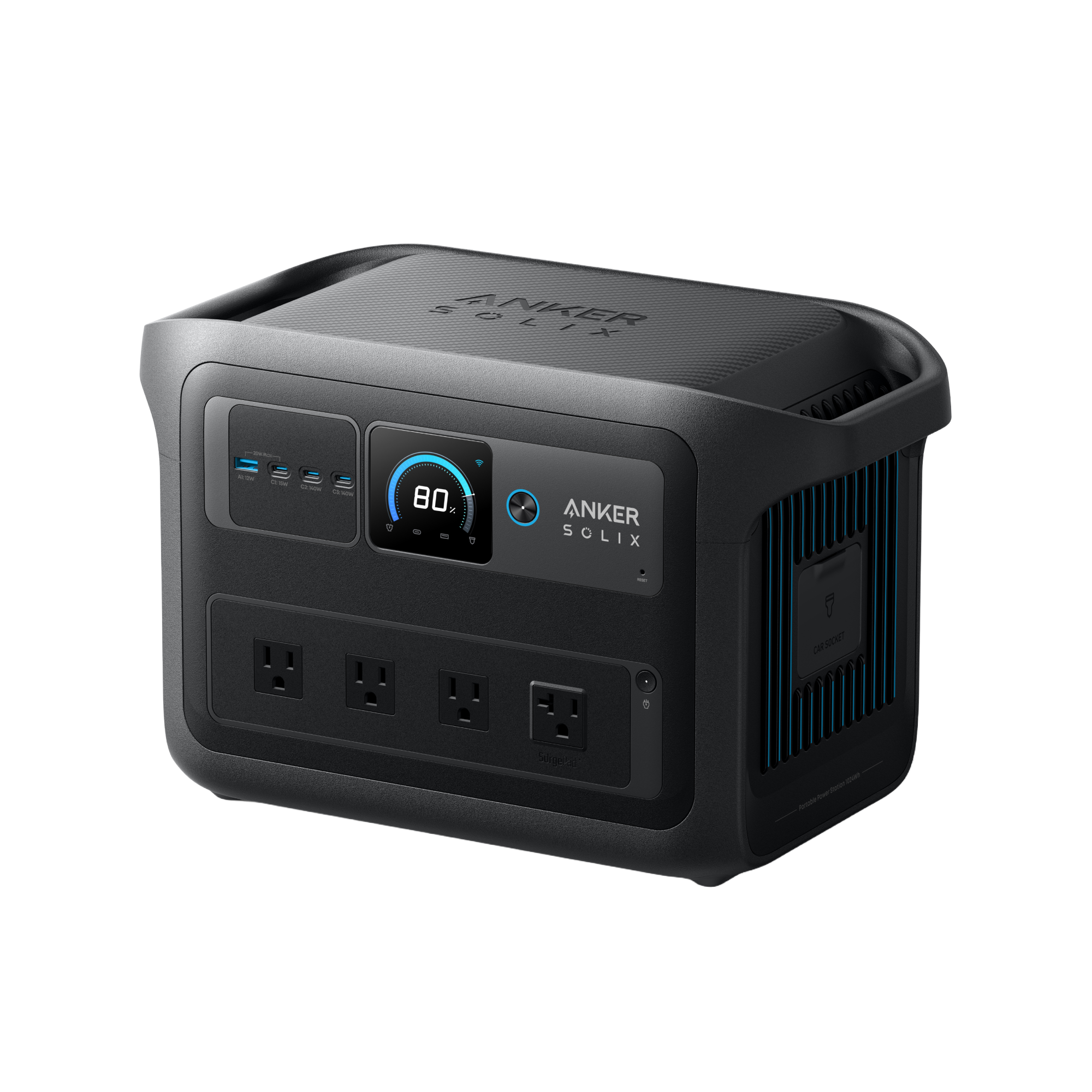
Anker SOLIX C1000X Gen 2
$699.99
$699.99 · direct from Anker
Last checked 16 days ago. Prices move — check before you buy.
Prices may vary by retailer and are subject to change.