Head-to-head test
Anker SOLIX C1000 vs Anker SOLIX C1000X Gen 2
The C1000X Gen 2 is the faster, lighter, longer-lived refinement of the C1000 — but it costs $250 more and is the first of these Anker 'upgrades' to remove the expansion battery, so unless you specifically need the quicker recharge or the 10ms UPS, the older unit is the better buy and the only one that can still grow.
Full profiles: Anker SOLIX C1000 → · Anker SOLIX C1000X Gen 2 →
Looking for a different matchup? Anker SOLIX C1000 vs SOLIX C1000 Gen 2

Written by Ian SchneiderUpdated
Solar & Off-Grid Tester, Station Arena Test Desk
Spec deltas
The C1000 costs $250 less than the C1000X Gen 2, holds 32Wh more, and keeps an expansion battery the newer unit gives up. That's an unusual scorecard for the older model in a same-brand refresh, and it's most of why this one leans the way it does: $549 against $800, 1,056Wh against 1,024, and an upgrade path only the cheaper unit still has.
The Gen 2 X is not a badge job. It upgrades the C1000 where the C1000 was genuinely mid — a 10ms line-interactive UPS against 20ms standby, a faster wall recharge, 4,000 charge cycles to 3,000, and a body 3.5 lb lighter at 24.9 lb. If you're buying for desk backup or you refill on a tight clock, those are real reasons to pay more.
For most people, though, the refresh moved in a strange direction. It costs $250 more and hands back two things buyers actually use: 32 watt-hours and the expansion battery. Take the C1000 unless the faster switchover or the quickest recharge is specifically why you're here. It's cheaper, bigger, and the only one of the two with a second act.
What the Numbers Reveal
Each conclusion stated first — the numbers behind it on one line, the full analysis below.
Capacity
So before you reach a single spec the X improves, the 'upgrade' has already cost you $250, 32 watt-hours, and your whole path to more capacityB3B10. That's a strange direction for an upgrade to point, and it's why the C1000 stays cheaper to own at $0.17 per lifetime kilowatt-hour against $0.20.
C1000 $549 with 1,056Wh vs C1000X Gen 2 $800 with 1,024WhThe C1000 is expandable; the Gen 2 X is sealedB10C1000 costs $0.17 per lifetime kWh vs the X's $0.20
Why it mattersIf capacity headroom or plain value is why you're shopping, the older C1000 wins before the refinement conversation even starts.
rated cycles
For a desktop or a NAS, the jump from 20ms standby to 10ms line-interactive is the difference between 'usually fine' and 'trusted mid-save'B7, and 4,000 cycles genuinely outlast 3,000. These are real reasons to pay up — they're just narrow ones, aimed at buyers who know they need fast switchover or the quickest recharge.
C1000X Gen 2: 10ms line-interactive UPS vs the C1000's 20ms standbyB7The X recharges faster once UltraFlash is enabled in the appB5The X carries 4,000 cycles to the C1000's 3,000
Why it mattersDesk-backup and fast-recharge buyers are precisely who the X's $250 is for; nobody else is.
That's the trajectory in one number: the refresh moved forward on speed and longevity and backward on flexibility and size, and on balance our scale reads it as a lateral-to-slightly-down move. The X is a better inverter and UPS bolted to a smaller, sealed, pricier battery.
C1000 PowerScore 3,077 vs C1000X Gen 2 2,929The C1000 keeps expandability and 32Wh more capacityThe X adds output, surge, cycles, and a faster UPS
Why it mattersDon't read 'Gen 2' and 'X' as 'strictly better' here — on the axes the score rewards, the base C1000 is still ahead.
weight
Neither needs wheels, but 3.5 lb is the felt difference between a casual one-hand grab and a braced two-hand lift onto a shelf or over a tailgate. It's the one X upgrade every buyer feels every time they move it, not just the ones running a NAS.
C1000X Gen 2 24.9 lb vs C1000 28.4 lbBoth are comfortable one-person carriesThe X trimmed 3.5 lb while adding output and cycles
Why it mattersIf the unit travels a lot — car to campsite, closet to porch — the X's lighter body is a daily quality-of-life win to weigh against its price.
The specific dimensions that decide these two units — everything else is a tie.
Lifetime Value
Selected because: The cheaper unit is also the bigger one and cheaper to own; anchors the value case for the older model.
cost / lifetime kWh
The cheaper unit is also the bigger one, which is not how a refresh usually goes. The C1000 lists 1,056Wh to the Gen 2 X's 1,024, costs $250 less, and comes out cheaper to own at $0.17 per lifetime kilowatt-hour against $0.20. The X banks more total energy over its longer life — 4,096 kWh to 3,168 — but that's the 4,000-cycle rating doing the work, a bill that comes due decades out against $250 you'd spend today. On money and capacity both, the older unit holds the better hand.
Growth Path
Selected because: The refresh sealed the expansion the C1000 keeps — the single most-flagged change and the verdict's backbone.
Here's the line that should give an upgrade shopper pause: the C1000 takes an Anker expansion battery, and the Gen 2 X doesn'tB10. The refresh sealed a door the original left open, and it's the single change owners have flagged mostB3. If your reason to eye the newer unit is 'more capacity someday,' the newer unit is the wrong one — the C1000 is the model that grows past 1,056Wh, and the X fixes you at 1,024 for good. An upgrade that removes the upgrade path is worth saying out loud.
What the Specs Don't Tell You
Selected because: Four cards fire (expansion against X, ups + cycleLife for X, warranty tie) — a fair refresh scorecard.
rated cycles
Four cards fire and they read like a fair scorecard for a refresh. Two favor the Gen 2 X — the 10ms line-interactive UPS against the C1000's 20ms standby, and 4,000 cycles against 3,000 — both genuine. One goes against it: the expansion the C1000 keeps and the X drops. Warranty is a tie at five years. Net it out and the X earns its refinements honestly, then hands most of them back at the register, where it asks $250 more for a unit that's also smaller and sealed.
Portability & Form Factor
Selected because: 3.5 lb lighter is the X's most universally felt genuine win; balances the value case.
weight
The Gen 2 X delivers the one upgrade you feel without reading a spec sheet: 24.9 lb against the C1000's 28.4, a 3.5-pound trim even as it adds output and cycles. That's the difference between a one-hand grab off the tailgate and a braced two-hand lift onto a shelf. It's the most democratic thing the X does — every buyer feels it on every carry, where the faster UPS only shows itself when the grid drops mid-save.
PowerScore Breakdown
Selected because: C1000 3,077 vs X 2,929 — the older unit scoring higher is the trajectory point of the whole matchup.
overall power score
Our composite reads the refresh as a lateral move and says so: the older C1000 scores 3,077 to the Gen 2 X's 2,929. The score weights the expandability and the extra 32Wh the X surrendered more heavily than the output, surge, and cycles it added. That isn't a knock on the X's engineering — it's a plain statement of the trade the refresh made. Forward on speed and longevity, backward on flexibility and size, and on our scale the two roughly cancel, with the cheaper unit a nose ahead.
Strengths & trade-offs
Anker SOLIX C1000
Strengths
- +Costs $151 less
- +Larger battery capacity
Trade-offs
- –Shorter-lived battery — rated for 3,000 charge cycles vs the SOLIX C1000X Gen 2's 4,000, so it wears out sooner.
Anker SOLIX C1000X Gen 2
Strengths
- +Lighter by 3.5 lb
- +Higher AC output
- +Rated for 4,000 charge cycles — much longer battery lifespan
Trade-offs
- –Substantially more expensive (+$151) than the SOLIX C1000.
- –Sealed capacity — the SOLIX C1000 can add batteries to grow past 1,024Wh; this one can't.
Will It Power Your Gear?
Scenario math and per-appliance runtimes, modeled from the spec record.
Scenario verdicts
We ran the math on six real-world scenarios. Here's which unit survives your actual life.
SCN-01 · 2 nights · needs 2,100Wh
Weekend Camping
Two nights off-grid with essential comfort
Neither unit
A 2,100Wh weekend is more than double either box's usable energy — a tie both lose. The difference is the exit: the C1000 you rescue with an expansion battery, while the sealed Gen 2 X would need a whole second unit.
Battery budget usedlower = more headroom
LOAD Phone Charger 15W×6h · LED Lights 40W×8h · Box Fan 75W×14h · CPAP Machine 40W×16h
SCN-02 · 8 hours · needs 1,645Wh
8-Hour Blackout
Keep the essentials running through a night without power
Neither unit
Neither unit covers this scenario's 1,645Wh: the SOLIX C1000 comes up 747Wh short (about 55% covered), the SOLIX C1000X Gen 2 775Wh (53%). Either gets you most of the way, so this is a scenario you plan around rather than one you should rule them out for.
Battery budget usedlower = more headroom
LOAD Fridge 150W×8h · Router + Modem 20W×8h · LED Lights (4 bulbs) 40W×6h · Phone Charger 15W×3h
SCN-03 · 8 hours · needs 320Wh
CPAP Overnight
Sleep therapy without interruption — the #1 medical use case
Either unit
Both cruise through a 320Wh night on about a third of the tank. Break it on the carry to the bedroom: the Gen 2 X is 3.5 lb lighter at 24.9 lb, the easier one to move to the nightstand.
Battery budget usedlower = more headroom
LOAD CPAP Machine 40W×8h
SCN-04 · 8 hours · needs 910Wh
Remote Workday
Full work day off-grid without power anxiety
Neither unit
A 910Wh workday just overruns both — top up the laptop from its own charger for the last stretch and either finishes the day. For desk backup specifically, the Gen 2 X's 10ms switchover is the upgrade doing the real work.
Battery budget usedlower = more headroom
LOAD Laptop 60W×8h · External Monitor 30W×8h · Router + Modem 20W×8h · Phone Charger 15W×2h
SCN-05 · 4 hours · needs 670Wh
Tailgate Party
Game day power for the crew
Either unit
Both handle game day easily. Since capacity isn't the deciding factor, weight is: at 24.9 lbs the SOLIX C1000X Gen 2 is the one you'll be glad you brought. Fan noise under load is worth a listen too — it's audible in the lulls between songs.
Battery budget usedlower = more headroom
LOAD Blender 400W×0.5h · LED TV (55") 80W×4h · Bluetooth Speaker 15W×4h · Phone Charger (×3) 45W×2h
SCN-06 · 24 hours · needs 4,685Wh
Van Life Daily
A full day of mobile living — the ultimate endurance test
Neither unit
A 4,685Wh day is more than four times either box — neither belongs in a full-time van alone. This is expansion-plus territory, and only the C1000 can even start down that road.
Battery budget usedlower = more headroom
LOAD Mini-Fridge 150W×24h · Laptop 60W×4h · Phone Charger 15W×3h · LED Lights 40W×5h · Fan 75W×8h
The Load Test
RUNTIME = (Wh × 0.85) ÷ LOAD
None of the scenarios above exactly yours? Build it. Toggle what you'd plug in; both units are tested against the combined draw.
Essentials
Comfort & Convenience
High-Draw Appliances
Test duration
8h
Continuous draw
205W
Projected runtime
Dead heat — both run this 205W load for roughly 4.4h. Pick on price, weight, or ports.
Planning for more than this? Describe your whole setup and get it sized →
Modeled from the spec record — same math as the tables below. Methodology
Runtime by appliance
Real-world runtime estimates for common appliances, modeled at 85% inverter efficiency.¹
Essentials
The basics you need runningscale 0–59.8hComfort & Convenience
Makes off-grid life actually enjoyablescale 0–12hHigh-Draw Appliances
These reveal the real limitsscale 0–0.9h¹ Runtime = (capacity × 0.85) ÷ appliance watts. Within each group, all bars share one time scale (the group's longest runtime), so lengths are comparable across appliances; identical runtimes collapse into a single blue/orange bar. Actual runtime varies with battery age, temperature, and simultaneous loads — see methodology.
Conclusion
July 18, 2026
Verdict: the SOLIX C1000
The base C1000 wins the decisions most buyers make first: it's $250 cheaper at $549, holds 32Wh more capacity, keeps the expansion battery the Gen 2 X drops, and comes out cheaper to own at $0.17 per lifetime kilowatt-hour against $0.20. It even edges the newer unit on our composite PowerScore. The Gen 2 X is a real refinement — a 10ms line-interactive UPS against the C1000's 20ms standby, a faster wall recharge, 4,000 cycles to 3,000, and 3.5 lb lighter — but those gains are narrow and its own dedicated review calls it a hard sell at list price. Buy the X if you specifically need the fast switchover or the quickest refill and you're sure 1,024Wh is enough forever; everyone else should take the C1000 and keep both the $250 and the room to grow.
Editor-assigned confidence, based on cited owner research and spec analysis.
List prices as of July 18, 2026. The links below open Anker's current price.
Sold on Amazon · today’s price is on the listing
or check the SOLIX C1000X Gen 2 price$699.99 list
Written by Ian Schneider, Solar & Off-Grid Tester · Station Arena Test Desk · Updated July 18, 2026
Black Friday · 38 days out
Price to beat:SOLIX C1000X Gen 2 $600
We have never seen it discounted, so any real cut would be a first.
Measured Data
Benchmark scores and the full spec record, side by side.
Benchmark scores
Full specifications
ᵈ Derived: price ÷ rated capacity. See the data behind our comparisons →
Comparison ToolAdd more power stations, side by sideOpen Tool →How these numbers are produced
Numeric verification
Every figure on this page traces to our spec database or arithmetic on it — no estimated numbers.
Owner claims
Statements about owner experience are cited to published reviews — see Sources & Research Notes below.
Runtime model
Runtime = (rated capacity × 0.85 inverter efficiency) ÷ device wattage. Solar recharge estimates assume panels deliver 70% of rated output. Cold weather, battery age, and stacked loads reduce real-world results.
Power Score
Computed from 14 published spec dimensions, weighted per use-case bench. Higher is better; a unit must meet a bench's minimum threshold to be rated.
See the full weight table and data sourcing on our methodology page →Class ranking (the star rating)
Each unit's star score is a category ranking, not customer reviews — no buyer opinions feed it. We score every station on size-independent quality (value, output, portability, endurance, ports, warranty, and more), then percentile-rank it against the other units in its capacity class, so a class-leading compact unit and a class-leading whole-home unit can both earn 5★. Here, SOLIX C1000 rates 4.7/5 (81st percentile of 27 Everyday-class units), and SOLIX C1000X Gen 2 rates 4.0/5 (38th percentile of 27 Everyday-class units).
How the class ranking is computed →Test Notes & Caveats
Hidden gotchas and advantages we spotted that you won't find on the product page.
The upgrade that removed the upgrade path
The original C1000 takes an Anker expansion battery; the Gen 2 X is sealed at 1,024Wh and doesn't. It's the change owners flag most, and it points the wrong way for a refresh — the newer, pricier unit is the one that can't grow. If 'more capacity someday' is anywhere on your list, the older C1000 is the model that offers it.
The X's clearest genuine upgrade
The Gen 2 X switches over in 10ms as a line-interactive UPS; the C1000 is 20ms standby, a class behind. For a desktop mid-save or a NAS that hates power blips, that gap is the difference between 'trusted' and 'usually fine.' It's the single spec that most cleanly justifies the X's higher price — for the buyer who actually needs it.
Warranty: No Difference
Both units carry the same 5-year warranty, so coverage isn't a tiebreaker here. Worth saying because the per-dollar framing can suggest otherwise: the SOLIX C1000 works out at 11.1 years of cover per $1,000 spent against the SOLIX C1000X Gen 2's 8.3, but that spread is the price gap, not the terms.
More cycles, decades out
The Gen 2 X is rated for 4,000 charge cycles to the C1000's 3,000 — about 928 more lifetime kilowatt-hours. It's a real durability edge, but cycled weekly both units run well past 50 years, so it's longevity most owners will never reach. Weigh it lightly against the $250 you'd spend today.
Full record above — the Test Desk pick is the SOLIX C1000.
Check SOLIX C1000 price →or check the SOLIX C1000X Gen 2 priceOwnership Analysis
What happens after you buy — true cost of ownership, brand trust, and growth potential.
Lifetime value
Service lifeyears at one full cycle per day
Lifetime energy delivered
Cost per delivered kWh
│ warranty ends · Reaching the cycle rating means ~80% capacity remains — degraded, not dead.
Analyst note
Both units have similar long-term ownership costs ($0.14/kWh vs $0.15/kWh). The price difference is what you see on the sticker — neither is a hidden bargain or rip-off.
Growth path
SOLIX C1000
EXPANDABLESupports Anker expansion batteries, so you can add capacity later without replacing the base unit — useful if your needs may climb past 1,056Wh.
Accepts up to 600W of solar. Suitable for a 1-2 panel setup.
Generous port selection supports complex multi-device setups.
Expansion batteries are Anker-specific. You're investing in the Anker ecosystem.
SOLIX C1000X Gen 2
FIXED CAPACITYFixed at 1,024Wh, with no expansion — so size it for your needs up front rather than planning to add capacity later.
Accepts up to 600W of solar. Suitable for a 1-2 panel setup.
Adequate ports for most setups, but heavy users may want a power strip.
Realistic full solar rechargeat 70% of rated panel output — see methodology
Analyst note
The SOLIX C1000X Gen 2 is sealed at 1,024Wh, which is fine if that covers you. The SOLIX C1000 starts at 1,056Wh and can grow beyond it with Anker expansion batteries — though at this size expansion means longer runtimes on the same loads, not a path to home backup. More hours, not more house.
What Owners Report
Patterns from published owner reports and long-term reviews — every claim cited to its source below.
Anker SOLIX C1000
The C1000 has something rare in this class: a real long-term track record. One reviewer ran theirs for over a year with minimal battery degradation, holding roughly its original capacity, and a month-long home-office stint carried it through several brief outages with no shutdowns or lost dataA2. Owners consistently credit the fundamentals — fast AC recharge, strong short-burst inverter performance, and a size and weight that make sense for a 1kWh unitA3.
The one recurring knock is noise: the fans spin up audibly during fast charging or heavy output near the unit's limit, though below roughly 500W it's nearly silentA1. Otherwise it's the well-understood sweet-spot 1kWh box that handles virtually any household load short of central AC or an electric dryerA4. This is the unit with the miles already on it.
“One reviewer used their unit for over a year with zero issues and minimal battery degradation — about 97% of original capacity. In a 30-day home-office UPS test it handled 7 brief outages with no equipment shutdowns or data loss.”
Sources
outdoorgearlab.com · lifenhancer.com · rvoutfitting.com · outdoortechlab.com · wattsontheroof.com · technerdo.com · teqclub.com
Anker SOLIX C1000X Gen 2
On the Gen 2 X, the dedicated review leads with the price: at $800 list it's a hard sell against the cheaper C-series, worth it mainly for buyers who specifically need the faster recharge, and one to buy on saleB8. The most-flagged change from owners is the loss of the external expansion battery the earlier X supported, which fixes capacity for goodB3B10.
What the refresh clearly improved: the 10ms UPS switchover sits below the threshold where a desktop drops its session or a NAS risks corruptionB7, and the unit arrives nearly charged and refills fast at the wall, though the headline sub-hour figure needs UltraFlash switched on in the appB4B5. Near-silent at light loads, louder under heavy outputB1B2. Field data on this exact SKU is still thin and largely paraphrased from retailer pages, so weigh it as early returns.
“Near-silent under light loads — rated 0 to 20dB under 200W — quiet enough for an office or bedroom when it's just sitting idle or trickle-charging.”
Sources
backuppowerhub.com
Sources & Research Notes
Every owner claim in this report is traceable to a published source. The bracketed references above resolve here.
Recurring owner themes
- Fan noise under fast charging or heavy load is the consistent knock; otherwise strong reliability, fast recharge, and practical size earn broad praise. [SOLIX C1000 · 3 entries]
- Fans are near-silent at light loads but become loud enough to disturb sleep once output or AC charge current climbs. [SOLIX C1000X Gen 2 · 2 entries]
- Losing the external expansion-battery option available on the original C1000X is the most consistent point of disappointment, raised by both owners and the dedicated review. [SOLIX C1000X Gen 2 · 2 entries]
- Fast, reliable AC recharge and an out-of-box-ready charge level are the headline praise, though the full 49-minute figure requires manually enabling UltraFlash in the app, and a minority of owners mention occasional charging hiccups. [SOLIX C1000X Gen 2 · 3 entries]
- A1
“Fan noise is the single most common complaint — the fans spin up audibly during fast charging or heavy output near the unit's limit, comparable to a desktop computer fan at speed. Under light loads (below ~500W) it's nearly silent.”
outdoorgearlab.com / lifenhancer.com — Anker SOLIX C1000 review · 2026 · [negative]
- A2
“One reviewer used their unit for over a year with zero issues and minimal battery degradation — about 97% of original capacity. In a 30-day home-office UPS test it handled 7 brief outages with no equipment shutdowns or data loss.”
rvoutfitting.com / outdoortechlab.com — Anker SOLIX C1000 long-term notes · 2026 · [positive]
- A3
“Nails the fundamentals: fast AC recharge, strong inverter performance for short bursts, practical size and weight for a 1kWh unit, and genuinely useful app monitoring.”
wattsontheroof.com / technerdo.com — Anker SOLIX C1000 review · 2026 · [positive]
- A4
“Handles virtually any household appliance except central AC and electric dryers; a popular 'sweet spot' 1kWh unit for RV and home backup.”
rvoutfitting.com / teqclub.com — Anker SOLIX C1000 review · 2026 · [positive]
- B1
“Under heavy load the fans kick on and get loud enough that you wouldn't want it running in the room while sleeping.”
Home Depot — Anker SOLIX C1000X Gen2 (2,000W/1,024Wh) customer reviews · unknown · [negative]
- B2
“Near-silent under light loads — rated 0 to 20dB under 200W — quiet enough for an office or bedroom when it's just sitting idle or trickle-charging.”
backuppowerhub.com — Anker SOLIX C1000X Gen 2 Review (Dark Grey Flagship Refreshed) · 2026 · [positive]
- B3
“Some owners were disappointed this generation dropped the external expansion-battery option that the original C1000X had, leaving capacity fixed no matter what.”
Home Depot — Anker SOLIX C1000X Gen2 (2,000W/1,024Wh) customer reviews · unknown · [negative]
- B4
“Arrived nearly fully charged and was easy to use right out of the box; recharge from empty to full at the wall is genuinely fast, which matters when you only get a short window of power.”
Best Buy — Anker SOLIX C1000X Gen2 (SOLIX-65-PS) customer reviews · unknown · [positive]
- B5
“The 49-minute headline recharge only happens once you go into the Anker app and switch on UltraFlash mode — it isn't how the unit charges by default.”
backuppowerhub.com — Anker SOLIX C1000X Gen 2 Review · 2026 · [mixed]
- B7
“10ms UPS switchover — reviewer notes that's below the threshold where a desktop PC loses its session or a NAS drive risks corruption.”
backuppowerhub.com — Anker SOLIX C1000X Gen 2 Review · 2026 · [positive]
- B8
“At the $799 list price it's a much harder sell than the $499.99 standard C1000 Gen 2 — worth it mainly for buyers who specifically need the extra recharge speed, recommended to buy on sale.”
backuppowerhub.com — Anker SOLIX C1000X Gen 2 Review / C1000X vs C1000 Gen 2 · 2026 · [mixed]
- B10
“Does not support an external expansion battery module — capacity is fixed at 1,024Wh with no upgrade path, unlike the original C1000X's optional add-on pack.”
backuppowerhub.com — Anker SOLIX C1000X Gen 2 Review · 2026 · [negative]
Research compiled July 18, 2026.
Who Should Buy Which
Buy the SOLIX C1000 if you…
- →Value buyers and anyone who wants headroom: $250 less, 32Wh more capacity, and an expansion battery the Gen 2 X can't takeB10.
- →Buyers who value a track record: the C1000 has genuine long-term field data, including a year-plus of use with minimal degradationA2.
- →Households running everyday loads: it handles virtually anything short of central AC or an electric dryerA4, and most people never miss the X's extra output.
Buy the SOLIX C1000X Gen 2 if you…
- →Desk and NAS backup: the 10ms line-interactive UPS is a real step up from the C1000's 20ms standbyB7, the clearest reason to pay more.
- →Fast-recharge buyers: the UltraFlash sub-hour refill is the X's signature, once enabled in the appB5.
- →Anyone who carries it often: 24.9 lb against 28.4 is 3.5 lb you feel on every trip — but skip it if you might ever want more capacity, because this one is sealed.
If neither fits
If your real load is the weekend basket (2,100Wh), an 8-hour blackout (1,645Wh), or van life (4,685Wh), both fall short of half — buy the C1000 with its expansion battery from day one, or step up to Anker's 2kWh class.
The Bottom Line
Strip the generation label and the C1000 wins the things you decide on first: $250 cheaper, 32Wh more capacity, still expandable, and a nose ahead of the newer X on our composite score. The Gen 2 X is a genuine refinement — faster UPS, quicker recharge, more cycles, 3.5 lb lighter — but it's the rare upgrade that also subtracts, sealing the capacity the C1000 leaves open and charging more for the privilege.
Buy the X if you specifically need the 10ms line-interactive UPS or the fastest recharge, and you're certain 1,024Wh is enough forever. Everyone else should buy the C1000, keep the $250, and keep the option to grow.
Frequently Asked Questions
Answers drawn from the spec record and cited owner research.
Is the Anker C1000X Gen 2 worth $250 more than the C1000?
For most buyers, no. The C1000 is cheaper, holds 32Wh more, and stays expandable. The X buys a faster 10ms UPS, a quicker recharge, 4,000 cycles, and a 3.5 lb lighter body — all real, but narrow. Its own dedicated review calls it a hard sell at list price and one to buy on sale, which is a fair summary of the gap.
What did the Gen 2 X lose compared to the C1000?
Two things owners actually notice: the expansion battery — it's sealed at 1,024Wh — and 32Wh of base capacity. It gained output, surge, cycles, a faster UPS, and lighter weight in return. Whether that trade is worth $250 comes down to one question: would you ever want to expand?
Which one lasts longer?
The X on paper, at 4,000 charge cycles to the C1000's 3,000. But the C1000 has the actual proof, with a reviewer logging a year-plus of real use at minimal degradation, and cycled weekly both units run well past 50 years. Longevity belongs to the X, but it isn't the reason to pick it over the cheaper unit.
Which is the better home-backup UPS?
The Gen 2 X. Its 10ms line-interactive switchover keeps a desktop alive mid-save where the C1000's 20ms standby is a class behind. If blackout desk duty is the actual job, that's the single spec that most cleanly justifies paying up for the newer unit.
Are they equally quiet?
Close to it. Both are near-silent at light loads and both get louder under heavy charging or output. The C1000's behavior is well-documented from long use; the X's is early-returns but reads the same. Neither is one you'd want fast-charging next to your pillow.
Where to buy
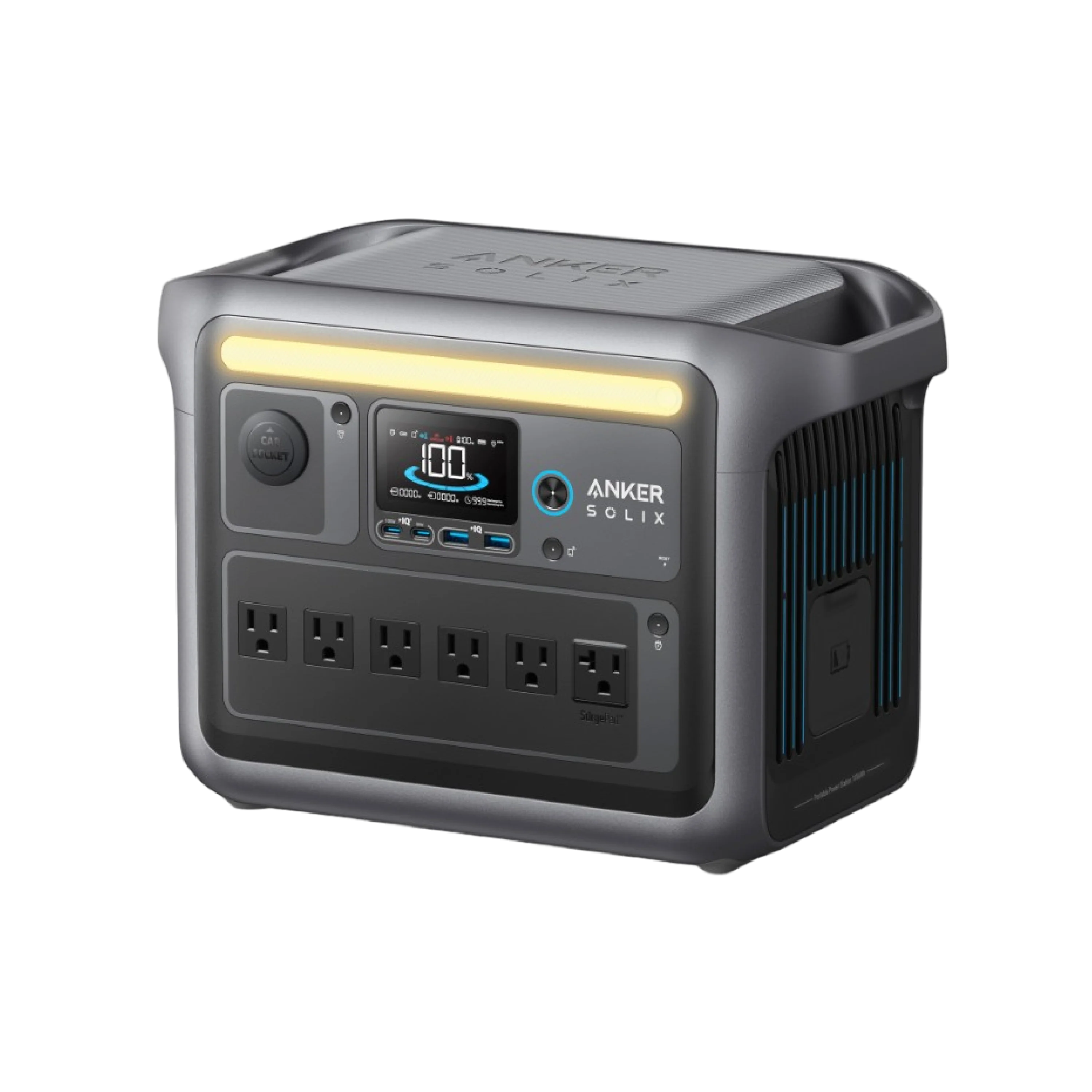
Anker SOLIX C1000Pick
Sold on Amazon · today’s price is on the listing
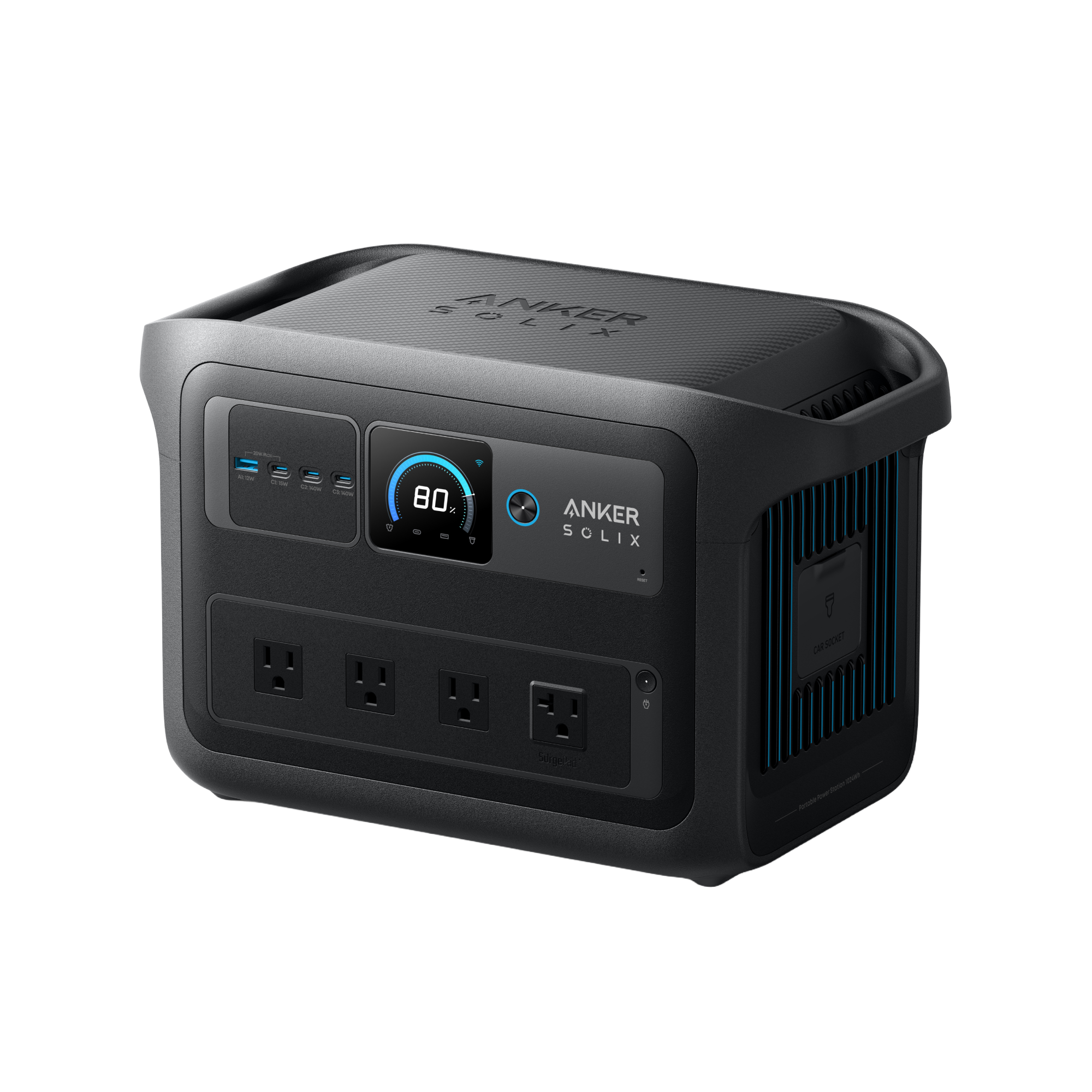
Anker SOLIX C1000X Gen 2
$699.99
$699.99 · direct from Anker
Last checked 16 days ago. Prices move — check before you buy.
Prices may vary by retailer and are subject to change.