Head-to-head test
Anker SOLIX C1000 Gen 2 vs Anker SOLIX C1000X Gen 2
Anker SOLIX C1000 Gen 2 vs Anker SOLIX C1000X Gen 2: the same 1,024Wh, 2,000W, 24.9 lb machine; the X charges faster from the wall once UltraFlash is on, drops the expansion port and costs more. Buy the C1000 Gen 2 unless the fastest wall recharge is the whole point.
Full profiles: Anker SOLIX C1000 Gen 2 → · Anker SOLIX C1000X Gen 2 →
Looking for a different matchup? Anker SOLIX C1000 vs SOLIX C1000 Gen 2

Written by Ian SchneiderUpdated
Solar & Off-Grid Tester, Station Arena Test Desk
Spec deltas
The C1000 Gen 2 and the C1000X Gen 2 are the same physical machine: 1,024Wh, 2,000W, 24.9 pounds, a 4,000-cycle rating, a 10-millisecond UPS switchover. Put them side by side with the labels off and you could not tell which is which.
Two things separate them, and both cut against the pricier one. The X costs $150 more, and it drops the external expansion battery the standard unit still supports, so its 1,024Wh is a hard ceiling. What that money supposedly buys back is recharge speed, the trait Anker's 'X' trim leans on.
The catch is that the fast charge is not the default. The sub-hour recharge everyone quotes only shows up after you open the app and turn on UltraFlashB5, so you have paid extra to lose the upgrade path and gained a setting. This is the rare upgrade that reads better on the box than on the spec sheet.
What the Numbers Reveal
Each conclusion stated first — the numbers behind it on one line, the full analysis below.
The expansion port is the one hardware difference between the two, and it is the cheaper unit that has it, so the base C1000 Gen 2 is both the more flexible box and the less expensive one. That is not how price tiers usually run.
C1000 Gen 2 is $649 and takes an external expansion batteryC1000X Gen 2 is $799.99 and is sealed at 1,024Wh
Why it mattersIf there is any chance your needs climb past 1,024Wh, the standard unit is the only one of the pair that can follow you there.
A recharge edge that lives behind an app toggle is worth real money to someone refilling under a deadline and nothing to someone who plugs in overnight, and the overnight charger is most buyers.
The X's main selling point is a faster wall rechargethat recharge requires enabling UltraFlash in the Anker appB5the unit's dedicated review calls it a harder sell at list priceB8
Why it mattersChoose the X only if you know you will be refilling against the clock and will keep UltraFlash on to do it.
Our score rewards headroom and value, and the X gave up ground on both — it sealed off the expansion path and costs more for it — so the cheaper unit outscores the premium one on the two axes that actually differ.
C1000 Gen 2 scores 3,229C1000X Gen 2 scores 2,929the two units share every spec except price, expandability, and disclosed noise
Why it mattersThe badge and the price tag point the same direction here, and it is down toward the standard C1000 Gen 2.
The specific dimensions that decide these two units — everything else is a tie.
Lifetime Value
Selected because: Identical energy output, two prices — the core of the whole matchup.
cost / lifetime kWh
Both boxes hold 1,024Wh and both are rated for 4,000 cycles, so both deliver the same roughly 4,096 kWh over their lives. Run that identical output through two price tags and the math is quick: the C1000 Gen 2 pencils out to $0.16 per lifetime kWh, the C1000X Gen 2 to $0.20. Same energy, same decade of weekends, and the X asks a quarter more for each unit of it.
There is no runtime, no extra port, and no additional warranty year on the other side of that ledger to earn the gap back. You are paying the premium for a recharge mode, not for any energy you will ever use.
Growth Path
Selected because: The expansion port is the only hardware difference and it favors the cheaper unit.
The standard C1000 Gen 2 accepts an external expansion battery; the X does not, and that is the entire structural difference between them. It is worth sitting with how backwards that is. Normally the pricier model in a line is the one that grows, and here the premium 'X' is the sealed one while the cheaper base unit carries the port.
For a buyer whose needs sit steady at 1,024Wh, it is a non-issue. For anyone eyeing partial-home backup down the road, the X is a dead end you paid a premium to walk into.
PowerScore Breakdown
Selected because: Explain why the cheaper unit scores 300 points higher despite identical hardware.
overall power score
A 300-point PowerScore gap between two units this identical looks like a typo until you see what drives it. Nothing about how they perform differs, so the score is not measuring performance here — it is measuring what the X gave up. Seal off the expansion path, raise the price, stop publishing a noise figure, and a value-and-headroom score drifts down.
The number is just restating, in one digit, the case the price tag already made.
What the Specs Don't Tell You
Selected because: Fixed-capacity and undisclosed-noise flags both land on the X.
Two flags fire on the X and one is a genuine shrug: the fixed-capacity note only repeats that it cannot expand. The one worth a beat is the undisclosed noise level. Anker publishes a 35 dB figure for the standard C1000 Gen 2 and leaves the X's blank, and 'we did not say' is not the same as 'it is quiet.'
Given they share a chassis, the fan behavior is almost certainly identical — near-silent at a trickle, audible under heavy drawB1B2 — but on a $799.99 unit you would like that number in writing rather than inferred from its cheaper twin.
Strengths & trade-offs
Anker SOLIX C1000 Gen 2
Strengths
- +Costs $70 less
Trade-offs
- –No major technical downsides compared to rival.
Anker SOLIX C1000X Gen 2
Strengths
- Solid all-rounder with standard specs.
Trade-offs
- –Sealed capacity — the SOLIX C1000 Gen 2 can add batteries to grow past 1,024Wh; this one can't.
Will It Power Your Gear?
Scenario math and per-appliance runtimes, modeled from the spec record.
Scenario verdicts
We ran the math on six real-world scenarios. Here's which unit survives your actual life.
SCN-01 · 2 nights · needs 2,100Wh
Weekend Camping
Two nights off-grid with essential comfort
Neither unit
Neither unit covers this scenario's 2,100Wh: the SOLIX C1000 Gen 2 comes up 1,230Wh short (about 41% covered), the SOLIX C1000X Gen 2 1,230Wh (41%). Treat this as partial cover — enough for the essentials in it, not the whole list.
Battery budget usedlower = more headroom
LOAD Phone Charger 15W×6h · LED Lights 40W×8h · Box Fan 75W×14h · CPAP Machine 40W×16h
SCN-02 · 8 hours · needs 1,645Wh
8-Hour Blackout
Keep the essentials running through a night without power
Neither unit
Same battery, same result: neither 1,024Wh unit fully covers a whole-home essentials load on its own, so it is a dead heat on the short side of the line. Break it on what happens next. The standard C1000 Gen 2 is cheaper and can bolt on an expansion battery before the outage after this one; the X cannot.
Battery budget usedlower = more headroom
LOAD Fridge 150W×8h · Router + Modem 20W×8h · LED Lights (4 bulbs) 40W×6h · Phone Charger 15W×3h
SCN-03 · 8 hours · needs 320Wh
CPAP Overnight
Sleep therapy without interruption — the #1 medical use case
Either unit
Both run a CPAP all night with room to spare — you will use about a third of either battery, so capacity is not the question. Noise is. The standard C1000 Gen 2 publishes a 35 dB idle figure and the X leaves it blank, and 18 inches from your pillow is exactly where you want that number confirmed rather than assumed. Same likely-silent hardware, but only one of them says so on paper.
Battery budget usedlower = more headroom
LOAD CPAP Machine 40W×8h
SCN-04 · 8 hours · needs 910Wh
Remote Workday
Full work day off-grid without power anxiety
Neither unit
This scenario needs 910Wh and neither unit quite finishes it. Both land within 5% of it — close enough that trimming one appliance, or accepting a shorter evening, gets you there on the day.
Battery budget usedlower = more headroom
LOAD Laptop 60W×8h · External Monitor 30W×8h · Router + Modem 20W×8h · Phone Charger 15W×2h
SCN-05 · 4 hours · needs 670Wh
Tailgate Party
Game day power for the crew
Either unit
Both handle game day easily. Since capacity isn't the deciding factor, weight is: at 24.9 lbs the SOLIX C1000 Gen 2 is the one you'll be glad you brought. Fan noise under load is worth a listen too — it's audible in the lulls between songs.
Battery budget usedlower = more headroom
LOAD Blender 400W×0.5h · LED TV (55") 80W×4h · Bluetooth Speaker 15W×4h · Phone Charger (×3) 45W×2h
SCN-06 · 24 hours · needs 4,685Wh
Van Life Daily
A full day of mobile living — the ultimate endurance test
Neither unit
Neither unit covers this scenario's 4,685Wh: the SOLIX C1000 Gen 2 comes up 3,815Wh short (about 19% covered), the SOLIX C1000X Gen 2 3,815Wh (19%). This is well outside what either unit is for; the right answer here is a larger station, not a choice between these two.
Battery budget usedlower = more headroom
LOAD Mini-Fridge 150W×24h · Laptop 60W×4h · Phone Charger 15W×3h · LED Lights 40W×5h · Fan 75W×8h
The Load Test
RUNTIME = (Wh × 0.85) ÷ LOAD
None of the scenarios above exactly yours? Build it. Toggle what you'd plug in; both units are tested against the combined draw.
Essentials
Comfort & Convenience
High-Draw Appliances
Test duration
8h
Continuous draw
205W
Projected runtime
Dead heat — both run this 205W load for roughly 4.2h. Pick on price, weight, or ports.
Planning for more than this? Describe your whole setup and get it sized →
Modeled from the spec record — same math as the tables below. Methodology
Runtime by appliance
Real-world runtime estimates for common appliances, modeled at 85% inverter efficiency.¹
Essentials
The basics you need runningscale 0–58hComfort & Convenience
Makes off-grid life actually enjoyablescale 0–11.6hHigh-Draw Appliances
These reveal the real limitsscale 0–0.9h¹ Runtime = (capacity × 0.85) ÷ appliance watts. Within each group, all bars share one time scale (the group's longest runtime), so lengths are comparable across appliances; identical runtimes collapse into a single blue/orange bar. Actual runtime varies with battery age, temperature, and simultaneous loads — see methodology.
Conclusion
July 18, 2026
Verdict: the SOLIX C1000 Gen 2
Buy the C1000 Gen 2. It is the same 1,024Wh, 2,000W machine as the C1000X Gen 2 down to the weight and the 10ms UPS, but it costs $649 against $799.99 and it keeps the external expansion port the X removes. The X's entire case rests on a faster wall recharge, and even that carries an asterisk: the headline speed only appears once you switch on UltraFlash in the appB5, and the unit's own dedicated review calls it a harder sell at list price unless recharge speed is the one thing you are buying forB8. Unless you refill against a clock and will live in the app to do it, the cheaper sibling is the smarter buy, and its higher PowerScore is really just the price tag restated.
Editor-assigned confidence, based on cited owner research and spec analysis.
List prices as of July 18, 2026. The links below open Anker's current price.
$549.99 · direct from Anker
Last checked 16 days ago. Prices move — check before you buy.
or check the SOLIX C1000X Gen 2 price$699.99 list
Written by Ian Schneider, Solar & Off-Grid Tester · Station Arena Test Desk · Updated July 18, 2026
Black Friday · 38 days out
Prices to beat:SOLIX C1000 Gen 2 $530SOLIX C1000X Gen 2 $600
We have never seen either discounted, so any real cut would be a first.
Measured Data
Benchmark scores and the full spec record, side by side.
Benchmark scores
Full specifications
ᵈ Derived: price ÷ rated capacity. See the data behind our comparisons →
Comparison ToolAdd more power stations, side by sideOpen Tool →How these numbers are produced
Numeric verification
Every figure on this page traces to our spec database or arithmetic on it — no estimated numbers.
Owner claims
Statements about owner experience are cited to published reviews — see Sources & Research Notes below.
Runtime model
Runtime = (rated capacity × 0.85 inverter efficiency) ÷ device wattage. Solar recharge estimates assume panels deliver 70% of rated output. Cold weather, battery age, and stacked loads reduce real-world results.
Power Score
Computed from 14 published spec dimensions, weighted per use-case bench. Higher is better; a unit must meet a bench's minimum threshold to be rated.
See the full weight table and data sourcing on our methodology page →Class ranking (the star rating)
Each unit's star score is a category ranking, not customer reviews — no buyer opinions feed it. We score every station on size-independent quality (value, output, portability, endurance, ports, warranty, and more), then percentile-rank it against the other units in its capacity class, so a class-leading compact unit and a class-leading whole-home unit can both earn 5★. Here, SOLIX C1000 Gen 2 rates 4.9/5 (96th percentile of 27 Everyday-class units), and SOLIX C1000X Gen 2 rates 4.0/5 (38th percentile of 27 Everyday-class units).
How the class ranking is computed →Test Notes & Caveats
Hidden gotchas and advantages we spotted that you won't find on the product page.
The premium unit is the sealed one
Normally the up-tier model in a line is the expandable one. Here it is reversed: the cheaper C1000 Gen 2 takes an external battery and the X does not. If you might grow past 1,024Wh, the base unit is the only one of the pair that can.
Warranty: No Difference
Both units carry the same 5-year warranty, so coverage isn't a tiebreaker here.
The X's missing noise number
Anker lists 35 dB for the standard C1000 Gen 2 and leaves the X's spec blank. They share a chassis, so the real-world behavior is almost certainly the same — quiet at low load, audible when you push it — but on the pricier unit you are inferring the figure from its cheaper twin instead of reading it off the box.
Full record above — the Test Desk pick is the SOLIX C1000 Gen 2.
Check SOLIX C1000 Gen 2 price →or check the SOLIX C1000X Gen 2 priceOwnership Analysis
What happens after you buy — true cost of ownership, brand trust, and growth potential.
Lifetime value
Service lifeyears at one full cycle per day
Lifetime energy delivered
Cost per delivered kWh
│ warranty ends · Reaching the cycle rating means ~80% capacity remains — degraded, not dead.
Analyst note
Both units have similar long-term ownership costs ($0.13/kWh vs $0.15/kWh). The price difference is what you see on the sticker — neither is a hidden bargain or rip-off. One thing to know reading the table: both carry the same 4,000-cycle rating, so the lifetime rows are sticker price and capacity in disguise — the wear horizon is identical and decides nothing here.
Growth path
SOLIX C1000 Gen 2
EXPANDABLESupports Anker expansion batteries, so you can add capacity later without replacing the base unit — useful if your needs may climb past 1,024Wh.
Accepts up to 600W of solar. Suitable for a 1-2 panel setup.
Adequate ports for most setups, but heavy users may want a power strip.
Expansion batteries are Anker-specific. You're investing in the Anker ecosystem.
SOLIX C1000X Gen 2
FIXED CAPACITYFixed at 1,024Wh, with no expansion — so size it for your needs up front rather than planning to add capacity later.
Accepts up to 600W of solar. Suitable for a 1-2 panel setup.
Adequate ports for most setups, but heavy users may want a power strip.
Realistic full solar rechargeat 70% of rated panel output — see methodology
Analyst note
The SOLIX C1000X Gen 2 is sealed at 1,024Wh, which is fine if that covers you. The SOLIX C1000 Gen 2 starts at 1,024Wh and can grow beyond it with Anker expansion batteries — though at this size expansion means longer runtimes on the same loads, not a path to home backup. More hours, not more house.
What Owners Report
Patterns from published owner reports and long-term reviews — every claim cited to its source below.
Anker SOLIX C1000 Gen 2
Reviewers treat the C1000 Gen 2 as the mid-size unit to beat this year, a refined and fast-charging update to a popular 1kWh platformA4. The praise that recurs is the higher continuous output: it clears the bar to run a 1,500W space heater with headroom left overA3, which the first-generation unit could not manage.
The recurring knock is fan noise. It is near-silent under about 200W, but the fans ramp up audibly during fast charging or heavy outputA2, so it is a quiet desk companion right up until you lean on it.
“Fast HyperFlash charging — a full recharge in roughly 49 minutes, noticeably quicker than the original C1000's ~58-80 minutes.”
Sources
thepowerpick.com · macrumors.com · outdoorgearlab.com · technerdo.com · mensjournal.com · powerstationadvisor.com
Anker SOLIX C1000X Gen 2
The loudest theme on the C1000X Gen 2 is subtraction: this generation dropped the external expansion battery the original C1000X offered, and the people who wanted that headroom noticed it was goneB3B10. The recharge speed that is meant to justify the 'X' is real but conditional — the quick full charge only kicks in once you enable UltraFlash in the app, not by defaultB5 — and the unit's own dedicated review lands on it as a harder sell at list price unless recharge speed is your single priorityB8.
Fan behavior mirrors its cheaper twin: quiet under light load, loud enough under heavy draw that you would move it out of the bedroomB1B2. Independent field data on this exact SKU is still thin and mostly paraphrased from retailer review pages, so treat all of it as directional on a unit that has only just shipped.
“Near-silent under light loads — rated 0 to 20dB under 200W — quiet enough for an office or bedroom when it's just sitting idle or trickle-charging.”
Sources
backuppowerhub.com
Sources & Research Notes
Every owner claim in this report is traceable to a published source. The bracketed references above resolve here.
Recurring owner themes
- Fast charging and higher output over the original are the standout gains; fan noise under load or fast charging is the top complaint. [SOLIX C1000 Gen 2 · 3 entries]
- Fans are near-silent at light loads but become loud enough to disturb sleep once output or AC charge current climbs. [SOLIX C1000X Gen 2 · 2 entries]
- Losing the external expansion-battery option available on the original C1000X is the most consistent point of disappointment, raised by both owners and the dedicated review. [SOLIX C1000X Gen 2 · 2 entries]
- Fast, reliable AC recharge and an out-of-box-ready charge level are the headline praise, though the full 49-minute figure requires manually enabling UltraFlash in the app, and a minority of owners mention occasional charging hiccups. [SOLIX C1000X Gen 2 · 3 entries]
- A2
“Fan noise is the single most common complaint — nearly silent at low load (about 35 dB under 200W), but the fans ramp up audibly during fast charging or heavy output, reaching around 55 dB at 1,000W-plus.”
outdoorgearlab.com / technerdo.com — C1000 Gen 2 review · 2026 · [negative]
- A3
“The higher continuous output crosses a useful threshold over the original — enough to run a standard 1,500W space heater with headroom to spare.”
thepowerpick.com / mensjournal.com — C1000 Gen 2 review · 2026 · [positive]
- A4
“Reviewers describe it as a refined, powerful, fast-charging update to a popular 1kWh platform, widely rated the mid-size unit to beat in 2026.”
thepowerpick.com / powerstationadvisor.com — C1000 Gen 2 review · 2026 · [positive]
- B1
“Under heavy load the fans kick on and get loud enough that you wouldn't want it running in the room while sleeping.”
Home Depot — Anker SOLIX C1000X Gen2 (2,000W/1,024Wh) customer reviews · unknown · [negative]
- B2
“Near-silent under light loads — rated 0 to 20dB under 200W — quiet enough for an office or bedroom when it's just sitting idle or trickle-charging.”
backuppowerhub.com — Anker SOLIX C1000X Gen 2 Review (Dark Grey Flagship Refreshed) · 2026 · [positive]
- B3
“Some owners were disappointed this generation dropped the external expansion-battery option that the original C1000X had, leaving capacity fixed no matter what.”
Home Depot — Anker SOLIX C1000X Gen2 (2,000W/1,024Wh) customer reviews · unknown · [negative]
- B5
“The 49-minute headline recharge only happens once you go into the Anker app and switch on UltraFlash mode — it isn't how the unit charges by default.”
backuppowerhub.com — Anker SOLIX C1000X Gen 2 Review · 2026 · [mixed]
- B8
“At the $799 list price it's a much harder sell than the $499.99 standard C1000 Gen 2 — worth it mainly for buyers who specifically need the extra recharge speed, recommended to buy on sale.”
backuppowerhub.com — Anker SOLIX C1000X Gen 2 Review / C1000X vs C1000 Gen 2 · 2026 · [mixed]
- B10
“Does not support an external expansion battery module — capacity is fixed at 1,024Wh with no upgrade path, unlike the original C1000X's optional add-on pack.”
backuppowerhub.com — Anker SOLIX C1000X Gen 2 Review · 2026 · [negative]
Research compiled July 18, 2026.
Who Should Buy Which
Buy the SOLIX C1000 Gen 2 if you…
- →The buyer who plugs in overnight and never thinks about it again. You get the same 1,024Wh and 2,000W as the X for $150 less, and you will never miss a recharge trick you were not going to toggle on anyway.
- →Anyone whose power needs might grow. This is the only one of the two with an expansion port, so it is the one that can become a bigger system later.
Buy the SOLIX C1000X Gen 2 if you…
- →The person refilling on a clock — tailgate to tailgate, or inside a short solar window — who will keep UltraFlash enabled to shave the wall-charge timeB5. That is the narrow case the extra $150 actually buys.
- →Someone who simply prefers the X trim, sits steady at 1,024Wh, and has no plans to expand.
If neither fits
If you need to cover a fridge-plus-essentials outage for a full day, neither 1,024Wh unit gets you there — a real day of backup wants something in the 2,000Wh-plus class. And if recharge speed genuinely does not move you, skip this decision entirely and buy the standard C1000 Gen 2 without a second thought.
The Bottom Line
Buy the C1000 Gen 2 and put the $150 toward panels. It is the same 1,024Wh box as the C1000X Gen 2, a pound-for-pound twin, except it costs less and it keeps the expansion port the X welds shut. The premium you would pay for the X buys exactly one thing, a faster recharge you have to switch on yourselfB5, and its own review cannot recommend it at list without that asteriskB8.
The only buyer who should override this is the one refilling under real time pressure who will live in UltraFlash mode. Everyone else: the badge, the price, and the upgrade path all point at the standard unit. Follow them.
Frequently Asked Questions
Answers drawn from the spec record and cited owner research.
What is the actual difference between the C1000 Gen 2 and the C1000X Gen 2?
On our spec sheet, three things: the X costs $150 more, it drops the external expansion battery so its 1,024Wh is fixed, and Anker does not publish a noise figure for it. Everything else — capacity, 2,000W output, 24.9-pound weight, the 4,000-cycle rating, the 10ms UPS — is identical. The X's pitch is a faster wall recharge.
Is the C1000X Gen 2's fast charging worth the extra money?
Only if you will use it. The quick recharge is not the default setting — you enable UltraFlash in the Anker app to get it — and it mainly helps people refilling against a deadline. If you charge overnight, you are paying $150 for a speed you will sleep through.
Can I add a second battery to the C1000X Gen 2 later?
No. Unlike the standard C1000 Gen 2, the X has no expansion port, so capacity is sealed at 1,024Wh. If you think you will want more capacity down the line, the cheaper C1000 Gen 2 is the one that can grow.
Why does the cheaper C1000 Gen 2 have the higher PowerScore?
Because our score weighs value and expandability, and the X gave up both. It costs more and it cannot take an expansion battery, so despite identical performance it lands 300 points behind. Same machine, worse deal, lower score.
Where to buy
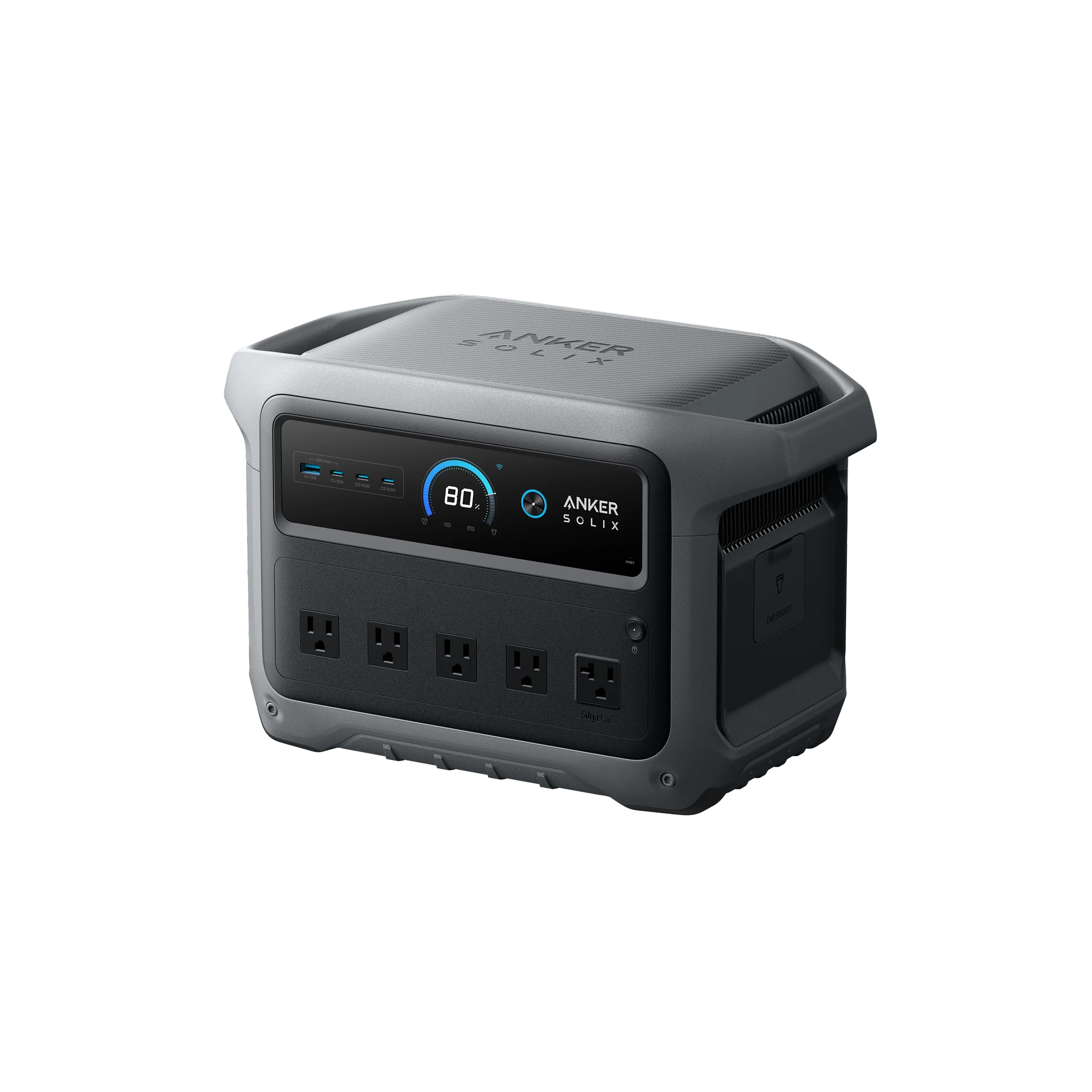
Anker SOLIX C1000 Gen 2Pick
$549.99
$549.99 · direct from Anker
Last checked 16 days ago. Prices move — check before you buy.
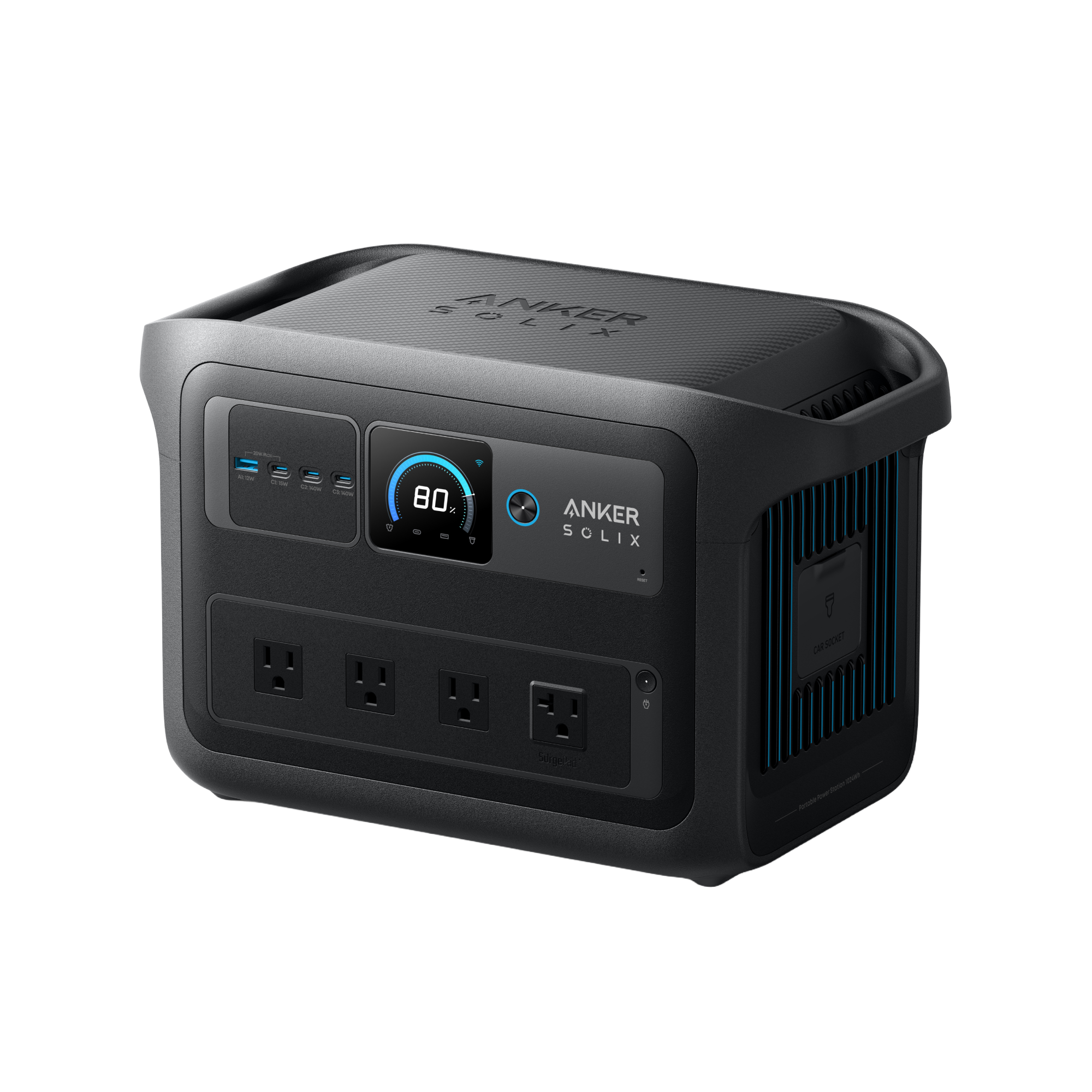
Anker SOLIX C1000X Gen 2
$699.99
$699.99 · direct from Anker
Last checked 16 days ago. Prices move — check before you buy.
Prices may vary by retailer and are subject to change.