Head-to-head test
EcoFlow RIVER 2 Max 500 vs Anker SOLIX C300
Real-world runtimes, scenario verdicts, and ownership costs compared — which wins for your use case.
Full profiles: Anker SOLIX C300 →

Written by Wenny ZhengUpdated
Portable Power Tester, Station Arena Test Desk
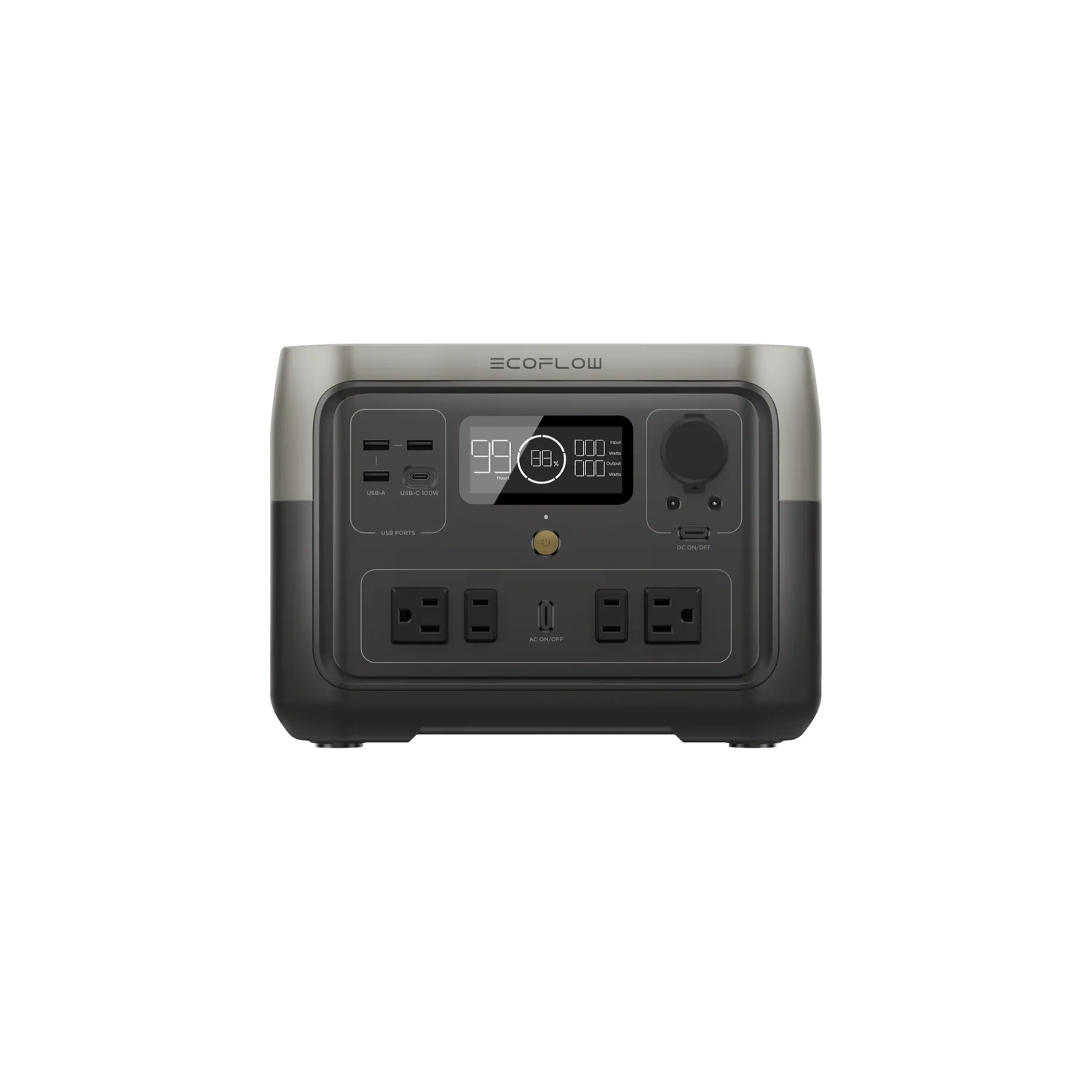
EcoFlow
RIVER 2 Max 500
1,885Power Score · Device Hub
$329.00 · direct from EcoFlow
Last checked 3 hours ago. Prices move — check before you buy.
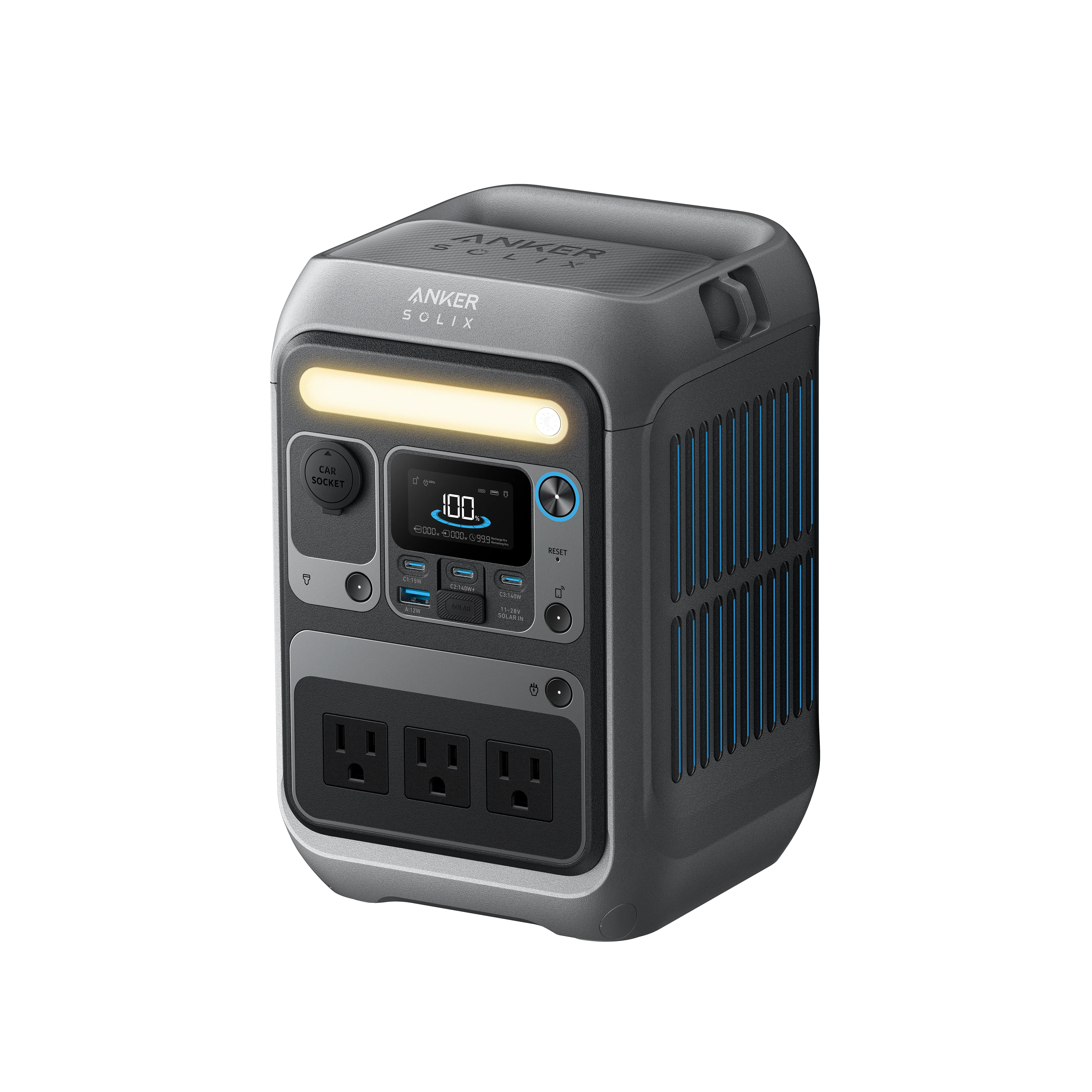
$329.99 · direct from Anker
Last checked 3 hours ago. Prices move — check before you buy.
Spec deltas
The EcoFlow RIVER 2 Max 500 (499Wh) and Anker SOLIX C300 (288Wh) sit in different weight classes. The real question: do your power needs justify the larger unit, or would you be overpaying for capacity that sits unused? We'd buy the RIVER 2 Max 500.
The RIVER 2 Max 500 holds 211Wh more than the SOLIX C300 — about 3 hours on a fridge against 2 — a real but modest edge that shows up mainly on longer outages. For camping, tailgating, or keeping devices charged, both have the headroom, so price, weight, and longevity lead the decision instead.
Pick the RIVER 2 Max 500 if your primary use is cpap overnight. Go with the SOLIX C300 if its specific strengths below line up better with your use. Most buyers stop at the sticker price and miss this: over a full lifespan the RIVER 2 Max 500 works out to about $0.22/kWh against the SOLIX C300's $0.38, a gap that compounds in the RIVER 2 Max 500's favor the more you cycle it. Keep scrolling for the full breakdown. The scenario verdicts below hold a few surprises.
Bench Notes
What each unit does well, where it falls short, and the trade-offs that matter.
EcoFlow RIVER 2 Max 500
At 500W, this unit is strictly for personal electronics (phones, laptops) and small CPAP machines. Do not expect to run kitchen appliances. At only 13.2 lbs, it is exceptionally portable. You can easily carry it one-handed to a campsite or tailgating party.
Strengths
- +Costs $1 less
- +Larger battery capacity
- +Higher AC output
- +Faster solar charging
Trade-offs
- –No major technical downsides compared to rival.
Anker SOLIX C300
At 300W, this unit is strictly for personal electronics (phones, laptops) and small CPAP machines. Do not expect to run kitchen appliances. At only 9.1 lbs, it is exceptionally portable. You can easily carry it one-handed to a campsite or tailgating party.
Strengths
- +Lighter by 4.1 lb
Trade-offs
- –No major technical downsides compared to rival.
Will It Power Your Gear?
Scenario math and per-appliance runtimes, modeled from the spec record.
Scenario verdicts
We ran the math on seven real-world scenarios. Here's which unit survives your actual life.
SCN-01 · 2 nights · needs 2,100Wh
Weekend Camping
Two nights off-grid with essential comfort
Neither unit
Neither unit covers this scenario's 2,100Wh: the RIVER 2 Max 500 comes up 1,676Wh short (about 20% covered), the SOLIX C300 1,855Wh (12%). This is well outside what either unit is for; the right answer here is a larger station, not a choice between these two.
Battery budget usedlower = more headroom
LOAD Phone Charger 15W×6h · LED Lights 40W×8h · Box Fan 75W×14h · CPAP Machine 40W×16h
SCN-02 · 8 hours · needs 1,645Wh
8-Hour Blackout
Keep the essentials running through a night without power
Neither unit
Neither unit covers this scenario's 1,645Wh: the RIVER 2 Max 500 comes up 1,221Wh short (about 26% covered), the SOLIX C300 1,400Wh (15%). This is well outside what either unit is for; the right answer here is a larger station, not a choice between these two.
Battery budget usedlower = more headroom
LOAD Fridge 150W×8h · Router + Modem 20W×8h · LED Lights (4 bulbs) 40W×6h · Phone Charger 15W×3h
SCN-03 · 8 hours · needs 320Wh
CPAP Overnight
Sleep therapy without interruption — the #1 medical use case
RIVER 2 Max 500
The SOLIX C300 doesn't finish — 245Wh usable against the 320Wh this needs leaves it 75Wh short, about 76% of the scenario covered. The RIVER 2 Max 500 covers it with 104Wh to spare.
Battery budget usedlower = more headroom
LOAD CPAP Machine 40W×8h
SCN-04 · 8 hours · needs 910Wh
Remote Workday
Full work day off-grid without power anxiety
Neither unit
Neither unit covers this scenario's 910Wh: the RIVER 2 Max 500 comes up 486Wh short (about 47% covered), the SOLIX C300 665Wh (27%). Treat this as partial cover — enough for the essentials in it, not the whole list.
Battery budget usedlower = more headroom
LOAD Laptop 60W×8h · External Monitor 30W×8h · Router + Modem 20W×8h · Phone Charger 15W×2h
SCN-05 · 4 hours · needs 670Wh
Tailgate Party
Game day power for the crew
Neither unit
The SOLIX C300 can start the 400W peak but not hold it — 600W of surge gets it going, then the 300W continuous rating takes over, so capacity never gets a say. This is the wrong size of unit for the job rather than a close call. The RIVER 2 Max 500 doesn't have the energy either — 424Wh usable against 670Wh, 246Wh short — so neither route works.
Battery budget usedlower = more headroom
LOAD Blender 400W×0.5h · LED TV (55") 80W×4h · Bluetooth Speaker 15W×4h · Phone Charger (×3) 45W×2h
SCN-06 · 24 hours · needs 4,685Wh
Van Life Daily
A full day of mobile living — the ultimate endurance test
Neither unit
Neither unit covers this scenario's 4,685Wh: the RIVER 2 Max 500 comes up 4,261Wh short (about 9% covered), the SOLIX C300 4,440Wh (5%). This is well outside what either unit is for; the right answer here is a larger station, not a choice between these two.
Battery budget usedlower = more headroom
LOAD Mini-Fridge 150W×24h · Laptop 60W×4h · Phone Charger 15W×3h · LED Lights 40W×5h · Fan 75W×8h
SCN-07 · an afternoon · needs 100Wh
Afternoon Off-Grid
Phones and a speaker at the park, beach, or campsite — the small-unit job description
Either unit
This is the job small stations are actually for, and both do it: the RIVER 2 Max 500 finishes at 24% used, the SOLIX C300 at 41%. At this size the decider is what rides in the bag — 9.1 lbs for the SOLIX C300 against 13.2 for the RIVER 2 Max 500 — and price, not the leftover watt-hours.
Battery budget usedlower = more headroom
LOAD Phone Charger (×2) 30W×2h · Bluetooth Speaker 10W×4h
The Load Test
RUNTIME = (Wh × 0.85) ÷ LOAD
None of the scenarios above exactly yours? Build it. Toggle what you'd plug in; both units are tested against the combined draw.
Essentials
Comfort & Convenience
High-Draw Appliances
Test duration
8h
Continuous draw
205W
Projected runtime
For this load: RIVER 2 Max 500 runs 2.1h vs 1.2h.
$329 list · direct from EcoFlow
Modeled from the spec record — same math as the tables below. Methodology
Runtime by appliance
Real-world runtime estimates for common appliances, modeled at 85% inverter efficiency.¹
Essentials
The basics you need runningscale 0–28.3hComfort & Convenience
Makes off-grid life actually enjoyablescale 0–5.7hHigh-Draw Appliances
These reveal the real limits¹ Runtime = (capacity × 0.85) ÷ appliance watts. Within each group, all bars share one time scale (the group's longest runtime), so lengths are comparable across appliances; identical runtimes collapse into a single blue/orange bar. Actual runtime varies with battery age, temperature, and simultaneous loads — see methodology.
Conclusion
July 10, 2026
Verdict: the RIVER 2 Max 500
The RIVER 2 Max 500 takes the lead, with 211Wh more capacity and 200W more output than the SOLIX C300. It costs $1 less as well, which makes it the easier call.
Overall score margin: 1,885 vs 1,597 (+18.0%)
List prices as of July 10, 2026. The links below open EcoFlow's and Anker's current prices.
$329.00 · direct from EcoFlow
Last checked 3 hours ago. Prices move — check before you buy.
or check the SOLIX C300 price$329.99 list
Written by Wenny Zheng, Portable Power Tester · Station Arena Test Desk · Updated July 10, 2026
Measured Data
Benchmark scores and the full spec record, side by side.
Benchmark scores
Not rated for both units (minimum threshold unmet): UPS, Solar Generator.
Full specifications
ᵈ Derived: price ÷ rated capacity. See the data behind our comparisons →
Comparison ToolAdd more power stations, side by sideOpen Tool →How these numbers are produced
Numeric verification
Every figure on this page traces to our spec database or arithmetic on it — no estimated numbers.
Owner claims
Statements about owner experience are cited to published reviews.
Runtime model
Runtime = (rated capacity × 0.85 inverter efficiency) ÷ device wattage. Solar recharge estimates assume panels deliver 70% of rated output. Cold weather, battery age, and stacked loads reduce real-world results.
Power Score
Computed from 14 published spec dimensions, weighted per use-case bench. Higher is better; a unit must meet a bench's minimum threshold to be rated.
See the full weight table and data sourcing on our methodology page →Class ranking (the star rating)
Each unit's star score is a category ranking, not customer reviews — no buyer opinions feed it. We score every station on size-independent quality (value, output, portability, endurance, ports, warranty, and more), then percentile-rank it against the other units in its capacity class, so a class-leading compact unit and a class-leading whole-home unit can both earn 5★. Here, RIVER 2 Max 500 rates 4.9/5 (91st percentile of 24 Personal-class units), and SOLIX C300 rates 4.2/5 (52nd percentile of 24 Personal-class units).
How the class ranking is computed →Test Notes & Caveats
Hidden gotchas and advantages we spotted that you won't find on the product page.
UPS Switchover: ≤10ms vs ≤30ms
Both list a UPS mode, at different rated speeds. The SOLIX C300 is rated ≤10ms — quick enough on paper that desktop PCs and routers should ride through, treating that as the rating it is. The RIVER 2 Max 500 is rated ≤30ms — a transfer this long is one many desktops will NOT ride through, so plan on reboots for sensitive gear. If a computer with unsaved work is the thing being protected, the stated class is worth the attention; nothing here is a lab result.
Warranty: No Difference
Both units carry the same 5-year warranty, so coverage isn't a tiebreaker here.
RIVER 2 Max 500: Noise Level Not Disclosed
The SOLIX C300 publishes its noise level (25dB); the RIVER 2 Max 500 doesn't publish one. That isn't evidence the RIVER 2 Max 500 is louder — it means there's no figure to hold it to, and no way to compare the two on this without hearing them. If you're buying for a bedroom, a CPAP, or an apartment, treat the SOLIX C300's 25dB as the only published number on the table — a spec-sheet figure, not a measurement — and look for hands-on reports of the RIVER 2 Max 500 before deciding.
Full record above — the Test Desk pick is the RIVER 2 Max 500.
Check RIVER 2 Max 500 price →or check the SOLIX C300 priceOwnership Analysis
What happens after you buy — true cost of ownership, brand trust, and growth potential.
Lifetime value
Service lifeyears at one full cycle per day
Lifetime energy delivered
Cost per delivered kWh
│ warranty ends · Reaching the cycle rating means ~80% capacity remains — degraded, not dead.
Analyst note
The RIVER 2 Max 500 wins on both sticker price and long-term value. At $0.22/kWh over its lifetime, it's meaningfully cheaper to own. Clear value winner. One thing to know reading the table: both carry the same 3,000-cycle rating, so the lifetime rows are sticker price and capacity in disguise — the wear horizon is identical and decides nothing here.
Delivers each lifetime kWh for $0.16 less — check the RIVER 2 Max 500 price →
Brand trust
EcoFlow
Ecosystem
Largest in portable power — 12-15 models across DELTA Pro, DELTA 3, and RIVER 3 series, plus solar panels and smart home panels
Support
US-based phone/email/chat support (1-800-368-8604). Experiences are polarized — many report hassle-free prepaid-label replacements, but others report long waits and refurbished units sent for new claims. Pro tip: buying from Costco or Amazon gives you a stronger return safety net.
Community
Largest community in the space — Reddit r/Ecoflow_community (~31K members), multiple Facebook groups, and an official community forum
App experience
Rated 4.6/5 iOS (~8,400 ratings) · 4.2/5 Android (~17,000 ratings)
Unique strength
Fastest-charging technology (X-Stream), deepest product ecosystem, and most active innovation cadence. At the very top of the range, the DELTA Pro Ultra platform stacks batteries and inverters into whole-home backup — a flagship path, not a line-wide feature.
Worth knowing
Tested subscription paywalls for advanced app features in early 2025 before community backlash paused the plan. No parts or service offered out of warranty.
Anker
Ecosystem
7-8 SOLIX portable power stations across C-series (compact) and F-series (flagship), plus the X1 home energy system
Support
US-based support. Historically known for incredible no-hassle replacements, but recent reports describe AI-driven support agents giving generic responses and complex return logistics for heavy units (hazmat shipping). The Anker brand reputation is still strong, but SOLIX-specific support quality is trending down.
Community
Moderate — active Reddit (r/Anker, r/AnkerSOLIXCommunity) and growing. Benefits from Anker's massive consumer electronics brand awareness.
App experience
Rated 4.5/5 iOS (~1,100 ratings) · 4.3/5 Android
Unique strength
Parent brand trust from Anker's consumer electronics dominance. InfiniPower technology for long cycle life. Strong $/Wh value in the mid-size and larger units — the S2000, F2600 and C1000 are among the better buys per watt-hour in the catalog.
Worth knowing
Support quality appears to be declining from its historically excellent level. Firmware updates have removed features without warning. Expansion ecosystem is smaller than EcoFlow's.
Analyst note
EcoFlow positions itself as a mid-to-premium brand with stronger support infrastructure, while Anker competes on value. The question is whether the EcoFlow ecosystem and support premium is worth it for your use case.
Growth path
RIVER 2 Max 500
FIXED CAPACITYFixed at 499Wh, with no expansion — so size it for your needs up front rather than planning to add capacity later.
Accepts up to 220W of solar. Limited to a single portable panel.
Adequate ports for most setups, but heavy users may want a power strip.
SOLIX C300
FIXED CAPACITYFixed at 288Wh, with no expansion — so size it for your needs up front rather than planning to add capacity later.
Accepts up to 100W of solar. Limited to a single portable panel.
Adequate ports for most setups, but heavy users may want a power strip.
Realistic full solar rechargeat 70% of rated panel output — see methodology
Analyst note
Neither expands, and that's no knock on either — each is a complete unit at a fixed size. Buy the capacity that covers your needs now (the RIVER 2 Max 500 gives you the larger ceiling); you can't add to either later.
The Bottom Line
The full picture comes down to this. The RIVER 2 Max 500 edges ahead on our overall analysis, but the margin is narrow enough that your specific use case should drive the decision. Review the scenario verdicts above — if the SOLIX C300 wins in the scenarios that match your life, it's the right choice regardless of aggregate scores.
If neither the RIVER 2 Max 500 nor the SOLIX C300 feels like the right fit, your power needs probably sit outside what these two target. If you're planning whole-home backup or running power-hungry appliances (electric heaters, window AC), you'll want a larger system in the 3,000–5,000Wh range with expansion battery support. Prices on portable power stations fluctuate frequently. Both EcoFlow and Anker discount regularly, so check the current price before committing. Prime Day and Black Friday pricing typically drops 20-30%.
Frequently Asked Questions
Answers drawn from the spec record and cited owner research.
Is EcoFlow or Anker more reliable for long-term ownership?
Both brands have strengths and trade-offs. EcoFlow: Mixed. 2-5 years depending on model (DELTA Pro Ultra line gets 10 years). Some users report smooth claims; others report runarounds. Register your product to extend coverage. Anker: 5-year warranty standard on portable stations, 10-year on home energy systems. Historically very reliable, though some recent firmware updates have altered product functionality without notice or rollback option. One piece of advice from the power station community: regardless of brand, buy from Costco or Amazon. Their return policies provide a safety net that manufacturer warranties alone can't match, especially for a product you'll rely on in emergencies. Both brands use LFP (lithium iron phosphate) batteries in their current lineup, the most proven chemistry for longevity and safety.
Bottom line: should I buy the RIVER 2 Max 500 or the SOLIX C300?
We'd buy the RIVER 2 Max 500. Cheaper and more capable. That combination is rare. The SOLIX C300 doesn't offer a compelling reason to spend more unless you specifically need a feature unique to the Anker ecosystem (expansion batteries, app integrations). Otherwise, clear call.
Where to buy
EcoFlow RIVER 2 Max 500Pick
$329.00
$329.00 · direct from EcoFlow
Last checked 3 hours ago. Prices move — check before you buy.
Anker SOLIX C300
$329.99
$329.99 · direct from Anker
Last checked 3 hours ago. Prices move — check before you buy.
Prices may vary by retailer and are subject to change.