Head-to-head test
Anker SOLIX C300 vs Anker SOLIX C300X
Anker SOLIX C300 vs Anker SOLIX C300X: the same 288Wh battery, 300W output, 3,000-cycle rating and three USB-C ports on both; the C300X adds the Bluetooth app, drops one of the C300's two USB-A ports, and currently costs less. That makes the C300X the default pick; take the C300 only if you want no app layer and the second USB-A port.
Full profiles: Anker SOLIX C300 → · Anker SOLIX C300X →
Looking for a different matchup? Anker SOLIX C300 DC vs SOLIX C300X

Written by Wenny ZhengUpdated
Portable Power Tester, Station Arena Test Desk
Spec deltas
The C300 and the C300X are the same battery in the same roughly 9-pound case: 288Wh, 300W output, a 600W surge, 140W USB-C fast charging, a UPS rated to switch within 10ms, a published 25 dB, 3,000 cycles, a five-year warranty. With the labels off, only the ports tell them apart: the C300 has a second USB-A port, and Anker lists two 140W USB-C ports on it where it states a single 140W figure for the X.
What separates them is a software tier, a USB-A port and, these days, $30 in the X's favor. The C300X is Anker's up-trim 'X' version, built around the app: Bluetooth monitoring, usage history, firmware updates from your phone. The plain C300 is the pared-back version of the same hardware, but at $330 to the X's $300 it is no longer the value pick: the X is the cheaper unit to own too, $0.35 per lifetime kilowatt-hour against $0.38.
So this isn't a performance question, it's a question of whether you want app control on a 288Wh charger at all, now that it no longer costs extra. The X's few real complaints are a Bluetooth pairing dropout in that appB1 and one owner's unit that wouldn't charge past 25%B2. If you want nothing to pair and a second USB-A port, the C300 is the same box for $30 more; otherwise the X is the better buy.
What the Numbers Reveal
Each conclusion stated first — the numbers behind it on one line, the full analysis below.
Typical price
That reframes the decision cleanly: you're not comparing two chargers, you're deciding whether you want phone-based monitoring at all, because it no longer costs extra and nearly everything you plug into is the same on both.
C300 is $330 and C300X is $300the two share the core specs: 288Wh, 300W, 140W USB-C fast charging, a 10ms UPS rating, 25 dB, 3,000 cycles; the C300 has a second USB-A port and two 140W USB-C portsthe X's headline addition is the Bluetooth app
Why it mattersAnyone who won't open the app pays nothing extra for it on the X; the C300 makes sense only for buyers who want the second USB-A port or no app at all.
cost / lifetime kWh
Because the batteries and cycle ratings are identical, the cost-to-own gap is purely the sticker difference restated, and it never narrows over the unit's life the way it might if the C300 delivered more energy or lasted longer.
C300 costs $0.38 per lifetime kilowatt-hourC300X costs $0.35 per lifetime kilowatt-hourboth deliver the same 864 kWh over a 3,000-cycle life
Why it mattersOn pure economics the C300X now wins outright; the C300 has to justify its higher price on the extra USB-A port and the absence of an app alone.
The app is a true double edge: a useful monitoring tool when it's connected, and a small chore when the Bluetooth drops, so its value depends entirely on whether you're the kind of owner who'll use the data or just wanted a battery.
The X's app is its main selling pointthe app is also the source of its most common owner gripe, a pairing dropoutB1; separately, one owner reports a unit that wouldn't charge past 25%B2the app's usage history caught a fan drawing twice its expected wattage in testingB10
Why it mattersData-curious owners get real value from the X; everyone else adds a subsystem to manage, though no longer at a premium.
The specific dimensions that decide these two units — everything else is a tie.
Lifetime Value
Selected because: Identical batteries, and the price gap now favors the C300X — the whole matchup in one section.
cost / lifetime kWh
This is the rare comparison where the value section is the entire comparison. Both units hold 288Wh, both are rated for 3,000 cycles, both therefore deliver the same 864 kWh across their lives. The only variable is price, $330 for the C300 and $300 for the C300X, which drops out as $0.38 per lifetime kilowatt-hour against $0.35.
There's no runtime and no extra warranty year on either side to change that math, and the C300's one extra USB-A port adds no energy. The batteries are twins, so the X's app comes at no premium today, and the cheaper unit, now the X, stays cheaper for the whole time you own it.
PowerScore Breakdown
Selected because: A score gap on identical specs needs explaining as price, not performance.
overall power score
Any PowerScore gap between two units with matching spec sheets looks wrong until you see what it's actually scoring. Nothing about how they perform differs, so the number isn't rewarding performance here, it's tracking price — and with the X now the cheaper of the two, it's the X that scores a little higher.
Read the score as the value verdict in one figure. It agrees with the price tag and the cost-to-own math: same box, lower cost, higher score — on the X's side today.
What the Specs Don't Tell You
Selected because: Only warranty fires (a tie), so the section's real job is naming the app as the true hidden catch.
The only formal flag here is the warranty, and it's a tie: both carry five years, so it settles nothing. The catch worth flagging isn't in the gotcha list, it's the app itself.
That app is the X's whole reason to exist and also its softest spot. In the field its monitoring is the standout, precise enough to catch a phantom drawB10, but the recurring friction is a Bluetooth pairing dropout that blocks the stats until you re-pairB1. Separately, one owner reports a unit that wouldn't charge past 25%B2, and a power-saving cutoff switches the X off on trivial loads like a smartwatchB3. The pairing dropout is the one that can't touch the C300, which doesn't ask you to connect anything; our C300 research doesn't cover the other two either way.
Strengths & trade-offs
Anker SOLIX C300
Strengths
- Solid all-rounder with standard specs.
Trade-offs
- –No major technical downsides compared to rival.
Anker SOLIX C300X
Strengths
- +Costs $30 less
- +Lighter by 0.1 lb
Trade-offs
- –No major technical downsides compared to rival.
Will It Power Your Gear?
Scenario math and per-appliance runtimes, modeled from the spec record.
Scenario verdicts
We ran the math on seven real-world scenarios. Here's which unit survives your actual life.
SCN-01 · 2 nights · needs 2,100Wh
Weekend Camping
Two nights off-grid with essential comfort
Neither unit
Neither unit covers this scenario's 2,100Wh: the SOLIX C300 comes up 1,855Wh short (about 12% covered), the SOLIX C300X 1,855Wh (12%). This is well outside what either unit is for; the right answer here is a larger station, not a choice between these two.
Battery budget usedlower = more headroom
LOAD Phone Charger 15W×6h · LED Lights 40W×8h · Box Fan 75W×14h · CPAP Machine 40W×16h
SCN-02 · 8 hours · needs 1,645Wh
8-Hour Blackout
Keep the essentials running through a night without power
Neither unit
Neither unit covers this scenario's 1,645Wh: the SOLIX C300 comes up 1,400Wh short (about 15% covered), the SOLIX C300X 1,400Wh (15%). This is well outside what either unit is for; the right answer here is a larger station, not a choice between these two.
Battery budget usedlower = more headroom
LOAD Fridge 150W×8h · Router + Modem 20W×8h · LED Lights (4 bulbs) 40W×6h · Phone Charger 15W×3h
SCN-03 · 8 hours · needs 320Wh
CPAP Overnight
Sleep therapy without interruption — the #1 medical use case
Neither unit
These are identical on every axis that matters at the bedside: same 288Wh, same published 25 dB, same UPS. The modeled 320Wh night ends the same way for both, about three-quarters covered and 75Wh short, so plan around it rather than rule either out. Nothing on the CPAP itself separates them, so decide on price and the app, and the X is currently the cheaper of the two.
Battery budget usedlower = more headroom
LOAD CPAP Machine 40W×8h
SCN-04 · 8 hours · needs 910Wh
Remote Workday
Full work day off-grid without power anxiety
Neither unit
Same battery, same result: a laptop-and-phone workday draws the same from both, and neither fully covers the heavier modeled load. Since both offer 140W USB-C laptop charging, what the X adds is watching the drain on your phone and, at current prices, a $30 lower price. If you'd rather skip the app, the C300 does the identical work, plus a second USB-A port, for $30 more.
Battery budget usedlower = more headroom
LOAD Laptop 60W×8h · External Monitor 30W×8h · Router + Modem 20W×8h · Phone Charger 15W×2h
SCN-05 · 4 hours · needs 670Wh
Tailgate Party
Game day power for the crew
Neither unit
Neither unit can hold the 400W peak this scenario needs — the SOLIX C300 on its 300W continuous rating, the SOLIX C300X on its 300W, so capacity never gets a say. This is the wrong size of unit for the job rather than a close call.
Battery budget usedlower = more headroom
LOAD Blender 400W×0.5h · LED TV (55") 80W×4h · Bluetooth Speaker 15W×4h · Phone Charger (×3) 45W×2h
SCN-06 · 24 hours · needs 4,685Wh
Van Life Daily
A full day of mobile living — the ultimate endurance test
Neither unit
Neither unit covers this scenario's 4,685Wh: the SOLIX C300 comes up 4,440Wh short (about 5% covered), the SOLIX C300X 4,440Wh (5%). This is well outside what either unit is for; the right answer here is a larger station, not a choice between these two.
Battery budget usedlower = more headroom
LOAD Mini-Fridge 150W×24h · Laptop 60W×4h · Phone Charger 15W×3h · LED Lights 40W×5h · Fan 75W×8h
SCN-07 · an afternoon · needs 100Wh
Afternoon Off-Grid
Phones and a speaker at the park, beach, or campsite — the small-unit job description
Either unit
This is the job small stations are actually for, and both do it: the SOLIX C300 finishes at 41% used, the SOLIX C300X at 41%. At this size the leftover watt-hours decide nothing, and the two weigh within half a pound of each other, so the bag doesn't separate them. Buy whichever is cheaper.
Battery budget usedlower = more headroom
LOAD Phone Charger (×2) 30W×2h · Bluetooth Speaker 10W×4h
The Load Test
RUNTIME = (Wh × 0.85) ÷ LOAD
None of the scenarios above exactly yours? Build it. Toggle what you'd plug in; both units are tested against the combined draw.
Essentials
Comfort & Convenience
High-Draw Appliances
Test duration
8h
Continuous draw
205W
Projected runtime
Dead heat — both run this 205W load for roughly 1.2h. Pick on price, weight, or ports.
Planning for more than this? Describe your whole setup and get it sized →
Modeled from the spec record — same math as the tables below. Methodology
Runtime by appliance
Real-world runtime estimates for common appliances, modeled at 85% inverter efficiency.¹
Essentials
The basics you need runningscale 0–16.3hComfort & Convenience
Makes off-grid life actually enjoyablescale 0–3.3hHigh-Draw Appliances
These reveal the real limits¹ Runtime = (capacity × 0.85) ÷ appliance watts. Within each group, all bars share one time scale (the group's longest runtime), so lengths are comparable across appliances; identical runtimes collapse into a single blue/orange bar. Actual runtime varies with battery age, temperature, and simultaneous loads — see methodology.
Conclusion
October 14, 2026
Verdict: the SOLIX C300X
Buy the C300X unless you want a battery with no app layer at all or need the C300's second USB-A port — and know that at today's prices that choice costs you. On nearly every spec we track these are the same machine: 288Wh, 300W with a 600W surge, 140W USB-C fast charging, a UPS rated to switch within 10ms, a published 25 dB, a five-year warranty, a 3,000-cycle rating; the C300 adds a second USB-A port, and Anker lists two 140W USB-C ports on it where it states a single 140W figure for the X. The C300X is the up-trim, built around the Bluetooth app and monitoring layer, and its owner gripes are few: a pairing dropout you re-do to see your statsB1, and one report of a unit that wouldn't charge past 25%B2. The app's usage history is genuinely useful, sharp enough in testing to flag a fan drawing double its expected wattageB10. The price argument now runs the X's way: it's $300 to the C300's $330, and so the cheaper one to own too, $0.35 per lifetime kilowatt-hour against $0.38. If you'll use the app, or just want the lower price, the X is the better buy; the C300's case is the extra USB-A port and nothing to pair.
Editor-assigned confidence, based on cited owner research and spec analysis.
List prices as of October 14, 2026. The links below open Anker's current price.
$299.99 · direct from Anker
Last checked 16 days ago. Prices move — check before you buy.
Written by Wenny Zheng, Portable Power Tester · Station Arena Test Desk · Updated October 14, 2026
Black Friday · 38 days out
Price to beat:SOLIX C300X $300
We have never seen it discounted, so any real cut would be a first.
Measured Data
Benchmark scores and the full spec record, side by side.
Benchmark scores
Full specifications
ᵈ Derived: price ÷ rated capacity. See the data behind our comparisons →
Comparison ToolAdd more power stations, side by sideOpen Tool →How these numbers are produced
Numeric verification
Every figure on this page traces to our spec database or arithmetic on it — no estimated numbers.
Owner claims
Statements about owner experience are cited to published reviews — see Sources & Research Notes below.
Runtime model
Runtime = (rated capacity × 0.85 inverter efficiency) ÷ device wattage. Solar recharge estimates assume panels deliver 70% of rated output. Cold weather, battery age, and stacked loads reduce real-world results.
Power Score
Computed from 14 published spec dimensions, weighted per use-case bench. Higher is better; a unit must meet a bench's minimum threshold to be rated.
See the full weight table and data sourcing on our methodology page →Class ranking (the star rating)
Each unit's star score is a category ranking, not customer reviews — no buyer opinions feed it. We score every station on size-independent quality (value, output, portability, endurance, ports, warranty, and more), then percentile-rank it against the other units in its capacity class, so a class-leading compact unit and a class-leading whole-home unit can both earn 5★. Here, SOLIX C300 rates 4.3/5 (57th percentile of 24 Personal-class units), and SOLIX C300X rates 4.6/5 (74th percentile of 24 Personal-class units).
How the class ranking is computed →Test Notes & Caveats
Hidden gotchas and advantages we spotted that you won't find on the product page.
The warranty is a tie, so it can't decide this
Both units carry the same five-year coverage, so the flag that usually breaks a close call is a wash here. That throws the decision back onto what differs: the price, now $30 in the X's favor, whether you'll use the app, and the C300's second USB-A port. Don't let a matching warranty read as a reason to pick either.
Full record above — the Test Desk pick is the SOLIX C300X.
Check SOLIX C300X price →or check the SOLIX C300 priceOwnership Analysis
What happens after you buy — true cost of ownership, brand trust, and growth potential.
Lifetime value
Service lifeyears at one full cycle per day
Lifetime energy delivered
Cost per delivered kWh
│ warranty ends · Reaching the cycle rating means ~80% capacity remains — degraded, not dead.
Analyst note
Both units have similar long-term ownership costs ($0.38/kWh vs $0.35/kWh). The price difference is what you see on the sticker — neither is a hidden bargain or rip-off. One thing to know reading the table: both carry the same 3,000-cycle rating, so the lifetime rows are sticker price and capacity in disguise — the wear horizon is identical and decides nothing here.
Growth path
SOLIX C300
FIXED CAPACITYFixed at 288Wh, with no expansion — so size it for your needs up front rather than planning to add capacity later.
Accepts up to 100W of solar. Limited to a single portable panel.
Adequate ports for most setups, but heavy users may want a power strip.
SOLIX C300X
FIXED CAPACITYFixed at 288Wh, with no expansion — so size it for your needs up front rather than planning to add capacity later.
Accepts up to 100W of solar. Limited to a single portable panel.
Adequate ports for most setups, but heavy users may want a power strip.
Realistic full solar rechargeat 70% of rated panel output — see methodology
Analyst note
Neither expands, and that's no knock on either — each is a complete unit at a fixed size. They hold the same 288Wh, so capacity can't break the tie: decide on price, weight, and the rest, and know that whichever you pick is the ceiling.
What Owners Report
Patterns from published owner reports and long-term reviews — every claim cited to its source below.
Anker SOLIX C300
The C300 reads as the compact pick. Reviewers call it impressively light and small for a 288Wh unitA2, point to dual 140W USB-C ports for fast device chargingA1, and single out its 10ms UPS switchover as genuinely unusual at this size and priceA3. It's aimed at the buyer who wants reliability, smart features, and a case that disappears into a packA4.
Its independent field record is thinner than the X's, but the notes that exist all pull the same direction: light, compact, quick at charging devices, aimed at reliability. Nothing here contradicts the X on any measured spec, because there's nothing to contradict.
“288Wh capacity with 300W output (600W with SurgePad) and dual 140W USB-C ports for fast device charging.”
Sources
ankersolix.com · trustedreviews.com · im.com.au · solarwaypoint.com · backuppowerhub.com · powerstationlab.com
Anker SOLIX C300X
The C300X is the up-trim, and hands-on testing backs the premium feel before it gets anywhere near the app. The carry handle showed no wear or flex after dozens of trunk loadsB12, AC charging refilled the unit in roughly an hourB8, and pulling the wall plug mid-use with a computer, router, and CPAP connected left the computer running with no flickerB7. It stays near-silent at its rated 300W, with the fan ramping up noticeably only under a 500W circular-saw drawB4B11.
The app is the X's headline addition, and it earns a mixed report. Its usage history is the highlight, sharp enough to catch a portable fan pulling twice its expected wattageB10. The friction is a Bluetooth pairing dropout you occasionally re-do to restore monitoringB1; away from the app, one owner reports the battery refusing to charge past 25%B2, and a power-saving cutoff that shuts the unit off on very low-draw devicesB3. Useful if you'll use it, a little to manage if you won't.
“The unit was confirmed to shut itself off when charging very low-draw devices like headphones or a smartwatch — an intended power-saving cutoff rather than a defect, but one that catches owners off guard.”
Sources
teqclub.com · thesolarlab.com · backuppowerhub.com
Sources & Research Notes
Every owner claim in this report is traceable to a published source. The bracketed references above resolve here.
Recurring owner themes
- Compact, light design; dual 140W USB-C fast charging; and a standout 10ms UPS rare at this size are the highlights. [SOLIX C300 · 3 entries]
- Independent hands-on reviewers found the C300X near-silent at its rated 300W load, though one test noted the fan becoming noticeably audible under a heavier transient/overload draw. [SOLIX C300X · 2 entries]
- AC charging and UPS switchover both performed at or better than spec in hands-on testing — fast wall recharge and an imperceptible transfer that kept a computer, router, and CPAP running through a pulled plug. [SOLIX C300X · 2 entries]
- The most concrete owner-reported defects both sit in the app/charging pipeline: a Bluetooth pairing dropout that blocks monitoring, and a specific report of the battery refusing to charge past 25%. [SOLIX C300X · 2 entries]
- A1
“288Wh capacity with 300W output (600W with SurgePad) and dual 140W USB-C ports for fast device charging.”
ankersolix.com / trustedreviews.com — SOLIX C300 review · 2026 · [positive]
- A2
“Anker claims the C300 is 30% smaller than competing power stations; reviewers call it impressively light and compact for the capacity, aimed at keeping phones and gadgets charged on hikes and camping trips.”
im.com.au / solarwaypoint.com — SOLIX C300 review · 2026 · [positive]
- A3
“Its 10ms UPS switchover is legitimately unique in this size and price class.”
backuppowerhub.com / powerstationlab.com — SOLIX C300 review · 2026 · [positive]
- A4
“Targets users who value reliability, smart features, and compact design.”
backuppowerhub.com — SOLIX C300 review · 2026 · [positive]
- B1
“Users reported trouble connecting the C300X to the Anker app, which blocked monitoring power usage and changing settings; re-pairing by "forgetting" the device in Bluetooth settings and reconnecting through the app usually fixed it.”
teqclub.com — "Solving Common Anker C300X Problems" · unknown · [negative]
- B2
“My Anker solix c300x Portable Power Station will not accept charge more than 25%.”
teqclub.com — "Solving Common Anker C300X Problems" (quoted owner comment) · unknown · [negative]
- B3
“The unit was confirmed to shut itself off when charging very low-draw devices like headphones or a smartwatch — an intended power-saving cutoff rather than a defect, but one that catches owners off guard.”
teqclub.com — "Solving Common Anker C300X Problems" · unknown · [mixed]
- B4
“This unit is impressively quiet. Even with the internal fans running when we pushed it to its limits, the C300X makes virtually no noise.”
thesolarlab.com — "Anker C300X Power Station Review" · 2026 · [positive]
- B7
“Pulling the AC plug mid-use while a computer, router, modem, and CPAP machine were running, the computer stayed on without interruption — no screen flicker, no system hiccup.”
backuppowerhub.com — "Anker SOLIX C300X Review" · 2026 · [positive]
- B8
“AC charging to 80% took 49 minutes in testing, matching the advertised claim; full charge landed at 65 minutes. A 100W solar panel took 3 hours 15 minutes, and 12V car charging took about 6.5 hours.”
backuppowerhub.com — "Anker SOLIX C300X Review" · 2026 · [positive]
- B10
“The app's most useful function was over-the-air firmware updates and historical usage data — the reviewer used the history to notice a portable fan was drawing twice the wattage expected.”
backuppowerhub.com — "Anker SOLIX C300X Review" · 2026 · [positive]
- B11
“Under a 500W circular saw load, the fan ramped up noticeably — a contrast to how quiet the unit stays at its rated 300W.”
backuppowerhub.com — "Anker SOLIX C300X Review" · 2026 · [mixed]
- B12
“The C300X feels premium in a way many budget power stations don't; the carry handle showed no wear or flex after dozens of trunk loads.”
backuppowerhub.com — "Anker SOLIX C300X Review" · 2026 · [positive]
Research compiled October 14, 2026.
Who Should Buy Which
Buy the SOLIX C300 if you…
- →The buyer who wants the second USB-A port — the C300 carries two to the X's one — on the same 288Wh battery.
- →The phone-and-camera topper who wants dual 140W USB-CA1 and a case that disappears into a packA2, and will never open an app.
- →Anyone who reads 'app control on a 288Wh charger' and would rather not have it at all, even at $30 more.
Buy the SOLIX C300X if you…
- →The value buyer: the same 288Wh battery for $30 less, and the cheaper one to own over its life.
- →The data-curious owner who'll actually use the usage history to watch draw and update firmwareB10.
- →The buyer who wants the premium 'X' trim and monitoring and is happy to manage the occasional Bluetooth re-pairB1 to get it.
If neither fits
If you need to run a fridge or ride out a real blackout, 288Wh is too small on either one, so move up to a 500Wh-plus unit. And note this compares the standard C300 with AC output, not the DC-only C300 DC, which has no AC inverter and is a different decision.
The Bottom Line
The C300 is the C300X's near-identical twin: same 288Wh, same 10ms UPS rating, same 25 dB, same five-year warranty, plus a second USB-A port and, on Anker's own spec, two 140W USB-C ports to the X's single stated 140W — but at current prices it's $30 dearer and the costlier one to own, $0.38 per lifetime kilowatt-hour against $0.35. Nothing you plug into either one behaves differently. The X adds an app, and that app is both its best feature and the source of its most common gripeB10B1.
So make it a one-question decision: do you want an app on it at all? If you'll open it, or simply want the lower price, the X is the better buy. If you want a compact battery with nothing to pair and the extra USB-A port, the C300 still does the job; you just pay $30 more for it.
Frequently Asked Questions
Answers drawn from the spec record and cited owner research.
What's the actual difference between the Anker SOLIX C300 and C300X?
On every spec we track, almost nothing: same 288Wh, 300W output, 600W surge, 140W USB-C fast charging, a 10ms UPS rating, published 25 dB, 3,000 cycles, and five-year warranty. The ports are the difference: the C300 has two USB-A ports to the X's one, and Anker lists two 140W USB-C ports on the C300 where it states a single 140W figure for the X. The C300X is the up-trim 'X' version that adds the Bluetooth app and monitoring layer, and at current prices it costs $30 less, not more. If you won't use the app, you're still buying the same hardware at two prices, and the X is the lower one.
Is the C300X worth it over the C300?
At current prices it costs $30 less, so the question is whether you want the app at all. The monitoring and usage history are genuinely useful, sharp enough in testing to catch a device drawing twice its expected wattage. But the app is also where the X's most common complaint lives, a pairing dropout, and one owner reports a unit that wouldn't charge past 25%. Charge-and-go buyers who want nothing to pair, or the second USB-A port, can still take the C300; they just pay more for it.
Do both have the 10ms UPS and 140W USB-C, or just the X?
Both. The standard C300 has the same 10ms UPS rating, which reviewers call unusual at this size and price, and 140W USB-C fast charging; in fact Anker lists two 140W USB-C ports on the C300, where it states a single 140W figure for the X. Those headline features are shared, which is why the choice between the two comes down to the app, the USB-A port and the price.
Which is cheaper to own over time?
The C300X, at current prices. Because the two share a battery and a 3,000-cycle rating, they deliver the same 864 kWh over their lives, so the lower $300 price simply spreads further, landing at $0.35 per lifetime kilowatt-hour against the C300's $0.38. Same energy, lower cost per use.
Where to buy
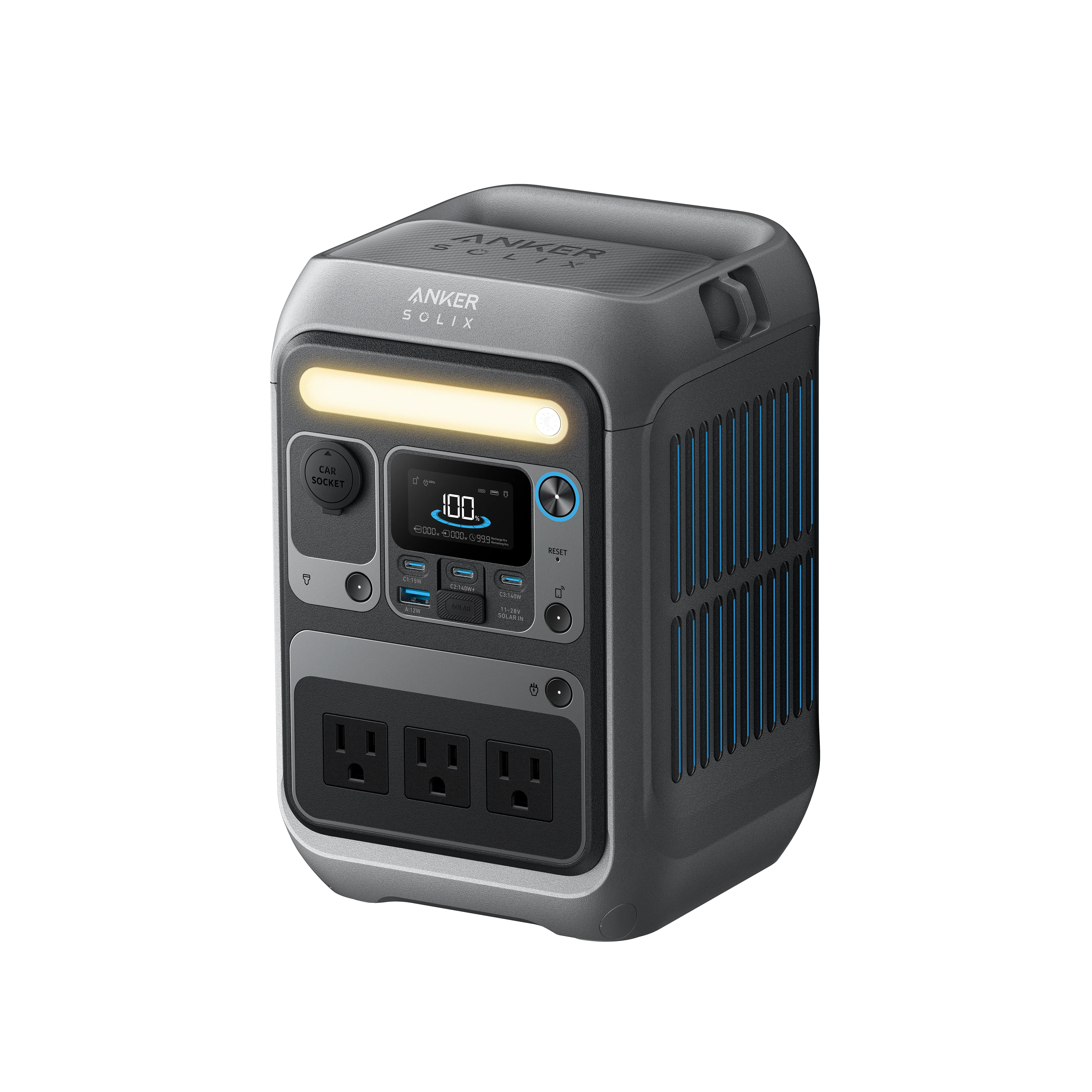
Anker SOLIX C300
Sold on Amazon · today’s price is on the listing
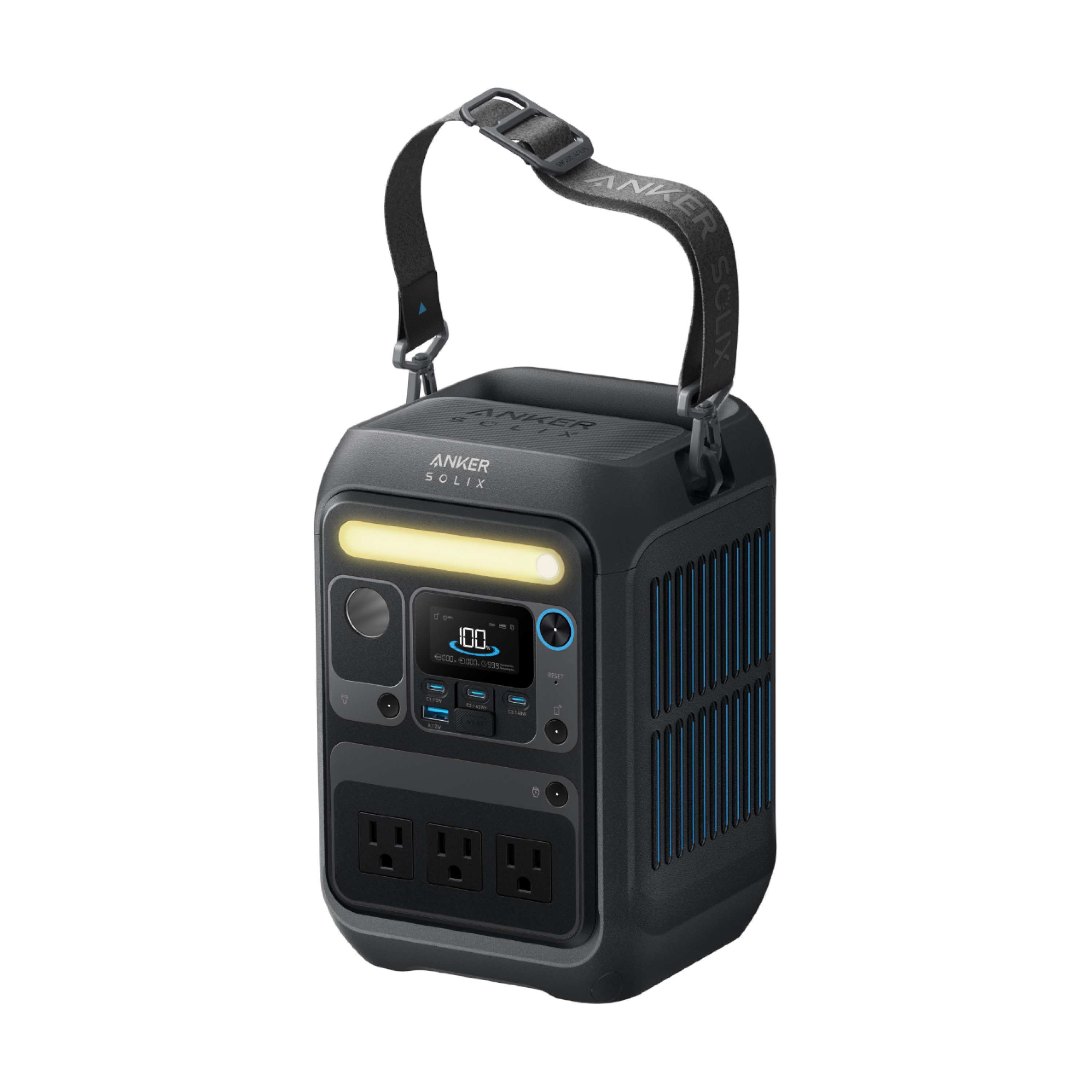
Anker SOLIX C300XPick
$299.99
$299.99 · direct from Anker
Last checked 16 days ago. Prices move — check before you buy.
Prices may vary by retailer and are subject to change.