Head-to-head test
Anker SOLIX C200 DC vs Anker SOLIX C300
Anker SOLIX C200 DC vs Anker SOLIX C300: the C200 DC has no AC outlet at all; the C300 adds three, a 600W surge, a 10-millisecond UPS and two more years of warranty. Default to the C300 unless nothing you own plugs into a wall.
Full profiles: Anker SOLIX C200 DC → · Anker SOLIX C300 →

Written by Wenny ZhengUpdated
Portable Power Tester, Station Arena Test Desk
Spec deltas
The Anker SOLIX C200 DC has zero AC outlets. Not a smaller inverter, not a weaker one. None. Every watt leaves this unit through a USB-C or USB-A port, which means the C300's entire AC section in this comparison works like a pass/fail test: either you need to plug something into a wall, or you don't.
For the reader who doesn't need AC, the C200 DC is the more interesting unit anyway. It's $140 against the C300's $330, and both are rated for the identical 3,000 charge cycles, so the extra $190 isn't buying a longer-lived battery. It's buying 50% more capacity, an AC section, and a UPS switchover you may never use.
Default to the C300 if you're not sure yet. It's the strictly more capable machine, AC outlets and UPS included, for a price that's still under $330. But if you've already confirmed your gear is USB-C or USB-A only, phones, tablets, a laptop, a Starlink Mini, stop reading the spec sheet and buy the C200 DC. Every dollar of that $190 premium buys a feature you'll never plug into.
What the Numbers Reveal
Each conclusion stated first — the numbers behind it on one line, the full analysis below.
continuous output
One C200 DC owner ran into exactly this and named the fix themselves: they wanted a three-pin plug for household items but didn't have the budget for the next model upA8. That next model is the C300, and the $190 between them is the price of that one outlet, not a capacity upgrade.
SOLIX C200 DC: 0W surge rating and no listed UPS switchover timeSOLIX C300: 600W surge rating and a 10ms UPS switchover
Why it mattersIf anything on your list plugs into a wall, the C200 DC is out at any price. This becomes a one-item comparison, and the C300 is it.
Capacity
Push that identical cycle count through each price tag and the C200 DC comes out at $0.24 per lifetime kWh against the C300's $0.35. The cheaper unit is also the cheaper one to own, for anyone who was only ever going to charge it over USB-C.
C200 DC: $140, 192Wh, 3,000-cycle ratingC300: $330, 288Wh, 3,000-cycle rating
Why it mattersIf AC was never on your list, don't let the C300's bigger battery and longer warranty talk you into paying more per kWh you'll actually use. Buy the C200 DC.
That tracks with how owners actually run the C200 DC: an eight-hour driving shift keeping a phone and tablet aliveA3, hours powering a Starlink Mini off-gridA4A5, continuous power to a small onboard computerA6. These are personal-electronics chargers, not backup power stations, whatever the product category on the box says.
CPAP Overnight scenario needs roughly 320WhC300's rated capacity is 288Wh, C200 DC's is 192Wh
Why it mattersIf you came here planning to run a CPAP overnight or bridge a blackout, keep shopping. Neither of these two is sized for that job.
Typical price
Add a compatible high-wattage USB-C charger's cost on top of the C200 DC and the real gap to the C300 narrows from the sticker-price $190. Anker doesn't say by how much, since the box doesn't include one at all.
C200 DC accepts up to 140W USB-C input but ships with no wall charger, a recurring complaintA2A7A10C200 DC price is $140, C300 price is $330
Why it mattersBefore you buy the C200 DC for the savings, check whether you already own a 140W USB-C charger. If you have to buy one, the true price gap to the C300 is smaller than it looks.
The specific dimensions that decide these two units — everything else is a tie.
What the Specs Don't Tell You
Selected because: Only the C300 can power anything AC at all. Everything else here is secondary to that one fact.
Only the SOLIX C300 has UPS protection, and the reason isn't a missing feature, it's a missing outlet. The C200 DC has none: it delivers power over USB-C and USB-A only, so there's no household plug for the C300's 10-millisecond switchover to protect in the first place. If what you're protecting is a modem, a CPAP humidifier, or a lamp, anything with a wall plug, the C200 DC was never a candidate, regardless of price.
The other two flags are smaller potatoes. The C300 backs its extra cost with a 5-year warranty against the C200 DC's 3, and it publishes a 25 dB noise figure where Anker leaves the C200 DC's blank. That's not necessarily bad news; one C200 DC owner specifically praises how quiet it runs compared to larger unitsA2. But undisclosed and quiet aren't the same word, and only one of these two units lets you check.
Lifetime Value
Selected because: Once you've settled whether you need AC, price decides, and the two units land very differently per dollar.
cost / lifetime kWh
Strip away the AC question and the C200 DC is simply the cheaper machine to own, not just to buy. Both units are rated for the same 3,000 charge cycles, so the extra $190 the C300 costs doesn't buy a longer-lived battery. It buys a bigger one, plus the outlet. Run the identical cycle count through each price tag and the C200 DC costs $0.24 per lifetime kWh against the C300's $0.35.
That comparison only matters to the buyer who has already ruled out needing AC. For anyone still deciding, the cost-per-kWh gap is the wrong number to anchor on. Weigh it against what the C300's extra money actually buys instead.
Your Life, Your Pick
Selected because: Neither unit is sized for the six scenarios we test against, which tells you what these two are actually for.
Every scenario we test against comes back neither for this pair, and the CPAP number is the clearest reason why: an overnight CPAP draws around 320Wh, and the C300's own rated capacity, 288Wh, is already short of that before real-world losses subtract more. The C200 DC's 192Wh trails further behind, on top of having no outlet to plug a CPAP power brick into at all.
That's true across the board, not just for CPAP. A tailgate setup, an 8-hour blackout, a weekend of camping: all of them ask for several times what either unit holds. These are chargers sized for what's in your pockets, not equipment for what's in your driveway.
Portability & Form Factor
Selected because: A 4.9-pound gap on units this small is proportionally bigger than it sounds.
weight
4.2 pounds rides in a jacket pocket without you noticing it's there. 9.1 pounds is more than double that. Still light for a power station, but it's the difference between clipping this to a bag strap and carrying it with both hands.
Anker markets the C200 DC as significantly smaller than its peers, but real owner impressions of the actual heft split down the middle: some call it pocketable, others notice the weight once it's loaded into a bagA8A15. Either way, at 4.2 pounds it's the one you'd choose for anything you're carrying on your body for hours: a delivery shift, a hike, a boat bag next to a Starlink Mini.
Strengths & trade-offs
Anker SOLIX C200 DC
Strengths
- +Costs $190 less
- +Lighter by 4.9 lb
Trade-offs
- –No major technical downsides compared to rival.
Anker SOLIX C300
Strengths
- +Larger battery capacity
- +Higher AC output
- +Longer warranty
Trade-offs
- –Substantially more expensive (+$190) than the SOLIX C200 DC.
Will It Power Your Gear?
Scenario math and per-appliance runtimes, modeled from the spec record.
Scenario verdicts
We ran the math on seven real-world scenarios. Here's which unit survives your actual life.
SCN-01 · 2 nights · needs 2,100Wh
Weekend Camping
Two nights off-grid with essential comfort
Neither unit
The SOLIX C200 DC has no AC outlets, so the led lights and box fan in this scenario never plug in — it's a DC station for USB and 12V gear, and no wattage figure changes that, so capacity never gets a say. This is the wrong kind of unit for the job rather than a close call. The SOLIX C300 doesn't have the energy either — 245Wh usable against 2,100Wh, 1,855Wh short — so neither route works.
Battery budget usedlower = more headroom
LOAD Phone Charger 15W×6h · LED Lights 40W×8h · Box Fan 75W×14h · CPAP Machine 40W×16h
SCN-02 · 8 hours · needs 1,645Wh
8-Hour Blackout
Keep the essentials running through a night without power
Neither unit
The SOLIX C200 DC has no AC outlets, so the fridge, router + modem and the rest in this scenario never plug in — it's a DC station for USB and 12V gear, and no wattage figure changes that, so capacity never gets a say. This is the wrong kind of unit for the job rather than a close call. The SOLIX C300 doesn't have the energy either — 245Wh usable against 1,645Wh, 1,400Wh short — so neither route works.
Battery budget usedlower = more headroom
LOAD Fridge 150W×8h · Router + Modem 20W×8h · LED Lights (4 bulbs) 40W×6h · Phone Charger 15W×3h
SCN-03 · 8 hours · needs 320Wh
CPAP Overnight
Sleep therapy without interruption — the #1 medical use case
Neither unit
A CPAP running all night draws around 320Wh. The C300's 288Wh rated capacity comes up short before you even subtract the usual losses, and the C200 DC's 192Wh, plus the fact that it has no AC outlet to plug a CPAP power brick into in the first place, rules it out twice over. Neither of these is your overnight medical-backup unit. Look at something with real four-figure capacity instead.
Battery budget usedlower = more headroom
LOAD CPAP Machine 40W×8h
SCN-04 · 8 hours · needs 910Wh
Remote Workday
Full work day off-grid without power anxiety
Neither unit
The SOLIX C200 DC has no AC outlets, so the external monitor and router + modem in this scenario never plug in — it's a DC station for USB and 12V gear, and no wattage figure changes that, so capacity never gets a say. This is the wrong kind of unit for the job rather than a close call. The SOLIX C300 doesn't have the energy either — 245Wh usable against 910Wh, 665Wh short — so neither route works.
Battery budget usedlower = more headroom
LOAD Laptop 60W×8h · External Monitor 30W×8h · Router + Modem 20W×8h · Phone Charger 15W×2h
SCN-05 · 4 hours · needs 670Wh
Tailgate Party
Game day power for the crew
Neither unit
A tailgate setup, speaker, lights, maybe a small fan, runs something like 670Wh across an afternoon. That's roughly three and a half times the C200 DC's capacity and more than twice the C300's; neither is making it from kickoff to the fourth quarter without a recharge. Bring either for backup phone charging, not as the party's power source.
Battery budget usedlower = more headroom
LOAD Blender 400W×0.5h · LED TV (55") 80W×4h · Bluetooth Speaker 15W×4h · Phone Charger (×3) 45W×2h
SCN-06 · 24 hours · needs 4,685Wh
Van Life Daily
A full day of mobile living — the ultimate endurance test
Neither unit
The SOLIX C200 DC has no AC outlets, so the mini-fridge, led lights and the rest in this scenario never plug in — it's a DC station for USB and 12V gear, and no wattage figure changes that, so capacity never gets a say. This is the wrong kind of unit for the job rather than a close call. The SOLIX C300 doesn't have the energy either — 245Wh usable against 4,685Wh, 4,440Wh short — so neither route works.
Battery budget usedlower = more headroom
LOAD Mini-Fridge 150W×24h · Laptop 60W×4h · Phone Charger 15W×3h · LED Lights 40W×5h · Fan 75W×8h
SCN-07 · an afternoon · needs 100Wh
Afternoon Off-Grid
Phones and a speaker at the park, beach, or campsite — the small-unit job description
Either unit
This is the job small stations are actually for, and both do it: the SOLIX C200 DC finishes at 61% used, the SOLIX C300 at 41%. At this size the decider is what rides in the bag, then price, not the leftover watt-hours: the SOLIX C300 weighs 9.1 lbs, and at 4.2 lbs the SOLIX C200 DC is the one you'll be glad you brought.
Battery budget usedlower = more headroom
LOAD Phone Charger (×2) 30W×2h · Bluetooth Speaker 10W×4h
The Load Test
RUNTIME = (Wh × 0.85) ÷ LOAD
None of the scenarios above exactly yours? Build it. Toggle what you'd plug in; both units are tested against the combined draw.
Essentials
Comfort & Convenience
High-Draw Appliances
Test duration
8h
Continuous draw
205W
Projected runtime
Only the SOLIX C300 can run this load — the SOLIX C200 DC has no AC outlets for the wall-plug gear in it.
Sold on Amazon
Planning for more than this? Describe your whole setup and get it sized →
Modeled from the spec record — same math as the tables below. Methodology
Runtime by appliance
Real-world runtime estimates for common appliances, modeled at 85% inverter efficiency.¹
Essentials
The basics you need runningscale 0–16.3hComfort & Convenience
Makes off-grid life actually enjoyablescale 0–3.3hHigh-Draw Appliances
These reveal the real limits¹ Runtime = (capacity × 0.85) ÷ appliance watts. Within each group, all bars share one time scale (the group's longest runtime), so lengths are comparable across appliances; identical runtimes collapse into a single blue/orange bar. Actual runtime varies with battery age, temperature, and simultaneous loads — see methodology.
Conclusion
August 1, 2026
Verdict: the Anker SOLIX C300
Default to the SOLIX C300. It's the strictly more capable of the two: an AC section with three outlets, 600W of surge headroom, a 10-millisecond UPS switchover, more capacity, and two extra years of warranty, for a price that's still under $330. The C200 DC isn't a worse version of it. It's a different category of device with zero AC outlets, so if anything you own plugs into a wall, the C300 isn't just the better pick, it's the only one that works. But if you've already confirmed your gear is entirely USB-C or USB-A, reverse this: the C200 DC costs $190 less, weighs 4.9 pounds less, and comes out cheaper per lifetime kWh too. The C300's extra capacity and AC section become features you paid for and will never touch.
Editor-assigned confidence, based on cited owner research and spec analysis.
List prices as of August 1, 2026. The links below open Anker's current price.
Sold on Amazon · today’s price is on the listing
Written by Wenny Zheng, Portable Power Tester · Station Arena Test Desk · Updated August 1, 2026
Measured Data
Benchmark scores and the full spec record, side by side.
Benchmark scores
Not rated for both units (minimum threshold unmet): UPS, CPAP, Tailgating, Camping.
Full specifications
ᵈ Derived: price ÷ rated capacity. See the data behind our comparisons →
Comparison ToolAdd more power stations, side by sideOpen Tool →How these numbers are produced
Numeric verification
Every figure on this page traces to our spec database or arithmetic on it — no estimated numbers.
Owner claims
Statements about owner experience are cited to published reviews — see Sources & Research Notes below.
Runtime model
Runtime = (rated capacity × 0.85 inverter efficiency) ÷ device wattage. Solar recharge estimates assume panels deliver 70% of rated output. Cold weather, battery age, and stacked loads reduce real-world results.
Power Score
Computed from 14 published spec dimensions, weighted per use-case bench. Higher is better; a unit must meet a bench's minimum threshold to be rated.
See the full weight table and data sourcing on our methodology page →Class ranking (the star rating)
Each unit's star score is a category ranking, not customer reviews — no buyer opinions feed it. We score every station on size-independent quality (value, output, portability, endurance, ports, warranty, and more), then percentile-rank it against the other units in its capacity class, so a class-leading compact unit and a class-leading whole-home unit can both earn 5★. Here, SOLIX C200 DC rates 4.0/5 (43rd percentile of 24 Personal-class units), and SOLIX C300 rates 4.3/5 (57th percentile of 24 Personal-class units).
How the class ranking is computed →Test Notes & Caveats
Hidden gotchas and advantages we spotted that you won't find on the product page.
SOLIX C200 DC: No AC Outlets At All
The SOLIX C200 DC's 200W is a DC port total — USB and 12V — not an inverter rating. Anything with a wall plug (a fridge, a TV, a coffee maker, most fans and lamps) never plugs in, at any wattage. That's the design, not a defect: it buys weight, silence, and efficiency for phone, laptop, camera, and 12V-CPAP loads. The SOLIX C300 carries a real inverter behind 3 AC outlets, so it plays in both worlds. Decide which side of that line your gear lives on before weighing anything else on this page.
The UPS protection follows the outlet
This is really the AC story again in miniature. The C300's 10-millisecond switchover only matters for something plugged into its AC section: a modem, a router, anything you can't afford to blink off during a power flicker. The C200 DC has no UPS spec because it has nothing for a UPS to protect. Everything on it runs over USB-C or USB-A, which don't need a switchover the same way.
Two extra years, if you need AC
The C300 backs its higher price with a 5-year warranty against the C200 DC's 3. On a $140 unit that's a smaller bet either way, but if you're already paying for the C300's AC section, the longer warranty is a real part of what that money buys, not just a rounding difference.
One of these two hasn't said how loud it gets
Anker publishes 25 dB for the C300 and leaves the C200 DC's noise rating blank. That could mean the smaller unit has less to make noise with, or it could just mean nobody published the number. Undisclosed and quiet aren't the same claim, and only one of these two lets you check before you buy.
Full record above — the Test Desk pick is the SOLIX C300.
Check SOLIX C300 price →or check the SOLIX C200 DC priceOwnership Analysis
What happens after you buy — true cost of ownership, brand trust, and growth potential.
Lifetime value
Service lifeyears at one full cycle per day
Lifetime energy delivered
Cost per delivered kWh
│ warranty ends · Reaching the cycle rating means ~80% capacity remains — degraded, not dead.
Analyst note
The SOLIX C200 DC wins on both sticker price and long-term value. At $0.24/kWh over its lifetime, it's meaningfully cheaper to own. Clear value winner. One thing to know reading the table: both carry the same 3,000-cycle rating, so the lifetime rows are sticker price and capacity in disguise — the wear horizon is identical and decides nothing here.
Growth path
SOLIX C200 DC
FIXED CAPACITYFixed at 192Wh, with no expansion — so size it for your needs up front rather than planning to add capacity later.
Accepts up to 100W of solar. Limited to a single portable panel.
Limited ports. You'll likely need a power strip or splitter.
SOLIX C300
FIXED CAPACITYFixed at 288Wh, with no expansion — so size it for your needs up front rather than planning to add capacity later.
Accepts up to 100W of solar. Limited to a single portable panel.
Adequate ports for most setups, but heavy users may want a power strip.
Realistic full solar rechargeat 70% of rated panel output — see methodology
Analyst note
Neither expands, and that's no knock on either — each is a complete unit at a fixed size. Buy the capacity that covers your needs now (the SOLIX C300 gives you the larger ceiling); you can't add to either later.
What Owners Report
Patterns from published owner reports and long-term reviews — every claim cited to its source below.
Anker SOLIX C200 DC
Field evidence for the C200 DC is real but narrow: Amazon's verified-purchase reviews, Anker's own review widget, one DIY Solar Power Forum thread, and comments under a single YouTube review, with no Reddit discussion of this specific SKU turning up despite a dedicated search. What's there points the same direction on the core job. A delivery driver ran a phone and tablet through eight-hour shifts without dropping below 75%A3, and multiple owners specifically bought it to run a Starlink Mini off-grid, reporting flawless multi-hour power with no inverter neededA4A5.
The recurring complaint is what's missing from the box: no wall charger is included, and getting full charge speed means sourcing your own 140W USB-C charger yourself, which cost one buyer a returned unit before they figured that outA2A7A10. One YouTube commenter separately reports going through three units that all developed USB-C port failuresA12, a single account with no second source, worth knowing given how much this unit leans on that port, but not evidence of a wider pattern.
“But in the specs it says the usb ports will shut off in 2 hours and that time can't be changed... I'm deciding between it and the Jackery 240D which keeps the ports on for 12 hours. But the Anker is lighter, cheaper and has a better warranty.”
Sources
diysolarforum.com · amazon.com · ankersolix.com · judge.me
Anker SOLIX C300
Evidence for the C300 is thinner still, and it's a different kind of thin: what's available reads as review-site coverage rather than a body of verified owner purchases, trustedreviews.com and a handful of specialist blogs, not Amazon or forum threadsB1B2B3B4. Treat it as informed secondhand opinion, not owner consensus.
What consistently comes up is the 10ms UPS switchover, called genuinely rare at this size and price classB3, and a compact, light-for-its-capacity build pitched at hikers and campers keeping gadgets topped upB2. There isn't yet a multi-month ownership thread or a durability complaint on record either way. This unit simply doesn't have the review volume the C200 DC does.
“288Wh capacity with 300W output (600W with SurgePad) and dual 140W USB-C ports for fast device charging.”
Sources
ankersolix.com · trustedreviews.com · im.com.au · solarwaypoint.com · backuppowerhub.com · powerstationlab.com
Sources & Research Notes
Every owner claim in this report is traceable to a published source. The bracketed references above resolve here.
Recurring owner themes
- No wall charger is included, and getting decent charge speed means sourcing a high-wattage (18W+, ideally 140W PD3.1) USB-C charger yourself — a recurring source of either mild annoyance or, for one reviewer who lacked a compatible charger on hand, a full return-to-sender experience. [SOLIX C200 DC · 3 entries]
- Independently of Anker's own marketing, multiple owners specifically bought and use the C200 DC to run a Starlink Mini off-grid (boat, remote site), reporting flawless pass-through power and multi-hour runtime without an inverter. [SOLIX C200 DC · 3 entries]
- Sustained, continuous-duty use (an 8-hour delivery shift, always-on passthrough to a Linux SBC, a multi-day iPad session) holds up better than owners expected, with battery percentage staying higher than they anticipated. [SOLIX C200 DC · 3 entries]
- Despite Anker's "39% smaller than peers" marketing claim, real-world size/weight impressions are split — some owners find it genuinely pocketable, others notice real heft once it's actually loaded in a bag. [SOLIX C200 DC · 2 entries]
- Compact, light design; dual 140W USB-C fast charging; and a standout 10ms UPS rare at this size are the highlights. [SOLIX C300 · 3 entries]
- A2
“It's lightweight, easy to carry, and has enough power for phones, lights, a fan, and smaller devices... I like how quiet it is compared to larger units. My only complaint is I wish it included the wall charger instead of having to buy one separately.”
amazon.com customer review (Verified Purchase, Style: Anker SOLIX C200 DC) — "Handy Little Power Station" · 2026-05 · [positive]
- A3
“I have used this unit every day as a delivery driver to keep my phone and tablet running and so far I've never gotten below 75%... over an eight hour shift with the phone plugged in constantly.”
amazon.com customer review (Verified Purchase, Style: Anker SOLIX C200 DC) — "Perfect for top ups and small emergencies" · 2025-12 · [positive]
- A4
“I bought this to power my starlink mini on my fishing boat, I used it the other day for 5 or 6 hours and it still had 40% power left, great product and works great for a mini with no need for inverter.”
amazon.com customer review (Verified Purchase, Style: Anker SOLIX C200 DC) — "Works great for starlink mini!" · 2026-06 · [positive]
- A5
“The Starlink Mini worked flawlessly utilizing the Starlink cable connected to the adapter plugged into the USB-C 100w output outlet on the Anker... the pass through charging worked with no issues. Should power the Starlink mini for 6-8 hrs without charging.”
amazon.com customer review (Verified Purchase, Style: Anker SOLIX C200 DC) — "Powers Starlink Mini" · 2026-04 · [positive]
- A6
“It has continuous pd to a linux sbc when i plug in to charge and unplug to go remote the computer never loses power. That's a big deal for performance that other batteries can't match. The WiFi battery health monitoring is also amazing.”
amazon.com customer review (Verified Purchase, Style: Anker SOLIX C200 DC) — "Best battery for continuous PD" · 2026-06 · [positive]
- A7
“Can't get this battery to charge. Just discovered I have to now spend a small fortune for a 140W adapter, which it did not come with, in order to get it to charge... The User Guide has 4 pages of warnings per language but no operational instructions.”
amazon.com customer review (Verified Purchase, Style: Anker SOLIX C200 DC) — "140W adapter needed to charge, not included." · 2025-12 · [negative]
- A8
“It's surprisingly compact - said to be almost 40% smaller than its peers, but its weight is not inconsiderable - you know when it's in your bag!... I would have liked a 3 pin plug for household items, but didn't have the budget for the next model up.”
amazon.com customer review (Verified Purchase, reviewer in UK, Style: Anker SOLIX C200 DC) — "Compact Powerhouse For When You're Away From The Mains" · 2026-01 · [positive]
- A10
“Holds true to its capacity. Charging to full is quick if you have correct charge block. The price was okay but you do get Anker Solix backing.”
ankersolix.com product reviews (Judge.me widget on /products/c200-dc) · 2026-03 · [positive]
- A12
“Gone through 3 of these now. All 3 developed issues with the USB-C ports.”
YouTube — "Review: Anker SOLIX C200 DC Power Bank Station (60,000mAh), 192Wh Portable Power Station" (The Breakdown With Luke) — comment · 2025 · [negative]
- A15
“Customers find the power bank reliable, with one mentioning it works well with Starlink Mini... appreciate its fast 140W recharging capability, providing up to 10-12 hours of use... The compact size receives mixed feedback, with some finding it sufficiently large while others consider it too big.”
amazon.com "Customers say" AI-generated review summary (943 ratings, ASIN B0D62P85ZR) · unknown · [mixed]
- B1
“288Wh capacity with 300W output (600W with SurgePad) and dual 140W USB-C ports for fast device charging.”
ankersolix.com / trustedreviews.com — SOLIX C300 review · 2026 · [positive]
- B2
“Anker claims the C300 is 30% smaller than competing power stations; reviewers call it impressively light and compact for the capacity, aimed at keeping phones and gadgets charged on hikes and camping trips.”
im.com.au / solarwaypoint.com — SOLIX C300 review · 2026 · [positive]
- B3
“Its 10ms UPS switchover is legitimately unique in this size and price class.”
backuppowerhub.com / powerstationlab.com — SOLIX C300 review · 2026 · [positive]
- B4
“Targets users who value reliability, smart features, and compact design.”
backuppowerhub.com — SOLIX C300 review · 2026 · [positive]
Research compiled August 1, 2026.
Who Should Buy Which
Buy the SOLIX C200 DC if you…
- →Anyone whose gear is entirely USB-C or USB-A, phones, tablets, a laptop, a camera bag, and who has already ruled out needing a wall outlet. At $140 and 4.2 pounds, it's the cheaper and lighter box for exactly that job, and owners specifically confirm it holds up over full work shiftsA3 and multi-hour off-grid Starlink Mini sessionsA4A5.
- →The buyer who wants the lowest sticker price in this pair and is willing to source their own 140W USB-C charger to get there. Budget for that purchase, since the box doesn't include oneA2A7A10.
Buy the SOLIX C300 if you…
- →Anyone who needs to plug in something with a standard wall plug, a CPAP's power brick, a lamp, a router, at any budget. The C200 DC isn't a fallback option here; it physically cannot do this job.
- →Anyone who wants UPS-style protection for AC gear during brief outages. The C300's 10ms switchover is the only one of the two that applies to AC equipment at allB3. Also the buyer who simply wants the larger 288Wh buffer and the longer 5-year warranty.
If neither fits
If you're picturing these as blackout or camping backup, running a fridge, charging a house through an 8-hour outage, powering a campsite for a weekend, neither one is sized for it. Every standard scenario we test, from an 8-Hour Blackout to Weekend Camping, needs several times more capacity than either unit holds. Look at something in the four-figure-Wh class instead, and treat this pair for what it actually is: a phone-and-laptop charger, not a power station.
The Bottom Line
Buy based on one question: does anything you own plug into a wall? If yes, the C300 is the pick here regardless of price. The C200 DC has zero AC outlets and can't do that job at any price, and the C300's 10-millisecond UPS switchover and three-outlet AC section are exactly what the extra $190 buys. If no, if your gear is phones, tablets, a laptop, a Starlink Mini, anything that lives on USB-C or USB-A, skip the C300 entirely. The C200 DC is lighter, cheaper, and by the numbers the cheaper unit to own over its lifetime too.
Neither one is the blackout or camping backup its portable power station label might suggest. Both are chargers for the stuff in your pockets, not a house. Once you're honest about which of those two jobs you actually have, this comparison stops being close.
Frequently Asked Questions
Answers drawn from the spec record and cited owner research.
Does the Anker SOLIX C200 DC have an AC outlet?
No. It has zero AC outlets, everything runs over USB-C or USB-A, up to a combined 200W. If you need to plug in anything with a standard wall plug, look at the SOLIX C300 instead, which has three AC outlets and 300W of continuous output.
Can the SOLIX C200 DC or C300 run a CPAP overnight?
Not comfortably, on either. A CPAP running all night draws around 320Wh. The C300's 288Wh rated capacity already falls short before real-world losses even factor in, and the C200 DC's 192Wh trails further behind, plus it has no AC outlet to plug a standard CPAP power brick into in the first place. For overnight medical backup, look at a unit with meaningfully more capacity than either of these.
Which is cheaper to own, the C200 DC or the C300?
The C200 DC, if you only need USB-C or USB-A charging. Both units are rated for the same 3,000 charge cycles, so the C300's extra $190 buys more capacity and an AC section, not a longer life. Run the numbers per lifetime kWh and the C200 DC comes out at $0.24 against the C300's $0.35. That math only applies if you don't need what the extra money buys, though: AC output and UPS protection.
Is the SOLIX C300 worth $190 more than the C200 DC?
Only if you need what that $190 buys: an AC section with three outlets and 300W of output, 600W of surge headroom, a 10-millisecond UPS switchover, more capacity, and two extra years of warranty. If your gear is all USB-C or USB-A, none of that premium does anything for you, and the C200 DC is both the cheaper purchase and the cheaper unit to own.
Is the SOLIX C300 in this comparison the same as the SOLIX C300 DC?
No, and the naming here is genuinely confusing. This comparison covers the standard SOLIX C300, which includes AC outlets. Anker also sells a separate C300 DC variant that drops AC output the same way the C200 DC does. If a listing you're looking at shows a C300 with no AC outlets, you're likely looking at that different SKU.
Where to buy
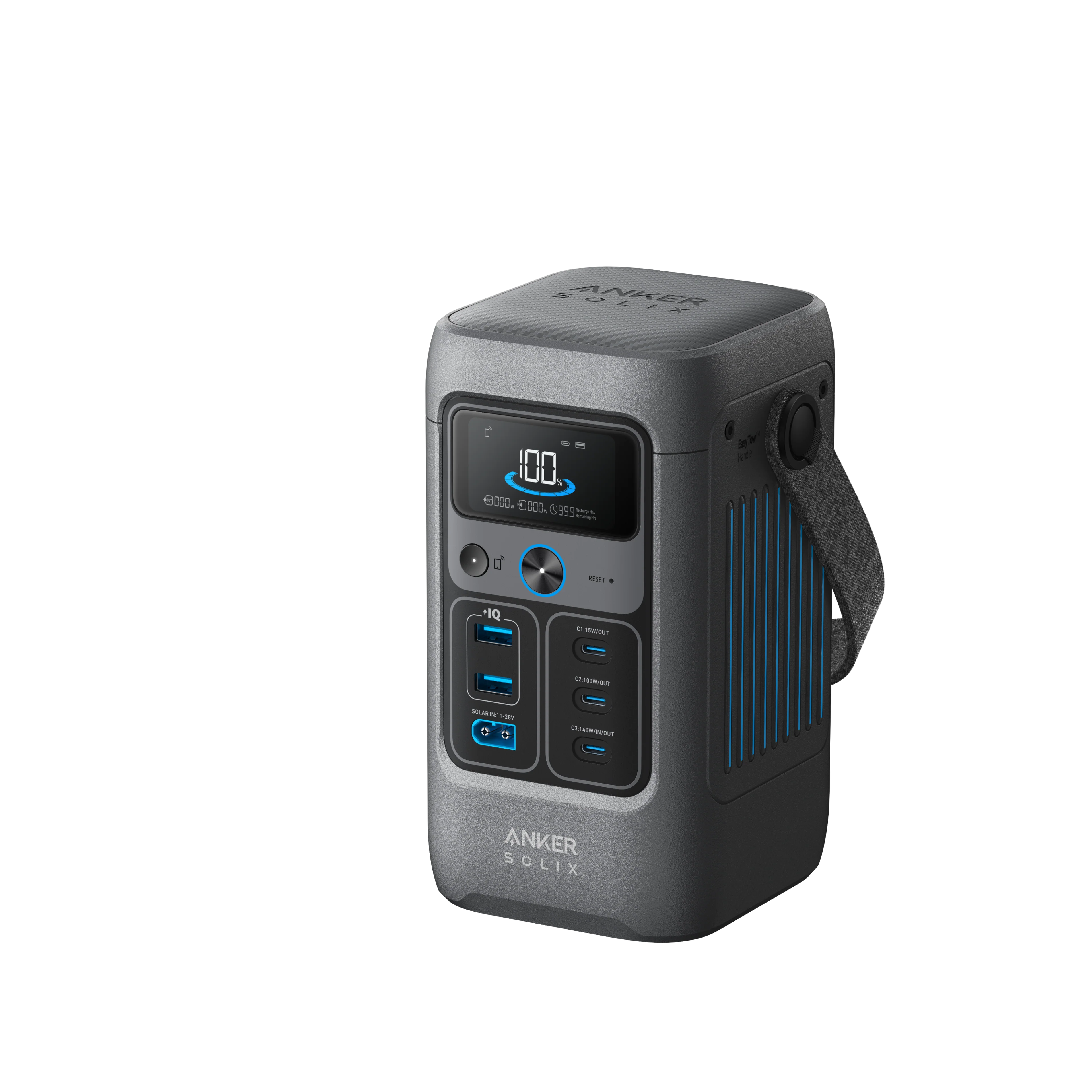
Anker SOLIX C200 DC
Sold on Amazon · today’s price is on the listing
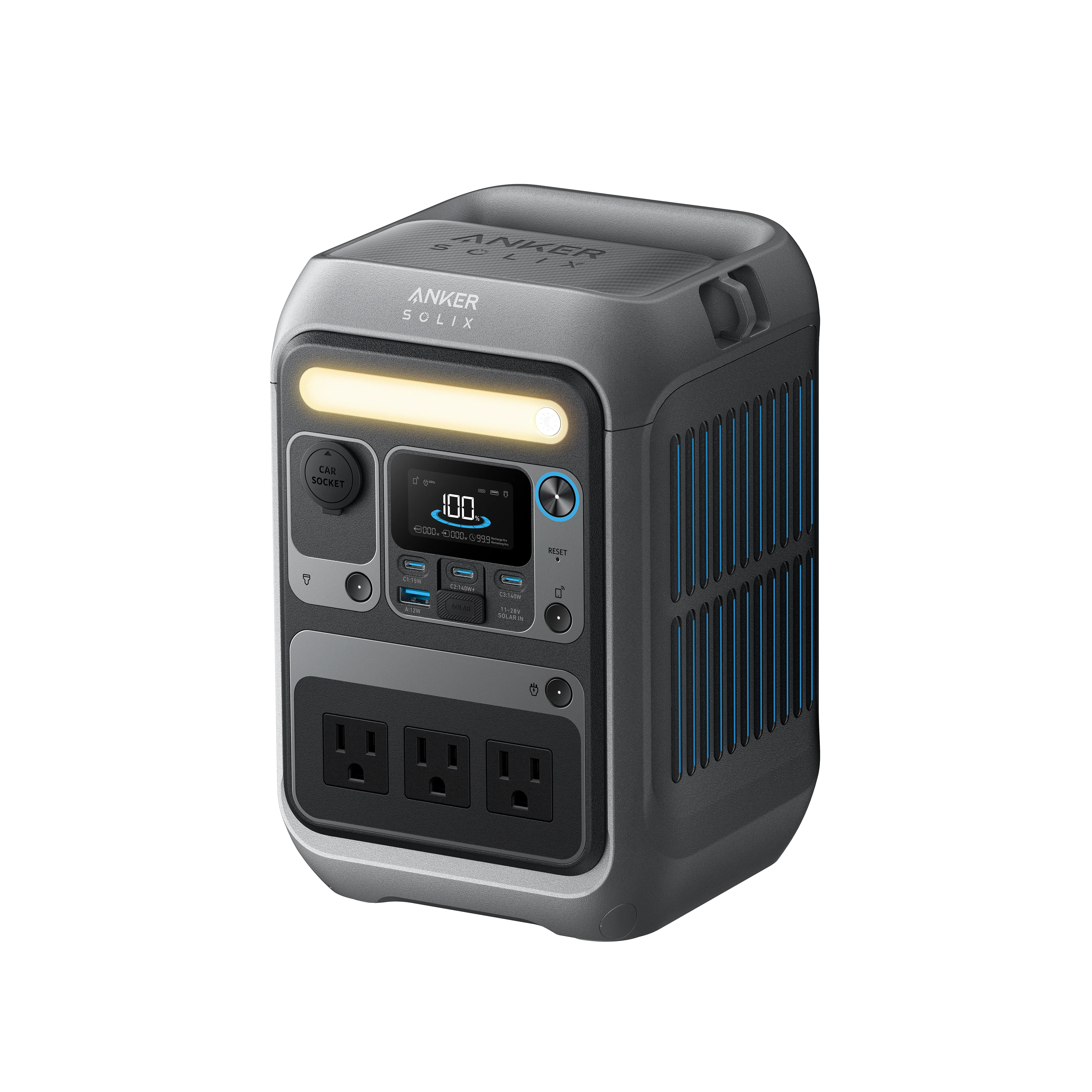
Anker SOLIX C300Pick
Sold on Amazon · today’s price is on the listing
Prices may vary by retailer and are subject to change.