Head-to-head test
EcoFlow DELTA Pro Ultra vs Goal Zero Yeti PRO 4000
At four thousand dollars either way, the only question left is what's inside the box: 6,144Wh behind a 7,200W inverter, or 3,994Wh behind 3,600W.
Full profiles: EcoFlow DELTA Pro Ultra → · Goal Zero Yeti PRO 4000 →

Written by Gunner GustafsonUpdated
Whole-Home Backup Tester, Station Arena Test Desk
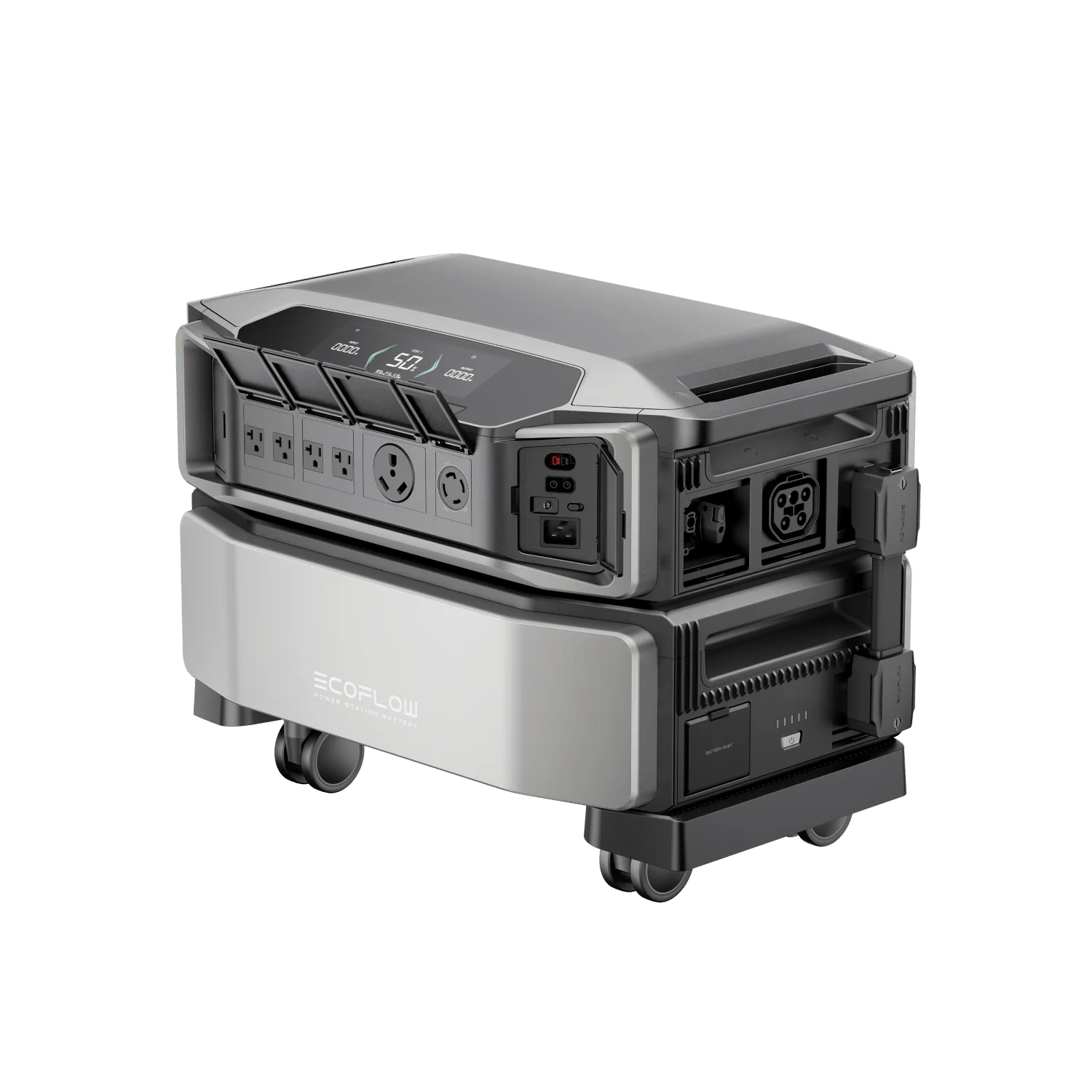
$4,199.00 · direct from EcoFlow
Last checked 1 day ago. Prices move — check before you buy.
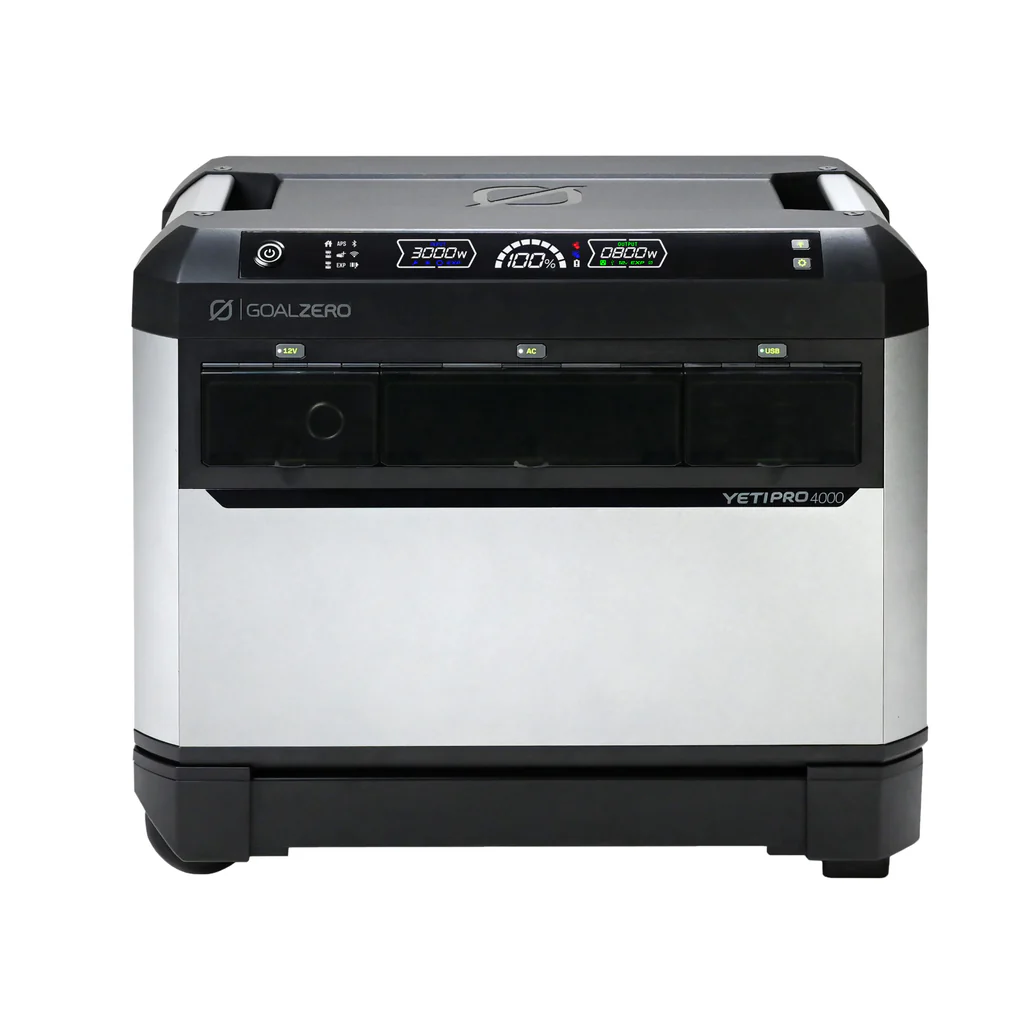
$3,999.95 · direct from Goal Zero
Last checked 1 day ago. Prices move — check before you buy.
Spec deltas
$3,999 for the EcoFlow DELTA Pro Ultra, $4,000 for the Goal Zero Yeti PRO 4000. That's not a price difference, it's a rounding error, and it takes every budget argument off the table before you've started. What's left is two boxes and what's in them.
What's in them isn't close. The DELTA Pro Ultra holds 6,144Wh and runs a 7,200W inverter. The Yeti PRO 4000 holds 3,994Wh and runs 3,600W. Same money, 2,150 more watt-hours, exactly double the continuous draw, and a warranty that covers ten years instead of five. Those per-watt-hour figures on the spec table, 65 cents against a dollar, aren't telling you anything about price. They're capacity wearing a dollar sign, because the price is identical.
The Yeti gets two honest points. It's 66 lbs lighter, and its inverter carries more startup margin over its own rating. Neither one closes the capacity gap, and one of them stops mattering the moment the unit reaches its final resting spot. Take the DELTA Pro Ultra unless you're going to be carrying it.
What the Numbers Reveal
Each conclusion stated first — the numbers behind it on one line, the full analysis below.
Capacity
Bring in the inverters and the shape of the choice changes again: 7,200W continuous on the DELTA Pro Ultra against 3,600W on the Yeti, exactly double. So the same four thousand dollars buys both more stored energy and twice the load you can pull out of it at once. There's no trade being made here. Usually one of these boxes is bigger and the other is cheaper, and you weigh them. Not this time.
DELTA Pro Ultra: $3,999, 6,144Wh capacityYeti PRO 4000: $4,000, 3,994Wh capacityListed cost per watt-hour: 65 cents vs a dollar
Why it mattersAnyone who framed this as whether the EcoFlow is worth paying up for should stop framing it that way. There's nothing to pay up.
Every other load on this page fits inside both units with room left over. The 8-hour blackout takes 31% of the EcoFlow and 48% of the Yeti; a CPAP night barely registers on either. Van life is the one row where the two stop being more-or-less of the same thing and become does-it-or-doesn't-it. The DELTA Pro Ultra ends that day at 90% used with a margin for bad weather. The Yeti ends it needing a mid-day recharge you might not get.
Van Life Daily load needs 4,685WhYeti PRO 4000 capacity is 3,994Wh, scored at 138% of capacity for that dayDELTA Pro Ultra capacity is 6,144Wh, scored at 90%
Why it mattersIf you're living out of the unit rather than riding out a storm with it, the Yeti is off the list on capacity alone.
rated cycles
That gap shows up on the calendar too, and in the Yeti's favour: cycled daily it lasts about 11 years to the EcoFlow's 9.6. So it really is the longer-lived unit. It just does less work while it's alive, and with the purchase prices matched that lands at 19 cents per lifetime kilowatt-hour against 25. Cycle count is the one number on the Goal Zero spec sheet that looks better than the EcoFlow's, and it's measuring the wrong thing. You buy energy, not cycles.
Yeti PRO 4000 is rated for 4,000 cyclesDELTA Pro Ultra is rated for 3,500 cyclesTotal lifetime energy: 21,504 kWh vs 15,976 kWh
Why it mattersDon't let the bigger cycle rating talk you out of the bigger battery. Ask what a cycle is worth on each unit first.
weight
So the weight question isn't which one you can carry. It's which one you can reposition once a year. And the 0ms switchover against 10ms tells you what the EcoFlow was designed to do anyway: sit in one spot, wired in, and take a power cut with no gap at all. If the unit lives in a utility room, 181.8 lbs is a delivery-day problem rather than a daily one. If it lives in a van you reconfigure, it's a daily one.
DELTA Pro Ultra weighs 181.8 lbsYeti PRO 4000 weighs 115.7 lbs and is described as a two-person unit to moveB1Switchover: 0ms on the DELTA Pro Ultra, 10ms on the Yeti PRO 4000
Why it mattersBuyers who load and unload it from a vehicle regularly should drop out of this weight class entirely instead of splitting the difference with the Yeti.
The specific dimensions that decide these two units — everything else is a tie.
Lifetime Value
Selected because: Both units land within a dollar of each other at four thousand dollars, so what each one returns over its life is the entire argument.
cost / lifetime kWh
Ten covered years against five, on price tags a dollar apart, is the same four thousand dollars stretched over twice as much calendar. Spread across the coverage that's $400 a year of warranty on the DELTA Pro Ultra and $800 on the Yeti PRO 4000. That gap isn't EcoFlow being generous with money. It's Goal Zero being brief with time.
Here's the counterweight, because it's real: cycled every day, the Yeti's 4,000-cycle rating outlasts the EcoFlow's 3,500, roughly 11 years to 9.6. It's the longer-lived box. It's also the smaller battery on every one of those days, which is why 21,504 kWh of lifetime energy sits against 15,976. Longer life, less of life's work done.
Your Life, Your Pick
Selected because: The 4,685Wh van-life day is the only load on this page one of these can't finish, and it's the Yeti PRO 4000.
Five of the six loads on this page fit comfortably inside both units, and that's worth sitting with before you look at the sixth. A CPAP night takes 6% of the DELTA Pro Ultra and 9% of the Yeti PRO 4000. A tailgate takes 13% and 20%. If your real life looks like that list, both of these are far more battery than you need, and you're choosing on something other than capacity.
The sixth load is where it breaks. A full van-life day wants 4,685Wh, which is 90% of the EcoFlow and 138% of the Yeti. No amount of clever load-shifting closes 138%. You're either recharging mid-day every day or you're rationing. That single row separates a unit that supports full-time living from one that supports a long weekend of it.
Portability & Form Factor
Selected because: Weight is the one column Goal Zero wins outright: 115.7 lbs against 181.8.
weight
181.8 lbs is not a number you negotiate with. It's a measure-the-doorway, two-strong-people, don't-do-it-on-stairs number, and it means the DELTA Pro Ultra goes where you first put it and stays there. Plan the location before you plan the purchase.
The Yeti's 115.7 lbs is genuinely better and still a two-person liftB1. Taking 66 lbs off gets you from never moving this to moving this with help, occasionally. It does not get you to a unit you carry to a campsite. If what you actually want is something two people can swing into a truck bed without discussing it first, neither of these is that, and the class you want is a tier down.
What the Specs Don't Tell You
Selected because: Surge margin, warranty length and an undisclosed noise figure are where the spec table stops flattering both units.
rated cycles
The Yeti doubles its own continuous rating when a compressor wakes up, 3,600W to 7,200W. The DELTA Pro Ultra only adds half again, 7,200W to 10,800W. That ratio is the honest read on how much startup margin an inverter was designed with, and Goal Zero designed in more. What blunts the point is the starting line: the EcoFlow's steady-state rating is already the number the Yeti can only touch for a moment.
Then the spec Goal Zero doesn't answer at all. EcoFlow publishes 30 dBA for the DELTA Pro Ultra. There is no dBA figure published for the Yeti PRO 4000. That isn't evidence it's loud, but the one number you'd want before putting a unit in a bedroom or a small van is the one you can't look up. Ten years of warranty against five sits in this same section and needs no interpretation.
Brand Trust
Selected because: With the prices matched, the company behind the box is one of the few tiebreaks left.
Nobody ships as many models as EcoFlow and nobody has as many owners to ask, which is worth more than it sounds when you're stuck on a wiring question at 9pm. The support experience is the coin flip: prepaid labels and painless replacements on one side, long waits and refurbished units against new claims on the other. Buying through a retailer with its own return policy costs nothing and gives you a second path.
Goal Zero's support quality has slipped from the premium standard its pricing was built on, with long wait times and tickets sitting unanswered for weeks, and the official community forums have been shut down. What remains is real: a Salt Lake City company under NRG Energy, IPX4 hardware built to be rained on, and a Yeti-Ready accessory ecosystem nobody else matches. That's a genuine reason to buy one. It just isn't a capacity reason, and capacity is what this matchup turns on.
Strengths & trade-offs
EcoFlow DELTA Pro Ultra
Strengths
- +Larger battery capacity
- +Higher AC output
- +Longer warranty
- +Faster solar charging
Trade-offs
- –Significantly heavier (+66.1 lbs), making it harder to move.
- –Very heavy unit that may be difficult for one person to lift.
Goal Zero Yeti PRO 4000
Strengths
- +Costs $199.1 less
- +Lighter by 66.1 lb
Trade-offs
- –Weaker inverter (-3,600W) limits appliance compatibility.
- –Very heavy unit that may be difficult for one person to lift.
Will It Power Your Gear?
Scenario math and per-appliance runtimes, modeled from the spec record.
Scenario verdicts
We ran the math on six real-world scenarios. Here's which unit survives your actual life.
SCN-01 · 2 nights · needs 2,100Wh
Weekend Camping
Two nights off-grid with essential comfort
Neither unit
Scoring these two at a campsite is a category error: neither travels — the DELTA Pro Ultra is 181.8 lbs and the Yeti PRO 4000 115.7 lbs, and at those weights they roll off a truck bed if they go anywhere at all. The 2,100Wh here is trivial for either — it's the going that doesn't happen. If you need power away from the building, you're shopping the wrong class.
Battery budget usedlower = more headroom
LOAD Phone Charger 15W×6h · LED Lights 40W×8h · Box Fan 75W×14h · CPAP Machine 40W×16h
SCN-02 · 8 hours · needs 1,645Wh
8-Hour Blackout
Keep the essentials running through a night without power
DELTA Pro Ultra
Both survive the night. The DELTA Pro Ultra finishes at 31% used with 3,577Wh left — 2.2 more nights like it. The Yeti PRO 4000 finishes at 48% with 1,750Wh, 1.1 more nights like it. If your outages tend to run past one evening, that difference is the whole argument between them.
Battery budget usedlower = more headroom
LOAD Fridge 150W×8h · Router + Modem 20W×8h · LED Lights (4 bulbs) 40W×6h · Phone Charger 15W×3h
SCN-03 · 8 hours · needs 320Wh
CPAP Overnight
Sleep therapy without interruption — the #1 medical use case
Either unit
Both units treat a CPAP night as a rounding error: 6% of the DELTA Pro Ultra, 9% of the Yeti PRO 4000. Capacity isn't the question here, and buying either one for this load alone is four thousand dollars spent on a job a fraction of the battery could do. If you're deciding on this scenario, decide on noise instead: EcoFlow publishes 30 dBA and Goal Zero publishes nothing at all.
Battery budget usedlower = more headroom
LOAD CPAP Machine 40W×8h
SCN-04 · 8 hours · needs 910Wh
Remote Workday
Full work day off-grid without power anxiety
DELTA Pro Ultra
The DELTA Pro Ultra clears the workday at 17% used, banking 4,312Wh — late work, extra calls, or a second laptop charge without arithmetic. The Yeti PRO 4000 at 27% also finishes, with 2,485Wh of slack for the unplanned.
Battery budget usedlower = more headroom
LOAD Laptop 60W×8h · External Monitor 30W×8h · Router + Modem 20W×8h · Phone Charger 15W×2h
SCN-05 · 4 hours · needs 670Wh
Tailgate Party
Game day power for the crew
Neither unit
Neither unit notices this one: 13% of the DELTA Pro Ultra, 20% of the Yeti PRO 4000. So the tiebreak happens in the parking lot rather than the battery, and it goes to the Yeti at 115.7 lbs against 181.8. Both still want two people and a tailgate you can slide them onto rather than lift them over.
Battery budget usedlower = more headroom
LOAD Blender 400W×0.5h · LED TV (55") 80W×4h · Bluetooth Speaker 15W×4h · Phone Charger (×3) 45W×2h
SCN-06 · 24 hours · needs 4,685Wh
Van Life Daily
A full day of mobile living — the ultimate endurance test
DELTA Pro Ultra
A full van-life day wants 4,685Wh. The DELTA Pro Ultra ends it at 90% used, which is tight but finished. The Yeti PRO 4000 lands at 138%, which is 691Wh short before you subtract anything for inverter losses. This is the one row on the page where the two units answer different questions.
Battery budget usedlower = more headroom
LOAD Mini-Fridge 150W×24h · Laptop 60W×4h · Phone Charger 15W×3h · LED Lights 40W×5h · Fan 75W×8h
The Load Test
RUNTIME = (Wh × 0.85) ÷ LOAD
None of the scenarios above exactly yours? Build it. Toggle what you'd plug in; both units are tested against the combined draw.
Essentials
Comfort & Convenience
High-Draw Appliances
Test duration
8h
Continuous draw
205W
Projected runtime
For this load: DELTA Pro Ultra runs 25.5h vs 16.6h.
$4,199 list · direct from EcoFlow
Modeled from the spec record — same math as the tables below. Methodology
Runtime by appliance
Real-world runtime estimates for common appliances, modeled at 85% inverter efficiency.¹
Essentials
The basics you need runningscale 0–348.2hComfort & Convenience
Makes off-grid life actually enjoyablescale 0–69.6hHigh-Draw Appliances
These reveal the real limitsscale 0–5.2h¹ Runtime = (capacity × 0.85) ÷ appliance watts. Within each group, all bars share one time scale (the group's longest runtime), so lengths are comparable across appliances; identical runtimes collapse into a single blue/orange bar. Actual runtime varies with battery age, temperature, and simultaneous loads — see methodology.
Conclusion
August 2, 2026
Verdict: the DELTA Pro Ultra, on Power Score margin
Take the DELTA Pro Ultra. It's $3,999 against the Yeti PRO 4000's $4,000, which means you're choosing hardware rather than budget, and the hardware isn't close: 6,144Wh against 3,994Wh, 7,200W continuous against 3,600W, 5,600W of solar input against 3,000W, and ten covered years against five. The Yeti wins two specs that genuinely matter. It's the lighter unit at 115.7 lbs, and its inverter doubles its own continuous rating on surge where the EcoFlow only adds half again. Neither of those buys back the missing capacity, and most people shopping at this size are buying capacity. Choose the Yeti only if the unit has to move, or if you're already living inside Goal Zero's panels, coolers and vehicle kits.
Editor-assigned confidence, based on cited owner research and spec analysis.
List prices as of August 2, 2026. The links below open EcoFlow's and Goal Zero's current prices.
$4,199.00 · direct from EcoFlow
Last checked 1 day ago. Prices move — check before you buy.
or check the Yeti PRO 4000 price$3,999.95 list
Written by Gunner Gustafson, Whole-Home Backup Tester · Station Arena Test Desk · Updated August 2, 2026
Measured Data
Benchmark scores and the full spec record, side by side.
Benchmark scores
Not rated for both units (minimum threshold unmet): RV Living, Solar Generator.
Full specifications
ᵈ Derived: price ÷ rated capacity. See the data behind our comparisons →
Comparison ToolAdd more power stations, side by sideOpen Tool →How these numbers are produced
Numeric verification
Every figure on this page traces to our spec database or arithmetic on it — no estimated numbers.
Owner claims
Statements about owner experience are cited to published reviews — see Sources & Research Notes below.
Runtime model
Runtime = (rated capacity × 0.85 inverter efficiency) ÷ device wattage. Solar recharge estimates assume panels deliver 70% of rated output. Cold weather, battery age, and stacked loads reduce real-world results.
Power Score
Computed from 14 published spec dimensions, weighted per use-case bench. Higher is better; a unit must meet a bench's minimum threshold to be rated.
See the full weight table and data sourcing on our methodology page →Class ranking (the star rating)
Each unit's star score is a category ranking, not customer reviews — no buyer opinions feed it. We score every station on size-independent quality (value, output, portability, endurance, ports, warranty, and more), then percentile-rank it against the other units in its capacity class, so a class-leading compact unit and a class-leading whole-home unit can both earn 5★. Here, DELTA Pro Ultra rates 4.9/5 (93rd percentile of 16 Home Backup-class units), and Yeti PRO 4000 rates 3.6/5 (20th percentile of 16 Home Backup-class units).
How the class ranking is computed →Test Notes & Caveats
Hidden gotchas and advantages we spotted that you won't find on the product page.
Both of these are furniture
181.8 lbs for the DELTA Pro Ultra, 115.7 lbs for the Yeti PRO 4000. The Goal Zero is meaningfully lighter and 115.7 lbs is still a two-person lift with a clear path and no stairs in it. Neither is a unit you carry to a campsite. Decide where it lives before you buy it, and measure the doorway on the way.
The Yeti's inverter has the better margin
Goal Zero rates the Yeti PRO 4000 at 3,600W continuous and 7,200W surge, a clean 2x. EcoFlow rates the DELTA Pro Ultra at 7,200W and 10,800W, which is 1.5x. That ratio is what tells you how much startup margin an inverter was designed with, and Goal Zero built in more of it. Worth stating plainly because it runs against our pick: as a share of its own rating, the Yeti holds more in reserve when a compressor slams on.
UPS Switchover: 0ms-rated vs ≤15ms
Both list a UPS mode, at different rated speeds. The DELTA Pro Ultra is rated 0ms — a no-break design on paper, which is the maker's classification rather than a stopwatch result. The Yeti PRO 4000 is rated ≤15ms — fine on paper for routers and most electronics; the fussiest PC power supplies sit right at this line. If a computer with unsaved work is the thing being protected, the stated class is worth the attention; nothing here is a lab result.
Ten covered years against five
At four thousand dollars each, EcoFlow covers the DELTA Pro Ultra for 10 years and Goal Zero covers the Yeti PRO 4000 for 5. Spread across the coverage that's $400 a year against $800. It carries extra weight with EcoFlow, which offers no parts or service once the warranty lapses, so those ten years are the whole of the support you get.
Goal Zero doesn't publish a noise figure
EcoFlow puts 30 dBA on the DELTA Pro Ultra's spec sheet. There is no published dBA number for the Yeti PRO 4000. That's not evidence it's loud, but it does mean the one spec you'd want before putting a unit in a bedroom, a nursery or a small van is the one you can't look up. If quiet matters, hear it running before the return window closes.
Full record above — the Test Desk pick is the DELTA Pro Ultra.
Check DELTA Pro Ultra price →or check the Yeti PRO 4000 priceOwnership Analysis
What happens after you buy — true cost of ownership, brand trust, and growth potential.
Lifetime value
Service lifeyears at one full cycle per day
Lifetime energy delivered
Cost per delivered kWh
│ warranty ends · Reaching the cycle rating means ~80% capacity remains — degraded, not dead.
Analyst note
The Yeti PRO 4000 is cheaper to buy, but the DELTA Pro Ultra is cheaper to own. At $0.2/kWh over its lifetime vs $0.25/kWh, the DELTA Pro Ultra's higher cycle life and capacity make each dollar go further over the years. One caution on the lifespan row: the Yeti PRO 4000 takes longer to reach its cycle rating, but a cycle moves a different amount of energy on each unit — the DELTA Pro Ultra still delivers more over its shorter horizon (21,504 vs 15,976 kWh). Years measure wear, not usefulness.
Brand trust
EcoFlow
Ecosystem
The deepest catalogue in portable power: DELTA Pro, DELTA 3 and RIVER 3 lines, plus solar panels and smart home panels. Buy in here and there's a bigger version of almost everything waiting.
Support
US phone, email and chat, with genuinely polarised outcomes. Plenty of prepaid labels and painless replacements, plenty of long waits and refurbished units sent against new claims. Buying through Costco or Amazon gives you a second return path that costs nothing to have.
Community
The largest owner community in the category, spread across an active subreddit, several Facebook groups and an official forum. The practical benefit is that somebody has already solved your wiring question.
App experience
Rated 4.6/5 iOS (~8,400 ratings) · 4.2/5 Android (~17,000 ratings)
Unique strength
X-Stream charging is the fastest in the category, and the DELTA Pro Ultra platform scales further than anything else in this matchup.
Worth knowing
The October 2025 DELTA Max 2000 recall over overheating covers a different product line, but it's on the record. EcoFlow also floated paywalling advanced app features in early 2025 and backed off after community pushback, and it offers no parts or service once your warranty ends.
Goal Zero
Ecosystem
Focused rather than broad: five or six active Yeti and Yeti Pro models, Alta coolers, Nomad and Ranger panels, and vehicle integration kits. If you're already inside it, the pieces genuinely work together.
Support
A Salt Lake City company under NRG Energy, which used to be the reason people paid more. That's slipped, with long wait times, unresponsive email and tickets sitting for weeks. The premium-support argument for premium pricing no longer carries itself.
Community
Small and loyal, strongest among overlanders and preparedness buyers. The official forums have been shut down, which took the best searchable archive with them.
App experience
Rated 4.4/5 iOS (~1,200 ratings) but recent reviews skew negative — recurring connectivity issues, crashes, and stability problems.
Unique strength
The original brand in this category, US-based, with IPX4 weather resistance and a Yeti-Ready accessory ecosystem nobody else matches.
Worth knowing
Goal Zero carries the lowest watt-hours per dollar of any major brand, and this matchup is a clean illustration of it. Its iOS app rates 4.4/5 overall, though the recent rating trend has turned negative on connectivity and stability.
Analyst note
Two companies moving in opposite directions. EcoFlow innovates faster, delivers more watt-hours per dollar across its line and has the larger community, with a support experience that is a real coin flip. Goal Zero has the heritage, the US address and the ruggedised build, and is charging premium prices against a support standard it no longer meets. With the two units priced the same, brand loyalty is most of what's keeping this close.
Growth path
DELTA Pro Ultra
EXPANDABLESupports EcoFlow expansion batteries, so you can add capacity later without replacing the base unit — useful if your needs may climb past 6,144Wh.
Accepts up to 5,600W of solar. Enough for a serious multi-panel array.
Adequate ports for most setups, but heavy users may want a power strip.
Expansion batteries are EcoFlow-specific. You're investing in the EcoFlow ecosystem.
Yeti PRO 4000
EXPANDABLESupports Goal Zero expansion batteries, so you can add capacity later without replacing the base unit — useful if your needs may climb past 3,994Wh.
Accepts up to 3,000W of solar. Enough for a serious multi-panel array.
Generous port selection supports complex multi-device setups.
Expansion batteries are Goal Zero-specific. You're investing in the Goal Zero ecosystem.
Realistic full solar rechargeat 70% of rated panel output — see methodology
Analyst note
Both expand, but the DELTA Pro Ultra's higher solar ceiling (5,600W vs 3,000W) gives it the stronger off-grid growth path — more panels can feed a bigger bank as it grows.
What Owners Report
Patterns from published owner reports and long-term reviews — every claim cited to its source below.
EcoFlow DELTA Pro Ultra
Field data on the DELTA Pro Ultra is thinner than a four-thousand-dollar unit deserves, and what exists leans on retailer reviews and spec-led writeups rather than owners three winters inA3A4. Retail buyers describe a straightforward whole-home install with quick setup, strong solar input and app monitoring they actually use, and note the 7,200W inverter starting a 3-ton central ACA4.
Two claims are worth separating from the marketing. The LFP pack is rated past 3,500 cycles to 80% capacity, which is the ten-plus-year figure the warranty is built onA2. And the platform is documented as expandable to 90kWh across a system, an order of magnitude beyond anything else on this pageA1. The number to treat carefully is noise: the unit is claimed to run silent under 2,000W drawsA3, while its published spec is 30 dBA. Plan around 30 dBA and be pleased if it's quieter.
“6,144Wh per battery with 7,200W continuous output (10.8kW surge), expandable to 90kWh across a system for a household — over 30 days of essential backup.”
Sources
ecoflow.com · homedepot.com · autoboosting.com · ecogadgethub.com
Goal Zero Yeti PRO 4000
The Yeti PRO 4000 earns consistent praise for its build, called one of the most durable reviewers have handled, backed by US-based support and an app they rated highlyB1. Its 3,000W solar input is reported to take it from empty to full in under two hours off-grid, with strong idle efficiencyB2, and the sub-10ms UPS switchover gets singled out for RV and camping backupB4.
Reliability is the part that isn't uniform. One owner went through two units, the first returned or replaced, the second throwing a 12V error that also stopped it charging from solarB3. That's a single account rather than a pattern, and it should be read as one. It's also exactly the failure mode that strands you off-grid, which is reason enough to buy this one somewhere with a real return window rather than somewhere with a good price.
“Weighs about 115.7 lbs — a two-person unit to move — with one of the most durable builds reviewers have seen, backed by American-based support and a great app.”
Sources
bestgeneratorsolar.com · thesolarlab.com · goalzero.com · business.walmart.co · techradar.com · cleantechnica.com
Sources & Research Notes
Every owner claim in this report is traceable to a published source. The bracketed references above resolve here.
Recurring owner themes
- Whole-home scale (to 90kWh), 7,200W output, online UPS, silent operation under load, and industry-fast charging are the standout features. [DELTA Pro Ultra · 2 entries]
- Strong solar input, a great app, American-based support, and a durable build are the praise; heavy weight and some owner reliability reports (12V errors) are the caveats. [Yeti PRO 4000 · 3 entries]
- A1
“6,144Wh per battery with 7,200W continuous output (10.8kW surge), expandable to 90kWh across a system for a household — over 30 days of essential backup.”
ecoflow.com / homedepot.com — DELTA Pro Ultra · 2026 · [positive]
- A2
“LFP chemistry rated for over 3,500 cycles to 80% (10+ years of use).”
ecoflow.com / autoboosting.com — DELTA Pro Ultra review · 2026 · [positive]
- A3
“Industry-fast 8,800W charging tops up two batteries in about 2 hours; an online UPS protects sensitive electronics round the clock, and it runs at 0 dB (silent) for draws under 2,000W.”
ecoflow.com / ecogadgethub.com — DELTA Pro Ultra review · 2026 · [positive]
- A4
“Owners call it a powerful, easy-to-use whole-home backup with quick setup, strong solar input, and good app monitoring; its 7,200W inverter can power a 3-ton central AC.”
homedepot.com owner reviews — DELTA Pro Ultra · 2026 · [positive]
- B1
“Weighs about 115.7 lbs — a two-person unit to move — with one of the most durable builds reviewers have seen, backed by American-based support and a great app.”
bestgeneratorsolar.com / thesolarlab.com — Yeti PRO 4000 review · 2026 · [mixed]
- B2
“3,000W solar input recharges 0-100% in under 2 hours off-grid, with impressive surge and idle efficiency; fully expandable.”
goalzero.com / thesolarlab.com — Yeti PRO 4000 review · 2026 · [positive]
- B3
“Owner reliability is mixed — some report 12V errors, including a first unit returned or replaced and a second that had a 12V error and would not charge from solar.”
business.walmart.com reviews / oliver owner forums — Yeti PRO 4000 · 2026 · [negative]
- B4
“Roughly 3,994Wh capacity; praised for RV and camping backup.”
techradar.com / cleantechnica.com — Yeti PRO 4000 review · 2026 · [positive]
Research compiled August 2, 2026.
What Owners Actually Report
Drawn from 94 comments on independent review channels — not from retailer reviews, which skew to the first week of ownership. Each line is our summary of one commenter's claim, linked to the original. We record what they said, including where it contradicts the spec sheet.
EcoFlow DELTA Pro Ultra
144 claims from 88 comments · 100 from owners · 35 with figures
- Price & value
- 22 · 18% negative
- Runtime
- 16 · 0% negative
- Expandability
- 17 · 16% negative
- Charging
- 11 · 4% negative
- Other
- 18 · 19% negative
What owners complain about
A second battery bought separately adds $1900, roughly doubling the cost.
Expandabilitymeasuredowner5 agreedsource →
After firmware updates max solar charging dropped from 7kW to 3.5kW.
App & firmwaremeasuredowner5 agreedsource →
Still charges at 7kW from a generator, so the cap looks solar-specific.
Solar inputmeasuredowner5 agreedsource →
What owners praise
Charges at 6000W from a gas generator, hitting 100% in a little over 3 hours with some sun.
Chargingmeasuredowner36 agreedsource →
Costco deal gave him the DPU with two batteries, 12kWh, for $4,500.
Price & valuemeasuredowner53 agreedsource →
Delivered with batteries manufactured less than 90 days earlier.
Shippingmeasuredowner53 agreedsource →
Goal Zero Yeti PRO 4000
15 claims from 6 comments · 14 from owners · 3 with figures
- Runtime
- 2 · 54% negative
- App & firmware
- 2 · 50% negative
- Warranty & support
- 2 · 0% negative
- Durability
- 1 · 100% negative
- Build quality
- 2 · 0% negative
What owners complain about
Lasted only 11 months and had to be replaced twice before he returned it.
Durabilitymeasuredownerafter 11 monthssource →
Charges to 100% then falls to 88% within 1-2 hours and sits there until recharged.
Idle drainmeasuredownersource →
Runs a 500W oxygen concentrator about 3 hours against the 7 hours he was promised.
Runtimemeasuredownersource →
What owners praise
With a Tank Pro expansion it has powered his whole camper van build for a year.
Runtimeownerafter 12 months1 agreedsource →
30A DC and 30A AC outputs plus the angled display are especially useful in a van build.
Build qualityowner1 agreedsource →
Sent it back completely and got all of his money back.
Warranty & supportownersource →
Claims are weighted by how specific they are, whether the commenter owns the unit, and how many readers agreed. Comments that mention a product under a rival's review count for more, because the commenter had no reason to be there. This is what buyers report, not our test results — for measurements we ran ourselves, see the methodology.
Who Should Buy Which
Buy the DELTA Pro Ultra if you…
- →You're wiring a backup into a house and want the handover to be invisible. 0ms switchover means the desktop doesn't reboot and the sump pump doesn't skip when the street goes dark.
- →You live in the vehicle rather than visiting it. A 4,685Wh van-life day fits at 90% used, and 5,600W of solar ceiling means one good day of sun puts it back.
- →Your worry list has a central AC or a well pump on it. 7,200W continuous is where that conversation starts and 3,600W is where it ends.
- →You expect the system to grow. Both units take expansion batteries, but the solar ceiling is what actually feeds a bigger bank, and 5,600W against 3,000W decides that.
Buy the Yeti PRO 4000 if you…
- →The unit has to move. 115.7 lbs is still a two-person liftB1, but 66 lbs is the difference between a job for two people and a job for two people and a plan.
- →You're already inside Goal Zero's world: Nomad and Ranger panels, Alta coolers, a vehicle integration kit. Replacing all of that to gain watt-hours is a worse trade than the spec sheet makes it look.
- →Your loads are spiky rather than large. If the problem is a well pump starting rather than an air conditioner running, the Yeti's 2x surge headroom over its own rating is the spec you actually care about.
- →You want the company in the United States and the hardware rated to be rained on. IPX4 and a Salt Lake City address are legitimate things to want, and you'll pay for them in capacity.
If neither fits
If your worst realistic night is the 1,645Wh blackout or a 2,100Wh camping weekend, close this tab. You'd be putting four thousand dollars into a battery to use a third of it, then paying for the privilege every time two people have to move it. Size the unit to the number you actually need and spend what's left on panels, which is the part that decides how long you last when the outage runs past day two.
The Bottom Line
Take the DELTA Pro Ultra. Matched prices remove the only argument the Yeti PRO 4000 could have won cleanly, and what's left is more stored energy, double the continuous output, nearly double the solar input and double the warranty, out of the same four thousand dollars. The cycle rating is the one spec where Goal Zero looks better, and it counts the wrong thing: more cycles of a smaller battery still adds up to less energy.
The Yeti keeps its two honest points. It's the lighter box, and its inverter carries more surge margin over its own rating. Buy it if the unit genuinely has to move, or if you're already invested in Goal Zero panels, coolers and vehicle kits deeply enough that leaving costs more than it saves. Everyone else is being handed a substantially larger battery for the same money and should take it.
Frequently Asked Questions
Answers drawn from the spec record and cited owner research.
Which is better, the EcoFlow DELTA Pro Ultra or the Goal Zero Yeti PRO 4000?
The DELTA Pro Ultra, and not narrowly. The two cost the same within a dollar, and the EcoFlow holds 6,144Wh against 3,994Wh while running 7,200W continuous against 3,600W. The Yeti is lighter at 115.7 lbs and carries more surge headroom relative to its own rating. If the unit isn't going to move, take the EcoFlow.
Can the Goal Zero Yeti PRO 4000 run a whole house?
Not in the sense most people mean by it. Its 3,600W continuous rating covers a fridge, lights, networking and several outlets at once, with 7,200W available briefly for motor startup. Central air plus a well pump plus an electric range is past it. The DELTA Pro Ultra's 7,200W continuous is the rating that starts that conversation, which is why it costs the same and weighs 66 lbs more.
How long will each one last?
The Yeti PRO 4000 is rated for 4,000 charge cycles and the DELTA Pro Ultra for 3,500, so on daily cycling the Goal Zero lasts about 11 years to the EcoFlow's 9.6. Total energy delivered runs the other way, because the EcoFlow's cycles are bigger: 21,504 kWh over its life against 15,976. Warranty coverage is 10 years on the EcoFlow and 5 on the Goal Zero.
Is the DELTA Pro Ultra too heavy to move?
At 181.8 lbs it's a two-person lift with a plan, not something you pick up. Choose its location before it arrives and think about doorways, thresholds and stairs. The Yeti PRO 4000 at 115.7 lbs is easier but still a two-person unit, so neither of these belongs in the same conversation as the boxes people carry to campsites.
Do I actually need 6,144Wh?
Probably not, if this is purely backup. An 8-hour outage on the standard load list draws 1,645Wh, which is 31% of the DELTA Pro Ultra and 48% of the Yeti PRO 4000. You need this much capacity for a full van-life day at 4,685Wh, or for multiple outage days without usable sun. Otherwise you're buying headroom, which is fine, as long as you know that's what you're buying.
Related comparisons
Where to buy
EcoFlow DELTA Pro UltraPick
$4,199.00
$4,199.00 · direct from EcoFlow
Last checked 1 day ago. Prices move — check before you buy.
Goal Zero Yeti PRO 4000
$3,999.95
$3,999.95 · direct from Goal Zero
Last checked 1 day ago. Prices move — check before you buy.
Prices may vary by retailer and are subject to change.