Head-to-head test
EcoFlow DELTA Pro Ultra vs Anker SOLIX E10
Identical 6,144Wh batteries, opposite bets: the EcoFlow warranties its box for ten years and never breaks the current, while the Anker takes 3,400 more watts of solar and costs a hair less per lifetime kWh, then backs it for five.
Full profiles: EcoFlow DELTA Pro Ultra → · Anker SOLIX E10 →
Looking for a different matchup? EcoFlow DELTA Pro Ultra X vs Anker SOLIX E10

Written by Gunner GustafsonUpdated
Whole-Home Backup Tester, Station Arena Test Desk
Spec deltas
Both of these are 6,144Wh whole-home batteries, and across the six scenarios we model — from a CPAP overnight to a full van-life day — they post identical runtimes, because they store identical energy. Capacity, the number most people shop on, is a wash here. The decision lives in everything around the battery.
The EcoFlow's case is boring in the way infrastructure should be: a ten-year warranty, a true 0ms online UPS, 100W USB-C on board, and a platform bolted to enough walls to have a track record. It's also $200 cheaper. The Anker counters with the newer, sharper sheet — 9,000W of solar input against EcoFlow's 5,600W, a 4,000-cycle rating, and a lower cost per lifetime kWh.
But new is new, and it shows. Reviewers running pre-release units hit an install-time firmware bug with no recovery pathB11 and broke a plastic handle on a heavy battery moduleB7. Neither is fatal, and both are exactly what a ten-year warranty exists to cover — which is the one Anker doesn't offer, since its coverage stops at fiveB6.
What the Numbers Reveal
Each conclusion stated first — the numbers behind it on one line, the full analysis below.
rated cycles
Those bargain late-life kilowatt-hours only arrive if the unit survives unwarranted, and Anker stands behind the E10 for five years — a term its own reviewers called 'not encouraging' beside a ten-year rivalB6 — where EcoFlow guarantees ten. You're weighing a discount you collect near the end against coverage you might need in the middle.
EcoFlow warranty 10 years; Anker warranty 5 yearsAnker cost per lifetime kWh $0.17 vs EcoFlow $0.19Anker rated 4,000 cycles vs EcoFlow 3,500
Why it mattersKeep gear until it dies and the EcoFlow's extra five years of coverage outweigh the Anker's per-kWh edge; churn hardware every few years and the cheaper-to-run Anker makes more sense.
solar input
It starts paying the day you expand — more panels can push into a bigger Anker bank than the EcoFlow will accept, which is precisely the off-grid owner who grows past one battery. The cost is the switchover: EcoFlow's 0ms online design never drops the current, while Anker's 20ms standby relay stays imperceptible in practice, with owners reporting storms that came and went unnoticed until they checked the appB4B5.
Anker solar input 9,000W vs EcoFlow 5,600Wboth share a 6,144Wh base and both expandAnker 20ms standby switchover vs EcoFlow 0ms online UPS
Why it mattersOff-grid solar builders who'll add panels and batteries should take the Anker; anyone running bare medical gear or a desktop with no UPS of its own wants EcoFlow's true no-break output.
So the E10 is likely quieter than EcoFlow's 30 dBa, which only goes silent at low draw before the fans join in — but it trades that silence for a standing idle draw that quietly eats about a kilowatt-hour a dayB10, the kind of vampire load that erodes the very lifetime-cost math that makes it look cheaper.
Anker publishes no noise rating for the E10the E10 is passively cooled and fanlessB9the E10 carries a standing idle draw even at restB10
Why it mattersPut the unit in a bedroom or office and the fanless Anker wins the noise fight; leave it idling for weeks between outages and factor that standing draw before you trust the cheaper-to-own label.
The specific dimensions that decide these two units — everything else is a tie.
Lifetime Value
Selected because: The warranty-vs-lifetime-cost tension is the crux of the matchup.
cost / lifetime kWh
The spreadsheet favors Anker: $0.17 per lifetime kWh to EcoFlow's $0.19, and 24,576 lifetime kWh banked against 21,504, on the strength of 500 more cycles. Over a full life the E10 is the cheaper box to run, and that's worth taking seriously. What the per-kWh figure hides is timing — when you pay, and when you're covered. EcoFlow's warranty runs ten years and Anker's runs five, so the Anker costs roughly twice as much per warranted year ($860 against $410). You're buying a decade of guaranteed operation from one unit and five years from the other, and the cheaper-per-kWh unit is the one that leaves you uncovered first.
Growth Path
Selected because: Anker's 9,000W solar ceiling is its clearest real advantage.
solar input
Both units expand, so the real question is what you can feed them, and the E10 pulls ahead: 9,000W of solar input against 5,600W. At the shared 6,144Wh base that headroom is dead weight — either bank fills in about an hour of strong sun. Stack a second and third battery, though, and the Anker can shovel 3,400 more watts of panel into the larger bank, refilling a whole-home reserve in a single good solar day where the EcoFlow has to ration. If your endgame is a big off-grid array, this is the one spec sheet on the page that clearly points at the newer unit.
What the Specs Don't Tell You
Selected because: Weight, UPS, warranty, and the noise-disclosure flag all fire and mostly cancel.
rated cycles
Four flags fire here, and they mostly cancel out. Both are two-person, mind-your-back installs — 181.8 pounds for the EcoFlow, 190.6 for the Anker — so weight is a problem you solve with a hand truck and a helper, not a deciding spec. The UPS flag is real but quiet: EcoFlow's 0ms online design genuinely never breaks the current, while Anker's 20ms is a standby switchover no owner has actually caught happeningB4. The noise flag looks damning until you learn why the number is missing — the E10 is fanless, cooled by passive finsB9, so there's no fan curve to publish. The warranty flag is the one that sticks: ten years against five.
Brand Trust
Selected because: Incumbent EcoFlow vs a brand-new Anker SKU still finding its edges.
EcoFlow is the incumbent, with the deepest catalog in portable power and by far the largest owner community to troubleshoot with at midnight. That maturity cuts both ways: it also carries a 2025 recall on a different model and once floated an app-subscription paywall before backlash shelved it. Anker brings its consumer-electronics reputation and a genuinely better cost-per-Wh, but the E10 is new enough that field reports are still finding the edges — a firmware bug that strands you mid-install with no recovery pathB11 — and Anker's SOLIX-specific support has been sliding from its once-stellar norm. For a box you install once and lean on for years, EcoFlow's boring track record beats Anker's sharper sheet.
PowerScore Breakdown
Selected because: Bench favors Anker; surface it honestly and explain the override.
overall power score
Our bench scores the E10 higher — 9,115 to 8,583 — and it earns that on paper: more solar input, more cycles, a little more continuous output at 7,680W against 7,200W. Read the number as confirmation that the Anker is the stronger raw machine. What a composite score can't weigh is a ten-year warranty, a true online UPS, or the difference between a decade of field history and a launch-week firmware bugB11. The score says Anker; the risk profile says EcoFlow. On a whole-home box you keep for years, we trust the risk profile.
Strengths & trade-offs
EcoFlow DELTA Pro Ultra
Strengths
- +Costs $100 less
- +Lighter by 8.8 lb
- +Longer warranty
Trade-offs
- –Very heavy unit that may be difficult for one person to lift.
Anker SOLIX E10
Strengths
- +Higher AC output
- +Faster solar charging
Trade-offs
- –Very heavy unit that may be difficult for one person to lift.
Will It Power Your Gear?
Scenario math and per-appliance runtimes, modeled from the spec record.
Scenario verdicts
We ran the math on six real-world scenarios. Here's which unit survives your actual life.
SCN-01 · 2 nights · needs 2,100Wh
Weekend Camping
Two nights off-grid with essential comfort
Neither unit
Scoring these two at a campsite is a category error: the DELTA Pro Ultra at 181.8 lbs is not a take-along — it rolls off a truck bed if it travels at all, and the SOLIX E10 is installed at the electrical panel — it backs up the building and doesn't leave it. The 2,100Wh here is trivial for either — it's the going that doesn't happen. If you need power away from the building, you're shopping the wrong class.
Battery budget usedlower = more headroom
LOAD Phone Charger 15W×6h · LED Lights 40W×8h · Box Fan 75W×14h · CPAP Machine 40W×16h
SCN-02 · 8 hours · needs 1,645Wh
8-Hour Blackout
Keep the essentials running through a night without power
Either unit
Identical on runtime — both hold 6,144Wh and cover the 1,645Wh a typical outage pulls with most of the tank untouched. Break the tie on recovery instead: EcoFlow's true 0ms online UPS rides the cutover without a blink. If the outage stretches into days of recharging, the Anker's 9,000W solar ceiling flips the edge back, refilling from the sun faster.
Battery budget usedlower = more headroom
LOAD Fridge 150W×8h · Router + Modem 20W×8h · LED Lights (4 bulbs) 40W×6h · Phone Charger 15W×3h
SCN-03 · 8 hours · needs 320Wh
CPAP Overnight
Sleep therapy without interruption — the #1 medical use case
Either unit
A CPAP is about 40W for eight hours, so both of these cover the night several times over — capacity isn't the question here. What would separate them is fan noise, but SOLIX E10 doesn't publish a figure, so there's nothing to hold it to. Buy on price, weight, and whether you can live with a fan you haven't heard.
Battery budget usedlower = more headroom
LOAD CPAP Machine 40W×8h
SCN-04 · 8 hours · needs 910Wh
Remote Workday
Full work day off-grid without power anxiety
Either unit
Both power your workstation all day without strain. The DELTA Pro Ultra lists 100W of USB-C for direct laptop charging; the SOLIX E10 carries no USB-C at all, so a laptop there goes through the inverter — which is what a hardwired stack is: the power comes out of your wall sockets, not out of the box.
Battery budget usedlower = more headroom
LOAD Laptop 60W×8h · External Monitor 30W×8h · Router + Modem 20W×8h · Phone Charger 15W×2h
SCN-05 · 4 hours · needs 670Wh
Tailgate Party
Game day power for the crew
Neither unit
Scoring these two at a tailgate is a category error: the DELTA Pro Ultra at 181.8 lbs is not a take-along — it rolls off a truck bed if it travels at all, and the SOLIX E10 is installed at the electrical panel — it backs up the building and doesn't leave it. The 670Wh here is trivial for either — it's the going that doesn't happen. If you need power away from the building, you're shopping the wrong class.
Battery budget usedlower = more headroom
LOAD Blender 400W×0.5h · LED TV (55") 80W×4h · Bluetooth Speaker 15W×4h · Phone Charger (×3) 45W×2h
SCN-06 · 24 hours · needs 4,685Wh
Van Life Daily
A full day of mobile living — the ultimate endurance test
DELTA Pro Ultra
A dead heat on paper — both cover a heavy 4,685Wh day at about 90% of capacity, leaving almost nothing in reserve. That thin margin is the whole story: at 90% depth every single day, recharge speed decides whether you wake up full, and the Anker's 9,000W solar ceiling refills a drained bank faster than EcoFlow's 5,600W. For genuine off-grid living, the E10 is the one to trust here.
Battery budget usedlower = more headroom
LOAD Mini-Fridge 150W×24h · Laptop 60W×4h · Phone Charger 15W×3h · LED Lights 40W×5h · Fan 75W×8h
The Load Test
RUNTIME = (Wh × 0.85) ÷ LOAD
None of the scenarios above exactly yours? Build it. Toggle what you'd plug in; both units are tested against the combined draw.
Essentials
Comfort & Convenience
High-Draw Appliances
Test duration
8h
Continuous draw
205W
Projected runtime
Dead heat — both run this 205W load for roughly 25.5h. Pick on price, weight, or ports.
Planning for more than this? Describe your whole setup and get it sized →
Modeled from the spec record — same math as the tables below. Methodology
Runtime by appliance
Real-world runtime estimates for common appliances, modeled at 85% inverter efficiency.¹
Essentials
The basics you need runningscale 0–348.2hComfort & Convenience
Makes off-grid life actually enjoyablescale 0–69.6hHigh-Draw Appliances
These reveal the real limitsscale 0–5.2h¹ Runtime = (capacity × 0.85) ÷ appliance watts. Within each group, all bars share one time scale (the group's longest runtime), so lengths are comparable across appliances; identical runtimes collapse into a single blue/orange bar. Actual runtime varies with battery age, temperature, and simultaneous loads — see methodology.
Conclusion
July 18, 2026
Verdict: the DELTA Pro Ultra
Take the DELTA Pro Ultra unless you're building a big off-grid solar array. It's $200 cheaper up front ($4,099 vs $4,299), its warranty runs ten years to the Anker's five, and it's a true online UPS with 0ms switchover, so even a bare desktop rides through an outage without blinking. The honest catch is real: the SOLIX E10 is the computed cheaper-to-own unit over its full life ($0.17 vs $0.19 per lifetime kWh) and it scores higher on our bench, earned on its 9,000W solar ceiling and 4,000-cycle rating. But it's a brand-new SKU whose early reviewers hit a firmware bug mid-installB11, snapped a battery handle in normal useB7, and called its five-year warranty 'not encouraging' next to a ten-year rivalB6 — on a 190-pound box you can't casually ship back. For a decade-long wall install, the proven unit with double the warranty takes the tiebreak.
Editor-assigned confidence, based on cited owner research and spec analysis.
List prices as of July 18, 2026. The links below open EcoFlow's and Anker's current prices.
$4,199.00 · direct from EcoFlow
Last checked 16 days ago. Prices move — check before you buy.
or check the SOLIX E10 price$4,299.00 list
Written by Gunner Gustafson, Whole-Home Backup Tester · Station Arena Test Desk · Updated July 18, 2026
Black Friday · 38 days out
Prices to beat:DELTA Pro Ultra $3,999SOLIX E10 $4,299
The lowest we have recorded for each. We have never seen the SOLIX E10 discounted, so any real cut on it would be a first.
Measured Data
Benchmark scores and the full spec record, side by side.
Benchmark scores
Full specifications
ᵈ Derived: price ÷ rated capacity. See the data behind our comparisons →
Comparison ToolAdd more power stations, side by sideOpen Tool →How these numbers are produced
Numeric verification
Every figure on this page traces to our spec database or arithmetic on it — no estimated numbers.
Owner claims
Statements about owner experience are cited to published reviews — see Sources & Research Notes below.
Runtime model
Runtime = (rated capacity × 0.85 inverter efficiency) ÷ device wattage. Solar recharge estimates assume panels deliver 70% of rated output. Cold weather, battery age, and stacked loads reduce real-world results.
Power Score
Computed from 14 published spec dimensions, weighted per use-case bench. Higher is better; a unit must meet a bench's minimum threshold to be rated.
See the full weight table and data sourcing on our methodology page →Class ranking (the star rating)
Each unit's star score is a category ranking, not customer reviews — no buyer opinions feed it. We score every station on size-independent quality (value, output, portability, endurance, ports, warranty, and more), then percentile-rank it against the other units in its capacity class, so a class-leading compact unit and a class-leading whole-home unit can both earn 5★. Here, DELTA Pro Ultra rates 4.9/5 (95th percentile of 20 Home Backup-class units), and SOLIX E10 rates 5.0/5 (99th percentile of 20 Home Backup-class units).
How the class ranking is computed →Test Notes & Caveats
Hidden gotchas and advantages we spotted that you won't find on the product page.
Both are two-person installs
At 181.8 and 190.6 pounds, neither of these is a unit you reposition on a whim, and the 9-pound gap between them is noise next to the fact that both need a hand truck and a second set of hands. Treat placement as permanent, and plan the path in before it arrives, not after.
UPS Switchover: 0ms-rated vs ≤20ms
Both list a UPS mode, at different rated speeds. The DELTA Pro Ultra is rated 0ms — a no-break design on paper, which is the maker's classification rather than a stopwatch result. The SOLIX E10 is rated ≤20ms — fine on paper for routers and most electronics; the fussiest PC power supplies sit right at this line. If a computer with unsaved work is the thing being protected, the stated class is worth the attention; nothing here is a lab result.
Ten years versus five is the real gap
Both are premium whole-home systems, but EcoFlow covers the DELTA Pro Ultra for ten years and Anker covers the E10 for five. Measured per year of coverage, the Anker costs roughly twice as much to stand behind ($860 against $410). On a box this expensive and this awkward to ship back, warranty length is not a footnote.
The blank noise spec is not a dodge
Anker publishes no decibel rating for the E10, which usually signals a loud unit hoping you won't check. Here it's the reverse: the E10 is fanless, cooled entirely by passive heat fins, so there's no fan curve to print. It runs silent by design. The EcoFlow only goes quiet at low draw; push it hard and the fans spin up toward its 30 dBa rating.
Full record above — the Test Desk pick is the DELTA Pro Ultra.
Check DELTA Pro Ultra price →or check the SOLIX E10 priceOwnership Analysis
What happens after you buy — true cost of ownership, brand trust, and growth potential.
Lifetime value
Service lifeyears at one full cycle per day
Lifetime energy delivered
Cost per delivered kWh
│ warranty ends · Reaching the cycle rating means ~80% capacity remains — degraded, not dead.
Analyst note
The DELTA Pro Ultra is cheaper to buy, but the SOLIX E10 is cheaper to own. At $0.17/kWh over its lifetime vs $0.20/kWh, the SOLIX E10's higher cycle life and capacity make each dollar go further over the years.
Brand trust
EcoFlow
Ecosystem
Largest in portable power — 12-15 models across DELTA Pro, DELTA 3, and RIVER 3 series, plus solar panels and smart home panels
Support
US-based phone/email/chat support (1-800-368-8604). Experiences are polarized — many report hassle-free prepaid-label replacements, but others report long waits and refurbished units sent for new claims. Pro tip: buying from Costco or Amazon gives you a stronger return safety net.
Community
Largest community in the space — Reddit r/Ecoflow_community (~31K members), multiple Facebook groups, and an official community forum
App experience
Rated 4.6/5 iOS (~8,400 ratings) · 4.2/5 Android (~17,000 ratings)
Unique strength
The deepest catalog and largest owner community in portable power, plus the fastest AC charging in the class.
Worth knowing
Carries a 2025 recall on a different model and once floated an app-subscription paywall before backlash paused it.
Anker
Ecosystem
7-8 SOLIX portable power stations across C-series (compact) and F-series (flagship), plus the X1 home energy system
Support
US-based support. Historically known for incredible no-hassle replacements, but recent reports describe AI-driven support agents giving generic responses and complex return logistics for heavy units (hazmat shipping). The Anker brand reputation is still strong, but SOLIX-specific support quality is trending down.
Community
Moderate — active Reddit (r/Anker, r/AnkerSOLIXCommunity) and growing. Benefits from Anker's massive consumer electronics brand awareness.
App experience
Rated 4.5/5 iOS (~1,100 ratings) · 4.3/5 Android
Unique strength
Consumer-electronics brand trust and class-leading cost-per-Wh, in a fanless, passively cooled design.
Worth knowing
SOLIX-specific support is trending down from Anker's once-stellar norm, and the E10 is new enough that install-time firmware bugs are still being reported.
Analyst note
EcoFlow is the incumbent you buy for its track record and warranty; Anker is the value-and-solar play you buy for the spec sheet, accepting the risks of a first-year system. On a decade-long install, incumbency is worth paying for.
Growth path
DELTA Pro Ultra
EXPANDABLESupports EcoFlow expansion batteries, so you can add capacity later without replacing the base unit — useful if your needs may climb past 6,144Wh.
Accepts up to 5,600W of solar. Enough for a serious multi-panel array.
Adequate ports for most setups, but heavy users may want a power strip.
Expansion batteries are EcoFlow-specific. You're investing in the EcoFlow ecosystem.
SOLIX E10
EXPANDABLESupports Anker expansion batteries, so you can add capacity later without replacing the base unit — useful if your needs may climb past 6,144Wh.
Accepts up to 9,000W of solar. Enough for a serious multi-panel array.
Limited ports. You'll likely need a power strip or splitter.
Expansion batteries are Anker-specific. You're investing in the Anker ecosystem.
Realistic full solar rechargeat 70% of rated panel output — see methodology
Analyst note
Both expand, but the SOLIX E10's higher solar ceiling (9,000W vs 5,600W) gives it the stronger off-grid growth path — more panels can feed a bigger bank as it grows.
What Owners Report
Patterns from published owner reports and long-term reviews — every claim cited to its source below.
EcoFlow DELTA Pro Ultra
Owners describe the DELTA Pro Ultra as a quiet, powerful whole-home backup that sets up quickly and monitors cleanly through the app, with enough inverter behind it to run a 3-ton central ACA4. The standout for daily use is the pairing of speed and silence: reviewers clock its X-Stream charging topping up two batteries in about two hours, and rate it dead silent at low draw before the fans step inA3. At full scale the platform is rated to stack toward 90kWh — a month of essentials — which is the ecosystem story EcoFlow sells and, by the field reports, largely deliversA1.
“6,144Wh per battery with 7,200W continuous output (10.8kW surge), expandable to 90kWh across a system for a household — over 30 days of essential backup.”
Sources
ecoflow.com · homedepot.com · autoboosting.com · ecogadgethub.com
Anker SOLIX E10
The E10's field reputation is built on how little you notice it. Reviewers ran it through real storms — one in rural Ohio with frequent outages — and reported the handoff to battery and back as invisible: no flicker, no fan spin-down, the outage discovered only later in the app historyB4B5. It's fanless by design, passively cooled by heat finsB9, which is why it stays silent even though Anker never prints a decibel figure. The knocks are consistent and worth knowing: every outlet that touched it flagged the app as too basic for a system this expensiveB1B3, one snapped a plastic battery handle during a normal liftB7, and another measured a standing idle draw worth adding to your lifespan mathB10. Setup can bite, too — a firmware update that fails mid-install with no built-in way to recoverB11.
“The Solix app is cleanly laid out and has most of what I need, but it isn't as robust as some of the others out there — Tesla Powerwall and EcoFlow's Smart Home Panel offer richer data, graphs, and integrations.”
Sources
appleinsider.com · gizmodo.com · thesolarlab.com · diysolarforum.com
Sources & Research Notes
Every owner claim in this report is traceable to a published source. The bracketed references above resolve here.
Recurring owner themes
- Whole-home scale (to 90kWh), 7,200W output, online UPS, silent operation under load, and industry-fast charging are the standout features. [DELTA Pro Ultra · 2 entries]
- Reviewers across multiple independent outlets and a live install thread consistently flag the Solix app as the E10's weakest link — serviceable for basic setups but short on the depth, clarity, and configurability of rivals like Tesla Powerwall. [SOLIX E10 · 4 entries]
- UPS switchover is repeatedly praised as imperceptible, holding up across multiple reviewers and real storm events in different climates. [SOLIX E10 · 2 entries]
- Build-quality and setup nitpicks — a broken plastic handle on a 130lb battery module and a firmware-update bug with no recovery path during install — surfaced despite otherwise smooth day-to-day operation. [SOLIX E10 · 2 entries]
- A1
“6,144Wh per battery with 7,200W continuous output (10.8kW surge), expandable to 90kWh across a system for a household — over 30 days of essential backup.”
ecoflow.com / homedepot.com — DELTA Pro Ultra · 2026 · [positive]
- A3
“Industry-fast 8,800W charging tops up two batteries in about 2 hours; an online UPS protects sensitive electronics round the clock, and it runs at 0 dB (silent) for draws under 2,000W.”
ecoflow.com / ecogadgethub.com — DELTA Pro Ultra review · 2026 · [positive]
- A4
“Owners call it a powerful, easy-to-use whole-home backup with quick setup, strong solar input, and good app monitoring; its 7,200W inverter can power a 3-ton central AC.”
homedepot.com owner reviews — DELTA Pro Ultra · 2026 · [positive]
- B1
“The Solix app is cleanly laid out and has most of what I need, but it isn't as robust as some of the others out there — Tesla Powerwall and EcoFlow's Smart Home Panel offer richer data, graphs, and integrations.”
appleinsider.com — "Anker Solix E10 review: Whole home battery backups finally come within reach" · 2026-07 · [mixed]
- B3
“The app experience isn't great — it's really basic and just not where it needs to be for a system this expensive that requires the app for control.”
thesolarlab.com — "Anker SOLIX E10 Review: Best Whole-Home Battery Backup?" · 2026 · [negative]
- B4
“I didn't see any evidence — no lights flickering, no fans slowing down, nothing — when the system moved to battery-only power and back to the grid; I only found out outages had happened by checking the app's history.”
gizmodo.com — "Anker Solix E10 review: No Power? No Problem" · 2026 · [positive]
- B5
“In rural Ohio with frequent outages, the system reliably kicked in during every storm — my brownouts are completely gone, the lights no longer flicker, and smart home devices stopped rebooting from brief power dips.”
appleinsider.com — "Anker Solix E10 review: Whole home battery backups finally come within reach" · 2026-07 · [positive]
- B6
“Anker's five-year warranty with a 60% capacity-retention guarantee is 'not encouraging' next to Tesla Powerwall's 10-year warranty promising 70% retention.”
gizmodo.com — "Anker Solix E10 review: No Power? No Problem" · 2026 · [negative]
- B7
“We actually broke one of the battery handles during normal use — they're plastic with cheap riveted hardware, which feels under-built for a 130lb battery module.”
thesolarlab.com — "Anker SOLIX E10 Review: Best Whole-Home Battery Backup?" · 2026 · [negative]
- B9
“This is a high-voltage system with passive cooling — it runs completely silent. Large heat-dissipation fins eliminate the need for cooling fans entirely.”
thesolarlab.com — "Anker SOLIX E10 Review: Best Whole-Home Battery Backup?" · 2026 · [positive]
- B10
“Measured idle consumption came in around 40 watts, which is worth factoring into any battery-lifespan math on a system this size.”
thesolarlab.com — "Anker SOLIX E10 Review: Best Whole-Home Battery Backup?" · 2026 · [negative]
- B11
“There's a known bug where the firmware update required to complete setup can fail on the E10 while the Power Dock's update completes — the setup flow has no way to recover, so you have to unplug the E10 from the combiner box, pair to it directly, finish its firmware update, then reconnect it to the dock.”
diysolarforum.com — "Anker Solix E10 - Install" · 2026 · [negative]
Research compiled July 18, 2026.
What Owners Actually Report
Drawn from 108 comments on independent review channels — not from retailer reviews, which skew to the first week of ownership. Each line is our summary of one commenter's claim, linked to the original. We record what they said, including where it contradicts the spec sheet.
EcoFlow DELTA Pro Ultra
144 claims from 88 comments · 100 from owners · 35 with figures
- Price & value
- 22 · 18% negative
- Runtime
- 16 · 0% negative
- Expandability
- 17 · 16% negative
- Charging
- 11 · 4% negative
- Other
- 18 · 19% negative
What owners complain about
A second battery bought separately adds $1900, roughly doubling the cost.
Expandabilitymeasuredowner5 agreedsource →
After firmware updates max solar charging dropped from 7kW to 3.5kW.
App & firmwaremeasuredowner5 agreedsource →
Still charges at 7kW from a generator, so the cap looks solar-specific.
Solar inputmeasuredowner5 agreedsource →
What owners praise
Charges at 6000W from a gas generator, hitting 100% in a little over 3 hours with some sun.
Chargingmeasuredowner36 agreedsource →
Costco deal gave him the DPU with two batteries, 12kWh, for $4,500.
Price & valuemeasuredowner53 agreedsource →
Delivered with batteries manufactured less than 90 days earlier.
Shippingmeasuredowner53 agreedsource →
Anker SOLIX E10
37 claims from 20 comments · 16 from owners · 4 with figures
- Price & value
- 12 · 8% negative
- Warranty & support
- 4 · 50% negative
- App & firmware
- 3 · 96% negative
- Other
- 5 · 6% negative
- Runtime
- 2 · 0% negative
What owners complain about
Support took over 2 days to reply; he solved the setup bug himself first.
Warranty & supportmeasuredowner43 agreedsource →
Firmware update failed on the combined E10 + Power Dock setup; had to separate units to update.
App & firmwareowner43 agreedsource →
Inverter slowly discharged on standby load while setup was stuck.
Idle drainowner43 agreedsource →
What owners praise
12kWh/10kW E10 setup cost about $7,300 versus over $10k for equivalent DPUX.
Price & valuemeasuredowner9 agreedsource →
Supports his 20-panel roof array, unlike the DPU's 5kW solar limit.
Solar inputmeasuredowner5 agreedsource →
Has run their house for the last month and it is amazing despite lower specs than the Ultra.
Runtimeownerafter 1 months23 agreedsource →
Claims are weighted by how specific they are, whether the commenter owns the unit, and how many readers agreed. Comments that mention a product under a rival's review count for more, because the commenter had no reason to be there. This is what buyers report, not our test results — for measurements we ran ourselves, see the methodology.
Who Should Buy Which
Buy the DELTA Pro Ultra if you…
- →You're bolting a whole-home backup to the wall for the next decade and want the longest warranty and the most proven platform — ten years to Anker's five, with the field record to match.
- →You run sensitive electronics or medical gear without a separate UPS: the 0ms online output never breaks the current, where the Anker's 20ms standby, imperceptible as it is, remains a switchover.
- →You want USB-C at the unit (100W) and a $200 lower price ($4,099) without surrendering any capacity.
Buy the SOLIX E10 if you…
- →You're building toward a large off-grid solar array: the 9,000W input and 4,000-cycle rating are the real reasons to pay $200 more.
- →You want the lowest cost per lifetime kWh ($0.17) and a fanless, genuinely silent unit for a living space, and you're comfortable being an early owner of a new SKU.
If neither fits
If your loads actually fit inside a portable unit — a long weekend, a CPAP, a workday of laptops — both of these 180-plus-pound systems are far more battery than you need. A wheeled unit in the 2–4kWh class costs a fraction and you can still lift one end. Buy whole-home capacity only when you're genuinely backing up a home.
The Bottom Line
Buy the DELTA Pro Ultra for the boring reasons that matter on a device you install once and forget: it's $200 cheaper, warrantied twice as long, and a true no-break UPS with a decade on the market behind it.
The SOLIX E10 is the sharper spec sheet and the computed cheaper-to-own unit — take it if you're chasing a big solar array on its 9,000W input, or if a fanless, silent box in a living space is worth being an early adopter. For everyone else putting 6,144Wh on the wall for the next ten years, the proven unit with the longer warranty is the safer money.
Frequently Asked Questions
Answers drawn from the spec record and cited owner research.
Is the Anker SOLIX E10 or the EcoFlow DELTA Pro Ultra cheaper to run over its lifetime?
The Anker, narrowly — about $0.17 per lifetime kWh against $0.19 for the EcoFlow, because it's rated for 4,000 charge cycles to EcoFlow's 3,500. Over a full life it banks more total energy, 24,576 kWh to 21,504. The catch is coverage: Anker warranties only five years to EcoFlow's ten, so some of that cheaper late-life energy falls outside its guarantee.
Do I give up anything real with the Anker's 20ms switchover instead of EcoFlow's 0ms UPS?
For household loads, almost nothing — owners ran the E10 through real storms and never saw the lights flicker, learning outages had happened only from the app. The 0ms EcoFlow matters in one specific case: bare sensitive electronics or medical equipment with no battery of their own, where even a 20ms gap can trigger a reboot. If that's your load and it has no UPS, EcoFlow's true online design is the safer pick.
Why doesn't Anker list a noise level for the SOLIX E10?
Because there's no fan to rate. The E10 is a high-voltage, passively cooled system — heat fins instead of fans — so it runs silent and there's no fan curve to disclose. The EcoFlow is silent at low draw and then spins up fans toward its 30 dBa rating. The blank spec looks like an omission but is closer to the opposite.
Is it risky to buy the SOLIX E10 this early?
A little. It's a new SKU, and pre-release reviewers already hit a firmware bug that fails mid-install with no recovery path and snapped a plastic battery handle during normal handling. Day-to-day operation reads as solid, but a five-year warranty on a brand-new whole-home system carries more unknowns than EcoFlow's ten years on a proven one. Buying from a retailer with a strong return window is cheap insurance.
Where to buy
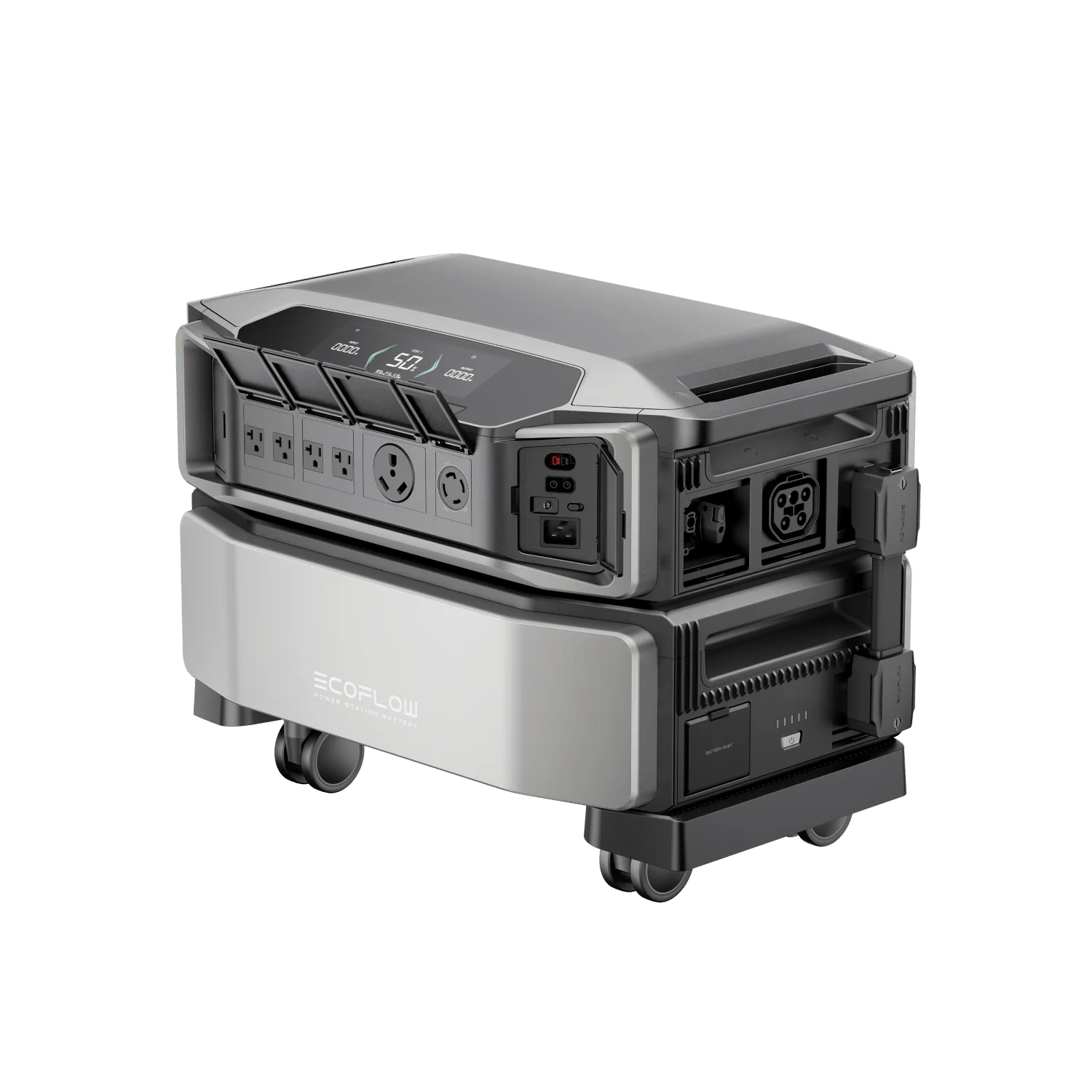
EcoFlow DELTA Pro UltraPick
$4,199.00
$4,199.00 · direct from EcoFlow
Last checked 16 days ago. Prices move — check before you buy.
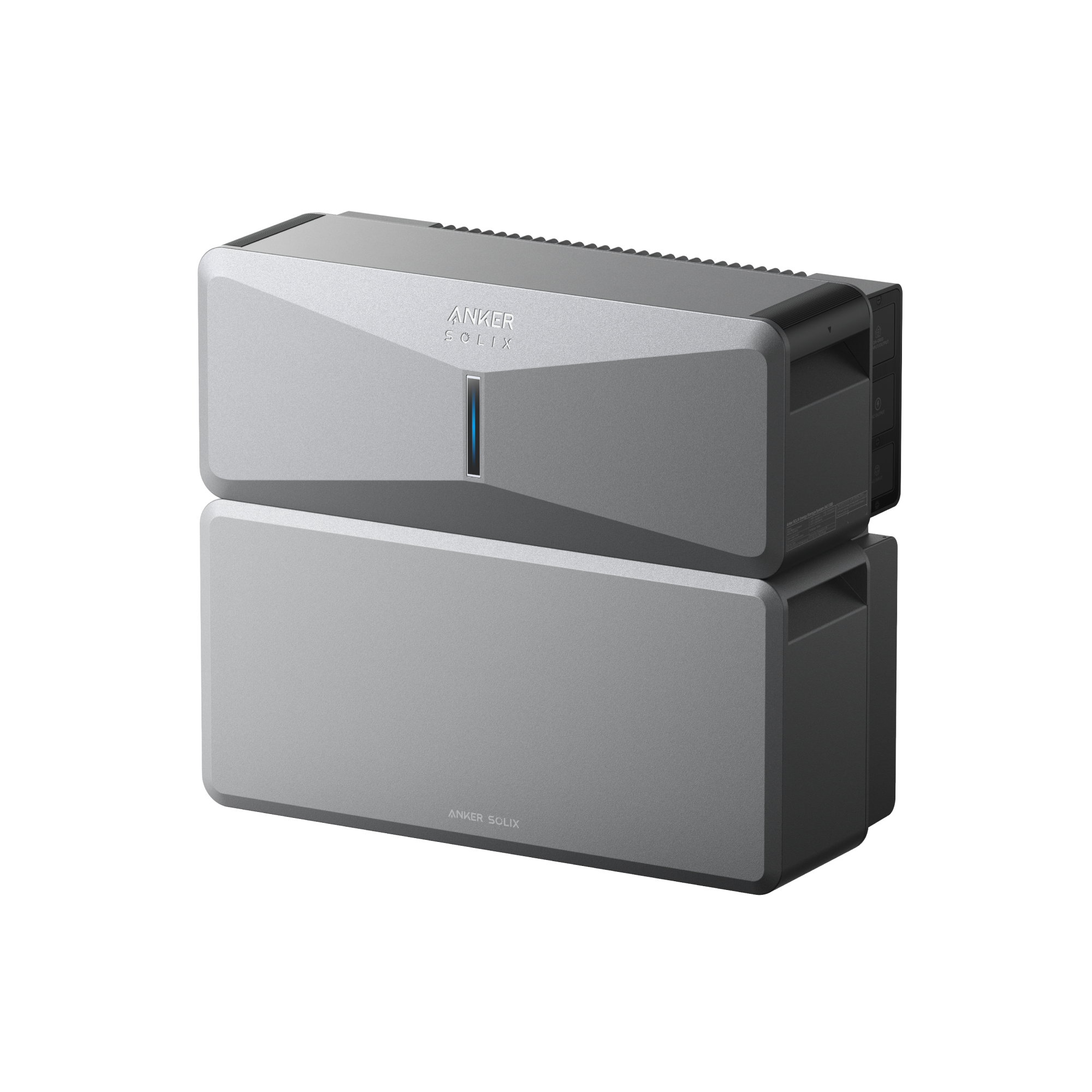
Anker SOLIX E10
$4,299.00
$4,299.00 · direct from Anker
Last checked 16 days ago. Prices move — check before you buy.
Prices may vary by retailer and are subject to change.