Head-to-head test
EcoFlow DELTA 2 vs Anker SOLIX C800 Plus
The SOLIX C800 Plus now costs $150 more than the DELTA 2 for 256Wh less capacity, less output, less solar input, and no expansion — pay that premium only if 3 fewer pounds and a 5dB quieter fan matter more to you than power.
Full profiles: EcoFlow DELTA 2 → · Anker SOLIX C800 Plus →

Written by Ian SchneiderUpdated
Solar & Off-Grid Tester, Station Arena Test Desk
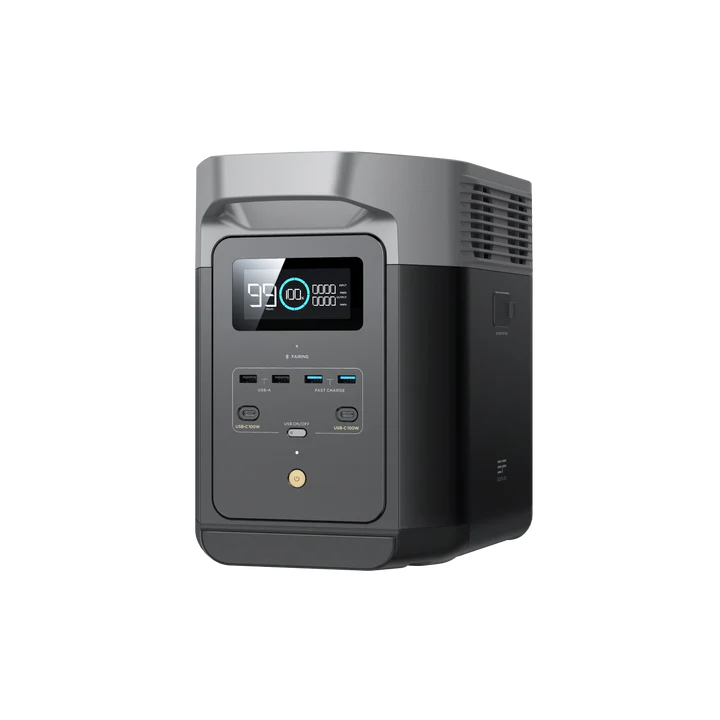
$499.00 · direct from EcoFlow
Last checked 58 days ago. Prices move — check before you buy.
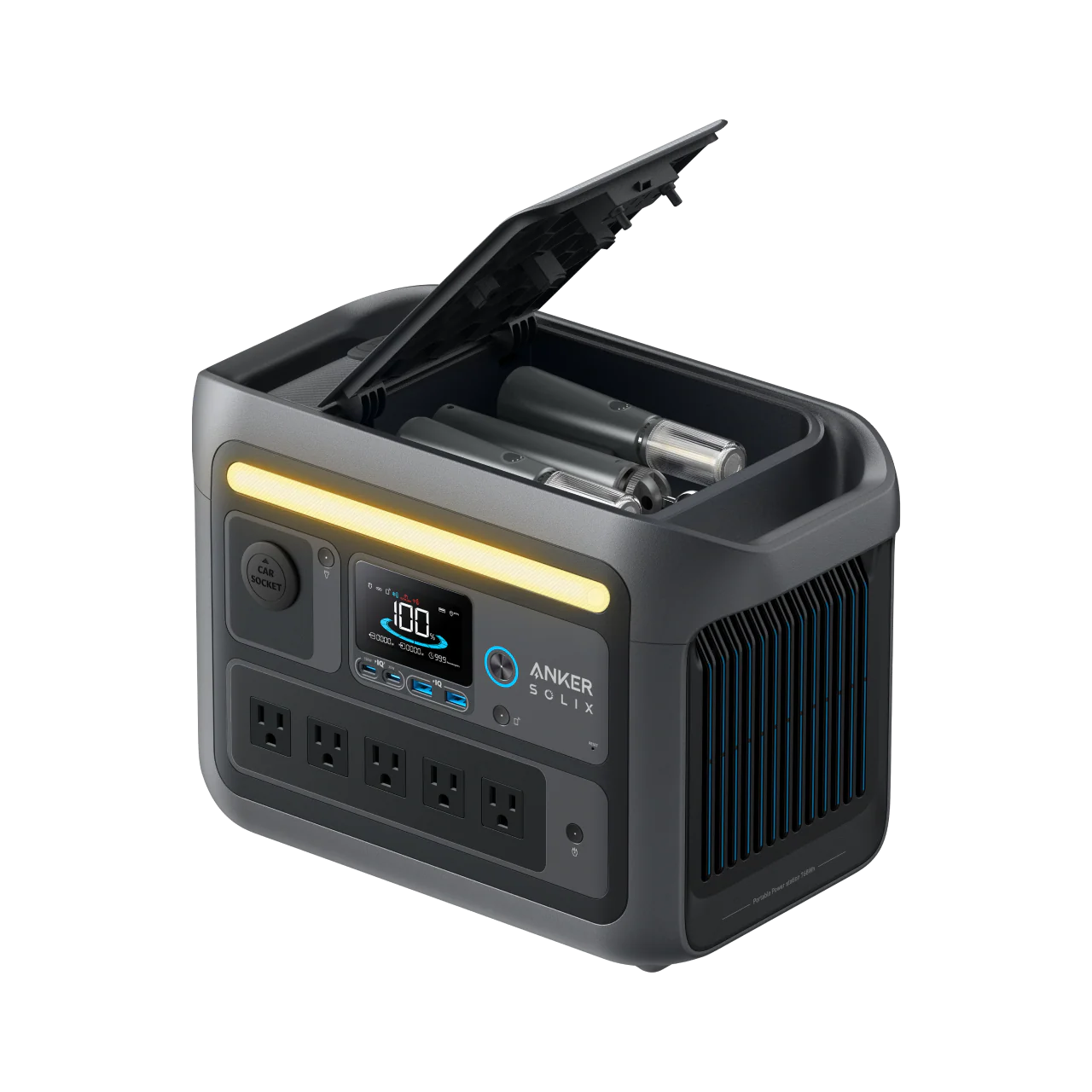
$649.00 · direct from Anker
Last checked 1 day ago. Prices move — check before you buy.
Spec deltas
The EcoFlow DELTA 2 costs $499. The Anker SOLIX C800 Plus costs $649 — $150 more for 768Wh instead of 1,024Wh, 1,200W instead of 1,800W, and no way to expand later.
The C800 Plus does still answer with something real: 24 lbs against the DELTA 2's 27, and 45dB against 50dB under load. A lighter case and a quieter fan are genuine advantages. They just come at a premium now instead of a discount.
Run the current numbers and there's no version left where the C800 Plus is the value pick. It's the premium option now, and the premium buys you size and quiet, not power.
What the Numbers Reveal
Each conclusion stated first — the numbers behind it on one line, the full analysis below.
Capacity
There's no angle left where paying more buys you more here — the DELTA 2 is simultaneously the cheaper unit and the bigger tank, which wasn't true the last time this comparison was written.
EcoFlow DELTA 2: $499 for 1,024Wh, $.49 per WhAnker SOLIX C800 Plus: $649 for 768Wh, $.85 per Wh
Why it mattersAnyone shopping on sticker price alone can stop comparing: the DELTA 2 wins both the upfront number and the capacity it buys with it.
cost / lifetime kWh
Both ownership metrics now point the same direction. That used to be the honest reason to hesitate — one number favored each unit. Now the DELTA 2 is the cheaper unit to own by every measure the engine tracks, not just the cheaper one to buy.
DELTA 2 cost per lifetime kWh: $0.16 across 3,072 total lifetime kWhC800 Plus cost per lifetime kWh: $0.28 across 2,304 total lifetime kWh
Why it mattersBuyers who picked the C800 Plus before because it was cheaper per year should know that math reversed — it no longer applies.
The $150 premium on the C800 Plus doesn't buy a single scenario win in this set. Its real advantages sit outside the energy math entirely.
Tailgate Party needs 670Wh: DELTA 2 uses 77% of capacity and handles it, C800 Plus would need 103% and can'tCPAP Overnight needs 320Wh: DELTA 2 uses 37%, C800 Plus uses 49% — both handle it
Why it mattersIf the deciding question is whether the unit actually does the job, the C800 Plus's extra cost isn't paying for that — it's paying for weight and noise instead.
weight
That's still a legitimate reason to buy the C800 Plus. It's just a narrower one than before. You're not choosing a cheaper, smaller unit anymore — you're paying extra specifically for less weight and less noise.
SOLIX C800 Plus: 24 lbs, 45dB under loadDELTA 2: 27 lbs, 50dB under load
Why it mattersOnly buyers who'd pay $150 for 3 fewer pounds and a quieter fan — CPAP users at bedside, or anyone carrying it solo — should still consider the C800 Plus; everyone else, the DELTA 2 is strictly better and cheaper.
The specific dimensions that decide these two units — everything else is a tie.
Lifetime Value
Selected because: The headline change: both ownership metrics now favor the DELTA 2, where before they split.
cost / lifetime kWh
Run the ownership math and there's no ambiguity left. The DELTA 2 costs $0.16 per lifetime kilowatt-hour against the C800 Plus's $0.28 — 1.75 times as much for every kWh delivered over an identical 3,000-cycle, 5-year life. Cost per warranty-year agrees: $100 a year against $130.
That's a reversal from what this page argued before, when the two metrics split and the C800 Plus won on price-per-year. Now it doesn't win on anything the engine measures in dollars. The only honest case left for the Anker lives outside this section entirely.
Your Life, Your Pick
Selected because: Confirms the flip isn't just a spreadsheet artifact — DELTA 2 wins both scenarios where the units differ.
Tailgate Party is the cleanest separator: the DELTA 2 covers a 670Wh afternoon at 77% of its tank, while the C800 Plus would need to draw past its entire capacity to finish the same job. CPAP Overnight is a job both handle, but the DELTA 2 does it with more room to spare — 37% of its tank used against the C800 Plus's 49%.
Weekend Camping, the 8-Hour Blackout, Remote Workday, and Van Life Daily outsize both units entirely — Van Life Daily needs 538% of the DELTA 2's usable capacity and 718% of the C800 Plus's. Neither box is the right buy for those jobs; that's a bigger-unit problem, not a which-of-these-two problem.
Growth Path
Selected because: The structural difference is unchanged, but the DELTA 2 is now the cheaper unit too.
solar input
The one non-price argument for the C800 Plus was always going to be permanence over growth, and that argument is unchanged: it's a closed 768Wh system for the life of the unit, while the DELTA 2 accepts EcoFlow's expansion batteries if a bigger trip or a partial home backup shows up later. What's changed is what you're paying for that ceiling — it used to come at a discount; now it costs extra.
Reviewers already flagged the C800 Plus's fixed 768Wh as an awkward middle ground against similarly priced, larger-tank competitorsB12 — a complaint that lands harder now that the DELTA 2 is the cheaper unit too.
What the Specs Don't Tell You
Selected because: Noise and warranty cost are the two spec-true specifics a reader can act on directly.
Fan noise is the DELTA 2's honest catch: its fans trigger above roughly 120W and run continuously in the 48-55dB range at heavier loads, loud enough that reviewers describe needing to either live with it or run a cable out of the room when powering sensitive equipment nearbyA1. EcoFlow has reportedly told reviewers a firmware fix is planned, consistent with its pattern on other modelsA4 — not shipped yet, so weigh it as it stands today.
The C800 Plus is quieter under comparable load, 45dB against 50dB, and that's the one column where its extra cost buys something real. Both units carry the same 5-year warranty, but the price attached to that term now differs: $100 a year to own the DELTA 2 against $130 for the C800 Plus.
Portability & Form Factor
Selected because: The C800 Plus's one remaining genuine edge, now priced as a premium instead of a discount.
weight
Three pounds is the whole gap — 24 for the C800 Plus against 27 for the DELTA 2 — real if you're the one lifting it out of a trunk alone, but not a large one. Pair it with the quieter fan and the C800 Plus is still the better pick for a compact, low-key setup.
It's just a more expensive one now. What used to be the lighter, quieter unit at a discount is the lighter, quieter unit at a premium — a legitimate reason to buy it, but a narrower one than before.
Strengths & trade-offs
EcoFlow DELTA 2
Strengths
- +Costs $150 less
- +Larger battery capacity
- +Higher AC output
- +Faster solar charging
Trade-offs
- –No major technical downsides compared to rival.
Anker SOLIX C800 Plus
Strengths
- +Lighter by 3 lb
Trade-offs
- –Substantially more expensive (+$150) than the DELTA 2.
- –Weaker inverter (-600W) limits appliance compatibility.
- –Sealed capacity — the DELTA 2 can add batteries to grow past 768Wh; this one can't.
Will It Power Your Gear?
Scenario math and per-appliance runtimes, modeled from the spec record.
Scenario verdicts
We ran the math on six real-world scenarios. Here's which unit survives your actual life.
SCN-01 · 2 nights · needs 2,100Wh
Weekend Camping
Two nights off-grid with essential comfort
Neither unit
Neither unit covers this scenario's 2,100Wh: the DELTA 2 comes up 1,230Wh short (about 41% covered), the SOLIX C800 Plus 1,447Wh (31%). Treat this as partial cover — enough for the essentials in it, not the whole list.
Battery budget usedlower = more headroom
LOAD Phone Charger 15W×6h · LED Lights 40W×8h · Box Fan 75W×14h · CPAP Machine 40W×16h
SCN-02 · 8 hours · needs 1,645Wh
8-Hour Blackout
Keep the essentials running through a night without power
Neither unit
Neither unit covers this scenario's 1,645Wh: the DELTA 2 comes up 775Wh short (about 53% covered), the SOLIX C800 Plus 992Wh (40%). Treat this as partial cover — enough for the essentials in it, not the whole list.
Battery budget usedlower = more headroom
LOAD Fridge 150W×8h · Router + Modem 20W×8h · LED Lights (4 bulbs) 40W×6h · Phone Charger 15W×3h
SCN-03 · 8 hours · needs 320Wh
CPAP Overnight
Sleep therapy without interruption — the #1 medical use case
SOLIX C800 Plus
Both units handle a CPAP night, but the DELTA 2 does it with more room to spare — 37% of its tank used against the C800 Plus's 49%. If the quieter fan at 2 a.m. matters more to you than the extra buffer, that's still a real reason to look at the SOLIX.
Battery budget usedlower = more headroom
LOAD CPAP Machine 40W×8h
SCN-04 · 8 hours · needs 910Wh
Remote Workday
Full work day off-grid without power anxiety
Neither unit
This scenario needs 910Wh and neither unit quite finishes it. The DELTA 2 lands within 5% of it — close enough that trimming one appliance, or accepting a shorter evening, gets you there on the day.
Battery budget usedlower = more headroom
LOAD Laptop 60W×8h · External Monitor 30W×8h · Router + Modem 20W×8h · Phone Charger 15W×2h
SCN-05 · 4 hours · needs 670Wh
Tailgate Party
Game day power for the crew
DELTA 2
A 670Wh tailgate afternoon fits inside the DELTA 2 with room left over — 77% of its tank. The C800 Plus would need to draw past 100% of its own to finish the same afternoon, which isn't close.
Battery budget usedlower = more headroom
LOAD Blender 400W×0.5h · LED TV (55") 80W×4h · Bluetooth Speaker 15W×4h · Phone Charger (×3) 45W×2h
SCN-06 · 24 hours · needs 4,685Wh
Van Life Daily
A full day of mobile living — the ultimate endurance test
Neither unit
Van Life Daily needs 538% of the DELTA 2's usable capacity and 718% of the C800 Plus's — neither is remotely close. That's a bigger-unit problem, not a which-of-these-two problem.
Battery budget usedlower = more headroom
LOAD Mini-Fridge 150W×24h · Laptop 60W×4h · Phone Charger 15W×3h · LED Lights 40W×5h · Fan 75W×8h
The Load Test
RUNTIME = (Wh × 0.85) ÷ LOAD
None of the scenarios above exactly yours? Build it. Toggle what you'd plug in; both units are tested against the combined draw.
Essentials
Comfort & Convenience
High-Draw Appliances
Test duration
8h
Continuous draw
205W
Projected runtime
For this load: DELTA 2 runs 4.2h vs 3.2h.
$499 list · direct from EcoFlow
Modeled from the spec record — same math as the tables below. Methodology
Runtime by appliance
Real-world runtime estimates for common appliances, modeled at 85% inverter efficiency.¹
Essentials
The basics you need runningscale 0–58hComfort & Convenience
Makes off-grid life actually enjoyablescale 0–11.6hHigh-Draw Appliances
These reveal the real limitsscale 0–0.9h¹ Runtime = (capacity × 0.85) ÷ appliance watts. Within each group, all bars share one time scale (the group's longest runtime), so lengths are comparable across appliances; identical runtimes collapse into a single blue/orange bar. Actual runtime varies with battery age, temperature, and simultaneous loads — see methodology.
Conclusion
July 26, 2026
Verdict: the DELTA 2
The DELTA 2 now wins on price, capacity, output, solar input, expansion, and both lifetime-cost metrics the engine tracks — a clean sweep it didn't have the last time this page ran the numbers. The SOLIX C800 Plus's real advantages, 3 fewer pounds and a 5dB quieter fan, are genuine but now come at a premium instead of a discount. Buy the C800 Plus specifically for the lighter carry and the quieter fan; buy the DELTA 2 for everything else, including the money you save doing it.
Editor-assigned confidence, based on cited owner research and spec analysis.
List prices as of July 26, 2026. The links below open EcoFlow's and Anker's current prices.
$499.00 · direct from EcoFlow
Last checked 58 days ago. Prices move — check before you buy.
or check the SOLIX C800 Plus price$649.00 list
Written by Ian Schneider, Solar & Off-Grid Tester · Station Arena Test Desk · Updated July 26, 2026
Measured Data
Benchmark scores and the full spec record, side by side.
Benchmark scores
Not rated for both units (minimum threshold unmet): RV Living, Home Backup, Food Truck.
Full specifications
ᵈ Derived: price ÷ rated capacity. See the data behind our comparisons →
Comparison ToolAdd more power stations, side by sideOpen Tool →How these numbers are produced
Numeric verification
Every figure on this page traces to our spec database or arithmetic on it — no estimated numbers.
Owner claims
Statements about owner experience are cited to published reviews — see Sources & Research Notes below.
Runtime model
Runtime = (rated capacity × 0.85 inverter efficiency) ÷ device wattage. Solar recharge estimates assume panels deliver 70% of rated output. Cold weather, battery age, and stacked loads reduce real-world results.
Power Score
Computed from 14 published spec dimensions, weighted per use-case bench. Higher is better; a unit must meet a bench's minimum threshold to be rated.
See the full weight table and data sourcing on our methodology page →Class ranking (the star rating)
Each unit's star score is a category ranking, not customer reviews — no buyer opinions feed it. We score every station on size-independent quality (value, output, portability, endurance, ports, warranty, and more), then percentile-rank it against the other units in its capacity class, so a class-leading compact unit and a class-leading whole-home unit can both earn 5★. Here, DELTA 2 rates 4.1/5 (46th percentile of 27 Everyday-class units), and SOLIX C800 Plus rates 3.8/5 (32nd percentile of 20 Compact-class units).
How the class ranking is computed →Test Notes & Caveats
Hidden gotchas and advantages we spotted that you won't find on the product page.
The DELTA 2's Fans Are the Honest Catch Here
Fans on the DELTA 2 trigger above roughly 120W and run continuously in the 48-55dB range at heavier loads — loud enough that reviewers say running sensitive equipment nearby means living with it or routing a cable out of the room. The SOLIX C800 Plus runs about 5dB quieter under comparable draw, which is real, even at its higher price.
One Ceiling Is Fixed, the Other Isn't
The SOLIX C800 Plus has no expansion path at any price — 768Wh is the ceiling for as long as you own it. The DELTA 2 accepts EcoFlow's expansion batteries, turning a future capacity shortfall into an add-on purchase instead of a full replacement, and it's now the lower-priced unit as well.
Same Warranty Term, Different Bill
Both units carry a 5-year warranty, so the term itself isn't the variable — the price attached to it is. That works out to $100 a year of ownership for the DELTA 2 against $130 a year for the SOLIX C800 Plus.
Full record above — the Test Desk pick is the DELTA 2.
Check DELTA 2 price →or check the SOLIX C800 Plus priceOwnership Analysis
What happens after you buy — true cost of ownership, brand trust, and growth potential.
Lifetime value
Service lifeyears at one full cycle per day
Lifetime energy delivered
Cost per delivered kWh
│ warranty ends · Reaching the cycle rating means ~80% capacity remains — degraded, not dead.
Analyst note
The DELTA 2 wins on both sticker price and long-term value. At $0.16/kWh over its lifetime, it's meaningfully cheaper to own. Clear value winner. One thing to know reading the table: both carry the same 3,000-cycle rating, so the lifetime rows are sticker price and capacity in disguise — the wear horizon is identical and decides nothing here.
Delivers each lifetime kWh for $0.12 less — check the DELTA 2 price →
Brand trust
EcoFlow
Ecosystem
Largest in portable power — 12-15 models across DELTA Pro, DELTA 3, and RIVER 3 series, plus solar panels and smart home panels
Support
US-based phone/email/chat support (1-800-368-8604). Experiences are polarized — many report hassle-free prepaid-label replacements, but others report long waits and refurbished units sent for new claims. Pro tip: buying from Costco or Amazon gives you a stronger return safety net.
Community
Largest community in the space — Reddit r/Ecoflow_community (~31K members), multiple Facebook groups, and an official community forum
App experience
Rated 4.6/5 iOS (~8,400 ratings) · 4.2/5 Android (~17,000 ratings)
Unique strength
Fastest-charging technology (X-Stream), deepest product ecosystem, and most active innovation cadence. At the very top of the range, the DELTA Pro Ultra platform stacks batteries and inverters into whole-home backup — a flagship path, not a line-wide feature.
Worth knowing
Tested subscription paywalls for advanced app features in early 2025 before community backlash paused the plan. No parts or service offered out of warranty.
Anker
Ecosystem
7-8 SOLIX portable power stations across C-series (compact) and F-series (flagship), plus the X1 home energy system
Support
US-based support. Historically known for incredible no-hassle replacements, but recent reports describe AI-driven support agents giving generic responses and complex return logistics for heavy units (hazmat shipping). The Anker brand reputation is still strong, but SOLIX-specific support quality is trending down.
Community
Moderate — active Reddit (r/Anker, r/AnkerSOLIXCommunity) and growing. Benefits from Anker's massive consumer electronics brand awareness.
App experience
Rated 4.5/5 iOS (~1,100 ratings) · 4.3/5 Android
Unique strength
Parent brand trust from Anker's consumer electronics dominance. InfiniPower technology for long cycle life. Strong $/Wh value in the mid-size and larger units — the S2000, F2600 and C1000 are among the better buys per watt-hour in the catalog.
Worth knowing
Support quality appears to be declining from its historically excellent level. Firmware updates have removed features without warning. Expansion ecosystem is smaller than EcoFlow's.
Analyst note
EcoFlow positions itself as a mid-to-premium brand with stronger support infrastructure, while Anker competes on value. The question is whether the EcoFlow ecosystem and support premium is worth it for your use case.
Growth path
DELTA 2
EXPANDABLESupports EcoFlow expansion batteries, so you can add capacity later without replacing the base unit — useful if your needs may climb past 1,024Wh.
Accepts up to 500W of solar. Suitable for a 1-2 panel setup.
Generous port selection supports complex multi-device setups.
Expansion batteries are EcoFlow-specific. You're investing in the EcoFlow ecosystem.
SOLIX C800 Plus
FIXED CAPACITYFixed at 768Wh, with no expansion — so size it for your needs up front rather than planning to add capacity later.
Accepts up to 300W of solar. Limited to a single portable panel.
Adequate ports for most setups, but heavy users may want a power strip.
Realistic full solar rechargeat 70% of rated panel output — see methodology
Analyst note
The SOLIX C800 Plus is sealed at 768Wh, which is fine if that covers you. The DELTA 2 starts at 1,024Wh and can grow beyond it with EcoFlow expansion batteries — though at this size expansion means longer runtimes on the same loads, not a path to home backup. More hours, not more house.
What Owners Report
Patterns from published owner reports and long-term reviews — every claim cited to its source below.
EcoFlow DELTA 2
The DELTA 2 has the longer track record of the two. One 18-month field test through outages, camping trips, and daily home-office use singled out fast charging, reliable LiFePO4 chemistry, and expandability as its standout traitsA3.
Fan noise is the recurring complaint, and it's specific: fans trigger above roughly 120W, and at charging speeds near 1,200W testers describe them sounding like a gaming laptop under load, though the charge rate can be throttled down in the app to quiet themA2. EcoFlow has reportedly signaled a firmware fix is coming, consistent with how it's handled noise on other models beforeA4.
“When charging at 1200W the fans sound like a gaming laptop, though you can lower the charging speed in the app to silence it.”
Sources
portablepowerlab.com
Anker SOLIX C800 Plus
Coverage of the C800 Plus leans on professional reviews rather than long-term owner threads, worth knowing since there's no real multi-month ownership data here yet. Even reviewers who liked the unit flagged capacity anxiety: uncertainty over whether 768Wh is really enoughB5, and one review called it an awkward middle ground against similarly priced, larger-tank competitorsB12 — a complaint that lands harder now that the DELTA 2 undercuts it on price too.
The companion app draws consistent praise for remote monitoring and firmware deliveryB7, and one reviewer flagged the 300W solar ceiling as unsuited to large static panel arraysB9 — worth knowing next to the DELTA 2's 500W input.
“The pole light felt is a little over the top and unnecessary.”
Sources
dustinabbott.net
Sources & Research Notes
Every owner claim in this report is traceable to a published source. The bracketed references above resolve here.
Recurring owner themes
- Fan noise under moderate-to-high load is the dominant, repeatedly-cited complaint; the fan spins up above ~120W. [DELTA 2 · 3 entries]
- Fan noise is consistently reported as noticeable during fast AC charging or high sustained wattage, though most reviewers call it 'manageable' rather than a dealbreaker. [SOLIX C800 Plus · 2 entries]
- The companion app is repeatedly praised for remote monitoring/control and firmware delivery, with no reviewers reporting connectivity or crash complaints. [SOLIX C800 Plus · 3 entries]
- 768Wh capacity is flagged by multiple reviewers as the unit's main limitation for heavy appliances and against same-price competitors, even though real-world light loads (fridge, gadgets) performed well. [SOLIX C800 Plus · 4 entries]
- The signature 'Plus' camping-light pole/torches are polarizing: some reviewers call the feature genuinely useful and a lantern-replacement, others call it an unnecessary gimmick that sacrifices the C800's cable-storage cubby. [SOLIX C800 Plus · 3 entries]
- A1
“Fans trigger at anything above 120 watts; at maximum load (1,500–1,800W) they run continuously at ~48–55 dB. Powering medical equipment above 120W in a bedroom means listening to the fans or running an extension cable out of the room.”
portablepowerlab.com — EcoFlow Delta 2 Review: 6 Months of Real Use; PCWorld — EcoFlow Delta 2 review · 2026 · [negative]
- A2
“When charging at 1200W the fans sound like a gaming laptop, though you can lower the charging speed in the app to silence it.”
PCWorld — EcoFlow Delta 2 power station review · 2026 · [mixed]
- A3
“After 18 months of real-world testing through multiple power outages, camping trips, and daily home-office use, the unit earned recognition for fast charging, reliable LiFePO4 battery chemistry, and expandability.”
portablepowerlab.com — EcoFlow Delta 2 Review: 6 Months of Real Use · 2026 · [positive]
- A4
“EcoFlow officials indicated they plan to address the fan noise in an upcoming firmware update, as they have for other models after release.”
portablepowerlab.com — EcoFlow Delta 2 Review · 2026 (dated claim — may be partially addressed) · [mixed]
- B5
“My lone concern on this front is whether or not the battery capacity is sufficient.”
DustinAbbott.net — 'Anker Solix C800 Plus Power Station Review' · 2024-03 · [mixed]
- B7
“My other power stations do not have a companion phone app. But after the first trip, I saw how this feature would come in handy.”
The Gadgeteer — 'Anker SOLIX C800 Plus power station review' · 2024-04 · [positive]
- B9
“With a maximum solar input of 300W at 11-60V, it's not designed to be used with large static panels.”
MakeUseOf — 'Anker Solix C800 Plus Review: The Ultimate Emergency and Camping Companion' · 2024-05 · [mixed]
- B12
“The 768Wh capacity sits in an awkward middle ground. It is significantly less than the 1,024Wh offered by the EcoFlow DELTA 3 Plus at the same $649 price.”
The Power Pick — 'Anker SOLIX C800 Plus Review: Camping Lights Meet Serious Power' · 2026-02 · [negative]
Research compiled July 26, 2026.
Who Should Buy Which
Buy the DELTA 2 if you…
- →You want the lower price and the bigger tank at the same time — at $499 against $649, the DELTA 2 is no longer a premium pick, it's the cheaper unit outright.
- →You need to actually finish a loaded tailgate or a CPAP-heavy night with capacity to spare, or you want the option to add EcoFlow expansion batteries later.
Buy the SOLIX C800 Plus if you…
- →Weight and quiet are worth a real premium to you — you're carrying it solo, or it runs somewhere you sleep, and paying more for 3 fewer pounds and a 5dB quieter fan is a trade you'd make on purpose.
- →You're confident 768Wh is genuinely enough forever, since there's no way to add capacity later at any price.
If neither fits
If your real need is a two-night camping trip or a full 8-hour blackout covering more than a fridge, both fail outright — the scenario math puts both units well past 100% of what's needed, one past 700%. Look at a larger expandable unit instead of choosing between these two.
The Bottom Line
The price moved and the verdict moved with it. The DELTA 2 is now the cheaper unit to buy, the cheaper one to own, the bigger tank, and the only one that clears a real tailgate afternoon outright — there's no scenario left where the extra cost of the SOLIX C800 Plus buys you more power or a lower bill.
Buy the C800 Plus only for its 3 fewer pounds and its quieter fan — real advantages, just narrower ones than they used to be. Everyone else should take the DELTA 2 and keep the $150.
Frequently Asked Questions
Answers drawn from the spec record and cited owner research.
Is the EcoFlow DELTA 2 cheaper than the Anker SOLIX C800 Plus?
Yes. The DELTA 2 is $499 against the SOLIX C800 Plus's $649 — a $150 gap that also buys 256 more watt-hours, 600 more output watts, and an expansion path the C800 Plus doesn't have.
Is the SOLIX C800 Plus worth paying $150 more for?
Only if weight and noise are the deciding factors for you. It's 3 lbs lighter and about 5dB quieter under load than the DELTA 2, but it holds 256Wh less, can't expand, and now costs more to buy and more to own per lifetime kWh. For most buyers, the DELTA 2 is the better deal on every measure except size and quiet.
Can the SOLIX C800 Plus expand to more capacity later?
No. It's a closed system — whatever capacity you buy is permanent for the life of the unit. The DELTA 2 accepts EcoFlow expansion batteries, letting you add capacity without replacing the base unit.
Which one is quieter?
The SOLIX C800 Plus, by about 5dB under comparable load (45dB against 50dB). The DELTA 2's fans trigger above roughly 120W and become noticeable near 1,200W charging speeds, though the charge rate can be slowed in the app to reduce noise.
Which is cheaper to actually own, not just to buy?
The DELTA 2, on both measures the engine tracks. It costs $0.16 per lifetime kilowatt-hour against the C800 Plus's $0.28, and $100 a year against the C800 Plus's $130 over the same 5-year warranty term.
Where to buy
EcoFlow DELTA 2Pick
$499.00
$499.00 · direct from EcoFlow
Last checked 58 days ago. Prices move — check before you buy.
Anker SOLIX C800 Plus
$649.00
$649.00 · direct from Anker
Last checked 1 day ago. Prices move — check before you buy.
Prices may vary by retailer and are subject to change.