Head-to-head test
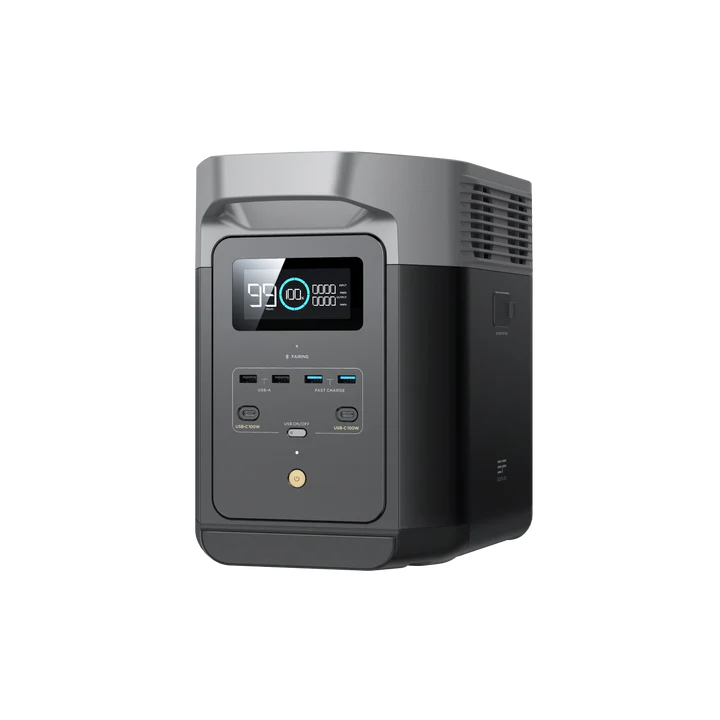
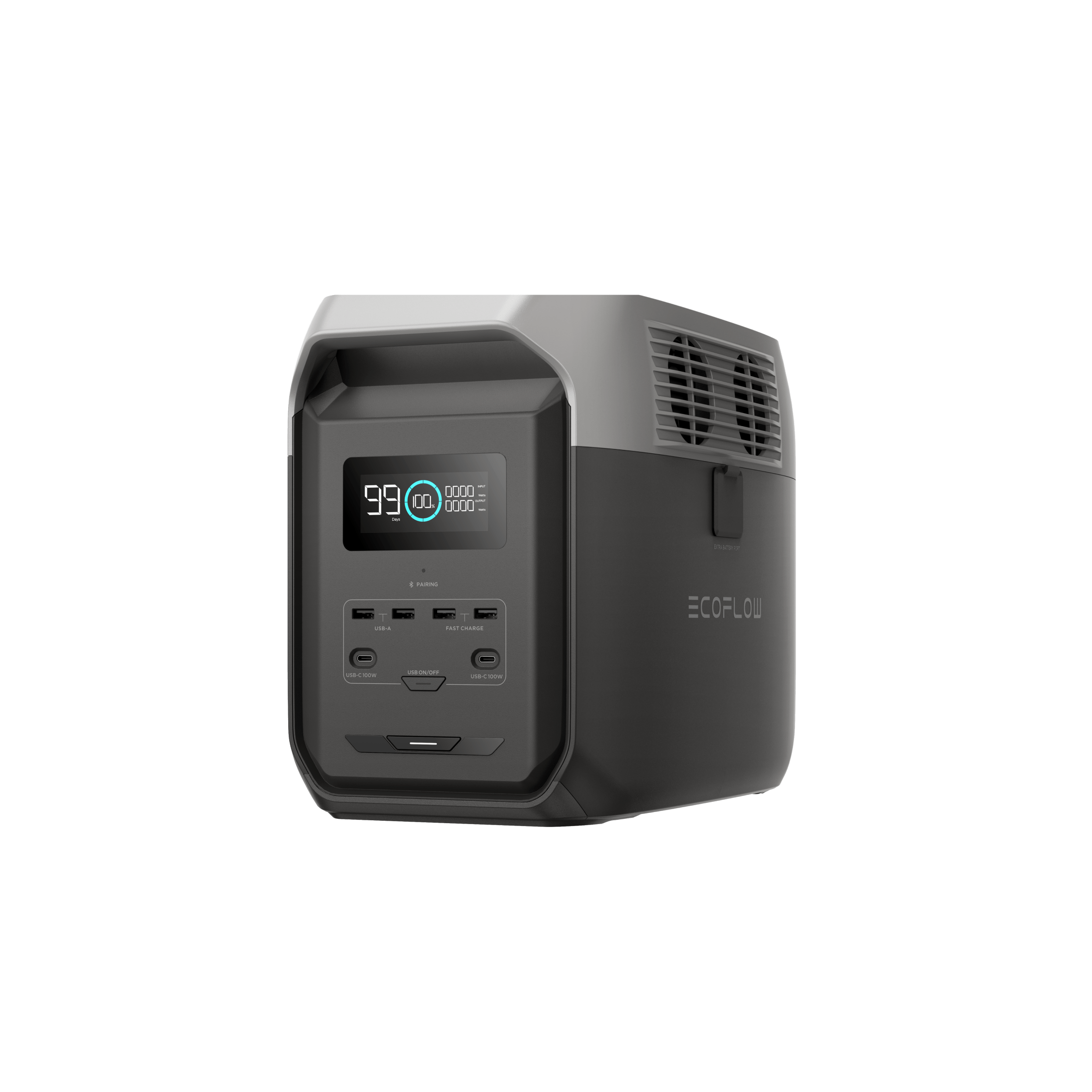
EcoFlow DELTA 2 vs EcoFlow DELTA 3 1500
Stepping up from the Delta 2 to the DELTA 3 1500 buys 50% more capacity for $120 — the catch is that the newer unit is built on the older one's electronics with reportedly lower-grade cells, and owners suspect it fails more than the very model it replaces.
Full profiles: EcoFlow DELTA 2 → · EcoFlow DELTA 3 1500 →

Written by Ian SchneiderUpdated
Solar & Off-Grid Tester, Station Arena Test Desk
Spec deltas
The DELTA 3 1500 holds 50% more energy than the Delta 2 — 1,536Wh to 1,024 — for $120 more. On capacity per dollar it's the clear step up, and it's actually cheaper to own across its life: $0.13 per lifetime kWh to the Delta 2's $0.16.
The upgrade runs deeper than capacity. The DELTA 3 1500 surges to 3,600W over the same 1,800W continuous — a 2x ratio to the Delta 2's 1.5x (2,700W) — hands off to battery in 15ms instead of 20, and pushes 140W over USB-C to the Delta 2's 100. It also clears a full remote workday the Delta 2 can't quite finish.
Here's the twist that keeps this from being automatic: the newer unit may be the less proven one. Posters describe the DELTA 3 1500 as a Delta 2/Delta 3 hybrid — the Delta 2's UPS electronics in a new case with lower-grade cellsB3 — and forum consensus pegged the Delta 3 line as more failure-prone than the Delta 2 it succeedsB2. The Delta 2, by contrast, has 18 months of clean field use behind it, with fan noise its only real gripeA1A3. Buy the upgrade for the capacity; keep the Delta 2 for the certainty.
What the Numbers Reveal
Each conclusion stated first — the numbers behind it on one line, the full analysis below.
Capacity
A laptop-monitor-router day runs about 910Wh — 105% of what the Delta 2 can usably deliver, so it taps out before quitting time, while the DELTA 3 1500 finishes at 70% used with the evening still ahead. For $120, the upgrade is the difference between rationing and not thinking about it.
the Delta 2 holds 1,024Wh, the DELTA 3 1500 holds 1,536Wha remote workday draws about 910Whthe step up costs $120
Why it mattersAnyone who wants a full workday or a long outage off one charge should pay the $120 for the bigger tank.
Both units sustain the same 1,800W, so the DELTA 3 1500's edge is entirely headroom: a 2x surge ratio to the Delta 2's 1.5x is an extra 900W of startup cushion for a fridge or pump that spikes on kick-on. Add the quicker 15ms cutover and the newer unit is the sturdier inverter for motor loads and UPS duty alike.
the DELTA 3 1500 surges 3,600W over 1,800W continuousthe Delta 2 surges 2,700W over the same 1,800W continuousfridges and pumps spike 2-3x their rated draw on startup
Why it mattersIf you start compressors or run it as a UPS, the surge headroom is worth more than the capacity bump.
It's a strange thing to say about a newer model, but the field signal points that way: the DELTA 3 1500 reuses the Delta 2's UPS electronics in a new shell with what posters called grade B cellsB3, and the Delta 3 line drew more failure reports than the Delta 2 in the same discussionB2 — while the Delta 2 has 18 months of drama-free use on recordA3. You're buying more capacity on a less-proven platform.
the DELTA 3 1500 is described as a Delta 2/Delta 3 hybrid with lower-grade cellsB3forum consensus put the Delta 3 line's failures above the Delta 2'sB2the Delta 2 has an 18-month clean field recordA3
Why it mattersReliability-first buyers who don't need the extra 512Wh have a real reason to stay on the Delta 2.
The specific dimensions that decide these two units — everything else is a tie.
Lifetime Value
Selected because: The DELTA 3 1500 is both bigger and cheaper per lifetime kWh.
The upgrade pays for itself twice. The DELTA 3 1500 not only holds 512Wh more than the Delta 2, it's cheaper to own doing it — $0.13 per lifetime kWh to the Delta 2's $0.16 — because the bigger battery spreads the same 3,000-cycle life over more energy.
So the $120 step-up isn't a capacity tax you pay and eat; it's capacity you get at a lower cost per watt-hour. The Delta 2 keeps one money edge — its lower $479 entry price, and a little more warranty coverage per dollar — but on total economics the newer unit is ahead.
Your Life, Your Pick
Selected because: The 512Wh step clears a workday the Delta 2 runs out on.
The clearest reason to step up is the workday. A laptop-monitor-router day near 910Wh runs past what the Delta 2 can usably deliver (105%), so it dies before you clock off, while the DELTA 3 1500 coasts to 70% used with room for the evening. That single scenario is the $120 justifying itself.
Elsewhere the gap is comfort, not capability — both handle a CPAP night and a tailgate, the DELTA 3 1500 just with more buffer — and neither clears a full camping weekend or an 8-hour blackout alone. But at the edge cases where a 1kWh unit strains, the extra 512Wh is the margin that matters.
What the Specs Don't Tell You
Selected because: Surge and cutover favor p2; the dropped noise spec is p2's honest catch.
Two spec cards favor the newer unit outright. Its surge ratio is 2x (3,600W over 1,800) to the Delta 2's 1.5x (2,700 over 1,800), so it starts spiking motor loads the Delta 2 might stall on, and its 15ms cutover edges the Delta 2's 20 for UPS duty.
The card that cuts the other way is noise transparency, and it's worth saying plainly. The Delta 2 publishes 50dB under load — not quiet, but honest — while the DELTA 3 1500 discloses no figure at all. Given the Delta 2's fan is its single most-cited flawA1, a silent spec on its successor is exactly the number you'd want to see and don't.
Brand Trust
Selected because: Same brand, opposite records — proven Delta 2 vs the hybrid DELTA 3 1500.
Same brand, opposite track records. The Delta 2 is EcoFlow at its most proven — 18 months of testing through outages, camping, and daily use, with reliable LiFePO4 chemistry and fast charging its standout marksA3, on the deepest ecosystem and best-rated app in the category.
The DELTA 3 1500 is the same company's shakier chapter. It's a discontinued short-run SKU that posters read as a Delta 2/Delta 3 hybrid with lower-grade cellsB3, and its thin forum record leans negativeB1B2. You're getting EcoFlow's ecosystem either way; the question is whether you want the model with the record or the model with the capacity.
Strengths & trade-offs
EcoFlow DELTA 2
Strengths
- +Lighter by 9 lb
Trade-offs
- –No major technical downsides compared to rival.
EcoFlow DELTA 3 1500
Strengths
- +Larger battery capacity
Trade-offs
- –No major technical downsides compared to rival.
Will It Power Your Gear?
Scenario math and per-appliance runtimes, modeled from the spec record.
Scenario verdicts
We ran the math on six real-world scenarios. Here's which unit survives your actual life.
SCN-01 · 2 nights · needs 2,100Wh
Weekend Camping
Two nights off-grid with essential comfort
Neither unit
Neither unit covers this scenario's 2,100Wh: the DELTA 2 comes up 1,230Wh short (about 41% covered), the DELTA 3 1500 794Wh (62%). Treat this as partial cover — enough for the essentials in it, not the whole list.
Battery budget usedlower = more headroom
LOAD Phone Charger 15W×6h · LED Lights 40W×8h · Box Fan 75W×14h · CPAP Machine 40W×16h
SCN-02 · 8 hours · needs 1,645Wh
8-Hour Blackout
Keep the essentials running through a night without power
Neither unit
Neither unit covers this scenario's 1,645Wh: the DELTA 2 comes up 775Wh short (about 53% covered), the DELTA 3 1500 339Wh (79%). Either gets you most of the way, so this is a scenario you plan around rather than one you should rule them out for.
Battery budget usedlower = more headroom
LOAD Fridge 150W×8h · Router + Modem 20W×8h · LED Lights (4 bulbs) 40W×6h · Phone Charger 15W×3h
SCN-03 · 8 hours · needs 320Wh
CPAP Overnight
Sleep therapy without interruption — the #1 medical use case
Either unit
A CPAP is about 40W for eight hours, so both of these cover the night at least twice over — capacity isn't the question here. What would separate them is fan noise, but DELTA 3 1500 doesn't publish a figure, so there's nothing to hold it to. Neither is sold new any more, so weight and fan noise is what's left to weigh, alongside whatever you can find used.
Battery budget usedlower = more headroom
LOAD CPAP Machine 40W×8h
SCN-04 · 8 hours · needs 910Wh
Remote Workday
Full work day off-grid without power anxiety
DELTA 3 1500
A laptop-monitor-router day lands near 910Wh — and that's the number that separates these two. The Delta 2 taps out at 105% of what it can usably deliver before the day's done, so you're rationing by late afternoon, while the DELTA 3 1500 finishes at 70% with the evening to spare. If you work off the unit, this scenario alone is the $120 upgrade paying for itself.
Battery budget usedlower = more headroom
LOAD Laptop 60W×8h · External Monitor 30W×8h · Router + Modem 20W×8h · Phone Charger 15W×2h
SCN-05 · 4 hours · needs 670Wh
Tailgate Party
Game day power for the crew
DELTA 3 1500
Both handle game day; the DELTA 3 1500 keeps more in reserve (51% used vs 77%). Tailgating is a light load, though, so the number you'll feel is weight: 27 lbs for the DELTA 2 against 36 lbs for the DELTA 3 1500, from the trunk to the setup spot.
Battery budget usedlower = more headroom
LOAD Blender 400W×0.5h · LED TV (55") 80W×4h · Bluetooth Speaker 15W×4h · Phone Charger (×3) 45W×2h
SCN-06 · 24 hours · needs 4,685Wh
Van Life Daily
A full day of mobile living — the ultimate endurance test
Neither unit
Neither unit covers this scenario's 4,685Wh: the DELTA 2 comes up 3,815Wh short (about 19% covered), the DELTA 3 1500 3,379Wh (28%). This is well outside what either unit is for; the right answer here is a larger station, not a choice between these two.
Battery budget usedlower = more headroom
LOAD Mini-Fridge 150W×24h · Laptop 60W×4h · Phone Charger 15W×3h · LED Lights 40W×5h · Fan 75W×8h
The Load Test
RUNTIME = (Wh × 0.85) ÷ LOAD
None of the scenarios above exactly yours? Build it. Toggle what you'd plug in; both units are tested against the combined draw.
Essentials
Comfort & Convenience
High-Draw Appliances
Test duration
8h
Continuous draw
205W
Projected runtime
For this load: DELTA 3 1500 runs 6.4h vs 4.2h.
Planning for more than this? Describe your whole setup and get it sized →
Modeled from the spec record — same math as the tables below. Methodology
Runtime by appliance
Real-world runtime estimates for common appliances, modeled at 85% inverter efficiency.¹
Essentials
The basics you need runningscale 0–87hComfort & Convenience
Makes off-grid life actually enjoyablescale 0–17.4hHigh-Draw Appliances
These reveal the real limitsscale 0–1.3h¹ Runtime = (capacity × 0.85) ÷ appliance watts. Within each group, all bars share one time scale (the group's longest runtime), so lengths are comparable across appliances; identical runtimes collapse into a single blue/orange bar. Actual runtime varies with battery age, temperature, and simultaneous loads — see methodology.
Conclusion
July 18, 2026
Verdict withdrawn: the DELTA 3 1500 is no longer sold
We picked the DELTA 3 1500, but neither unit is sold new any more. The comparison below still helps if you own one.
Editor-assigned confidence, based on cited owner research and spec analysis.
Written by Ian Schneider, Solar & Off-Grid Tester · Station Arena Test Desk · Updated July 18, 2026
Measured Data
Benchmark scores and the full spec record, side by side.
Benchmark scores
Full specifications
ᵈ Derived: price ÷ rated capacity. See the data behind our comparisons →
Comparison ToolAdd more power stations, side by sideOpen Tool →How these numbers are produced
Numeric verification
Every figure on this page traces to our spec database or arithmetic on it — no estimated numbers.
Owner claims
Statements about owner experience are cited to published reviews — see Sources & Research Notes below.
Runtime model
Runtime = (rated capacity × 0.85 inverter efficiency) ÷ device wattage. Solar recharge estimates assume panels deliver 70% of rated output. Cold weather, battery age, and stacked loads reduce real-world results.
Power Score
Computed from 14 published spec dimensions, weighted per use-case bench. Higher is better; a unit must meet a bench's minimum threshold to be rated.
See the full weight table and data sourcing on our methodology page →Class ranking (the star rating)
Each unit's star score is a category ranking, not customer reviews — no buyer opinions feed it. We score every station on size-independent quality (value, output, portability, endurance, ports, warranty, and more), then percentile-rank it against the other units in its capacity class, so a class-leading compact unit and a class-leading whole-home unit can both earn 5★. Here, DELTA 2 rates 4.1/5 (50th percentile of 27 Everyday-class units), and DELTA 3 1500 rates 5.0/5 (99th percentile of 27 Everyday-class units).
How the class ranking is computed →Test Notes & Caveats
Hidden gotchas and advantages we spotted that you won't find on the product page.
The Delta 2 runs 50dB under load — its most-cited flaw
The Delta 2's fans spin up above about 120 watts and reach roughly 50dB under heavy load, which owners flag more than anything else about the unit. You can tame it by lowering the charge speed in the app, and it's a non-issue at light draws. But if it's running a medical device in a bedroom or sitting on your desk during a fast charge, the fan is the part you'll notice.
2x surge headroom versus 1.5x — same output, more startup cushion
Both units sustain 1,800W continuous, so the DELTA 3 1500's advantage is pure headroom: it surges to 3,600W (a 2x ratio) against the Delta 2's 2,700W (1.5x). That extra 900W of cushion is what lets an inverter absorb the two-to-three-times spike a fridge or pump throws on startup. For motor-driven loads, the newer unit is the safer starter even though the running wattage is identical.
UPS Switchover: ≤15ms vs ≤20ms
Both list a UPS mode, at different rated speeds. The DELTA 3 1500 is rated ≤15ms — fine on paper for routers and most electronics; the fussiest PC power supplies sit right at this line. The DELTA 2 is rated ≤20ms — fine on paper for routers and most electronics; the fussiest PC power supplies sit right at this line. If a computer with unsaved work is the thing being protected, the stated class is worth the attention; nothing here is a lab result.
Warranty: No Difference
Both units carry the same 5-year warranty, so coverage isn't a tiebreaker here.
The successor drops the noise number the Delta 2 was honest about
The Delta 2 publishes 50dB under load. The DELTA 3 1500 publishes nothing — a conspicuous omission given how much the Delta 2's fan noise gets discussed. A missing spec isn't proof the newer unit runs louder, but it's the one number you'd most want carried forward, and it wasn't. If quiet is a priority, treat the silence as a reason to test before you commit.
Ownership Analysis
What happens after you buy — true cost of ownership, brand trust, and growth potential.
Lifetime value
Service lifeyears at one full cycle per day
Lifetime energy delivered
│ warranty ends · Reaching the cycle rating means ~80% capacity remains — degraded, not dead.
Analyst note
Neither is sold new any more, so there is no price left to work a cost per kWh from, and what either costs you now depends on the used market. The hardware comparison still holds: over its rated life the DELTA 2 delivers about 3,072 kWh and the DELTA 3 1500 about 4,608 kWh. One thing to know reading the table: both carry the same 3,000-cycle rating, so the lifetime rows are sticker price and capacity in disguise — the wear horizon is identical and decides nothing here.
Growth path
DELTA 2
EXPANDABLESupports EcoFlow expansion batteries, so you can add capacity later without replacing the base unit — useful if your needs may climb past 1,024Wh.
Accepts up to 500W of solar. Suitable for a 1-2 panel setup.
Generous port selection supports complex multi-device setups.
Expansion batteries are EcoFlow-specific. You're investing in the EcoFlow ecosystem.
DELTA 3 1500
EXPANDABLESupports EcoFlow expansion batteries, so you can add capacity later without replacing the base unit — useful if your needs may climb past 1,536Wh.
Accepts up to 500W of solar. Suitable for a 1-2 panel setup.
Generous port selection supports complex multi-device setups.
Expansion batteries are EcoFlow-specific. You're investing in the EcoFlow ecosystem.
Realistic full solar rechargeat 70% of rated panel output — see methodology
Analyst note
Neither of these is sold new any more, so there is no growth path to buy into on either side. If you already own one: the DELTA 2 takes expansion batteries and the DELTA 3 1500 takes expansion batteries. As a purchase decision, expandability isn't the question here.
What Owners Report
Patterns from published owner reports and long-term reviews — every claim cited to its source below.
EcoFlow DELTA 2
The Delta 2 has the depth of record its successor lacks: 18 months of testing across outages, camping trips, and daily home-office use, with fast charging and a dependable LiFePO4 battery its standout marksA3. It's a known, proven 1kWh platform.
Its one recurring gripe is fan noise. The fans trigger above about 120 watts and run 48-55dB under heavy load — loud enough that running medical gear over 120W in a bedroom means hearing them, or routing a cable out of the roomA1 — though you can quiet things by lowering the charge speed in the appA2, and EcoFlow has said a firmware fix is plannedA4. A solid unit whose main compromise is acoustic.
“When charging at 1200W the fans sound like a gaming laptop, though you can lower the charging speed in the app to silence it.”
Sources
portablepowerlab.com
EcoFlow DELTA 3 1500
The DELTA 3 1500 is, by the forum accounts that exist, less a clean-sheet successor than a remix: posters described it as a Delta 2/Delta 3 hybrid, carrying the Delta 2's UPS-cutover electronics in a new case with what one called larger grade B cellsB3. That framing matters here, because it means the upgrade shares DNA with the very unit it's up against.
And the field signal isn't kind. Consensus in that thread put the Delta 3 line's failure reports above the Delta 2's — one owner noting his two Delta 2 units never falteredB2 — and another relayed a neighbor losing three DELTA 3 1500 units in eight monthsB1. It's a thin, secondhand record for a now-discontinued SKU, but every piece of it points the same uneasy direction. Idle draw and the exact cutover spec were open questions tooB4B5.
“Posters described the Delta 3 1500 as essentially a Delta 2/Delta 3 hybrid — UPS-cutover electronics carried over from the Delta 2, housed in a new case with what one called "larger grade B cells."”
Sources
diysolarforum.com
Sources & Research Notes
Every owner claim in this report is traceable to a published source. The bracketed references above resolve here.
Recurring owner themes
- Fan noise under moderate-to-high load is the dominant, repeatedly-cited complaint; the fan spins up above ~120W. [DELTA 2 · 3 entries]
- Forum posters flagged the Delta 3 1500 as less reliable than EcoFlow's earlier Delta 2, both from direct failure reports and from its unusual hybrid Delta 2/Delta 3 hardware platform. [DELTA 3 1500 · 3 entries]
- Idle power draw and UPS cutover time are both discussed as possible regressions or open questions relative to the standard Delta 3 / Delta 3 Plus, without firm confirmation for the 1500 variant specifically. [DELTA 3 1500 · 2 entries]
- A1
“Fans trigger at anything above 120 watts; at maximum load (1,500–1,800W) they run continuously at ~48–55 dB. Powering medical equipment above 120W in a bedroom means listening to the fans or running an extension cable out of the room.”
portablepowerlab.com — EcoFlow Delta 2 Review: 6 Months of Real Use; PCWorld — EcoFlow Delta 2 review · 2026 · [negative]
- A2
“When charging at 1200W the fans sound like a gaming laptop, though you can lower the charging speed in the app to silence it.”
PCWorld — EcoFlow Delta 2 power station review · 2026 · [mixed]
- A3
“After 18 months of real-world testing through multiple power outages, camping trips, and daily home-office use, the unit earned recognition for fast charging, reliable LiFePO4 battery chemistry, and expandability.”
portablepowerlab.com — EcoFlow Delta 2 Review: 6 Months of Real Use · 2026 · [positive]
- A4
“EcoFlow officials indicated they plan to address the fan noise in an upcoming firmware update, as they have for other models after release.”
portablepowerlab.com — EcoFlow Delta 2 Review · 2026 (dated claim — may be partially addressed) · [mixed]
- B1
“A poster's neighbor had three separate Delta 3 1500 units fail on him over roughly eight months.”
diysolarforum.com — "Ecoflow Delta 3 1500 (the newer one), refurbed from EF for $360pt, shipped free" · 2026-02 · [negative]
- B2
“Forum consensus leaned toward the Delta 3 line seeing more failure reports than the Delta 2 — one poster said their two Delta 2 units never gave them a single issue by comparison.”
diysolarforum.com — "Ecoflow Delta 3 1500 (the newer one), refurbed from EF for $360pt, shipped free" · 2026-02 · [negative]
- B3
“Posters described the Delta 3 1500 as essentially a Delta 2/Delta 3 hybrid — UPS-cutover electronics carried over from the Delta 2, housed in a new case with what one called "larger grade B cells."”
diysolarforum.com — "Ecoflow Delta 3 1500 (the newer one), refurbed from EF for $360pt, shipped free" · 2026-02 · [mixed]
- B4
“Idle power draw for the Delta 3 line was debated — some cite roughly 25-30W, others said a firmware update cut it from about 40W to 17W — and posters weren't sure whether the 1500 specifically had received that fix.”
diysolarforum.com — "EcoFlow Delta 3 1500? Any user experiences" and "...refurbed from EF for $360pt" threads · 2026-02 to 2026-03 · [mixed]
- B5
“The Delta 3 1500's UPS cutover was pegged at 15ms in forum discussion, versus a sub-10ms cutover reported for the standard Delta 3 and Delta 3 Plus.”
diysolarforum.com — "EcoFlow Delta 3 1500? Any user experiences" · 2026-03 · [mixed]
Research compiled July 18, 2026.
Who Should Buy Which
Buy the DELTA 2 if you…
- →1,024Wh is plenty for your loads and you'd rather pocket the $120 and the lower $479 entry price.
- →You want the proven platform — 18 months of clean field use — over more capacity on a newer, less-tested oneA3.
- →You can manage the fan by slowing the charge in the app, or you'll rarely push it past 120 wattsA2.
Buy the DELTA 3 1500 if you…
- →You want 50% more capacity — enough to clear a full workday the Delta 2 can't — for $120 more.
- →You start motor loads or run a UPS and want the 2x surge headroom and quicker 15ms cutover.
- →You're comfortable being an early owner of a less-proven unit and will buy where you can return it.
If neither fits
Neither holds enough for a full camping weekend or an 8-hour fridge-and-lights blackout on its own — the Delta 2 at 1,024Wh even less so — though both take expansion batteries. If whole-outage runtime is the goal, start with a 2kWh-class unit or plan the expansion from day one.
The Bottom Line
On paper the DELTA 3 1500 is the upgrade it looks like: 50% more capacity for $120, more surge, a faster cutover, and a lower $0.13 per lifetime kWh — enough to clear a workday the Delta 2 runs out on. If you need the headroom, it's the better unit and the better value.
What complicates it is a rare inversion: the newer model may be the less reliable one. The DELTA 3 1500 is a discontinued hybrid built on the Delta 2's electronics with reportedly lower-grade cellsB3, and owners suspect it fails more than the Delta 2 it replacesB2, which has 18 clean months on recordA3. Buy the DELTA 3 1500 for the capacity, from somewhere you can send it back. If 1,024Wh is enough, the Delta 2 is the quieter bet on your money — just not on your ears.
Frequently Asked Questions
Answers drawn from the spec record and cited owner research.
EcoFlow Delta 2 vs DELTA 3 1500 — is the upgrade worth it?
For most buyers, yes: the DELTA 3 1500 holds 50% more energy (1,536Wh vs 1,024Wh) for $120 more, adds surge headroom and a faster cutover, and costs less per lifetime kWh. The reason to hesitate is reliability — the DELTA 3 1500 is a discontinued hybrid whose thin field record leans negative, while the Delta 2 is proven over 18 months. Step up for the capacity; stay put for the track record.
Why might the newer DELTA 3 1500 be less reliable than the Delta 2?
Owner accounts are the reason. Posters described it as a Delta 2/Delta 3 hybrid built with lower-grade cells, and forum consensus put the Delta 3 line's failures above the Delta 2's, including a report of three units failing in eight months. It's a small, secondhand sample, but it's consistent enough that you'd want to buy from a retailer with an easy return.
Does the DELTA 3 1500 fix the Delta 2's fan noise?
There's no way to know from the spec sheet, because the DELTA 3 1500 doesn't publish a noise figure at all — where the Delta 2 honestly lists 50dB under load. Given fan noise is the Delta 2's most-cited flaw, the absence of a number on its successor is conspicuous. If quiet operation is critical, that silence is a reason for caution, not comfort.
Is the Delta 2 still worth buying?
Yes, if 1,024Wh covers your needs. It's $120 cheaper, has 18 months of proven, drama-free field use, and its LiFePO4 battery and fast charging hold up well — the fan is its one real compromise, and you can quiet it in the app. You're trading capacity and surge headroom for a lower price and a longer track record.
Where to buy
EcoFlow DELTA 2
No longer sold
EcoFlow DELTA 3 1500
No longer sold
Prices may vary by retailer and are subject to change.