Head-to-head test
EcoFlow DELTA 2 Max vs BLUETTI Elite 10 Mini
This isn't a matchup, it's a fork in the road: one of these is a backup system for a house and the other is a battery for a bag, and the only question that decides it is whether the things on your list plug into a wall.
Full profiles: EcoFlow DELTA 2 Max → · BLUETTI Elite 10 Mini →

Written by Ian SchneiderUpdated
Solar & Off-Grid Tester, Station Arena Test Desk
Spec deltas
The DELTA 2 Max holds 2,048Wh and the Elite 10 Mini holds 128Wh. That's sixteen times the energy (2,048 ÷ 128) for about eight times the money ($1,049 against $119), and the ratio is the least interesting thing about it. What matters is that the two boxes answer different questions. One keeps a fridge and a router alive through an outage. The other keeps a laptop alive through a long afternoon.
Run our eight-hour blackout profile and the gap stops being abstract. That load wants 1,645Wh. The DELTA 2 Max has 1,741Wh of usable energy after inverter losses and finishes the night with a sliver left. The Elite 10 Mini has 109Wh, which is about seven percent of the job (109 ÷ 1,645). No app, no port layout and no warranty closes a gap like that.
So the verdict below is real and almost beside the point. If you only get one, get the DELTA 2 Max, because it does everything the Mini does, including the same 100W USB-C output, and a great deal the Mini can't. But if your honest load list is a phone, a laptop and a camera battery, the DELTA is $930 of capacity you'll never touch ($1,049 − $119), and the right move is to buy the small one on purpose rather than settle for it.
What the Numbers Reveal
Each conclusion stated first — the numbers behind it on one line, the full analysis below.
Capacity
Across 3,000 cycles the DELTA 2 Max moves 6,144 kWh and the Mini moves 384 kWh, which lands lifetime cost at 15 cents per kWh against 31 cents. The $119 doesn't buy value. It buys a smaller commitment, which is a perfectly good thing to want and is not the same thing as the frugal choice.
DELTA 2 Max: $1,049 for 2,048Wh, which is 46 cents per watt-hourElite 10 Mini: $119 for 128Wh, which is 93 cents per watt-hourBoth units are rated for 3,000 cycles
Why it mattersIf you're reaching for the Mini because it's the budget option, reach for it because of its size instead. The saving is in the amount you're not buying, not the rate you're paying.
continuous output
Tailgate Party proves it. That's a second ceiling sitting on top of the capacity one, and it's the ceiling people forget to check: the DELTA's 4,800W is exactly twice its 2,400W rating, the margin you want when something with a motor wakes up, while the Mini's surge is one and a half times a 200W base.
Elite 10 Mini: 200W continuous, 300W surgeDELTA 2 Max: 2,400W continuous, 4,800W surgeTailgate Party needs 670Wh, and it's the one profile of six where the Mini can't start the peak load at all
Why it mattersAnyone whose list has a compressor, a pump or a heating element on it can stop comparing capacities. The Mini's outlet decides it first.
That's the tell that these aren't competitors. The DELTA 2 Max is worse at the desk job, not better: 50.7 lb of it parked under a monitor, switching over in twice the time, charging the same laptop at the same 100W. Buying the Mini for a router and a laptop bag isn't a downgrade, it's the right tool.
Elite 10 Mini: 10ms switchover, 3.97 lbDELTA 2 Max: 20ms switchover, 50.7 lbBoth units cap USB-C output at 100W
Why it mattersIf you came here to choose, check first whether you actually need both, because neither one covers the other's job.
solar input
Recharge is the spec that separates a backup unit from a battery, because an outage doesn't schedule itself and you refill every day it lasts. Only one of these has an input worth pointing at a roof. The catch, and it's real: the fast path is the loud path, and the Quiet Charging mode buys silence back by giving up the speedA1.
DELTA 2 Max: 1,000W solar input, with wall charging at 0 to 80% in about 50 minutes and full in roughly 80A2Elite 10 Mini: 100W solar input, full charge in about 70 minutesB2DELTA 2 Max fans measured around 52 dB under heavy load or charging, with a Quiet Charging mode that extends the charge timeA1
Why it mattersIf your plan is to recharge off the sun each day, the Mini's 100W input makes it a companion device rather than a power source, and if the DELTA is going in a small apartment, expect to hear it while it drinks.
The specific dimensions that decide these two units — everything else is a tie.
Your Life, Your Pick
Selected because: The DELTA 2 Max takes four of the six load profiles and neither unit finishes the other two, which is the more useful half of the result.
Four of six go to the DELTA 2 Max, and the two it loses are the two worth reading. Weekend Camping wants 2,100Wh against 1,741Wh of usable energy, so a 2kWh box that most people would assume handles a weekend finishes 359Wh short (2,100 − 1,741). Van Life Daily is further out of reach still. Neither of those is an Elite 10 Mini conversation at any point; at 109Wh usable it's reading percentages in the thousands.
The more useful question is what the DELTA actually completes, and the answer is most ordinary emergencies. It carries the eight-hour blackout at 94% of usable energy, a remote workday at 52%, a tailgate at 38%, and a CPAP night at 18%. That last figure is the shape to remember: five full nights of medical equipment on one charge (1,741Wh ÷ 320Wh), which turns the question from capacity into where you put a 50.7 lb box.
What the Specs Don't Tell You
Selected because: The Elite 10 Mini's 200W outlet and 300W surge ceiling rule out more loads than its 128Wh capacity does, and the UPS row runs the other way at 10ms against 20ms.
The outlet ratings rule loads in or out here, not the battery. 200W continuous with a 300W surge means the Elite 10 Mini says no to a kettle, a hair dryer, a microwave and most fridges before capacity ever enters the discussion. That isn't a flaw. It's a 3.97 lb box with a genuine AC outlet on it, which is unusual at this size, and the outlet is sized honestly to the box.
The interesting card is the UPS row, because it points the other way. The Mini switches over in 10ms and the DELTA 2 Max in 20ms, so the cheaper unit is the better fit for the one job where milliseconds are the entire spec: keeping a desktop, a NAS or a modem from rebooting when the mains blink. Twenty milliseconds still catches most consumer gear. But if a desk UPS is the actual job you're shopping for, the small box does it faster and takes up a corner of the desk instead of a corner of the room.
Portability & Form Factor
Selected because: 3.97 lb against 50.7 lb is the difference between a daypack and a two-hands lift, and it is most of the case for the small unit.
weight
3.97 lb goes in a daypack without a thought. 50.7 lb is a two-hands, bent-knees lift you perform once and then leave where you put it. That single line is most of the Elite 10 Mini's argument and it's a good one, because the best power station is the one that's actually with you, and nobody hauls fifty pounds to a picnic table on the chance that a phone runs flat.
What the weight hides is that it stops costing you anything the moment the DELTA 2 Max is placed. In a closet, a garage or the corner behind the TV, 50.7 lb is a one-time tax and 2,048Wh is a daily dividend for as long as the outage lasts. Portability is a real spec. It only earns its keep if the unit is genuinely going somewhere.
Lifetime Value
Selected because: Both units are rated for 3,000 cycles, so the lifetime read is clean: 6,144 kWh of energy through the DELTA 2 Max against 384 kWh through the Elite 10 Mini.
cost / lifetime kWh
Both units carry the same 3,000-cycle rating, which makes the lifetime arithmetic unusually honest and also slightly brutal. A 128Wh battery cycled 3,000 times has moved 384 kWh in its entire service life. The DELTA 2 Max moves that much in 188 cycles (384 kWh ÷ 2.048 kWh), roughly six months of daily use. The Mini's whole existence is the big unit's first half-year.
Spread the money over the warranty instead and it reads the way you'd expect: $190 per covered year across five years for the DELTA 2 Max, $40 per year across three for the Mini. Both are cheap insurance and neither number should decide anything, because you aren't choosing between two prices. You're choosing between two amounts of electricity, and only one of them keeps food cold.
Strengths & trade-offs
EcoFlow DELTA 2 Max
Strengths
- +Larger battery capacity
- +Higher AC output
- +Longer warranty
- +Faster solar charging
Trade-offs
- –Substantially more expensive (+$930) than the Elite 10 Mini.
- –Significantly heavier (+46.7 lbs), making it harder to move.
BLUETTI Elite 10 Mini
Strengths
- +Costs $930 less
- +Lighter by 46.7 lb
Trade-offs
- –Weaker inverter (-2,200W) limits appliance compatibility.
- –Sealed capacity — the DELTA 2 Max can add batteries to grow past 128Wh; this one can't.
Will It Power Your Gear?
Scenario math and per-appliance runtimes, modeled from the spec record.
Scenario verdicts
We ran the math on seven real-world scenarios. Here's which unit survives your actual life.
SCN-01 · 2 nights · needs 2,100Wh
Weekend Camping
Two nights off-grid with essential comfort
Neither unit
Neither box finishes this one. The profile wants 2,100Wh and the DELTA 2 Max holds 1,741Wh of usable energy after inverter losses, so it runs out 359Wh from the end of the weekend. Close enough that a daytime solar top-up covers it on a 1,000W input, but not a clean win. The Elite 10 Mini isn't in this conversation at all: 109Wh usable handles the phones and the headlamp, and that's the honest limit.
Battery budget usedlower = more headroom
LOAD Phone Charger 15W×6h · LED Lights 40W×8h · Box Fan 75W×14h · CPAP Machine 40W×16h
SCN-02 · 8 hours · needs 1,645Wh
8-Hour Blackout
Keep the essentials running through a night without power
DELTA 2 Max
The Elite 10 Mini doesn't finish — 109Wh usable against the 1,645Wh this needs leaves it 1,536Wh short, about 7% of the scenario covered. The DELTA 2 Max covers it with 96Wh to spare.
Battery budget usedlower = more headroom
LOAD Fridge 150W×8h · Router + Modem 20W×8h · LED Lights (4 bulbs) 40W×6h · Phone Charger 15W×3h
SCN-03 · 8 hours · needs 320Wh
CPAP Overnight
Sleep therapy without interruption — the #1 medical use case
DELTA 2 Max
The DELTA 2 Max takes this using 18% of its usable energy, which means capacity stops being the question and placement starts. It's five nights of CPAP on one charge (1,741Wh ÷ 320Wh), so what you're really deciding is where a 50.7 lb box sits in the bedroom. The Elite 10 Mini covers about a third of one night and then goes quiet.
Battery budget usedlower = more headroom
LOAD CPAP Machine 40W×8h
SCN-04 · 8 hours · needs 910Wh
Remote Workday
Full work day off-grid without power anxiety
DELTA 2 Max
The Elite 10 Mini doesn't finish — 109Wh usable against the 910Wh this needs leaves it 801Wh short, about 12% of the scenario covered. The DELTA 2 Max covers it with 831Wh to spare.
Battery budget usedlower = more headroom
LOAD Laptop 60W×8h · External Monitor 30W×8h · Router + Modem 20W×8h · Phone Charger 15W×2h
SCN-05 · 4 hours · needs 670Wh
Tailgate Party
Game day power for the crew
DELTA 2 Max
This is the profile that exposes the Elite 10 Mini's outlet rather than its battery. It's the only one of the six where the Mini can't start the peak load at all, held back by a 300W surge ceiling rather than by 128Wh. The DELTA 2 Max takes it on 38% of usable energy and never notices.
Battery budget usedlower = more headroom
LOAD Blender 400W×0.5h · LED TV (55") 80W×4h · Bluetooth Speaker 15W×4h · Phone Charger (×3) 45W×2h
SCN-06 · 24 hours · needs 4,685Wh
Van Life Daily
A full day of mobile living — the ultimate endurance test
Neither unit
Nobody wins this. A full van day wants 4,685Wh, which reads as 269% of what the DELTA 2 Max can deliver on one charge, and the Elite 10 Mini isn't a candidate. If this is your use case the answer isn't on this page: it's a larger unit you can expand, or a wired 12V system with its own inverter.
Battery budget usedlower = more headroom
LOAD Mini-Fridge 150W×24h · Laptop 60W×4h · Phone Charger 15W×3h · LED Lights 40W×5h · Fan 75W×8h
SCN-07 · an afternoon · needs 100Wh
Afternoon Off-Grid
Phones and a speaker at the park, beach, or campsite — the small-unit job description
Either unit
This row is here for the Elite 10 Mini's class of job: phones and a speaker, 100Wh across an afternoon. Both cover it — the Elite 10 Mini finishes at 92% used, and the DELTA 2 Max barely notices it. For this job the DELTA 2 Max's extra capacity is dead weight, not headroom; at 4 lbs the Elite 10 Mini is the one you'll be glad you brought.
Battery budget usedlower = more headroom
LOAD Phone Charger (×2) 30W×2h · Bluetooth Speaker 10W×4h
The Load Test
RUNTIME = (Wh × 0.85) ÷ LOAD
None of the scenarios above exactly yours? Build it. Toggle what you'd plug in; both units are tested against the combined draw.
Essentials
Comfort & Convenience
High-Draw Appliances
Test duration
8h
Continuous draw
205W
Projected runtime
Only the DELTA 2 Max can start this 205W load.
$1,049 list · direct from EcoFlow
Planning for more than this? Describe your whole setup and get it sized →
Modeled from the spec record — same math as the tables below. Methodology
Runtime by appliance
Real-world runtime estimates for common appliances, modeled at 85% inverter efficiency.¹
Essentials
The basics you need runningscale 0–116.1hComfort & Convenience
Makes off-grid life actually enjoyablescale 0–23.2hHigh-Draw Appliances
These reveal the real limitsscale 0–1.7h¹ Runtime = (capacity × 0.85) ÷ appliance watts. Within each group, all bars share one time scale (the group's longest runtime), so lengths are comparable across appliances; identical runtimes collapse into a single blue/orange bar. Actual runtime varies with battery age, temperature, and simultaneous loads — see methodology.
Conclusion
August 9, 2026
Verdict: the DELTA 2 Max, on Power Score margin
Buy the DELTA 2 Max if you're buying one power station and you want it to still be the right answer in two years. At $1,049 it takes four of our six load profiles outright, delivers 2,400W continuous with 4,800W of surge for getting a compressor turning, and it accepts expansion batteries so 2,048Wh is a floor rather than a ceiling. The confidence sits at 6 and not at 9 because the win is structural rather than earned: a 2,048Wh box beating a 128Wh box tells you almost nothing about either one. Per watt-hour the small unit is actually the expensive energy, which is the opposite of how it looks on the shelf. And if the biggest thing you own is a laptop, the Elite 10 Mini isn't the loser here. It's the correct purchase, and this page is over.
Editor-assigned confidence, based on cited owner research and spec analysis.
List prices as of August 9, 2026. The links below open EcoFlow's and BLUETTI's current prices.
$1,049.00 · direct from EcoFlow
Last checked 16 days ago. Prices move — check before you buy.
or check the Elite 10 Mini price$119.00 list
Written by Ian Schneider, Solar & Off-Grid Tester · Station Arena Test Desk · Updated August 9, 2026
Black Friday · 38 days out
Prices to beat:DELTA 2 Max $949Elite 10 Mini $113
The lowest we have recorded for each. A Black Friday price above it is a sale that unit has already had.
Measured Data
Benchmark scores and the full spec record, side by side.
Benchmark scores
Not rated for both units (minimum threshold unmet): RV Living, Home Backup, CPAP, Solar Generator, Tailgating, Food Truck.
Full specifications
ᵈ Derived: price ÷ rated capacity. See the data behind our comparisons →
Comparison ToolAdd more power stations, side by sideOpen Tool →How these numbers are produced
Numeric verification
Every figure on this page traces to our spec database or arithmetic on it — no estimated numbers.
Owner claims
Statements about owner experience are cited to published reviews — see Sources & Research Notes below.
Runtime model
Runtime = (rated capacity × 0.85 inverter efficiency) ÷ device wattage. Solar recharge estimates assume panels deliver 70% of rated output. Cold weather, battery age, and stacked loads reduce real-world results.
Power Score
Computed from 14 published spec dimensions, weighted per use-case bench. Higher is better; a unit must meet a bench's minimum threshold to be rated.
See the full weight table and data sourcing on our methodology page →Class ranking (the star rating)
Each unit's star score is a category ranking, not customer reviews — no buyer opinions feed it. We score every station on size-independent quality (value, output, portability, endurance, ports, warranty, and more), then percentile-rank it against the other units in its capacity class, so a class-leading compact unit and a class-leading whole-home unit can both earn 5★. Here, DELTA 2 Max rates 3.8/5 (32nd percentile of 26 Large-class units), and Elite 10 Mini rates 4.2/5 (52nd percentile of 24 Personal-class units).
How the class ranking is computed →Test Notes & Caveats
Hidden gotchas and advantages we spotted that you won't find on the product page.
Noise decides nothing here
45 dB is the Elite 10 Mini's fan working, and on a desk you'll hear it. Don't let the card score the matchup, though. A 128Wh battery and a 2,048Wh battery aren't competing for the quiet corner of the same room, and the 30 dB our sheet carries for the DELTA 2 Max is an idle figure rather than a fast-charging one. Judge these two on what they can run. The fan is a distant second.
Fixed at 128Wh, and that's fine
The Elite 10 Mini takes no expansion battery, which sounds like a knock and isn't one. Nobody expands a palm-sized unit; you buy the size you need and put it in a bag. The other half of this card matters more: the DELTA 2 Max can add capacity later, and that only counts for something if you're already in the two-kilowatt-hour conversation. If you're not, expandability is a feature you'd pay for and never use.
Elite 10 Mini: Power Lifting to 400W
The Elite 10 Mini has BLUETTI's Power Lifting mode, which runs a resistive appliance rated up to 400W from its 200W inverter. It does that by delivering less power than the appliance asks for, not more than the inverter has: the heater still works, it just heats more slowly. Two things follow. BLUETTI scopes the mode to purely resistive loads — a heater, a kettle, an incandescent lamp — so it does nothing for a fridge compressor, a pump or a power tool; for motor loads the figure to read is the Elite 10 Mini's separate 300W surge peak, not this one. And it is not a reason to size down, because running a load that big from 128Wh is a short session either way. Genuinely useful if a heater or a kettle is why you're buying; beside the point otherwise. The DELTA 2 Max publishes no equivalent.
4,800W of headroom against 100W
The DELTA 2 Max surges to exactly double its 2,400W rating, which is the margin a fridge compressor or a pump needs for the half-second it wakes up. The Elite 10 Mini's 300W surge sits 100W above its 200W outlet. That's plenty for a laptop brick and a camera charger, and nothing with a motor in it. This is the spec that rules loads out, long before capacity gets a say.
The cheap one wins this row
10ms against 20ms, and the 10 belongs to the $119 unit. Both are quick enough for a desktop or a modem to ride through a flicker, but if a desk UPS is the real job, the Elite 10 Mini does it faster and for a fraction of the money, without claiming a patch of floor. It's the one row on this page where the small box is simply the better instrument.
Warranty: 5 Years vs 3
The DELTA 2 Max is covered for 5 years against the Elite 10 Mini's 3 years. The cheaper Elite 10 Mini does buy more warranty per dollar (25.2 years per $1,000 against 4.8), but that is a statement about price, not about coverage — if a fault appears in year 4, only one of these is still covered. An underrated factor if you're keeping this unit for years.
Full record above — the Test Desk pick is the DELTA 2 Max.
Check DELTA 2 Max price →or check the Elite 10 Mini priceOwnership Analysis
What happens after you buy — true cost of ownership, brand trust, and growth potential.
Lifetime value
Service lifeyears at one full cycle per day
Lifetime energy delivered
Cost per delivered kWh
│ warranty ends · Reaching the cycle rating means ~80% capacity remains — degraded, not dead.
Analyst note
The Elite 10 Mini is cheaper to buy, but the DELTA 2 Max is cheaper to own. At $0.17/kWh over its lifetime vs $0.31/kWh, the DELTA 2 Max's higher cycle life and capacity make each dollar go further over the years. One thing to know reading the table: both carry the same 3,000-cycle rating, so the lifetime rows are sticker price and capacity in disguise — the wear horizon is identical and decides nothing here.
Delivers each lifetime kWh for $0.14 less — check the DELTA 2 Max price →
Brand trust
EcoFlow
Ecosystem
The deepest catalogue in portable power, 12 to 15 models across DELTA Pro, DELTA 3 and RIVER 3, plus panels and smart home panels. What that buys the DELTA 2 Max specifically is expansion batteries that already exist and already fit.
Support
US phone, email and chat, and the outcomes are genuinely polarised: prepaid-label replacements handled without fuss for some, long waits and refurbished units against new claims for others. Buying through Costco or Amazon gives you a second return path that doesn't depend on which of those two experiences you draw.
Community
The largest community in the category, with a roughly 31,000-member subreddit, several Facebook groups and an official forum. That's where the wiring and setup questions actually get answered.
App experience
Rated 4.6/5 iOS (~8,400 ratings) · 4.2/5 Android (~17,000 ratings)
Unique strength
Fast charging is the house specialty and this unit is the argument for it: 1,000W of solar input on a 2,048Wh box means a roof can meaningfully refill it during a single day of an outage.
Worth knowing
EcoFlow tested subscription paywalls for advanced app features in early 2025 and paused the plan after community pushback, and there's no parts or service programme once the warranty is done.
BLUETTI
Ecosystem
One of the broadest lineups going, 15 to 20-plus models from budget units up to a 2,764.8Wh flagship, including sodium-ion cold-weather units and vehicle solar hubs. The Elite 10 Mini sits at the very bottom of that range, which is precisely the point of it.
Support
The weakest link in the category, and worth pricing in. It's email-based with timezone delays, and the reports split hard: some smooth and quick, others weeks of runaround, an offer of a discount on a new unit instead of a repair, and messy claims when the purchase came through a third party. Buying direct from BLUETTI tends to go better. On a $119 unit the stakes are low. On a flagship they wouldn't be.
Community
Active and growing on Reddit, second only to EcoFlow for engagement. Given the support record, the community does more work than it should have to.
App experience
Rated 4.5/5 iOS and Android — tied for best app experience in the category. V3.0 UI redesign was well-received.
Unique strength
Capacity per dollar is BLUETTI's usual pitch, and the Elite 10 Mini is the exception that proves it, since it's the pricier energy on this page. What it genuinely offers is a real AC outlet, a 12V port and dual USB-C on something under four pounds. One note: check the cycle rating on whichever BLUETTI you're buying rather than the lineup-wide claim, because this one is rated 3,000 cycles, the same as the EcoFlow across from it.
Worth knowing
Support inconsistency is the risk to weigh, and older or discontinued BLUETTI units can become unrepairable because there's no spare-parts policy for some models. That's a serious consideration on a flagship. On a 128Wh unit with a three-year warranty, replacement is the repair.
Analyst note
EcoFlow is the bigger machine: more models, more community, more support paths, and a real expansion ecosystem sitting behind the DELTA 2 Max. BLUETTI is the value house with the least predictable support record in the category. At these two price points that asymmetry matters less than usual, because you're weighing a $1,049 purchase where warranty service is a genuine cost of ownership against a $119 one where it mostly isn't.
Growth path
DELTA 2 Max
EXPANDABLESupports EcoFlow expansion batteries, so you can add capacity later without replacing the base unit — useful if your needs may climb past 2,048Wh.
Accepts up to 1,000W of solar. Enough for a serious multi-panel array.
Generous port selection supports complex multi-device setups.
Expansion batteries are EcoFlow-specific. You're investing in the EcoFlow ecosystem.
Elite 10 Mini
FIXED CAPACITYFixed at 128Wh, with no expansion — so size it for your needs up front rather than planning to add capacity later.
Accepts up to 100W of solar. Limited to a single portable panel.
Limited ports. You'll likely need a power strip or splitter.
Realistic full solar rechargeat 70% of rated panel output — see methodology
Analyst note
The Elite 10 Mini is sealed at 128Wh, which is fine if that covers you. The DELTA 2 Max starts at 2,048Wh and can grow beyond it with EcoFlow expansion batteries — real headroom the Elite 10 Mini doesn't have if your needs climb toward partial-home backup.
What Owners Report
Patterns from published owner reports and long-term reviews — every claim cited to its source below.
EcoFlow DELTA 2 Max
Field reports on the DELTA 2 Max are consistent and a little boring, which is the good outcome. LiFePO4 rated for 3,000+ cycles with strong thermal stability, and one reviewer six months in found no structural degradation, the unit feeling as solid as it did on day oneA3. Wall charging is genuinely quick, at 0 to 80% in about 50 minutes and full in roughly 80A2. Reviewers still recommend it, with caveats attachedA4.
The caveat is the fan. Cooling gets loud under heavy load or fast charging, measured around 52 dB, and the Quiet Charging mode that fixes it does so by stretching out the chargeA1. Two practical notes come out of the same reports: give it about six inches of clearance so it can breathe, and if it lives in a studio or a bedroom, refill it when you're not in the roomA1. Worth flagging that our own spec sheet lists this unit at 30 dB, a figure that describes it idling rather than working.
“Fast AC wall charging — 0 to 80% in about 50 minutes and a full charge in roughly 80 minutes.”
Sources
powerstationadvisor.com · pcworld.com · thesolarlab.com · protoolsadvisor.com · trailandkale.com
BLUETTI Elite 10 Mini
The Elite 10 Mini's file is reviewer testing rather than long-term ownership, so read it as first impressions and not as a service recordB1B2B4. What's there is favourable and specific: a 200W AC outlet plus dual USB-C at 100W and 18W, two USB-A and a 12V DC port on something palm-sizedB1, a full charge in about 70 minutesB2, and UPS mode with a switchover under 10msB2.
The most useful entry is the one that draws the line for you. 128Wh is one to two laptop charges, ten to twelve phone charges, or about 13 hours of a 10W LED lamp, and it is explicitly not for appliances, fridges or power toolsB3. Owners single out the dual USB-C as the feature they reach for most, which fits the picture of a drive-and-short-trip companion rather than a backup unitB4.
“A 128Wh LiFePO4 mini power station with a 200W AC outlet plus dual USB-C (100W PD and 18W), two USB-A, and a 12V DC port.”
Sources
bluettipower.com · macrumors.com · backuppowerhub.com · geardiary.com · outdoortechlab.com · irishexaminer.com · 9to5toys.com · cleantechnica.com
Sources & Research Notes
Every owner claim in this report is traceable to a published source. The bracketed references above resolve here.
Recurring owner themes
- Solid LFP durability, fast charging, and ecosystem/expandability are the praise; loud fans under heavy load or charging are the recurring complaint. [DELTA 2 Max · 3 entries]
- Palm-sized LFP mini unit with a real AC outlet, fast charging, sub-10ms UPS, and dual USB-C — for gadgets, not appliances. [Elite 10 Mini · 3 entries]
- A1
“Fan noise is a significant issue — cooling fans can get loud, around 52 dB during heavy loads or charging; a Quiet Charging mode reduces noise but extends charge time, and giving it 6 inches of clearance helps airflow.”
powerstationadvisor.com / pcworld.com — DELTA 2 Max review · 2025-2026 · [negative]
- A2
“Fast AC wall charging — 0 to 80% in about 50 minutes and a full charge in roughly 80 minutes.”
thesolarlab.com / protoolsadvisor.com — DELTA 2 Max review · 2025-2026 · [positive]
- A3
“LiFePO4 chemistry rated for 3,000+ cycles to 80% with superior thermal stability; after 6 months of real use there was no structural degradation and it felt as solid as day one.”
powerstationadvisor.com / trailandkale.com — DELTA 2 Max review · 2025-2026 · [positive]
- A4
“Reviewers say it's still worth buying but with caveats — a versatile unit with expandability and ecosystem compatibility.”
thesolarlab.com / powerstationadvisor.com — DELTA 2 Max review · 2025-2026 · [mixed]
- B1
“A 128Wh LiFePO4 mini power station with a 200W AC outlet plus dual USB-C (100W PD and 18W), two USB-A, and a 12V DC port.”
bluettipower.com / macrumors.com — Elite 10 Mini review · 2026 · [positive]
- B2
“Reaches a full charge in about 70 minutes — one of the fastest in the sub-200Wh segment — and supports UPS mode with an under-10ms switchover.”
backuppowerhub.com / geardiary.com — Elite 10 Mini review · 2026 · [positive]
- B3
“128Wh is enough to charge a laptop 1-2 times, a phone 10-12 times, or run a 10W LED lamp about 13 hours; not for appliances, fridges, or power tools.”
outdoortechlab.com / irishexaminer.com — Elite 10 Mini review · 2026 · [mixed]
- B4
“Launched at $119 (down from $199); owners highlight the dual USB-C setup as a most-used feature — a palm-sized companion for drives and short trips.”
9to5toys.com / cleantechnica.com — Elite 10 Mini review · 2026 · [positive]
Research compiled August 9, 2026.
Who Should Buy Which
Buy the DELTA 2 Max if you…
- →Your outage plan has a refrigerator in it. The eight-hour blackout profile wants 1,645Wh, the DELTA 2 Max holds 1,741Wh of usable energy, and 4,800W of surge gets the compressor turning rather than tripping.
- →You want one box that's still right in two years. It takes EcoFlow expansion batteries, so 2,048Wh is a starting point if your needs climb toward partial-home backup.
- →You're running a workshop, a job site or a cabin off a 2,400W outlet and you'd rather not audit what's plugged into it.
Buy the Elite 10 Mini if you…
- →Everything you need to power charges over a cable. 128Wh is one to two laptop charges or ten to twelve phone topsB3, in a 3.97 lb package you'll forget is in the bag.
- →You want a desk UPS more than a power station. A 10ms switchover keeps a router, a modem or a NAS from rebooting when the lights flicker, and the unit hides behind the monitor.
- →You already own something big. The Mini is the half of the kit that leaves the house, and at 100W USB-C it charges a laptop as fast as anything here.
If neither fits
If your list includes a window AC unit, a well pump or a real van-life day, both of these come up short and the DELTA's win is cold comfort. Van Life Daily wants 4,685Wh against 1,741Wh of usable energy, a bit over a third of the day (1,741 ÷ 4,685), and even a weekend of camping leaves it 359Wh short. Go up to a 3kWh-plus unit you can expand, or stop buying boxes altogether and build a wired 12V house bank with a dedicated inverter. And if you landed here only because both units turned up in the same search, you aren't choosing between two power stations. You're working out whether your problem has a plug in it.
The Bottom Line
Take the DELTA 2 Max if you're buying one unit and you want it to matter when the power actually goes out. It finishes the eight-hour blackout on usable energy, starts loads the Mini's outlet won't let near it, and it's the cheaper electricity per watt-hour despite being the one with the intimidating price tag. That's the case, and it holds.
The more useful sentence is the other one. Nobody should buy the Elite 10 Mini as a cheaper DELTA, and nobody should buy the DELTA because the Mini looked too small to take seriously. Work out whether the thing you're worried about has a plug on it. If it does, one of these two is your answer and the other is a very well-mannered phone charger.
Frequently Asked Questions
Answers drawn from the spec record and cited owner research.
Is the BLUETTI Elite 10 Mini just a smaller DELTA 2 Max?
No, and treating it as one is how people buy the wrong box. The Elite 10 Mini's AC outlet is rated 200W with a 300W surge, so it runs laptops, lights and small electronics and refuses anything with a compressor or a heating element. The DELTA 2 Max runs 2,400W continuous with 4,800W of surge. They share a category name and a 100W USB-C port, and that's roughly the extent of the overlap.
Can the Elite 10 Mini run a CPAP overnight?
Not a full night. Our CPAP profile draws 320Wh and the Elite 10 Mini has 109Wh of usable energy after inverter losses, so it gets about a third of the way there and then stops. The DELTA 2 Max covers the same night using 18% of its charge. If overnight medical equipment is why you're shopping, size for the whole night with margin rather than for the average draw.
Why is the cheaper power station more expensive per watt-hour?
Because the electronics wrapped around the cells don't shrink when the battery does. $119 ÷ 128Wh works out to 93 cents per watt-hour, while $1,049 ÷ 2,048Wh is 46 cents. You aren't paying a premium for quality on the small unit, you're paying for a smaller share of battery inside a box that still needs an inverter, a controller, a case and ports.
Was the EcoFlow DELTA 2 Max recalled?
The October 2025 EcoFlow recall names the DELTA Max 2000, an earlier and separately named product, not the DELTA 2 Max on this page. That recall covered overheating and fire risk across six reported incidents. We have no recall on record against the DELTA 2 Max itself, but the two model names are close enough to cause a scare, so read the label on the unit in front of you rather than trusting a search result.
Does it make sense to own both?
More sense than agonising between them. $1,049 plus $119 is $1,068 for a 2,048Wh unit that stays home and a 3.97 lb one that travels, and their jobs don't overlap at any point. If the budget only stretches to one, the question isn't which is better. It's whether the thing you're protecting has a plug on it or a charging cable.
Brand matchup
EcoFlow vs BLUETTI: measured across every matchup →Where to buy
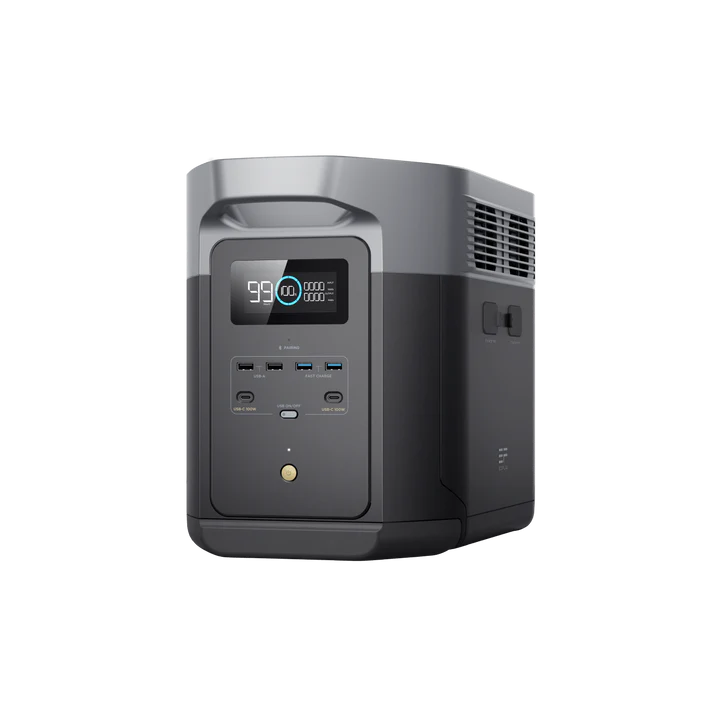
EcoFlow DELTA 2 MaxPick
$1,049.00
$1,049.00 · direct from EcoFlow
Last checked 16 days ago. Prices move — check before you buy.
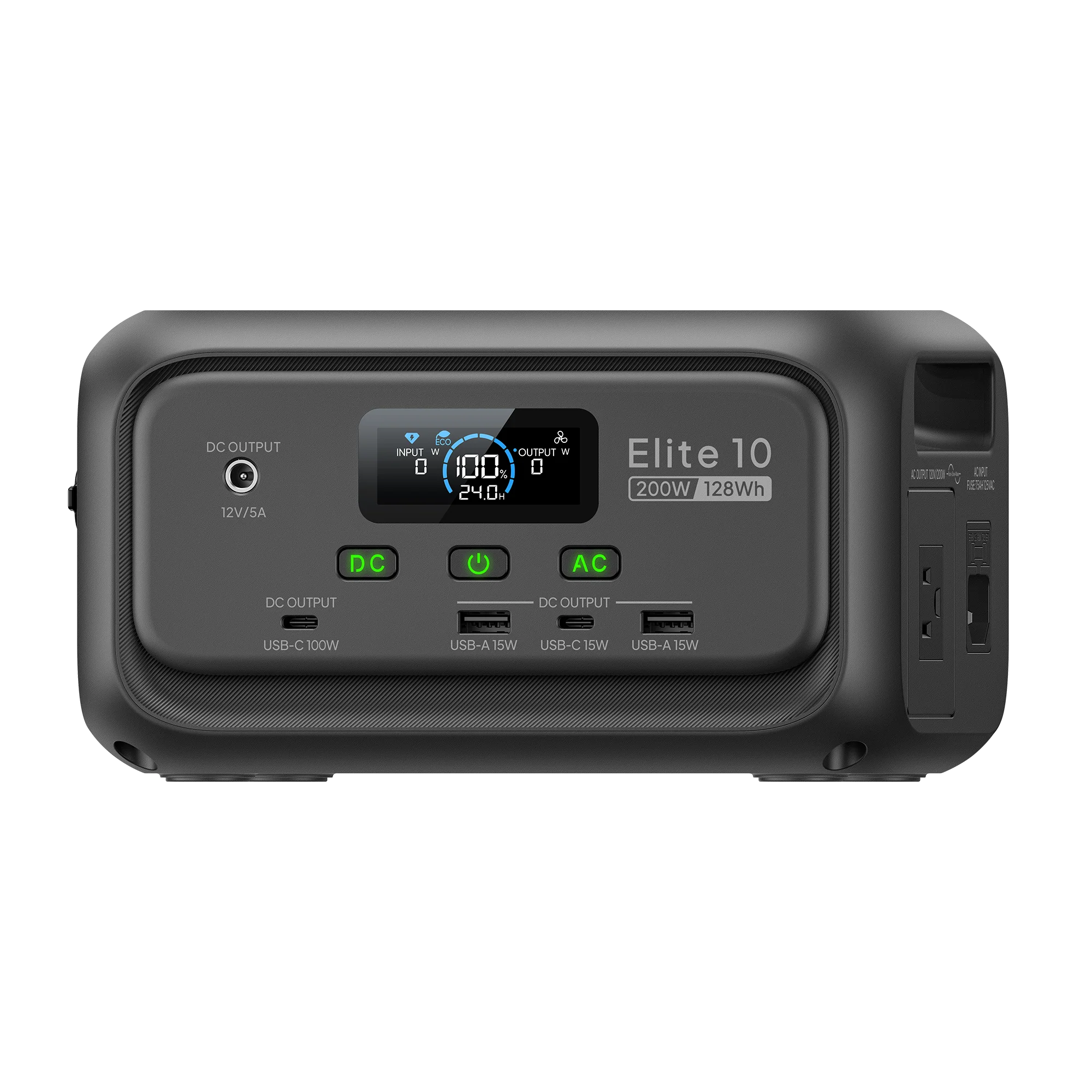
BLUETTI Elite 10 Mini
$119.00
$119.00 · direct from BLUETTI
Last checked 16 days ago. Prices move — check before you buy.
Prices may vary by retailer and are subject to change.