Head-to-head test
Anker SOLIX E10 vs Jackery Explorer 5000 Plus
The Anker holds more and drinks more sun; the Jackery weighs 56 pounds less, costs $800 less, and surges harder — so it comes down to whether your battery lives on a wall or on wheels.
Full profiles: Anker SOLIX E10 → · Jackery Explorer 5000 Plus →

Written by Gunner GustafsonUpdated
Whole-Home Backup Tester, Station Arena Test Desk
Spec deltas
The Anker SOLIX E10 stores about 1,100Wh more than the Jackery Explorer 5000 Plus — 6,144Wh to 5,040Wh — and on the one scenario where that gap matters, it's decisive. Across five of our six models, from a CPAP night to a tailgate, both units coast with energy to spare. On the sixth, a 4,685Wh van-life day, the Jackery runs dry and the Anker doesn't.
Everywhere else, the Jackery makes a strong value case. It's $800 cheaper ($3,499 vs $4,299), 56 pounds lighter (134.5 vs 190.6), and unlike the Anker it's built to move — real wheels, a sturdy sliding handle, side grips for a team liftB3. It also surges to 14,400W against the Anker's 10,000W, a 2-to-1 surge-to-continuous ratio that starts big motor loads with more confidence.
So the split is clean. The Anker is the stationary powerhouse — more capacity, more than double the solar input, quieter, and a touch cheaper to own across its life. The Jackery is the one you can wheel to a job site or a tailgate and still back your house with in a pinch. One lives on a wall; the other lives on wheels.
What the Numbers Reveal
Each conclusion stated first — the numbers behind it on one line, the full analysis below.
Capacity
A 4,685Wh off-grid day drains the Jackery past empty while the Anker finishes with headroom, yet a well pump or oversized AC compressor whose startup spike clears 10,000W can stall the Anker and still light off on the Jackery's 14,400W surge. One unit wins the marathon, the other wins the standing start.
Anker 6,144Wh capacity vs Jackery 5,040WhJackery 14,400W surge vs Anker 10,000W surgeVan Life Daily needs 4,685Wh: Anker covers it, Jackery falls short
Why it mattersIf your limiter is total energy over a long off-grid day, take the Anker; if it's a single hard-starting motor, the Jackery's surge headroom is the safer buy.
solar input
The Jackery is 56 pounds lighter and actually engineered to rollB3, while the Anker is a fixed install whose own handles have snapped during a routine liftA7 — so the solar-ceiling edge and the sheer immobility point the same direction. The Anker is a wall fixture that happens to charge fast; the Jackery is a machine you move that charges slower.
Anker solar input 9,000W vs Jackery 4,000WAnker 190.6 lbs vs Jackery 134.5 lbsJackery ships with real wheels and a sliding handleB3; Anker's plastic battery handle broke during a normal liftA7
Why it mattersOff-grid homes adding panels want the Anker's 9,000W ceiling; anyone relocating the unit — job site, driveway, seasonal storage — wants the Jackery's wheels.
That makes the E10 the computed cheaper-to-own unit only because it stores more, not because each kWh costs less — and that extra capacity is worth nothing to a buyer whose needs fit inside the Jackery's 5,040Wh. Add that the Jackery runs the weakest app of the major brands while Anker's, criticized as it is, stays usableA1A3, and the Jackery's case narrows to price, weight, and surge.
Jackery $3,499 vs Anker $4,299both compute to about $0.17 per lifetime kWhAnker banks 24,576 lifetime kWh vs Jackery 20,160
Why it mattersBuyers who genuinely need more than 5,040Wh get real value from the Anker's extra energy; buyers who don't are paying $800 for headroom they'll never touch.
The specific dimensions that decide these two units — everything else is a tie.
Your Life, Your Pick
Selected because: The van-life scenario is the only one that separates them, and it favors Anker.
Five of our six scenarios end in a tie: both units clear a CPAP night, a workday, a tailgate, a blackout, and a weekend with plenty left. The sixth is the whole ballgame. A van-life day pulls 4,685Wh, and after the inverter losses every unit takes, that's more than the Jackery's 5,040Wh can actually deliver — the model puts it at 109% of what's usable — while the Anker's 6,144Wh covers it at 90%. Draw only a few kWh a day and this is a tie you settle on price. Live off the unit and the Anker is the only one of the two that finishes a heavy day.
Portability & Form Factor
Selected because: 56 pounds and real wheels make the Jackery the movable one.
weight
This is where the Jackery pulls clearly ahead. It's 56 pounds lighter (134.5 vs 190.6) and, more to the point, built to be moved — real wheels, one of the sturdier sliding suitcase handles reviewers have tested, and side grips for a two-person liftB3. The Anker is heavier and, as a modular home system, not pretending otherwise; one reviewer even broke a plastic battery handle during a routine liftA7. If the unit ever leaves its spot — a job site, a driveway, a garage between outages — the Jackery is the one you can reposition without renting equipment.
Lifetime Value
Selected because: Per-kWh they tie; Anker is cheaper-to-own only by banking more energy.
cost / lifetime kWh
Over a full lifetime both units cost about the same per kilowatt-hour — near $0.17 either way — so the Anker's cheaper-to-own edge isn't cheaper energy, it's more of it. It banks 24,576 lifetime kWh to the Jackery's 20,160, an extra 4,416 that rides on an extra $800 of sticker ($4,299 vs $3,499). Whether that reads as a bargain or a tax comes down to capacity you'll actually use: need the headroom and the Anker is the better long-run buy; skip it and the Jackery keeps $800 in your pocket for energy you were never going to draw.
What the Specs Don't Tell You
Selected because: Weight, surge ratio, and the noise-disclosure flag fire and split the two.
Three flags fire, and they don't all point the same way. Weight is the shared one — both are heavy, though the Jackery's 56-pound advantage and real wheels make it the far easier lift. Surge favors the Jackery outright: its 14,400W ceiling is a 2-to-1 ratio over continuous output, the kind of headroom that starts a well pump or a big AC compressor without flinching, where the Anker's 10,000W leaves less margin for a hard inrush. The noise flag is Anker's, and it's a false alarm — the E10 lists no decibel figure because it's fanless and passively cooledA9, not because it's loud. The Jackery, by contrast, carries a 30 dBa rating and the fans that go with it.
Brand Trust
Selected because: Anker's usable app and Jackery's unmatched retail reach both matter.
Neither brand's software wins an award, but the gap between them is real. Anker's app draws steady criticism for being too basic on a system this expensiveA1A3, yet it's coherent and usable. Jackery runs the weakest app of the major brands, split confusingly across separate apps and demanding a login even when you're standing next to the unit offline. Flip it around, though, and Jackery's retail reach is unmatched — Costco, Home Depot, Best Buy — which matters more than it sounds: buying a heavy unit from a store with a real return counter is the return policy, since shipping either of these back is a hazmat ordeal. Anker's SOLIX support, once stellar, has been sliding. Call the category a draw that tips to Anker on software and to Jackery on where you can buy it.
Strengths & trade-offs
Anker SOLIX E10
Strengths
- +Larger battery capacity
- +Higher AC output
- +Faster solar charging
Trade-offs
- –Substantially more expensive (+$1,150) than the Explorer 5000 Plus.
- –Significantly heavier (+56.1 lbs), making it harder to move.
- –Very heavy unit that may be difficult for one person to lift.
Jackery Explorer 5000 Plus
Strengths
- +Costs $1,150 less
- +Lighter by 56.1 lb
Trade-offs
- –Very heavy unit that may be difficult for one person to lift.
Will It Power Your Gear?
Scenario math and per-appliance runtimes, modeled from the spec record.
Scenario verdicts
We ran the math on six real-world scenarios. Here's which unit survives your actual life.
SCN-01 · 2 nights · needs 2,100Wh
Weekend Camping
Two nights off-grid with essential comfort
Neither unit
Scoring these two at a campsite is a category error: the SOLIX E10 is installed at the electrical panel — it backs up the building and doesn't leave it, and the Explorer 5000 Plus at 134.5 lbs is not a take-along — it rolls off a truck bed if it travels at all. The 2,100Wh here is trivial for either — it's the going that doesn't happen. If you need power away from the building, you're shopping the wrong class.
Battery budget usedlower = more headroom
LOAD Phone Charger 15W×6h · LED Lights 40W×8h · Box Fan 75W×14h · CPAP Machine 40W×16h
SCN-02 · 8 hours · needs 1,645Wh
8-Hour Blackout
Keep the essentials running through a night without power
Either unit
Both cover a typical 1,645Wh outage with most of the tank untouched — the Anker sits at 31% used, the Jackery at 38%. It's a tie on runtime, so break it elsewhere: the Jackery is easier to wheel to wherever the outage centers, while the Anker refills faster afterward on its bigger solar input. Stationary home, edge Anker; movable backup, edge Jackery.
Battery budget usedlower = more headroom
LOAD Fridge 150W×8h · Router + Modem 20W×8h · LED Lights (4 bulbs) 40W×6h · Phone Charger 15W×3h
SCN-03 · 8 hours · needs 320Wh
CPAP Overnight
Sleep therapy without interruption — the #1 medical use case
Either unit
A CPAP is about 40W for eight hours, so both of these cover the night several times over — capacity isn't the question here. What would separate them is fan noise, but SOLIX E10 doesn't publish a figure, so there's nothing to hold it to. Buy on price, weight, and whether you can live with a fan you haven't heard.
Battery budget usedlower = more headroom
LOAD CPAP Machine 40W×8h
SCN-04 · 8 hours · needs 910Wh
Remote Workday
Full work day off-grid without power anxiety
Either unit
Both power your workstation all day without strain. The Explorer 5000 Plus lists 100W of USB-C for direct laptop charging; the SOLIX E10 carries no USB-C at all, so a laptop there goes through the inverter — which is what a hardwired stack is: the power comes out of your wall sockets, not out of the box.
Battery budget usedlower = more headroom
LOAD Laptop 60W×8h · External Monitor 30W×8h · Router + Modem 20W×8h · Phone Charger 15W×2h
SCN-05 · 4 hours · needs 670Wh
Tailgate Party
Game day power for the crew
Neither unit
Scoring these two at a tailgate is a category error: the SOLIX E10 is installed at the electrical panel — it backs up the building and doesn't leave it, and the Explorer 5000 Plus at 134.5 lbs is not a take-along — it rolls off a truck bed if it travels at all. The 670Wh here is trivial for either — it's the going that doesn't happen. If you need power away from the building, you're shopping the wrong class.
Battery budget usedlower = more headroom
LOAD Blender 400W×0.5h · LED TV (55") 80W×4h · Bluetooth Speaker 15W×4h · Phone Charger (×3) 45W×2h
SCN-06 · 24 hours · needs 4,685Wh
Van Life Daily
A full day of mobile living — the ultimate endurance test
Neither unit
This is the only scenario that separates the two, and it's decisive. A full off-grid day pulls 4,685Wh; the Anker delivers it at 90% of capacity, while the Jackery cannot quite — it needs more than its usable 5,040Wh can give. For genuine van life or off-grid living, that makes the E10 the only safe pick of the pair. For everything lighter, they tie.
Battery budget usedlower = more headroom
LOAD Mini-Fridge 150W×24h · Laptop 60W×4h · Phone Charger 15W×3h · LED Lights 40W×5h · Fan 75W×8h
The Load Test
RUNTIME = (Wh × 0.85) ÷ LOAD
None of the scenarios above exactly yours? Build it. Toggle what you'd plug in; both units are tested against the combined draw.
Essentials
Comfort & Convenience
High-Draw Appliances
Test duration
8h
Continuous draw
205W
Projected runtime
For this load: SOLIX E10 runs 25.5h vs 20.9h.
$4,299 list · direct from Anker
Planning for more than this? Describe your whole setup and get it sized →
Modeled from the spec record — same math as the tables below. Methodology
Runtime by appliance
Real-world runtime estimates for common appliances, modeled at 85% inverter efficiency.¹
Essentials
The basics you need runningscale 0–348.2hComfort & Convenience
Makes off-grid life actually enjoyablescale 0–69.6hHigh-Draw Appliances
These reveal the real limitsscale 0–5.2h¹ Runtime = (capacity × 0.85) ÷ appliance watts. Within each group, all bars share one time scale (the group's longest runtime), so lengths are comparable across appliances; identical runtimes collapse into a single blue/orange bar. Actual runtime varies with battery age, temperature, and simultaneous loads — see methodology.
Conclusion
July 18, 2026
Verdict: the SOLIX E10, on Power Score margin
Take the SOLIX E10 if it's a fixed whole-home backup, the Explorer 5000 Plus if it ever needs to move. The Anker holds more usable energy (6,144Wh vs 5,040Wh) — enough to finish a heavy 4,685Wh van-life day the Jackery comes up short on — takes more than double the solar (9,000W vs 4,000W), and is the computed cheaper-to-own unit over its life. The Jackery's counter is honest and real: it's $800 cheaper up front ($3,499 vs $4,299), 56 pounds lighter (134.5 vs 190.6) with genuinely good wheels and handlesB3, and it surges to 14,400W against the Anker's 10,000W, so it starts hard-kicking motors the Anker can stall on. If your loads fit inside 5,040Wh and you value moving it or starting a big compressor, the Jackery wins; for a stationary system sized to grow, the Anker takes it.
Editor-assigned confidence, based on cited owner research and spec analysis.
List prices as of July 18, 2026. The links below open Anker's and Jackery's current prices.
$4,299.00 · direct from Anker
Last checked 16 days ago. Prices move — check before you buy.
or check the Explorer 5000 Plus price$3,149.00 list
Written by Gunner Gustafson, Whole-Home Backup Tester · Station Arena Test Desk · Updated July 18, 2026
Black Friday · 38 days out
Prices to beat:SOLIX E10 $4,299Explorer 5000 Plus $2,899
The lowest we have recorded for each. We have never seen the SOLIX E10 discounted, so any real cut on it would be a first.
Measured Data
Benchmark scores and the full spec record, side by side.
Benchmark scores
Not rated for both units (minimum threshold unmet): Solar Generator.
Full specifications
ᵈ Derived: price ÷ rated capacity. See the data behind our comparisons →
Comparison ToolAdd more power stations, side by sideOpen Tool →How these numbers are produced
Numeric verification
Every figure on this page traces to our spec database or arithmetic on it — no estimated numbers.
Owner claims
Statements about owner experience are cited to published reviews — see Sources & Research Notes below.
Runtime model
Runtime = (rated capacity × 0.85 inverter efficiency) ÷ device wattage. Solar recharge estimates assume panels deliver 70% of rated output. Cold weather, battery age, and stacked loads reduce real-world results.
Power Score
Computed from 14 published spec dimensions, weighted per use-case bench. Higher is better; a unit must meet a bench's minimum threshold to be rated.
See the full weight table and data sourcing on our methodology page →Class ranking (the star rating)
Each unit's star score is a category ranking, not customer reviews — no buyer opinions feed it. We score every station on size-independent quality (value, output, portability, endurance, ports, warranty, and more), then percentile-rank it against the other units in its capacity class, so a class-leading compact unit and a class-leading whole-home unit can both earn 5★. Here, SOLIX E10 rates 5.0/5 (99th percentile of 20 Home Backup-class units), and Explorer 5000 Plus rates 4.8/5 (89th percentile of 20 Home Backup-class units).
How the class ranking is computed →Test Notes & Caveats
Hidden gotchas and advantages we spotted that you won't find on the product page.
Both are heavy; only one is built to roll
At 190.6 pounds the Anker is a set-it-and-leave-it install. The Jackery is no featherweight at 134.5, but its 56-pound advantage comes with real wheels and a sliding handle, so it's the one you can actually reposition. If the unit stays put, ignore this; if it moves, it's a genuine Jackery advantage.
Surge headroom goes to the Jackery
The Jackery surges to 14,400W on a 7,200W continuous rating — a 2-to-1 ratio, and a fair proxy for a stout inverter. That's the margin that swallows the startup spike of a well pump or a central-AC compressor. The Anker surges to 10,000W on 7,680W continuous, a tighter cushion that can balk at the hardest inrush loads. If a big motor is on your list, this flag favors the Jackery.
Warranty: No Difference
Both units carry the same 5-year warranty, so coverage isn't a tiebreaker here. The Explorer 5000 Plus's figure is a maximum rather than a guarantee — it depends on registering the unit with Jackery, which is what extends the base term to the full period. Worth saying because the per-dollar framing can suggest otherwise: the Explorer 5000 Plus works out at 1.6 years of cover per $1,000 spent against the SOLIX E10's 1.2, but that spread is the price gap, not the terms.
The missing noise spec is a non-issue
Anker lists no decibel rating for the E10, which normally reads as a warning. Here it's the opposite: the E10 is fanless, cooled by passive fins, so it runs silent and there's simply no fan curve to publish. The Jackery is rated at 30 dBa and carries fans that can spin up under load. On noise, the unit with the blank spec is the quieter one.
Full record above — the Test Desk pick is the SOLIX E10.
Check SOLIX E10 price →or check the Explorer 5000 Plus priceOwnership Analysis
What happens after you buy — true cost of ownership, brand trust, and growth potential.
Lifetime value
Service lifeyears at one full cycle per day
Lifetime energy delivered
Cost per delivered kWh
│ warranty ends · Reaching the cycle rating means ~80% capacity remains — degraded, not dead.
Analyst note
Both units have similar long-term ownership costs ($0.17/kWh vs $0.16/kWh). The price difference is what you see on the sticker — neither is a hidden bargain or rip-off. One thing to know reading the table: both carry the same 4,000-cycle rating, so the lifetime rows are sticker price and capacity in disguise — the wear horizon is identical and decides nothing here.
Brand trust
Anker
Ecosystem
7-8 SOLIX portable power stations across C-series (compact) and F-series (flagship), plus the X1 home energy system
Support
US-based support. Historically known for incredible no-hassle replacements, but recent reports describe AI-driven support agents giving generic responses and complex return logistics for heavy units (hazmat shipping). The Anker brand reputation is still strong, but SOLIX-specific support quality is trending down.
Community
Moderate — active Reddit (r/Anker, r/AnkerSOLIXCommunity) and growing. Benefits from Anker's massive consumer electronics brand awareness.
App experience
Rated 4.5/5 iOS (~1,100 ratings) · 4.3/5 Android
Unique strength
Class-leading cost-per-Wh and Anker's consumer-electronics brand trust, in a fanless, silent package.
Worth knowing
The app is criticized as too basic for the price, and SOLIX-specific support is trending down from Anker's once-stellar norm.
Jackery
Ecosystem
12-15+ models across Explorer (portable) and HomePower (home backup) series, plus SolarSaga panel ecosystem and innovative form factors
Support
US-based support but widely criticized. Reddit reports describe slow/dismissive responses, scripted AI agents, strict receipt requirements for warranty claims, and refurbished replacements for clearly defective units. Strongly recommended: buy from Costco or Amazon for return protection.
Community
Smallest community of the major brands — Reddit r/Jackery has ~2,000 members. YouTube presence is solid due to brand recognition.
App experience
Rated 2.3-3.3/5 iOS and Android — the weakest app experience of the major brands. Multiple confusing apps (Jackery app vs Jackery Home) and mandatory login even offline.
Unique strength
The widest retail footprint in power stations — Costco, Home Depot, Best Buy — which doubles as your return policy on a heavy unit.
Worth knowing
Runs the weakest app of the major brands, split across confusing separate apps with a mandatory login even offline.
Analyst note
Anker is the better machine and the better software of the two; Jackery is the easier one to buy, move, and return. For a fixed install the Anker's specs win; for a unit you'll handle often or may need to send back, Jackery's reach and portability matter more.
Growth path
SOLIX E10
EXPANDABLESupports Anker expansion batteries, so you can add capacity later without replacing the base unit — useful if your needs may climb past 6,144Wh.
Accepts up to 9,000W of solar. Enough for a serious multi-panel array.
Limited ports. You'll likely need a power strip or splitter.
Expansion batteries are Anker-specific. You're investing in the Anker ecosystem.
Explorer 5000 Plus
EXPANDABLESupports Jackery expansion batteries, so you can add capacity later without replacing the base unit — useful if your needs may climb past 5,040Wh.
Accepts up to 4,000W of solar. Enough for a serious multi-panel array.
Adequate ports for most setups, but heavy users may want a power strip.
Expansion batteries are Jackery-specific. You're investing in the Jackery ecosystem.
Realistic full solar rechargeat 70% of rated panel output — see methodology
Analyst note
Both expand, but the SOLIX E10's higher solar ceiling (9,000W vs 4,000W) gives it the stronger off-grid growth path — more panels can feed a bigger bank as it grows.
What Owners Report
Patterns from published owner reports and long-term reviews — every claim cited to its source below.
Anker SOLIX E10
The knocks on the E10 are consistent, and they're about polish, not power. Every outlet that reviewed it flagged the app as too basic for a system this expensiveA1A3, one snapped a plastic battery handle during a normal lift and called the riveted hardware under-built for a module that heavyA7, and setup can bite — a firmware update that fails mid-install with no way to recoverA11. What owners don't complain about is the running. It's fanless and passively cooled, so it stays silentA9, and its transfer to battery during an outage is invisible, noticed only later in the appA4A5. The five-year warranty, though, drew the same 'not encouraging' verdict a Tesla comparison invitesA6.
“The Solix app is cleanly laid out and has most of what I need, but it isn't as robust as some of the others out there — Tesla Powerwall and EcoFlow's Smart Home Panel offer richer data, graphs, and integrations.”
Sources
appleinsider.com · gizmodo.com · thesolarlab.com · diysolarforum.com
Jackery Explorer 5000 Plus
Field notes on the Explorer 5000 Plus are thinner but consistent: reviewers rate it highly and single out the build — about 134 pounds, but with real wheels, one of the sturdiest sliding handles they've seen, and multiple grips for a team liftB3. The one substantive limitation an owner flagged is worth knowing: wired to an automatic transfer switch and discharging, it can recharge only from solar until grid power returnsB4. Beyond that the ledger is light — a well-reviewed unit that simply hasn't accumulated the volume of long-term reports yet.
“A 5,040Wh LiFePO4 battery with 7,200W output and 240V, expandable up to 60kWh (E5000 Plus battery packs and dual units).”
Sources
jackery.com · offgridbenchmark.com · thesolarlab.com · batteryskills.com
Sources & Research Notes
Every owner claim in this report is traceable to a published source. The bracketed references above resolve here.
Recurring owner themes
- Reviewers across multiple independent outlets and a live install thread consistently flag the Solix app as the E10's weakest link — serviceable for basic setups but short on the depth, clarity, and configurability of rivals like Tesla Powerwall. [SOLIX E10 · 4 entries]
- UPS switchover is repeatedly praised as imperceptible, holding up across multiple reviewers and real storm events in different climates. [SOLIX E10 · 2 entries]
- Build-quality and setup nitpicks — a broken plastic handle on a 130lb battery module and a firmware-update bug with no recovery path during install — surfaced despite otherwise smooth day-to-day operation. [SOLIX E10 · 2 entries]
- Large 5,040Wh LFP capacity, 7,200W/240V output, big expandability (to 60kWh), and a well-built wheeled design earn strong scores; heavy at ~134 lbs. [Explorer 5000 Plus · 3 entries]
- A1
“The Solix app is cleanly laid out and has most of what I need, but it isn't as robust as some of the others out there — Tesla Powerwall and EcoFlow's Smart Home Panel offer richer data, graphs, and integrations.”
appleinsider.com — "Anker Solix E10 review: Whole home battery backups finally come within reach" · 2026-07 · [mixed]
- A3
“The app experience isn't great — it's really basic and just not where it needs to be for a system this expensive that requires the app for control.”
thesolarlab.com — "Anker SOLIX E10 Review: Best Whole-Home Battery Backup?" · 2026 · [negative]
- A4
“I didn't see any evidence — no lights flickering, no fans slowing down, nothing — when the system moved to battery-only power and back to the grid; I only found out outages had happened by checking the app's history.”
gizmodo.com — "Anker Solix E10 review: No Power? No Problem" · 2026 · [positive]
- A5
“In rural Ohio with frequent outages, the system reliably kicked in during every storm — my brownouts are completely gone, the lights no longer flicker, and smart home devices stopped rebooting from brief power dips.”
appleinsider.com — "Anker Solix E10 review: Whole home battery backups finally come within reach" · 2026-07 · [positive]
- A6
“Anker's five-year warranty with a 60% capacity-retention guarantee is 'not encouraging' next to Tesla Powerwall's 10-year warranty promising 70% retention.”
gizmodo.com — "Anker Solix E10 review: No Power? No Problem" · 2026 · [negative]
- A7
“We actually broke one of the battery handles during normal use — they're plastic with cheap riveted hardware, which feels under-built for a 130lb battery module.”
thesolarlab.com — "Anker SOLIX E10 Review: Best Whole-Home Battery Backup?" · 2026 · [negative]
- A9
“This is a high-voltage system with passive cooling — it runs completely silent. Large heat-dissipation fins eliminate the need for cooling fans entirely.”
thesolarlab.com — "Anker SOLIX E10 Review: Best Whole-Home Battery Backup?" · 2026 · [positive]
- A11
“There's a known bug where the firmware update required to complete setup can fail on the E10 while the Power Dock's update completes — the setup flow has no way to recover, so you have to unplug the E10 from the combiner box, pair to it directly, finish its firmware update, then reconnect it to the dock.”
diysolarforum.com — "Anker Solix E10 - Install" · 2026 · [negative]
- B3
“Weighs about 134 lbs but has real wheels, one of the sturdiest sliding suitcase handles reviewers have seen, and multiple side handles for team lifting; a compact, well-built design.”
batteryskills.com — Explorer 5000 Plus review · 2026 · [positive]
- B4
“One owner flagged a limitation: when hooked to an automatic transfer switch and discharging, it can only be recharged by solar input until grid power returns.”
offgridbenchmark.com owner review — Explorer 5000 Plus · 2026 · [mixed]
Research compiled July 18, 2026.
What Owners Actually Report
Drawn from 31 comments on independent review channels — not from retailer reviews, which skew to the first week of ownership. Each line is our summary of one commenter's claim, linked to the original. We record what they said, including where it contradicts the spec sheet.
Anker SOLIX E10
37 claims from 20 comments · 16 from owners · 4 with figures
- Price & value
- 12 · 8% negative
- Warranty & support
- 4 · 50% negative
- App & firmware
- 3 · 96% negative
- Other
- 5 · 6% negative
- Runtime
- 2 · 0% negative
What owners complain about
Support took over 2 days to reply; he solved the setup bug himself first.
Warranty & supportmeasuredowner43 agreedsource →
Firmware update failed on the combined E10 + Power Dock setup; had to separate units to update.
App & firmwareowner43 agreedsource →
Inverter slowly discharged on standby load while setup was stuck.
Idle drainowner43 agreedsource →
What owners praise
12kWh/10kW E10 setup cost about $7,300 versus over $10k for equivalent DPUX.
Price & valuemeasuredowner9 agreedsource →
Supports his 20-panel roof array, unlike the DPU's 5kW solar limit.
Solar inputmeasuredowner5 agreedsource →
Has run their house for the last month and it is amazing despite lower specs than the Ultra.
Runtimeownerafter 1 months23 agreedsource →
Jackery Explorer 5000 Plus
28 claims from 11 comments · 27 from owners · 5 with figures
- Runtime
- 4 · 61% negative
- Warranty & support
- 5 · 72% negative
- Durability
- 4 · 100% negative
- Price & value
- 3 · 71% negative
- App & firmware
- 4 · 83% negative
What owners complain about
Proprietary expansion batteries cost $2500+ for 5-6kWh versus $800-1000 server rack packs.
Expandabilitymeasuredowner8 agreedsource →
Paid $2,700 and warns buyers away from the unit entirely.
Price & valuemeasuredowner5 agreedsource →
Unit had several out-of-box issues that a firmware update only partly fixed.
Durabilityowner8 agreedsource →
What owners praise
Uses it to charge EVs and a PHEV and for peak shaving through a transfer switch.
Runtimeowner24 agreedsource →
Jackery replied daily, replaced the unit and paid shipping both ways at no cost.
Warranty & supportowner8 agreedsource →
Really quiet and with soft start runs his 2-ton home AC with no problem.
Noiseowner8 agreedsource →
Claims are weighted by how specific they are, whether the commenter owns the unit, and how many readers agreed. Comments that mention a product under a rival's review count for more, because the commenter had no reason to be there. This is what buyers report, not our test results — for measurements we ran ourselves, see the methodology.
Who Should Buy Which
Buy the SOLIX E10 if you…
- →Your battery lives in one place — a wired whole-home or off-grid install — and you want the most capacity (6,144Wh) and the biggest solar ceiling (9,000W) to grow into.
- →You draw heavy days: the E10 is the only one of the two that finishes a 4,685Wh van-life day, and it's the computed cheaper-to-own unit over its life.
- →You want a silent, fanless unit for a living space and an app you can live with, and you don't need to move 190 pounds around.
Buy the Explorer 5000 Plus if you…
- →You'll actually move it — job site, driveway, tailgate — where the 56-pound weight saving and real wheelsB3 earn their keep every time you lift it.
- →Your hardest load is a hard-starting motor: the 14,400W surge lights off compressors and pumps the Anker's 10,000W can stall on.
- →Your needs fit inside 5,040Wh, and you'd rather keep the $800 ($3,499 vs $4,299) and have 100W USB-C on board, which the E10 lacks entirely.
If neither fits
If all you need is to keep a CPAP, a fridge, and some lights alive for a night or two, both of these are oversized four-figure systems built to back a whole house. A wheeled unit in the 2–3kWh class does that job for a fraction of the money, and you can lift it alone. Step up to these only when you're genuinely powering a home or living off-grid.
The Bottom Line
The SOLIX E10 wins this on capacity and reach: it stores more, finishes the heavy off-grid day the Jackery can't, takes more than double the solar, and costs a touch less to own over its life — but it wins as a fixed installation, 190 pounds bolted near your panel.
The Explorer 5000 Plus is the smarter buy the moment portability enters the picture: $800 cheaper, 56 pounds lighter, on real wheels, and surging harder for a tough motor start. One lives on a wall; the other lives on wheels — buy for where yours will spend its life.
Frequently Asked Questions
Answers drawn from the spec record and cited owner research.
Is the Anker SOLIX E10 or the Jackery Explorer 5000 Plus the better value?
Per kilowatt-hour over their lifetimes they tie — both land near $0.17. The Anker is 'cheaper to own' only because it stores more total energy, 24,576 kWh to 20,160, which is an advantage only if you use the extra capacity. If your needs fit inside the Jackery's 5,040Wh, its $800 lower price ($3,499 vs $4,299) makes it the better value outright.
Which one can start a well pump or large AC compressor?
The Jackery has the edge. It surges to 14,400W — a 2-to-1 ratio over its 7,200W continuous rating — which is the headroom that absorbs the big inrush when a motor kicks on. The Anker surges to 10,000W on 7,680W continuous, a tighter margin that can stall on the hardest-starting loads. If a single high-surge motor is your worst case, size to the Jackery.
Does the Jackery really run out on a heavy off-grid day?
On our van-life model, yes. That day pulls 4,685Wh, and after inverter losses the Jackery's 5,040Wh can't quite deliver it, while the Anker's 6,144Wh finishes with roughly 10% to spare. For lighter daily draws — a workday, a blackout, a weekend of camping — both coast, so this only bites if you're truly living off the battery.
Why does the Anker have no USB-C ports?
Because the E10 is a hardwired whole-home system, not a portable one — it backs your house through the panel, so it carries no USB-C at all. The Jackery Explorer 5000 Plus, built to double as a movable power station, includes 100W USB-C. If you want to charge laptops and phones at the unit itself, that's a clear point for the Jackery.
Which is easier to move?
The Jackery, by a wide margin. It's 56 pounds lighter (134.5 vs 190.6) and built to roll, with real wheels and a sturdy sliding handle. The Anker is a heavier modular home system that isn't meant to travel — reviewers even broke one of its plastic battery handles during a routine lift. For anything you reposition regularly, the Jackery is the obvious pick.
Where to buy
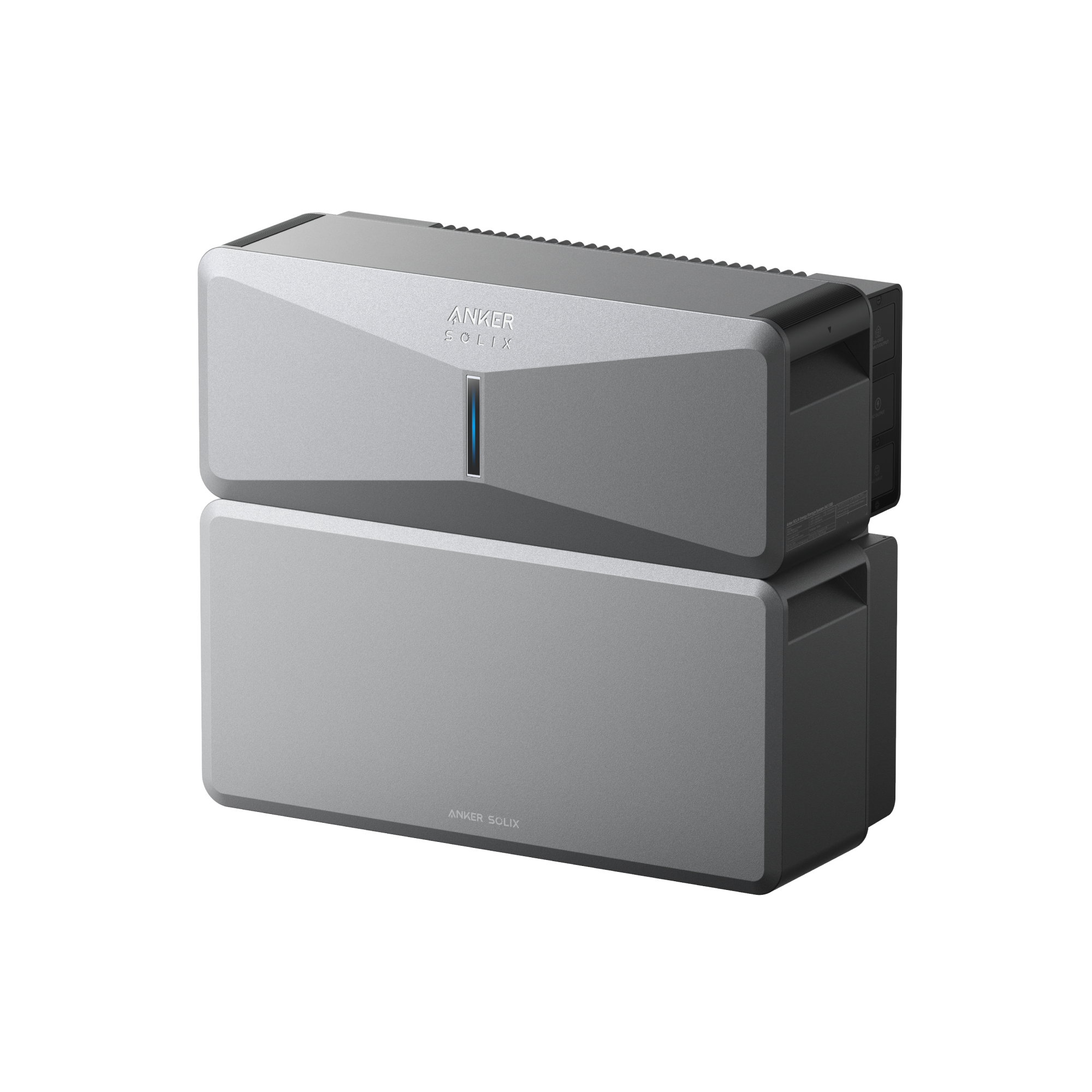
Anker SOLIX E10Pick
$4,299.00
$4,299.00 · direct from Anker
Last checked 16 days ago. Prices move — check before you buy.

Jackery Explorer 5000 Plus
$3,149.00
$3,149.00 · direct from Jackery
Last checked 16 days ago. Prices move — check before you buy.
Prices may vary by retailer and are subject to change.