Anker
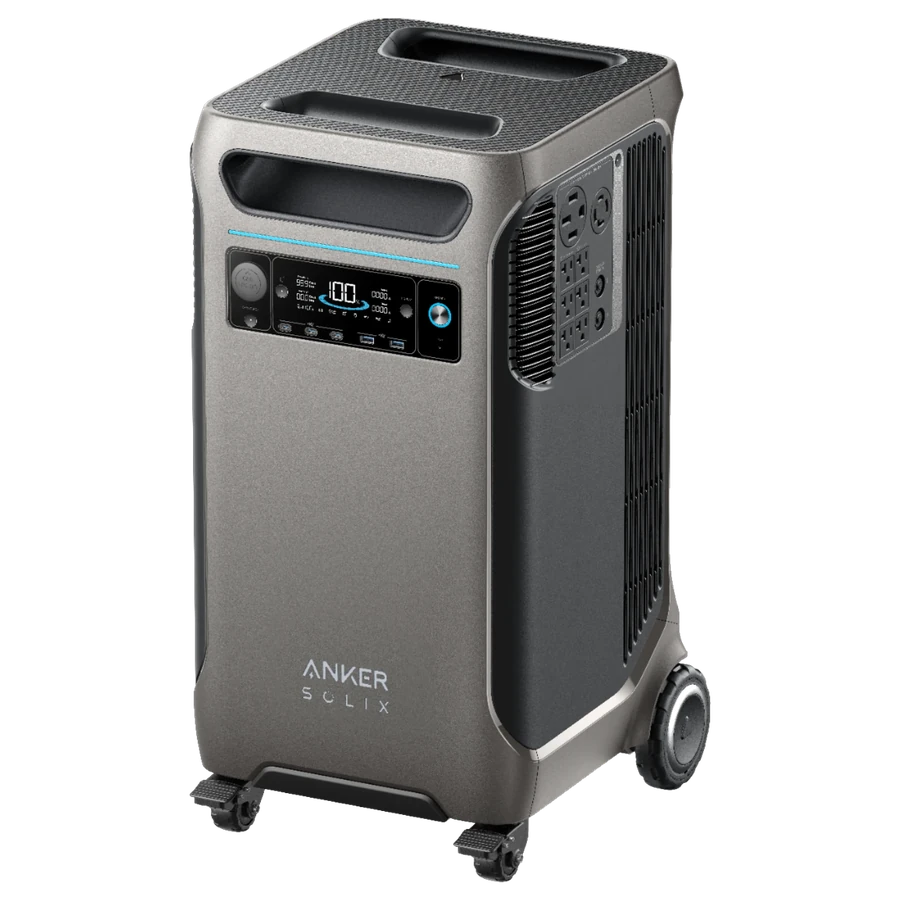
SOLIX F3800
$2,200 listed · 132 lb
Capacity
3,840 Wh
Output
6,000 W
Surge
9,000 W
The unit we would buy today: 3,840 Wh and 6,000 W with 120/240 V split-phase, shipping now. What the S5000 may add on top is the S-series endurance story.
Anker · S series · Power Station Arena coverage · regulatory filings for model AS510
Certified, documented and already inside Anker’s app. The second S-series power station is ready, and only the reveal remains.
Anker’s next big power station has left the lab. A unit named the Anker SOLIX S5000, model AS510, cleared certification on September 15, 2026. Its user guide is written and staged on Anker’s support system, and the Anker app already carries a product card for it, complete with a drawing of the machine: an upright cabinet on wheels with a full-width control panel. Anker’s naming habits point to a pack of roughly 5 kWh, the S-series playbook points to long, quiet runtime rather than brute output, and the company’s last launch ran five weeks from paperwork to checkout. This page assembles the evidence and our reading of it.
Reporting and analysis by Ian SchneiderFirst surfaced Sep 15, 2026Updated Sep 20, 2026
Our rendering
The short answer
Certified on September 15 and already inside Anker’s app. By Anker’s own launch rhythm, the reveal lands in October.
Our read on the product is below, and so are the units you can buy today.
Get one email when the price or ship date lands
And one when our test results are in. Nothing else.
By subscribing, you agree to our Privacy Policy. Unsubscribe anytime.
01 · What surfaced
First surfaced September 15, 2026 in regulatory filings for model AS510. The framing below is ours; every figure in it is graded in the ledger that follows.
Anker built the S series around endurance. The S2000 pairs a 2,010 Wh pack with a deliberately modest 1,500 W inverter and sells the result as fridge backup measured in days, backed by a 10,000-cycle rating and a five-year warranty. It is the mirror image of the F series, where the F3800 puts 6,000 W and split-phase output behind a similar pack. An S5000 extends that bet: that people buying home backup care more about how long the lights stay on than how much they can run at once.
The size changes the conversation. At roughly 5 kWh the S5000 steps into territory Anker covers today with the F3800 and the E10, both of which deliver 120/240 V split-phase for well pumps and central air. If the S5000 arrives with split-phase, Anker gains a second home-backup line. If it stays single-voltage like the S2000, it becomes the longest-running fridge-and-freezer machine in the range. The wheels in Anker’s own drawing suggest a unit meant to live in a utility room and be rolled to where it is needed.
02 · Specs
Everything known so far, line by line, so you can tell which numbers are firm enough to plan around. Each figure is marked Anker-published or published by us; where we reason beyond the published figures, the reasoning is shown.
The spec sheet at a glance
Our own rendering of the unit: an upright cabinet inside a frame that runs down to its wheels, a louvred intake across the top, a display and control strip, an illuminated power key and a light bar set into the base.
The S2000 is AS220. Same scheme, same family.
App control is confirmed twice over: the radios are certified and the app already lists the unit.
How we knowRead from the S5000 product card inside the Anker app on September 20, 2026.
How we knowEstablished by our own checks of Anker’s support system on September 20, 2026.
03 · Our arithmetic
Runtimes worked out from Anker’s own figures. These are our estimates, and they are labelled as our analysis everywhere they appear.
| Load | Base pack · — |
|---|
Assumes 85% of rated capacity reaches the load — the same planning constant our comparison engine uses for every station. Real runtime at 0 W will also depend on how the pack derates in heat, which nobody has measured yet.
Good to knowEvery estimate above updates automatically if Anker revises a published figure; nothing here is typed in by hand.
04 · Our take
Analysis by the Test Desk — not a summary of Anker’s release or anyone else’s coverage. Every comparison figure below comes from the named maker’s own page.
Start with the manual, because it says more than the certification does. A certification tells you a product exists. A finished user guide, staged on the maker’s own support system and waiting to be switched on, tells you the documentation team is done, the model has its permanent home, and the only open item is a date. That is where the S5000 stands today.
The runway is visible too. The S2000 carries separate country editions of its guide, and those are traditionally the last pieces to land before a launch. For the S5000 the master guide is in place and the country editions are the next step. Set that beside the calendar, where the S2000 took five weeks from certification to checkout with reviews at week three, and an October reveal is the natural reading.
Our thesis on the machine itself rests on Anker’s own habits. Every C, F and S unit is named for its pack: 1,056 Wh is a C1000, 3,840 Wh is an F3800, and the S2000 holds 2,010 Wh even though its inverter stops at 1,500 W. That last case is the key, because it proves the number is energy rather than power. So S5000 reads as roughly 5 kWh. Carry the S2000’s ratio of pack to inverter forward and you arrive near 3,600 W, which is also the most a 30 A, 120 V outlet can deliver. We think that coincidence is the design.
The drawing supports the same picture. Anker shows an upright cabinet in a frame that runs down to a pair of wheels, with a louvred intake across the top and a full-width control strip. At the S2000’s energy density a 5 kWh pack weighs close to 90 lb, so the wheels are a necessity rather than a flourish. This is a machine designed to be parked near the appliances it protects and rolled out when the grid drops.
For a shopper the play is simple. Anker launches through an early-access email list that unlocks its best price on day one; the S2000 opened at $599 against a list near $1,200. Joining that list when it opens costs nothing and is the smart way to buy this unit. If your backup needs are urgent, the F3800 delivers 3,840 Wh, 6,000 W and split-phase output today, and hurricane season keeps its own calendar.
05 · Buy today
Same capacity band, shipping now, with published outlet lists and prices we read twice a day. Bars share one scale with the announced unit at the top; each card links to a head-to-head we have adjudicated.
Reference · not on sale
Weight not published · price not announced
Anker
$2,200 listed · 132 lb
The unit we would buy today: 3,840 Wh and 6,000 W with 120/240 V split-phase, shipping now. What the S5000 may add on top is the S-series endurance story.
Anker
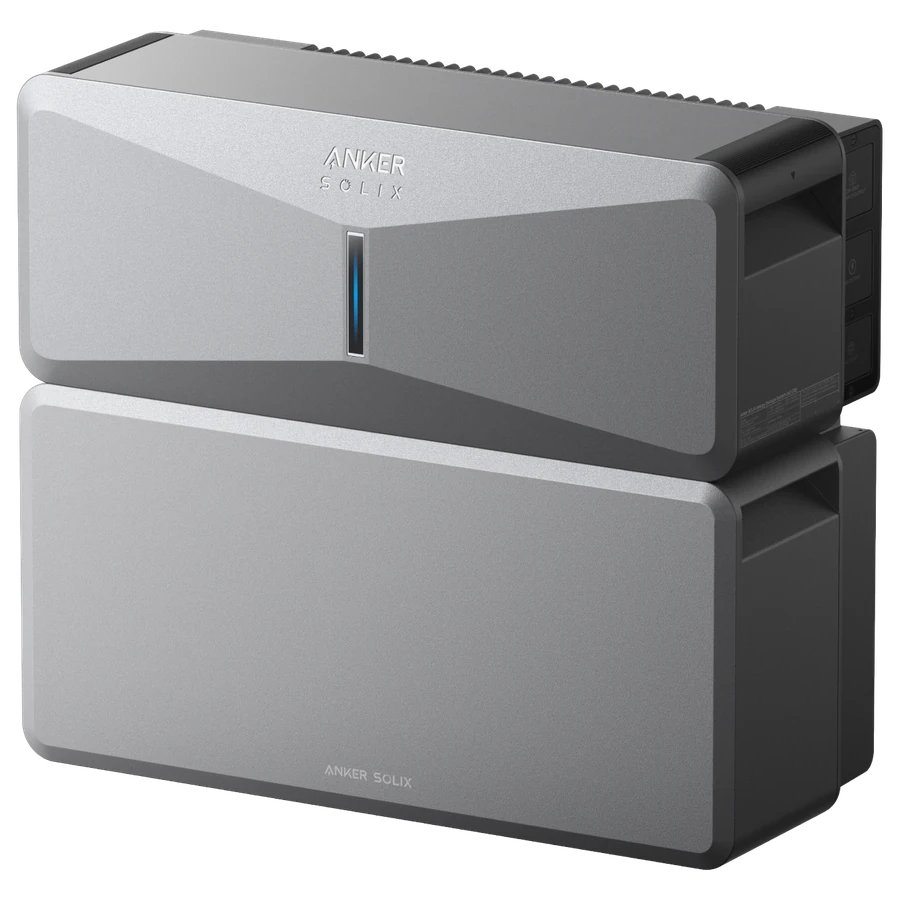
$4,299 listed · 191 lb
If the appeal of a 5 kWh number is whole-home backup rather than portability, Anker already sells past it: 6,144 Wh and 7,680 W, installed rather than rolled.
Anker
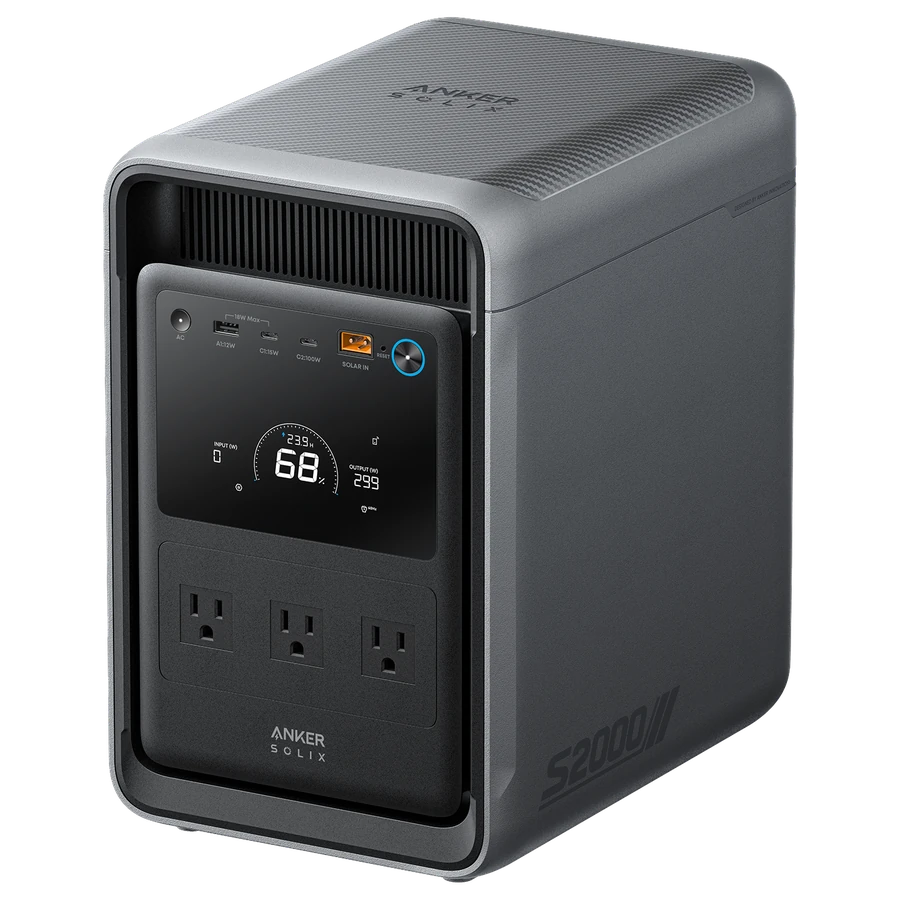
$1,000 listed · 36 lb
The S series as it exists today. If what you want is the long, quiet fridge-backup behaviour rather than the size, this is that machine, on sale now.
Anker
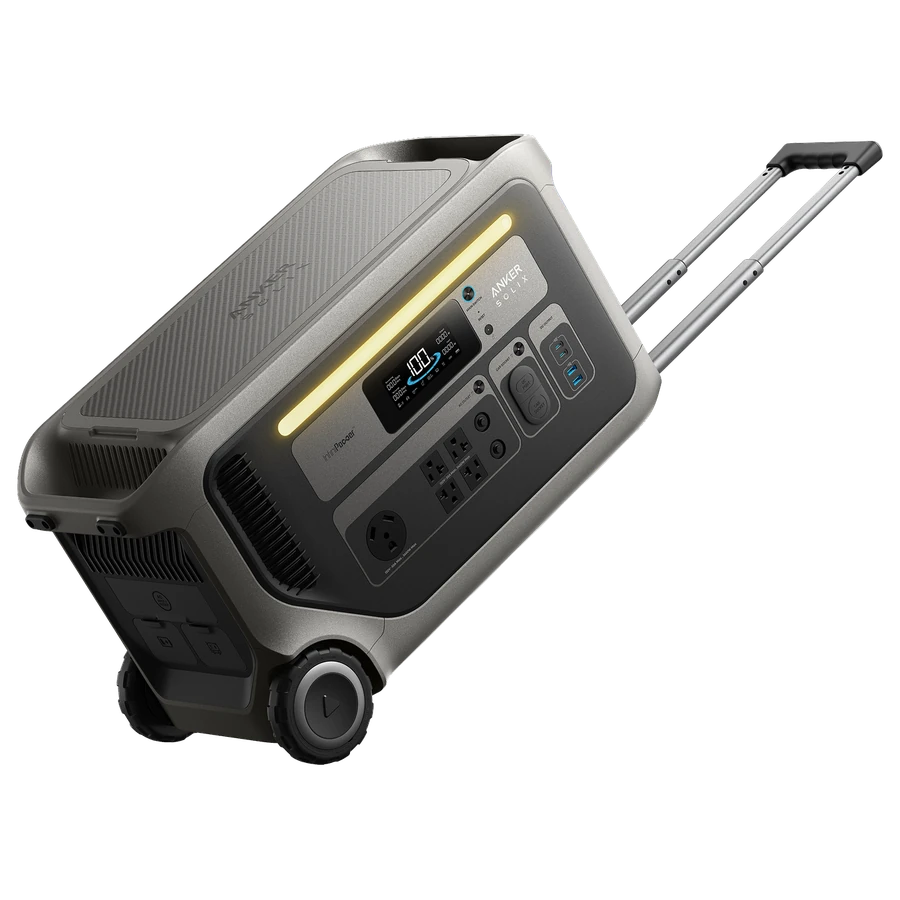
$1,500 listed · 92 lb
The middle of Anker’s range: 3,072 Wh and 3,600 W, more inverter than any S-series unit has carried so far, for the buyer whose problem is big loads rather than long nights.
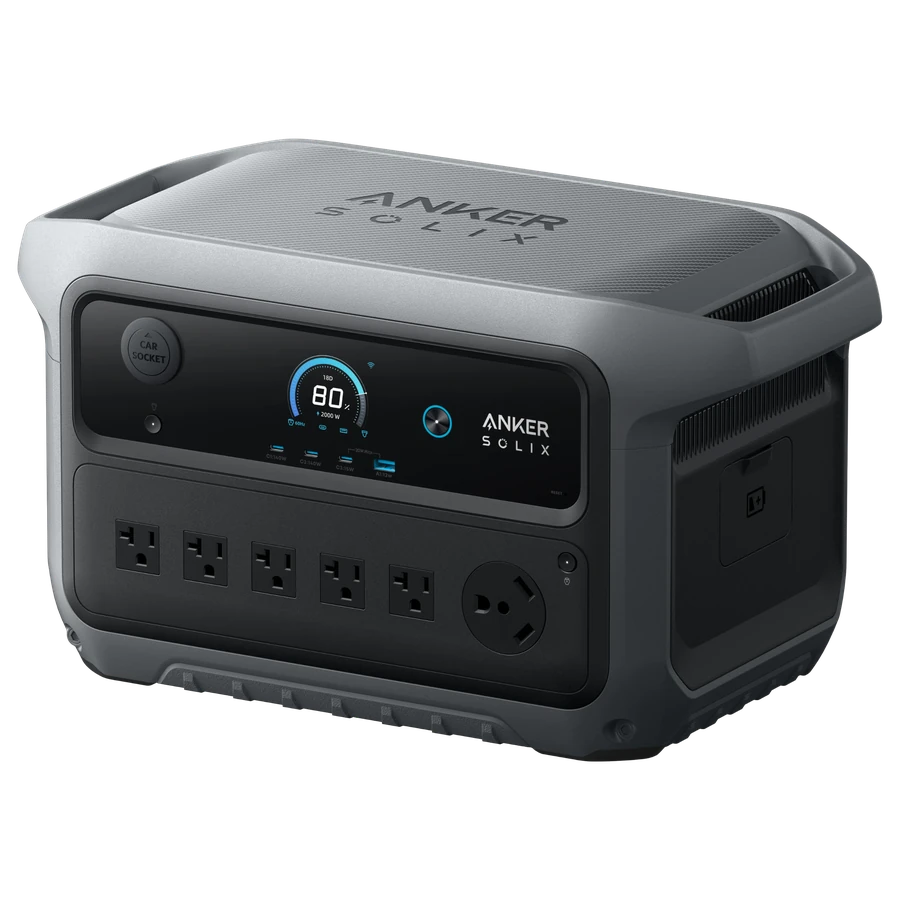
Anker
$1,000 listed · 42 lb
The Anker range you can grow: 2,048 Wh and 2,400 W with a matching expansion battery, a flexibility the S series has yet to offer.
06 · The line
Where a roughly 5 kWh S-series unit would land among the Anker units you can buy today: squarely in the gap between the F3800 and the E10.
2,010 Wh · 1,500 W
The first S-series unit: 2,010 Wh behind a deliberately modest 1,500 W inverter, sold on how long it lasts.
$1,000 listedCompare →
2,048 Wh · 2,400 W
2,048 Wh and 2,400 W, and the Anker range with a matching expansion battery.
$1,000 listedCompare →
3,072 Wh · 3,600 W
3,072 Wh and 3,600 W: the step up in both energy and inverter, at nearly three times the S2000’s weight.
$1,500 listedCompare →
3,840 Wh · 6,000 W
3,840 Wh and 6,000 W with split-phase output: the Anker unit an S5000 would be measured against.
$2,200 listedCompare →
6,144 Wh · 7,680 W
6,144 Wh and 7,680 W: Anker’s installed home system, and the ceiling a roughly 5 kWh unit would sit below.
$4,299 listedCompare →
For the whole Anker range as it stands today, see our Anker guide; for the two current units closest to this one in role, the F3800 and E10 side by side.
07 · Fit
Read from what Anker has already committed to paper.
08 · Questions
Short answers, each with its own link.
Yes. The Anker SOLIX S5000, model AS510, cleared certification on September 15, 2026. Its user guide is written and staged on Anker’s support system, and the Anker app already carries a product card for it. The public reveal is the remaining step.
Confirmed so far: the name, model number AS510, Wi-Fi and Bluetooth for app control, and the shape, an upright wheeled cabinet with a full-width control panel. Our grounded estimates are a pack of roughly 5 kWh, an inverter around 3,600 W and a weight near 90 lb, each with its reasoning shown in the spec section above.
Our reading is a pack of roughly 5 kWh. Anker names every unit after its battery rather than its inverter: the S2000 holds 2,010 Wh but outputs 1,500 W, so the number is energy, and S5000 points to about five kilowatt-hours. At the S2000’s density that is a machine of around 90 lb, which is why Anker’s drawing shows wheels.
We expect October 2026. Anker’s last S-series launch ran three weeks from certification to reviews and five weeks to going on sale, and the S5000 cleared certification on September 15. The signals to watch are the country editions of its manual going live and an early-access signup opening on Anker’s site.
That is the reveal we are watching most closely. The S2000 is a 120 V machine, while Anker’s F3800 and E10 both deliver 120/240 V split-phase. A 240 V port on the S5000 would make it a genuine second home-backup line. If you need 240 V today, the F3800 and E10 already do it.
Anker’s Anker SOLIX F3800 is $2,200 today and gives you 3,840 Wh, 6,000 W and 120/240 V split-phase, a known quantity in a season that keeps its own calendar. If what draws you is the S-series endurance rather than the size, the Anker SOLIX S2000 is that machine at $1,000.