Head-to-head test
Anker SOLIX C200 DC vs Jackery Explorer 1000 Plus
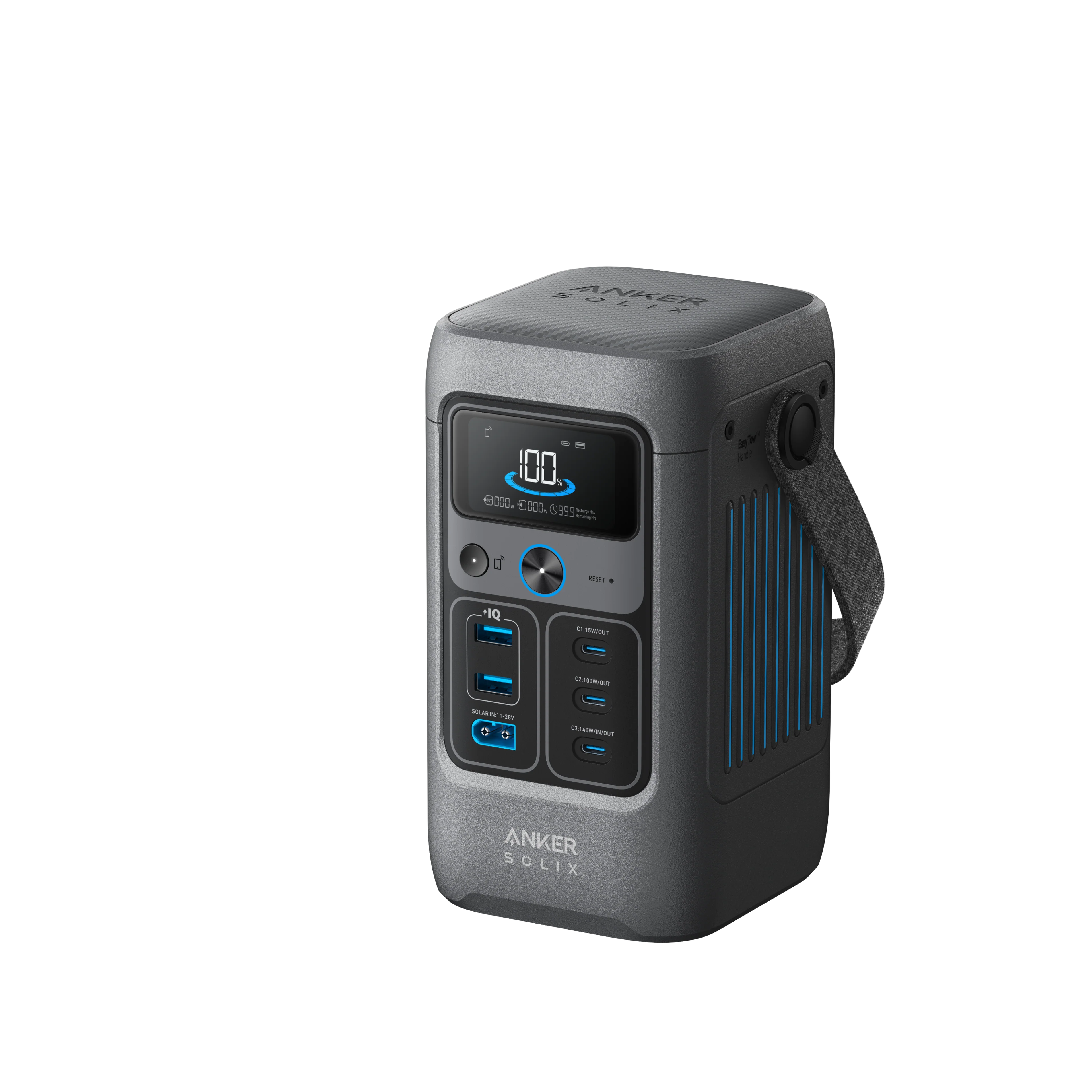
The SOLIX C200 DC has never had an AC outlet — every watt moves through USB-C — so before price or capacity even enter the discussion, the only real question is whether anything on your list needs a wall plug.
Full profiles: Anker SOLIX C200 DC → · Jackery Explorer 1000 Plus →

Written by Ian SchneiderUpdated
Solar & Off-Grid Tester, Station Arena Test Desk
$149.99 · direct from Anker
Last checked 1 day ago. Prices move — check before you buy.

$619.00 · direct from Jackery
down from $699 · 11% below usual
Last checked 1 day ago. Prices move — check before you buy.
Spec deltas
The SOLIX C200 DC has never had an AC outlet. Every one of its 200 watts moves through USB-C or USB-A, on a 192Wh battery that weighs 4.2 lbs. The Explorer 1000 Plus carries a 2,000W pure-sine inverter, real wall sockets, and 1,264Wh of capacity — more than six times the C200 DC's. Those aren't two power stations at different price points; one of them is a power station.
$140 against $699. 4.2 lbs against 32. Neither number is close, and it's not supposed to be: the Explorer 1000 Plus is carrying the weight and the price of an inverter and AC circuitry the C200 DC was never built with. That's also most of why it isn't the more efficient buy on paper. Sticker price per watt-hour is close, $.73 against $.79, and priced per lifetime kWh delivered the two land within four cents of each other, $0.24 against $0.20. The extra $559 isn't buying better efficiency. It's buying watt-hours and an AC outlet you either need or don't.
Most people who click into this comparison aren't actually torn between these two — they're trying to work out which class of device solves their problem. That split is simple: if anything on your list needs a wall plug, only one of these two has ever had one. If your entire load is a phone, a tablet, or something like a Starlink Mini, the Explorer 1000 Plus costs $559 more and weighs 27.8 lbs more than you need.
What the Numbers Reveal
Each conclusion stated first — the numbers behind it on one line, the full analysis below.
That's not really a capacity story, it's a wiring one. The three scenarios that do resolve to the Explorer 1000 Plus resolve there specifically because it has an AC outlet to plug the load into in the first place, and it does it with real margin: 30%, 85%, and 62% of its own usable capacity, not a scrape-by finish.
SOLIX C200 DC: 200W continuous output, 0W surge rating, no AC outletSOLIX C200 DC is marked unable to fully handle any of the six standard scenarios this site testsExplorer 1000 Plus clears CPAP Overnight, Remote Workday, and Tailgate Party outright, at 30%, 85%, and 62% of its own usable capacity
Why it mattersIf your list has anything that needs AC power, stop comparing capacities and cross the C200 DC off first. No number of USB-C ports changes what it can't plug into.
rated cycles
That means the extra $559 isn't buying better efficiency. It's buying 1,072 more watt-hours per charge and an AC outlet, delivered at almost the same cost per watt-hour either way. Neither unit is the 'value' pick in the usual sense — they're both about equally efficient at turning a dollar into stored energy, they just store very different amounts of it.
SOLIX C200 DC: $140, rated 3,000 cycles, $0.24 per lifetime kWh deliveredExplorer 1000 Plus: $699, rated 4,000 cycles, $0.20 per lifetime kWh delivered
Why it mattersDon't shop this page on cost per kWh. It won't tell these two apart. Shop it on how many watt-hours and what kind of outlet you actually need.
weight
That's the actual engineering reason the C200 DC has no wall outlet, not a corner Anker cut. It's the tradeoff that keeps the unit light. The moment any device needs AC, it's buying into a heavier class of hardware, regardless of brand.
SOLIX C200 DC: 4.2 lbs, 0W surge rating, no AC outletExplorer 1000 Plus: 32 lbs, 4,000W surge rating
Why it mattersDon't read 'no AC outlet' as a missing feature to weigh against the Explorer 1000 Plus. It's the design decision that makes the C200 DC worth carrying in the first place — decide your weight class before you compare spec sheets.
Measured against camping, blackout, and tailgate loads, the C200 DC fails outright. Measured against what real owners are actually buying it for, it's finishing shifts with charge to spareA3 and running Starlink Minis for hours on endA4A5 — a unit doing its actual job well, not a smaller Explorer 1000 Plus doing that job badly.
Owners specifically buy the SOLIX C200 DC to run a Starlink Mini off-grid on boats and remote sitesA4A5One delivery driver ran it through an eight-hour shift keeping a phone and tablet topped up, never dropping below 75%A3SOLIX C200 DC: 192Wh capacity, no AC outlet
Why it mattersIf your real use case looks like 'keep a phone and a Starlink Mini alive off-grid' rather than 'run a tailgate,' the scenario sweep below doesn't apply to you. The C200 DC is already the right size.
The specific dimensions that decide these two units — everything else is a tie.
Your Life, Your Pick
Selected because: The SOLIX C200 DC can't fully handle a single one of the six standard scenarios tested here; the Explorer 1000 Plus clears half of them and comes up short on the other half too — that split says more than any single spec.
Run all six of the site's standard load scenarios against the C200 DC and it can't fully cover a single one. Some of that is simply size: Weekend Camping (2,100Wh) asks for more than ten times what the C200 DC holds, and Van Life Daily (4,685Wh) asks for more than twenty times that. Tailgate Party is the cleaner example of the other problem — 670Wh is more than three times the C200 DC's entire 192Wh capacity, and that's before getting to the fact that a tailgate's speakers and grill would need an outlet it doesn't have anyway.
Where the Explorer 1000 Plus wins outright — CPAP Overnight, Remote Workday, Tailgate Party — it wins with real room to spare: 30%, 85%, and 62% of its own usable capacity, respectively. But it isn't immune to the same math on the biggest loads. Weekend Camping needs 195% of what it holds, an 8-Hour Blackout needs 153%, and Van Life Daily needs 436% — all three go to 'neither' in the engine's own scoring, not because either unit is bad, but because both are simply undersized for those jobs.
Portability & Form Factor
Selected because: 4.2 lbs against 32 is the most physically honest number on this page. It's the direct result of one unit carrying an inverter and AC circuitry the other was never built with.
weight
4.2 lbs is a unit you toss in a bag and forget about. 32 lbs is one you set down deliberately and probably carry with both hands. That's not an accident of two different design teams, it's the direct cost of what's inside: the Explorer 1000 Plus carries a 2,000W continuous, 4,000W-surge pure-sine inverter and the wiring to survive it, and the C200 DC carries none of that — which is exactly how it stays under five pounds.
That trade runs one direction only. No version of the C200 DC gets AC output without gaining most of that weight back, and no version of the Explorer 1000 Plus sheds its inverter without losing what makes it useful in a blackout. Pick the weight you're willing to carry, and the outlet question answers itself.
Lifetime Value
Selected because: Sticker price makes these look like different categories entirely, but cost per lifetime kWh delivered lands within four cents of each other — worth showing the arithmetic once.
cost / lifetime kWh
Sticker price puts these in different categories: $140 against $699, roughly seven times the money. Even there the per-watt-hour cost is closer than the sticker suggests — $.73 for the C200 DC, $.79 for the Explorer 1000 Plus. Stretch that over each unit's rated cycle life and the two nearly converge: 3,000 cycles on 192Wh works out to 576 lifetime kWh delivered for $140, or $0.24 per kWh; 4,000 cycles on 1,264Wh works out to 5,056 lifetime kWh for $699, or $0.20 per kWh.
That four-cent gap means the extra $559 isn't buying efficiency. Both units turn a dollar into stored energy at almost the same rate. It's buying capacity and an AC outlet instead: 1,072 more watt-hours per charge, delivered through a real inverter instead of a USB-C port. If you need either of those two things, the $559 is well spent. If you don't, it's $559 spent on capability you'll never touch.
What the Specs Don't Tell You
Selected because: UPS protection, warranty length, and an undisclosed noise spec are the concrete, checkable differences left once AC access and capacity are already decided.
rated cycles
Three more differences separate these beyond capacity and AC access. The Explorer 1000 Plus switches to battery in 20 milliseconds if the power cuts — real UPS protection the C200 DC doesn't have at all, though that's really the AC-outlet gap showing up under a different name, since UPS mode only matters for gear already running on AC. Warranty runs 3 years on the C200 DC against 5 on the Explorer 1000 Plus, which in cost-per-warranty-year terms is $47 against $200 — a number that mostly reflects the $559 price gap rather than either brand's confidence in its own hardware.
Cycle life is a reassuring story for both: used every weekend, the C200 DC is rated to last about 28.8 years and the Explorer 1000 Plus about 38.5, and neither is the number that should decide this purchase, since both comfortably outlive the point where anyone's still asking this question. The one open item is noise. Anker doesn't publish a decibel rating for the C200 DC at all, while Jackery rates the Explorer 1000 Plus at 30dB — not necessarily a gap in performance, just a gap in what either company is willing to commit to on paper.
Strengths & trade-offs
Anker SOLIX C200 DC
Strengths
- +Costs $559 less
- +Lighter by 27.8 lb
Trade-offs
- –Weaker inverter (-1,800W) limits appliance compatibility.
- –Sealed capacity — the Explorer 1000 Plus can add batteries to grow past 192Wh; this one can't.
- –Shorter-lived battery — rated for 3,000 charge cycles vs the Explorer 1000 Plus's 4,000, so it wears out sooner.
Jackery Explorer 1000 Plus
Strengths
- +Larger battery capacity
- +Higher AC output
- +Longer warranty
- +Faster solar charging
- +Rated for 4,000 charge cycles — much longer battery lifespan
Trade-offs
- –Substantially more expensive (+$559) than the SOLIX C200 DC.
- –Significantly heavier (+27.8 lbs), making it harder to move.
Will It Power Your Gear?
Scenario math and per-appliance runtimes, modeled from the spec record.
Scenario verdicts
We ran the math on seven real-world scenarios. Here's which unit survives your actual life.
SCN-01 · 2 nights · needs 2,100Wh
Weekend Camping
Two nights off-grid with essential comfort
Neither unit
A full weekend of camping runs about 2,100Wh. The C200 DC holds a fraction of that and has no AC outlet to plug camp gear into regardless. The Explorer 1000 Plus gets far closer but still needs more than its own 1,264Wh to finish the weekend. Neither wins — this load belongs to a bigger or expandable system.
Battery budget usedlower = more headroom
LOAD Phone Charger 15W×6h · LED Lights 40W×8h · Box Fan 75W×14h · CPAP Machine 40W×16h
SCN-02 · 8 hours · needs 1,645Wh
8-Hour Blackout
Keep the essentials running through a night without power
Neither unit
An 8-hour blackout runs about 1,645Wh. The Explorer 1000 Plus covers most of it but still comes up short on its own capacity. The C200 DC was never in the running — it's missing the AC outlet the load would need, and holds only a small fraction of the watt-hours regardless. Plan on a bigger unit if backup power for a real outage is the actual job.
Battery budget usedlower = more headroom
LOAD Fridge 150W×8h · Router + Modem 20W×8h · LED Lights (4 bulbs) 40W×6h · Phone Charger 15W×3h
SCN-03 · 8 hours · needs 320Wh
CPAP Overnight
Sleep therapy without interruption — the #1 medical use case
Explorer 1000 Plus
A full night of CPAP use runs about 320Wh — comfortably inside the Explorer 1000 Plus's range at 30% of its usable capacity, and beyond the C200 DC's entire 192Wh capacity before even considering it has no AC outlet for a standard CPAP machine to plug into. Take the Explorer 1000 Plus.
Battery budget usedlower = more headroom
LOAD CPAP Machine 40W×8h
SCN-04 · 8 hours · needs 910Wh
Remote Workday
Full work day off-grid without power anxiety
Explorer 1000 Plus
A laptop, monitor, and phone through a full workday adds up to about 910Wh. The Explorer 1000 Plus handles it at 85% of its usable capacity — comfortable, not tight. The C200 DC can keep the phone and maybe the laptop charged over USB-C, but a monitor needs AC power it simply doesn't have.
Battery budget usedlower = more headroom
LOAD Laptop 60W×8h · External Monitor 30W×8h · Router + Modem 20W×8h · Phone Charger 15W×2h
SCN-05 · 4 hours · needs 670Wh
Tailgate Party
Game day power for the crew
Explorer 1000 Plus
A tailgate's worth of speakers, lights, and a cooler adds up to about 670Wh — more than three times the C200 DC's entire 192Wh capacity, and that's before its missing AC outlet rules out plugging any of that gear in at all. The Explorer 1000 Plus covers it with room left for the drive home.
Battery budget usedlower = more headroom
LOAD Blender 400W×0.5h · LED TV (55") 80W×4h · Bluetooth Speaker 15W×4h · Phone Charger (×3) 45W×2h
SCN-06 · 24 hours · needs 4,685Wh
Van Life Daily
A full day of mobile living — the ultimate endurance test
Neither unit
Van Life Daily asks for about 4,685Wh a day — more than the Explorer 1000 Plus's own 1,264Wh capacity, let alone the C200 DC's 192Wh. On this one, the honest answer is no for both units: daily van life at this scale needs an expandable or much larger system, not either of these.
Battery budget usedlower = more headroom
LOAD Mini-Fridge 150W×24h · Laptop 60W×4h · Phone Charger 15W×3h · LED Lights 40W×5h · Fan 75W×8h
SCN-07 · an afternoon · needs 100Wh
Afternoon Off-Grid
Phones and a speaker at the park, beach, or campsite — the small-unit job description
Either unit
This row is here for the SOLIX C200 DC's class of job: phones and a speaker, 100Wh across an afternoon. Both cover it — the SOLIX C200 DC finishes at 61% used, and the Explorer 1000 Plus barely notices it. For this job the Explorer 1000 Plus's extra capacity is dead weight, not headroom; take the SOLIX C200 DC at 4.2 lbs and leave the rest at home.
Battery budget usedlower = more headroom
LOAD Phone Charger (×2) 30W×2h · Bluetooth Speaker 10W×4h
The Load Test
RUNTIME = (Wh × 0.85) ÷ LOAD
None of the scenarios above exactly yours? Build it. Toggle what you'd plug in; both units are tested against the combined draw.
Essentials
Comfort & Convenience
High-Draw Appliances
Test duration
8h
Continuous draw
205W
Projected runtime
Only the Explorer 1000 Plus can run this load — the SOLIX C200 DC has no AC outlets for the wall-plug gear in it.
$699 list · direct from Jackery
Modeled from the spec record — same math as the tables below. Methodology
Runtime by appliance
Real-world runtime estimates for common appliances, modeled at 85% inverter efficiency.¹
Essentials
The basics you need runningscale 0–71.6hComfort & Convenience
Makes off-grid life actually enjoyablescale 0–14.3hHigh-Draw Appliances
These reveal the real limitsscale 0–1.1h¹ Runtime = (capacity × 0.85) ÷ appliance watts. Within each group, all bars share one time scale (the group's longest runtime), so lengths are comparable across appliances; identical runtimes collapse into a single blue/orange bar. Actual runtime varies with battery age, temperature, and simultaneous loads — see methodology.
Conclusion
August 1, 2026
Verdict: the Explorer 1000 Plus, on Power Score margin
Take the Explorer 1000 Plus if anything on your list needs AC power. The C200 DC has no AC outlet at all, so it's disqualified before capacity or price even matter. Where a winner is possible among the six scenarios this site tests, the Explorer 1000 Plus takes it every time: it clears CPAP Overnight, Remote Workday, and Tailgate Party outright, and despite costing $699 to the C200 DC's $140, it's actually the cheaper unit to own per lifetime kWh delivered, at $0.20 against $0.24. But that verdict only applies if you need what a 1,264Wh AC station provides. If your entire load is a phone, a tablet, or something like a Starlink Mini, the C200 DC does that exact job at 4.2 lbs and $140, and owners specifically buy it for that reasonA4A5. Match the unit to the job before you compare another spec.
Today the Explorer 1000 Plus is $619, $80 under its typical $699. The verdict weighs typical prices, not today's. Prices checked 1 day ago.
Editor-assigned confidence, based on cited owner research and spec analysis.
List prices as of August 1, 2026. The links below open Anker's and Jackery's current prices.
$619.00 · direct from Jackery
down from $699 · 11% below usual
Last checked 1 day ago. Prices move — check before you buy.
or check the SOLIX C200 DC price$149.99 list
Written by Ian Schneider, Solar & Off-Grid Tester · Station Arena Test Desk · Updated August 1, 2026
Measured Data
Benchmark scores and the full spec record, side by side.
Benchmark scores
Not rated for both units (minimum threshold unmet): UPS, RV Living, Home Backup, CPAP, Solar Generator, Tailgating, Food Truck, Camping.
Full specifications
ᵈ Derived: price ÷ rated capacity. See the data behind our comparisons →
Comparison ToolAdd more power stations, side by sideOpen Tool →How these numbers are produced
Numeric verification
Every figure on this page traces to our spec database or arithmetic on it — no estimated numbers.
Owner claims
Statements about owner experience are cited to published reviews — see Sources & Research Notes below.
Runtime model
Runtime = (rated capacity × 0.85 inverter efficiency) ÷ device wattage. Solar recharge estimates assume panels deliver 70% of rated output. Cold weather, battery age, and stacked loads reduce real-world results.
Power Score
Computed from 14 published spec dimensions, weighted per use-case bench. Higher is better; a unit must meet a bench's minimum threshold to be rated.
See the full weight table and data sourcing on our methodology page →Class ranking (the star rating)
Each unit's star score is a category ranking, not customer reviews — no buyer opinions feed it. We score every station on size-independent quality (value, output, portability, endurance, ports, warranty, and more), then percentile-rank it against the other units in its capacity class, so a class-leading compact unit and a class-leading whole-home unit can both earn 5★. Here, SOLIX C200 DC rates 4.0/5 (43rd percentile of 22 Personal-class units), and Explorer 1000 Plus rates 4.6/5 (77th percentile of 27 Everyday-class units).
How the class ranking is computed →Test Notes & Caveats
Hidden gotchas and advantages we spotted that you won't find on the product page.
SOLIX C200 DC: No AC Outlets At All
The SOLIX C200 DC's 200W is a DC port total — USB and 12V — not an inverter rating. Anything with a wall plug (a fridge, a TV, a coffee maker, most fans and lamps) never plugs in, at any wattage. That's the design, not a defect: it buys weight, silence, and efficiency for phone, laptop, camera, and 12V-CPAP loads. The Explorer 1000 Plus carries a real inverter behind 3 AC outlets, so it plays in both worlds. Decide which side of that line your gear lives on before weighing anything else on this page.
192Wh Is the Whole Thing
There's no expansion battery for the C200 DC, and that's not really a con here — nobody buying a $140 USB charger is planning to bolt on more capacity later. The Explorer 1000 Plus starts bigger, at 1,264Wh, and can still grow further with Jackery's add-on batteries if that ever stops being enough.
Only the Explorer 1000 Plus Has UPS Protection
20 milliseconds of switchover matters for sensitive electronics running on AC during an outage — exactly the use case the C200 DC was never built for. This is really the missing AC outlet showing up under a different name.
Warranty Value Comparison
3 years on the C200 DC against 5 on the Explorer 1000 Plus works out to $47 per warranty year against $200. That gap mostly reflects the $559 price difference between them, not a meaningful difference in how either brand stands behind its hardware.
Battery Lifespan in Real Years
Used every weekend, the C200 DC is rated to last about 28.8 years and the Explorer 1000 Plus about 38.5. Both comfortably outlive the point where anyone's still weighing this decision — cycle life isn't the number that should decide between these two.
SOLIX C200 DC: Noise Level Not Disclosed
Anker doesn't publish a decibel rating for the C200 DC, so there's no number to hold it to. Jackery rates the Explorer 1000 Plus at 30dB — the only real figure of the two, worth knowing if bedside noise is part of your decision.
Full record above — the Test Desk pick is the Explorer 1000 Plus.
Check Explorer 1000 Plus price →or check the SOLIX C200 DC priceOwnership Analysis
What happens after you buy — true cost of ownership, brand trust, and growth potential.
Lifetime value
Service lifeyears at one full cycle per day
Lifetime energy delivered
Cost per delivered kWh
│ warranty ends · Reaching the cycle rating means ~80% capacity remains — degraded, not dead.
Analyst note
The SOLIX C200 DC is cheaper to buy, but the Explorer 1000 Plus is cheaper to own. At $0.14/kWh over its lifetime vs $0.24/kWh, the Explorer 1000 Plus's higher cycle life and capacity make each dollar go further over the years.
Brand trust
Anker
Ecosystem
7-8 SOLIX portable power stations across C-series (compact) and F-series (flagship), plus the X1 home energy system
Support
US-based support. Historically known for incredible no-hassle replacements, but recent reports describe AI-driven support agents giving generic responses and complex return logistics for heavy units (hazmat shipping). The Anker brand reputation is still strong, but SOLIX-specific support quality is trending down.
Community
Moderate — active Reddit (r/Anker, r/AnkerSOLIXCommunity) and growing. Benefits from Anker's massive consumer electronics brand awareness.
App experience
Rated 4.5/5 iOS (~1,100 ratings) · 4.3/5 Android
Unique strength
Parent brand trust from Anker's consumer electronics dominance. InfiniPower technology for long cycle life. Strong $/Wh value in the mid-size and larger units — the S2000, F2600 and C1000 are among the better buys per watt-hour in the catalog.
Worth knowing
Support quality appears to be declining from its historically excellent level. Firmware updates have removed features without warning. Expansion ecosystem is smaller than EcoFlow's.
Jackery
Ecosystem
12-15+ models across Explorer (portable) and HomePower (home backup) series, plus SolarSaga panel ecosystem and innovative form factors
Support
US-based support but widely criticized. Reddit reports describe slow/dismissive responses, scripted AI agents, strict receipt requirements for warranty claims, and refurbished replacements for clearly defective units. Strongly recommended: buy from Costco or Amazon for return protection.
Community
Smallest community of the major brands — Reddit r/Jackery has ~2,000 members. YouTube presence is solid due to brand recognition.
App experience
Rated 2.3-3.3/5 iOS and Android — the weakest app experience of the major brands. Multiple confusing apps (Jackery app vs Jackery Home) and mandatory login even offline.
Unique strength
Highest brand recognition and widest retail distribution (Costco, Home Depot, Best Buy, Amazon). The "Toyota" of power stations — dependable, proven, wide availability. Innovative form factors like the Solar Gazebo and Solar Mars Bot.
Worth knowing
A couple of older models still ship NMC chemistry with a shorter rated lifespan, so check the cycle rating on the specific unit — though most of the current line has moved to LFP. Generally perceived as overpriced for the specs offered compared to newer competitors. App experience is significantly behind rivals.
Analyst note
Anker and Jackery are close competitors. Both have established support channels and growing ecosystems. Compare their specific warranty terms and community size for your peace of mind.
Growth path
SOLIX C200 DC
FIXED CAPACITYFixed at 192Wh, with no expansion — so size it for your needs up front rather than planning to add capacity later.
Accepts up to 100W of solar. Limited to a single portable panel.
Limited ports. You'll likely need a power strip or splitter.
Explorer 1000 Plus
EXPANDABLESupports Jackery expansion batteries, so you can add capacity later without replacing the base unit — useful if your needs may climb past 1,264Wh.
Accepts up to 800W of solar. Suitable for a 1-2 panel setup.
Adequate ports for most setups, but heavy users may want a power strip.
Expansion batteries are Jackery-specific. You're investing in the Jackery ecosystem.
Realistic full solar rechargeat 70% of rated panel output — see methodology
Analyst note
The SOLIX C200 DC is sealed at 192Wh, which is fine if that covers you. The Explorer 1000 Plus starts at 1,264Wh and can grow beyond it with Jackery expansion batteries — though at this size expansion means longer runtimes on the same loads, not a path to home backup. More hours, not more house.
What Owners Report
Patterns from published owner reports and long-term reviews — every claim cited to its source below.
Anker SOLIX C200 DC
The record for this exact SKU is real but narrow: Amazon's verified buyers, Anker's own product page, one forum thread, and one YouTube review's comments — a dedicated search turned up no organic Reddit discussion of this specific model, so treat this as a small but real sample, not a consensus. What's there converges on two genuine strengths: it comfortably covers a full shift of continuous charging (one delivery driver reports never dropping below 75% over an eight-hour shift with a phone plugged in the whole timeA3), and it's become a specific favorite for running a Starlink Mini off-grid, with owners on a boat and a remote site both reporting flawless multi-hour passthrough powerA4A5. One reviewer separately calls it quiet compared to larger unitsA2 — a casual impression, not a published spec, but it's the only word on noise anywhere in this record.
Two real gripes recur. No wall charger ships in the box, and getting fast, reliable charging means sourcing your own high-wattage USB-C adapter — one buyer discovered this the hard way, unable to charge the unit at all until they bought a compatible 140W charger separatelyA2A7A10. And a single YouTube commenter reports going through three units that all developed USB-C port failuresA12 — one account, not corroborated anywhere else in this record, but worth flagging since USB-C is this unit's only way to take a charge at all.
“But in the specs it says the usb ports will shut off in 2 hours and that time can't be changed... I'm deciding between it and the Jackery 240D which keeps the ports on for 12 hours. But the Anker is lighter, cheaper and has a better warranty.”
Sources
diysolarforum.com · amazon.com · ankersolix.com · judge.me
Jackery Explorer 1000 Plus
Coverage here is stronger and more typical for a ~1kWh station, anchored by one outlet's six-month test across dozens of camping trips and two extended outagesB3. The specifics back up the reputation: the LFP battery genuinely holds its full 4,000-cycle rating, AC recharges land around 1.7 hours, and the 2,000W inverter handles surge loads without complaintB1. That same six-month test ran a refrigerator, lights, a laptop, and a Wi-Fi router simultaneously in a simulated outageB3 — a full emergency load, not just device charging.
Expansion is the most consistently repeated praise: up to three add-on batteries push total capacity toward roughly 5,000Wh, enough reviewers say to run a fridge for three-plus days or carry a home office through a multi-day outageB2. Multiple outlets independently call it one of the best-rounded stations near 1kWh this yearB4 — less one standout spec than everything landing solidly at once.
“The LiFePO4 battery genuinely hits 4,000 cycles, AC recharge consistently shows ~1.7-hour full charges, and the 2,000W pure sine wave inverter handles surge loads.”
Sources
backuppowerhub.com · thesolarlab.com · vettedhomegear.com · walkingsolar.com · mtnweekly.com · sparklingpicks.com · trustedreviews.com
Sources & Research Notes
Every owner claim in this report is traceable to a published source. The bracketed references above resolve here.
Recurring owner themes
- No wall charger is included, and getting decent charge speed means sourcing a high-wattage (18W+, ideally 140W PD3.1) USB-C charger yourself — a recurring source of either mild annoyance or, for one reviewer who lacked a compatible charger on hand, a full return-to-sender experience. [SOLIX C200 DC · 3 entries]
- Independently of Anker's own marketing, multiple owners specifically bought and use the C200 DC to run a Starlink Mini off-grid (boat, remote site), reporting flawless pass-through power and multi-hour runtime without an inverter. [SOLIX C200 DC · 3 entries]
- Sustained, continuous-duty use (an 8-hour delivery shift, always-on passthrough to a Linux SBC, a multi-day iPad session) holds up better than owners expected, with battery percentage staying higher than they anticipated. [SOLIX C200 DC · 3 entries]
- Despite Anker's "39% smaller than peers" marketing claim, real-world size/weight impressions are split — some owners find it genuinely pocketable, others notice real heft once it's actually loaded in a bag. [SOLIX C200 DC · 2 entries]
- Expandability to a multi-kWh bank, dependable 2,000W output, fast charging, and best-rounded-of-2026 status are the consistent praise. [Explorer 1000 Plus · 3 entries]
- A2
“It's lightweight, easy to carry, and has enough power for phones, lights, a fan, and smaller devices... I like how quiet it is compared to larger units. My only complaint is I wish it included the wall charger instead of having to buy one separately.”
amazon.com customer review (Verified Purchase, Style: Anker SOLIX C200 DC) — "Handy Little Power Station" · 2026-05 · [positive]
- A3
“I have used this unit every day as a delivery driver to keep my phone and tablet running and so far I've never gotten below 75%... over an eight hour shift with the phone plugged in constantly.”
amazon.com customer review (Verified Purchase, Style: Anker SOLIX C200 DC) — "Perfect for top ups and small emergencies" · 2025-12 · [positive]
- A4
“I bought this to power my starlink mini on my fishing boat, I used it the other day for 5 or 6 hours and it still had 40% power left, great product and works great for a mini with no need for inverter.”
amazon.com customer review (Verified Purchase, Style: Anker SOLIX C200 DC) — "Works great for starlink mini!" · 2026-06 · [positive]
- A5
“The Starlink Mini worked flawlessly utilizing the Starlink cable connected to the adapter plugged into the USB-C 100w output outlet on the Anker... the pass through charging worked with no issues. Should power the Starlink mini for 6-8 hrs without charging.”
amazon.com customer review (Verified Purchase, Style: Anker SOLIX C200 DC) — "Powers Starlink Mini" · 2026-04 · [positive]
- A7
“Can't get this battery to charge. Just discovered I have to now spend a small fortune for a 140W adapter, which it did not come with, in order to get it to charge... The User Guide has 4 pages of warnings per language but no operational instructions.”
amazon.com customer review (Verified Purchase, Style: Anker SOLIX C200 DC) — "140W adapter needed to charge, not included." · 2025-12 · [negative]
- A10
“Holds true to its capacity. Charging to full is quick if you have correct charge block. The price was okay but you do get Anker Solix backing.”
ankersolix.com product reviews (Judge.me widget on /products/c200-dc) · 2026-03 · [positive]
- A12
“Gone through 3 of these now. All 3 developed issues with the USB-C ports.”
YouTube — "Review: Anker SOLIX C200 DC Power Bank Station (60,000mAh), 192Wh Portable Power Station" (The Breakdown With Luke) — comment · 2025 · [negative]
- B1
“The LiFePO4 battery genuinely hits 4,000 cycles, AC recharge consistently shows ~1.7-hour full charges, and the 2,000W pure sine wave inverter handles surge loads.”
backuppowerhub.com / thesolarlab.com — Explorer 1000 Plus review · 2026 · [positive]
- B2
“Expandable — you can add up to three additional batteries, bringing total capacity to about 5,000Wh; at maximum you could run a refrigerator for 3+ days or power a home office through multi-day outages.”
backuppowerhub.com / vettedhomegear.com — Explorer 1000 Plus review · 2026 · [positive]
- B3
“After six months across dozens of camping trips, two extended outages, and daily home-office use, it ran every appliance within its 2,000W rating; in a simulated outage it powered a refrigerator, lights, a laptop, and a Wi-Fi router simultaneously.”
walkingsolar.com / mtnweekly.com — Explorer 1000 Plus 6-month review · 2026 · [positive]
- B4
“Widely called one of the most well-rounded portable power stations of 2026 — 4,000-cycle LFP battery, 2,000W output, fast wall charging, and expandable design check every important box.”
sparklingpicks.com / trustedreviews.com — Explorer 1000 Plus review · 2026 · [positive]
Research compiled August 1, 2026.
Who Should Buy Which
Buy the SOLIX C200 DC if you…
- →Your entire load is a phone, a tablet, or something like a Starlink Mini — no AC gear at all — and owners specifically buy this unit for exactly that job, reporting flawless multi-hour Starlink Mini runtime off-gridA4A5.
- →You're covering a single shift or day of device charging, not an overnight or multi-day event — one delivery driver ran a full eight-hour shift without dropping below 75%A3.
- →You want the lightest, cheapest option and will never plug anything with a wall plug into it. 4.2 lbs and $140 is the whole pitch.
Buy the Explorer 1000 Plus if you…
- →You need AC power for anything on your list — a CPAP machine, a cooler, a coffee maker, tailgate speakers — and the C200 DC is disqualified before you even compare capacity.
- →You're sizing for an actual overnight or multi-hour event: it clears CPAP Overnight, Remote Workday, and Tailgate Party outright, with real margin left over.
- →You want room to grow later — Jackery's add-on batteries push total capacity toward roughly 5,000Wh if 1,264Wh ever stops being enoughB2.
If neither fits
Skip both if your real need sits between them or above them. Between them: something with real AC output but well under 1,264Wh — this page doesn't cover that middle ground, and it exists. Above them: a full weekend of camping needs about 2,100Wh and an 8-hour blackout needs about 1,645Wh, more than the Explorer 1000 Plus alone can cover, let alone the C200 DC. That's a job for a bigger or expandable system, not either unit tested here.
The Bottom Line
The SOLIX C200 DC has no AC outlet, full stop — that fact alone settles this for most people who click into this comparison expecting a real contest. Wherever AC power is required, the Explorer 1000 Plus is the only option of the two, and it happens to also be the cheaper unit to run over its life, at $0.20 per lifetime kWh against $0.24, despite costing $559 more upfront.
None of that makes the C200 DC the lesser buy. It makes it a different tool, one owners specifically choose to keep a phone and a Starlink Mini alive off-gridA4A5, not a smaller Explorer 1000 Plus struggling to do that job. Buy the Explorer 1000 Plus for anything that needs a wall plug. Buy the C200 DC for everything else, and spend the leftover $559 on something that isn't a power station at all.
Frequently Asked Questions
Answers drawn from the spec record and cited owner research.
Does the Anker SOLIX C200 DC have any AC outlets?
No — none at all. It's DC/USB-only: every watt in or out moves through USB-C or USB-A, with a 200W continuous ceiling and no surge rating for anything heavier. If your list includes a CPAP machine, a cooler, or anything else with a wall plug, this unit can't run it, at any price.
What's the real difference between the SOLIX C200 DC and the Explorer 1000 Plus?
Class, not just size. The C200 DC is a 192Wh, 4.2-lb USB-only charger built for phones, tablets, and similar gear. The Explorer 1000 Plus is a 1,264Wh, 32-lb power station with a 2,000W inverter and real AC outlets. At $140 against $699, the price gap mostly just reflects that they're not built for the same job.
Can the Jackery Explorer 1000 Plus run a CPAP machine all night?
Yes, comfortably. A full night of CPAP use runs about 320Wh, which is only 30% of the Explorer 1000 Plus's usable capacity, and Jackery publishes a 30dB noise rating if bedside quiet matters to you. The C200 DC can't do this job at all — it has no AC outlet for a standard CPAP machine to plug into.
Is the Jackery Explorer 1000 Plus worth $699 over a $140 unit like the SOLIX C200 DC?
Only if you need what it does. It's the cheaper unit per lifetime kWh delivered ($0.20 against the C200 DC's $0.24) and the only one of the two with an AC outlet at all — real advantages if your loads need AC power or more than 192Wh. If your entire load is a phone or a tablet, that $559 gap buys capacity and an outlet you'll never use.
Which one should I buy for camping or a power outage?
Neither fully covers either job on its own. A weekend of camping runs about 2,100Wh and an 8-hour blackout runs about 1,645Wh — both beyond the Explorer 1000 Plus's 1,264Wh, let alone the C200 DC's 192Wh. The Explorer 1000 Plus gets you closer and is the only one with an AC outlet to plug camp gear into, but for a genuine weekend or outage, plan on a bigger or expandable system.
Where to buy
Anker SOLIX C200 DC
$149.99
$149.99 · direct from Anker
Last checked 1 day ago. Prices move — check before you buy.
Jackery Explorer 1000 PlusPick
$619.00
$619.00 · direct from Jackery
down from $699 · 11% below usual
Last checked 1 day ago. Prices move — check before you buy.
Prices may vary by retailer and are subject to change.