Head-to-head test
Anker SOLIX C200 DC vs Anker SOLIX C300 DC
Anker SOLIX C200 DC vs Anker SOLIX C300 DC: neither has an AC outlet, and both run 3000 cycles on a 3-year warranty; the C300 DC holds 288Wh against 192Wh and gives 4 USB-C ports against 2, while the C200 DC is 4.2 lbs. Buy the C300 DC unless weight and price decide it.
Full profiles: Anker SOLIX C200 DC → · Anker SOLIX C300 DC →

Written by Wenny ZhengUpdated
Portable Power Tester, Station Arena Test Desk
Spec deltas
The SOLIX C300 DC costs $200 for 288Wh and 300W of output. The SOLIX C200 DC costs $140 for 192Wh and 200W. Capacity and output both scale up by exactly 50% on the bigger unit, but the price only climbs $60. That's why the C300 DC actually costs four cents less per watt-hour than the C200 DC does: $0.69 against $0.73. Nobody is paying a premium to go bigger here.
Neither has an AC outlet. Both charge and discharge exclusively through USB-C, USB-A, and a straight DC line, which puts them closer to a very large power bank than to the power stations this site usually benchmarks against blackouts, camping trips, and CPAP nights. Run either through Station Arena's six standard scenarios and both fail all six. Even the smallest ask, CPAP Overnight at 320Wh, is bigger than the C300 DC's entire 288Wh capacity.
What's left is a cleaner question than most pages here get to ask. Both share the same 3,000-cycle cell, the same 3-year warranty, the same 100W solar ceiling — the only things that actually move are price, capacity, and about two pounds you'll feel in a bag. Everything below is about whether that trade is worth it for how you actually charge things.
What the Numbers Reveal
Each conclusion stated first — the numbers behind it on one line, the full analysis below.
continuous output
That's why the cost per watt-hour actually drops as you size up, from $0.73 to $0.69 — the C300 DC isn't priced at a premium for the extra capacity, it's priced at a slight discount. There's no flagship tax hiding in the bigger unit.
C300 DC costs $200 vs C200 DC's $140 — $60 moreCapacity scales from 192Wh to 288Wh and output from 200W to 300W, both exactly 1.5x (50% more)Cost per watt-hour is $0.73 for the C200 DC and $0.69 for the C300 DC
Why it mattersA buyer torn between them on value grounds can stop looking for a catch — there isn't one — and just decide how many watt-hours they want to carry.
cost / lifetime kWh
The number that actually prices long-term value — cost per lifetime kilowatt-hour — lands a single penny apart, $0.24 versus $0.23. Over the full life of either unit, the economics are a genuine tie.
p1 (C200 DC) costs $0.24 per lifetime kilowatt-hour; p2 (C300 DC) costs $0.23Cost per warranty year is $47 for the C200 DC and $67 for the C300 DC — a $20 gapBoth share an identical 3-year warranty and 3,000-cycle rating
Why it mattersIgnore cost-per-warranty-year when comparing these two — it will always favor whichever unit is cheaper, regardless of merit. Decide on capacity instead.
The reason isn't a close capacity call, it's a category mismatch: these are USB/DC personal chargers, and the benchmark scenarios assume something with an AC outlet. No amount of comparing these two answers a blackout or CPAP question — that question was never on the table.
All six scenario_verdicts (Weekend Camping through Van Life Daily) return winner: neither, with both units unable to cover the load in every caseThe smallest benchmark, CPAP Overnight, needs 320Wh — more than the C300 DC's entire 288Wh capacityNeither unit has an AC outlet or inverter — surge rating is 0W on both, with no UPS-style switchover
Why it mattersIf you came to this page planning to run a CPAP, a fridge, or a blackout off one of these, stop comparing the C200 DC to the C300 DC and look at an AC-equipped power station instead.
The specific dimensions that decide these two units — everything else is a tie.
Lifetime Value
Selected because: the $60 price gap and a near-identical cost per lifetime kilowatt-hour ($0.24 vs $0.23) are what this decision actually turns on.
cost / lifetime kWh
Both units share an identical 3,000-cycle rating, so under the same usage pattern they last exactly the same number of years: 8.2 years if you cycle one daily, 28.8 years if it's a weekend-only unit. The C300 DC doesn't outlast the C200 DC — it just carries more energy through each of those years, 864 lifetime kilowatt-hours against 576.
The number that actually prices that energy is cost per lifetime kilowatt-hour, and it's close enough to call a wash: $0.23 for the C300 DC, $0.24 for the C200 DC. A penny a kilowatt-hour over a 3,000-cycle life isn't a reason to pick either one.
Portability & Form Factor
Selected because: 4.2 lbs vs 6.17 lbs is the one tradeoff you'll physically notice every time you pack one.
weight
Four-point-two pounds against six-point-one-seven: about two pounds is the difference between something that disappears in a jacket pocket and something you notice is there. It's not a wasted two pounds, either — divide capacity by weight and the C300 DC holds slightly more energy per pound (288Wh ÷ 6.17 lbs ≈ 46.7 Wh/lb) than the C200 DC does (192Wh ÷ 4.2 lbs ≈ 45.7 Wh/lb).
Owners specifically buy the C200 DC to live in a bag or a boat console for exactly this reason — several run it dedicated to a Starlink Mini on a boat or a remote site and report flawless, multi-hour pass-through power doing itA4A5. That's the C200 DC's natural habitat. The C300 DC is still light, but it's the one for a bag that already has a little more room to give.
Your Life, Your Pick
Selected because: all six of the site's standard scenarios rate both units unable to cover the load, which is the fastest way to show these are chargers, not power stations.
Run the numbers on all six of Station Arena's standard scenarios and the answer is the same six times: neither unit can cover the load. Weekend Camping needs 2,100Wh, an 8-hour blackout needs 1,645Wh, even Tailgate Party needs 670Wh — every single benchmark asks for more than the C300 DC's entire 288Wh capacity, let alone the C200 DC's 192Wh.
That's not a defect in either unit. It means you're not shopping for a power station on this page, you're shopping for a charger, and the six scenarios above just prove it by process of elimination. If your use case is anywhere on that list, this comparison doesn't matter, because both answers are the same: neither. That question belongs on a page with units that carry an AC outlet.
Growth Path
Selected because: neither unit expands, so the size you buy today is the size you're stuck with — worth confirming before checkout.
Neither unit expands, and that's not a strike against either one — both are sealed, complete devices at their stated size, the same as a power bank has always been. The only lever you pull is the one at checkout: 192Wh or 288Wh, permanently.
If you're genuinely torn between the two, that argues for sizing up, not down — the lifetime-cost numbers above already show the C300 DC doesn't cost you anything extra per watt-hour for the privilege. Buy the ceiling you'll actually use six months from now; there's no upgrade path bailing you out either way.
Strengths & trade-offs
Anker SOLIX C200 DC
Strengths
- +Costs $60 less
- +Lighter by 2 lb
Trade-offs
- –No major technical downsides compared to rival.
Anker SOLIX C300 DC
Strengths
- +Larger battery capacity
- +Higher AC output
Trade-offs
- –Substantially more expensive (+$60) than the SOLIX C200 DC.
Will It Power Your Gear?
Scenario math and per-appliance runtimes, modeled from the spec record.
Scenario verdicts
We ran the math on seven real-world scenarios. Here's which unit survives your actual life.
SCN-01 · 2 nights · needs 2,100Wh
Weekend Camping
Two nights off-grid with essential comfort
Neither unit
Neither unit has an AC outlet, so this scenario's wall-plug loads never plug in — these are DC stations for USB and 12V gear, so capacity never gets a say. This is the wrong kind of unit for the job rather than a close call.
Battery budget usedlower = more headroom
LOAD Phone Charger 15W×6h · LED Lights 40W×8h · Box Fan 75W×14h · CPAP Machine 40W×16h
SCN-02 · 8 hours · needs 1,645Wh
8-Hour Blackout
Keep the essentials running through a night without power
Neither unit
Neither unit has an AC outlet, so this scenario's wall-plug loads never plug in — these are DC stations for USB and 12V gear, so capacity never gets a say. This is the wrong kind of unit for the job rather than a close call.
Battery budget usedlower = more headroom
LOAD Fridge 150W×8h · Router + Modem 20W×8h · LED Lights (4 bulbs) 40W×6h · Phone Charger 15W×3h
SCN-03 · 8 hours · needs 320Wh
CPAP Overnight
Sleep therapy without interruption — the #1 medical use case
Neither unit
Neither covers a CPAP night on its own. The smallest ask on this page, 320Wh, is already bigger than the C300 DC's entire 288Wh capacity, before you even account for the fact that neither has an AC outlet to plug a CPAP into in the first place. If you're running a CPAP off-grid, this pair isn't your shortlist — look at a unit sized in kilowatt-hours, not watt-hours.
Battery budget usedlower = more headroom
LOAD CPAP Machine 40W×8h
SCN-04 · 8 hours · needs 910Wh
Remote Workday
Full work day off-grid without power anxiety
Neither unit
Neither unit has an AC outlet, so this scenario's wall-plug loads never plug in — these are DC stations for USB and 12V gear, so capacity never gets a say. This is the wrong kind of unit for the job rather than a close call.
Battery budget usedlower = more headroom
LOAD Laptop 60W×8h · External Monitor 30W×8h · Router + Modem 20W×8h · Phone Charger 15W×2h
SCN-05 · 4 hours · needs 670Wh
Tailgate Party
Game day power for the crew
Neither unit
Neither unit has an AC outlet, so this scenario's wall-plug loads never plug in — these are DC stations for USB and 12V gear, so capacity never gets a say. This is the wrong kind of unit for the job rather than a close call.
Battery budget usedlower = more headroom
LOAD Blender 400W×0.5h · LED TV (55") 80W×4h · Bluetooth Speaker 15W×4h · Phone Charger (×3) 45W×2h
SCN-06 · 24 hours · needs 4,685Wh
Van Life Daily
A full day of mobile living — the ultimate endurance test
Neither unit
Not close. Van Life Daily calls for 4,685Wh a day, and the bigger of these two units holds 288Wh — call it a sixteenth of one day's need. These are top-up chargers for a van's devices, not something that runs a van's systems; that job belongs to a proper house-battery power station.
Battery budget usedlower = more headroom
LOAD Mini-Fridge 150W×24h · Laptop 60W×4h · Phone Charger 15W×3h · LED Lights 40W×5h · Fan 75W×8h
SCN-07 · an afternoon · needs 100Wh
Afternoon Off-Grid
Phones and a speaker at the park, beach, or campsite — the small-unit job description
Either unit
This is the job small stations are actually for, and both do it: the SOLIX C200 DC finishes at 61% used, the SOLIX C300 DC at 41%. At this size the decider is what rides in the bag, then price, not the leftover watt-hours: the SOLIX C300 DC weighs 6.2 lbs, and at 4.2 lbs the SOLIX C200 DC is the one you'll be glad you brought.
Battery budget usedlower = more headroom
LOAD Phone Charger (×2) 30W×2h · Bluetooth Speaker 10W×4h
The Load Test
RUNTIME = (Wh × 0.85) ÷ LOAD
None of the scenarios above exactly yours? Build it. Toggle what you'd plug in; both units are tested against the combined draw.
Essentials
Comfort & Convenience
High-Draw Appliances
Test duration
8h
Continuous draw
205W
Projected runtime
Neither unit has an AC outlet — drop the wall-plug loads to test what these DC stations actually run.
Planning for more than this? Describe your whole setup and get it sized →
Modeled from the spec record — same math as the tables below. Methodology
Runtime by appliance
Real-world runtime estimates for common appliances, modeled at 85% inverter efficiency.¹
Essentials
The basics you need runningscale 0–16.3hComfort & Convenience
Makes off-grid life actually enjoyableHigh-Draw Appliances
These reveal the real limits¹ Runtime = (capacity × 0.85) ÷ appliance watts. Within each group, all bars share one time scale (the group's longest runtime), so lengths are comparable across appliances; identical runtimes collapse into a single blue/orange bar. Actual runtime varies with battery age, temperature, and simultaneous loads — see methodology.
Conclusion
August 1, 2026
Verdict: the Anker SOLIX C300 DC
Buy the SOLIX C300 DC if the extra $60 is easy money: it actually runs four cents cheaper per watt-hour than the C200 DC ($0.69 vs $0.73) and a cent cheaper per lifetime kilowatt-hour ($0.23 vs $0.24), so the 50% bigger battery (288Wh vs 192Wh) costs nothing in efficiency — only the $60 and about two pounds (6.17 lbs vs 4.2 lbs). Buy the C200 DC instead if $140 and the lighter build are the actual constraint, or if your routine is modest enough that 192Wh comfortably covers it. Buy neither if you need to power anything with a wall plug: both are USB/DC-only with no AC outlet, and every one of Station Arena's standard scenarios, from an 8-hour blackout down to a single CPAP night, rates both units unable to cover the load.
Editor-assigned confidence, based on cited owner research and spec analysis.
List prices as of August 1, 2026. The links below open Anker's current price.
Sold on Amazon · today’s price is on the listing
Written by Wenny Zheng, Portable Power Tester · Station Arena Test Desk · Updated August 1, 2026
Measured Data
Benchmark scores and the full spec record, side by side.
Benchmark scores
Not rated for both units (minimum threshold unmet): Camping.
Full specifications
ᵈ Derived: price ÷ rated capacity. See the data behind our comparisons →
Comparison ToolAdd more power stations, side by sideOpen Tool →How these numbers are produced
Numeric verification
Every figure on this page traces to our spec database or arithmetic on it — no estimated numbers.
Owner claims
Statements about owner experience are cited to published reviews — see Sources & Research Notes below.
Runtime model
Runtime = (rated capacity × 0.85 inverter efficiency) ÷ device wattage. Solar recharge estimates assume panels deliver 70% of rated output. Cold weather, battery age, and stacked loads reduce real-world results.
Power Score
Computed from 14 published spec dimensions, weighted per use-case bench. Higher is better; a unit must meet a bench's minimum threshold to be rated.
See the full weight table and data sourcing on our methodology page →Class ranking (the star rating)
Each unit's star score is a category ranking, not customer reviews — no buyer opinions feed it. We score every station on size-independent quality (value, output, portability, endurance, ports, warranty, and more), then percentile-rank it against the other units in its capacity class, so a class-leading compact unit and a class-leading whole-home unit can both earn 5★. Here, SOLIX C200 DC rates 4.0/5 (43rd percentile of 24 Personal-class units), and SOLIX C300 DC rates 4.4/5 (65th percentile of 24 Personal-class units).
How the class ranking is computed →Test Notes & Caveats
Hidden gotchas and advantages we spotted that you won't find on the product page.
Warranty: No Difference
Both units carry the same 3-year warranty, so coverage isn't a tiebreaker here. Worth saying because the per-dollar framing can suggest otherwise: the SOLIX C200 DC works out at 21.4 years of cover per $1,000 spent against the SOLIX C300 DC's 15, but that spread is the price gap, not the terms.
Full record above — the Test Desk pick is the SOLIX C300 DC.
Check SOLIX C300 DC price →or check the SOLIX C200 DC priceOwnership Analysis
What happens after you buy — true cost of ownership, brand trust, and growth potential.
Lifetime value
Service lifeyears at one full cycle per day
Lifetime energy delivered
Cost per delivered kWh
│ warranty ends · Reaching the cycle rating means ~80% capacity remains — degraded, not dead.
Analyst note
The SOLIX C200 DC is cheaper to buy, but the SOLIX C300 DC is cheaper to own. At $0.23/kWh over its lifetime vs $0.24/kWh, the SOLIX C300 DC's higher cycle life and capacity make each dollar go further over the years. One thing to know reading the table: both carry the same 3,000-cycle rating, so the lifetime rows are sticker price and capacity in disguise — the wear horizon is identical and decides nothing here.
Growth path
SOLIX C200 DC
FIXED CAPACITYFixed at 192Wh, with no expansion — so size it for your needs up front rather than planning to add capacity later.
Accepts up to 100W of solar. Limited to a single portable panel.
Limited ports. You'll likely need a power strip or splitter.
SOLIX C300 DC
FIXED CAPACITYFixed at 288Wh, with no expansion — so size it for your needs up front rather than planning to add capacity later.
Accepts up to 100W of solar. Limited to a single portable panel.
Adequate ports for most setups, but heavy users may want a power strip.
Realistic full solar rechargeat 70% of rated panel output — see methodology
Analyst note
Neither expands, and that's no knock on either — each is a complete unit at a fixed size. Buy the capacity that covers your needs now (the SOLIX C300 DC gives you the larger ceiling); you can't add to either later.
What Owners Report
Patterns from published owner reports and long-term reviews — every claim cited to its source below.
Anker SOLIX C200 DC
The C200 DC has real field data behind it, mostly Amazon verified-purchase reviews on this exact SKU plus Anker's own review widget, and a clear pattern falls out of it: owners running it on continuous, modest loads report it holding up better than they expected. A delivery driver kept a phone and tablet alive through full eight-hour shifts without dropping below 75%A3. A boat owner ran a Starlink Mini for five to six hours and still had 40% leftA4, and another reported the same flawless Starlink Mini pass-through with no dropoutsA5.
The recurring complaint is logistics, not performance. Anker doesn't include a wall charger, and getting decent charge speed means sourcing your own high-wattage, ideally 140W PD3.1, USB-C brick — mild annoyance for most, but for one reviewer with no compatible charger on hand, a full returnA2A7A10. One YouTube commenter reports three separate units developing USB-C port failures; treat that as a single uncorroborated data point, not a pattern, since nothing else in the record backs it upA12. Worth being honest about scope: no organic Reddit discussion of this specific SKU turned up in research, so 'owners' here means Amazon reviewers, one forum thread, and one YouTube comment section — real evidence, just not a broad consensus.
“But in the specs it says the usb ports will shut off in 2 hours and that time can't be changed... I'm deciding between it and the Jackery 240D which keeps the ports on for 12 hours. But the Anker is lighter, cheaper and has a better warranty.”
Sources
diysolarforum.com · amazon.com · ankersolix.com · judge.me
Anker SOLIX C300 DC
Field evidence for the C300 DC is thin next to its smaller sibling. What's here comes from general tech-review roundups rather than a deep bench of verified-purchase owners, so treat any single claim about this specific unit as one data point, not a consensusB1B2. What holds up across sources: it's a DC-only design that skips the AC inverter to stay light at about 6.2 lbsB1, with two-way USB-C PD 3.1 that recharges it to 80% in roughly an hour, plus 2 USB-A ports, 4 USB-C ports, and a 12V car socketB2.
“A 288Wh unit that ditches the heavy AC inverter to focus on DC power, keeping it very light at about 6.2 lbs.”
Sources
the-gadgeteer.com · forbes.com · androidpolice.com · batteryessence.com · bestbuy.com · campingsolar.us
Sources & Research Notes
Every owner claim in this report is traceable to a published source. The bracketed references above resolve here.
Recurring owner themes
- No wall charger is included, and getting decent charge speed means sourcing a high-wattage (18W+, ideally 140W PD3.1) USB-C charger yourself — a recurring source of either mild annoyance or, for one reviewer who lacked a compatible charger on hand, a full return-to-sender experience. [SOLIX C200 DC · 3 entries]
- Independently of Anker's own marketing, multiple owners specifically bought and use the C200 DC to run a Starlink Mini off-grid (boat, remote site), reporting flawless pass-through power and multi-hour runtime without an inverter. [SOLIX C200 DC · 3 entries]
- Sustained, continuous-duty use (an 8-hour delivery shift, always-on passthrough to a Linux SBC, a multi-day iPad session) holds up better than owners expected, with battery percentage staying higher than they anticipated. [SOLIX C200 DC · 3 entries]
- Despite Anker's "39% smaller than peers" marketing claim, real-world size/weight impressions are split — some owners find it genuinely pocketable, others notice real heft once it's actually loaded in a bag. [SOLIX C200 DC · 2 entries]
- Light DC-only design (no AC inverter), fast USB-C charging, and good port selection for device charging are the highlights. [SOLIX C300 DC · 3 entries]
- A2
“It's lightweight, easy to carry, and has enough power for phones, lights, a fan, and smaller devices... I like how quiet it is compared to larger units. My only complaint is I wish it included the wall charger instead of having to buy one separately.”
amazon.com customer review (Verified Purchase, Style: Anker SOLIX C200 DC) — "Handy Little Power Station" · 2026-05 · [positive]
- A3
“I have used this unit every day as a delivery driver to keep my phone and tablet running and so far I've never gotten below 75%... over an eight hour shift with the phone plugged in constantly.”
amazon.com customer review (Verified Purchase, Style: Anker SOLIX C200 DC) — "Perfect for top ups and small emergencies" · 2025-12 · [positive]
- A4
“I bought this to power my starlink mini on my fishing boat, I used it the other day for 5 or 6 hours and it still had 40% power left, great product and works great for a mini with no need for inverter.”
amazon.com customer review (Verified Purchase, Style: Anker SOLIX C200 DC) — "Works great for starlink mini!" · 2026-06 · [positive]
- A5
“The Starlink Mini worked flawlessly utilizing the Starlink cable connected to the adapter plugged into the USB-C 100w output outlet on the Anker... the pass through charging worked with no issues. Should power the Starlink mini for 6-8 hrs without charging.”
amazon.com customer review (Verified Purchase, Style: Anker SOLIX C200 DC) — "Powers Starlink Mini" · 2026-04 · [positive]
- A7
“Can't get this battery to charge. Just discovered I have to now spend a small fortune for a 140W adapter, which it did not come with, in order to get it to charge... The User Guide has 4 pages of warnings per language but no operational instructions.”
amazon.com customer review (Verified Purchase, Style: Anker SOLIX C200 DC) — "140W adapter needed to charge, not included." · 2025-12 · [negative]
- A10
“Holds true to its capacity. Charging to full is quick if you have correct charge block. The price was okay but you do get Anker Solix backing.”
ankersolix.com product reviews (Judge.me widget on /products/c200-dc) · 2026-03 · [positive]
- A12
“Gone through 3 of these now. All 3 developed issues with the USB-C ports.”
YouTube — "Review: Anker SOLIX C200 DC Power Bank Station (60,000mAh), 192Wh Portable Power Station" (The Breakdown With Luke) — comment · 2025 · [negative]
- B1
“A 288Wh unit that ditches the heavy AC inverter to focus on DC power, keeping it very light at about 6.2 lbs.”
the-gadgeteer.com / forbes.com — SOLIX C300 DC review · 2026 · [positive]
- B2
“Offers 2 USB-A and 4 USB-C ports plus a 12V car socket; two-way USB-C with PD 3.1 recharges the unit to 80% in about 1 hour.”
androidpolice.com / batteryessence.com — SOLIX C300 DC review · 2026 · [positive]
Research compiled August 1, 2026.
Who Should Buy Which
Buy the SOLIX C200 DC if you…
- →You're charging one phone, maybe a tablet, and you want the lightest, cheapest option that still recovers fast: 4.2 lbs and $140, with a 140W USB-C port that gets you back to full quickly if you own the right charger.
- →You're running a Starlink Mini off-grid, on a boat or at a remote site, and want a dedicated no-inverter battery for exactly that job — owners doing precisely this report flawless, multi-hour pass-through powerA4A5.
Buy the SOLIX C300 DC if you…
- →You're charging a laptop alongside a phone and tablet, or you're tired of thinking about a recharge every single day: 288Wh and 300W buys real headroom for $60 more, at a slightly better cost per watt-hour than the smaller unit.
- →You want the bigger battery specifically because there's no penalty for it: same 3-year warranty, same 3,000 cycles, and a cost per lifetime kilowatt-hour that's actually a cent cheaper than the C200 DC's.
If neither fits
Skip both if anything you need to power has a three-prong plug. Neither has an AC outlet or an inverter, so they're USB/DC chargers, not power stations, and both fail every one of Station Arena's standard test scenarios, from an overnight CPAP to a weekend of camping. If that's your use case, look at an AC-equipped power station instead.
The Bottom Line
Buy the SOLIX C300 DC if the extra $60 is easy money. It doesn't cost anything in efficiency, actually running a cent cheaper per lifetime kilowatt-hour, and 288Wh of USB-C charging beats 192Wh for anyone whose phone, tablet, and laptop all fight over the same battery. Buy the C200 DC instead if $140 and 4.2 lbs are the real constraints, or if your actual routine, a phone, a Starlink Mini, a delivery shift, never gets close to draining 192Wh in the first placeA3A4.
Just don't buy either one expecting it to replace a power station. Every one of Station Arena's standard scenarios, from a CPAP night to a weekend of camping, rates both unable to cover the load — that was true before you ever compared the two. This page settles a sizing question between two chargers, not a survival question. Get that part right first.
Frequently Asked Questions
Answers drawn from the spec record and cited owner research.
Is the Anker SOLIX C300 DC worth $60 more than the C200 DC?
If the extra $60 doesn't strain your budget, yes: the C300 DC gives you 288Wh instead of 192Wh and actually costs a cent less per lifetime kilowatt-hour ($0.23 vs $0.24), so you're not paying a premium for the extra capacity. If $140 is your ceiling, or you only ever need to top up a phone and a tablet, the C200 DC covers that without the extra $60 or the extra two pounds.
Do the Anker SOLIX C200 DC and C300 DC have an AC outlet?
No. Both are USB-C, USB-A, and DC-only chargers with no AC inverter and no wall outlet. If you need to power anything that plugs into a standard household socket, neither of these works — look at an AC-equipped power station instead.
Can the Anker SOLIX C200 DC or C300 DC run a CPAP machine overnight?
No. A CPAP night draws around 320Wh, which is already more than the C300 DC's entire 288Wh rated capacity — the smaller C200 DC, at 192Wh, falls even further short. Both units are sized for phones, tablets, and small DC gear, not a full night of CPAP use.
What's the difference between the SOLIX C300 DC and the regular SOLIX C300?
The SOLIX C300 DC in this comparison is the DC-only variant: no AC inverter, 6.17 lbs, charging only over USB-C, USB-A, and DC. The standard SOLIX C300, without 'DC' in the name, is a different, AC-equipped unit not covered in this comparison. Anker's naming across the C200, C200 DC, C300, C300 DC, and C300X is easy to mix up, so double-check the listing says 'DC' if this is the comparison you actually want.
How long do the SOLIX C200 DC and C300 DC batteries last?
Both share an identical 3,000-cycle rating and 3-year warranty, so under the same usage pattern they last exactly as long: about 8.2 years if you cycle one daily, or 28.8 years on weekends only. The C300 DC doesn't outlast the C200 DC — it just carries 288Wh through each of those cycles instead of 192Wh.
Where to buy
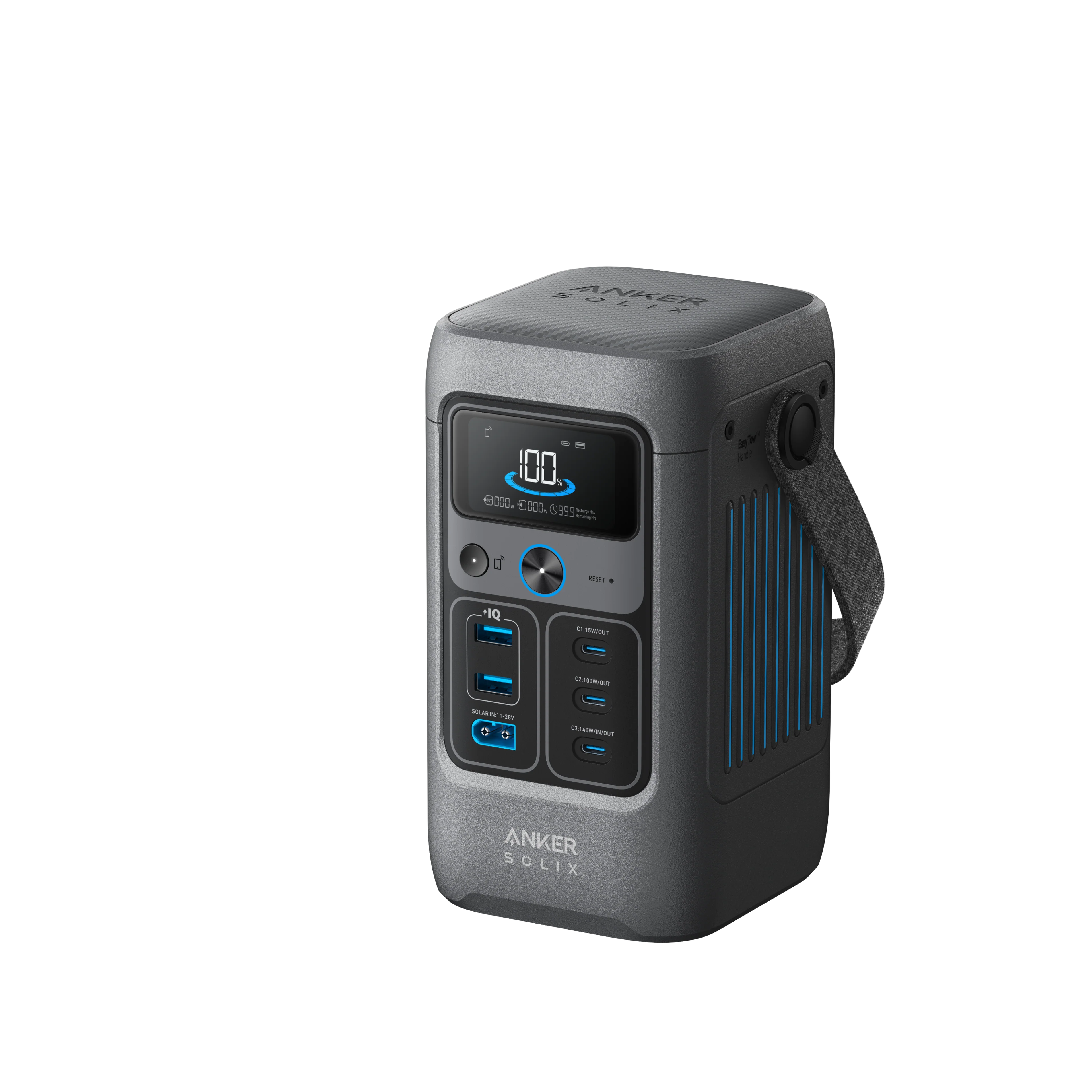
Anker SOLIX C200 DC
Sold on Amazon · today’s price is on the listing
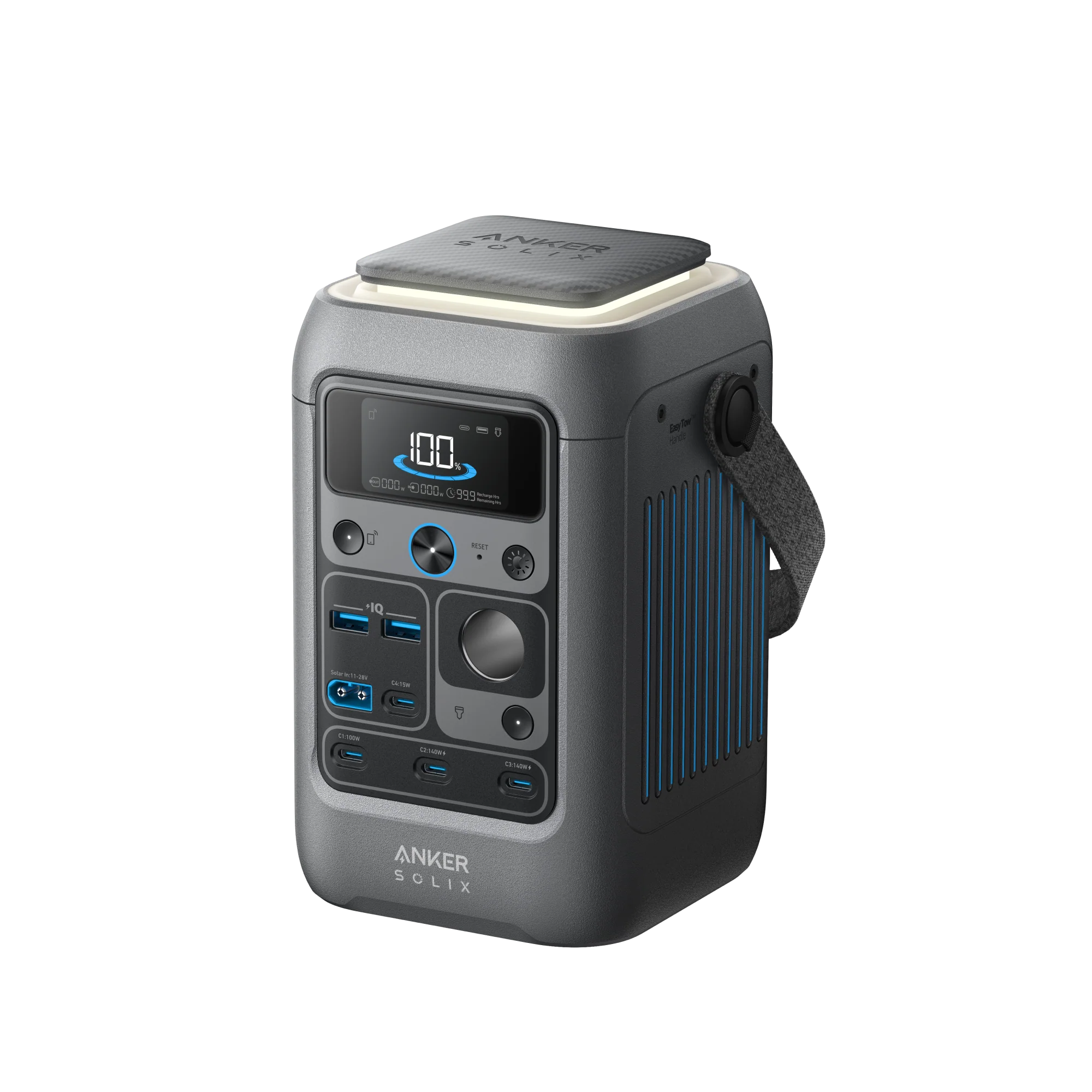
Anker SOLIX C300 DCPick
Sold on Amazon · today’s price is on the listing
Prices may vary by retailer and are subject to change.