Head-to-head test
EcoFlow DELTA Pro Ultra vs BLUETTI EP900 + 4×B500
Pick a tier, not a product: a $4,199 base that covers most houses today, or a $17,298, 589-lb system built for a house that's already outgrown the first one.
Full profiles: EcoFlow DELTA Pro Ultra → · BLUETTI EP900 + 4×B500 →

Written by Gunner GustafsonUpdated
Whole-Home Backup Tester, Station Arena Test Desk
Spec deltas
The EcoFlow DELTA Pro Ultra and the BLUETTI EP900 + 4×B500 aren't fighting for the same buyer. They're two different tiers of whole-home backup that happen to share a comparison page. One is a $4,199 base unit holding 6,144Wh. The other is a $17,298, five-box system holding 19,840Wh, more than 3x the energy, built around an EP900 inverter and four external B500 batteries.
Neither ships to be carried anywhere. The DELTA Pro Ultra alone is 181.8 lbs, heavy, but one box. Add BLUETTI's four batteries to its inverter and the full stack weighs 589 lbs, 407 lbs more, spread across five separate pieces that need a real installation, not a spot by the back door. Owners praise the DELTA Pro Ultra's setup and app monitoringA4, but scale is the bigger story here than any single feature.
For most people reading this, the DELTA Pro Ultra is the buy: a fraction of the price and the weight, and still enough to run a household's essential circuits. The EP900 stack only pulls ahead once your real load justifies 19,840Wh of storage, and at that point, it's also the cheaper option per lifetime kWh: $0.15 against $0.19.
What the Numbers Reveal
Each conclusion stated first — the numbers behind it on one line, the full analysis below.
rated cycles
Spread across each system's full rated life, that flips the ranking: $0.19 per lifetime kWh for the DELTA Pro Ultra against $0.15 for the EP900 stack, even though the EP900 stack costs $13,099 more to buy.
EP900 + 4×B500 costs $0.87 per Wh up front against the DELTA Pro Ultra's $0.65BLUETTI rates the stack for 6,000 cycles against EcoFlow's 3,500
Why it mattersIf you're going to cycle this hard for a decade-plus — daily van life, or a place running mostly on stored solar — the sticker price undersells the EP900 stack. If you're cycling it a few dozen times a year, the sticker price is the only number that matters, and that number favors the DELTA Pro Ultra.
weight
Both systems are expandableA1, but EcoFlow lets you start at 181.8 lbs and one box, adding weight and capacity only once you actually need it, while BLUETTI's entry point already asks you to find structural space for a 589-lb stack before you've stored a single kWh beyond spec.
DELTA Pro Ultra weighs 181.8 lbs as a single boxEP900 + 4×B500 weighs 589 lbs across five separate pieces
Why it mattersIf you don't yet know how much backup your house needs, start light and grow into it. The DELTA Pro Ultra doesn't lock you out of scale laterA1.
Owners describe it running close to silent under lighter loadsA3. Add a 0ms transfer that means sensitive electronics never register the outage at all, and both specs matter most in the same rooms — the ones where BLUETTI's extra 20dBA would also stand out.
DELTA Pro Ultra is rated 30dBA against the EP900 stack's 50dBA under loadDELTA Pro Ultra switches over in 0ms (true online UPS) against the EP900 stack's sub-10ms line-interactive transfer
Why it mattersFor a bedroom, nursery, or home-office install, both specs point the same direction: DELTA Pro Ultra. For a garage or basement, 50dBA under load is background noise against everything else already running out there.
But it's one fact — the EP900 stack holds more than 3x the energy — restated six times against loads that top out at 4,685Wh. Nobody runs out of power on either unit in any of these scenarios; the 'win' is leftover headroom, not a better outcome for your weekend or your blackout.
Van Life Daily's 4,685Wh a day uses 90% of the DELTA Pro Ultra's capacity against 28% of the EP900 stack'sBoth units fully cover all six scenarios tested
Why it mattersDon't let the scenario sweep move your decision on its own. Go back to the two specs that actually diverge at this load size, price and weight, and let those decide.
The specific dimensions that decide these two units — everything else is a tie.
Lifetime Value
Selected because: Price gap ($13,099) and the cost-per-kWh flip are the biggest lever on this page.
cost / lifetime kWh
Sticker price says EcoFlow: $4,199 against $17,298, $13,099 apart and more than 4x the up-front cost. Cost per Wh at checkout still says EcoFlow: $0.65 against $0.87. It's only once you spread each unit across its full rated cycle life that the order flips — $0.19 per lifetime kWh for the DELTA Pro Ultra against $0.15 for the EP900 stack, because BLUETTI's 6,000-cycle rating outlasts EcoFlow's 3,500 by 2,500 cycles.
Both carry a 10-year warranty, so warranty length isn't the variable here — cost is. That decade of coverage works out to $400 a year on the DELTA Pro Ultra and $1,730 a year on the EP900 stack. Run either one daily and the difference shows up in years, too: the DELTA Pro Ultra's rated life runs out around 9.6 years of daily cycling, the EP900 stack's around 16.4. Buy the size you'll actually cycle, not the size that looks better on a spec sheet.
What the Specs Don't Tell You
Selected because: Weight, noise, UPS speed, warranty value, and cycle life all fire and all trace back to one-box vs five-box design.
rated cycles
Five things stand out once you get past the headline specs, and most trace back to the same cause: BLUETTI's is simply more hardware. The EP900 stack is 407 lbs heavier, rated 20dBA louder under load, and takes about 10 milliseconds to switch over on an outage instead of zero — three consequences of wiring four external batteries around one inverter instead of sealing everything into a single box.
The other two gotchas cut the other way. Both units carry the same 10-year warranty, but that coverage costs $400 a year on the DELTA Pro Ultra against $1,730 on the EP900 stack — pure arithmetic on the price gap, not a difference in what's covered. And BLUETTI's cells are rated for 6,000 cycles against EcoFlow's 3,500, which is the one spec on this page that argues for spending more, if you'll actually put the miles on it.
Your Life, Your Pick
Selected because: Needed to show plainly that the six household scenarios barely discriminate at this scale — two are a dead heat and the rest restate one capacity ratio.
Run six household loads through both, and the EP900 stack shows more headroom in four of them, with the other two too small to separate. Weekend Camping needs 2,100Wh: 40% of the DELTA Pro Ultra, 12% of the EP900 stack. Van Life Daily's 4,685Wh a day is the only load that stresses either one at all, using 90% of the DELTA Pro Ultra's capacity against 28% of BLUETTI's.
That's not really six independent verdicts. It's one fact — BLUETTI's battery is more than 3x the size — restated six times against loads that top out at 4,685Wh. CPAP Overnight at 320Wh and Tailgate Party at 670Wh are small enough that both units clear them with room to spare, and the engine correctly refuses to pick a winner there. Neither of these is a unit you carry to the load anyway — at 181.8 lbs and 589 lbs, both are installed, not packed, so treat the scenario math as a sanity check on headroom, not a buying guide for a weekend trip.
Brand Trust
Selected because: Cross-brand pair (sameBrand=false); support reputation is a real differentiator worth naming.
EcoFlow is the bigger company here: a wider lineup across DELTA Pro, DELTA 3, and RIVER 3 lines, plus solar panels and smart-home panels, all built around the same expansion logic as the unit reviewed here. BLUETTI's lineup is nearly as broad but skews toward value, from the budget AC2A up to flagship packs like the B500 batteries in this stack. It's the brand more associated with capacity-per-dollar than with speed or polish.
Support is where the two genuinely diverge, and it's worth knowing before either $4,199 or $17,298 leaves your account. EcoFlow's is US-based and reachable by phone, but the experience is inconsistent: some customers get a prepaid label and a fast swap, others describe long waits or a refurbished unit on a fresh claim. BLUETTI leans on email support out of a different time zone, and the chatter from prospective buyers skews toward hesitation about exactly that, based on secondhand reports rather than lived ownershipB1B2. The one dated data point available is more reassuring: a related unit's firmware issue reportedly closed out in under 24 hoursB3. One practical tip applies to both brands: buying direct from the manufacturer's own site, rather than a third-party reseller, tends to produce the smoother support experience.
Growth Path
Selected because: Both expand the same way; the solar ceiling gap (9,000W vs 5,600W) is the one growth fact that actually discriminates.
solar input
Both systems grow the same way: add batteries, keep the base. So 'expandable' isn't the differentiator here — how far each one goes is. EcoFlow's own literature puts the DELTA Pro Ultra's ceiling at 90kWh across a full system, more than four times what the base unit reviewed here holds aloneA1. BLUETTI's EP900 platform goes further still in the other direction: this stack already sits at 19,840Wh with room to add more B500 packs behind the same inverter.
The real growth difference is in how you'd feed either system from the sun. BLUETTI's stack accepts up to 9,000W of solar; EcoFlow's tops out at 5,600W, a 3,400W gap. If you're planning to go off-grid rather than just backup-ready, that gap compounds every time you add a battery — more panels can charge a bigger bank faster on either side of this comparison, but BLUETTI's ceiling is higher to begin with.
Strengths & trade-offs
EcoFlow DELTA Pro Ultra
Strengths
- +Costs $13,099 less
- +Lighter by 407.2 lb
Trade-offs
- –Weaker inverter (-1,800W) limits appliance compatibility.
- –Very heavy unit that may be difficult for one person to lift.
- –Shorter-lived battery — rated for 3,500 charge cycles vs the EP900 + 4×B500's 6,000, so it wears out sooner.
BLUETTI EP900 + 4×B500
Strengths
- +Larger battery capacity
- +Higher AC output
- +Faster solar charging
- +Rated for 6,000 charge cycles — much longer battery lifespan
Trade-offs
- –Substantially more expensive (+$13,099) than the DELTA Pro Ultra.
- –Significantly heavier (+407.2 lbs), making it harder to move.
- –Very heavy unit that may be difficult for one person to lift.
Will It Power Your Gear?
Scenario math and per-appliance runtimes, modeled from the spec record.
Scenario verdicts
We ran the math on six real-world scenarios. Here's which unit survives your actual life.
SCN-01 · 2 nights · needs 2,100Wh
Weekend Camping
Two nights off-grid with essential comfort
Neither unit
2,100Wh over a weekend uses 40% of the DELTA Pro Ultra's capacity and 12% of the EP900 stack's. Both comfortably finish with power left over, though hauling either one to a campsite was never really the plan.
Battery budget usedlower = more headroom
LOAD Phone Charger 15W×6h · LED Lights 40W×8h · Box Fan 75W×14h · CPAP Machine 40W×16h
SCN-02 · 8 hours · needs 1,645Wh
8-Hour Blackout
Keep the essentials running through a night without power
EP900 + 4×B500
1,645Wh over eight hours is 31% of the DELTA Pro Ultra's capacity and 10% of the EP900 stack's. Either one rides out the outage without stress; the EP900 stack barely notices it happened.
Battery budget usedlower = more headroom
LOAD Fridge 150W×8h · Router + Modem 20W×8h · LED Lights (4 bulbs) 40W×6h · Phone Charger 15W×3h
SCN-03 · 8 hours · needs 320Wh
CPAP Overnight
Sleep therapy without interruption — the #1 medical use case
Either unit
320Wh for a night of CPAP use is 6% of the smaller unit and 2% of the larger one. Both are massive overkill for one bedroom appliance, which is the tell that neither system was sized around it.
Battery budget usedlower = more headroom
LOAD CPAP Machine 40W×8h
SCN-04 · 8 hours · needs 910Wh
Remote Workday
Full work day off-grid without power anxiety
EP900 + 4×B500
A laptop-and-monitor workday at 910Wh costs 17% of the DELTA Pro Ultra's charge and 5% of the EP900 stack's. Both cover a full week of workdays like this without a recharge.
Battery budget usedlower = more headroom
LOAD Laptop 60W×8h · External Monitor 30W×8h · Router + Modem 20W×8h · Phone Charger 15W×2h
SCN-05 · 4 hours · needs 670Wh
Tailgate Party
Game day power for the crew
Neither unit
670Wh for a tailgate setup is 13% of the DELTA Pro Ultra and 4% of the EP900 stack. Neither will be the one that runs out, and neither is realistically what gets loaded into a truck bed for game day.
Battery budget usedlower = more headroom
LOAD Blender 400W×0.5h · LED TV (55") 80W×4h · Bluetooth Speaker 15W×4h · Phone Charger (×3) 45W×2h
SCN-06 · 24 hours · needs 4,685Wh
Van Life Daily
A full day of mobile living — the ultimate endurance test
DELTA Pro Ultra
4,685Wh a day is the load that actually stresses one of these: 90% of the DELTA Pro Ultra's capacity against 28% of the EP900 stack's. This is the one scenario on this page where the size gap is worth planning around, not just noting.
Battery budget usedlower = more headroom
LOAD Mini-Fridge 150W×24h · Laptop 60W×4h · Phone Charger 15W×3h · LED Lights 40W×5h · Fan 75W×8h
The Load Test
RUNTIME = (Wh × 0.85) ÷ LOAD
None of the scenarios above exactly yours? Build it. Toggle what you'd plug in; both units are tested against the combined draw.
Essentials
Comfort & Convenience
High-Draw Appliances
Test duration
8h
Continuous draw
205W
Projected runtime
For this load: EP900 + 4×B500 runs 82.3h vs 25.5h.
$17,298 list · direct from BLUETTI
Planning for more than this? Describe your whole setup and get it sized →
Modeled from the spec record — same math as the tables below. Methodology
Runtime by appliance
Real-world runtime estimates for common appliances, modeled at 85% inverter efficiency.¹
Essentials
The basics you need runningscale 0–1124.3hComfort & Convenience
Makes off-grid life actually enjoyablescale 0–224.9hHigh-Draw Appliances
These reveal the real limitsscale 0–16.9h¹ Runtime = (capacity × 0.85) ÷ appliance watts. Within each group, all bars share one time scale (the group's longest runtime), so lengths are comparable across appliances; identical runtimes collapse into a single blue/orange bar. Actual runtime varies with battery age, temperature, and simultaneous loads — see methodology.
Conclusion
July 28, 2026
Verdict: the EcoFlow DELTA Pro Ultra
The DELTA Pro Ultra wins on the two things that actually gate most buyers: it's $13,099 cheaper and 407 lbs lighter to install, and its 7,200W continuous output already covers a typical home's essential circuits, with an expansion path if needs grow laterA1. BLUETTI's EP900 + 4×B500 is the technically stronger machine on the numbers that reward scale — $0.15 per lifetime kWh against $0.19, a 15,565 power score against 8,600, and more headroom in every scenario tested — but that payoff only arrives once your actual load justifies 19,840Wh of storage and a 589-lb footprint. This is a tier decision, not a head-to-head, and most readers comparing either of these sit in the tier the DELTA Pro Ultra was built for.
Editor-assigned confidence, based on cited owner research and spec analysis.
List prices as of July 28, 2026. The links below open EcoFlow's and BLUETTI's current prices.
$4,199.00 · direct from EcoFlow
Last checked 16 days ago. Prices move — check before you buy.
or check the EP900 + 4×B500 price$17,298.00 list
Written by Gunner Gustafson, Whole-Home Backup Tester · Station Arena Test Desk · Updated July 28, 2026
Black Friday · 38 days out
Prices to beat:DELTA Pro Ultra $3,999EP900 + 4×B500 $17,298
The lowest we have recorded for each. We have never seen the EP900 + 4×B500 discounted, so any real cut on it would be a first.
Measured Data
Benchmark scores and the full spec record, side by side.
Benchmark scores
Full specifications
ᵈ Derived: price ÷ rated capacity. See the data behind our comparisons →
Comparison ToolAdd more power stations, side by sideOpen Tool →How these numbers are produced
Numeric verification
Every figure on this page traces to our spec database or arithmetic on it — no estimated numbers.
Owner claims
Statements about owner experience are cited to published reviews — see Sources & Research Notes below.
Runtime model
Runtime = (rated capacity × 0.85 inverter efficiency) ÷ device wattage. Solar recharge estimates assume panels deliver 70% of rated output. Cold weather, battery age, and stacked loads reduce real-world results.
Power Score
Computed from 14 published spec dimensions, weighted per use-case bench. Higher is better; a unit must meet a bench's minimum threshold to be rated.
See the full weight table and data sourcing on our methodology page →Class ranking (the star rating)
Each unit's star score is a category ranking, not customer reviews — no buyer opinions feed it. We score every station on size-independent quality (value, output, portability, endurance, ports, warranty, and more), then percentile-rank it against the other units in its capacity class, so a class-leading compact unit and a class-leading whole-home unit can both earn 5★. Here, DELTA Pro Ultra rates 4.9/5 (95th percentile of 20 Home Backup-class units), and EP900 + 4×B500 rates 4.3/5 (57th percentile of 29 Whole-Home / Off-Grid-class units).
How the class ranking is computed →Test Notes & Caveats
Hidden gotchas and advantages we spotted that you won't find on the product page.
Two very different lift jobs
The DELTA Pro Ultra is a 181.8-lb single box — a two-person lift, but still one box to place. The EP900 + 4×B500 stack totals 589 lbs across five separate pieces: the EP900 inverter plus four B500 batteries. That's 407 lbs more hardware to position, wire, and support — plan for a dedicated, structurally sound spot, not a corner of the garage floor.
30dBA against 50dBA under load
EcoFlow rates the DELTA Pro Ultra at 30dBA. BLUETTI rates the EP900 stack at 50dBA under load, a noticeably louder fan profile once the inverter is working hard. Neither number rules out a garage or utility-room install, but the gap matters more for anything placed near where people sleep or work.
0ms against sub-10ms switchover
The DELTA Pro Ultra runs as a true online UPS: 0ms switchover, so connected electronics never see a gap. The EP900 stack is line-interactive, switching in under 10ms instead. Most equipment rides through 10ms without a blink — the difference matters most for gear that reboots on any interruption, like some networking equipment or older desktop power supplies.
Same 10 years, different price per year
Both units carry a 10-year warranty, so length isn't what separates them. That coverage works out to $400 a year on the DELTA Pro Ultra and $1,730 a year on the EP900 stack — a direct function of the price gap between them, not a difference in how long either is covered.
3,500 cycles against 6,000
EcoFlow rates the DELTA Pro Ultra's cells for 3,500 cycles to 80 percent capacity. BLUETTI rates the EP900 stack's for 6,000. Cycled daily, that's roughly 9.6 years of rated life against 16.4. It's the entire reason the pricier, heavier system ends up cheaper per lifetime kWh despite costing more up front.
Full record above — the Test Desk pick is the DELTA Pro Ultra.
Check DELTA Pro Ultra price →or check the EP900 + 4×B500 priceOwnership Analysis
What happens after you buy — true cost of ownership, brand trust, and growth potential.
Lifetime value
Service lifeyears at one full cycle per day
Lifetime energy delivered
Cost per delivered kWh
│ warranty ends · Reaching the cycle rating means ~80% capacity remains — degraded, not dead.
Analyst note
The DELTA Pro Ultra is cheaper to buy, but the EP900 + 4×B500 is cheaper to own. At $0.15/kWh over its lifetime vs $0.20/kWh, the EP900 + 4×B500's higher cycle life and capacity make each dollar go further over the years.
Brand trust
EcoFlow
Ecosystem
Largest in portable power — 12-15 models across DELTA Pro, DELTA 3, and RIVER 3 series, plus solar panels and smart home panels
Support
US-based phone/email/chat support (1-800-368-8604). Experiences are polarized — many report hassle-free prepaid-label replacements, but others report long waits and refurbished units sent for new claims. Pro tip: buying from Costco or Amazon gives you a stronger return safety net.
Community
Largest community in the space — Reddit r/Ecoflow_community (~31K members), multiple Facebook groups, and an official community forum
App experience
Rated 4.6/5 iOS (~8,400 ratings) · 4.2/5 Android (~17,000 ratings)
Unique strength
Fastest charging in the category (X-Stream) and the deepest ecosystem in portable power — DELTA Pro, DELTA 3, and RIVER 3 lines plus solar panels and smart home panels, all built around the same expansion logic as this unit.
Worth knowing
Tested subscription paywalls for advanced app features in early 2025 before community backlash paused the plan. No parts or service offered out of warranty.
BLUETTI
Ecosystem
One of the broadest lineups — 15-20+ models from budget (AC2A) to flagship portable (Apex 300, 2764.8Wh). Includes specialized products: vehicle solar hubs, sodium-ion cold-weather units, and balcony storage systems.
Support
The most inconsistent support in the space. Heavily email-based with China timezone delays. Some users get smooth, efficient service; others report weeks of troubleshooting runarounds, being offered discounts on new units instead of repairs, and confusing third-party purchase claim processes. Buying direct from Bluetti's website tends to produce better support outcomes.
Community
Active and growing — Reddit r/bluetti has a dedicated community. Second-largest after EcoFlow in engagement.
App experience
Rated 4.5/5 iOS and Android — tied for best app experience in the category. V3.0 UI redesign was well-received.
Unique strength
Best capacity-to-price ratio in the category, full LFP standardization across the lineup (3,500 to 6,000-plus cycles), and dual-voltage 120V/240V output on flagship packs like the ones in this stack.
Worth knowing
Customer support inconsistency is the #1 risk factor. Older/discontinued units may become unrepairable — no spare parts policy for some models. Some reports of erratic communication from support agents.
Analyst note
Same tier of ambition, different bet: EcoFlow is the bigger ecosystem carrying a more polarized support record, BLUETTI is the leaner value play with the slower, more distant one. Neither fact is enough to flip this decision by itself — price and weight already did that.
Growth path
DELTA Pro Ultra
EXPANDABLESupports EcoFlow expansion batteries, so you can add capacity later without replacing the base unit — useful if your needs may climb past 6,144Wh.
Accepts up to 5,600W of solar. Enough for a serious multi-panel array.
Adequate ports for most setups, but heavy users may want a power strip.
Expansion batteries are EcoFlow-specific. You're investing in the EcoFlow ecosystem.
EP900 + 4×B500
EXPANDABLESupports BLUETTI expansion batteries, so you can add capacity later without replacing the base unit — useful if your needs may climb past 19,840Wh.
Accepts up to 9,000W of solar. Enough for a serious multi-panel array.
Limited ports. You'll likely need a power strip or splitter.
Expansion batteries are BLUETTI-specific. You're investing in the BLUETTI ecosystem.
Realistic full solar rechargeat 70% of rated panel output — see methodology
Analyst note
Both expand, but the EP900 + 4×B500's higher solar ceiling (9,000W vs 5,600W) gives it the stronger off-grid growth path — more panels can feed a bigger bank as it grows.
What Owners Report
Patterns from published owner reports and long-term reviews — every claim cited to its source below.
EcoFlow DELTA Pro Ultra
Owners describe the DELTA Pro Ultra as a powerful, easy-to-use whole-home backup — quick to set up, strong on solar input, with app monitoring good enough to trust day to dayA4. That same inverter is reported to run a full 3-ton central AC unit, which is the kind of load most household backup units never get asked to carryA4.
EcoFlow's fast-charge tech is reported to top up two batteries in around two hours, and the online UPS is described as protecting sensitive electronics around the clock while running close to silent under lighter drawsA3. The LFP pack is rated past 3,500 cycles, which reviewers read as ten-plus years of service lifeA2.
“6,144Wh per battery with 7,200W continuous output (10.8kW surge), expandable to 90kWh across a system for a household — over 30 days of essential backup.”
Sources
ecoflow.com · homedepot.com · autoboosting.com · ecogadgethub.com
BLUETTI EP900 + 4×B500
Field data on the EP900 + 4×B500 stack is thin — this is a newer, niche whole-home system, and most of what's online is pre-purchase Q&A rather than long-term ownership reportsB1B2. The recurring theme before people buy is hesitation about BLUETTI's customer service, based on secondhand reports rather than direct experienceB1B2. The one dated data point on responsiveness available is more reassuring than the reputation: a forum user reports a firmware issue on a related BLUETTI unit, an AC500, resolved in under 24 hoursB3 — not proof of how EP900-specific requests get handled, but a small point in the brand's favor.
The build details that do get specific praise are physical, not digital: a cable system between batteries that stays tidy instead of trailing a foot of loose cableB6B8, and a heavy-duty DC disconnect switch that reviewers expect to outlast a button long-termB7. There's also real skepticism in that same pre-purchase discussion about BLUETTI's outdoor-rating claims — forum users question how the EP900 handles genuine heat or cold if it's mounted outside, and how much power the unit's own electronics draw at idleB4B5. None of this is a confirmed defect. It's buyer hesitation talking, not owner experience, and for a system this expensive, that's still worth knowing before you install one outdoors.
“on paper it's a dream but who knows with Bluetti tech support?”
Sources
diysolarforum.com · lifenhancer.com
Sources & Research Notes
Every owner claim in this report is traceable to a published source. The bracketed references above resolve here.
Recurring owner themes
- Whole-home scale (to 90kWh), 7,200W output, online UPS, silent operation under load, and industry-fast charging are the standout features. [DELTA Pro Ultra · 2 entries]
- Prospective buyers repeatedly express hesitation about Bluetti customer service/support quality before purchasing, based on secondhand reports rather than direct long-term ownership. [EP900 + 4×B500 · 2 entries]
- Forum commenters are skeptical of Bluetti's outdoor-rated marketing claims, especially regarding real-world heat/cold performance and unclear standby power consumption. [EP900 + 4×B500 · 2 entries]
- Physical build details (cable routing, DC disconnect switch) draw specific praise as improvements over older Bluetti portable units. [EP900 + 4×B500 · 3 entries]
- A1
“6,144Wh per battery with 7,200W continuous output (10.8kW surge), expandable to 90kWh across a system for a household — over 30 days of essential backup.”
ecoflow.com / homedepot.com — DELTA Pro Ultra · 2026 · [positive]
- A2
“LFP chemistry rated for over 3,500 cycles to 80% (10+ years of use).”
ecoflow.com / autoboosting.com — DELTA Pro Ultra review · 2026 · [positive]
- A3
“Industry-fast 8,800W charging tops up two batteries in about 2 hours; an online UPS protects sensitive electronics round the clock, and it runs at 0 dB (silent) for draws under 2,000W.”
ecoflow.com / ecogadgethub.com — DELTA Pro Ultra review · 2026 · [positive]
- A4
“Owners call it a powerful, easy-to-use whole-home backup with quick setup, strong solar input, and good app monitoring; its 7,200W inverter can power a 3-ton central AC.”
homedepot.com owner reviews — DELTA Pro Ultra · 2026 · [positive]
- B1
“on paper it's a dream but who knows with Bluetti tech support?”
diysolarforum.com — 'Bluetti EP900' thread · 2023-04 · [mixed]
- B2
“The cost seems really competitive, but I'm concerned about some very negative customer service reviews.”
diysolarforum.com — 'Bluetti EP900' thread · 2023-04 · [negative]
- B3
“last time it took less than 24 hours to resolve a firmware issue with my AC500”
diysolarforum.com — 'Bluetti EP900' thread · 2023-04 · [positive]
- B4
“It may have temperature protections, or even internal heat, but if you need to use it in real heat, or real cold for a string of near solar-less winter days I wouldn't count on it if it's installed outside.”
diysolarforum.com — 'Bluetti EP900 to Power your House' thread · 2023-04 · [negative]
- B5
“Imho, Bluetti marketing is quite unrealistic. I wonder what the units consume themselves.”
diysolarforum.com — 'Bluetti EP900 to Power your House' thread · 2023-04 · [negative]
- B6
“Nice that Bluetti finally came up with a battery cable system between it's batteries that isn't a giant bulky obtrusive cable sticking a foot out. Well done.”
diysolarforum.com — 'Bluetti EP900 to Power your House' thread · 2023-04 · [positive]
- B7
“I really like that there's a heavy-duty DC disconnect on these units rather than a button or switch. This will be much more reliable long term.”
lifenhancer.com — 'Bluetti EP900 Review' · 2025-03 · [positive]
- B8
“There aren't any thick cables sticking out of the side like there are on the AC200, 300, and 500, because they're all run neatly inside the protective covers on the left of the unit.”
lifenhancer.com — 'Bluetti EP900 Review' (owner in Costa Rica, EP900 + 3×B500) · 2025-03 · [positive]
Research compiled July 28, 2026.
Who Should Buy Which
Buy the DELTA Pro Ultra if you…
- →You want serious whole-home backup — enough to run a central AC and keep the essentials alive through a multi-day outage — without spending five figures. At $4,199 and 181.8 lbs in one box, the DELTA Pro Ultra covers a typical house's essential circuits and leaves room to expand later if your needs growA1.
- →You care about a quiet, fast-switching install: a bedroom, a home office, a nursery, somewhere 30dBA and a true 0ms UPS transfer matter more than another 13,696Wh of capacity you'd never touch.
Buy the EP900 + 4×B500 if you…
- →Your real, measured load is already brushing against 6,144Wh a day — a large home running well pumps, HVAC, and full kitchen loads together, or a Van Life Daily-style 4,685Wh draw where the DELTA Pro Ultra would already burn 90% of its capacity in one day. At that scale, the EP900 stack's extra capacity and better lifetime cost-per-kWh start to pay for themselves.
- →You're building, not just backing up: a genuine off-grid or heavy-solar installation where the EP900's 9,000W solar ceiling and 6,000-cycle battery life are worth the extra cost and the 589-lb footprint, because you're going to put real, daily miles on it for over a decade.
If neither fits
If you just need something to run a cooler and charge phones on a camping trip, skip this entire comparison. Both of these are installed, multi-hundred-pound whole-home systems — 181.8 lbs at the low end, 589 lbs at the high end — not gear you pack for a weekend. A single portable power station sized for a trip, not a house, will do that job for a fraction of either price here.
The Bottom Line
Buy the DELTA Pro Ultra: $4,199, 181.8 lbs, quieterA3, and fast enough to switch over that sensitive electronics won't notice the outage, with room to grow if your needs climb laterA1. The EP900 + 4×B500 isn't a worse machine — at $0.15 per lifetime kWh against $0.19, and 19,840Wh against 6,144Wh, it's the more efficient one on paper. It's just built for a bigger job than most readers of this page actually have.
If your real load is already bumping the DELTA Pro Ultra's ceiling, you already know it. Go get the EP900 stack instead. Everyone else: get the box that costs less, weighs less, and still runs the house.
Frequently Asked Questions
Answers drawn from the spec record and cited owner research.
Is the BLUETTI EP900 + 4×B500 actually worth 4x the price of the DELTA Pro Ultra?
Only if you need the capacity. At $17,298 against $4,199, you're paying more than 4x to go from 6,144Wh to 19,840Wh of storage, plus a higher 9,000W continuous output against 7,200W. If your household load stays under about 6,144Wh a day, you're paying for headroom you won't use. If it doesn't, the EP900 stack is also the cheaper option per lifetime kWh, at $0.15 against $0.19.
Can I run central AC off either of these?
Yes. Both are rated well past what a residential AC needs to start and run. The DELTA Pro Ultra's 7,200W continuous output (10,800W surge) is reported to run a 3-ton central AC unit, and the EP900 stack's 9,000W continuous is higher still. Compressor startup surge is the number that actually matters for AC, and EcoFlow publishes 10,800W of it; BLUETTI doesn't publish a separate surge figure for the stack, so confirm your specific compressor's startup draw before you buy either one.
Are both of these actually expandable, or is one of them maxed out?
Both are expandable, in the same direction — each accepts additional external batteries rather than being sealed at its reviewed capacity. The DELTA Pro Ultra's platform is rated up to 90kWh across a full system; the EP900 + 4×B500 stack reviewed here already holds 19,840Wh, and BLUETTI's EP900 platform supports adding more B500 packs beyond the four in this configuration. Neither side loses points for being 'expandable' here, since neither one is sealed.
Which one is quieter?
The DELTA Pro Ultra, by spec. EcoFlow rates it at 30dBA against BLUETTI's 50dBA for the EP900 stack under load, and owners describe it running close to silent under lighter draws. Twenty decibels is a real, audible gap, not a rounding difference, so if this is going anywhere near a bedroom or an office, that's a point in EcoFlow's favor.
Do these come with a warranty, and does it matter which one I buy?
Both carry a 10-year warranty, so coverage length isn't a differentiator here. What differs is what that decade costs relative to the unit: $400 a year on the DELTA Pro Ultra, $1,730 a year on the EP900 stack. That gap is really just the purchase-price difference divided by the same ten years, not a sign either company backs its own product less.
Brand matchup
EcoFlow vs BLUETTI: measured across every matchup →Where to buy
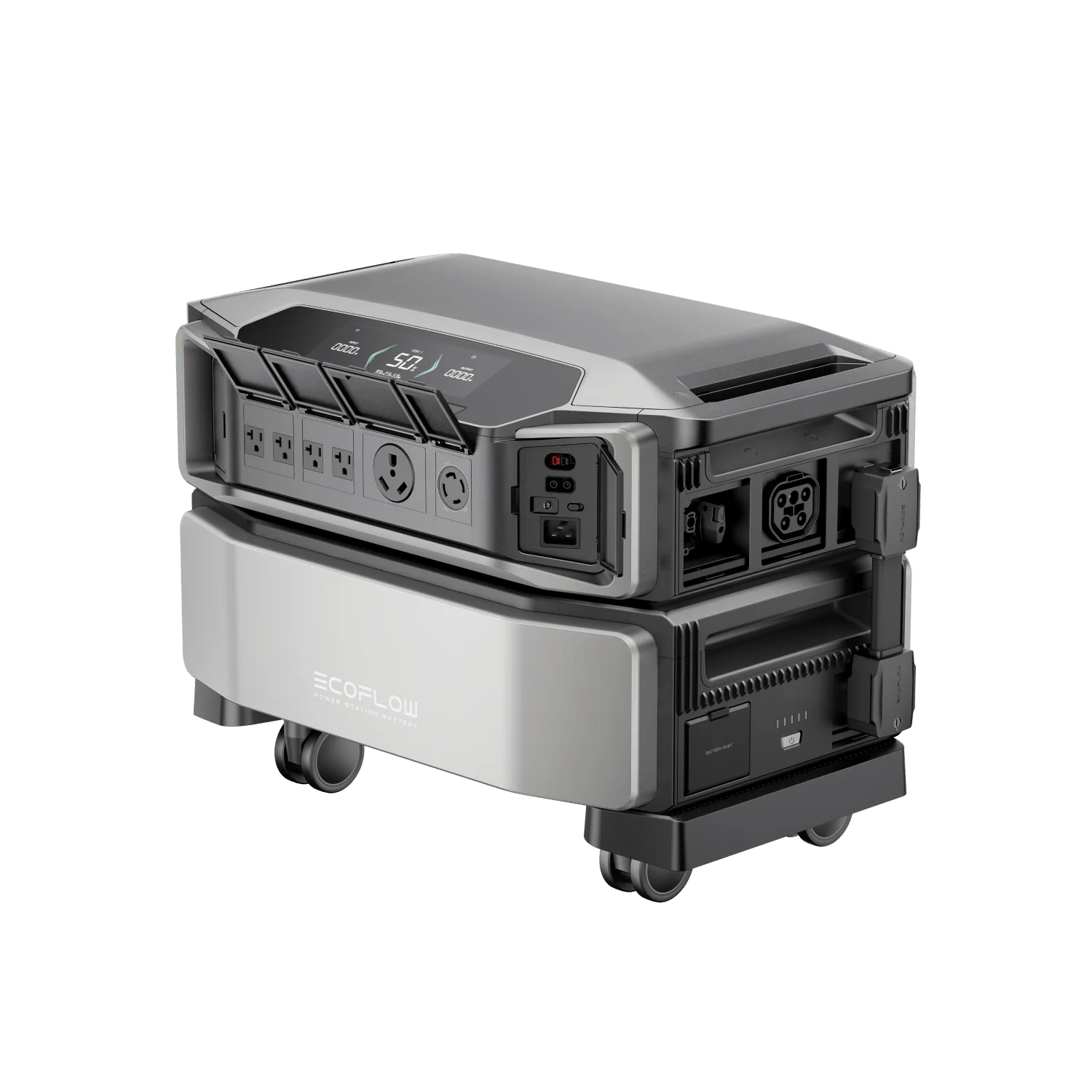
EcoFlow DELTA Pro UltraPick
$4,199.00
$4,199.00 · direct from EcoFlow
Last checked 16 days ago. Prices move — check before you buy.

BLUETTI EP900 + 4×B500
$17,298.00
$17,298.00 · direct from BLUETTI
Last checked 16 days ago. Prices move — check before you buy.
Prices may vary by retailer and are subject to change.