Head-to-head test
EcoFlow DELTA 3 1500 vs EcoFlow DELTA 3 Classic
EcoFlow DELTA 3 1500 vs EcoFlow DELTA 3 Classic: same 1,800W inverter, same 3,600W surge, same 3,000-cycle pack; the 1500 simply held 512Wh more, and EcoFlow no longer sells it. Buy the live Classic unless your day's draw runs near 910Wh, where its 1,024Wh lands 40Wh short and the DELTA 3 Max is the step up.
Full profiles: EcoFlow DELTA 3 1500 → · EcoFlow DELTA 3 Classic →
Looking for a different matchup? EcoFlow DELTA 3 vs DELTA 3 Classic · EcoFlow DELTA 3 vs DELTA 3 1500

Written by Ian SchneiderUpdated
Solar & Off-Grid Tester, Station Arena Test Desk
Spec deltas
EcoFlow has stopped selling the DELTA 3 1500. Its page forwards to the base DELTA 3 and the one listing left is a sold-out solar bundle, so if you came here to pick between these two, the picking is already done. The DELTA 3 Classic is the one you can buy.
The second question is the one worth your time, because EcoFlow didn't only retire a product. Nothing it sells today sits at the 1500's 1,536Wh. The range hands you the Classic's 1,024Wh or it hands you the DELTA 3 Max, and the middle where the 1500 lived is gone. Anyone who searched for this comparison was probably shopping that middle.
The two units on this page were never far apart, which is the good news. Same 1,800W inverter, same 3,600W surge, same 3,000-cycle pack, same five-year term, same 500W solar ceiling, same six AC outlets. The 1500 held 512Wh more and carried 9.3 lbs more to do it. That's the whole argument, and it means the Classic isn't a consolation prize. It's the same unit with less time on the clock.
What the Numbers Reveal
Each conclusion stated first — the numbers behind it on one line, the full analysis below.
Capacity
Derate both to usable energy and the gap shrinks again, to 436Wh (1,306Wh against 870Wh). That's roughly one extra evening of light loads, and exactly one scenario lands inside the band: the Remote Workday, where the Classic misses a 910Wh day by 40Wh while the 1500 finishes with 396Wh spare.
Both units run the same 1,800W inverter and the same 3,600W surge ratingBoth carry a 3,000-cycle pack and a five-year warranty termCapacity is the only real gap: 1,536Wh against 1,024Wh
Why it mattersIf you wanted the 1500 for headroom rather than for an appliance only it could run, the Classic already does the job. If you wanted it because 1,024Wh genuinely runs dry on you, nothing on this page fixes that and the DELTA 3 Max is the step.
On the 500W ceiling they share, the Classic's 1,024Wh is about two hours of ideal sun and the 1500's 1,536Wh about three (1,024 and 1,536 each divided by 500). The smaller pack claws back part of its shortfall every sunny hour, and on grid power one test had it full again inside an hourB1, so the shortfall you read in the capacity column is not the shortfall you live with.
Both units cap solar input at 500WThe 8-hour blackout list needs 1,645Wh; the Classic falls 775Wh short and the 1500 falls 339Wh shortOne hands-on test charged the Classic from empty on a standard wall outlet in just under 55 minutesB1
Why it mattersAnyone buying for outages should budget for a panel alongside the unit, and on that plan the Classic's smaller pack is a much smaller penalty than the spec table suggests.
That's where the two part on evidence rather than specs. The Classic has a published figure, a spec-sheet number rather than a measurement, plus launch-window testing that singled out its fans and its roughly 17W idle draw as better than its price impliedB2B3. The 1500 publishes no figure at all, and the record our researcher could assemble is thin, indirect and mostly paraphrased from search snippetsA0. With the unit off sale you can't go and listen to one either.
A CPAP draws about 40W, so the overnight scenario needs 320Wh: 37% of the Classic's usable energy and 25% of the 1500'sThe Classic publishes a 30dB noise figure; the 1500 publishes noneIndependent field data on the 1500 is thin and largely secondhandA0
Why it mattersThe person buying for a bedside CPAP gets the more knowable unit, and it happens to be the one still for sale.
The specific dimensions that decide these two units — everything else is a tie.
Your Life, Your Pick
Selected because: Six real loads, and they split cleanly: both units cover a 320Wh CPAP night and a 670Wh tailgate, only the 1,536Wh unit covers a 910Wh workday, and neither covers a 4,685Wh van day.
Two of the six rows go to the 1500 and you can't act on either, which sounds like a problem and isn't. Look at what it actually wins: the Remote Workday by 40Wh, and the Tailgate Party on reserve it never needed, since both units run that 670Wh day and start its 400W peak. The rows where 512Wh would have been decisive, the 2,100Wh camping weekend and the 4,685Wh van day, are rows neither unit covers.
So the table's message is about a boundary, not a winner. Everything under about 870Wh of usable draw is solved by the Classic, everything over 1,306Wh is outside both of them, and the band between is the only place the 1500 was ever the answer. If your day lives in that band, you've found the exact reason EcoFlow's lineup now feels like it has a hole in the middle.
Runtime: Will It Power Your Gear?
Selected because: Both run the same 1,800W inverter, so runtime is the only axis these two differ on, and it differs by exactly the capacity ratio of 1,536Wh to 1,024Wh.
There's no trick to the runtime figures here. 1,536 divided by 1,024 is exactly 1.5, and both units drive the same 1,800W inverter, so every hour on the 1500's side is the Classic's multiplied by one and a half. Same loads, same refusals, same surge behaviour. One simply goes longer.
That makes runtime the cleanest way to size this purchase. Take what the Classic gives you on the load you actually care about, add half again, and you have the 1500. If that extra half is the difference between finishing your day and not, this page can't sell it to you, and the DELTA 3 Max is where the conversation continues.
Growth Path
Selected because: The 1500 could take an expansion battery and the Classic is sealed at 1,024Wh, which is the whole question for anyone whose draw is still climbing.
The expansion port is the thing the retirement genuinely took away. A sealed unit is only a limit when the alternative can grow past it, and the alternative here has left the building, so the Classic's 1,024Wh ceiling stops being a comparison and becomes a straight question: is that enough for you?
Answer it before you buy rather than after. Expansion at this size was never a route to backing up a house, it was more hours on the same loads, so the buyer it truly served is the one who would have outgrown 1,536Wh as well. That buyer should be shopping the DELTA 3 Max, not either box on this page.
What the Specs Don't Tell You
Selected because: Four cards fire here, and the two that matter are the UPS ratings (no worse than 10ms against no worse than 15ms) and the fact that only the Classic publishes a noise figure.
Retirement usually costs the reader something, and on switchover it doesn't. The Classic is rated no worse than 10ms against the 1500's no worse than 15ms, both of them ratings rather than measurements, so the unit still for sale is also the one with the shorter rated gap. Anything fussy enough to care, a desktop with unsaved work, is better off on the live unit anyway.
The noise cards are the ones to read twice. The Classic publishes 30dB and the 1500 publishes nothing, which is a gap in disclosure rather than a gap in performance. On a unit still in shops you'd go and listen to one. On this one you can't, which is its own quiet argument for the box whose fan you can still go and hear.
Strengths & trade-offs
EcoFlow DELTA 3 1500
Strengths
- +Larger battery capacity
Trade-offs
- –No major technical downsides compared to rival.
EcoFlow DELTA 3 Classic
Strengths
- +Lighter by 9.3 lb
Trade-offs
- –Sealed capacity — the DELTA 3 1500 can add batteries to grow past 1,024Wh; this one can't.
Will It Power Your Gear?
Scenario math and per-appliance runtimes, modeled from the spec record.
Scenario verdicts
We ran the math on six real-world scenarios. Here's which unit survives your actual life.
SCN-01 · 2 nights · needs 2,100Wh
Weekend Camping
Two nights off-grid with essential comfort
Neither unit
Neither unit covers this scenario's 2,100Wh: the DELTA 3 1500 comes up 794Wh short (about 62% covered), the DELTA 3 Classic 1,230Wh (41%). Treat this as partial cover — enough for the essentials in it, not the whole list.
Battery budget usedlower = more headroom
LOAD Phone Charger 15W×6h · LED Lights 40W×8h · Box Fan 75W×14h · CPAP Machine 40W×16h
SCN-02 · 8 hours · needs 1,645Wh
8-Hour Blackout
Keep the essentials running through a night without power
Neither unit
Neither unit rides out the whole night. The list wants 1,645Wh, and the Classic is 775Wh short of it while the 1500 is 339Wh short, so call it 53% and 79% of an outage. Both are units you refill during the event rather than ride it out on. Since they share the same 500W solar ceiling, the thing worth buying alongside either one is the panel, not the extra capacity.
Battery budget usedlower = more headroom
LOAD Fridge 150W×8h · Router + Modem 20W×8h · LED Lights (4 bulbs) 40W×6h · Phone Charger 15W×3h
SCN-03 · 8 hours · needs 320Wh
CPAP Overnight
Sleep therapy without interruption — the #1 medical use case
Either unit
A CPAP is about 40W, which turns eight hours into 320Wh and makes capacity a non-question. Both finish the night with most of the pack untouched, 37% used against 25%. What you'd actually decide on in the small hours is fan noise, and only the Classic publishes a figure for it. That's a spec-sheet number rather than a measurement, but it's the only one on the table.
Battery budget usedlower = more headroom
LOAD CPAP Machine 40W×8h
SCN-04 · 8 hours · needs 910Wh
Remote Workday
Full work day off-grid without power anxiety
DELTA 3 1500
This is the one row where the 512Wh actually shows up. The day asks 910Wh, the Classic has 870Wh usable and finishes 40Wh short, and its nameplate 1,024Wh would have cleared it before the flat 15% conversion allowance came off. The 1500 takes the row with 396Wh to spare. Forty watt-hours is one coffee run or an hour of a monitor you didn't need, so the Classic is a trim away rather than a mismatch.
Battery budget usedlower = more headroom
LOAD Laptop 60W×8h · External Monitor 30W×8h · Router + Modem 20W×8h · Phone Charger 15W×2h
SCN-05 · 4 hours · needs 670Wh
Tailgate Party
Game day power for the crew
DELTA 3 1500
Both handle game day; the DELTA 3 1500 keeps more in reserve (51% used vs 77%). Tailgating is a light load, though, so the number you'll feel is weight: 26.7 lbs for the DELTA 3 Classic against 36 lbs for the DELTA 3 1500, from the trunk to the setup spot.
Battery budget usedlower = more headroom
LOAD Blender 400W×0.5h · LED TV (55") 80W×4h · Bluetooth Speaker 15W×4h · Phone Charger (×3) 45W×2h
SCN-06 · 24 hours · needs 4,685Wh
Van Life Daily
A full day of mobile living — the ultimate endurance test
Neither unit
Neither unit covers this scenario's 4,685Wh: the DELTA 3 1500 comes up 3,379Wh short (about 28% covered), the DELTA 3 Classic 3,815Wh (19%). This is well outside what either unit is for; the right answer here is a larger station, not a choice between these two.
Battery budget usedlower = more headroom
LOAD Mini-Fridge 150W×24h · Laptop 60W×4h · Phone Charger 15W×3h · LED Lights 40W×5h · Fan 75W×8h
The Load Test
RUNTIME = (Wh × 0.85) ÷ LOAD
None of the scenarios above exactly yours? Build it. Toggle what you'd plug in; both units are tested against the combined draw.
Essentials
Comfort & Convenience
High-Draw Appliances
Test duration
8h
Continuous draw
205W
Projected runtime
For this load: DELTA 3 1500 runs 6.4h vs 4.2h.
Planning for more than this? Describe your whole setup and get it sized →
Modeled from the spec record — same math as the tables below. Methodology
Runtime by appliance
Real-world runtime estimates for common appliances, modeled at 85% inverter efficiency.¹
Essentials
The basics you need runningscale 0–87hComfort & Convenience
Makes off-grid life actually enjoyablescale 0–17.4hHigh-Draw Appliances
These reveal the real limitsscale 0–1.3h¹ Runtime = (capacity × 0.85) ÷ appliance watts. Within each group, all bars share one time scale (the group's longest runtime), so lengths are comparable across appliances; identical runtimes collapse into a single blue/orange bar. Actual runtime varies with battery age, temperature, and simultaneous loads — see methodology.
Conclusion
September 19, 2026
Verdict: the DELTA 3 Classic
Take the DELTA 3 Classic. It's the only one of the two still for sale, and it gives up almost nothing structural to get there: the same 1,800W inverter and 3,600W surge, the same 3,000-cycle pack and five-year term, and a shorter rated UPS switchover than the unit it replaces on this page (no worse than 10ms against no worse than 15ms). What you give up is duration. 870Wh of usable energy against 1,306Wh covers a CPAP night at 37% of the pack and a tailgate at 77%, and covers a working day only if you trim 40Wh off a 910Wh draw. If your real load lives above that line, don't buy the Classic and plan to expand later, because it's sealed at 1,024Wh. The DELTA 3 Max is the unit EcoFlow records as the 1500's successor and the honest answer for that buyer.
Editor-assigned confidence, based on cited owner research and spec analysis.
List prices as of September 19, 2026. The links below open EcoFlow's current price.
$499.00 · direct from EcoFlow
Last checked 16 days ago. Prices move — check before you buy.
Written by Ian Schneider, Solar & Off-Grid Tester · Station Arena Test Desk · Updated September 19, 2026
Black Friday · 38 days out
Price to beat:DELTA 3 Classic $449
The lowest we have recorded. A Black Friday price above it is a sale this unit has already had.
Measured Data
Benchmark scores and the full spec record, side by side.
Benchmark scores
Full specifications
ᵈ Derived: price ÷ rated capacity. See the data behind our comparisons →
Comparison ToolAdd more power stations, side by sideOpen Tool →How these numbers are produced
Numeric verification
Every figure on this page traces to our spec database or arithmetic on it — no estimated numbers.
Owner claims
Statements about owner experience are cited to published reviews — see Sources & Research Notes below.
Runtime model
Runtime = (rated capacity × 0.85 inverter efficiency) ÷ device wattage. Solar recharge estimates assume panels deliver 70% of rated output. Cold weather, battery age, and stacked loads reduce real-world results.
Power Score
Computed from 14 published spec dimensions, weighted per use-case bench. Higher is better; a unit must meet a bench's minimum threshold to be rated.
See the full weight table and data sourcing on our methodology page →Class ranking (the star rating)
Each unit's star score is a category ranking, not customer reviews — no buyer opinions feed it. We score every station on size-independent quality (value, output, portability, endurance, ports, warranty, and more), then percentile-rank it against the other units in its capacity class, so a class-leading compact unit and a class-leading whole-home unit can both earn 5★. Here, DELTA 3 1500 rates 5.0/5 (99th percentile of 27 Everyday-class units), and DELTA 3 Classic rates 4.1/5 (46th percentile of 27 Everyday-class units).
How the class ranking is computed →Test Notes & Caveats
Hidden gotchas and advantages we spotted that you won't find on the product page.
The Classic's Ceiling Is the Box
Here's our pick's real weakness, said before you have to go looking for it: 1,024Wh is all the Classic will ever be. The DELTA 3 1500 could bolt on an expansion battery, and that's precisely the door that closed when EcoFlow stopped selling it. So if you already know your draw is heading past 1,024Wh, buying the Classic and planning to add later isn't a plan. Size up now to the DELTA 3 Max, or look at the DELTA 3 Plus, which is the small EcoFlow that still takes a second battery.
UPS: The Live Unit Is the Faster-Rated One
Retirement usually costs the reader something, and here it doesn't. The DELTA 3 Classic is rated no worse than 10ms on switchover against the DELTA 3 1500's no worse than 15ms, so the unit still for sale is the one with the shorter rated gap. Both figures are ratings rather than lab results, and both should carry a router or a TV through a flicker. If what's plugged in is a desktop with unsaved work, the tighter rated class is the one to want, and it's the one you can still buy.
Warranty: Five Years Each, Same Terms
Both records carry a five-year term, so coverage is a wash and there's nothing here to break the tie with. What is worth checking is who's standing behind it. On a unit still in production the term runs from your purchase; on leftover retailer or refurbished stock of the discontinued DELTA 3 1500, the clock may already have started, or the seller may be carrying the cover rather than EcoFlow. Settle that in writing before any money moves, because five years on paper is only five years if someone is holding the paper.
One Published Noise Figure, One Blank
The DELTA 3 Classic publishes 30dB and the DELTA 3 1500 publishes nothing. That isn't evidence the 1500 is louder, only that there's no number to hold it to, and now that it's off sale there's no showroom unit to go and listen to either. Treat the Classic's figure as what it is, a spec-sheet number rather than a measurement, and as the only disclosure on the table. If you already own a 1500, your own ears are the better instrument at this point.
Full record above — the Test Desk pick is the DELTA 3 Classic.
Check DELTA 3 Classic price →Ownership Analysis
What happens after you buy — true cost of ownership, brand trust, and growth potential.
Lifetime value
Service lifeyears at one full cycle per day
Lifetime energy delivered
Cost per delivered kWh
│ warranty ends · Reaching the cycle rating means ~80% capacity remains — degraded, not dead.
Analyst note
The DELTA 3 1500 is no longer sold, so there is no price to work its cost per kWh from, and this comparison doesn't quote one. On what you can actually buy today, the DELTA 3 Classic works out at $0.16/kWh over its rated life. If you already own the DELTA 3 1500, the hardware comparison still holds: over its rated life the DELTA 3 1500 delivers about 4,608 kWh and the DELTA 3 Classic about 3,072 kWh. One thing to know reading the table: both carry the same 3,000-cycle rating, so the lifetime rows are sticker price and capacity in disguise — the wear horizon is identical and decides nothing here.
Growth path
DELTA 3 1500
EXPANDABLESupports EcoFlow expansion batteries, so you can add capacity later without replacing the base unit — useful if your needs may climb past 1,536Wh.
Accepts up to 500W of solar. Suitable for a 1-2 panel setup.
Generous port selection supports complex multi-device setups.
Expansion batteries are EcoFlow-specific. You're investing in the EcoFlow ecosystem.
DELTA 3 Classic
FIXED CAPACITYFixed at 1,024Wh, with no expansion — so size it for your needs up front rather than planning to add capacity later.
Accepts up to 500W of solar. Suitable for a 1-2 panel setup.
Adequate ports for most setups, but heavy users may want a power strip.
Realistic full solar rechargeat 70% of rated panel output — see methodology
Analyst note
Growth only counts if you can still buy in, and the DELTA 3 1500 is no longer sold (EcoFlow points owners to the DELTA 3 Max). That leaves the DELTA 3 Classic: it is sealed at 1,024Wh, so buy the size that covers you now. The DELTA 3 1500's expandability still matters if you already own one, but it isn't a reason to pick it over the DELTA 3 Classic.
What Owners Report
Patterns from published owner reports and long-term reviews — every claim cited to its source below.
EcoFlow DELTA 3 1500
There is barely a field record for this one, and our researcher says so outright: nothing model-specific on Reddit, YouTube or Amazon, two forum threads that refused a direct fetch, and entries paraphrased from indexed snippets rather than quotedA0. What exists is essentially one thread. In it, a poster relayed a neighbour's run of three failed 1500s inside about eight monthsA1, and the thread's drift was that the DELTA 3 line had drawn more failure reports than the DELTA 2 before itA2. That is secondhand, and it is one room of people, so treat it as a reason to ask hard questions about leftover stock rather than as a verdict on the hardware.
The more concrete note is structural. Posters read the 1500 as a DELTA 2 and DELTA 3 hybrid, older cutover electronics in a newer caseA3, which squares with its no-worse-than-15ms UPS rating sitting behind the Classic'sA5. Idle draw came up as well, with figures ranging from roughly 25 to 30W down to a firmware-cut 17W and nobody certain which applied to the 1500A4; that entry is flagged as possibly describing a sibling SKU, so take it as character rather than spec.
“Posters described the Delta 3 1500 as essentially a Delta 2/Delta 3 hybrid — UPS-cutover electronics carried over from the Delta 2, housed in a new case with what one called "larger grade B cells."”
Sources
diysolarforum.com
EcoFlow DELTA 3 Classic
The Classic's record is early rather than thin. It launched in March 2026, so what exists is launch-window testing rather than owners two winters inB0. The tests that did run liked it: one measured a full wall-outlet charge in just under 55 minutesB1 and idle draw around 17WB2, and went in half-expecting the cooling fans to give the price point awayB3. Reviewers also called out the front-facing port layout, with AC and USB on the face and charging inputs at the backB4, a solid centred handleB11, and the app and its Storm Guard auto-charge as the standout softwareB6B12. One noted it felt noticeably lighter in a motorhome than the DELTA 2 it sits besideB8.
Two outlets independently flagged the same ceiling: 500W is all the solar it takes, which they read as low for a 2026 releaseB5B9. One test ran a small window AC and reported that the 1,800W inverter started it without complaint but the runtime was shortB10, which is the Classic's shape in a single sentence. The retailer reviews in our ledger are mixed in with what look like DELTA 2 comments, including one buyer describing a unit that wasn't what they ordered, so we've kept them out of the reasoningB13B14B15.
“In our tests, the DELTA 3 Classic charged from empty to full plugged into a standard wall outlet in just shy of 55 minutes.”
Sources
thesolarlab.com · vantour.net · smartenergyedge.com · walmart.com
Sources & Research Notes
Every owner claim in this report is traceable to a published source. The bracketed references above resolve here.
Recurring owner themes
- Forum posters flagged the Delta 3 1500 as less reliable than EcoFlow's earlier Delta 2, both from direct failure reports and from its unusual hybrid Delta 2/Delta 3 hardware platform. [DELTA 3 1500 · 3 entries]
- Idle power draw and UPS cutover time are both discussed as possible regressions or open questions relative to the standard Delta 3 / Delta 3 Plus, without firm confirmation for the 1500 variant specifically. [DELTA 3 1500 · 2 entries]
- Multiple independent reviewers note the unit is quieter than expected for its price point, with low idle drain. [DELTA 3 Classic · 2 entries]
- The 500W solar input cap is flagged as a limiting factor by more than one review outlet, seen as low for a 2026-era release. [DELTA 3 Classic · 2 entries]
- Reviewers praise the app and Storm Guard/smart features as standout software elements. [DELTA 3 Classic · 2 entries]
- A1
“A poster's neighbor had three separate Delta 3 1500 units fail on him over roughly eight months.”
diysolarforum.com — "Ecoflow Delta 3 1500 (the newer one), refurbed from EF for $360pt, shipped free" · 2026-02 · [negative]
- A2
“Forum consensus leaned toward the Delta 3 line seeing more failure reports than the Delta 2 — one poster said their two Delta 2 units never gave them a single issue by comparison.”
diysolarforum.com — "Ecoflow Delta 3 1500 (the newer one), refurbed from EF for $360pt, shipped free" · 2026-02 · [negative]
- A3
“Posters described the Delta 3 1500 as essentially a Delta 2/Delta 3 hybrid — UPS-cutover electronics carried over from the Delta 2, housed in a new case with what one called "larger grade B cells."”
diysolarforum.com — "Ecoflow Delta 3 1500 (the newer one), refurbed from EF for $360pt, shipped free" · 2026-02 · [mixed]
- A4
“Idle power draw for the Delta 3 line was debated — some cite roughly 25-30W, others said a firmware update cut it from about 40W to 17W — and posters weren't sure whether the 1500 specifically had received that fix.”
diysolarforum.com — "EcoFlow Delta 3 1500? Any user experiences" and "...refurbed from EF for $360pt" threads · 2026-02 to 2026-03 · [mixed]
- A5
“The Delta 3 1500's UPS cutover was pegged at 15ms in forum discussion, versus a sub-10ms cutover reported for the standard Delta 3 and Delta 3 Plus.”
diysolarforum.com — "EcoFlow Delta 3 1500? Any user experiences" · 2026-03 · [mixed]
- B1
“In our tests, the DELTA 3 Classic charged from empty to full plugged into a standard wall outlet in just shy of 55 minutes.”
thesolarlab.com — EcoFlow DELTA 3 Classic Review: Cheap, Quiet & Useful? · unknown (post-launch 2026) · [positive]
- B2
“We measured the idle draw to be roughly 17W per hour.”
thesolarlab.com — EcoFlow DELTA 3 Classic Review: Cheap, Quiet & Useful? · unknown (post-launch 2026) · [positive]
- B3
“we expected the cooling fans to break that trend given the price point for this unit”
thesolarlab.com — EcoFlow DELTA 3 Classic Review: Cheap, Quiet & Useful? · unknown (post-launch 2026) · [positive]
- B4
“EcoFlow moved back to a more sensible front-facing layout: AC outlets and USB ports on the front, charging inputs on the back”
thesolarlab.com — EcoFlow DELTA 3 Classic Review: Cheap, Quiet & Useful? · unknown (post-launch 2026) · [positive]
- B5
“the screen only showed 500 W input”
vantour.net — EcoFlow Delta 3 Classic: Our review, test and promo code · 3 weeks ago (~June 2026) · [negative]
- B6
“it is clearly one of the best-designed apps on the market”
vantour.net — EcoFlow Delta 3 Classic: Our review, test and promo code · 3 weeks ago (~June 2026) · [positive]
- B8
“It also seems noticeably lighter than the EcoFlow DELTA 2 that we currently have in the motorhome.”
vantour.net — EcoFlow Delta 3 Classic: Our review, test and promo code · 3 weeks ago (~June 2026) · [positive]
- B9
“EcoFlow pushes the fast charging hard, but the DELTA 3 Classic is capped at 500W solar input”
smartenergyedge.com — EcoFlow DELTA 3 Classic Review: Better Than the DELTA 2? · 1 week ago (~July 2026) · [negative]
- B10
“The 1,800W inverter handles the startup surge of a small window AC unit just fine, but the runtime is short.”
smartenergyedge.com — EcoFlow DELTA 3 Classic Review: Better Than the DELTA 2? · 1 week ago (~July 2026) · [mixed]
- B11
“The handle is solid and centered well.”
smartenergyedge.com — EcoFlow DELTA 3 Classic Review: Better Than the DELTA 2? · 1 week ago (~July 2026) · [positive]
- B12
“The Storm Guard auto-charge feature is smart and genuinely useful.”
smartenergyedge.com — EcoFlow DELTA 3 Classic Review: Better Than the DELTA 2? · 1 week ago (~July 2026) · [positive]
- B13
“I have two of these units now and an extra battery for one of them for more runtime.”
walmart.com — Customer reviews for EF EcoFlow DELTA 3 Classical 1000 · unknown · [positive]
- B14
“Loses about 5-10% charge per month when not in use.”
walmart.com — Customer reviews for EF EcoFlow DELTA 3 Classical 1000 (aggregated pros/cons summary) · unknown · [negative]
- B15
“I pay for an Ecoflow delta 2 1024wh but I receive something totally different. An Ecoflow 950 wh that doesn't fit my expertise or what I need.”
walmart.com — Customer reviews for EF EcoFlow DELTA 3 Classical 1000 · unknown · [negative]
Research compiled September 19, 2026.
Who Should Buy Which
Buy the DELTA 3 1500 if you…
- →You already own one. Nothing here is a reason to replace it. 1,536Wh, 1,800W and a 3,000-cycle pack are the same specs that were worth buying, and 4,608 lifetime kWh are still in front of you. Just keep the no-worse-than-15ms UPS rating in mind if a desktop is what's plugged into it.
- →You've turned up retailer or refurbished stock. Compare it honestly against the Classic on this page rather than against its old marketing, then settle the warranty question with the seller in writing, because that's the part that goes soft on a unit the maker no longer lists.
Buy the DELTA 3 Classic if you…
- →You want one box for the power cuts, the camping trips and the desk, and your list is phones, laptops, a router, lights and the fridge for a stretch rather than a whole house. 1,024Wh covers that shape of day, and at $499 the Classic is the only one of these two you can put in a cart.
- →You're the one carrying it. 26.7 lbs is a one-hand lift from the trunk to the picnic table; the 1500's 36 lbs is a both-hands job you feel on the third trip. Across a season of tailgates, that 9.3 lbs is what you notice, not the 512Wh.
- →Your CPAP sits an arm's length from your head. The night costs about 320Wh and leaves 550Wh in the tank, so this is the rare purchase where the smaller unit is already oversized for the job and the published noise figure matters more than the capacity column.
If neither fits
Van life, or a genuinely off-grid day. That load comes to 4,685Wh, of which the Classic covers 19% and the 1500 28%, so this is a two-sizes-larger problem and neither box is the answer. The same goes for the full 2,100Wh camping weekend, which leaves even the 1500 794Wh short. Start above what either of these holds, which on EcoFlow's shelf means the DELTA 3 Max or bigger.
The Bottom Line
The DELTA 3 Classic is the pick because it's the one you can buy, and the better news is how little it asks you to give up for that. Same 1,800W inverter, same 3,600W surge, same 3,000 cycles, same five years of cover, and the shorter rated switchover of the two. What the 1500 held over it was 512Wh, which comes out as 436Wh of usable energy and a single 40Wh miss on a working day.
The honest version of this page is that EcoFlow removed a size, not just a product. If 1,024Wh is your ceiling, take the Classic and stop reading. If it isn't, don't buy it and plan to grow into it, because it's sealed. Go and look at the DELTA 3 Max.
Frequently Asked Questions
Answers drawn from the spec record and cited owner research.
Is the EcoFlow DELTA 3 1500 discontinued?
Yes. EcoFlow has folded it out of the range, its product page forwards to the base DELTA 3, and the one listing left is a sold-out solar bundle. Nothing EcoFlow currently sells sits at the 1500's 1,536Wh. The DELTA 3 Max is the nearest live unit to what it covered.
What should I buy instead of the DELTA 3 1500?
There are two directions, because the size in the middle is gone. If your loads fit inside 1,024Wh, the DELTA 3 Classic on this page runs the same 1,800W inverter and the same 3,600W surge the 1500 did, in a body 9.3 lbs lighter. If they don't, the DELTA 3 Max is the step up and the unit EcoFlow records as the 1500's successor.
Is 1,024Wh enough for a power outage?
For part of one. Our 8-hour blackout list comes to 1,645Wh, and the DELTA 3 Classic delivers 870Wh usable after the flat 15% conversion allowance, so it covers a little over half the night. Think fridge, lights, phones and a router rather than the whole list. Neither of these two clears that night outright; the 1500 reaches 79%, which is why a recharge source matters more than the last few hundred watt-hours.
Is the EcoFlow DELTA 3 Classic expandable?
No. It's sealed at 1,024Wh with no extra battery available for it. The 1500 was the expandable one of this pair, which no longer helps anyone who can't buy it. If you want a growth path at this size, the DELTA 3 Plus is the EcoFlow that still takes a second battery; if you want more base capacity outright, that's the DELTA 3 Max.
Should I buy leftover or refurbished DELTA 3 1500 stock?
Go in with your eyes open. The specs are real and still good: 1,536Wh, an 1,800W inverter, 3,600W of surge and a 3,000-cycle pack. But the independent record on this exact model is thin and mostly secondhand, and the single forum thread that discusses it carried a relayed account of three units failing inside about eight months alongside a general sense that the DELTA 3 line drew more failure reports than the DELTA 2. Confirm who honours the five-year warranty before you buy, since that's the part a discontinued unit most often loses.
Where to buy
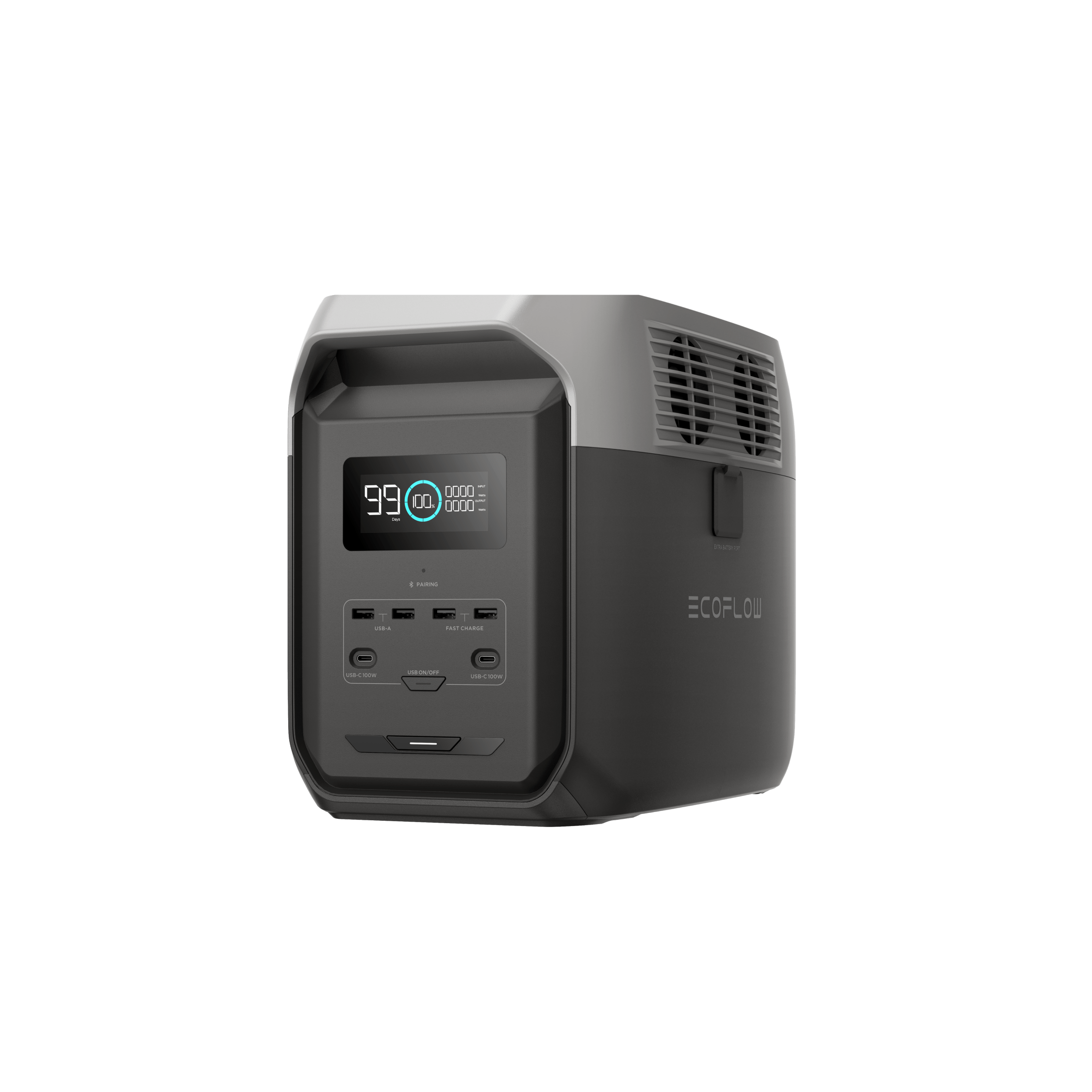
EcoFlow DELTA 3 1500
No longer sold

EcoFlow DELTA 3 ClassicPick
$499.00
$499.00 · direct from EcoFlow
Last checked 16 days ago. Prices move — check before you buy.
Prices may vary by retailer and are subject to change.