Head-to-head test
Anker SOLIX C1000X Gen 2 vs Anker SOLIX C2000 Gen 2
These two are the same pack, the same warranty and the same ports at two sizes, so the only question is whether your real loads fit inside the C1000X's 870 usable watt-hours: a work-from-home day misses by 40Wh and an eight-hour outage by 775.
Full profiles: Anker SOLIX C1000X Gen 2 → · Anker SOLIX C2000 Gen 2 →

Written by Ian SchneiderUpdated
Solar & Off-Grid Tester, Station Arena Test Desk
Spec deltas
The C2000 Gen 2 is the one to buy at $1,000, and not because it is the fancier box. Both units are rated for at least 4,000 cycles, both carry a five-year term, both cap USB-C at 140W, and both switch over to battery no worse than 10ms. What the extra $400 changes is the one spec that changes what you can actually run: 2,048Wh instead of 1,024Wh.
Doubling the battery costs less than the first half did. $1,000 against $600 is $400 for another 1,024Wh, about 39 cents a watt-hour, where the energy already inside the C1000X works out near 59 cents. Because the cycle rating is identical, that cheaper energy compounds: 12 cents a lifetime kilowatt-hour against 15. Read that once and the price argument is over.
The C1000X's case is 16.8 lbs and a short refill window. At 24.9 lbs you pick it up with one hand and load it without thinking; at 41.7 lbs you plan the trip. If your loads fit inside 870 usable watt-hours, the smaller unit is the better object to own. If you are shopping because the power goes out, they do not fit, and that is the whole page.
What the Numbers Reveal
Each conclusion stated first — the numbers behind it on one line, the full analysis below.
Capacity
Because the cycle rating is the same on both packs, the cheaper energy compounds across the whole life: 8,192 kWh of rated throughput against 4,096, or 12 cents a lifetime kilowatt-hour against 15. The C2000 is not a premium version of the C1000X. It is the same deal in a larger size, with the discount applied to everything after the first kilowatt-hour.
SOLIX C1000X Gen 2: $600 for 1,024Wh, rated at least 4,000 cyclesSOLIX C2000 Gen 2: $1,000 for 2,048Wh, rated at least 4,000 cyclesIdentical five-year terms and identical 140W USB-C on both
Why it mattersIf the $400 is findable and you are not hauling the unit every weekend, stop comparing sticker prices and buy the C2000.
40Wh is one small appliance you skip at lunch. 775Wh is not a habit you can change, and with capacity sealed there is no pack to bolt on later when you find out. The C1000X is a unit you have to size correctly on day one, for loads you already know, because day one is the only chance you get.
C1000X Gen 2: 1,024Wh nameplate, 870Wh after the flat 15% allowance applied to every unit hereRemote Workday profile needs 910Wh; the 8-Hour Blackout profile needs 1,645WhC1000X Gen 2 is sealed at 1,024Wh with no expansion battery
Why it mattersAnyone shopping because of outages should take the C1000X off the list here, whatever its other merits.
The variable beside your bed is not which unit you bought, it is whether that unit is also recharging in the same room. Both have capacity to spare for a 40W night, and both get louder the harder you push them, so the bedroom rule is identical either way: refill it during the day and let it idle at low draw overnight.
CPAP Overnight needs about 320Wh (40W for eight hours), 37% of the C1000X's usable energyAnker publishes 30dB for the C2000 and no noise figure at all for the C1000XField reports on the C1000X: near-silent under light load, clearly audible under heavy output or fast chargingA1A2
Why it mattersCPAP buyers can take the cheaper, lighter C1000X and charge it somewhere other than the bedroom.
solar input
On solar the advantage mostly evaporates. 800W into 2,048Wh is about two and a half hours of strong sun, against a shade under two for 600W into 1,024Wh, so twice the battery costs well under an hour more daylight. Capacity is nearly free on a good solar day; speed is only worth paying for at a wall socket in a narrow window.
C1000X Gen 2 accepts 600W of solar into 1,024Wh; C2000 Gen 2 accepts 800W into 2,048WhThe C1000X's headline 49-minute wall recharge only happens once UltraFlash is switched on in the Anker appA5Reviewers put the X's premium over the standard C1000 Gen 2 down to recharge speed rather than capacityA8
Why it mattersRefilling from panels, buy the capacity and ignore the badge. Refilling in a two-hour window at the wall, the X is what that premium is for, and you still have to turn the mode onA5.
The specific dimensions that decide these two units — everything else is a tie.
Runtime: Will It Power Your Gear?
Selected because: Usable energy is the only spec that separates these two: 870Wh against 1,741Wh after the flat 15% allowance we apply to every unit.
continuous output
Half the battery is not half the flexibility, it is a different class of job. 870 usable watt-hours runs one demanding thing well, or several small things through an evening. 1,741 runs the small things all night and still has most of a second day in it. Neither figure is a measurement, both come off the same flat 15% allowance, so at least the comparison is clean.
Where that bites is the middle of the range, not the extremes. A 910Wh work-from-home day sits inside the C1000X's 1,024Wh nameplate and outside its usable figure by 40Wh, which is one appliance you never thought about. The C2000 simply never puts you in that arithmetic.
Your Life, Your Pick
Selected because: The C2000 covers four of these six load profiles and the C1000X two, and the misses are where the $400 goes.
The C1000X clears two of the six profiles here, and both are light duty: game day and a CPAP night. The C2000 clears four. The two it misses, a 2,100Wh camping weekend and a 4,685Wh van-life day, it misses alongside the C1000X, which tells you where the ceiling of this whole size class sits rather than anything about these two.
Its win on the blackout profile is narrower than it looks, and worth saying out loud before you spend. 96Wh of margin on a 2,048Wh pack is under 5%, so one forgotten lamp turns that pass into a fail. That thin margin is the best argument on the page for the expansion battery the C2000 can take and the C1000X cannot.
Lifetime Value
Selected because: The more expensive box is the cheaper energy here, at 12 cents a lifetime kilowatt-hour against 15.
cost / lifetime kWh
The pricier box is the cheaper energy, which is the usual shape once cycle ratings match. Both packs are rated for at least 4,000 cycles, so the C2000 carries 8,192 kWh of rated throughput against the C1000X's 4,096 for $400 more. Cost per warranty year runs the other way, $200 against $120, and that is the one column describing your outlay rather than what you get for it.
Neither of these is disposable. At weekend use the rated cycle life runs past 38 years on both, which is the polite way of saying the cycle spec has stopped being a differentiator and price per watt-hour is all that is left.
Portability & Form Factor
Selected because: 16.8 lbs is the entire case for the smaller unit: 24.9 lbs against 41.7 lbs, every trip.
weight
16.8 lbs is the only number on this page arguing for the smaller unit, and it argues hard. 24.9 lbs comes out of the trunk in one hand. 41.7 lbs is both hands, a straight back, and a decision about where you are going to set it down, because you will not want to move it twice. Owners already call the C1000X's handle fine for short moves and two-handed over any distanceA6, so treat the C2000 as furniture you relocate rather than a box you grab.
What the Specs Don't Tell You
Selected because: Two flags matter on this pair, the C1000X's sealed 1,024Wh and its missing noise figure; the warranty flag is identical on both units.
Two flags matter here and one is bookkeeping. The sealed capacity on the C1000X is permanent, and it is the point raised most consistently in the field, since the original C1000X accepted an add-on pack and this generation quietly dropped itA3A10. The warranty flag is noise in the numbers: identical five-year terms on both, so any cover-per-dollar figure is just the price gap in a different costume.
The missing noise figure deserves care rather than suspicion. Anker publishes 30dB for the C2000 and nothing for the C1000X, which leaves no number to hold the smaller unit to and no honest way to compare them on it. Field reports fill part of the gap: near-silent under light load, and loud enough under heavy output or fast charging that you would not sleep beside itA1A2. That is a load question rather than a unit question, and it applies to the C2000 too.
Strengths & trade-offs
Anker SOLIX C1000X Gen 2
Strengths
- +Costs $400 less
- +Lighter by 16.8 lb
Trade-offs
- –Sealed capacity — the SOLIX C2000 Gen 2 can add batteries to grow past 1,024Wh; this one can't.
Anker SOLIX C2000 Gen 2
Strengths
- +Larger battery capacity
- +Higher AC output
- +Faster solar charging
Trade-offs
- –Substantially more expensive (+$400) than the SOLIX C1000X Gen 2.
- –Significantly heavier (+16.8 lbs), making it harder to move.
Will It Power Your Gear?
Scenario math and per-appliance runtimes, modeled from the spec record.
Scenario verdicts
We ran the math on six real-world scenarios. Here's which unit survives your actual life.
SCN-01 · 2 nights · needs 2,100Wh
Weekend Camping
Two nights off-grid with essential comfort
Neither unit
A 2,100Wh weekend is more than either of these carries. The C2000 gets 83% of the way there and the C1000X 41%, which in practice means the big one drops an item off the list and the small one drops half the list. Treat both as partial cover, size the weekend to what you will actually run, and bring a panel if the second night matters.
Battery budget usedlower = more headroom
LOAD Phone Charger 15W×6h · LED Lights 40W×8h · Box Fan 75W×14h · CPAP Machine 40W×16h
SCN-02 · 8 hours · needs 1,645Wh
8-Hour Blackout
Keep the essentials running through a night without power
SOLIX C2000 Gen 2
The C2000 finishes this one with 96Wh left, and on a 2,048Wh pack that is under 5% in reserve. It is a pass, not a comfortable one. The C1000X does not finish at all: 870 usable watt-hours against the 1,645 this list needs leaves it 775Wh short, so it becomes a device-and-lights unit rather than an essentials unit. If your outages run longer than eight hours, the expansion batteries are the reason to buy the C2000, not its nameplate.
Battery budget usedlower = more headroom
LOAD Fridge 150W×8h · Router + Modem 20W×8h · LED Lights (4 bulbs) 40W×6h · Phone Charger 15W×3h
SCN-03 · 8 hours · needs 320Wh
CPAP Overnight
Sleep therapy without interruption — the #1 medical use case
Either unit
A 40W CPAP for eight hours is about 320Wh, which is 37% of the C1000X's usable energy and 18% of the C2000's, so capacity settles nothing here. Noise would, except only the C2000 publishes a figure, and 30dB is a spec-sheet floor rather than a microphone reading. That leaves the C1000X asking you to buy a fan you have not heard, which is a fair thing to hold against it and not the same as calling it loud. Judge either unit at CPAP-scale draw, keep the charging out of the bedroom, and decide on weight and price.
Battery budget usedlower = more headroom
LOAD CPAP Machine 40W×8h
SCN-04 · 8 hours · needs 910Wh
Remote Workday
Full work day off-grid without power anxiety
SOLIX C2000 Gen 2
The C1000X misses this by 40Wh, and the miss is an accounting one: its 1,024Wh nameplate clears the 910Wh day outright, and the flat 15% conversion allowance we apply to every unit is what tips it under. Skip one small appliance at lunch and it finishes. The C2000 lands with 831Wh spare, which is the difference between rationing and not thinking about it.
Battery budget usedlower = more headroom
LOAD Laptop 60W×8h · External Monitor 30W×8h · Router + Modem 20W×8h · Phone Charger 15W×2h
SCN-05 · 4 hours · needs 670Wh
Tailgate Party
Game day power for the crew
SOLIX C2000 Gen 2
Both cover game day, so the reserve gap (38% used against 77%) is bookkeeping you will never feel. What you will feel is the walk from the car: 24.9 lbs in one hand against 41.7 lbs in two. The 400W peak this profile asks for is nothing to either inverter. The C2000 wins the metric because it holds more back, and at a tailgate you are never going to need what it held back.
Battery budget usedlower = more headroom
LOAD Blender 400W×0.5h · LED TV (55") 80W×4h · Bluetooth Speaker 15W×4h · Phone Charger (×3) 45W×2h
SCN-06 · 24 hours · needs 4,685Wh
Van Life Daily
A full day of mobile living — the ultimate endurance test
Neither unit
Neither unit covers this scenario's 4,685Wh: the SOLIX C1000X Gen 2 comes up 3,815Wh short (about 19% covered), the SOLIX C2000 Gen 2 2,944Wh (37%). This is well outside what either unit is for; the right answer here is a larger station, not a choice between these two.
Battery budget usedlower = more headroom
LOAD Mini-Fridge 150W×24h · Laptop 60W×4h · Phone Charger 15W×3h · LED Lights 40W×5h · Fan 75W×8h
The Load Test
RUNTIME = (Wh × 0.85) ÷ LOAD
None of the scenarios above exactly yours? Build it. Toggle what you'd plug in; both units are tested against the combined draw.
Essentials
Comfort & Convenience
High-Draw Appliances
Test duration
8h
Continuous draw
205W
Projected runtime
For this load: SOLIX C2000 Gen 2 runs 8.5h vs 4.2h.
Sold on Amazon
Planning for more than this? Describe your whole setup and get it sized →
Modeled from the spec record — same math as the tables below. Methodology
Runtime by appliance
Real-world runtime estimates for common appliances, modeled at 85% inverter efficiency.¹
Essentials
The basics you need runningscale 0–116.1hComfort & Convenience
Makes off-grid life actually enjoyablescale 0–23.2hHigh-Draw Appliances
These reveal the real limitsscale 0–1.7h¹ Runtime = (capacity × 0.85) ÷ appliance watts. Within each group, all bars share one time scale (the group's longest runtime), so lengths are comparable across appliances; identical runtimes collapse into a single blue/orange bar. Actual runtime varies with battery age, temperature, and simultaneous loads — see methodology.
Conclusion
September 13, 2026
Verdict: the SOLIX C2000 Gen 2, on Power Score margin
Buy the C2000 Gen 2. It covers four of the six load profiles here against the C1000X's two, it is the only one of the pair that finishes the 8-hour blackout, and the $400 step buys the cheapest watt-hours either unit sells. Everything else on the two spec sheets matches: at least 4,000 cycles, five years of cover, 140W USB-C, UPS switchover no worse than 10ms. Take the C1000X instead if you carry the unit more than you lean on it, or if your whole list genuinely fits under 870 usable watt-hours, because 16.8 lbs is a real difference and a fast wall refill is what the X premium actually buysA8A5. If your day looks like the van-life profile at 4,685Wh, neither of these is the answer.
Editor-assigned confidence, based on cited owner research and spec analysis.
List prices as of September 13, 2026. The links below open Anker's current price.
Sold on Amazon · today’s price is on the listing
or check the SOLIX C1000X Gen 2 price$699.99 list
Written by Ian Schneider, Solar & Off-Grid Tester · Station Arena Test Desk · Updated September 13, 2026
Black Friday · 38 days out
Price to beat:SOLIX C1000X Gen 2 $600
We have never seen it discounted, so any real cut would be a first.
Measured Data
Benchmark scores and the full spec record, side by side.
Benchmark scores
Full specifications
ᵈ Derived: price ÷ rated capacity. See the data behind our comparisons →
Comparison ToolAdd more power stations, side by sideOpen Tool →How these numbers are produced
Numeric verification
Every figure on this page traces to our spec database or arithmetic on it — no estimated numbers.
Owner claims
Statements about owner experience are cited to published reviews — see Sources & Research Notes below.
Runtime model
Runtime = (rated capacity × 0.85 inverter efficiency) ÷ device wattage. Solar recharge estimates assume panels deliver 70% of rated output. Cold weather, battery age, and stacked loads reduce real-world results.
Power Score
Computed from 14 published spec dimensions, weighted per use-case bench. Higher is better; a unit must meet a bench's minimum threshold to be rated.
See the full weight table and data sourcing on our methodology page →Class ranking (the star rating)
Each unit's star score is a category ranking, not customer reviews — no buyer opinions feed it. We score every station on size-independent quality (value, output, portability, endurance, ports, warranty, and more), then percentile-rank it against the other units in its capacity class, so a class-leading compact unit and a class-leading whole-home unit can both earn 5★. Here, SOLIX C1000X Gen 2 rates 4.0/5 (38th percentile of 27 Everyday-class units), and SOLIX C2000 Gen 2 rates 4.1/5 (48th percentile of 26 Large-class units).
How the class ranking is computed →Test Notes & Caveats
Hidden gotchas and advantages we spotted that you won't find on the product page.
The C1000X's ceiling is the box itself
1,024Wh is what you get, permanently: no add-on pack, no change of mind in eighteen months. That only counts against it if you expect to outgrow it, and plenty of buyers never do. The C2000 takes expansion batteries, and from 2,048Wh upward that path points at partial-home backup rather than a bigger camping battery. Size the C1000X for the loads you have today, because today is all it will ever cover.
Same five years, so it settles nothing
Both units list up to five years, identical terms, which makes warranty the one column that cannot break this tie. Be wary of cover-per-dollar framings of it too: the spread they show is the price gap wearing a warranty costume, not better protection on the cheaper unit. The headline term is a maximum, so read the registration conditions on whichever one you buy before you count on all five years.
No published noise figure for the C1000X
Anker publishes 30dB for the C2000 and nothing at all for the C1000X. That is a gap in the paperwork rather than evidence the smaller unit is loud, and two units cannot be compared on a number only one of them has. The 30dB is also a spec-sheet floor rather than a measurement, and the fans in any of these climb as output and charge current climb. If it is going in a bedroom or next to a CPAP, look for hands-on noise reports on the C1000X before you commit, and plan to do the recharging in another room.
Full record above — the Test Desk pick is the SOLIX C2000 Gen 2.
Check SOLIX C2000 Gen 2 price →or check the SOLIX C1000X Gen 2 priceOwnership Analysis
What happens after you buy — true cost of ownership, brand trust, and growth potential.
Lifetime value
Service lifeyears at one full cycle per day
Lifetime energy delivered
Cost per delivered kWh
│ warranty ends · Reaching the cycle rating means ~80% capacity remains — degraded, not dead.
Analyst note
The SOLIX C1000X Gen 2 is cheaper to buy, but the SOLIX C2000 Gen 2 is cheaper to own. At $0.12/kWh over its lifetime vs $0.15/kWh, the SOLIX C2000 Gen 2's higher cycle life and capacity make each dollar go further over the years. One thing to know reading the table: both carry the same 4,000-cycle rating, so the lifetime rows are sticker price and capacity in disguise — the wear horizon is identical and decides nothing here.
Growth path
SOLIX C1000X Gen 2
FIXED CAPACITYFixed at 1,024Wh, with no expansion — so size it for your needs up front rather than planning to add capacity later.
Accepts up to 600W of solar. Suitable for a 1-2 panel setup.
Adequate ports for most setups, but heavy users may want a power strip.
SOLIX C2000 Gen 2
EXPANDABLESupports Anker expansion batteries, so you can add capacity later without replacing the base unit — useful if your needs may climb past 2,048Wh.
Accepts up to 800W of solar. Suitable for a 1-2 panel setup.
Adequate ports for most setups, but heavy users may want a power strip.
Expansion batteries are Anker-specific. You're investing in the Anker ecosystem.
Realistic full solar rechargeat 70% of rated panel output — see methodology
Analyst note
The SOLIX C1000X Gen 2 is sealed at 1,024Wh, which is fine if that covers you. The SOLIX C2000 Gen 2 starts at 2,048Wh and can grow beyond it with Anker expansion batteries — real headroom the SOLIX C1000X Gen 2 doesn't have if your needs climb toward partial-home backup.
What Owners Report
Patterns from published owner reports and long-term reviews — every claim cited to its source below.
Anker SOLIX C1000X Gen 2
Field data on this exact SKU is thinA0. Our researcher found no forum threads specific to the C1000X Gen 2, and the retailer review pages that were reachable are close paraphrases rather than quotesA0, so read the sentiment and not the wording. What exists agrees on the fans being load-dependent: a review describes it as near-silent below 200W, citing 0 to 20dB (a review's own figure, not an Anker spec)A2, while heavy load brings them up loud enough that you would not want it in the bedroom overnightA1.
The praise clusters on recharge. Owners report it arriving nearly charged and refilling fast at the wall, which matters when your power window is shortA4, with the caveat that the 49-minute headline number needs UltraFlash enabled in the app firstA5. A minority mention occasional charging hiccups without describing themA9. The most consistent complaint is not about performance at all: this generation dropped the external expansion battery the original C1000X accepted, and both owners and the dedicated review are sore about itA3A10. One reviewer also notes the 10ms switchover ceiling sits below where a desktop loses its session or a NAS risks corruptionA7.
“Near-silent under light loads — rated 0 to 20dB under 200W — quiet enough for an office or bedroom when it's just sitting idle or trickle-charging.”
Sources
backuppowerhub.com
Anker SOLIX C2000 Gen 2
Coverage on the C2000 Gen 2 is uniformly positive, but it comes from hands-on review sites rather than long-term owners, with nothing past six months of ownership in hand yetB0B4. Quiet running is the recurring note: fans that stay a backgroundable whirr even at full power, touching roughly 35dB at a metre only occasionally under high loadB1. That is the rare case where a published 30dB floor and the field experience point the same direction.
Setup is described as plug in and go, with no firmware ritual or voltage odditiesB2, and the Solix app treated as a decent monitor over Bluetooth or Wi-Fi rather than something you need in order to use the unitB3. Reviewers also make much of the Gen 2 being substantially lighter than the original C2000B5, which is true and worth knowing if you are reading older reviews. It is still 41.7 lbs.
“Even at full power it's far quieter than any other powerful Anker station tested — the fans never rise above a subdued, easily-backgrounded whirr, working largely silently and only occasionally reaching a pleasantly quiet ~35 dB at 1 m under high load.”
Sources
notebookcheck.net · thesolarlab.com · trustedreviews.com · androidguys.com
Sources & Research Notes
Every owner claim in this report is traceable to a published source. The bracketed references above resolve here.
Recurring owner themes
- Fans are near-silent at light loads but become loud enough to disturb sleep once output or AC charge current climbs. [SOLIX C1000X Gen 2 · 2 entries]
- Losing the external expansion-battery option available on the original C1000X is the most consistent point of disappointment, raised by both owners and the dedicated review. [SOLIX C1000X Gen 2 · 2 entries]
- Fast, reliable AC recharge and an out-of-box-ready charge level are the headline praise, though the full 49-minute figure requires manually enabling UltraFlash in the app, and a minority of owners mention occasional charging hiccups. [SOLIX C1000X Gen 2 · 3 entries]
- Reviewers consistently praise quiet operation, fast charging, premium build, and no-fuss plug-and-play simplicity. [SOLIX C2000 Gen 2 · 3 entries]
- A1
“Under heavy load the fans kick on and get loud enough that you wouldn't want it running in the room while sleeping.”
Home Depot — Anker SOLIX C1000X Gen2 (2,000W/1,024Wh) customer reviews · unknown · [negative]
- A2
“Near-silent under light loads — rated 0 to 20dB under 200W — quiet enough for an office or bedroom when it's just sitting idle or trickle-charging.”
backuppowerhub.com — Anker SOLIX C1000X Gen 2 Review (Dark Grey Flagship Refreshed) · 2026 · [positive]
- A3
“Some owners were disappointed this generation dropped the external expansion-battery option that the original C1000X had, leaving capacity fixed no matter what.”
Home Depot — Anker SOLIX C1000X Gen2 (2,000W/1,024Wh) customer reviews · unknown · [negative]
- A4
“Arrived nearly fully charged and was easy to use right out of the box; recharge from empty to full at the wall is genuinely fast, which matters when you only get a short window of power.”
Best Buy — Anker SOLIX C1000X Gen2 (SOLIX-65-PS) customer reviews · unknown · [positive]
- A5
“The 49-minute headline recharge only happens once you go into the Anker app and switch on UltraFlash mode — it isn't how the unit charges by default.”
backuppowerhub.com — Anker SOLIX C1000X Gen 2 Review · 2026 · [mixed]
- A6
“Display is bright enough to read outdoors and ports are clearly labeled so cables stay untangled; the carry handle is fine for short moves but you'll want two hands over any real distance.”
Best Buy — Anker SOLIX C1000X Gen2 (SOLIX-65-PS) customer reviews · unknown · [positive]
- A7
“10ms UPS switchover — reviewer notes that's below the threshold where a desktop PC loses its session or a NAS drive risks corruption.”
backuppowerhub.com — Anker SOLIX C1000X Gen 2 Review · 2026 · [positive]
- A8
“At the $799 list price it's a much harder sell than the $499.99 standard C1000 Gen 2 — worth it mainly for buyers who specifically need the extra recharge speed, recommended to buy on sale.”
backuppowerhub.com — Anker SOLIX C1000X Gen 2 Review / C1000X vs C1000 Gen 2 · 2026 · [mixed]
- A9
“A handful of reviews mentioned occasional charging hiccups, though these weren't detailed further.”
Home Depot — Anker SOLIX C1000X Gen2 (2,000W/1,024Wh) customer reviews · unknown · [mixed]
- A10
“Does not support an external expansion battery module — capacity is fixed at 1,024Wh with no upgrade path, unlike the original C1000X's optional add-on pack.”
backuppowerhub.com — Anker SOLIX C1000X Gen 2 Review · 2026 · [negative]
- B1
“Even at full power it's far quieter than any other powerful Anker station tested — the fans never rise above a subdued, easily-backgrounded whirr, working largely silently and only occasionally reaching a pleasantly quiet ~35 dB at 1 m under high load.”
notebookcheck.net / thesolarlab.com — Anker SOLIX C2000 Gen 2 review · 2026 · [positive]
- B2
“Really simple to use — no need to download firmware or deal with weird voltage drops; you just turn it on, plug in, and go. Rapid charging and premium build.”
trustedreviews.com / thesolarlab.com — Anker SOLIX C2000 Gen 2 review · 2026 · [positive]
- B3
“The Anker Solix app is a good way to monitor the station during charging and use over Bluetooth or Wi-Fi; reviewers appreciated the monitoring functionality.”
androidguys.com — Anker SOLIX C2000 Gen 2 review · 2026 · [positive]
- B4
“Delivers a convincing performance with few points of criticism — undoubtedly one of the most attractive 2 kWh power stations on the market.”
notebookcheck.net — Anker SOLIX C2000 Gen 2 review · 2026 · [positive]
- B5
“Substantially lighter than its predecessor — the Gen 2 shed a large amount of weight versus the original C2000, making it notably easier to carry for its capacity.”
notebookcheck.net — '11.6 kg lighter than its predecessor' review · 2026 · [positive]
Research compiled September 13, 2026.
Who Should Buy Which
Buy the SOLIX C1000X Gen 2 if you…
- →You load and unload it most weekends. 24.9 lbs is a one-hand lift out of the trunk; 41.7 lbs is a trip you plan.
- →Your overnight list is a CPAP, phones, a laptop and lights. A 40W CPAP night is about 320Wh and leaves 550Wh of this unit's usable energy untouched.
- →Your refills happen in short windows at a wall socket, and you will actually switch UltraFlash on rather than assume the headline speed is the defaultA5.
Buy the SOLIX C2000 Gen 2 if you…
- →You are buying for outages. It covers the eight-hour profile with 96Wh in hand; the C1000X stops 775Wh short of it.
- →You want the evening's loads running at once without doing arithmetic at 9 p.m., which 1,741 usable watt-hours buys and 870 does not.
- →You think your needs will grow. Expansion batteries mean the next step is an add-on pack rather than replacing the unit you just bought.
If neither fits
If your day looks like the van-life profile at 4,685Wh, both are the wrong size: the C2000 covers 37% of it and the C1000X 19%. Shop something whose usable energy clears that figure outright, or wire in a house battery and stop carrying anything. And if you are eyeing the X only as a route to 1,024Wh, the standard C1000 Gen 2 is the cheaper route to the same capacity; the X premium buys recharge behaviour, not watt-hoursA8.
The Bottom Line
Buy the C2000 Gen 2. Same cycle rating, same five years, same ports, and it is the only one of the two that finishes the loads people buy these boxes for, with the cheapest watt-hours either unit sells attached to it. Its blackout margin is thin at 96Wh, which is precisely why the expansion battery it takes and the C1000X cannot is worth having.
The C1000X is not a worse unit, it is a smaller one, and 16.8 lbs buys a genuinely easier life if you are loading it every weekend and your list stays light. Work out which of those two people you are before you spend. If your day looks like van life, close the tab and shop a size up.
Frequently Asked Questions
Answers drawn from the spec record and cited owner research.
Is the C2000 Gen 2 worth $400 more than the C1000X Gen 2?
For outage and off-grid buyers, yes. That $400 buys another 1,024Wh at about 39 cents a watt-hour, cheaper than the energy already inside the C1000X, and it is the difference between finishing the eight-hour blackout profile and stopping 775Wh short. If your list is a CPAP, phones, a laptop and lights, the extra capacity is money spent on headroom you will never touch.
Will the Anker C1000X Gen 2 get me through an 8-hour power outage?
Not the load list we model, which needs 1,645Wh. The C1000X has 1,024Wh on the label and 870Wh after the flat 15% allowance we apply to every unit here, so it covers a little over half of that profile. It will run the light overnight essentials without complaint. It is not the unit for the full house-essentials list, and because it is sealed you cannot add capacity later.
Is the C1000X Gen 2 quiet enough to sleep next to?
Anker does not publish a noise figure for it, so there is nothing official to check, and that absence is not evidence it is loud. Field reports put it near-silent under light load and clearly audible under heavy output or fast charging. A CPAP draws about 40W, which is the quiet end of that range. Charge it in another room and the question largely goes away.
Can I add an expansion battery to the C1000X Gen 2 later?
No. It is sealed at 1,024Wh, and this generation dropped the external pack the original C1000X could take, which is the most consistent complaint about it. The C2000 Gen 2 accepts Anker expansion batteries, so its 2,048Wh is a floor rather than a ceiling. If you expect your needs to climb toward partial-home backup, that difference outweighs everything else on this page.
Which of these is better for solar charging?
The C2000, narrowly, and not for the reason people expect. It accepts 800W against the C1000X's 600W, so despite holding twice the energy it needs well under an hour more of strong sun to fill from empty. Capacity is close to free on a good solar day, which is why the smaller unit's recharge speed is a wall-socket advantage rather than a panel one.
Where to buy
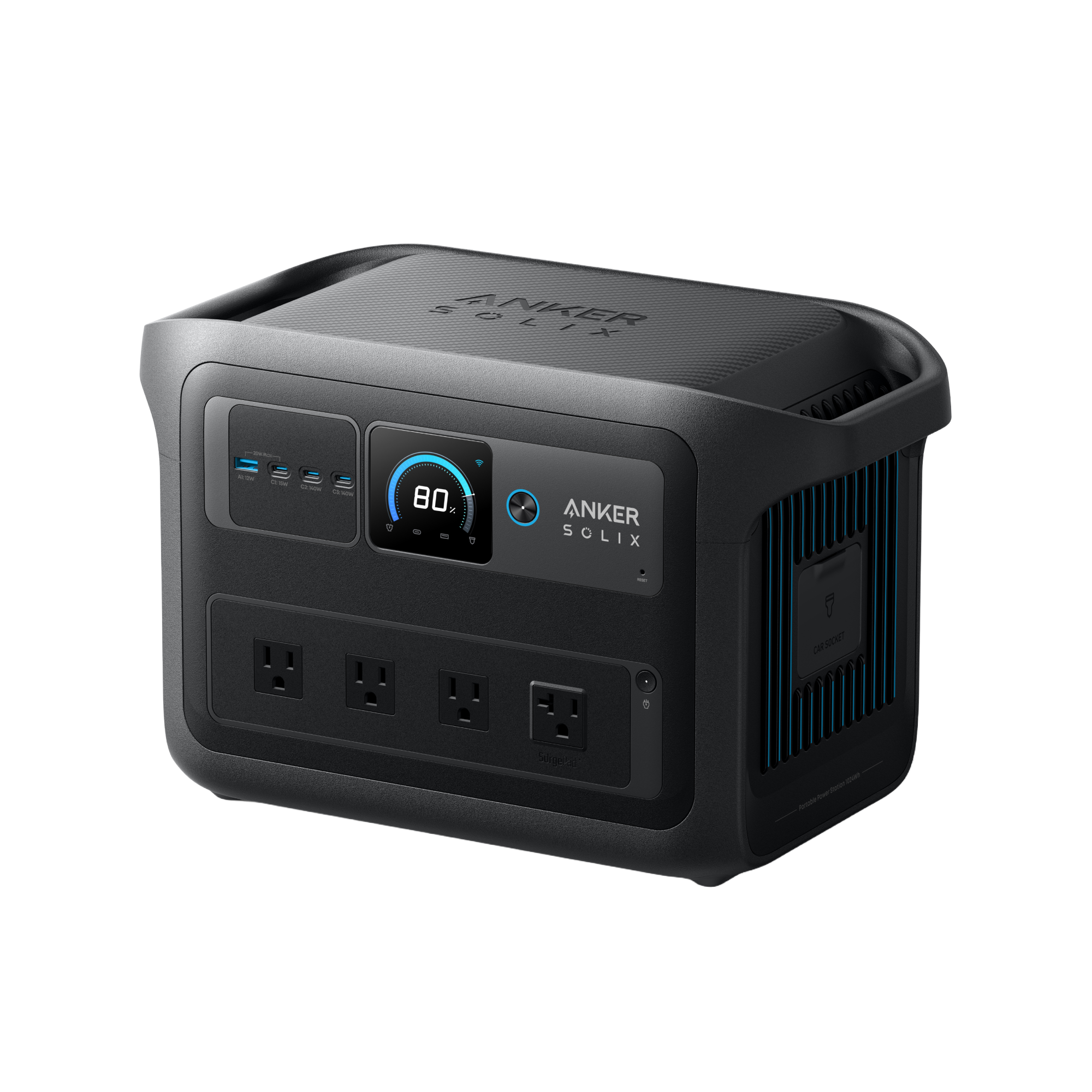
Anker SOLIX C1000X Gen 2
$699.99
$699.99 · direct from Anker
Last checked 16 days ago. Prices move — check before you buy.
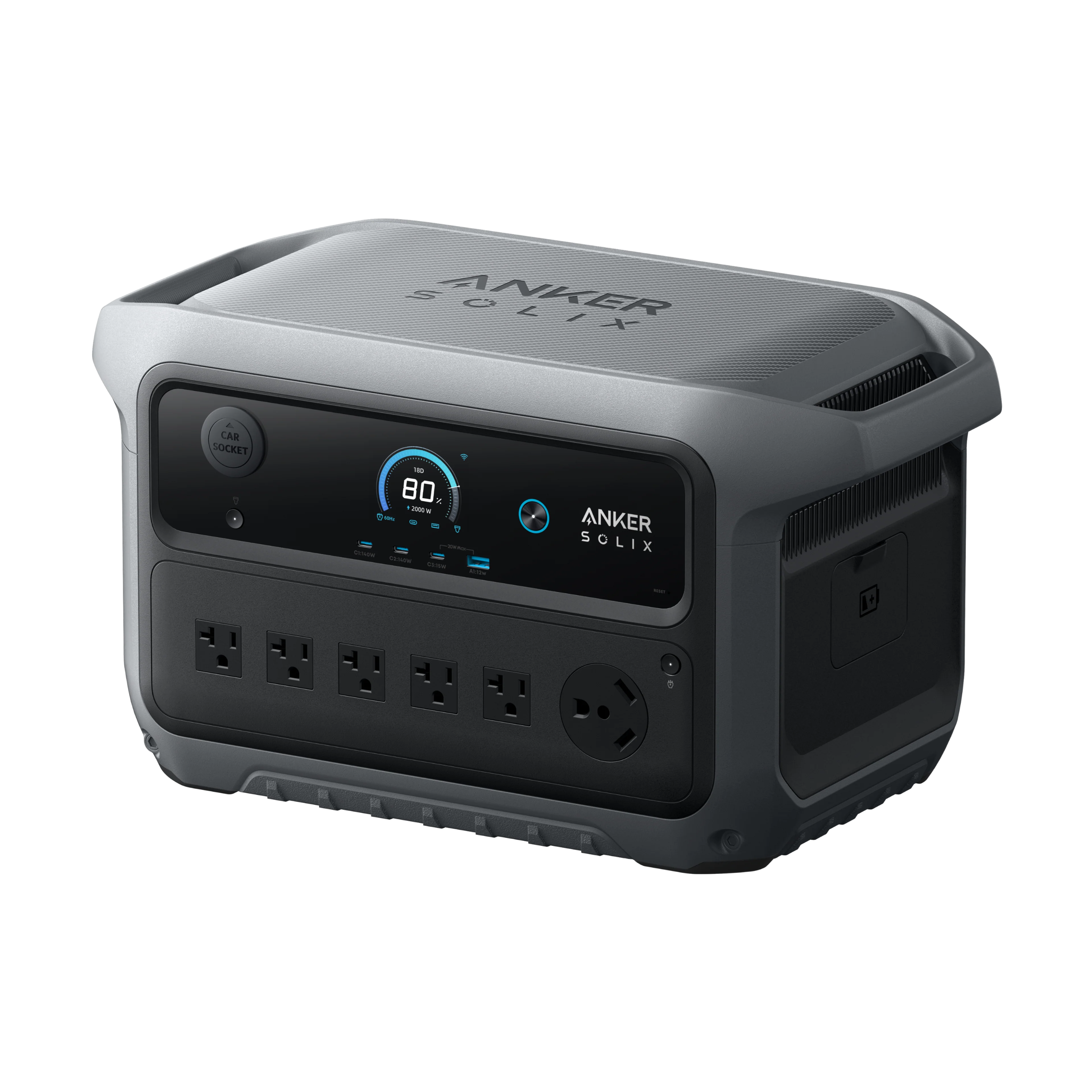
Anker SOLIX C2000 Gen 2Pick
Sold on Amazon · today’s price is on the listing
Prices may vary by retailer and are subject to change.