Head-to-head test
Anker 535 PowerHouse vs Goal Zero Sherpa 100AC
The 535 out-powers, out-lasts, and undercuts the Sherpa on cost-to-own on every axis, but the 2.1-lb Sherpa is the only one light and legal enough to carry onto a plane, and that's the entire decision.
Full profiles: Anker 535 PowerHouse → · Goal Zero Sherpa 100AC →

Written by Wenny ZhengUpdated
Portable Power Tester, Station Arena Test Desk
$299.99 · direct from Anker
Last checked 1 day ago. Prices move — check before you buy.
$249.95 · direct from Goal Zero
Last checked 1 day ago. Prices move — check before you buy.
Spec deltas
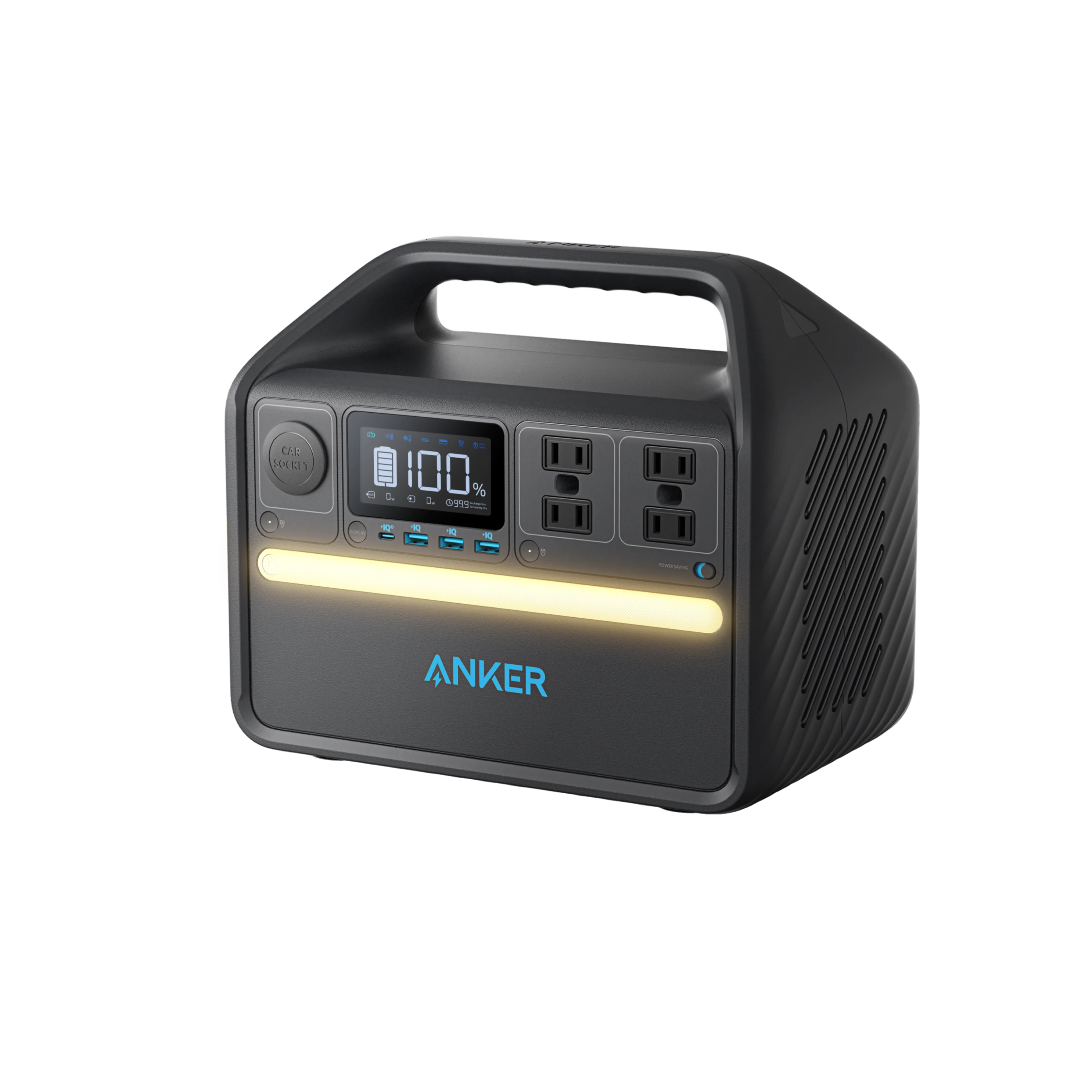
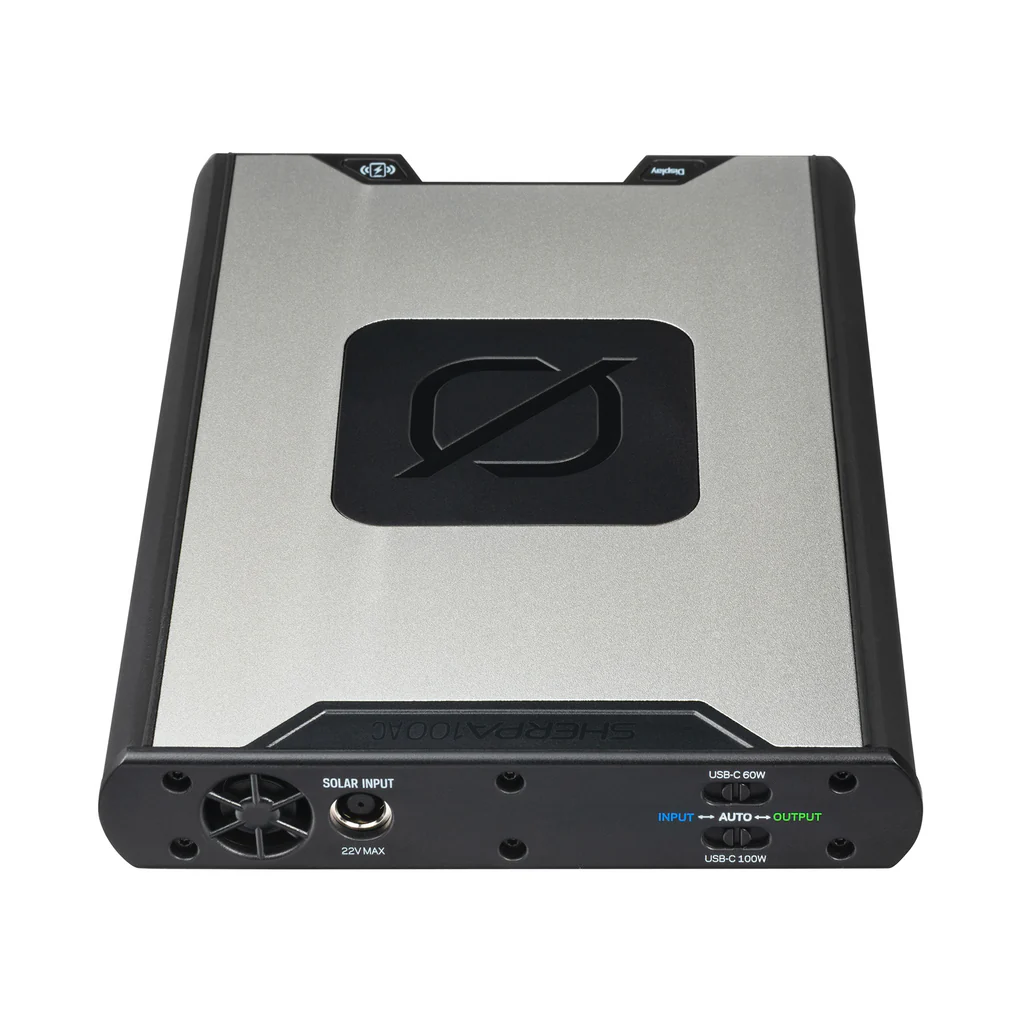
These two barely compete. The Anker 535 PowerHouse is a 16.7-lb, 512Wh weekend power station; the Goal Zero Sherpa 100AC is a 2.1-lb, 94.7Wh battery small enough to carry onto a plane. Shopping one against the other is like weighing a chest freezer against a cooler bag: related idea, different jobs.
For anything you'd call a power station, running a CPAP through the night, keeping devices and a lamp alive off-grid, holding charge for years, the 535 wins going away. It puts out five times the wattage (500W against 100W), carries roughly five times the capacity, and it's rated to outlast the Sherpa several times over. Count the cost across that longer life and it's the cheaper box to own, too, despite the higher sticker.
The Sherpa wins one thing, and wins it completely: it flies. At 94.7Wh it sits just under the FAA's 100Wh carry-on limitB1 and disappears into a laptop bagB2; the 535's 512Wh is far past that line and stays on the ground for good. That's the whole decision, do you need power, or do you need to bring it aboard?
What the Numbers Reveal
Each conclusion stated first — the numbers behind it on one line, the full analysis below.
cost / lifetime kWh
Priced per kilowatt-hour of lifetime energy, that's $0.20 against $5.28, about twenty-six to one. No up-front discount survives a gap that size, so the cheaper sticker is bolted to the far more expensive battery.
Anker 535: $300 sticker, rated 3,000 cycles, 1,536 kWh over its lifeSherpa 100AC: $250 sticker, rated 500 cycles, 47 kWh over its lifecost per lifetime kWh: $0.20 (535) vs $5.28 (Sherpa)
Why it mattersIf you're weighing these as two ways to buy stored energy, buy on cost per kWh and it's the 535, decisively; the $50 you save on the Sherpa is spent many times over in replacements.
weight
And it isn't a hobbled stand-in for the bigger unit; its 100W USB-C port refilled a laptop from 10% to 100% in 90 minutesB3 and it recharges from any USB-C source with no wall plugB3, out-delivering the 535's 60W USB-C on the one port a traveler actually uses.
Sherpa 100AC: 2.1 lbs, 94.7Wh, under the 100Wh FAA carry-on limit and airline-approvedB1fits in a laptop bagB2Anker 535: 16.7 lbs, 512Wh, about five times the 100Wh limit
Why it mattersIf your use is keeping a laptop, phone, and camera alive on planes and out of a backpack, the 535 was never in the running, so buy the Sherpa without hesitation.
continuous output
The dividing line is the inverter: the 535's 500W starts and holds real small-appliance loads, where the Sherpa's 100W ceiling (150W for a surge) can't even start a 400W draw. That's the gap between 'runs a blender or a CPAP' and 'runs a laptop charger and a lamp'B1.
Sherpa 100AC: 100W continuous, 150W surge, enough for a laptop charger, camera, or lampB1Anker 535: 500W output, ~435 usable Wh; Sherpa ~80 usable WhWeekend Camping needs 2,100Wh: 535 covers about 21%, Sherpa about 4%; 535 clears a 320Wh CPAP night with 115Wh to spare
Why it mattersIf a single load in your day spikes past 100 watts, or you need to get through a whole night, the Sherpa is out on power alone, and if you're eyeing a full camping weekend, budget past both.
The specific dimensions that decide these two units — everything else is a tie.
Portability & Form Factor
Selected because: The matchup's fork in the road: 2.1 lbs that clears the 100Wh airline limit against 16.7 lbs that never will.
weight
Weight is the entire story, and it settles everything downstream. The Sherpa is a thing you forget is in your bag; the 535 is a thing you decide to bring, then lift with a bent knee. The hard line is the airline rule: the Sherpa's 94.7Wh slips under the 100Wh carry-on limitB1 and rides in a laptop bagB2, while the 535's 512Wh keeps it on the ground for good. If your trip involves a boarding pass, this section already chose your unit.
Runtime: Will It Power Your Gear?
Selected because: 500W and 512Wh against 100W and 94.7Wh decides what each can actually power, and for how long.
continuous output
Output is the line between what these two can run. The 535's 500W inverter starts and holds real small-appliance loads; the Sherpa's 100W continuous, 150W for a brief surge, tops out at a laptop charger, a camera, or a lampB1. Capacity widens the same gap, roughly 435 usable watt-hours against 80, so the 535 doesn't just run bigger things, it runs them for hours where the Sherpa runs them for minutes.
That's why the 535 clears a CPAP night and the Sherpa doesn't, and why a 400W tailgate load stops the Sherpa cold while the 535 at least starts it. If one load in your day spikes past 100 watts, the smaller unit is already ruled out.
Lifetime Value
Selected because: The $250 Sherpa is the pricier battery to own once you count how long each one lasts.
cost / lifetime kWh
The sticker is the Sherpa's only financial win, and it evaporates the first time you'd replace it. Rated for a sixth of the 535's charge cycles, the Sherpa is used up in about 1.4 years of daily cycling; the 535 keeps going for 8.2 on the same schedule. You'd buy a handful of Sherpas in the time one 535 stays on the job, which is what turns a $50 saving at the register into the most expensive fifty dollars on the page.
Your Life, Your Pick
Selected because: The 535 clears a 320Wh CPAP night; neither covers a 2,100Wh camping weekend, a clean map of where each taps out.
Read the scenarios as a map of where each unit taps out, and the map is short. The 535 wins the low-draw nights, a CPAP session, an afternoon off-grid, outright. Both fail everything bigger: a camping weekend, a workday, and a blackout all sit beyond either battery.
The Sherpa's failures come earlier and harder, because its 100W inverter quits before capacity even matters: a 400W tailgate load it won't start, a 150W blackout load it starts but can't hold. The 535 fails the big scenarios the honest way, by running out of watt-hours, not by refusing the load.
Strengths & trade-offs
Anker 535 PowerHouse
Strengths
- +Larger battery capacity
- +Higher AC output
- +Longer warranty
- +Faster solar charging
- +Rated for 3,000 charge cycles — much longer battery lifespan
Trade-offs
- –Significantly heavier (+14.6 lbs), making it harder to move.
- –Lacks smartphone app control for remote monitoring.
Goal Zero Sherpa 100AC
Strengths
- +Costs $50 less
- +Lighter by 14.6 lb
Trade-offs
- –Lacks smartphone app control for remote monitoring.
- –Shorter-lived battery — rated for 500 charge cycles vs the 535 PowerHouse's 3,000, so it wears out sooner.
Will It Power Your Gear?
Scenario math and per-appliance runtimes, modeled from the spec record.
Scenario verdicts
We ran the math on seven real-world scenarios. Here's which unit survives your actual life.
SCN-01 · 2 nights · needs 2,100Wh
Weekend Camping
Two nights off-grid with essential comfort
Neither unit
A camping weekend's 2,100Wh is out of reach for both, the 535 covers about 21% of it, the Sherpa about 4%. This is the job people most often shop these for, and it's the one neither can do. A weekend off-grid wants a 1,000Wh-plus station.
Battery budget usedlower = more headroom
LOAD Phone Charger 15W×6h · LED Lights 40W×8h · Box Fan 75W×14h · CPAP Machine 40W×16h
SCN-02 · 8 hours · needs 1,645Wh
8-Hour Blackout
Keep the essentials running through a night without power
Neither unit
Neither is a blackout box. The Sherpa can switch a 150W load on, but its 100W continuous inverter can't hold it, and even the 535 covers only a slice of a 1,645Wh evening. If backup power is the point, both are a size too small.
Battery budget usedlower = more headroom
LOAD Fridge 150W×8h · Router + Modem 20W×8h · LED Lights (4 bulbs) 40W×6h · Phone Charger 15W×3h
SCN-03 · 8 hours · needs 320Wh
CPAP Overnight
Sleep therapy without interruption — the #1 medical use case
535 PowerHouse
A CPAP night runs about 320Wh, and the 535 finishes it with roughly 115Wh to spare. The Sherpa's 80 usable watt-hours give out about a quarter of the way through the night. This is the clearest straight win on the page for the bigger unit.
Battery budget usedlower = more headroom
LOAD CPAP Machine 40W×8h
SCN-04 · 8 hours · needs 910Wh
Remote Workday
Full work day off-grid without power anxiety
Neither unit
Neither unit covers this scenario's 910Wh: the 535 PowerHouse comes up 475Wh short (about 48% covered), the Sherpa 100AC 830Wh (9%). This is well outside what either unit is for; the right answer here is a larger station, not a choice between these two.
Battery budget usedlower = more headroom
LOAD Laptop 60W×8h · External Monitor 30W×8h · Router + Modem 20W×8h · Phone Charger 15W×2h
SCN-05 · 4 hours · needs 670Wh
Tailgate Party
Game day power for the crew
Neither unit
A 400W tailgate load is a wall the Sherpa can't climb: its inverter passes 150W at most, even for an instant, so it won't start the draw at all. The 535 starts a 400W load fine but hasn't the capacity to feed the whole party's 670Wh. Neither is the tailgate unit.
Battery budget usedlower = more headroom
LOAD Blender 400W×0.5h · LED TV (55") 80W×4h · Bluetooth Speaker 15W×4h · Phone Charger (×3) 45W×2h
SCN-06 · 24 hours · needs 4,685Wh
Van Life Daily
A full day of mobile living — the ultimate endurance test
Neither unit
The Sherpa 100AC can start the 150W peak but not hold it — 150W of surge gets it going, then the 100W continuous rating takes over, so capacity never gets a say. This is the wrong size of unit for the job rather than a close call. The 535 PowerHouse doesn't have the energy either — 435Wh usable against 4,685Wh, 4,250Wh short — so neither route works.
Battery budget usedlower = more headroom
LOAD Mini-Fridge 150W×24h · Laptop 60W×4h · Phone Charger 15W×3h · LED Lights 40W×5h · Fan 75W×8h
SCN-07 · an afternoon · needs 100Wh
Afternoon Off-Grid
Phones and a speaker at the park, beach, or campsite — the small-unit job description
535 PowerHouse
The Sherpa 100AC doesn't finish — 80Wh usable against the 100Wh this needs leaves it 20Wh short, about 81% of the scenario covered. The 535 PowerHouse covers it with 335Wh to spare.
Battery budget usedlower = more headroom
LOAD Phone Charger (×2) 30W×2h · Bluetooth Speaker 10W×4h
The Load Test
RUNTIME = (Wh × 0.85) ÷ LOAD
None of the scenarios above exactly yours? Build it. Toggle what you'd plug in; both units are tested against the combined draw.
Essentials
Comfort & Convenience
High-Draw Appliances
Test duration
8h
Continuous draw
205W
Projected runtime
Only the 535 PowerHouse can start this 205W load.
$299.99 list · direct from Anker
Modeled from the spec record — same math as the tables below. Methodology
Runtime by appliance
Real-world runtime estimates for common appliances, modeled at 85% inverter efficiency.¹
Essentials
The basics you need runningscale 0–29hComfort & Convenience
Makes off-grid life actually enjoyablescale 0–5.8hHigh-Draw Appliances
These reveal the real limits¹ Runtime = (capacity × 0.85) ÷ appliance watts. Within each group, all bars share one time scale (the group's longest runtime), so lengths are comparable across appliances; identical runtimes collapse into a single blue/orange bar. Actual runtime varies with battery age, temperature, and simultaneous loads — see methodology.
Conclusion
August 30, 2026
Verdict: the 535 PowerHouse, on Power Score margin
For anything that earns the name power station, the 535 PowerHouse wins going away: five times the capacity (512Wh to 94.7Wh), five times the output (500W to 100W), six times the rated cycle life (3,000 to 500), and, once you count cost per lifetime kilowatt-hour, the cheaper unit to own despite the higher $300 sticker. The single exception is the one job the Sherpa was built for: at 94.7Wh it's airline-legal and it weighs 2.1 lbs, and the 512Wh 535 will never fly. Need power, buy the 535; need to bring it aboard a plane, buy the Sherpa. Almost everyone cross-shopping these two needs power.
Editor-assigned confidence, based on cited owner research and spec analysis.
List prices as of August 30, 2026. The links below open Anker's and Goal Zero's current prices.
$299.99 · direct from Anker
Last checked 1 day ago. Prices move — check before you buy.
or check the Sherpa 100AC price$249.95 list
Written by Wenny Zheng, Portable Power Tester · Station Arena Test Desk · Updated August 30, 2026
Measured Data
Benchmark scores and the full spec record, side by side.
Benchmark scores
Not rated for both units (minimum threshold unmet): Tailgating, Apartment Balcony, Camping.
Full specifications
ᵈ Derived: price ÷ rated capacity. See the data behind our comparisons →
Comparison ToolAdd more power stations, side by sideOpen Tool →How these numbers are produced
Numeric verification
Every figure on this page traces to our spec database or arithmetic on it — no estimated numbers.
Owner claims
Statements about owner experience are cited to published reviews — see Sources & Research Notes below.
Runtime model
Runtime = (rated capacity × 0.85 inverter efficiency) ÷ device wattage. Solar recharge estimates assume panels deliver 70% of rated output. Cold weather, battery age, and stacked loads reduce real-world results.
Power Score
Computed from 14 published spec dimensions, weighted per use-case bench. Higher is better; a unit must meet a bench's minimum threshold to be rated.
See the full weight table and data sourcing on our methodology page →Class ranking (the star rating)
Each unit's star score is a category ranking, not customer reviews — no buyer opinions feed it. We score every station on size-independent quality (value, output, portability, endurance, ports, warranty, and more), then percentile-rank it against the other units in its capacity class, so a class-leading compact unit and a class-leading whole-home unit can both earn 5★. Here, 535 PowerHouse rates 3.7/5 (21st percentile of 20 Compact-class units), and Sherpa 100AC rates 3.3/5 (1st percentile of 22 Personal-class units).
How the class ranking is computed →Test Notes & Caveats
Hidden gotchas and advantages we spotted that you won't find on the product page.
Solar is the 535's weak hand
At its 120W rating the 535 needs about 4.3 hours of strong sun to refill 512Wh, and that's the optimistic floor, since real panels and real skies deliver less. Treat solar here as a top-up, not the plan; the wall outlet is the honest way back to full.
Five years against two
The 535 is covered for 5 years, the Sherpa for 2. On a battery you buy to sit in a closet until the power goes out, the length of the promise behind it counts for more than it looks.
The number that decides the money
3,000 charge cycles against 500 is the spec that quietly sets the cost of owning either one. The reassuring footnote: neither battery drops dead at its limit, it eases down to about 80% of its original capacity and keeps serving.
Full record above — the Test Desk pick is the 535 PowerHouse.
Check 535 PowerHouse price →or check the Sherpa 100AC priceOwnership Analysis
What happens after you buy — true cost of ownership, brand trust, and growth potential.
Lifetime value
Service lifeyears at one full cycle per day
Lifetime energy delivered
Cost per delivered kWh
│ warranty ends · Reaching the cycle rating means ~80% capacity remains — degraded, not dead.
Analyst note
The Sherpa 100AC is cheaper to buy, but the 535 PowerHouse is cheaper to own. At $0.2/kWh over its lifetime vs $5.28/kWh, the 535 PowerHouse's higher cycle life and capacity make each dollar go further over the years.
Delivers each lifetime kWh for $5.08 less — check the 535 PowerHouse price →
Brand trust
Anker
Ecosystem
7-8 SOLIX portable power stations across C-series (compact) and F-series (flagship), plus the X1 home energy system
Support
US-based support with a strong parent-brand reputation, though SOLIX-specific service has drifted toward canned, AI-flavored replies and clumsy return logistics on heavier units. Still the more responsive desk of these two lately.
Community
Moderate — active Reddit (r/Anker, r/AnkerSOLIXCommunity) and growing. Benefits from Anker's massive consumer electronics brand awareness.
App experience
Rated 4.5/5 iOS (~1,100 ratings) · 4.3/5 Android
Unique strength
InfiniPower LFP cells built for long cycle life, the reason a legacy unit like this one still earns a place in the conversation.
Worth knowing
Firmware updates have quietly pulled features before. Not a worry on a simple unit like this, but worth knowing if you value set-and-forget.
Goal Zero
Ecosystem
Focused — a compact current line (6th-gen Yeti and Yeti Pro series), the previous-gen X series now out of stock across every model on Goal Zero's own store (checked 2026-09-13: 200X, 500X, 1000X, 1500X, 3000X, 6000X, some listed only as open-box), so buying one new means finding retailer stock, Sherpa power banks for the under-100Wh tier, plus Alta coolers, Nomad/Ranger solar panels, and vehicle integration kits
Support
A US company out of Salt Lake City with real heritage, but recent support reports skew toward long waits and unanswered tickets, and the community forums were shut down. The 'premium support justifies premium price' case is thinner than it once was.
Community
Small but loyal — strong following in overlanding and preparedness communities. Official community forums were recently shuttered, frustrating long-time users.
App experience
Rated 4.4/5 iOS (~1,200 ratings) but recent reviews skew negative — recurring connectivity issues, crashes, and stability problems.
Unique strength
The original name in portable power, with ruggedized designs and a Yeti-Ready accessory ecosystem, heritage the newer brands can't manufacture.
Worth knowing
As a rule the priciest brand per watt-hour, and this pairing is a clean example of it.
Analyst note
Two US-associated brands whose support has both slipped from its better days: Anker still edges it on responsiveness, Goal Zero still leads on heritage and ruggedization. Let it break a tie, not decide the matchup, the spec and cost gap here is wider than any brand difference.
Growth path
535 PowerHouse
FIXED CAPACITYFixed at 512Wh, with no expansion — so size it for your needs up front rather than planning to add capacity later.
Accepts up to 120W of solar. Limited to a single portable panel.
Adequate ports for most setups, but heavy users may want a power strip.
Sherpa 100AC
FIXED CAPACITYFixed at 95Wh, with no expansion — so size it for your needs up front rather than planning to add capacity later.
Accepts up to 60W of solar. Limited to a single portable panel.
Limited ports. You'll likely need a power strip or splitter.
Realistic full solar rechargeat 70% of rated panel output — see methodology
Analyst note
Neither expands, and that's no knock on either — each is a complete unit at a fixed size. Buy the capacity that covers your needs now (the 535 PowerHouse gives you the larger ceiling); you can't add to either later.
What Owners Report
Patterns from published owner reports and long-term reviews — every claim cited to its source below.
Anker 535 PowerHouse
Field data on the 535 is positive but comes from reviewers rather than long-haul ownersA0. Testers measured 89% round-trip efficiency and reported it ran cool and steady while delivering its full 500WA3, on a unit that's compact for 512Wh and carries four AC outlets, three USB-A, a USB-C, and a car socketA2.
The one consistent knock is charging from the sun: the 120W solar input realistically lands nearer 60-75W, so panels are slow goingA4. Reviewers clocked the wall outlet to 80% in about 2.5 hoursA4, and that's the charger you'll actually plan around.
“512Wh capacity with 500W output on LiFePO4 cells rated for 3,000+ cycles and a 10-year lifespan, backed by a 5-year warranty.”
Sources
ankersolix.com · trustedreviews.com · macrumors.com · batteryessence.com
Goal Zero Sherpa 100AC
The Sherpa's reviews are consistent and fond, again from testers rather than years-in ownersB0. The themes repeat: it's genuinely tiny at 2 lbs with best-in-class 15W wireless charging and slips into a laptop bagB2, and its 100W USB-C port refilled a laptop from 10% to 100% in 90 minutes while drawing 45% of its own chargeB3.
It also recharges from a USB-C source with no separate wall plugB3, which is why reviewers frame it as a travel pack for cameras, laptops, and phones, a digital-nomad tool rather than a power stationB1B4.
“A 94.7Wh power bank — under the 100Wh FAA flight limit, so it's airline-approved — with a 100W AC port for laptop chargers, camera cradles, or small lamps.”
Sources
campingsolar.us · matadornetwork.com · gearjunkie.com · shotkit.com · packandtrail.com · the-gadgeteer.com
Sources & Research Notes
Every owner claim in this report is traceable to a published source. The bracketed references above resolve here.
Recurring owner themes
- Durable LFP (3,000+ cycles, 5-yr warranty), efficient, and compact for weekend camping; slow solar input is the caveat. [535 PowerHouse · 2 entries]
- Airline-legal 94.7Wh, a real 100W AC port, wireless charging, and 2-lb travel portability are the standout points. [Sherpa 100AC · 3 entries]
- A2
“Weighs 16.5 lbs and is compact for a 512Wh unit, with 4 AC ports, 3 USB-A, a USB-C, and a car outlet.”
macrumors.com / batteryessence.com — 535 PowerHouse review · 2026 · [positive]
- A3
“Demonstrated 89% round-trip efficiency and stayed stable and cool while delivering its full 500W AC output.”
batteryessence.com — 535 PowerHouse review · 2026 · [positive]
- A4
“AC charging to 80% takes about 2.5 hours; solar input caps at 120W (realistically 60-75W), so panel charging is slow.”
batteryessence.com — 535 PowerHouse review · 2026 · [mixed]
- B1
“A 94.7Wh power bank — under the 100Wh FAA flight limit, so it's airline-approved — with a 100W AC port for laptop chargers, camera cradles, or small lamps.”
campingsolar.us / matadornetwork.com — Sherpa 100AC review · 2026 · [positive]
- B2
“Weighs just 2 lbs and adds best-in-class 15W wireless charging; a tiny, elegant unit that fits in a laptop bag.”
gearjunkie.com / shotkit.com — Sherpa 100AC review · 2026 · [positive]
- B3
“Its 100W USB-C port charged a laptop from 10% to 100% in 90 minutes, drawing 45% from the Sherpa's battery, and it recharges from a USB-C source with no separate wall plug.”
packandtrail.com — Sherpa 100AC review · 2026 · [positive]
- B4
“A versatile travel power pack for cameras, laptops, and phones — ideal for digital nomads and outdoor creatives.”
the-gadgeteer.com — Sherpa 100AC review · 2026 · [positive]
Research compiled August 30, 2026.
Who Should Buy Which
Buy the 535 PowerHouse if you…
- →The weekend camper or blackout-prepper running lights, a fan, a router, or a CPAP: the 535's 512Wh and 500W cover the low-draw nights, and its 3,000-cycle pack will still be doing it a decade in.
- →The buyer who wants the cheapest stored energy over the long haul and doesn't need to travel light: measured per lifetime kilowatt-hour, it's the least expensive of the two to actually use, by a wide margin.
- →Anyone charging a laptop, phone, and a small AC device at a campsite who'd rather carry one 16.7-lb unit than ration a pocket battery.
Buy the Sherpa 100AC if you…
- →The flyer who needs a carry-on-legal battery: at 94.7Wh the Sherpa clears the 100Wh airline limitB1 and the 535 doesn't, full stop.
- →The photographer or digital nomad topping up cameras, a laptop, and phones from a 2-lb brick that lives in a laptop bagB2B4, with 100W USB-C laptop charging and 15W wireless on tapB2B3.
- →The USB-C-first traveler who wants to recharge the pack itself from a USB-C source with no wall plugB3 and values grams over watt-hours.
If neither fits
Anyone actually planning a camping weekend, a work-from-van setup, or whole-home blackout backup should skip both. Neither covers a 2,100Wh weekend or a 1,645Wh blackout, the 535 gets partway and the Sherpa barely starts. Put the money toward a 1,000Wh-plus station instead.
The Bottom Line
Buy the 535 if you want power; buy the Sherpa if you need to fly with it. That's the whole call. For the power-station job the 535 is bigger, stronger, longer-lived, and, once you count cost per kilowatt-hour over its life, the cheaper box on the shelf. The Sherpa's lower price is the only round it wins, and it loses even that the moment you count the years.
So don't buy a power station to do a power bank's job, or the reverse. If your power gets used on planes and out of a laptop bag, the 535 was never an option and the 2.1-lb Sherpa is exactly right. Everyone else, campers, blackout-preppers, the CPAP user who wants to wake up charged, takes the 535.
Frequently Asked Questions
Answers drawn from the spec record and cited owner research.
Can I take the Anker 535 PowerHouse on a plane?
No. At 512Wh it's about five times the FAA's 100Wh limit for a carry-on lithium battery, so it can't fly. The Goal Zero Sherpa 100AC is the airline-legal one here, its 94.7Wh sits just under that limit.
Isn't the Sherpa 100AC the cheaper option?
Only at the register, $250 against $300. Over its life it's far pricier: the Sherpa works out to about $5.28 per kilowatt-hour of energy delivered versus the 535's $0.20, because it's rated for 500 charge cycles to the 535's 3,000. You'd replace it several times before the 535 slows down.
Can either one run a fridge, coffee maker, or space heater?
The 535's 500W inverter can handle small appliances; the Sherpa's 100W (150W surge) can't start most of them. And neither has the capacity for a full camping weekend or an eight-hour blackout, those need a bigger station.
Will the Anker 535 get me through a CPAP night?
Yes. A typical CPAP night draws about 320Wh, and the 535 finishes it with roughly 115Wh left in reserve. The Sherpa, with about 80 usable watt-hours, runs dry around a quarter of the way through.
What can the Sherpa 100AC actually charge?
Laptops, phones, cameras, and small lamps. Its 100W USB-C port took a laptop from 10% to 100% in 90 minutes, and it adds 15W wireless charging. It even refills from a USB-C source with no wall plug. Think travel device-charger, not power station.
Where to buy
Anker 535 PowerHousePick
$299.99
$299.99 · direct from Anker
Last checked 1 day ago. Prices move — check before you buy.
Goal Zero Sherpa 100AC
$249.95
$249.95 · direct from Goal Zero
Last checked 1 day ago. Prices move — check before you buy.
Prices may vary by retailer and are subject to change.