Head-to-head test
Anker 535 PowerHouse vs Anker SOLIX C300X
Same $300 either way: the 535 gives you 78% more battery and the only overnight-CPAP finish in the pair; the C300X gives you 9 pounds, 140W USB-C, and a UPS — buy for the advantage you'll actually use.
Full profiles: Anker 535 PowerHouse → · Anker SOLIX C300X →

Written by Wenny ZhengUpdated
Portable Power Tester, Station Arena Test Desk
Spec deltas
Same $300, same Anker warranty, same 3,000-cycle LFP pack — and the 535 PowerHouse stores 512Wh to the SOLIX C300X's 288. That's 224 more watt-hours for the identical price. If energy is what you came for, you can almost stop reading there. But the C300X spends its smaller battery buying things the 535 doesn't sell: a 9-lb frame, a 140W USB-C port, app control, and a UPS mode.
Our pick is the 535 for most buyers, at moderate confidence. When the price is a tie, the tiebreak is what the price gets you, and the 535 gets you 78% more energy, a lower lifetime cost per kilowatt-hour, and the only battery here that runs a CPAP through the night. The C300X is the better box for a real but narrower buyer — the one who carries it, works off it at a desk, or wants a router to ride out grid flickers.
Set expectations first, because these are both small. Neither covers a weekend campsite, an eight-hour blackout of a fridge and the essentials, or a van's daily draw. Those want a bigger station. Where these two actually live is the overnight CPAP, the desk, the cooler for an afternoon, the off-grid few hours. Judge them on the jobs they can finish, not the ones neither can.
What the Numbers Reveal
Each conclusion stated first — the numbers behind it on one line, the full analysis below.
Capacity
Because both packs are rated for the same 3,000 cycles, that capacity gap doesn't wash out over time — it compounds. Every watt-hour of the 535's bigger battery gets cycled just as many times, which pencils out to $0.20 per lifetime kWh against the C300X's $0.35. Same money at the register, and the 535 is cheaper for every kilowatt-hour you'll ever pull from it.
Both list at $299.99535 PowerHouse holds 512Wh; SOLIX C300X holds 288WhBoth rated 3,000 cycles on a 5-year warranty
Why it mattersIf your first question is how much it stores and how long it runs, the 535 is the answer before any feature enters the conversation.
The 535 doesn't publish a noise figure at all, yet it's the one that finishes the night, with 115Wh in reserve. A silent fan at 2am is worth nothing if the box is flat by 4. The C300X's UPS earns its keep the other way around — plugged into the wall as a ride-through for a router or modemB7, not as the overnight source.
SOLIX C300X publishes a 25dB noise floor; reviewers call it near-silent even under loadB4CPAP overnight needs about 320Wh; C300X has 245Wh usable, leaving it 75Wh short535 PowerHouse has 435Wh usable — covers the 320Wh with 115Wh to spare
Why it mattersBuying specifically to run a CPAP off battery overnight? Take the 535. Want a quiet desk UPS to bridge grid flickers? That's the C300X's job, and not an all-night one.
weight
On the small jobs these units actually share — an afternoon off-grid at 100Wh, a desk, a travel bag — the 535's extra energy is literally dead weight, while the C300X's 140W USB-C keeps a full-size laptop charged under load (the 535's 60W can't) and its UPS keeps a router alive through a flicker. The capacity you never reach doesn't beat the port you use every day.
SOLIX C300X weighs 9 lbs; 535 PowerHouse weighs 16.7 lbsC300X USB-C tops out at 140W; 535 at 60WC300X adds app control and a sub-10ms UPS mode the 535 lacks
Why it mattersIf your loads stay under about 245Wh and you carry the thing or run it on a desk, the C300X is the smarter box despite costing more per watt-hour.
The specific dimensions that decide these two units — everything else is a tie.
Runtime: Will It Power Your Gear?
Selected because: Same $300, but 512Wh against 288 and 500W against 300 — capacity and output are where this pair actually separates.
continuous output
After the 85% usable derate, the 535 gives you 435Wh to work with and the C300X 245 — nearly 1.8 times the energy from the larger pack. In hands-on testing the C300X ran a 60W laptop for 4 hours 15 minutes and a 50W mini-fridge for 5 hours 30 minutes on a chargeB9; put those same loads on the 535 and they run close to that much longer again. It's the difference between covering most of an evening and covering the whole night.
And when a load is big rather than long, the gap stops being capacity and becomes output. The 535 holds 500W continuous where the C300X is rated for 300, so a draw that sits between those two numbers is one the smaller unit simply can't sustain no matter how full its battery is.
Lifetime Value
Selected because: Identical price, brand, warranty and 3,000-cycle rating, so the only real question is how much energy the $300 buys.
cost / lifetime kWh
The lifetime-cost strip isn't measuring build quality here — both are 3,000-cycle Anker packs — it's measuring how many watt-hours sit behind the same $300. That's the entire story of this section: identical price, identical cycle life, and one battery is 78% fuller than the other.
Same cycles on both means the bigger pack has more to give before it retires, and the per-kilowatt-hour line just translates that back into money you can feel. There's no version of this math where the C300X is the cheaper energy; it's the same price for less of what you're paying for.
Portability & Form Factor
Selected because: 9 lbs against 16.7 is the C300X's clearest argument, and the reason some buyers take the smaller battery on purpose.
weight
7.7 pounds separates these two — 9 for the C300X, 16.7 for the 535 — and it's the difference between a unit you grab on the way out and one you decide to bring. The C300X is the daypack battery, and it's built for the abuse: a reviewer ran dozens of trunk loads through its handle with no wear or flexB12.
The 535 isn't heavy in absolute terms. But sitting next to a 9-lb sibling that handles most of the same small jobs, its weight only earns itself back on the days you actually spend the extra watt-hours.
What the Specs Don't Tell You
Selected because: App control, a sub-10ms UPS mode and 140W USB-C are on the C300X and not the 535 — the modern features you're weighing against raw capacity.
Three of the firing notes are really one story: the C300X is the connected one. It answers your phone, hands your gear to battery in under 10ms when the grid drops, and pushes 140W over USB-C where the 535 stops at 60. For a desk — a router, a modem, a laptop that wants more than 60W — that's a stack of small conveniences you'd use daily.
The 535's counter-note is a non-event dressed as a warning: it doesn't publish a noise figure. That isn't evidence it's loud, only that there's no number to hold it to. If a bedroom or an apartment is the buyer, that's a reason to find a hands-on report before committing, not a reason to assume the worst.
Your Life, Your Pick
Selected because: Most real jobs land on 'neither' for both; the two that don't show exactly where each unit fits.
Read the scenario grid and the same verdict keeps coming back: neither. Weekend camping wants 2,100Wh, an eight-hour blackout 1,645, van-life 4,685 — all several times what either box holds, and the engine's read is to buy bigger, not to choose between these two.
Two jobs actually split them. The overnight CPAP goes to the 535, the only one that finishes it. And the 100Wh afternoon off-grid is a tie both cover with ease, which throws the decision back onto weight and price — exactly where a matchup between two $300 Ankers should land.
Strengths & trade-offs
Anker 535 PowerHouse
Strengths
- +Larger battery capacity
- +Higher AC output
- +Faster solar charging
Trade-offs
- –Lacks smartphone app control for remote monitoring.
Anker SOLIX C300X
Strengths
- +Lighter by 7.7 lb
Trade-offs
- –No major technical downsides compared to rival.
Will It Power Your Gear?
Scenario math and per-appliance runtimes, modeled from the spec record.
Scenario verdicts
We ran the math on seven real-world scenarios. Here's which unit survives your actual life.
SCN-01 · 2 nights · needs 2,100Wh
Weekend Camping
Two nights off-grid with essential comfort
Neither unit
Neither unit covers this scenario's 2,100Wh: the 535 PowerHouse comes up 1,665Wh short (about 21% covered), the SOLIX C300X 1,855Wh (12%). This is well outside what either unit is for; the right answer here is a larger station, not a choice between these two.
Battery budget usedlower = more headroom
LOAD Phone Charger 15W×6h · LED Lights 40W×8h · Box Fan 75W×14h · CPAP Machine 40W×16h
SCN-02 · 8 hours · needs 1,645Wh
8-Hour Blackout
Keep the essentials running through a night without power
Neither unit
Neither unit covers this scenario's 1,645Wh: the 535 PowerHouse comes up 1,210Wh short (about 26% covered), the SOLIX C300X 1,400Wh (15%). This is well outside what either unit is for; the right answer here is a larger station, not a choice between these two.
Battery budget usedlower = more headroom
LOAD Fridge 150W×8h · Router + Modem 20W×8h · LED Lights (4 bulbs) 40W×6h · Phone Charger 15W×3h
SCN-03 · 8 hours · needs 320Wh
CPAP Overnight
Sleep therapy without interruption — the #1 medical use case
535 PowerHouse
Here's the irony: the C300X is the one that publishes a quiet 25dB fan, so it reads like the bedroom pick. But at 245Wh usable it quits about 75Wh before morning. The 535 doesn't advertise a noise number at all, yet it's the one that finishes the 320Wh night with 115Wh to spare. A silent fan doesn't help at 4am if the battery is already flat.
Battery budget usedlower = more headroom
LOAD CPAP Machine 40W×8h
SCN-04 · 8 hours · needs 910Wh
Remote Workday
Full work day off-grid without power anxiety
Neither unit
Neither unit covers this scenario's 910Wh: the 535 PowerHouse comes up 475Wh short (about 48% covered), the SOLIX C300X 665Wh (27%). Treat this as partial cover — enough for the essentials in it, not the whole list.
Battery budget usedlower = more headroom
LOAD Laptop 60W×8h · External Monitor 30W×8h · Router + Modem 20W×8h · Phone Charger 15W×2h
SCN-05 · 4 hours · needs 670Wh
Tailgate Party
Game day power for the crew
Neither unit
Neither finishes a 670Wh tailgate — the 535 runs 235Wh short, the C300X 425. The difference is in how they fail. The 535's 500W continuous rating actually holds a 400W load; the C300X lights it up on 600W of surge, then hands off to a 300W rating that can't carry it. Small comfort when both run dry, but it's the wrong size of unit for the job either way.
Battery budget usedlower = more headroom
LOAD Blender 400W×0.5h · LED TV (55") 80W×4h · Bluetooth Speaker 15W×4h · Phone Charger (×3) 45W×2h
SCN-06 · 24 hours · needs 4,685Wh
Van Life Daily
A full day of mobile living — the ultimate endurance test
Neither unit
Neither unit covers this scenario's 4,685Wh: the 535 PowerHouse comes up 4,250Wh short (about 9% covered), the SOLIX C300X 4,440Wh (5%). This is well outside what either unit is for; the right answer here is a larger station, not a choice between these two.
Battery budget usedlower = more headroom
LOAD Mini-Fridge 150W×24h · Laptop 60W×4h · Phone Charger 15W×3h · LED Lights 40W×5h · Fan 75W×8h
SCN-07 · an afternoon · needs 100Wh
Afternoon Off-Grid
Phones and a speaker at the park, beach, or campsite — the small-unit job description
Either unit
This is the job small stations are actually for, and both do it: the 535 PowerHouse finishes at 23% used, the SOLIX C300X at 41%. At this size the decider is what rides in the bag, then price, not the leftover watt-hours: the 535 PowerHouse weighs 16.7 lbs, and at 9 lbs the SOLIX C300X is the one you'll be glad you brought.
Battery budget usedlower = more headroom
LOAD Phone Charger (×2) 30W×2h · Bluetooth Speaker 10W×4h
The Load Test
RUNTIME = (Wh × 0.85) ÷ LOAD
None of the scenarios above exactly yours? Build it. Toggle what you'd plug in; both units are tested against the combined draw.
Essentials
Comfort & Convenience
High-Draw Appliances
Test duration
8h
Continuous draw
205W
Projected runtime
For this load: 535 PowerHouse runs 2.1h vs 1.2h.
$299.99 list · direct from Anker
Planning for more than this? Describe your whole setup and get it sized →
Modeled from the spec record — same math as the tables below. Methodology
Runtime by appliance
Real-world runtime estimates for common appliances, modeled at 85% inverter efficiency.¹
Essentials
The basics you need runningscale 0–29hComfort & Convenience
Makes off-grid life actually enjoyablescale 0–5.8hHigh-Draw Appliances
These reveal the real limits¹ Runtime = (capacity × 0.85) ÷ appliance watts. Within each group, all bars share one time scale (the group's longest runtime), so lengths are comparable across appliances; identical runtimes collapse into a single blue/orange bar. Actual runtime varies with battery age, temperature, and simultaneous loads — see methodology.
Conclusion
August 30, 2026
Verdict: the 535 PowerHouse
Buy the 535 PowerHouse unless portability or the modern feature set is the whole point. At $300 it matches the C300X on price, brand, warranty, and cycle life, then adds 224Wh of capacity (512 against 288), a lower cost per lifetime kilowatt-hour, and enough usable headroom to finish a CPAP night the C300X comes up 75Wh short on. Take the C300X instead if you need the 9-lb weight, want its 140W USB-C to keep a full laptop charged, or want the sub-10ms UPS for a desk — and can live inside about 245 usable watt-hours. There's no quality gap to worry about; both are 3,000-cycle Anker units. It's a clean question of whether you're buying watt-hours or portability-plus-features.
Editor-assigned confidence, based on cited owner research and spec analysis.
List prices as of August 30, 2026. The links below open Anker's current price.
$299.99 · direct from Anker
Last checked 16 days ago. Prices move — check before you buy.
or check the SOLIX C300X price$299.99 list
Written by Wenny Zheng, Portable Power Tester · Station Arena Test Desk · Updated August 30, 2026
Black Friday · 38 days out
Prices to beat:535 PowerHouse $300SOLIX C300X $300
We have never seen either discounted, so any real cut would be a first.
Measured Data
Benchmark scores and the full spec record, side by side.
Benchmark scores
Not rated for both units (minimum threshold unmet): UPS, CPAP.
Full specifications
ᵈ Derived: price ÷ rated capacity. See the data behind our comparisons →
Comparison ToolAdd more power stations, side by sideOpen Tool →How these numbers are produced
Numeric verification
Every figure on this page traces to our spec database or arithmetic on it — no estimated numbers.
Owner claims
Statements about owner experience are cited to published reviews — see Sources & Research Notes below.
Runtime model
Runtime = (rated capacity × 0.85 inverter efficiency) ÷ device wattage. Solar recharge estimates assume panels deliver 70% of rated output. Cold weather, battery age, and stacked loads reduce real-world results.
Power Score
Computed from 14 published spec dimensions, weighted per use-case bench. Higher is better; a unit must meet a bench's minimum threshold to be rated.
See the full weight table and data sourcing on our methodology page →Class ranking (the star rating)
Each unit's star score is a category ranking, not customer reviews — no buyer opinions feed it. We score every station on size-independent quality (value, output, portability, endurance, ports, warranty, and more), then percentile-rank it against the other units in its capacity class, so a class-leading compact unit and a class-leading whole-home unit can both earn 5★. Here, 535 PowerHouse rates 3.7/5 (21st percentile of 20 Compact-class units), and SOLIX C300X rates 4.6/5 (74th percentile of 24 Personal-class units).
How the class ranking is computed →Test Notes & Caveats
Hidden gotchas and advantages we spotted that you won't find on the product page.
535 PowerHouse: Solar Recharge Takes 4.3h+
At its 120W rated solar ceiling, refilling the full 512Wh takes about 4.3 hours of sun — as a floor, since the rated figure assumes ideal panel angle and clear sky, and real days deliver less. Not practical as the primary charge source for daily off-grid use; treat solar as a top-up and plan on a wall outlet or generator.
535 PowerHouse: No App Control
Without app control, you have to physically walk to the 535 PowerHouse to check battery level, adjust settings, or monitor power draw. The SOLIX C300X lets you do all that from your phone, including getting low-battery alerts.
Only the SOLIX C300X Lists a UPS Mode
The SOLIX C300X can sit between the wall and your gear and hand it to battery when the grid drops — rated ≤10ms — quick enough on paper that desktop PCs and routers should ride through, treating that as the rating it is. Worth it for a router or a modem — not a CPAP: at 245Wh usable it can bridge the flicker but cannot run the night. The 535 PowerHouse's spec sheet lists no UPS mode, so anything plugged into it rides an outage only as far as your reaction time.
Warranty: No Difference
Both units carry the same 5-year warranty, so coverage isn't a tiebreaker here.
535 PowerHouse: Noise Level Not Disclosed
The SOLIX C300X publishes its noise level (25dB); the 535 PowerHouse doesn't publish one. That isn't evidence the 535 PowerHouse is louder — it means there's no figure to hold it to, and no way to compare the two on this without hearing them. If you're buying for a bedroom, a CPAP, or an apartment, treat the SOLIX C300X's 25dB as the only published number on the table — a spec-sheet figure, not a measurement — and look for hands-on reports of the 535 PowerHouse before deciding.
Full record above — the Test Desk pick is the 535 PowerHouse.
Check 535 PowerHouse price →or check the SOLIX C300X priceOwnership Analysis
What happens after you buy — true cost of ownership, brand trust, and growth potential.
Lifetime value
Service lifeyears at one full cycle per day
Lifetime energy delivered
Cost per delivered kWh
│ warranty ends · Reaching the cycle rating means ~80% capacity remains — degraded, not dead.
Analyst note
The 535 PowerHouse wins on both sticker price and long-term value. At $0.20/kWh over its lifetime, it's meaningfully cheaper to own. Clear value winner. One thing to know reading the table: both carry the same 3,000-cycle rating, so the lifetime rows are sticker price and capacity in disguise — the wear horizon is identical and decides nothing here.
Delivers each lifetime kWh for $0.15 less — check the 535 PowerHouse price →
Growth path
535 PowerHouse
FIXED CAPACITYFixed at 512Wh, with no expansion — so size it for your needs up front rather than planning to add capacity later.
Accepts up to 120W of solar. Limited to a single portable panel.
Adequate ports for most setups, but heavy users may want a power strip.
SOLIX C300X
FIXED CAPACITYFixed at 288Wh, with no expansion — so size it for your needs up front rather than planning to add capacity later.
Accepts up to 100W of solar. Limited to a single portable panel.
Adequate ports for most setups, but heavy users may want a power strip.
Realistic full solar rechargeat 70% of rated panel output — see methodology
Analyst note
Neither expands, and that's no knock on either — each is a complete unit at a fixed size. Buy the capacity that covers your needs now (the 535 PowerHouse gives you the larger ceiling); you can't add to either later.
What Owners Report
Patterns from published owner reports and long-term reviews — every claim cited to its source below.
Anker 535 PowerHouse
Long-run owner threads for the 535 are thin; the coverage that exists is mostly professional reviews of a unit our researchers flag as a legacy-but-still-relevant weekend stationA0. What those reviews agree on is reassuring. A bench test clocked 89% round-trip efficiency with the unit staying cool and stable while delivering its full 500WA3, and the LFP pack is rated for at least 3,000 cycles and a claimed decade of life behind the 5-year warrantyA1. It carries a full port set and stays compact for a 512Wh boxA2. The honest knock is solar: 120W on paper, closer to 60-75W in practice, so plan to refill it from the wall — about 2.5 hours to 80% — rather than the sunA4.
“512Wh capacity with 500W output on LiFePO4 cells rated for 3,000+ cycles and a 10-year lifespan, backed by a 5-year warranty.”
Sources
ankersolix.com · trustedreviews.com · macrumors.com · batteryessence.com
Anker SOLIX C300X
The C300X has genuine hands-on coverage, and it skews positive with two specific gripes. Two independent reviewers found it near-silent at its rated 300W, the fan only stirring under a 500W overloadB4B11. Its UPS impressed one tester enough to yank the wall plug with a computer, router, modem, and CPAP all running — nothing so much as flickeredB7. Wall charging hit 80% in 49 minutes, matching specB8, and the app's usage history was sharp enough to catch a fan drawing twice its expected wattageB10. The two real complaints both live in the app-and-charging path: a Bluetooth pairing dropout that blocks monitoring until you re-pairB1, and one owner whose unit refused to charge past 25%B2. One quirk to know going in — it powers itself off when charging tiny loads like earbuds, an intended cutoff that still catches people outB3.
“The unit was confirmed to shut itself off when charging very low-draw devices like headphones or a smartwatch — an intended power-saving cutoff rather than a defect, but one that catches owners off guard.”
Sources
teqclub.com · thesolarlab.com · backuppowerhub.com
Sources & Research Notes
Every owner claim in this report is traceable to a published source. The bracketed references above resolve here.
Recurring owner themes
- Durable LFP (3,000+ cycles, 5-yr warranty), efficient, and compact for weekend camping; slow solar input is the caveat. [535 PowerHouse · 2 entries]
- Independent hands-on reviewers found the C300X near-silent at its rated 300W load, though one test noted the fan becoming noticeably audible under a heavier transient/overload draw. [SOLIX C300X · 2 entries]
- AC charging and UPS switchover both performed at or better than spec in hands-on testing — fast wall recharge and an imperceptible transfer that kept a computer, router, and CPAP running through a pulled plug. [SOLIX C300X · 2 entries]
- The most concrete owner-reported defects both sit in the app/charging pipeline: a Bluetooth pairing dropout that blocks monitoring, and a specific report of the battery refusing to charge past 25%. [SOLIX C300X · 2 entries]
- A1
“512Wh capacity with 500W output on LiFePO4 cells rated for 3,000+ cycles and a 10-year lifespan, backed by a 5-year warranty.”
ankersolix.com / trustedreviews.com — 535 PowerHouse review · 2026 · [positive]
- A2
“Weighs 16.5 lbs and is compact for a 512Wh unit, with 4 AC ports, 3 USB-A, a USB-C, and a car outlet.”
macrumors.com / batteryessence.com — 535 PowerHouse review · 2026 · [positive]
- A3
“Demonstrated 89% round-trip efficiency and stayed stable and cool while delivering its full 500W AC output.”
batteryessence.com — 535 PowerHouse review · 2026 · [positive]
- A4
“AC charging to 80% takes about 2.5 hours; solar input caps at 120W (realistically 60-75W), so panel charging is slow.”
batteryessence.com — 535 PowerHouse review · 2026 · [mixed]
- B1
“Users reported trouble connecting the C300X to the Anker app, which blocked monitoring power usage and changing settings; re-pairing by "forgetting" the device in Bluetooth settings and reconnecting through the app usually fixed it.”
teqclub.com — "Solving Common Anker C300X Problems" · unknown · [negative]
- B2
“My Anker solix c300x Portable Power Station will not accept charge more than 25%.”
teqclub.com — "Solving Common Anker C300X Problems" (quoted owner comment) · unknown · [negative]
- B3
“The unit was confirmed to shut itself off when charging very low-draw devices like headphones or a smartwatch — an intended power-saving cutoff rather than a defect, but one that catches owners off guard.”
teqclub.com — "Solving Common Anker C300X Problems" · unknown · [mixed]
- B4
“This unit is impressively quiet. Even with the internal fans running when we pushed it to its limits, the C300X makes virtually no noise.”
thesolarlab.com — "Anker C300X Power Station Review" · 2026 · [positive]
- B7
“Pulling the AC plug mid-use while a computer, router, modem, and CPAP machine were running, the computer stayed on without interruption — no screen flicker, no system hiccup.”
backuppowerhub.com — "Anker SOLIX C300X Review" · 2026 · [positive]
- B8
“AC charging to 80% took 49 minutes in testing, matching the advertised claim; full charge landed at 65 minutes. A 100W solar panel took 3 hours 15 minutes, and 12V car charging took about 6.5 hours.”
backuppowerhub.com — "Anker SOLIX C300X Review" · 2026 · [positive]
- B9
“A 60W laptop ran 4 hours 15 minutes before hitting 20% battery; a 50W mini fridge ran 5 hours 30 minutes continuous; the unit was good for about 22 full phone charges or 9 drone-battery cycles per depletion.”
backuppowerhub.com — "Anker SOLIX C300X Review" · 2026 · [positive]
- B10
“The app's most useful function was over-the-air firmware updates and historical usage data — the reviewer used the history to notice a portable fan was drawing twice the wattage expected.”
backuppowerhub.com — "Anker SOLIX C300X Review" · 2026 · [positive]
- B11
“Under a 500W circular saw load, the fan ramped up noticeably — a contrast to how quiet the unit stays at its rated 300W.”
backuppowerhub.com — "Anker SOLIX C300X Review" · 2026 · [mixed]
- B12
“The C300X feels premium in a way many budget power stations don't; the carry handle showed no wear or flex after dozens of trunk loads.”
backuppowerhub.com — "Anker SOLIX C300X Review" · 2026 · [positive]
Research compiled August 30, 2026.
Who Should Buy Which
Buy the 535 PowerHouse if you…
- →You want the most stored energy your $300 will buy and you recharge at a wall outlet — 512Wh, and the lower cost per lifetime kilowatt-hour of the two.
- →You run a CPAP overnight off battery. The 535 finishes the night with room to spare; the C300X taps out before morning.
- →You run mid-size AC loads that a 300W rating can't sustain — a small fridge, power tools, a projector setup — where the 535's higher continuous output has the headroom.
Buy the SOLIX C300X if you…
- →You carry it. 9 pounds against 16.7 is the difference between grabbing the unit and planning around it, and the handle takes the abuseB12.
- →You work off a desk and want the sub-10ms UPS to keep a router, modem, or desktop alive through a flickerB7, plus app monitoring and over-the-air firmware updatesB10.
- →You fast-charge a laptop over USB-C. 140W keeps a full-size machine topped up under load; the 535's 60W won't.
If neither fits
Anyone sizing for a weekend campsite, a whole-home-essentials blackout, or van-life daily use should skip both — the scenario math says neither finishes those jobs, and no amount of choosing between them changes that. Look at a full-size station several times this capacity instead.
The Bottom Line
When two units cost the same, the question stops being price and becomes what the price buys. The 535 PowerHouse buys 512Wh to the C300X's 288 — 78% more energy, a lower cost per lifetime kilowatt-hour, and the only battery here that runs a CPAP through the night. That's the common case, and it's a straightforward one.
The C300X isn't the loser so much as the specialist. If you carry it, work off it, or want a UPS for your desk, its 9-lb frame and 140W USB-C are worth giving up the watt-hours for. Everyone else: the 535 hands you more of the thing you're actually buying a battery for, at the same checkout total. Take the 535.
Frequently Asked Questions
Answers drawn from the spec record and cited owner research.
Is the Anker 535 or the SOLIX C300X better for camping?
For a full weekend, neither — both fall well short of a typical 2,100Wh weekend draw, and you'd want a larger station. For a single afternoon or an overnight with light loads, the 535's 512Wh gives you the longer runway, while the C300X's 9-lb weight wins if you're hiking it in. Match the unit to the length of the trip, not the brand.
Can the Anker SOLIX C300X run a CPAP all night?
Not off battery alone — a typical 320Wh night exceeds its 245Wh of usable energy, leaving it about 75Wh short before morning. It can bridge a grid flicker for a wall-powered CPAP through its UPS mode, but as the overnight source, the 512Wh 535 PowerHouse is the one that finishes the night with charge to spare.
Why does the C300X cost the same as the 535 with a smaller battery?
You're paying for the newer feature set: app control, a sub-10ms UPS mode, a 140W USB-C port, and a 9-lb frame, none of which the legacy 535 offers. The 535 puts the same $300 into raw capacity instead — 512Wh versus 288. Which is the better deal comes down to whether you value watt-hours or portability and features.
Which one is quieter?
Only the C300X publishes a figure — 25dB, best case — and two reviewers confirmed it stays near-silent at its rated load, with the fan audible only under overload. The 535 publishes no noise spec, so there's no number to hold it to. If silence matters, favor the C300X or track down a hands-on 535 report before buying.
Do either of these expand?
No — both are fixed-capacity, sealed units, so buy the size you need up front. That's actually the case for the 535 if you're torn between them: its larger 512Wh pack is the higher ceiling, and neither lets you add capacity later.
Where to buy
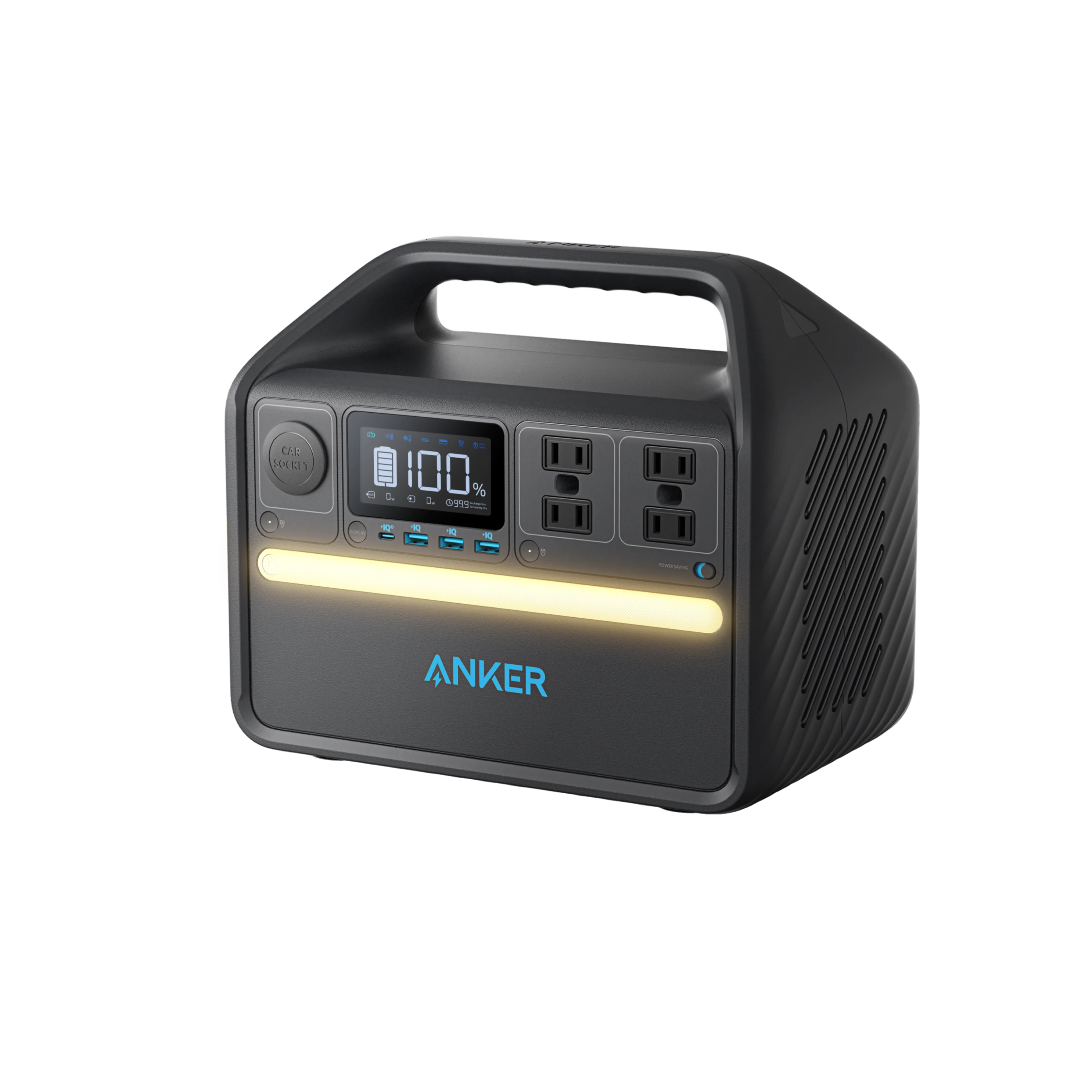
Anker 535 PowerHousePick
$299.99
$299.99 · direct from Anker
Last checked 16 days ago. Prices move — check before you buy.
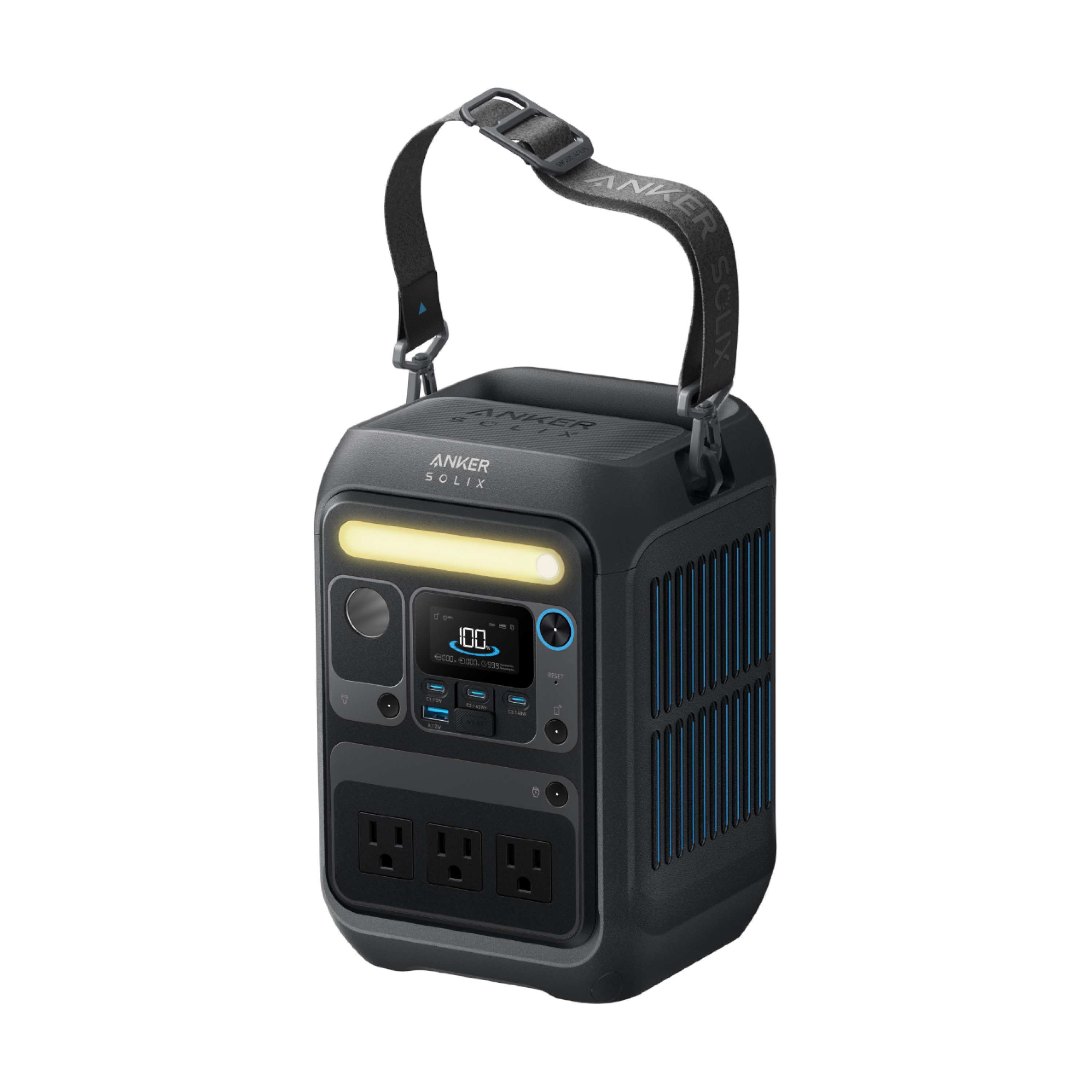
Anker SOLIX C300X
$299.99
$299.99 · direct from Anker
Last checked 16 days ago. Prices move — check before you buy.
Prices may vary by retailer and are subject to change.