Head-to-head test
EcoFlow RIVER 2 Max vs Goal Zero Yeti 500X
Nearly the same 500Wh battery, but the Yeti costs $211 more and its cells are rated to die in a sixth of the time.
Full profiles: EcoFlow RIVER 2 Max → · Goal Zero Yeti 500X →

Written by Wenny ZhengUpdated
Portable Power Tester, Station Arena Test Desk
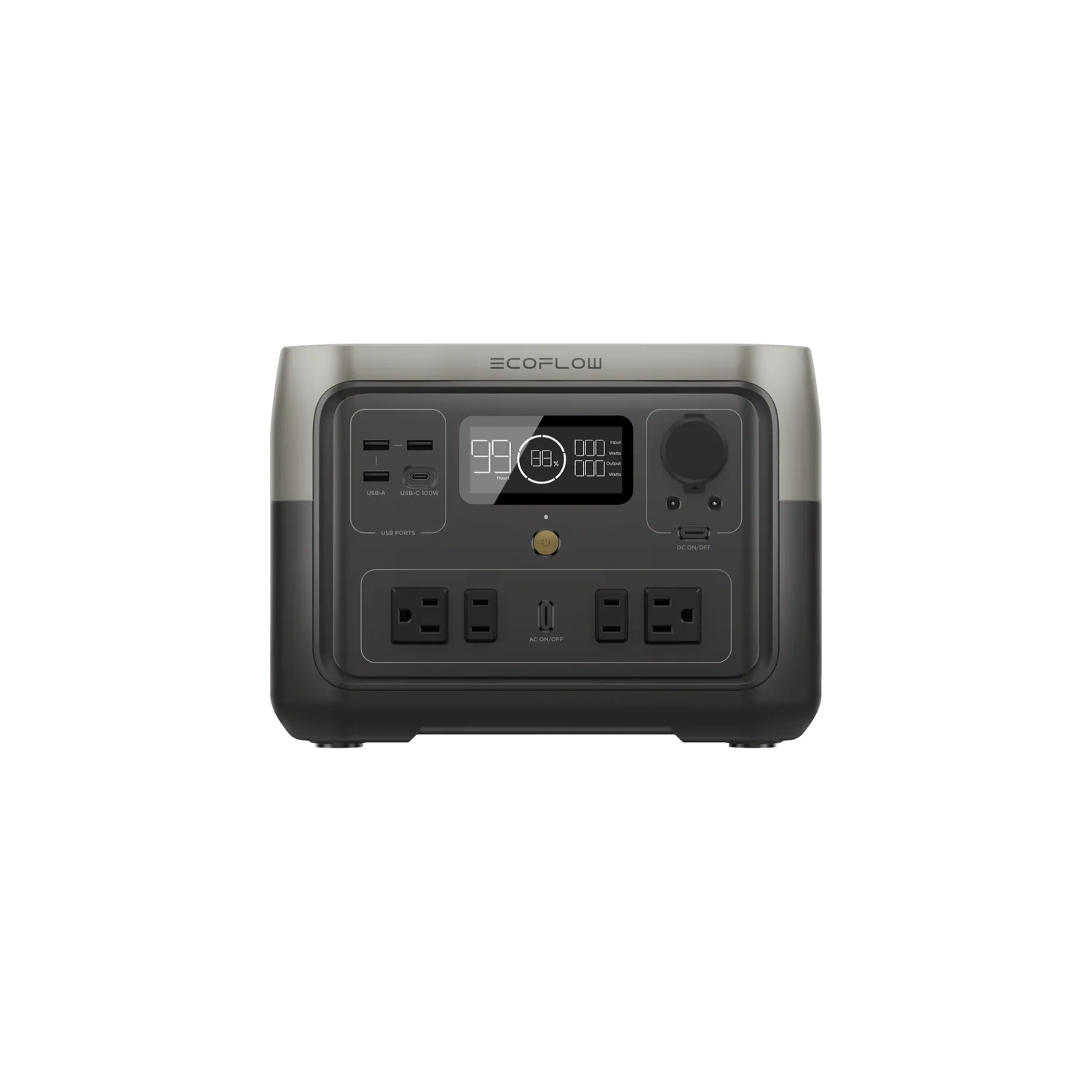
$289.00 · direct from EcoFlow
Last checked 1 day ago. Prices move — check before you buy.
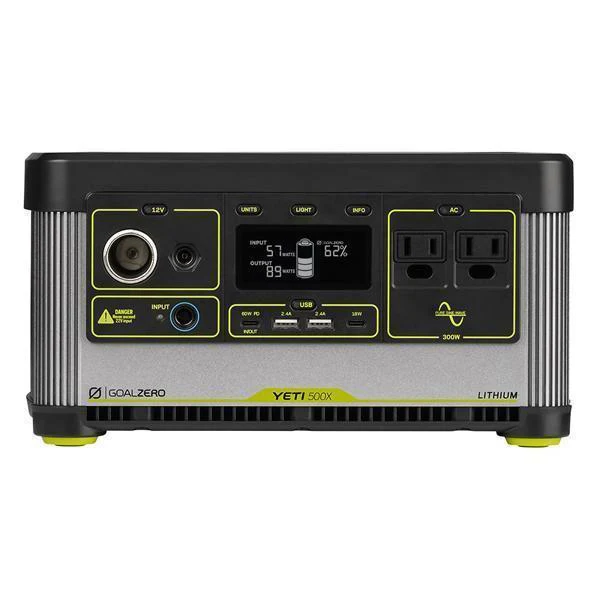
$499.95 · direct from Goal Zero
Last checked 1 day ago. Prices move — check before you buy.
Spec deltas
Two compact power stations holding almost identical energy, 512Wh against 497Wh, and one of them costs $211 more to own a battery rated for a fraction of the charges. The EcoFlow RIVER 2 Max is $289 with 3,000-cycle LFP cells; the Goal Zero Yeti 500X is $500 with 500-cycle NMC. That is the matchup in two numbers, and everything else is a footnote to it.
The Yeti 500X isn't a bad box. It's a compact, well-built 505Wh unit that owners reliably run laptops, tablets, and phones on for yearsB2B3. Its problem is that it's an older Li-NMC design, already superseded by a newer LFP Yeti 500B4, sitting next to a rival that undercuts it on price and beats it on chemistry, output, charging, and warranty at the same time.
So this is a short read. The RIVER 2 Max wins going away, and the only reason to pause is a genuinely narrow one: the Yeti's weather-resistant case. If you don't need that, you're paying a premium for less.
What the Numbers Reveal
Each conclusion stated first — the numbers behind it on one line, the full analysis below.
rated cycles
At daily use that's the difference between roughly 8 years and 1.4 years before the cells fade to 80%, and the gap widens on the warranty: EcoFlow covers the RIVER 2 Max for 5 years, Goal Zero covers the Yeti for 2. The cheaper unit is still under coverage at the point the Yeti's warranty has lapsed and its cells are already sliding.
RIVER 2 Max: $289, 3,000-cycle LFPYeti 500X: $500, 500-cycle NMC
Why it mattersAnyone who cycles the unit more than a few times a month should not pay the Yeti premium for the shorter-lived battery.
continuous output
A 300W ceiling quietly rules out a lot of gear a small blender, a heat gun, most single-serve coffee makers won't start on the Yeti, while the RIVER 2 Max's 1,000W surge starts loads the Yeti simply refuses. Same energy on the shelf, a noticeably shorter list of things you can actually plug into the Yeti.
RIVER 2 Max: 500W continuous / 1,000W surgeYeti 500X: 300W continuous / 600W surge
Why it mattersIf you run anything past laptops and phones, the Yeti's inverter is the first wall you hit.
solar input
For a unit this size recharge speed is the whole story in an outage the RIVER 2 Max is back to full over a lunch breakA2, while the Yeti's smaller solar intake needs closer to a full good-sun day to do the same off panels. In the exact blackout you buy a backup for, faster in beats half a pound lighter.
RIVER 2 Max: 220W solar input, ~60-minute wall chargeYeti 500X: 120W solar input
Why it mattersOff-grid or mid-outage, the RIVER 2 Max is ready to go again long before the Yeti is.
The specific dimensions that decide these two units — everything else is a tie.
Lifetime Value
Selected because: The decisive axis: cheaper upfront AND 6x the cycle life against a genuinely low 500-cycle NMC pack.
cost / lifetime kWh
Cycle life is usually a number both units win, so it's easy to wave off. Not here. The Yeti's 500-cycle NMC pack is the rare case where the figure is low enough to reach: at the brief's daily-use math it fades to 80% in about 1.4 years, versus roughly 8 years for the RIVER 2 Max's LFP cells. Cycle it every weekend instead and it's 4.8 years against 28.8.
The tidy way to see it is cost per warranty year: $60 for the RIVER 2 Max against $250 for the Yeti. You are paying more, up front, for the box that wears out first. That's the whole argument, and no other spec on this page reverses it.
PowerScore Breakdown
Selected because: 500W/1000W vs 300W/600W settles what each can actually run; power_score 2003 vs 1252.
overall power score
The composite score lands at 2,003 to 1,252, and the reason is inverter, not battery. Both carry about 500Wh, but the RIVER 2 Max delivers it at 500W continuous with a 1,000W surge, while the Yeti caps at 300W and 600W. That gap is the difference between a unit that starts a small appliance and one that trips trying.
For phones, tablets, and laptops it never matters both do that all dayA4B3. The moment you reach for something with a motor or a heating element, the Yeti's 300W ceiling is the spec you'll remember, and the RIVER 2 Max is the one that shrugs.
Portability & Form Factor
Selected because: The Yeti's only real edge lives here, and it's a near-tie (0.5 lb) plus its ruggedized case.
weight
This is where the Yeti gets to be right, and it's close: 12.9 lbs against 13.4, half a pound in the Yeti's favorB2. Both are true one-hand grab-and-go units at about 13 lbs, lighter than most Li-Ion rivals in the classA1. If you're carrying it from the car to a campsite table, you will not feel the difference.
The Yeti's more meaningful portability edge is its ruggedized, weather-resistant case a real advantage if the unit lives outdoors, exposed. That's the one honest reason to choose it, and it's worth naming clearly rather than burying.
What the Specs Don't Tell You
Selected because: Volunteer the RIVER 2 Max's 62dB fast-charge noise; contextualize warranty, app, and the Yeti's undisclosed noise.
rated cycles
The RIVER 2 Max has one genuine catch worth stating before you buy: it hits 62dB under heavy load and fast charging. Its headline trick is a ~60-minute refillA2, and that hour is not a quiet one if it's charging in the room you're sitting in, you'll hear it. At a CPAP's low overnight draw it settles down, but the fast charge earns its speed with fan noise.
Goal Zero, by contrast, publishes no noise figure at all, so you're buying blind on that spec. The Yeti also has no app EcoFlow's WiFi/Bluetooth control is a real convenience for monitoring from your phoneA3, though it's the kind of thing some buyers are happy to live without. On warranty the split is plain: 5 years versus 2.
Brand Trust
Selected because: EcoFlow's fast-innovating deep ecosystem vs Goal Zero's premium-priced, coasting heritage.
This is EcoFlow's deepest structural advantage and Goal Zero's most exposed flank. EcoFlow runs the widest lineup in portable power with the fastest innovation cadence and X-Stream charging behind it; Goal Zero is the market's pioneer, US-based, with the strongest heritage and a ruggedized, Yeti-Ready ecosystem of coolers and vehicle kits.
But heritage isn't holding up on the balance sheet. Goal Zero is widely the most expensive brand per watt-hour, its support has slipped from its old premium standard, and it recently shuttered its community forums. EcoFlow isn't spotless a 2025 DELTA Max recall and a floated app-subscription paywall are both worth knowing but you're buying into the line that's actively pushing forward, at a lower price, on this pair.
Strengths & trade-offs
EcoFlow RIVER 2 Max
Strengths
- +Costs $211 less
- +Larger battery capacity
- +Higher AC output
- +Longer warranty
- +Faster solar charging
- +Rated for 3,000 charge cycles — much longer battery lifespan
Trade-offs
- –Can receive complaints about fan noise under heavy load.
Goal Zero Yeti 500X
Strengths
- +Lighter by 0.5 lb
Trade-offs
- –Substantially more expensive (+$211) than the RIVER 2 Max.
- –Lacks smartphone app control for remote monitoring.
- –Shorter-lived battery — rated for 500 charge cycles vs the RIVER 2 Max's 3,000, so it wears out sooner.
Will It Power Your Gear?
Scenario math and per-appliance runtimes, modeled from the spec record.
Scenario verdicts
We ran the math on six real-world scenarios. Here's which unit survives your actual life.
SCN-01 · 2 nights · needs 2,100Wh
Weekend Camping
Two nights off-grid with essential comfort
Neither unit
Neither unit covers this scenario's 2,100Wh: the RIVER 2 Max comes up 1,665Wh short (about 21% covered), the Yeti 500X 1,678Wh (20%). This is well outside what either unit is for; the right answer here is a larger station, not a choice between these two.
Battery budget usedlower = more headroom
LOAD Phone Charger 15W×6h · LED Lights 40W×8h · Box Fan 75W×14h · CPAP Machine 40W×16h
SCN-02 · 8 hours · needs 1,645Wh
8-Hour Blackout
Keep the essentials running through a night without power
Neither unit
Neither unit covers this scenario's 1,645Wh: the RIVER 2 Max comes up 1,210Wh short (about 26% covered), the Yeti 500X 1,223Wh (26%). Treat this as partial cover — enough for the essentials in it, not the whole list.
Battery budget usedlower = more headroom
LOAD Fridge 150W×8h · Router + Modem 20W×8h · LED Lights (4 bulbs) 40W×6h · Phone Charger 15W×3h
SCN-03 · 8 hours · needs 320Wh
CPAP Overnight
Sleep therapy without interruption — the #1 medical use case
Either unit
Both clear a 320Wh CPAP night comfortably about 74% of the RIVER 2 Max and 76% of the Yeti, so call it a tie on capacity. Break it on the things that actually differ overnight: the RIVER 2 Max costs less, lasts far longer, and refills in about an hour the next morning. Same restful night, cheaper and longer-lived box beside the bed.
Battery budget usedlower = more headroom
LOAD CPAP Machine 40W×8h
SCN-04 · 8 hours · needs 910Wh
Remote Workday
Full work day off-grid without power anxiety
Neither unit
Neither unit covers this scenario's 910Wh: the RIVER 2 Max comes up 475Wh short (about 48% covered), the Yeti 500X 488Wh (47%). Treat this as partial cover — enough for the essentials in it, not the whole list.
Battery budget usedlower = more headroom
LOAD Laptop 60W×8h · External Monitor 30W×8h · Router + Modem 20W×8h · Phone Charger 15W×2h
SCN-05 · 4 hours · needs 670Wh
Tailgate Party
Game day power for the crew
Neither unit
The Yeti 500X can start the 400W peak but not hold it — 1,200W of surge gets it going, then the 300W continuous rating takes over, so capacity never gets a say. This is the wrong size of unit for the job rather than a close call. The RIVER 2 Max doesn't have the energy either — 435Wh usable against 670Wh, 235Wh short — so neither route works.
Battery budget usedlower = more headroom
LOAD Blender 400W×0.5h · LED TV (55") 80W×4h · Bluetooth Speaker 15W×4h · Phone Charger (×3) 45W×2h
SCN-06 · 24 hours · needs 4,685Wh
Van Life Daily
A full day of mobile living — the ultimate endurance test
Neither unit
Neither unit covers this scenario's 4,685Wh: the RIVER 2 Max comes up 4,250Wh short (about 9% covered), the Yeti 500X 4,263Wh (9%). This is well outside what either unit is for; the right answer here is a larger station, not a choice between these two.
Battery budget usedlower = more headroom
LOAD Mini-Fridge 150W×24h · Laptop 60W×4h · Phone Charger 15W×3h · LED Lights 40W×5h · Fan 75W×8h
The Load Test
RUNTIME = (Wh × 0.85) ÷ LOAD
None of the scenarios above exactly yours? Build it. Toggle what you'd plug in; both units are tested against the combined draw.
Essentials
Comfort & Convenience
High-Draw Appliances
Test duration
8h
Continuous draw
205W
Projected runtime
Dead heat — both run this 205W load for roughly 2.1h. Pick on price, weight, or ports.
Modeled from the spec record — same math as the tables below. Methodology
Runtime by appliance
Real-world runtime estimates for common appliances, modeled at 85% inverter efficiency.¹
Essentials
The basics you need runningscale 0–29hComfort & Convenience
Makes off-grid life actually enjoyablescale 0–5.8hHigh-Draw Appliances
These reveal the real limits¹ Runtime = (capacity × 0.85) ÷ appliance watts. Within each group, all bars share one time scale (the group's longest runtime), so lengths are comparable across appliances; identical runtimes collapse into a single blue/orange bar. Actual runtime varies with battery age, temperature, and simultaneous loads — see methodology.
Conclusion
July 16, 2026
Verdict: the RIVER 2 Max
The RIVER 2 Max is the cheaper unit ($289 vs $500), the longer-lived one (3,000 LFP cycles vs 500 NMC), the more powerful one (500W vs 300W), the faster to refill (~60-minute wall charge, 220W solar vs 120W), and the better-backed one (5-year warranty vs 2). The Yeti 500X answers with half a pound saved and a weather-sealed case. That is not a $211 case for an older battery that reaches its replacement date while the RIVER 2 Max is barely broken in. Unless you specifically need the ruggedized build, take the RIVER 2 Max.
Editor-assigned confidence, based on cited owner research and spec analysis.
List prices as of July 16, 2026. The links below open EcoFlow's and Goal Zero's current prices.
$289.00 · direct from EcoFlow
Last checked 1 day ago. Prices move — check before you buy.
or check the Yeti 500X price$499.95 list
Written by Wenny Zheng, Portable Power Tester · Station Arena Test Desk · Updated July 16, 2026
Measured Data
Benchmark scores and the full spec record, side by side.
Benchmark scores
Not rated for both units (minimum threshold unmet): CPAP, Solar Generator, Tailgating.
Full specifications
ᵈ Derived: price ÷ rated capacity. See the data behind our comparisons →
Comparison ToolAdd more power stations, side by sideOpen Tool →How these numbers are produced
Numeric verification
Every figure on this page traces to our spec database or arithmetic on it — no estimated numbers.
Owner claims
Statements about owner experience are cited to published reviews — see Sources & Research Notes below.
Runtime model
Runtime = (rated capacity × 0.85 inverter efficiency) ÷ device wattage. Solar recharge estimates assume panels deliver 70% of rated output. Cold weather, battery age, and stacked loads reduce real-world results.
Power Score
Computed from 14 published spec dimensions, weighted per use-case bench. Higher is better; a unit must meet a bench's minimum threshold to be rated.
See the full weight table and data sourcing on our methodology page →Class ranking (the star rating)
Each unit's star score is a category ranking, not customer reviews — no buyer opinions feed it. We score every station on size-independent quality (value, output, portability, endurance, ports, warranty, and more), then percentile-rank it against the other units in its capacity class, so a class-leading compact unit and a class-leading whole-home unit can both earn 5★. Here, RIVER 2 Max rates 3.7/5 (26th percentile of 20 Compact-class units), and Yeti 500X rates 3.5/5 (14th percentile of 22 Personal-class units).
How the class ranking is computed →Test Notes & Caveats
Hidden gotchas and advantages we spotted that you won't find on the product page.
The 62dB is the price of the 1-hour charge
The RIVER 2 Max's headline trick is a roughly 60-minute refill, and that speed isn't silent it hits 62dB under heavy load and fast charging. Charge it in another room and it's a non-issue; charge it beside you and you'll hear the hour out. At low draw, like a CPAP, it quiets down.
App vs no app cuts both ways
The RIVER 2 Max gives you WiFi/Bluetooth monitoring and charge control from your phone, which is genuinely useful. The Yeti 500X has none, which is one less thing to fuss with. Nice-to-have on one side, refreshing simplicity on the other pick your temperament.
Surge Power: Inverter Quality Indicator
The Yeti 500X has a 4× surge-to-continuous ratio vs the RIVER 2 Max's 2×, and the higher absolute ceiling with it — 1,200W against 1,000W. At 4× it clears the 2× rule of thumb for absorbing motor startups — fridges, AC compressors and power tools briefly draw 2-3× their rated wattage. What decides whether a given motor starts is the ceiling, not the ratio: the RIVER 2 Max still surges to 1,000W, so check the startup draw of the heaviest thing you plan to run against that figure rather than assuming it trips.
Only the RIVER 2 Max Lists a UPS Mode
The RIVER 2 Max can sit between the wall and your gear and hand it to battery when the grid drops — rated ≤30ms — a transfer this long is one many desktops will NOT ride through, so plan on reboots for sensitive gear. Worth it for a router, a desktop PC, or a CPAP. The Yeti 500X's spec sheet lists no UPS mode, so anything plugged into it rides an outage only as far as your reaction time.
5 years vs 2, on the cheaper unit
EcoFlow backs the RIVER 2 Max for 5 years; Goal Zero covers the Yeti for 2. The unit that costs $211 less is also the one still under warranty when the Yeti's has already run out.
Six times the cycles, and the low one is reachable
Usually cycle counts are a spec nobody lives to test. Not the Yeti's: 500 NMC cycles is about 1.4 years of daily use to 80%, against roughly 8 years for the RIVER 2 Max's 3,000-cycle LFP. This is the rare matchup where the cycle number is the whole story.
Goal Zero doesn't publish a noise figure
The RIVER 2 Max at least tells you it's 62dB under load. The Yeti 500X ships without a rated noise spec, so you're buying that particular unknown on faith.
Full record above — the Test Desk pick is the RIVER 2 Max.
Check RIVER 2 Max price →or check the Yeti 500X priceOwnership Analysis
What happens after you buy — true cost of ownership, brand trust, and growth potential.
Lifetime value
Service lifeyears at one full cycle per day
Lifetime energy delivered
Cost per delivered kWh
│ warranty ends · Reaching the cycle rating means ~80% capacity remains — degraded, not dead.
Analyst note
The RIVER 2 Max wins on both sticker price and long-term value. At $0.19/kWh over its lifetime, it's meaningfully cheaper to own. Clear value winner.
Delivers each lifetime kWh for $1.82 less — check the RIVER 2 Max price →
Brand trust
EcoFlow
Ecosystem
The widest lineup in portable power a dozen-plus models from RIVER 3 up to DELTA Pro, plus panels and smart home gear so there's a clear upgrade path when you outgrow this.
Support
US-based phone/email/chat support (1-800-368-8604). Experiences are polarized — many report hassle-free prepaid-label replacements, but others report long waits and refurbished units sent for new claims. Pro tip: buying from Costco or Amazon gives you a stronger return safety net.
Community
Largest community in the space — Reddit r/Ecoflow_community (~31K members), multiple Facebook groups, and an official community forum
App experience
Rated 4.6/5 iOS (~8,400 ratings) · 4.2/5 Android (~17,000 ratings)
Unique strength
Fastest-charging tech in the class (X-Stream) and the most active innovation cadence, which is exactly why the RIVER 2 Max out-specs an older rival at a lower price.
Worth knowing
Not spotless: a 2025 DELTA Max recall and a briefly-floated app-subscription paywall are both worth knowing before you buy into the ecosystem.
Goal Zero
Ecosystem
Focused rather than deep five or six Yeti models, plus Alta coolers, Nomad solar, and vehicle kits in a tight Yeti-Ready system.
Support
US-based company (Salt Lake City, owned by NRG Energy). Historically considered premium support, but 2025-2026 reports describe long wait times, unresponsive email communication, and tickets going unaddressed for weeks. The "premium support justifies premium pricing" argument is weakening.
Community
Small but loyal — strong following in overlanding and preparedness communities. Official community forums were recently shuttered, frustrating long-time users.
App experience
Rated 4.4/5 iOS (~1,200 ratings) but recent reviews skew negative — recurring connectivity issues, crashes, and stability problems.
Unique strength
The market's pioneer, US-based, with the strongest heritage and genuinely ruggedized, weather-resistant hardware.
Worth knowing
Widely the most expensive brand per watt-hour, with support that's slipped from its old premium standard and community forums it recently shut down.
Analyst note
Goal Zero has the heritage and the tougher case; EcoFlow has the deeper lineup, the faster innovation, and the lower price. On this pair, you're choosing between the brand that's coasting at a premium and the one still pushing the specs forward for less.
Growth path
RIVER 2 Max
FIXED CAPACITYFixed at 512Wh, with no expansion — so size it for your needs up front rather than planning to add capacity later.
Accepts up to 220W of solar. Limited to a single portable panel.
Adequate ports for most setups, but heavy users may want a power strip.
Yeti 500X
FIXED CAPACITYFixed at 497Wh, with no expansion — so size it for your needs up front rather than planning to add capacity later.
Accepts up to 120W of solar. Limited to a single portable panel.
Limited ports. You'll likely need a power strip or splitter.
Realistic full solar rechargeat 70% of rated panel output — see methodology
Analyst note
Neither expands, and that's no knock on either — each is a complete unit at a fixed size. Buy the capacity that covers your needs now (the RIVER 2 Max gives you the larger ceiling); you can't add to either later.
What Owners Report
Patterns from published owner reports and long-term reviews — every claim cited to its source below.
EcoFlow RIVER 2 Max
The RIVER 2 Max earns its praise on chemistry and endurance first. Reviewers put its upgraded LFP pack at roughly 3,000 cycles, about a decade of everyday use, and in field testing ran a telescope, a 65-inch LED TV, two laptops, and phones through a 4-hour event with power left overA4. That's the profile that matters against a 500-cycle rival: it holds up.
The rest of the reputation is portability and speed. Owners and reviewers consistently flag the ~13 lb weight as light for 512Wh, lighter than Li-Ion competitorsA1, the roughly one-hour full charge via X-Stream as far quicker than most stationsA2, and the app as a simple, capable way to monitor and tune charging over WiFi or BluetoothA3.
“512Wh in a light package of about 13 lbs, lighter than some of its closest competitors that use Li-Ion chemistry.”
Sources
storagereview.com · backuppowerhub.com · gagadget.com · ecoflow.com · thecampingnerd.com · thetechnologyman.com · bestbuy.com
Goal Zero Yeti 500X
The Yeti 500X reads well as a compact, dependable small-device box. Owners call it one of the most portable 505Wh units around at 12.9 lbs, with build quality they trustB2, and report reliably running two laptops, a Switch, an iPad, and multiple phones without troubleB3. Nobody's complaining about what it does at low draw.
The reservation is structural, not anecdotal: it's a 505Wh Li-NMC pack rated for just 500 cycles to 80%, with a 300W inverterB1, and it's an older design that a newer LFP Yeti 500 has already replaced with a far higher cycle ratingB4. The field reports are fine; the chemistry underneath them is the dated part.
“Weighs 12.9 lbs and is one of the most compact 505Wh power stations, with praised portability and build quality.”
Sources
nomadwatts.com · bestbuy.com · yuenx.com · survival-kompass.de · portablepowernerd.com
Sources & Research Notes
Every owner claim in this report is traceable to a published source. The bracketed references above resolve here.
Recurring owner themes
- Light weight, fast roughly-one-hour charging, and a simple capable app are the standout praise for this 512Wh unit. [RIVER 2 Max · 3 entries]
- Compact, well-built, and reliable for small devices, but held back by 500-cycle NMC chemistry vs newer LFP. [Yeti 500X · 3 entries]
- A1
“512Wh in a light package of about 13 lbs, lighter than some of its closest competitors that use Li-Ion chemistry.”
storagereview.com / backuppowerhub.com — RIVER 2 Max review · 2026 · [positive]
- A2
“Fully charges in about 60 minutes via X-Stream charging — far faster than most portable power stations — with multiple charging options.”
gagadget.com / ecoflow.com — RIVER 2 Max review · 2026 · [positive]
- A3
“The EcoFlow app offers simple remote control and monitoring over WiFi and Bluetooth — view charge levels, customize settings, and adjust charging speed from a phone.”
thecampingnerd.com / ecoflow.com — RIVER 2 Max review · 2026 · [positive]
- A4
“Upgraded LFP chemistry rated for about 3,000 cycles, roughly a decade of everyday use; in field testing it powered a telescope, a 65-inch LED TV, two laptops, and phones through a 4-hour event with power to spare.”
thetechnologyman.com / bestbuy.com owner reviews — RIVER 2 Max · 2026 · [positive]
- B1
“A 505Wh Li-ion NMC battery rated for 500 charge cycles to 80% capacity, with a 300W continuous inverter (350W surge, 2,000W peak).”
nomadwatts.com / bestbuy.com — Yeti 500X review · 2026 · [negative]
- B2
“Weighs 12.9 lbs and is one of the most compact 505Wh power stations, with praised portability and build quality.”
yuenx.com / survival-kompass.de — Yeti 500X review · 2026 · [positive]
- B3
“Owners report reliably charging multiple devices — two laptops, a Nintendo Switch, an iPad, and multiple phones — without problems.”
bestbuy.com owner reviews — Yeti 500X · 2026 · [positive]
- B4
“An older NMC design; a newer LFP Yeti 500 has since replaced it with a far higher cycle rating.”
portablepowernerd.com — Yeti 500X/500 review · 2026 · [mixed]
Research compiled July 16, 2026.
Who Should Buy Which
Buy the RIVER 2 Max if you…
- →The weekend camper or CPAP user who wants a light ~500Wh unit that will still hold a charge a decade from now, not a year from now.
- →Anyone running 300-500W gear a small appliance, a tool, a bright projector that the Yeti's 300W inverter can't start.
- →The blackout-minded buyer who cares that it refills in about an hour on the wall and takes 220W of solarA2.
Buy the Yeti 500X if you…
- →The buyer who genuinely needs the ruggedized, weather-resistant case for exposed outdoor use and is willing to pay for that specifically.
- →A committed Goal Zero owner already invested in the Yeti-Ready ecosystem of coolers, lights, and vehicle kits.
If neither fits
If you need to run a fridge through an 8-hour blackout, cover a full remote workday off-grid, or power a van-life setup, both of these fall short none of those scenarios is within reach for a ~500Wh unit. Step up to a 1,000Wh-plus LFP station instead.
The Bottom Line
Take the RIVER 2 Max. It's the cheaper unit and the longer-lived one at the same time $289 against $500, with 3,000 LFP cycles against the Yeti's 500 NMC and that combination is the whole verdict. You are not trading price for endurance here; you get both, plus more output, faster charging, and three more years of warranty.
The Yeti 500X keeps one honest card, a ruggedized weather-resistant case, and if your unit lives outdoors exposed that's a real reason to consider it. For everyone else, it's a $211 premium for an older battery that reaches its replacement date while the RIVER 2 Max is still on its first act. Buy the EcoFlow and don't look back.
Frequently Asked Questions
Answers drawn from the spec record and cited owner research.
Is the Goal Zero Yeti 500X worth $211 more than the EcoFlow RIVER 2 Max?
For most buyers, no. They hold nearly the same energy (497 vs 512Wh), but the RIVER 2 Max has six times the cycle life, more output, faster charging, and a longer warranty for $211 less. The Yeti's only real case for the premium is its rugged, weather-resistant case and brand heritage.
How long will each battery actually last?
The RIVER 2 Max uses 3,000-cycle LFP cells about 8 years at daily use before fading to 80%. The Yeti 500X uses a 500-cycle NMC pack, roughly 1.4 years at daily use. For weekend-only use the split is about 28.8 years versus 4.8.
Can either one run a space heater or a full-size fridge?
Not really. The RIVER 2 Max handles small appliances with 500W continuous and a 1,000W surge; the Yeti 500X is more limited at 300W and 600W. A 1,500W space heater is beyond both, and a large fridge's startup surge is a stretch for either.
Which is quieter for running a CPAP overnight?
Both are quiet at a CPAP's low draw. The RIVER 2 Max is rated at 62dB, but that's under heavy load and fast charging, not at the trickle a CPAP pulls. Goal Zero doesn't publish a noise figure, so you're buying blind there, but at CPAP-level draw neither fan should wake you.
Does the RIVER 2 Max's app matter, and does the Yeti have one?
The RIVER 2 Max adds WiFi and Bluetooth control for monitoring charge and tuning charging speed from your phone, which owners find genuinely handy. The Yeti 500X has no app at all. That's a convenience the EcoFlow wins, though some buyers prefer the Yeti's app-free simplicity.
Where to buy
EcoFlow RIVER 2 MaxPick
$289.00
$289.00 · direct from EcoFlow
Last checked 1 day ago. Prices move — check before you buy.
Goal Zero Yeti 500X
$499.95
$499.95 · direct from Goal Zero
Last checked 1 day ago. Prices move — check before you buy.
Prices may vary by retailer and are subject to change.