Head-to-head test
EcoFlow DELTA Pro Ultra vs EcoFlow RIVER 2
EcoFlow DELTA Pro Ultra vs EcoFlow RIVER 2: 6,144Wh you install against 256Wh you carry, and the RIVER 2 has left EcoFlow's range, replaced there by the RIVER 2 240. The Pro Ultra is the one you can still buy and the only one that finishes a blackout, unless your whole job is a phone and a speaker for one afternoon.
Full profiles: EcoFlow DELTA Pro Ultra → · EcoFlow RIVER 2 →
Looking for a different matchup? EcoFlow DELTA 2 vs DELTA Pro · EcoFlow DELTA 2 vs RIVER 2 Pro

Written by Gunner GustafsonUpdated
Whole-Home Backup Tester, Station Arena Test Desk
Spec deltas
The RIVER 2 has left EcoFlow's range. You can still compare it, because the specs are real and plenty of people own one, but you cannot buy one from EcoFlow: what the store lists in its place is the RIVER 2 240, which our retirement note describes as the same unit carrying a slightly smaller battery.
That leaves the DELTA Pro Ultra as the only live candidate on the page, which makes it the winner by default and by a distance. It also makes it the wrong answer for a lot of the people who searched this pair. 6,144Wh of installed battery against 256Wh you lift with two fingers isn't a comparison, it's a range map.
So read this as a sizing page. In four of the seven scenario rows the Pro Ultra finishes and the RIVER 2 runs out. In two more, neither unit is the answer, because one can't travel and the other can't last. The seventh is an afternoon of phones and a speaker, and that is the row where 7.8 lbs beats 181.8 lbs outright. Find your job on that list and you will know which shelf of EcoFlow's catalogue you are actually shopping.
What the Numbers Reveal
Each conclusion stated first — the numbers behind it on one line, the full analysis below.
weight
Across seven rows these two units overlap on exactly one job, a 100Wh afternoon. Capacity and portability are traded against each other with nothing in between on this page, so a reader whose weekend looks like a campsite or a parking lot is being shown the two EcoFlow products that specifically cannot do it.
DELTA Pro Ultra: 181.8 lbs, recorded as stationary hardwareRIVER 2: 256Wh, 218Wh usable after the site's flat 85% derate, 7.8 lbsWeekend Camping needs 2,100Wh; Tailgate Party needs 670Wh
Why it mattersIf you came here to choose a camping unit, the answer is neither, and a weekend's 2,100Wh is the number that should set the size you go shopping with.
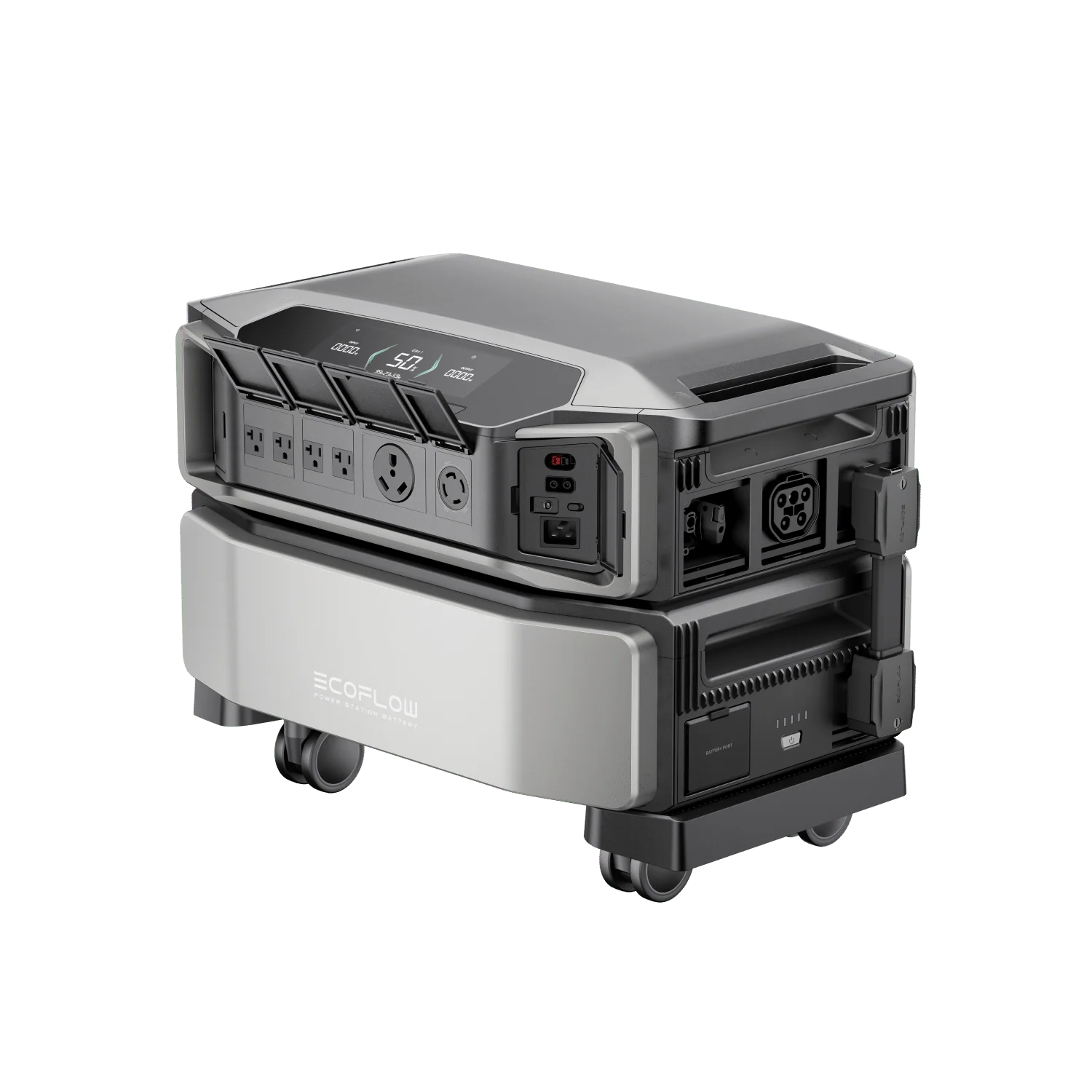
The Pro Ultra is not a larger RIVER 2, it is a different class of appliance that backs up circuits instead of gear. That is why 6,144Wh does not translate into covers everything: a 12V car fridge plugs into the small unit and has nowhere to go on the large one.
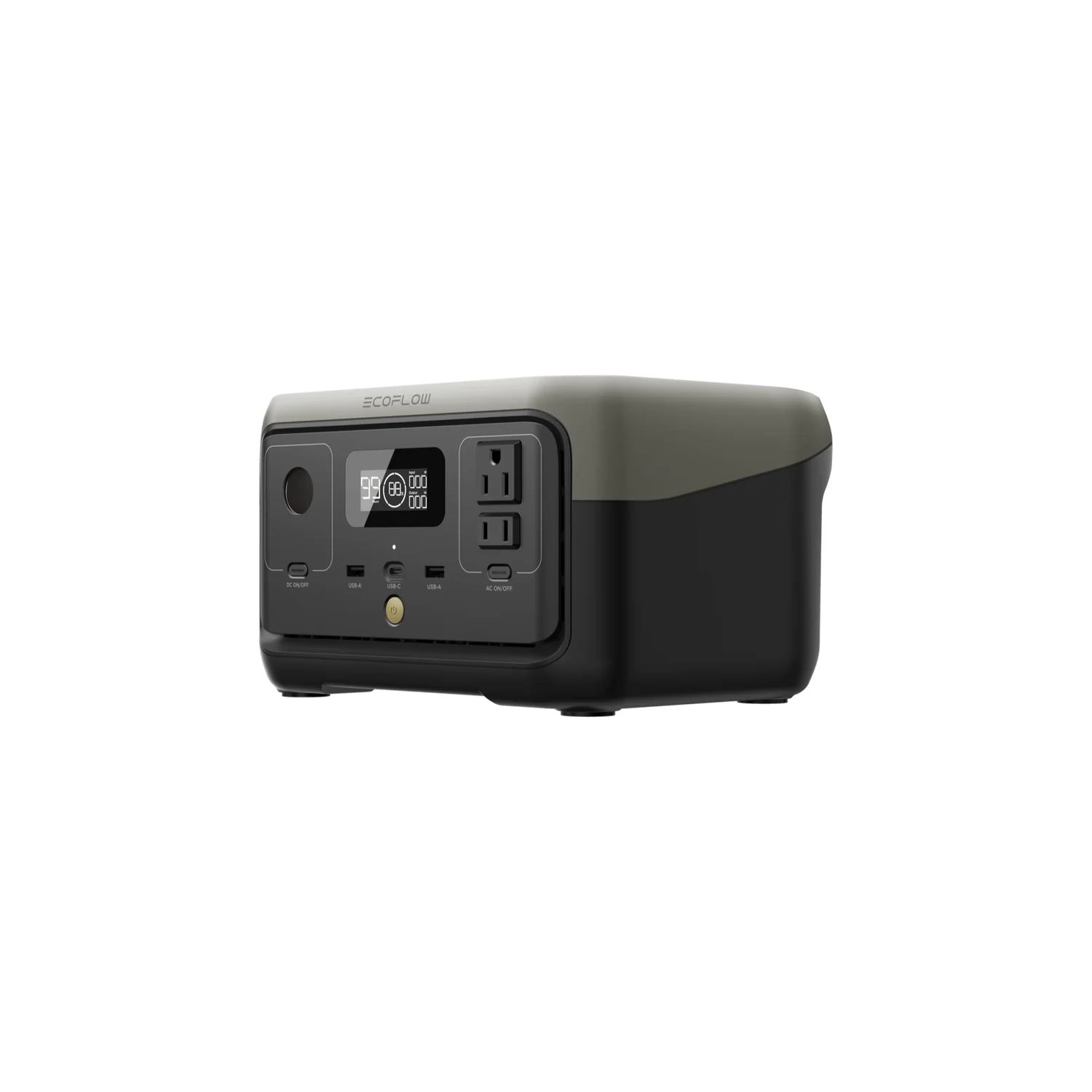
DELTA Pro Ultra ports: 3 AC sockets, two 240V outlets, one 30A RV outlet, zero 12V car socketsRIVER 2 ports: 2 AC sockets, one 12V car socketDELTA Pro Ultra: 7,200W continuous, 10,800W surge
Why it mattersIf your loads are 12V camping gear, read the socket row before the capacity row, because the bigger number solves nothing here.
solar input
The small unit's limit is not only what it holds, it is how slowly it can put it back. Several days off-grid, a 110W ceiling turns one overcast morning into an afternoon of rationing, while the Pro Ultra's constraint is how many panels you own rather than the port they plug into.
DELTA Pro Ultra: 6,144Wh capacity against a 5,600W solar input ceilingRIVER 2: 256Wh capacity against a 110W solar input ceiling
Why it mattersAnyone planning to live off solar rather than top up from a wall should weigh input ceiling as heavily as capacity, because it is the spec that decides whether day three works.
Anyone who landed here while sizing a small EcoFlow for a night on a CPAP was already shopping the wrong end of the range, and the successor does not rescue the plan. An overnight medical load needs a bigger class of unit, not a fresher version of this one.
RIVER 2: retired, no longer listed by EcoFlow, with the RIVER 2 240 sold in its placeOur retirement note describes the successor as the same unit with a slightly smaller batteryCPAP Overnight: 320Wh needed against 218Wh usable, 102Wh short
Why it mattersCPAP buyers should leave the RIVER shelf entirely and size against the full 320Wh night with margin on top.
The specific dimensions that decide these two units — everything else is a tie.
Your Life, Your Pick
Selected because: Seven jobs, and the split is the page: the Pro Ultra takes four outright, two come back neither, and one is the afternoon where 7.8 lbs wins.
Two rows come back neither, and they are the two rows most people buy a power station for: a weekend at a campsite and a game day in a parking lot. The Pro Ultra misses them for a reason no firmware patches, since our record marks it stationary at 181.8 lbs, so it has the energy and no way to attend. The RIVER 2 misses them from the other side, with 218Wh usable against a 2,100Wh weekend.
The closest the small unit comes is the CPAP row, and close is the wrong word for what happens there. 320Wh needed, 218Wh usable, 102Wh short, which in practice means it quits before dawn rather than at bedtime. That is worse than failing outright, because you would have gone to sleep believing it.
Portability & Form Factor
Selected because: 181.8 lbs marked stationary against 7.8 lbs you carry in one hand is the axis this entire matchup turns on.
weight
181.8 lbs and 7.8 lbs describe two different verbs. One unit you pick up with two fingers and drop in a footwell. The other arrives across several boxes, gets sited once, and stays there, which is what our stationary flag is politely saying: you will move this thing twice, in and out.
That cuts against the Pro Ultra everywhere except the one place it is built to live. If the plan is a house, a shop or a cabin where the unit has an address, weight stops being a fact about the product at all. If the plan involves a trunk and a set of basement stairs, it is disqualifying, and no amount of capacity wins an argument with a staircase.
Runtime: Will It Power Your Gear?
Selected because: 6,144Wh and 256Wh derate to 5,222Wh and 218Wh usable, and that is where a 2,100Wh weekend and a 320Wh night are decided.
continuous output
Both capacities shrink before you spend them. The scenario math applies a flat 85% usable derate to every unit on the site, which turns 6,144Wh into 5,222Wh and 256Wh into 218Wh. That second figure is the one to hold on to, because almost every verdict on this page is really a statement about 218Wh meeting a job that asked for more.
The row worth studying is not the blowout, it is Van Life Daily. 4,685Wh of demand against 5,222Wh usable leaves 537Wh, so the Pro Ultra ends a van's day at roughly 90% spent. That is the one scenario where its size stops reading as excess and starts reading as the requirement, and it is also the one that needs the 5,600W solar ceiling to be anything other than a one-day unit.
What the Specs Don't Tell You
Selected because: Six cards fire here, and two of them, surge ratio and UPS transfer, look like they favor the small unit until you read what the numbers measure.
rated cycles
Two of these cards look like they favor the small unit and do not. The RIVER 2 keeps the wider surge headroom over its own rating, 2x against 1.5x, which sounds like the better inverter until you read what the numbers are: 600W of peak against 10,800W. A compressor draws a number of watts at switch-on, not a multiple of whichever inverter it happens to be plugged into.
The transfer ratings split the same way. EcoFlow classifies the Pro Ultra as a no-break design, while the RIVER 2 is rated no worse than 30ms, long enough that a desktop with unsaved work may reboot straight through it. Neither figure is a stopwatch result, and neither is a reason on its own to buy a 181.8-lb system. But if the thing you are protecting is a computer, only one of these is classed for the job.
Strengths & trade-offs
EcoFlow DELTA Pro Ultra
Strengths
- +Larger battery capacity
- +Higher AC output
- +Faster solar charging
Trade-offs
- –Significantly heavier (+174 lbs), making it harder to move.
- –Very heavy unit that may be difficult for one person to lift.
EcoFlow RIVER 2
Strengths
- +Lighter by 174 lb
Trade-offs
- –Weaker inverter (-6,900W) limits appliance compatibility.
- –Sealed capacity — the DELTA Pro Ultra can add batteries to grow past 256Wh; this one can't.
Will It Power Your Gear?
Scenario math and per-appliance runtimes, modeled from the spec record.
Scenario verdicts
We ran the math on seven real-world scenarios. Here's which unit survives your actual life.
SCN-01 · 2 nights · needs 2,100Wh
Weekend Camping
Two nights off-grid with essential comfort
Neither unit
Neither unit gives you a powered weekend, and they miss from opposite directions. The Pro Ultra holds more than twice the 2,100Wh a weekend asks for and is recorded as stationary hardware at 181.8 lbs, so it never leaves the driveway. The RIVER 2 goes wherever you can carry 7.8 lbs and covers about a tenth of the job, 1,882Wh short by Sunday. It is the cleanest statement of the whole comparison: the camping answer lives in the middle of the range, not at either end of it.
Battery budget usedlower = more headroom
LOAD Phone Charger 15W×6h · LED Lights 40W×8h · Box Fan 75W×14h · CPAP Machine 40W×16h
SCN-02 · 8 hours · needs 1,645Wh
8-Hour Blackout
Keep the essentials running through a night without power
DELTA Pro Ultra
The RIVER 2 doesn't finish — 218Wh usable against the 1,645Wh this needs leaves it 1,427Wh short, about 13% of the scenario covered. The DELTA Pro Ultra covers it with 3,577Wh to spare.
Battery budget usedlower = more headroom
LOAD Fridge 150W×8h · Router + Modem 20W×8h · LED Lights (4 bulbs) 40W×6h · Phone Charger 15W×3h
SCN-03 · 8 hours · needs 320Wh
CPAP Overnight
Sleep therapy without interruption — the #1 medical use case
DELTA Pro Ultra
The Pro Ultra takes this one at 6% of its usable capacity, which tells you how badly matched the pairing is, since you would be running a 181.8-lb installed system at a rounding error of its output to keep a mask going. The real finding is on the other side. The RIVER 2 gets about two thirds of the way through the 320Wh night and stops 102Wh short, and a machine that quits at 4 a.m. is worse than one you knew couldn't do it. It also publishes no noise figure, so there is nothing on the record about what it sounds like on the nightstand beside your ear in the meantime.
Battery budget usedlower = more headroom
LOAD CPAP Machine 40W×8h
SCN-04 · 8 hours · needs 910Wh
Remote Workday
Full work day off-grid without power anxiety
DELTA Pro Ultra
The RIVER 2 doesn't finish — 218Wh usable against the 910Wh this needs leaves it 692Wh short, about 24% of the scenario covered. The DELTA Pro Ultra covers it with 4,312Wh to spare.
Battery budget usedlower = more headroom
LOAD Laptop 60W×8h · External Monitor 30W×8h · Router + Modem 20W×8h · Phone Charger 15W×2h
SCN-05 · 4 hours · needs 670Wh
Tailgate Party
Game day power for the crew
Neither unit
Neither gives you a powered game day: the DELTA Pro Ultra has the energy but doesn't travel, and the RIVER 2 can start the 400W peak but not hold it — 600W of surge gets it going, then the 300W continuous rating takes over. One can't go; the other can't finish.
Battery budget usedlower = more headroom
LOAD Blender 400W×0.5h · LED TV (55") 80W×4h · Bluetooth Speaker 15W×4h · Phone Charger (×3) 45W×2h
SCN-06 · 24 hours · needs 4,685Wh
Van Life Daily
A full day of mobile living — the ultimate endurance test
DELTA Pro Ultra
Read the margin, not the win. 4,685Wh of demand against 5,222Wh usable leaves 537Wh in the tank, so the Pro Ultra ends a van's day about 90% spent. This is the row where its size stops being excess and becomes the specification, and the RIVER 2 covers roughly a twentieth of the same day. The catch is the one this page keeps returning to: at 181.8 lbs and marked stationary, a van is somewhere this unit gets installed, not somewhere it gets loaded.
Battery budget usedlower = more headroom
LOAD Mini-Fridge 150W×24h · Laptop 60W×4h · Phone Charger 15W×3h · LED Lights 40W×5h · Fan 75W×8h
SCN-07 · an afternoon · needs 100Wh
Afternoon Off-Grid
Phones and a speaker at the park, beach, or campsite — the small-unit job description
Either unit
Both units finish this one, which makes it the only row where they are genuinely in the same conversation. 100Wh of phones and a speaker leaves the RIVER 2 at 46% used and the Pro Ultra barely touched, so the tiebreak is the obvious one: 7.8 lbs that walks to the lake against 181.8 lbs that stays home. For this job the bigger unit's capacity isn't headroom, it's ballast.
Battery budget usedlower = more headroom
LOAD Phone Charger (×2) 30W×2h · Bluetooth Speaker 10W×4h
The Load Test
RUNTIME = (Wh × 0.85) ÷ LOAD
None of the scenarios above exactly yours? Build it. Toggle what you'd plug in; both units are tested against the combined draw.
Essentials
Comfort & Convenience
High-Draw Appliances
Test duration
8h
Continuous draw
205W
Projected runtime
For this load: DELTA Pro Ultra runs 25.5h vs 1.1h.
$4,199 list · direct from EcoFlow
Planning for more than this? Describe your whole setup and get it sized →
Modeled from the spec record — same math as the tables below. Methodology
Runtime by appliance
Real-world runtime estimates for common appliances, modeled at 85% inverter efficiency.¹
Essentials
The basics you need runningscale 0–348.2hComfort & Convenience
Makes off-grid life actually enjoyablescale 0–69.6hHigh-Draw Appliances
These reveal the real limitsscale 0–5.2h¹ Runtime = (capacity × 0.85) ÷ appliance watts. Within each group, all bars share one time scale (the group's longest runtime), so lengths are comparable across appliances; identical runtimes collapse into a single blue/orange bar. Actual runtime varies with battery age, temperature, and simultaneous loads — see methodology.
Conclusion
September 19, 2026
Verdict: the DELTA Pro Ultra, on Power Score margin
The DELTA Pro Ultra wins, and half the reason is that it is the only unit here you can still buy: the RIVER 2 has left EcoFlow's range, and a discontinued unit cannot be a recommendation however good it was. The other half is that it takes every row it can physically attend, covering the 8-hour blackout with 3,577Wh to spare and finishing a 4,685Wh van-life day with 537Wh still in reserve. What it cannot do is travel. At 181.8 lbs and marked stationary on our record, it scores neither on camping and tailgating next to a unit that covers about a tenth of a weekend. So buy it if you are installing backup around 240V and RV sockets and you have a permanent spot for it. If you wanted a box for the trunk, the honest answer is that your unit sits in the middle of EcoFlow's range and is not on this page.
Editor-assigned confidence, based on cited owner research and spec analysis.
List prices as of September 19, 2026. The links below open EcoFlow's current price.
$4,199.00 · direct from EcoFlow
Last checked 28 days ago. Prices move — check before you buy.
Written by Gunner Gustafson, Whole-Home Backup Tester · Station Arena Test Desk · Updated September 19, 2026
Black Friday · 26 days out
Price to beat:DELTA Pro Ultra $3,989
The lowest we have recorded. A Black Friday price above it is a sale this unit has already had.
Measured Data
Benchmark scores and the full spec record, side by side.
Benchmark scores
Not rated for both units (minimum threshold unmet): Home Backup, CPAP, Tailgating, Food Truck, Apartment Balcony, Camping.
Full specifications
ᵈ Derived: price ÷ rated capacity. See the data behind our comparisons →
Comparison ToolAdd more power stations, side by sideOpen Tool →How these numbers are produced
Numeric verification
Every figure on this page traces to our spec database or arithmetic on it — no estimated numbers.
Owner claims
Statements about owner experience are cited to published reviews — see Sources & Research Notes below.
Runtime model
Runtime = (rated capacity × 0.85 inverter efficiency) ÷ device wattage. Solar recharge estimates assume panels deliver 70% of rated output. Cold weather, battery age, and stacked loads reduce real-world results.
Power Score
Computed from 14 published spec dimensions, weighted per use-case bench. Higher is better; a unit must meet a bench's minimum threshold to be rated.
See the full weight table and data sourcing on our methodology page →Class ranking (the star rating)
Each unit's star score is a category ranking, not customer reviews — no buyer opinions feed it. We score every station on size-independent quality (value, output, portability, endurance, ports, warranty, and more), then percentile-rank it against the other units in its capacity class, so a class-leading compact unit and a class-leading whole-home unit can both earn 5★. Here, DELTA Pro Ultra rates 4.9/5 (95th percentile of 20 Home Backup-class units), and RIVER 2 rates 3.9/5 (38th percentile of 25 Personal-class units).
How the class ranking is computed →Test Notes & Caveats
Hidden gotchas and advantages we spotted that you won't find on the product page.
181.8 lbs, and It Arrives in Pieces
This is hardware you site, not hardware you carry. The 181.8 lbs is spread across the system's boxes, so no single lift is the problem. The problem is that once it is placed, wired and living somewhere, you are not moving it again for a long weekend. Choose the spot as though it is permanent, because functionally it is. The RIVER 2 is the opposite proposition at 7.8 lbs: one hand, no plan, no spot.
RIVER 2: Fixed Capacity
The RIVER 2 is sealed at 256Wh — fine if that covers you, but it's the ceiling. By contrast the DELTA Pro Ultra can add expansion batteries, though the first thing it has over the RIVER 2 is its own 6,144Wh base — expansion is the step after that, for the buyer who would outgrow 6,144Wh as well.
Surge Power: Ratio and Ceiling Disagree
The RIVER 2 holds the higher surge-to-continuous ratio (2× vs 1.5×), but the DELTA Pro Ultra holds the higher absolute surge ceiling — 10,800W against 600W. These measure different things. The ratio says how much headroom an inverter keeps above its own rating; the ceiling says how big a startup spike it can actually swallow. A motor draws a number of watts at switch-on, not a multiple of someone else's rating, so on raw starting ability the DELTA Pro Ultra is the stronger unit here — while the RIVER 2 is the one running further below its own limit at steady state.
UPS Switchover: 0ms-rated vs ≤30ms
Both list a UPS mode, at different rated speeds. The DELTA Pro Ultra is rated 0ms — a no-break design on paper, which is the maker's classification rather than a stopwatch result. The RIVER 2 is rated ≤30ms — a transfer this long is one many desktops will NOT ride through, so plan on reboots for sensitive gear. If a computer with unsaved work is the thing being protected, the stated class is worth the attention; nothing here is a lab result.
Warranty: 5 Years on Both
Our record carries a 5-year term on both the DELTA Pro Ultra and the RIVER 2. Terms are only as good as the day they started, and the RIVER 2 has left EcoFlow's range, so anything you find now began its five years on somebody else's purchase date rather than yours.
RIVER 2: Noise Level Not Disclosed
The DELTA Pro Ultra publishes its noise level (30dB); the RIVER 2 doesn't publish one. That isn't evidence the RIVER 2 is louder — it means there's no figure to hold it to, and no way to compare the two on this without hearing them. If you're buying for a bedroom, a CPAP, or an apartment, treat the DELTA Pro Ultra's 30dB as the only published number on the table — a spec-sheet figure, not a measurement — and look for hands-on reports of the RIVER 2 before deciding.
Full record above — the Test Desk pick is the DELTA Pro Ultra.
Check DELTA Pro Ultra price →Ownership Analysis
What happens after you buy — true cost of ownership, brand trust, and growth potential.
Lifetime value
Service lifeyears at one full cycle per day
Lifetime energy delivered
Cost per delivered kWh
│ warranty ends · Reaching the cycle rating means ~80% capacity remains — degraded, not dead.
Analyst note
The RIVER 2 is no longer sold, so there is no price to work its cost per kWh from, and this comparison doesn't quote one. On what you can actually buy today, the DELTA Pro Ultra works out at $0.20/kWh over its rated life. If you already own the RIVER 2, the hardware comparison still holds: over its rated life the DELTA Pro Ultra delivers about 21,504 kWh and the RIVER 2 about 768 kWh.
Growth path
DELTA Pro Ultra
EXPANDABLESupports EcoFlow expansion batteries, so you can add capacity later without replacing the base unit — useful if your needs may climb past 6,144Wh.
Accepts up to 5,600W of solar. Enough for a serious multi-panel array.
Adequate ports for most setups, but heavy users may want a power strip.
Expansion batteries are EcoFlow-specific. You're investing in the EcoFlow ecosystem.
RIVER 2
FIXED CAPACITYFixed at 256Wh, with no expansion — so size it for your needs up front rather than planning to add capacity later.
Accepts up to 110W of solar. Limited to a single portable panel.
Limited ports. You'll likely need a power strip or splitter.
Realistic full solar rechargeat 70% of rated panel output — see methodology
Analyst note
Growth only counts if you can still buy in, and the RIVER 2 is no longer sold (EcoFlow points owners to the RIVER 2 240). That leaves the DELTA Pro Ultra: it starts at 6,144Wh and takes EcoFlow expansion batteries, so the ceiling moves if your needs do. The RIVER 2's fixed 256Wh still matters if you already own one, but it isn't a reason to pick it over the DELTA Pro Ultra.
What Owners Report
Patterns from published owner reports and long-term reviews — every claim cited to its source below.
EcoFlow DELTA Pro Ultra
Field coverage on the Pro Ultra is platform-level rather than long-haul ownership, and our researcher says so plainlyA0. What exists is consistent: buyers describe a whole-home backup that goes in quickly, monitors well through the app, and carries enough inverter headroom to run a 3-ton central air conditionerA4. The scale claims behind it, 90kWh across a full system and over 30 days of essential backup, come from EcoFlow and its retail listings rather than from ownersA1, and the 3,500-cycle LFP rating is a manufacturer figure echoed by reviewersA2.
One more claim worth labeling as the maker's: near-silent running below 2,000W and a roughly two-hour refill for a two-battery stack on 8,800W chargingA3. Nothing in our ledger tests either, so treat them as published specifications rather than as things someone measured in a garage.
“6,144Wh per battery with 7,200W continuous output (10.8kW surge), expandable to 90kWh across a system for a household — over 30 days of essential backup.”
Sources
ecoflow.com · homedepot.com · autoboosting.com · ecogadgethub.com
EcoFlow RIVER 2
The RIVER 2's ledger is thin and largely comparative, with most of it measuring the unit against the newer RIVER 3 rather than reporting years of ownershipB0. The useful signal is that it shares the RIVER 3's core platform, including the 300W output and LiFePO4 cells, and has a long record as a proven budget small-format unitB2.
The two marks against it are consistent. There is no published dB figure, and reports have it running noticeably louder under load than the RIVER 3B1. Reviewers land on it being reasonable for strictly indoor use where every dollar counts, while lacking the RIVER 3's waterproofing, faster UPS and quieter operationB3. That is a fair epitaph for a unit that has now left the range.
“Shares the same core platform as the RIVER 3 — 300W output, LiFePO4 chemistry, and roughly 60-minute fast charging — and remains a popular, proven budget small-format unit.”
Sources
backuppowerhub.com · ecoflow.com · versus.com
Sources & Research Notes
Every owner claim in this report is traceable to a published source. The bracketed references above resolve here.
Recurring owner themes
- Whole-home scale (to 90kWh), 7,200W output, online UPS, silent operation under load, and industry-fast charging are the standout features. [DELTA Pro Ultra · 2 entries]
- The RIVER 2 is the older, cheaper unit on the same core platform — reasonable for budget indoor use but louder and less refined than the RIVER 3. [RIVER 2 · 2 entries]
- A1
“6,144Wh per battery with 7,200W continuous output (10.8kW surge), expandable to 90kWh across a system for a household — over 30 days of essential backup.”
ecoflow.com / homedepot.com — DELTA Pro Ultra · 2026 · [positive]
- A2
“LFP chemistry rated for over 3,500 cycles to 80% (10+ years of use).”
ecoflow.com / autoboosting.com — DELTA Pro Ultra review · 2026 · [positive]
- A3
“Industry-fast 8,800W charging tops up two batteries in about 2 hours; an online UPS protects sensitive electronics round the clock, and it runs at 0 dB (silent) for draws under 2,000W.”
ecoflow.com / ecogadgethub.com — DELTA Pro Ultra review · 2026 · [positive]
- A4
“Owners call it a powerful, easy-to-use whole-home backup with quick setup, strong solar input, and good app monitoring; its 7,200W inverter can power a 3-ton central AC.”
homedepot.com owner reviews — DELTA Pro Ultra · 2026 · [positive]
- B1
“The RIVER 2's spec data doesn't include a specific dB rating, and owner reports suggest it's noticeably louder under load than the newer RIVER 3.”
backuppowerhub.com — EcoFlow RIVER 2 vs RIVER 3 · 2026 · [negative]
- B2
“Shares the same core platform as the RIVER 3 — 300W output, LiFePO4 chemistry, and roughly 60-minute fast charging — and remains a popular, proven budget small-format unit.”
ecoflow.com / versus.com — RIVER 2 vs RIVER 3 · 2026 · [positive]
- B3
“For strictly indoor use where every dollar counts, the RIVER 2 is still a reasonable choice — but it lacks the RIVER 3's refinements like waterproofing, faster UPS, and quieter operation.”
backuppowerhub.com — RIVER 2 vs RIVER 3 recommendation · 2026 · [mixed]
Research compiled September 19, 2026.
What Owners Actually Report
Drawn from 115 comments on independent review channels — not from retailer reviews, which skew to the first week of ownership. Each line is our summary of one commenter's claim, linked to the original. We record what they said, including where it contradicts the spec sheet.
EcoFlow DELTA Pro Ultra
144 claims from 88 comments · 100 from owners · 35 with figures
- Price & value
- 22 · 18% negative
- Runtime
- 16 · 0% negative
- Expandability
- 17 · 16% negative
- Charging
- 11 · 4% negative
- Other
- 18 · 19% negative
What owners complain about
A second battery bought separately adds $1900, roughly doubling the cost.
Expandabilitymeasuredowner5 agreedsource →
After firmware updates max solar charging dropped from 7kW to 3.5kW.
App & firmwaremeasuredowner5 agreedsource →
Still charges at 7kW from a generator, so the cap looks solar-specific.
Solar inputmeasuredowner5 agreedsource →
What owners praise
Charges at 6000W from a gas generator, hitting 100% in a little over 3 hours with some sun.
Chargingmeasuredowner36 agreedsource →
Costco deal gave him the DPU with two batteries, 12kWh, for $4,500.
Price & valuemeasuredowner53 agreedsource →
Delivered with batteries manufactured less than 90 days earlier.
Shippingmeasuredowner53 agreedsource →
EcoFlow RIVER 2
37 claims from 27 comments · 30 from owners · 11 with figures
- Runtime
- 10 · 38% negative
- Price & value
- 5 · 20% negative
- Solar input
- 3 · 3% negative
- App & firmware
- 3 · 39% negative
- Durability
- 2 · 100% negative
What owners complain about
Used as a DC UPS it averaged well over 10W to deliver 5W to a cable modem.
Idle drainmeasuredowner6 agreedsource →
Display reads 0W output until roughly 15W is drawn; a 2W night light shows nothing.
App & firmwaremeasuredowner2 agreedsource →
His River 2 and Glacier both died blinking and non-functional just after warranty expired.
Durabilityowner4 agreedsource →
What owners praise
RIVER 2 pulled 120W from a 100W third-party panel over four days in a van.
Solar inputmeasuredowner15 agreedsource →
Ran router, PoE switch, NAS, modem and a NUC through two outages, cameras up about 2 hours.
Runtimemeasuredowner4 agreedsource →
River 2 plus a 100W panel is exactly the emergency-only setup he wanted and works great.
Price & valueowner31 agreedsource →
Claims are weighted by how specific they are, whether the commenter owns the unit, and how many readers agreed. Comments that mention a product under a rival's review count for more, because the commenter had no reason to be there. This is what buyers report, not our test results — for measurements we ran ourselves, see the methodology.
Who Should Buy Which
Buy the DELTA Pro Ultra if you…
- →You have sat through a multi-day outage and decided never again. The 8-hour blackout row costs the Pro Ultra 31% of its usable capacity and leaves 3,577Wh in the bank, which is the difference between riding out an evening and riding out a weekend.
- →You are powering something a portable has no socket for: a well pump, a dryer circuit, a 30A RV inlet. Two 240V outlets and the RV socket are the real reason to be at this end of the range, and capacity is the bonus.
- →You are installing rather than packing. It gets a garage, a shop or a cabin and an address, and the moment it has one, 181.8 lbs stops mattering.
- →Your daily draw is genuinely large. A 4,685Wh van-life day leaves it 537Wh of margin, so this is a unit that can be fully used rather than merely owned.
Buy the RIVER 2 if you…
- →You already own one, and this page is your upgrade brief rather than a shopping list. It is the right tool for a 100Wh afternoon of phones and a speaker, and the wrong one for anything with a compressor in it.
- →You are shopping the small end of EcoFlow's range today. What you are actually choosing between now is the RIVER 2 240 and a size up, so measure against the afternoon job rather than the overnight one before you commit.
- →You have found one sitting in retailer stock. Judge it on the work, not the sticker: 218Wh usable finishes an afternoon and misses a CPAP night by 102Wh, and if your job is the second one, nothing about the deal changes that.
If neither fits
The weekend camper and the tailgater, the two rows the engine scores as neither, should close this tab and shop the middle of EcoFlow's range. You want a unit one person can still lift that carries several times the RIVER 2's 256Wh, and neither end of this page does both jobs: a 2,100Wh weekend asks far more than 218Wh usable, and a unit our record marks stationary at 181.8 lbs is not coming to the campsite whatever it holds. If your day looks like the 670Wh tailgate row, the answer is a mid-size portable, and the honest version of this page is that it is not on it.
The Bottom Line
Take the DELTA Pro Ultra, with the asterisk that it is the only unit here you can take. It wins every row it can physically attend, it is the one EcoFlow classifies as no-break, and it carries the 240V and RV sockets that make a power station part of a building's wiring rather than a large battery on the floor.
The more useful thing this page can tell you is where your own job sits. If it is a 100Wh afternoon of phones and a speaker, you were right to be looking at the small end, and EcoFlow's answer there is now the RIVER 2 240. If it is a weekend or a game day, both ends of this comparison miss and your unit is in between. Only if it is a house, a well pump or a 4,685Wh day does the Pro Ultra stop being too much unit.
Frequently Asked Questions
Answers drawn from the spec record and cited owner research.
Can I still buy the EcoFlow RIVER 2?
Not from EcoFlow. It has left the maker's range, and the store lists the RIVER 2 240 in its place, which our retirement note describes as the same unit with a slightly smaller battery. Retailers may still have stock and the hardware itself hasn't changed, but the shelf answer is now the successor.
Is the DELTA Pro Ultra overkill for camping?
Overkill isn't the problem here, attendance is. Our record marks it stationary and it weighs 181.8 lbs across its boxes, so the weekend camping row scores neither even though 5,222Wh usable would cover the scenario's 2,100Wh more than twice over. It is not too much unit for a campsite so much as the wrong shape of unit for one.
Will the EcoFlow RIVER 2 run a CPAP all night?
No. Against the 320Wh the overnight row budgets, 218Wh usable leaves it 102Wh short, which is roughly two thirds of a night rather than a night. It also publishes no noise figure at all, so there is nothing on the record to tell you what it sounds like from the pillow at 3 a.m.
What can the DELTA Pro Ultra do that several small units can't?
Two things no stack of portables fakes: 240V and a 30A RV outlet. It records two 240V outlets and one RV socket against the RIVER 2's none of either. A 240V well pump or dryer circuit does not care how many 300W units you happen to own.
Which EcoFlow refills faster from solar?
The big one, and by more than you would guess. 6,144Wh against a 5,600W solar input ceiling is about an hour of theoretical full sun; 256Wh against 110W is about two and a half hours. The small unit is the slower of the two to refill from the sun, which is the opposite of what the capacity column implies.
Related comparisons
Where to buy
EcoFlow DELTA Pro UltraPick
$4,199.00
$4,199.00 · direct from EcoFlow
Last checked 28 days ago. Prices move — check before you buy.
EcoFlow RIVER 2
Left EcoFlow's store
Prices may vary by retailer and are subject to change.