Head-to-head test
EcoFlow DELTA Pro Ultra + 2 Batteries vs Anker SOLIX C300 DC
One of these is a two-person appliance that lives in a basement, the other a 6.2 lb box with no AC outlets at all, so the decision isn't which one is better; it's which one your gear can physically plug into.
Full profiles: EcoFlow DELTA Pro Ultra + 2 Batteries → · Anker SOLIX C300 DC →

Written by Gunner GustafsonUpdated
Whole-Home Backup Tester, Station Arena Test Desk

$8,199.00 · direct from EcoFlow
Last checked 1 day ago. Prices move — check before you buy.
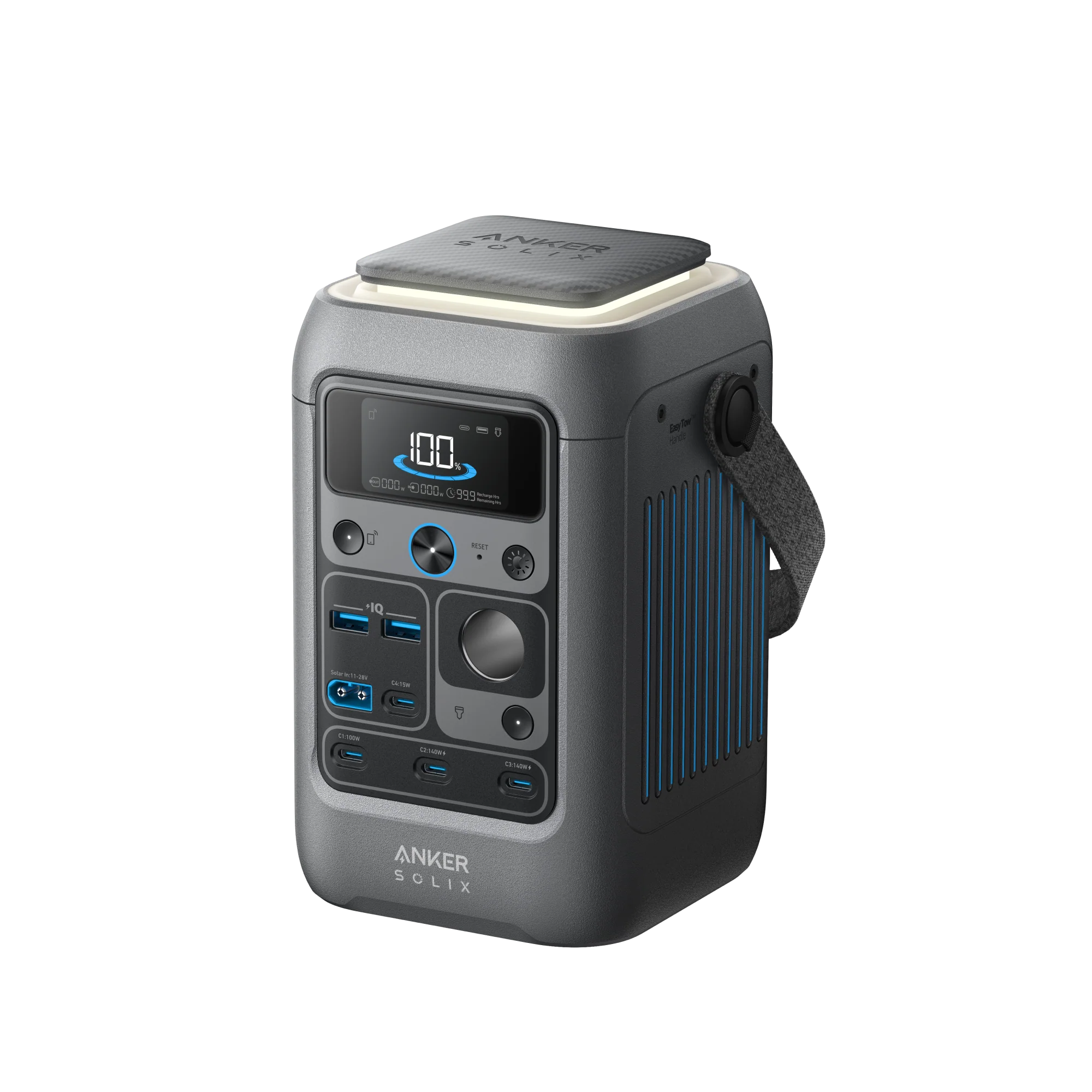
$199.99 · direct from Anker
Last checked 1 day ago. Prices move — check before you buy.
Spec deltas
The Anker SOLIX C300 DC has no AC outlets. Not one, not a small one. Its 300W rating is a total across the USB and 12V ports, so a fridge, a box fan, a plug-in lamp or a TV never connects to it at any wattage, and that single line settles most of what brings people to this page.
Across from it sits an inverter and two battery packs holding 18,432Wh, rated 7,200W continuous with 10,800W of published peak, at $7,999. Owners running this exact two-battery setup describe it carrying central air, a refrigerator and a well pump at the same time without a flickerA9, and most of a house through the smart home panel with no blink at the handoffA14A10. It's a stationary machine: a two-person lift you do once, into the spot it occupies for the next decade.
So this page is a routing job, not a contest. If anything on your list has a wall plug, the DELTA Pro Ultra is the only one of the two that can run it, and five of the seven rows below never plug into the C300 DC at all. If your list is a phone, a laptop and a headlamp for an afternoon, the $200 box is the whole answer and the other machine is furniture.
What the Numbers Reveal
Each conclusion stated first — the numbers behind it on one line, the full analysis below.
That leaves exactly one row where both units can do the job: Afternoon Off-Grid, 100Wh of phones and a speaker, which the C300 DC finishes at 41% used. One overlapping row out of seven isn't a close matchup, it's two different products sharing a page, and the useful work here is telling you which product you're actually shopping for.
SOLIX C300 DC: no AC outlets, and its 300W is a DC port total across USB and 12VFive of the seven scenarios here include at least one wall-plug load: the box fan, the fridge, the external monitor, the blender, the mini-fridgeCPAP Overnight is the sixth, and there the C300 DC fails on energy instead: 245Wh usable against the 320Wh the night needs, leaving it 75Wh short
Why it mattersIf even one wall plug appears on your list, the C300 DC is out before price gets discussed. If none do, stop comparing it to a house battery and compare it to other DC boxes.
Add the electrician and the drywall and the real entry price sits above the sticker, which changes who this is for: a household that will cycle it for years, not someone buying insurance against one storm a season. The lifetime math gives it 9.6 years at daily use. At twice-a-year camping duty it spends a decade being expensive furniture.
$7,999 buys 18,432Wh and a minimum of 3,500 cycles, which is 64,512 kWh of delivered energy over the pack's life against the C300 DC's 864 kWhDELTA Pro Ultra + 2 Batteries: classified stationary, with a 5,600W solar input ceilingOwners describe the whole-home install as licensed workA16A17: finding an electrician who knew this class of gear took effortA16, and the job ran around nine hours including cutting drywall to sink the panelA17
Why it mattersBuy the DELTA Pro Ultra only if it will sit in one place and earn its cycles. Occasional users want a mid-size portable instead.
Pair that 140W with the hour-to-80% refill and a single 100W panel and the small unit is self-sustaining on a trip with no install of any kind: top it off from a car, a wall or the sun in the time it takes to eat lunch. The DELTA Pro Ultra's answer to the same job is thousands of watt-hours you can't lift and a slower port.
SOLIX C300 DC: 140W maximum USB-C, with 2 USB-A and 4 USB-C ports plus a 12V socket, and two-way USB-C that refills the unit to about 80% in an hourB2DELTA Pro Ultra + 2 Batteries: 100W maximum USB-CSOLIX C300 DC: 100W solar input ceiling on a unit you carry in one hand
Why it mattersAnyone whose real load list is devices should take the C300 DC and spend nothing further. It wins its own category here rather than losing the big one.
The catch is where that no-break behavior lives. Owners get the invisible version through the smart home panelA14, which is the part that needed the electrician and the drywallA17. Plug loads straight into the unit and you still get pass-through, but the seamless whole-house version is a wiring project rather than an unboxing.
Only the DELTA Pro Ultra lists a UPS mode, rated no worse than 0ms, which is the maker's classification rather than a stopwatch resultAnker publishes no noise figure for the C300 DC. EcoFlow's 30dB is the only number on the table, and it's a spec-sheet figure rather than a measurementOne reviewer said the DELTA Pro Ultra ran completely silent and never heard a fan kick onA15, and owners describe the handoff to battery as flicker-freeA9A14
Why it mattersIf UPS behavior is why you're shopping, budget the install alongside the unit. And if all you need is a quiet box beside the bed, neither of these is shaped for that.
The specific dimensions that decide these two units — everything else is a tie.
What the Specs Don't Tell You
Selected because: Two cards here decide the page: the C300 DC has no AC outlets at all, and the DELTA Pro Ultra is a two-person lift you do exactly once. Everything below them is detail.
rated cycles
The no-AC-outlets card isn't a caveat, it's the line that assigns you to one product or the other. A DC station is a battery for things with cables: phones, laptops, cameras, headlamps, 12V gear. Wall-plug appliances are a different category of object to it, and no amount of watts bridges the gap. Read that card against your own load list and half of this page becomes irrelevant to you in the best way.
Weight is the honest catch against the machine we pick, and the card states it plainly. Owners also report the packs don't sit at the same temperature when stacked, with the one closest to the inverter measuring about 10 degrees warmer than the one below itA11, and one owner worried about a garage that hits 98 degrees in summerA12. Choose a cool spot the first time, because moving a pack is a two-person job and you won't be relocating this on a whimA8.
Your Life, Your Pick
Selected because: Five of the seven load profiles include a wall-plug device the C300 DC cannot connect to, and one, the 100Wh afternoon, both units cover comfortably.
The board looks lopsided, and it isn't measuring what it appears to measure. In Weekend Camping, the 8-Hour Blackout, the Remote Workday, the Tailgate and Van Life Daily, the C300 DC doesn't run short of energy. The loads in those rows have wall plugs, so they never connect at all, and a percentage like 858% of itself for the camping list is arithmetic about a job the unit was never built to do.
Two rows deserve your attention. Afternoon Off-Grid is the only one both units cover, and it's precisely what the small one is for. At the other end, the heaviest profile on the board is a 4,685Wh day, which the DELTA Pro Ultra absorbs at 30% used with 10,982Wh still in reserve. Read your own week against those two rows and the verdict writes itself.
Portability & Form Factor
Selected because: One of these travels in a daypack and the other is classified stationary, which settles every scenario that happens away from the house.
weight
You carry one of these and you install the other, and the split is absolute. The C300 DC goes in a daypack and you forget it's in there. The DELTA Pro Ultra is classified stationary, and the practical meaning of that word is that you decide where it lives before the batteries are stacked. Solar makes the same point a second way: 5,600W of input is a roof array, while 100W is one folding panel on a picnic table.
This is why two rows on the scenario board come back 'neither'. A powered campsite and a powered tailgate both want AC outlets somewhere you drove to, and these two units each fail a different half of that requirement. If that's your use case, close this page and shop mid-size portables with real outlets.
Lifetime Value
Selected because: The DELTA Pro Ultra delivers the cheaper energy across its life, which is true and nearly useless for this pair. This is where that gets untangled.
cost / lifetime kWh
The cheaper energy belongs to the expensive machine, which for once isn't a paradox. Twelve cents per lifetime kilowatt-hour against 23 comes from a minimum 3,500 cycles of 18,432Wh, or 64,512 kWh delivered across one lifetime against 864 kWh. Enormous denominators do that.
Now notice what the figure can't tell you. Nobody chooses between a $7,999 appliance and a $200 battery on cents per kilowatt-hour, because you don't buy 64,512 kWh unless you have somewhere to put it and years in which to spend it. The number in this section that actually decides something is the other one: $800 per warranty year across a ten-year term, against $67 across three years. That's the shape of the commitment, and it's the question worth answering.
Brand Trust
Selected because: A ten-year, $7,999 machine is a support relationship; a $200 DC box is a replacement. The two columns below are not the same kind of risk.
At this price the support column carries real money. EcoFlow's record splits hard: painless prepaid-label replacements for some buyers, long waits and a refurbished unit against a new claim for others, and that variance is why buying from a retailer with an easy return counts as part of the spec. The forum record backs the concern in a narrower way. Owners asking specific technical questions were pointed back at the web guide they were complaining about, twiceA2A5, and told they could try a faraday cage when the unit interfered with 146.520MHzA3A4.
Anker's risk runs the other direction and matters less. Its historically no-hassle replacement reputation is trending down on the SOLIX line and firmware has removed features without warning, but what's at stake is a small box you replace rather than a decade-long claim. Weight this column by what a failure costs you, not by which logo you trust.
Strengths & trade-offs
EcoFlow DELTA Pro Ultra + 2 Batteries
Strengths
- +Larger battery capacity
- +Higher AC output
- +Longer warranty
- +Faster solar charging
Trade-offs
- –Substantially more expensive (+$7,799) than the SOLIX C300 DC.
- –Significantly heavier (+399.2 lbs), making it harder to move.
- –Very heavy unit that may be difficult for one person to lift.
Anker SOLIX C300 DC
Strengths
- +Costs $7,799 less
- +Lighter by 399.2 lb
Trade-offs
- –Weaker inverter (-6,900W) limits appliance compatibility.
- –Sealed capacity — the DELTA Pro Ultra + 2 Batteries can add batteries to grow past 288Wh; this one can't.
Will It Power Your Gear?
Scenario math and per-appliance runtimes, modeled from the spec record.
Scenario verdicts
We ran the math on seven real-world scenarios. Here's which unit survives your actual life.
SCN-01 · 2 nights · needs 2,100Wh
Weekend Camping
Two nights off-grid with essential comfort
Neither unit
Neither, for opposite reasons. The weekend's list needs 2,100Wh, which the DELTA Pro Ultra covers on 13% of itself and then declines to leave the house. The C300 DC travels happily and then has nowhere to plug in the box fan or the string lights, so the 1,855Wh it comes up short is a figure about a list it was never going to connect to. One can't come, the other can't finish. What you're shopping for is a mid-size portable with real outlets.
Battery budget usedlower = more headroom
LOAD Phone Charger 15W×6h · LED Lights 40W×8h · Box Fan 75W×14h · CPAP Machine 40W×16h
SCN-02 · 8 hours · needs 1,645Wh
8-Hour Blackout
Keep the essentials running through a night without power
DELTA Pro Ultra + 2 Batteries
Eight hours of fridge, router and lights is 1,645Wh, and the DELTA Pro Ultra spends 10% of itself on it, with 14,022Wh still in the bank when the lights come back. The C300 DC isn't short of energy here so much as short of sockets: the fridge has a wall plug, so the spec that decides this row is zero AC outlets, not watt-hours. If outage coverage is why you're here, this row is the entire page.
Battery budget usedlower = more headroom
LOAD Fridge 150W×8h · Router + Modem 20W×8h · LED Lights (4 bulbs) 40W×6h · Phone Charger 15W×3h
SCN-03 · 8 hours · needs 320Wh
CPAP Overnight
Sleep therapy without interruption — the #1 medical use case
DELTA Pro Ultra + 2 Batteries
Three hundred and twenty watt-hours is a full night on the machine, and the C300 DC gets most of the way there and quits: 245Wh usable against 320Wh needed leaves it 75Wh short, which in practice means it stops before morning rather than at it. The DELTA Pro Ultra covers the night on 2% of its capacity. It wins this row, and it's still not what a CPAP-only buyer should be pricing.
Battery budget usedlower = more headroom
LOAD CPAP Machine 40W×8h
SCN-04 · 8 hours · needs 910Wh
Remote Workday
Full work day off-grid without power anxiety
DELTA Pro Ultra + 2 Batteries
The SOLIX C300 DC has no AC outlets, so the external monitor and router + modem in this scenario never plug in — it's a DC station for USB and 12V gear, and no wattage figure changes that. The DELTA Pro Ultra + 2 Batteries handles this scenario with 14,757Wh to spare.
Battery budget usedlower = more headroom
LOAD Laptop 60W×8h · External Monitor 30W×8h · Router + Modem 20W×8h · Phone Charger 15W×2h
SCN-05 · 4 hours · needs 670Wh
Tailgate Party
Game day power for the crew
Neither unit
Neither gives you a powered game day: the DELTA Pro Ultra + 2 Batteries has the energy but doesn't travel, and the SOLIX C300 DC has no AC outlets, so the blender and led tv in this scenario never plug in — it's a DC station for USB and 12V gear, and no wattage figure changes that. One can't go; the other can't finish.
Battery budget usedlower = more headroom
LOAD Blender 400W×0.5h · LED TV (55") 80W×4h · Bluetooth Speaker 15W×4h · Phone Charger (×3) 45W×2h
SCN-06 · 24 hours · needs 4,685Wh
Van Life Daily
A full day of mobile living — the ultimate endurance test
DELTA Pro Ultra + 2 Batteries
The SOLIX C300 DC has no AC outlets, so the mini-fridge, led lights and the rest in this scenario never plug in — it's a DC station for USB and 12V gear, and no wattage figure changes that. The DELTA Pro Ultra + 2 Batteries handles this scenario with 10,982Wh to spare.
Battery budget usedlower = more headroom
LOAD Mini-Fridge 150W×24h · Laptop 60W×4h · Phone Charger 15W×3h · LED Lights 40W×5h · Fan 75W×8h
SCN-07 · an afternoon · needs 100Wh
Afternoon Off-Grid
Phones and a speaker at the park, beach, or campsite — the small-unit job description
Either unit
One hundred watt-hours: two phones, a speaker, a few hours of shade. Both units finish it, which makes this the only row on the board where these two are actually alternatives. The C300 DC spends 41% of itself and rides in one hand; the DELTA Pro Ultra notices nothing, because you left it in the basement where it lives. Take the small one and don't think about it again.
Battery budget usedlower = more headroom
LOAD Phone Charger (×2) 30W×2h · Bluetooth Speaker 10W×4h
The Load Test
RUNTIME = (Wh × 0.85) ÷ LOAD
None of the scenarios above exactly yours? Build it. Toggle what you'd plug in; both units are tested against the combined draw.
Essentials
Comfort & Convenience
High-Draw Appliances
Test duration
8h
Continuous draw
205W
Projected runtime
Only the DELTA Pro Ultra + 2 Batteries can run this load — the SOLIX C300 DC has no AC outlets for the wall-plug gear in it.
$7,999 list · direct from EcoFlow
Modeled from the spec record — same math as the tables below. Methodology
Runtime by appliance
Real-world runtime estimates for common appliances, modeled at 85% inverter efficiency.¹
Essentials
The basics you need runningscale 0–1044.5hComfort & Convenience
Makes off-grid life actually enjoyablescale 0–208.9hHigh-Draw Appliances
These reveal the real limitsscale 0–15.7h¹ Runtime = (capacity × 0.85) ÷ appliance watts. Within each group, all bars share one time scale (the group's longest runtime), so lengths are comparable across appliances; identical runtimes collapse into a single blue/orange bar. Actual runtime varies with battery age, temperature, and simultaneous loads — see methodology.
Conclusion
September 13, 2026
Verdict: the DELTA Pro Ultra + 2 Batteries, on Power Score margin
The DELTA Pro Ultra with two batteries takes this because it's the only one of the two that can run a wall plug, and that one fact settles five of the seven load profiles on this page before capacity is ever consulted. It's also the cheaper energy across its life and the only unit here with a listed UPS mode, so for outage coverage, a home office that can't blink, or a whole-house list, there's no argument to have. The confidence stops at seven because winning isn't the same as buying: this is a $7,999 stationary appliance that wants a permanent spot, an electrician for the seamless version, and years of regular cycling to justify itself. If your list is devices rather than appliances, the C300 DC is the correct purchase and the DELTA Pro Ultra is a very expensive way to charge a phone.
Editor-assigned confidence, based on cited owner research and spec analysis.
List prices as of September 13, 2026. The links below open EcoFlow's and Anker's current prices.
$8,199.00 · direct from EcoFlow
Last checked 1 day ago. Prices move — check before you buy.
or check the SOLIX C300 DC price$199.99 list
Written by Gunner Gustafson, Whole-Home Backup Tester · Station Arena Test Desk · Updated September 13, 2026
Measured Data
Benchmark scores and the full spec record, side by side.
Benchmark scores
Not rated for both units (minimum threshold unmet): Home Backup, Food Truck, Apartment Balcony, Camping.
Full specifications
ᵈ Derived: price ÷ rated capacity. See the data behind our comparisons →
Comparison ToolAdd more power stations, side by sideOpen Tool →How these numbers are produced
Numeric verification
Every figure on this page traces to our spec database or arithmetic on it — no estimated numbers.
Owner claims
Statements about owner experience are cited to published reviews — see Sources & Research Notes below.
Runtime model
Runtime = (rated capacity × 0.85 inverter efficiency) ÷ device wattage. Solar recharge estimates assume panels deliver 70% of rated output. Cold weather, battery age, and stacked loads reduce real-world results.
Power Score
Computed from 14 published spec dimensions, weighted per use-case bench. Higher is better; a unit must meet a bench's minimum threshold to be rated.
See the full weight table and data sourcing on our methodology page →Class ranking (the star rating)
Each unit's star score is a category ranking, not customer reviews — no buyer opinions feed it. We score every station on size-independent quality (value, output, portability, endurance, ports, warranty, and more), then percentile-rank it against the other units in its capacity class, so a class-leading compact unit and a class-leading whole-home unit can both earn 5★. Here, DELTA Pro Ultra + 2 Batteries rates 3.8/5 (29th percentile of 29 Whole-Home / Off-Grid-class units), and SOLIX C300 DC rates 4.4/5 (62nd percentile of 22 Personal-class units).
How the class ranking is computed →Test Notes & Caveats
Hidden gotchas and advantages we spotted that you won't find on the product page.
A Two-Person Lift, Once
Plan the placement before the boxes are open, because this is a lift you want to perform exactly one time, and a cool spot beats a convenient one. Once it's stacked and wired it stops being equipment and becomes an appliance, which is also the point: appliances get used every day, and daily use is what makes this price make sense.
No AC Outlets, At Any Wattage
The 300W on the C300 DC's sheet is a DC port total, USB and 12V, not an inverter rating. A fridge, a TV, a coffee maker, most fans and lamps plug into a wall, and this unit has no wall to offer them. That's a choice that bought its weight and its price, and for phones, laptops, cameras and 12V gear it's the right one. The DELTA Pro Ultra carries a real inverter behind real outlets, so it plays on both sides of the line. Work out which side your gear lives on and most of this page answers itself.
Sealed at 288Wh, and That's Fine
Fixed capacity is scored as a limitation here, and against a machine that stacks batteries toward partial-home backup it is one. It isn't a flaw in the small unit, though. A sealed 288Wh DC box is a complete object, and nobody buys one hoping it grows into a house battery. The honest version of this card is that the two ceilings aren't comparable: size the C300 DC for a day of devices, and if you're wondering whether it might one day cover an outage, the answer is no, and the reason is outlets rather than capacity.
Only One of These Rides Out a Blackout Without a Blink
Rated no worse than 0ms, which is the maker's classification rather than a stopwatch result, the DELTA Pro Ultra can sit between the wall and your gear and hand over when the grid drops. That's worth real money for a desktop, a router or a medical device. The C300 DC's sheet lists no UPS mode, so anything on it rides an outage as far as your reaction time. Worth knowing before you budget: the seamless whole-house version of this needs the smart home panel wired in, which is licensed work rather than an unboxing.
Warranty: 10 Years vs 3
The DELTA Pro Ultra + 2 Batteries is covered for 10 years against the SOLIX C300 DC's 3 years. The cheaper SOLIX C300 DC does buy more warranty per dollar (15 years per $1,000 against 1.3), but that is a statement about price, not about coverage — if a fault appears in year 4, only one of these is still covered. An underrated factor if you're keeping this unit for years.
SOLIX C300 DC: Noise Level Not Disclosed
The DELTA Pro Ultra + 2 Batteries publishes its noise level (30dB); the SOLIX C300 DC doesn't publish one. That isn't evidence the SOLIX C300 DC is louder — it means there's no figure to hold it to, and no way to compare the two on this without hearing them. If you're buying for a bedroom, a CPAP, or an apartment, treat the DELTA Pro Ultra + 2 Batteries's 30dB as the only published number on the table — a spec-sheet figure, not a measurement — and look for hands-on reports of the SOLIX C300 DC before deciding.
Full record above — the Test Desk pick is the DELTA Pro Ultra + 2 Batteries.
Check DELTA Pro Ultra + 2 Batteries price →or check the SOLIX C300 DC priceOwnership Analysis
What happens after you buy — true cost of ownership, brand trust, and growth potential.
Lifetime value
Service lifeyears at one full cycle per day
Lifetime energy delivered
Cost per delivered kWh
│ warranty ends · Reaching the cycle rating means ~80% capacity remains — degraded, not dead.
Analyst note
The SOLIX C300 DC is cheaper to buy, but the DELTA Pro Ultra + 2 Batteries is cheaper to own. At $0.12/kWh over its lifetime vs $0.23/kWh, the DELTA Pro Ultra + 2 Batteries's higher cycle life and capacity make each dollar go further over the years.
Delivers each lifetime kWh for $0.11 less — check the DELTA Pro Ultra + 2 Batteries price →
Brand trust
EcoFlow
Ecosystem
The deepest catalogue in portable power, 12-15 models across the DELTA Pro, DELTA 3 and RIVER 3 lines plus panels and smart home panels. This configuration is the top shelf of it, stacking batteries and inverters toward whole-home backup, which is a flagship path rather than something the rest of the line does.
Support
US phone, email and chat, and the experience is polarized. Some claims close with a prepaid label and a painless swap; others drag on, and a refurbished unit can turn up against a claim made on a new one. On a machine at this price the return path is part of the purchase, so buying somewhere with a strong return policy, Costco or Amazon, is worth real money.
Community
The largest community in the space, roughly 31,000 members on Reddit plus Facebook groups and an official forum. That matters more than it sounds when the documentation is thin, because it's where the specific answers actually live.
App experience
Rated 4.6/5 iOS (~8,400 ratings) · 4.2/5 Android (~17,000 ratings)
Unique strength
X-Stream fast charging, the broadest ecosystem in the category, and the fastest innovation cadence. At the very top of the range it's the only maker in this comparison with a path from a single box to partial-home backup.
Worth knowing
EcoFlow tested subscription paywalls for advanced app features in early 2025 and paused the plan after backlash, and it offers no parts or service once the warranty expires. On a unit covered for ten years, plan for that ending.
Anker
Ecosystem
Seven or eight SOLIX stations across the compact C-series and flagship F-series, plus the X1 home energy system. Narrower than EcoFlow's, and the DC-only units sit at the entry end of it by design.
Support
US-based, and historically the gold standard for no-hassle replacement, though service quality on the SOLIX line is trending down, with AI-driven agents handing out generic answers and awkward return logistics on the heavy units. On a box this size the stakes are low: the worst case is a replacement, not a claim on an installed system.
Community
Moderate and growing, with active Reddit corners and the benefit of Anker's enormous consumer-electronics following.
App experience
Rated 4.5/5 iOS (~1,100 ratings) · 4.3/5 Android
Unique strength
Parent-brand track record from Anker's charging business, InfiniPower cells for long cycle life, and genuinely strong value per watt-hour, though that strength shows up most in the mid-size and larger units rather than here.
Worth knowing
Firmware updates have removed features without warning, and the expansion ecosystem is smaller than EcoFlow's. Neither is a live issue on a sealed DC unit, but both are worth knowing if you expect to buy further up the line later.
Analyst note
These are two different kinds of company bet, not two grades of the same one. On the DELTA Pro Ultra you're buying a decade-long support relationship for an installed appliance, and EcoFlow's record is polarized enough that where you buy it matters nearly as much as what you buy. On the C300 DC you're buying a battery from the company that sold you your cables, and if it fails you replace it. Judge the two columns by what a failure would cost you, because the answers are not remotely the same size.
Growth path
DELTA Pro Ultra + 2 Batteries
EXPANDABLESupports EcoFlow expansion batteries, so you can add capacity later without replacing the base unit — useful if your needs may climb past 18,432Wh.
Accepts up to 5,600W of solar. Enough for a serious multi-panel array.
Adequate ports for most setups, but heavy users may want a power strip.
Expansion batteries are EcoFlow-specific. You're investing in the EcoFlow ecosystem.
SOLIX C300 DC
FIXED CAPACITYFixed at 288Wh, with no expansion — so size it for your needs up front rather than planning to add capacity later.
Accepts up to 100W of solar. Limited to a single portable panel.
Adequate ports for most setups, but heavy users may want a power strip.
Realistic full solar rechargeat 70% of rated panel output — see methodology
Analyst note
The SOLIX C300 DC is sealed at 288Wh, which is fine if that covers you. The DELTA Pro Ultra + 2 Batteries starts at 18,432Wh and can grow beyond it with EcoFlow expansion batteries — real headroom the SOLIX C300 DC doesn't have if your needs climb toward partial-home backup.
What Owners Report
Patterns from published owner reports and long-term reviews — every claim cited to its source below.
EcoFlow DELTA Pro Ultra + 2 Batteries
The owners running two-battery setups are the ones worth listening to here, and they line upA9A14A10. One ran central air, a refrigerator and a well pump simultaneously without a flickerA9. Another runs most of the house through the home panel and reports no flicker when the power changesA14. A third owns two of these systems with two batteries each and calls the performance, scalability and self-cooling matchlessA10. Going from one battery to two is described as doubling real runtime and removing the anxiety about how long the house can rideA13. One reviewer never heard the fan at allA15.
The complaints are specific, and almost all of them are about everything around the battery. One owner is plainly unenthusiastic about his and says he's unlikely to expand it or integrate it into the houseA1, couldn't get a real manual out of supportA2, found the unit interfering with 146.520MHz even with the inverter off and was told to try a faraday cageA3A4, and was twice sent to an app screen that doesn't carry the state-of-charge graph he asked forA5. Idle consumption comes up twice: a pack reported at 90% falling to 8% across a few days of overnight useA6, and a tester's warning that standby draw has to be budgeted into any off-grid planA7.
Weigh all of it against the coverage. Genuine long-term reporting on this exact configuration is thin, most of the detailed criticism traces to a single forum thread plus short retailer reviews, and several of those reviews say outright that it's too early to speak to longevityA0.
“This means that without any grid or solar input, the system would fully drain its own 6kWh battery in about 60 hours. For off-grid use, this parasitic drain must be carefully factored into your energy budget.”
Anker SOLIX C300 DC
Field data on the C300 DC is thin, and what exists comes from reviewers and short retailer reviews rather than long-term ownersB0B4. It's consistent, at least. Leaving the AC inverter out is the whole reason the unit weighs what it weighsB1, the port set is unusually generous for the size at two USB-A, four USB-C and a 12V socket, with two-way USB-C refilling it to about 80% in an hourB2, and buyers describe the realistic envelope as several phone and laptop refills, hours of a fan, or a small light setupB3. Nothing in this ledger describes a wall-plug appliance running on itB0B3, because nothing can.
“A 288Wh unit that ditches the heavy AC inverter to focus on DC power, keeping it very light at about 6.2 lbs.”
Sources
the-gadgeteer.com · forbes.com · androidpolice.com · batteryessence.com · bestbuy.com · campingsolar.us
Sources & Research Notes
Every owner claim in this report is traceable to a published source. The bracketed references above resolve here.
Recurring owner themes
- Owners repeatedly report EcoFlow customer support gives dismissive or unhelpful answers to specific technical questions (manual gaps, RFI interference, app charting). [DELTA Pro Ultra + 2 Batteries · 3 entries]
- The unit's idle/parasitic self-consumption is a recurring theme, both as a documented SoC anomaly and as an acknowledged spec-level drain figure from a tester. [DELTA Pro Ultra + 2 Batteries · 2 entries]
- Multiple owners note the extra battery packs are extremely heavy (100+ lbs each), requiring two people, and one owner separately observed uneven heat between stacked batteries raising summer overheating concerns. [DELTA Pro Ultra + 2 Batteries · 3 entries]
- Real owners with 2-battery setups consistently praise seamless/flicker-free UPS switchover and confirm the system genuinely runs whole-home loads (AC, well pump, most of house). [DELTA Pro Ultra + 2 Batteries · 3 entries]
- Adding a second battery is described by owners as meaningfully extending real-world runtime for whole-home backup, matching expectations. [DELTA Pro Ultra + 2 Batteries · 2 entries]
- Light DC-only design (no AC inverter), fast USB-C charging, and good port selection for device charging are the highlights. [SOLIX C300 DC · 3 entries]
- A1
“Pulled the trigger on an EcoFlow Delta Pro Ultra (DPU) and I'm kind of meh on it and unlikely to expand or integrate it into the house.”
DIY Solar Power Forum — 'Ecoflow Delta Pro Ultra issues' thread · 2024-02 · [negative]
- A2
“No real manual. All they have is the web user guide which is superficial if I'm being generous. I asked support about it and they pointed me at the web guide I was complaining about. Twice.”
DIY Solar Power Forum — 'Ecoflow Delta Pro Ultra issues' thread · 2024-02 · [negative]
- A3
“Even when the inverter is not running, it interferes with common frequencies like 146.520MHz.”
DIY Solar Power Forum — 'Ecoflow Delta Pro Ultra issues' thread · 2024-02 · [negative]
- A4
“I contacted EcoFlow support and they told me I could put it in a 'faraday cage'.”
DIY Solar Power Forum — 'Ecoflow Delta Pro Ultra issues' thread · 2024-02 · [negative]
- A5
“No State of Charge graph in the app... I contacted support and twice they told me to go to the app screen with the charts, which only has input and output.”
DIY Solar Power Forum — 'Ecoflow Delta Pro Ultra issues' thread · 2024-02 · [negative]
- A6
“After a few days of using it overnight and letting it charge back up to '90%', it'd go from '90%' down to '8%'.”
DIY Solar Power Forum — 'Ecoflow Delta Pro Ultra issues' thread · 2024-02 · [negative]
- A7
“This means that without any grid or solar input, the system would fully drain its own 6kWh battery in about 60 hours. For off-grid use, this parasitic drain must be carefully factored into your energy budget.”
Battery Skills — 'EF ECOFLOW DELTA Pro Ultra + Extra Battery Review' · 2025-10 · [mixed]
- A8
“The main inverter is a manageable 71 lbs, but each Ultra Smart Extra Battery is a dense 115 lbs, requiring two people for safe movement.”
Battery Skills — 'EF ECOFLOW DELTA Pro Ultra + Extra Battery Review' · 2025-10 · [mixed]
- A9
“We powered a central air conditioner, refrigerator, and well pump simultaneously without a flicker.”
Battery Skills — 'EF ECOFLOW DELTA Pro Ultra + Extra Battery Review' · 2025-10 · [positive]
- A10
“I own two Delta Pro Ultra's with two batteries each... We have experienced matchless performance, scalability, flexibility. It cools/heats itself in temperature extremes-simply awesome!”
Walmart customer reviews — 'EF EcoFlow Extra Battery for DELTA Pro Ultra' · unknown · [positive]
- A11
“I noticed the battery closest to the inverter seems to run hotter than the one below. About 10 degrees warmer. I switched the batteries around to ensure that it wasn't the battery and got the same results.”
Walmart customer reviews — 'EF EcoFlow Extra Battery for DELTA Pro Ultra' · unknown · [negative]
- A12
“My garage could get up to 98 degrees during the summer, that means my batteries can overheat.”
Walmart customer reviews — 'EF EcoFlow Extra Battery for DELTA Pro Ultra' · unknown · [negative]
- A13
“I originally bought my Delta Pro Ultra with the single battery, worked great is able to power my entire home for about 4 to 5 hours during peak times... I bought a second battery... My run time has doubled eliminating the anxiety.”
Walmart customer reviews — 'EF EcoFlow Extra Battery for DELTA Pro Ultra' · unknown · [positive]
- A14
“With the home panel, there is no flicker when the power changes. I bought a unit with 2 batteries and it runs my most of my house.”
Walmart customer reviews — 'EF EcoFlow Extra Battery for DELTA Pro Ultra' · unknown · [positive]
- A15
“I was pleased to discover the DPU runs completely silent; if a fan kicked on at some point, I never heard it.”
Yahoo Tech — 'EcoFlow Delta Pro Ultra whole home battery backup review' · 2024-06 · [positive]
- A16
“In my neck of the woods (suburban Detroit), it was a bit challenging finding one who had experience with this kind of gear.”
Yahoo Tech — 'EcoFlow Delta Pro Ultra whole home battery backup review' · 2024-06 · [mixed]
- A17
“Sure enough, the job went smoothly; it took him around nine total hours to complete, which included cutting out portions of drywall in order to sink the panel into the wall.”
Yahoo Tech — 'EcoFlow Delta Pro Ultra whole home battery backup review' · 2024-06 · [mixed]
- B1
“A 288Wh unit that ditches the heavy AC inverter to focus on DC power, keeping it very light at about 6.2 lbs.”
the-gadgeteer.com / forbes.com — SOLIX C300 DC review · 2026 · [positive]
- B2
“Offers 2 USB-A and 4 USB-C ports plus a 12V car socket; two-way USB-C with PD 3.1 recharges the unit to 80% in about 1 hour.”
androidpolice.com / batteryessence.com — SOLIX C300 DC review · 2026 · [positive]
- B3
“Owners praise its portability and capacity — enough to charge a phone and laptop several times, run a fan for hours, or power a small light setup.”
bestbuy.com owner reviews — SOLIX C300 DC / C300X · 2026 · [positive]
- B4
“A DC-focused design with app integration and solar support — best for modern travelers charging devices, not running AC appliances.”
androidpolice.com / campingsolar.us — SOLIX C300 DC review · 2026 · [mixed]
Research compiled September 13, 2026.
Who Should Buy Which
Buy the DELTA Pro Ultra + 2 Batteries if you…
- →You already know your outage list by heart, the fridge, the well pump, the furnace blower, and you have a dry corner for the stack plus a budget for an electrician. This is the machine that runs that list without making you choose between items on it.
- →You'll cycle it regularly rather than twice a year. The lifetime math gives it 9.6 years of daily-use life, and daily use is what makes the price defensible.
- →You want the grid handoff to be invisible to a desktop, a router or a medical device, and you're willing to wire in the smart home panel to get the seamless version of itA14A17.
Buy the SOLIX C300 DC if you…
- →Your load list is a phone, a laptop, a camera, a headlamp and maybe a 12V fan, and you'd like to stop thinking about power for a day or a weekend.
- →You live on USB-C and care about speed. 140W in and out means a laptop charging at full tilt, and the unit itself is back to about 80% in an hourB2.
- →You're flying, hiking or moving between places. This is the one you carry in one hand without planning the day around it.
If neither fits
The campsite and tailgate crowd should buy neither, and the scenario board says so twice: those rows want AC outlets somewhere you drove to, and one of these units won't travel while the other has no outlets to offer. Same answer if a CPAP is the whole reason you're here, because the small one runs out before morning and a two-person appliance doesn't belong at a bedside. In both cases the category you want is a mid-size portable with a real inverter and a listed UPS mode.
The Bottom Line
Take the DELTA Pro Ultra with two batteries if the thing you're powering has a wall plug, and the C300 DC if it has a cable. That's the whole decision, and it's why a single overlapping row out of seven, 100Wh of phones and a speaker across an afternoon, is the only place these two are genuinely alternatives. Everywhere else on the board, one of them simply cannot do the job being described.
If you're buying the big one, buy it for a spot you've already chosen and a routine you'll keep, and price the electrician in with it. If you're buying the small one, buy it and stop reading, because for the job it was built for it's the cheapest correct answer here. And if you came for a campsite or a tailgate, neither of these is your unit. Go get a mid-size portable with real outlets and enjoy your weekend.
Frequently Asked Questions
Answers drawn from the spec record and cited owner research.
Does the Anker SOLIX C300 DC have AC outlets?
None at all. Its 300W rating is the total across the USB and 12V ports, so anything with a wall plug, a fridge, a TV, a coffee maker, most lamps and fans, never connects to it at any wattage. That's the design rather than a fault, since leaving the inverter out is what makes the unit light enough to forget you packed. Check whether your gear charges over a cable before you weigh anything else on this page.
Can the SOLIX C300 DC run a CPAP all night?
Not the overnight profile this page tests. That night needs 320Wh and the C300 DC has 245Wh usable after the flat 85% factor applied to every unit here, which leaves it 75Wh short. Only a CPAP that runs on 12V would connect at all. The DELTA Pro Ultra covers the same night on 2% of its capacity, which tells you it's the wrong size in the opposite direction, so a CPAP shopper should be looking at a mid-size AC unit that lists a UPS mode.
Is the DELTA Pro Ultra with two batteries portable at all?
No. The configuration is 405.4 lbs across an inverter and two packs and it's classified stationary, and moving a single pack is a two-person job. Treat it as a semi-permanent appliance and pick the spot once, ideally a cool one, since owners note the stacked packs don't run at the same temperature. The weekend-camping row comes back 'neither' largely because of this.
Do I need an electrician for the DELTA Pro Ultra?
For the automatic whole-house behavior, effectively yes. Owners describe the smart home panel as licensed work. One owner had trouble finding an electrician familiar with this class of gear, and the job ran around nine hours including cutting drywall to sink the panel into it. Without the panel you can still plug loads straight into the unit and use its UPS pass-through, rated no worse than 0ms, which covers a desk rather than a house.
Which one is better for charging a laptop and a phone?
The C300 DC, and it isn't close on paper. It pushes up to 140W over USB-C against the DELTA Pro Ultra's 100W, across four USB-C ports, two USB-A and a 12V socket, at $200 and a weight you carry in one hand. The other machine's money goes on AC outlets and days of runtime, not on a faster laptop port.
Related comparisons
Where to buy
EcoFlow DELTA Pro Ultra + 2 BatteriesPick
$8,199.00
$8,199.00 · direct from EcoFlow
Last checked 1 day ago. Prices move — check before you buy.
Anker SOLIX C300 DC
$199.99
$199.99 · direct from Anker
Last checked 1 day ago. Prices move — check before you buy.
Prices may vary by retailer and are subject to change.