Head-to-head test
EcoFlow DELTA 3 Classic vs EcoFlow RIVER 2
EcoFlow DELTA 3 Classic vs EcoFlow RIVER 2: If you need one of these two to be your whole power station, take the DELTA 3 Classic.
Full profiles: EcoFlow DELTA 3 Classic → · EcoFlow RIVER 2 →

Written by Wenny ZhengUpdated
Portable Power Tester, Station Arena Test Desk

$559.00 · direct from EcoFlow
Last checked 1 day ago. Prices move — check before you buy.
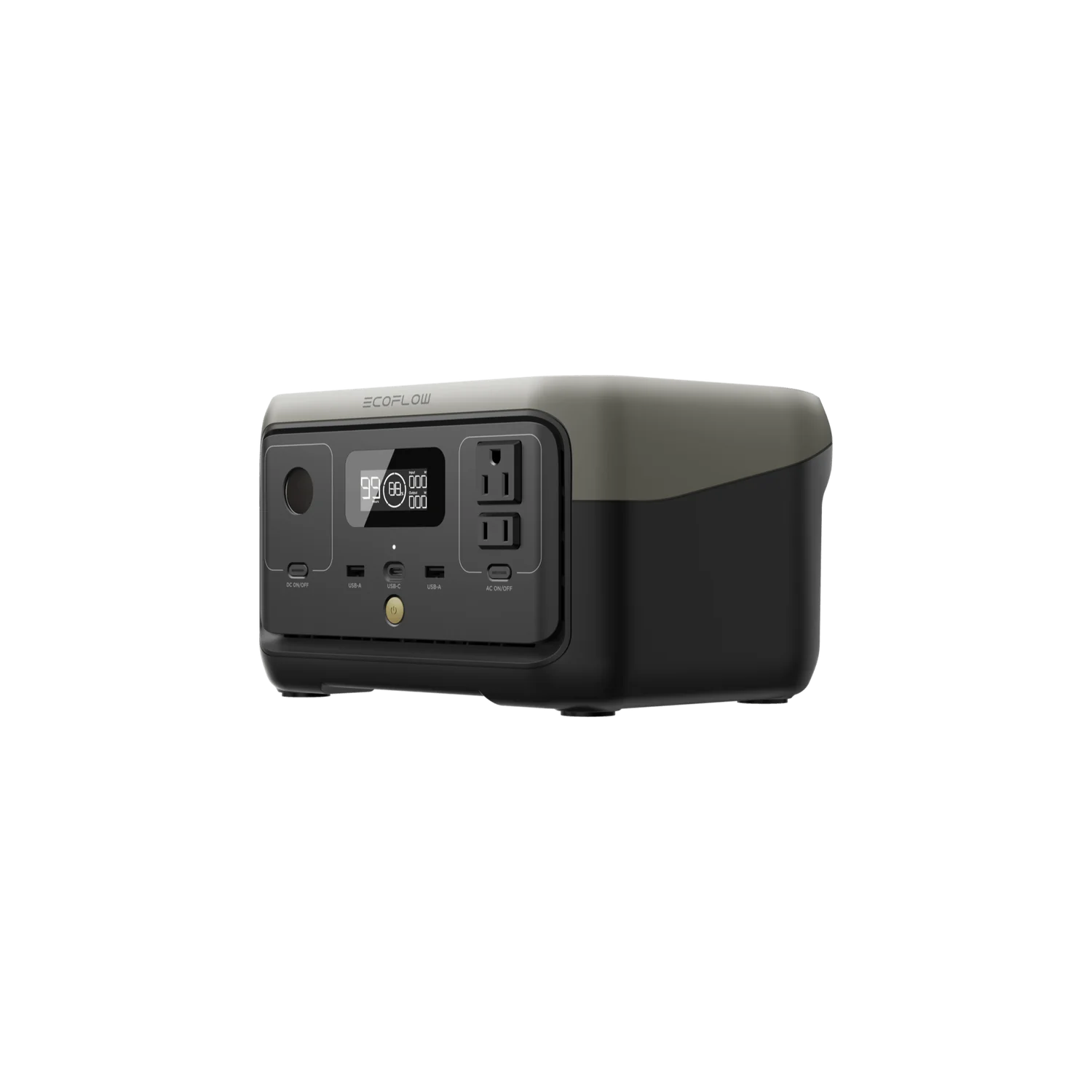
$209.00 · direct from EcoFlow
Last checked 20 days ago. Prices move — check before you buy.
Spec deltas
DELTA 3 Classic and RIVER 2 share a brand and a battery chemistry and not much else. One is a 26.7 lb box with an 1,800W inverter (3,600W surge) that expands. The other is a 7.8 lb battery with a 300W inverter (600W surge) that doesn't. Whichever job you're actually hiring one of these for, that gap is the whole conversation.
Run both through six real-world scenarios and RIVER 2 never wins outright. DELTA 3 Classic takes two, CPAP Overnight and Tailgate Party, and the other four go to neither unit, both simply running out of stored energy before the job is done. That's a capacity story, not a power story: nothing in this scenario set gets anywhere near RIVER 2's 300W ceiling, let alone DELTA 3 Classic's 1,800W one.
Price tells a similar story. RIVER 2 costs $260 less at checkout, but it's the more expensive unit per watt-hour, new at $0.74 versus $0.46, and over its full life at $0.25 versus $0.15 per lifetime kWh. The honest read: DELTA 3 Classic is the better power station if you only want to own one. RIVER 2 earns its keep on weight and price for the person whose real need fits inside 256Wh, not as a cheaper version of the bigger unit.
What the Numbers Reveal
Each conclusion stated first — the numbers behind it on one line, the full analysis below.
continuous output
That weight gap tracks the power gap almost exactly. The light one is capped at 300W, plenty for small electronics and nothing bigger. The heavy one clears 1,800W and can run genuinely demanding gear. Portability and power output move together here, not against each other.
DELTA 3 Classic weighs 26.7 lbRIVER 2 weighs 7.8 lbRIVER 2's inverter tops out at 300W (600W surge) against DELTA 3 Classic's 1,800W (3,600W surge)
Why it mattersIf the job requires carrying the unit on your body, RIVER 2 wins by default, regardless of the scenario math. If it's staying in one place, the 18.9 lb stops mattering and the rest of this comparison decides it.
That's the mechanism behind every loss and every neither verdict here. Both units run out of stored energy before the scenario ends. Neither hits a wattage ceiling anywhere in this scenario set. That failure mode is real for RIVER 2, just not triggered by anything on this page. It would only show up against something genuinely power-hungry, like a space heater or a coffee maker.
RIVER 2 needs 147% of its usable capacity for CPAP Overnight (a 320Wh need) and failsRIVER 2's inverter is rated for 300W continuous, far above what a CPAP drawsFour of six scenarios return a neither verdict for both units
Why it mattersSize these two units by total watt-hours needed for the full stretch, not by whether they can start the load. For this comparison, capacity is the entire story.
Typical price
There's no cheap-now-pay-later trade on offer. The cost gap at checkout is the same cost gap across the unit's entire service life. It just restates itself in smaller numbers.
RIVER 2 costs $209 against DELTA 3 Classic's $469RIVER 2's cost per Wh is $0.74 new versus $0.46 for DELTA 3 ClassicAmortized across each unit's 3,000-cycle life, that's $0.25 per lifetime kWh for RIVER 2 against $0.15 for DELTA 3 Classic
Why it mattersBuyers optimizing for pure sticker price still land on RIVER 2. Anyone comparing cost per watt-hour, the number that actually predicts what backup power costs you, should expect to pay more for RIVER 2, not less.
DELTA 3 Classic's near-misses are exactly the situations an expansion battery is built to solve. It's a priced, real upgrade path. RIVER 2's misses aren't close enough for that framing to apply even if the option existed, and it doesn't. 256Wh is what it is for the life of the unit.
DELTA 3 Classic sits at 105% of usable capacity on Remote Workday (a 910Wh need)DELTA 3 Classic supports EcoFlow expansion batteries; RIVER 2 has no expansion optionRIVER 2 sits at 418% of usable capacity on the same Remote Workday scenario
Why it mattersBuyers whose real usage sits close to DELTA 3 Classic's ceiling should price in an expansion battery as the actual fix for a shortfall. RIVER 2 buyers hitting any wall bigger than 256Wh are buying a second, separate unit.
The specific dimensions that decide these two units — everything else is a tie.
Portability & Form Factor
Selected because: Weight (26.7 lb vs 7.8 lb) and inverter ceiling (1,800W vs 300W) are the real fork in this same-brand pair, carry-it vs set-it-down.
weight
Pick either of these up and the decision mostly makes itself. RIVER 2 is 7.8 lb, light enough to carry one-handed to a tailgate, sling in a daypack, or leave in the trunk without a thought. DELTA 3 Classic is 26.7 lb, a two-hand lift you set down once and don't move again until the weekend's over.
That 18.9 lb gap comes with a matching gap in what each unit can run. RIVER 2's inverter tops out at 300W continuous (600W surge): plenty for a laptop, a CPAP, a string of lights, nothing close to a space heater or a coffee maker. DELTA 3 Classic's 1,800W (3,600W surge) clears that bar. Portability and power draw move together here. The unit small enough to carry is also the one with the harder ceiling on what it'll power.
Your Life, Your Pick
Selected because: Concrete proof: RIVER 2 never wins outright, and every loss or neither verdict here is an energy shortfall, not a wattage ceiling.
Run the six scenarios and a pattern shows up fast. RIVER 2 never wins outright. DELTA 3 Classic wins exactly two, CPAP Overnight and Tailgate Party, and the other four go to neither unit.
None of these failures are about wattage. A CPAP, a tailgate blender, a laptop for a workday: none of it comes close to tripping RIVER 2's 300W ceiling, let alone DELTA 3 Classic's 1,800W one. Every loss here shares the same mechanism, running out of stored energy before the scenario ends, not the load being too demanding to start. RIVER 2's real hard ceiling, that 300W inverter, is a different problem, and it only shows up against something like a space heater or a coffee maker, which none of these six scenarios include.
What the Specs Don't Tell You
Selected because: Noise, UPS speed, expansion, and warranty value all fire and cut in different directions worth surfacing explicitly.
DELTA 3 Classic is spec'd at 30dB against RIVER 2's 50dB, a 20dB gap, though both are idle numbers rather than load numbers. Review coverage comparing RIVER 2 to its RIVER 3 successor specifically calls out louder running under real useB1. Switchover speed splits the same way. DELTA 3 Classic switches in 10ms and is rated line-interactive; RIVER 2 takes 30ms on a basic standby design. Either is fast enough for most outages, but the 20ms gap and the different topology matter if what's plugged in reboots on any interruption at all.
The expansion gap only bites once you're near the edge of a single unit's capacity, and Remote Workday shows exactly that: DELTA 3 Classic sits at 105% of usable capacity there, a narrow miss an expansion battery erases. RIVER 2 has no such answer. 256Wh is 256Wh for the life of the unit. Both carry the same 5-year warranty, but it's insuring very different amounts of hardware: $94 a year for DELTA 3 Classic's 1,024Wh against $38 a year for RIVER 2's 256Wh.
Growth Path
Selected because: DELTA 3 Classic's near-miss scenarios (Remote Workday at 105%) are exactly what an expansion battery solves; RIVER 2 has no equivalent.
solar input
DELTA 3 Classic supports EcoFlow's expansion batteries. RIVER 2 is sealed at 256Wh for its whole life. That's not an abstract spec-sheet bullet: Remote Workday needs 910Wh against DELTA 3 Classic's 1,024Wh capacity, and the unit still comes up at 105% of usable capacity, a narrow miss. An expansion battery closes that gap. RIVER 2 at 418% of capacity on the same day isn't miss-by-a-little territory, and no expansion battery exists to bring it back regardless.
At least one buyer already used this path in practice, picking up a second DELTA 3 Classic plus an expansion battery for more runtimeA13. RIVER 2 buyers hitting the same wall have exactly one move: buy a second, unrelated unit and juggle two chargers.
Lifetime Value
Selected because: RIVER 2's $260 lower price doesn't survive contact with cost-per-Wh, new or amortized over its full life.
cost / lifetime kWh
RIVER 2 costs $260 less to buy, $209 against DELTA 3 Classic's $469. That's the entire case for RIVER 2 on price, and it doesn't hold past checkout. RIVER 2 costs $0.74 per Wh new versus DELTA 3 Classic's $0.46, and amortized across each unit's full 3,000-cycle life, that gap barely moves: $0.25 per lifetime kWh against $0.15.
Put another way: a year of DELTA 3 Classic's 5-year warranty costs $94 and covers 1,024Wh of capacity. A year of RIVER 2's costs $38 and covers 256Wh. RIVER 2 is cheaper every time you look at it, and never the better deal per watt-hour. The entire case for it rests on the $260 upfront difference and the 18.9 lb it doesn't ask you to carry, not on value.
Strengths & trade-offs
EcoFlow DELTA 3 Classic
Strengths
- +Larger battery capacity
- +Higher AC output
- +Faster solar charging
Trade-offs
- –Substantially more expensive (+$260) than the RIVER 2.
- –Significantly heavier (+18.9 lbs), making it harder to move.
EcoFlow RIVER 2
Strengths
- +Costs $260 less
- +Lighter by 18.9 lb
Trade-offs
- –Weaker inverter (-1,500W) limits appliance compatibility.
Will It Power Your Gear?
Scenario math and per-appliance runtimes, modeled from the spec record.
Scenario verdicts
We ran the math on seven real-world scenarios. Here's which unit survives your actual life.
SCN-01 · 2 nights · needs 2,100Wh
Weekend Camping
Two nights off-grid with essential comfort
Neither unit
A full weekend of camping power runs about 2,100Wh. DELTA 3 Classic hits 241% of its usable capacity attempting it; RIVER 2 hits 965%. Both run out well before the trip is over, a multi-day capacity job neither unit is sized for alone.
Battery budget usedlower = more headroom
LOAD Phone Charger 15W×6h · LED Lights 40W×8h · Box Fan 75W×14h · CPAP Machine 40W×16h
SCN-02 · 8 hours · needs 1,645Wh
8-Hour Blackout
Keep the essentials running through a night without power
Neither unit
An 8-hour blackout drawing 1,645Wh puts DELTA 3 Classic at 189% of usable capacity and RIVER 2 at 756%. Both run dry before the outage ends. Pairing DELTA 3 Classic with an expansion battery closes that gap; RIVER 2 has no equivalent option.
Battery budget usedlower = more headroom
LOAD Fridge 150W×8h · Router + Modem 20W×8h · LED Lights (4 bulbs) 40W×6h · Phone Charger 15W×3h
SCN-03 · 8 hours · needs 320Wh
CPAP Overnight
Sleep therapy without interruption — the #1 medical use case
DELTA 3 Classic
A CPAP through the night needs about 320Wh. DELTA 3 Classic uses 37% of its usable capacity doing it, an easy night with margin to spare. RIVER 2 needs 147% of its own capacity for the same job and runs out before morning.
Battery budget usedlower = more headroom
LOAD CPAP Machine 40W×8h
SCN-04 · 8 hours · needs 910Wh
Remote Workday
Full work day off-grid without power anxiety
Neither unit
A full remote workday draws around 910Wh. DELTA 3 Classic comes up just short at 105% of usable capacity, close, not quite a full day. RIVER 2 isn't close at all, needing 418% of what it holds.
Battery budget usedlower = more headroom
LOAD Laptop 60W×8h · External Monitor 30W×8h · Router + Modem 20W×8h · Phone Charger 15W×2h
SCN-05 · 4 hours · needs 670Wh
Tailgate Party
Game day power for the crew
DELTA 3 Classic
A tailgate's 670Wh of speakers, lights, and small appliances sits comfortably inside DELTA 3 Classic's usable capacity at 77% used. RIVER 2 runs out before the party's over. 256Wh isn't enough to cover it.
Battery budget usedlower = more headroom
LOAD Blender 400W×0.5h · LED TV (55") 80W×4h · Bluetooth Speaker 15W×4h · Phone Charger (×3) 45W×2h
SCN-06 · 24 hours · needs 4,685Wh
Van Life Daily
A full day of mobile living — the ultimate endurance test
Neither unit
Full-time van life runs up about 4,685Wh a day, well beyond either unit alone. DELTA 3 Classic hits 538% of its usable capacity; RIVER 2 tops 2,153%. This is a job for a much bigger system or several recharges a day, not a single unit from this pair.
Battery budget usedlower = more headroom
LOAD Mini-Fridge 150W×24h · Laptop 60W×4h · Phone Charger 15W×3h · LED Lights 40W×5h · Fan 75W×8h
SCN-07 · an afternoon · needs 100Wh
Afternoon Off-Grid
Phones and a speaker at the park, beach, or campsite — the small-unit job description
Either unit
This row is here for the RIVER 2's class of job: phones and a speaker, 100Wh across an afternoon. Both cover it — the RIVER 2 finishes at 46% used, and the DELTA 3 Classic barely notices it. For this job the DELTA 3 Classic's extra capacity is dead weight, not headroom; take the RIVER 2 at 7.8 lbs and leave the rest at home.
Battery budget usedlower = more headroom
LOAD Phone Charger (×2) 30W×2h · Bluetooth Speaker 10W×4h
The Load Test
RUNTIME = (Wh × 0.85) ÷ LOAD
None of the scenarios above exactly yours? Build it. Toggle what you'd plug in; both units are tested against the combined draw.
Essentials
Comfort & Convenience
High-Draw Appliances
Test duration
8h
Continuous draw
205W
Projected runtime
For this load: DELTA 3 Classic runs 4.2h vs 1.1h.
$469 list · direct from EcoFlow
Modeled from the spec record — same math as the tables below. Methodology
Runtime by appliance
Real-world runtime estimates for common appliances, modeled at 85% inverter efficiency.¹
Essentials
The basics you need runningscale 0–58hComfort & Convenience
Makes off-grid life actually enjoyablescale 0–11.6hHigh-Draw Appliances
These reveal the real limitsscale 0–0.9h¹ Runtime = (capacity × 0.85) ÷ appliance watts. Within each group, all bars share one time scale (the group's longest runtime), so lengths are comparable across appliances; identical runtimes collapse into a single blue/orange bar. Actual runtime varies with battery age, temperature, and simultaneous loads — see methodology.
Conclusion
July 28, 2026
Verdict: the DELTA 3 Classic, on Power Score margin
If you need one of these two to be your whole power station, take the DELTA 3 Classic. It's the only one that wins a scenario outright (CPAP Overnight, Tailgate Party), it's cheaper per Wh both new ($0.46 vs $0.74) and over its full 3,000-cycle life ($0.15 vs $0.25 per lifetime kWh), and it has an expansion path RIVER 2 doesn't. RIVER 2 is the right call only when the actual requirement is portability and small loads. It's 18.9 lb lighter and $260 cheaper upfront, and for a CPAP-and-phone-charging kind of trip that's enough. Buy it for what it's good at, not as a cut-rate DELTA 3 Classic.
Editor-assigned confidence, based on cited owner research and spec analysis.
List prices as of July 28, 2026. The links below open EcoFlow's current price.
$559.00 · direct from EcoFlow
Last checked 1 day ago. Prices move — check before you buy.
or check the RIVER 2 price$209.00 list
Written by Wenny Zheng, Portable Power Tester · Station Arena Test Desk · Updated July 28, 2026
Measured Data
Benchmark scores and the full spec record, side by side.
Benchmark scores
Not rated for both units (minimum threshold unmet): UPS, RV Living, Home Backup, Solar Generator, Food Truck.
Full specifications
ᵈ Derived: price ÷ rated capacity. See the data behind our comparisons →
Comparison ToolAdd more power stations, side by sideOpen Tool →How these numbers are produced
Numeric verification
Every figure on this page traces to our spec database or arithmetic on it — no estimated numbers.
Owner claims
Statements about owner experience are cited to published reviews — see Sources & Research Notes below.
Runtime model
Runtime = (rated capacity × 0.85 inverter efficiency) ÷ device wattage. Solar recharge estimates assume panels deliver 70% of rated output. Cold weather, battery age, and stacked loads reduce real-world results.
Power Score
Computed from 14 published spec dimensions, weighted per use-case bench. Higher is better; a unit must meet a bench's minimum threshold to be rated.
See the full weight table and data sourcing on our methodology page →Class ranking (the star rating)
Each unit's star score is a category ranking, not customer reviews — no buyer opinions feed it. We score every station on size-independent quality (value, output, portability, endurance, ports, warranty, and more), then percentile-rank it against the other units in its capacity class, so a class-leading compact unit and a class-leading whole-home unit can both earn 5★. Here, DELTA 3 Classic rates 4.5/5 (73rd percentile of 27 Everyday-class units), and RIVER 2 rates 3.9/5 (33rd percentile of 22 Personal-class units).
How the class ranking is computed →Test Notes & Caveats
Hidden gotchas and advantages we spotted that you won't find on the product page.
10ms vs 30ms Switchover
DELTA 3 Classic switches over in 10ms and is rated line-interactive. RIVER 2 takes 30ms on a basic standby design. Both are fast by outage standards, but the 20ms gap and the different topology matter if what's plugged in reboots on any interruption at all.
Same 5-Year Term, Different Stakes
Both units carry a 5-year warranty. DELTA 3 Classic's coverage costs $94 a year and protects a 1,024Wh unit; RIVER 2's costs $38 a year and protects 256Wh. Equal terms, unequal size of what's being covered.
RIVER 2: Noise Level Not Disclosed
The DELTA 3 Classic publishes its noise level (30dB); the RIVER 2 doesn't publish one. That isn't evidence the RIVER 2 is louder — it means there's no figure to hold it to, and no way to compare the two on this without hearing them. If you're buying for a bedroom, a CPAP, or an apartment, treat the DELTA 3 Classic's 30dB as the only published number on the table — a spec-sheet figure, not a measurement — and look for hands-on reports of the RIVER 2 before deciding.
Full record above — the Test Desk pick is the DELTA 3 Classic.
Check DELTA 3 Classic price →or check the RIVER 2 priceOwnership Analysis
What happens after you buy — true cost of ownership, brand trust, and growth potential.
Lifetime value
Service lifeyears at one full cycle per day
Lifetime energy delivered
Cost per delivered kWh
│ warranty ends · Reaching the cycle rating means ~80% capacity remains — degraded, not dead.
Analyst note
The RIVER 2 is cheaper to buy, but the DELTA 3 Classic is cheaper to own. At $0.15/kWh over its lifetime vs $0.27/kWh, the DELTA 3 Classic's higher cycle life and capacity make each dollar go further over the years. One thing to know reading the table: both carry the same 3,000-cycle rating, so the lifetime rows are sticker price and capacity in disguise — the wear horizon is identical and decides nothing here.
Delivers each lifetime kWh for $0.12 less — check the DELTA 3 Classic price →
Growth path
DELTA 3 Classic
FIXED CAPACITYFixed at 1,024Wh, with no expansion — so size it for your needs up front rather than planning to add capacity later.
Accepts up to 500W of solar. Suitable for a 1-2 panel setup.
Generous port selection supports complex multi-device setups.
RIVER 2
FIXED CAPACITYFixed at 256Wh, with no expansion — so size it for your needs up front rather than planning to add capacity later.
Accepts up to 110W of solar. Limited to a single portable panel.
Limited ports. You'll likely need a power strip or splitter.
Realistic full solar rechargeat 70% of rated panel output — see methodology
Analyst note
Neither expands, and that's no knock on either — each is a complete unit at a fixed size. Buy the capacity that covers your needs now (the DELTA 3 Classic gives you the larger ceiling); you can't add to either later.
What Owners Report
Patterns from published owner reports and long-term reviews — every claim cited to its source below.
EcoFlow DELTA 3 Classic
The DELTA 3 Classic only shipped in March 2026, so there's no real owner-forum track record yet. What exists is early hands-on reviews, not months of field use. Those reviews agree on a few things: it's quieter at idle than its price point would suggestA2A3, and EcoFlow moved the layout back to something sensible, outlets and USB ports up front, charging inputs around backA4. The app gets singled out as one of the best-designed on the marketA6, and the Storm Guard auto-charge feature draws specific praiseA12.
The complaints are narrower. More than one reviewer flags the 500W solar input cap as low for a 2026 releaseA5A9, and one review notes the 1,800W inverter starts a small window AC's compressor fine but doesn't run it for longA10. One honest knock: it's reported to lose 5 to 10% of its charge a month sitting idleA14, fine if you cycle it regularly, worth knowing if it's going to sit in a closet. At least one buyer liked the platform enough to buy a second unit plus an expansion battery for more runtimeA13.
“In our tests, the DELTA 3 Classic charged from empty to full plugged into a standard wall outlet in just shy of 55 minutes.”
Sources
thesolarlab.com · vantour.net · smartenergyedge.com · walmart.com
EcoFlow RIVER 2
RIVER 2's own coverage is thin in a different way. Most of what exists is comparative, measuring it against its RIVER 3 successor rather than standing on its own. The recurring verdict: it shares the RIVER 3's core platform, 300W output, LiFePO4 chemistry, and roughly an hour to fast-chargeB2, and remains a popular, proven pick in its own right. But reviewers consistently place it as the older, less-refined half of that comparisonB1B3.
Specifically, RIVER 2 runs noticeably louder under load than the RIVER 3, even though EcoFlow doesn't publish a load dB figure for itB1. For strictly indoor use where every dollar counts, reviewers still call it a reasonable pick. It just gives up the RIVER 3's waterproofing, faster UPS switchover, and quieter runningB3.
“Shares the same core platform as the RIVER 3 — 300W output, LiFePO4 chemistry, and roughly 60-minute fast charging — and remains a popular, proven budget small-format unit.”
Sources
backuppowerhub.com · ecoflow.com · versus.com
Sources & Research Notes
Every owner claim in this report is traceable to a published source. The bracketed references above resolve here.
Recurring owner themes
- Multiple independent reviewers note the unit is quieter than expected for its price point, with low idle drain. [DELTA 3 Classic · 2 entries]
- The 500W solar input cap is flagged as a limiting factor by more than one review outlet, seen as low for a 2026-era release. [DELTA 3 Classic · 2 entries]
- Reviewers praise the app and Storm Guard/smart features as standout software elements. [DELTA 3 Classic · 2 entries]
- The RIVER 2 is the older, cheaper unit on the same core platform — reasonable for budget indoor use but louder and less refined than the RIVER 3. [RIVER 2 · 2 entries]
- A2
“We measured the idle draw to be roughly 17W per hour.”
thesolarlab.com — EcoFlow DELTA 3 Classic Review: Cheap, Quiet & Useful? · unknown (post-launch 2026) · [positive]
- A3
“we expected the cooling fans to break that trend given the price point for this unit”
thesolarlab.com — EcoFlow DELTA 3 Classic Review: Cheap, Quiet & Useful? · unknown (post-launch 2026) · [positive]
- A4
“EcoFlow moved back to a more sensible front-facing layout: AC outlets and USB ports on the front, charging inputs on the back”
thesolarlab.com — EcoFlow DELTA 3 Classic Review: Cheap, Quiet & Useful? · unknown (post-launch 2026) · [positive]
- A5
“the screen only showed 500 W input”
vantour.net — EcoFlow Delta 3 Classic: Our review, test and promo code · 3 weeks ago (~June 2026) · [negative]
- A6
“it is clearly one of the best-designed apps on the market”
vantour.net — EcoFlow Delta 3 Classic: Our review, test and promo code · 3 weeks ago (~June 2026) · [positive]
- A9
“EcoFlow pushes the fast charging hard, but the DELTA 3 Classic is capped at 500W solar input”
smartenergyedge.com — EcoFlow DELTA 3 Classic Review: Better Than the DELTA 2? · 1 week ago (~July 2026) · [negative]
- A10
“The 1,800W inverter handles the startup surge of a small window AC unit just fine, but the runtime is short.”
smartenergyedge.com — EcoFlow DELTA 3 Classic Review: Better Than the DELTA 2? · 1 week ago (~July 2026) · [mixed]
- A12
“The Storm Guard auto-charge feature is smart and genuinely useful.”
smartenergyedge.com — EcoFlow DELTA 3 Classic Review: Better Than the DELTA 2? · 1 week ago (~July 2026) · [positive]
- A13
“I have two of these units now and an extra battery for one of them for more runtime.”
walmart.com — Customer reviews for EF EcoFlow DELTA 3 Classical 1000 · unknown · [positive]
- A14
“Loses about 5-10% charge per month when not in use.”
walmart.com — Customer reviews for EF EcoFlow DELTA 3 Classical 1000 (aggregated pros/cons summary) · unknown · [negative]
- B1
“The RIVER 2's spec data doesn't include a specific dB rating, and owner reports suggest it's noticeably louder under load than the newer RIVER 3.”
backuppowerhub.com — EcoFlow RIVER 2 vs RIVER 3 · 2026 · [negative]
- B2
“Shares the same core platform as the RIVER 3 — 300W output, LiFePO4 chemistry, and roughly 60-minute fast charging — and remains a popular, proven budget small-format unit.”
ecoflow.com / versus.com — RIVER 2 vs RIVER 3 · 2026 · [positive]
- B3
“For strictly indoor use where every dollar counts, the RIVER 2 is still a reasonable choice — but it lacks the RIVER 3's refinements like waterproofing, faster UPS, and quieter operation.”
backuppowerhub.com — RIVER 2 vs RIVER 3 recommendation · 2026 · [mixed]
Research compiled July 28, 2026.
Who Should Buy Which
Buy the DELTA 3 Classic if you…
- →Anyone who wants one power station for weekend camping trips, tailgates, or a home-office day through a shorter outage, and is fine paying $469 to get 1,024Wh, an 1,800W inverter, and a real path to add more capacity later.
- →Anyone already close to DELTA 3 Classic's ceiling. Remote Workday's 910Wh need sits right at the edge of its 1,024Wh capacity, and an expansion battery is a genuine answer here, not a hypothetical one.
Buy the RIVER 2 if you…
- →Anyone whose actual load is small and whose priority is weight: a CPAP, a laptop, phone and camera batteries, string lights. 256Wh and 300W covers that with room to spare, at 7.8 lb and $209.
- →Anyone who needs a second, separate unit to hand to a passenger, a tent-mate, or a second vehicle, where DELTA 3 Classic's 26.7 lb and $469 price are both overkill for the job.
If neither fits
Anyone whose real need looks like Weekend Camping, an 8-hour blackout, a full remote workday, or full-time van life, the four scenarios where both units come up short, should look at a larger single unit or budget for DELTA 3 Classic plus an expansion battery from the start, not either base unit alone.
The Bottom Line
DELTA 3 Classic and RIVER 2 were never competing for the same buyer. One is a 26.7 lb power plant you set down for the weekend; the other is a 7.8 lb battery you carry like a bag. But if you're forcing a single winner, it's DELTA 3 Classic: the only one that wins a scenario outright, cheaper per watt-hour both new and over its full life, and the only one with a real path to more capacity when 1,024Wh runs short.
Buy RIVER 2 only because you specifically need the 7.8 lb and the $209, not because it's a discount DELTA 3 Classic. It isn't one. It was never trying to be.
Frequently Asked Questions
Answers drawn from the spec record and cited owner research.
Is the EcoFlow RIVER 2 just a smaller DELTA 3 Classic?
Not really. It's a different tool for a different job. RIVER 2 is sealed at 256Wh with a 300W inverter (600W surge) built for small electronics and portability at 7.8 lb. DELTA 3 Classic holds 1,024Wh, outputs up to 1,800W (3,600W surge), and can add EcoFlow expansion batteries for more capacity later. RIVER 2 was never meant to scale up to DELTA 3 Classic's job.
Which one is cheaper to own long-term?
DELTA 3 Classic, even though RIVER 2 costs $260 less upfront ($209 vs $469). RIVER 2 works out to $0.74 per Wh new and $0.25 per lifetime kWh across its 3,000-cycle life. DELTA 3 Classic is $0.46 per Wh new and $0.15 per lifetime kWh. The lower sticker price never turns into the better deal per watt-hour.
Can either of these handle a full weekend of camping or a multi-day blackout?
Not on its own. Weekend Camping's 2,100Wh need runs DELTA 3 Classic to 241% of usable capacity and RIVER 2 to 965%. Both run out well before the trip ends. An 8-hour blackout, about 1,645Wh, does the same thing at a smaller scale. Either scenario needs a bigger single unit, or DELTA 3 Classic plus an expansion battery, not one base unit from this pair.
Is the RIVER 2 too loud to sleep near, like for CPAP use?
RIVER 2 is spec'd at 50dB against DELTA 3 Classic's 30dB, though both figures are measured at idle, not under a CPAP's actual load. Reviewers comparing RIVER 2 to its RIVER 3 successor note it runs louder under real use. Noise aside, RIVER 2 also can't get through a full night on CPAP power alone. It needs 147% of its usable capacity for that scenario and runs out; DELTA 3 Classic uses just 37% and comes through comfortably.
Does either unit support solar charging?
Yes, but at very different scales. DELTA 3 Classic accepts up to 500W of solar input against a 1,024Wh capacity; RIVER 2 accepts up to 110W against 256Wh. Divide it out and DELTA 3 Classic's bigger battery actually refills faster in absolute hours, not slower, because its solar input scales up more than its capacity does. Reviewers have still flagged that 500W cap as modest for a 2026-era release, so temper expectations for solar speed on either unit.
Where to buy
EcoFlow DELTA 3 ClassicPick
$559.00
$559.00 · direct from EcoFlow
Last checked 1 day ago. Prices move — check before you buy.
EcoFlow RIVER 2
$209.00
$209.00 · direct from EcoFlow
Last checked 20 days ago. Prices move — check before you buy.
Prices may vary by retailer and are subject to change.