Head-to-head test
EcoFlow DELTA 3 1500 vs Jackery Explorer 1500 Ultra
These two share the same 1,536Wh, 1,800W, and 3,600W surge, so the Ultra's $400 premium buys exactly two things — an IP65 weatherproof body and 800W solar — and nothing else on the spec sheet.
Full profiles: EcoFlow DELTA 3 1500 → · Jackery Explorer 1500 Ultra →

Written by Ian SchneiderUpdated
Solar & Off-Grid Tester, Station Arena Test Desk
Spec deltas
The EcoFlow DELTA 3 1500 and Jackery Explorer 1500 Ultra match on the three numbers that set raw capability: 1,536Wh of capacity, 1,800W of output, and 3,600W of surge. The Ultra costs $400 more, at $999 against $599, and that gap doesn't buy any more power.
What it buys is ruggedness and solar. The Ultra carries a true IP65 dust-and-water rating and takes 800W of solar against the DELTA 3's 500W, plus 4,000 charge cycles against 3,000. For an exposed, off-grid, keep-it-a-decade buyer, that's a coherent case worth paying for.
For everyone else, the DELTA 3 wins going away. It's $400 cheaper, 2.6 lbs lighter, charges a laptop faster over USB-C, is the only one of the two that expands — and it's even cheaper to own at $0.13 per lifetime kWh against $0.16. The honest cost of that value is that EcoFlow has discontinued the DELTA 3 1500, and its sparse field data runs mixed.
What the Numbers Reveal
Each conclusion stated first — the numbers behind it on one line, the full analysis below.
That $400 buys no hidden long-run bargain either; ownership cost actually favors the cheaper unit, $0.13 per lifetime kWh against $0.16. The Ultra's premium buys specific extras — an IP65 body and 800W solar — not more capability. Skip those and you're paying $400 for power you already have.
DELTA 3 and Explorer 1500 Ultra share 1,536Wh, 1,800W output, and 3,600W surgeDELTA 3 costs $599 against the Ultra's $999
Why it mattersAnyone who won't use the ruggedness or the faster solar should keep the $400 and buy the DELTA 3.
weight
The IP65 sealing and titanium-alloy cooling that justify the premium also add the massB1. So the rugged unit you pay $400 extra for is also the one you'll notice more coming out of the trunk — the DELTA 3 is the lighter and cheaper box at once.
Explorer 1500 Ultra weighs 38.6 lbs against the DELTA 3's 36 lbsJackery markets the Ultra as lighter than comparable competitor unitsB2
Why it mattersIf portability outranks weatherproofing for you, the cheaper DELTA 3 is also the easier one to carry.
rated cycles
For a jobsite, a boat, or an open truck bed in the rain, IP65 is the line between a unit that survives and one that voids its own warrantyB1. Add 800W solar for faster off-grid refills and 4,000 cycles for a longer life, and the $400 is real money — for a specific buyer, not the average one.
Explorer 1500 Ultra carries an IP65 dust and water ratingB1Ultra takes 800W of solar against the DELTA 3's 500WUltra is rated for 4,000 cycles against the DELTA 3's 3,000
Why it mattersOutdoor, marine, and jobsite buyers who'll expose the unit to weather should pay the Ultra premium; indoor and fair-weather buyers shouldn't.
The specific dimensions that decide these two units — everything else is a tie.
Lifetime Value
Selected because: The cheaper unit is also cheaper to own — the value core, and it needs stating against a $400 gap.
The unusual part here is that the cheaper unit is also the cheaper one to own: $0.13 per lifetime kWh for the DELTA 3 against $0.16 for the Ultra. The $400 gap is a sticker-price gap for ruggedness and solar, not a hidden long-run bargain buried inside the Jackery.
Put those together and the DELTA 3's value case is blunt: same capacity, same output, same surge, $400 less, and a lower cost per kWh over its life. Everything the Ultra charges extra for is a feature, not a capability the DELTA 3 lacks.
Portability & Form Factor
Selected because: The rugged premium Ultra is the heavier box, undercutting Jackery's own lighter-than-rivals pitch.
weight
The Ultra weighs 38.6 lbs against the DELTA 3's 36 — and Jackery markets it as lighter than comparable competitorsB2, which makes it a little pointed that here it's the heavier box. The IP65 sealing and titanium-alloy cooling that earn its premium also add the massB1.
Neither is a light unit, and 2.6 lbs won't break anyone's back. But if you're choosing partly on how it feels coming out of a trunk, the cheaper DELTA 3 is also the lighter one — a rare case where price and portability point the same way.
What the Specs Don't Tell You
Selected because: Cycle life and warranty favor the Ultra; UPS favors the DELTA 3 — the concrete tiebreakers.
rated cycles
The cycle-life and warranty gotchas both point at the Ultra: 4,000 cycles against 3,000 under the same five-year warranty, which is genuine long-term durability. That's the strongest number the Ultra brings to a matchup where it's losing on price.
The DELTA 3 takes the UPS point — 15ms against 20ms, though both sit in the same standby class — and the noise column is a wash you can't fully read, since the DELTA 3 discloses no figure against the Ultra's quiet 30dB. On a $400 decision, the Ultra's durability edge matters more than either.
Growth Path
Selected because: The cheaper DELTA 3 is also the only one that expands — an unusual value-plus-headroom pairing.
solar input
Expansion is the DELTA 3's structural advantage: it accepts EcoFlow expansion batteries, while the Ultra is sealed at 1,536Wh. So the cheaper unit is also the more flexible one if your needs grow — an unusual pairing of value and headroom on one box.
The Ultra's answer is that it's built to be the last word at 1,536Wh, rugged enough to live outdoors. That's coherent, but it means the day you outgrow it the fix is a second unit, where the DELTA 3 just takes a battery.
Brand Trust
Selected because: A current, rugged Jackery launch against a discontinued EcoFlow reframes both brands.
Jackery brings the widest retail footprint and a proven, unglamorous reputation, and the Ultra is a fresh CES-2026 launch built around ruggednessB1. The knocks are a weak app and slow support, both softened if you buy from Costco or Amazon for the return net.
EcoFlow counters with the deeper ecosystem and faster charging — but the specific unit here is discontinued, with polarized support and no out-of-warranty parts. That's the quiet cost under the DELTA 3's better price: you're saving $400 on a box its maker has stopped selling.
Strengths & trade-offs
EcoFlow DELTA 3 1500
Strengths
- +Lighter by 2.6 lb
Trade-offs
- –Shorter-lived battery — rated for 3,000 charge cycles vs the Explorer 1500 Ultra's 4,000, so it wears out sooner.
Jackery Explorer 1500 Ultra
Strengths
- +Faster solar charging
- +Rated for 4,000 charge cycles — much longer battery lifespan
Trade-offs
- –Sealed capacity — the DELTA 3 1500 can add batteries to grow past 1,536Wh; this one can't.
Will It Power Your Gear?
Scenario math and per-appliance runtimes, modeled from the spec record.
Scenario verdicts
We ran the math on six real-world scenarios. Here's which unit survives your actual life.
SCN-01 · 2 nights · needs 2,100Wh
Weekend Camping
Two nights off-grid with essential comfort
Neither unit
Neither unit covers this scenario's 2,100Wh: the DELTA 3 1500 comes up 794Wh short (about 62% covered), the Explorer 1500 Ultra 794Wh (62%). Either gets you most of the way, so this is a scenario you plan around rather than one you should rule them out for.
Battery budget usedlower = more headroom
LOAD Phone Charger 15W×6h · LED Lights 40W×8h · Box Fan 75W×14h · CPAP Machine 40W×16h
SCN-02 · 8 hours · needs 1,645Wh
8-Hour Blackout
Keep the essentials running through a night without power
Neither unit
Same capacity, same shortfall: both cover only part of an 8-hour multi-appliance blackout. Paying $400 more for the Ultra buys weatherproofing, not a longer blackout — this scenario doesn't reward the premium.
Battery budget usedlower = more headroom
LOAD Fridge 150W×8h · Router + Modem 20W×8h · LED Lights (4 bulbs) 40W×6h · Phone Charger 15W×3h
SCN-03 · 8 hours · needs 320Wh
CPAP Overnight
Sleep therapy without interruption — the #1 medical use case
Either unit
A CPAP is about 40W for eight hours, so both of these cover the night several times over — capacity isn't the question here. What would separate them is fan noise, but DELTA 3 1500 doesn't publish a figure, so there's nothing to hold it to. Only the Explorer 1500 Ultra is still sold, so for a new buy it takes this by default; the DELTA 3 1500 is worth weighing on weight and fan noise only if you already own one.
Battery budget usedlower = more headroom
LOAD CPAP Machine 40W×8h
SCN-04 · 8 hours · needs 910Wh
Remote Workday
Full work day off-grid without power anxiety
Either unit
Identical 1,536Wh means identical margin — both clear a remote workday with roughly a third of the tank to spare. Decide this one on ruggedness or price, because capacity is a dead heat.
Battery budget usedlower = more headroom
LOAD Laptop 60W×8h · External Monitor 30W×8h · Router + Modem 20W×8h · Phone Charger 15W×2h
SCN-05 · 4 hours · needs 670Wh
Tailgate Party
Game day power for the crew
Either unit
Both handle game day easily. Since capacity isn't the deciding factor, weight is: at 36 lbs the DELTA 3 1500 is the easier carry, but it is no longer sold, so the Explorer 1500 Ultra is the one to plan around. Fan noise under load is worth a listen too — it's audible in the lulls between songs.
Battery budget usedlower = more headroom
LOAD Blender 400W×0.5h · LED TV (55") 80W×4h · Bluetooth Speaker 15W×4h · Phone Charger (×3) 45W×2h
SCN-06 · 24 hours · needs 4,685Wh
Van Life Daily
A full day of mobile living — the ultimate endurance test
Neither unit
Neither unit covers this scenario's 4,685Wh: the DELTA 3 1500 comes up 3,379Wh short (about 28% covered), the Explorer 1500 Ultra 3,379Wh (28%). Treat this as partial cover — enough for the essentials in it, not the whole list.
Battery budget usedlower = more headroom
LOAD Mini-Fridge 150W×24h · Laptop 60W×4h · Phone Charger 15W×3h · LED Lights 40W×5h · Fan 75W×8h
The Load Test
RUNTIME = (Wh × 0.85) ÷ LOAD
None of the scenarios above exactly yours? Build it. Toggle what you'd plug in; both units are tested against the combined draw.
Essentials
Comfort & Convenience
High-Draw Appliances
Test duration
8h
Continuous draw
205W
Projected runtime
Dead heat — both run this 205W load for roughly 6.4h. Pick on price, weight, or ports.
Planning for more than this? Describe your whole setup and get it sized →
Modeled from the spec record — same math as the tables below. Methodology
Runtime by appliance
Real-world runtime estimates for common appliances, modeled at 85% inverter efficiency.¹
Essentials
The basics you need runningscale 0–87hComfort & Convenience
Makes off-grid life actually enjoyablescale 0–17.4hHigh-Draw Appliances
These reveal the real limitsscale 0–1.3h¹ Runtime = (capacity × 0.85) ÷ appliance watts. Within each group, all bars share one time scale (the group's longest runtime), so lengths are comparable across appliances; identical runtimes collapse into a single blue/orange bar. Actual runtime varies with battery age, temperature, and simultaneous loads — see methodology.
Conclusion
July 18, 2026
Verdict withdrawn: the DELTA 3 1500 is no longer sold
We picked the DELTA 3 1500, but it's been discontinued (EcoFlow now points buyers to the DELTA 3 Max). The Explorer 1500 Ultra is still on sale, but that alone doesn't make it our pick. The comparison below is still accurate if you own either one.
Today the Explorer 1500 Ultra is $1,079, $120 under its typical $1,199. The verdict weighs typical prices, not today's. Prices checked 16 days ago.
Editor-assigned confidence, based on cited owner research and spec analysis.
Written by Ian Schneider, Solar & Off-Grid Tester · Station Arena Test Desk · Updated July 18, 2026
Black Friday · 38 days out
Price to beat:Explorer 1500 Ultra $999
The lowest we have recorded. A Black Friday price above it is a sale this unit has already had.
Measured Data
Benchmark scores and the full spec record, side by side.
Benchmark scores
Full specifications
ᵈ Derived: price ÷ rated capacity. See the data behind our comparisons →
Comparison ToolAdd more power stations, side by sideOpen Tool →How these numbers are produced
Numeric verification
Every figure on this page traces to our spec database or arithmetic on it — no estimated numbers.
Owner claims
Statements about owner experience are cited to published reviews — see Sources & Research Notes below.
Runtime model
Runtime = (rated capacity × 0.85 inverter efficiency) ÷ device wattage. Solar recharge estimates assume panels deliver 70% of rated output. Cold weather, battery age, and stacked loads reduce real-world results.
Power Score
Computed from 14 published spec dimensions, weighted per use-case bench. Higher is better; a unit must meet a bench's minimum threshold to be rated.
See the full weight table and data sourcing on our methodology page →Class ranking (the star rating)
Each unit's star score is a category ranking, not customer reviews — no buyer opinions feed it. We score every station on size-independent quality (value, output, portability, endurance, ports, warranty, and more), then percentile-rank it against the other units in its capacity class, so a class-leading compact unit and a class-leading whole-home unit can both earn 5★. Here, DELTA 3 1500 rates 5.0/5 (99th percentile of 27 Everyday-class units), and Explorer 1500 Ultra rates 3.5/5 (12th percentile of 27 Everyday-class units).
How the class ranking is computed →Test Notes & Caveats
Hidden gotchas and advantages we spotted that you won't find on the product page.
Only the Cheaper One Expands
The DELTA 3 takes EcoFlow expansion batteries; the sealed Ultra is fixed at 1,536Wh. It's an unusual pairing — here the lower-priced unit is also the more flexible one if your needs grow.
UPS Cutover Goes to the DELTA 3
15ms against 20ms, both in the same standby class. It's a narrow edge that only matters for gear that can't tolerate a brief blip, and it doesn't move a decision that's really about ruggedness against price.
Warranty: No Difference
Both units carry the same 5-year warranty, so coverage isn't a tiebreaker here. The Explorer 1500 Ultra's figure is a maximum rather than a guarantee — it depends on registering the unit with Jackery, which is what extends the base term to the full period.
The Ultra's Best Number Is Its Cycle Life
4,000 cycles against 3,000 under the same five-year warranty is the Ultra's strongest counter to the DELTA 3's price. It's genuine long-term durability — just not, on its own, enough to erase a $400 gap for most buyers.
DELTA 3 1500: Noise Level Not Disclosed
The Explorer 1500 Ultra publishes its noise level (30dB); the DELTA 3 1500 doesn't publish one. That isn't evidence the DELTA 3 1500 is louder — it means there's no figure to hold it to, and no way to compare the two on this without hearing them. If you're buying for a bedroom, a CPAP, or an apartment, treat the Explorer 1500 Ultra's 30dB as the only published number on the table — a spec-sheet figure, not a measurement — and look for hands-on reports of the DELTA 3 1500 before deciding.
Ownership Analysis
What happens after you buy — true cost of ownership, brand trust, and growth potential.
Lifetime value
Service lifeyears at one full cycle per day
Lifetime energy delivered
Cost per delivered kWh
│ warranty ends · Reaching the cycle rating means ~80% capacity remains — degraded, not dead.
Analyst note
The DELTA 3 1500 is no longer sold, so there is no price to work its cost per kWh from, and this comparison doesn't quote one. On what you can actually buy today, the Explorer 1500 Ultra works out at $0.20/kWh over its rated life. If you already own the DELTA 3 1500, the hardware comparison still holds: over its rated life the DELTA 3 1500 delivers about 4,608 kWh and the Explorer 1500 Ultra about 6,144 kWh.
Brand trust
EcoFlow
Ecosystem
Largest in portable power — 12-15 models across DELTA Pro, DELTA 3, and RIVER 3 series, plus solar panels and smart home panels
Support
US-based phone/email/chat support (1-800-368-8604). Experiences are polarized — many report hassle-free prepaid-label replacements, but others report long waits and refurbished units sent for new claims. Pro tip: buying from Costco or Amazon gives you a stronger return safety net.
Community
Largest community in the space — Reddit r/Ecoflow_community (~31K members), multiple Facebook groups, and an official community forum
App experience
Rated 4.6/5 iOS (~8,400 ratings) · 4.2/5 Android (~17,000 ratings)
Unique strength
Fastest-charging technology (X-Stream), deepest product ecosystem, and most active innovation cadence. At the top of the range sit two whole-home paths: the TITAN line, one 5 kWh unit that grows to 30 kWh, and the DELTA Pro Ultra platform, which stacks batteries and inverters further — flagship paths, not line-wide features.
Worth knowing
The DELTA 3 1500 is discontinued and EcoFlow provides no parts or service out of warranty — factor that against the money you save up front.
Jackery
Ecosystem
12-15+ models across Explorer (portable) and HomePower (home backup) series, plus SolarSaga panel ecosystem and innovative form factors
Support
US-based support but widely criticized. Reddit reports describe slow/dismissive responses, scripted AI agents, strict receipt requirements for warranty claims, and refurbished replacements for clearly defective units. Strongly recommended: buy from Costco or Amazon for return protection.
Community
Smallest community of the major brands — Reddit r/Jackery has ~2,000 members. YouTube presence is solid due to brand recognition.
App experience
Rated 2.3-3.3/5 iOS and Android — the weakest app experience of the major brands. Multiple confusing apps (Jackery app vs Jackery Home) and mandatory login even offline.
Unique strength
Highest brand recognition and widest retail distribution (Costco, Home Depot, Best Buy, Amazon). The "Toyota" of power stations — dependable, proven, wide availability. Innovative form factors like the Solar Gazebo and Solar Mars Bot.
Worth knowing
A couple of older models still ship NMC chemistry with a shorter rated lifespan, so check the cycle rating on the specific unit — though most of the current line has moved to LFP. Generally perceived as overpriced for the specs offered compared to newer competitors. App experience is significantly behind rivals.
Analyst note
This is a proven, current Jackery against a discontinued EcoFlow — the reverse of how these brands usually line up on freshness. Jackery's weak app and slow support are the offset, best mitigated by buying somewhere with a solid return window.
Growth path
DELTA 3 1500
EXPANDABLESupports EcoFlow expansion batteries, so you can add capacity later without replacing the base unit — useful if your needs may climb past 1,536Wh.
Accepts up to 500W of solar. Suitable for a 1-2 panel setup.
Generous port selection supports complex multi-device setups.
Expansion batteries are EcoFlow-specific. You're investing in the EcoFlow ecosystem.
Explorer 1500 Ultra
FIXED CAPACITYFixed at 1,536Wh, with no expansion — so size it for your needs up front rather than planning to add capacity later.
Accepts up to 800W of solar. Suitable for a 1-2 panel setup.
Adequate ports for most setups, but heavy users may want a power strip.
Realistic full solar rechargeat 70% of rated panel output — see methodology
Analyst note
Growth only counts if you can still buy in, and the DELTA 3 1500 is no longer sold (EcoFlow points owners to the DELTA 3 Max). That leaves the Explorer 1500 Ultra: it is sealed at 1,536Wh, so buy the size that covers you now. The DELTA 3 1500's expandability still matters if you already own one, but it isn't a reason to pick it over the Explorer 1500 Ultra.
What Owners Report
Patterns from published owner reports and long-term reviews — every claim cited to its source below.
EcoFlow DELTA 3 1500
What field data exists on this unit centers on the UPS cutover: forum posters pegged the DELTA 3 1500 at 15ms, a step behind the sub-10ms owners report on the standard DELTA 3 and Delta 3 PlusA5. It's a thin, secondhand sample, so weigh it accordingly — but for a unit you might lean on as backup, a slower cutover is worth knowing, even if 15ms still covers most electronics fine.
The reliability signal is fainter but not flattering. One poster relayed a neighbor who lost three units in about eight monthsA1, and the broader forum read was more failure reports on the DELTA 3 line than on the older, trouble-free Delta 2A2. EcoFlow has discontinued the 1500 as well, so the platform is on its way out even as the price stays attractive.
“Posters described the Delta 3 1500 as essentially a Delta 2/Delta 3 hybrid — UPS-cutover electronics carried over from the Delta 2, housed in a new case with what one called "larger grade B cells."”
Sources
diysolarforum.com
Jackery Explorer 1500 Ultra
The Explorer 1500 Ultra is a rugged-first design, and that's where reviewers spend their praise: a true IP65 rating that shrugs off dust and water jets, wrapped in a sealed titanium-alloy cooling structure that's unusual at its priceB1. It pairs that with a 1.5-hour AC recharge and a 4,000-cycle LFP pack under a five-year warrantyB3.
Because it's a CES-2026 launch, the record is review-based rather than years of owner history, so treat the durability claims as tested-and-promising rather than road-provenB4. Reviewers who scored it did so highly, and the consistent theme is that you're paying for weatherproofing and longevity, not raw outputB4.
“Built around a 1,536Wh LFP battery with a true IP65 dustproof and water-resistant rating — unique in its price bracket — and a fully sealed titanium-alloy multi-layer cooling structure; totally protected against dust, and resistant to low-pressure water jets, heavy rain, and splashes.”
Sources
backuppowerhub.com · gearbrain.com · protoolreviews.com · jackery.com · thesolarlab.com
Sources & Research Notes
Every owner claim in this report is traceable to a published source. The bracketed references above resolve here.
Recurring owner themes
- Forum posters flagged the Delta 3 1500 as less reliable than EcoFlow's earlier Delta 2, both from direct failure reports and from its unusual hybrid Delta 2/Delta 3 hardware platform. [DELTA 3 1500 · 3 entries]
- Idle power draw and UPS cutover time are both discussed as possible regressions or open questions relative to the standard Delta 3 / Delta 3 Plus, without firm confirmation for the 1500 variant specifically. [DELTA 3 1500 · 2 entries]
- IP65 ruggedness (unique at its price), fast recharge, and the 4,000-cycle LFP battery are the standout praise; it is a newer CES-2026 launch so long-term owner data is thin. [Explorer 1500 Ultra · 3 entries]
- A1
“A poster's neighbor had three separate Delta 3 1500 units fail on him over roughly eight months.”
diysolarforum.com — "Ecoflow Delta 3 1500 (the newer one), refurbed from EF for $360pt, shipped free" · 2026-02 · [negative]
- A2
“Forum consensus leaned toward the Delta 3 line seeing more failure reports than the Delta 2 — one poster said their two Delta 2 units never gave them a single issue by comparison.”
diysolarforum.com — "Ecoflow Delta 3 1500 (the newer one), refurbed from EF for $360pt, shipped free" · 2026-02 · [negative]
- A5
“The Delta 3 1500's UPS cutover was pegged at 15ms in forum discussion, versus a sub-10ms cutover reported for the standard Delta 3 and Delta 3 Plus.”
diysolarforum.com — "EcoFlow Delta 3 1500? Any user experiences" · 2026-03 · [mixed]
- B1
“Built around a 1,536Wh LFP battery with a true IP65 dustproof and water-resistant rating — unique in its price bracket — and a fully sealed titanium-alloy multi-layer cooling structure; totally protected against dust, and resistant to low-pressure water jets, heavy rain, and splashes.”
backuppowerhub.com / gearbrain.com — Explorer 1500 Ultra review · 2026 · [positive]
- B2
“Weighs about 38 lbs, which Jackery claims is up to 53% lighter than comparable competitor units of similar capacity.”
protoolreviews.com / jackery.com — Explorer 1500 Ultra · 2026 · [positive]
- B3
“1.5-hour AC recharge via ChargeShield 2.0, with a 4,000-cycle LFP battery and a 5-year warranty.”
backuppowerhub.com / thesolarlab.com — Explorer 1500 Ultra review · 2026 · [positive]
- B4
“Reviewers score it 9.1/10; its three defining strengths are the IP65 certification, a 1.5-hour AC recharge, and the 4,000-cycle LFP battery with a 5-year warranty.”
thesolarlab.com / backuppowerhub.com — Explorer 1500 Ultra review · 2026 · [positive]
Research compiled July 18, 2026.
Who Should Buy Which
Buy the DELTA 3 1500 if you…
- →You want the same 1,536Wh, 1,800W, and 3,600W surge for $400 less — and a lower cost per lifetime kWh on top ($0.13 against $0.16).
- →Your unit lives indoors or under cover, so you'll never cash in the Ultra's IP65 sealing, and you'd rather keep the $400 and the expansion option.
Buy the Explorer 1500 Ultra if you…
- →You'll expose this to weather — jobsite, boat, open truck bed, rainy campsite — where the IP65 ratingB1 is the line between a unit that survives and one that dies out of warranty.
- →You're solar-heavy and in it for the long haul: 800W of input against 500W refills faster, and 4,000 cycles against 3,000 outlast the DELTA 3, which can justify the $400 for the right buyer.
If neither fits
If your real target is a two-night camp (about 2,100Wh) or an 8-hour multi-appliance blackout (about 1,645Wh), both come up short at 1,536Wh regardless of price or ruggedness. Buy a larger unit rather than paying up for an Ultra that still can't cover the job.
The Bottom Line
Same 1,536Wh, same 1,800W, same 3,600W surge — and the DELTA 3 delivers all of it for $400 less while costing less to own ($0.13 per lifetime kWh against $0.16). The Ultra's $400 buys ruggedness and solar, not power, so for an indoor or fair-weather buyer it's paying extra for capability the DELTA 3 already has.
The exception is real and worth naming: if you'll drag this through dust and rain, the Ultra's IP65 body and 800W solar are worth every dollarB1, and it outlasts the DELTA 3 on cycles. Everyone else should take the cheaper, lighter, expandable DELTA 3 — accepting that it's discontinued with a thin field recordA2 — and pocket the $400.
Frequently Asked Questions
Answers drawn from the spec record and cited owner research.
Is the Jackery Explorer 1500 Ultra worth $400 more than the EcoFlow DELTA 3 1500?
Only if you'll use what the money buys: an IP65 weatherproof body, 800W of solar input against 500W, and 4,000 cycles against 3,000. The two share the same 1,536Wh, 1,800W output, and 3,600W surge, and the DELTA 3 is actually cheaper to own ($0.13 per lifetime kWh against $0.16), so indoor and fair-weather buyers should keep the $400.
Which one is tougher outdoors?
The Ultra, clearly. Its IP65 rating means it's sealed against dust and resistant to water jets and heavy rain, backed by a titanium-alloy cooling structure. The DELTA 3 has no comparable weather rating, so for a jobsite, boat, or exposed campsite the Ultra is the one built to survive it.
They have the same capacity and output — why the $400 difference?
Ruggedness and solar, not power. The Ultra adds IP65 sealing, 800W solar input against 500W, and 1,000 more charge cycles, while matching the DELTA 3's 1,536Wh, 1,800W, and 3,600W surge. If you don't need weatherproofing or fast solar, you're paying $400 for capability you already have.
Which is cheaper to own over time?
The DELTA 3, at $0.13 per lifetime kWh against the Ultra's $0.16 — so the unit that's cheaper up front stays cheaper across its life. The Ultra's 4,000 cycles help, but not enough to overcome the $400 sticker gap. The engine reads their long-run costs as close, with the price difference being what you see on the sticker.
Does the DELTA 3 1500 have any advantage besides price?
A few: it's 2.6 lbs lighter, charges over USB-C at 140W against 100W, has a slightly quicker 15ms UPS cutover, and it's the only one of the two that expands past 1,536Wh. The trade is that it's discontinued with a thin, mixed field record, where the Ultra is a current, rugged launch.
Brand matchup
EcoFlow vs Jackery: measured across every matchup →Where to buy
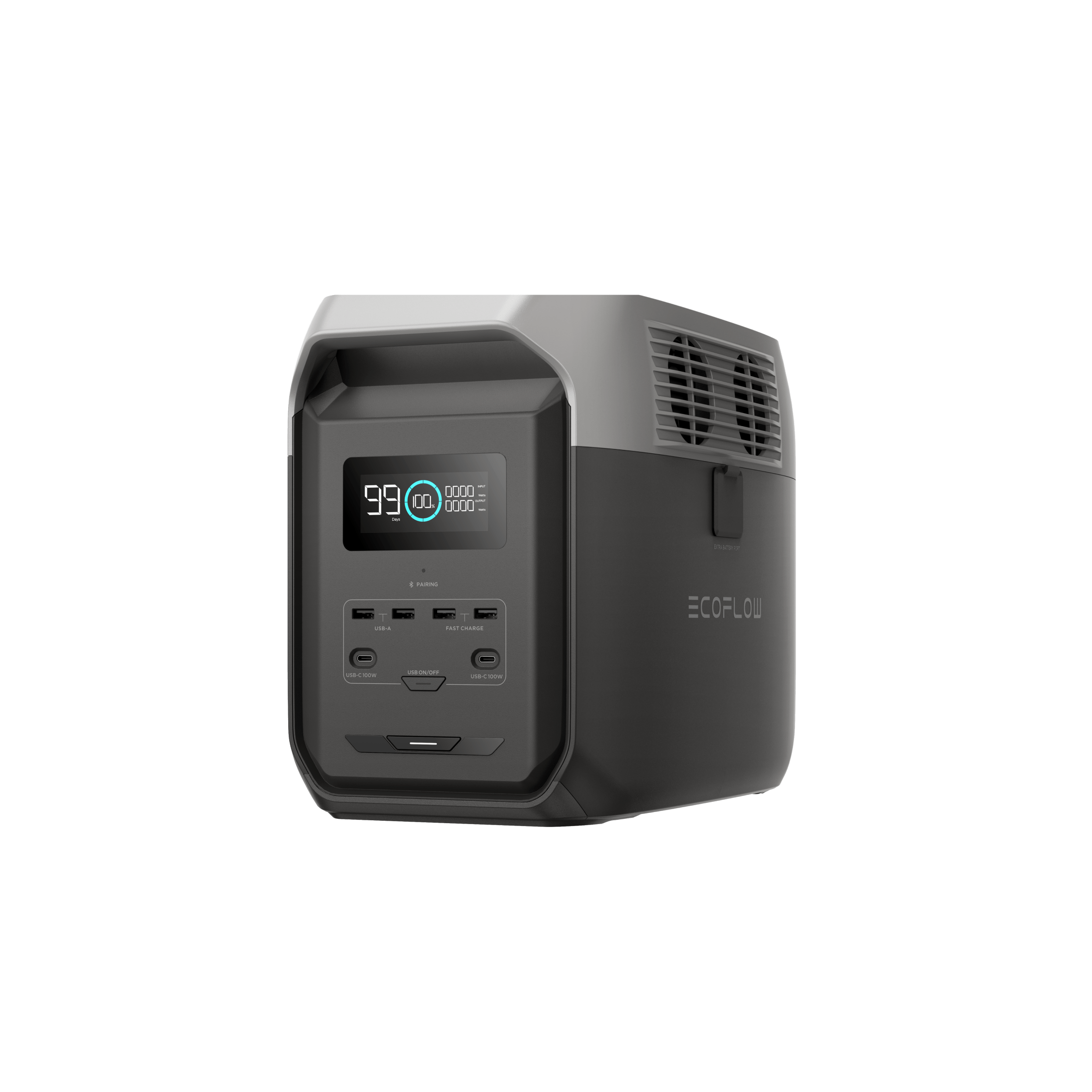
EcoFlow DELTA 3 1500
No longer sold

Jackery Explorer 1500 Ultra
$1,079.00
$1,079.00 · direct from Jackery
down from $1,199 · 10% below usual
Last checked 16 days ago. Prices move — check before you buy.
Prices may vary by retailer and are subject to change.