Head-to-head test
BLUETTI AC200MAX vs Goal Zero Yeti 1500 (6th Gen)
The AC200MAX is bigger, cheaper, and cheaper to own, but it has no UPS — so the one job a backup unit exists for, riding an outage without a blink, is the one only the Yeti can actually do.
Full profiles: BLUETTI AC200MAX → · Goal Zero Yeti 1500 (6th Gen) →

Written by Ian SchneiderUpdated
Solar & Off-Grid Tester, Station Arena Test Desk
Spec deltas
The BLUETTI AC200MAX gives you more battery for less money than the Goal Zero Yeti 1500 (6th Gen): 2,048Wh against 1,505Wh, at $1,199 against $1,500, and cheaper to own at $0.17 per lifetime kWh against $0.25. On the value math, it's the stronger unit and it isn't especially close.
The catch is what the AC200MAX can't do. It has no automatic UPS switchover, so plug a router, PC, or CPAP into it and an outage cuts power to them before the battery takes over. The Yeti switches over fast enough to keep that gear running through the blinkB5, which is the whole point of buying a unit like this for backup.
The rest of the picture favors the Yeti's refinement too. It's about 9 pounds lighter, its fans stay modest where the AC200MAX climbs to 50dB under load, it charges in roughly an hour against the AC200MAX's two, and it's the current design against one the AC200L already replaced. None of that beats 543 extra watt-hours for the capacity buyer, but for the backup buyer it decides the matchup.
What the Numbers Reveal
Each conclusion stated first — the numbers behind it on one line, the full analysis below.
For the home-backup buyer — the main reason to own a 2,000Wh-class unit — that inverts the capacity advantage. Plug sensitive gear into the Yeti and an outage is a non-eventB5; plug it into the AC200MAX and everything blinks off and reboots, no matter how many watt-hours are sitting in the tank.
AC200MAX has no automatic UPS switchoverYeti switches to battery fast enough to keep a modem and router running through an outageB5
Why it mattersAnyone buying this to ride out outages for a router, PC, or CPAP should take the Yeti in spite of its smaller battery.
61.9 lbs is a two-hands, plan-the-lift haul, about 9 pounds past the Yeti, and fans into the 50s dB are the kind you hear across a roomA1. That's the opposite of what you want two feet from a CPAP or in a small apartment, where the Yeti's lighter, quieter body is the better neighbor.
AC200MAX weighs 61.9 lbs against the Yeti's 52.75AC200MAX fans reach into the 50s dB under loadA1
Why it mattersFor indoor, portable, or sleep-adjacent use, the Yeti is easier to live with even though it stores less.
cost / lifetime kWh
Its 2,048Wh covers the roughly 1,645Wh an eight-hour blackout wants where the Yeti's 1,505Wh runs short, and it's expandable on top of that. If your priority is stored energy per dollar, none of the Yeti's refinements catch a $300 lower price and 543 more watt-hours.
AC200MAX holds 2,048Wh at $1,199 and costs $0.17 per lifetime kWh against the Yeti's $0.25AC200MAX covers an 8-hour blackout the Yeti can't finish
Why it mattersCapacity-and-value buyers should take the AC200MAX and not pay more for the Yeti's polish.
The specific dimensions that decide these two units — everything else is a tie.
What the Specs Don't Tell You
Selected because: UPS, noise, weight, and surge all fire here and they're the whole matchup — this section is the crux.
rated cycles
This section is where the matchup actually lives, and the cards split cleanly. The decisive one is UPS: the Yeti offers automatic switchover and the AC200MAX offers none, so only the Yeti keeps connected gear alive when the grid drops. For anything you'd plug in for backup, that's the difference between a non-event and a reboot.
The AC200MAX takes the surge card fairly — a 2.2x surge-to-continuous ratio against the Yeti's 1.8x, which crosses the line where hard motor loads start reliably, so it's the better fridge-and-pump starter. But its 50dB-under-load noise and its 61.9-lb weight are both flagged too, and both point back at the Yeti as the easier unit to actually live with.
Portability & Form Factor
Selected because: A 61.9-lb box against a 52.75-lb one is a physical, everyday difference the backup buyer feels.
weight
The AC200MAX is a 61.9-lb commitment, about 9 pounds heavier than the Yeti and squarely into two-person-or-a-cart territory. That weight buys real capacity, but you pay it every time the unit moves from closet to porch or into a vehicle.
The Yeti at 52.75 lbs is still no featherweight, but it's the one a single person hoists without a second thought, and its aluminum body is built to take the handlingB6. If this unit gets carried rather than parked, the lighter box wins the day-to-day even as it loses the spec sheet.
Lifetime Value
Selected because: The AC200MAX is cheaper to own — the honest concession that keeps the verdict fair.
cost / lifetime kWh
Give the AC200MAX its due: it's the cheaper unit to own, $0.17 per lifetime kWh against the Yeti's $0.25, and it starts from a $300 lower price with more capacity. On pure cost per stored watt-hour, it wins, and no amount of the Yeti's refinement changes that arithmetic.
What tempers it is that the AC200MAX's 3,500-cycle battery trails the Yeti's 4,000, and its four-year warranty trails the Yeti's five. The value edge is real, but it's a value edge on an older design, not a newer one — worth remembering when you weigh it against the Yeti's UPS and current-generation polish.
Your Life, Your Pick
Selected because: The AC200MAX wins the blackout on capacity; the Yeti wins CPAP on the UPS tiebreak.
The eight-hour blackout goes to the AC200MAX on capacity: its 2,048Wh covers the roughly 1,645Wh that job wants, while the Yeti's 1,505Wh falls short. If the scenario you're buying for is a long outage measured purely in watt-hours, the bigger battery finishes it and the smaller one doesn't.
The CPAP overnight is the mirror image. Both units have the capacity to spare — a CPAP sips — so the tiebreak isn't size, it's what happens when the power cuts. The Yeti keeps the machine running through the outage on UPS; the AC200MAX lets it drop and restart. For the person asleep two feet away, that's the scenario that matters, and it goes to the Yeti.
Brand Trust
Selected because: BLUETTI's value against Goal Zero's heritage, and the AC200MAX being a superseded generation.
BLUETTI brings the best capacity-per-dollar in the category and a well-rated app, and the AC200MAX is a proven, well-liked unit. The honest note is that it's the older generation — the AC200L supersedes it with faster charging, quieter fans, and a better app — so you're buying a known quantity that's a step behind the current one.
Goal Zero offers US-based heritage, a rugged build, and the newer design here, though its support has slipped into long waits over the last two years. Neither brand's service is a clear win; the split is really between BLUETTI's value on a dated unit and Goal Zero's refinement on a fresh one.
Strengths & trade-offs
BLUETTI AC200MAX
Strengths
- +Costs $301 less
- +Larger battery capacity
- +Higher AC output
Trade-offs
- –No major technical downsides compared to rival.
Goal Zero Yeti 1500 (6th Gen)
Strengths
- +Lighter by 9.1 lb
- +Longer warranty
Trade-offs
- –Sealed capacity — the AC200MAX can add batteries to grow past 1,505.3Wh; this one can't.
Will It Power Your Gear?
Scenario math and per-appliance runtimes, modeled from the spec record.
Scenario verdicts
We ran the math on six real-world scenarios. Here's which unit survives your actual life.
SCN-01 · 2 nights · needs 2,100Wh
Weekend Camping
Two nights off-grid with essential comfort
Neither unit
Neither unit covers this scenario's 2,100Wh: the AC200MAX comes up 359Wh short (about 83% covered), the Yeti 1500 (6th Gen) 821Wh (61%). Either gets you most of the way, so this is a scenario you plan around rather than one you should rule them out for.
Battery budget usedlower = more headroom
LOAD Phone Charger 15W×6h · LED Lights 40W×8h · Box Fan 75W×14h · CPAP Machine 40W×16h
SCN-02 · 8 hours · needs 1,645Wh
8-Hour Blackout
Keep the essentials running through a night without power
AC200MAX
The AC200MAX takes this on capacity. Its 2,048Wh covers the roughly 1,645Wh an eight-hour multi-appliance blackout wants; the Yeti's 1,505Wh falls short and taps out first. Measured purely in watt-hours, the bigger battery finishes the outage and the smaller one doesn't — the honest point for the value buyer.
Battery budget usedlower = more headroom
LOAD Fridge 150W×8h · Router + Modem 20W×8h · LED Lights (4 bulbs) 40W×6h · Phone Charger 15W×3h
SCN-03 · 8 hours · needs 320Wh
CPAP Overnight
Sleep therapy without interruption — the #1 medical use case
Either unit
Both units have the capacity to run a CPAP all night with plenty to spare, so this isn't decided by size. It's decided by what happens when the grid drops: the Yeti's UPS keeps the machine running through the cut, while the AC200MAX lets it blink off and restart. For the person asleep beside it, that tiebreak goes to the Yeti.
Battery budget usedlower = more headroom
LOAD CPAP Machine 40W×8h
SCN-04 · 8 hours · needs 910Wh
Remote Workday
Full work day off-grid without power anxiety
AC200MAX
The AC200MAX clears the workday at 52% used, banking 831Wh — late work, extra calls, or a second laptop charge without arithmetic. The Yeti 1500 (6th Gen) at 71% also finishes, with 369Wh of slack for the unplanned.
Battery budget usedlower = more headroom
LOAD Laptop 60W×8h · External Monitor 30W×8h · Router + Modem 20W×8h · Phone Charger 15W×2h
SCN-05 · 4 hours · needs 670Wh
Tailgate Party
Game day power for the crew
AC200MAX
Both handle game day; the AC200MAX keeps more in reserve (38% used vs 52%). Tailgating is a light load, though, so the number you'll feel is weight: 52.8 lbs for the Yeti 1500 (6th Gen) against 61.9 lbs for the AC200MAX, from the trunk to the setup spot.
Battery budget usedlower = more headroom
LOAD Blender 400W×0.5h · LED TV (55") 80W×4h · Bluetooth Speaker 15W×4h · Phone Charger (×3) 45W×2h
SCN-06 · 24 hours · needs 4,685Wh
Van Life Daily
A full day of mobile living — the ultimate endurance test
Neither unit
Neither unit covers this scenario's 4,685Wh: the AC200MAX comes up 2,944Wh short (about 37% covered), the Yeti 1500 (6th Gen) 3,406Wh (27%). Treat this as partial cover — enough for the essentials in it, not the whole list.
Battery budget usedlower = more headroom
LOAD Mini-Fridge 150W×24h · Laptop 60W×4h · Phone Charger 15W×3h · LED Lights 40W×5h · Fan 75W×8h
The Load Test
RUNTIME = (Wh × 0.85) ÷ LOAD
None of the scenarios above exactly yours? Build it. Toggle what you'd plug in; both units are tested against the combined draw.
Essentials
Comfort & Convenience
High-Draw Appliances
Test duration
8h
Continuous draw
205W
Projected runtime
For this load: AC200MAX runs 8.5h vs 6.2h.
$1,199 list · direct from BLUETTI
Planning for more than this? Describe your whole setup and get it sized →
Modeled from the spec record — same math as the tables below. Methodology
Runtime by appliance
Real-world runtime estimates for common appliances, modeled at 85% inverter efficiency.¹
Essentials
The basics you need runningscale 0–116.1hComfort & Convenience
Makes off-grid life actually enjoyablescale 0–23.2hHigh-Draw Appliances
These reveal the real limitsscale 0–1.7h¹ Runtime = (capacity × 0.85) ÷ appliance watts. Within each group, all bars share one time scale (the group's longest runtime), so lengths are comparable across appliances; identical runtimes collapse into a single blue/orange bar. Actual runtime varies with battery age, temperature, and simultaneous loads — see methodology.
Conclusion
July 18, 2026
Verdict: the Goal Zero Yeti 1500 (6th Gen)
This one genuinely splits, so the verdict depends on why you're buying. On raw value the AC200MAX wins clearly: 2,048Wh against 1,505Wh, $1,199 against $1,500, cheaper to own at $0.17 per lifetime kWh against $0.25, expandable, and the only one of the two that covers an eight-hour blackout on its own. If capacity per dollar is your priority, buy it and skip the rest. But the AC200MAX has no automatic UPS switchover, runs to 50dB under load, and weighs 61.9 lbs — nine more than the Yeti — as an older design the AC200L already supersedes. The Yeti is the newer, refined box: true UPS backup that kept a modem and router alive through a stormB5, about 9 pounds lighter, quieter, faster to charge, and warranted a year longer. For the home-backup buyer protecting sensitive electronics, that UPS is decisive, which is why the Yeti takes a narrow win. Confidence is low on purpose — both are right answers to different questions.
Editor-assigned confidence, based on cited owner research and spec analysis.
List prices as of July 18, 2026. The links below open BLUETTI's and Goal Zero's current prices.
Sold on Amazon · today’s price is on the listing
or check the AC200MAX price$1,199.00 list
Written by Ian Schneider, Solar & Off-Grid Tester · Station Arena Test Desk · Updated July 18, 2026
Black Friday · 38 days out
Price to beat:AC200MAX $1,199
We have never seen it discounted, so any real cut would be a first.
Measured Data
Benchmark scores and the full spec record, side by side.
Benchmark scores
Not rated for both units (minimum threshold unmet): UPS, CPAP.
Full specifications
ᵈ Derived: price ÷ rated capacity. See the data behind our comparisons →
Comparison ToolAdd more power stations, side by sideOpen Tool →How these numbers are produced
Numeric verification
Every figure on this page traces to our spec database or arithmetic on it — no estimated numbers.
Owner claims
Statements about owner experience are cited to published reviews — see Sources & Research Notes below.
Runtime model
Runtime = (rated capacity × 0.85 inverter efficiency) ÷ device wattage. Solar recharge estimates assume panels deliver 70% of rated output. Cold weather, battery age, and stacked loads reduce real-world results.
Power Score
Computed from 14 published spec dimensions, weighted per use-case bench. Higher is better; a unit must meet a bench's minimum threshold to be rated.
See the full weight table and data sourcing on our methodology page →Class ranking (the star rating)
Each unit's star score is a category ranking, not customer reviews — no buyer opinions feed it. We score every station on size-independent quality (value, output, portability, endurance, ports, warranty, and more), then percentile-rank it against the other units in its capacity class, so a class-leading compact unit and a class-leading whole-home unit can both earn 5★. Here, AC200MAX rates 3.4/5 (4th percentile of 26 Large-class units), and Yeti 1500 (6th Gen) rates 3.4/5 (4th percentile of 27 Everyday-class units).
How the class ranking is computed →Test Notes & Caveats
Hidden gotchas and advantages we spotted that you won't find on the product page.
AC200MAX: 61.9 lbs Is a Commitment
At 61.9 lbs, this is manageable but not fun to move. That's heavier than a large checked suitcase. How much it costs you depends on whether it rolls — wheels and a telescoping handle change the job completely at this weight, and our spec record doesn't track them, so look at the product photos before you plan on carrying it from the car.
50dB Is a Fan You Hear
The AC200MAX is rated at 50dB under load, which is audible across a room and squarely at odds with a bedroom or CPAP setup. The Yeti publishes no figure, but its fans only stir near its output ceiling — a meaningful gap for anyone keeping the unit where they sleep or work.
Yeti 1500 (6th Gen): Fixed Capacity
The Yeti 1500 (6th Gen) is sealed at 1,505Wh — fine if that covers you, but it's the ceiling. By contrast the AC200MAX can add expansion batteries, though the first thing it has over the Yeti 1500 (6th Gen) is its own 2,048Wh base — expansion is the step after that, for the buyer who would outgrow 2,048Wh as well.
The AC200MAX Is the Better Motor-Starter
Credit where it's due: the AC200MAX's 2.2x surge-to-continuous ratio clears the 2x line the Yeti's 1.8x doesn't, so it's the more reliable starter for a stubborn fridge or pump. If hard motor startups are your worry rather than UPS backup, this one points at the BLUETTI.
Only the Yeti Rides the Outage
The Yeti has automatic UPS switchover; the AC200MAX has none. Plug a router, PC, or CPAP into the Yeti and an outage passes without a reboot; do the same on the AC200MAX and everything drops for a moment before the battery kicks in. For backup duty, this is the card that decides it.
Warranty: 5 Years vs 4
The Yeti 1500 (6th Gen) is covered for 5 years against the AC200MAX's 4 years. An underrated factor if you're keeping this unit for years.
Yeti 1500 (6th Gen): Noise Level Not Disclosed
The AC200MAX publishes its noise level (50dB); the Yeti 1500 (6th Gen) doesn't publish one. That isn't evidence the Yeti 1500 (6th Gen) is louder — it means there's no figure to hold it to, and no way to compare the two on this without hearing them. If you're buying for a bedroom, a CPAP, or an apartment, treat the AC200MAX's 50dB as the only published number on the table — a spec-sheet figure, not a measurement — and look for hands-on reports of the Yeti 1500 (6th Gen) before deciding.
Full record above — the Test Desk pick is the Yeti 1500 (6th Gen).
Check Yeti 1500 (6th Gen) price →or check the AC200MAX priceOwnership Analysis
What happens after you buy — true cost of ownership, brand trust, and growth potential.
Lifetime value
Service lifeyears at one full cycle per day
Lifetime energy delivered
Cost per delivered kWh
│ warranty ends · Reaching the cycle rating means ~80% capacity remains — degraded, not dead.
Analyst note
The AC200MAX wins on both sticker price and long-term value. At $0.17/kWh over its lifetime, it's meaningfully cheaper to own. Clear value winner. One caution on the lifespan row: the Yeti 1500 (6th Gen) takes longer to reach its cycle rating, but a cycle moves a different amount of energy on each unit — the AC200MAX still delivers more over its shorter horizon (7,168 vs 6,021 kWh). Years measure wear, not usefulness.
Brand trust
BLUETTI
Ecosystem
One of the broadest lineups — 15-20+ models from budget (AC2A) to flagship portable (Apex 300, 2764.8Wh). Includes specialized products: vehicle solar hubs, sodium-ion cold-weather units, and balcony storage systems.
Support
The most inconsistent support in the space. Heavily email-based with China timezone delays. Some users get smooth, efficient service; others report weeks of troubleshooting runarounds, being offered discounts on new units instead of repairs, and confusing third-party purchase claim processes. Buying direct from Bluetti's website tends to produce better support outcomes.
Community
Active and growing — Reddit r/bluetti has a dedicated community. Second-largest after EcoFlow in engagement.
App experience
Rated 4.5/5 iOS and Android — tied for best app experience in the category. V3.0 UI redesign was well-received.
Unique strength
BLUETTI leads the category on capacity-per-dollar and pairs it with a well-rated app — the value is real even on this older unit.
Worth knowing
The AC200MAX is the previous generation, superseded by the AC200L with faster charging and quieter fans, and BLUETTI's support runs inconsistent — buying direct tends to go smoother.
Goal Zero
Ecosystem
Focused — a compact current line (6th-gen Yeti and Yeti Pro series), the previous-gen X series now out of stock across every model on Goal Zero's own store (checked 2026-09-13: 200X, 500X, 1000X, 1500X, 3000X, 6000X, some listed only as open-box), so buying one new means finding retailer stock, Sherpa power banks for the under-100Wh tier, plus Alta coolers, Nomad/Ranger solar panels, and vehicle integration kits
Support
US-based company (Salt Lake City, owned by NRG Energy). Historically considered premium support, but 2025-2026 reports describe long wait times, unresponsive email communication, and tickets going unaddressed for weeks. The "premium support justifies premium pricing" argument is weakening.
Community
Small but loyal — strong following in overlanding and preparedness communities. Official community forums were recently shuttered, frustrating long-time users.
App experience
Rated 4.4/5 iOS (~1,200 ratings) but recent reviews skew negative — recurring connectivity issues, crashes, and stability problems.
Unique strength
Pioneer of the portable power market — strongest brand heritage. US-based company with ruggedized, weather-resistant designs (IP ratings vary by model). Integrated "Yeti-Ready" ecosystem with coolers, lights, and vehicle kits.
Worth knowing
Goal Zero brings the newer design and a five-year warranty, but its support has slipped into long waits over the past two years.
Analyst note
This is BLUETTI's value on a dated unit against Goal Zero's refinement on a current one. The AC200MAX stores more for less and expands; the Yeti adds the UPS, the lighter body, and the newer generation. Which brand wins here depends entirely on whether you're buying for capacity or for backup.
Growth path
AC200MAX
EXPANDABLESupports BLUETTI expansion batteries, so you can add capacity later without replacing the base unit — useful if your needs may climb past 2,048Wh.
Accepts up to 900W of solar. Suitable for a 1-2 panel setup.
Adequate ports for most setups, but heavy users may want a power strip.
Expansion batteries are BLUETTI-specific. You're investing in the BLUETTI ecosystem.
Yeti 1500 (6th Gen)
FIXED CAPACITYFixed at 1,505Wh, with no expansion — so size it for your needs up front rather than planning to add capacity later.
Accepts up to 900W of solar. Suitable for a 1-2 panel setup.
Generous port selection supports complex multi-device setups.
Realistic full solar rechargeat 70% of rated panel output — see methodology
Analyst note
The Yeti 1500 (6th Gen) is sealed at 1,505Wh, which is fine if that covers you. The AC200MAX starts at 2,048Wh and can grow beyond it with BLUETTI expansion batteries — real headroom the Yeti 1500 (6th Gen) doesn't have if your needs climb toward partial-home backup.
What Owners Report
Patterns from published owner reports and long-term reviews — every claim cited to its source below.
BLUETTI AC200MAX
The AC200MAX is the older generation, and owners describe it as capable but dated. Its fans run noticeably louder than the newer AC200L, well into the 50s dB under loadA1, and AC charging is slow — roughly two hours to reach most of a charge where the AC200L does it in well under oneA2. The recurring summary is that it was a popular mid-range unit whose slow charging, aging LFP chemistry, and afterthought app are exactly what the AC200L was built to fixA3.
That said, it remains a solid, well-liked expandable unit: LFP chemistry rated around 3,500 cycles for roughly nine years of useful life, backed by a four-year warrantyA4. You're buying a proven older design, not a lemon — just one the market has already moved past.
“The AC200MAX was a popular mid-range unit with solid capacity and an expandable battery, but its frustrations included slow charging, aging LFP chemistry, and an app that felt like an afterthought — the AC200L addresses nearly every one of these.”
Sources
diysolarforum.com · offgridbenchmark.com · firstquadcopter.com · bluettipower.eu · techradar.com
Goal Zero Yeti 1500 (6th Gen)
The Yeti's standout in this matchup is its backup behavior: it kept a modem and router running through a winter storm, taking over from mains without dropping the connectionB5. That's the capability the AC200MAX lacks entirely, and it's the reason the Yeti earns the nod for outage duty despite the smaller battery.
The rest holds up too. The aluminum enclosure feels tool-like and shrugged off rocky roads and speed bumps in testingB6, a full wall recharge lands in just over an hourB2, and a CPAP ran overnight with more than 60% left by morningB4. The caveats are a proprietary 6mm port that won't take older Yeti Tank batteriesB9 and a minority of buyers reporting harder reliability failures on this new SKUB10 — worth weighing, but not enough to offset the UPS advantage for a backup buyer.
“When pushing the inverter near its 2,000W limit, the internal cooling fans become audible — not loud, but noticeable in a quiet room.”
Sources
exploreandrenovate.com · wattsourcer.com
Sources & Research Notes
Every owner claim in this report is traceable to a published source. The bracketed references above resolve here.
Recurring owner themes
- The AC200MAX is the older generation — louder, slower to charge, weaker app — that the AC200L was built to improve on. [AC200MAX · 3 entries]
- Real-world charging speed, CPAP endurance, and UPS backup performance consistently match or beat Goal Zero's marketing claims in hands-on tests, though solar recharge time runs slower than advertised once conditions aren't ideal. [Yeti 1500 (6th Gen) · 4 entries]
- Reviewers flag the unit's price and near-60-lb weight as barriers, and its proprietary 6mm port ecosystem plus incompatibility with older Yeti Tank batteries as an ecosystem lock-in concern. [Yeti 1500 (6th Gen) · 2 entries]
- A minority of REI buyers report serious reliability failures (total charging failure across all input types) paired with unsatisfying customer service, plus firmware-update-triggered connectivity problems — a contrast to the otherwise positive professional-review consensus. [Yeti 1500 (6th Gen) · 2 entries]
- A1
“The AC200MAX's fans are noticeably louder than the newer AC200L — measured well into the 50s dBA under load at 1 meter, versus the AC200L staying barely audible under moderate load.”
diysolarforum.com / offgridbenchmark.com — AC200MAX vs AC200L noise · 2026 · [negative]
- A2
“Slow AC charging is a common frustration — the AC200MAX takes roughly two hours to reach most of a charge, versus well under an hour for the AC200L.”
offgridbenchmark.com / firstquadcopter.com — AC200L vs AC200MAX · 2026 · [negative]
- A3
“The AC200MAX was a popular mid-range unit with solid capacity and an expandable battery, but its frustrations included slow charging, aging LFP chemistry, and an app that felt like an afterthought — the AC200L addresses nearly every one of these.”
offgridbenchmark.com — AC200L review / comparison · 2026 · [mixed]
- A4
“Still a solid, well-liked expandable power station with LFP chemistry rated around 3,500 cycles (roughly nine years of useful life) and a 4-year warranty, versus the AC200L's 5-year.”
bluettipower.eu / techradar.com — AC200MAX · 2026 · [mixed]
- B2
“A full charge from 0 to 100% completes in just over an hour via wall power.”
Popular Science — "Goal Zero Yeti 1500 6G review: A rugged portable power station that isn't afraid to get dirty" · 2026 · [positive]
- B4
“I ran a CPAP machine overnight, which left me with more than 60% capacity in the morning.”
Popular Science — "Goal Zero Yeti 1500 6G review: A rugged portable power station that isn't afraid to get dirty" · 2026 · [positive]
- B5
“The transition from mains to power bank worked seamlessly as you'd hope — it kept the modem and router running through a winter storm.”
Popular Science — "Goal Zero Yeti 1500 6G review: A rugged portable power station that isn't afraid to get dirty" · 2026 · [positive]
- B6
“The aluminum enclosure gives a premium, tool-like feel, and the unit survived rocky roads and over the seemingly endless number of speed bumps without issue.”
Popular Science — "Goal Zero Yeti 1500 6G review: A rugged portable power station that isn't afraid to get dirty" · 2026 · [positive]
- B9
“The 6mm port ecosystem is proprietary, limiting accessory options, and the unit is not compatible with older Yeti Tank expansion batteries.”
wattsourcer.com — "Goal Zero Yeti 1500 Review (2026)" · 2026 · [negative]
- B10
“The unit stopped accepting charges via 120VAC, solar, and 12V inputs, resulting in complete system failure, and the owner reported less than satisfactory customer service from Goal Zero.”
REI customer reviews — Goal Zero Yeti 1500 Portable Power Station product page (review aggregate) · unknown · [negative]
Research compiled July 18, 2026.
Who Should Buy Which
Buy the AC200MAX if you…
- →You want the most capacity per dollar and room to expand — 2,048Wh for $1,199, cheaper to own, and enough to cover a full eight-hour blackout.
- →You don't need instant UPS switchover and can live with a 61.9-lb box and 50dB fans under load — a garage, basement, or worksite unit more than a bedroom one.
Buy the Yeti 1500 (6th Gen) if you…
- →You're buying for home backup of sensitive electronics — a router, PC, or CPAP — where only the Yeti's UPS keeps them alive through the cutB5.
- →You want the lighter, quieter, faster-charging current-generation unit with a five-year warranty, and 1,505Wh covers your real loads.
If neither fits
If your target is a two-night camp near 2,100Wh or full daily van-life draw, both units come up short, the Yeti sooner than the larger AC200MAX. Size up to a bigger or expandable system rather than asking either of these to cover a multi-day off-grid load.
The Bottom Line
This is a coin-flip that splits on what you're buying for, which is why the confidence is low. The AC200MAX is the value-and-capacity pick — bigger, $300 cheaper, cheaper to own, expandable, and it covers an eight-hour blackout the Yeti can't finish. That case is real and it's strong.
But it has no UPS, weighs 9 pounds more, and runs to 50dB under load as a superseded design. If you're buying for backup, take the Yeti: it's the only one that keeps your router and CPAP alive through the outageB5, and it's lighter, quieter, current, and warranted a year longer. Both are correct answers — just to different questions.
Frequently Asked Questions
Answers drawn from the spec record and cited owner research.
Should I buy the BLUETTI AC200MAX or the Goal Zero Yeti 1500 6th Gen?
It genuinely splits by use case. The AC200MAX is bigger, cheaper, and cheaper to own, so it wins for capacity per dollar. The Yeti is the only one with true UPS switchover, plus it's lighter, quieter, and charges faster — so for home backup of sensitive electronics, take the Yeti; for the most stored energy per dollar, take the AC200MAX.
Does the BLUETTI AC200MAX work as a UPS?
No. It has no automatic switchover, so during an outage connected devices lose power for a moment and reboot. The Yeti switches to battery fast enough to keep a router or CPAP running through the cut, which is the single biggest reason to choose it over the larger AC200MAX for backup duty.
Which one holds more power and costs less?
The AC200MAX on both counts: 2,048Wh against the Yeti's 1,505Wh, $1,199 against $1,500, and cheaper to own at $0.17 per lifetime kWh against $0.25. If capacity and price are what you're optimizing for, it's the value pick and the Yeti's extras don't catch it.
Which is quieter and easier to carry?
The Yeti. It's about 9 pounds lighter at 52.75 lbs against 61.9, and its fans stay modest while the AC200MAX climbs to 50dB under load. For an apartment, a bedroom, or a CPAP nightstand, the Yeti is clearly the better neighbor.
Is the AC200MAX outdated?
It's the older generation, superseded by the AC200L, with slower charging and a weaker app. It's still a capable, expandable unit with a 3,500-cycle battery, but you're buying a proven older design rather than the current one, which is part of why its price is lower.
Where to buy

BLUETTI AC200MAX
$1,199.00
$1,199.00 · direct from BLUETTI
Last checked 16 days ago. Prices move — check before you buy.
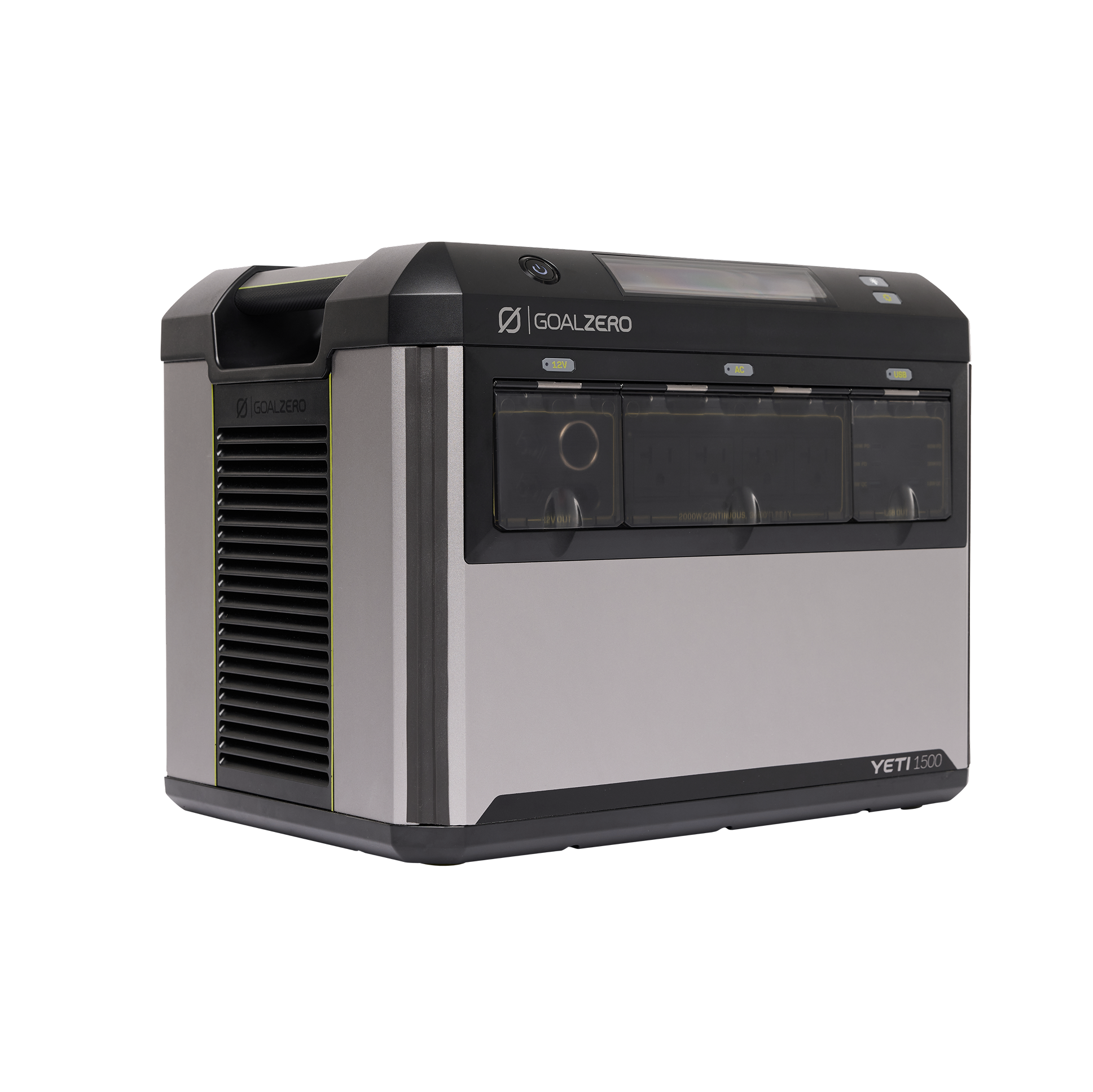
Goal Zero Yeti 1500 (6th Gen)Pick
Sold on Amazon · today’s price is on the listing
Prices may vary by retailer and are subject to change.