Head-to-head test
Anker SOLIX F2600 vs BLUETTI Pioneer 50 BLUETTI AC60
The Anker holds more than six times the energy for 67% more money, which settles this matchup on every axis except the one that's fifty pounds heavy.
Full profiles: Anker SOLIX F2600 → · BLUETTI Pioneer 50 BLUETTI AC60 →

Written by Ian SchneiderUpdated
Solar & Off-Grid Tester, Station Arena Test Desk
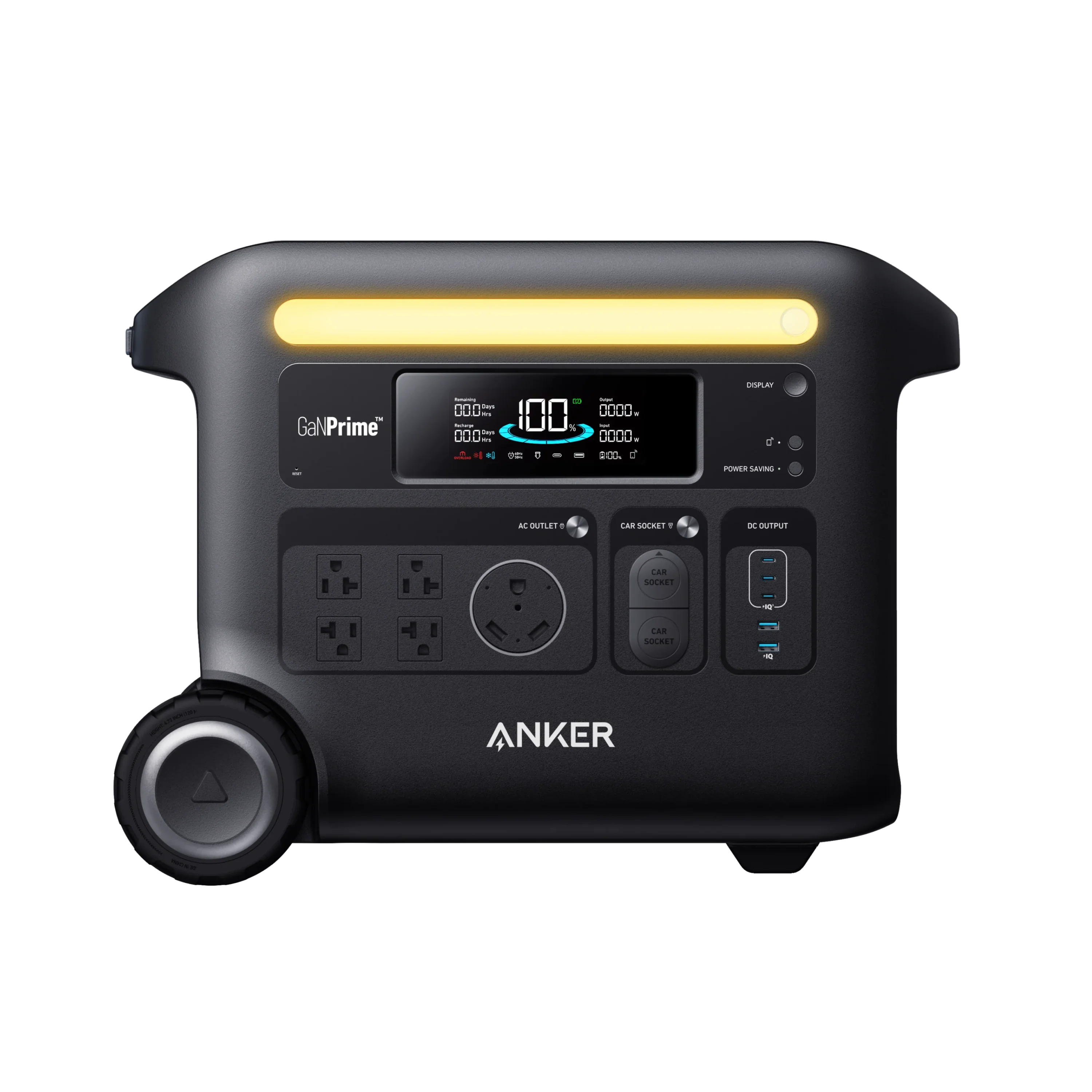
$1,499.99 · direct from Anker
Last checked 1 day ago. Prices move — check before you buy.
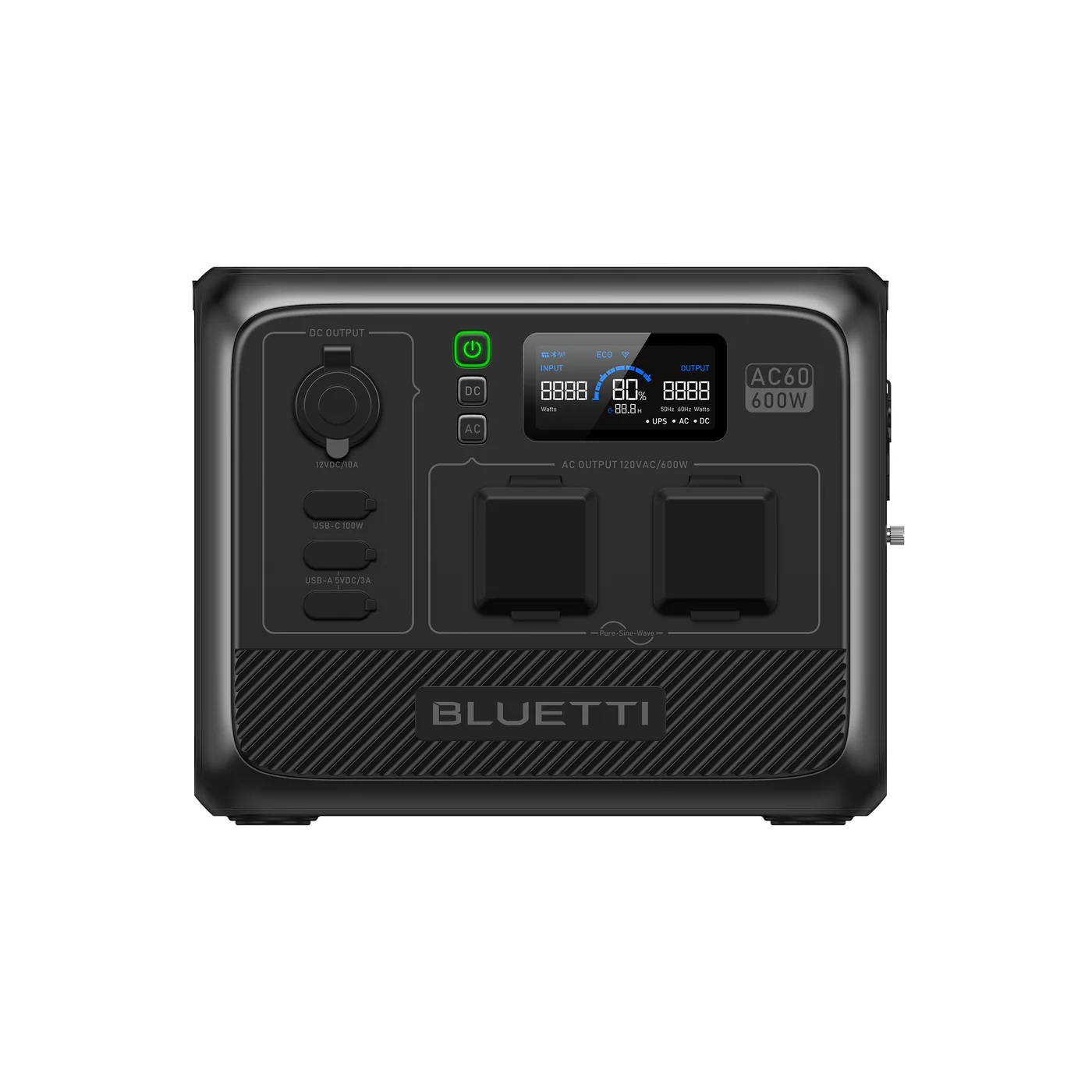
$599.00 · direct from BLUETTI
Last checked 1 day ago. Prices move — check before you buy.
Spec deltas
The heavy box is the cheap one here. The SOLIX F2600 costs $1,100 to the Pioneer 50's $599, and for that it holds 2,560Wh against 403Wh. It also weighs 70.5 pounds to the Pioneer's 20, which is the only sentence on this page that argues for the smaller unit.
That $501 gap buys 2,157 watt-hours, or nineteen cents each. Both units' own sticker rates are worse: $0.39 per watt-hour for the Anker, $1.49 for the BLUETTI. Going bigger isn't the premium option in this matchup. It's the bulk discount, offered to you at checkout.
So the Pioneer 50 has to win on something other than money, and it has exactly one thing. You can carry it in one hand, and its IP65 shell shrugs off a rainstorm that would send the Anker indoorsB1B4. That's a genuine job. It just isn't the job most people are shopping for. Of the six load profiles this site models, the Anker finishes five and the Pioneer finishes one.
What the Numbers Reveal
Each conclusion stated first — the numbers behind it on one line, the full analysis below.
Capacity
Divide that by the prices and it's thirteen cents per lifetime kilowatt-hour against fifty — the same energy, bought four times cheaper, from the box that costs more today. The Pioneer's six-year warranty, one more than Anker's five, is the only long-term number running the other way, and a warranty year is not a kilowatt-hour.
Both packs are rated for 3,000 cyclesSOLIX F2600: 2,560Wh capacity, 7,680 total lifetime kWhPioneer 50: 403Wh capacity, 1,209 total lifetime kWh
Why it mattersIf you were treating the shared 3,000-cycle line as a wash between these two, stop. That line flatters the small unit and tells you nothing about how much energy you actually get to use.
solar input
The small unit's charge times only look competitive because they're measuring a small tank, not a fast pump. On the wall the Anker moves 2,048Wh (80% of 2,560Wh) in 78 minutes while the Pioneer moves 403Wh in sixtyA1B2, and the Pioneer's 200W panel ceiling caps what it can ever collect in a day no matter how many panels you own. In a multi-day outage, recharge rate is a survival spec rather than a convenience, and that ceiling is the entire story.
SOLIX F2600 accepts 1,000W of solar into 2,560WhPioneer 50 accepts 200W of solar into 403WhHyperFlash reaches 0-80% in about 78 minutesA1; the Pioneer Turbo-charges to full in about an hourB2
Why it mattersAnyone buying for outages rather than single nights should ignore "charges in an hour" and read the solar input wattage instead.
The Pioneer wins the carry and loses the trip. It can't finish a weekend camp and it covers about the first hour and a half of an eight-hour blackout. So its weight advantage only pays when moving the unit is the job: a kayak, a fence line, a site where it will get rained onB1. And the honest catch on the other side — the Anker finishes that same camping weekend at 97% of its usable energy. It clears, but it comes home empty.
70.5 lbs versus 20.06 lbsPioneer 50 carries an IP65 rating — dust-tight and fine with low-pressure water, not waterproofB1B4The Weekend Camping profile needs 2,100Wh: 97% of the Anker's usable energy, 613% of the Pioneer's
Why it mattersBuy the Pioneer if you'll lift it more often than you drain it. Buy the Anker if you'll drain it more often than you lift it, and if weekends away are the main use, price the expansion battery at the same time.
continuous output
Surge is momentary; continuous is what actually runs an appliance, and continuous is 600W against 2,400W. A kettle or a space heater doesn't care that the Pioneer can briefly double itself — it needs sustained watts, and the Pioneer doesn't have them. The ratio is a quality signal about the inverter. The ceiling is the shopping list.
Pioneer 50: 600W continuous, 1,200W surge — double its ratingSOLIX F2600: 2,400W continuous, 2,800W surge — 17% over its ratingThe Anker's continuous output is four times the Pioneer's (2,400W vs 600W)
Why it mattersIf anything you plan to run is a heating element, the Pioneer is out before capacity even enters the conversation — and none of the six profiles modeled on this page include one, so the scenario cards won't flag it for you.
The specific dimensions that decide these two units — everything else is a tie.
Runtime: Will It Power Your Gear?
Selected because: More than six times the capacity (2,560Wh vs 403Wh) means every runtime figure below is really one gap wearing different hats.
continuous output
Every runtime here is the same sentence in different clothes: 2,560Wh against 403Wh. The place where a difference of degree becomes a difference in kind is one CPAP night — 15% of the Anker's usable energy, 93% of the Pioneer's. Both reach morning. Only one reaches the morning after.
Run that forward and the Anker covers roughly six CPAP nights on a charge (100 divided by 15) while the Pioneer covers one and greets dawn on fumes. If your use case is a single night away from an outlet, that's close enough to a tie that you should decide it on price. If it's a weekend, a storm, or anything that doesn't announce its end date, it isn't a tie at all.
Portability & Form Factor
Selected because: 70.5 lbs against 20.06 lbs is the only axis the Pioneer 50 wins, and it wins it by fifty pounds.
weight
70.5 pounds is a two-hands, bent-knees, don't-do-it-on-the-stairs lift. It goes to the utility room or the back of the truck once and it lives there. The Pioneer is 20 pounds: one hand, over a gate, into a kayak, and its IP65 shell lets it sit out in weather that would send the Anker insideB1B4.
That's not a small thing, and it's the whole reason this page isn't a rout. But be honest about how often you'd actually move it. Most people set one of these down beside the panel box or the camp table and pick it up twice a year. If that's you, you're buying fifty pounds of inconvenience you'll experience twice, in exchange for six times the energy on every day in between.
Your Life, Your Pick
Selected because: The Anker finishes five of the six modeled load profiles and the Pioneer finishes one — the fastest way to see whether 403Wh covers your evening.
The Pioneer clears exactly one of the six profiles modeled here, the CPAP night, and it clears that at 93% of what it holds. Worth being precise about why it loses the rest: it isn't a power problem. The Pioneer's inverter meets the peak draw in every one of these six profiles. It's a fuel problem, and no efficiency argument fixes a tank that's too small.
The one honest wrinkle sits on the Anker's side. Van life asks 4,685Wh a day and neither box supplies it — the Anker needs 215% of its usable energy to get there. If a van is the plan, this is the wrong page: go look at units with a 3,000Wh-plus base and a serious expansion ladder, or a proper house-battery install.
Lifetime Value
Selected because: Identical 3,000-cycle ratings hide a near-fourfold gap in cost per lifetime kilowatt-hour: $0.13 against $0.50.
cost / lifetime kWh
Thirteen cents a kilowatt-hour against fifty. Everything else in this section is bookkeeping, and it all traces back to the same 3,000 cycles both units advertise — cycles multiply capacity, so a 2,560Wh pack pushes 7,680 lifetime kilowatt-hours where a 403Wh pack pushes 1,209.
Whether you'll ever collect all of that is a fair question. Weekend use rates both boxes at about 29 years of life, which is a number to be skeptical of in either column, because cycle life isn't calendar life. The metric still earns its place, because it's the cleanest way to see what the price gap actually bought: not a bigger box, but cheaper electricity coming out of it for as long as you own it.
What the Specs Don't Tell You
Selected because: The flags here run against the winner — 70.5 lbs, no published noise figure, and a warranty one year shorter than BLUETTI's six.
The flags on this page mostly point at the winner. Anker publishes no decibel figure for the F2600 at all, while BLUETTI prints 45 dB on the Pioneer's spec sheet, and an undisclosed number is not the same thing as a low one. Anker also gives five years of warranty to BLUETTI's six, which on a per-year basis is $200 against $100.
None of it moves the verdict. Cost per warranty year rewards whichever box is cheaper, which is arithmetic rather than quality. Cost per lifetime kilowatt-hour rewards whichever box stores more energy across the same 3,000 cycles, and that one runs hard the other way. The two metrics are measuring different things, and only one of them is measuring what you plug into.
Strengths & trade-offs
Anker SOLIX F2600
Strengths
- +Larger battery capacity
- +Higher AC output
- +Faster solar charging
Trade-offs
- –Substantially more expensive (+$501) than the Pioneer 50 BLUETTI AC60.
- –Significantly heavier (+50.4 lbs), making it harder to move.
BLUETTI Pioneer 50 BLUETTI AC60
Strengths
- +Costs $501 less
- +Lighter by 50.4 lb
- +Longer warranty
Trade-offs
- –Weaker inverter (-1,800W) limits appliance compatibility.
Will It Power Your Gear?
Scenario math and per-appliance runtimes, modeled from the spec record.
Scenario verdicts
We ran the math on six real-world scenarios. Here's which unit survives your actual life.
SCN-01 · 2 nights · needs 2,100Wh
Weekend Camping
Two nights off-grid with essential comfort
SOLIX F2600
Two nights of camp load runs 2,100Wh and the Anker gets there, but barely, with almost nothing left by Sunday. The Pioneer isn't in this conversation at all; the trip asks more than six times its usable energy. If weekends are the main use, buy the Anker and price the expansion battery at the same time, because finishing at empty isn't the same as finishing comfortably.
Battery budget usedlower = more headroom
LOAD Phone Charger 15W×6h · LED Lights 40W×8h · Box Fan 75W×14h · CPAP Machine 40W×16h
SCN-02 · 8 hours · needs 1,645Wh
8-Hour Blackout
Keep the essentials running through a night without power
SOLIX F2600
The Anker walks through this one and still has about a quarter of its usable energy at hour eight. The Pioneer covers roughly the first hour and a half, and then you're in the dark holding a very portable brick. Capacity is the whole argument here — the Pioneer's inverter can meet the peak draw fine, it just runs out of fuel.
Battery budget usedlower = more headroom
LOAD Fridge 150W×8h · Router + Modem 20W×8h · LED Lights (4 bulbs) 40W×6h · Phone Charger 15W×3h
SCN-03 · 8 hours · needs 320Wh
CPAP Overnight
Sleep therapy without interruption — the #1 medical use case
Either unit
Both finish the night, so this comes down to margin. The Anker spends 15% of its usable energy doing it; the Pioneer spends 93% and greets sunrise empty. That's fine if you plug in every morning. It's not fine if the reason you own a power station is that the power went out.
Battery budget usedlower = more headroom
LOAD CPAP Machine 40W×8h
SCN-04 · 8 hours · needs 910Wh
Remote Workday
Full work day off-grid without power anxiety
SOLIX F2600
The Pioneer 50 BLUETTI AC60 doesn't finish — 343Wh usable against the 910Wh this needs leaves it 567Wh short, about 38% of the scenario covered. The SOLIX F2600 covers it with 1,266Wh to spare.
Battery budget usedlower = more headroom
LOAD Laptop 60W×8h · External Monitor 30W×8h · Router + Modem 20W×8h · Phone Charger 15W×2h
SCN-05 · 4 hours · needs 670Wh
Tailgate Party
Game day power for the crew
SOLIX F2600
The Pioneer 50 BLUETTI AC60 doesn't finish — 343Wh usable against the 670Wh this needs leaves it 327Wh short, about 51% of the scenario covered. The SOLIX F2600 covers it with 1,506Wh to spare.
Battery budget usedlower = more headroom
LOAD Blender 400W×0.5h · LED TV (55") 80W×4h · Bluetooth Speaker 15W×4h · Phone Charger (×3) 45W×2h
SCN-06 · 24 hours · needs 4,685Wh
Van Life Daily
A full day of mobile living — the ultimate endurance test
Neither unit
Nobody wins this one and the numbers aren't close. A van's daily draw runs 4,685Wh — the bigger box needs more than twice its usable energy to cover it, and the smaller one is off by more than thirteen times. The Anker at least has a route out, between its expansion battery and a 1,000W solar ceiling, but as purchased both come up short. If this is the plan, shop a bigger base unit rather than trying to stretch either of these.
Battery budget usedlower = more headroom
LOAD Mini-Fridge 150W×24h · Laptop 60W×4h · Phone Charger 15W×3h · LED Lights 40W×5h · Fan 75W×8h
The Load Test
RUNTIME = (Wh × 0.85) ÷ LOAD
None of the scenarios above exactly yours? Build it. Toggle what you'd plug in; both units are tested against the combined draw.
Essentials
Comfort & Convenience
High-Draw Appliances
Test duration
8h
Continuous draw
205W
Projected runtime
For this load: SOLIX F2600 runs 10.6h vs 1.7h.
$1,099.99 list · direct from Anker
Modeled from the spec record — same math as the tables below. Methodology
Runtime by appliance
Real-world runtime estimates for common appliances, modeled at 85% inverter efficiency.¹
Essentials
The basics you need runningscale 0–145.1hComfort & Convenience
Makes off-grid life actually enjoyablescale 0–29hHigh-Draw Appliances
These reveal the real limitsscale 0–2.2h¹ Runtime = (capacity × 0.85) ÷ appliance watts. Within each group, all bars share one time scale (the group's longest runtime), so lengths are comparable across appliances; identical runtimes collapse into a single blue/orange bar. Actual runtime varies with battery age, temperature, and simultaneous loads — see methodology.
Conclusion
August 1, 2026
Verdict: the SOLIX F2600, on Power Score margin
Take the SOLIX F2600 unless you'll be carrying it more often than you drain it. Both packs are rated for 3,000 cycles, but cycles multiply capacity, so those identical ratings deliver 7,680 lifetime kilowatt-hours out of the Anker and 1,209 out of the Pioneer 50 — thirteen cents per lifetime kilowatt-hour against fifty. The Anker also finishes five of the six load profiles modeled here to the Pioneer's one, and it accepts five times the solar input, so the bigger tank isn't the slower one to refill. The Pioneer's case is real and narrow: 20 lbs, an IP65 shell you can leave out in weatherB1B4, and a published noise figure. If this unit is going to sit next to your panel box and stay there, none of that buys you anything.
Editor-assigned confidence, based on cited owner research and spec analysis.
List prices as of August 1, 2026. The links below open Anker's and BLUETTI's current prices.
$1,499.99 · direct from Anker
Last checked 1 day ago. Prices move — check before you buy.
or check the Pioneer 50 BLUETTI AC60 price$599.00 list
Written by Ian Schneider, Solar & Off-Grid Tester · Station Arena Test Desk · Updated August 1, 2026
Measured Data
Benchmark scores and the full spec record, side by side.
Benchmark scores
Not rated for both units (minimum threshold unmet): RV Living, Home Backup, CPAP, Food Truck, Apartment Balcony, Camping.
Full specifications
ᵈ Derived: price ÷ rated capacity. See the data behind our comparisons →
Comparison ToolAdd more power stations, side by sideOpen Tool →How these numbers are produced
Numeric verification
Every figure on this page traces to our spec database or arithmetic on it — no estimated numbers.
Owner claims
Statements about owner experience are cited to published reviews — see Sources & Research Notes below.
Runtime model
Runtime = (rated capacity × 0.85 inverter efficiency) ÷ device wattage. Solar recharge estimates assume panels deliver 70% of rated output. Cold weather, battery age, and stacked loads reduce real-world results.
Power Score
Computed from 14 published spec dimensions, weighted per use-case bench. Higher is better; a unit must meet a bench's minimum threshold to be rated.
See the full weight table and data sourcing on our methodology page →Class ranking (the star rating)
Each unit's star score is a category ranking, not customer reviews — no buyer opinions feed it. We score every station on size-independent quality (value, output, portability, endurance, ports, warranty, and more), then percentile-rank it against the other units in its capacity class, so a class-leading compact unit and a class-leading whole-home unit can both earn 5★. Here, SOLIX F2600 rates 4.0/5 (40th percentile of 26 Large-class units), and Pioneer 50 BLUETTI AC60 rates 3.9/5 (38th percentile of 22 Personal-class units).
How the class ranking is computed →Test Notes & Caveats
Hidden gotchas and advantages we spotted that you won't find on the product page.
70.5 lbs: A One-Time Problem, If It Has An Address
This is a two-hands, bent-knees lift, and not one you want to repeat on basement stairs. The realistic plan is to carry it once — to the utility room, the garage bench, the back of the truck — and leave it. Judged that way, the weight costs you one bad afternoon. Judged as something you'll move every weekend, it's the single best argument for the 20-pound box in the other column.
45dB Is The Only Noise Number On This Page
Forty-five decibels under load is a fan you'll hear in a quiet bedroom. Not loud, but present, and present for as long as the unit is working. The redeeming detail is that BLUETTI printed it, and you can plan around a number.
Surge Power: Ratio and Ceiling Disagree
The Pioneer 50 BLUETTI AC60 holds the higher surge-to-continuous ratio (2× vs 1.2×), but the SOLIX F2600 holds the higher absolute surge ceiling — 2,800W against 1,200W. These measure different things. The ratio says how much headroom an inverter keeps above its own rating; the ceiling says how big a startup spike it can actually swallow. A motor draws a number of watts at switch-on, not a multiple of someone else's rating, so on raw starting ability the SOLIX F2600 is the stronger unit here — while the Pioneer 50 BLUETTI AC60 is the one running further below its own limit at steady state.
Six Years To Five, And What That's Worth
BLUETTI covers the Pioneer 50 for six years against Anker's five, and on a cost-per-warranty-year basis that's $100 to $200. Real, and worth naming out loud. Just notice what the metric rewards: it divides price by years, so the cheaper box wins it by arithmetic alone. The energy metric divides by watt-hours delivered over the same 3,000 cycles, and that one runs hard the other way.
Anker Didn't Publish One
There's no decibel figure for the F2600, which means we can't put it in the table and neither can you. An undisclosed number isn't automatically a bad one, but it is an unverified one, and that cuts against our own pick here. If this unit is going in a bedroom rather than a basement, the column with a printed spec is the column you can actually plan against.
Full record above — the Test Desk pick is the SOLIX F2600.
Check SOLIX F2600 price →or check the Pioneer 50 BLUETTI AC60 priceOwnership Analysis
What happens after you buy — true cost of ownership, brand trust, and growth potential.
Lifetime value
Service lifeyears at one full cycle per day
Lifetime energy delivered
Cost per delivered kWh
│ warranty ends · Reaching the cycle rating means ~80% capacity remains — degraded, not dead.
Analyst note
The Pioneer 50 BLUETTI AC60 is cheaper to buy, but the SOLIX F2600 is cheaper to own. At $0.14/kWh over its lifetime vs $0.5/kWh, the SOLIX F2600's higher cycle life and capacity make each dollar go further over the years. One thing to know reading the table: both carry the same 3,000-cycle rating, so the lifetime rows are sticker price and capacity in disguise — the wear horizon is identical and decides nothing here.
Delivers each lifetime kWh for $0.36 less — check the SOLIX F2600 price →
Brand trust
Anker
Ecosystem
7-8 SOLIX portable power stations across C-series (compact) and F-series (flagship), plus the X1 home energy system
Support
US-based, and historically the reason people bought Anker at all — no-hassle replacements, handled fast. Recent reports are less flattering: AI-driven first-line responses giving generic answers, and return logistics that get complicated on heavy units because they ship as hazmat. Read that last part next to the 70.5 lbs on this page. It's a good support experience right up until the day you need to send the box back.
Community
Moderate — active Reddit (r/Anker, r/AnkerSOLIXCommunity) and growing. Benefits from Anker's massive consumer electronics brand awareness.
App experience
Rated 4.5/5 iOS (~1,100 ratings) · 4.3/5 Android
Unique strength
Parent brand trust from Anker's consumer electronics dominance. InfiniPower technology for long cycle life. Strong $/Wh value in the mid-size and larger units — the S2000, F2600 and C1000 are among the better buys per watt-hour in the catalog.
Worth knowing
Firmware updates have removed features without warning before, and the expansion ecosystem is smaller than EcoFlow's. Neither is a reason to skip the F2600. Both are reasons to read the release notes before you tap update.
BLUETTI
Ecosystem
One of the broadest lineups — 15-20+ models from budget (AC2A) to flagship portable (Apex 300, 2764.8Wh). Includes specialized products: vehicle solar hubs, sodium-ion cold-weather units, and balcony storage systems.
Support
The most inconsistent support in this category, and the top risk of owning one. It runs on email with China timezone delays, and outcomes vary wildly: some owners get efficient service, others get weeks of runaround, or an offer of a discount on a new unit instead of a repair on the one they have. There is one lever you control — buying direct from BLUETTI's own site tends to produce better outcomes than a third-party purchase claim.
Community
Active and growing — Reddit r/bluetti has a dedicated community. Second-largest after EcoFlow in engagement.
App experience
Rated 4.5/5 iOS and Android — tied for best app experience in the category. V3.0 UI redesign was well-received.
Unique strength
Some of the best capacity-per-dollar in the business, full LFP standardization across the lineup, and the widest product diversity anywhere — sodium-ion cold-weather units and dual solar-plus-alternator vehicle hubs exist because BLUETTI built them. The app is tied for best in category at 4.5/5 on both stores.
Worth knowing
Customer support inconsistency is the #1 risk factor. Older/discontinued units may become unrepairable — no spare parts policy for some models. Some reports of erratic communication from support agents.
Analyst note
Two different bets. Anker sells you a parent brand with real consumer-electronics weight behind it, plus support that's trending down from an excellent starting point. BLUETTI sells you the broadest catalog in the category and support that is genuinely a coin flip. Practical advice either way: if you buy the BLUETTI, buy it direct. If you buy the Anker, keep the heavy-freight return policy theoretical.
Growth path
SOLIX F2600
EXPANDABLESupports Anker expansion batteries, so you can add capacity later without replacing the base unit — useful if your needs may climb past 2,560Wh.
Accepts up to 1,000W of solar. Enough for a serious multi-panel array.
Generous port selection supports complex multi-device setups.
Expansion batteries are Anker-specific. You're investing in the Anker ecosystem.
Pioneer 50 BLUETTI AC60
EXPANDABLESupports BLUETTI expansion batteries, so you can add capacity later without replacing the base unit — useful if your needs may climb past 403Wh.
Accepts up to 200W of solar. Limited to a single portable panel.
Limited ports. You'll likely need a power strip or splitter.
Expansion batteries are BLUETTI-specific. You're investing in the BLUETTI ecosystem.
Realistic full solar rechargeat 70% of rated panel output — see methodology
Analyst note
Both expand, but the SOLIX F2600's higher solar ceiling (1,000W vs 200W) gives it the stronger off-grid growth path — more panels can feed a bigger bank as it grows.
What Owners Report
Patterns from published owner reports and long-term reviews — every claim cited to its source below.
Anker SOLIX F2600
The F2600's reviews land on the same short list every time: HyperFlash charging to 80% in about 78 minutes, quiet running, an app people actually use, and InfiniPower cells rated for 3,000 cycles behind a five-year warrantyA1A3A4. Outage performance comes up specifically and favorablyA4, which is the exact use case most of these get bought for.
The expansion story checks out too — the BP2600 module takes it to 4,608Wh over Anker's proprietary link cableA2. The only recurring complaint is minor and physical: owners think the cable design could be more space-efficientA3. That's a good sign on a unit this size. When the worst thing people say is about cable routing, the battery is doing its job.
“Packs 2,560Wh into the same footprint as the F2000, with HyperFlash fast charging reaching 0-80% in about 78 minutes.”
Sources
backuppowerhub.com · ankersolix.com · homedepot.com · outboundpower.com · samsclub.com · batteryskills.com · thesolarlab.com
BLUETTI Pioneer 50 BLUETTI AC60
Field data on the Pioneer 50 specifically is thin, and most of what exists describes the AC60 platform it shares with the higher-capacity AC60P rather than this exact SKUB1B4. What's there is consistent and positive: the IP65 rating (dust-tight, fine with low-pressure water, not waterproof) and the compact build are what reviewers keep returning to, one of them reaching for the word "Goldilocks"B1B4.
Turbo charging fills it in about an hourB2, and it expands from its 403Wh base to a multi-kWh bank with add-on batteriesB3. One thing that expansion doesn't fix: it adds watt-hours, not watts. However many batteries you bolt on, the inverter is still 600W.
“Same IP65 water- and dust-resistant rating (protected from dust and low-pressure water jets, but not fully waterproof) and LiFePO4 chemistry as the AC60P.”
Sources
bluettipower.com · thriftyclik.com · joshwp.com · trustedreviews.com · gearjunkie.com
Sources & Research Notes
Every owner claim in this report is traceable to a published source. The bracketed references above resolve here.
Recurring owner themes
- Fast HyperFlash charging, quiet operation, a good app, expandability, and a 5-year warranty are the standout praise for this 2,560Wh unit. [SOLIX F2600 · 3 entries]
- Same IP65 ruggedness, Turbo charging, and expandability as the AC60P at a lower price and smaller base capacity. [Pioneer 50 BLUETTI AC60 · 3 entries]
- A1
“Packs 2,560Wh into the same footprint as the F2000, with HyperFlash fast charging reaching 0-80% in about 78 minutes.”
backuppowerhub.com / ankersolix.com — SOLIX F2600 review · 2026 · [positive]
- A2
“Expandable via the BP2600 battery module, scaling total capacity to 4,608Wh through Anker's proprietary link cable.”
homedepot.com / outboundpower.com — SOLIX F2600 / BP2600 · 2026 · [positive]
- A3
“Owners praise ample inverter power, quiet operation, and a user-friendly app; some suggest the cable design could be more space-efficient.”
samsclub.com / batteryskills.com — SOLIX F2600 owner reviews · 2026 · [positive]
- A4
“InfiniPower LFP rated for 3,000 cycles with a 5-year warranty; well-received for power-outage performance and ease of use.”
backuppowerhub.com / thesolarlab.com — SOLIX F2600 review · 2026 · [positive]
- B1
“Same IP65 water- and dust-resistant rating (protected from dust and low-pressure water jets, but not fully waterproof) and LiFePO4 chemistry as the AC60P.”
bluettipower.com / thriftyclik.com — AC60 review · 2026 · [mixed]
- B2
“Turbocharging to a full charge in about one hour.”
bluettipower.com / joshwp.com — AC60 review · 2026 · [positive]
- B3
“Expandable from its 403Wh base to a multi-kWh bank with add-on batteries.”
bluettipower.com / trustedreviews.com — AC60 review · 2026 · [positive]
- B4
“The standard 403Wh AC60 at a lower price; owners praise its IP65 durability and compact design, calling it the 'Goldilocks' of portable charging.”
gearjunkie.com / bluettipower.com — Pioneer 50 (AC60) review · 2026 · [positive]
Research compiled August 1, 2026.
Who Should Buy Which
Buy the SOLIX F2600 if you…
- →You want the box that survives the storm, not the box that survives the night. It finishes an eight-hour blackout with about a quarter of its usable energy still in reserve, and it does it behind a 2,400W inverter that won't flinch when the fridge restarts.
- →You have somewhere to put it. A basement shelf, a garage bench, a truck bed. 70.5 pounds is a one-time problem if the unit has an address.
- →You expect the load to grow. 1,000W of solar input and the BP2600 route to 4,608WhA2 mean the system you buy today isn't the system you're stuck with.
- →You cook, heat, or boil off the battery. 2,400W continuous is the line between charging your things and running your appliances, and 600W is on the wrong side of it.
Buy the Pioneer 50 BLUETTI AC60 if you…
- →You carry it more often than you drain it. Twenty pounds is one hand and a walk to the water, and IP65 means an unexpected rainstorm is a shrug rather than an emergencyB1.
- →Your load is a CPAP, a phone, a laptop and a camera battery — nothing with a heating element, nothing that has to last past sunrise.
- →You want the noise figure in writing before you put it beside your bed. BLUETTI publishes 45 dB under load; Anker publishes nothing at all for the F2600.
- →You're buying a second, portable unit to work alongside something bigger, not the one box that has to do everything.
If neither fits
If you're outfitting a van, close this tab. The daily profile runs 4,685Wh and neither box supplies it — the Anker gets to 215% of its usable energy trying. You want a 3,000Wh-plus base with a real expansion ladder, or a proper house-battery install with an alternator charger. And at the opposite end: if all you ever power is a phone, a laptop and some lights overnight, both of these are overbuilt. A large USB-C power bank does that job for a fraction of either price and fits in a backpack pocket.
The Bottom Line
Take the SOLIX F2600. Both boxes advertise the same 3,000 cycles, and that shared number is the trap — cycles multiply capacity, so identical ratings deliver 7,680 lifetime kilowatt-hours out of one and 1,209 out of the other. Thirteen cents a kilowatt-hour against fifty. Nothing on the Pioneer's side of the page closes that: not the extra warranty year, not the printed decibels, not the healthier surge ratio.
The one thing that does close it is fifty pounds, and for a specific person it closes it completely — the one lifting the box into a kayak or leaving it out in the rain all afternoon. If that isn't you, the Anker's weight is a problem you solve once, on the day it arrives. Put it where it's going to live and stop thinking about it.
Frequently Asked Questions
Answers drawn from the spec record and cited owner research.
Is the Anker SOLIX F2600 worth $501 more than the BLUETTI Pioneer 50?
Yes, for almost anyone who isn't carrying it. That gap buys 2,157 additional watt-hours, which works out to nineteen cents per watt-hour — cheaper than either unit's own sticker rate of $0.39 and $1.49. The only buyer better served by the Pioneer is one for whom 20 pounds and an IP65 shell matter more than finishing the job.
Will the BLUETTI Pioneer 50 get me through a power outage?
Part of one. The eight-hour blackout profile modeled here needs 1,645Wh, which is 480% of the Pioneer's usable energy — about the first hour and a half of the night. The F2600 covers that same profile at 76% and still has reserve left at hour eight. If outages are the reason you're shopping, capacity is the spec that decides it, not portability.
Which of these is quieter to sleep next to?
BLUETTI rates the Pioneer 50 at 45 dB under load. Anker publishes no decibel figure for the F2600, so there's nothing to compare it against on paper. Two feet from your head, a disclosed number is worth more than an undisclosed one — though note that a CPAP night costs the Anker 15% of its usable energy against the Pioneer's 93%, so the Anker is the one more likely to idle rather than work all night.
Should I buy the Pioneer 50 now and add expansion batteries later?
Only if watt-hours are the thing you're short of. Both units expand, but expansion adds capacity, not inverter output — a fully expanded Pioneer still tops out at 600W continuous, so anything with a heating element stays off the list permanently. The F2600 reaches 4,608Wh with the BP2600 module and starts from a 2,400W inverter and a 1,000W solar ceiling, so its limits actually move.
How fast does each one recharge?
The Pioneer Turbo-charges to full in about an hour; the F2600's HyperFlash reaches 80% in about 78 minutes. Read those as rates rather than times: the Anker is putting back 2,048Wh in its window against the Pioneer's 403Wh. On solar the gap is wider still, 1,000W of accepted input against 200W.
Where to buy
Anker SOLIX F2600Pick
$1,499.99
$1,499.99 · direct from Anker
Last checked 1 day ago. Prices move — check before you buy.
BLUETTI Pioneer 50 BLUETTI AC60
$599.00
$599.00 · direct from BLUETTI
Last checked 1 day ago. Prices move — check before you buy.
Prices may vary by retailer and are subject to change.