Head-to-head test
EcoFlow DELTA Pro vs Jackery Explorer 500
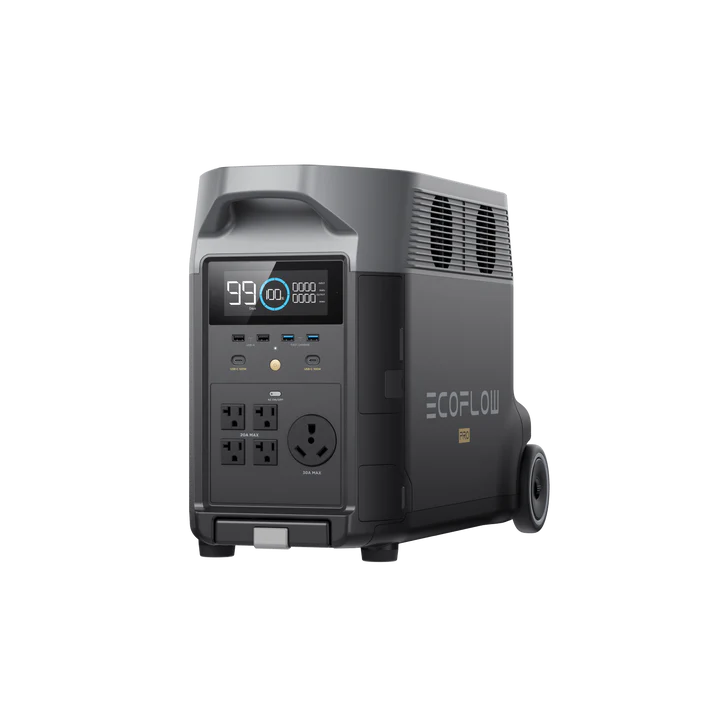
Past about 440 usable watt-hours the Explorer 500 simply stops, and the DELTA Pro turns out to be the cheaper energy anyway, so the only real question on this page is whether you can live with 99 lbs.
Full profiles: EcoFlow DELTA Pro → · Jackery Explorer 500 →

Written by Gunner GustafsonUpdated
Whole-Home Backup Tester, Station Arena Test Desk
$1,899.00 · direct from EcoFlow
Last checked 1 day ago. Prices move — check before you buy.

$359.00 · direct from Jackery
Last checked 14 days ago. Prices move — check before you buy.
Spec deltas
The Explorer 500 holds about 440 usable watt-hours, and of the six load profiles this page models it finishes exactly one: an overnight CPAP. A camping weekend leaves it 1,660Wh short. An eight-hour blackout leaves it 1,205Wh short. If either of those is why you are shopping, the comparison is settled before price comes up.
What keeps this from being a formality is 99 lbs. The DELTA Pro is a two-hands, bent-knees lift that lives where you put it, in a garage or an RV bay, not in the trunk you unload at a trailhead. The Explorer goes up a hill in one hand at 13.3 lbs. That is a category difference wearing the costume of a comparison, and portability is the one thing the small unit wins outright.
The surprise is that the expensive box is also the cheaper one. Per watt-hour the DELTA Pro is the better buy at the till, and stretched over its rated cycle life it delivers roughly thirty times the energy for just over five times the price. So the decision is not about budget. If your list genuinely tops out near the 320Wh an overnight CPAP draws, buy small and keep the difference. If it does not, the DELTA Pro is the buy and the only question left is where you are going to keep it.
What the Numbers Reveal
Each conclusion stated first — the numbers behind it on one line, the full analysis below.
rated cycles
Chemistry is why. The original Explorer 500 runs pre-LFP lithium-ion and is rated to 80% capacity at 800 cycles, and the v2 of the same unit is the LiFePO4 upgradeB0B1B4. So $359 does not buy cheap energy. It buys a small tank with a short rated life, at $0.87 per lifetime kilowatt-hour against $0.15.
DELTA Pro: $1,899 for 3,600Wh, which works out to $0.53 per watt-hourExplorer 500: $359 for 518Wh, which works out to $0.69 per watt-hourRated cycles 3,500 against 800, or 12,600 kWh of lifetime energy against 414 kWh
Why it mattersIf sticker price is what brought you here, you are measuring the wrong thing, and if you specifically want a small unit, it should be a current LFP one rather than this generation.
continuous output
Every scenario it drops, it drops on energy: 1,660Wh at the campsite, 470Wh across a remote workday, 230Wh at a tailgate where it started every appliance on the list without complaint. A bigger inverter fixes none of that, and the thing that would fix it, more battery, is exactly what a sealed 518Wh cannot do.
Explorer 500: 500W rated output with a 1,000W peakDELTA Pro: 3,600W rated with a 7,200W peak, the same two-to-one headroomTailgate Party peaks at 400W, which the Explorer both starts and sustains, and it still lands 230Wh short of the evening's 670Wh
Why it mattersStop asking whether the Explorer can run your blender and add up the watt-hours for the whole sitting; above roughly 440 the answer is no, whatever the surge column says.
solar input
Put that against a multi-day outage, the one situation where a wall outlet is not available to bail you out. A full day of sun on the Explorer recovers about a quarter of a single night's load, so it falls behind on day one and never catches up. Coverage of the DELTA Pro line describes the opposite duty cycle, carrying household essentials through repeated overnight outagesA1A3.
DELTA Pro: a 1,600W solar ceiling into 3,600Wh, so a bit over two hours of strong sunExplorer 500: a 100W solar ceiling into 518Wh, about 5.2 hours, and that figure is the clear-sky floorThe eight-hour blackout load is 1,645Wh
Why it mattersAnyone buying for storm season should compare refill rate before capacity, because refill is the spec that decides night two.
weight
That single AC outlet is the constraint people miss. One socket means one brick at a time, and with no USB-C the laptop that would have charged over a cable takes the socket instead. The DELTA Pro's 100W USB-C ports feed the laptop over a cable and leave all five outlets free.
DELTA Pro ports: 5 AC outlets, a 30A RV outlet, a 12V car socket, 2 USB-C at 100W, 4 USB-AExplorer 500 ports: 1 AC outlet, 3 USB-A, no USB-C at allWeights: 99 lbs against 13.3 lbs
Why it mattersCount what you plug in simultaneously. If it is more than two things, the Explorer is out before anyone mentions capacity.
The specific dimensions that decide these two units — everything else is a tie.
Your Life, Your Pick
Selected because: Five of the six load profiles on this page need more than the Explorer 500's 440 usable watt-hours.
One row of six goes to the Explorer 500, and it is the row where capacity stops being the question. A CPAP wants about 320Wh overnight, the Explorer has 440Wh usable, and the night ends with 120Wh spare. Every other profile asks for more energy than the unit physically contains.
The shape of the misses matters more than the count. At the tailgate it starts everything and still quits at about two-thirds of the evening. On a remote workday it covers roughly half. Those are not near misses you manage by going easy on the microwave, they are the unit running out. The DELTA Pro closes the eight-hour blackout with 1,415Wh spare, which is most of a second night at the same load, and that margin is what stops you doing arithmetic in the dark.
Portability & Form Factor
Selected because: 99 lbs against 13.3 lbs is the one comparison the smaller unit wins outright.
weight
99 lbs is less a number than a decision about where the unit lives. It is past the line where one person swings something into a trunk without thinking, so the DELTA Pro ends up parked, in a garage or a utility room or an RV bay, with extension cords doing the travelling instead. Search coverage of this line describes wheels and a telescoping handle that work on flat, smooth ground, though that description is one of the entries we cannot pin to this exact model rather than a sibling SKUA2A0.
Against that, 13.3 lbs is a genuine capability and not a consolation prize. You carry the Explorer up a trail one-handed, lift it into a kayak, hand it to somebody through a window. If your power has to move under human power more than a couple of times a year, the small one is the only unit here that actually will.
Lifetime Value
Selected because: 3,500 rated cycles against 800 turn a 3,600Wh box into 12,600 kWh of lifetime energy and a 518Wh box into 414 kWh.
cost / lifetime kWh
The expensive unit is the cheaper one per unit of energy, which is not how this usually goes. Use either twice a week and the ratings carry the DELTA Pro about 34 years and the Explorer about 8, so you would buy roughly four Explorers inside one DELTA Pro's window, and each of those four resets you to a 518Wh ceiling.
The cycle spread is a chemistry story rather than a tuning one: the original Explorer 500 sits on pre-LFP lithium-ion rated to 80% capacity at 800 cycles, and the v2 of the same unit moved to LiFePO4 with a far longer rated lifeB0B1B4. Warranty runs down the same slope, up to five years against two. That distinction is abstract until year three, when one of these is a warranty claim and the other is a new purchase.
What the Specs Don't Tell You
Selected because: A UPS mode on one side, a 100W solar ceiling on the other: the catches here split by size.
rated cycles
The catch that actually changes behaviour is the transfer. Only the DELTA Pro lists a UPS mode, rated no worse than 20ms, so a router, a desktop or a CPAP can sit behind it and never notice the grid leaving. The Explorer 500's sheet lists no UPS mode at all, which means it protects nothing while you are asleep. It is a battery you plug into after you have woken up and worked out why the house went quiet.
The other cards sort by size, and two of them go against the bigger unit. The 99 lbs is the first. The second is heat: a 3,600W inverter has seven times the output of a 500W one and has to move the warmth that comes with it, so the DELTA Pro has more reason to run its fans hard. Set against that, the Explorer's 100W ceiling means a full day of clear sky puts back 518Wh and not one watt-hour more, so a wall outlet is the plan and sun is the top-up.
Strengths & trade-offs
EcoFlow DELTA Pro
Strengths
- +Larger battery capacity
- +Higher AC output
- +Longer warranty
- +Faster solar charging
- +Rated for 3,500 charge cycles — much longer battery lifespan
Trade-offs
- –Substantially more expensive (+$1,540) than the Explorer 500.
- –Significantly heavier (+85.7 lbs), making it harder to move.
- –Very heavy unit that may be difficult for one person to lift.
- –Can receive complaints about fan noise under heavy load.
Jackery Explorer 500
Strengths
- +Costs $1,540 less
- +Lighter by 85.7 lb
Trade-offs
- –Weaker inverter (-3,100W) limits appliance compatibility.
- –Lacks smartphone app control for remote monitoring.
- –Sealed capacity — the DELTA Pro can add batteries to grow past 518Wh; this one can't.
- –Shorter-lived battery — rated for 800 charge cycles vs the DELTA Pro's 3,500, so it wears out sooner.
Will It Power Your Gear?
Scenario math and per-appliance runtimes, modeled from the spec record.
Scenario verdicts
We ran the math on six real-world scenarios. Here's which unit survives your actual life.
SCN-01 · 2 nights · needs 2,100Wh
Weekend Camping
Two nights off-grid with essential comfort
DELTA Pro
Two days out asks 2,100Wh, and the Explorer 500 has 440 usable. That is Friday evening, not a weekend: it ends 1,660Wh short, about a fifth of the trip covered. The DELTA Pro takes the same weekend and still has 960Wh in hand on Sunday, which is the margin that lets you stop rationing the fridge.
Battery budget usedlower = more headroom
LOAD Phone Charger 15W×6h · LED Lights 40W×8h · Box Fan 75W×14h · CPAP Machine 40W×16h
SCN-02 · 8 hours · needs 1,645Wh
8-Hour Blackout
Keep the essentials running through a night without power
DELTA Pro
The DELTA Pro takes this night and ends it with 1,415Wh spare, close to a second night at the same load. The Explorer 500 gets a little past the two-hour mark, 440 usable watt-hours against a 1,645Wh night, which is enough to keep a phone and a lamp alive while you find the flashlights and nowhere near enough to still be running at dawn.
Battery budget usedlower = more headroom
LOAD Fridge 150W×8h · Router + Modem 20W×8h · LED Lights (4 bulbs) 40W×6h · Phone Charger 15W×3h
SCN-03 · 8 hours · needs 320Wh
CPAP Overnight
Sleep therapy without interruption — the #1 medical use case
Explorer 500
This is the Explorer 500's row, and it takes it by being the only one of the two you would want on a nightstand. A CPAP is about 320Wh over eight hours, which fits inside 440 usable watt-hours with 120Wh to spare, and the box weighs 13.3 lbs so it travels with the machine. Two limits come with that win: 120Wh of margin means one night and not two, so it charges every day, and with no UPS mode on its spec sheet it cannot cover a grid failure you sleep through. The DELTA Pro's 3,060Wh usable is nine of those nights, and it is not going on anyone's nightstand.
Battery budget usedlower = more headroom
LOAD CPAP Machine 40W×8h
SCN-04 · 8 hours · needs 910Wh
Remote Workday
Full work day off-grid without power anxiety
DELTA Pro
The Explorer 500 doesn't finish — 440Wh usable against the 910Wh this needs leaves it 470Wh short, about 48% of the scenario covered. The DELTA Pro covers it with 2,150Wh to spare.
Battery budget usedlower = more headroom
LOAD Laptop 60W×8h · External Monitor 30W×8h · Router + Modem 20W×8h · Phone Charger 15W×2h
SCN-05 · 4 hours · needs 670Wh
Tailgate Party
Game day power for the crew
DELTA Pro
Watts were never the problem here. The 400W peak this evening needs sits inside the Explorer 500's 500W rating, and it starts everything on the list. Then it stops 230Wh short of the 670Wh the party takes, about two-thirds of the way through, which is the most flattering loss on this page. The DELTA Pro finishes with 2,390Wh untouched, which is another way of saying it was never really in the contest.
Battery budget usedlower = more headroom
LOAD Blender 400W×0.5h · LED TV (55") 80W×4h · Bluetooth Speaker 15W×4h · Phone Charger (×3) 45W×2h
SCN-06 · 24 hours · needs 4,685Wh
Van Life Daily
A full day of mobile living — the ultimate endurance test
Neither unit
Neither unit covers this one, and that is the useful answer. Daily van life runs 4,685Wh here: the DELTA Pro gets about two-thirds of the way, the Explorer 500 manages 9%. Buying the big one for this means recharging mid-day, every day, and hoping the sun cooperates. The real answer is a larger station or a wired house system sized to the day you actually live.
Battery budget usedlower = more headroom
LOAD Mini-Fridge 150W×24h · Laptop 60W×4h · Phone Charger 15W×3h · LED Lights 40W×5h · Fan 75W×8h
The Load Test
RUNTIME = (Wh × 0.85) ÷ LOAD
None of the scenarios above exactly yours? Build it. Toggle what you'd plug in; both units are tested against the combined draw.
Essentials
Comfort & Convenience
High-Draw Appliances
Test duration
8h
Continuous draw
205W
Projected runtime
For this load: DELTA Pro runs 14.9h vs 2.1h.
$1,899 list · direct from EcoFlow
Modeled from the spec record — same math as the tables below. Methodology
Runtime by appliance
Real-world runtime estimates for common appliances, modeled at 85% inverter efficiency.¹
Essentials
The basics you need runningscale 0–204hComfort & Convenience
Makes off-grid life actually enjoyablescale 0–40.8hHigh-Draw Appliances
These reveal the real limitsscale 0–3.1h¹ Runtime = (capacity × 0.85) ÷ appliance watts. Within each group, all bars share one time scale (the group's longest runtime), so lengths are comparable across appliances; identical runtimes collapse into a single blue/orange bar. Actual runtime varies with battery age, temperature, and simultaneous loads — see methodology.
Conclusion
September 13, 2026
Verdict: the DELTA Pro, on Power Score margin
Take the DELTA Pro. It covers five of the six loads this page models, including the eight-hour blackout, and finishes that night with 1,415Wh still in the pack, while the Explorer 500 finishes exactly one of the six. Price is not the counterargument it looks like: per watt-hour the $1,899 unit is the cheaper battery at purchase, and its 3,500-cycle rating against 800 widens that over the life of the thing, because the original Explorer 500 runs pre-LFP lithium-ion rated to 80% capacity at 800 cyclesB0B1. The honest limit on this pick is the 99 lbs, and it is a real one. If everything you plug in adds up to a phone, a laptop, some lights and one night of CPAP, the Explorer covers it, weighs 13.3 lbs, and costs $359 against $1,899.
Editor-assigned confidence, based on cited owner research and spec analysis.
List prices as of September 13, 2026. The links below open EcoFlow's and Jackery's current prices.
$1,899.00 · direct from EcoFlow
Last checked 1 day ago. Prices move — check before you buy.
or check the Explorer 500 price$359.00 list
Written by Gunner Gustafson, Whole-Home Backup Tester · Station Arena Test Desk · Updated September 13, 2026
Measured Data
Benchmark scores and the full spec record, side by side.
Benchmark scores
Not rated for both units (minimum threshold unmet): UPS, RV Living, Home Backup, Solar Generator, Food Truck, Apartment Balcony, Camping.
Full specifications
ᵈ Derived: price ÷ rated capacity. See the data behind our comparisons →
Comparison ToolAdd more power stations, side by sideOpen Tool →How these numbers are produced
Numeric verification
Every figure on this page traces to our spec database or arithmetic on it — no estimated numbers.
Owner claims
Statements about owner experience are cited to published reviews — see Sources & Research Notes below.
Runtime model
Runtime = (rated capacity × 0.85 inverter efficiency) ÷ device wattage. Solar recharge estimates assume panels deliver 70% of rated output. Cold weather, battery age, and stacked loads reduce real-world results.
Power Score
Computed from 14 published spec dimensions, weighted per use-case bench. Higher is better; a unit must meet a bench's minimum threshold to be rated.
See the full weight table and data sourcing on our methodology page →Class ranking (the star rating)
Each unit's star score is a category ranking, not customer reviews — no buyer opinions feed it. We score every station on size-independent quality (value, output, portability, endurance, ports, warranty, and more), then percentile-rank it against the other units in its capacity class, so a class-leading compact unit and a class-leading whole-home unit can both earn 5★. Here, DELTA Pro rates 3.9/5 (33rd percentile of 16 Home Backup-class units), and Explorer 500 rates 3.3/5 (1st percentile of 20 Compact-class units).
How the class ranking is computed →Test Notes & Caveats
Hidden gotchas and advantages we spotted that you won't find on the product page.
DELTA Pro: 99 lbs Decides Where It Lives
99 lbs is past the line where one person swings something into a trunk, so plan for where it sits rather than where it goes: a garage, a utility room, an RV bay, with extension cords doing the travelling. It is a two-person lift over a tailgate and a genuinely bad idea on basement stairs. None of that matters if the unit stays put for years at a time. It matters enormously if you pictured carrying it to a campsite.
DELTA Pro: 60dB Is a Rating, Not Your Living Room
60dB is EcoFlow's own published figure and the Explorer 500's 37dB is Jackery's, published under a different convention, so the difference between them is not a measured gap and should not settle anything. What the spec sheet does tell you is thermal: a 3,600W inverter has seven times the output of a 500W one and has to move the heat that comes with it, so the bigger unit has more reason to run fans hard under load. If either is going near a bed, look for hands-on measurements of that specific model before trusting either number.
Explorer 500: Solar Recharge Takes 5.2h+
At its 100W rated solar ceiling, refilling the full 518Wh takes about 5.2 hours of sun — as a floor, since the rated figure assumes ideal panel angle and clear sky, and real days deliver less. Not practical as the primary charge source for daily off-grid use; treat solar as a top-up and plan on a wall outlet or generator.
Explorer 500: No App Control
Without app control, you have to physically walk to the Explorer 500 to check battery level, adjust settings, or monitor power draw. The DELTA Pro lets you do all that from your phone, including getting low-battery alerts.
Expansion Is Not Why You Buy the DELTA Pro
The DELTA Pro takes expansion batteries and the Explorer 500 is sealed at 518Wh, which is true and mostly beside the point. You buy the DELTA Pro for the 3,600Wh it already has, and that covers every load on this page except daily van life. Expansion earns its keep in one case: you are heading toward partial-home backup and want the base unit to still be useful when you get there. If that is not the plan, treat expandability as a footnote rather than a reason.
Only the DELTA Pro Lists a UPS Mode
The DELTA Pro can sit between the wall and your gear and hand it to battery when the grid drops — rated ≤20ms — fine on paper for routers and most electronics; the fussiest PC power supplies sit right at this line. Worth it for a router, a desktop PC, or a CPAP. The Explorer 500's spec sheet lists no UPS mode, so anything plugged into it rides an outage only as far as your reaction time.
Warranty: 5 Years vs 2
The DELTA Pro is covered for 5 years against the Explorer 500's 2 years. The cheaper Explorer 500 does buy more warranty per dollar (5.6 years per $1,000 against 2.6), but that is a statement about price, not about coverage — if a fault appears in year 3, only one of these is still covered. An underrated factor if you're keeping this unit for years.
Battery Lifespan in Real Years
The DELTA Pro is rated for 3,500 cycles vs 800. In real life: at daily use, that's 9.6 vs 2.2 years. At weekend use (twice a week), it's 34 vs 8 years. One caution reading years across different sizes: a cycle is 3,600Wh on the DELTA Pro and 518Wh on the Explorer 500, so count lifetime energy — roughly 12,600 kWh against 414 kWh over the rated life. After hitting the cycle limit, the battery doesn't die — it drops to ~80% of original capacity, which is still very usable.
Full record above — the Test Desk pick is the DELTA Pro.
Check DELTA Pro price →or check the Explorer 500 priceOwnership Analysis
What happens after you buy — true cost of ownership, brand trust, and growth potential.
Lifetime value
Service lifeyears at one full cycle per day
Lifetime energy delivered
Cost per delivered kWh
│ warranty ends · Reaching the cycle rating means ~80% capacity remains — degraded, not dead.
Analyst note
The Explorer 500 is cheaper to buy, but the DELTA Pro is cheaper to own. At $0.15/kWh over its lifetime vs $0.87/kWh, the DELTA Pro's higher cycle life and capacity make each dollar go further over the years.
Delivers each lifetime kWh for $0.72 less — check the DELTA Pro price →
Brand trust
EcoFlow
Ecosystem
The widest catalogue in portable power, a dozen or more models from RIVER 3 up to DELTA Pro, plus panels and smart home panels built to talk to them. The DELTA Pro sits at the point on that ladder where the category stops being a gadget and starts being wiring.
Support
US phone, email and chat, and a genuinely split record: prepaid-label replacements that go smoothly for some buyers, long waits and refurbished units for others. Buying through Costco or Amazon gives you a return window that does not depend on which of those you get.
Community
The largest community in the category, with an official forum alongside the Reddit and Facebook groups. That matters mainly because it is where you learn whether a firmware update changed something before you find out yourself.
App experience
Rated 4.6/5 iOS (~8,400 ratings) · 4.2/5 Android (~17,000 ratings)
Unique strength
Fast charging and the depth of the ecosystem. The app rates 4.6 out of 5 on iOS, and at the very top of the range the DELTA Pro Ultra platform stacks batteries and inverters into whole-home backup, which is a flagship path rather than something every model inherits.
Worth knowing
EcoFlow tested paywalling advanced app features in early 2025 and paused after the backlash, and there is no parts or service path once the warranty expires. Five years is the coverage, and after that the unit is on its own.
Jackery
Ecosystem
A dozen or more models across the Explorer and HomePower lines plus the SolarSaga panels, and the widest shelf presence of any brand here: Costco, Home Depot, Best Buy, Amazon.
Support
US-based and the weakest link in the package. Expect scripted first-line replies, strict receipt requirements on warranty claims and refurbished replacements. Buy from a retailer whose return policy you trust and treat the factory process as the backstop rather than the plan.
Community
The smallest community of the major brands, roughly 2,000 on Reddit, though YouTube coverage is plentiful thanks to the name. Fewer places to search when something odd happens at 11 p.m.
App experience
Rated 2.3-3.3/5 iOS and Android — the weakest app experience of the major brands. Multiple confusing apps (Jackery app vs Jackery Home) and mandatory login even offline.
Unique strength
Recognition and availability. If you want to see one in person before buying, or carry it back into a store afterwards, Jackery is by far the easier of these two to do that with.
Worth knowing
A few older Jackery models still ship the pre-LFP chemistry with a shorter rated life, so on this brand the cycle number on the specific SKU tells you more than the badge does. The app rates 2.3 to 3.3 out of 5; the Explorer 500 has no app control at all, which sidesteps the problem entirely.
Analyst note
Neither support operation is a reason to buy, and both point you toward purchasing where the retailer's return window can cover you. Where they actually differ is what happens after the box works: EcoFlow has the deeper ecosystem, the better-rated app and, at up to five years against two, the longer coverage. Jackery has the store you can drive to.
Growth path
DELTA Pro
EXPANDABLESupports EcoFlow expansion batteries, so you can add capacity later without replacing the base unit — useful if your needs may climb past 3,600Wh.
Accepts up to 1,600W of solar. Enough for a serious multi-panel array.
Generous port selection supports complex multi-device setups.
Expansion batteries are EcoFlow-specific. You're investing in the EcoFlow ecosystem.
Explorer 500
FIXED CAPACITYFixed at 518Wh, with no expansion — so size it for your needs up front rather than planning to add capacity later.
Accepts up to 100W of solar. Limited to a single portable panel.
Limited ports. You'll likely need a power strip or splitter.
Realistic full solar rechargeat 70% of rated panel output — see methodology
Analyst note
The Explorer 500 is sealed at 518Wh, which is fine if that covers you. The DELTA Pro starts at 3,600Wh and can grow beyond it with EcoFlow expansion batteries — real headroom the Explorer 500 doesn't have if your needs climb toward partial-home backup.
What Owners Report
Patterns from published owner reports and long-term reviews — every claim cited to its source below.
EcoFlow DELTA Pro
Field coverage for the original DELTA Pro comes with a warning label: the available material repeatedly conflates it with the newer DELTA Pro 3, a heavier machine with different specs, so the measured weights of roughly 114 to 121 lbs in circulation belong to that unit and not to this 99 lb oneA0. Read the ledger for character, not for figures.
What carries across is the platform's reputation. It is described as a home-backup unit built for high-draw appliances and full battery expansion, running a fridge, lights and a space heater through outagesA1, and one longer account has it serving as primary backup across repeated overnight outages over a period of monthsA3. The consistent knock is noise: under draws above 2,000W the fans take on a high-pitched whine that carries in a quiet room, although that testing is among the entries we cannot tie to this exact SKUA4A0. The wheels-and-handle description sits in the same category, character rather than specA2A0.
“Long regarded as a gold standard for home backup — designed for high-draw appliances and full-scale battery expansion, running home essentials like a fridge, lighting, and a space heater through outages.”
Sources
backuppowerhub.com · us.ecoflow.co · outdoorgearlab.com · bobvila.com · powerstationadvisor.com · robbsutton.com
Jackery Explorer 500
The Explorer 500's record is about what its size suggests and honest about it: 518Wh, 500W, roughly 13 lbs, no surprises in either directionB1B2. It is pitched as the cheapest way into Jackery's ecosystem for weekend and occasional useB3, which is fair, and also the ceiling of what the ledger claims for it.
Two entries matter more than the rest. This generation runs traditional lithium-ion rather than LFP, with Jackery rating 80% capacity retention at 800 cyclesB0B1, and a v2 of the same unit exists on LiFePO4 with a far longer rated lifeB4. That single fact reframes the price: you are not buying the current version of this unit, you are buying the older chemistry of it.
“518Wh capacity with a 500W output, on traditional lithium-ion cells — Jackery rates 80% capacity retention after 800 cycles.”
Sources
backuppowerhub.com · jackery.com · greencitizen.com · poweredportablesolar.com · batteryessence.com
Sources & Research Notes
Every owner claim in this report is traceable to a published source. The bracketed references above resolve here.
Recurring owner themes
- Established home-backup platform with wheeled portability and massive expandability; the consistent knock is fan noise under heavy load. [DELTA Pro · 3 entries]
- Affordable, portable Jackery entry unit, but on older lithium-ion chemistry with limited cycle life vs newer LFP models. [Explorer 500 · 3 entries]
- A1
“Long regarded as a gold standard for home backup — designed for high-draw appliances and full-scale battery expansion, running home essentials like a fridge, lighting, and a space heater through outages.”
backuppowerhub.com / us.ecoflow.com — EcoFlow DELTA Pro review · 2025-2026 · [positive]
- A2
“Heavy but wheeled — integrated wheels and a telescoping handle help move its considerable weight, though they work best on flat, smooth surfaces; a cart is needed for uneven ground.”
outdoorgearlab.com / bobvila.com — DELTA Pro-line review · 2025-2026 · [mixed]
- A3
“Reliable through extended outage use — served as primary backup across multiple overnight outages over months, powering essentials simultaneously; LFP battery rated for thousands of cycles and 10+ years of daily use.”
powerstationadvisor.com / robbsutton.com — DELTA Pro-line review · 2025-2026 · [positive]
- A4
“Not silent under heavy load — under 2000W-plus draws the fans emit a noticeable high-pitched whine that's distracting in a quiet room, though it runs quietly enough at lighter loads.”
outdoorgearlab.com — DELTA Pro-line noise testing · 2025-2026 · [negative]
- B1
“518Wh capacity with a 500W output, on traditional lithium-ion cells — Jackery rates 80% capacity retention after 800 cycles.”
backuppowerhub.com / jackery.com — Explorer 500 review · 2026 · [mixed]
- B2
“Weighs about 13 lbs — a compact, portable unit.”
greencitizen.com / poweredportablesolar.com — Explorer 500 review · 2026 · [positive]
- B3
“The 518Wh capacity at $449 is the most affordable entry into Jackery's reliable ecosystem — good for weekend warriors and occasional users.”
backuppowerhub.com — Explorer 500 review · 2026 · [positive]
- B4
“An older lithium-ion unit; the newer Explorer 500 v2 uses LiFePO4 rated for far more cycles, offering significantly better longevity.”
batteryessence.com / backuppowerhub.com — Explorer 500 v2 review · 2026 · [mixed]
Research compiled September 13, 2026.
What Owners Actually Report
Drawn from 211 comments on independent review channels — not from retailer reviews, which skew to the first week of ownership. Each line is our summary of one commenter's claim, linked to the original. We record what they said, including where it contradicts the spec sheet.
EcoFlow DELTA Pro
211 claims from 147 comments · 155 from owners · 39 with figures
- Price & value
- 37 · 26% negative
- Durability
- 22 · 73% negative
- Solar input
- 23 · 35% negative
- Runtime
- 18 · 23% negative
- Other
- 18 · 48% negative
What owners complain about
Bought October 2023, died June 2024.
Durabilitymeasuredownerafter 8 months25 agreedsource →
The 100 lb weight of the DELTA Pro is no joke.
Size & weightmeasuredowner14 agreedsource →
Even the 767's loudest fan state is far quieter than the DELTA Pro.
Noiseowner41 agreedsource →
What owners praise
Charges two DELTA Pros from two ~2,500W strings running at about 125V.
Solar inputmeasuredowner13 agreedsource →
Electric bill fell from $250 a month to between $26 and $44.
Price & valuemeasuredowner14 agreedsource →
Delta Pro with battery and 800W of solar keeps him fully off grid and happy.
Runtimeownerafter 8 months62 agreedsource →
Jackery Explorer 500
77 claims from 64 comments · 66 from owners · 28 with figures
- Charging
- 12 · 42% negative
- Durability
- 13 · 62% negative
- Runtime
- 10 · 1% negative
- Solar input
- 10 · 90% negative
- Other
- 11 · 44% negative
What owners complain about
Caps at 81W AC and 65W from a SolarSaga 100.
Chargingmeasuredowner4 agreedsource →
Max solar he has ever seen is about 65W, which he blames on the Jackery not the panel.
Solar inputmeasuredownerafter 24 months3 agreedsource →
Jackery 500 crapped out twice in three and a half years.
Durabilityownerafter 42 months3 agreedsource →
What owners praise
Ran a ResMed CPAP three nights on the AC outlet; 12V plug left 55% at night three instead of 3-4%.
Runtimemeasuredowner8 agreedsource →
Charged from 74% to 100% in a few hours off the SolarSaga 60.
Chargingmeasuredowner4 agreedsource →
Sticks with the budget-friendly Jackery 500 and solar in camp; it works as advertised.
Price & valueowner9 agreedsource →
Claims are weighted by how specific they are, whether the commenter owns the unit, and how many readers agreed. Comments that mention a product under a rival's review count for more, because the commenter had no reason to be there. This is what buyers report, not our test results — for measurements we ran ourselves, see the methodology.
Who Should Buy Which
Buy the DELTA Pro if you…
- →You want the fridge, the lights and the router still running at 4 a.m. eight hours into an outage, and you have somewhere at ground level to keep a 99 lb box.
- →You camp out of a vehicle for whole weekends with a 12V fridge running the entire time, and the 2,100Wh that takes is the number you keep bumping into.
- →You work off-grid for full days and would rather overshoot the 910Wh a remote workday costs than ration your way through the afternoon.
- →You expect your needs to climb toward partial-home backup and want a base unit that accepts expansion batteries instead of a second box on the floor.
Buy the Explorer 500 if you…
- →Your list is a phone, a laptop, some lights, a fan and one night of CPAP, which is the 320Wh the Explorer covers with 120Wh in reserve.
- →The unit has to move under human power, up a trail or down to a dock. At 13.3 lbs that is the whole reason to choose it, and it is a good one.
- →You already own a big station and want a small one for the tent, so 518Wh is a supplement rather than the plan.
If neither fits
If you are living in a van daily, close this tab. That load is 4,685Wh, the DELTA Pro gets about two-thirds of the way and the Explorer 500 manages 9%, so the answer is a larger station or a properly wired house system sized to the day you actually live, not a choice between these two. And if what you want is the small carryable, buy a current-generation LiFePO4 unit in that class rather than this generation of Explorer 500; the v2 exists precisely because the original's chemistry is the short-lived partB0B4.
The Bottom Line
Take the DELTA Pro. It finishes five of the six jobs modelled here, and the one it misses, daily van life, is not a job the Explorer 500 gets a tenth of the way through either. The reason it wins is not the size of the battery, it is the price of the energy inside it: cheaper per watt-hour at purchase, and cheaper again across a cycle rating more than four times as long.
The catch stays a catch. It is 99 lbs, it lives where you set it down, and if your power has to travel on foot then the 13.3 lb Explorer 500 is the only one of the two that goes. Be honest about which of those two sentences describes your year, then buy that unit. Just do not buy the big one because it is bigger, or the small one because it looks cheaper, because on this page it isn't.
Frequently Asked Questions
Answers drawn from the spec record and cited owner research.
Will the Jackery Explorer 500 get me through an 8-hour blackout?
No. It holds about 440 usable watt-hours and the eight-hour load modelled here is 1,645Wh, so spread across that night it covers a bit over two hours and finishes 1,205Wh short. The DELTA Pro takes the same night and ends with 1,415Wh still in the pack. If blackout coverage is the reason you are shopping, the Explorer 500 is the wrong size rather than the wrong brand.
Is the EcoFlow DELTA Pro too heavy to take camping?
It weighs 99 lbs, which makes it a vehicle-camping unit and nothing else. That is a two-person lift over a tailgate, awkward on soft ground and a bad idea on stairs. Coverage of this line mentions wheels and a telescoping handle for flat, smooth surfaces, though that is one of the descriptions we cannot tie to this exact model rather than a sibling SKU. If you are walking your power in, the 13.3 lb Explorer 500 is the only one of these two that comes with you.
Which one should I get for a CPAP?
Both cover the night, so this is decided by where the machine is. A CPAP takes about 320Wh over eight hours, which the Explorer 500 handles with 120Wh left and the DELTA Pro barely registers at 10% of its usable capacity. Travelling with the machine favours the 13.3 lb Explorer. Home outage insurance favours the DELTA Pro, because it is the only one here listing a UPS mode, rated no worse than 20ms, so the machine keeps breathing when the grid drops instead of waiting for you to wake up and fix it.
Is the DELTA Pro really worth five times the price of the Explorer 500?
Per watt-hour it is not five times the price at all: $1,899 for 3,600Wh is $0.53 per watt-hour, against $0.69 for the Explorer 500. The cycle ratings then separate them again, 3,500 against 800. So the question is not whether the DELTA Pro justifies $1,899, it is whether you need more than 440 usable watt-hours at a time, because if you do the cheaper unit cannot do the job at any price.
Does the Jackery Explorer 500 have USB-C?
No, it has none: three USB-A ports and a single AC outlet. That one socket is the real limit, because a laptop that would normally charge over USB-C has to take the outlet with its wall brick, and then it is the only thing plugged in. The DELTA Pro runs 2 USB-C ports at 100W alongside five AC outlets, a 12V car socket and a 30A RV outlet, so the laptop and the lights are not fighting over the same hole.
Brand matchup
EcoFlow vs Jackery: measured across every matchup →Where to buy
EcoFlow DELTA ProPick
$1,899.00
$1,899.00 · direct from EcoFlow
Last checked 1 day ago. Prices move — check before you buy.
Jackery Explorer 500
$359.00
$359.00 · direct from Jackery
Last checked 14 days ago. Prices move — check before you buy.
Prices may vary by retailer and are subject to change.