Head-to-head test
EcoFlow DELTA Pro Ultra X vs EcoFlow RIVER 2
EcoFlow DELTA Pro Ultra X vs EcoFlow RIVER 2: The DELTA Pro Ultra X takes all six of our load profiles and would take them against almost anything, and none of that tells you to buy it. Ask one question instead: is the power going into a structure or into a bag?
Full profiles: EcoFlow DELTA Pro Ultra X → · EcoFlow RIVER 2 →

Written by Gunner GustafsonUpdated
Whole-Home Backup Tester, Station Arena Test Desk

$7,999.00 · direct from EcoFlow
Last checked 1 day ago. Prices move — check before you buy.
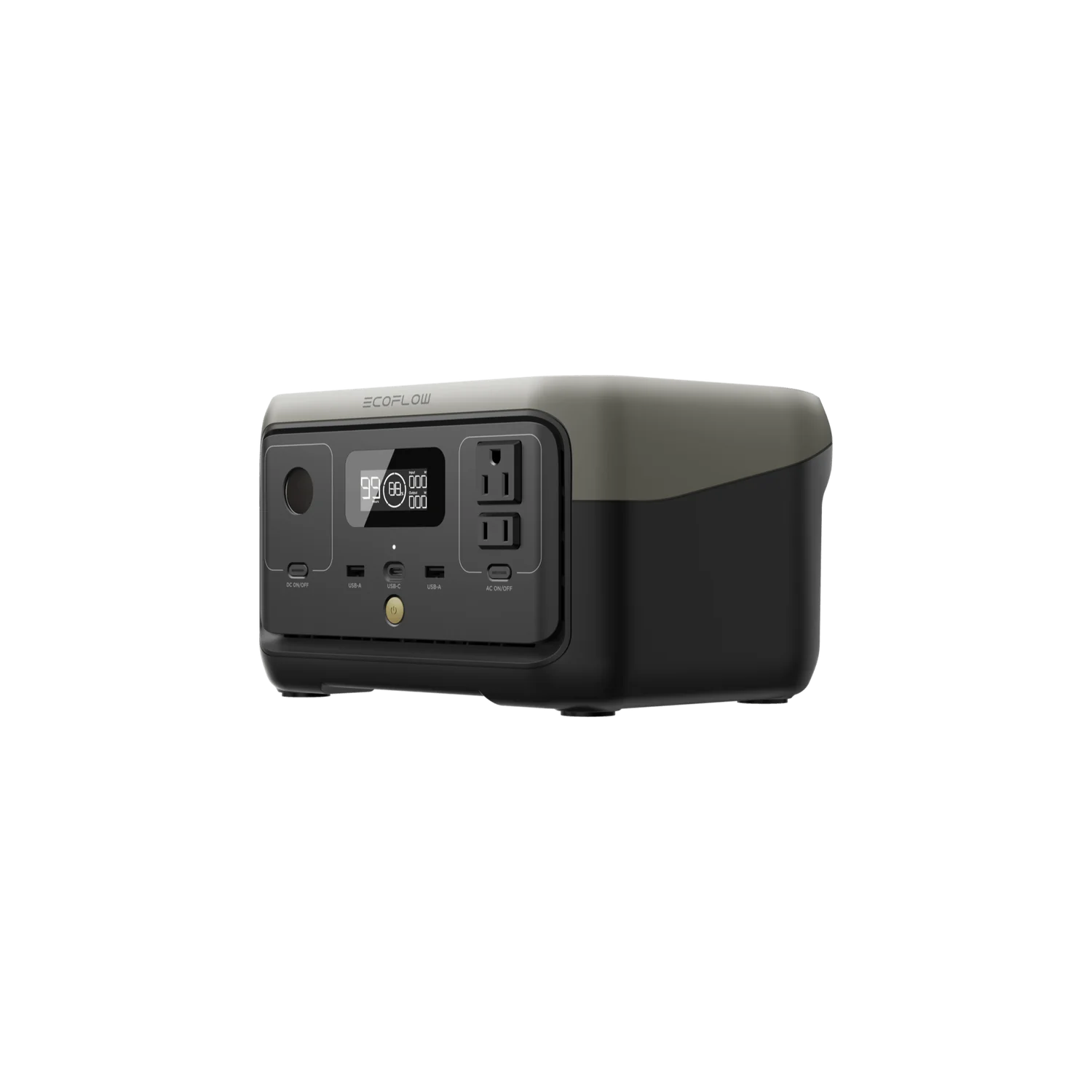
$209.00 · direct from EcoFlow
Last checked 20 days ago. Prices move — check before you buy.
Spec deltas
The RIVER 2 fails all six load profiles we score on this site, including the lightest one: a CPAP overnight that wants 320Wh against its 218Wh of usable capacity. The DELTA Pro Ultra X passes all six and never finishes with less than 5,760Wh still in reserve. That is not a close comparison, and pretending it is would waste your afternoon.
The sweep misleads in the other direction too. A $7,999, 298.7 lb, 12,000W system is not the better answer to a $209 question. These two don't compete and they don't share a job. One backs a building, the other tops up devices, and the real mistake available on this page is buying either of them for the other's work.
So read this as a routing decision. If you have a panel to back and a roof to feed it, the DELTA Pro Ultra X is serious equipment and the RIVER 2 has nothing to say to you. If you want power in a bag, the RIVER 2 does that for $209 and the rest of this page is scenery. And if you're in the middle, wanting one box that carries a fridge through a long outage, neither of these is your unit and we'll say so plainly below.
What the Numbers Reveal
Each conclusion stated first — the numbers behind it on one line, the full analysis below.
rated cycles
That $0.19 is conditional on consumption. It only arrives if you actually pull 43,008 kWh through the system over its life, and a household that installs it for occasional outage cover will never come close. The RIVER 2's worse ratio, meanwhile, can cost you a maximum of $209.
DELTA Pro Ultra X: $7,999, 12,288Wh, 3,500 cyclesRIVER 2: $209, 256Wh, 3,000 cyclesCost per lifetime kWh: $0.19 for the DELTA Pro Ultra X, $0.25 for the RIVER 2Total lifetime throughput: 43,008 kWh against 768 kWh
Why it mattersNobody should buy the DELTA Pro Ultra X because it looks cheaper per kilowatt-hour. Buy it because you need 12,000W of it.
That reframes what the RIVER 2 is. It isn't an undersized backup unit, it's a device charger, and the CPAP near-miss is the trap: 102Wh short reads like almost, which is how somebody ends up trusting it with a night it cannot finish. What field commentary exists is comparative and calls it noticeably louder under load than the newer RIVER 3B1, which is the wrong direction for anything sitting by a pillow.
CPAP Overnight needs 320Wh; the RIVER 2 has 218Wh usableRIVER 2 shortfalls across the six profiles: 102Wh, 452Wh, 692Wh, 1,427Wh, 1,882Wh, 4,467WhRIVER 2 listed at 50 dBA, DELTA Pro Ultra X at 30 dBA
Why it mattersIf you were considering the RIVER 2 for medical or overnight backup, that is the one use to rule out completely.
continuous output
The DELTA Pro Ultra X assumes a structure at every point on its spec sheet and the RIVER 2 assumes a bag. Every other number here is downstream of that, including the scenarios the big system wins despite having to be driven to them.
DELTA Pro Ultra X: 298.7 lbs, 12,000W continuous, 10,000W solar inputRIVER 2: 7.8 lbs, 300W continuous, 110W solar inputThe base system is two 6,144Wh battery modules plus an inverterA2, installed as a quick-connect job of about 7 daysA4
Why it mattersSettle which of those two things you're powering before you read another spec. It answers the page on its own.
The specific dimensions that decide these two units — everything else is a tie.
Runtime: Will It Power Your Gear?
Selected because: 10,445Wh usable against 218Wh is where these two stop being comparable, and every other section is a footnote to it.
continuous output
Take the derate argument out and the numbers still land in different rooms: 10,445Wh usable against 218Wh, both after the same flat 0.85 usable factor this site applies to every unit regardless of what's inside it. The RIVER 2 isn't short for a demanding load. It's short for the smallest load we score, by 102Wh.
Recharge says the same thing from the other end. The DELTA Pro Ultra X accepts up to 10,000W of solar and the RIVER 2 accepts 110W. One of those figures describes a roof, the other describes a folding panel leaning on a picnic table. If you're still wondering which unit refills faster, you're asking a question about two unrelated products.
Portability & Form Factor
Selected because: 7.8 lbs against 298.7 lbs isn't a convenience difference; it's the line between a unit you carry and one you commission.
weight
Nobody lifts 298.7 lbs, and the spec sheet isn't asking you to. The base system is two 6,144Wh battery modules plus an inverterA2, so that figure is a system total rather than a box with a handle. What it does tell you is that the thing gets placed once. EcoFlow's own material puts the quick-connect install at about 7 daysA4, which is the real tell: you don't take this camping, you commission it.
The RIVER 2's 7.8 lbs is the entire case for it. It goes in the same bag as the laptop it exists to charge, and at $209 you can leave one in the car without running the numbers. Neither sentence can be said about the other unit, and no quantity of watt-hours changes that.
Your Life, Your Pick
Selected because: The DELTA Pro Ultra X sweeps all six profiles, and two of those wins are artefacts of how the scenarios are built rather than buying advice.
All six go to the DELTA Pro Ultra X and two of them shouldn't count. Our scenario set has no installed-system class: Weekend Camping and Tailgate Party are written for a unit that travelled to the site, and their scoring rewards the lighter one, so putting a 298.7 lb wired appliance against them is a category error the scoreboard has no way to express. Read those two wins as arithmetic and ignore them as advice.
The percentages beside these rows are worse than useless at this ratio. The engine puts the RIVER 2 at 2,153% of usable on Van Life Daily, a true number that tells you nothing. The watt-hours do the work: 4,467Wh short there, 1,882Wh short on a camping weekend, 102Wh short on the CPAP night. That last one is the only gap small enough to tempt anybody, and it still describes a unit that quits before the alarm.
Lifetime Value
Selected because: The table calls the $7,999 unit the cheaper one to own at $0.19 per lifetime kWh against $0.25, which is true arithmetic and a poor reason to spend $7,999.
cost / lifetime kWh
$0.19 per lifetime kWh against $0.25 makes the $7,999 system the cheaper one to own, and it's the most misleading true sentence on this page. The metric divides purchase price by everything the battery could ever deliver, and here that's 12,288Wh across 3,500 cycles against 256Wh across 3,000. Buy the big one, cycle it a handful of times a year, and you haven't saved anything. You've bought a good ratio.
The lifespan columns share the blind spot. The DELTA Pro Ultra X shows 9.6 years of daily cycling against the RIVER 2's 8.2, and that gap comes entirely from 3,500 cycles against 3,000, not at all from the difference between a 12,288Wh cycle and a 256Wh one. Warranty is genuinely level at five years each, so there's no tiebreak hiding in that column either.
Growth Path
Selected because: Expansion is the weakest argument on this page: a base of 12,288Wh already outruns anything a 256Wh unit could grow into.
solar input
Expansion is the weakest card here and it's being played in the wrong direction. The section frames the DELTA Pro Ultra X's headroom as room to climb toward partial-home backup, which undersells a base unit already rated at 12,000W continuous and 12,288Wh. Its base capacity is the relevant number, and it settled this comparison before expansion entered the conversation.
The RIVER 2's sealed 256Wh is not a mark against it. At $209 the fixed ceiling is the product: you size it for a phone and a laptop and you're finished. A sealed unit only loses points when growing would have gotten it somewhere, and no expansion path starting at 256Wh arrives anywhere near this system's base.
Strengths & trade-offs
EcoFlow DELTA Pro Ultra X
Strengths
- +Larger battery capacity
- +Higher AC output
- +Faster solar charging
Trade-offs
- –Substantially more expensive (+$7,790) than the RIVER 2.
- –Significantly heavier (+290.9 lbs), making it harder to move.
- –Very heavy unit that may be difficult for one person to lift.
EcoFlow RIVER 2
Strengths
- +Costs $7,790 less
- +Lighter by 290.9 lb
Trade-offs
- –Weaker inverter (-11,700W) limits appliance compatibility.
- –Sealed capacity — the DELTA Pro Ultra X can add batteries to grow past 256Wh; this one can't.
Will It Power Your Gear?
Scenario math and per-appliance runtimes, modeled from the spec record.
Scenario verdicts
We ran the math on seven real-world scenarios. Here's which unit survives your actual life.
SCN-01 · 2 nights · needs 2,100Wh
Weekend Camping
Two nights off-grid with essential comfort
Neither unit
The DELTA Pro Ultra X covers the 2,100Wh weekend with 8,345Wh spare, which is the least interesting way it can win, since it would already have to be parked where you're camping. The RIVER 2 is 1,882Wh short of the same weekend, and that is not a gap you manage around with careful use.
Battery budget usedlower = more headroom
LOAD Phone Charger 15W×6h · LED Lights 40W×8h · Box Fan 75W×14h · CPAP Machine 40W×16h
SCN-02 · 8 hours · needs 1,645Wh
8-Hour Blackout
Keep the essentials running through a night without power
DELTA Pro Ultra X
1,645Wh over eight hours leaves the DELTA Pro Ultra X 8,800Wh untouched. The RIVER 2 is 1,427Wh short of it, so its 30ms switchover against the big system's 10ms is a footnote: taking over quickly matters little when the battery is the binding constraint.
Battery budget usedlower = more headroom
LOAD Fridge 150W×8h · Router + Modem 20W×8h · LED Lights (4 bulbs) 40W×6h · Phone Charger 15W×3h
SCN-03 · 8 hours · needs 320Wh
CPAP Overnight
Sleep therapy without interruption — the #1 medical use case
DELTA Pro Ultra X
320Wh is the lightest load on this page and the RIVER 2 still misses it by 102Wh, its closest call of the six and still a night that ends early. The DELTA Pro Ultra X spends 320Wh of 10,445Wh usable and never registers it.
Battery budget usedlower = more headroom
LOAD CPAP Machine 40W×8h
SCN-04 · 8 hours · needs 910Wh
Remote Workday
Full work day off-grid without power anxiety
DELTA Pro Ultra X
A 910Wh working day leaves the DELTA Pro Ultra X with 9,535Wh in hand. The RIVER 2 is 692Wh short, which in practice makes it a top-up-the-laptop unit rather than a run-the-desk-all-day unit.
Battery budget usedlower = more headroom
LOAD Laptop 60W×8h · External Monitor 30W×8h · Router + Modem 20W×8h · Phone Charger 15W×2h
SCN-05 · 4 hours · needs 670Wh
Tailgate Party
Game day power for the crew
Neither unit
The RIVER 2 loses this one twice. It's 452Wh short on capacity, and the 400W peak sits above its 300W continuous rating while staying under its 600W surge ceiling, so the accurate description is that it starts the load and then trips rather than refusing it outright. The DELTA Pro Ultra X's 12,000W doesn't notice, though it also isn't coming to a tailgate.
Battery budget usedlower = more headroom
LOAD Blender 400W×0.5h · LED TV (55") 80W×4h · Bluetooth Speaker 15W×4h · Phone Charger (×3) 45W×2h
SCN-06 · 24 hours · needs 4,685Wh
Van Life Daily
A full day of mobile living — the ultimate endurance test
DELTA Pro Ultra X
4,685Wh a day is the only profile that genuinely stretches the DELTA Pro Ultra X, and it still ends with 5,760Wh spare. The RIVER 2 is 4,467Wh short, the widest gap on the page and the clearest evidence these two were never alternatives.
Battery budget usedlower = more headroom
LOAD Mini-Fridge 150W×24h · Laptop 60W×4h · Phone Charger 15W×3h · LED Lights 40W×5h · Fan 75W×8h
SCN-07 · an afternoon · needs 100Wh
Afternoon Off-Grid
Phones and a speaker at the park, beach, or campsite — the small-unit job description
Either unit
This row is here for the RIVER 2's class of job: phones and a speaker, 100Wh across an afternoon. Both cover it — the RIVER 2 finishes at 46% used, and the DELTA Pro Ultra X barely notices it. For this job the DELTA Pro Ultra X's extra capacity is dead weight, not headroom; take the RIVER 2 at 7.8 lbs and leave the rest at home.
Battery budget usedlower = more headroom
LOAD Phone Charger (×2) 30W×2h · Bluetooth Speaker 10W×4h
The Load Test
RUNTIME = (Wh × 0.85) ÷ LOAD
None of the scenarios above exactly yours? Build it. Toggle what you'd plug in; both units are tested against the combined draw.
Essentials
Comfort & Convenience
High-Draw Appliances
Test duration
8h
Continuous draw
205W
Projected runtime
For this load: DELTA Pro Ultra X runs 51h vs 1.1h.
$7,999 list · direct from EcoFlow
Modeled from the spec record — same math as the tables below. Methodology
Runtime by appliance
Real-world runtime estimates for common appliances, modeled at 85% inverter efficiency.¹
Essentials
The basics you need runningscale 0–696.3hComfort & Convenience
Makes off-grid life actually enjoyablescale 0–139.3hHigh-Draw Appliances
These reveal the real limitsscale 0–10.4h¹ Runtime = (capacity × 0.85) ÷ appliance watts. Within each group, all bars share one time scale (the group's longest runtime), so lengths are comparable across appliances; identical runtimes collapse into a single blue/orange bar. Actual runtime varies with battery age, temperature, and simultaneous loads — see methodology.
Conclusion
August 9, 2026
Verdict: the DELTA Pro Ultra X, on Power Score margin
There is no contest to settle here, so don't let the scoreboard pretend otherwise. The DELTA Pro Ultra X takes all six of our load profiles and would take them against almost anything, and none of that tells you to buy it. Ask one question instead: is the power going into a structure or into a bag? Structure, and 12,000W continuous with a 45,000W surge ceiling is the capability that justifies $7,999, and the RIVER 2 is irrelevant to you. Bag, and $209 for 7.8 lbs and 256Wh is a sane purchase, and nothing about the big system applies. The only wrong answer is reading a six-nil sweep as a recommendation, because a 298.7 lb installed system beating a device charger at camping is arithmetic, not advice.
Editor-assigned confidence, based on cited owner research and spec analysis.
Written by Gunner Gustafson, Whole-Home Backup Tester · Station Arena Test Desk · Updated August 9, 2026
Measured Data
Benchmark scores and the full spec record, side by side.
Benchmark scores
Not rated for both units (minimum threshold unmet): Home Backup, CPAP, Tailgating, Food Truck, Apartment Balcony, Camping.
Full specifications
ᵈ Derived: price ÷ rated capacity. See the data behind our comparisons →
Comparison ToolAdd more power stations, side by sideOpen Tool →How these numbers are produced
Numeric verification
Every figure on this page traces to our spec database or arithmetic on it — no estimated numbers.
Owner claims
Statements about owner experience are cited to published reviews — see Sources & Research Notes below.
Runtime model
Runtime = (rated capacity × 0.85 inverter efficiency) ÷ device wattage. Solar recharge estimates assume panels deliver 70% of rated output. Cold weather, battery age, and stacked loads reduce real-world results.
Power Score
Computed from 14 published spec dimensions, weighted per use-case bench. Higher is better; a unit must meet a bench's minimum threshold to be rated.
See the full weight table and data sourcing on our methodology page →Class ranking (the star rating)
Each unit's star score is a category ranking, not customer reviews — no buyer opinions feed it. We score every station on size-independent quality (value, output, portability, endurance, ports, warranty, and more), then percentile-rank it against the other units in its capacity class, so a class-leading compact unit and a class-leading whole-home unit can both earn 5★. Here, DELTA Pro Ultra X rates 4.3/5 (61st percentile of 29 Whole-Home / Off-Grid-class units), and RIVER 2 rates 3.9/5 (33rd percentile of 22 Personal-class units).
How the class ranking is computed →Test Notes & Caveats
Hidden gotchas and advantages we spotted that you won't find on the product page.
298.7 lbs Is a System Total, Not a Lift
That figure covers the whole base system, two 6,144Wh battery modules plus an inverter, so nobody is picking up 298.7 lbs in one movement. What it does mean is that the system gets placed once and stays placed. Decide where it lives before you order, because in practice that decision is permanent even though in principle it isn't.
Expansion Isn't the Argument Here
The RIVER 2 is sealed at 256Wh and that's fine. At $209 the fixed ceiling is the product, not a compromise. Expandability only earns points when growing gets you past the other unit, and nothing starting at 256Wh gets near a base of 12,288Wh. Skip the RIVER 2 for what it can't do today, not for what it can't become.
Surge Power: Inverter Quality Indicator
The DELTA Pro Ultra X has a 3.8× surge-to-continuous ratio vs the RIVER 2's 2×, and the higher absolute ceiling with it — 45,000W against 600W. At 3.8× it clears the 2× rule of thumb for absorbing motor startups — fridges, AC compressors and power tools briefly draw 2-3× their rated wattage. What decides whether a given motor starts is the ceiling, not the ratio: the RIVER 2 still surges to 600W, so check the startup draw of the heaviest thing you plan to run against that figure rather than assuming it trips.
Switchover: 10ms vs 30ms
The DELTA Pro Ultra X is rated at 10ms and the RIVER 2 at 30ms, both stated ceilings rather than measurements. For always-on gear on a desk that gap is real but modest. It also isn't the deciding factor between these two, because the RIVER 2 misses every load profile on this page on capacity, the CPAP night included. How fast it takes over matters less than how long it lasts once it has.
Warranty: No Difference
Both units carry the same 5-year warranty, so coverage isn't a tiebreaker here. Worth saying because the per-dollar framing can suggest otherwise: the RIVER 2 works out at 23.9 years of cover per $1,000 spent against the DELTA Pro Ultra X's 0.6, but that spread is the price gap, not the terms.
RIVER 2: Noise Level Not Disclosed
The DELTA Pro Ultra X publishes its noise level (30dB); the RIVER 2 doesn't publish one. That isn't evidence the RIVER 2 is louder — it means there's no figure to hold it to, and no way to compare the two on this without hearing them. If you're buying for a bedroom, a CPAP, or an apartment, treat the DELTA Pro Ultra X's 30dB as the only published number on the table — a spec-sheet figure, not a measurement — and look for hands-on reports of the RIVER 2 before deciding.
Ownership Analysis
What happens after you buy — true cost of ownership, brand trust, and growth potential.
Lifetime value
Service lifeyears at one full cycle per day
Lifetime energy delivered
Cost per delivered kWh
│ warranty ends · Reaching the cycle rating means ~80% capacity remains — degraded, not dead.
Analyst note
The RIVER 2 is cheaper to buy, but the DELTA Pro Ultra X is cheaper to own. At $0.19/kWh over its lifetime vs $0.27/kWh, the DELTA Pro Ultra X's higher cycle life and capacity make each dollar go further over the years.
Growth path
DELTA Pro Ultra X
EXPANDABLESupports EcoFlow expansion batteries, so you can add capacity later without replacing the base unit — useful if your needs may climb past 12,288Wh.
Accepts up to 10,000W of solar. Enough for a serious multi-panel array.
Adequate ports for most setups, but heavy users may want a power strip.
Expansion batteries are EcoFlow-specific. You're investing in the EcoFlow ecosystem.
RIVER 2
FIXED CAPACITYFixed at 256Wh, with no expansion — so size it for your needs up front rather than planning to add capacity later.
Accepts up to 110W of solar. Limited to a single portable panel.
Limited ports. You'll likely need a power strip or splitter.
Realistic full solar rechargeat 70% of rated panel output — see methodology
Analyst note
The RIVER 2 is sealed at 256Wh, which is fine if that covers you. The DELTA Pro Ultra X starts at 12,288Wh and can grow beyond it with EcoFlow expansion batteries — real headroom the RIVER 2 doesn't have if your needs climb toward partial-home backup.
What Owners Report
Patterns from published owner reports and long-term reviews — every claim cited to its source below.
EcoFlow DELTA Pro Ultra X
There is no owner record for the DELTA Pro Ultra X in our file. What's there is EcoFlow's own material and launch coverage: the 12kW, 120/240V whole-circuit claimA1, the two-module base and its expansion architectureA2, EV-grade LFP cells with 24/7 BMS oversight and a 10kW solar ceilingA3, and a CES 2026 Innovation Award alongside an install quoted at about 7 daysA4.
Every one of those four entries is a specification or a press line. Nobody in the file has run one through a winter, a real multi-day outage, or a warranty claim. For a system at this price that absence deserves more weight than the four entries deserve confidence, and it is the single strongest argument for waiting a season if you can.
“Base config delivers 12kW continuous at 120/240V — enough to power every circuit including a 5-ton AC — scaling to 12-36kW with surge handling to 45kW via Adaptive Start.”
Sources
ecoflow.com · outboundpower.com · bobvila.com · thesolarlab.com
EcoFlow RIVER 2
The RIVER 2's file is entirely comparative. All three entries are RIVER 2 versus RIVER 3 write-upsB1B2B3, and at least one draws on EcoFlow's own comparison materialsB2. That is what a product's coverage looks like once the line has moved past it, and it's worth knowing before you buy. The content itself is thin but consistent: same core platform and 300W output as the newer unitB2, noticeably louder under loadB1, and a recommendation that lands on reasonable for indoor use when every dollar counts rather than buy thisB3.
One conflict worth disclosing, since it touches a number on this page: the same entry that calls it louder also says no dB figure is published for the RIVER 2B1, while our spec sheet lists 50 dBA. Treat that 50 as a listing rather than a measurement, and don't let it carry any weight it hasn't earned.
“Shares the same core platform as the RIVER 3 — 300W output, LiFePO4 chemistry, and roughly 60-minute fast charging — and remains a popular, proven budget small-format unit.”
Sources
backuppowerhub.com · ecoflow.com · versus.com
Sources & Research Notes
Every owner claim in this report is traceable to a published source. The bracketed references above resolve here.
Recurring owner themes
- Whole-home 12kW output, massive scalability (to 184kWh), EV-grade LFP, 10kW solar, and fast install are the standout features. [DELTA Pro Ultra X · 3 entries]
- The RIVER 2 is the older, cheaper unit on the same core platform — reasonable for budget indoor use but louder and less refined than the RIVER 3. [RIVER 2 · 2 entries]
- A1
“Base config delivers 12kW continuous at 120/240V — enough to power every circuit including a 5-ton AC — scaling to 12-36kW with surge handling to 45kW via Adaptive Start.”
ecoflow.com / outboundpower.com — DELTA Pro Ultra X review · 2026 · [positive]
- A2
“Base 12.288kWh of LFP storage (6,144Wh x 2), expandable to 61.44kWh with one inverter and up to 184.32kWh with three inverters and thirty batteries.”
ecoflow.com / outboundpower.com — DELTA Pro Ultra X · 2026 · [positive]
- A3
“EV-grade full-tab LFP cells with a multi-layer safety architecture and 24/7 BMS oversight; solar charging up to 10kW.”
ecoflow.com / bobvila.com — DELTA Pro Ultra X review · 2026 · [positive]
- A4
“A quick-connect design cuts installation time and cost by up to 80%, ready in about 7 days; a CES 2026 Innovation Award Honoree at a $7,999 base price.”
ecoflow.com / thesolarlab.com — DELTA Pro Ultra X review · 2026 · [positive]
- B1
“The RIVER 2's spec data doesn't include a specific dB rating, and owner reports suggest it's noticeably louder under load than the newer RIVER 3.”
backuppowerhub.com — EcoFlow RIVER 2 vs RIVER 3 · 2026 · [negative]
- B2
“Shares the same core platform as the RIVER 3 — 300W output, LiFePO4 chemistry, and roughly 60-minute fast charging — and remains a popular, proven budget small-format unit.”
ecoflow.com / versus.com — RIVER 2 vs RIVER 3 · 2026 · [positive]
- B3
“For strictly indoor use where every dollar counts, the RIVER 2 is still a reasonable choice — but it lacks the RIVER 3's refinements like waterproofing, faster UPS, and quieter operation.”
backuppowerhub.com — RIVER 2 vs RIVER 3 recommendation · 2026 · [mixed]
Research compiled August 9, 2026.
What Owners Actually Report
Drawn from 34 comments on independent review channels — not from retailer reviews, which skew to the first week of ownership. Each line is our summary of one commenter's claim, linked to the original. We record what they said, including where it contradicts the spec sheet.
EcoFlow DELTA Pro Ultra X
11 claims from 7 comments · 2 from owners · 0 with figures
- Shipping
- 1 · 100% negative
- Build quality
- 2 · 82% negative
- Price & value
- 3 · 100% negative
- Solar input
- 2 · 48% negative
- Expandability
- 2 · 0% negative
What owners complain about
Ordered a DPUX at launch and was shipped a plain DPU battery instead; returned it.
Shippingowner9 agreedsource →
Refuses to use the included DC isolator rotary switch over arc-fault fire risk; uses own breakers.
Build qualityowner1 agreedsource →
Believes EcoFlow relabeled the DPU battery as DPUX and raised the price.
Price & value9 agreedsource →
What owners praise
Says it is the exception among portables that is not solar-input limited, at a much higher price.
Solar input6 agreedsource →
An excellent whole-home backup alternative to a traditional generator.
Other4 agreedsource →
Adding batteries or a second inverter is plug-and-stack versus bus bars, fuses and conduit.
Expandability5 agreedsource →
EcoFlow RIVER 2
37 claims from 27 comments · 30 from owners · 11 with figures
- Runtime
- 10 · 38% negative
- Price & value
- 5 · 20% negative
- Solar input
- 3 · 3% negative
- App & firmware
- 3 · 39% negative
- Durability
- 2 · 100% negative
What owners complain about
Used as a DC UPS it averaged well over 10W to deliver 5W to a cable modem.
Idle drainmeasuredowner6 agreedsource →
Display reads 0W output until roughly 15W is drawn; a 2W night light shows nothing.
App & firmwaremeasuredowner2 agreedsource →
His River 2 and Glacier both died blinking and non-functional just after warranty expired.
Durabilityowner4 agreedsource →
What owners praise
RIVER 2 pulled 120W from a 100W third-party panel over four days in a van.
Solar inputmeasuredowner15 agreedsource →
Ran router, PoE switch, NAS, modem and a NUC through two outages, cameras up about 2 hours.
Runtimemeasuredowner4 agreedsource →
River 2 plus a 100W panel is exactly the emergency-only setup he wanted and works great.
Price & valueowner31 agreedsource →
Claims are weighted by how specific they are, whether the commenter owns the unit, and how many readers agreed. Comments that mention a product under a rival's review count for more, because the commenter had no reason to be there. This is what buyers report, not our test results — for measurements we ran ourselves, see the methodology.
Who Should Buy Which
Buy the DELTA Pro Ultra X if you…
- →You're backing a house rather than a room. 12,000W continuous with a 45,000W surge ceiling is panel-level capability, and the base system is specified for 120/240V circuitsA1.
- →You have a serious solar array, or you're budgeting for one. The 10,000W input is the spec that separates this from everything below it, and it's dead weight if your plan is a folding panel.
- →You want the power problem to become a fixture and stop being a decision. 298.7 lbs installed in about 7 daysA4 is exactly that trade, made deliberately.
Buy the RIVER 2 if you…
- →You want a laptop, a phone, a camera battery and some lights to keep going, and you want that to weigh 7.8 lbs and cost $209.
- →You're buying a spare to leave somewhere. At this price a RIVER 2 in the car or the hall closet is a hedge rather than a purchase you agonise over.
- →Your use is indoors and price-led, which is precisely where our own file lands on itB3.
If neither fits
The biggest group reading this page: anyone who wants one box to carry a fridge through a two-day outage, or to run a van without wiring anything in. You need something between the RIVER 2's 256Wh and this system's 12,288Wh, a single portable you can still lift and still buy without an installer. Both units here miss that target from opposite ends, and picking either as a compromise gets you the worst of whichever direction you compromised in. Close the tab and shop the middle of the range.
The Bottom Line
The tie stands because the scoreboard was never the question. The DELTA Pro Ultra X takes all six scenarios and is still the wrong purchase for anyone who arrived wanting something portable, since $7,999 and 298.7 lbs buy a fixture and fixtures don't get graded against tote bags. The RIVER 2 loses all six and is still a sensible $209 if what you need is a phone, a laptop and 7.8 lbs of battery to keep them alive.
One question finishes this. Is the power going into a structure or into a bag? Structure, and 12,000W continuous is the spec that earns the price, and you should be reading about installers rather than watt-hours. Bag, and the RIVER 2 does that job today for $209. Anything between those two answers and the right move is to go shopping in the middle, where the units that fit your problem actually live.
Frequently Asked Questions
Answers drawn from the spec record and cited owner research.
Can the EcoFlow RIVER 2 run a CPAP all night?
No. Our overnight CPAP profile needs 320Wh and the RIVER 2 has 218Wh usable after the flat 0.85 derate we apply to every unit, leaving it 102Wh short. It's the closest the RIVER 2 gets to passing anything on this page, which is exactly what makes it a risk: close enough to sound fine, short enough to end the night early. If overnight medical backup is the job, this is not the unit.
Why does the more expensive DELTA Pro Ultra X show up as cheaper to own?
Because cost per lifetime kWh divides the purchase price by every watt-hour the battery could ever deliver, and this one could deliver a great deal: 12,288Wh across 3,500 cycles gives 43,008 kWh, against 256Wh across 3,000 cycles for 768 kWh. That puts $7,999 at $0.19 per lifetime kWh and $209 at $0.25. The arithmetic is real, and it's still a bad reason to spend the difference, because the figure only materialises if you actually use all of it.
How hard is the DELTA Pro Ultra X to move once it's installed?
Plan on not moving it. The 298.7 lbs on the spec sheet is a system total covering two 6,144Wh battery modules and an inverter rather than one lift, but it's an installed appliance either way, and EcoFlow describes the quick-connect install as roughly a 7-day job. Choose where it lives before you order.
Is the RIVER 2 still the one to buy, or has the RIVER 3 replaced it?
We can't settle that on this page, but one thing is worth knowing: every piece of coverage in our RIVER 2 research file is a RIVER 2 versus RIVER 3 comparison. The conclusion in it is that the RIVER 2 remains reasonable for indoor use when every dollar counts, while the newer unit adds waterproofing, faster UPS switchover and quieter operation. Price the newer one before you commit.
I just want one unit that runs my fridge through a blackout. Which of these?
Neither, and that's the most useful thing this page can tell you. The RIVER 2 is 1,427Wh short of even our 8-hour blackout profile, and the DELTA Pro Ultra X answers the question by installing a 298.7 lb system for $7,999. What you want sits between the RIVER 2's 256Wh and this one's 12,288Wh: a portable big enough for a fridge overnight and small enough to carry up basement stairs.
Where to buy
EcoFlow DELTA Pro Ultra X
$7,999.00
$7,999.00 · direct from EcoFlow
Last checked 1 day ago. Prices move — check before you buy.
EcoFlow RIVER 2
$209.00
$209.00 · direct from EcoFlow
Last checked 20 days ago. Prices move — check before you buy.
Prices may vary by retailer and are subject to change.