Head-to-head test
Anker SOLIX C2000 Gen 2 vs Goal Zero Yeti 200X
The Yeti 200X's inverter stops at 120W, which turns this from a comparison into a sizing question: if anything on your list draws more than that, price never gets a vote.
Full profiles: Anker SOLIX C2000 Gen 2 → · Goal Zero Yeti 200X →

Written by Ian SchneiderUpdated
Solar & Off-Grid Tester, Station Arena Test Desk
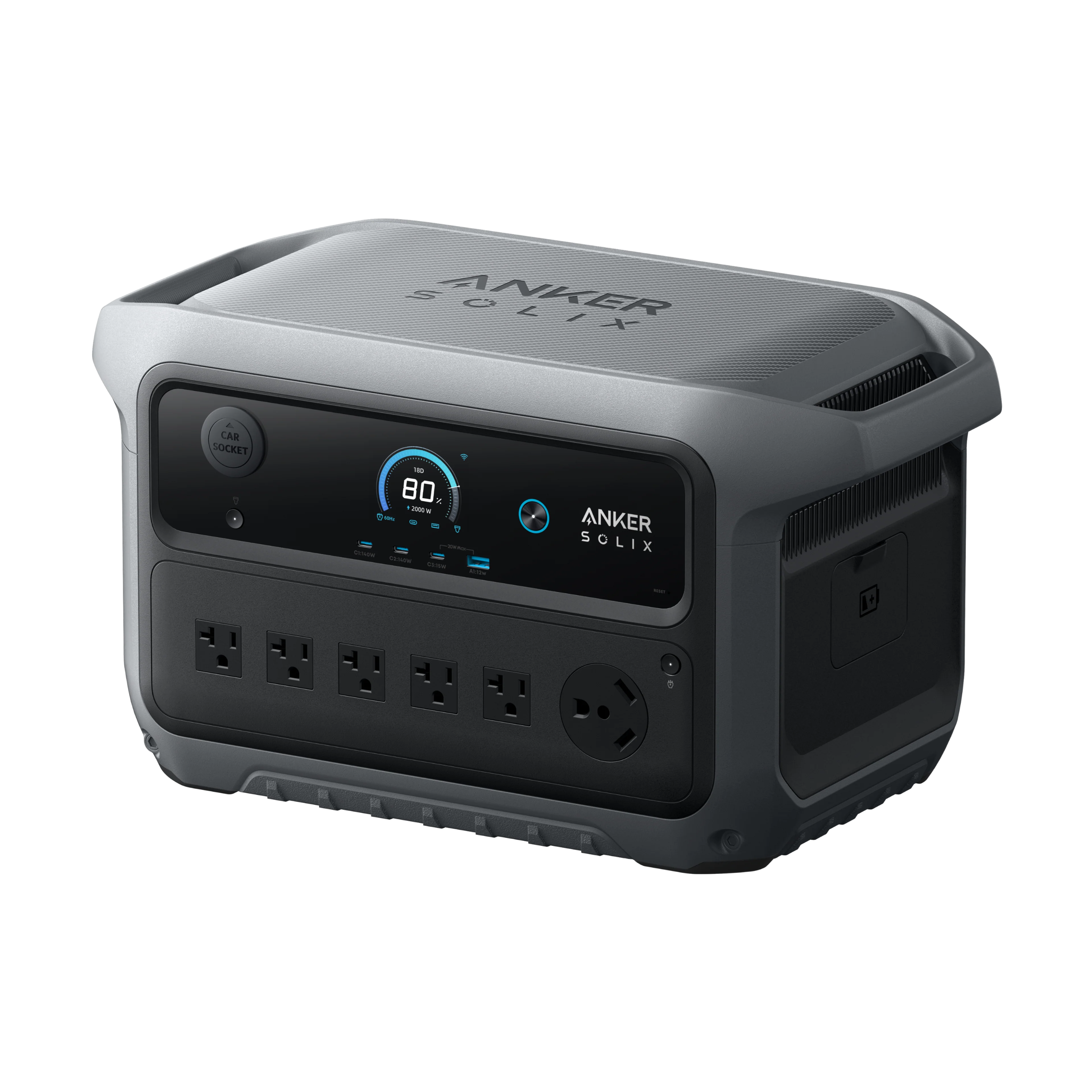
$999.99 · direct from Anker
Last checked 1 day ago. Prices move — check before you buy.
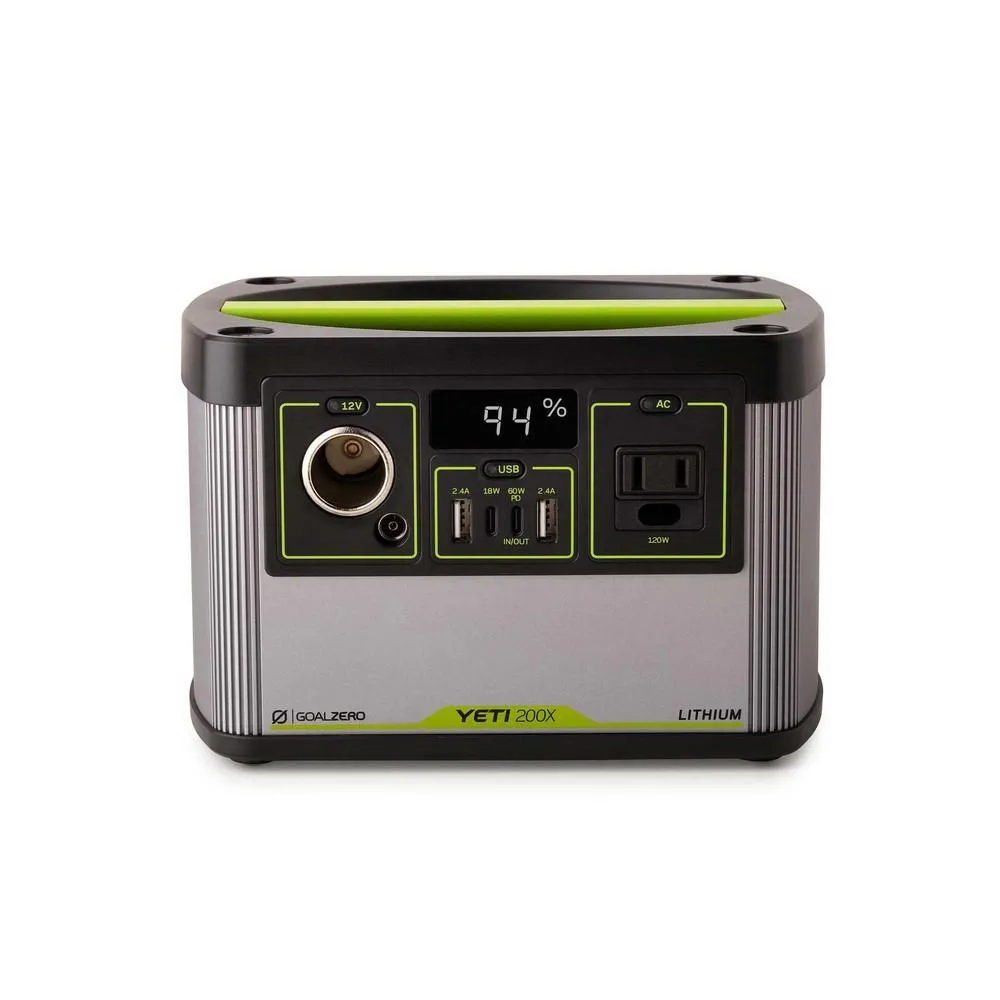
$219.95 · direct from Goal Zero
Last checked 1 day ago. Prices move — check before you buy.
Spec deltas
The Yeti 200X clears none of the six load profiles we model, and the SOLIX C2000 Gen 2 clears four. That reads like a rout and it isn't one: 2,048Wh against 187Wh, 41.7 lb against 5 lb, $1,000 against $220. These two aren't competitors. They're two different answers to a question you haven't finished asking.
So the useful work here is figuring out which buyer you are, and the 120W inverter does most of it for you. If your list has an AC appliance on it, a fridge, a kettle, a circular saw, the 200X refuses the job at the outlet before capacity is ever consulted, and the $780 difference between them is gone the first time you needed the thing to work. If your list is phones, a laptop over USB-C and a camp light, the 200X does all of it in five pounds and the Anker is 2,048Wh you'll never cycle.
We land on the C2000 Gen 2 at moderate confidence, because most people who arrive at a page like this haven't finished sizing their loads, and the bigger unit is the one that forgives that. Read the scenario table before you pay, though. Two of our six profiles come back with neither unit covering them, and the eight-hour blackout everyone shops for leaves even the Anker just 96Wh of slack.
What the Numbers Reveal
Each conclusion stated first — the numbers behind it on one line, the full analysis below.
That leaves 96Wh, which is under 6% of the night (96 divided by 1,645). One more device on the power strip, or a fridge cycling harder because it's July, and you're hand-managing the last two hours. The C2000 takes Anker expansion batteries, and on this pair that port isn't a nice-to-have. It's what turns a 6% margin into one you can actually plan around.
SOLIX C2000 Gen 2 is rated 2,048WhScenario math derates that to 1,741Wh usable (2,048 x 0.85)The 8-hour blackout profile needs 1,645Wh
Why it mattersIf outage backup is the reason you're shopping, price the expansion battery into the purchase now rather than after the first bad night.
Read the 200X as a USB unit with an AC socket bolted on and it stops looking outclassed. Five pounds, a 60W USB-C port, and a 120W solar ceiling that puts 187Wh back in about an hour and a half of good sun (187 divided by 120). It's an internally consistent product. It's just consistent at a size that all six of our profiles are bigger than.
Yeti 200X inverter: 120W continuous, 200W surgeThe 8-hour blackout profile peaks at 150W and the tailgate profile at 400WYeti 200X usable pool is 159Wh (187 x 0.85)
Why it mattersIf anything you plug in has a motor, a compressor or a heating element, the 200X is the wrong tool no matter how long you'd run it.
rated cycles
That ratio is only money if you spend the kilowatt-hours. Cycled daily the Anker is an 11-year unit and the Yeti a 1.4-year one, but nobody drains a 187Wh box to empty every day, and on a weekend rhythm the Yeti reads 4.8 years, which is a perfectly normal life for a $220 accessory. The lifetime column describes energy you have to need before it counts as a discount.
$1,000 across 2,048Wh is 49 cents per watt-hour; $220 across 187Wh is $1.184,000 rated cycles against 500Lifetime energy of 8,192 kWh against 94 kWh
Why it mattersRecurring load with real appliances: the lifetime figure is the entire argument. Occasional load: ignore that column and buy on weight and price.
weight
So the 41.7 lb only bites on the trips where you're carrying it, and those trips, phones and a light and a laptop, are exactly the ones where 2,048Wh was never the requirement. The weight objection and the capacity argument cancel each other out. Whichever one applies to you, the other one doesn't.
41.7 lb against 5 lb, roughly 8.3 times the weight (41.7 divided by 5)C2000 Gen 2 switches over in 10ms; Goal Zero's X-series has no UPS mode at allC2000 Gen 2 delivers 2,400W continuous
Why it mattersDecide where the unit will live before you decide which to buy. A unit that stays put should be the big one; a unit that walks should be the small one.
The specific dimensions that decide these two units — everything else is a tie.
Your Life, Your Pick
Selected because: Four of six load profiles go to the C2000 Gen 2 and none to the Yeti 200X, and the two that nobody wins are the ones that should change your shortlist.
Two of the six come back with neither unit covering them, and that's the most useful line on the table. The camping weekend wants 2,100Wh and the van day wants 4,685Wh, against a usable Anker pool of 1,741Wh: about 83% of the weekend and 37% of the day. Neither of those is a near miss you beat by being disciplined with the lights.
The four the Anker does win, it wins in two different ways, and the difference tells you something. On the CPAP night and the remote workday the Yeti simply runs dry, 159Wh usable against 320Wh and 910Wh. On the blackout and the tailgate it never gets that far, because 120W of inverter won't start a 150W or a 400W load. A unit that runs out is a unit you sized wrong. A unit that won't start was never in the running.
Portability & Form Factor
Selected because: 41.7 lb against 5 lb is the only axis the Yeti wins, and for a real share of buyers it's the only one that matters.
weight
Five pounds is the one number the Yeti wins, and it wins it by a distance: 41.7 divided by 5 is 8.3 times the mass. In the hand that's the difference between a thing that rides in a daypack on a quarter-mile walk from the car and a thing you lift out of a trunk with both hands and bent knees, once, at the campsite, and then leave.
Here's what dissolves the weight objection for most buyers, though. The C2000 has 10ms UPS passthrough and the Yeti has no UPS mode, so the Anker's natural home is under a desk, wired inline, never going anywhere. Weight is only a real cost when the unit travels, and the trips it would travel on alone are the trips where you didn't need 2,048Wh in the first place.
Lifetime Value
Selected because: 8,192 kWh of lifetime energy against 94 kWh, plus the reason that gap may not be yours to spend.
cost / lifetime kWh
Twelve cents a lifetime kilowatt-hour against two dollars thirty-five. That comes from 2,048Wh times 4,000 cycles for 8,192 kWh on the Anker, and 187Wh times 500 cycles for 94 kWh on the Yeti. After you've read it once you don't need it again.
Now the part the ratio hides: it's only a discount if you spend the energy. Cycled every day the Anker lasts 11 years and the Yeti 1.4, but a 187Wh unit doesn't get drained to empty daily, and on weekends it reads 4.8 years. If your use is occasional, skip this column entirely and decide on weight and price. If you're running something real and running it often, this column is the whole case for the Anker and nothing else on the page needs to be.
Growth Path
Selected because: The C2000 Gen 2 clears the 8-hour blackout with 96Wh to spare, which is what makes its expansion port more than a footnote.
solar input
The thin blackout margin is what makes the expansion port matter here rather than in the abstract. Ninety-six watt-hours of headroom on a 1,645Wh night is under 6%, which is one extra device away from rationing by hour seven. The C2000 accepts Anker expansion batteries, so the fix exists and costs money rather than requiring a different unit.
The Yeti's fixed 187Wh isn't a flaw we'd hold against it. At 5 lb there's nothing coherent to expand into and no sane reason to try; it's a complete small thing rather than a truncated big one. Size it once, on day one, and it either fits your list or it doesn't.
Strengths & trade-offs
Anker SOLIX C2000 Gen 2
Strengths
- +Larger battery capacity
- +Higher AC output
- +Longer warranty
- +Faster solar charging
- +Rated for 4,000 charge cycles — much longer battery lifespan
Trade-offs
- –Substantially more expensive (+$780) than the Yeti 200X.
- –Significantly heavier (+36.7 lbs), making it harder to move.
Goal Zero Yeti 200X
Strengths
- +Costs $780 less
- +Lighter by 36.7 lb
Trade-offs
- –Weaker inverter (-2,280W) limits appliance compatibility.
- –Lacks smartphone app control for remote monitoring.
- –Sealed capacity — the SOLIX C2000 Gen 2 can add batteries to grow past 187Wh; this one can't.
- –Shorter-lived battery — rated for 500 charge cycles vs the SOLIX C2000 Gen 2's 4,000, so it wears out sooner.
Will It Power Your Gear?
Scenario math and per-appliance runtimes, modeled from the spec record.
Scenario verdicts
We ran the math on seven real-world scenarios. Here's which unit survives your actual life.
SCN-01 · 2 nights · needs 2,100Wh
Weekend Camping
Two nights off-grid with essential comfort
Neither unit
Neither unit gets you through this one. The weekend profile wants 2,100Wh, the C2000's usable pool is 1,741Wh after derating, which covers about 83% of it, and the Yeti 200X's 159Wh covers about 8%. Eighty-three percent isn't a gap you close by turning off a light on Saturday. If this is genuinely your weekend, shop a 3kWh-class station or plan on an expansion battery from the start.
Battery budget usedlower = more headroom
LOAD Phone Charger 15W×6h · LED Lights 40W×8h · Box Fan 75W×14h · CPAP Machine 40W×16h
SCN-02 · 8 hours · needs 1,645Wh
8-Hour Blackout
Keep the essentials running through a night without power
SOLIX C2000 Gen 2
The C2000 Gen 2 finishes the night with 96Wh left out of 1,741Wh usable, which is a win on the thinnest margin anywhere on this page. The Yeti 200X never reaches the capacity question: the night peaks at 150W and its inverter stops at 120W, so it declines the job at the outlet. If outage backup is why you're here, note that under 6% of headroom is not much of a plan.
Battery budget usedlower = more headroom
LOAD Fridge 150W×8h · Router + Modem 20W×8h · LED Lights (4 bulbs) 40W×6h · Phone Charger 15W×3h
SCN-03 · 8 hours · needs 320Wh
CPAP Overnight
Sleep therapy without interruption — the #1 medical use case
SOLIX C2000 Gen 2
This is where the gap gets personal. The overnight profile needs 320Wh and the 200X holds 159Wh usable, so it quits around the middle of the night, which is the worst available moment to learn a spec. The C2000 spends 18% of its pool on the same night and publishes 30 dBA, which is the kind of thing that matters when the unit is three feet from your head. Goal Zero publishes no figure for the 200X, though with a 120W ceiling there isn't much fan to hear either way.
Battery budget usedlower = more headroom
LOAD CPAP Machine 40W×8h
SCN-04 · 8 hours · needs 910Wh
Remote Workday
Full work day off-grid without power anxiety
SOLIX C2000 Gen 2
The Yeti 200X doesn't finish — 159Wh usable against the 910Wh this needs leaves it 751Wh short, about 17% of the scenario covered. The SOLIX C2000 Gen 2 covers it with 831Wh to spare.
Battery budget usedlower = more headroom
LOAD Laptop 60W×8h · External Monitor 30W×8h · Router + Modem 20W×8h · Phone Charger 15W×2h
SCN-05 · 4 hours · needs 670Wh
Tailgate Party
Game day power for the crew
SOLIX C2000 Gen 2
The Yeti 200X can't run the 400W peak at all — 200W is the most its inverter will pass even momentarily. The SOLIX C2000 Gen 2 handles this scenario with 1,071Wh to spare.
Battery budget usedlower = more headroom
LOAD Blender 400W×0.5h · LED TV (55") 80W×4h · Bluetooth Speaker 15W×4h · Phone Charger (×3) 45W×2h
SCN-06 · 24 hours · needs 4,685Wh
Van Life Daily
A full day of mobile living — the ultimate endurance test
Neither unit
Wrong size of unit, both of them. The van day asks for 4,685Wh, which is 2.7 times the C2000's 1,741Wh usable pool, and the Yeti's 120W inverter can't start the 150W peak, so its 187Wh never gets a vote. Daily draws at this level are fixed house-battery territory rather than a portable-box decision.
Battery budget usedlower = more headroom
LOAD Mini-Fridge 150W×24h · Laptop 60W×4h · Phone Charger 15W×3h · LED Lights 40W×5h · Fan 75W×8h
SCN-07 · an afternoon · needs 100Wh
Afternoon Off-Grid
Phones and a speaker at the park, beach, or campsite — the small-unit job description
Either unit
This row is here for the Yeti 200X's class of job: phones and a speaker, 100Wh across an afternoon. Both cover it — the Yeti 200X finishes at 63% used, and the SOLIX C2000 Gen 2 barely notices it. For this job the SOLIX C2000 Gen 2's extra capacity is dead weight, not headroom; take the Yeti 200X at 5 lbs and leave the rest at home.
Battery budget usedlower = more headroom
LOAD Phone Charger (×2) 30W×2h · Bluetooth Speaker 10W×4h
The Load Test
RUNTIME = (Wh × 0.85) ÷ LOAD
None of the scenarios above exactly yours? Build it. Toggle what you'd plug in; both units are tested against the combined draw.
Essentials
Comfort & Convenience
High-Draw Appliances
Test duration
8h
Continuous draw
205W
Projected runtime
Only the SOLIX C2000 Gen 2 can start this 205W load.
$999.99 list · direct from Anker
Modeled from the spec record — same math as the tables below. Methodology
Runtime by appliance
Real-world runtime estimates for common appliances, modeled at 85% inverter efficiency.¹
Essentials
The basics you need runningscale 0–116.1hComfort & Convenience
Makes off-grid life actually enjoyablescale 0–23.2hHigh-Draw Appliances
These reveal the real limitsscale 0–1.7h¹ Runtime = (capacity × 0.85) ÷ appliance watts. Within each group, all bars share one time scale (the group's longest runtime), so lengths are comparable across appliances; identical runtimes collapse into a single blue/orange bar. Actual runtime varies with battery age, temperature, and simultaneous loads — see methodology.
Conclusion
August 9, 2026
Verdict: the SOLIX C2000 Gen 2, on Power Score margin
Buy the SOLIX C2000 Gen 2 if you haven't yet written down every watt you plan to draw. It covers four of the six load profiles we model and the Yeti 200X covers none of them, it holds 2,400W continuous against the Yeti's 120W, and at $1,000 across 2,048Wh it works out to 49 cents a watt-hour where $220 across 187Wh puts the Yeti at $1.18. The catch worth knowing before you pay: 41.7 lb is a two-hands lift, and it's the reason this unit will end up living in one place. If your entire list is phones, a laptop over USB-C and a camp light, none of the above argues for it. Buy the 200X, keep the difference, and carry it with one hand.
Editor-assigned confidence, based on cited owner research and spec analysis.
List prices as of August 9, 2026. The links below open Anker's and Goal Zero's current prices.
$999.99 · direct from Anker
Last checked 1 day ago. Prices move — check before you buy.
or check the Yeti 200X price$219.95 list
Written by Ian Schneider, Solar & Off-Grid Tester · Station Arena Test Desk · Updated August 9, 2026
Measured Data
Benchmark scores and the full spec record, side by side.
Benchmark scores
Not rated for both units (minimum threshold unmet): UPS, RV Living, Home Backup, CPAP, Solar Generator, Tailgating, Food Truck, Camping.
Full specifications
ᵈ Derived: price ÷ rated capacity. See the data behind our comparisons →
Comparison ToolAdd more power stations, side by sideOpen Tool →How these numbers are produced
Numeric verification
Every figure on this page traces to our spec database or arithmetic on it — no estimated numbers.
Owner claims
Statements about owner experience are cited to published reviews — see Sources & Research Notes below.
Runtime model
Runtime = (rated capacity × 0.85 inverter efficiency) ÷ device wattage. Solar recharge estimates assume panels deliver 70% of rated output. Cold weather, battery age, and stacked loads reduce real-world results.
Power Score
Computed from 14 published spec dimensions, weighted per use-case bench. Higher is better; a unit must meet a bench's minimum threshold to be rated.
See the full weight table and data sourcing on our methodology page →Class ranking (the star rating)
Each unit's star score is a category ranking, not customer reviews — no buyer opinions feed it. We score every station on size-independent quality (value, output, portability, endurance, ports, warranty, and more), then percentile-rank it against the other units in its capacity class, so a class-leading compact unit and a class-leading whole-home unit can both earn 5★. Here, SOLIX C2000 Gen 2 rates 4.1/5 (48th percentile of 26 Large-class units), and Yeti 200X rates 3.5/5 (10th percentile of 22 Personal-class units).
How the class ranking is computed →Test Notes & Caveats
Hidden gotchas and advantages we spotted that you won't find on the product page.
Yeti 200X: No App Control
Without app control, you have to physically walk to the Yeti 200X to check battery level, adjust settings, or monitor power draw. The SOLIX C2000 Gen 2 lets you do all that from your phone, including getting low-battery alerts.
Fixed at 187Wh, and That's Fine
The 200X can't grow and we don't count it against the unit. At 5 lb there's nothing coherent to expand into and no reason to want it; this is a complete small product, not a truncated large one. The C2000's expansion port earns its keep for a reason the spec table won't show you: its own margin on the eight-hour blackout is thinner than a 2,048Wh badge suggests.
Only One of These Stays On When the Power Doesn't
The C2000 Gen 2 switches to battery in 10ms, fast enough that a router, a modem or a desktop never notices the cut. Goal Zero's X-series has no UPS mode, so the 200X backs a device up only in the sense that you can plug it in again afterwards. That's the difference between a backup and a spare.
Five Years Against Two, and a Wrinkle
The terms genuinely differ here, which is less common than it sounds: five years on the Anker, two on the Yeti. Per year of coverage the Yeti is the cheaper promise at $110 against $200. The wrinkle is that its two years outlast its own 1.4-year daily-cycle rating, so a heavy user's warranty is still running when the pack has already reached 80% of the capacity they paid for.
Battery Lifespan in Real Years
The SOLIX C2000 Gen 2 is rated for 4,000 cycles vs 500. In real life: at daily use, that's 11 vs 1.4 years. At weekend use (twice a week), it's 38 vs 5 years. One caution reading years across different sizes: a cycle is 2,048Wh on the SOLIX C2000 Gen 2 and 187Wh on the Yeti 200X, so count lifetime energy — roughly 8,192 kWh against 94 kWh over the rated life. After hitting the cycle limit, the battery doesn't die — it drops to ~80% of original capacity, which is still very usable.
The Missing Noise Number Isn't the Problem
Goal Zero doesn't publish a decibel figure for the 200X, which is why this card exists. Read it as a paperwork gap rather than a warning. A 120W inverter on a 187Wh pack has very little heat to move and not much fan to hide. Anker publishes 30 dBA for the C2000. Neither figure should decide this purchase.
Full record above — the Test Desk pick is the SOLIX C2000 Gen 2.
Check SOLIX C2000 Gen 2 price →or check the Yeti 200X priceOwnership Analysis
What happens after you buy — true cost of ownership, brand trust, and growth potential.
Lifetime value
Service lifeyears at one full cycle per day
Lifetime energy delivered
Cost per delivered kWh
│ warranty ends · Reaching the cycle rating means ~80% capacity remains — degraded, not dead.
Analyst note
The Yeti 200X is cheaper to buy, but the SOLIX C2000 Gen 2 is cheaper to own. At $0.12/kWh over its lifetime vs $2.35/kWh, the SOLIX C2000 Gen 2's higher cycle life and capacity make each dollar go further over the years.
Delivers each lifetime kWh for $2.23 less — check the SOLIX C2000 Gen 2 price →
Brand trust
Anker
Ecosystem
7-8 SOLIX portable power stations across C-series (compact) and F-series (flagship), plus the X1 home energy system
Support
US-based support with a strong parent-brand history behind it, though SOLIX-specific service isn't quite what Anker's consumer-electronics reputation would lead you to expect. The practical wrinkle is size: a 41.7 lb station that needs to go back is a hazmat shipping problem before it's a service problem.
Community
Moderate — active Reddit (r/Anker, r/AnkerSOLIXCommunity) and growing. Benefits from Anker's massive consumer electronics brand awareness.
App experience
Rated 4.5/5 iOS (~1,100 ratings) · 4.3/5 Android
Unique strength
Parent brand trust from Anker's consumer electronics dominance. InfiniPower technology for long cycle life. Strong $/Wh value in the mid-size and larger units — the S2000, F2600 and C1000 are among the better buys per watt-hour in the catalog.
Worth knowing
The SOLIX line runs seven or eight stations across the compact C-series and the flagship F-series, plus the X1 home system, so the expansion and accessory path is real rather than aspirational. The catch is that firmware updates have removed features without notice, and the expansion ecosystem is still smaller than EcoFlow's.
Goal Zero
Ecosystem
Focused — a compact current line (6th-gen Yeti and Yeti Pro series), the previous-gen X series now out of stock across every model on Goal Zero's own store (checked 2026-09-13: 200X, 500X, 1000X, 1500X, 3000X, 6000X, some listed only as open-box), so buying one new means finding retailer stock, Sherpa power banks for the under-100Wh tier, plus Alta coolers, Nomad/Ranger solar panels, and vehicle integration kits
Support
US-based, Salt Lake City, owned by NRG Energy. The premium-support argument that used to justify premium pricing has weakened, and the official community forums have been shut down, which stung the long-timers who lived there.
Community
Small but loyal — strong following in overlanding and preparedness communities. Official community forums were recently shuttered, frustrating long-time users.
App experience
Rated 4.4/5 iOS (~1,200 ratings) but recent reviews skew negative — recurring connectivity issues, crashes, and stability problems.
Unique strength
Pioneer of the portable power market — strongest brand heritage. US-based company with ruggedized, weather-resistant designs (IP ratings vary by model). Integrated "Yeti-Ready" ecosystem with coolers, lights, and vehicle kits.
Worth knowing
Goal Zero invented this category and still builds among the most weather-hardened boxes in it, with an accessory ecosystem of coolers, lights and vehicle kits that nobody else quite matches. It's also the most expensive brand per watt-hour in this catalog, and the 200X's cost per watt-hour is the clearest illustration of that on this page.
Analyst note
Neither brand hands you a tiebreak here. Both have slipped from the support standard they were known for, and both still have a genuine strength: Anker's is catalog depth and value per watt-hour, Goal Zero's is ruggedization and heritage. Buy the unit rather than the badge. The sizing question on this page settles the matchup long before brand does.
Growth path
SOLIX C2000 Gen 2
EXPANDABLESupports Anker expansion batteries, so you can add capacity later without replacing the base unit — useful if your needs may climb past 2,048Wh.
Accepts up to 800W of solar. Suitable for a 1-2 panel setup.
Generous port selection supports complex multi-device setups.
Expansion batteries are Anker-specific. You're investing in the Anker ecosystem.
Yeti 200X
FIXED CAPACITYFixed at 187Wh, with no expansion — so size it for your needs up front rather than planning to add capacity later.
Accepts up to 120W of solar. Limited to a single portable panel.
Limited ports. You'll likely need a power strip or splitter.
Realistic full solar rechargeat 70% of rated panel output — see methodology
Analyst note
The Yeti 200X is sealed at 187Wh, which is fine if that covers you. The SOLIX C2000 Gen 2 starts at 2,048Wh and can grow beyond it with Anker expansion batteries — real headroom the Yeti 200X doesn't have if your needs climb toward partial-home backup.
What Owners Report
Patterns from published owner reports and long-term reviews — every claim cited to its source below.
Anker SOLIX C2000 Gen 2
Field coverage on the C2000 Gen 2 is review-desk work rather than long-term ownership, with no six-month reports in hand yetA1A2A4. What's there is consistent. Testers describe the fans holding at a subdued background whirr even under high load, quieter than other high-output Anker stations they've runA1, and the unit as genuinely plug-and-play with no firmware ritual or voltage oddities before first useA2. One review noted the Gen 2 shed a large amount of weight against the original C2000, which is worth knowing if you're cross-shopping an older listingA5.
The Anker app earns steady if unexcited praise for monitoring over Bluetooth or Wi-FiA3. Treat all of this as a strong first impression rather than a durability verdict. The 4,000-cycle rating is a spec, not yet a track record.
“Even at full power it's far quieter than any other powerful Anker station tested — the fans never rise above a subdued, easily-backgrounded whirr, working largely silently and only occasionally reaching a pleasantly quiet ~35 dB at 1 m under high load.”
Sources
notebookcheck.net · thesolarlab.com · trustedreviews.com · androidguys.com
Goal Zero Yeti 200X
The Yeti 200X's record is thin and mostly descriptive. It's Goal Zero's lightest station at 5 lb in a 7.9 by 5.1 by 5.1-inch boxB2, and coverage puts it squarely in overlanding and car-camping use, praising the port spread and its ability to keep lights, phones and small gear alive for daysB3. Nobody is running a fridge on it and reporting back, which is itself informative.
The one thing the coverage does flag is chemistry: a Li-ion NMC pack rated to 500 cycles to 80% of original capacity, in a market that has largely moved to LFPB1B4. That's a generation, not a defect. It does mean the cycle number on the spec table is the honest one, and you should plan around it rather than assume modern LFP longevity.
“A 187Wh Li-ion NMC battery rated for 500 lifecycles to 80%, with a 120W AC inverter.”
Sources
walmart.com · pcworld.com · forbes.com · the-gadgeteer.com · geardiary.com · bhphotovideo.com · bestbuy.com
Sources & Research Notes
Every owner claim in this report is traceable to a published source. The bracketed references above resolve here.
Recurring owner themes
- Reviewers consistently praise quiet operation, fast charging, premium build, and no-fuss plug-and-play simplicity. [SOLIX C2000 Gen 2 · 3 entries]
- Ultra-light (5 lb) and well-connected for small gear, but tiny NMC capacity (187Wh) with 500-cycle chemistry. [Yeti 200X · 3 entries]
- A1
“Even at full power it's far quieter than any other powerful Anker station tested — the fans never rise above a subdued, easily-backgrounded whirr, working largely silently and only occasionally reaching a pleasantly quiet ~35 dB at 1 m under high load.”
notebookcheck.net / thesolarlab.com — Anker SOLIX C2000 Gen 2 review · 2026 · [positive]
- A2
“Really simple to use — no need to download firmware or deal with weird voltage drops; you just turn it on, plug in, and go. Rapid charging and premium build.”
trustedreviews.com / thesolarlab.com — Anker SOLIX C2000 Gen 2 review · 2026 · [positive]
- A3
“The Anker Solix app is a good way to monitor the station during charging and use over Bluetooth or Wi-Fi; reviewers appreciated the monitoring functionality.”
androidguys.com — Anker SOLIX C2000 Gen 2 review · 2026 · [positive]
- A4
“Delivers a convincing performance with few points of criticism — undoubtedly one of the most attractive 2 kWh power stations on the market.”
notebookcheck.net — Anker SOLIX C2000 Gen 2 review · 2026 · [positive]
- A5
“Substantially lighter than its predecessor — the Gen 2 shed a large amount of weight versus the original C2000, making it notably easier to carry for its capacity.”
notebookcheck.net — '11.6 kg lighter than its predecessor' review · 2026 · [positive]
- B1
“A 187Wh Li-ion NMC battery rated for 500 lifecycles to 80%, with a 120W AC inverter.”
walmart.com / pcworld.com — Yeti 200X review · 2026 · [mixed]
- B2
“Weighs just 5 pounds — Goal Zero's lightest power station — measuring only 7.9 x 5.1 x 5.1 inches.”
forbes.com / the-gadgeteer.com — Yeti 200X review · 2026 · [positive]
- B3
“Perfect for overlanding or car camping, with a good port selection (USB-A, USB-C, 60W USB-C PD, AC, 12V) and rapid charge times, keeping critical gear like lights and phones running for days.”
geardiary.com / bhphotovideo.com — Yeti 200X review · 2026 · [positive]
- B4
“Priced at $299.95 with a 24-month warranty; an older NMC design in a market shifting to LFP.”
bestbuy.com — Yeti 200X · 2026 · [mixed]
Research compiled August 9, 2026.
Who Should Buy Which
Buy the SOLIX C2000 Gen 2 if you…
- →You're keeping a router, a modem and a couple of lamps alive through an outage. The eight-hour profile needs 1,645Wh and the C2000 covers it, and its 10ms switchover means the modem doesn't reboot in the first place.
- →You work out of a truck, a cabin or a job site. The remote-workday profile draws 910Wh, which is 52% of the Anker's usable pool, so a laptop, a monitor and a coffee maker is an ordinary day rather than a rationing exercise.
- →You own, or are about to own, something with a compressor or a heating element. 2,400W continuous with 4,000W of surge is the spec that says yes to that, and 120W is the spec that ends the conversation.
Buy the Yeti 200X if you…
- →Your entire load list is phones, a tablet, a laptop over the 60W USB-C port and a camp light, and you already know it's the entire list. Five pounds goes in a daypack. 41.7 lb goes in the trunk and stays there.
- →You want a real AC and 12V socket in an overlanding or car-camping kit rather than a bigger battery bank, and what you're keeping alive is lights, phones and small electronicsB2B3.
- →You need something a kid, a parent or a house guest can pick up and use without being taught. There's no app to pair and nothing to configure.
If neither fits
If your weekend genuinely looks like the 2,100Wh camping profile or the 4,685Wh van day, close both tabs. The C2000 covers 83% of the first and 37% of the second, and 83% of a weekend is still a dark Sunday. What you want is a 3kWh-class station, or this Anker with an expansion battery bought on day one instead of after the first bad night. At the other end of the range: if your list is only phones and a headlamp, a USB power bank does that job for a fraction of $220 with no inverter involved, and neither of these units is the right purchase.
The Bottom Line
Take the C2000 Gen 2 unless you can list every watt you'll draw and the list stays under 120W. Four load profiles covered against none, 2,400W of inverter against 120W, and the lifetime energy pool that makes 49 cents a watt-hour the cheaper number in every sense that involves actually using it. The Yeti isn't beaten so much as it's answering a different question, and it answers that one well in five pounds.
The thing to carry away isn't the twentyfold cost-per-kilowatt-hour gap, though. It's that two of six profiles came back with neither unit covering them, and the one everybody shops for leaves even the Anker 96Wh of room. Size the load first, then buy. If the sizing comes back at 187Wh, buy the 187Wh unit without a shred of regret and keep the difference.
Frequently Asked Questions
Answers drawn from the spec record and cited owner research.
Is the Anker SOLIX C2000 Gen 2 worth $780 more than the Goal Zero Yeti 200X?
Yes if anything on your list draws more than 120W, and no if nothing does. The Yeti's inverter is rated 120W continuous with 200W surge, so a fridge, a heater, a microwave or a 400W tailgate load is refused outright, and the money you saved buys you a unit that can't do the job. Below that ceiling the 200X handles the same devices at $220 against $1,000, and at 5 lb against 41.7 lb.
Can the Goal Zero Yeti 200X run a CPAP all night?
Not a full night. Our overnight profile draws 320Wh and the 200X holds about 159Wh usable after inverter losses (187Wh x 0.85), so it gets you roughly to the middle of the night. The C2000 Gen 2 spends 18% of its usable pool on the same night. If a CPAP is the reason you're shopping, that's the whole answer.
Does the Yeti 200X have a UPS mode for a router or a desktop?
No. Goal Zero's X-series units don't offer UPS passthrough, so when the power cuts, whatever is plugged into the Yeti goes down with it and you plug things back in afterwards. The SOLIX C2000 Gen 2 switches to battery in 10ms, which is fast enough that a router, a modem or a desktop never notices. If always-on is the point of the purchase, only one of these two does it.
What can the Yeti 200X actually run?
Anything under 120W continuous, which in practice means phones, tablets, a laptop over its 60W USB-C port, camp lights and 12V accessories. It also refills quickly for its size: 187Wh at its 120W solar ceiling is about an hour and a half of good sun. What it can't do is anything with a compressor, a motor or a heating element, regardless of how briefly you'd run it.
How long will each one last before the battery degrades?
The 200X is rated for 500 cycles to 80% of original capacity and the C2000 Gen 2 for 4,000. Cycled daily that works out to about 1.4 years and 11 years; on a weekends-only rhythm, 4.8 years and 38.5 years. Worth noticing: the Yeti's two-year warranty outlasts its own daily-cycle rating, which tells you plainly that it was never designed to be cycled hard.
Where to buy
Anker SOLIX C2000 Gen 2Pick
$999.99
$999.99 · direct from Anker
Last checked 1 day ago. Prices move — check before you buy.
Goal Zero Yeti 200X
$219.95
$219.95 · direct from Goal Zero
Last checked 1 day ago. Prices move — check before you buy.
Prices may vary by retailer and are subject to change.