Head-to-head test
Anker SOLIX C1000 Gen 2 vs Anker SOLIX F2000
The C1000 Gen 2 is Anker's newer, lighter, faster-charging platform and the F2000 is the older one with twice the battery bolted on, so the only question that decides this is whether you'll actually use that second kilowatt-hour.
Full profiles: Anker SOLIX C1000 Gen 2 → · Anker SOLIX F2000 →

Written by Ian SchneiderUpdated
Solar & Off-Grid Tester, Station Arena Test Desk
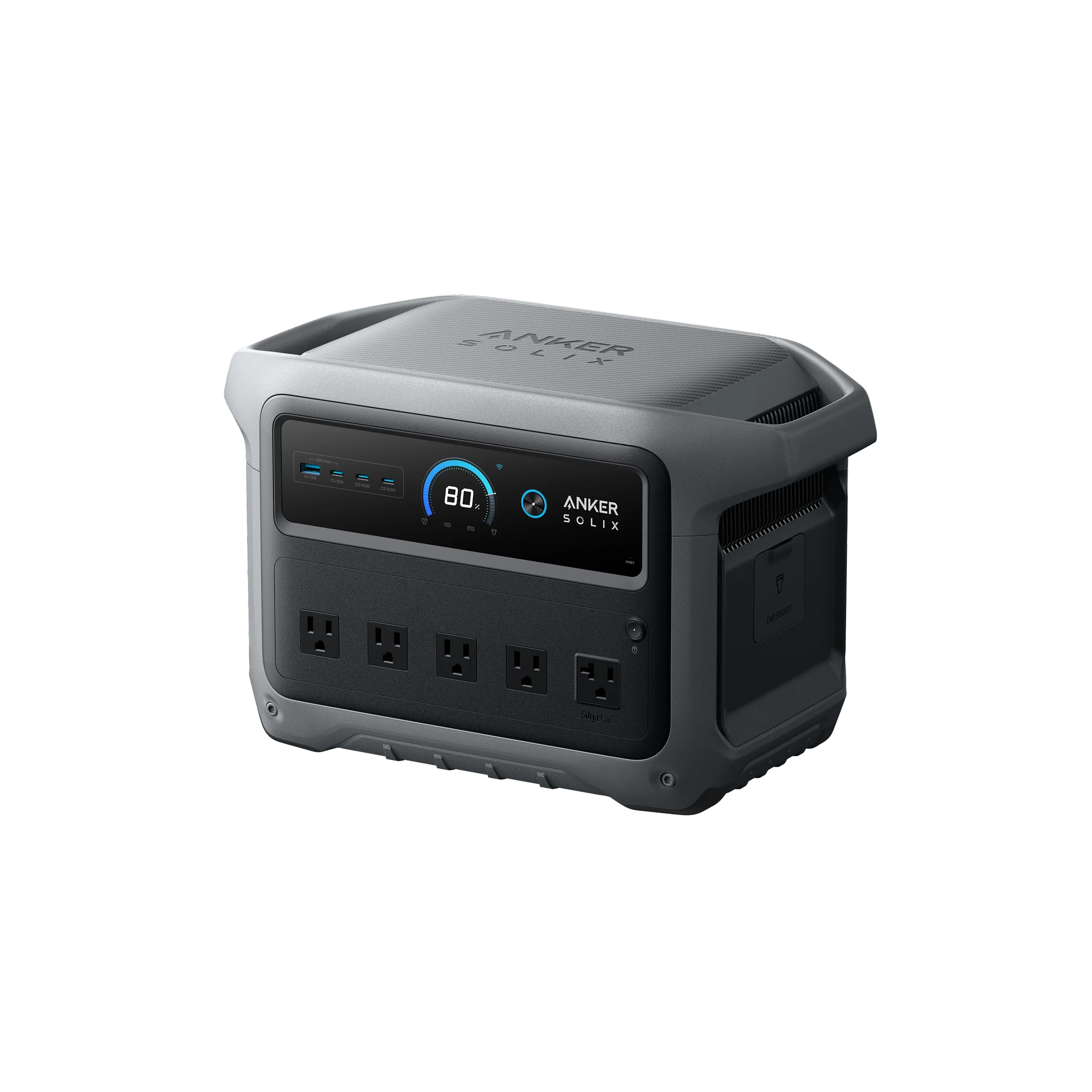
$529.99 · direct from Anker
Last checked 1 day ago. Prices move — check before you buy.
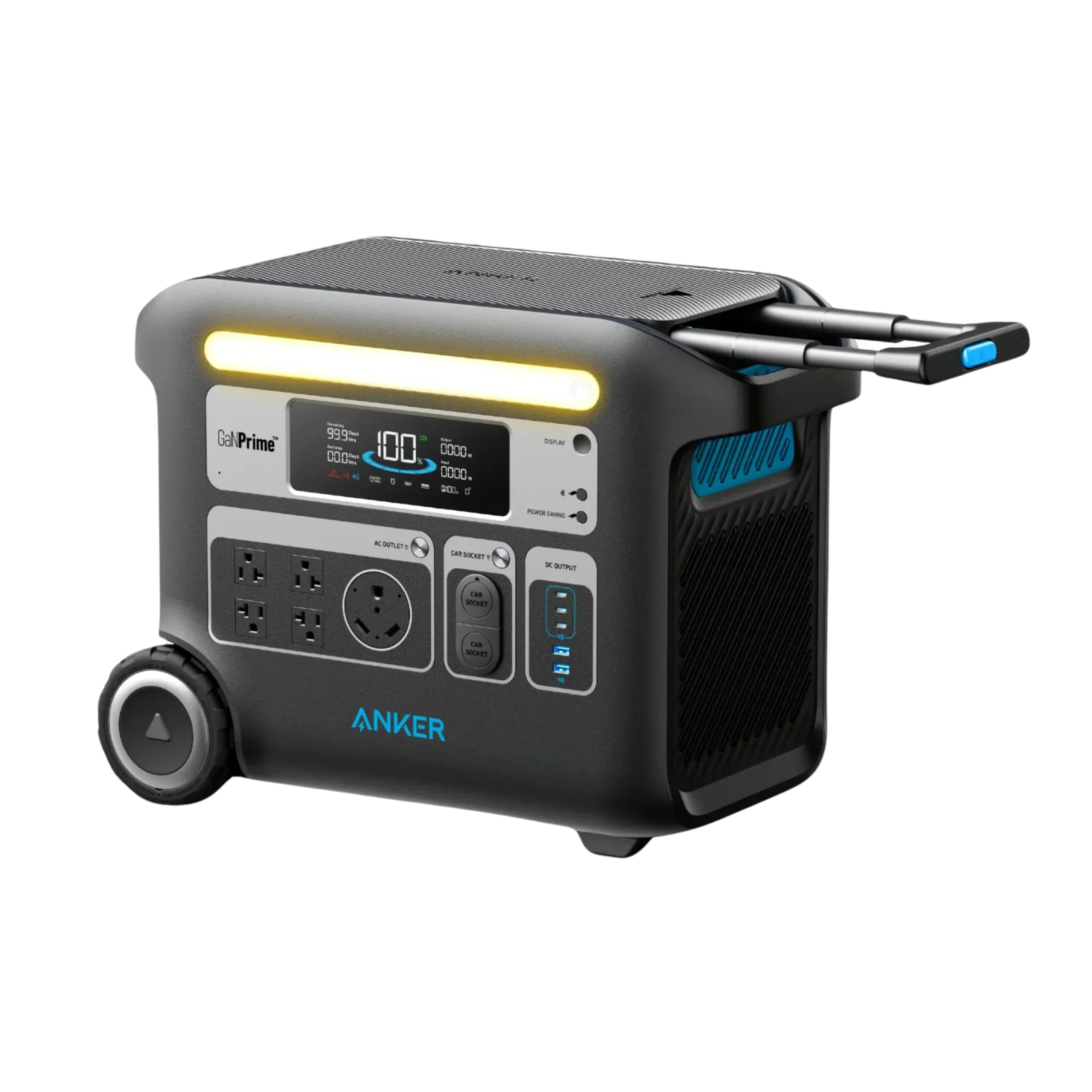
No longer sold
Anker no longer sells the SOLIX F2000 (PowerHouse 767). Its natural replacement is the SOLIX C2000 Gen 2 — the same 2,048Wh capacity and 2,400W output in a newer design.
SOLIX C2000 Gen 2 · $999.99Spec deltas
The C1000 Gen 2 is the newer Anker here, and it shows up almost everywhere except the battery gauge: 4,000 charge cycles against the F2000's 3,000, a 10ms switchover against 20ms, 140W USB-C against 100W, and a higher 3,000W surge ceiling despite being the smaller unit. It's also 24.9 lbs against 67.2, and $530 against $900.
The F2000 answers all of that with one number that matters: 2,048Wh, exactly double the C1000 Gen 2's 1,024Wh. That, plus a 1,000W solar ceiling against 600W, is the entire case for the bigger, older, heavier box.
So the decision isn't really C1000 Gen 2 versus F2000. It's whether you need the second kilowatt-hour badly enough to give up a newer platform, half the weight, and $370, because on every count that isn't capacity the smaller unit is ahead.
What the Numbers Reveal
Each conclusion stated first — the numbers behind it on one line, the full analysis below.
weight
Because the C1000 Gen 2 also takes expansion batteries, you can start light and add capacity the day you actually need it, instead of hauling 67.2 lbs on every trip against the chance you'll fill it.
The C1000 Gen 2 weighs 24.9 lbs; the F2000 weighs 67.2 lbsThe F2000 holds 2,048Wh against the C1000 Gen 2's 1,024Wh, and both are expandable
Why it mattersIf the unit ever leaves one spot — trunk, campsite, tailgate — the C1000 Gen 2 with an expansion path beats owning a 67.2 lb box you rarely drain.
rated cycles
The F2000's only measurable wins are capacity and a 1,000W solar ceiling against 600W; on the specs that describe how a unit behaves under load it's a step behind, including a 10ms line-interactive switchover against its own 20ms standby transfer.
C1000 Gen 2: 4,000 cycles, 10ms switchover, 140W USB-C, 3,000W surgeF2000: 3,000 cycles, 20ms switchover, 100W USB-C, 2,800W surge
Why it mattersAnyone protecting a desktop or router, or fast-charging a laptop over USB-C, should know the smaller box is the technically better one here, not the compromise.
Capacity
The C1000 Gen 2's fast HyperFlash AC recharge and 600W solar input mean a daytime outage lets you top it back up, so the gap only bites in an overnight or no-sun event where there's no recharge window and 1,024Wh simply runs out.
The engine's 8-hour blackout scenario needs about 1,645WhThe C1000 Gen 2 holds 1,024Wh; the F2000 holds 2,048Wh
Why it mattersBuyers whose core use is riding out long outages with nothing to recharge from should pay the $370 and take the F2000; anyone with a recharge path can bank the difference.
The specific dimensions that decide these two units — everything else is a tie.
Runtime: Will It Power Your Gear?
Selected because: The 1,024 vs 2,048Wh capacity gap is the entire matchup; explain what each covers.
continuous output
The F2000 stores exactly twice what the C1000 Gen 2 does, 2,048Wh against 1,024, and that doubling is the one thing it does better than the newer unit. It covers a full 8-hour blackout on one charge where the smaller box can't, and it gives more cushion for a weekend where neither quite clears the engine's 2,100Wh target.
The catch is that a lot of buyers never touch the second kilowatt-hour. A CPAP overnight draws about 320Wh; a remote workday about 910Wh. For those, the C1000 Gen 2 has all the runtime the job needs, and the extra 1,024Wh in the F2000 is weight you carry to use once a year.
Portability & Form Factor
Selected because: 24.9 vs 67.2 lbs is decisive and rarely surfaced against the capacity story.
weight
At 24.9 lbs the C1000 Gen 2 is a one-hand grab off a shelf and into a trunk. At 67.2 the F2000 is a set-it-down-and-leave-it unit, which is exactly why it ships with wheels and a handle instead of expecting you to lift it.
That's roughly 2.7 times the weight for double the capacity. If the box lives on one shelf in the garage the difference is academic. If it moves with you, it's the single most physical fact on this page, and it favors the smaller unit every time you pick it up.
Lifetime Value
Selected because: Equal $/kWh but the C1000 Gen 2 is far cheaper per warranty year; needs framing.
cost / lifetime kWh
Per stored kilowatt-hour over full cycle life the two land in the same place, about 16 cents, so lifetime math doesn't separate them. What separates them is the up-front cost spread across the five-year warranty: $130 a year for the C1000 Gen 2 against $200 for the F2000.
The C1000 Gen 2 also carries the longer rating, 4,000 cycles against 3,000, so on daily use it's the unit still working when the F2000's warranty-era math has run out. Paying less to own the longer-lived box is a rare combination, and it's the C1000 Gen 2's here.
Growth Path
Selected because: Same-brand base-vs-upgrade; both expandable, so growth is the forward-looking axis.
solar input
Both units take Anker expansion batteries, so neither is a dead end, and that reframes the whole base-vs-upgrade question. The C1000 Gen 2 lets you buy the light box now and add capacity the day a real need shows up, rather than pre-paying for 2,048Wh and 67.2 lbs on the guess that you'll grow into it.
The F2000's edge in this section is its 1,000W solar ceiling against 600W, which genuinely matters if you're building toward an off-grid array. For a buyer who'll mostly recharge from the wall, that ceiling is headroom the C1000 Gen 2's faster HyperFlash charging quietly makes up for.
What the Specs Don't Tell You
Selected because: Surge, UPS speed, cycle life, and undisclosed F2000 noise all point at the newer unit.
rated cycles
The surge card is the surprise: the smaller C1000 Gen 2 lists the higher ceiling, 3,000W against 2,800, so the newer unit starts a stubborn motor load the older one might not. The UPS card points the same way, a 10ms line-interactive transfer against a 20ms standby one, which is the difference a desktop or router notices during a cutover.
The noise card is a gap rather than a verdict: Anker publishes a 35dB figure for the C1000 Gen 2 and lists nothing for the F2000. That's an unknown, not a quiet unit, and it's one more spec the newer box actually documents where the older one doesn't.
Strengths & trade-offs
Anker SOLIX C1000 Gen 2
Strengths
- +Costs $370 less
- +Lighter by 42.3 lb
- +Rated for 4,000 charge cycles — much longer battery lifespan
Trade-offs
- –No major technical downsides compared to rival.
Anker SOLIX F2000
Strengths
- +Larger battery capacity
- +Higher AC output
- +Faster solar charging
Trade-offs
- –Substantially more expensive (+$370) than the SOLIX C1000 Gen 2.
- –Significantly heavier (+42.3 lbs), making it harder to move.
- –Shorter-lived battery — rated for 3,000 charge cycles vs the SOLIX C1000 Gen 2's 4,000, so it wears out sooner.
Will It Power Your Gear?
Scenario math and per-appliance runtimes, modeled from the spec record.
Scenario verdicts
We ran the math on six real-world scenarios. Here's which unit survives your actual life.
SCN-01 · 2 nights · needs 2,100Wh
Weekend Camping
Two nights off-grid with essential comfort
Neither unit
Neither clears a full weekend's roughly 2,100Wh on a single charge, so this one isn't the tiebreaker. Both cover a night and both want a solar top-up by day two, where the F2000's 1,000W ceiling refills faster than the C1000 Gen 2's 600W.
Battery budget usedlower = more headroom
LOAD Phone Charger 15W×6h · LED Lights 40W×8h · Box Fan 75W×14h · CPAP Machine 40W×16h
SCN-02 · 8 hours · needs 1,645Wh
8-Hour Blackout
Keep the essentials running through a night without power
SOLIX F2000
The F2000 is the only one of the two that rides the full modeled blackout on one charge — about 1,645Wh needed against its 2,048Wh — while the C1000 Gen 2's 1,024Wh taps out before hour eight. If you have no daytime recharge window, that gap is the entire case for the bigger box.
Battery budget usedlower = more headroom
LOAD Fridge 150W×8h · Router + Modem 20W×8h · LED Lights (4 bulbs) 40W×6h · Phone Charger 15W×3h
SCN-03 · 8 hours · needs 320Wh
CPAP Overnight
Sleep therapy without interruption — the #1 medical use case
Either unit
A CPAP is about 40W for eight hours, so both cover the night with room to spare and capacity decides nothing. Fan noise would — but SOLIX F2000 doesn't publish a figure, so there's nothing to hold it to. Buy on price, weight, and whether you can live with a fan you haven't heard.
Battery budget usedlower = more headroom
LOAD CPAP Machine 40W×8h
SCN-04 · 8 hours · needs 910Wh
Remote Workday
Full work day off-grid without power anxiety
SOLIX F2000
The SOLIX C1000 Gen 2 comes up just short — it needs 910Wh and has 870Wh usable, a 40Wh gap (its nameplate 1,024Wh actually clears this — the flat 15% conversion allowance is what tips it under). Trim that much — one small appliance's worth across the day — and it finishes. The SOLIX F2000 covers it outright with 831Wh to spare.
Battery budget usedlower = more headroom
LOAD Laptop 60W×8h · External Monitor 30W×8h · Router + Modem 20W×8h · Phone Charger 15W×2h
SCN-05 · 4 hours · needs 670Wh
Tailgate Party
Game day power for the crew
SOLIX F2000
Both handle game day; the SOLIX F2000 keeps more in reserve (38% used vs 77%). Tailgating is a light load, though, so the number you'll feel is weight: 24.9 lbs for the SOLIX C1000 Gen 2 against 67.2 lbs for the SOLIX F2000, from the trunk to the setup spot.
Battery budget usedlower = more headroom
LOAD Blender 400W×0.5h · LED TV (55") 80W×4h · Bluetooth Speaker 15W×4h · Phone Charger (×3) 45W×2h
SCN-06 · 24 hours · needs 4,685Wh
Van Life Daily
A full day of mobile living — the ultimate endurance test
Neither unit
Neither unit covers this scenario's 4,685Wh: the SOLIX C1000 Gen 2 comes up 3,815Wh short (about 19% covered), the SOLIX F2000 2,944Wh (37%). This is well outside what either unit is for; the right answer here is a larger station, not a choice between these two.
Battery budget usedlower = more headroom
LOAD Mini-Fridge 150W×24h · Laptop 60W×4h · Phone Charger 15W×3h · LED Lights 40W×5h · Fan 75W×8h
The Load Test
RUNTIME = (Wh × 0.85) ÷ LOAD
None of the scenarios above exactly yours? Build it. Toggle what you'd plug in; both units are tested against the combined draw.
Essentials
Comfort & Convenience
High-Draw Appliances
Test duration
8h
Continuous draw
205W
Projected runtime
For this load: SOLIX F2000 runs 8.5h vs 4.2h.
Modeled from the spec record — same math as the tables below. Methodology
Runtime by appliance
Real-world runtime estimates for common appliances, modeled at 85% inverter efficiency.¹
Essentials
The basics you need runningscale 0–116.1hComfort & Convenience
Makes off-grid life actually enjoyablescale 0–23.2hHigh-Draw Appliances
These reveal the real limitsscale 0–1.7h¹ Runtime = (capacity × 0.85) ÷ appliance watts. Within each group, all bars share one time scale (the group's longest runtime), so lengths are comparable across appliances; identical runtimes collapse into a single blue/orange bar. Actual runtime varies with battery age, temperature, and simultaneous loads — see methodology.
Conclusion
July 16, 2026
Verdict: the Anker SOLIX C1000 Gen 2
For most buyers, the C1000 Gen 2. It's the more modern unit on nearly every spec that isn't raw capacity: 4,000 cycles against 3,000, a 10ms line-interactive switchover against the F2000's 20ms standby transfer, 140W USB-C against 100W, and a 3,000W surge ceiling against 2,800W, all in a 24.9 lb box you pick up with one hand versus a 67.2 lb unit that ships on wheels. It also costs $370 less and lands at $130 per warranty year against $200. The F2000's honest edge is the thing it's named for: 2,048Wh against 1,024Wh, which is the difference between riding out the engine's modeled 8-hour blackout on one charge and coming up short. If your main job is a long outage with no recharge window, pay the $370 and carry the weight. Everyone else should buy the smaller, newer box, and expand it later if the need grows.
Editor-assigned confidence, based on cited owner research and spec analysis.
List prices as of July 16, 2026. The links below open Anker's current price.
$529.99 · direct from Anker
Last checked 1 day ago. Prices move — check before you buy.
or check the SOLIX F2000 price$899.99 list
Written by Ian Schneider, Solar & Off-Grid Tester · Station Arena Test Desk · Updated July 16, 2026
Measured Data
Benchmark scores and the full spec record, side by side.
Benchmark scores
Not rated for both units (minimum threshold unmet): CPAP, Camping.
Full specifications
ᵈ Derived: price ÷ rated capacity. See the data behind our comparisons →
Comparison ToolAdd more power stations, side by sideOpen Tool →How these numbers are produced
Numeric verification
Every figure on this page traces to our spec database or arithmetic on it — no estimated numbers.
Owner claims
Statements about owner experience are cited to published reviews — see Sources & Research Notes below.
Runtime model
Runtime = (rated capacity × 0.85 inverter efficiency) ÷ device wattage. Solar recharge estimates assume panels deliver 70% of rated output. Cold weather, battery age, and stacked loads reduce real-world results.
Power Score
Computed from 14 published spec dimensions, weighted per use-case bench. Higher is better; a unit must meet a bench's minimum threshold to be rated.
See the full weight table and data sourcing on our methodology page →Class ranking (the star rating)
Each unit's star score is a category ranking, not customer reviews — no buyer opinions feed it. We score every station on size-independent quality (value, output, portability, endurance, ports, warranty, and more), then percentile-rank it against the other units in its capacity class, so a class-leading compact unit and a class-leading whole-home unit can both earn 5★. Here, SOLIX C1000 Gen 2 rates 4.9/5 (96th percentile of 27 Everyday-class units), and SOLIX F2000 rates 3.7/5 (24th percentile of 26 Large-class units).
How the class ranking is computed →Test Notes & Caveats
Hidden gotchas and advantages we spotted that you won't find on the product page.
67.2 lbs vs 24.9 — a Two-Hands Difference
The F2000 is a set-it-down unit that ships on wheels; the C1000 Gen 2 you pick up one-handed. Roughly 2.7 times the weight for double the capacity is the trade, stated in one line.
Surge Power: Inverter Quality Indicator
The SOLIX C1000 Gen 2 has a 1.5× surge-to-continuous ratio vs the SOLIX F2000's 1.2×, and the higher absolute ceiling with it — 3,000W against 2,800W. Neither clears the 2× rule of thumb usually quoted for motor startups, so read these as two ceilings rather than two grades of inverter. What decides whether a given motor starts is the ceiling, not the ratio: the SOLIX F2000 still surges to 2,800W, so check the startup draw of the heaviest thing you plan to run against that figure rather than assuming it trips.
10ms Line-Interactive vs 20ms Standby
The C1000 Gen 2 transfers in half the time the F2000 does, and does it line-interactive rather than standby. For a desktop or router mid-outage, the faster unit is the smaller one.
Warranty: No Difference
Both units carry the same 5-year warranty, so coverage isn't a tiebreaker here. Worth saying because the per-dollar framing can suggest otherwise: the SOLIX C1000 Gen 2 works out at 9.4 years of cover per $1,000 spent against the SOLIX F2000's 5.6, but that spread is the price gap, not the terms.
4,000 Cycles vs 3,000
The newer C1000 Gen 2 carries a third more rated charge cycles than the F2000. On daily use that's years of extra service life on the cheaper, lighter unit.
The F2000's Noise Is Unlisted
Anker publishes 35dB for the C1000 Gen 2 but leaves the F2000's figure blank. Read that as an unknown, not as a quiet unit — go in without assuming either way.
Full record above — the Test Desk pick is the SOLIX C1000 Gen 2.
Check SOLIX C1000 Gen 2 price →or check the SOLIX F2000 priceOwnership Analysis
What happens after you buy — true cost of ownership, brand trust, and growth potential.
Lifetime value
Service lifeyears at one full cycle per day
Lifetime energy delivered
Cost per delivered kWh
│ warranty ends · Reaching the cycle rating means ~80% capacity remains — degraded, not dead.
Analyst note
Both units have similar long-term ownership costs ($0.13/kWh vs $0.15/kWh). The price difference is what you see on the sticker — neither is a hidden bargain or rip-off. One caution on the lifespan row: the SOLIX C1000 Gen 2 takes longer to reach its cycle rating, but a cycle moves a different amount of energy on each unit — the SOLIX F2000 still delivers more over its shorter horizon (6,144 vs 4,096 kWh). Years measure wear, not usefulness.
Growth path
SOLIX C1000 Gen 2
EXPANDABLESupports Anker expansion batteries, so you can add capacity later without replacing the base unit — useful if your needs may climb past 1,024Wh.
Accepts up to 600W of solar. Suitable for a 1-2 panel setup.
Generous port selection supports complex multi-device setups.
Expansion batteries are Anker-specific. You're investing in the Anker ecosystem.
SOLIX F2000
EXPANDABLESupports Anker expansion batteries, so you can add capacity later without replacing the base unit — useful if your needs may climb past 2,048Wh.
Accepts up to 1,000W of solar. Enough for a serious multi-panel array.
Generous port selection supports complex multi-device setups.
Expansion batteries are Anker-specific. You're investing in the Anker ecosystem.
Realistic full solar rechargeat 70% of rated panel output — see methodology
Analyst note
Both expand, but the SOLIX F2000's higher solar ceiling (1,000W vs 600W) gives it the stronger off-grid growth path — more panels can feed a bigger bank as it grows.
What Owners Report
Patterns from published owner reports and long-term reviews — every claim cited to its source below.
Anker SOLIX C1000 Gen 2
Reviewers put the C1000 Gen 2 near the top of the mid-size class for 2026, and the standout in field notes is charge speed, with the HyperFlash AC recharge landing well under the original'sA1A4. The higher continuous output crosses a useful line too, enough headroom to run a standard 1,500W space heater without strainingA3.
The one recurring knock is fan behavior: near-silent at low load, around 35dB under 200W, but the fans ramp up audibly during fast charging or heavy outputA2. It's the price of that quick recharge, and worth knowing if the unit sits in a room where you'll hear it work.
“Fast HyperFlash charging — a full recharge in roughly 49 minutes, noticeably quicker than the original C1000's ~58-80 minutes.”
Sources
thepowerpick.com · macrumors.com · outdoorgearlab.com · technerdo.com · mensjournal.com · powerstationadvisor.com
Anker SOLIX F2000
The thing owners actually mention first about the F2000 isn't the battery, it's the wheels: the 4.72-inch casters and retractable EasyTow handle are the most-cited reason people picked it over similar-spec rivals, because a 67.2 lb box you can roll beats a lighter one you have to liftB1. It's the honest answer to the weight, though it only helps on flat ground.
The WiFi and Bluetooth app draws steady praise for monitoring charge and load, and a meaningful number of owners reported Anker resolving issues proactively through firmware updates or replacementsB2. Field data leans on review coverage rather than large owner forums, so treat the support notes as encouraging rather than settled.
“It's big and full of heavy batteries, but the durable 4.72-inch wheels and retractable EasyTow handle make it surprisingly easy to lug around — most positive reviews cite the wheels and telescoping handle as a top reason owners chose it over similar-spec competitors.”
Sources
rvoutfitting.com · trustedreviews.com · ankersolix.com · storagereview.com · generatorpeak.com
Sources & Research Notes
Every owner claim in this report is traceable to a published source. The bracketed references above resolve here.
Recurring owner themes
- Fast charging and higher output over the original are the standout gains; fan noise under load or fast charging is the top complaint. [SOLIX C1000 Gen 2 · 3 entries]
- The wheels + retractable handle are the standout, repeatedly-cited reason owners pick the F2000; app monitoring and responsive Anker support are also praised. [SOLIX F2000 · 2 entries]
- A1
“Fast HyperFlash charging — a full recharge in roughly 49 minutes, noticeably quicker than the original C1000's ~58-80 minutes.”
thepowerpick.com / macrumors.com — Anker SOLIX C1000 Gen 2 review · 2026 · [positive]
- A2
“Fan noise is the single most common complaint — nearly silent at low load (about 35 dB under 200W), but the fans ramp up audibly during fast charging or heavy output, reaching around 55 dB at 1,000W-plus.”
outdoorgearlab.com / technerdo.com — C1000 Gen 2 review · 2026 · [negative]
- A3
“The higher continuous output crosses a useful threshold over the original — enough to run a standard 1,500W space heater with headroom to spare.”
thepowerpick.com / mensjournal.com — C1000 Gen 2 review · 2026 · [positive]
- A4
“Reviewers describe it as a refined, powerful, fast-charging update to a popular 1kWh platform, widely rated the mid-size unit to beat in 2026.”
thepowerpick.com / powerstationadvisor.com — C1000 Gen 2 review · 2026 · [positive]
- B1
“It's big and full of heavy batteries, but the durable 4.72-inch wheels and retractable EasyTow handle make it surprisingly easy to lug around — most positive reviews cite the wheels and telescoping handle as a top reason owners chose it over similar-spec competitors.”
rvoutfitting.com / trustedreviews.com — Anker SOLIX F2000 (PowerHouse 767) review · 2025-2026 · [positive]
- B2
“WiFi and Bluetooth app lets you monitor battery, charging, and customize power usage; a meaningful number of owners reported Anker proactively solving issues with firmware updates or replacements.”
ankersolix.com / storagereview.com — F2000 review · 2025-2026 · [positive]
Research compiled July 16, 2026.
What Owners Actually Report
Drawn from 26 comments on independent review channels — not from retailer reviews, which skew to the first week of ownership. Each line is our summary of one commenter's claim, linked to the original. We record what they said, including where it contradicts the spec sheet.
Anker SOLIX C1000 Gen 2
22 claims from 14 comments · 18 from owners · 6 with figures
- Price & value
- 4 · 0% negative
- Runtime
- 3 · 15% negative
- UPS switchover
- 2 · 0% negative
- Inverter & surge
- 1 · 0% negative
- Solar input
- 1 · 0% negative
What owners complain about
Gen 2 loses the gen 1's ability to add an expansion battery.
Expandability23 agreedsource →
Same app failure as his other brands: paired devices go missing on later launches.
App & firmwareowner2 agreedsource →
Can only pull 100W from the C1000 Gen 2's 12V ports and cannot confirm how XT60i sensing works.
Otherownersource →
What owners praise
Two units keep his gas furnace, three fridge/freezers and network alive for 5+ hours.
Runtimemeasuredowner15 agreedsource →
Anker 1000 gen 2's edge is a 2000W inverter, also at 25 pounds.
Inverter & surgemeasuredowner8 agreedsource →
Got the C1000 gen 2 on sale for $379 plus a $219 200W panel.
Price & valuemeasuredowner6 agreedsource →
Anker SOLIX F2000
21 claims from 12 comments · 13 from owners · 3 with figures
- Price & value
- 6 · 10% negative
- Runtime
- 1 · 0% negative
- Solar input
- 3 · 100% negative
- Noise
- 2 · 0% negative
- Inverter & surge
- 1 · 0% negative
What owners complain about
The 60V solar charging limit is the main bummer holding it back.
Solar inputowner3 agreedsource →
Reconnecting grid power briefly shut down all AC outputs, so he returned it.
UPS switchoverowner1 agreedsource →
His two-year-old SOLIX F2000 died last week and cannot be owner-diagnosed or repaired.
Durabilityownerafter 24 months1 agreedsource →
What owners praise
Ordered the F2000 with three 400W panels, each piece over 30% off on Black Friday.
Price & valuemeasuredowner5 agreedsource →
With the expansion battery it ran a small fan for two days and powers a gaming setup 8-10 hours.
Runtimemeasuredowner3 agreedsource →
Runs anything in the 1-2400W range with roughly 3000W surge.
Inverter & surgeowner3 agreedsource →
Claims are weighted by how specific they are, whether the commenter owns the unit, and how many readers agreed. Comments that mention a product under a rival's review count for more, because the commenter had no reason to be there. This is what buyers report, not our test results — for measurements we ran ourselves, see the methodology.
Who Should Buy Which
Buy the SOLIX C1000 Gen 2 if you…
- →You want a 1kWh unit you can actually carry, and you'd rather buy an expansion battery later than haul 67.2 lbs on the chance you need it.
- →You care about the specs under load, a 10ms switchover for a desktop or router, 140W USB-C for a laptop, and 4,000 cycles of life, more than you care about a second kilowatt-hour.
Buy the SOLIX F2000 if you…
- →You want to ride out a full 8-hour blackout, about 1,645Wh, on one charge with no recharge window, which only the 2,048Wh F2000 clears.
- →The unit lives in one place, so 67.2 lbs on wheels is fine, and you're building toward solar where the 1,000W ceiling earns its keep.
This is you — check the SOLIX F2000 price
If neither fits
If the real job is van-life daily draw, roughly 4,685Wh, or a full weekend at about 2,100Wh, both units come up short on a single charge. Look at a 3,000Wh-plus unit, or plan on running either of these with an expansion battery and a real solar setup from day one.
The Bottom Line
The F2000 wins exactly one argument, and it's the important one for some people: 2,048Wh against 1,024 is the difference between riding a full 8-hour blackout on one charge and running out early. If that's your use, pay the $370 and carry the weight.
Everyone else should take the C1000 Gen 2. It's the newer platform, longer-lived at 4,000 cycles, faster to switch over, lighter by more than 40 lbs, cheaper by $370, and expandable if your needs ever catch up to the F2000's battery. Buy the light, modern box and grow it later.
Frequently Asked Questions
Answers drawn from the spec record and cited owner research.
Anker SOLIX C1000 Gen 2 or F2000 — which should I buy?
For most people, the C1000 Gen 2. It's the newer platform with more cycles, a faster switchover, and lighter weight, at $370 less. Buy the F2000 only if you specifically need its 2,048Wh to ride a long outage on one charge, or its 1,000W solar ceiling for an off-grid build.
Is the F2000 just a bigger C1000 Gen 2?
No — it's actually the older design with more battery. The F2000 holds double the capacity, 2,048Wh against 1,024, but the C1000 Gen 2 is ahead on cycle life, switchover speed, USB-C wattage, and surge ceiling. You're trading newer tech for more storage.
Which one can get through an 8-hour blackout?
The F2000. The engine models an 8-hour blackout at about 1,645Wh, which its 2,048Wh covers on a single charge; the C1000 Gen 2's 1,024Wh runs short. If you can recharge from solar or the wall during the outage, the smaller unit closes the gap.
How much heavier is the F2000?
A lot. It's 67.2 lbs against the C1000 Gen 2's 24.9, roughly 2.7 times the weight, which is why it comes on wheels with a pull handle. If you're moving the unit in and out of a vehicle regularly, that difference is the main thing you'll feel.
Where to buy
Anker SOLIX C1000 Gen 2Pick
$529.99
$529.99 · direct from Anker
Last checked 1 day ago. Prices move — check before you buy.
Anker SOLIX F2000
$899.99
$899.99 · direct from Anker
Last checked 50 days ago. Prices move — check before you buy.
Prices may vary by retailer and are subject to change.