Head-to-head test
EcoFlow RIVER 2 Max vs BLUETTI Premium 200 V2
The RIVER 2 Max never wins outright in six real-use tests. Its best result is failing right alongside the Premium 200 V2, on the two scenarios big enough to overwhelm them both.
Full profiles: EcoFlow RIVER 2 Max → · BLUETTI Premium 200 V2 →

Written by Ian SchneiderUpdated
Solar & Off-Grid Tester, Station Arena Test Desk
Spec deltas
The EcoFlow RIVER 2 Max costs $289 (last listed price). The BLUETTI Premium 200 V2 costs $1,549, nearly 5.4x more. That gap alone explains almost everything else here: 512Wh against 2,073.6Wh, 500W against 2,700W, a 13.4-lb unit you lift with one hand against a 53.4-lb unit you roll on a hand truck.
The Premium 200 V2 wins four of six real household scenarios outright: an 8-hour blackout, a night on CPAP, a full remote workday, a tailgate party. The RIVER 2 Max wins none of them. It's also the cheaper unit to actually own: $0.12 per lifetime kWh against $0.19, because its battery is rated for twice the charge cycles, 6,000 against 3,000.
The RIVER 2 Max's case is price and weight, not scenario wins: $1,260 less (on last listed prices) and 40 lbs lighter, the right tradeoff if your heaviest load is a phone and a couple of small devices. The two scenarios where even the bigger unit comes up short, a full camping weekend and a day of van life, just mean neither one is actually sized for whole-household, off-grid duty.
What the Numbers Reveal
Each conclusion stated first — the numbers behind it on one line, the full analysis below.
rated cycles
The Premium 200 V2 carries roughly 4x the capacity and is rated for 2x the cycles, and those multiply. Across a full rated lifetime it will move about 12,442kWh through its battery against the RIVER 2 Max's 1,536kWh: an 8x gap in total energy delivered, for 5.4x the price. That's how the $0.75/Wh unit ends up the cheaper one to own: $0.12 per lifetime kWh against $0.19.
RIVER 2 Max: $.56 per Wh new, 512Wh capacity, 3,000 rated cyclesPremium 200 V2: $.75 per Wh new, 2,073.6Wh capacity, 6,000 rated cyclesRIVER 2 Max: 1,536 total lifetime kWh at $0.19 per lifetime kWh; Premium 200 V2: 12,442 total lifetime kWh at $0.12 per lifetime kWh
Why it mattersAnyone shopping by shelf price per watt-hour is comparing the wrong two numbers if they plan to run the unit for years rather than one season.
continuous output
These aren't two power stations at different prices. They're two different jobs. A 13.4-lb, 500W unit is built to move with you: backpack, tailgate, camp chair. A 53.4-lb, 2,700W unit is built to get planted in a garage corner or van cabinet and run real appliances, which is exactly why it takes every scenario the lighter unit can't.
RIVER 2 Max: 13.4 lbs, 500W continuous output, 1,000W surgePremium 200 V2: 53.4 lbs, 2,700W continuous output, 3,900W surgeRIVER 2 Max wins zero of six real-use scenarios outright
Why it mattersBuyers picking between these two on price alone are really choosing between 'carry it' and 'plant it' without realizing that's the actual question.
With energy a non-issue for either, the scenario comes down to the noise spec: 62dB against 16dB, in the neighborhood of the gap between a running conversation and a nearly silent room. That's the number worth caring about when the unit sits a couple of feet from a pillow all night, not the Wh figure.
CPAP Overnight needs 320Wh: RIVER 2 Max uses 74% of usable capacity, Premium 200 V2 uses 18%RIVER 2 Max noise spec: 62dB; Premium 200 V2 noise spec: 16dBScenario winner is Premium 200 V2 despite both units clearing the energy math
Why it mattersA CPAP buyer optimizing for capacity is optimizing for the wrong spec. Buy on the dB rating instead.
solar input
The Premium 200 V2's 1,000W solar ceiling, about 4.5x the RIVER 2 Max's 220W, can claw back its Weekend Camping shortfall in a few hours of good sun. The RIVER 2 Max's trickle can't keep pace with either scenario's daily draw, so its failure isn't one you charge your way out of.
Weekend Camping needs 2,100Wh: RIVER 2 Max needs 483% of usable capacity, Premium 200 V2 needs 119%Van Life Daily needs 4,685Wh: RIVER 2 Max needs 1,077% of usable capacity, Premium 200 V2 needs 266%RIVER 2 Max solar input: 220W max; Premium 200 V2 solar input: 1,000W max
Why it mattersIf you're leaning on solar to bridge one of these two scenarios, the wattage gap between the units matters as much as the battery-size gap.
The specific dimensions that decide these two units — everything else is a tie.
Your Life, Your Pick
Selected because: p2 wins 4/6 outright and p1 wins 0; the 2 shared 'neither' results need an honest why-both-fail treatment.
Four of six scenarios go to the Premium 200 V2 outright, and none go to the RIVER 2 Max. The closest it comes is CPAP Overnight, where both units clear the energy math easily and the deciding factor becomes the noise spec instead of the battery. The two scenarios neither one covers, Weekend Camping and Van Life Daily, fail for the same underlying reason on both units: they simply run out of stored energy over a long enough stretch, not because either one's output, 500W and 2,700W respectively, is too weak for the individual devices involved.
The margins matter, though. The Premium 200 V2 comes up only modestly short on Weekend Camping's 2,100Wh ask, while the RIVER 2 Max isn't in the same range. Scale up to Van Life Daily's 4,685Wh and even the Premium 200 V2 falls well short. That scenario needs a bigger system or a serious solar setup, not just a bigger single battery.
Lifetime Value
Selected because: Day-one $/Wh favors p1 but cheaperToOwn flips hard once 2x cycle life and 4x capacity compound - the real financial story here.
The RIVER 2 Max is the better deal per watt-hour on day one: $0.56 against the Premium 200 V2's $0.75. That ranking doesn't survive contact with cycle life. Rated for 6,000 cycles against 3,000, the Premium 200 V2 ends up at $0.12 per lifetime kWh delivered against the RIVER 2 Max's $0.19. The unit that looked pricier on the shelf is the cheaper one to actually own.
That 2x cycle-life gap holds at any pace of use. Cycle the Premium 200 V2 daily and it's rated for about 16.4 years before it's used up its rated cycles, against 8.2 for the RIVER 2 Max. Weekend-only use stretches both out, 57.7 years against 28.8, but the ratio never moves. Whatever cadence you actually use either one at, the bigger unit is rated to outlast the smaller one by exactly double.
What the Specs Don't Tell You
Selected because: 5 of 11 possible gotchas fire and 4 favor p2 outright; warranty and surgeRatio both need a flattering-number-vs-useful-number framing.
rated cycles
Five gotchas fire on this pair, and four of five favor the Premium 200 V2 outright: it's the quieter unit by spec, the faster one to switch over during a blip, and the longer-lived one by a clean 2x margin on cycles. The RIVER 2 Max's one structural win in this section is warranty length, five years against four, though the dollar-per-year math undersells the Premium 200 V2's real advantage, which shows up in cost per kWh delivered, not cost per year of paper coverage.
The exception that isn't a clean win for anyone is surge headroom. The RIVER 2 Max's multiplier over its own rated output is technically the bigger one, but multiplying a small number by a bigger factor still leaves a small number next to the Premium 200 V2's absolute surge capacity. A generous ratio on a small base is still a small number.
Portability & Form Factor
Selected because: 40lb / ~4x weight gap tracks the ~4x capacity gap and frames these as different physical jobs, not tiers of one job.
weight
Weight tells the same story as price. 13.4 lbs against 53.4, a 40-lb gap, and almost the same roughly-4x multiple that shows up in their capacity, 512Wh against 2,073.6Wh. The RIVER 2 Max is a one-hand lift on and off a shelf or into a trunk. The Premium 200 V2, at nearly 54 lbs, is a two-hand proposition: the kind of unit you park in a garage corner or a van cabinet and leave there, not one you carry to a campsite chair.
That same size gap shows up in how fast each one refills from the sun: 220W max solar input for the RIVER 2 Max against 1,000W for the Premium 200 V2, about 4.5x faster. A bigger, heavier unit that also recharges faster is the one built to sit off-grid. The lighter one is built to go home and charge from a wall outlet instead.
Brand Trust
Selected because: Cross-brand pair with real, asymmetric brand risk (recall vs support inconsistency) worth surfacing plainly.
EcoFlow and BLUETTI are both large, well-funded players, but they carry different risks. EcoFlow's is specific: an October 2025 recall on the DELTA Max 2000 over an overheating and fire risk, six incidents. That's a different product line than the RIVER 2 Max, but a brand-level data point worth knowing. BLUETTI's risk is more diffuse: support is the most inconsistent in the category, email-heavy with China-timezone delays, and some discontinued models carry no spare-parts policy once they're out of warranty.
Neither brand issue is a reason to avoid either unit outright. Buy from a channel with a strong return policy, Costco or Amazon for EcoFlow, BLUETTI's own site over third-party resellers, and the brand-level risk mostly becomes a non-issue. The bigger practical difference is ecosystem: EcoFlow's is the deepest in the category if you think you'll add more gear later, though that upside doesn't attach to either non-expandable unit on this page.
Strengths & trade-offs
EcoFlow RIVER 2 Max
Strengths
- +Lighter by 40 lb
- +Longer warranty
Trade-offs
- –Weaker inverter (-2,200W) limits appliance compatibility.
- –Can receive complaints about fan noise under heavy load.
- –Shorter-lived battery — rated for 3,000 charge cycles vs the Premium 200 V2's 6,000, so it wears out sooner.
BLUETTI Premium 200 V2
Strengths
- +Larger battery capacity
- +Higher AC output
- +Faster solar charging
- +Rated for 6,000 charge cycles — much longer battery lifespan
Trade-offs
- –Significantly heavier (+40 lbs), making it harder to move.
Will It Power Your Gear?
Scenario math and per-appliance runtimes, modeled from the spec record.
Scenario verdicts
We ran the math on six real-world scenarios. Here's which unit survives your actual life.
SCN-01 · 2 nights · needs 2,100Wh
Weekend Camping
Two nights off-grid with essential comfort
Neither unit
A weekend's 2,100Wh draw is an energy problem for both units, just by different margins. The RIVER 2 Max would need 483% of the usable capacity it actually holds, so you'd be recharging constantly. The Premium 200 V2 gets far closer: it comes up short at 119%, about a fifth over what it holds, but still runs out before the trip's over without a way to recharge. Bring solar or plan a recharge stop if you're leaning on either one alone.
Battery budget usedlower = more headroom
LOAD Phone Charger 15W×6h · LED Lights 40W×8h · Box Fan 75W×14h · CPAP Machine 40W×16h
SCN-02 · 8 hours · needs 1,645Wh
8-Hour Blackout
Keep the essentials running through a night without power
Premium 200 V2
1,645Wh over 8 hours runs the RIVER 2 Max out well before the lights come back. It would need 378% of its usable capacity. The Premium 200 V2 covers the same outage using 93% of its usable capacity, with a little to spare. This one isn't close.
Battery budget usedlower = more headroom
LOAD Fridge 150W×8h · Router + Modem 20W×8h · LED Lights (4 bulbs) 40W×6h · Phone Charger 15W×3h
SCN-03 · 8 hours · needs 320Wh
CPAP Overnight
Sleep therapy without interruption — the #1 medical use case
Either unit
Both units clear the energy math for a night on CPAP: the RIVER 2 Max uses about three-quarters of its usable capacity, the Premium 200 V2 barely a fifth. With capacity a non-issue for either, the deciding spec for something running quietly a couple of feet from your pillow is on the noise card, not the battery one.
Battery budget usedlower = more headroom
LOAD CPAP Machine 40W×8h
SCN-04 · 8 hours · needs 910Wh
Remote Workday
Full work day off-grid without power anxiety
Premium 200 V2
A laptop-and-monitor workday pulling 910Wh needs more than double what the RIVER 2 Max can deliver on a charge, 209% of its usable capacity. The Premium 200 V2 uses about half of what it holds and banks the rest for tomorrow.
Battery budget usedlower = more headroom
LOAD Laptop 60W×8h · External Monitor 30W×8h · Router + Modem 20W×8h · Phone Charger 15W×2h
SCN-05 · 4 hours · needs 670Wh
Tailgate Party
Game day power for the crew
Premium 200 V2
670Wh of speakers, lights, and small appliances runs past what the RIVER 2 Max's usable capacity can cover, 154%. The Premium 200 V2 uses well under half its capacity for the same party and still has plenty left for the drive home.
Battery budget usedlower = more headroom
LOAD Blender 400W×0.5h · LED TV (55") 80W×4h · Bluetooth Speaker 15W×4h · Phone Charger (×3) 45W×2h
SCN-06 · 24 hours · needs 4,685Wh
Van Life Daily
A full day of mobile living — the ultimate endurance test
Neither unit
4,685Wh a day is a full-time-living load, not a weekend one, and it overwhelms both units. The RIVER 2 Max would need 1,077% of the usable capacity it has: it's simply the wrong class of unit for this job. The Premium 200 V2 gets meaningfully closer at 266%, but still runs a real daily deficit without solar or shore power to refill it.
Battery budget usedlower = more headroom
LOAD Mini-Fridge 150W×24h · Laptop 60W×4h · Phone Charger 15W×3h · LED Lights 40W×5h · Fan 75W×8h
The Load Test
RUNTIME = (Wh × 0.85) ÷ LOAD
None of the scenarios above exactly yours? Build it. Toggle what you'd plug in; both units are tested against the combined draw.
Essentials
Comfort & Convenience
High-Draw Appliances
Test duration
8h
Continuous draw
205W
Projected runtime
For this load: Premium 200 V2 runs 8.6h vs 2.1h.
$1,549 list · direct from BLUETTI
Planning for more than this? Describe your whole setup and get it sized →
Modeled from the spec record — same math as the tables below. Methodology
Runtime by appliance
Real-world runtime estimates for common appliances, modeled at 85% inverter efficiency.¹
Essentials
The basics you need runningscale 0–117.5hComfort & Convenience
Makes off-grid life actually enjoyablescale 0–23.5hHigh-Draw Appliances
These reveal the real limitsscale 0–1.8h¹ Runtime = (capacity × 0.85) ÷ appliance watts. Within each group, all bars share one time scale (the group's longest runtime), so lengths are comparable across appliances; identical runtimes collapse into a single blue/orange bar. Actual runtime varies with battery age, temperature, and simultaneous loads — see methodology.
Conclusion
July 28, 2026
Verdict: the Premium 200 V2, on Power Score margin
The Premium 200 V2 wins this comparison. It takes four of six real-use scenarios outright, costs less per lifetime kWh ($0.12 against $0.19, roughly 1.6x cheaper over the battery's life), doubles the cycle life (6,000 against 3,000), and posts a far quieter noise spec (16dB against 62dB). The RIVER 2 Max answers back with price ($289 (last listed price) against $1,549, nearly 5.4x cheaper) and weight (13.4 lbs against 53.4, about 4x lighter): real advantages for a small, portable load, but not enough to flip the verdict for anyone who needs to cover a real outage or a full workday. Buy the RIVER 2 Max for what it's built for: light, cheap, grab-and-go. Buy the Premium 200 V2 for anything closer to whole-day or whole-outage duty.
Editor-assigned confidence, based on cited owner research and spec analysis.
List prices as of July 28, 2026. The links below open BLUETTI's current price.
$1,549.00 · direct from BLUETTI
Last checked 16 days ago. Prices move — check before you buy.
Written by Ian Schneider, Solar & Off-Grid Tester · Station Arena Test Desk · Updated July 28, 2026
Black Friday · 38 days out
Price to beat:Premium 200 V2 $1,549
We have never seen it discounted, so any real cut would be a first.
Measured Data
Benchmark scores and the full spec record, side by side.
Benchmark scores
Not rated for both units (minimum threshold unmet): UPS, RV Living, Home Backup, Food Truck, Camping.
Full specifications
ᵈ Derived: price ÷ rated capacity. See the data behind our comparisons →
Comparison ToolAdd more power stations, side by sideOpen Tool →How these numbers are produced
Numeric verification
Every figure on this page traces to our spec database or arithmetic on it — no estimated numbers.
Owner claims
Statements about owner experience are cited to published reviews — see Sources & Research Notes below.
Runtime model
Runtime = (rated capacity × 0.85 inverter efficiency) ÷ device wattage. Solar recharge estimates assume panels deliver 70% of rated output. Cold weather, battery age, and stacked loads reduce real-world results.
Power Score
Computed from 14 published spec dimensions, weighted per use-case bench. Higher is better; a unit must meet a bench's minimum threshold to be rated.
See the full weight table and data sourcing on our methodology page →Class ranking (the star rating)
Each unit's star score is a category ranking, not customer reviews — no buyer opinions feed it. We score every station on size-independent quality (value, output, portability, endurance, ports, warranty, and more), then percentile-rank it against the other units in its capacity class, so a class-leading compact unit and a class-leading whole-home unit can both earn 5★. Here, RIVER 2 Max rates 3.7/5 (26th percentile of 20 Compact-class units), and Premium 200 V2 rates 3.4/5 (8th percentile of 26 Large-class units).
How the class ranking is computed →Test Notes & Caveats
Hidden gotchas and advantages we spotted that you won't find on the product page.
62dB vs 16dB Is a Bigger Gap Than It Looks
These are manufacturer idle-condition ratings, not measurements taken while a fan works hard to dump heat during a fast charge, so the two numbers can diverge once either unit is under real load. Taken at face value, the RIVER 2 Max's 62dB is in the neighborhood of a normal conversation, while the Premium 200 V2's 16dB sits close to the edge of audible sound. For anything running a couple of feet from your head overnight, that's the spec to weigh above capacity.
Premium 200 V2: Power Lifting to 3,900W
The Premium 200 V2 has BLUETTI's Power Lifting mode, which runs a resistive appliance rated up to 3,900W from its 2,700W inverter. It does that by delivering less power than the appliance asks for, not more than the inverter has: the heater still works, it just heats more slowly. Two things follow. BLUETTI scopes the mode to purely resistive loads — a heater, a kettle, an incandescent lamp — so it does nothing for a fridge compressor, a pump or a power tool, and this record publishes no surge figure at all, so read the mode as a resistive-load feature rather than as starting ability. And it is not a reason to size down, because running a load that big from 2,074Wh is a short session either way. Genuinely useful if a heater or a kettle is why you're buying; beside the point otherwise. The RIVER 2 Max publishes no equivalent.
15ms vs 30ms: Standby vs Basic Standby
The Premium 200 V2's 15ms switchover clears the roughly-20-millisecond bar that separates true standby UPS behavior from basic standby. The RIVER 2 Max's 30ms falls on the slower side of that line. Anything sensitive to a power blip, a router, a modem, a desktop PC riding through the transfer, cares about that gap directly: less time with no power is less time for something downstream to notice.
Warranty Years Favor the RIVER 2 Max, Cost Doesn't Prove Much
The RIVER 2 Max carries a 5-year warranty against the Premium 200 V2's 4, and it works out to $58 covered per warranty year versus $387. That gap is mostly the $1,260 price difference (on last listed prices) spread across the term, not evidence of better coverage per dollar of capacity. The Premium 200 V2 still comes out ahead on cost per lifetime kWh delivered.
Twice the Cycle Life, at Any Pace
6,000 cycles against 3,000, exactly double, and it holds at every pace of use: about 16.4 years of daily cycling against 8.2, or 57.7 weekend-only years against 28.8. However often you plan to use it, the Premium 200 V2's pack is rated to outlast the RIVER 2 Max's by the same 2x margin.
Full record above — the Test Desk pick is the Premium 200 V2.
Check Premium 200 V2 price →Ownership Analysis
What happens after you buy — true cost of ownership, brand trust, and growth potential.
Lifetime value
Service lifeyears at one full cycle per day
Lifetime energy delivered
Cost per delivered kWh
│ warranty ends · Reaching the cycle rating means ~80% capacity remains — degraded, not dead.
Analyst note
The RIVER 2 Max is no longer sold, so there is no price to work its cost per kWh from, and this comparison doesn't quote one. On what you can actually buy today, the Premium 200 V2 works out at $0.12/kWh over its rated life. If you already own the RIVER 2 Max, the hardware comparison still holds: over its rated life the RIVER 2 Max delivers about 1,536 kWh and the Premium 200 V2 about 12,442 kWh.
Brand trust
EcoFlow
Ecosystem
The widest lineup in the category, a dozen-plus models from RIVER to DELTA Pro, plus solar panels and whole-home panels, which makes upgrading within the brand later straightforward.
Support
US-based phone, email, and chat support. Outcomes are polarized: prepaid-label swaps go smoothly for some, while others face long waits or a refurbished replacement on a new-unit claim. Buying through Costco or Amazon adds a second safety net if EcoFlow's own process stalls.
Community
The largest community in portable power: a roughly 31,000-member subreddit, active Facebook groups, and an official forum.
App experience
Rated 4.6/5 iOS (~8,400 ratings) · 4.2/5 Android (~17,000 ratings)
Unique strength
Fast X-Stream charging and the deepest expansion ecosystem in the category, up to 180kWh with the DELTA Pro Ultra X, though that ceiling doesn't apply to the fixed, non-expandable RIVER 2 Max itself.
Worth knowing
EcoFlow recalled the DELTA Max 2000 in October 2025 over an overheating and fire risk, six incidents. That's a different product line, but a brand-level data point worth knowing. It also tested a subscription paywall for advanced app features in early 2025 before dropping the plan under user pushback.
BLUETTI
Ecosystem
One of the broadest catalogs in the category: 15 to 20-plus models spanning a budget AC2A up to the 3,072Wh Apex 300, plus specialty gear like sodium-ion cold-weather units and vehicle solar hubs.
Support
The most inconsistent support record in this comparison: email-heavy, with China-timezone delays. Some claims resolve quickly; others stretch into multi-week troubleshooting or a discount offer on a new unit instead of a repair. Buying direct from BLUETTI's own site tends to go smoother than third-party channels.
Community
An active, growing r/bluetti community, second only to EcoFlow's in size and engagement.
App experience
Rated 4.5/5 iOS and Android — tied for best app experience in the category. V3.0 UI redesign was well-received.
Unique strength
The strongest capacity-per-dollar in the market, full LFP standardization across the lineup (3,500 to 6,000-plus cycles), and dual-voltage 120V/240V output on flagship units.
Worth knowing
Support inconsistency is the brand's biggest risk, and some older or discontinued models carry no spare-parts policy once they're out of warranty.
Analyst note
The brand tradeoff runs opposite the product tradeoff. EcoFlow brings the bigger community and faster charging tech; BLUETTI brings better raw capacity-per-dollar and a fully-LFP lineup. Support quality is a wash: both brands have a real, documented complaint pattern, so whichever unit you pick, buy it through a channel with a strong return policy rather than leaning on the manufacturer's own service process.
Growth path
RIVER 2 Max
FIXED CAPACITYFixed at 512Wh, with no expansion — so size it for your needs up front rather than planning to add capacity later.
Accepts up to 220W of solar. Limited to a single portable panel.
Adequate ports for most setups, but heavy users may want a power strip.
Premium 200 V2
FIXED CAPACITYFixed at 2,074Wh — a sealed, complete system rather than a starting point. There's no expansion port, so that figure is the ceiling: check it against your longest unplugged stretch before you buy.
Accepts up to 1,000W of solar. Enough for a serious multi-panel array.
Adequate ports for most setups, but heavy users may want a power strip.
Realistic full solar rechargeat 70% of rated panel output — see methodology
Analyst note
Growth only counts if you can still buy in, and the RIVER 2 Max is no longer sold (EcoFlow points owners to the RIVER 2 Max 500). That leaves the Premium 200 V2: it is sealed at 2,074Wh, so buy the size that covers you now. The RIVER 2 Max's fixed 512Wh still matters if you already own one, but it isn't a reason to pick it over the Premium 200 V2.
What Owners Report
Patterns from published owner reports and long-term reviews — every claim cited to its source below.
EcoFlow RIVER 2 Max
Owners and reviewers consistently highlight three things about the RIVER 2 Max: its light, roughly 13-lb build, an X-Stream charge that reaches full in about an hour, and an app that keeps remote monitoring simple over WiFi and BluetoothA1A2A3. That combination shows up in the kind of test you'd actually want reported. One review ran it through a 4-hour event powering a telescope, a 65-inch TV, two laptops, and phones, with power still to spare, on a battery rated for roughly 3,000 cycles, about a decade of everyday useA4.
“512Wh in a light package of about 13 lbs, lighter than some of its closest competitors that use Li-Ion chemistry.”
Sources
storagereview.com · backuppowerhub.com · gagadget.com · ecoflow.com · thecampingnerd.com · thetechnologyman.com · bestbuy.com
BLUETTI Premium 200 V2
Field data on the Premium 200 V2 specifically is thin. Most of the in-depth, long-term coverage available online is written about its close sibling, the Elite 200 V2, which shares the same 2,073.6Wh battery and inverter, and that material was excluded here to avoid mixing models. One customer review describes the Premium 200 V2 as essentially the Elite with different software limitsB1.
What owner evidence exists for this exact SKU skews toward the buying experience: reviewers who bought through one retailer's storefront consistently describe smooth ordering, careful packaging, and well-communicated deliveryB2B3B4. On performance, independent charging tests found the turbo AC recharge and solar input tracking close to BLUETTI's claims, about 80% state-of-charge in roughly an hour at full turbo speed, and real-world solar harvest landing around 70% of the panel's rated wattageB5B6.
“This is the slightly higher specced version of the Elite 200 v2. The only difference is probably in the software limitations.”
Sources
backuppowerhub.com
Sources & Research Notes
Every owner claim in this report is traceable to a published source. The bracketed references above resolve here.
Recurring owner themes
- Light weight, fast roughly-one-hour charging, and a simple capable app are the standout praise for this 512Wh unit. [RIVER 2 Max · 3 entries]
- Buyers who purchased the Premium 200 V2 through the retailer's storefront consistently describe the ordering, packaging, and delivery experience as smooth and well-communicated. [Premium 200 V2 · 3 entries]
- Independent charging-performance write-ups report the Premium 200 V2's turbo AC recharge and solar input behaving close to BLUETTI's stated figures, with solar harvest efficiency landing a bit below the panel's rated wattage in real conditions. [Premium 200 V2 · 2 entries]
- A1
“512Wh in a light package of about 13 lbs, lighter than some of its closest competitors that use Li-Ion chemistry.”
storagereview.com / backuppowerhub.com — RIVER 2 Max review · 2026 · [positive]
- A2
“Fully charges in about 60 minutes via X-Stream charging — far faster than most portable power stations — with multiple charging options.”
gagadget.com / ecoflow.com — RIVER 2 Max review · 2026 · [positive]
- A3
“The EcoFlow app offers simple remote control and monitoring over WiFi and Bluetooth — view charge levels, customize settings, and adjust charging speed from a phone.”
thecampingnerd.com / ecoflow.com — RIVER 2 Max review · 2026 · [positive]
- A4
“Upgraded LFP chemistry rated for about 3,000 cycles, roughly a decade of everyday use; in field testing it powered a telescope, a 65-inch LED TV, two laptops, and phones through a 4-hour event with power to spare.”
thetechnologyman.com / bestbuy.com owner reviews — RIVER 2 Max · 2026 · [positive]
- B1
“This is the slightly higher specced version of the Elite 200 v2. The only difference is probably in the software limitations.”
Outbound Power — customer review on BLUETTI Premium 200 V2 product page · unknown · [mixed]
- B2
“I'm glad to hear your BLUETTI Premium 200 V2 arrived safely, packaged well, and already powering up nicely... once you have it fully set up in your van with the charger.”
Outbound Power — retailer reply paraphrasing a customer review (product page) · unknown · [positive]
- B3
“Excellent service with excellent pricing. By far the best price I could find on the battery. Delivery arrived in perfect condition.”
Outbound Power — customer review on BLUETTI Premium 200 V2 product page · unknown · [positive]
- B4
“Saving $90, fast processing, and clear communication — that's exactly the kind of experience we strive to deliver every time.”
Outbound Power — retailer reply paraphrasing a customer review (product page) · unknown · [positive]
- B5
“Efficiency data suggests real-world solar harvest lands around 70% of rated panel capacity in average conditions.”
backuppowerhub.com — "BLUETTI Premium 200 V2 Review: Is the $750 Premium Upgrade Worth It?" · 2026-04 (page_age) · [mixed]
- B6
“Charge time data confirms the unit reaches 80% state-of-charge in roughly an hour at full turbo, with a full cycle completing in under two hours from the wall.”
backuppowerhub.com — "BLUETTI Premium 200 V2 Review: Is the $750 Premium Upgrade Worth It?" · 2026-04 (page_age) · [positive]
Research compiled July 28, 2026.
Who Should Buy Which
Buy the RIVER 2 Max if you…
- →Buyers who want a light, inexpensive backup for phones, a router, small lights, or a single night on a CPAP, and who'll actually carry the thing: 13.4 lbs is a one-hand lift, and reviewers consistently point to that portability, a roughly hour-long X-Stream recharge, and simple app control as the reasons to own oneA1A2A3.
- →Anyone comparing on sticker price alone. $289 (last listed price) against $1,549 is a real 5.4x gap, and if your heaviest load is a laptop and a phone, you're not paying for capacity you'll never touch.
Buy the Premium 200 V2 if you…
- →Anyone who needs to get through a real outage, a full remote workday, or a tailgate party without babysitting a battery: it wins those scenarios outright while using well under half its usable capacity in every case.
- →Buyers optimizing for years of ownership rather than a day-one discount: at $0.12 per lifetime kWh and 6,000 rated cycles, double the RIVER 2 Max's 3,000, it's the cheaper unit to actually own once you use up what you paid for, and it's quiet enough on paper, 16dB, to sit a couple of feet away overnight.
If neither fits
Skip both if you're sizing for Weekend Camping or Van Life Daily-scale power. A weekend's 2,100Wh draw and a van's 4,685Wh daily draw run even the Premium 200 V2 dry, and the RIVER 2 Max isn't remotely close on either. Look at a larger or expandable power station, a dedicated solar setup, or a generator instead of either unit on this page.
The Bottom Line
The Premium 200 V2 is the better power station by nearly every measure except the price tag: four scenario wins to zero, roughly 1.6x cheaper per lifetime kWh, double the cycle life, and a dramatically quieter spec sheet. The RIVER 2 Max earns its keep on the two things that matter to a different buyer, $1,260 less (on last listed prices) and 40 lbs lighter, not by being the same tool at a discount.
Buy the RIVER 2 Max if your load fits in a backpack. Buy the Premium 200 V2 if it doesn't. If even 2,073.6Wh isn't enough for your weekend or your van, that's the sign to look past both of these and size up.
Frequently Asked Questions
Answers drawn from the spec record and cited owner research.
Is the BLUETTI Premium 200 V2 worth nearly 5.4x the price of the EcoFlow RIVER 2 Max?
If you need whole-day or whole-outage capacity, yes. It wins four of six real-use scenarios outright and costs $0.12 per lifetime kWh against the RIVER 2 Max's $0.19, because its battery is rated for twice the charge cycles, 6,000 against 3,000. If you only need to keep a phone and a couple of small devices running, the RIVER 2 Max's $289 (last listed price) covers that job for a fraction of the cost.
Which is quieter for CPAP use overnight?
The Premium 200 V2, by a wide margin on the spec sheet: 16dB against the RIVER 2 Max's 62dB. Both handle a CPAP's overnight energy draw easily, 18% and 74% of usable capacity, so capacity isn't the deciding factor here, the noise spec is. Both figures are manufacturer idle ratings, and fan behavior can change once either unit is actively charging.
Can either of these run a full weekend of camping?
Not comfortably. A typical weekend's 2,100Wh draw is more than either battery holds: the RIVER 2 Max isn't close, and even the much bigger Premium 200 V2 comes up short. Plan on solar or a recharge stop with either one, or size up to a larger system if you're not bringing a way to refill.
Do either of these expand with add-on batteries?
No. Both are sealed, fixed-capacity units with no expansion port. The RIVER 2 Max is locked at 512Wh and the Premium 200 V2 at 2,073.6Wh, so whichever you buy is the ceiling. Size the purchase for the biggest load you expect now rather than planning to grow into it later.
Which has the better warranty?
The RIVER 2 Max, on paper: 5 years against the Premium 200 V2's 4. But it also costs $1,260 less (on last listed prices), so its much lower cost-per-covered-year works out cheaper mostly because the sticker price is so much lower, not because it delivers more coverage per dollar of capacity. The Premium 200 V2 still wins on cost per lifetime kWh actually delivered.
Brand matchup
EcoFlow vs BLUETTI: measured across every matchup →Where to buy
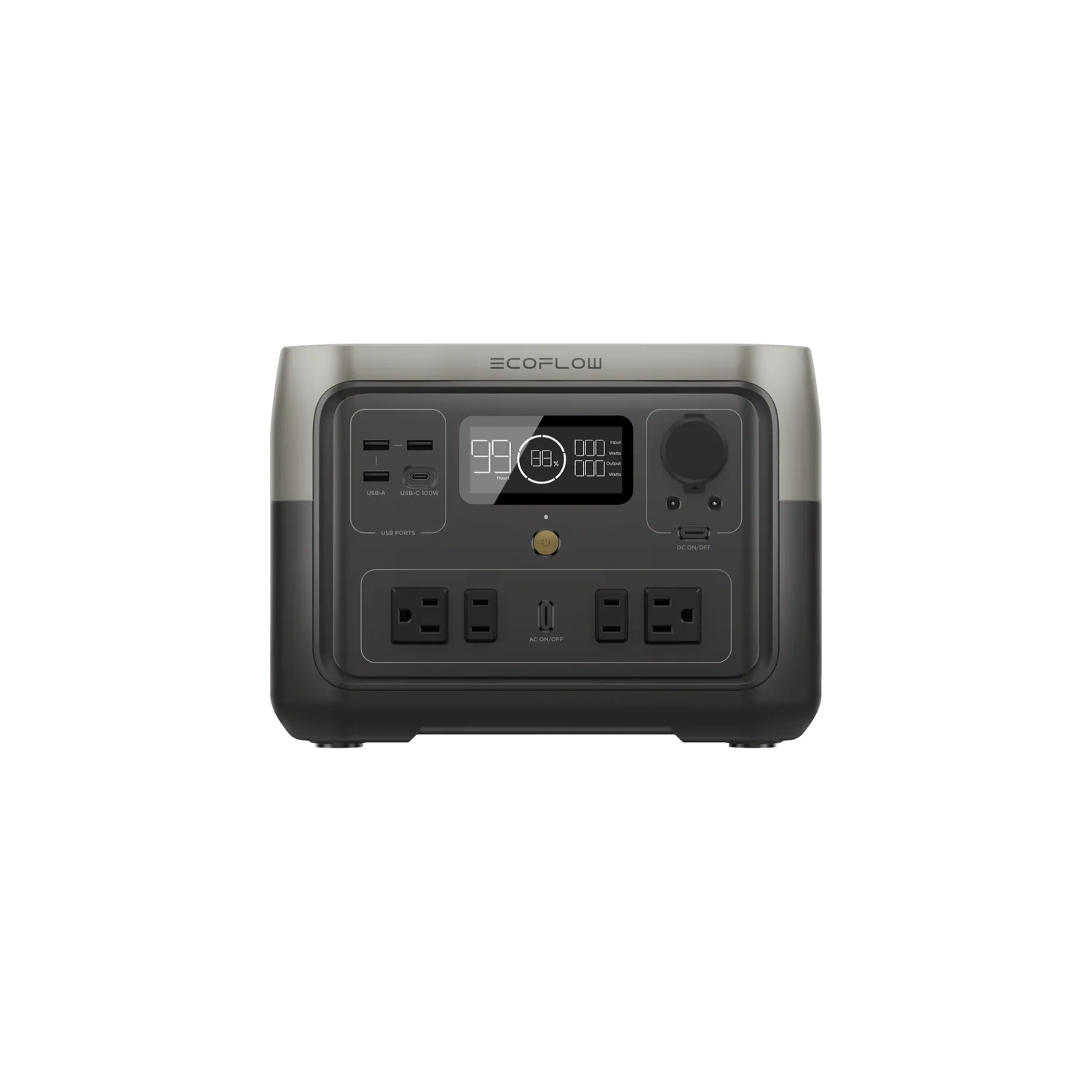
EcoFlow RIVER 2 Max
Sold out at EcoFlow

BLUETTI Premium 200 V2Pick
$1,549.00
$1,549.00 · direct from BLUETTI
Last checked 16 days ago. Prices move — check before you buy.
Prices may vary by retailer and are subject to change.